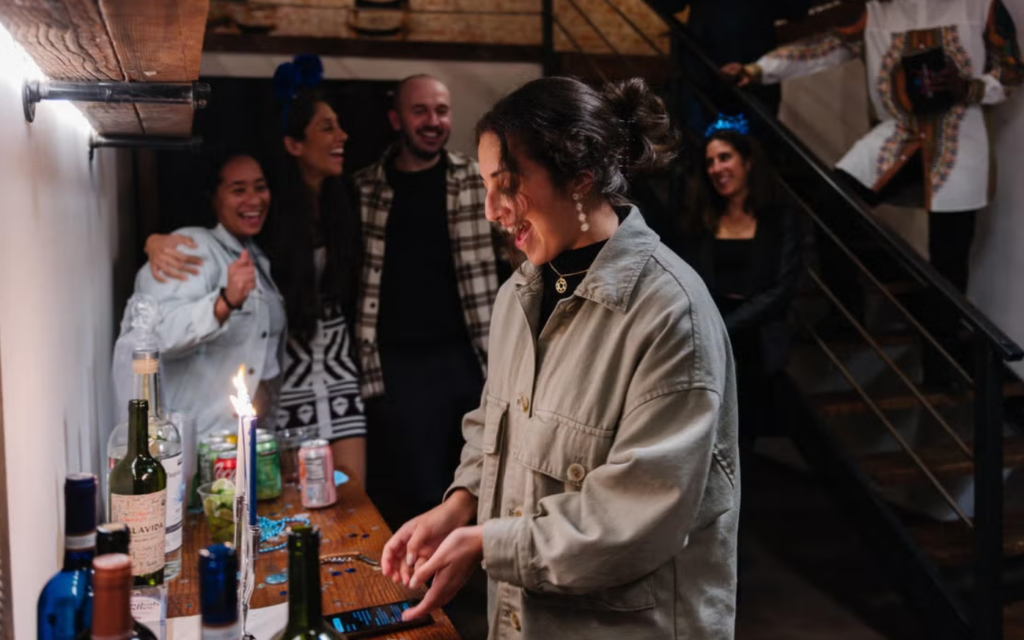
Analucía Lopezrevoredo says she founded Los Angeles-based social organization Jewtina y Co to answer her longtime question: 'Where do people like me get to be whole?'
Andrej Babis has repeatedly criticized Spain’s migrant regularization initiative.
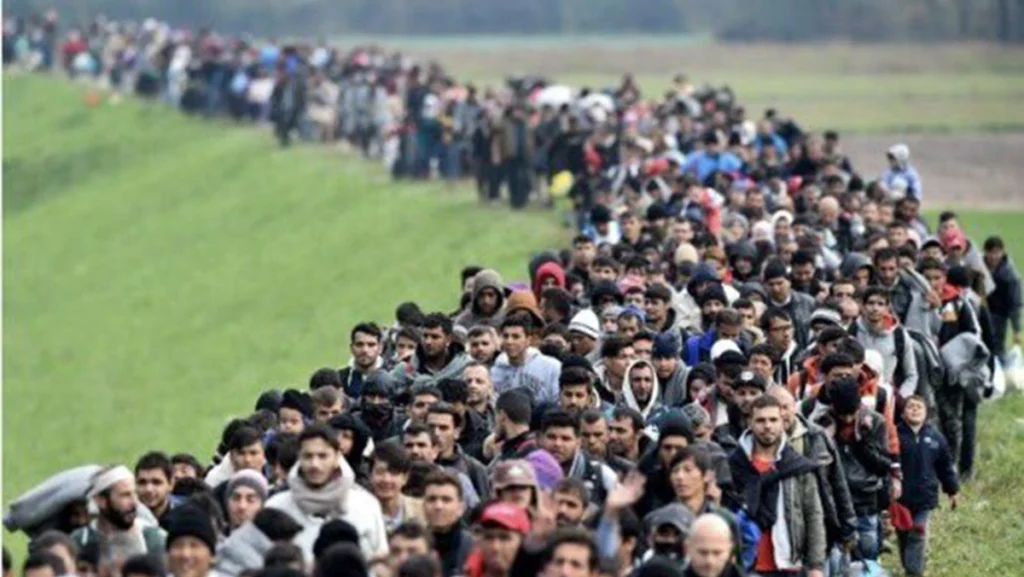
On Friday, Czech Prime Minister Andrej Babis suggested the possibility that his country might have to protect its borders against migrants arriving from Western countries.
“We see what is happening in Spain. Some politicians are willing to replace the population with immigrants solely to keep their positions and remain in government, although that does not concern us,” Babis said upon his arrival for the second day of the European Union summit of heads of state and government in Brussels.
The Czech leader added that, for some countries, it was “too late” to manage migration and floated the idea that they “might” have to “defend the borders so that immigrants from Western countries do not come” to Czech territory “if things continue this way.” “We are preparing for that,” he added.
Diplomatic sources explained that the Czech prime minister “was speaking generally about situations in countries such as Denmark, Sweden and Spain,” without specifying which situations he was referring to.
Czech Prime Minister Andrej Babiš on Ukraine: “We all want peace. I’m not saying peace means accepting Russian ideas… Europe is sidelined, and Trump, by making that deal with Putin, let us down. We have to do something.” pic.twitter.com/FUTFMiEqpw
Babis, an admirer of U.S. President Donald Trump’s policies, has repeatedly criticized Spain’s migrant regularization initiative since this summer.
In August, he accused Spanish Prime Minister Pedro Sanchez of promoting migration for electoral purposes, saying on Czech television network Nova that the Spanish leader believed those who benefited from the measure would end up voting for him.
Babis also linked the mass arrival of immigrants in Ceuta to the Spanish government’s migration policy and, in July, even advocated temporarily excluding Spain from the Schengen Area.
New Findings Expand the Country’s Documented Ant Inventory to About 845 Species and Highlight Gaps in Biodiversity Research.
On Wednesday, the National Institute of Biodiversity (INABIO) reported that researchers had documented 15 ant species in Ecuador for the first time, expanding the inventory of documented species in the Andean country to approximately 845 species across 103 genera.
The new records comprise 15 species distributed across four subfamilies and eight genera. One of the most notable results is the first record of the genus Cryptomyrmex, represented by the species Cryptomyrmex longinodus, found in Yasuni National Park, one of the most biodiverse areas on the planet, located in the Amazonian province of Pastaza.
According to Inabio, these species were known to occur in other countries, such as Colombia, Peru and Brazil, but had never been identified in mainland Ecuador.
The identified species were found in the Amazonian provinces of Napo, Pastaza, Sucumbios and Zamora Chinchipe; the coastal provinces of Esmeraldas, Guayas and Santa Elena; the tropical province of Los Rios; and the Andean province of Cañar.
The researchers are affiliated with the Higher Polytechnic School of Chimborazo province, INABIO, the Agency for Phytosanitary and Zoosanitary Regulation and Control, Uru Foundation and the National Polytechnic School, all in Ecuador, as well as Brazil’s National Institute of Amazonian Research.
This is the Amazon rainforest from space. The orange regions represent territories managed by the 1.5 million Indigenous people who call this forest home across Bolivia, Brazil, Colombia, Ecuador, French Guiana, Guyana, Peru, Suriname, and Venezuela.
They found specimens in diverse environments, including Amazonian forests, montane forests and tropical dry forests, many of them in leaf litter on the forest floor. One species, Dorymyrmex brunneus, for example, was found in dragon fruit crops in Cañar province.
Inabio noted that “several of these findings considerably expand the known geographic distribution of the species in South America,” since, in some cases, the Ecuadorian records are hundreds or even more than 1,000 kilometers (621 miles) from locations where the species had previously been documented.
INABIO explained that ants are “ecosystem engineers” because they sustain the structure and functioning of these habitats. They contribute to soil aeration and nutrient cycling, pest control and seed dispersal, interact with multiple species, and form part of ecological networks in forests, agricultural areas and cities.
The study also identified gaps in information about ants in Ecuador, particularly in mountainous areas and transition zones between the Andes and the Amazon. Further research is needed, especially in light of threats associated with habitat transformation, agricultural expansion and climate change.
Back in 1983, the Supreme Court declared that "a person traveling in an automobile on public thoroughfares has no reasonable expectation of privacy in his movements from one place to another." That increasingly doubtful proposition underpins a nationwide network of more than 144,000 AI-assisted cameras that track the travels of innocent motorists across the country billions of times each week.
So far, state and federal courts have almost uniformly rejected constitutional challenges to automated license plate readers (ALPRs) installed by companies such as Flock Safety. But in a decision that could signal a shift in the legal treatment of Flock cameras, a federal judge in Oklahoma recently recognized that they enable "a type of indiscriminate mass surveillance."
ALPRs are much more sophisticated than the technology that the Supreme Court considered in 1983, when it approved the warrantless use of a radio transmitter that helped police tail a suspected methamphetamine manufacturer's car. Three decades later, by contrast, the Court said police should have obtained a search warrant before attaching a GPS tracker to another drug suspect's car.
The majority opinion in the latter case emphasized the physical intrusion necessary to install the tracker. But five justices embraced an alternative rationale, saying GPS tracking impinges on reasonable expectations of privacy by revealing potentially sensitive information about the target's historical whereabouts.
That theory came to the fore in a 2018 case involving mobile-phone location data collected by cell sites, which the majority said implicated the Fourth Amendment because "individuals have a reasonable expectation of privacy in the whole of their physical movements." The Supreme Court reiterated that principle this year, extending it to data collected by Google's Location History feature.
"An individual has a reasonable expectation of privacy in records about his cell phone's location," Justice Elena Kagan said in the majority opinion, "and police intrude on that constitutionally protected interest when they demand the information." By similar logic, U.S. District Judge Sara E. Hill concluded this month in the Oklahoma case, people have a reasonable expectation of privacy in ALPR records, and police therefore generally need a warrant to search them.
Those databases include "information about all vehicles that pass by any network-connected camera at all times," which police can peruse "on demand," Hill noted. "Freedom from persistent, dragnet-style surveillance while in public is not a foreign concept in our society, and it is a reasonable expectation that society already accepts," as reflected in the Supreme Court's cellphone decisions.
Like cars, cellphones "move in public places where people can see you in plain view," Hill wrote. "But it becomes constitutionally problematic when law enforcement can indiscriminately and passively catalog your whereabouts over an extended period of time and then use that information for any purpose whenever convenient."
At this point, Hill's decision is an outlier. "It appears that nearly every court examining the issue to date has determined that ALPR technology use is not a search under the Fourth Amendment because people have no reasonable expectation of privacy in their movements on public streets," she noted.
Last month, for instance, a federal judge in California held that ALPR database searches are "clearly distinguishable from and less extensive than the 'near perfect surveillance' achievable" with cell-site or Location History data. And the day after Hill's ruling, a state judge in California rejected a challenge to San Jose's Flock camera network, saying "there is no reasonable expectation of privacy in license plate data collected from cameras directed solely at public streets."
A federal lawsuit involving the same city's ALPR system, which the Institute for Justice filed last April, is still pending. So are challenges to Flock cameras in cities such as Wichita, Kansas, and Norfolk, Virginia.
Even when they reject such lawsuits, courts commonly acknowledge that the legal picture could change as the number and capabilities of ALPRs multiply. If so, it seems likely that Hill will eventually be joined by other judges who recognize the perils of "indiscriminate mass surveillance."
More than 100,000 signatures were submitted against a plan that tenants’ advocates say could worsen abusive rents.
On Tuesday, the Swiss Tenants Association (ASLOCA) submitted more than 100,000 signatures to the Swiss government in protest against an “outrageous” proposal to reform the rental pricing system, which would increase instances of abusive rents.
The government’s plan is a counterproposal to a popular initiative that ASLOCA wants to put to a national referendum. Launched in 2025, the initiative seeks to incorporate a definition of abusive rent into the federal Constitution and requires rental prices to be reviewed automatically and periodically.
The government opposes that text and proposed the counterproposal in late September. The alternative has now sparked outrage at ASLOCA and calls for a more flexible pricing system based on a range of different prices.
According to the tenants’ association, which is headed by Geneva Socialist Sen. Carlo Sommaruga, the government’s proposal would allow very high rents to be factored into subsequent statistics, potentially driving up benchmark rents with each update.
🇩🇪|Berlin Has Fallen But Not to Tanks; It Has Fallen to Bills, Shipping Containers, and Foreign Military Bases
There was no military coup in Berlin. No tanks rolled onto the streets. No opposition figures were arrested.
— Aprajita Nafs Nefes 🦋 Ancient Believer (@aprajitanefes) October 9, 2026
“Tenants are already paying rents that are too high, and the Federal Council wants to ask them to pay even more. They will not accept it,” Sommaruga said in a statement.
According to Eurostat, around 58% of Switzerland’s population lives in rented housing, making the country the one with the highest share of tenants in Europe. Along with Germany, Switzerland is one of the few countries on the continent where renters outnumber homeowners.
Currently, the Swiss debate over rents is unfolding amid a clash between two segments of the population: retirees and tenants.
“Retirees’ pensions depend in part on the returns generated by the real estate portfolios held by their pension funds. These institutions are estimated to own one in six homes in Switzerland and exert a constant influence on real estate-related initiatives—as seen in Zurich last June, when voters rejected a proposal aimed at restricting the termination of rental contracts,” the Tribune de Genève explained.
The International Refugee Assistance Project warns the new policy could facilitate mass deportations.
On Tuesday, the Department of Homeland Security (DHS) announced the United States will reduce from 30 days to 10 days the period refugees have to defend themselves when the federal government seeks to revoke their immigration status.
The new rule shortens the time available to submit evidence and arguments in response to a notice from authorities stating their intention to revoke that protection.
The measure seeks to “restore integrity to the immigration system, mitigate public and national security risks, and prevent fraud,” DHS said.
Under the law, the U.S. government can revoke refugee status only if it determines that the person did not meet the requirements for obtaining it when they were admitted to the country.
If authorities determine that the evidence and arguments submitted do not justify maintaining the protection, they can revoke the person’s status and subject them to deportation proceedings.
The process of obtaining this protection can take years. Available pathways include referral to the U.S. Refugee Admissions Program (USRAP) by the United Nations, a U.S. Embassy, or a nongovernmental organization. Applicants must also pass interviews and security screenings, including background checks conducted by various federal agencies.
ICE deports a man for “traffic infractions” while his wife and kids scream for mercy. If you voted for this you have no soul.
The International Refugee Assistance Project (IRAP) rejected the changes and warned that they would facilitate “mass” deportations of refugees. IRAP said the administration of U.S. President Donald Trump has been persecuting refugees and illegally detaining them since the beginning of the year.
IRAP has sued the U.S. government over its detention of refugees and attempts to deport them to countries including Rwanda, Iraq, and Afghanistan. Trump’s mass deportation campaign has also affected people who had authorization to remain in the United States.
His administration has revoked Temporary Protected Status (TPS) protections for several countries, canceled humanitarian parole programs and pushed for certain asylum applications to be denied without a full hearing. According to the American Immigration Lawyers Association (AILA), 1.6 million immigrants lost their legal status during the first year of Trump’s second term.
The shortened deadline turns the process into a “mere formality” to “strip refugees who were lawfully admitted and are lawfully living in the country of their status and deport them to places where they would face persecution or worse,” said Laurie Ball Cooper, IRAP’s vice president of U.S. legal programs.
A new restaurant in Portimão is looking to revive the relaxed atmosphere of Portugal’s traditional casas de petiscos (tapas houses), with a menu built around sharing food, familiar flavours and
Vietnamese police have arrested 12 men accused of stealing nearly 2,700 cats during night-time raids in residential neighborhoods; the pets were taken to be slaughtered for food. Fur-removal machines, cat traps, and weighing scales were among the items confiscated during the investigation into the cat-theft gang in Ho Chi Minh City, Vietnamese police and state […]
CPEC 2.0 aims to move past the infrastructure-heavy first phase toward industry, agriculture, mining, technology, green development and business-to-business investment. That shift could deepen economic ties between Pakistan and China, but it also changes the nature of the security challenge. Big infrastructure projects can be guarded behind fixed perimeters. Industrial zones, mines, private businesses and […]
Depuis le 1er octobre 2026, neuf plateformes prélèvent elles-mêmes les cotisations sociales de leurs indépendants et les versent à l'Urssaf. Obligatoire pour toutes dès le 1er janvier 2027, ce dispositif laisse au travailleur tous les risques de son statut, mais plus la maîtrise de sa trésorerie.
LE COURRIER DES STRATÈGES
Restez libre !
LA NEWSLETTER · GRATUITE
Le Courrier, chaque matin.
L'essentiel de l'actualité, passé au crible par les cinq plumes du Courrier. Dans votre boîte, chaque jour ouvré.
Gratuit. Vous restez libre de partir quand vous voulez.
Jusqu’ici, le micro-entrepreneur encaissait son chiffre d’affaires, le déclarait à l’Urssaf, puis réglait lui-même ses cotisations. Ce circuit disparaît progressivement pour les revenus réalisés par l’intermédiaire des plateformes.
LE COURRIER DES STRATÈGES
Restez libre !
ABONNEMENT
Allez au fond des choses.
Deux grands formats par jour. Les cinq plumes du Courrier. La série Sécession, le dimanche.
L'article L613-6-1 du code de la sécurité socialet le décret n° 2026-488 du 10 juin 2026 organisent ce nouveau mécanisme. À chaque versement, la plateforme applique le taux correspondant à l’activité, prélève les sommes dues, puis les reverse mensuellement à l’Urssaf.
Pour les prestations de services relevant des BIC, le taux reste de 21,2 % du chiffre d’affaires. Il atteint 25,6 % pour les activités libérales non réglementées, tandis que la vente de marchandises reste à 12,3 %. Rien ne change donc juridiquement dans le montant des cotisations : c’est leur circuit de collecte qui est bouleversé. Le gouvernement présente cette évolution comme une simplification. Mais pour l’indépendant, la différence financière est immédiate : sur 2 000 euros de recettes soumises au taux de 21,2 %, 424 euros sont prélevés avant même d'arriver sur son compte.
LE COURRIER DES STRATÈGES
Restez libre !
TELEGRAM · L'INFO EN CONTINU
Entre deux éditions, le fil.
La newsletter vous donne le matin. Le fil vous donne l'instant.
L'indépendant garde les risques, mais perd la main sur sa trésorerie
Le dispositif transfère ainsi une fonction traditionnellement assumée par le cotisant vers une entreprise privée. La plateforme devient l'intermédiaire entre le travailleur et l'Urssaf, avec obligation de calculer, déclarer et reverser les sommes. Les coûts de cette opération restent à sa charge.
Reste surtout la question du contrôle. En cas d'erreur de chiffre d'affaires ou de taux, l'indépendant devra vérifier les montants transmis, réclamer une correction à la plateforme puis, si nécessaire, saisir l'Urssaf. Le décret prévoit d'ailleurs des mécanismes de rectification.
Le paradoxe n'est pas qu'on prélève. Le salarié connaît ce mécanisme depuis longtemps. Mais le salarié bénéficie d'un employeur responsable de sa paie. L'indépendant, lui, conserve la totalité des risques : absence de chômage, revenus irréguliers, charge de la preuve. Il perd en revanche le geste élémentaire de déclarer et de payer lui-même.
La simplification vantée à l'indépendant sert d'abord la fluidité des recettes publiques. Et rien n'indique, dans les textes, que les plateformes devront assumer financièrement leurs propres erreurs de calcul.Il fallait d'abord attirer les travailleurs vers le statut. On les y retient désormais en tenant leur caisse.
LE COURRIER DES STRATÈGES
Restez libre !
TIPS · SANS ABONNEMENT
Offrez-nous un café.
Un média libre vit de ses lecteurs. Un pourboire ponctuel, sans compte ni engagement, quand le cœur vous en dit.
Vous donnez ce que vous voulez. Vous restez libre.
Près de 12 millions d’euros destinés notamment à l’hébergement de demandeurs d’asile auraient été détournés via des sociétés écrans avant de financer des opérations immobilières au Maroc, au Sénégal et en Mauritanie. Le 11 septembre, le tribunal judiciaire de Créteil a condamné l’ancien directeur territorial de Coallia à sept ans de prison et 500 000 euros d’amende.
LE COURRIER DES STRATÈGES
Restez libre !
LA NEWSLETTER · GRATUITE
Le Courrier, chaque matin.
L'essentiel de l'actualité, passé au crible par les cinq plumes du Courrier. Dans votre boîte, chaque jour ouvré.
Gratuit. Vous restez libre de partir quand vous voulez.
Le montage judiciaire retenu est lourd : détournement de fonds publics, escroquerie en bande organisée, blanchiment, prise illégale d'intérêts, corruption passive. Selon les éléments produits à l'audience, les subventions destinées à l'hébergement des demandeurs d'asile ont d'abord transité par des sociétés écrans avant d'être réinjectées dans des opérations immobilières au Maghreb et en Afrique de l'Ouest.
LE COURRIER DES STRATÈGES
Restez libre !
ABONNEMENT
Allez au fond des choses.
Deux grands formats par jour. Les cinq plumes du Courrier. La série Sécession, le dimanche.
L’affaire remonte à des mouvements financiers détectés au printemps 2023 par Tracfin. Le service de renseignement financier avait relevé des opérations atypiques au sein de l’unité départementale de Coallia à Choisy-le-Roi, dirigée depuis 2012 par l’ancien responsable. Les enquêteurs du SDPJ du Val-de-Marne ont ensuite identifié plusieurs sociétés sans activité économique réelle qui auraient reçu plusieurs millions d’euros de l’association entre janvier 2020 et juillet 2024.
Selon les éléments produits à l'audience, les subventions destinées à l'hébergement des demandeurs d'asile ont d'abord transité par des sociétés écrans avant d'être réinjectées dans des opérations immobilières au Maghreb et en Afrique de l'Ouest. Des salariés ont également décrit des demandes de rétrocommissions liées à des marchés. Une partie des fonds aurait finalement été blanchie dans des acquisitions immobilières au Maroc, au Sénégal et en Mauritanie.
LE COURRIER DES STRATÈGES
Restez libre !
TELEGRAM · L'INFO EN CONTINU
Entre deux éditions, le fil.
La newsletter vous donne le matin. Le fil vous donne l'instant.
Le 11 septembre, Gaye C. a été condamné pour détournement de fonds publics, escroquerie en bande organisée, blanchiment, prise illégale d’intérêts et corruption passive. Son épouse et son frère ont chacun reçu trois ans de prison, dont deux avec sursis. Deux chefs d’entreprise ont été condamnés à quatre ans, dont trois avec sursis. L’association Coallia a elle-même été condamnée à 50 000 euros d’amende pour détournement de fonds par négligence.
Le montant prend une dimension particulière lorsque l’on considère l’importance de Coallia dans le dispositif public : l’association avait reçu 148 millions d’euros de subventions de l’État en 2022 au titre de la mission « immigration, asile et intégration ». Sa direction affirme n’avoir découvert les détournements qu’à la suite des investigations, évoquant notamment une faille du logiciel de paiement.
Au-delà de la sanction pénale, cette condamnation interroge la chaîne entière de la subvention publique. L'argent du contribuable, censé financer des places d'hébergement pour demandeurs d'asile, a servi à constituer un patrimoine familial à l'étranger, avec la complicité de partenaires commerciaux extérieurs à l'association. Le jugement de Créteil expose les failles structurelles d'un secteur où la confiance accordée aux gestionnaires associatifs tient lieu, trop souvent, de contrôle effectif. La question reste ouverte : combien d’autres circuits similaires fonctionnent encore hors de tout regard effectif ?
LE COURRIER DES STRATÈGES
Restez libre !
TIPS · SANS ABONNEMENT
Offrez-nous un café.
Un média libre vit de ses lecteurs. Un pourboire ponctuel, sans compte ni engagement, quand le cœur vous en dit.
Vous donnez ce que vous voulez. Vous restez libre.
L’administration a progressivement fermé ses guichets pour imposer les démarches numériques. En avril 2026, le portail de l’ANTS, devenu France Titres, a pourtant subi une faille permettant la divulgation de données personnelles concernant potentiellement 11,7 millions de comptes. Le portail a dû être placé en maintenance, tandis qu’une enquête était ouverte pour déterminer la chaîne des responsabilités.
LE COURRIER DES STRATÈGES
Restez libre !
LA NEWSLETTER · GRATUITE
Le Courrier, chaque matin.
L'essentiel de l'actualité, passé au crible par les cinq plumes du Courrier. Dans votre boîte, chaque jour ouvré.
Gratuit. Vous restez libre de partir quand vous voulez.
Le 15 avril 2026, un adolescent de 15 ans exploitait une vulnérabilité IDOR sur le portail moncompte.ants.gouv.fr, accéde aux données de 11,7 millions de comptes en modifiant un simple chiffre dans une URL. La centralisation des données d’identité entre les mains d’une administration qui refuse d’investir dans sa propre sécurité n’est pas une simplification, c’est un transfert de risque.
LE COURRIER DES STRATÈGES
Restez libre !
ABONNEMENT
Allez au fond des choses.
Deux grands formats par jour. Les cinq plumes du Courrier. La série Sécession, le dimanche.
Le 15 avril 2026, l’Agence nationale des titres sécurisés détecte un incident de sécurité sur son portail. Le 21 avril, le ministère de l’Intérieur reconnaît que 11,7 millions de comptes particuliers pourraient être concernés.
Les données exposées sont loin d’être anodines : identifiant de connexion, nom, prénoms, adresse électronique, date de naissance et identifiant unique du compte. Pour certains usagers peuvent s’y ajouter l’adresse postale, le lieu de naissance ou le numéro de téléphone. Le ministère précise en revanche que les pièces jointes et données biométriques ne font pas partie des informations dont la divulgation a été constatée à ce stade.
L’incident est particulièrement révélateur d’une administration devenue dépendante d’un portail numérique centralisé. Pour obtenir une carte grise, un permis ou effectuer certaines démarches liées aux titres d’identité, l’usager doit désormais passer par cette architecture numérique.
LE COURRIER DES STRATÈGES
Restez libre !
TELEGRAM · L'INFO EN CONTINU
Entre deux éditions, le fil.
La newsletter vous donne le matin. Le fil vous donne l'instant.
Une panne, une enquête et une responsabilité à établir
Le 24 avril à 19 h 30, l’ANTS ferme son portail afin de renforcer sa sécurité. Les nouvelles démarches d’immatriculation, de permis et de titres d’identité deviennent temporairement indisponibles.
Le dossier ne s’arrête pas à une opération de maintenance. L’incident a été signalé à la CNIL et à la procureure de la République de Paris, avec transmission à l’Office anti-cybercriminalité. Le ministre de l’Intérieur a également saisi l’Inspection générale de l’administration pour établir la chaîne de responsabilité. La Cour des comptes avait anticipé. Dans un rapport du 12 mars 2026, elle identifiait trente scénarios de fraude distincts et alertait sur la vulnérabilité structurelle d’un système délégué à plus de 30 000 opérateurs privés sans contrôle sérieux. Un an plus tôt, le 16 juin 2025, elle constatait déjà que les responsabilités en matière de sécurité informatique étaient « trop éclatées » et que les montants alloués à la cybersécurité 176,9 millions d’euros début 2022, restaient en deçà des enjeux.
Face au scandale, le Premier ministre Sébastien Lecornu a annoncé le 30 avril un plan cyber de 200 millions d’euros. Un adolescent de 15 ans a été placé en garde à vue. L’État promet de « tirer toutes les conséquences ». Mais les victimes n’ont toujours pas été prévenues individuellement.
LE COURRIER DES STRATÈGES
Restez libre !
TIPS · SANS ABONNEMENT
Offrez-nous un café.
Un média libre vit de ses lecteurs. Un pourboire ponctuel, sans compte ni engagement, quand le cœur vous en dit.
Vous donnez ce que vous voulez. Vous restez libre.
Les prix des carburants battent des records. Les stations-service les moins chères sont prises d'assaut, créant ponctuellement des pénuries. Tarifs, ruptures, stations les moins onéreuses... retrouvez les détails pour...
Ahead of National Curry Week in the UK (5-11 October) MPs are being urged to revive the Parliamentary Tiffin Cup.
The Tiffin Cup was an annual competition where MPs (advised by their constituents) nominated the Best South Asian Restaurant in their area.
One restaurant from every region was then shortlisted and invited to participate in the Grand Final cook-off event held in the House of Commons in London, and judged by MPs and guest celebrities, with the proceeds going to charity.
The Tiffin Cup was last won in 2019 by Kuti’s Restaurant in Southampton, where former Prime Minister Rishi Sunak says he worked shifts “just for fun” as a student.
The competition was created by a group of MPs with Keith Vaz as its chairman to celebrate quality South Asian food. The trophy was usually presented by the Speaker of the House of Commons.
Demands for its return are led by George Shaw, editor of the respected Good Curry Guide.
He told this site “These are challenging times for the hospitality sector, with both restaurants and customers being hard hit by rising costs. The Tiffin Cup will help to promote what is a vital part of our economy.
“Most curry houses are small independent businesses – not a ubiquitous chain which sucks cash away from the local area, funnelling profits to a corporate headquarters many miles away, or to an offshore bank account.
“Curry is a firmly established part of British history and culture.
“Queen Elizabeth I granted the first charter in 1600 allowing London merchants to trade with the “East Indies”, hoping to break the Dutch monopoly on the spice trade.”
The earliest surviving curry recipe in English was published in 1747.
The first Indian restaurant in London, the Hindoostane Coffee House, was opened in 1810 by Sake Dean Mahomed, a former captain in the British East India Company.
He went on to become ‘personal shampooing surgeon’ to George IV and William IV.
British appetites for spice became entrenched during the British colonial era in India, from 1600 to 1947.
Queen Victoria, ‘Empress of India’ was introduced to Indian cuisine by her ‘Munshi’, Abdul Karim.
Thereafter she ate curry every day, with great relish and in considerable quantities, until the end of her life, 25 years later.
The ritual of enjoying a refreshing lager with Indian food was introduced by Prince Axel of Denmark.
The Prince attended the British Empire Exhibition in 1924.
During his visit he discovered the cuisine of Veeraswamy (London’s first high end Indian restaurant and still in existence), which ran a “pop-up” at the Exhibition.
The Prince brought a barrel of Carlsberg with him and continued to send one each Christmas.
Shaw is urging restaurant curry fans to write to their MPs asking them to reestablish the Tiffin Cup competition as an annual fixture in Parliament, with their own nominations.
Watching The Jetsons as a kid in the ’80s, I was obsessed with the food machine, and how it dispensed a full meal at the touch of a button. The show was set in 2062, exactly a hundred years on from its original broadcast. We’ve made it to 2026, but life today resembles nothing like that slick space-age future. We have gadgets, but they’ve arrived as phones, apps, and smart home devices—and I’m not sure they’ve made my life better.
“Accepting modern conveniences too often means accepting lower standards,” writes Gabe Bullard in Against Convenience: Embracing Friction in an Age of Endless Ease. Lower standards for material goods, for labor conditions, for socializing, for art and entertainment. “Experiences become transactions.”Bullard isn’t anti-technology. His argument, he writes, “is an argument against how we use and are pushed to use technology.” In his new book, he examines the conveniences that have crept into his life—and likely yours—and offers ideas for living with them more sustainably and equitably.
In this excerpt from chapter seven, Bullard sets this scene: a physical world, the one we’ve moved through for centuries, slowly reshaped by the virtual one we increasingly live in. Cars drive from one dot on a map to another, ferrying takeout to people at home on sofas. Food deliverers make some extra money. Businesses take orders both online and off. It appears easier, efficient. But Bullard examinesthe costs—to the customer, to the driver, and to the restaurant owner, who still has to make sure the fries are crispy once they reach your door.
The artist Jake Longstreth paints landscapes of America, often the West and Southwest, with their distinctive vegetation, deserts, and mountains. In the foreground of many of his paintings are features that evoke a time more than a single place—CubeSmart self-storage, Taco Bell, a sun-bleached facade with shadows where the words Toys ‘R’ Us once hung.
In one series, each painting is a different view from the parking lot of a Walmart in Scottsdale, Arizona. Ferns, trees, and desert grasses obscure the sharp edges of the boxy store. Semitrailers and loading docks peek from behind the brush. In a painting from a different series, a Home Depot abuts a Civil War battlefield.
The work has a loneliness that’s reminiscent of Edward Hopper’s paintings. But unlike Hopper, Longstreth rarely paints people (one exception is a group of soldiers in uniform at the grand opening of a Chili’s). The only signs of humanity are occasional cars and the chains that “make up, basically, an American commons,” as Longstreth described them in an interview promoting an exhibition of his work in 2024. “Most people don’t really have a super-deliberate relationship with these places,” he added.
There’s a certain democracy to the scenes: Anyone, anywhere can eat the same value meal as anyone else. There’s also an intrusion: The chains’ architecture imposes a sameness on once-unique landscapes. The stores and restaurants are dropped into spaces that weren’t made for them. Flat, square plots are pressed into hills, ample parking provided.
The encroachment of a drive-thru on a lush California valley is a good representation of many modern conveniences. The services that claim to make something faster, easier, or cheaper are built on top of physical landscapes, legal frameworks, or social orders that were not made to accommodate them. The systems absorb the change, but they do it awkwardly and end up forever altered. Starbucks becomes a place to pick up app orders; appliances become accessories to connect to your phone; QR codes sit on restaurant tables; analysis replaces news; art becomes Content; machines replace people.
Uncomfortable intrusions and uneven responses are everywhere.
Examples abound: Grocery delivery apps bring an old idea to a new reality. Grocers offered delivery over a century ago, but the stores were set up and staffed for this. Modern grocery stores are built for customers to come in and do their own shopping. Delivery apps now let customers pay someone to do the same physical task the user would do if they went to the store themselves. What seems like a simple process can quickly become inconvenient. Grocery stores evolved to let customers pick out their own fruit, check dates on packages, and otherwise get things for themselves based on what looked good (or what the store suggested they buy). Virtual shoppers do this picking for customers, sometimes in a hurry so they can fulfill more orders. Mistakes can happen even under the best circumstances. Better deals go ignored. There’s confusion when an item is out of stock and the customer hasn’t chosen an alternative. It can lead to a customer essentially steering a shopper through the store on their behalf.
Rentable electric scooters have become a fixture of urban sidewalks in the past decade. The scooters speed up trips that are too far to walk, too short for a car ride, and not covered by public transit. But these are more of a tacked-on convenience than a real solution. City streets aren’t often built to accommodate smaller vehicles, leaving scooter riders to either use car lanes (putting the rider at risk) or sidewalks (putting pedestrians at risk). Poorly parked scooters clutter neighborhoods. And the environmental benefits are questionable, if at times nonexistent: Broken scooters need to be replaced and vans typically pick up scooters for charging. These problems could be solved through a more active response from cities—more adequate public transit, sustainability requirements for the rental companies, limits on where scooters can be ridden and parked. Cities could build better infrastructure, too, to favor bikes, scooters, and pedestrians over cars.
The postal system and most homes were built to accommodate the delivery of mail and packages. But the scale of e-commerce deliveries has forced inconvenient adjustments to physical and social spaces. In the years I lived in a large apartment building, package drop-off was a constant frustration. Every afternoon, the lobby filled with Amazon and Chewy boxes. They sometimes sat there for days (rush delivery wasn’t essential after all). What was built as a place for neighbors to mingle became a warehouse for boxes of dog food where people occasionally waited for rideshares.
For private homes, the doorbell camera offers convenient, instant notification that a package has arrived and security footage if the package is stolen. It’s an inelegant, antisocial solution. The old-style doorbell was already a notification a package had arrived. The new gadget moved the chime and the peephole to the pocket (and gave users another reason to stay glued to their phones). Package theft is a crime of convenience created by constant online shopping and delivery, and it’s not clear the cameras are stopping it. In my old neighborhood, people often posted grainy images of package thieves to local message boards. Sometimes the person said they were giving the information to the police, as if the police would bother tracking down whoever took a box that had most likely already been replaced. Perhaps the footage will go into a database to be scanned by facial recognition software instead. Doorbell cameras might be meant to catch crimes, but more often, they create Content like the videos of accidents I scroll past online. Everyone is eager to share their personal view of the panopticon.
Is the convenience worth the cost of constant surveillance and suspicion of every person who steps on your stoop (not to mention a subscription to the software that runs the camera)? Even if the cameras prevent a package theft, it’s unlikely the increased surveillance is a deterrent for violent crimes, or that it has an effect on overall neighborhood safety. That would take a collective solution. The camera lets the homeowner feel optimized to take on (or hide from) the world’s troubles alone.
The services that claim to make something faster, easier, or cheaper are built on top of physical landscapes, legal frameworks, or social orders that were not made to accommodate them.
Ridesharing’s “disruption” is perhaps the most prominent example of convenience overloading existing systems, and those systems bending to accommodate it. In this case, the systems were municipal regulations, employment standards, and users’ expectations for how to get around a city. In his book Blood in the Machine, tech journalist Brian Merchant notes that the arguments against regulation echo one the mill owners made in the fight against the Luddites in the early 1800s. Existing laws regulated mills and set standards for worker training and for the quality of cloth. As businessmen automated manufacturing, they argued that “the regulations on the books are out of date, should not apply to new technologies, and are stifling innovation; they’re really not that important, and no one plans on violating them anyway,” Merchant writes.
The argument that our existing laws are inadequate in the face of progress is so pervasive in the tech industry, breaking rules is basically a strategy. OpenAI’s CEO has said it’s impossible to create their products without access to copyrighted material, and as I write this, the debate continues over how AI firms should license—or should have licensed—the material they use to train their software.
We are still adjusting to new technology—legally, morally, socially. The adjustment will go deeper than making room for a new way of shopping, computing, or getting around. How we react in these (still) early stages—how we comport ourselves and what we demand of the apps and our governments—will have ramifications for generations to come.
It’s not looking good.
The spread of generative AI is the most worrying sign at the moment, but I hear about new, supposedly convenient, yet ultimately unnecessary, technologies every day. Not long ago, it was facial recognition for buying concessions at sporting events. It’s mind-blowing computing power put to mundane use, and it raises big questions about privacy and security. I wonder if the food tastes any better.
To get a sense of the stakes of all-encompassing adaptation to new technology, go outside: massive parking garages in downtown real estate (somehow still necessary even with rideshares); four-lane streets in residential neighborhoods; houses with no stoop and a garage door as the most prominent feature on the facade; interstates along riverfronts; drive-thru-only restaurants; restaurants with double-wide drive-thrus. Cities and landscapes have been remade to accommodate privately owned personal cars. Shared cars or scooters might offer some relief, but the infrastructure has already been changed—these solutions are technology to solve the problems of technology, built not just on top of a system that wasn’t made for them, but on top of a system that wasn’t made for people at all.
This is the world I see in Longstreth’s paintings. The buildings are in places that are hostile to anyone traveling without their own car—shopping centers between batches of suburbs and man-made deserts of pavement. The paintings remind me of the long drives I’ve taken across the US—every exit has the same few fast-food restaurants and gas stations. The public commons is a place people stop at on their way somewhere else. Everyone eats the same value meal because there’s nothing else to eat.
The encroachments of high-tech convenience create a second reality—one that’s virtual and smooth. To someone using a grocery app, the store looks like a list of products on a screen, not the physical supermarket where a worker will go to pick out an order. To a person in a rideshare or driving by GPS, the world between two destinations looks like a line on a map. It’s a little like the augmented reality game Pokémon Go, which dropped monsters and training gyms onto the grids of city streets. Physical reality is a support structure for a world that exists on an individual’s screen. The virtual world imposes its demands on the physical world, often with results that aren’t better for the user or the real world.
Delivery food, for a long time and in many places, meant pizza or Chinese. This wasn’t by accident. Restaurateurs (and in the case of pizza, chains) refined the business model for delivery and developed containers that kept dishes in the best condition possible for the trip to a customer’s house. Modern food delivery promises to make any food into something you can eat at home. But not every dish, and not every restaurant, is built for this.
Traditionally, restaurant dining was a two-party affair. A customer went to a restaurant to dine in or carry out, or they ordered food over the phone that was delivered by an employee of that restaurant. Modern delivery adds two more parties: a food deliverer who is typically classified as an independent contractor and the app that mediates the relationship between everyone involved. The customer orders in the app. The app dispatches the driver. The customer tips the driver through the app. To the user, all of this is virtual—even the handoff of the food can happen through a smart doorbell.
Delivery apps offer something to each party they work with. To customers, the offer is any meal delivered to their door. To restaurants, the offer is new customers, more orders, e-commerce tools, and delivery without the staff (though some apps offer to let restaurants use their own couriers). To deliverers, the offer is the flexibility of the gig economy—be your own boss, work when you want. (I’m going to use the words “driver” and “deliverer” interchangeably, though in many cities, delivery is done on bike.) Each of these parties makes trade-offs if they accept the offer. Drivers take on the usual hazards of gig work. Claude Bahati lives in the UK and signed up to drive for Deliveroo because he liked the autonomy. But the money has been inconsistent. He sometimes works eighteen hours a day, five to seven days a week. Early on, he cleared about a thousand British pounds per week. He earned occasional bonuses by logging on when orders were heavier, too. Now he’s not seeing as many boosts and the orders have dropped. “You’d be lucky if you hit £700 a week,” he says. In response to questions, Deliveroo said this may be related to a change in which deliverers are paid based on distance traveled. (Bahati and many of his fellow drivers have organized with the GMB labor union in the UK to push for changes to pay and to how the apps treat drivers—and these have led to agreements on minimum pay for time and transportation.)
Paying drivers more would mean either reducing profits, upping the fee on the restaurants, or raising prices for customers. “It is always the drivers who get pinched,” Bahati says. The actual cost of a service is unclear to customers in the virtual world. “As a customer, you’re thinking, ‘which one’s the cheapest?’ ” Bahati says. “I don’t think you think about a driver and how much they’re being paid. I think you’re thinking, ‘How quickly can the driver get here?’”
Restaurants can choose whether to be on the apps, but this wasn’t always the case. When DoorDash, GrubHub, Postmates (since purchased by Uber Eats), and Seamless (it’s odd they’re all compounds of short words) launched, restaurants sometimes found themselves listed on the apps without agreeing to participate. Some restaurants sued. California banned the practice. Most apps changed their policies in response.
Modern food delivery promises to make any food into something you can eat at home. But not every dish, and not every restaurant, is built for this.
Given the thin margins of running a restaurant, opting out isn’t an easy decision, especially as customers come to expect delivery. Liz and Jesse Huot own two hamburger restaurants and a bakery in Louisville, Kentucky. They were hesitant to offer delivery at first. “You don’t have control over your food once it leaves,” Jesse says. “Kind of like handing your kid off to a babysitter you’ve never met,” Liz adds. Besides the loss of control, trade-offs for restaurants include fees from the apps and a potential decline in dine-in customers.
The Huots signed up to have their food delivered by DoorDash in 2023. They realized customers seemed okay with a dip in quality in exchange for the ease of delivery. “It’s normal for you to know that your fries suck when you get them delivered,” Liz says. Customers also didn’t mind paying a 30% extra charge for the food—a price the Huots settled on to cover the 15% app commission, the additional packaging, and to offset the drop in tips for servers.
Delivery orders are strong, and the Huots say they feel pressure to make the menu more accommodating. “Our two sides are fries that get soggy and Brussels sprouts that, ten minutes after they’re made, they get a little funky,” Jesse says. “So I’ve considered changing the sides. But people in-house love them, and if I change that, I think it would hurt us.” The solution to soggy fries is a starchy coating that some restaurants have adopted. It keeps them crispier, but it can cause indigestion. To add these, the Huots would need a larger kitchen with room for another frier.
With orders coming in online, the Huots are essentially running additional restaurants out of the same space they had before (they took their bakery off the app due to the challenge of managing inventory between physical and virtual lines). They favor their in-house customers, who provide the bulk of business and who the Huots have a direct relationship with. Online, their restaurants are among the businesses that pop up if someone searches for burgers. In person, the restaurants are a destination and an experience. That experience is why the Huots started their business in the first place. “I’m not passionate about food that lasts a long time in a car,” Jesse says. “That’s not what I got in this for. And if that’s what it became, I would question if I still want to do this.”
Sometimes the Huots turn off online orders to tend to a packed house, which leads to emails from customers asking why they can’t order. This isn’t the only entitled behavior the pair has encountered since the rise of delivery apps and the isolation of the pandemic. Liz has noticed an impatience and a demanding attitude from in-person patrons that wasn’t as prevalent a few years ago. Customers get angry when something is out of stock. At the bakery, they complain if they can’t get an ornately made cake without ordering ahead. “That kind of convenience, people expect it when they walk in the building, too,” Liz says.
This is the discomfort that comes from the virtual and real worlds overlapping. Most of us exist in both places. Yet the rules of the real world don’t always apply virtually, and the behavior of the virtual world, in real life, is typically weird and antisocial. Online, we shop without assistance, lurk on conversations without taking part, and pay to have whatever we want brought to us. The world is shaped around the user, with targeted ads and algorithmic feeds. Spending so much time in the virtual world shifts expectations for the physical world.
This is the discomfort that comes from the virtual and real worlds overlapping.
Participation in the virtual world is the cost of doing business in the physical one. Besides adopting to delivery, many restaurants have changed their lighting, decor, and menus to be visually friendlier for diners who post to Instagram or TikTok. One trend saw posters raving about dishes with melted cheese that stretched as far as possible. Like viral Starbucks drinks, the taste was secondary—what mattered was documenting the consumption.
The virtual world of platforms and apps has given rise to the ghost kitchen—a restaurant that, for the user, exists only on apps. Some ghost kitchens operate out of shared facilities with no storefront, and can give aspiring chefs a way to test out ideas. Other times, a restaurant owner sets up a second, online-only brand in their kitchen to boost sales. The concept is an outgrowth not only of delivery apps, but of the rise in commercial rents. The crisis of the pandemic made moonlighting via ghost kitchens essential for some restaurants to survive.
Not every virtual eatery is a passion project. Some are chains managed by a corporate parent and are often branded with celebrity endorsements or gimmicky names that appeal to novelty on the apps—examples include Egg the F* Out, OMG BBQ LOL, and B*tch Don’t Grill My Cheese. Virtual chains compete against the small restaurateurs who the concept of ghost kitchens was supposed to save—and sometimes restaurateurs are competing against themselves, if they add a virtual brand to their business. People pursuing their passion are made to pursue it in the same kitchen that turns out pancakes for a virtual chain called Granny Pannies (a real ghost kitchen). The customers may not know the difference between the businesses, since every restaurant looks the same on the app.
As of May 2025, a bacon, egg, and cheese sandwich from Egg the F* Out in New York City is $19.09, more than three times what it would be at one of the city’s many bodegas. Food delivery was never about being cheaper, though. It’s not guaranteed to be faster. It’s rarely better. Delivery via app offers users control over their participation in a once-public activity—a virtual alternative to reality. It lets diners get whatever they want and eat it alone, away from the friction of the physical world and away from reminders of what it takes to make and serve food, and the people who do this work. If diners want to be social, they can get a viral dish that looks good on camera.
A few years ago, I went to my hometown in rural Illinois for Christmas. On a walk, I saw a sign advertising MrBeast Burger sticking out of the snow-covered grass at the edge of a park. I wondered who had put it there over the holiday—out in the cold, surrounded by cornfields, hoping someone might pick up their phone and order a burger. I thought about the person who might place the order—curious, looking for novelty, unaware of what it would take to get a meal themed around their favorite YouTube star. I wondered where the food would come from and how far someone would need to drive to drop it off. But these were concerns of the physical world. More and more, that’s not where we live.
Gabe Bullard is a journalist, critic, and broadcaster. He has written for NPR, The New York Times Magazine, Nieman Reports, 99% Invisible, Bright Wall/Dark Room, The Washington Post, and Smithsonian Magazine, among other outlets. He was a Nieman journalism fellow at Harvard University and is co-founder of Together, Alone, an online magazine of television criticism. He’s from the Midwest and now lives in Switzerland.
 Login