❌

Reading view

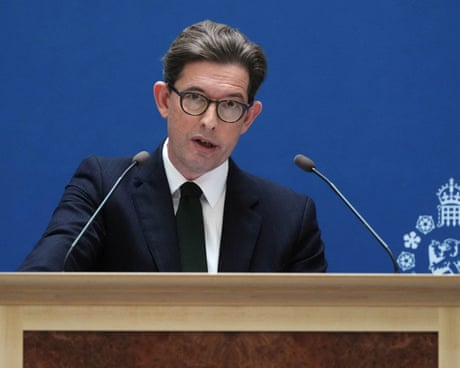
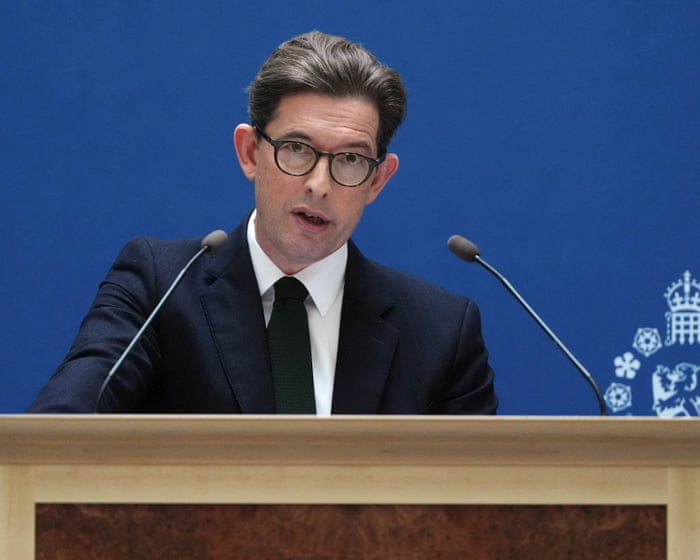
MI5 chief Ken McCallum confirms Russia did interfere in Brexit referendum but says it had little impact – as it happened

He argued there was no evidence to suggest the result of the Brexit vote had been swayed as a result of the effort

Zia Yusuf, Reform UK’s home affairs spokesperson, has said he does not agree with his colleague Suella Braverman’s assertion that black people cannot be English.

Asked about her views in an interview on Sky News, Yusuf said:

In my view Ashley Cole is the best English fullback in history, and I won’t take any other position. So in my view, Ashley Cole is English. I think the argument that he’s not English doesn’t hold water with me.

Nasser Hussain, who I grew up watching when I went to the cricket, the idea that those people aren’t English is an alien concept to me.

I would respectfully disagree with people, who make the opposite argument.

To say I’m English is to take a ‘laissez-faire, anything-goes’ attitude to ethnicity, citizenship and identity. It also denies me my Asian heritage. The liberals (many of them in today’s Conservative party) take this cosmopolitan approach to Englishness. They’re terrified of being called racist so they say that anyone, as long as they’re born here, can be English.

I take the conservative approach. Englishness is an ethnicity. There have been English people for centuries and we need to recognise this more if we are to start taking a more muscular approach to citizenship and nationality. And no, it’s not racist to say this.

Continue reading...

© Photograph: Jonathan Brady/Reuters

© Photograph: Jonathan Brady/Reuters

© Photograph: Jonathan Brady/Reuters

  •  

Shetland’s Most Wanted

Daniel Shailer embeds with the tiny separatist group “Shetland First,” whose members believe the Shetland Islands were never legitimately ceded to Scotland. Its 83‑year‑old leader, Stuart Hill—shipwreck survivor, serial litigant, self‑proclaimed weather‑controller—is such a compelling eccentric that Shailer ends up as absorbed in Hill’s own story as in the broader currents of populism on these remote isles.

Previously, Hill has focused on relatively esoteric points of history and legalese. Now, on the advice of his chief campaign advisor, ChatGPT, he is meeting people where they are: should council tax go up while official salaries get bumped? Is it fair to live in fuel poverty at the footsteps of Britain’s largest onshore wind farm?

‘There are all these injustices, and once you read the history, you can see a basic injustice,’ Hill says. ‘Everybody seems to be kind of comfortable with it, but at the same time there’s a basic undercurrent of dissatisfaction.’

  •  

Ireland, Scotland, and Wales independence parties pledge cooperation toward self-determination

Leaders of pro-independence parties in Ireland, Scotland, and Wales met in Cardiff on Monday to sign a memorandum of understanding laying out a plan for strengthened cooperation. The document commits Sinn Féin, the Scottish National Party (SNP), and Plaid Cymru to deepen exchanges on renewable energy, economic policy, and, notably, “supporting the right of each nation to determine its own future.”

“For the first time ever, people across these islands have First Ministers in Scotland, in Wales, and in the North of Ireland who are all committed to independence from the United Kingdom,” the memorandum states. “For people watching across these islands – for people watching around the world – there could be no clearer sign that Westminster’s time is coming to an end.”

Read more: Welsh by-election shows far right isn’t the only alternative to establishment parties

The agreement includes commitments to break with the economic policy shaped in London and to build a different approach that would “create good jobs, tackle inequality and ensure that wealth and opportunity are spread more fairly.” It also outlines an energy strategy promising to leverage the three regions’ renewable resources to bring more affordable energy to communities.

However, the provision that has attracted most attention is the commitment to realize the three nations’ right to self-determination. “We call for the British Government to prepare for, plan and facilitate constitutional change in each jurisdiction,” the party leaders wrote. “No Westminster government has the right to block democracy or undermine the principle that our people will decide their own future,” they added.

The meeting followed comments by British Prime Minister Andy Burnham on the possibility of independence referendums in Scotland and Ireland. Burnham ruled out – in different terms – such public votes, drawing criticism from independence-oriented parties. 

In Ireland, his remarks were called out for contradicting Good Friday Agreement provisions that foresee a path to the island’s unity. “It is not an option that the British government can choose whether or not to exercise based on what is politically convenient, but a legal obligation that plays a critical role in underpinning the relative peace achieved since 1998,” the Workers’ Party of Ireland wrote.

Read more: On anniversary of Easter Rising, calls for Irish unity are strengthened

The SNP insisted their ongoing efforts for achieving independence must be contextualized as a response to the aftermath of the 2014 referendum, where unionist parties argued that staying in the UK provided more stability and predictability. Following that vote – where a majority of Scots opted for remaining in the UK – British authorities failed to live up to such arguments, the party said, including when it comes to the protection of public services. “Westminster blocked legislation designed to protect the NHS from being opened up to US healthcare corporations in post-Brexit trade deals, treating our public health service like a garage sale item,” the SNP wrote.

Pro-union critics suggested the memorandum’s commitments risk diverting public attention from everyday issues toward lengthy constitutional discussions. However, Sinn Féin, the SNP and Plaid Cymru contrasted this with a different approach, insisting that independence would allow more space for challenging harmful policies imposed by the British government and for realizing a different vision of society.

  •  

The Ferry Boat Children

With no secondary school in the southern half of the Isle of Mull, children must leave home for the mainland at the age of eleven, living in a youth hostel during the school week. It’s a system that has existed for generations—but what does sending children away so young do to a community? Fernando Pinho gently follows the families who must navigate this rite of passage, and explores the political decisions that have kept this structure in place.

You know that Monday morning dread, she said, when you hate your job and you can’t face going back? The children get that on a Sunday.

Sunday is the day of washing, drying and ironing, because the clothes that came home on Friday have to be packed again for Monday. And then the bag sits at the bottom of the stairs. You come down, and you see it, she said, and it’s this little reminder of what’s coming.

Sometimes there’s an invitation, a barbecue at someone’s house, all of them welcome, just a couple of hours, you’ll be home in time. But her son doesn’t want to leave the house on a Sunday, and she won’t leave him. How do I say I can’t go, she told me.

  •  

The Double Life of William Brodie

In the late 18th century, no man in Edinburgh seemed more respectable than William Brodie. By day, he was a successful cabinetmaker, a member of the city council, and a deacon of the Incorporation of Wrights and Masons, one of the most prestigious tradesmen's guilds in Scotland. But by night, Brodie led a secret life as a burglar and thief, moving through the dark streets of the city with the same keys and skills that had earned him the trust of its wealthiest citizens.

His extraordinary double life eventually ended at the gallows. A century later, Brodie’s life inspired one of literature's most famous tales of dual identity: Robert Louis Stevenson's The Strange Case of Dr. Jekyll and Mr. Hyde.


© Amusing Planet, 2026

  •  

Edinburgh Seven And The Surgeons' Hall Riot

On 18 November 1870, a crowd gathered outside the Surgeons’ Hall in Edinburgh. Inside, seven young women sat for an anatomy examination alongside male medical students. Outside, hundreds of men jeered, shouted insults, and attempted to force the gates. Mud, rubbish, and abuse rained down on the women as they tried to enter the building. Some of the male students reportedly released a sheep into the hall as a mockery of the female candidates. Others, more sympathetic ones, tried to shield the women and escorted them out of the college in safety once the examination was over.


Surgeons’ Hall, the site of the 1870 riots. Credit: Billy Wilson


© Amusing Planet, 2026

  •  
❌