
❌

Reading view

I quit Wall Street at 34 to live out of my car. My best friend thought I'd lost my mind.

Woman camping
The author left her career and went camping.

Courtesy of the author

  • Our friendship developed during years when our lives looked very similar.
  • When I took a divergent path, and she didn't understand, I thought I would lose her.
  • The challenge of our differences brought us to a place of more honesty, deepening our connection.

When I told my best friend I was quitting my Wall Street legal career to spend a year camping and exploring the American West, she looked at me aghast and said, "You're joking, right?"

Her response wasn't surprising. I hadn't exactly been honest with her, or myself, about how much I longed for a very different life than the one I was living.

At the time, we were 34 years old, and during the prior 16 years of friendship, our lives had run parallel tracks, studying business in college, then pursuing demanding careers in East Coast cities. While we'd seen each other through heartbreaks and upheavals, this was more than that. This was a significant detour, and as she looked at me, her face flush with confusion, I wasn't sure the detour was something our friendship would survive.

For years, our lives aligned

Erin and I met freshman year in college as scholarship runners on a highly competitive Division I Track Team. While our four years there weren't exactly conducive to honesty or vulnerability, it bonded us in a deep way.

After graduation, we shifted our attention and drive toward corporate careers, supporting each other in these often-stressful pursuits. With our finances closely aligned, we traveled, dined, and indulged at the spa together. More than that, during those years, Erin became my anchor. She's the one I called in the middle of the night when the man I thought I was going to marry walked out, and the one who made me laugh harder than anyone else, especially amid life's disappointments.

Woman camping
The author and her friend had similar paths, and they hadn't questioned them.

Courtesy of the author

Yet, by our early 30s, we'd only ever let ourselves be so vulnerable with each other. While I often shared my frustrations with the strain of my career, I never talked about alternatives, especially one as drastic as quitting to camp and live out of a used car.

I worried that taking a different path would end our friendship

When I decided to quit and plunge toward a very different life, Erin wasn't the only person who questioned this choice, but she was the most important. Plus, now living off my savings, I could no longer afford many activities at the center of our friendship.

When Erin came to help pack up my apartment, she continued to express skepticism about my plan to live for a while without a plan. Thinking about the infinity symbol when we said goodbye, I wasn't sure we'd ever meet back at the center.

To my surprise, she showed up for me in unexpected ways

During the early days of my trip, Erin began asking for updates on how it was going, and I began sharing details. The first night I camped alone, I sent her a photo of my tent overlooking the Colorado River and confessed how scared I was, because despite my plans to spend a year camping, I'd never actually camped by myself before that night. She responded with the same enthusiasm and encouragement that had buoyed me for years.

Woman atop mountain
The author worried their different paths would end their friendship.

Courtesy of the author

These conversations continued over the months that followed. When poor planning on a trail run landed me in a stranger's car for the night, she was the one I called to recount the tale and laugh over my mistakes. And on her birthday, I sent her a celebratory photograph from a 14,000-foot peak. It wasn't that she still had questions about what, exactly, I was doing with my life; it was that, at some point, she let go of her hesitations and began trying to understand my motivations.

This culminated with her request to join me for a backpacking trip — something she'd never done. We spent two nights in Arizona's Superstition Mountains, where my ease in the wilderness clashed with her tentativeness. And though we had fun, when she questioned whether I understood how to read a map as we searched for a water source, I was sure I'd never do something like that with her again.

Of course, I did, many times over, because through the friction, this truth surfaced: We'd always been very different people, and now, we were just living in those differences. The challenge of that, and her willingness to embrace it, brought us closer than ever.

Over the years, as I became more honest about who I was, she, too, became more honest about who she was. A decade later, our lives still look very different, and still, Erin is my anchor.
Read the original article on Business Insider
  •  

I took a 20% pay cut for 8 months so I could spend an entire summer with my kids. It was worth it.

the author's kids outside
The author took a 20% pay cut for more time off with her kids.

Courtesy of Natalia Costa

  • As my maternity leave after having my fourth child was ending, summer was starting.
  • I wanted to spend the summer with my kids, and I looked for a solution.
  • I ended up taking a 20% pay cut for 8 months for another 73 days off.

Our fourth child was a happy surprise, and arrived on the scene when we were busy putting out metaphorical fires with our 4-year-old twins and our 2-year-old daughter, who seemed to spend most of their time playing and fighting.

We felt like we already had a lot of kids. Not too many, but enough. When I learned I was pregnant, we asked ourselves, what was one more?

As my maternity leave was ending, I still wanted more time

Nine months later, the real party began. My maternity leave started coming to an end just as we were facing a very long summer: 12 weeks, from June 20 to September 8, with no school. We live in Spain, and were about to face one of those eternal Spanish summers I remember so well from my own childhood: long, hot days full of sand, sea, salt, swimming pools, and, yes, boredom.

Our monthly expenses were already higher than ever (diapers, onesies, baby food, and all those brand-new baby things I'd previously gotten rid of because I thought we were done having kids). Still, I decided to take a 20% pay cut in exchange for more time, simply so I could get us through the summer.

That decision meant more time with the baby, obviously, but also with the rest of my kids, who are still just older than babies themselves. The difference is that 40 years ago, in many families, one salary — usually the man's — could support a household. Today, both parents often need full-time jobs and want to have professional lives of their own. This is the case for us, and it's not particularly compatible with looking after four very young children for 12 weeks.

Taking a pay cut gave me an extra 73 days off

By agreeing to a 20% pay cut for eight months, I was able to combine my reduced working hours into 73 full days off instead of working shorter days each week. Together with my maternity leave, weekends, and public holidays, those extra days allowed me to stay home with my children much longer than I ever expected. I didn't have to return to work until my baby was 10 months old. It was a financial sacrifice, but it gave me something I couldn't put a price on: more time with my children. Face to face.

It sounded stressful when I thought about it. In reality, it turned out to be a dream. I've had the best summer of my life, and I'm afraid I may never get another one quite like it.

Since June, the weeks have passed slowly, as we looked for activities to fill the days: painting, drawing, gluing things together, doing yoga or gymnastics, trying to get everyone to nap at the same time, and, obviously, spending hours by the pool and at the beach.

There were moments when the baby wanted to breastfeed while my little girl needed a diaper change at the pool, with me sitting on the edge, trying to manage both. Or one kid suddenly needed to pee while the others were happily playing in the water. It has been a crash course in patience, caregiving, and motherhood.

But the interesting part isn't just how much fun we had. It's how much money we saved by doing it this way.

We saved so much on childcare that it didn't make much of a difference

I lost €10,000 (about $11,200) by taking the pay cut, which is a lot of money when you have this many kids. But I also avoided paying for the baby's day care, which costs around €700 a month. Over three months, that's about €2,100. Summer programs for the other three children would have cost around €200 per child a week. Over 12 weeks, that comes to €7,200.

Put it all together, and we would have spent about €9,300 on childcare over the summer anyway. So, in practical terms, we gave up roughly €700 so I could spend an entire summer with our four kids.

It a good trade.

Then there's everything that doesn't fit neatly into a spreadsheet: everything we learned together about being a family, sharing things, expressing ourselves, respecting each other's rhythms, and simply waiting for things to get done, something you do a lot of when there are four small children involved.

Financially, it turned out to be a good decision for us. Emotionally, it was even better.

The question now isn't really how much we saved or lost. It's what we're going to do next summer.

We'll see.

Read the original article on Business Insider
  •  

I embraced girlboss culture in my 20s. It didn't take long to realize I wanted out.

Person in a striped shirt holds a small frosted dessert in an arched courtyard with colorful bunting.
The author leaned out of hustle culture and said she enjoyed a more relaxed, but still fulfilling, life.

Courtesy of Catherine Work.

  • I spent my 20s believing that working hard and making money were the keys to independence.
  • I realized I was working so much that I had no time or energy to enjoy the life I was building.
  • Years later, being an ambitious woman looks different to me. I work less and have time for myself.

I thought making a lot of money and working hard would make me happy.

In my early 20s, I got great grades and finished my undergrad in three years. By my mid-20s, I had finished my graduate degree in law while frequently working 70-hour weeks.

I leaned into the idea of being a girlboss, often working weekends or through my lunch, and focusing on making lots of money. It was a habit I saw modeled by my parents. It worked for them, and I thought it would work for me, until it didn't.

I thought hard work was the point

At 26, I worked long days at my home desk after making "hard worker" and "responsible'"my identity for years. I thought this was what an independent woman was: someone who worked constantly and optimized all of her time.

Person gives two thumbs up at a dining table covered with paperwork, sticky notes, a tablet, and a smartphone.
The author said she spent so much time working in her 20s that she barely had time to enjoy the money she made.

Courtesy of Catherine Work.

Sure, I was saving lots of money and networking, but I was often too tired on my day off to do anything. I often chose to work on Saturdays and didn't even have time to spend my hard-earned money.

Two things made me realize this wasn't a sustainable lifestyle: I once told a friend I couldn't take a 15-minute lunch break to call her, and another time I struggled to lift my full duffle bag for an upcoming trip after not working out for months.

Something had to give.

I didn't want to just recover from burnout

I was clearly burned out. I could have taken some time off to recover and come back, but then the cycle would have continued.

It helped that I spent my early 20s in Cameroon and Costa Rica, two places where work-life balance looks a lot different than it does in the US, and people live with their parents much longer. Looking back on those years when I was truly happy helped me to question what I was focusing on in my life.

I came to a new conclusion. I didn't want to simply recover after burning out. I wanted to reject the premise that burnout was the price of being an ambitious woman.

I stopped hustling toward anything

In 2022, as the COVID restrictions were lifted more and a relationship I had been in ended, I decided to travel while working a few hours per week. As a then single, childfree woman, no longer heading towards a career, I wondered what I'd replace these traditional markers of success with. The answer turned out to be nothing.

I stopped trying to hustle toward something. No job, boss, passion, or person was going to truly reward me for committing to 70-hour weeks. Nothing was worth putting off a breakfast date with myself or an unplanned walk in the park, or that 15-minute phone call I told my friend I couldn't take.

I decided to opt out of the competitive nature of the working world and instead focus on optimizing myself.

5 years later, my life looks different

Five years later, I have a life my 26-year-old self would barely recognize. I work substantially less, have built a career around writing and research for companies with values I admire, and have spent the past several years living and traveling in different countries.

Hikers descend a rocky mountain ridge surrounded by dense clouds and mist, led by a person in a red helmet.
The author said her life has much more balance now and includes time for her to travel, cook, and connect with friends.

Courtesy of Catherine Work.

I don't own a car or a home, and I'm not chasing a traditional career ladder. Instead of constantly asking what I should accomplish next, I have far more time for cooking, relationships, travel, and simply being alive.

One thing I did keep from that previous era of my life was my deep conviction that I, and all women, need to be financially independent. I have stopped suggesting that my friends work through their lunch break; instead, we talk about ethical investing and the need to always have one's own bank account.

Independence turned out to mean something else for me

The surprising part is that opting out didn't ruin my career, and I didn't feel the need to replace work with anything else. I don't think chasing a job title, a salary, or a full calendar would have made me feel secure.

I think I would have constantly felt the need to prove myself, which sounds exhausting to me now. Instead, I have the independence I sought when I was younger. It just took the form of letting go of the idea that I have to constantly prove my worth to myself.

Read the original article on Business Insider

  •  

I left my 13-year career at Google to work in sustainability. It wasn't an easy choice, but my values had changed.

a man takes a selfie on a cliff
Bruno Bianchini.

Bruno Bianchini

  • Bruno Bianchini quit his job at Google to focus on sustainability in Cambodia and green finance.
  • While still at Google, he pursued a degree at Harvard in sustainable studies.
  • He says leaving Google was a hard decision, but his career shift aligns with his values.

This as-told-to essay is based on an interview with Bruno Bianchini, the 40-year-old former Head of Global Partnerships for the Middle East, Africa, and Turkey for Google, who is based in the Netherlands. It has been edited for length and clarity.

Growing up in the Italian countryside, sustainability was simply part of everyday life. At 18, I left my small village near Milan to study at Bocconi University in Milan.

In 2005, I started my degree in accounting, corporate finance, and law. Then I did a master's in business administration. When I was about to graduate, a friend at the university said a group of professors had opened a boutique consulting firm. I interviewed for the role and landed it.

That path led me first to consulting and then to Google, where I spent more than 13 years before leaving to pursue work in sustainability.

I started work as a business analyst at the consulting firm in January 2011

At 25, I was working on three projects — a hotel, a food company, and a company that made pressure gauges. My experience was very much about seeing problems through an analytical lens.

In 2012, I was invited to a friend's birthday dinner, where I was seated opposite a guy working at Google. Although Google was already a huge company, I had little sense of its scale. I thought of it mainly as a search engine.

We stayed in touch, and they eventually asked if I'd be interested in an interview

I remember wearing a jacket and tie, and I thought, I can't show up at Google like this; they're never going to hire me. I roughed up my hair, removed my jacket and my tie, and went to the interview.

I had three interviews at Google on the same day. One interviewer asked me about role-related knowledge, the next about more general knowledge, and the third was Googleyness — whether I was a culture fit. I remember thinking in the interview that I wanted to work with these people.

About a week later, I had a fourth interview. The process moved quickly because it was for a temp job. In July 2012, I joined Google.

The Google office in Milan was colorful and playful

I remember there was a game area. In consulting, I'd start work at 8:30 a.m. and leave at 10:30 p.m. every day. At Google, people were coming and going whenever they wanted. The culture was a huge change for me. It was fantastic.

A year later, I applied for a full-time role working with DoubleClick for Publishers, now part of Google Ad Manager. I did lots of prep for the interview, and I got the job.

In 2016, my boss asked me to give a presentation at the Google office in Dubai

After the presentation, a guy who became my new boss asked if I'd consider moving to Dubai because they were expanding the team. Two months later, they opened the role; I applied, got the job, and moved to Dubai.

That same year, I got to see the San Francisco campus for the first time. When I saw the scale of the buildings, the number of meeting rooms, micro kitchens, and the bicycles employees rode around campus, I was mesmerized. Working for one of the most innovative companies on the planet, I felt like I was always at the forefront of tech innovation. I definitely got a kick out of that.

By 2024, I had become the Head of Global Partnerships for the Middle East, Africa, and Turkey at Google

As I was managing a large region, there was a lot of travel.

On office days, I generally worked 9-to-5, depending on projects and deadlines. I might have calls with people in the US, but travel was more hectic. From the moment I arrived, I was having breakfast with colleagues, attending an event, or meeting with clients.

Throughout my time at Google, my value system changed

I'd been thinking about sustainability for some time. When I was in Milan, I met someone from LA who told me they were vegan. They told me about the damage the dairy and meat industries are causing to the planet. I started reading more, and I went down the rabbit hole. I remember feeling that I wanted to be part of the movement for the solution.

While still at Google, I looked into which universities offered degrees in sustainability and came across a program at Harvard.

In December 2025, I resigned from Google

I pursued my master's degree in sustainable studies at Harvard online while working at Google. The last part of my studies involved a thesis. I took a sabbatical from Google and traveled to Cambodia to work on an ambitious project that plans to reforest 100,000 hectares of flooded forest. I worked on the feasibility study.

Google was kind enough to say, "Go pursue your dreams, and if something doesn't work, you're welcome to come back." Eventually, I decided it was time. After four months in Cambodia, I felt the umbilical cord was stretched enough. When I returned from my sabbatical, I handed in my notice.

I feel now that I have a big purpose in my heart, confidence in the abilities Harvard gave me, and, at the same time, I feel financially secure. I could leave a high-paying role where I was making more than $300,000 in annual total compensation for the unknown.

I'm now working as an independent consultant for this project in Cambodia.

Leaving Google was not an easy choice

Google nurtured me in so many ways, but as I was learning more about sustainability, my value system was changing. I was encouraging people to sell more stuff, and on my dark days, I remember thinking that staying at home on the couch was better for the environment.

I want to capitalize on my background in business and finance. I'm currently working on publishing a research paper about the project in Cambodia. I'm doing this long-distance while we're securing funds for the pilot. This month, I moved to the Netherlands, as it is one of the best places for green finance.

Read the original article on Business Insider

  •  

Los trabajadores europeos que entrenan las IA: “Ya sabía que me metía en unas condiciones que no eran las mejores”

La inteligencia artificial parece muy lista, pero no aprende sola. Miles de humanos han guiado su aprendizaje, corrigiendo y ajustando sus respuestas. Un informe publicado este jueves por las plataformas de investigación DiPLab y Reversing.Works da nuevos detalles sobre cómo miles de trabajadores europeos trabajan a ratos sueltos para Outlier, una plataforma de Scale AI. En junio de 2025, Meta pagó 12.400 millones de euros por el 49% de Scale AI y su fundador, Alexandr Wang, pasó a ser director de IA de la compañía de Mark Zuckerberg. Antes de esa adquisición, Outlier ayudaba también a entrenar los modelos de empresas como OpenAI o Google.

Seguir leyendo

© Carlos Barria (REUTERS)

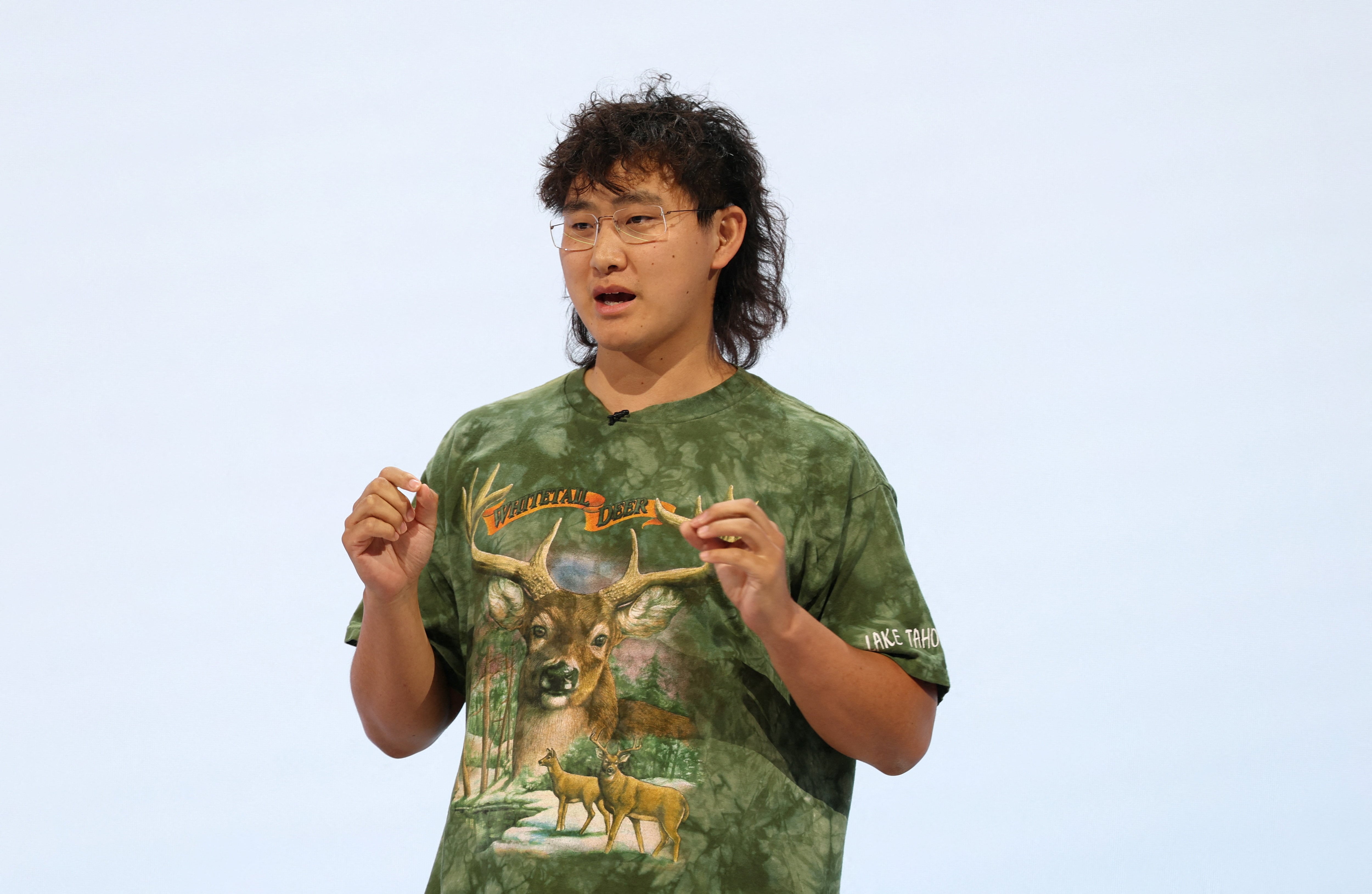
El director de IA de Meta, Alexandr Wang, habla en el Meta Connect el pasado mes de septiembre. Wang fue fundador de ScaleAI, creadores de Outlier.
  •  
❌