❌

Reading view

Exclusif : L’Iran, un cobra lové prêt à frapper

L’Iran et le Pakistan sont pleinement engagés dans la construction d’un ordre financier post-américain à la croisée du Moyen-Orient et de l’Asie du Sud.

Allons droit au cœur du sujet : après avoir soigneusement examiné l’échiquier, les dirigeants politiques et militaires de Téhéran sont déjà parvenus à la conclusion qu’une attaque conjointe américano-israélienne, dont la planification avance à un rythme effréné, est inévitable.

Ils se positionnent donc désormais comme un cobra lové, prêt à frapper et à injecter son venin mortel au premier signe d’une menace imminente du syndicat Epstein — sans même attendre une attaque effective.

Cette offensive préventive, dont les contours sont déjà tracés, sera dévastatrice ; elle s’étendra au-delà des bases américaines au Moyen-Orient vers d’autres cibles régionales, et pourrait notamment inclure les infrastructures énergétiques du Golfe ainsi que les câbles sous-marins (ce qui, dans ce cas, affecterait principalement le Golfe et l’Inde, bien plus que les États-Unis et l’Europe).

Nous sommes en présence d’un danger clair et immédiat : une opération militaire américano-israélienne destinée à exercer une pression sera certainement interprétée à Téhéran comme le début d’une attaque.

Ainsi, la pression en faveur de la guerre exercée par le «culte de la mort» et par Trump se heurte désormais à un seuil de tolérance iranien dangereusement bas. Les options de frappe du Pentagone vont des installations nucléaires iraniennes aux infrastructures énergétiques.

Il va sans dire que le «sociopathe en chef» — déjà en pleine panique face à la débâcle imminente des élections de mi-mandat — est une proie facile pour le puissant lobby sioniste pro-guerre et ses donateurs. Le danger stratégique suprême réside donc dans le fait que cette pression incessante puisse envoyer un signal que Téhéran interpréterait comme une attaque imminente, même si Washington affirme publiquement qu’aucune frappe n’aura lieu avant les élections de mi-mandat.

Le Yémen fait passer la situation à un niveau supérieur

Parallèlement, des sources privilégiées à Islamabad confirment le succès d’un essai de missile pakistanais à Mach 7, d’une portée de plusieurs milliers de kilomètres. Cette nouvelle capacité a tout ce qu’il faut pour modifier concrètement l’équilibre des pouvoirs au Moyen-Orient, en renforçant la portée dissuasive du Pakistan et sa capacité à influencer tous les calculs de sécurité régionaux, tout en approfondissant les liens du Pakistan avec la Chine, l’Iran et les pétro-monarchies du Golfe.

Et voici une autre exclusivité : des membres des services de renseignement militaire israéliens, notamment un général de division, ont quitté Riyad après que MbS, dans un prétendu moment de lucidité, eut dit «non» à l’offre d’»assistance» de la secte de la mort. Et pourtant, plus de 100 membres du CENTCOM sont toujours sur place.

La décision de MbS lui a peut-être été imposée par la Turquie et le Pakistan — les deux autres signataires de l’Alliance de défense de La Mecque, qui se sont soudainement retrouvés dans la même salle de crise à Riyad, côte à côte avec des agents de la secte de la mort.

Si leur départ a peut-être écarté un risque d’escalade, les agents américains restent révélés : toute frappe, d’où qu’elle vienne, faisant des victimes américaines entraînera immédiatement Washington dans la guerre entre l’Arabie saoudite et Ansarallah.

La guerre entre l’Arabie saoudite et Ansarallah atteint en effet un nouveau niveau de volatilité. Le mélange explosif constitué par l’interception d’un missile de croisière au-dessus de la province de Médine, les interceptions de drones ailleurs en Arabie saoudite et les frappes de missiles des forces armées yéménites contre le complexe présidentiel du gouvernement fantoche d’Aden n’est qu’un début.

Ce qui s’est passé après qu’Ansarallah a pris pour cible Najran — l’une des provinces du sud de l’Arabie saoudite volées au Yémen en 1934 par les Britanniques — est tout à fait stupéfiant.

Un porte-parole saoudien a accusé Ansarallah d’avoir lancé un missile de croisière sur Médine. La réponse du porte-parole emblématique des forces armées yéménites, le général Yahya Saree, a été cinglante : «Nous n’avons mené aucune opération militaire visant le territoire saoudien aujourd’hui. Par conséquent, l’affirmation de l’ennemi saoudien selon laquelle Médine aurait été prise pour cible est une pure invention et un mensonge grave».

Traduction : le Yémen frappe l’une de ses anciennes provinces ; les Saoudiens se lancent dans des fausses informations à outrance, inventant de toutes pièces une attaque contre l’une des deux mosquées sacrées — sans doute en préparation d’une opération sous faux pavillon ; puis le Yémen nie aussitôt avoir frappé quelque (italiques de ma part) territoire saoudien.

Cela signifie que Sanaa déclare subtilement, pour que tout le monde comprenne, qu’elle ne mène plus d’opérations à l’étranger (italiques de ma part) sur les trois provinces : Jizan, Najran et Asir. Elle prépare déjà — psychologiquement et opérationnellement — le terrain pour récupérer son territoire volé.

Tout cela se résume dans cette analyse yéménite succincte de la déconstruction de la fastueuse Maison des Saoud :

«Le Yémen sape les piliers ultra-fragiles de l’économie non pétrolière sur lesquels les pirates du désert ont fondé tous leurs espoirs : l’image, les investissements (IDE), l’évasion de la réalité, ainsi que l’impunité et l’invulnérabilité face au terrorisme à l’étranger».

Comment le Pakistan et l’Iran contournent le FMI

Prêtez maintenant attention à un événement assez surprenant qui s’est produit en milieu de semaine à Bangkok, lors de la réunion annuelle du FMI et de la Banque mondiale — dûment accueillie par des manifestations de rue en Thaïlande.

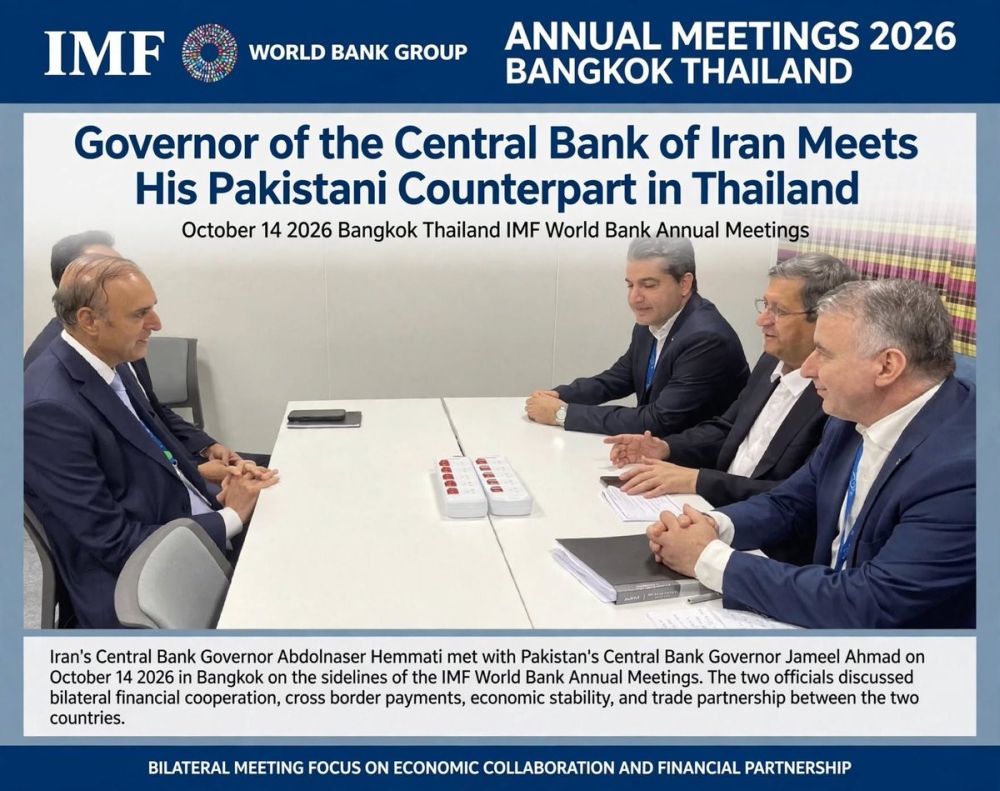
Le gouverneur de la Banque centrale d’Iran, Abdolnaser Hemmati, a rencontré le gouverneur de la Banque centrale du Pakistan, Jameel Ahmad, en marge de ce rituel annuel de premier plan à la gloire du dollar américain.

Le Pakistan est soumis à la poigne de fer des ajustements structurels imposés par le FMI et la Banque mondiale — et, pour couronner le tout, menacé de sanctions américaines parce qu’il entretient des relations commerciales avec l’Iran.

Le fait que le Pakistan et l’Iran discutent de facto de la dédollarisation au cœur même de la tanière du lion — le temple du dollar américain — n’a donc pas de prix.

L’infrastructure est en place depuis 2023, grâce à un accord de swap de devises utilisant le rial et la roupie à la place du dollar américain. Le troc est géré par les deux banques centrales, et les flux bancaires transitent par la Banque Melli en Iran et la Banque Mellat au Pakistan. Leurs marchés frontaliers — au moins six d’entre eux — sont en plein essor : des routes commerciales physiques qui contournent complètement le dollar américain.

Ce dont ils discutaient à Bangkok en début de semaine, c’est la manière d’étendre ce système : ils se moquent éperdument des sanctions secondaires américaines. D’autant plus que Téhéran offre à Islamabad ce que le système américain ne peut tout simplement pas offrir : la souveraineté, pas de changement de régime, pas d’austérité, pas de leçons de morale et, surtout, pas d’ajustement structurel.

Sans compter que le Pakistan a cruellement besoin du gaz iranien — et des routes commerciales de la nouvelle Route de la soie rendues possibles par la Chine.

L’Iran a bâti toute une économie en contournant complètement le FMI — et capable de survivre à un tsunami de sanctions, à un blocus et à la guerre.

Aujourd’hui, l’Iran et le Pakistan sont en pleine construction d’un ordre financier post-américain à la croisée du Moyen-Orient et de l’Asie du Sud — avec des swaps de devises, du troc, des marchés frontaliers en plein essor et des canaux bancaires adaptés, tournant ainsi en dérision les sanctions secondaires.

Soit dit en passant, cela se produit au moment même où un immense train iranien, chargé de pétrole brut — et le premier d’une longue série —, s’apprête à partir pour… la Chine via l’Asie centrale, sur la ligne ferroviaire de la «nouvelle Route de la soie» construite par la Chine.

Le cobra lové est peut-être prêt à frapper. Mais le cobra, depuis des temps immémoriaux, adore aussi faire des affaires.

Traduction:  Reseau International

  •  

Israeli settlers attack European delegation convoy in West Bank, beat French mayor

Israeli settlers on Saturday attacked a convoy carrying a European delegation in the occupied West Bank, beating up a 78-year-old  French mayor. While Israel's Prime Minister Benjamin Netanyahu – who is just days from a crucial election – described the incident as a "smear" campaign against Israeli settlers, France's top diplomat urged Israel to "urgently halt criminal violence".

  •  

Yemen's Houthis claim responsibility for fresh missile strike on Aden airport

Yemen's Iran-aligned Houthi group claimed responsibility after two missiles struck Aden International Airport on Friday, saying they had targeted a weapons depot as well as a military command headquarters. The Aden Security Department said a Yemenia Airways flight bound for Cairo had been preparing for takeoff when the attack took place.

  •  

The End of the Security Umbrella: Why the Houthis and the Axis of Resistance Are Changing the Rules of the Game in the Middle East

The Houthis are preparing to march on Riyadh while the Revolutionary Guards are driving America out of every continent. America’s security umbrella has failed to provide the Gulf petro-monarchies with the much-touted security against Iran and the axis of resistance. Instead, it has made them more susceptible to the realization of the “Pax Judaica,” or […]
  •  

Exclusive: Iran, a coiled cobra ready to strike

Iran and Pakistan are deep into building a post-American financial order in the intersection between West Asia and South Asia.

Join us on Telegram, X, and VK.

Contact us: info@strategic-culture.su

Let’s get right into the heart of the matter: carefully examining the chessboard, the political and military leadership in Tehran has already reached the conclusion that a joint U.S.-Israeli attack, with planning advancing at a feverish pace, is inevitable.

So they are now positioned themselves as a coiled cobra, ready to strike and inject deadly venom at the first whiff of an imminent Epstein Syndicate threat – even without waiting for an actual attack.

The preemption drive, already delineated, will be devastating, extending beyond U.S. bases in West Asia to other regional targets, and potentially including Gulf energy infrastructure and undersea cables (in this case mostly affecting the Gulf and India, much more than the U.S. and Europe).

We are into clear and present danger territory: a U.S.-Israeli military movement intended as pressure certainly will be interpreted in Tehran as the opening of an attack.

So the death cult/Trumpian pressure for war now meets a dangerously low Iranian threshold. Pentagon strike options range from Iranian nuclear installations to energy infrastructure.

It goes without saying that the Sociopath-in-Chief – already freaking out with the imminent mid-terms debacle – is an easy prey to the powerful pro-war Zionist lobby/donors. The supreme strategic danger then is that this non-stop pressure may produce a signal that Tehran interprets as an imminent attack, even while Washington publicly maintains that no strike will happen before the mid-terms.

Yemen is taking it all to the next level

In parallel, privileged sources in Islamabad confirm a successful Pakistani missile test at Mach 7, with a range of several thousand kilometers. This new capability has all that it takes to materially alter West Asia’s balance of power, strengthening Pakistan’s deterrent reach and how it will be able to influence every regional security calculation, and adding to Pakistan’s deepening interconnection with China, Iran and the Gulf petro-monarchies.

And now for another esclusive: Israeli military intelligence personnel, including a Major-General, have left Riyadh after MbS, in an alleged moment of lucidity, said “No” to the death cult’s offer of “assistance”. And yet more than 100 CENTCOM personnel remain.

MbS’s decision may have been forced on him by Turkiye and Pakistan – the other two signatories of the Mecca Defense Alliance, who suddenly found themselves in the same war room in Riyadh side by side with death cult operatives.

Now their departure may have removed one escalation risk, but U.S. operatives remain exposed: any strike, wherever it comes from, generating U.S. casualties will immediately draw Washington into the Saudi-Ansarallah war.

The Saudi-Ansarallah war, in fact, is hitting the next – volatility – level. The toxic mix of a cruise-missile interception over Medina province; drone interceptions elsewhere in Saudi Arabia; and Yemeni Armed Forces missile strikes on Aden’s puppet government presidential complex is just the start.

What happened after Ansarallah targeted Najran – one of the southern Saudi provinces stolen from Yemen in 1934 by the British – is total eyebrow-raising territory.

A Saudi spokesman accused Ansarallah of launching a cruise missile at Medina. The response by iconic spokesman for Yemeni Armed Forces, Gen Yahya Saree, was a killer: “We did not carry out any military operation targeting Saudi territory today. Therefore, the Saudi enemy’s claim that Medina was targeted is an outright fabrication and a grave falsehood.”

Translation: Yemen hits one of their former provinces; the Saudis go for total fake news, fabricating an attack on one of the two sacred mosques – no doubt as preparation for a false flag; then Yemen promptly denies striking any (italics mine) Saudi land.

That means that Sana’a is subtly declaring, for everyone to understand, that they no longer conduct foreign (italics mine) operations on the three provinces: Jizan, Najran and Asir. They are already – psychologically and operationally – setting the stage to recover their stolen territory.

All that gells into this succint Yemen-based analysis of the deconstruction of the bling-bling House of Saud:

“Yemen is nuking the uber-fragile pillars of the non-oil economy on which the desert Pirates placed all their hopes: Image, (FDI) Investments, Escapism, and Impunity & Invulnerability from terrorism abroad.”

How Pakistan and Iran bypass the IMF

Now pay attention to something quite startling that happened mid-week in Bangkok, during the annual IMF/World Bank meeting – duly greeted by Thai street protests.

The head of Iran’s Central Bank, Abdolnaser Hemmati, met the head of Pakistan’s Central Bank, Jameel Ahmad, on the sidelines of the foremost annual ritual in praise of the U.S. dollar.

Pakistan is under the fierce structural adjustment clutches of the IMF/World Bank – and on top of it threatened with U.S. sanctions because it trades with Iran.

So Pakistan-Iran de facto discussing de-dollarization right inside the lion’s den – the U.S. dollar temple – is beyond priceless.

The infrastructure is in place since 2023 – via a currency swap agreement using the rial and the rupee instead of the U.S. dollar. Barter is managed by both Central Banks, and banking channels run through Bank Melli in Iran and Bank Mellat in Pakistan. Their border markets – at least 6 of them – are booming: physical trade routes completely bypassing the U.S. dollar.

What they were discussing in Bangkok earlier this week is how to expand the whole thing: they couldn’t give a damn to U.S. secondary sanctions. Especially because Tehran is offering Islamabad what the American system simply cannot: sovereignty, no regime change, no austerity, no lecturing and most of all no structural adjustment.

Not to mention that Pakistan badly needs Iranian gas – and China-enabled New Silk Road trade routes.

Iran built a whole economy completely bypassing the IMF – and capable of surviving a tsunami of sanctions, a blockade, and war.

Now Iran and Pakistan are deep into building a post-American financial order in the intersection between West Asia and South Asia – complete with currency swaps, barter trade, booming border markets and appropriate banking channels, making a mockery of secondary sanctions.

By the way, this is happening just as an immense Iranian train, loaded with crude oil – and the first of many – is ready to depart to… China via Central Asia, on the New Silk Road railway built by China.

The coiled cobra may be ready to strike. But the cobra, since times immemorial, also loves to do business.

  •  

Gaza Famine Deaths Hit 466 as Hunger Crisis Deepens After 3 Years of Genocide

The Palestinian Ministry of Health warned that the humanitarian crisis has reached a critical point in its third year of war. Photo: CNN.

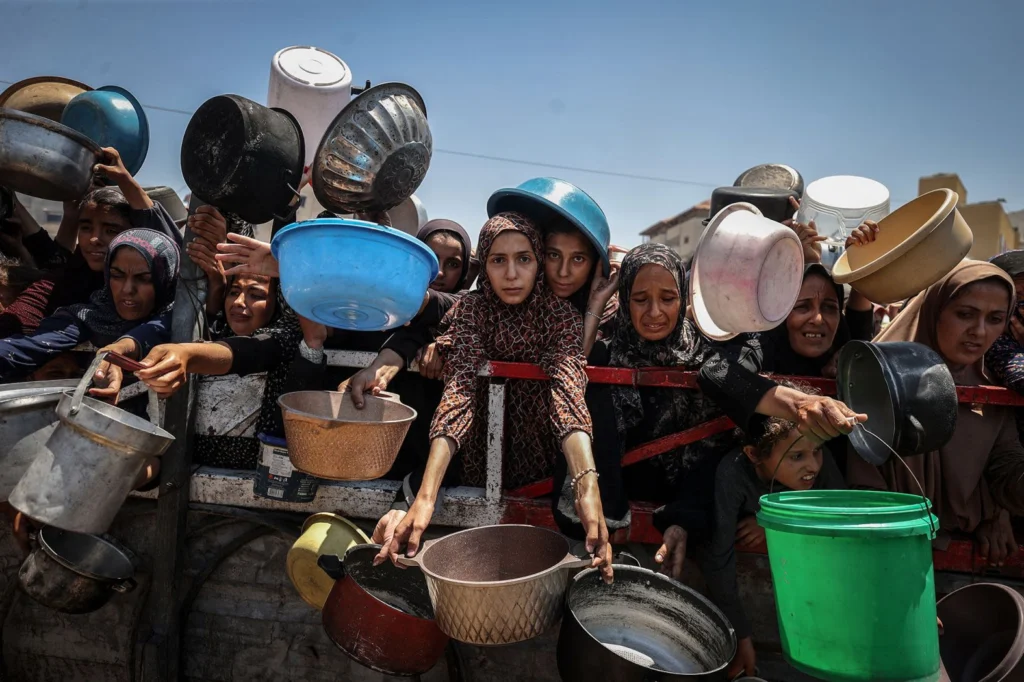
Gaza’s Health Ministry reported Friday that hunger and malnutrition have killed 466 people since 2024, as famine grips the enclave and pushes more than 1.4 million residents toward a critical food crisis.


The Palestinian Health Ministry in Gaza confirmed Friday that malnutrition and hunger rates have reached catastrophic levels across the territory.

The toll stands at 466 starvation deaths since 2024, a figure the ministry released on World Food Day, observed October 16.

RELATED: Gaza Humanitarian Crisis: UN Warns of Explosive Force Equal to 6 Nuclear Bombs

The health authority issued a grim report exposing the consequences of the prolonged Israeli siege. Official projections show that more than 1.4 million people, equivalent to 67% of the population, will face a critical or worse food crisis by the end of 2026. Famine was formally declared in Gaza governorate in August 2025.

“Malnutrition and famine rates in the Gaza Strip have reached catastrophic levels, seriously affecting children, the elderly and other vulnerable groups,” the Ministry said in its statement.

Statement by the Gaza Ministry of Health on World Food Day:

▪️ "Malnutrition and starvation rates in the Gaza Strip have reached catastrophic levels, ravaging children, the elderly, and other vulnerable groups."

▪️ "A total of 466 deaths due to malnutrition and starvation have…

— The Cradle (@TheCradleMedia) October 16, 2026

Children carry a heavy share of the toll. Since 2024, 157 children have died from malnutrition, roughly one third of all starvation deaths. Between 2024 and August 2026, health workers documented 158,001 cases of acute malnutrition in children under five, including 28,716 severe cases that directly threaten life.

The mortality rate among children under five more than doubled, climbing from 13.6 to 33.4 deaths per 1,000 live births between 2022 and 2025. Stunting now affects 12.2% of the child population. Officials estimate that another 74,200 children will require specialized treatment through 2027.

Maternal health has deteriorated sharply as well. Anemia prevalence rose to 61% in 2026, compared with 41% before the conflict. Nearly 4,000 miscarriages were recorded in the first half of the year, more than triple the previous six months. One in every three pregnancies is now classified as high risk.

🇵🇸 466 Palestinians, including 157 children, have died from malnutrition and starvation in Gaza since 2024, Health Ministry says

⚠️ More than 1.4 million people are expected to face crisis-level food insecurity or worse through the end of 2026

📌 Authorities accuse Israel of… pic.twitter.com/xGVDRsQcWy

— Anadolu English (@anadoluagency) October 16, 2026

Elderly Hardest Hit

Elderly adults account for the largest share of deaths linked to food shortages. The Gazan Ministry registered 189 fatalities among the elderly, or 40.5% of the national total.

The vulnerability among seniors is stark: 11% go entire days without eating anything at all, meanwhile 48% deliberately reduce their own portions to feed their families. 68% of them have interrupted or cut back on medication doses because of widespread shortages.

Three years of war have collapsed the food system. The Ministry’s warning lands as winter approaches and as aid deliveries remain insufficient to meet the scale of need across the territory.

The figures mark the deepest point yet in a hunger emergency that has built steadily since the conflict began. A formal famine declaration, once a rare event, now defines daily reality for hundreds of thousands of people trapped in the enclave.

The projected rise in food insecurity through late 2026, combined with 74,200 children awaiting specialized care, points to a crisis that will persist even if aid access improves.

Facing this emergency, the Health Ministry recalled that the right to food is fundamental. It urged the United Nations and the international community to establish urgent mechanisms that guarantee the safe, sustainable and unrestricted entry of humanitarian aid, therapeutic supplements and medicines into the enclave.

  •  

Egypt Challenges Move of Colombian Embassy From Tel Aviv to Jerusalem

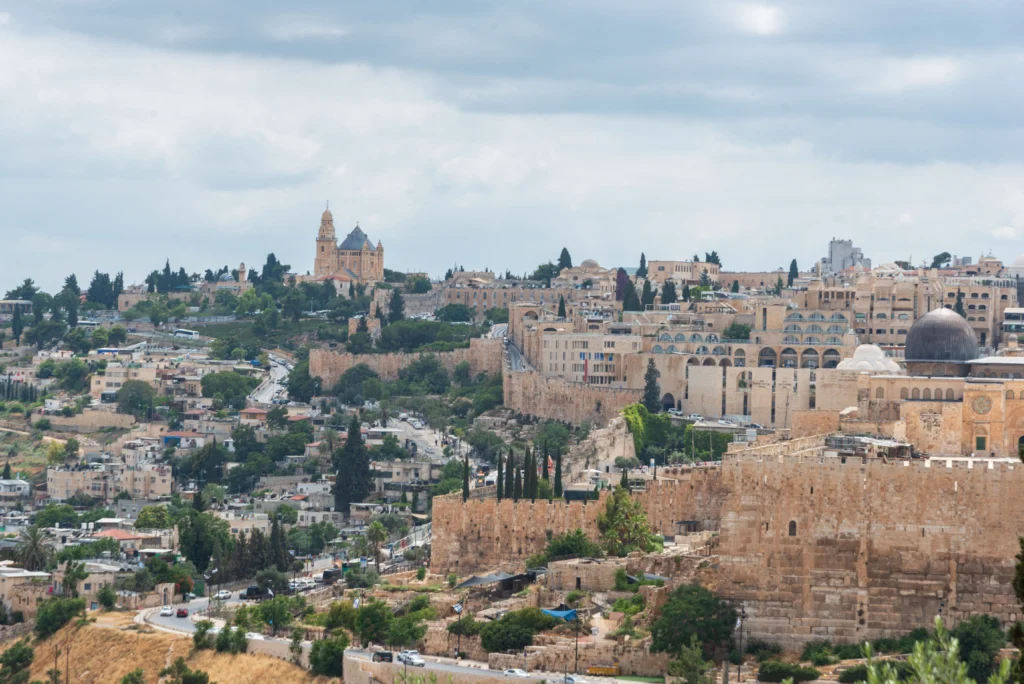
On Friday, Egyptian Foreign Ministry summoned Colombia’s chargé d’affaires in Cairo to express its objection to the opening of the Colombian embassy in Jerusalem, a ministerial source told the official news agency MENA. Egypt described the relocation of the diplomatic mission from Tel Aviv as a unilateral and unacceptable move.

RELATED:

Bogotá March Rejects Colombia-Israel Ties Under De la Espriella

During the meeting, Cairo conveyed a strong protest and categorical rejection of the relocation of the Colombian diplomatic mission to Jerusalem. According to the source, Egypt stated that the decision contradicts the established legal and historical status of the city.

The Egyptian Ministry warned that such irresponsible actions would have negative repercussions for international efforts to achieve peace and stability in the Middle East, adding that they would only serve to fuel tensions in the region.

The Egyptian Foreign Ministry emphasized the need to respect the legal and historical status of occupied Jerusalem and urged that all parties refrain from unilateral measures that could undermine the prospects for peace based on a two-state solution.

A Palestinian source indicated to EFE that the summons was in response to a resolution adopted last week by the Arab League Council. The resolution urged member states of the Arab League and the Organization of Islamic Cooperation (OIC) to summon the Colombian ambassadors accredited to their respective governments.

“Colombia está con nosotros”. Las palabras de nuestro primer ministro @netanyahu en la recepción organizada por el @IsraelMFA por la inauguración de la Embajada de Colombia en Jerusalén 🇮🇱🇨🇴 pic.twitter.com/9znJgegzu5

— Israel en Colombia (@IsraelinCol) October 14, 2026

The text reads, ““Colombia is with us.” The words of our prime minister @netanyahu at the reception organized by @IsraelMFA for the inauguration of the Embassy of Colombia in Jerusalem”

The objective is to lodge a formal protest against what Arab nations describe as an illegal decision by Colombia, as well as to assess the impact of this move on bilateral relations with Bogotá.

On Friday, the foreign ministers of 19 Arab and Islamic nations—including Egypt—issued a joint statement strongly condemning the opening of the Colombian diplomatic mission in Jerusalem. The opening of the embassy followed the rise to power of Colombian President Abelardo De la Espriella, who announced in July that the diplomatic mission would be moved from Tel Aviv to Jerusalem. This move is part of the restoration of diplomatic relations with Israel, which had been severed by the previous president, Gustavo Petro.

According to the UN and the majority of the international community, East Jerusalem is Palestinian territory that has been occupied by Israel since 1967. Israel annexed it in 1980 through a law declaring it its “eternal and indivisible” capital—a decision that the UN Security Council deemed a violation of international law.

The controversy centers on the impact of this diplomatic relocation on the status of Jerusalem, the rights of the Palestinian people, and the prospects for a negotiated solution to the Israeli-Palestinian conflict.

Colombian President Abelardo de la Espriella signed Decree 1525, a measure that facilitates police repression by broadening the definition of “violence” during popular protests.

Interior Minister Rodrigo Lara warned that the new regulation will take effect before demonstrations… pic.twitter.com/YYfouyRGyt

— teleSUR English (@telesurenglish) October 14, 2026
  •  

Welcome to Israel, Trump’s country

TEL AVIV — There is one country on earth where Donald Trump could plausibly win a national election, and he knows it. “I could run for Prime Minister,” he joked in May, claiming 99% approval here. No poll has ever shown that. But the joke landed because it is only half a joke. Thirteen days before […]

The post Welcome to Israel, Trump’s country appeared first on Asia Times.

  •  

The resilience of the world economy is built on illusion – it’s time the West woke up

By Marco CARNELOS

Join us on Telegram, X, and VK.

Contact us: info@strategic-culture.su

Record debt, a paralysed trade-dispute architecture and the normalisation of sovereign-asset seizure as a policy tool means fragility is baked into the global economic system

Since 2022,  a steady drumbeat of forecasts has warned that cascading military and political upheavals – war in Ukraine, conflict in the Middle East, an accelerating tariff war, the weaponisation of sanctions and the disruption of energy supplies – would eventually overwhelm the world economy’s capacity to absorb shocks.

The most destructive of those scenarios have not materialised, or at least not yet.

As the IMF’s managing director Kristalina Georgieva stated last year, while previewing the fund’s World Economic Outlook, the global economy “has generally withstood significant strains from various shocks”.

Although that resilience is real, on closer inspection, it is a more fragile and more contested achievement than it first appears.

The adaptive mechanisms behind this resilience are visible and measurable. Trade has rerouted rather than collapsed. Energy corridors have diversified. And reserve managers have spent the past three years quietly re-engineering the architecture of the international monetary system.

According to the World Gold Council’s 2026 Central Bank Gold Reserves survey – which drew responses from 76 institutions, its highest participation in nine years – 89 percent of central banks expect global gold holdings to keep rising over the next year, with a record share planning to add to their own reserves.

The result: gold has overtaken US Treasuries as the largest single component of global central bank reserves for the first time since the mid-1990s.

Mother of all ticking bombs

Analysts tracking the shift link it directly to a single event: reserve managers were unsettled by the seizure of the Central Bank of Russia’s reserves at the start of the Ukraine war by Washington and have since been actively reducing the dollar share of their portfolios.

This is a clear example that the economic system is not breaking under political pressure, it is adapting to it – flexibly, and crucially, without severing the interconnections that make global trade and finance function at all.

In other words, central banks accumulating gold are not exiting the system; they are just hedging within it.

But adaptability has a cost, and that cost is compounding.

Global debt – government, household, corporate and financial combined – surpassed $365 trillion in the first half of 2026, according to the Institute of International Finance’s Global Debt Monitor, the sixth consecutive quarterly record.

Emerging-market debt alone rose by $6.5 trillion in the same period, breaking past $110 trillion. Georgieva has been blunt about the trajectory: speaking at the IMF and World Bank annual meetings, she warned that global public debt is projected to reach 110 percent of the world’s GDP by 2029.

There is an evident reluctance to address what is not a crisis in any single country’s balance sheet, but a structural drift that every major economy appears aware of and none is prepared to correct unilaterally.

Debt of this scale narrows the fiscal space available to absorb the next shock, military or otherwise, which is precisely what makes today’s resilience difficult to extrapolate into tomorrow’s.

In this context, there is also the mother of all ticking bombs, a nuclear one: the $40 trillion US federal debt which US Secretary of Treasury Scott Bessent is desperately trying to reign in.

The third strand, the onslaught of punitive political measures targeting market principles, is best illustrated by the fate of Russia’s frozen central bank reserves. Roughly $300bn in Russian sovereign assets have been immobilised globally since 2022, with some €210bn ($235bn) held within the European Union.

Erosion of neutrality

Rather than remaining in legal limbo, these reserves have become the financial engine of a specific policy outcome: the EU’s proposed €140bn ($157bn) “reparations loan” to Ukraine, structured so that Ukraine would repay it only once Russia itself pays war damages – effectively converting a sanctions freeze into a grant.

Russia’s central bank has responded by suing the Brussels-based depository Euroclear, which holds the bulk of the assets, calling the manoeuvre illegal.

Whatever one’s view of the underlying conflict, the precedent is the point economists increasingly raise: the first large-scale use of frozen sovereign reserves as collateral for a geopolitical objective changes the calculus for every reserve-holding state watching from outside the western bloc.

It is one more data pointing to the reinforcing of the gold-accumulation trend described above – and a vivid example of how political tools aimed at a single adversary can erode the perceived neutrality of the system itself.

A parallel erosion is under way in trade governance. The WTO’s Appellate Body (the one supposed to settle trade dispute among countries) has been non-functional since December 2019, after the United States blocked the appointment of new judges and talks on reviving or replacing it remain stuck.

More than 30 appeals currently sit unresolved, and the workaround mechanism created to fill the gap – the Multi-Party Interim Appeal Arbitration Arrangement – has resolved only a single case. The institution designed to prevent trade disputes from becoming purely a function of relative power has been quietly sidelined for seven years.

It is then worth wondering – in such a situation – if the Global West and Global Rest see the same picture here.

The evidence suggests convergence on diagnosis but real divergence on meaning. Both recognise that debt is unsustainable and that institutions are strained. But where western policymakers tend to treat sanctions, frozen assets and trade paralysis as defensive responses to external aggression.

Voices from the Global Rest increasingly read the same tools as confirmation that the system was never as neutral as advertised.

India’s External Affairs Minister S Jaishankar captured this gap memorably in 2022, telling European interlocutors that Europe needed to “grow out of the mindset” that its problems are everyone’s problems while the reverse does not hold.

Selective status

This is something many Global Rest governments had been thinking but not saying aloud: that the postwar order’s claim to universality was always, in practice, more selective than it appeared.

The more honest and outspoken western leader to recognise such an unfair situation, to use an understatement, was Canadian Prime Minister Mark Carney earlier this year in Davos.

None of this means the system is about to fracture. The world economy has proven more elastic than feared, absorbing shocks that a decade ago might have triggered genuine crisis. But elasticity and durability are not the same thing.

The real test of this sort of “economy of resistance” is not whether it survives the next military-political storm – it plainly has, repeatedly.

It is whether record debt, a paralysed trade-dispute architecture, and the normalisation of sovereign-asset seizures as a policy tool are quietly converting what is in effect a short-term adaptability into long-term fragility, especially at a moment when the Global Rest and Global West can no longer agree on what the system is actually for.

Original article:  www.middleeasteye.net

  •  

Saudi Arabia under fire…. Yemen is burning down the House of Saud

“Yemen did not want this war, but we are bringing the fire back to Saudi Arabia.”

Join us on Telegram, X, and VK.

Contact us: info@strategic-culture.su

The Saudi kingdom is facing the danger of collapse from soaring war costs as Yemeni air strikes ramp up, hitting its northern neighbor’s capital and industrial centers with impunity.

Yemeni journalist Hussein al-Bukhaiti says the corruption and arrogance of the “House of Evil” is culminating in historic defeat. Its U.S. patron seems unable to avert the coming collapse.

Despite decades of the U.S. selling weapons worth hundreds of billions of dollars to the Saudi rulers, the regime seems shockingly exposed, with no viable defenses. Yemen’s missiles are striking Saudi Arabia at will. The panicky rulers are pleading with the United States and Europe for help.

Yemen’s armed forces are taking the war to Saudi Arabia, striking its airports, imposing a no-fly zone over the entire state and shutting down its vital oil industry.

“The Saudis cannot stop our drones and hypersonic missiles… we are taking the war to them,” says Sanaa-based Hussain al-Bukhaiti.

With no oil exports, Al-Bukhaiti reckons the Saudi rulers are facing an existential nemesis. Many observers have long predicted that the autocratic Saudi kingdom, created by the British Empire, is awaiting downfall from its ossified and family-run power structure.

Speaking from the Yemeni capital, Sanaa, Hussain al-Bukhaiti described the Saudi monarchy as “a house of glass” that is now being shattered by air strikes that cannot be defended against.

“Yemen did not want this war, but we are bringing the fire back to Saudi Arabia.”

Western politicians and media are portraying the conflict between the two Arab Peninsula countries as being caused by recent aggression from the Ansar Allah-led Yemeni government.

Saudi Arabia’s King Khalid international airport was attacked on October 10 with ballistic missiles that killed several people. Other Saudi airports have also been hit. This has led international airlines to suspend flights.

The state-owned Aramco oil industry has also been blasted with missiles. Fires are raging at major facilities, including at the main base of operations in Dammam on the Persian Gulf coast.

Following the missile strike on Riyadh airport at the weekend, U.S. President Donald Trump and all European leaders condemned an “act of terrorism” by Yemen.

Hussain al-Bukhaiti pointed out the gross hypocrisy of European governments not condemning the thousands of Saudi air strikes on Yemen that have occurred since 2015. These governments still remain silent about the ongoing Saudi atrocities against Yemeni civilians. The European Union even declares “solidarity” with Saudi Arabia.

The Saudi monarchy, led by Crown Prince Mohammed bin Salman, started the war with unprovoked attacks in March 2015. The aggression was enabled by the United States, Britain, and France supplying warplanes, bombs, and intelligence.

These Western powers continue to arm and direct the Saudi regime in its war against Yemen.

Since 2015, there have been thousands of Western-backed air strikes on Yemen, resulting in more than 20,000 mainly civilian deaths.

“They hit everything, schools, hospitals, water-treatment plants, farms, homes, wedding and funeral halls,” says Al-Bukhaiti.

In addition, over 400,000 Yemenis have died from starvation and diseases caused by a blockade on the country imposed by Saudi Arabia and its Western backers for over 10 years.

He says the war reignited in July 2026 after the Saudis broke a four-year truce signed in 2022 by bombing Sanaa international airport. There was no condemnation by Europe of the Saudi violation then.

What Yemen is doing to Saudi Arabia now is but a taste of what the House of Saud inflicted on Yemenis since 2015 with Western support.

The Yemenis this week rejected a reported Saudi proposal for a short-term truce because they see it as just a ploy by the Saudis for rearming and regrouping in a losing situation.

For the war to end, Saudi Arabia must respect Yemen’s sovereignty and stop interfering in its internal affairs.

However, Hussain al-Bukhaiti thinks that the United States will double down and escalate its military involvement in Yemen with a full-blown war. This is not primarily to support the Saudi monarchy, he believes, but rather to prop up the Israeli regime.

Yemen has inflicted huge damage on the Israeli state since it intensified the genocide against Palestinians in October 2023. Yemeni air strikes have repeatedly struck Tel Aviv despite American air defenses.

An expanded U.S. war in Yemen might seem surprising given that Trump has made such a mess of his reckless aggression against Iran and may not have the military forces at his disposal.

But Al-Bukhaiti believes the issue is beyond Trump’s choice. Washington is locked in with the Zionist regime and will do whatever it takes to salvage Israel from defeat. Yemen represents the biggest threat to Israel from the cutting off of its shipping in the Red Sea.

“We are ready for the war that is coming,” he warns.

  •  

Settlers burn olive trees, injure journalist in West Bank

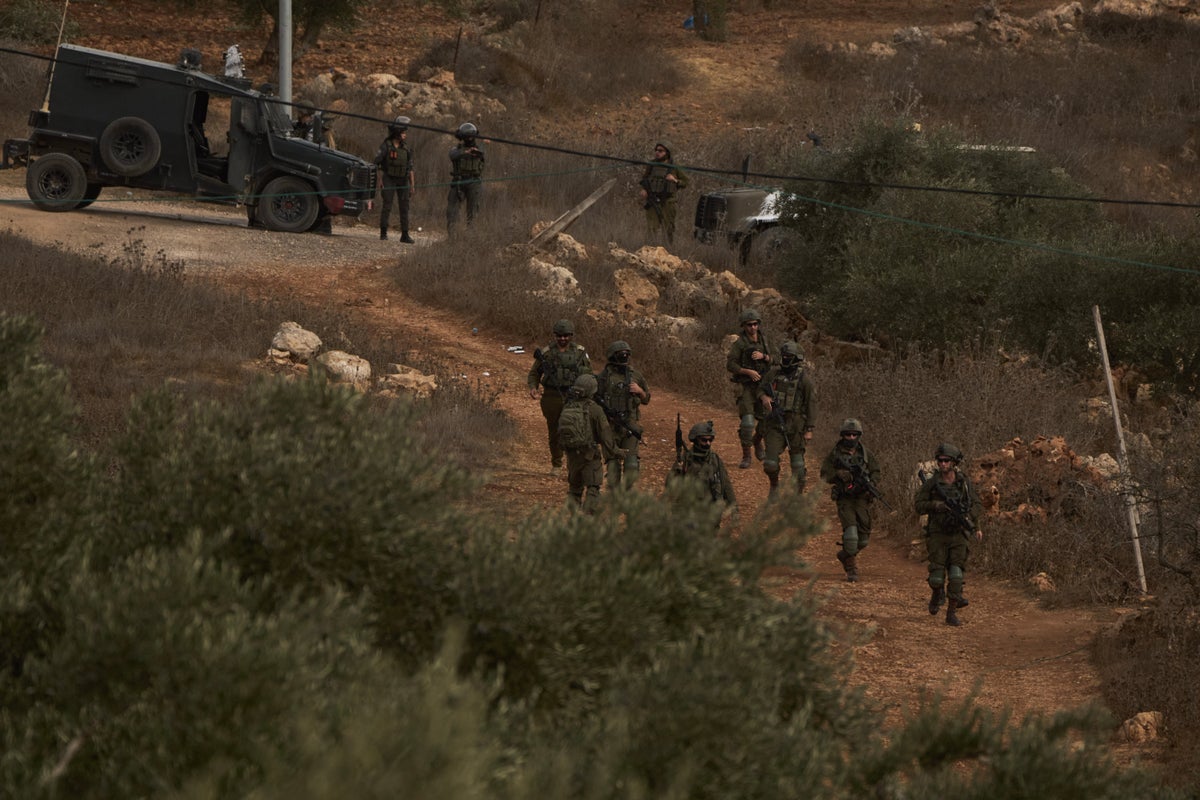
Clad in black and with their faces masked, dozens of militant Israeli settlers burned olive trees and threw rocks at Palestinians in a coordinated attack on a West Bank village's annual harvest that injured at least two people including a journalist.

  •  

Outrage as UTJ candidate likens situation of ultra-Orthodox in Israel to Jews in Holocaust

Stark says draft-dodging men can't travel for marriage matches: 'Reminds me of our grandparents' stories'; Pindrus, Deri regret backing Ohana, a gay MK, as Knesset speaker: ‘Desecration of God’s name’
  •  
❌