❌

Reading view

Inside the long, bitter fight over one man’s quest to build the biggest AI datacenter in California

A modern-day prospector promised rural Imperial thousands of jobs and millions in tax revenue – but his plan has set off a firestorm of resistance

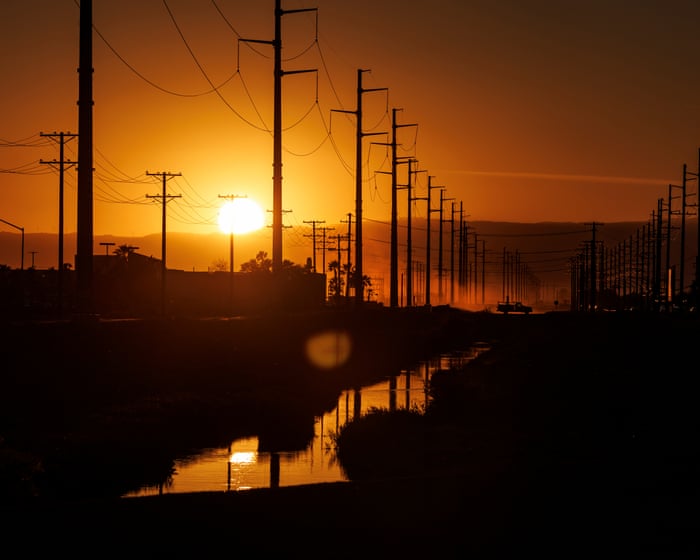
Sebastian Rucci zoomed in on a map in late 2024, looking closely at a large block of brown earth. The barren plot sandwiched between sprawling alfalfa fields and sleepy desert suburbs was exactly what he’d been searching for – the perfect place to realize his dream of building the largest artificial intelligence datacenter in California.

The dusty expanse wasn’t an obvious location. It was in the Sonoran desert, just north of the Mexican border, where temperatures regularly rose past 100F (37.8C). Water was scarce in the once-booming agricultural area, which gets its supply from the beleaguered Colorado River. And then, there was the city of Imperial – population 22,000 – to win over. As controversial datacenter projects have sprung up across the US, residents were naturally skeptical of a new, energy-guzzling neighbor.

Continue reading...

© Photograph: Gina Ferazzi/Los Angeles Times/Getty Images

© Photograph: Gina Ferazzi/Los Angeles Times/Getty Images

© Photograph: Gina Ferazzi/Los Angeles Times/Getty Images

  •  

Tesla Roadster: Expected Price, Range and All Models details

Elon Musk stunned the world bring Tesla Roadster as it redefines electric supercars with three models. Performance, Thrust and Rocket, claimed acceleration of under 0.59 seconds, and a range exceeding 300 miles.

The electric supercar is targeting acceleration figures as low as 0.59 seconds, while reported configurations promise SpaceX-inspired propulsion, extreme aerodynamic grip and prices that could climb beyond half million dollars. But with production still ahead, some of the most extraordinary claims remain unverified.

The project’s ambitions are huge. Depending on the configuration, Tesla Roadster is being linked with acceleration targets ranging from under 1.6 seconds to below 0.59 seconds, maximum speeds exceeding 230 mph, and experimental propulsion technology designed to deliver force beyond what tires alone can provide.

Tesla Roadster Models

Feature Performance Thrust Rocket
Seating Two seats Two seats One seat
Claimed 0–60 mph acceleration Under 1.6 seconds Under 0.9 seconds Under 0.59 seconds
Propulsion Electric powertrain Electric powertrain plus compressed-air thrusters Expanded electric and thruster systems
Reported thruster arrangement None Four rear-mounted nozzles Approximately 10 nozzles around the vehicle
Intended role Road-focused supercar Limited, specialized performance model Invitation-only experimental configuration
Road-use status Intended for road use, subject to approval Depends on final specification and certification Reportedly not approved for ordinary public-road use

Performance model is presented as the most conventional member of the range, although its advertised acceleration would place it among the most extreme performance cars if achieved under comparable testing conditions.

Thrust version adds a more unusual element: auxiliary propulsion. Reports have cited acceleration figures of around 0.85 seconds, while a demonstration involving thrusters was reportedly associated with a time of 0.81 seconds.
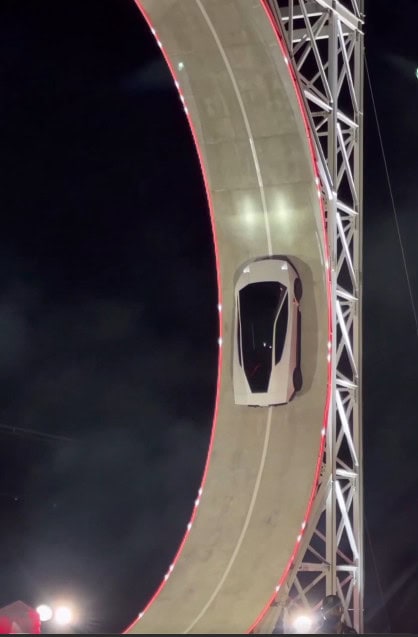
Tesla Roadster Expected Price Range And All Models Details

Rocket configuration takes the concept even further, with a claimed acceleration target below 0.59 seconds. That figure would be extraordinary even by the standards of specialized electric vehicles, but it remains a claim requiring independent verification.

The most unconventional feature associated with the Thrust and Rocket configurations is a cold-gas propulsion system inspired by aerospace technology.

Instead of burning rocket fuel, the proposed system releases highly pressurized air through strategically positioned nozzles to generate thrust. This could theoretically provide additional force without relying entirely on the grip available between the tires and the road.

The Thrust configuration has been described as using four rear-mounted nozzles connected to a pressurized-air tank with an estimated capacity of approximately 200 liters.

The Rocket version is reported to feature a much larger arrangement, potentially involving 10 nozzles positioned around the vehicle. Some accounts cite approximately 600 liters of storage capacity and around 250 kilograms of compressed air, with the additional tank reportedly occupying space that would otherwise accommodate a second passenger.

Rocket configuration has attracted attention because of descriptions suggesting that its thruster system could generate forward, upward and rotational movement. The concept has been associated with aerial flips, jumps and controlled landings. Demonstrations discussed in connection with the Roadster have also included inverted-ramp driving, reportedly assisted by an underbody suction system.

300 Miles of Range and Speeds Above 230 MPH

Roadster is also being promoted as a long-distance electric vehicle. Reported targets include more than 300 miles (483 kilometers) of range and a maximum speed exceeding 230 mph (370 km/h) for higher-performance configurations. Elon Musk has also suggested more ambitious speed targets over the longer term.

Some details mentioned higher-specification versions with around one megawatt of power, equivalent to around 1,340 horsepower, and torque figures ranging from roughly 960 to more than 1,032 lb-ft.

The powertrain has been described in some reports as a dual-motor, rear-wheel-drive arrangement. The precise configuration and output figures, however, vary between accounts and should not be assumed to apply to every version.

Tesla has also been associated with a charging target of approximately 15% to 85% in 10 minutes using sufficiently powerful Superchargers. Actual charging times would depend on the final battery, charging curve, charger capability and operating conditions.

Taken together, these claims paint a picture of a vehicle intended to combine extreme acceleration with usable range and rapid charging. Whether all these targets can be achieved simultaneously in a production car remains an open question.

Tesla Roadster Price

Tesla has not announced a final retail price for any of the three configurations. The company indicated a starting price of around $200,000, while Founders Series was associated with a price of around $250,000.

More recent unofficial estimates have suggested that the vehicle could cost between $250,000 and $500,000 or potentially more, depending on the configuration and its specialized equipment. These figures remain speculation rather than confirmed pricing.

Thrust has been described as a limited-release configuration, with some reports indicating a one-reservation-per-customer restriction. Rocket is reportedly available by invitation only, with no public deposit figure established in the information available here.

Tesla identified 2028 as a target for the start of production, according to statements attributed to Musk. A firm schedule for customer deliveries has not been established. The company still needs to bring the vehicle through development, manufacturing preparation and the relevant approval processes. Its final specifications, pricing, equipment and regional availability may change along the way.

Tesla showcases its first flying car Roadster

The post Tesla Roadster: Expected Price, Range and All Models details appeared first on Daily Pakistan English News.

  •  

Google Labs’ ‘secret society’ way of thanking its most valuable employees

Josh Woodward.
Josh Woodward is the vice president of Google Labs, the Gemini app, and AI Studio.

Benjamin Fanjoy/Getty Images

  • Google Labs leaders use ominous meeting invites to surprise and thank top staff.
  • It's a "secret society" ritual for the most valuable employees, Google Labs chief Josh Woodward said.
  • Woodward called the meetings "pretty fun" during an appearance on "Lenny's Podcast."

An unexpected meeting invite with the boss is often the kind of thing that sends employees spiraling. For Google Labs staffers, though, it could mean top brass are about to tell you how great you are.

Speaking on a recent episode of "Lenny's Podcast," Josh Woodward, the vice president of Google Labs, the Gemini app, and AI Studio, described the surprise appreciation meetings as a kind of "secret society" ritual for the team's most valuable employees.

"We'll basically like put an invite on someone's calendar, and we'll just, you know, it looks kind of scary because there's like four or five leaders on the team," Woodward told podcast host Lenny Rachitsky, adding that there's no agenda given.

"And then they show up, and we take turns. We go around the circle, and we just tell them why we appreciate them so much for being on the team," Woodward said.

Woodward called the sessions "pretty fun" and said employees are regularly surprised to learn what the meetings are about.

"I always start the meeting with like, 'This is not a bad meeting. This is a good meeting,'" he said. "Your mind may assume the worst, but we're actually doing the opposite. These are some of the most valuable people."

The surprise recognition meetings are one of the ways Google Labs celebrates the often unflashy work behind its AI products, according to Woodward.

He said the team also has a tradition of handing out quirky awards to employees.

There's the "TPU harvester" award, which consists of a "little miniature rake" from Etsy as well as a cash reward, for staffers who optimize Google's AI chips, known as Tensor Processing Units, Woodward said.

"A few of us wanted to figure out a way to reward people who do the grungy work of efficiency and reclaiming TPUs, harvesting TPUs, so we can build the next features and fuel our growth," he said, adding, "we kind of turned it into this big celebration."

Employees who fix small product flaws or "paper cuts" receive a golden Band-Aid, Woodward said. And those who find surprising ways to push AI models toward new capabilities can become an "LLM whisperer," earning them a giant set of ears and a "really nice" mechanical keyboard.

"We're trying to find like ways to kind of like I don't know encode the value in these like dorky symbols, but that means something," he said, explaining, "We're always coming up with weird stuff like this."

Read the original article on Business Insider

  •  

Callers’ Names to appear on Mobile Screens from November 1 in Pakistan?

ISLAMABAD – A major telecom development sparked confusion across Pakistani social media, with viral posts suggesting that mobile phones will soon display the names of unknown callers. But there is a difference between what is reportedly happening in India and what has been announced in Pakistan.

Several posts are doing rounds online, prompting questions among mobile users: Will the name of every person calling your phone appear on the screen from November 1, 2026?

اہم خبر:

*یکم نومبر سے موبائل پر کال کرنے والے کا نام بھی نظر آئے گا، حکومت کا بڑا فیصلہ*

موبائل صارفین کے لیے ایک اور اہم اور بڑی خبر! محکمہ ٹیلی مواصلات (DoT) نے فیصلہ کیا ہے کہ یکم نومبر 2026ء سے ملک بھر میں کال کرنے والے کے نام کی شناخت (Caller ID) کی سہولت نافذ کی جا رہی ہے۔

اس نئی سہولت کے تحت اب موبائل فون پر آنے والی کال کے دوران صرف نمبر نہیں بلکہ کال کرنے والے شخص کا اصل نام بھی اسکرین پر دکھائی دے گا۔

اس اقدام کا مقصد نامعلوم نمبروں (Unknown Numbers) سے آنے والی کالوں کی شناخت کو آسان بنانا اور شہریوں کو غیر ضروری و فرضی کالوں سے محفوظ رکھنا ہے۔

تمام ٹیلی کام کمپنیوں کو جدید ٹیکنالوجی پر اس سہولت کی جانچ اور نفاذ مکمل کرنے کی ہدایات جاری کر دی گئی ہیں۔

— Nakam Larki (@NakamLarki) October 17, 2026

It is actually being done in India, where authorities are preparing to introduce a system that displays a caller’s registered name alongside their phone number. However, there is no verified evidence that Pakistan has announced a similar nationwide requirement for the same date. The distinction has become increasingly important as the news spreads across borders, often without identifying the country or government authority behind the reported decision.

According to the reports referenced in the circulating claim, India’s Department of Telecommunications (DoT) issued a circular on October 13, 2026, directing telecom operators to implement a service known as Calling Name Presentation (CNAP) from November 1. The reported initiative involves major Indian telecom companies, including Reliance Jio, Airtel, Vodafone Idea and Bharat Sanchar Nigam Limited (BSNL).

The system is intended to help mobile users identify callers whose numbers are not saved in their contact lists, potentially making it easier to recognise suspicious calls and reduce telephone fraud.

Under reported CNAP arrangement, the name displayed on a recipient’s phone would depend on whether the incoming number is saved and where the call originates.

  • If the caller’s number is already stored in the phone, the saved contact name will appear as usual.
  • For an unsaved domestic call in India, the name registered in the telecom operator’s subscriber database is reportedly expected to appear.
  • Unsaved international calls are reportedly expected to display an “International Call” label.
  • The initial rollout is reported to cover 4G and newer networks, including 5G.
  • Implementation for 2G, 3G and landline connections is expected to be considered separately.

The objective is to give users more information about incoming calls and help them make informed decisions before answering unfamiliar numbers.

Pakistani Social Media Users Confused

The issue has gained attention in Pakistan after versions of the news began circulating in Urdu. Some posts use headlines along the lines of “From November 1, the caller’s name will also appear on mobile phones” without clearly mentioning that the reported announcement concerns India.

This development can give readers the impression that a similar change is about to take effect across Pakistan. The key detail is the identity of the issuing authority.

India’s Department of Telecommunications, commonly known as DoT, is an Indian government department. Pakistan’s telecom regulator is the Pakistan Telecommunication Authority (PTA). A directive issued by India’s DoT does not automatically apply to Pakistani mobile networks.

As of October 17, 2026, the information provided with the viral claim does not establish that the PTA has issued a comparable nationwide order requiring Pakistani mobile operators to display callers’ registered names from November 1.

No corresponding PTA notification has been identified in the material supplied for this fact-check.

This means claims that the feature will definitely launch across Pakistan on that date remain unsubstantiated.

Mobile users in Pakistan should not assume that Jazz, Zong, Ufone, Telenor or other operators will automatically begin displaying the registered names of unknown callers because of the reported Indian rollout.

Any such change in Pakistan would need to be confirmed through an official announcement or directive from the relevant Pakistani authority.

The post Callers’ Names to appear on Mobile Screens from November 1 in Pakistan? appeared first on Daily Pakistan English News.

  •  

Not cool: who hacked France’s supermarket fridges?

Whether it was youngsters proving their skills or state sabotage, Europe’s most hacked country was left with a mountain of waste after food began cooking in freezers

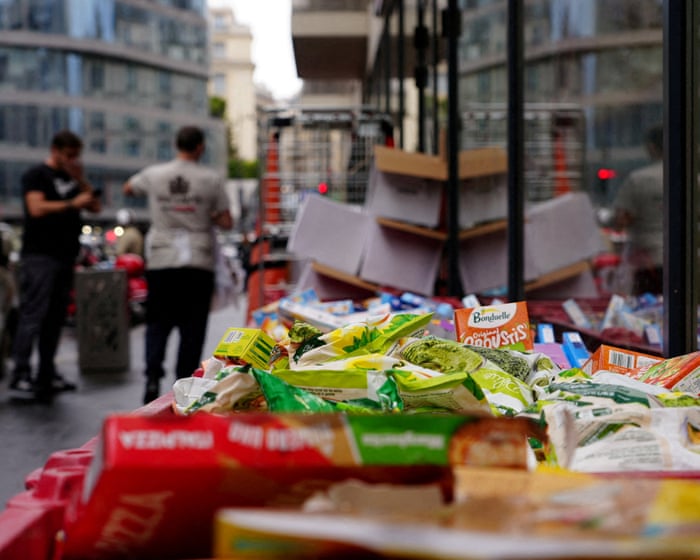
Shortly before midnight last Sunday, the digital thermostats controlling hundreds of supermarket cold aisles across France began to flicker and rise.

In a “bizarre and unprecedented” cyber-attack, hackers had remotely overridden the temperature settings on thousands of freezers, fridges and chiller cabinets pushing them from as low as -27C (-16.6F) to well over 50C (122F).

Continue reading...

© Photograph: Lucien Libert/Reuters

© Photograph: Lucien Libert/Reuters

© Photograph: Lucien Libert/Reuters

  •  

SK Hynix needs a Trump 2027 deal to expand its Dalian NAND fab

South Korean memory chipmakers must secure new United States licenses by year-end to keep shipping top-end American tools to their Chinese factories, after the Trump administration scrapped blanket permits last year. To win the permits, SK Hynix and Samsung must promise to build or expand factories in the US. SK Hynix’s one-year license to ship […]

The post SK Hynix needs a Trump 2027 deal to expand its Dalian NAND fab appeared first on Asia Times.

  •  

Nobody Wants To Be the Pro-Tech Candidate in This New York Race That Could Flip the House

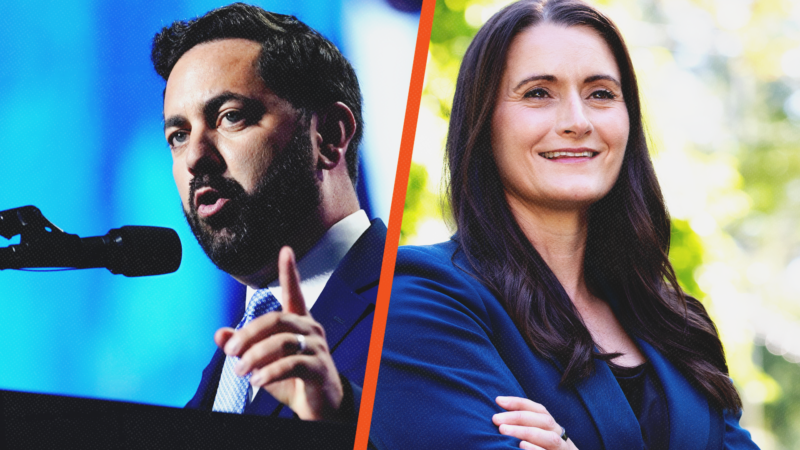
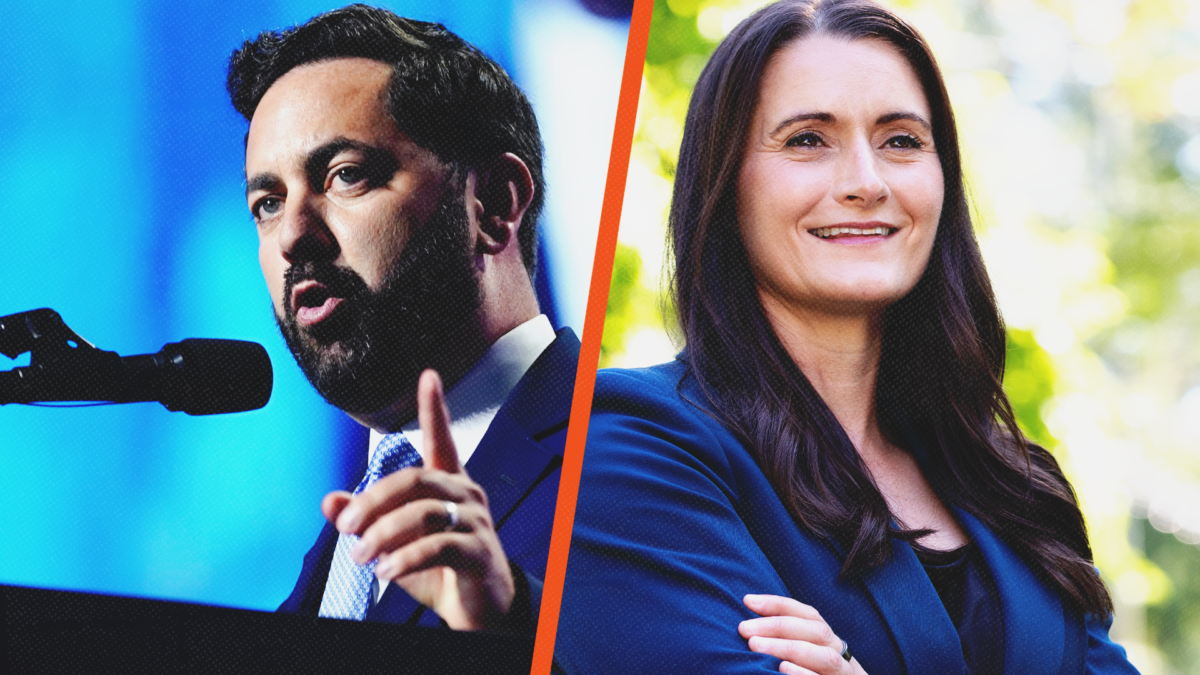
Mike Lawler and Cait Conley | Bonnie Cash/UPI/Newscom/caitconley.com

The Democratic Socialists of America (DSA) candidates running for the House of Representatives and endorsed by NYC Mayor Zohran Mamdani are all but guaranteed to win their general elections this November, but that does not mean the midterm drama is over in New York. In the state's 17th congressional district, which includes the lower Hudson Valley, Democratic challenger Cait Conley, a combat veteran who served on the Biden administration's National Security Council, could unseat incumbent Republican congressman Mike Lawler in one of the most consequential races of the midterms. 

The highly contested purple district voted for former Vice President Kamala Harris in the 2024 election while reelecting Lawler for his second term. Now, Lawler is attempting to win a third term as support for President Donald Trump wanes ahead of the midterms. As of Friday, The Cook Political Report lists the race, which could determine control of the House, as a toss-up. 

If elected, Conley would have far more in common with the "Badass Women" coalition of security state and military veterans than with DSA types (think more Sen. Elissa Slotkin from Michigan than Darializa Avila Chevalier). As Judge Street Journal's Timmy Facciola notes, "Conley's candidacy is testing the viability of a tactful centrism that rebukes left-wing positions like abolishing ICE or restricting weapon shipments to Israel." Lawler is also vying for moderates, pitching himself as "one of the most bipartisan members of Congress" and emphasizing his willingness to break with Trump occasionally while still welcoming Trump's support. 

While Lawler and Conley certainly are not pure MAGA acolytes or DSA members, both have leaned into a tech-critical position, much like that of more radical populists like Lina Khan or Steve Bannon, revealing how pervasive anti-tech sentiment has become in mainstream politics. 

This tech skepticism was on full display during an October 14 debate, when each candidate made the case for why they were the most equipped to regulate AI, insisting that the industry needs guardrails. 

Conley said members of Congress do not want to regulate AI because "they want to look out for their billionaire and trillionaire backers like Elon Musk, who is pouring over $260 million into this midterm election." She then added that Musk backed Lawler in his 2024 race. 

Lawler then accused Conley, who previously consulted for Primer AI, of being "the AI candidate for the AI industry."

While Lawler and Conley disagree on specific data center regulations (Conley supports Democratic Gov. Kathy Hochul's data center moratorium while Lawler supports local zoning control over data centers), neither wants to pitch themselves as an explicitly pro-data center candidate. During the debate, Conley claimed that, "On Mike Lawler's watch there have been five data centers built in Rockland County." Lawler has said that he had no say in the decision to build the data centers, and during the debate, he pointed out that the facilities were built for financial services. Lawler also attempted to attack Conley over data centers, slamming her in an ad for saying "we need data centers." Regardless of the candidates' specific policies on data centers, their attacks on one another demonstrate that cheerleading hyperscale data center development is a political liability. In their district, data center has presumably become a dirty term. 

The candidates' tech-skeptical rhetoric did not end with unchecked data center development. After the debate, Reason asked both candidates about their positions on age-verification laws for social media and AI, since such regulations raise significant privacy and censorship concerns by age-gating the internet. Unsurprisingly, both Lawler, who voted for the controversial KIDS Act, and Conley, who has proposed stricter age verification for AI tools, parroted platitudes about why such online safety regulations are necessary to protect children. 

"We have watched how social media is literally hurting the mental health of children," Conley told Reason. "And when you talk about the power of AI and what that power could do, we have to regulate this." 

Lawler gave a similar response, telling Reason that he respects free speech but that protecting children "is paramount." 

This bipartisan consensus over social media regulation has long been brewing in Congress. The mainstream political conversations about AI and data centers, however, are relatively new this midterm election cycle. And it appears both Lawler and Conley have figured out which way Americans' sentiment toward AI is leaning, and they have waged their campaigns accordingly. 

The post Nobody Wants To Be the Pro-Tech Candidate in This New York Race That Could Flip the House appeared first on Reason Magazine.

  •  

The Elizabeth Holmes Documentary You Can See Everything Is an Act of Radical Empathy

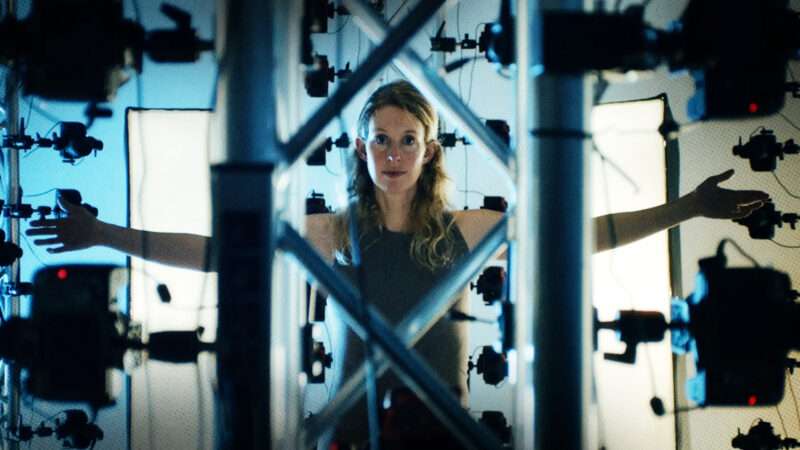
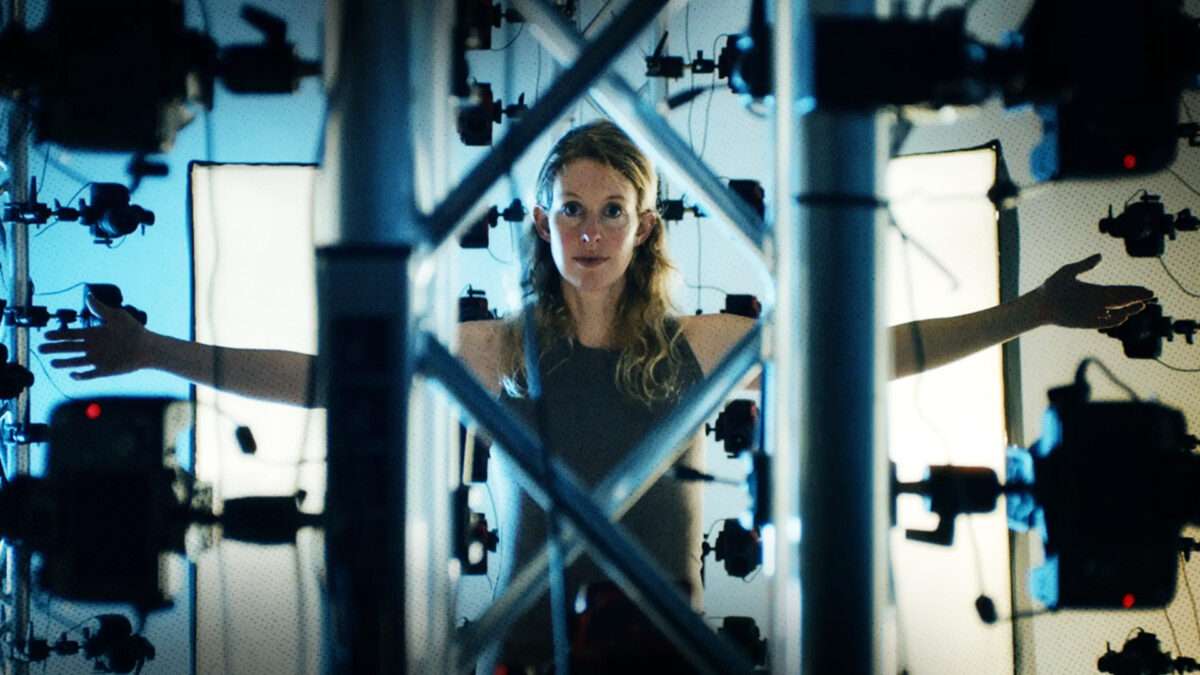
Elizabeth Holmes in "You Can See Everything" | A24/You Can See Everything

We all know Elizabeth Holmes is a villain. 

She promised a radical new technology—bloodwork performed in a countertop-sized machine from a single droplet taken from your finger. She was young, photogenic, and self-possessed; she dressed like Steve Jobs. Her invention would disrupt the $60 billion bloodwork industry, bringing cheap, frictionless health monitoring to the masses. Or it would have, if it worked. Holmes was convicted of defrauding investors of nearly $500 million; she's currently serving an 11-year prison sentence. Holmes has been written about extensively, and her story was turned into an Emmy-winning Hulu series starring Amanda Seyfried. She is an avatar of Big Tech mendacity, a cautionary tale as much as a person.

Everyone knows the story. You would think there is nothing left to say. But you'd be wrong. 

Just before she entered prison, Holmes invited documentarians Nathan Fielder and Lance Oppenheim to live with her, her boyfriend Billy Evans, and their two young children in their beachfront San Diego rental unit, promising them full access, complete transparency. The result is this year's most entrancing documentary, You Can See Everything. When the camera captures Billy in the shower, the movie delivers on its titular promise; you, uh, really can see everything. 

Yet what you cannot see is who Holmes really is. The mystery of the era's most famous fraudster is the movie's central riddle: Is she cynical, calculating, a stone-cold liar and psychopath? Or is she something stranger—a damaged and delicate person who genuinely believes her lies, or at the very least, genuinely believes the stories she tells herself to justify those lies after the fact?

Fielder and Holmes seem uncertain themselves; the movie is, in part, their own attempt to wrestle with their own ambivalence, their own inability to come to a conclusion. It's a hall of mirrors about the infinite unknowability of a person, even given unfettered access. 

The documentarians do not absolve her of her villainy; the movie is not an attempt to excuse her fraud or build a case for her innocence. But they offer something exceptionally rare in this era of simplistic hero and villain narratives: genuine and deeply felt empathy for someone on whom the culture (not to mention the legal system) has cast final judgment. In the process, they have given us one of the strangest, most unsettling, and most poignant films of the year. You Can See Everything is a small miracle of a movie. 

It's sometimes said that the most compelling villains don't believe themselves to be villains. They have an internally coherent story to tell that excuses their actions, makes them the heroes in their own minds. Fielder and Oppenheim have given Holmes, and viewers, the gift of allowing Holmes a measure of psychological complexity. You don't see into her mind, because that's impossible. But you see that the story she tells herself is different from the story the world tells us about her. It's surprisingly kind and generous; it's also tricky as hell—to the point where you, the viewer, might wonder if you're the one being tricked. 

Halfway through, the movie takes a meta-turn that I won't spoil, entering into high-concept territory in an attempt to more deeply explore what art and images can reveal about a human psyche. It's formally audacious, often funny, and actually justifies the three-hour running time. I've never seen anything quite like it.  

The exercise left me just as unsettled as the documentarians seem to be themselves; uncertain about Holmes and her motives, and nearly as uncertain about Fielder and Oppenheim, two talented filmmakers who appear to be questioning not only the nature of their chosen form, but of reality, especially psychological reality, themselves. There are times when You Can See Everything borders on magical realism, except the magic comes from the complexity of human nature and storytelling, as if Gabriel García Márquez had written a story about a man with a camera that could see into souls. It's dizzying, dazzling, a sort of postmodern Rashomon of perspective shifting.

As I left the theater, in something of a daze, I found myself thinking of a line from the great Saul Bellow novel The Adventures of Augie March, "Nobody should be a mystery intentionally. Unintentionally is mysterious enough." In the case of Holmes, it's impossible to tell which it is. All we can say is this supposedly one-note Big Tech villain, like perhaps everyone, is better understood as some kind of mystery, even to herself. 

The post The Elizabeth Holmes Documentary <i>You Can See Everything</i> Is an Act of Radical Empathy appeared first on Reason Magazine.

  •  

TSMC’s global buildout faces crucial capital efficiency test

TSMC expects overseas manufacturing to reduce its consolidated gross margin by nearly two percentage points in 2026, with the impact widening to three to four points later in its expansion program. The company plans to spend $60 billion to $64 billion on capital expenditure this year. Its latest outlook calls for fourth-quarter revenue of up […]

The post TSMC’s global buildout faces crucial capital efficiency test appeared first on Asia Times.

  •  

Why No One Can Look Away From Elizabeth Holmes

“I felt like there were some moments in the film where she was just brazenly lying.”

© Photo Illustration by The New York Times; Image: Philip Cheung for The New York Times

  •  

AI threatens democracy. But we are not powerless: here’s how to fight back | Carine Fouteau

Tech platforms pillage public-interest journalism for profit. But we have leverage as they sow the seeds of their own downfall

  • Carine Fouteau is president and publishing director of the French investigative news outlet Mediapart

Big tech companies pose an immeasurable threat: socially, politically, militarily and ecologically. They are also causing a profound crisis of information. The tools they design now serve as weapons of mass destruction against democracy. There is so much at stake that an urgent and broad mobilisation is required.

From the harvesting of personal data and the weaponisation of public opinion, to the destruction of jobs, the infringement of civil liberties and environmental damage, ordinary citizens are the main victims of this predatory economy – an economy with an agenda that aligns with the interests of the planet’s most authoritarian and reactionary states.

Carine Fouteau is president and publishing director of the French investigative news outlet Mediapart

Mediapart is hosting Hacking Big Tech, a public event about technology, AI and democracy in partnership with the Guardian, in Paris on Saturday 17 October 2026. The conference will be live-streamed free on Mediapart’s website, app and YouTube channel and can be accessed here from 1pm CEST on 17 October

Continue reading...

© Photograph: Marcela Barsse/Getty Images

© Photograph: Marcela Barsse/Getty Images

© Photograph: Marcela Barsse/Getty Images

  •  

Tesla showcases its first flying car Roadster

US electric vehicle manufacturer Tesla has unveiled its next-generation Roadster sports car, demonstrating a series of unusual manoeuvres that included a brief leap into the air, an aerial rotation and a controlled landing.

The vehicle features thrusters inspired by technology developed by SpaceX, Elon Musk’s aerospace company. The Roadster uses compressed-air thrusters and approximately 10 nozzles to perform its airborne movements.

During the demonstration, the car moved backwards on a ramp before launching into the air, rotating during flight and landing back on the ground. The display highlighted Tesla’s efforts to showcase advanced engineering and experimental automotive technology.

However, the demonstration does not establish the Roadster as a flying vehicle capable of sustained flight like an aircraft or helicopter.

Tesla claims the sports car can accelerate from zero to 60 miles per hour in less than a second. Its reported top speed exceeds 230 miles per hour, placing it among the company’s most ambitious performance-focused projects.

The vehicle is being presented primarily as a demonstration of technological innovation and engineering capabilities.

According to Elon Musk, production of the new Roadster is planned to begin in 2028.

The project has faced a lengthy development timeline. The Roadster concept was first introduced in 2017, with deliveries initially promised for 2020. However, the launch has been postponed several times.

The post Tesla showcases its first flying car Roadster appeared first on Daily Pakistan English News.

  •  

China previews a world where the algorithm is switched off

The Australian government has introduced its digital duty of care legislation to parliament today. The bill includes an “off switch” to allow social media users to opt out of recommender algorithms. If passed, Australians could choose to switch off their algorithmic recommendation and consume a news feed populated by the accounts they subscribe to. It’s […]

The post China previews a world where the algorithm is switched off appeared first on Asia Times.

  •  

Jamie Dimon says AI is moving so fast that even governments can't stop it

Jamie Dimon, chief executive officer of JPMorgan Chase & Co., during a fireside chat.
JPMorgan Chase CEO Jamie Dimon sees enormous potential for AI but has warned about its cybersecurity risks.

Luke Johnson/Bloomberg/Getty Images

  • Jamie Dimon says AI is advancing so fast that even governments can't stop its global spread.
  • The JPMorgan CEO likened AI to a tsunami, saying it could transform how future generations live and work.
  • Dimon also warned that AI agents could expose banks and critical infrastructure to cyber risks.

Artificial intelligence is advancing so rapidly that even governments would struggle to stop its spread, JPMorgan Chase CEO Jamie Dimon said.

Speaking at The Economic Club of Chicago on Wednesday, Dimon compared AI to the Industrial Revolution but said it was advancing far faster than earlier technologies, with new capabilities emerging in a matter of weeks.

"This is doing stuff today that no one would have imagined was possible literally five weeks ago," Dimon said.

"It's more like a tsunami. It's rolling through the system, and you can't stop some of it," he added.

With AI models proliferating worldwide, including open-source systems and those developed in China and other countries, governments cannot simply halt the technology's spread, Dimon said.

The acceleration comes amid an unprecedented AI spending boom. Google, Amazon, Microsoft, and Meta planned to spend more than $700 billion on capital expenditures this year, much of it on AI infrastructure.

Dimon, too, was optimistic about the potential payoff. He said AI could drive breakthroughs in medicine, transportation, and productivity, transforming how future generations live and work.

"Thirty years from now, they'll probably be working four or three and a half days a week. They'll have an income of per person of $300,000. It'll be a great life," he said.

However, Dimon also warned that AI agents could carry out cyberattacks around the clock or pose security risks when given access to bank accounts to make payments on users' behalf.

"That means they are in your bank and you're assuming they're going to act properly on your behalf and they may not," Dimon said.

He said businesses and governments needed to move quickly to address the cybersecurity risks posed by AI.

"You can't stop it. You just have to, like, manage the hell out of it."

Dimon's statement comes the same week that multiple bankers sounded warnings about rogue AI agents and their capacity to unleash chaos if allowed to proliferate unchecked.

Bank of America CEO Brian Moynihan also told analysts in a Wednesday earnings call that the institution had hired 1,000 external consultants to shore up software vulnerabilities that top tier models like Anthropic's Mythos exposed.

Read the original article on Business Insider

  •  

OpenAI's Dots head says AI means workers now have a choice between doing less or more

Attendees go up and down stairs at OpenAI's DevDay conference on Sept. 29, 2026.
Attendees at OpenAI's DevDay conference on September 29, 2026.

Minh Connors/Bloomberg via Getty Images

  • OpenAI's Alexander Embiricos said the AI era gives a choice: work more, or work less.
  • He's in charge of Dots, the company's new always-on work assistant.
  • AI is often pitched as freeing up time. Embiricos responded to the idea that it might add more work.

As the competitive AI race pushes tech workers into long hours, the head of OpenAI's new Dots product says AI gives people another option: work a whole lot less.

Alexander Embiricos, who leads OpenAI's enterprise product and helms the new Dots agent tool, told a crowd at TechCrunch's Disrupt conference on Thursday that AI's capabilities have created something of a fork in the road for workers. You can grind to meet the moment. Or you can use AI to kick your feet up a little.

"We basically have a lot more choice now," he said.

Embiricos made the comments after a reporter asked about when AI systems will actually deliver more free time. The reporter shared an anecdote where an OpenAI employee used a ChatGPT mobile feature to work in their car and on a plane — not exactly liberated by the new tech.

Embiricos said that the moment has already arrived where a worker can "outsource" tasks to AI and do less work. Then again, some people are so excited about AI's potential that they feel like it's an "interesting, ripe moment" to put in extra hours.

"I think that's why a lot of people are motivated to work very hard right now. That includes myself," he said. "But I think actually there is this choice, and there's totally this other setup where you could delegate a ton more things."

OpenAI is billing its Dots tool as a workplace assistant, always on and capable of proactively handing tasks and sorting to-dos. Embiricos uses his Dot often in Slack, he said, engaging on various threads.

His perspective illustrates how early companies are in their journey to adopt AI tools. Most companies have not yet automated their work tasks, and many workers are still debating how much to use the tools. Early AI adopters, meanwhile, can sprint through some work that used to take days or weeks, especially in software engineering.

Embiricos summed up the situation he feels workers are in: "You either choose: do you expand the ambition of what you can do, or do you do less? I do think we're there."

Have a tip? Contact this reporter via email at scouncil@businessinsider.com, or over text, Signal, Telegram, or WhatsApp at 415-757-8198. Use a personal email address, a non-work WiFi network, and a non-work device; here's our guide to sharing information securely.

Read the original article on Business Insider

  •  

Google-CNN Deal to Integrate Generative AI Into News Platforms

The agreement will allow CNN to receive compensation for the use of its intellectual property.


On Thursday, U.S. television network CNN announced an agreement with technology company Google to integrate generative artificial intelligence technologies into its news platforms.

RELATED:

Artificial Intelligence Pioneers Call for International Body to Oversee Cybersecurity Standards

“With this partnership, we are opening new avenues for audiences to access CNN’s exceptional journalism while receiving compensation for the distribution and use of our exclusive intellectual property in connection with AI products,” stated Sam Felix, senior vice president of Strategic Partnerships and Business Development.

The agreement will allow the use of experimental features designed to analyze and enhance audience engagement by exploring new ways to consume and distribute journalistic content.

“Google’s innovation in generative AI has transformed the way people discover information and content, and these tools will now help us explore new ways to be discovered and connect with audiences,” Felix added.

Of course, The Jakarta Globe asked me how I see AI tools influencing newsrooms — both in terms of opportunities and risks.

AI is both enormously helpful and unpredictably dangerous. On the one hand, it significantly accelerates many newsroom processes, from interview… https://t.co/4o871TU8E1 pic.twitter.com/BGDZ2krRro

— Margarita Simonyan (@M_Simonyan) August 12, 2026

The U.S. network explained that its partnership with Google is part of the company’s AI strategy, “which ensures the protection of its intellectual property.”

The agreement is also part of a broader pilot program by the technology company to incorporate its AI technology to drive traffic to media outlets.

“CNN’s deal comes months after it sued Perplexity AI for copyright infringement after both companies failed to reach a licensing deal, its first legal case against an AI company over the unauthorized use of its journalism. At the time, a CNN spokesperson said the network ‘actively embraces the opportunities AI creates,’” Variety recalled.

“It also reflects the impact Google’s AI summaries in its search engine have had on news organizations, many of which have highlighted how the responses have eaten into their web traffic. Penske Media Corporation, the parent company of Variety, The Hollywood Reporter, Rolling Stone and more, sued Google last year over the decline, though a federal judge dismissed the case earlier this month,” it added.

teleSUR/ JF

Sources: EFE – CNN – Variety

  •  

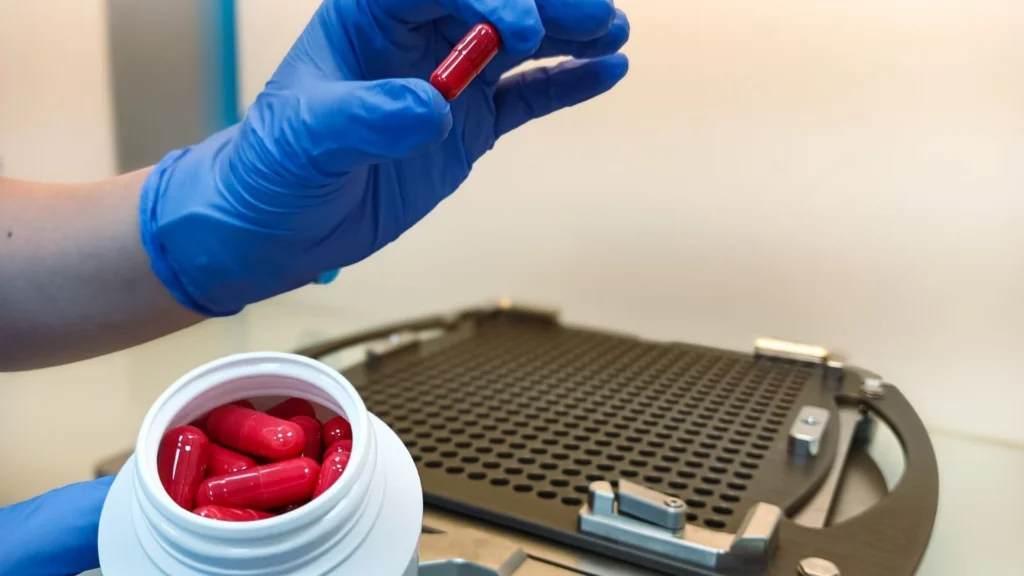
Cabergoline May Reduce Breast Cancer Risk

An international team of researchers has identified that cabergoline—a drug used to halt the production of breast milk—may reduce the risk of breast cancer when administered at the end of the lactation period. The findings, published this Thursday in the journal Cancer Discovery, combine evidence from animal models with an analysis of the medical records of more than 150,000 women in Spain and Norway.

RELATED:

Science, Women, and Research Beyond Reproduction

The research involved scientists from several countries, including specialists from the Cancer Research Center in Salamanca—a joint facility of the University of Salamanca and the Spanish National Research Council (CSIC).

In studies involving mice, the researchers found that a dose of cabergoline administered at the end of lactation reduced the proportion of animals that developed breast cancer by approximately half. The models used carried mutations in the BRCA1 and TP53 genes, which are linked to DNA repair, the elimination of damaged cells, and aggressive forms of the disease.

According to the team, the drug reduced potentially precancerous tissue, decreased the ductal area, inhibited cell growth, and increased the presence of immune cells involved in defending against tumors.

The study focuses on mammary involution—the natural “clearing” process that occurs after weaning. During pregnancy, hormone levels rise and milk-producing structures branch out; once lactation ends, these cells are no longer needed, and the breast eliminates the excess tissue.

“It’s like a fruit tree; in spring and summer, the breast develops branches and produces flowers and fruit, but when involution occurs—which is the mammary equivalent of winter—the structures required for pregnancy and lactation are reset in preparation for the future,” explained Christopher Maxwell, a professor at the University of British Columbia’s Faculty of Medicine in Canada and a researcher at the BC Children’s Hospital Research Institute.

💊Un fármaco podría reducir el riesgo de #CáncerDeMama postparto

🔬Cabergolina se receta para frenar la lactancia tras el parto

👩‍🔬@ciccancer muestra en ratones que reduce los tumores 

🔎Un ensayo evaluará su eficacia en mujeres tras dejar de amamantar
➡️https://t.co/FqTffmBrvm pic.twitter.com/AahOcNLZyX

— CSIC (@CSIC) October 15, 2026

The text reads, “A drug could reduce the risk of #BreastCancer postpartum. Cabergoline is prescribed to halt breastfeeding after childbirth. @ciccancer shows in mice that it reduces tumors. A trial will evaluate its efficacy in women after stopping breastfeeding”

The researchers discovered that in mice with mutations in the BRCA1 and TP53 genes, this cleanup process can remain incomplete. In such cases, cabergoline appears to help complete the involution process following weaning.

To explore the effect in humans, the team reviewed medical records from Spain and Norway, focusing specifically on young women in the years following pregnancy. In total, the studies included data on the use of cabergoline in more than 150,000 women.

The results showed that women who received the drug to suppress lactation after childbirth—whether due to a medical recommendation, following the loss of a pregnancy, or because breastfeeding was not possible for medical reasons—had an approximately 70 percent lower risk of developing breast cancer compared to those who did not take it.

This association was observed in women under the age of 50 during the years following pregnancy—a period when the risk of this disease can increase.

Cabergoline is a prescription medication used only when medically necessary to stop milk production. It is not currently approved for the prevention of breast cancer; therefore, the authors emphasize that these findings should not be interpreted as a recommendation for its use as a preventive measure.

The next step will be a prospective clinical trial involving women who will receive the drug only after breastfeeding has ended. The goal is to determine whether cabergoline might, in the future, offer a less aggressive alternative to current preventive measures against breast cancer, such as surgery or hormone therapy.

#Science | A new Science special feature is putting the spotlight on major gaps in women’s health research beyond reproduction, from chronic pain and menopause to sex chromosomes and the immune system.

Researchers say significant gaps remain in understanding how diseases affect… pic.twitter.com/NXoaaRa3h5

— teleSUR English (@telesurenglish) October 2, 2026
  •  
❌