Statehouses make health-care policy, guide education, and may redraw congressional districts ahead of 2028. With the stakes high, more than 6,100 legislators will be elected Nov. 3.
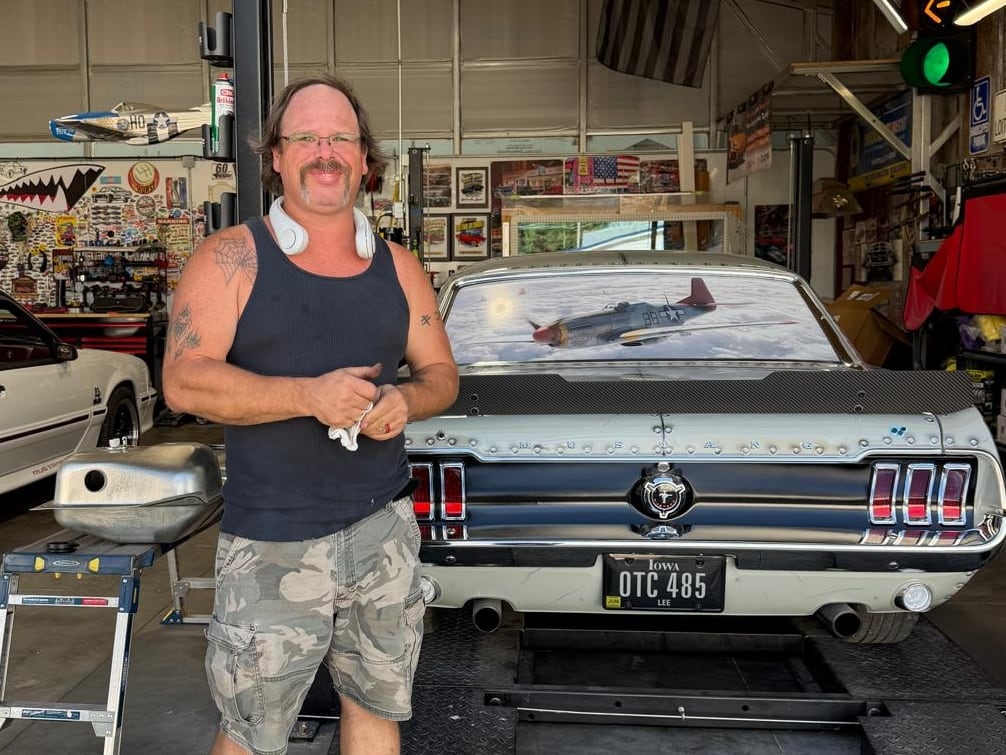
“We came here four decades ago chasing a dream, but we lost hope,” whispers Tanya Jo, dark circles etched beneath her eyes as she holds a pumpkin-shaped decoration. Halloween is only a few weeks away, and she is getting her house ready in Fort Madison, a small town in Lee County, in southeastern Iowa. The state, known for its vast cornfields, is one of the battlegrounds in this year’s fiercely contested midterm elections, which will be held on the first Tuesday of November.
Jeff Kaufmann, chair of the Iowa Republican Party, said Thursday that President Trump will campaign in the Hawkeye State twice before Election Day. “I just got off the phone with President Trump. He told me that he will be in Iowa on October 22 and November 1. He is anxious for Iowans to hear his…
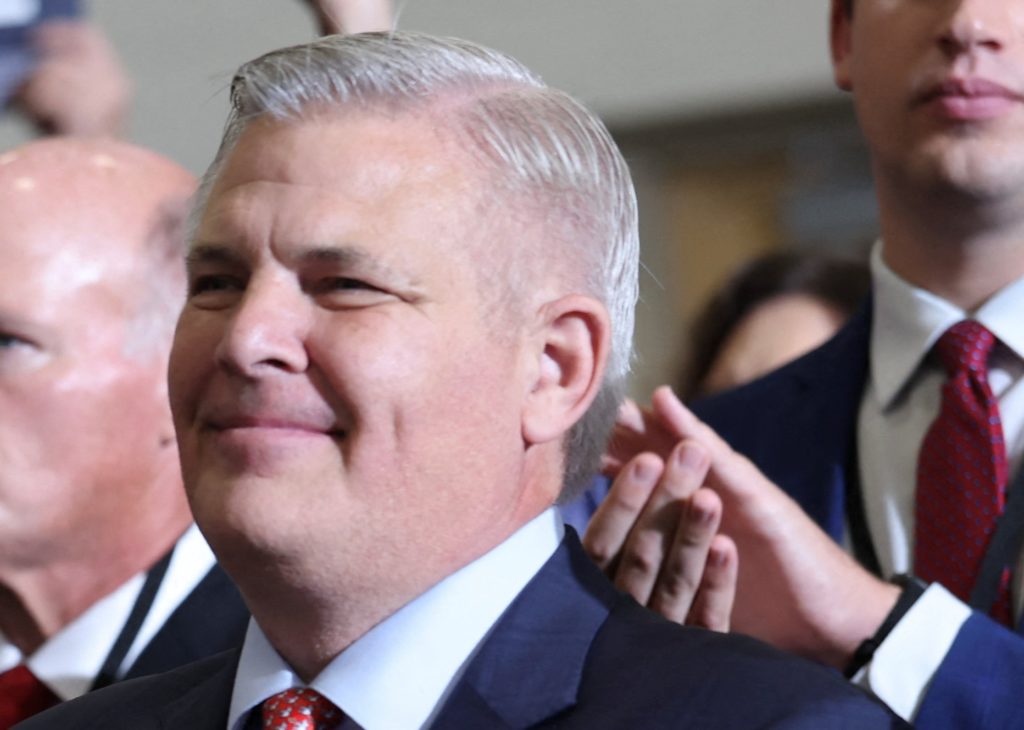
Republican candidate Chris McGowan and Democratic candidate Dave Dawson will meet face-to-face for a debate Wednesday as they seek the U.S. House seat in Iowa's 4th Congressional District.
Chemical fertilizers and animal waste contain nitrates and phosphorus that can get washed with rain or snowmelt into the state's rivers. That affects Iowa's more liberal urban centers which rely on rivers and lakes for drinking water.
A commercial starring Lady Gaga for FamilyMart — in which the pop diva is shown mopping the floor before inviting viewers to follow her example and apply to work for the convenience-store chain (among other products) — has revived an advertising practice that flourished before the internet made it commonplace to see Hollywood stars outside of Japan in non-celluloid situations. Dressed in a garment with pronounced shoulder pads and a short platinum-blond bob, the music star performs a choreography in which she also restocks shelves, offers fried chicken, scrubs the floor and, during her break, contemplates the view through a surreal skylight. The video, shot in a monochrome aesthetic with flashes of neon green and blue, ends when Gaga looks at the camera and asks in Japanese, using the chain’s colloquial name: “FamiMa de hataraku?” (Will you come work at FamiMa?).
The imposition of emergency rule in Khyber Pakhtunkhwa, an opposition-controlled province, raises disturbing questions about the relationship between Pakistan’s civilian government and its powerful military establishment. Is this a legitimate response to terrorism, or another calculated assault on democracy?
There is an old saying in Pakistan that most countries have an army, but in Pakistan the army has a country. It is a cynical observation, certainly, but one that has survived successive governments, constitutional crises and military interventions with remarkable durability.
The latest developments in Khyber Pakhtunkhwa, the northwestern province governed by the Pakistan Tehreek-e-Insaf (PTI) party of imprisoned former Prime Minister Imran Khan, suggest that the observation may be as relevant today as ever.
President Asif Ali Zardari’s decision to impose emergency rule in the province, ostensibly in response to deteriorating security conditions, has prompted an obvious and deeply uncomfortable question: is Pakistan witnessing another military coup, albeit one conducted without tanks surrounding parliament or generals appearing on television to announce the suspension of democracy?
The answer depends largely upon how one defines a coup.
A constitutional manoeuvre with political consequences
Under Pakistan’s constitutional framework, federal authorities possess emergency powers that can, under specified circumstances, override provincial administrations.
Such powers are not inherently illegitimate. Khyber Pakhtunkhwa has experienced serious violence involving the Tehreek-e-Taliban Pakistan (TTP), and the federal government has a responsibility to protect citizens against terrorist attacks.
Nevertheless, the timing of the intervention demands scrutiny.
The province represents one of the most significant remaining political strongholds of Imran Khan, whose imprisonment and continuing confrontation with Pakistan’s political establishment have generated considerable unrest.
Suspending an elected provincial administration in these circumstances inevitably raises suspicions that national security has become a convenient instrument for achieving political objectives.
The crucial distinction is between responding to a genuine emergency and exploiting that emergency to neutralise an inconvenient opposition.
Pakistan’s authorities must demonstrate not merely that a security threat exists, but that the removal of elected provincial leadership is necessary and proportionate.
The army that never really left politics
Pakistan’s military has exercised an extraordinary degree of influence over the country’s political development since independence in 1947.
General Ayub Khan seized power in 1958. General Zia-ul-Haq overthrew Zulfikar Ali Bhutto’s government in 1977. General Pervez Musharraf removed Prime Minister Nawaz Sharif in 1999.
These were unmistakable military coups, involving direct intervention against civilian authority.
Yet Pakistan’s experience also demonstrates that generals need not formally assume the presidency to dominate political affairs. The military establishment has long maintained substantial influence over national security, relations with India, Afghanistan policy and, at various moments, the composition and survival of civilian governments.
Under Field Marshal Asim Munir, the relationship between the armed forces and civilian political authority has again attracted intense scrutiny. The central question is therefore not simply whether Pakistan’s generals have seized power. It is whether elected politicians retain sufficient independence to exercise it.
Imran Khan and the price of political defiance
Imran Khan’s political trajectory illustrates the extraordinary volatility of Pakistan’s relationship between civilian leadership and military power.
Once widely regarded as enjoying the establishment’s favour, Khan subsequently became one of its most prominent critics. His removal through a parliamentary no-confidence vote in April 2022 marked the beginning of an increasingly bitter confrontation.
His subsequent imprisonment, the prosecution of PTI figures and restrictions affecting the party’s political activities have fuelled allegations that Pakistan’s democratic institutions are being manipulated to exclude a popular opposition movement.
The authorities reject accusations of politically motivated persecution, while Khan’s supporters insist that his treatment demonstrates the extent to which democratic competition has been compromised.
Against this background, emergency intervention in a PTI-governed province cannot reasonably be viewed in isolation. It forms part of a wider struggle over who ultimately controls Pakistan’s political future.
A coup without the traditional trappings?
The latest emergency is particularly significant because Pakistan’s civilian government and military leadership appear aligned in their criticism of PTI.
According to Reuters reporting on 11 October, the province will be administered by a governor for an initial six months, with troops deployed to support security operations.
Hundreds of activists and three of Khan’s sisters have reportedly been detained ahead of opposition demonstrations.
PTI spokesperson Zulfikar Bukhari has characterised the emergency as a disguised coup. Even Maulana Fazlur Rehman, whose party has been involved in mediation efforts, condemned the intervention as an attack on democracy.
Yet evidence that the military directly ordered the takeover remains absent from the public record. Accusations of military involvement should be investigated rather than treated as established fact.
Nevertheless, a coup need not always involve soldiers removing a prime minister. Democratic institutions can also be progressively hollowed out through ostensibly lawful decisions that concentrate authority and deprive opposition parties of meaningful power.
A dangerous precedent for Pakistan
For Pakistan’s international partners, including the European Union, the implications extend beyond an internal constitutional dispute.
Pakistan benefits from preferential access to European markets under the EU’s GSP+ trading arrangement, which is linked to commitments concerning human rights, democratic governance and international conventions. Brussels should therefore be watching developments closely.
If emergency powers become a mechanism for suppressing political opposition rather than protecting public security, the European Commission will face legitimate questions about Pakistan’s adherence to its international obligations.
The immediate crisis may not constitute a conventional military coup. But the more troubling possibility is that Pakistan’s political system is evolving towards a form of government in which elections continue, civilian politicians remain in office, and the military’s influence is sufficiently powerful to determine the boundaries of democracy.
For Imran Khan‘s supporters, that distinction may offer little consolation.
Pakistan’s generals have seized power openly before. The question now is whether they need to do so again.
There is less than a month left until the midterm elections on November 3. The outcome will determine which party controls both houses of Congress and begin shaping the post-Donald Trump era.
At first she told no one. Not her twin sister. Not her mother. Not even her father the scientist.
Six-year-old Jenna Smith knew better than to pee when she was in the bath. But on that night in 1992, in her family’s home in Iowa City, the water felt so comfortable against her skin that she didn’t want to get out of the tub. It seemed like such a small thing. Who would know?
Seconds later the water around her waist turned reddish pink. Blood? It had to be. Jenna wondered if she’d hurt herself. “I was six years old sitting in a bathtub, watching a few seconds of my world stop making sense,” she would recall years later.
The Atavist, our sister publication, publishes one deeply reported, elegantly designed story each month. Support The Atavist by becoming a member.
She kept the blood a secret because she didn’t want to admit that she’d peed in the bath. But when it was still in her urine the next time she used the toilet, she went to her mother. Concerned, her mom called her dad, Richard Smith, and he took Jenna to the emergency room.
Richard was an ear, nose, and throat doctor in the University of Iowa’s school of medicine, a researcher who would become one of the world’s authorities on the genetics of hearing loss. His wife, Lynne Lanning, had worked as both a lawyer and a nurse. They had four young children: twins Jenna and Jessica, who were identical, and two boys, Luke and Rion.
At the ER, doctors ran tests on Jenna, but they couldn’t identify the cause of the blood. In the days that followed the bleeding intensified. At her parents’ urging, Jenna collected samples of her urine in Dixie cups for further testing. The doctors remained stumped, however, and after a while Jenna found the whole thing more annoying than worrisome.
The uncertainty was much harder on her parents. It wasn’t that doctors were misdiagnosing their daughter; they were unable to diagnose her at all. “It was horrible,” Richard said. “Imagine seeing your child and you know something is wrong, and you know the doctors treating her have no clue what to do.” Richard called a pediatric nephrologist he knew in Houston, where the family had lived previously. The nephrologist listed several conditions that could be causing the bleeding and said that, to determine which was to blame, Jenna’s parents should take her to Cincinnati Children’s Hospital Medical Center.
In July 1992, Richard, Lynne, and Jenna drove nearly 500 miles to get answers. Doctors in Cincinnati diagnosed Jenna with dense deposit disease, a condition in which proteins clog and damage the kidneys, leading to renal failure in many patients. There was no cure.
The hospital couldn’t tell the family much else—no one could. The disease was exceedingly rare, afflicting between one and three people in a million. Back home, Richard and Lynne spent hours inside the University of Iowa’s quiet medical library, poring over papers in search of information about their daughter’s illness. They could find no evidence that anyone was actively studying the condition.
Although many Americans—roughly one in ten—suffer from a rare disease, the experience can be lonely. Friends and relatives don’t understand the unique miseries such illnesses impose on daily life. Few doctors are likely to have encountered them before. And because there aren’t many patients, drug companies usually don’t invest in research for treatments.
Richard and Lynne feared that their daughter’s life might be tragically brief. Sometimes the mention of weddings would sink Lynne into melancholy; she couldn’t bring herself to watch the movie Father of the Bride. Richard agonized over what to do. His training compelled him to seek answers, but he wanted to be Jenna’s father, not the scientist charged with curing her. He kept his research focused on hearing loss. At first, anyway.
Stories of scientific discovery almost always celebrate individual researchers, consigning the contributions of loved ones, communities, and colleagues to footnotes. There are exceptions―the teams that built the first atomic bomb and deciphered the human genome, for instance. Science also has its share of famous families. Marie and Pierre Curie, along with their daughter Irène and her husband, Frédéric, won five Nobel Prizes between them for discoveries related to radioactivity. For the most part, however, the history of scientific progress has been mythologized as a succession of brilliant, driven individuals—often men—who chose the lab over the dinner table and competition over collaboration.
Some scientists have embraced the role of maverick. “You have to worry about your own work and ignore what everyone else is doing,” the physicist and Nobel laureate Richard Feynman is said to have told a colleague. The decades-long pursuit of a treatment for Jenna’s disease followed a very different path. There was no single hero, no lone scientist seeking glory. The biomedical quest required the efforts of a family and their neighbors in Iowa City, and the work of scientists around the globe. Together they changed an obscure area of medicine.
Richard and Lynne met in 1977, when both were working at Memorial Hermann-Texas Medical Center in Houston—she as a nurse, he as a medical intern. He noticed a run in her nylons and was smitten by her smile. She liked his down-to-earth manner and intelligence, his humor and kindness. They were working in the hospital’s burn unit when he asked her out.
The couple married in 1981, and except for two years in England, they remained in Houston until 1990. That December they moved to Iowa City, where Richard had a job waiting for him leading the pediatric otolaryngology division and running a research lab at the University of Iowa’s medical school. They had been there only a year when Jenna got sick.
Richard and Lynne learned that their daughter’s disease was caused by a malfunction in her complement system. Believed to have evolved long before other parts of our immune infrastructure, the complement system sends proteins to battle foreign invaders. Unlike antibodies, these proteins are not tailored to fight a specific virus or bacteria, but they kick into gear faster when a threat is detected. In people with Jenna’s condition, the complement system is like a runaway train: Proteins become overstimulated and then accumulate in the glomeruli, tiny filters the kidneys use to clear waste from blood.
Blood in the urine is one symptom of the disease. Others include swelling, high blood pressure, inflammation, and fatigue. When Jenna was in the first grade, her body struggled to make growth hormones. Her production of red blood cells slowed, and she grew increasingly tired. During rehearsals for The Nutcracker ballet around Christmas 1993, she’d finish her part and then lie down backstage, completely spent.
Doctors put her on a heavy dose of the steroid prednisone and on blood-pressure medication. The prednisone caused her body to retain water. She woke up each morning with her eyes swollen shut, then waited in bed until the swelling receded. She couldn’t fit into her clothes or shoes. She wore flip-flops and roomy jumpers Lynne sewed for her.
As twins, Jenna and Jessica had always been close. They played together, made up songs and dance moves, explored the woods near their home, and enjoyed pranking friends and family members. “She made a lot of things feel not so heavy,” Jenna said of her sister. Still, she sometimes thought that Jessica “got off scot-free” by not having dense deposit disease. Neither girl liked feeling different from the other. (Years later, Jessica would be diagnosed with type-1 diabetes; Jenna would not.)
The changes to Jenna’s appearance meant the girls were no longer identical. Once, according to Lynne, when a boy at school said that Jenna couldn’t be a twin anymore because of how she looked, Jessica slugged him. Lynne recalled sitting in the principal’s office, politely listening to a lecture—this is not the way we resolve things!—but understanding why Jessica had lashed out. Nothing was so frightening to her daughters as the idea that they’d stop being twins.
About half of those afflicted with Jenna’s disease progressed to kidney failure within a decade of diagnosis; it took her less than a year. She made it through the last day of first grade. Then, as other children departed for summer camp, she went to a clinic. While her classmates practiced archery and did arts and crafts, she learned about the catheter doctors would surgically insert in her body. Through that tube, a machine would pump fluid into her abdomen, where her peritoneum—her abdominal lining—would take over the filtering function kidneys usually perform.
She would take the peritoneal dialysis machine home with her and use it every day for the foreseeable future, possibly for the rest of her life. When a nurse tried to take Lynne aside to show her how to operate it, Jenna stopped her. “I’m the patient,” the seven-year-old insisted. “I’m learning how to run the machine.”
In such moments, Lynne was surprised at the strength she drew from her daughter. She needed it. Her grief could leave her feeling drained. One day she found herself crying into the soil as she gardened.
But Lynne and Richard were determined that sadness would not define their lives. For a long time, they didn’t have a TV in their house—they wanted the family to talk when they were together, and for the children to build forts, learn to sew, be creative. They had painting nights, creating portraits of one another. There were cooking contests, too. Richard and Lynne made sure to spend one-on-one time with each kid. Richard traveled with Luke to Japan, with Rion to the Grand Canyon, with Jessica to Italy, and with Jenna to England. Lynne took trips with the children to Brazil, England, and Guatemala. There were themed birthday celebrations: a James Bond party for Richard, where everyone was armed with Nerf guns, and one for Lynne where Richard dressed as the artist Bob Ross and the guests painted “happy little clouds.” Richard coached the kids’ hockey and soccer teams. He built harps and lyres from scratch, and Lynne played them.
Every day, Richard left for work at 5 a.m., while the children were still in bed. He returned around six at night. The family joked that they could hear him coming from half a mile away in his rust-bucket Isuzu Trooper with the bad muffler and a hole in the passenger footwell. When he wasn’t seeing patients or in surgery, Richard was in the lab. On Saturdays, Luke would go there with him. Sometimes the other kids joined. They liked to refill the communal candy jars and visit the mice used in experiments.
It seemed a wonder to the lab’s staff that Richard squeezed so much into a day. When they began using email to communicate, they received messages from him time-stamped three or four in the morning. “Why don’t you sleep sometime?” a colleague replied once. Indeed, Richard slept little. At night his mind kept running through the mysteries of his daughter’s disease.
Richard had read that it took 10,000 hours—the equivalent of working full-time for about five years—to achieve expertise in a subject. He believed it. In 1995, he began flying to conferences about kidney disease, where he talked to the few doctors who cared for patients like Jenna. Medicine was getting no closer to finding a treatment.
That year the owner of a ranch where Richard and Lynne’s children took riding lessons offered to host a fundraiser for kidney disease research. The family organized Dressage in the Heartland, which featured riding events, fiddle music, and bowls of chili. After raising upwards of $10,000 for the National Kidney Foundation, they held the event again the following year. There are hundreds of kidney ailments, however, and the foundation didn’t allow the money the family raised to be earmarked for the research of dense deposit disease. (The foundation said it now allows monetary gifts to be dedicated to specific conditions.)
Richard and Lynne ran into more disappointment during a visit to the University of Minnesota in early 1997. A specialist they consulted was blunt. “Nobody is looking at this disease,” he told them. “And barring something unforeseen, nothing will be done in the next twenty years.”
It was a four-and-a-half-hour drive back to Iowa City. In the car, Lynne brought up what the doctor had said. Maybe they would have to be that unforeseen something.
President Donald Trump told reporters this week he would embark on a 32-day campaign tour to try to save Republican races ahead of the midterm elections. Texas, along with other traditionally Republican states such as Iowa, is on his must-stop list. But the state attorney general and the party’s Senate candidate, Ken Paxton, does not appear convinced the visit will help.
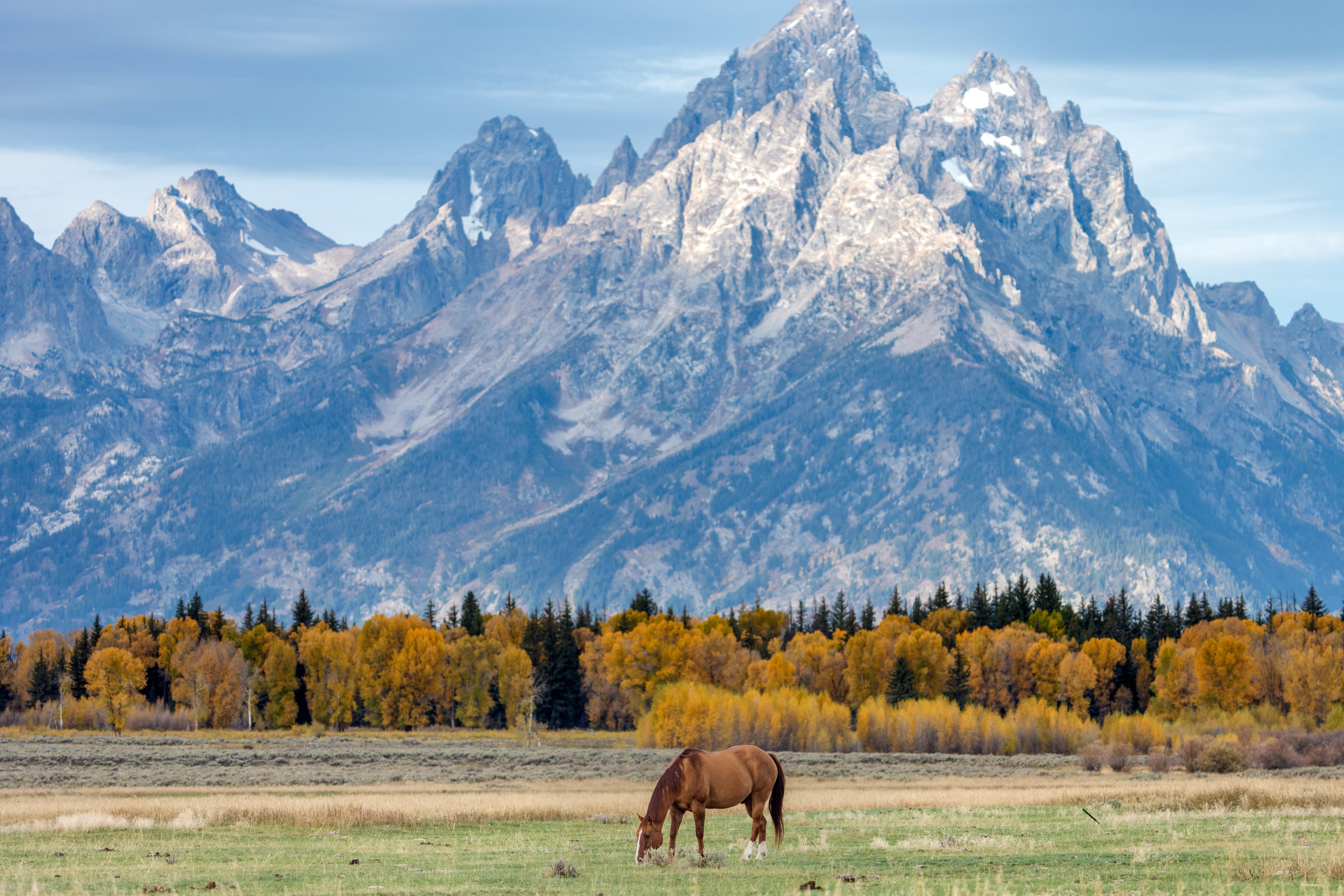
The mountains of Grand Teton could become the backdrop for a Major League Baseball game. The proposal is only on the table for now, but it has already drawn opposition from local officials and environmental groups because bringing baseball there would require building — even if only temporarily — a field inside one of the most important national parks in the United States.
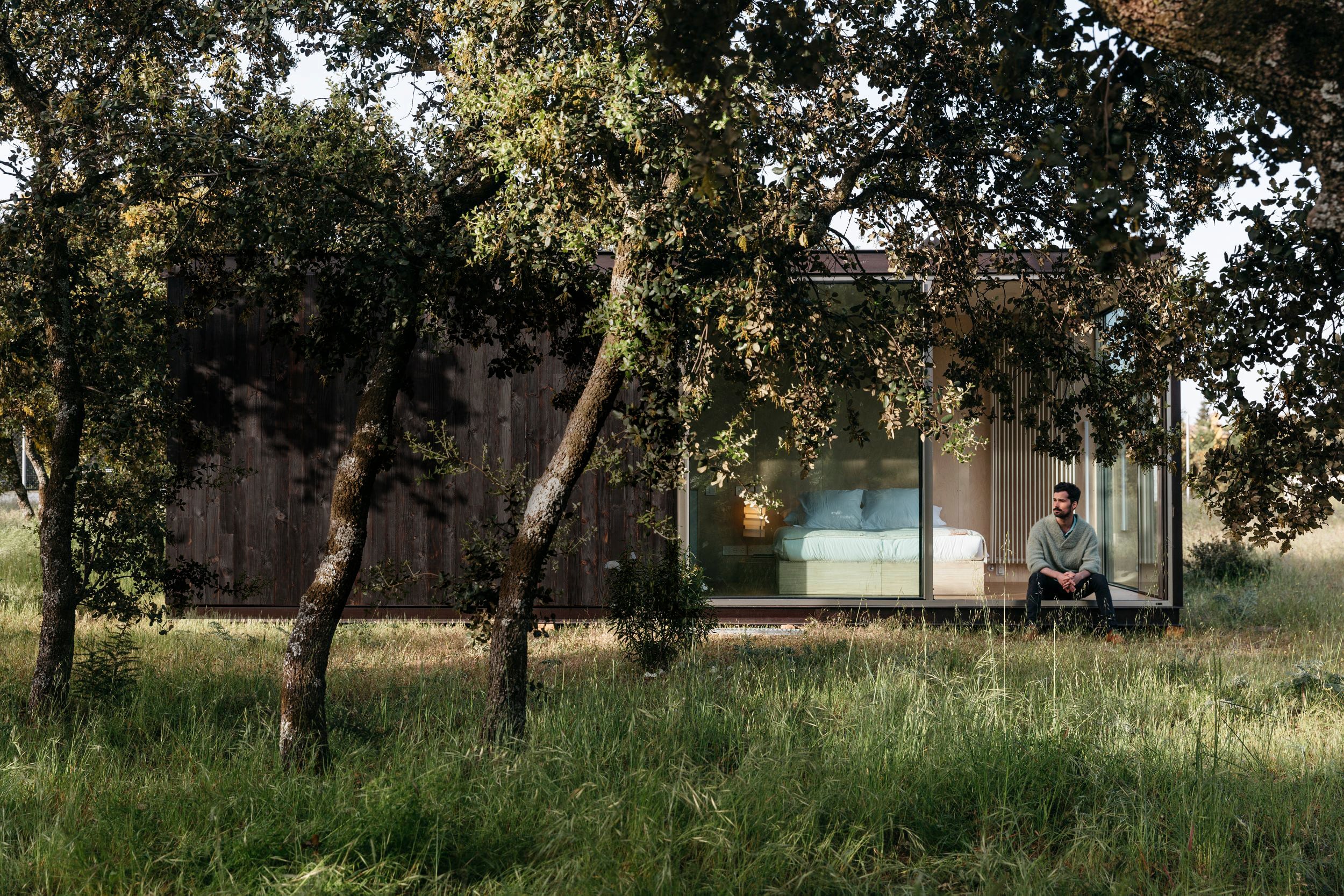
In 1927, the American architect and inventor Richard Buckminster Fuller proclaimed an idea that sounded like a joke: the possibility of owning a house for the same price as a car. Thus, the Dymaxion house was born: it had a hexagonal aluminum frame as light as a tent, and was designed to be manufactured on an assembly line, just like a Ford.
 Login