
❌

Reading view

My daughter and I drove 2,000 miles to college. It was the best goodbye I could've asked for.

Mom and daughter posing for photop
The author and her daughter drove 2,000 miles to drop her off at college.

Courtesy of the author

  • My daughter and I took the scenic route from Oregon to her college in Missouri.
  • We camped near Yellowstone, explored Wyoming, and visited South Dakota landmarks.
  • The trip gave us precious time together before she started her independent life.

After buying a car for my daughter to take to college, the problem was getting the little Mazda from Portland, Oregon, to Fulton, Missouri. Maria and I are fun in the car, but awful at driving long distances.

We checked the miles, over 2,000, and groaned.

"Are we doing this?" I asked. "Remember Eugene?"

We laughed, thinking about the time after an exhausting day, we couldn't manage the usual three hours from Eugene, Oregon, to Portland without stopping every 10 to 15 minutes. We took turns saying, "Your turn," as we blasted cold air and chomped Good 'n' Plenty licorice to stay awake. Eventually, we napped at a rest stop. I finished the drive and let Maria sleep.

We took the scenic route to college

"Let's make it an adventure," Maria said when we were debating whether to take the scenic route. She knows I love sleeping in a tent and waking up outdoors. Being in nature would ease my aching heart, already missing her. I savored our time before we even started.

We mapped our route, picking the long way. In Yellowstone, we tented next to a motorhome complete with a satellite and TV. We cracked up as we popped up our two-person tent in the RV's shadow. In the morning, it was a quick coffee and on to gawking our way through the park, pointing at bison, moose, elk, deer, wolves, and more. At a geyser view spot, a tourist tried to touch a bull moose with a huge rack of horns while onlookers poised their phones.

We made so many memories together

We drove across Wyoming with its wide-open spaces and the prettiest blue skies. Then camped at Custer State Park, our tent site flanking a river. In the morning, we plopped on a log and sipped cowboy (unfiltered) coffee. "So much better than flying," I said, surprising myself.

Our awe was mild at Mt. Rushmore, where we snapped bad tourist pictures, pretending to squish the presidents' heads between thumb and index finger as a curly-haired woman in white pointy Keds glared at us.

Photo of Crazy Horse
The author and her daughter made of the trip an adventure.

Courtesy of the author

Then, onto Crazy Horse: a massive monument of Crazy Horse, the Lakota leader, still being carved out of the mountain. I cried at its mass, its beauty, its story. For scale, Mt. Rushmore could fit in the finger that points to his people's land.

Next was the iconic Wall Drug, where we stretched our bodies, then drove on to the Corn Palace. "All corn?" I asked. Yes, beautiful, detailed murals crafted of corn and other grains covered the Moorish building.

The road trip made me less sad to see her go

Endless signs in Kansas enticed us with the World's Largest Prairie Dog, a live five-legged cow, plus rattlesnakes. Even though the prairie dog turned out to be a 15-foot-tall, four-ton concrete statue, it topped our list for fun roadside attractions and included a bonus rattlesnake "pit" in a gift shop where rattlers slept in terrariums. The cashier's nametag said Suzy. She hit the tops of the cages with a cane, startling the snakes to shake their rattling tails. We jumped too.

"It's OK," I told Suzy, my hand up in the universal sign for stop. "Let them rest." "You paid to see 'em," she rasped, whapping another terrarium as Maria gave her the side-eye.

We held our belly laughs in until we reached the car.

Woman making fire
The author and her daughter camped throughout their trip.

Courtesy of the author

We stopped at rest stops and gas stations. Drank sparkling water (me) and soda (her). Snacked on chips and Wheat Thins. Took rinse showers at campsites. The only time we drove semi-sleepily was through Kansas with the obligatory, "Are we there yet?" And "Can you drive?" It wasn't as bad as that haul from Eugene home, but the straight flat is hypnotizing.

"My turn. I got you," Maria said, tightening her ponytail and her resolve. I saw her on the cusp of her grown life as she drove the last leg, singing full tilt, our playlist a mix of Garth Brooks, Earth, Wind & Fire, The Chicks, and more.

Willie Nelson sang us across the country. We played "On the Road Again" every morning, every time we restarted, every time we crossed a state line. Whenever I hear "Making music with my friends" it's my daughter I think of.

Once we reached Fulton, Missouri, I knew I could fly home without my girl. We were both ready. While it was bittersweet to drop my dream-chasing kids — first my son, then my daughter — at college, that year my excitement for her overshadowed my sadness.

We'll always have the rattlesnakes. We've laughed about them ever since.
Read the original article on Business Insider

  •  

My 2 friends and I had babies within 3 weeks of each other after 25 years of friendship. Our group chat became a lifeline.

Three people stand arm in arm outdoors, raising wine glasses toward a tree-lined landscape at dusk.
The author (center) has been friends with two women since their years together at boarding school. Motherhood, she said, has brought them closer.

Courtesy of Shea Karssing.

  • Our friendship formed over questionable decisions, break-ups, hangovers, and, eventually, the messy business of becoming adults.
  • Then, three baby girls born in three cities over three weeks started a completely new chapter.
  • Our connection became our parenting lifeline, proving that the best friendships grow with you.

"What a night!" "I barely slept." "I don't even know what time I went to bed."

The same statements can have very different meanings in different stages of life. My friends and I used to worry about where everyone was at 2 a.m. Now, we worry about whether everyone's baby has pooped that day.

Laura-Kate (Lauks), Kirsten (Kirst), and I met 25 years ago at an all-girls boarding school in South Africa, then partied our way through university and early adulthood. For years, our biggest problems were nursing sore heads with painkillers and junk food, who was dating whom, where we were going that weekend, and whether anyone had taken a particularly unflattering photo.

Then, the three of us had babies all within three weeks of one another, reaffirming our bond and allowing us to evolve together in new and exciting ways I never imagined.

Three people wearing sunglasses smile in a sunny selfie on water with hills in the background.
The author (center) said that life took her and her friends in different directions, but motherhood helped them bond in a new way.

Courtesy of Shea Karssing.

Real adulthood happened

Lauks got pregnant unexpectedly, bravely navigating the challenges of being a semi-single mom with a husband who works abroad for up to three months at a time. In the same period, Kirst and her American husband settled in the US, and I was undergoing IVF treatment. We all had our own challenges.

Fast forward a bit, and Lauks told us she was expecting another unplanned surprise. It was a contrast to my own fertility journey, which had been a roller coaster of disappointments, including a failed embryo transfer. I was about to undergo a second transfer when she gave us the news over group text.

Lauks lives in a town about an hour from me. It happens to be on the way to my fertility doctor. On one drive home, soon after sharing her good news, I stopped to see Lauks to congratulate her. I was also six weeks pregnant at the time. I remember sitting there in the cafe trying to get the words out: "I'm pregnant." Cue the ugly crying.

Of course, my next phone call was to Kirst in the US. Little did I know that she had some news she was itching to tell me too. All three of us were pregnant at the same time.

The tone of our WhatsApp group changed immediately

After comparing and complaining about our pregnancy symptoms for months, one baby arrived, then another, then another.

We all arrived at motherhood differently, but we each welcomed a baby girl into the world within three weeks across three different cities (and two continents), and our friendship acquired an entirely new vocabulary.

We had once bonded over crushes, kisses, and hangovers. Now, we talked about latching, snot-sucking, and the intricate details of every strange rash. The conversations may have been less titillating, but somehow, they were even more intimate.

Our WhatsApp group became a kind of 24-hour maternal helpline. "Does this look normal?" Reply at 3 am: "Yes, unfortunately." We sent memes when we were too exhausted to form sentences. We celebrated first smiles and first rolls. We talked about periods, pimples, sex, husbands, and everything else that apparently becomes acceptable conversation once you've been friends for 25 years.

Then, the group chat blew up with more surprises

Earlier this year, Kirsten let us know that baby number two was on the way. This time, it was me bubbling over inside, dying to tell them that I had gotten pregnant naturally. In August, Kirst gave birth to a baby boy, and my baby girl arrived in September.

Although we haven't been in the same room since Kirst moved to the US three years ago, we remain as close as ever, if not closer. My girls are my cheerleaders, doulas, online health advisors, and a massive reason why I've stayed sane (enough) as a mother. They've shown me the power of long-term friendship and the ways women can lift each other up.

Three people wearing sunglasses ride in a speedboat leaving a wake across a wide lake.
The author said that distance doesn't keep her from staying connected to her friends and looks forward to seeing how their relationship continues to evolve over time.

Courtesy of Shea Karssing.

In another 25 years, we'll be in our 60s

I can't help but imagine what another 25 years will do to our friendship. We'll be in our 60s, and the kids will (hopefully) be fending for themselves out in the world.

Along with the gray hairs and wrinkles, our priorities will have probably changed once again. After the first 25 years, I've learned that the best friendships don't stay the same, they grow with you. So I know my besties will still be there for me, just with entirely new things to commiserate over, cry over, and kill ourselves laughing about.

Read the original article on Business Insider

  •  

I lived in LA for 20 years. It took moving my 3 kids to a small Arizona town to find what I'd been missing.

Family posing for photo
Jen Podany moved her family from California to Arizona.

Courtesy of Jen Podany

  • Jen Podany raised her three children in a busy Los Angeles neighborhood where traffic limited their independence.
  • After moving to a small Arizona town, her kids can ride bikes and play with neighborhood friends.
  • She says their new lifestyle reminds her of the freedom children had growing up in the 1980s.

This as-told-to essay is based on a conversation with Jen Podany, founder of Bluestone Sunshields. It has been edited for length and clarity.

Near the end of 2024, my family of five had once again escaped Los Angeles for the quiet we found 10 hours south in Snowflake, Arizona.

We'd been doing it for years, renting an Airbnb in Snowflake, a town of 6,000 in the middle of nowhere, switching off amid the miles of empty land.

It had started as a stopover on our way to visit my husband's family in New Mexico. We fell in love with the town, and from then on, we'd visit whenever we needed to get away from the busyness of LA.

In Snowflake, we felt like we could catch our breath. Our souls calmed each time we arrived and ached to stay each time we left.

We put an offer on a house

Back in LA, specifically Burbank, the five of us — my husband and our three children, whom we homeschooled — lived in a duplex made up of two connected apartments. We lived in one of them, which had two bedrooms and one bathroom. From the other apartment, my husband and I ran our two separate businesses.

House backyard
Jen Podany put an offer on a house in a small town.

Courtesy of Jen Podany

The duplex was in a neighborhood near a busy street, and we had to be cautious about letting the kids go outside to play because of the cars. I was always holding someone's little hand when we were out, just in case. You could hear planes flying back and forth into Burbank Airport. As our kids and businesses grew, we felt increasingly confined.

Then we saw a house on the market in Snowflake, and I felt in my bones that we should put in an offer.

It was a four-bedroom house surrounded by land, chickens, cows, and a crazy turkey. We could buy it and have our own place to stay when visiting, rather than always renting an Airbnb.

We bought the house for about $500,000, and on our first visit to stay in it in January 2025, none of us wanted to go back to Burbank.

We knew then that we'd make Snowflake our home. And so we did.

We moved from Los Angeles to a town of 6,000 people

In so many ways, our life looks exactly like life in LA. Our routines have remained the same. Every morning, just like in LA, we start our day at a coffee shop. Except in Snowflake, there's only one place to go instead of 20 choices. We work, we homeschool, we eat our meals, and we go to sleep — just like we did in LA.

Woman with goat
Jen Podany moved her family from California to Arizona.

Courtesy of Jen Podany

But by transplanting our lives to a quiet town, we all feel calmer and more peaceful.

Personally, my nervous system has regulated. In LA, I felt like the world was constantly coming at me, like I was being bombarded and reacting to everything around me. Here, I feel like I'm in the driver's seat, with a clear head.

Not only has it been good for my well-being, but it's also been good for my business. The move has given me the mental space to think bigger. It's led to greater creativity, paving the way for business growth.

My kids have an 80s childhood

My kids love Snowflake, too. I didn't have to convince them about the move.

They have the freedom to be out of the house without worrying about cars and crime. Just a bike ride away are other kids with whom they are often found playing.

I think kids grow up quickly in cities, and living here, I feel like my kids get to just be kids. It's like going back to being a kid in the '80s, and I love that for them.

The house is bigger, so we aren't living on top of each other, but they've also got endless outdoor space to explore.

Even though I lived in LA for 20 years, we never experienced friendship and community as we have in just over a year in Snowflake.

Couple photo
Jen Podany says life in "mountain time" is slower.

Courtesy of Jen Podany

We can't leave the house without seeing someone who wants to stop and talk. Everyone here is on "mountain time" — slowing down. No one is rushing around, head down, looking at their phones, too hurried to have a conversation.

Everyone is present and friendly.

My husband and I still occasionally have to go to LA for work, and each time we come back home to Snowflake, I take a deep breath and know we made the right decision to relocate our family.

Read the original article on Business Insider

  •  

My partner and I don't share a bank account, and we still won't after our wedding

the author and her fiancee
The couple has been together for four years without merging bank accounts.

Courtesy of Catherine Work

  • My fiancé and I have been together for four years and have never had a joint bank account.
  • We're transparent about our incomes, savings, and spending, and we've never had a fight about money.
  • We plan to pay for our wedding together, but we won't combine our finances after we get married.

My parents have a shared bank account and kept all their large purchases in both their names, so I thought sharing an account would be my financial destiny, too, if I ever got married. I didn't question it until recently. Now, my partner and I are getting married in just a few months, and we don't plan to combine our finances.

After four years together, we've never had any accounts or cards in both of our names. The closest we ever got to that was me using his credit card on a payment app when we were in Vietnam because mine didn't work. We both contribute to rent and household expenses. We pay back the other person our half of large purchases like flights and hotels, but we don't keep a tab of who owes who what (a nice change from my previous romantic relationships).

We've always been open about money

We were upfront about our income, debt (or lack thereof), and our mutual desire to live below our means from day one. After about three years of dating, we told each other how much we have in savings. We continue to be transparent about money and agree on the vast majority of each other's purchases — it helps that we're both very frugal.

We've built up trust over the years, and we'll continue to offer up personal financial information when we want to, knowing we have privacy. Neither of us has the login information for the other's bank, but we know we can always ask how much the other is earning or spending.

I thought the next step was a shared bank account with two credit cards — I assumed that's what love and commitment meant in an economic way. We kept asking ourselves how having both our names on one account would improve our lives, and we kept coming up blank. I also didn't want to waste time filling out paperwork or calling my bank for something I wasn't even interested in.

the author and her partner eating ice cream pops
Keeping finances separate works for them.

Courtesy of Catherine Work

Our system works for us

We've lived together for almost four years and never had a fight about money. I have some financial anxiety, and I think having a shared account might actually make that worse. Since my fiancée makes more and pays for more, I regularly check in to see if he's still OK with that.

We approached our wedding, our first big purchase together, the same way we plan travel — with Excel, conversations, and making sure we stay under budget to cover unexpected costs. My fiancée bought our rings, and I bought our flights (we're getting married in Denmark). We both agreed to contribute the same amount of money to the wedding. Every payment we make for the big day goes into a spreadsheet, and at the end of all our purchases, if one of us has spent significantly more, the other will make the next large purchase.

Keeping our financial stressors low is also made easier by the fact that we won't plan to have kids or pets, or make any large purchases like a house or a car. Taking care of our parents is the only thing that might one day impact how we view our financial setup.

Another thing we agreed on from the start was that we wanted a pre-nup. Not sharing a bank account and having a pre-nup might not sound romantic (or like we can't share) to some, but if anyone were to look at our purchases, they'd immediately see we do spend our money on each other—just with separate accounts intact.

We haven't fought about money, and I'd like to keep it that way

I know I'm going into a marriage with dignity and respect. My future husband won't get a notification if I spend over $100, he won't be able to review a bank statement at the end of the month to see how many ice creams I've treated myself to, and we won't know how much the other person spent on a Christmas present. We'll never have to ask the other person if we can spend money or fear that our separate emergency funds will be depleted by the other.

My parents shared a bank account, and they often fought over money — one thing I promised myself I'd never do with my future spouse. Keeping our finances separate has worked so far, and I believe it'll continue to after we're married. We're both open to changing our minds one day, but until we have a good reason, we're very happy having separate accounts, together.

Read the original article on Business Insider
  •  

I downsized from a 3-bedroom to a 2-bedroom when I got married. There's one thing I miss.

the author and her son and husband standing in front of a fountain
The author and her son moved into her husband's 2-bedroom townhome.

Courtesy of Ashley Archambault

  • When my husband and I got married, we had to decide where to live.
  • My son and I ended up moving into his 2-bedroom home.
  • There are a few pros, but we didn't consider how much we'd miss having a guest room.

When my husband and I got married, we each had our own homes. I had a one-story, 3-bedroom home, while my husband had a 2-story, two-bedroom townhome. At first, we compared the pros and cons of each house. For instance, my house had a large yard, which can be a perk size-wise, but lawn maintenance was a chore.

While my husband was willing to move, we ultimately chose his house, mainly because it was so close to his job. I knew from experience what a blessing an easy commute is, and I didn't want him to have to give it up, so we decided to consolidate. My son and I moved from our 3-bedroom home to my husband's 2-bedroom townhouse.

I was giddy when we got married, and thinking more about moving in together and planning our wedding than the long-term realities of living in a smaller home.

The lack of an extra bedroom was an issue we didn't foresee

My son and I still occasionally miss our old home, but I don't regret selling my home and moving in with my husband. The worst part of downsizing has been no longer having a guest room.

I mainly used the third room in my house as an office, but the bedrooms at my husband's house were large enough that there would be room for an office in ours. And my son would still have his own bedroom, so we didn't realize how much we'd miss the extra bedroom until it was too late.

It's nearly impossible for us to have anyone spend the night or a weekend with us

I'd mostly thought of the extra room as my office, and didn't consider that we also used it as a guest room. Now, without it, it's difficult to have anyone over for the night. We have a few options, but none of them are appealing to anyone, including our potential guests.

When I had my own home, it was so easy to have friends visit for the weekend, because I could offer them a room. Having space for guests is a privilege I didn't realize I'd miss. I can still offer the chance to stay, but when someone takes us up on it, my husband and I feel kind of awful the whole time.

We've had guests overnight and offered them the couch pullout or the air mattress. But despite our best efforts, everyone feels a little awkward because our guests have no privacy without an actual room of their own.

Sometimes, we've thought of offering our bedrooms — or at least one of them — while my son would get displaced to the living room on an air mattress. He honestly loves doing that anyway, because he thinks it's like a sleepover, but the problem comes in the morning.

Our downstairs space is pretty much just the living room and kitchen, so when someone comes downstairs in the morning, whoever's sleeping on the giant air mattress — whether our guests or my son — will inevitably be woken up.

In our next home, having an extra bedroom will be a requirement

My husband and I both miss having guests, as he could also have more guests over before my son and I moved in. We don't like that we don't feel we can offer loved ones a place to stay, or that when we do, the best we can offer them is an air mattress or my 12-year-old's bedroom.

In addition to wanting to have more company over, my husband and I have aging parents. We don't want to find ourselves in a situation where one of them needs living assistance, and we don't have the space.

There are a few things we want in a forever home, like a more spacious kitchen, of course, and a giant garden in the back, but having a guest room again is at the top of our list.

Read the original article on Business Insider
  •  

I was diagnosed with breast cancer a year ago. Please stop calling me a fighter.

Family posing for photo
The author, shown with her family, was diagnosed with breast cancer in October of 2025.

Courtesy of the author

  • A year after my breast cancer diagnosis, I'm rejecting the "fighter" and "warrior" labels others put on me.
  • I'm tired of the pinkwashing that feels like it's turning a terrifying disease into a cheerful marketing campaign.
  • I'm grateful for my care and the people who supported me, but I don't need to find a silver lining or turn my experience into an inspirational story.

I was diagnosed with breast cancer a year ago, and with Breast Cancer Awareness Month underway, I have a confession that feels almost sacrilegious: I hate breast cancer culture. I hate the "fighter" and "warrior" labels I didn't ask for, and I especially hate the over-the-top pink branding that I see so much.

I didn't ask to join this club. I didn't want to lose my hair to chemo or have my breasts amputated. I didn't choose to worry about whether my kids and relatives might also develop this horrible disease. And I hate pink; I always have. I'm grateful for my treatment and that I've weathered it all relatively well. I just feel pissed that this was my lot in life.

As I reach the anniversary of the day my "before" split into the "after," I don't know what I'm supposed to call myself now. "Fighter" doesn't feel right. "Warrior" definitely doesn't, and "survivor" is complicated.

Person wearing a face mask sits in a medical infusion chair with blanket, IV equipment, and monitors nearby.
The author said she doesn't like the "warrior" or "fighter" labels often given to those being treated for breast cancer.

Courtesy of Kate Loweth.

I didn't choose to fight cancer

I understand that people mean well when they call someone a fighter. They want to acknowledge what she's enduring and remind her she's strong. Pink ribbons and awareness campaigns can raise money and encourage screenings, and those are all wonderful things. But in the rush to turn cancer into a story about courage and hope, there's little room for the less inspirational feelings: anger, resentment, exhaustion, and fear.

I didn't fight cancer in the way people seem to imagine. I showed up for appointments, followed my doctors' recommendations, and endured treatment because I wanted to live. I didn't have some extraordinary reserve of bravery. I didn't get to opt out. What was the alternative?

Two masked people sit in a clinical treatment room with infusion chairs and medical equipment in the background.
The author, shown with her daughter while getting treatment, said she would happily trade every bit of perspective she has gained for the life she had before her diagnosis.

Courtesy of Kate Loweth.

I didn't earn a special title by going through chemotherapy. I was a person with a disease who wanted to get better. Sometimes I was scared. Many days, I was exhausted. Sometimes I was just trying to get through the day.

I'm over the pinkwashing of breast cancer

And the pink. Everywhere, pink. Pink products, pink merchandise, pink marketing campaigns. Sometimes the branding feels like a cheerful coat of paint over a genuinely terrifying experience.

Cancer isn't cute. Losing your breasts isn't a lifestyle rebrand or a "free boob-job." Buying a pink water bottle doesn't necessarily make anyone feel less alone in a hospital room.

I don't begrudge anyone who finds comfort in a pink ribbon or a community of fellow patients. My problem is with the expectation that breast cancer should come packaged with a neat, uplifting message. What if I don't want to embrace this experience? What if I don't feel grateful for the lessons it taught me?

I'd happily trade every bit of perspective I've gained for the life I had before my diagnosis.

Finishing treatment doesn't mean everything's over

There's no clear finish line. Treatment ends, and everyone wants to celebrate that you've made it through. You want to celebrate, too. But you're also left processing what happened to your body, what you've lost, and what the future might hold.

As much as I try to go back to my "before" life, I'm constantly holding my breath, waiting for the other shoe to potentially drop.

Before cancer, I didn't spend much time thinking about my identity. I was busy being a mom, wife, sister, daughter, and working woman. Now, I'm still figuring out how much space cancer deserves in my life. I don't want every conversation to be about my health. I don't want people to expect me to inspire them simply because something terrible happened to me.

I'm grateful to be here, but I'm still angry

I'm grateful for my doctors, the people who showed up for me, and the advances in medicine that gave me treatment options. I'm grateful that I've come through this in relatively good shape. But I can appreciate the care I've received and still be furious that I needed it.

As I reach this anniversary, I don't need a label to make my experience meaningful. I don't need to turn cancer into a lesson or find a silver lining in every awful moment. I don't need to be inspirational.

If you want to support someone with breast cancer, you don't have to call her a fighter. Acknowledge that what she's going through is hard. Offer an ear or, better yet, a DoorDash gift card. Let her feel however she feels.

As for me, I'll mark this anniversary with gratitude, anger, uncertainty, and the knowledge that I'm still here. That's enough.

Read the original article on Business Insider

  •  

My husband retired just as we became empty nesters. Now we're together nearly 24/7, and it's been a strange adjustment.

Two people pose for a selfie beside water with a rustic wooden building and autumn trees in the background.
The author and her husband are spending a lot of time together after retiring and becoming empty nesters.

Courtesy of Susan Teresa

  • When my husband and I became empty nesters, he retired, too.
  • We used to have busy, individual lives, but now we are always together.
  • It took a lot of adjustment and honest conversations, but we're learning to navigate our new normal.

My husband and I have been married for 26 years, together for 32. That's more than half my life. I thought we'd experienced just about every version of our life together.

Then we became empty nesters. And then my husband retired.

We're now together 24/7 with nowhere else we need to be, and I realized that all these years, I'd never spent this much time with him.

Since the day he brought home his office belongings, I've caught myself thinking more than once, "Oh, you're still here?

Our home feels different now

Without school schedules or workdays organizing our lives, we have more unstructured time than we know what to do with. We navigate quiet hallways lined with unoccupied bedrooms.

We now split the responsibility for coddling our cat, who suffers from separation anxiety. We announce, "We're back," to the furniture and the cat, forgetting we left the house otherwise empty.

Our aching hearts inspired us to collaborate on a shared list of silver linings. We drafted wish lists, imagining what we could do now that we no longer had to accommodate five personalities with varying interests.

While we shared many ideas and dream list to-dos — things like traveling to Tuscany for cooking and painting retreats — we hadn't anticipated that our day-to-day would also require attention and planning.

The trouble with together-time all the time

Throughout our marriage, my husband and I had always noted how similar his parents and mine were. Connected at the hip, one parent was seldom without the other.

We, on the other hand, prided ourselves on allowing each other space. We'd spent decades insisting we weren't like them — valuing independence, traveling separately, and encouraging each other to pursue our interests.

Then, when my husband retired, we instantly became our parents. With freedom to do whatever we wanted, we fell into the rhythm our parents had modeled: together all day, every day.

Sometimes you really can have too much of a good thing.

I'm an introverted writer who loves spending time in my rich inner world. He's an extroverted adventurer always on the go — kayaking, swimming, walking on the beach, sometimes all three in the same day.

One day, the realization that we had to structure our time hit hard. I'd been sitting at my writing desk when my husband opened the door to ask what we were having for lunch.

Not wanting to be rude, I talked with him for a moment, then asked for a few minutes to finish my thought. He left. I stared at my screen, hands still on the keyboard. My thought was gone.

While we enjoy being together, we're learning the importance of agreeing on when to be together and when to allow each other space.

We're creating a new rhythm

Mornings offer the perfect opportunity to plan our day over coffee, breakfast, and a card game — usually rummy. Between playful attempts to end each other's winning streaks, we check the weather, compare plans, and decide what we'd like to do. Our morning ritual helps shape our lives now that external demands no longer impose structure on our time.

Unless we have plans with friends, mealtimes serve as natural meeting points. An unexpected result: his cooking is improving. I'm now enjoying gourmet meals in the middle of the day, and again at dinner. He gets to run around outdoors, while I get to lock myself in my attic feminine sanctuary and write.

In the evenings, we wind down together. After sharing a home-cooked meal, we enjoy a movie or simply each other's company.

We're embracing new opportunities to grow together

Now that we're home together most of the time, honest communication, negotiation, and compromise have become essential tools. After decades of countless demands on our time, we're now free to choose how we spend it.

We're not always perfect. Some days, I join him outdoors when I'd rather stay home. Sometimes he interrupts when I'm in the flow.

I'm learning to ask for space when I need it. He's learning that he can pursue his desire to travel — even without me.

After 32 years, I never imagined we'd have to learn how to spend time apart. Having all the time in the world together doesn't mean we have to spend every minute of it that way.

These days, staying happily married sometimes means knowing when to leave each other alone.

Read the original article on Business Insider

  •  

I'm a Walmart store manager at 23. I worked hard to get this life and started as a cashier — here's my career journey.

Kiley Pulley in the Walmart produce aisle wearing her name badge on a brown blazer.
Kiley Pulley transitioned from cashier to store manager within seven years.

Kiley Pulley

  • Kiley Pulley became Walmart's youngest US store manager at 21, starting as a cashier at 16.
  • Her former store manager helped her through her succession plan and interviews.
  • Pulley emphasizes learning daily and adapting for career growth.

This as-told-to essay is based on a conversation with Kiley Pulley, a 23-year-old Walmart store manager in Buckeye, Arizona. It has been edited for length and clarity.

In 2019, when I was 16 years old, I started working at Walmart as a part-time cashier. I wanted my own money, and figured, why not just get a job?

My sister and my mom were already working there, and it was also right down the street from my high school. It was easy for me to get out of school and walk to work.

Over the next few years, I moved through different roles, from cashier to stocker to online fulfillment. Then, when I turned 18, I became an academy trainer, and six months later, a digital team lead.

When I became a team lead in mid 2021, it hit me that I wanted to stay at Walmart full time and make it my actual career. At 19, I became an operations manager, and right before I turned 22, I became the youngest store manager at Walmart in the US.

People ask me, "How did you do it?" My answer is to show up and learn something new every day. Here are six things I've learned along the way.

I realized I could help people by hiring them

Originally, I wanted to start either my own nonprofit or my own business and help out the homeless population; then I realized that I could do all that through Walmart.

I could make a difference through the people that I hire and the impact that I have on my associates at the store.

When I became a team lead, I was making good money, and I also really liked it. I started actively working toward becoming a store manager. I got on succession plans and was on monthly calls with our market manager. When I became an operations manager, I led multiple projects in our market to get myself ready to become a store manager.

I'd also ask to cover for store managers when they'd take off work; that way I could gain additional experience that was needed to be promoted. I remember thinking, I'm going to be a store manager at 21. I'll be the youngest in the company.

I had to learn that my words carried more weight

As an associate, I was friends with everybody. I could joke around with everyone. When I became salaried, everything changed.

One of the biggest learning points for me has been the way I talk and how to engage with people from different cultures. Changing my tone and limiting the joking and playful attitude felt necessary as a leader in the building.

At the time, setting new boundaries for myself made me feel more confident in my new role and even now in my current role.

I was a little nervous when I first went into a salaried position. People said I might have issues managing those older than me, but I've never had problems with my team not respecting or listening to me.

I also made my social media profiles private. I think connecting on social media can make it harder to separate between being someone's manager and being their friend.

I had to learn how to delegate

Getting out of the "if I want it done the right way, I'll do it myself" mindset was a big learning. I realized not everyone's going to know everything that I know, and if I really want to delegate and get tasks done, I'm going to have to teach and train.

A big part of being an academy trainer and team lead is training your associates. Once you get to operations manager, you kind of have to step back and expect your team leads and academy trainers to do that same thing.

I had to learn that if I delegated, things could get done faster or more efficiently.

I had to learn to be a servant leader

When it comes to my associates, if they need something, whether that's ordering the supplies or putting in tickets for them, I want to do that. I want to advocate for them.

I know it makes them more productive, but they'll probably be happier coming to work, too.

Also, everyone likes the appreciation of, "Hey, thank you for doing this today," or "Thank you for going above and beyond on this."

I had to learn to have work-life balance

When I first became salaried, I was always on the clock. I stopped going to the gym, and I sacrificed some time with my fiancé and family. I'd stay at work and say, "They need me."

It was my fault; the team didn't need me that badly. Now, I'm doing better. When I get home, I'm not spending the whole day looking at metrics or constantly texting my team. I've gone back to the gym.

I learned to take a step back and trust my leaders to do what they need to do. I trust that they know what they're doing.

I think there's always going to be some event you could miss out on. That can be hard to juggle sometimes, but I'm lucky enough to have a fiancé who's also career-focused and driven, so we kind of use each other as motivation.

I realized I could build a career without giving up on school

I went to college for business and ended up dropping out when I got my salaried position. I told myself that I'd get back into college when I got my first store.

My old store manager was the one who promoted me through all of the hourly supervisor roles. She even prepped me for my first salaried role. She sat in the office reading interview questions with me. Every time I'd say the word, 'um,' she'd say, "Nope, restart."

She was constantly there for me, and even still having her as someone to go to has been great. My market manager has also known me since before I started promoting. Every time I think I'm too young to be in this room, he's always in my corner.

I'm now enrolled in Live Better U, a program where Walmart pays for certain bachelor's degrees. I'm getting some of my foundational courses, and then I plan to get my college degree.

Keep pushing to learn more

For teenagers starting out, I encourage them to do a good job and learn as much as they can.

Companies are constantly changing, especially with technology. It's important to adapt and not be comfortable with what you already know.

When I look at my future at Walmart, I told myself I'd get to market manager at 27 or 28 — that's my short-term goal. Then, long-term, my goal would be regional EVP.

One thing I always remind myself is that I worked hard to get to this life, so I can't be upset now that I have it. Maybe we don't have time to do all the fun things right now, but if we work hard through our 20s, thinking about where we might end up when we're 30 or 40 keeps me motivated.

Read the original article on Business Insider
  •  

I quit Wall Street at 34 to live out of my car. My best friend thought I'd lost my mind.

Woman camping
The author left her career and went camping.

Courtesy of the author

  • Our friendship developed during years when our lives looked very similar.
  • When I took a divergent path, and she didn't understand, I thought I would lose her.
  • The challenge of our differences brought us to a place of more honesty, deepening our connection.

When I told my best friend I was quitting my Wall Street legal career to spend a year camping and exploring the American West, she looked at me aghast and said, "You're joking, right?"

Her response wasn't surprising. I hadn't exactly been honest with her, or myself, about how much I longed for a very different life than the one I was living.

At the time, we were 34 years old, and during the prior 16 years of friendship, our lives had run parallel tracks, studying business in college, then pursuing demanding careers in East Coast cities. While we'd seen each other through heartbreaks and upheavals, this was more than that. This was a significant detour, and as she looked at me, her face flush with confusion, I wasn't sure the detour was something our friendship would survive.

For years, our lives aligned

Erin and I met freshman year in college as scholarship runners on a highly competitive Division I Track Team. While our four years there weren't exactly conducive to honesty or vulnerability, it bonded us in a deep way.

After graduation, we shifted our attention and drive toward corporate careers, supporting each other in these often-stressful pursuits. With our finances closely aligned, we traveled, dined, and indulged at the spa together. More than that, during those years, Erin became my anchor. She's the one I called in the middle of the night when the man I thought I was going to marry walked out, and the one who made me laugh harder than anyone else, especially amid life's disappointments.

Woman camping
The author and her friend had similar paths, and they hadn't questioned them.

Courtesy of the author

Yet, by our early 30s, we'd only ever let ourselves be so vulnerable with each other. While I often shared my frustrations with the strain of my career, I never talked about alternatives, especially one as drastic as quitting to camp and live out of a used car.

I worried that taking a different path would end our friendship

When I decided to quit and plunge toward a very different life, Erin wasn't the only person who questioned this choice, but she was the most important. Plus, now living off my savings, I could no longer afford many activities at the center of our friendship.

When Erin came to help pack up my apartment, she continued to express skepticism about my plan to live for a while without a plan. Thinking about the infinity symbol when we said goodbye, I wasn't sure we'd ever meet back at the center.

To my surprise, she showed up for me in unexpected ways

During the early days of my trip, Erin began asking for updates on how it was going, and I began sharing details. The first night I camped alone, I sent her a photo of my tent overlooking the Colorado River and confessed how scared I was, because despite my plans to spend a year camping, I'd never actually camped by myself before that night. She responded with the same enthusiasm and encouragement that had buoyed me for years.

Woman atop mountain
The author worried their different paths would end their friendship.

Courtesy of the author

These conversations continued over the months that followed. When poor planning on a trail run landed me in a stranger's car for the night, she was the one I called to recount the tale and laugh over my mistakes. And on her birthday, I sent her a celebratory photograph from a 14,000-foot peak. It wasn't that she still had questions about what, exactly, I was doing with my life; it was that, at some point, she let go of her hesitations and began trying to understand my motivations.

This culminated with her request to join me for a backpacking trip — something she'd never done. We spent two nights in Arizona's Superstition Mountains, where my ease in the wilderness clashed with her tentativeness. And though we had fun, when she questioned whether I understood how to read a map as we searched for a water source, I was sure I'd never do something like that with her again.

Of course, I did, many times over, because through the friction, this truth surfaced: We'd always been very different people, and now, we were just living in those differences. The challenge of that, and her willingness to embrace it, brought us closer than ever.

Over the years, as I became more honest about who I was, she, too, became more honest about who she was. A decade later, our lives still look very different, and still, Erin is my anchor.

Read the original article on Business Insider
  •  

I took a 20% pay cut for 8 months so I could spend an entire summer with my kids. It was worth it.

the author's kids outside
The author took a 20% pay cut for more time off with her kids.

Courtesy of Natalia Costa

  • As my maternity leave after having my fourth child was ending, summer was starting.
  • I wanted to spend the summer with my kids, and I looked for a solution.
  • I ended up taking a 20% pay cut for 8 months for another 73 days off.

Our fourth child was a happy surprise, and arrived on the scene when we were busy putting out metaphorical fires with our 4-year-old twins and our 2-year-old daughter, who seemed to spend most of their time playing and fighting.

We felt like we already had a lot of kids. Not too many, but enough. When I learned I was pregnant, we asked ourselves, what was one more?

As my maternity leave was ending, I still wanted more time

Nine months later, the real party began. My maternity leave started coming to an end just as we were facing a very long summer: 12 weeks, from June 20 to September 8, with no school. We live in Spain, and were about to face one of those eternal Spanish summers I remember so well from my own childhood: long, hot days full of sand, sea, salt, swimming pools, and, yes, boredom.

Our monthly expenses were already higher than ever (diapers, onesies, baby food, and all those brand-new baby things I'd previously gotten rid of because I thought we were done having kids). Still, I decided to take a 20% pay cut in exchange for more time, simply so I could get us through the summer.

That decision meant more time with the baby, obviously, but also with the rest of my kids, who are still just older than babies themselves. The difference is that 40 years ago, in many families, one salary — usually the man's — could support a household. Today, both parents often need full-time jobs and want to have professional lives of their own. This is the case for us, and it's not particularly compatible with looking after four very young children for 12 weeks.

Taking a pay cut gave me an extra 73 days off

By agreeing to a 20% pay cut for eight months, I was able to combine my reduced working hours into 73 full days off instead of working shorter days each week. Together with my maternity leave, weekends, and public holidays, those extra days allowed me to stay home with my children much longer than I ever expected. I didn't have to return to work until my baby was 10 months old. It was a financial sacrifice, but it gave me something I couldn't put a price on: more time with my children. Face to face.

It sounded stressful when I thought about it. In reality, it turned out to be a dream. I've had the best summer of my life, and I'm afraid I may never get another one quite like it.

Since June, the weeks have passed slowly, as we looked for activities to fill the days: painting, drawing, gluing things together, doing yoga or gymnastics, trying to get everyone to nap at the same time, and, obviously, spending hours by the pool and at the beach.

There were moments when the baby wanted to breastfeed while my little girl needed a diaper change at the pool, with me sitting on the edge, trying to manage both. Or one kid suddenly needed to pee while the others were happily playing in the water. It has been a crash course in patience, caregiving, and motherhood.

But the interesting part isn't just how much fun we had. It's how much money we saved by doing it this way.

We saved so much on childcare that it didn't make much of a difference

I lost €10,000 (about $11,200) by taking the pay cut, which is a lot of money when you have this many kids. But I also avoided paying for the baby's day care, which costs around €700 a month. Over three months, that's about €2,100. Summer programs for the other three children would have cost around €200 per child a week. Over 12 weeks, that comes to €7,200.

Put it all together, and we would have spent about €9,300 on childcare over the summer anyway. So, in practical terms, we gave up roughly €700 so I could spend an entire summer with our four kids.

It a good trade.

Then there's everything that doesn't fit neatly into a spreadsheet: everything we learned together about being a family, sharing things, expressing ourselves, respecting each other's rhythms, and simply waiting for things to get done, something you do a lot of when there are four small children involved.

Financially, it turned out to be a good decision for us. Emotionally, it was even better.

The question now isn't really how much we saved or lost. It's what we're going to do next summer.

We'll see.

Read the original article on Business Insider
  •  

I embraced girlboss culture in my 20s. It didn't take long to realize I wanted out.

Person in a striped shirt holds a small frosted dessert in an arched courtyard with colorful bunting.
The author leaned out of hustle culture and said she enjoyed a more relaxed, but still fulfilling, life.

Courtesy of Catherine Work.

  • I spent my 20s believing that working hard and making money were the keys to independence.
  • I realized I was working so much that I had no time or energy to enjoy the life I was building.
  • Years later, being an ambitious woman looks different to me. I work less and have time for myself.

I thought making a lot of money and working hard would make me happy.

In my early 20s, I got great grades and finished my undergrad in three years. By my mid-20s, I had finished my graduate degree in law while frequently working 70-hour weeks.

I leaned into the idea of being a girlboss, often working weekends or through my lunch, and focusing on making lots of money. It was a habit I saw modeled by my parents. It worked for them, and I thought it would work for me, until it didn't.

I thought hard work was the point

At 26, I worked long days at my home desk after making "hard worker" and "responsible'"my identity for years. I thought this was what an independent woman was: someone who worked constantly and optimized all of her time.

Person gives two thumbs up at a dining table covered with paperwork, sticky notes, a tablet, and a smartphone.
The author said she spent so much time working in her 20s that she barely had time to enjoy the money she made.

Courtesy of Catherine Work.

Sure, I was saving lots of money and networking, but I was often too tired on my day off to do anything. I often chose to work on Saturdays and didn't even have time to spend my hard-earned money.

Two things made me realize this wasn't a sustainable lifestyle: I once told a friend I couldn't take a 15-minute lunch break to call her, and another time I struggled to lift my full duffle bag for an upcoming trip after not working out for months.

Something had to give.

I didn't want to just recover from burnout

I was clearly burned out. I could have taken some time off to recover and come back, but then the cycle would have continued.

It helped that I spent my early 20s in Cameroon and Costa Rica, two places where work-life balance looks a lot different than it does in the US, and people live with their parents much longer. Looking back on those years when I was truly happy helped me to question what I was focusing on in my life.

I came to a new conclusion. I didn't want to simply recover after burning out. I wanted to reject the premise that burnout was the price of being an ambitious woman.

I stopped hustling toward anything

In 2022, as the COVID restrictions were lifted more and a relationship I had been in ended, I decided to travel while working a few hours per week. As a then single, childfree woman, no longer heading towards a career, I wondered what I'd replace these traditional markers of success with. The answer turned out to be nothing.

I stopped trying to hustle toward something. No job, boss, passion, or person was going to truly reward me for committing to 70-hour weeks. Nothing was worth putting off a breakfast date with myself or an unplanned walk in the park, or that 15-minute phone call I told my friend I couldn't take.

I decided to opt out of the competitive nature of the working world and instead focus on optimizing myself.

5 years later, my life looks different

Five years later, I have a life my 26-year-old self would barely recognize. I work substantially less, have built a career around writing and research for companies with values I admire, and have spent the past several years living and traveling in different countries.

Hikers descend a rocky mountain ridge surrounded by dense clouds and mist, led by a person in a red helmet.
The author said her life has much more balance now and includes time for her to travel, cook, and connect with friends.

Courtesy of Catherine Work.

I don't own a car or a home, and I'm not chasing a traditional career ladder. Instead of constantly asking what I should accomplish next, I have far more time for cooking, relationships, travel, and simply being alive.

One thing I did keep from that previous era of my life was my deep conviction that I, and all women, need to be financially independent. I have stopped suggesting that my friends work through their lunch break; instead, we talk about ethical investing and the need to always have one's own bank account.

Independence turned out to mean something else for me

The surprising part is that opting out didn't ruin my career, and I didn't feel the need to replace work with anything else. I don't think chasing a job title, a salary, or a full calendar would have made me feel secure.

I think I would have constantly felt the need to prove myself, which sounds exhausting to me now. Instead, I have the independence I sought when I was younger. It just took the form of letting go of the idea that I have to constantly prove my worth to myself.

Read the original article on Business Insider

  •  

I left my 13-year career at Google to work in sustainability. It wasn't an easy choice, but my values had changed.

a man takes a selfie on a cliff
Bruno Bianchini.

Bruno Bianchini

  • Bruno Bianchini quit his job at Google to focus on sustainability in Cambodia and green finance.
  • While still at Google, he pursued a degree at Harvard in sustainable studies.
  • He says leaving Google was a hard decision, but his career shift aligns with his values.

This as-told-to essay is based on an interview with Bruno Bianchini, the 40-year-old former Head of Global Partnerships for the Middle East, Africa, and Turkey for Google, who is based in the Netherlands. It has been edited for length and clarity.

Growing up in the Italian countryside, sustainability was simply part of everyday life. At 18, I left my small village near Milan to study at Bocconi University in Milan.

In 2005, I started my degree in accounting, corporate finance, and law. Then I did a master's in business administration. When I was about to graduate, a friend at the university said a group of professors had opened a boutique consulting firm. I interviewed for the role and landed it.

That path led me first to consulting and then to Google, where I spent more than 13 years before leaving to pursue work in sustainability.

I started work as a business analyst at the consulting firm in January 2011

At 25, I was working on three projects — a hotel, a food company, and a company that made pressure gauges. My experience was very much about seeing problems through an analytical lens.

In 2012, I was invited to a friend's birthday dinner, where I was seated opposite a guy working at Google. Although Google was already a huge company, I had little sense of its scale. I thought of it mainly as a search engine.

We stayed in touch, and they eventually asked if I'd be interested in an interview

I remember wearing a jacket and tie, and I thought, I can't show up at Google like this; they're never going to hire me. I roughed up my hair, removed my jacket and my tie, and went to the interview.

I had three interviews at Google on the same day. One interviewer asked me about role-related knowledge, the next about more general knowledge, and the third was Googleyness — whether I was a culture fit. I remember thinking in the interview that I wanted to work with these people.

About a week later, I had a fourth interview. The process moved quickly because it was for a temp job. In July 2012, I joined Google.

The Google office in Milan was colorful and playful

I remember there was a game area. In consulting, I'd start work at 8:30 a.m. and leave at 10:30 p.m. every day. At Google, people were coming and going whenever they wanted. The culture was a huge change for me. It was fantastic.

A year later, I applied for a full-time role working with DoubleClick for Publishers, now part of Google Ad Manager. I did lots of prep for the interview, and I got the job.

In 2016, my boss asked me to give a presentation at the Google office in Dubai

After the presentation, a guy who became my new boss asked if I'd consider moving to Dubai because they were expanding the team. Two months later, they opened the role; I applied, got the job, and moved to Dubai.

That same year, I got to see the San Francisco campus for the first time. When I saw the scale of the buildings, the number of meeting rooms, micro kitchens, and the bicycles employees rode around campus, I was mesmerized. Working for one of the most innovative companies on the planet, I felt like I was always at the forefront of tech innovation. I definitely got a kick out of that.

By 2024, I had become the Head of Global Partnerships for the Middle East, Africa, and Turkey at Google

As I was managing a large region, there was a lot of travel.

On office days, I generally worked 9-to-5, depending on projects and deadlines. I might have calls with people in the US, but travel was more hectic. From the moment I arrived, I was having breakfast with colleagues, attending an event, or meeting with clients.

Throughout my time at Google, my value system changed

I'd been thinking about sustainability for some time. When I was in Milan, I met someone from LA who told me they were vegan. They told me about the damage the dairy and meat industries are causing to the planet. I started reading more, and I went down the rabbit hole. I remember feeling that I wanted to be part of the movement for the solution.

While still at Google, I looked into which universities offered degrees in sustainability and came across a program at Harvard.

In December 2025, I resigned from Google

I pursued my master's degree in sustainable studies at Harvard online while working at Google. The last part of my studies involved a thesis. I took a sabbatical from Google and traveled to Cambodia to work on an ambitious project that plans to reforest 100,000 hectares of flooded forest. I worked on the feasibility study.

Google was kind enough to say, "Go pursue your dreams, and if something doesn't work, you're welcome to come back." Eventually, I decided it was time. After four months in Cambodia, I felt the umbilical cord was stretched enough. When I returned from my sabbatical, I handed in my notice.

I feel now that I have a big purpose in my heart, confidence in the abilities Harvard gave me, and, at the same time, I feel financially secure. I could leave a high-paying role where I was making more than $300,000 in annual total compensation for the unknown.

I'm now working as an independent consultant for this project in Cambodia.

Leaving Google was not an easy choice

Google nurtured me in so many ways, but as I was learning more about sustainability, my value system was changing. I was encouraging people to sell more stuff, and on my dark days, I remember thinking that staying at home on the couch was better for the environment.

I want to capitalize on my background in business and finance. I'm currently working on publishing a research paper about the project in Cambodia. I'm doing this long-distance while we're securing funds for the pilot. This month, I moved to the Netherlands, as it is one of the best places for green finance.

Read the original article on Business Insider

  •  

Los trabajadores europeos que entrenan las IA: “Ya sabía que me metía en unas condiciones que no eran las mejores”

La inteligencia artificial parece muy lista, pero no aprende sola. Miles de humanos han guiado su aprendizaje, corrigiendo y ajustando sus respuestas. Un informe publicado este jueves por las plataformas de investigación DiPLab y Reversing.Works da nuevos detalles sobre cómo miles de trabajadores europeos trabajan a ratos sueltos para Outlier, una plataforma de Scale AI. En junio de 2025, Meta pagó 12.400 millones de euros por el 49% de Scale AI y su fundador, Alexandr Wang, pasó a ser director de IA de la compañía de Mark Zuckerberg. Antes de esa adquisición, Outlier ayudaba también a entrenar los modelos de empresas como OpenAI o Google.

Seguir leyendo

© Carlos Barria (REUTERS)

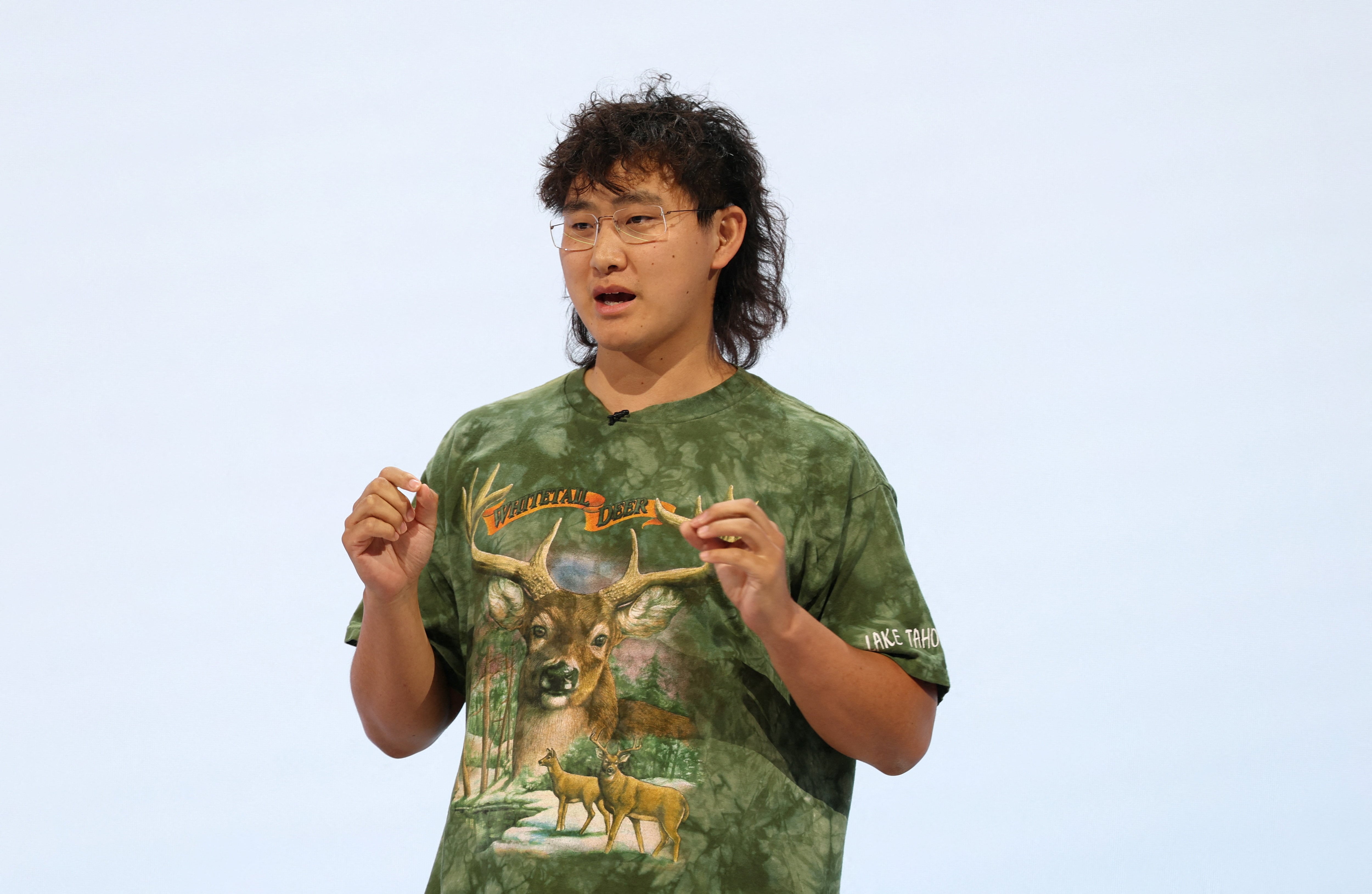
El director de IA de Meta, Alexandr Wang, habla en el Meta Connect el pasado mes de septiembre. Wang fue fundador de ScaleAI, creadores de Outlier.
  •  
❌