❌

Reading view

Ukraine says it hit 12 Russian refineries in September. No refinery strikes reported since Trump’s “energy ceasefire”
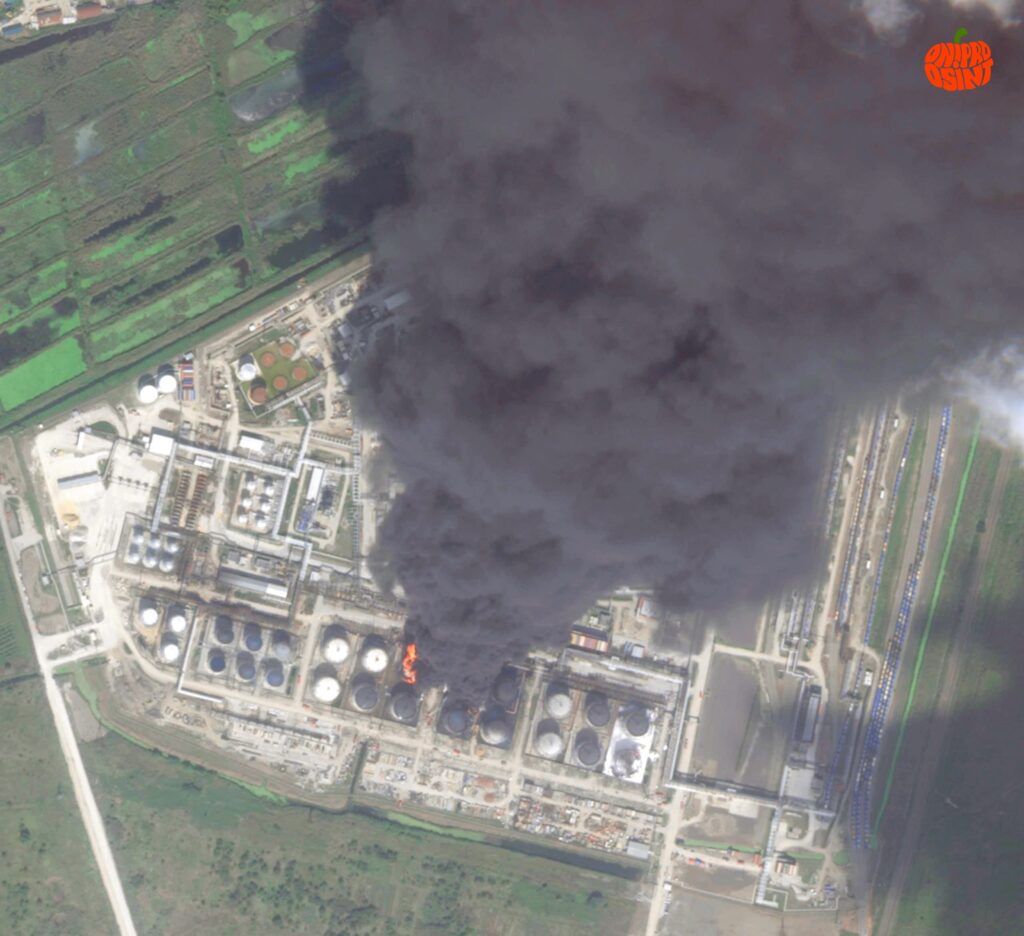
Satellite imagery of the Slavyansk oil refinery after a nighttime UAV attack on 13 September. Part of the refinery is obscured by thick smoke from a fire in the tank farm, Krasnodar Krai, Russia. Photo: Dnipro Osint

Ukrainian forces hit 12 large Russian refineries in September, Ukraine’s Ministry of Defense said, according to ArmyInform on 12 October. The farthest on the ministry’s list, Lukoil’s refinery in Perm, lies about 1,500 kilometers from Ukraine’s border. Since Trump's 11 October announcement, Euromaidan Press has found no reports of new Ukrainian refinery strikes in the official and unofficial Ukrainian and Russian sources it monitors.

A refinery-for-refinery pause would limit Ukraine’s ability to disrupt Russia’s oil industry while leaving Moscow free to keep attacking Ukraine’s energy system, giving Russia an advantage in a war where both sides use energy infrastructure as a target. The issue has become urgent since Trump announced an “energy ceasefire” on 11 October, after which Ukraine reported holding off strikes on Russian energy facilities while Zelenskyy said Russia attacked several Ukrainian energy sites.

The campaign continued into October. Ukraine’s General Staff said Ukrainian forces struck the Samara oil pumping station overnight into 10 October, the third attack on the station that month, according to Radio Svoboda.

Ukraine held off, Russia hit six energy sites

Zelenskyy said Ukraine had refrained from striking Russian energy facilities overnight on 11–12 October following Trump's announcement. Monitoring channels and official Russian sources did not report any new refinery strikes on 13 October.

“Last night, we did not attack any energy facilities on the territory of Russia because President Trump said that there would be an energy ceasefire,” Ukrainian President Volodymyr Zelenskyy said.

He added that Ukraine does not announce its next operational steps. Zelenskyy said Russia attacked six Ukrainian energy facilities on 12 October alone, according to Radio Svoboda.

Refineries first, power plants possibly later

A White House official told Axios that the proposal would begin with both sides halting attacks on oil refineries, with a possible agreement covering power plants to follow. Axios reported that Russia had not accepted a ceasefire.

The Institute for the Study of War (ISW) said the proposal, as described, would give Russia a major concession without offering Ukraine anything in return: Russia has scores of operating refineries, while Ukraine has one. ISW also said the proposal would allow Russia to continue its winter strikes on Ukrainian power stations.

  •  

Ukraine reruns its Vivaldi playbook outside Kramatorsk and pushes Russia back across the Siverskyi Donets, ISW says

after vivaldi near lyman ukraine pushes across siverskyi donets east sloviansk kramatorsk · post assessed control terrain direction 8 2026 slovyansk-direction-october-8-2026 news ukrainian reports

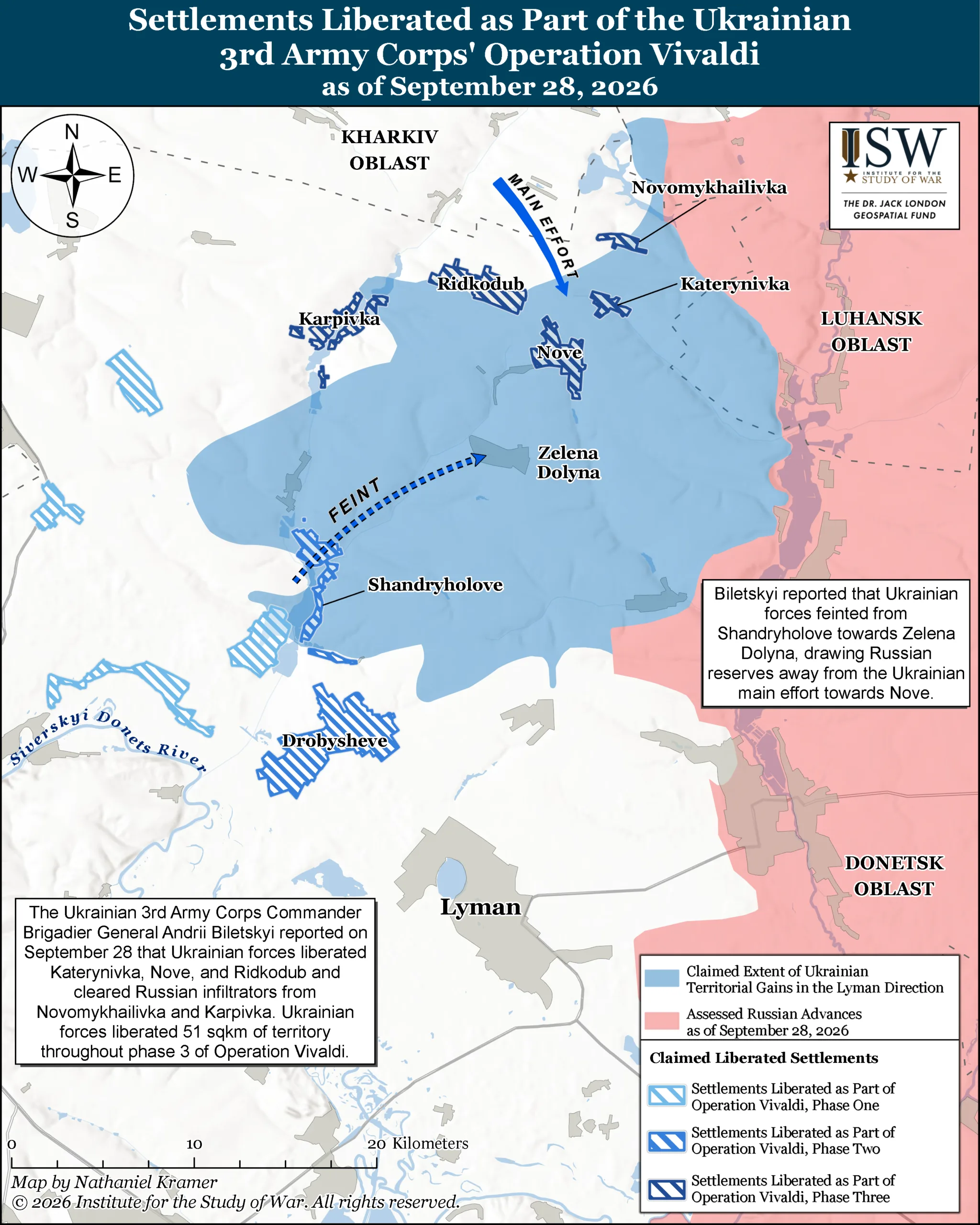
Ukrainian forces are advancing east of Sloviansk and Kramatorsk, and even Russian milbloggers now acknowledge it, the Institute for the Study of War (ISW) said on 8 October. The gains may follow months of groundwork like the one that preceded Operation Vivaldi near Lyman, which Ukraine says returned 176 km² to its control. Russian commentators are already doubting that Moscow can reach the two cities.

Russia's years-long push on the Fortress Belt, the chain of cities anchoring Ukraine's defense in Donetsk Oblast, has been stalling since Vivaldi began. Unable to take those cities, Russia keeps hitting them from the air. On 8 October, a Russian bomb killed 30 people on two buses in Kramatorsk.

Across the Siverskyi Donets

Russian milbloggers said Ukrainian forces liberated Ozerne and advanced east of Pyskunivka toward Kryva Luka, ISW reported. They also acknowledged that Ukrainian troops drove Russian forces out of Pyskunivka. Ukrainians are now counterattacking toward Kryva Luka from the west and northwest, from across the river.

vivaldi counteroffensive worked because ukraine took russia's drones out fight isw assesses · post settlements ukraine's 3rd army corps says liberated during operation north lyman donetsk oblast 28 2026 settlements-liberated-during-operation-vivaldi-phase-3-as-of-september-28-2026-scaled
Explore further

Vivaldi counteroffensive advanced after Ukraine took Russia’s drones out of the fight, ISW assesses

ISW called the repeated Russian claims of a river crossing notable, because the Siverskyi Donets is a significant natural obstacle. Kryva Luka is a dominant height just south of the river. From there, Ukraine could launch further counterattacks. Ukrainian forces appear to have pushed Russian troops off both banks in this area, ISW assessed.

The heights Russia wanted

After Vivaldi cleared ground near Lyman in September, Russia shifted its push south toward Mykolaivka and Sloviansk. Russian forces likely see Mykolaivka, just east of Sloviansk, as a primary objective, ISW said. Its heights would favor an offensive on the city. Ukrainian pushes northeast and southeast of the town now deny Russia that terrain.

East of Kramatorsk, milbloggers claimed Ukrainians liberated Malynivka and advanced between Fedorivka Druha and Holubivka. They also reported gains into southern Minkivka and near Fedorivka. The lines remain tangled. Geolocated footage shows Ukrainian forces striking a Russian position in central Tykhonivka after what ISW assesses was a Russian infiltration.

ISW said the counterattacks may point to a broader Ukrainian goal: pushing Russian forces east, away from the Sloviansk–Kramatorsk area and toward the Siverskyi Donets–Donbas Canal.

The Vivaldi playbook

The counterattacks have run for weeks. On 29 September, Ukrainian military observer Kostiantyn Mashovets reported them in the same areas, saying Russia's 3rd Combined Arms Army had failed to make significant gains. ISW assesses that the attacks build on months of shaping meant to wear down Russia's offensive capacity.

vivaldi's secret weapon targeting robots third corps reconnaissance mapped russian command nodes hit cause panic · post graphic ukraine's army / telegram під час операції вівальді нрк десантували щоб порушити
Explore further

Vivaldi’s secret weapon was the targeting, not the robots: Third Corps reconnaissance mapped Russian command nodes, then hit them to cause panic

Before Vivaldi, Ukrainian forces targeted Russian drone operators, gaining drone superiority before the counteroffensive. They used the same approach ahead of their Oleksandrivka counterattacks in early 2026.

Moscow appears to see the pattern. A Ukrainian military official said on 7 October that Russia is moving drone units and Spetsnaz from quieter sectors to the Sloviansk–Kramatorsk direction. Ukraine also reorganized its command in and around Donetsk Oblast in early September, which may be blunting Russian attacks from the east, ISW said.

"Distant" and "doomed"

One Russian milblogger called an advance toward the Sloviansk–Kramatorsk area a "distant" prospect, ISW reported. A Russian offensive from Siversk toward Sloviansk may be "doomed" to failure or heavy losses unless Russia retakes the forests south of Lyman, he said.

The counterattacks east of the two cities appear to support Vivaldi, ISW assessed. Together with Russia's defeat north of the river, they could disrupt Russia's offensive toward Sloviansk from the east entirely.

If Ukraine holds Kryva Luka and keeps Russia off the Mykolaivka heights, Moscow's pincer on Sloviansk and Kramatorsk loses the ground it was built on.

  •  

Ukraine finds US-made navigation sensor inside Russia’s new jet-powered drone

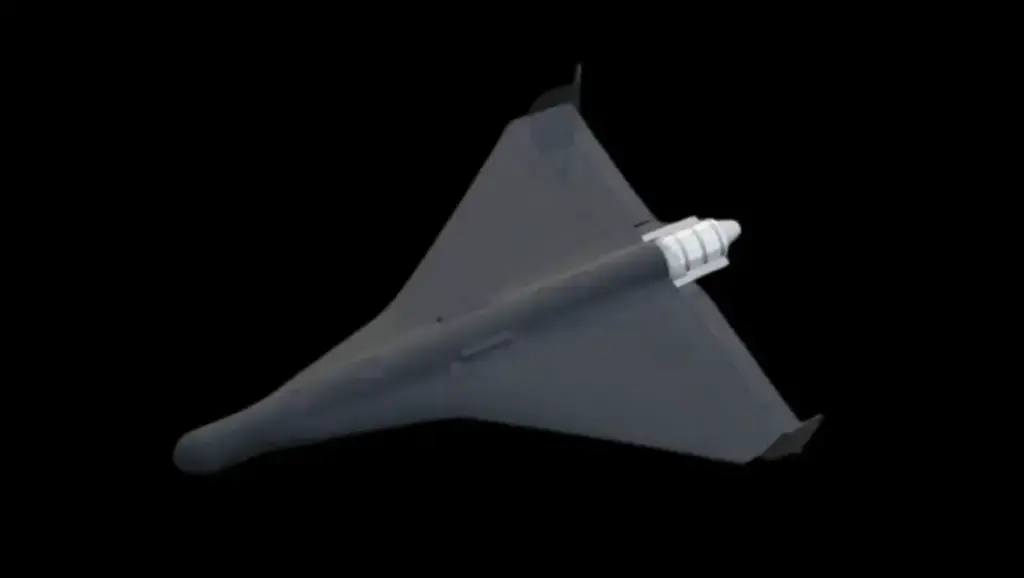
A 3D rendering of Russia's jet-powered Geran-4 strike drone.

Ukraine has found the US component in a Russian jet-powered drone targeting civilians, supermarkets, medical warehouses, and bridges. According to its Defense Intelligence, the new weapon contains a PNI5GA magneto-inductive sensor made by the US company PNI Sensor.

The US-made navigation component adds to evidence that Western technology continues to appear in Russia's strike drones. HUR had already identified US-made chips in the Geran-4 in May, but the newly reported PNI5GA is a navigation sensor in a modified version of the drone that Institute for the Study of War (ISW) says Russia may seek to field ahead of winter.

A Russian engine replaces the Chinese one

Russia has also replaced the drone's Chinese-made Telefly turbojet engine with a Russian-made equivalent produced in Alabuga. Russia is using the Alabuga zone to bring more of its drone production home rather than importing Iranian or Chinese parts, according to the ISW.

"The remaining electronic units and components are unchanged and identical to those used in previous Geran UAVs," HUR said.

What the warhead is built to cut

The modified drone also carries a specialized KRSN warhead designed to cut through bridge structures and power-line supports. Presidential adviser Serhii Beskrestnov described the warhead on 30 September, saying it consists of a 40-kilogram main charge and four strike modules. Its warhead is meant to destroy hardened targets made of steel and concrete and to damage cable-stayed bridges.

Russia has stepped up strikes on Kyiv's Northern and Southern bridges across the Dnipro in recent days with such drones.

However, Russia may try to field more resilient and more dangerous versions of its strike drones before Ukraine has effective countermeasures in place. Russia could use them to degrade Ukraine's energy infrastructure and logistics ahead of a winter strike campaign that it said will very likely be brutal.

  •  
❌