❌

Reading view

Dozens Arrested After Multicultural Riots Outside of Milan's Duomo Cathedral

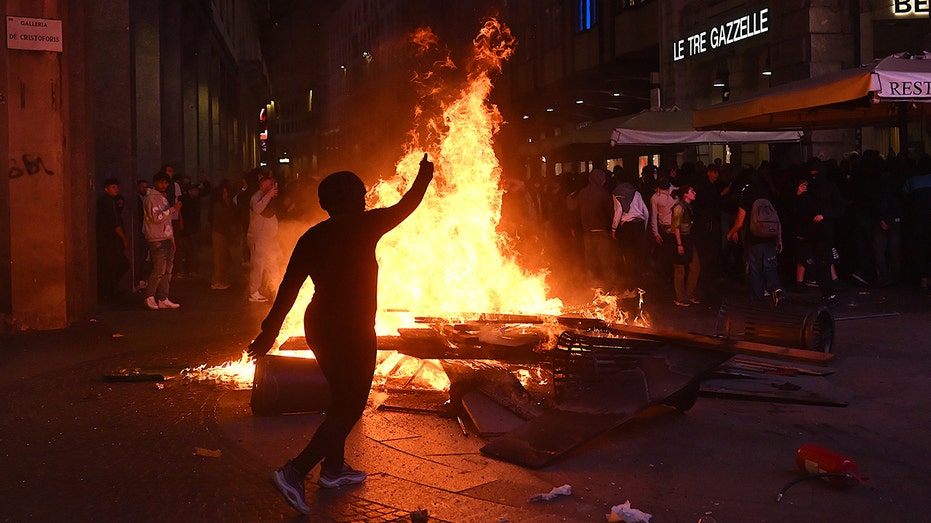
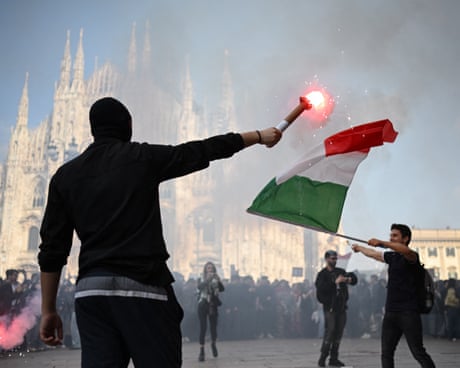
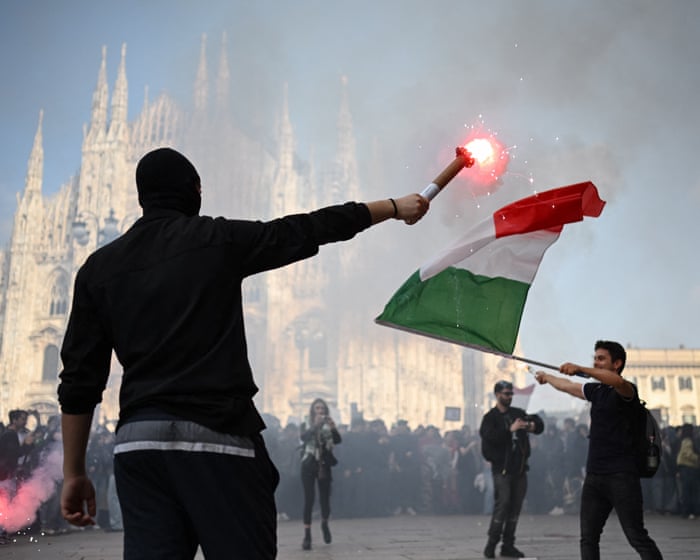
Dozens of rioters have been arrested following the outbreak of a "guerrilla war" outside the Duomo cathedral in central Milan as unrest from France appears to be boiling over into fellow European nations.

The post Dozens Arrested After Multicultural Riots Outside of Milan’s Duomo Cathedral appeared first on Breitbart.

  •  

Meloni condemns ‘gangs of thugs’ after protests turned violent across Italy

Italy, like France, witnessed a day of protests on Saturday — several turning violent — as some Italian politicians blamed the extreme left for the lawlessness. Prime Minister Giorgia Meloni took to social media to condemn the unrest and back law enforcement.

Meloni wrote on X: "Once again, the women and men of the Law Enforcement Forces have had to face the violence of criminals who, even through organized groups, exploit demonstrations to seek confrontation and sow chaos," she posted.

She added, "Because they were there to safeguard the safety of citizens, workers, merchants and all the people who have the right to live [in] their city without fear and without seeing it laid to waste and set ablaze by gangs of thugs," she continued. "We stand with you."

VIOLENCE ERUPTS AT FRANCE PROTESTS AS MACRON WARNS UNREST IS BEING EXPLOITED

Her Sunday morning post came after scenes of violence between protesters and police, the most visible being outside Milan’s historic Cathedral, known as the Piazza del Duomo.

The Associated Press reported 50 demonstrators, including minors, were detained and at least two police officers were hurt in a protest that required water cannons to disperse the crowd, quoting the LaPresse news agency. Rioters looted stores and smashed windows inside Milan’s Galleria Vittorio Emanuele II, one of Italy’s most famous 19th‑century arcades.

Meloni had already laid blame for the protests on Saturday night, posting: "Thugs who exploit demonstrations to sow chaos, attack those who ensure security and hold entire cities hostage… Demonstrating is a right. Setting our cities ablaze is not."

She added a message to her political opponents: "I renew my request to the opposition: do not be ambiguous about this. Unequivocally condemn these acts of violence and issue a clear appeal for every mobilization to be peaceful."

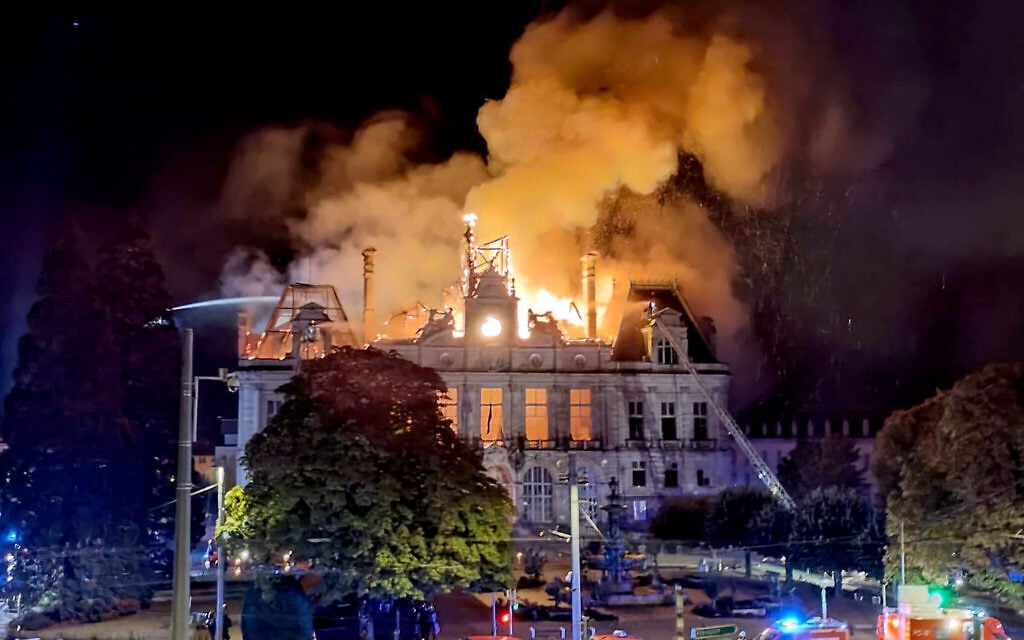
LIMOGES TOWN HALL 'LARGELY LOST' AFTER FAR-LEFT RIOTERS SET HISTORIC BUILDING ON FIRE AMID FRENCH UNREST

Il Sole 24 news site quoted Francesco Filini, MP for Meloni's Fratelli d’Italia and national program coordinator, as saying: "It is no longer tolerable that every time left-wing extremists take to the streets, scenes of organized destruction unfold. We are not dealing with mere demonstrators, but with organized groups that plan violence."

Saturday's demonstrations were organized by the Confederazione Generale Italiana del Lavoro, or CGIL, Italy’s oldest labor union with over 5 million members, often connected to Italian political parties on the left.

Meloni posted she had "great respect for the thousands" who protested peacefully and calling participation "the foundation of any healthy democracy… we cannot ignore what happened in other Italian squares."

She noted that in Milan "stones were thrown at the Law Enforcement Forces, officers were injured, damage and violence occurred that forced the interruption of the procession. In Turin, people were stopped carrying cobblestones and window-breaking hammers. In Bologna, the disorders led to the precautionary closure of the railway station."

"In the face of scenes like these, the rejection must be unanimous," Meloni posted. "Any hesitation becomes justification. Silence is not acceptable."

ITALY ROCKED BY ANARCHIST-LED RIOTS AS OVER 100 POLICE INJURED, MELONI CONDEMNS VIOLENCE

Milan’s center-left mayor, Giuseppe Sala, told the Associated Press, "The reasons for the protests were understandable. The violence against law enforcement and serious damage to the city are not justifiable."

CLICK HERE TO DOWNLOAD THE FOX NEWS APP

Reuters reported some 56 police officers were injured in the protest in Bologna, citing the police union, and the interior ministry says about 100 officers were hurt and around 30 arrests were made in the demonstration in Turin.

Reuters and The Associated Press contributed to this report.

  •  

‘We are suffocating’: protests spread to Lisbon and Milan as housing and living cost tensions intensify

Hundreds at Lisbon tent camp demand action, as Giorgia Meloni says march in Italy was exploited by ‘hooligans’

The angry protests that have convulsed Spain and France in recent weeks have spilled over to Italy and Portugal, with rioters clashing with police and setting property on fire in Milan, and a tent encampment springing up in Lisbon over the weekend.

A march in central Milan on Saturday to protest against rising living costs began peacefully but ended with masked rioters throwing stones, paving blocks and other objects at riot police and setting fire to barricades made from bar tables.

Continue reading...

© Photograph: Piero Cruciatti/AFP/Getty Images

© Photograph: Piero Cruciatti/AFP/Getty Images

© Photograph: Piero Cruciatti/AFP/Getty Images

  •  

Il Mezzogiorno in strada con le ultime gocce di carburante

Dalle strade del Sud arriva una domanda che riguarda tutto il Paese: chi decide quanto costa produrre in Italia, e chi ne paga il prezzo quando la decisione viene presa altrove.

Segue nostro Telegram.

Una mappa che segue l’energia

A metà ottobre, per un camionista siciliano, tenere il mezzo fermo nel piazzale costa meno che metterlo in strada. Con il gasolio intorno ai 2,40 euro al litro sull’isola, il Comitato autotrasportatori siciliani stima fra 700 e 900 euro di perdita al giorno per ogni camion. Il coordinatore Salvatore Bella l’ha detto senza giri di parole: «Oggi lavorare in perdita con il gasolio a 2,40 al litro non è più possibile». Ne è nato il fermo che va dalla mezzanotte del 16 ottobre al 20, senza cortei: i tir restano nelle aziende, i semirimorchi non vengono ritirati dai porti. In Calabria Fedralog ha fermato i mezzi negli stessi giorni, mentre la sezione trasporti di Confindustria Catania ha deliberato all’unanimità uno stop fino al 22.

Il fermo arriva dopo settimane di mobilitazione. Il 1° ottobre agricoltori e autotrasportatori hanno bloccato lo svincolo di Pizzo sulla A2; il 12 i trattori hanno presidiato le portinerie del polo industriale tra Augusta e Melilli, rallentando il carico delle autobotti, per iniziativa degli stessi produttori e senza sigle sindacali alle spalle. In Puglia i blocchi hanno impedito l’accesso delle autocisterne alla raffineria Eni di Taranto, a ridosso dell’ex Ilva, i cui lavoratori sono in sciopero dal 12 ottobre. Gli olivicoltori sommano al caro carburante il calo del prezzo dell’olio. Il 22 toccherà ai pescatori: giornata di sciopero nazionale e cento pescherecci a chiudere simbolicamente lo Stretto di Messina.

La geografia dei presìdi dice qualcosa che i comunicati non dicono. Raffinerie, porti, svincoli autostradali, lo Stretto: chi protesta va a colpire i nodi da cui passa l’energia, come se sapesse bene dove nasce il problema. E c’è un paradosso evidente. Il Sud ospita Augusta, Priolo, Taranto, cioè una parte rilevante della capacità di raffinazione del Paese, ma i produttori che vivono a pochi chilometri da quegli impianti non riescono più a pagarne il prodotto.

La guerra arriva alla pompa

Queste proteste sono la coda italiana di una crisi aperta lontano. I rincari sono partiti con la guerra in Iran e con le difficoltà di approvvigionamento dal Golfo: già a fine marzo, nel Siracusano, il gasolio agricolo era salito da 0,88 a 1,45 euro al litro.  A settembre la media nazionale del gasolio superava i 2,16 euro, 35 centesimi più di febbraio; il 12 ottobre il self costava in media 2,252 euro. La crisi di Hormuz, che finora abbiamo letto soprattutto come stress test per le petromonarchie e per i flussi finanziari del Golfo, ha anche una trasmissione verso il basso. Lungo la catena, ogni anello scarica il costo su quello successivo, finché arriva a chi non ha nessuno a valle: il piccolo autotrasportatore che non può ritoccare le tariffe, l’agricoltore che vende a prezzi fissati dalla grande distribuzione.

Le isole pagano due volte. Al carburante si sommano i noli marittimi, appesantiti dalle nuove regole ambientali sul trasporto navale, e i ritardi del Sea Modal Shift, l’ex Marebonus che dovrebbe compensare il costo del passaggio via mare da e per la Sicilia e la cui prima annualità non è stata pagata entro giugno. Le risposte arrivate finora agiscono sul prezzo alla pompa (tagli temporanei delle accise, il tetto annunciato da Eni sulla propria rete dal 28 settembre) e quasi mai sulla struttura dei costi. Per un trattore che brucia 300 euro di gasolio a mattina, uno sconto di 15 centesimi non cambia i conti.

Letta con gli strumenti dell’analisi dei sistemi-mondo, la vicenda ha una forma riconoscibile: gli shock esterni attraversano il centro e si depositano sulla periferia, che ha meno margini per assorbirli. Il Mezzogiorno funziona da periferia interna dell’Europa. Importa energia a prezzi di mercato globale, esporta prodotti agricoli in competizione con importazioni soggette a standard diversi, dipende da una logistica strada-mare che nessun incentivo pagato in ritardo riesce a rendere sostenibile. Su questo si innestano fragilità di lungo periodo come il credito difficile, lo spopolamento e l’arretramento dei servizi, che l’autonomia differenziata rischia di accentuare.

La copertura nazionale ha registrato i blocchi come cronaca del traffico più che come fatto politico. È una scelta che pesa: una protesta trattata come disagio stradale non obbliga nessuno a rispondere sul merito. Eppure il merito è chiaro. Un Paese che importa gli effetti delle guerre altrui senza strumenti propri per governare il costo dell’energia finisce per trasferirli sui territori e sulle categorie più deboli.

Per le prossime settimane gli indicatori da seguire sono pochi e osservabili: un intervento specifico sul gasolio agricolo e da autotrazione, il pagamento del Sea Modal Shift, l’eventuale proroga dei fermi oltre il 20 e il 22, la saldatura con lo sciopero dei pescatori. In assenza di misure, gli stessi promotori siciliani hanno già prospettato di proseguire. Se accadrà, sarà difficile continuare a chiamarla una vertenza di categoria.

Dalle strade del Sud arriva una domanda che riguarda tutto il Paese: chi decide quanto costa produrre in Italia, e chi ne paga il prezzo quando la decisione viene presa altrove.

  •  

Is sisterhood the secret to a long life? The Sardinian village that could hold key to women’s longevity

Meet some of the elderly residents of Bolotana, in line to be the world’s sixth ‘blue zone’ for its high number of female centenarians

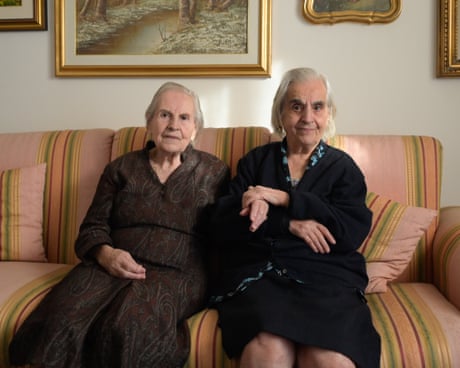
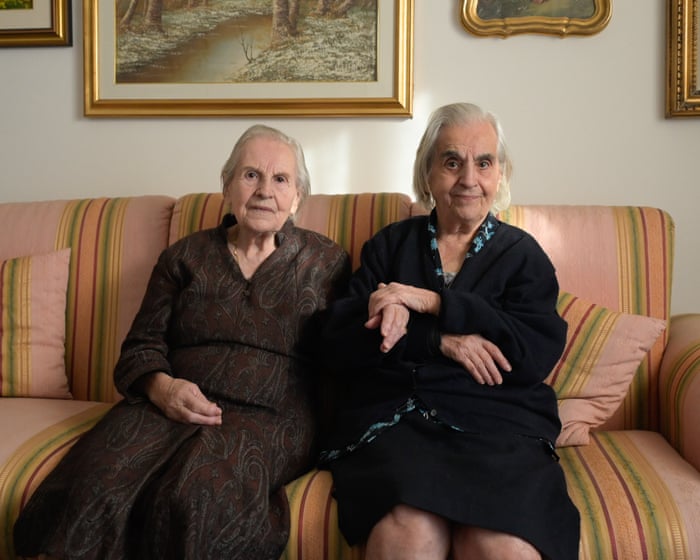
When Giovanna Marras opens the door to her home in Bolotana, a mountain village in central Sardinia, her eyes are bright with curiosity as she sizes up her visitors. Her sister, Mariangela, peeks out too, soon ushering her guests inside and handing out dishes of ice-cream. The sisters are full of life, talking animatedly. Giovanna is 101 and Mariangela is 99.

Sitting in their living room, Giovanna swiftly recaps her life story: she excelled at school before moving to Cagliari, the capital of the Italian island, at 18 to train as a seamstress. The sisters went on to run a successful tailoring business in Bolotana before travelling the world after retirement. Neither married.

Continue reading...

© Photograph: Victor Sokolowicz/The Guardian

© Photograph: Victor Sokolowicz/The Guardian

© Photograph: Victor Sokolowicz/The Guardian

  •  

Mass protests in France spiral into worst riots in years; 1,200 arrested, 150 cops injured

As hundreds of thousands protest cost of living, city hall torched as police use tear gas; teen protester loses hand after picking up stun grenade; PM blames 'ultra-left,' months before presidential election
  •  

Pork Banned in Italy’s New Muslim-Friendly School Meals

Schools in north-eastern Italy have banned pork products in school meals to make them acceptable to Muslim migrants, meaning traditional dishes like prosciutto, porchetta and pasta all’amatriciana are off the menu.

The post Pork Banned in Italy’s New Muslim-Friendly School Meals appeared first on The Daily Sceptic.

  •  

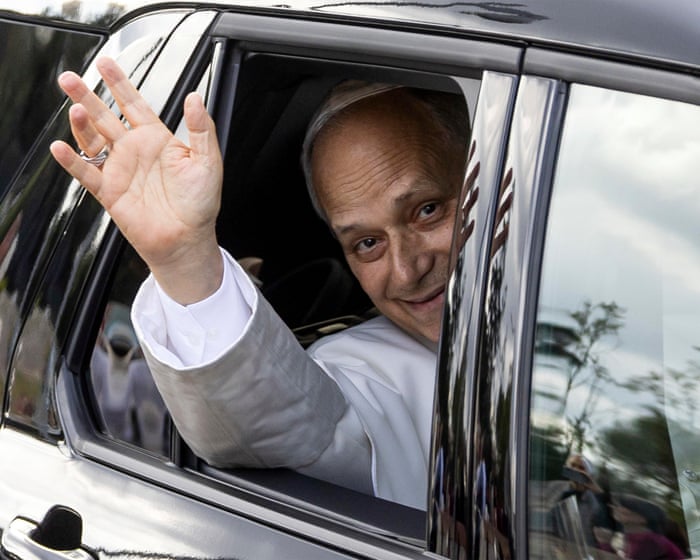
Pope Leo discharged from hospital after cancer operation

Doctors say pontiff is ‘fit for discharge’ after operation to remove cancerous tumour from his lung

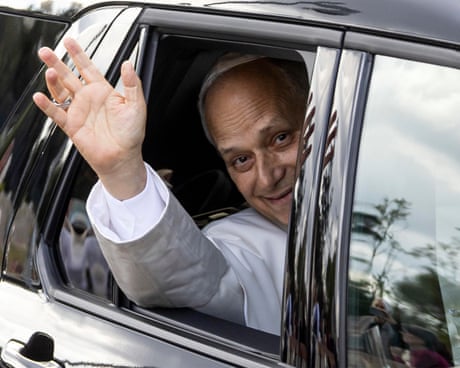
Pope Leo has been discharged from hospital in Rome after undergoing an operation to remove a cancerous tumour from his lung.

Leo, 71, was deemed “fit for discharge”, his doctors, Luigi Carbone and Stefano Margaritora, said in a statement published by the Vatican.

Continue reading...

© Photograph: Massimo Percossi/EPA

© Photograph: Massimo Percossi/EPA

© Photograph: Massimo Percossi/EPA

  •  

Pope Leo XIV discharged from hospital, will return to Vatican after surgery to remove lung cancer

Thousands of supporters gathered outside Gemelli Hospital in Rome Saturday yelling "Papa!" after Pope Leo XIV was released after surgery to remove a cancerous node in his lung.

The Holy See announced early Saturday he would be leaving to return to the Vatican.

"Following the doctors’ assessment this morning, Pope Leo XIV will be discharged today from Gemelli Hospital, where he was hospitalized for surgery on his right lung," a statement from the Holy See read.

"He will leave the hospital in the early afternoon and return to the Vatican. Tomorrow, he will lead the Angelus prayer from the window of the papal apartment."

The pope received blood tests and a chest X-ray Saturday, both of which confirmed he is well enough to return to the Vatican, according to Vatican News.

Before he departed, Pope Leo reportedly visited the children's oncology ward. While in the hospital, the Pope received letters from some of the children in the ward.

"Pope Leo, our prayers are for you," a girl named Eleonora, who had been receiving treatment in the oncology ward, wrote to him, according to letters released by Vatican News. 

"May God, the Most Holy Virgin, and the guardian angels always protect you," she added. 

Eleanora's mother told the Pope that she was now healthy, according to the Vatican.

"Faith moves mountains," Eleanora wrote to Pope Leo. "God has heard our prayers."

DR MARC SIEGEL: POPE LEO'S LUNG SURGERY PUTS MODERN MEDICINE ALONGSIDE FAITH

Pope Leo underwent thoracic surgery to remove a cancerous node in his lung Tuesday. 

After the successful surgery, doctors diagnosed him with lung adenocarcinoma, a form of lung cancer.

"The Pope was in the operating room approximately three hours, while the operation itself lasted about 90 minutes. The doctors said it was successful and there were no complications," a statement from the Holy See press office read.

RECOVERING FROM LUNG SURGERY, POPE LEO URGES PUTIN TO AGREE TO CEASEFIRE IN RUSSIAN-HELD UKRAINE CITY

"Pope Leo awoke normally after surgery and, following a brief period of observation, returned to his room on the hospital’s 10th floor," Vatican News added in a statement.

While recovering, Pope Leo called Russian President Vladimir Putin and urged him to call for a ceasefire in the Ukrainian city of Oleshky.

POPE LEO XIV SEEN FOR FIRST TIME SINCE LUNG CANCER SURGERY AMID MAJOR RECOVERY MILESTONE

"During the conversation, the Holy Father expressed his deep concern about the grave humanitarian situation in the city of Oleshky, in the Kherson region, and called for a ceasefire to allow the delivery of food and medical assistance and the voluntary and safe evacuation of the civilian population," a statement from the Vatican read.

"Finally, the Holy Father reaffirmed the Holy See’s commitment to promoting dialogue and peace."

TRUMP WISHES POPE LEO SPEEDY RECOVERY AFTER LUNG CANCER DIAGNOSIS, SPEAKS HIGHLY OF PONTIFF'S BROTHER

Russia has controlled the southern Ukrainian city since May and has not allowed any humanitarian food deliveries into the city. Oleshky also has no electricity, gas or running water, and the hospital is barely functional, according to previous Fox News Digital reporting.

Fox News Digital contacted the Holy See for further comment.

CLICK HERE TO DOWNLOAD THE FOX NEWS APP

Fox News Digital's Brie Stimson and Fox News' Courtney Walsh-Annesi contributed to this report.

  •  

Italy and Spain Move Towards Ending Schengen Border Controls After Meloni–Sánchez Talks

Italy has extended checks on travellers from Spain for another week, but talks between Giorgia Meloni and Pedro Sánchez have opened the way for an end to reciprocal restrictions imposed after the migration crisis in Ceuta.

Italy and Spain have agreed to work towards ending their reciprocal Schengen border controls following discussions between Prime Ministers Giorgia Meloni and Pedro Sánchez at the European Council summit in Brussels. Rome nevertheless extended its restrictions for another seven days on Friday, 16 October, as the two governments consider how to bring their respective measures to an end.

The decision marks a possible turning point in a dispute that has disrupted travel between two of the European Union’s largest countries since the summer. According to the notifications recorded by the European Commission, the restrictions concern air and sea connections between Italy and Spain, which do not share a land border.

The two governments have instructed their interior ministers to consider alternative arrangements over the coming week. Although neither side has formally withdrawn its measures, the agreement to coordinate their removal suggests that both capitals are seeking a way out of an increasingly uncomfortable confrontation over migration and internal European security.

How the Ceuta crisis reached Schengen

The dispute began after an extraordinary influx of migrants from Morocco into Spain’s North African enclave of Ceuta in late July. More than 72,000 people crossed the border, prompting serious questions about the management of the EU’s external borders and the possibility of onward movements into other member states.

Italy responded by introducing checks on passengers arriving from Spain, arguing that the situation created risks for public order and internal security. Rome also raised concerns about the possible movement of individuals presenting security threats, although the extent of any such movement remained disputed.

Madrid rejected the justification and introduced reciprocal measures. What began as an emergency response to events on an external border consequently developed into a disagreement about whether one Schengen member could impose restrictions on another on the basis of anticipated migration movements.

EU Today examined the original Spanish retaliation in August, when the dispute first threatened to turn temporary border controls into an instrument of political pressure.

The wider consequences of the Ceuta incident have raised questions about the vulnerabilities exposed at the EU’s external border and the effectiveness of common European migration and crisis-response policy.

The limits of temporary border controls

Schengen is built on the principle that people can travel between participating countries without routine internal border checks. Member states nevertheless retain the right to reintroduce temporary controls in response to serious threats to public policy or internal security, subject to the requirements of EU law.

The difficulty lies in determining when those exceptional powers are justified. Italy has maintained that the Ceuta crisis warranted precautionary action. Spain has argued that controls imposed specifically on travellers from its territory were unjustified and discriminatory.

These opposing positions matter beyond the two countries. If concerns over irregular arrivals in one member state become sufficient grounds for another to introduce sustained checks, the distinction between Europe’s external borders and its internal travel area becomes increasingly difficult to maintain.

The operational results have also entered the political argument. Italian figures cited during the dispute indicate that nearly half a million passengers were checked during the first month, with 31 refused entry. Those numbers demonstrate that the measures were substantial, but do not by themselves establish whether the original security concerns were proportionate to the restrictions imposed.

Madrid, meanwhile, has maintained that migrants involved in the Ceuta influx had not moved onwards to mainland Spain in the manner suggested by Italian concerns.

Meloni and Sánchez seek a practical compromise

The latest discussions offer both governments a route towards de-escalation without formally conceding their underlying positions. Meloni can present the additional week of controls as a continuation of Italy’s security precautions, while Sánchez can point to an agreement to prepare their coordinated removal.

The two prime ministers remain politically divided on migration. Meloni has consistently argued for stronger border enforcement and deterrence, while Sánchez has defended an approach incorporating legalisation and labour-market integration for migrants already living in Spain.

Those disagreements were also visible during the Brussels summit, where European leaders returned to the question of migration management and the consequences of national decisions for the wider Union.

For Brussels, the immediate concern is whether the two governments can replace competing national restrictions with arrangements that address security concerns without unnecessarily interrupting movement between Schengen countries.

A coordinated end to the controls would not resolve the underlying problems exposed by Ceuta. It would, however, remove one of the more unusual internal consequences of that crisis and demonstrate that political negotiations can still prevent emergency border measures from becoming semi-permanent.

The decisive period is now the coming week. Whether the controls expire as planned will depend on the discussions between the Italian and Spanish interior ministries and their ability to agree practical alternatives.

  •  

Renaissance Masterpiece Reunited in Italy After Nearly 200 Years

A 500-year-old religious triptych by Andrea Previtali has been brought together for the first time in almost two centuries. The reunion forms the centrepiece of a new exhibition examining the painter’s place in the Venetian Renaissance.

Three panels of a Renaissance altarpiece, separated for almost 200 years, have been reunited in Italy for an exhibition opening on Saturday, 17th October, offering visitors a rare opportunity to see a work by Andrea Previtali in its original arrangement.

The painting, created around 1515 for the Church of the Annunciation in Serina, near Bergamo, has been reconstructed through cooperation between the Diocese of Bergamo and the Museo Villa Bassi Rathgeb in Abano Terme, close to Padua. One panel, depicting a bishop saint, belongs to the museum’s permanent collection, while the remaining two have been brought together for the exhibition.

The reunion was confirmed on 16 October by Italy’s Ministry of Culture heritage authority. It forms the central attraction of Andrea Previtali: Disciple of Giovanni Bellini, which runs until 7th February 2027 and examines the career of a painter who worked between two important artistic centres of Renaissance Italy.

Reconstructing a Renaissance Altarpiece

The three panels originally formed a triptych, a type of religious painting consisting of a central image flanked by two wings. Such works were commissioned for churches and private chapels, where they served as devotional objects and demonstrations of the artistic ambitions of their patrons.

Over succeeding centuries, many Renaissance altarpieces were dismantled, removed from their original settings or dispersed among private collections and museums. Their individual panels could subsequently be displayed as independent works, losing much of the relationship between the images originally intended by the artist.

The Previtali triptych provides an example of how those connections can be recovered.

The Museo Villa Bassi Rathgeb holds the panel depicting a bishop saint as part of the collection assembled by Roberto Bassi Rathgeb, an art historian and collector who contributed to renewed scholarly interest in Previtali.

His collection, donated to the municipality of Abano Terme between 1972 and 1980, contains important examples of painting from the Bergamo and Brescia schools.

The collaboration with the Diocese of Bergamo has now made it possible to display the bishop saint alongside the two surviving companion panels from the original altarpiece. Their reunion allows the work to be studied as a complete composition rather than as three separate paintings.

It also offers an opportunity to reassess Previtali’s decisions concerning the relationship between figures, religious symbolism and the architectural arrangement of devotional paintings.

A Pupil of Giovanni Bellini

Andrea Previtali was born around 1480 in Valle Imagna, in the territory of Bergamo, before moving to Venice, where he entered the workshop of Giovanni Bellini.

Bellini was among the most influential painters of the Venetian Renaissance, known for his treatment of colour, light and religious subjects. His workshop trained artists who would help establish the distinctive visual language of sixteenth-century Venetian painting.

Previtali’s connection to his master is documented in an inscription on his 1502 painting Madonna and Child with Donor, now held by the Musei Civici di Padova.

The artist described himself as a pupil of Giovanni Bellini, a declaration that has become an important piece of evidence for reconstructing his early career.

The new exhibition explores that relationship by displaying works by Previtali alongside paintings associated with the artistic environment in which he trained.

Among the loans is Bellini’s Saint Justina, from the Museo Bagatti Valsecchi in Milan. Although painted before Previtali’s mature career, it demonstrates the treatment of sacred figures, colour and composition that influenced succeeding generations.

The exhibition also includes works connected with Francesco Bissolo, Girolamo da Santacroce, Palma il Vecchio and Giovanni Busi, known as Cariani.

Together, they illustrate the movement of artistic ideas between Venice, Bergamo and Brescia during a period in which painters increasingly travelled between workshops, cities and patrons.

Venice, Bergamo and the Changing Renaissance

Previtali’s career developed at a time when the artistic traditions of northern Italy were undergoing considerable change.

The Venetian school placed particular emphasis on colour and atmosphere, while painters working in Lombardy drew on different approaches to portraiture, religious narrative and landscape.

Previtali’s paintings reflect both traditions. His subjects included Madonnas, religious gatherings, portraits and landscapes, often combining carefully observed human figures with detailed natural backgrounds.

After returning to Bergamo, he encountered the work of Lorenzo Lotto, whose approach to portraiture and religious painting introduced further stylistic developments.

The exhibition therefore examines Previtali not simply as a follower of Bellini, but as an artist whose work developed through exchanges between different regional schools.

It also includes Renaissance portraits, among them a painting on loan from the Accademia dei Concordi in Rovigo.

A separate section examines the practical techniques employed in Renaissance workshops, using physical and digital displays to explain how artists prepared, constructed and completed their paintings.

Such research has become increasingly important in the study and preservation of Europe’s Old Master paintings, allowing historians to reconstruct relationships between works that have survived in different institutions.

The restoration and presentation of historic collections also forms part of the wider debate about protecting Europe’s cultural heritage.

The Previtali exhibition has been organised by the municipality of Abano Terme in cooperation with the University of Padua and the Italian heritage authorities. It is curated by Raffaele Campion and Barbara Maria Savy.

Visitors will be able to see the reunited triptych at the Museo Villa Bassi Rathgeb from 17th October until 7th February 2027. The exhibition provides a rare chance to examine the three panels together and to understand how a religious commission created more than five centuries ago fitted into the artistic culture of Renaissance northern Italy.

  •  

EU Resists Further Delay to Carbon Pricing as Energy Costs Divide European Leaders

Italy and five other member states have failed to secure a further postponement of the EU’s new carbon market for heating and transport fuels, although European leaders have ordered a fresh assessment of its impact on households and businesses.

European Union leaders have resisted demands for another postponement of carbon pricing for road transport and building fuels, exposing deep disagreements over climate policy, industrial competitiveness and the burden of energy costs on European households.

At the European Council summit in Brussels on 15–16 October, the Visegrad countries — Poland, Hungary, Slovakia and the Czech Republic — pressed for the second European Emissions Trading System, known as ETS2, to be delayed until 2030. Italy and Greece joined calls for greater flexibility over carbon costs, although Rome also sought a national exemption from aspects of the energy-price regime rather than simply a uniform delay. No further postponement was agreed.

The European Council conclusions call on the European Commission to update its assessment of ETS2, particularly its design and safeguards. Leaders also demanded action to reduce volatility in the existing carbon market and limit the effect of carbon prices on electricity costs.

The outcome stops short of the further postponement sought by several governments, but demonstrates how far energy affordability has moved towards the centre of European climate negotiations.

The growing rebellion over ETS2

ETS2 is designed to extend the principle of carbon pricing to fuels used for heating buildings, road transport and certain smaller industrial activities. Unlike the existing Emissions Trading System, which covers large industrial installations and power generation, the new mechanism reaches sectors closely connected to everyday household expenditure.

Under the scheme, fuel suppliers must purchase allowances corresponding to the emissions associated with the fuels they sell. Households and motorists will not buy allowances themselves, but suppliers may pass those additional costs through to customers.

That distinction is fundamental. A policy designed to encourage investment in cleaner heating systems and vehicles may initially appear to consumers as an increase in petrol, diesel and domestic heating bills.

The current legislative timetable provides for ETS2 to become operational in 2028, following an earlier one-year postponement. The latest demands from several Central European governments would push that date back to 2030.

Their argument is that consumers and smaller businesses cannot reasonably be expected to absorb another source of energy-price pressure while European economies continue to contend with geopolitical uncertainty, expensive fuel and comparatively weak industrial competitiveness.

Czech Prime Minister Andrej Babiš has been particularly outspoken in his criticism, arguing that carbon pricing risks weakening Europe’s industrial base and making everyday life more expensive.

Italy has supported calls for greater flexibility, with Prime Minister Giorgia Meloni presenting the discussion as part of a wider attempt to restore competitiveness and make the transition more affordable.

Why other governments opposed another delay

The initiative encountered resistance from governments concerned that repeatedly postponing established climate legislation would weaken investment certainty and reduce confidence in European policy.

The Nordic member states have been particularly reluctant to reopen the timetable. Their position reflects a broader concern that businesses investing in clean technologies need credible long-term rules, rather than legislation liable to be revised whenever political opposition intensifies.

Carbon pricing is intended to change economic incentives gradually. Higher costs for carbon-intensive fuels are supposed to make alternatives such as better-insulated buildings, electric vehicles and cleaner heating more financially attractive.

Critics of further postponement argue that delaying implementation would also delay those incentives, potentially increasing the eventual cost of reaching the Union’s emissions-reduction targets.

Yet the opposition has exposed a weakness in that argument: consumers cannot always respond quickly to price signals. A household relying on an older heating system or a worker with no practical alternative to driving may face higher costs long before affordable low-carbon options become available.

That issue has been central to earlier discussions over ETS2. EU Today reported on stronger carbon-price safeguards in June, when European institutions moved to provide additional market intervention if allowance prices rose sharply.

Commission ordered to reassess the economic impact

Rather than endorsing a new delay, European leaders have asked the Commission to review ETS2’s economic impact and safeguards.

The summit also urged faster progress on adjustments to the Market Stability Reserve, the mechanism intended to help manage the supply of carbon allowances and prevent excessive price volatility.

Under the existing scheme, market interventions can increase or reduce allowance availability in response to defined conditions. For ETS2, safeguards are especially politically sensitive because the cost of carbon allowances may ultimately be reflected in household transport and heating expenditure.

The European Commission’s updated auction arrangements already envisage auctions of ETS2 allowances beginning in 2027, ahead of the system’s operational launch in 2028.

That timetable gives governments a relatively narrow window to settle the remaining political disputes and put protective measures into effect.

A central part of the response is the Social Climate Fund, intended to support vulnerable households, transport users and small businesses through investments in energy efficiency, cleaner heating, improved transport and temporary financial assistance.

EU Today previously examined the European Investment Bank’s €3 billion advance financing initiative, which aims to accelerate support for households before the new carbon market becomes fully operational.

The central practical question is whether such assistance reaches consumers quickly enough to offset rising costs, particularly in member states where incomes are lower and households remain heavily dependent on fossil fuels.

Climate commitments meet industrial reality

The ETS2 dispute is connected to a broader argument over Europe’s existing carbon market and its effects on energy-intensive industries.

Manufacturers already face substantial costs arising from electricity, fuel, regulatory requirements and international competition. Governments concerned about deindustrialisation argue that European climate policy must account more directly for these pressures.

The summit conclusions acknowledged those concerns by demanding a predictable carbon market that limits price volatility and protects industry against the relocation of production to jurisdictions with less demanding environmental rules.

At the same time, leaders reaffirmed the importance of maintaining carbon pricing as an incentive for investment and emissions reduction.

For the governments seeking a postponement, the Commission’s new assessment offers an opportunity to maintain pressure for further concessions. For governments defending the existing timetable, it provides an alternative to another politically damaging delay.

The immediate result is therefore a compromise over scrutiny rather than a change in law. ETS2 remains scheduled for 2028, while Brussels must demonstrate that its safeguards can withstand both market volatility and political opposition.

The next phase will be determined less by arguments about long-term emissions targets than by the ability of EU institutions and national governments to show households and businesses how the transition can be financed without placing disproportionate costs on those least able to adjust.

  •  

Archaeologists Uncover Lost 1,600-Year-Old Cathedral Near Venice

Excavations at the ancient Roman city of Altinum have revealed the probable remains of an early Christian cathedral and bishop’s palace, offering new evidence about the origins of Venice and the transformation of its lagoon settlements.

Archaeologists working near Venice have identified what they believe to be the remains of a 1,600-year-old cathedral and an adjoining episcopal palace, resolving a longstanding question about the location of one of the region’s earliest Christian centres.

The discovery was announced on 15 October by Ca’ Foscari University of Venice, following excavations at Altinum, an important Roman settlement on the mainland near the Venetian lagoon. The foundations of a substantial religious complex have emerged from an area where ancient written accounts had long indicated the existence of a cathedral, although its precise location had remained unknown.

The findings suggest that the church was constructed between the late fourth and early fifth centuries AD, making it the earliest Christian church so far identified archaeologically in the Venetian territory. The researchers believe the complex provides physical evidence of the period when Christianity was becoming an important political and administrative force in the declining Roman Empire.

A Cathedral Hidden Beneath a Roman City

The newly identified church was a rectangular structure approximately 30 metres long and 20 metres wide, without an apse and orientated towards the east. Its layout differs from the surrounding Roman street grid, reflecting the religious requirements of the early Christian community.

The architectural arrangement resembles early churches in the northern Adriatic region, particularly those associated with Aquileia, which was an important centre of Christianity during late antiquity.

An adjoining building, distinguished by its substantial foundations and a complex arrangement of internal rooms, has been provisionally identified as the bishop’s palace. Archaeologists believe it may have stood two storeys high, with residential accommodation for senior clergy above rooms potentially associated with privileged burials.

Among the most revealing discoveries is the extensive reuse of stone paving blocks taken from the Roman streets. These materials were incorporated into the foundations of the ecclesiastical buildings, providing evidence of how the city was being physically reorganised during the transition from Roman to Christian administration.

The university’s researchers suggest that the removal of public paving materials may also indicate the authority exercised by the bishop over urban infrastructure. This interpretation would place the emerging Church at the centre of the city’s political transformation.

Ancient Written Accounts Supported by Archaeology

The existence of an early Christian cathedral at Altinum had been documented in letters written by Saint Jerome, one of the most influential Christian scholars of the late Roman period.

Writing in AD 396, Jerome referred to the religious activities of Nepotian, a priest associated with Heliodorus, the first bishop of Altinum. His descriptions included the maintenance of church furnishings, walls, floors and sacred vessels, suggesting an established and relatively prosperous Christian institution.

Until now, however, archaeologists had struggled to connect those accounts to a particular building.

The latest excavations, combining evidence collected during the 2025 and 2026 campaigns, have provided what researchers consider a convincing identification of the ecclesiastical complex.

The excavation is directed by Diego Calaon of Ca’ Foscari University and co-directed by Elisa Possenti of the University of Trento. Their work has brought together earlier archaeological records and newly examined foundations, including sections exposed during investigations in previous decades.

Researchers have also identified a burial area dating from the sixth and seventh centuries. Many graves were disturbed when construction materials were removed from the abandoned complex, but surviving human remains offer opportunities for further scientific investigation.

Radiocarbon dating, anthropological examinations and additional geophysical surveys are planned to establish a more detailed chronology and search for other elements of the religious complex, including its baptistery.

What the Discovery Reveals About Venice’s Origins

The historical importance of Altinum extends beyond the cathedral itself.

The ancient settlement was an important Roman commercial centre with connections to the waterways of the northern Adriatic. As political, environmental and demographic conditions changed during late antiquity, its population and institutions gradually shifted towards settlements within the lagoon.

One of the most important destinations was Torcello, which later became an early centre of Venetian civilisation.

Traditional accounts have often portrayed the creation of lagoon settlements as a response to barbarian invasions, with mainland inhabitants fleeing to isolated islands for protection.

The latest archaeological findings support a more complicated process.

Research at Altinum and Torcello indicates that the movement of people, religious institutions and construction materials was gradual and organised rather than the consequence of a single catastrophic event.

The cathedral appears to have been systematically dismantled during the first half of the seventh century, with substantial quantities of its stone and brick transferred to developing lagoon communities.

A surviving inscription records the establishment of Torcello’s cathedral in AD 639, providing an important chronological reference for the movement of ecclesiastical authority.

The findings add to the wider study of Europe’s surviving archaeological and architectural heritage, particularly the transformation of Roman settlements into medieval urban centres.

They also demonstrate how archaeological evidence can challenge historical narratives constructed centuries after the events they describe.

Much of the late-antique landscape at Altinum disappeared because of centuries of agricultural activity and the systematic removal of reusable building materials. In many cases, the excavators are studying trenches left by the extraction of foundations rather than surviving walls.

Further investigations may determine the complete extent of the episcopal complex and clarify the chronology of its abandonment.

For the first time, however, researchers can locate the religious buildings associated with Altinum’s earliest Christian bishops and trace their connection to the communities from which medieval Venice eventually emerged.

  •  

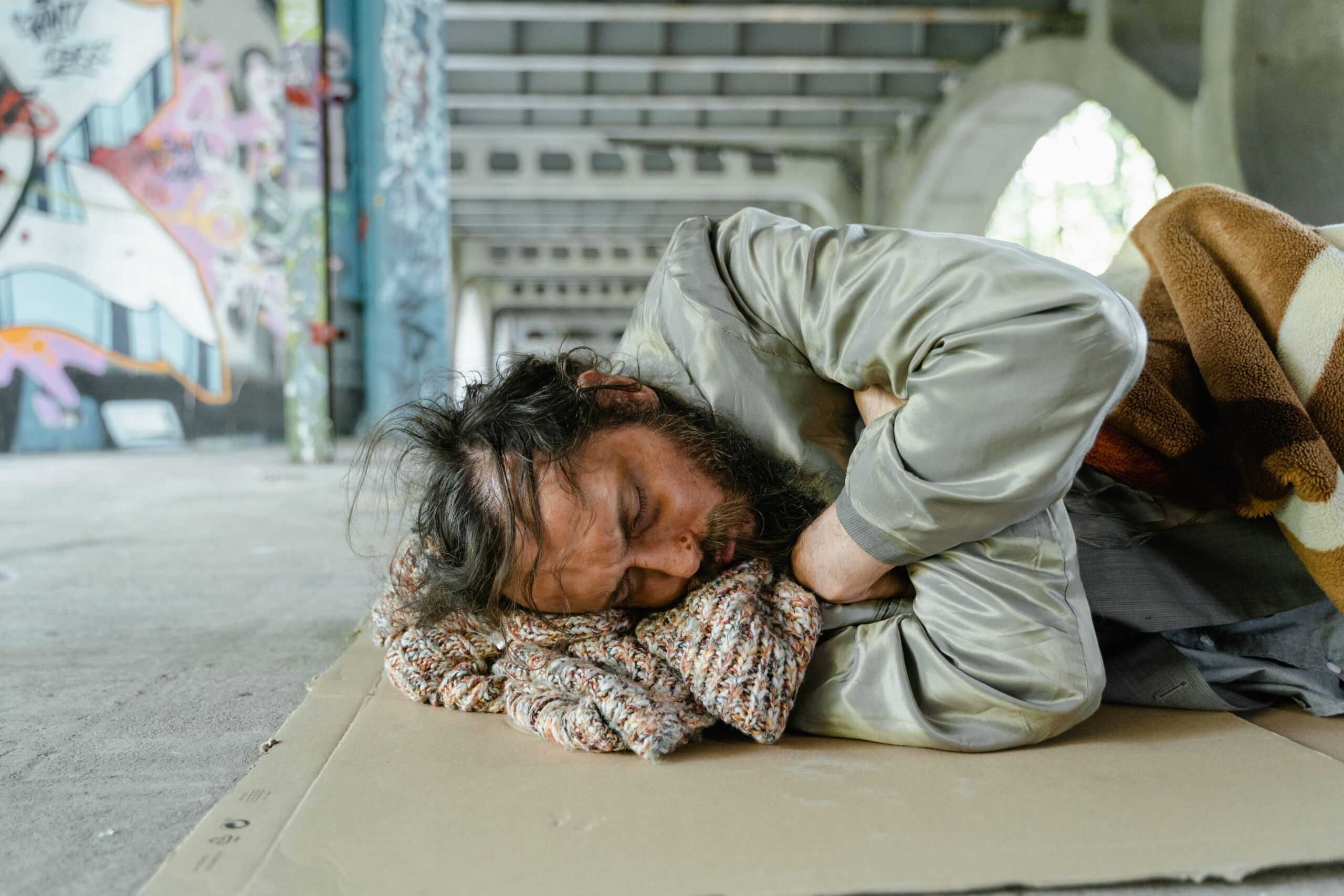
Italy: 13-year-old Tunisian sets sleeping homeless man on fire to steal his backpack, not criminally liable due to age

On the night between Oct 7-8, 2026, in the Porto Vecchio area of Sanremo, a 13-year-old boy of Tunisian origin poured gasoline on a sleeping homeless man and set him on fire in an attempt to steal his backpack.

The incident took place in Piazzale Vesco. According to reports based on surveillance footage, the boy first filled a bottle with gasoline at a nearby pump, approached the man while he slept, poured the fuel on him — primarily on the legs, according to multiple accounts — and ignited it with a match. The goal was reportedly to take the backpack containing the victim’s belongings.

The man’s screams alerted personnel from the Coast Guard. Carabinieri and emergency medical services also responded. The victim, described in reports as a foreign man of approximately 40 years of age, with one account referring to a French man in his sixties, sustained burns to his legs. He was hospitalized for two days at Sanremo’s Ospedale Hospital before being discharged, according to Il Giornale media outlet.

Surveillance cameras operated by the Capitaneria and the Municipality of Sanremo recorded much of the incident. 

Investigators identified the 13-year-old, who had initially fled the scene. He was located in a community facility where he lives with his mother.

Under Italian law, anyone under the age of 14 is subject to an absolute presumption of non-imputability. This means the boy cannot be held criminally responsible or subjected to ordinary criminal punishment, regardless of the severity of the act. The juvenile prosecutor’s office in Genoa is handling the case and can consider protective or rehabilitative measures focused on the minor’s situation.

Some coverage has described the migrant youth having prior contact with authorities in Sanremo, though details remain limited as the matter falls under juvenile proceedings.

The post Italy: 13-year-old Tunisian sets sleeping homeless man on fire to steal his backpack, not criminally liable due to age appeared first on Remix News.

  •  

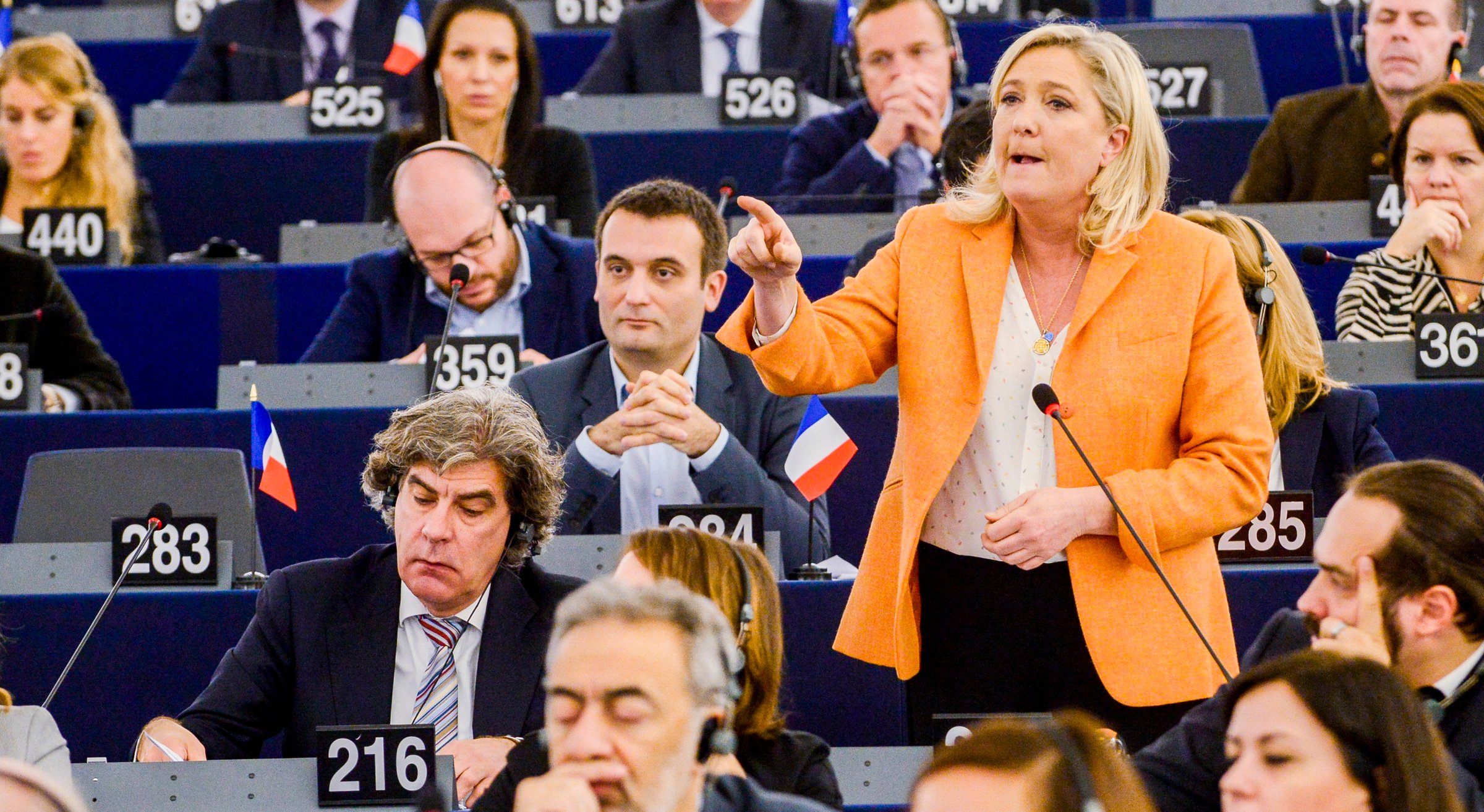
Can the EU survive with far-right leaders running major member states? The answer is worrying

Europe is heading into an electoral moment without recent precedent. Four of its five most populous member states, Spain, France, Italy and Poland, are due to vote within the next 12 months – starting with Spain on 29 November.

If voters move further right, the combined effect could reshape the Union far more profoundly than any single national election.

Two shifts stand out. First, the firewall between the centre-right European People’s Party (EPP) and the hard-right is crumbling, even in Germany, its last bastion.

Hard-right parties sit in the governments of Italy, Czech Republic, Finland, Slovakia and Croatia, while Slovenia’s government relies on outside support from one.

Second, competition from the far-right is pushing established radical-right parties to harden their positions.

In Catalonia, Aliança Catalana is challenging Vox; in France, Éric Zemmour’s Reconquête, despite scoring single digits, is pressing on Marine Le Pen’s National Rally; in Italy, Roberto Vannacci’s National Future is challenging Giorgia Meloni’s Brothers of Italy; and in Poland, Grzegorz Braun’s Confederation of the Polish Crown is cannibalising the Confederation.

Under pressure, established conservatives tend to move towards these parties rather than hold the line, as Spain’s Partido Popular and France’s Les Républicains illustrate. Positions once on the margins become mainstream.

The implications go beyond immigration.

Le Pen and Vox leader Santiago Abascal advocate “national priority” in access to welfare and public services. Under pressure from the League and National Future, Meloni’s government has introduced a 30-percent cap on first-year classrooms for pupils without Italian citizenship, based on their birthplace or prior schooling.

A leaked AfD strategy paper reportedly goes further, proposing that national constitutions override EU law and reducing the Court of Justice to a forum for disputes between governments.

This article continues, but the full version is available only to EUobserver.com subscribers. Visit account.euobserver.com/membership

  •  

Listen: Are the Gilets Jaunes in France making a comeback?

Production: By Europod, in co-production with Sphera Network.

EUobserver is proud to have an editorial partnership with Europod to co-publish the podcast series “Briefed” hosted by Léa Marchal. The podcast is available on all major platforms.

Find the full transcript below:

Do you remember the Yellow Vests movement that shook France 2018? On TikTok, a young user has called for a national mobilisation on the seventeenth of October against the cost of living, and the video quickly went viral. So could the Yellow Vests make their big return?

“Please, give us a date, we’re ready to protest! We young people are struggling. We just can’t make a living anymore,” that’s what Justine, a TikToker from Normandy in France has posted a few weeks ago, while wearing a fluorescent yellow vest.

The reference to the 2018 Yellow Vests is unmistakable. The French movement, which began in protest at rising fuel prices, has been widely revived on social media in recent weeks, especially by younger users.

Our colleague Romane Lizée from StreetPress, a fellow member of the Sphera Network alongside Europod, spoke to some of them: young people reviving a protest movement they only knew from a distance.

Yves, a 24-year-old TikToker with over 80,000 followers, made a video called “Survival Guide for the Yellow Vests 2026”. He gives would-be protesters practical advice, such as bringing thick ski goggles or writing a lawyer’s phone number on a piece of paper.

So why is the movement resurfacing now? For many, the movement has come to stand for a general sense of being fed up, something they still feel today.

 “Eight years ago, France put on the yellow vest because petrol hit 1.50 euros a litre, and now we’re almost at three euros and nothing is happening!” That’s how Saïd, a 23-year-old delivery driver, sees it.

The economic context is indeed worse than it was eight years ago. The price of fuel is now almost 2.40 euros a litre.

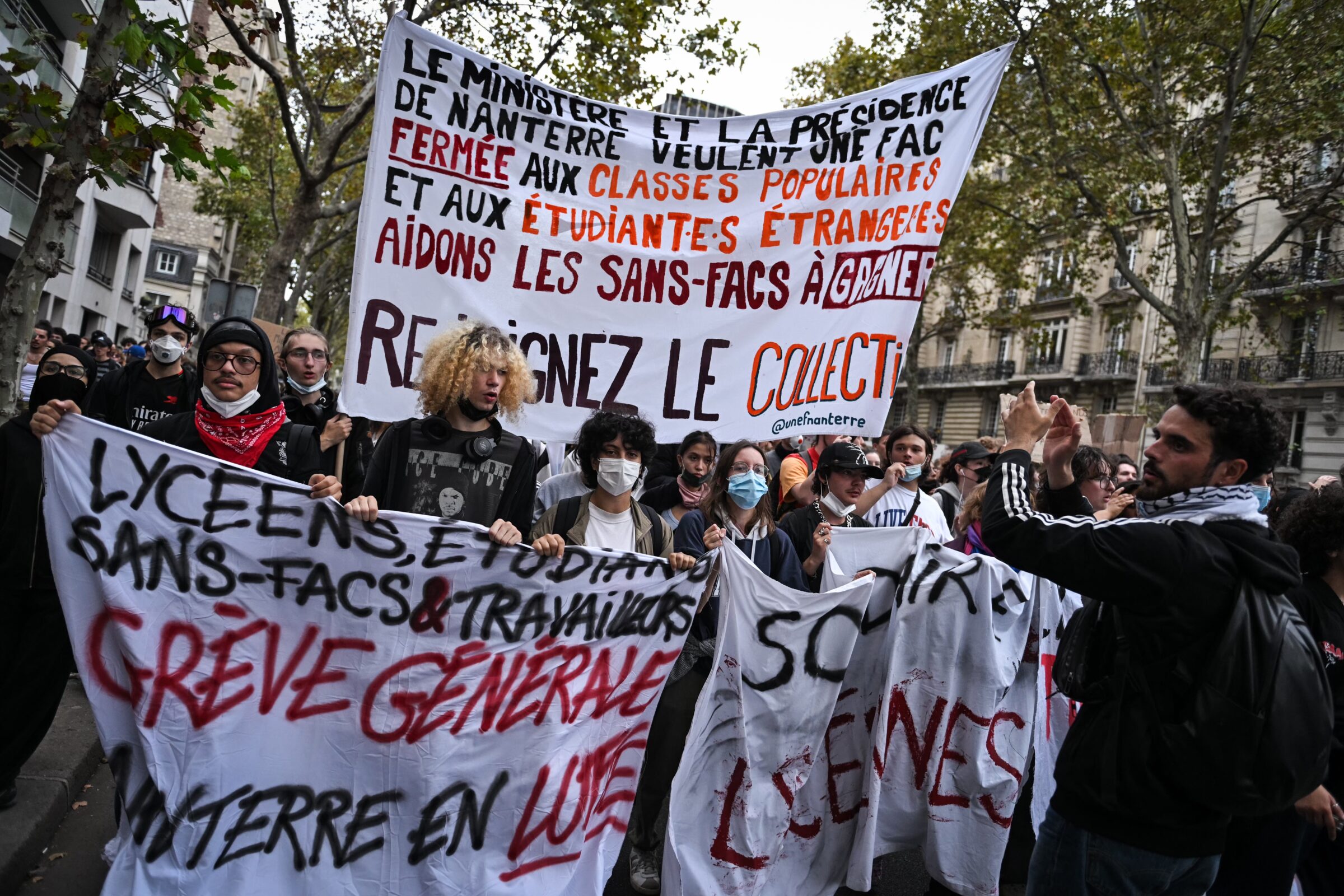
Throughout September, a series of protests followed one another, called by different professions and for different reasons: climate action, firefighters, a public-sector strike, the law on sexual violence, and finally the student blockades.

High school students have been protesting for a few weeks now, blockading their schools to demand better conditions. We talked about this in a previous Briefed episode. You can find the link in the description.

Now, will the protest be as big and long-lasting as the one in 2018?

Online, a petition launched by the website 17octobregiletjaune, which calls for the protest, has gathered more than 21,000 signatures. Over a thousand actions across the country have been identified on a map by the same website: mostly protests in several cities, but also actions on roundabouts and at petrol stations.

Youth organisations, students’ unions and education staff have already answered the call. More importantly, the CGT, one of France’s main labour unions, has backed it, as have some political figures, like Marine Tondelier, the Green candidate for the presidential election. Still, the true extent of the movement is difficult to predict.

In other European countries, protests are also multiplying, especially among young people. In Spain, huge demonstrations for the right to housing have been taking place in several cities since mid-September. They went quite far: they pushed Prime Minister Pedro Sánchez to call snap elections.

In Brussels, on October 9th, thousands of protesters, including rail workers, teachers, and university and secondary school students, marched against the federal government’s policies, in particular its socio-economic measures. Here again, precarity is a central grievance.

In Italy, on October 8th, students called for mobilisation, notably by camping in front of universities across the country to protest against the sharp rise in tuition fees and student rents.

The triggers behind these protests are not all the same, and the mobilisations take different forms from country to country. But the goal is broadly the same: to call for better living conditions and to defend basic social rights. And young people are particularly mobilised.

  •  
❌