In September, a fire broke out at the Starlink satellite communications ground station in Wola Krobowska in Poland. The fire engulfed the power distribution unit housing and also damaged the generator. Firefighters extinguished the fire, and no one was injured in the incident.
On Friday, Internal Security Agency officers detained a Ukrainian citizen in Poland suspected of participating in the arson attack on the ground station. According to investigators, this is the third person involved in the incident, which occurred on Sept. 23. The man had previously observed the facility and checked its security before two Turkish citizens set it on fire.
According to the Internal Security Agency, the Ukrainian took photos and recordings, which he sent via a messaging app. After passing verification, he was tasked with reconnaissance of the station area and its security systems. The man has been charged and has been in custody since Sept. 30.
Turks set fire to the Starlink station
A few hours later, a Polish police patrol identified two Turkish citizens nearby who are now suspected of committing arson on behalf of foreign intelligence. The officers allowed them to leave because, at that point, there was no basis to consider the incident an act of sabotage.
Both Turks were later detained in Germany on the basis of a European arrest warrant issued by Poland. After being handed over to Poland, they are to be held accountable in court for sabotage activities on behalf of foreign intelligence.
A 24-year-old Turkish citizen who was supposed to bring the suspects to Poland, and another man suspected of helping them, were also detained in Germany.
Tusk calls it hybrid warfare
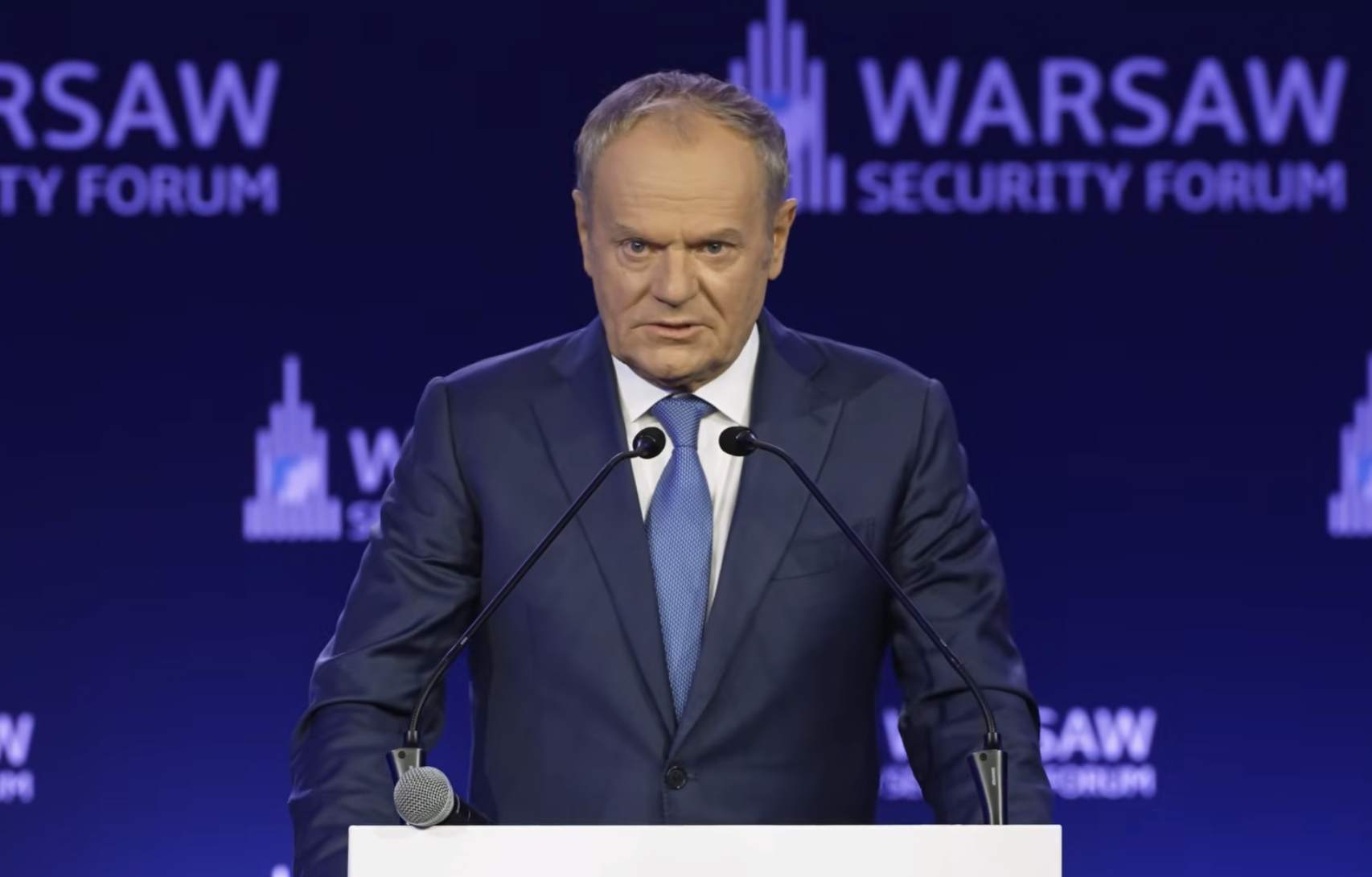
Prime Minister Donald Tusk had previously commented on the arrests.
“At the request of Polish services, German police detained two Turkish citizens suspected of setting fire to the Starlink station in Mazovia. This is another act of hybrid warfare. The perpetrators of sabotage will be brought to justice before the Polish justice system,” the head of government wrote on social media.
Na zlecenie polskich służb niemiecka policja zatrzymała dwóch obywateli tureckich podejrzanych o podpalenie stacji Starlink na Mazowszu. To kolejny akt wojny hybrydowej. Sprawcy sabotażu odpowiedzą przed polskim wymiarem sprawiedliwości.
“The actions of @PolskaPolicja and @ABW_GOV_PL in cooperation with the German services (BKA) led to the arrest in Germany of two Turkish citizens responsible for the arson attack on the Starlink station in Wola Krobowska. Charged with diversion and sabotage for the benefit of foreign intelligence,” added the Minister of Interior and Administration, Marcin Kierwiński, in a post on X.
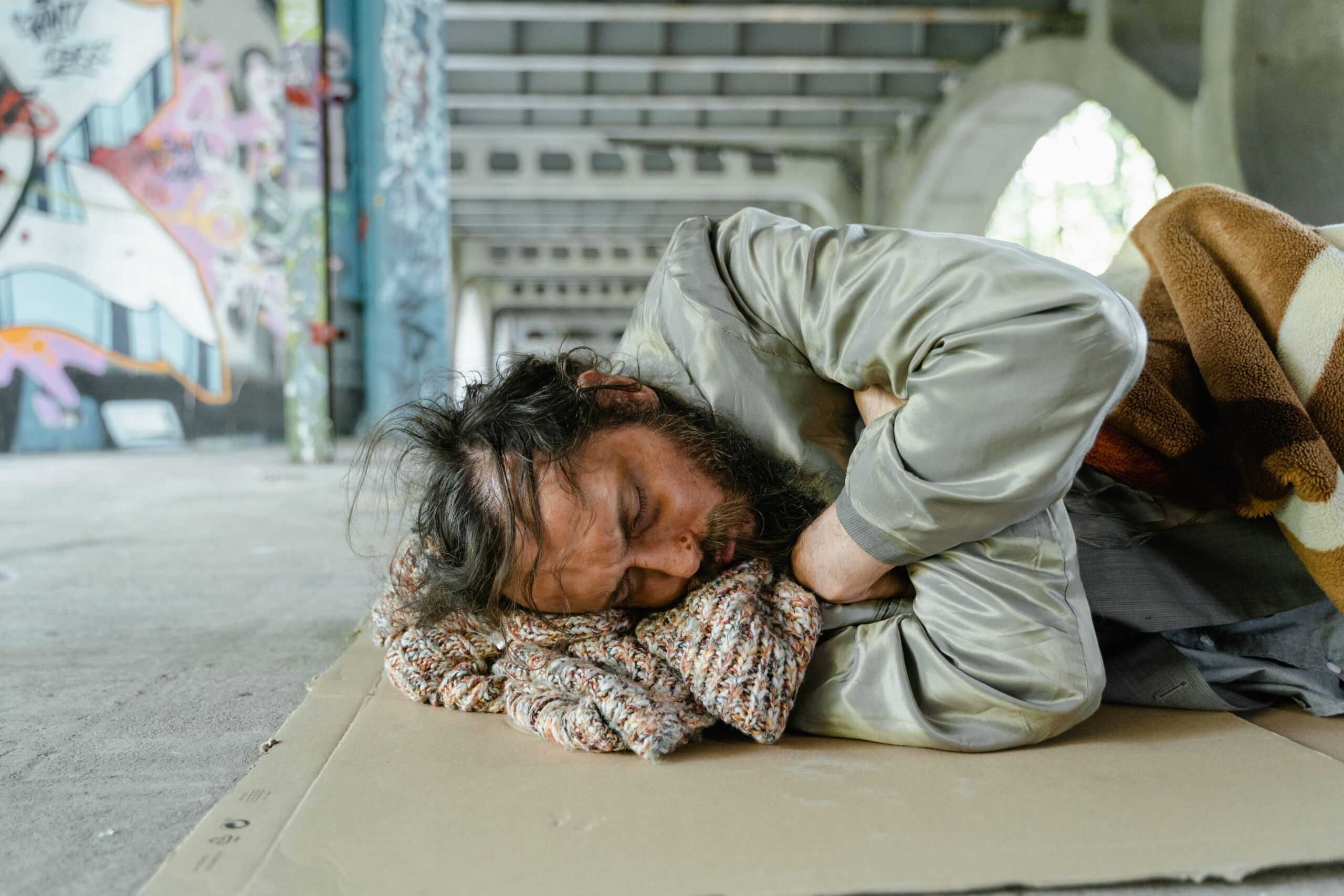
On the night between Oct 7-8, 2026, in the Porto Vecchio area of Sanremo, a 13-year-old boy of Tunisian origin poured gasoline on a sleeping homeless man and set him on fire in an attempt to steal his backpack.
The incident took place in Piazzale Vesco. According to reports based on surveillance footage, the boy first filled a bottle with gasoline at a nearby pump, approached the man while he slept, poured the fuel on him — primarily on the legs, according to multiple accounts — and ignited it with a match. The goal was reportedly to take the backpack containing the victim’s belongings.
The man’s screams alerted personnel from the Coast Guard. Carabinieri and emergency medical services also responded. The victim, described in reports as a foreign man of approximately 40 years of age, with one account referring to a French man in his sixties, sustained burns to his legs. He was hospitalized for two days at Sanremo’s Ospedale Hospital before being discharged, according to Il Giornale media outlet.
Surveillance cameras operated by the Capitaneria and the Municipality of Sanremo recorded much of the incident.
Investigators identified the 13-year-old, who had initially fled the scene. He was located in a community facility where he lives with his mother.
Under Italian law, anyone under the age of 14 is subject to an absolute presumption of non-imputability. This means the boy cannot be held criminally responsible or subjected to ordinary criminal punishment, regardless of the severity of the act. The juvenile prosecutor’s office in Genoa is handling the case and can consider protective or rehabilitative measures focused on the minor’s situation.
Some coverage has described the migrant youth having prior contact with authorities in Sanremo, though details remain limited as the matter falls under juvenile proceedings.
German Police are investigating ten suspects ages 13 to 15, including suspects from Syria and Chechnya, in connection with a violent assault and robbery of a student outside a secondary school Wednesday, according to the Eastern Police Directorate.
Videos of the attack has been posted to social media, which shows the beating from two different angles.
JUST IN: A German youth was severely beaten by a mob of migrant youths just outside a school in Frankfurt (Oder).
The incident happened in front of the Heinrich-von-Kleist School.
The suspects released the video with a gangster rap soundtrack.
Follow: @RMXnews https://t.co/UeRGRnEeMW
A young German youth is completely surrounded by a mob of migrants and ruthlessly beaten.
This same image has been broadcast time after time across Western Europe.
Follow: @rmxnews https://t.co/BtGuEYuVz8
The attack occurred in front of the Heinrich von Kleist High School. A video that police consider authentic shows roughly ten youths surrounding the student. One appears to demand something from him; he shows his empty pockets. Moments later, he is punched in the face.
Other members of the group then punch and kick him, including kicks to the head, and continue the assault after he falls to the ground and is defenseless. The victim sustained facial injuries and reported the incident to police the same day, authorities said.
JUST IN: Young German students were reportedly hunted and beaten by a group of foreigners in the state of Saxony-Anhalt.
On Tuesday, attackers at a train station in Jessen beat a number of German students in random assaults, with the victims stating that they do not know why they were targeted.
The German media outlet Mitteldeutsche Zeitung reported on the incident, noting that police have so far been unable to locate the perpetrators.
Since the initial reports, a video has been published on social media showing the moment the German youths were attacked.
Follow: @RMXnews
The ten suspects are Syrians, Chechens, Polish, Russian, Syrian, and German nationals, the Eastern Police Directorate told local broadcaster Oderwelle. They face charges of aggravated assault and robbery. Investigators have secured the circulating video and received numerous tips from the public.
On Thursday, officers conducted an operation at the Ulrich von Hutten High School, that police linked to the case. Several youths were questioned and searched. Sören Schunke, headmaster of the Heinrich von Kleist school, said the attackers were not students at his institution. It remains unclear whether any of the suspects attend the Hutten school.
Frankfurt (Oder) Mayor Axel Strasser, an independent, expressed outrage in a video message.
“What was done to a young person here in Frankfurt (Oder) leaves me speechless. It hurts to have to witness such violence. And it makes me angry that a youth has to experience something like this,” he said.
He added that violence has no place in the city and offered condolences to the student and his family. Strasser said he had spoken by phone with Brandenburg Interior Minister Jan Redmann of the CDU and that security talks involving police, school authorities and other partners would be held to address youth violence.
The Frankfurt (Oder) case comes amid a series of recent youth-group attacks in Potsdam that Redmann has described as predominantly migrant-linked, including suspects of Syrian nationality. On Sept. 25, roughly 20 people — mostly migrants, according to the minister — entered a private party uninvited and attacked guests. The following day, three youths were assaulted by a group of about 25 and injured, which Remix News reported on.
“Unbridled and massive violence.”
Witnesses report that up to 20 people with an “Arab migration background” viciously beat three high school students from the Catholic Marien School in Babelsberg with “massive violence.”
The two 17-year-olds and an 18-year-old were beaten with punches and kicks in the Wannsee district of Berlin last Saturday evening.
One of the 17-year-olds lost consciousness.
During the assault, the 18-year-old hit his head against a parked car, which required treatment at the hospital.
“For me, this is attempted murder,” said one witness who spoke with the German news outlet Tagesspiegel.
The perpetrators fled into the forest and police continue to search for them.
The suspects are believed to come from Potsdam, where robberies by youth gangs have become more frequent recently.
Follow: @RMXnews
Additional attacks in early October left victims with head injuries requiring hospital treatment. Authorities are monitoring a group of roughly 25 mostly migrant suspects in connection with the Potsdam incidents. Currently, two alleged ringleaders are in pretrial detention and police presence has been increased.
Redmann has said foreign perpetrators, particularly Syrians whose protection status can be revoked, could face deportation. “Whoever comes to Germany and simply has no respect for Germany, we will not tolerate that,” he told the state parliament. “The rule of law has the final say.”
Germany’s migration and asylum policies have cost the state at least €400 billion, according to calculations by Welt journalist Björn Harms. Other estimates have gone far higher, including into the trillions, when broader follow-on effects of migration are included. These massive figure will only add to the growing debate about mass immigration into high social-welfare countries like Germany.
As for the data, much of it comes directly from the German government, according to Welt. The federal government alone recorded over €242 billion in “refugee-related expenditures” from 2016 to 2025. Official figures from Bundestag reports and the Federal Ministry of Finance confirm the annual totals.
If this is broken down by year, it shows €20.1 billion in 2016, rising to peaks of €28.3 billion in 2022 and €29.6 billion in 2023, then €28 billion in 2024 and €24.8 billion in 2025.
The sum over ten years is €242.5 billion, representing roughly 5.8 percent of total federal budget outlays over the period. These cover social transfers after asylum procedures, integration measures, payments to states and municipalities, and related programs.
The 16 state governments also contributed more than €100 billion from their own budgets. Municipalities added further billions, along with follow-on costs in healthcare, education, and the justice system. Independent reconstructions place a consolidated central estimate near €340 billion, while others go up to €450 billion with add-ons.
However, even these numbers pale in comparison to what some academics have researched. For example, top German academic on public finances Prof. Bernd Raffelhüschen of the University of Freiburg, produced a study in 2024 that indicated that mass immigration may cost Germany up to €19.2 trillion. His study also found that mass immigration had already cost the country €5.8 trillion.
Harms and others describe the €400 billion figure as a minimum. The reason why this figure is treated as a “minimum” is because experts have been unable to truly compile costs for a broad range of areas, which surely total tens of billions over the course of a decade. These areas include court costs and criminal justice.
This specialized, high-security facility was constructed by the court in Magdeburg to handle the large-scale proceedings, which included accommodations and seating space for more than 170 co-plaintiffs and their respective legal teams.
Many other costs are not tallied in the official figures
The billions in criminal justice costs do not even cover police and internal security. Crime has risen in Germany substantially since 2016. During that year, according to Eurostat records, Germany had approximately 244,318 total police officers. At the time, that equated to roughly 2,992 officers per one million people, or a density of around 301 per 100,000 inhabitants.
The Federal Police force has grown to around 55,000 to 60,000 total employees (including roughly 41,000 active frontline officers) to manage expanded mandates across national borders, transportation hubs, and airports.
Paying all these new police officers, who are tasked with policing an increasingly violent country, is not only an enormous cost in terms of money, but has led to tens of thousands of lives shattered and destroyed. When a young woman is raped by a migrant or an aspiring doctor is beaten to the point that he has to abandon his medical career, it is difficult to even calculate the true financial cost of such incidents, but in many ways, these incidents have no price tag. They are too horrific to even quantify.
Of course, there are also tens of billions spent on education for migrants, which are not included in the €400 billion total. In addition, Germany has an extensive network of kindergartens, which foreigners also gain access to. In some states like Berlin, the daycare system is entirely supported by taxpayers to the tune of €2.5 billion a year, while the share of kindergarten-age children with a migration background is at 57.4 percent.
There are also deportation costs, administrative overhead, hospital and medical care, and the list goes on.
The real figure may be difficult to calculate with total accuracy, but it is surely larger than €400 billion.
Germans have also paid in other ways, including in higher rental costs, more traffic, crowded schools, and longer wait times at hospitals. Again, not all of these costs are even quantifiable, but the increase the increase in rental costs alone has cost Germans additional billions.
It is also important to note that there are hundreds of thousands of migrants who are becoming naturalized at a rapid pace and already millions of migrants who have been naturalized in previous decades. These migrants and their children use schools, often require welfare, and also need healthcare. Yet, none of these costs are counted towards the tax burden on Germans. In total, there have been further tens of billions spent on these groups, increasingly in the education system which has the highest share of Germans with a migration background. Many of these groups also continue to be a net economic burden on Germany, such as the Turkish population.
Migrant housing is a huge burden for German taxpayers
Accommodation absorbs a large share. The federal government does not even know the total number of asylum accommodations nationwide. An inquiry by Harms to all 401 districts and independent cities produced responses from 320 (about 80 percent). These authorities reported at least 4,437 communal accommodations housing nearly 295,000 residents as of March 2026 — an average of almost 14 per responding district. Extrapolated nationwide, this implies roughly one person in every 227 in Germany lives in taxpayer-financed asylum accommodation.
Harms notes that hotel owners, private landlords, and public companies have all massively benefited. In Hamburg, the municipal company Fördern & Wohnen, which is 100 percent owned by the city, handles a large share of asylum accommodation. He notes that turnover rose from €60 million in 2013 to €747 million in 2025, and staff grew from 948 employees in 2014 to around 2,228 by 2025.
The company operates more than 200 sites and has expanded capacity amid non-European immigration. A former managing director who served less than five months in 2025 received payments totaling €453,000, including a substantial severance, according to the company’s annual report.
Similar patterns appear elsewhere: long-term leases on converted offices and hotels, with public entities acting as both demand drivers and suppliers. In Berlin, a former office complex on Hasenheide in Kreuzberg is becoming an accommodation for up to 921 people. First residents were scheduled to move in from early October 2026. The lease runs roughly ten years, into the mid-2030s, paid from public funds. Conversion costs have not been disclosed, citing commercial confidentiality.
The Hasenheide project and the decade of accumulated costs illustrate the continuity. Rents and operating expenses continue into the 2030s, financed by the same solidarity community that underwrites the wider system.
Migrant welfare is core to the new German economy
The Welt article also notes that immigration since 2015 has driven expansion in the social and welfare sector. The number of social workers and social pedagogues rose from about 278,000 in 2015 to 351,000, with the Federal Employment Agency linking part of the growth to refugee-related demand for counseling, care, and support.
Integration courses illustrate the mixed results of large spending. The federal government has allocated around €1.3 billion in peak years, with 2024 near €1.2 billion before later adjustments. Yet outcomes are limited, according to Welt. Roughly 55 percent of those who take the final test reach the target B1 language level, meaning a substantial share — often cited in the range of six in ten depending on the metric of “graduation” or successful completion of the full course and exam — leave without the intended language qualification. Pass rates for B1 have hovered in the mid-50s in recent data, with many achieving only A2 or lower.
Harms further notes that the business of asylum migration has created durable economic interests. In other words, there are people and institutions getting rich for the millions of migrant who have come, which fuels demands for even more immigration.
Public companies, private landlords, course providers, NGOs, and expanded social services all draw ongoing revenue. Critics note that the loudest advocates of open borders and expansive humanitarianism rarely live next to the accommodations or send their children to the schools under the greatest pressure. Residents in affected neighborhoods and local workers experience the practical strains directly.
While governments speak of a “migration turnaround,” the broader pro-migration complex continues. Demands for a world without borders, which claim “no human is illegal,” persist among advocacy groups. These powerful groups have a keen interest in keeping the mass migration machine going, and so far, they have largely succeeded even if the majority of Germans are opposed.
The royal couple arrived at the Community Recording Studio in Nottingham, in central England, which offers music, performance and athletic programs to youth people.
The royal couple arrived at the Community Recording Studio in Nottingham, in central England, which offers music, performance and athletic programs to youth people.
A cargo ship that participated in the search located the 44-year-old woman and she found conscious while floating inside a lifebuoy, according to the Hellenic Coast Guard.
A cargo ship that participated in the search located the 44-year-old woman and she found conscious while floating inside a lifebuoy, according to the Hellenic Coast Guard.
Nearly half of Muslim and Jewish respondents in a major French poll say they would consider leaving the country if Marine Le Pen wins the 2027 presidential election, according to an exclusive Ifop survey for the magazine Marianne.
The poll found that 46 percent of respondents identifying as Muslim would contemplate “leaving France to settle in another country” under a Le Pen presidency. Of those, 20 percent said they would “certainly” take that step. By comparison, 21 percent of the overall population expressed a similar willingness to leave.
The figure is part of a broader set of findings on identity, secularism, and anticipated reactions to a National Rally (RN) victory. Eighty-one percent of Muslim respondents believed a Le Pen win would lead to a rise in discrimination against their community. Twenty-seven percent said they would consider concealing their religious identity in daily life, including 18 percent who would stop wearing the veil in public.
Similar sentiments appeared in other groups polled.
Forty percent of the youngest cohort of French voters, 43 percent of France Unbowed (LFI) voters, and 44 percent of Jewish respondents said they would consider leaving. The survey also recorded elevated support for civil disobedience in some cohorts. For instance, substantial shares indicated they would refuse to respect laws they viewed as unjust.
Notably, while Le Pen has been antagonistic towards Islam in France, she has often cast herself as a protector of Jewish life in the country.
In 2024, she said, “The best shield for French people of the Jewish faith is the National Rally. It is the only movement that has the will, the conviction and the means to fight Islamist fundamentalism, which is the major danger facing them.”
Yet, nearly as many Jews said they would leave the country as Muslims.
Le meilleur bouclier pour les Français de confession juive, c’est le Rassemblement National.
C’est le seul mouvement qui a la volonté, la conviction et les moyens de lutter contre le fondamentalisme islamiste qui est le danger majeur qui pèse sur eux. https://t.co/pggWHgzITu
François Kraus, director of the Politics and Current Affairs division at Ifop, described the results: “The arrival in power of the candidate favored by the polls risks creating significant obstacles and generates high levels of fear and a sense of insecurity.”
The National Rally has long advocated tighter controls on immigration, greater priority for French nationals in housing and employment, and restrictions on Islamic veiling in public spaces. Le Pen has indicated she would not impose an immediate ban on the veil upon taking office but would put broader restrictions to a national referendum.
Previous Ifop work has documented rising religiosity and support for more rigorous interpretations of Islam among younger French Muslims, including significant shares prioritizing Islamic norms over French civil law on issues such as inheritance or ritual slaughter in certain scenarios. Remix News reported on this poll last year.
Figures on the right treated these results as evidence of failed integration and the dangers of demographic change.
Currently, Le Pen has frequently led first-round voting intention polls, making her the favorite to win the presidential election.
It is important to note that many groups claim they will leave a country if their preferred candidate does not win an election, but actually leaving is an entirely different story. The 46 percent figure for Muslims and 44 percent for Jews is only an expressed willingness or contemplation in a hypothetical scenario, not concrete plans to leave France.
The reality is that family ties, employment, and economic realities mean that leaving is far harder in practice.
An African man, who was described as “perfectly integrated,” is on trial in Bonn on charges connected to the strangling murder of his wife, whom he then dismembered. The woman’s remains were later found in several locations across Germany, according to court proceedings.
Asmerom G., 42, an Eritrean national, faces the charges in Bonn Regional Court in North Rhine-Westphalia. The case stems from events in mid-November 2025 involving his wife, Weghata A., 32. The couple had married in Ethiopia in 2019, and she arrived in Germany in 2024 through family reunification.
The defendant allegedly met his wife, 32-year-old Weghata A., inside his car, where they began arguing on their way back from a church visit. According to Bonner Generalanzeiger newspaper, Asmerom G. later told police that his wife told him their 3-month-old girl was not his biological child. He reportedly could not remember what happened next.
According to prosecutors, Asmerom G. then strangled his wife in the back seat of the car in a parking lot in Bonn, directly in front of the baby who was sitting in a child seat.
After the crime, the defendant is said to have driven with the body and the baby in the car to the Monastery of Saint Anthony, 160 kilometers away, where he abandoned the little girl in the stroller when it was only 2 degrees Celsius (35 degrees Fahrenheit).
Fortunately for the girl, monks found the child just 40 minutes after she was dropped off.
Asmerom G. then went to work dismembering Weghata’s body, including packing her hands and head in plastic bags.
He left the torso behind, which was found at the end of November 2025. Asmerom G. left the body parts on the side of the autobahn, on the A45. The head of the woman was discovered by garbage collectors in April 2026.
Asmerom G. was arrested in Ethiopia and extradited to Germany. He has a prior conviction for aggravated assault. On the first day of the trial, he declined to comment on the allegations. Defense attorney Martin Kretschmer has said the case rests largely on DNA evidence and mobile-phone data.
Kretschmer told Bild newspaper, “Until his arrest, he was considered perfectly integrated.”
German media was even singing his praises in 2016. The man from Eritrea had landed a job as an electrical assistant at a firm in Rheinbach, in North Rhine-Westphalia, and gave interviews about leaving his homeland three years earlier to escape political persecution.
He wanted German citizenship, he said. His boss at the time was quick to describe Asmerom G. as talented, reliable, and “capable of anything,” according to Bild newspaper.
However, then trouble began. Within a year, Asmerom G. was in trouble with the law. A brawl led to a conviction for grievous bodily harm at Siegburg District Court, earning him a six-month suspended sentence.
He moved on from Rheinbach and took up work behind the wheel of a freight truck. Somewhere along the way, he made a trip back to his home country — for reasons that remain unclear — and returned to Germany with a woman named Weghata A., who was 31 at the time, his wife under Eritrean law. On July 26, 2025, she delivered their daughter.
The child is now in the care of authorities. Lawyer Gesine Ickert, representing the daughter and the deceased’s father, has stated that the child is well looked after under the circumstances.
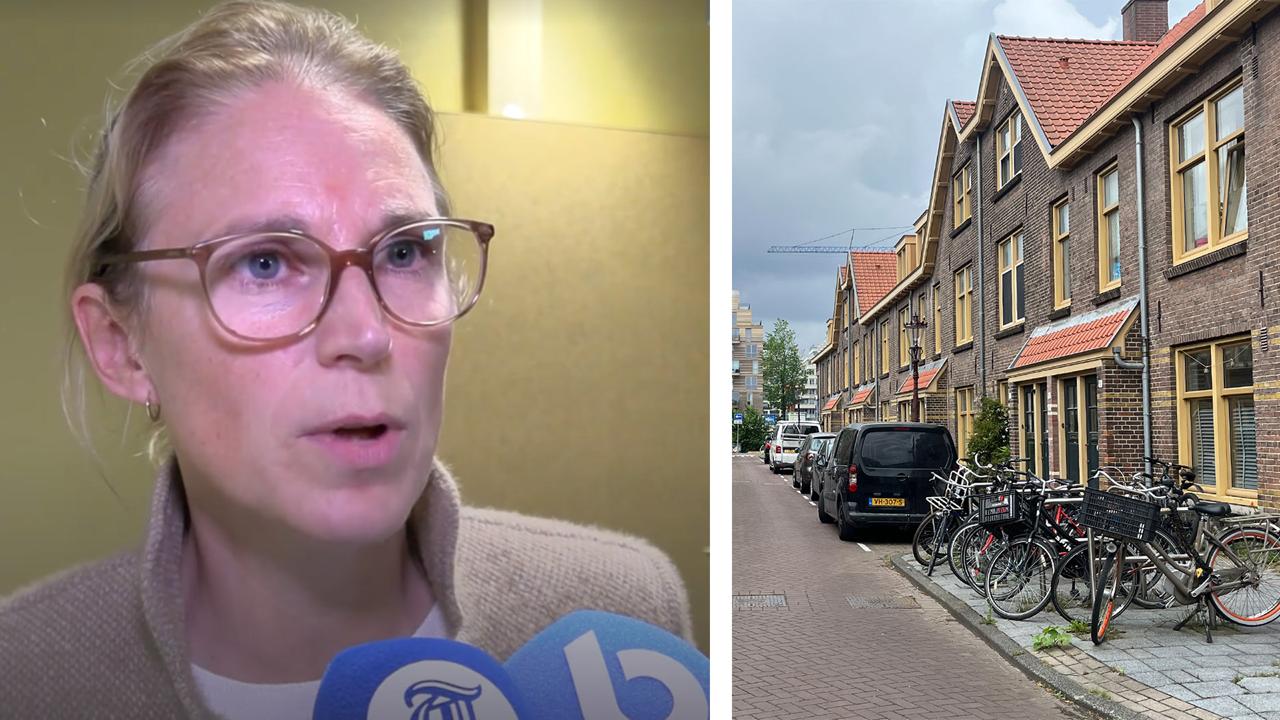
Dutch Housing Minister Elanor Boekholt-O’Sullivan drew sharp criticism this week after defending priority access to scarce social housing for recognized refugees, arguing that many young Dutch first-time home seekers “can still live with their parents.”
In an interview with De Telegraaf, the D66 minister was asked why status holders — asylum seekers granted residence permits — should receive preference for social rental homes while Dutch “starters” face long waiting lists and delayed independence. She responded that “we see that a lot of starters can still, or are allowed to, live with their parents.”
Migrants get affordable housing before Dutch natives.
When asked why migrants receive access to affordable housing before young Dutch people looking for a "starter" home, the Dutch housing minister said that many Dutch first-time home seekers "can still live with their parents."
Mass migration contributed to 60% of the increase in housing demand in the Netherlands since 2015, yet Minister Elanor Boekholt-O’Sullivan still believes in putting migrants first.
"For me, the fundamental principle is that anyone who is allowed to and wants to live in the Netherlands gets a roof over their head," she said.
In the Netherlands, Dutch natives are increasingly relegated to living with their parents while migrants get to skip massive waiting lists and gain "emergency" access to cheap social housing.
Follow: @RMXnews
Dutch commentator and activist Eva Vlaardingerbroek wrote on X that the policy amounted to “systemic racism.”
“And not just the ‘new’ newcomers. A 25-year-old Syrian who came here with his parents years ago jumps the queue for a home when he decides he wants to live on his own. Meaning a 25-year-old white Dutch guy can forget about getting his own place and ends up on waiting lists for 10+ years,” she wrote, adding: “Putting the interests of foreigners above the interests of the native population needs to end.”
Talking about systemic racism: Young Dutch people can barely find a place to live, because migration drove 60% of the housing demand since 2015, regular prices are insane, and migrants get PRIORITY for the affordable social housing.
And not just the “new” newcomers. A 25-year-old Syrian who came here with his parents years ago jumps the queue for a home when he decides he wants to live on his own. Meaning a 25 year-old white Dutch guy can forget about getting his own place and ends up on waiting lists for 10+ years.
But according to our minister of housing that’s fine because they can just continue to “live with their parents.”
Putting the interests of foreigners above the interests of the native population, needs to end.
That’s why with the @SaveEuropeAct, apart from demanding closed borders and Remigration, we also demand Removing social welfare incentives and benefits that function as pull factors for migration.
Boekholt-O’Sullivan, an Irish-born former lieutenant general in the Dutch Air Force who took office earlier this year, claims that anyone who wants to live in the Netherlands should get a roof but does not address the major housing crisis brought on by mass immigration.
“For me, the fundamental principle is that anyone who is allowed to and wants to live in the Netherlands gets a roof over their head,” she said. She noted that status holders typically leave asylum reception centers and argued that alternatives such as remaining in centers, homelessness, hotels or cruise ships were unacceptable, so priority allocation should continue until other solutions exist.
The remarks landed amid fresh data underscoring migration’s outsized role in the Netherlands’ housing crunch. A report released this week by the Economic Institute for Construction (EIB) found that migration accounted for about 60 percent of additional housing demand between 2015 and 2024. Migrants who arrived in that period occupied roughly 435,000 homes by 2024, out of nearly 700,000 homes added to the stock.
The 44 percent figure of social housing units occupied by first or second-generation immigrants has doubled from 22 percent in 2000, and is forecast to rise to 51 percent by 2030.
A total of 92 percent of Syrian first-generation immigrants reside in social housing. In addition, 90 percent of those born in Somalia, Afghanistan, and Eritrea reside in social housing.
Asylum-related migration contributes disproportionately to lasting demand because status holders remain permanently at high rates, unlike many labor or student migrants who leave within a decade.
Critics said the minister’s comments minimized the burdens on young Dutch adults who have already spent years on waiting lists for social housing or who face high private rents and purchase prices that lock them out of independent living.
Social housing waiting lists in major cities often stretch many years; priority rules for status holders allow some recent arrivals to bypass ordinary queues. Dutch population growth in recent years has been driven almost entirely by net migration, amplifying pressure on an already constrained housing market marked by strict planning rules, nitrogen regulations and slow construction.
Cologne police are investigating an unprecedented incident in which a humanoid robot was allegedly used to sexually harass a 16-year-old girl on a busy city street, with the act filmed and livestreamed. Videos of the assault appear to show two men with a migration background controlling the robot, which they named “Ahmed,” an Arabic name. They also claim the robot is from the multicultural neighborhood of Neukölln in Berlin.
The case, which has drawn international attention as potentially the first documented instance of a robot being used directly in a sexual assault, has to do with red-and-gold Unitree robot that approached different teenage women. In the videos, which Remix News has compiled into one longer clip, the robot grabs their behinds, makes masturbatory motions, and humps the women.
At least one victim, a 16-year-old girl, has filed a criminal complaint.
According to a police statement, the roughly 1.2-meter-tall robot touched the girl on the buttocks and made thrusting motions against her between 11:45 p.m. and midnight on the night of October 10–11, 2026, near the corner of Palmstrasse and Hohenzollernring.
The girl was with two friends, ages 17 and 18. Officers responding to the scene located a 16-year-old from Wegberg and a 19-year-old companion nearby. The robot was found in the trunk of a Volkswagen where the younger suspect had stowed it; police seized the machine and the pair’s mobile phones. Investigators are examining whether the movements were deliberately controlled via remote control or an app and are treating the matter as a suspected case of sexual harassment.
JUST IN: Asylum seekers and men with a migration background are the main group that should be banned from German swimming pools, according to national police union leader @M_Ostermann.
"But in the end, we are always just describing symptoms instead of tackling the root causes. And that is why it is completely clear that those outdoor pools are acting responsibly by simply not letting these groups of people – men, mostly with a migration background, often from the main asylum countries of origin – into the outdoor pools anymore."
That is the advice comes after yet another wave of sexual assaults and violence in German pools from migrants.
He further writes: "Enough is enough. They are men, and almost always from the main countries of origin for asylum seekers. Year after year, the same headlines, the same incidents, and the same excuses."
"Public swimming pools used to be places of carefree enjoyment for children and families. Today, many people avoid them out of fear of violence, harassment, and disrespect."
"Enough with the political whitewashing. Those who do not clearly name problems will never solve them. The rule of law must finally make this clear with all due consequence."
"Anyone who threatens others, harasses women, or commits violence has forfeited their right as a guest and any claim to understanding. Zero tolerance means zero tolerance – swift proceedings, harsh penalties, and, where legally possible, consistent immigration consequences."
"The people living in Germany have a right to safety. They have a right to public spaces being what they once were again: places for families and children – not for intimidation, violence, and disrespect."
Follow: @RMXnews
The 16-year-old and his companion are accused of filming the encounter, streaming it live on social media, and providing commentary.
Many of the victims appear to be German women. Some of them laugh or appear to be amused, but others appear uncomfortable or scream.
Media reports speculate the model is the Unitree R1-series model, priced around €5,000, which can walk, respond to voice commands, and be remotely operated or programmed with custom movement sequences. Experts have noted that the specific thrusting motions are not standard factory behaviors.
As Remix News has reported, many public areas have become insecure, featuring robberies, rapes, assaults, and other threats. However, for women, the threat level has gone up substantially, including from random street harassment due to mass immigration.
"I hate Berlin. Berlin is sh*t."
A thief stole this young German woman’s phone and then told her, "in a mixture of English and German, that he would only give it to me if I had sex with him."
This woman was assaulted in Berlin’s famed Görlitzer Park, where migrants gang raped a woman in 2023.
”You have 2 options. Either you give me your number right now… or we stay here until 5 a.m. and I’ll follow you all the way home to your house."
A young German woman is relentlessly harassed and threatened by a migrant man. https://t.co/8qq3GJ203S
A female University of Mons student was allegedly sequestered and raped in the back room of a convenience store by three men of Pakistani origin in the Belgian city of Mons. The suspects are now on trial as of Oct. 12, 2026, for aggravated rape and unlawful confinement.
The incident occurred in the early hours of Dec. 12, 2025, at a night shop on Rue de la Clef in Mons. The student, identified in reports as Laura, a pseudonym, entered the store around 1:30 a.m. after an evening out, first to buy cookies and later around 1:42 a.m., for a drink. A shop employee invited her to have a drink in the back room. She agreed while using a translation app to communicate with him and then followed him. While she was in the back of the shop, the other employees closed the shop at 2:29 a.m. with her still inside.
While she was with the men, the owner asked an employee to serve her whisky and Cola.
Concerned about the drinking the beverage, she texted her roommate: “I’m at the convenience store. If I don’t come back, call the police.”
After consuming the drink, her vision then blurred and she lost consciousness, according to Belgian news outlet L’Avenir.
She regained awareness around 6:34 a.m., alone in the back room, disoriented, with her clothes disheveled and without underwear. She then got up and left.
Garbage collectors later described seeing a terrified young woman looking over her shoulder. She reported sexual violence to her roommate and medical exams found male DNA in her vagina.
Police intervened at the shop, finding two men present and a third hidden in a cupboard. Investigators recovered the student’s underwear, which contained semen matching one of the three suspects.
The three men are all of Pakistani origin, including the shop owner and an employee. The police arrested the suspects.
One also faces a charge related to an alleged attempted rape of another customer in July 2025, which involved an attempt to force a kiss in the back room. All three deny the charges. The owner has claimed the student tried to steal €7,000 from his pockets, a version the prosecution rejects as it does not explain the scientific evidence.
In court a Monday morning, the public prosecutor treated the three as co-authors of the rape.
“None of the three justifies the closing of the shop while this young woman is inside,” the prosecutor stated, requesting sentences of four and five years.
The court also discussed a possible requalification of the facts as failure to assist a person in danger for two of the accused, while the defense lawyers pleaded for acquittal.
The student’s lawyer, Odile Maes, argued the men knew what was happening in the back room and shared responsibility, calling them “sexual predators.”
The victim was present in court and delivered emotional testimony, saying: “I have the feeling of having been thrown away like a broken toy that night. They tore away my dignity, my body, my friends, my family, my studies, and many other things. I demand justice.”
The student has described lasting effects including nightmares, isolation, fear of men, weight gain, and the loss of a student job, though she completed her first year of university with schedule adjustments. A judgment is expected in early November.
Gillis, who hosted SNL over the weekend, was fired from the sketch comedy show in 2019, five days after being cast as a regular for making racial slurs on a podcast.
Gillis, who hosted SNL over the weekend, was fired from the sketch comedy show in 2019, five days after being cast as a regular for making racial slurs on a podcast.
Police arrested an 18-year-old Syrian man on suspicion of raping a 17-year-old girl in a stairwell in a popular nightlife district, authorities said.
The incident occurred around 1:30 a.m. Sunday in a multi-family building on Königsbrücker Strasse in Dresden’s Neustadt neighborhood, near Albertplatz, according to police and media reports. The area is known for bars, pubs and clubs that remain busy into the early morning hours.
The man reportedly dragged her into the stairwell of a building and raped her there. Neither he or the victim lived in the building.
The girl escaped her alleged attacker, fled the building and encountered a police patrol on the street, where she reported the rape, police said. Officers immediately launched a search and arrested the suspect nearby a short time later.
The Syrian man was brought before an investigating judge Monday and ordered held in pretrial detention at Dresden’s justice prison, according to Bild newspaper. Criminal police are investigating the case as rape. Investigators are still determining whether the two knew each other beforehand.
Police have released few additional details about the circumstances of the incident or the girl’s condition. The suspect has not been publicly identified by name. The investigation continues.
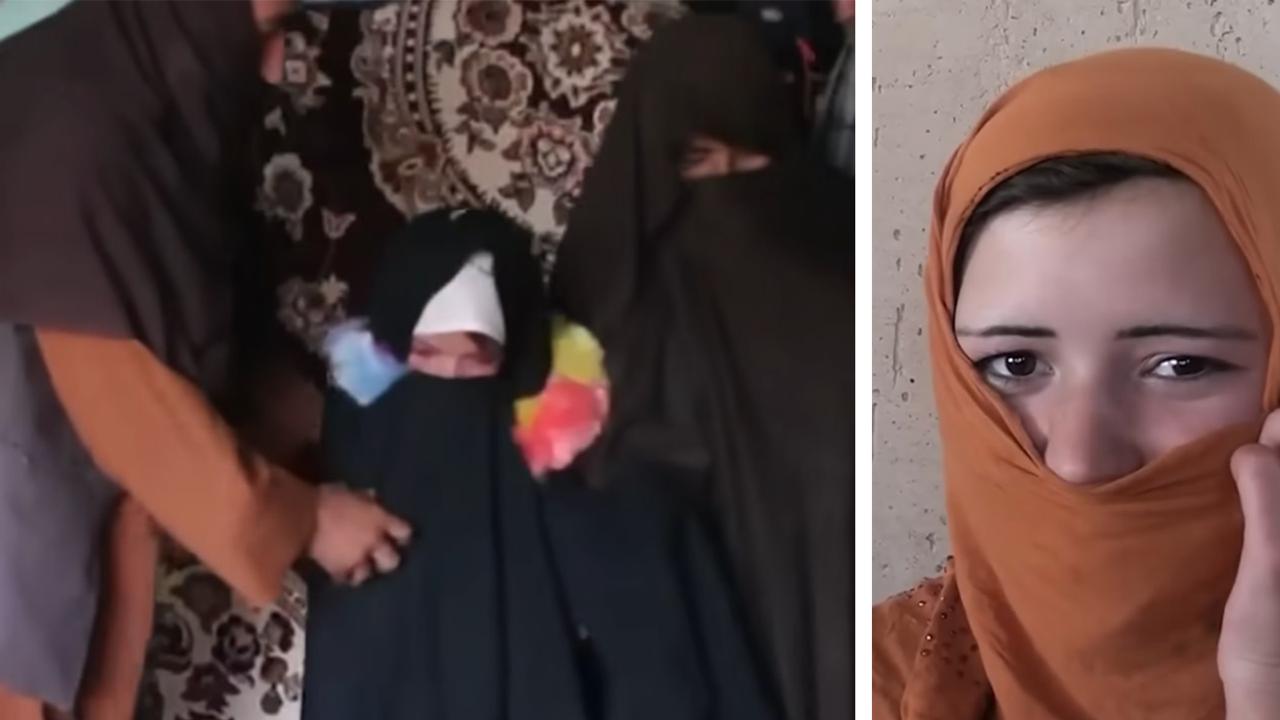
A parliamentary inquiry by Alternative for Germany (AfD) lawmakers in the German state of Baden-Württemberg has brought to light official data showing that authorities have recorded 358 so-called child marriages since April 2012, with courts formally annulling only eight of them between 2018 and 2024.
The figures, released in early October 2026 in response to questions from state parliament members Nikolaos Boutakoglou and Emely Knorr, have drawn sharp attention to the prevalence of underage marriages — overwhelmingly involving people from migrant backgrounds — and the limited number of legal interventions.
Among the annulled cases was the 2020 marriage of an 11-year-old Iraqi girl to a 17-year-old Iraqi boy. In 2018, authorities annulled the marriage of a 14-year-old Afghan girl to a 30-year-old Afghan man. Two further annulments occurred in 2024: one involving a 16-year-old German girl and a 25-year-old Pakistani man, and another between a 16-year-old Syrian girl and a 27-year-old Syrian man, according to Welt newspaper.
The other annulled marriages involved individuals from Afghanistan, Romania, Moldova, Croatia, Serbia, and elsewhere. The state Interior Ministry stated that no court proceedings for annulment were pending at the time of its reply.
The remaining approximately 350 cases, documented by the government of Tübingen were closed under the category of “other resolutions.” Possible reasons cited by the government include the death of a partner, a decision to forgo annulment, or a subsequent marriage abroad.
These files still include striking examples of very young brides. In 2020, a 12-year-old Afghan girl was recorded as married to an 18-year-old man. In 2022, a 12-year-old Syrian girl was married to a 28-year-old Syrian man, and in 2023 a 12-year-old Afghan girl to a 21-year-old Afghan man. Multiple cases involving 13- and 14-year-old girls also appear in the data, and some reports note nine marriages in which the girl was under the age of 14 at the time of the union.
The demographic pattern is pronounced. Men from Syria accounted for 132 of the recorded cases, nearly 40 percent, followed by nationals of Bulgaria, Turkey, Afghanistan, and Iraq.
Child marriages between two German citizens made up only about 0.3 percent of the total. It is also unclear if these German citizens have a migration background, but given the pattern seen among foreigners, it is very probable.
Most of the 358 cases date from 2015 onward when the migration crisis truly began to grow in Germany. Boutakoglou highlighted the figures on social media, stating: “Almost without exception, every child marriage in Baden-Württemberg since 2017 can be traced back to mass migration! Nearly 40% of the child marriages were contracted between Syrians, while child marriages between two Germans account for only 0.3%.”
Fast ausnahmslos jede Kinderehe in Baden-Württemberg seit 2017 ist auf die Massenmigration zurückzuführen!
Das ergab meine Kleine Anfrage an die Landesregierung.
Fast 40 % der Kinderehen wurden zwischen Syrern geschlossen, Kinderehen unter zwei Deutschen machen nur 0,3 % aus! https://t.co/BeJ4wS3CJL
Emely Knorr, co-author of the government inquiry, wrote: “Child marriages are incompatible with our values. Children have a right to safety, education, and a self-determined future. That is why we need effective protection, early intervention, and decisive action against forced marriages.”
Germany raised the minimum marriage age to 18 in 2017 and generally does not recognize foreign marriages involving minors under certain conditions. The Tübingen authority deals exclusively with marriages contracted abroad that come to the attention of German registry offices.
The AfD inquiry was prompted in part by a Terre des Femmes leaflet warning of the risk of forced marriage during school holidays, but the state government said it had no financial involvement in the leaflet.
As Remix News has reported in the past, the issue is not just child marriages. Mass migration has brought new backward cultural norms to Europe that are completely incompatible with European human rights. For example, already in 2020, the German government admitted that there were at least 68,000 female genital mutilation victims in the country, rising 44 percent since 2017.
According to then German Minister for Family Affairs Franziska Giffey, mainly migration is to blame for the massive increase as many migrants coming to Germany commonly practice FGM in their own home countries. The practice, which is a human rights violation, involves the ritual cutting off some or all of the external female genitalia.
Germany is far from the only country dealing with this trend. Remix News reported this year that a female genital mutilation crisis had hit Paris, with over 140,000 such cases seen across the country.
Poland could veto the European Union’s next long-term budget if the European Commission proceeds with plans to divert a share of national proceeds from carbon-emission allowances into the EU’s common budget, according to Polish officials.
“If Brussels does not yet understand our opposition, they may be surprised if we block the budget,” one Polish government representative told RMF FM.
Under the Commission’s proposal for the EU budget for the 2028-2034 period, Poland may lose out.
Of the EU’s new “own resources” (the dedicated revenue streams that finance the EU budget), 30 percent of the proceeds from auctioning allowances under the existing Emissions Trading System (ETS) would go to Brussels rather than remaining with member states. The Commission estimates this would generate an average of €9.6 billion a year for the EU over the seven-year period. For Poland, which currently receives roughly €3.8 billion annually from the auctions, the shift would mean transferring about €1.14 billion a year to the EU budget.
The Irish presidency has suggested phasing in the new rate for countries that benefit from the Modernisation Fund, which aids the energy transition in lower-income member states. Polish officials have rejected the concession as inadequate.
Poland’s stance reflects the country’s still-heavy reliance on coal and the cost of the energy transition. Officials argue that the Emissions Trading System already drives up power prices and accounts for roughly 16 percent of a typical household electricity bill.
Any new source of EU revenue requires unanimous approval by member states and subsequent national ratification. In Poland, that process would need parliamentary consent and the signature of President Karol Nawrocki, who has criticized the ETS and called for its abolition.
The Commission’s proposal remains under discussion among member states. No final decision has been reached.

 Login



 A young German youth is completely surrounded by a mob of migrants and ruthlessly beaten.
This same image has been broadcast time after time across Western Europe.
Follow: @rmxnews https://t.co/BtGuEYuVz8










 Migrants get affordable housing before Dutch natives.
When asked why migrants receive access to affordable housing before young Dutch people looking for a "starter" home, the Dutch housing minister said that many Dutch first-time home seekers "can still live with their parents."
Mass migration contributed to 60% of the increase in housing demand in the Netherlands since 2015, yet Minister Elanor Boekholt-O’Sullivan still believes in putting migrants first.
"For me, the fundamental principle is that anyone who is allowed to and wants to live in the Netherlands gets a roof over their head," she said.
In the Netherlands, Dutch natives are increasingly relegated to living with their parents while migrants get to skip massive waiting lists and gain "emergency" access to cheap social housing.
Follow: @RMXnews