❌

Reading view

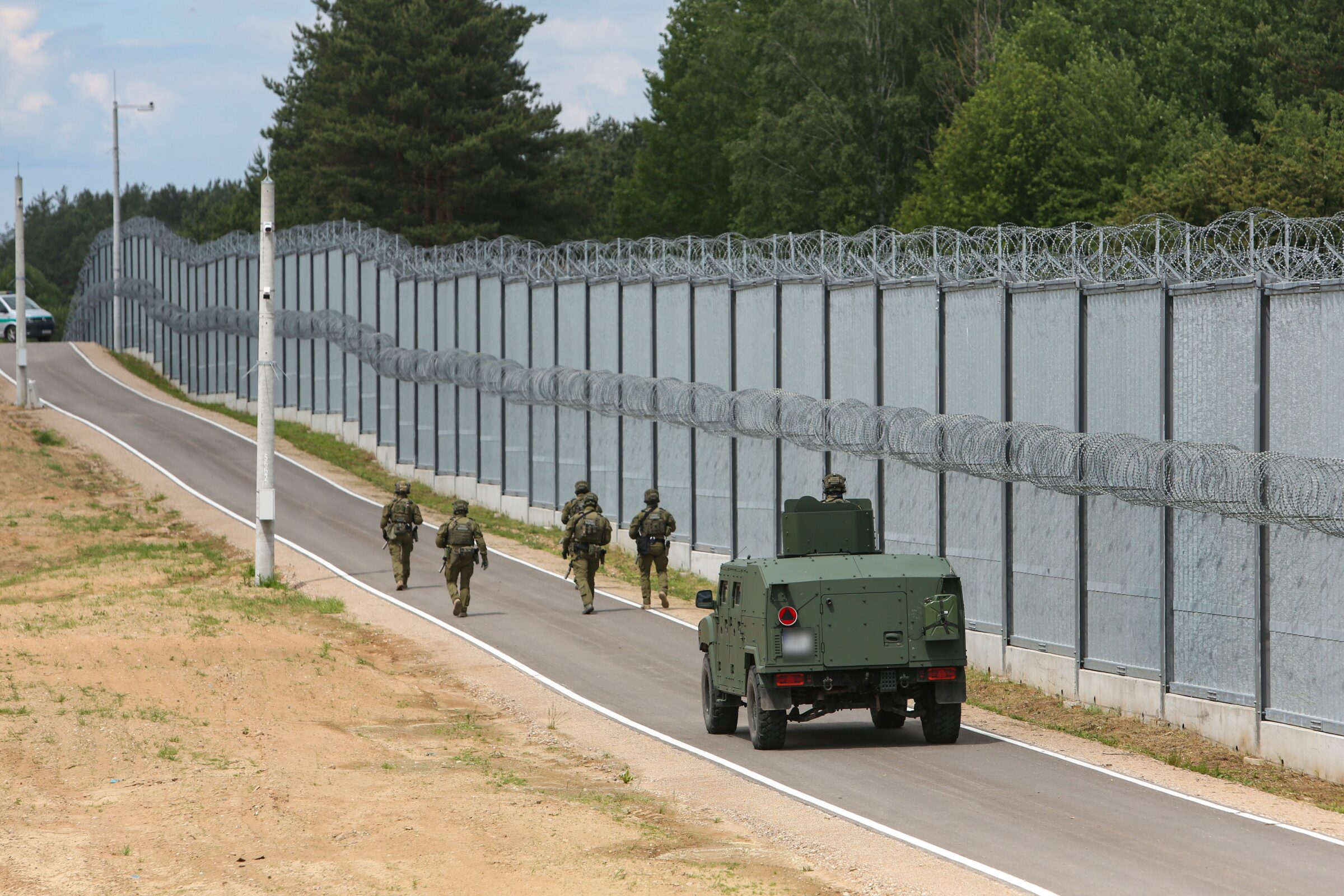
EU is bankrolling border drones while starving the watchdogs meant to stop abuses

The European Commission says asylum seekers arriving at EU borders are now being screened, but it makes no mention of the independent rights monitors that EU law requires to oversee those procedures, even as spending on border surveillance surges.

“Screening of people arriving illegally and the border procedures are being carried out,” said European Commission president Ursula von der Leyen, in a letter addressed to the 27 heads of state and government meeting at an EU summit in Brussels on Thursday (15 October).

An annex to her letter, obtained by EUobserver, highlights broad outstanding issues when it comes to implementing new EU-wide asylum laws that kicked into force this past June.

This article continues, but the full version is available only to EUobserver.com subscribers. Visit account.euobserver.com/membership

  •  

EU agency Frontex told Libyans where to find migrant boat with children, then watched them run it over

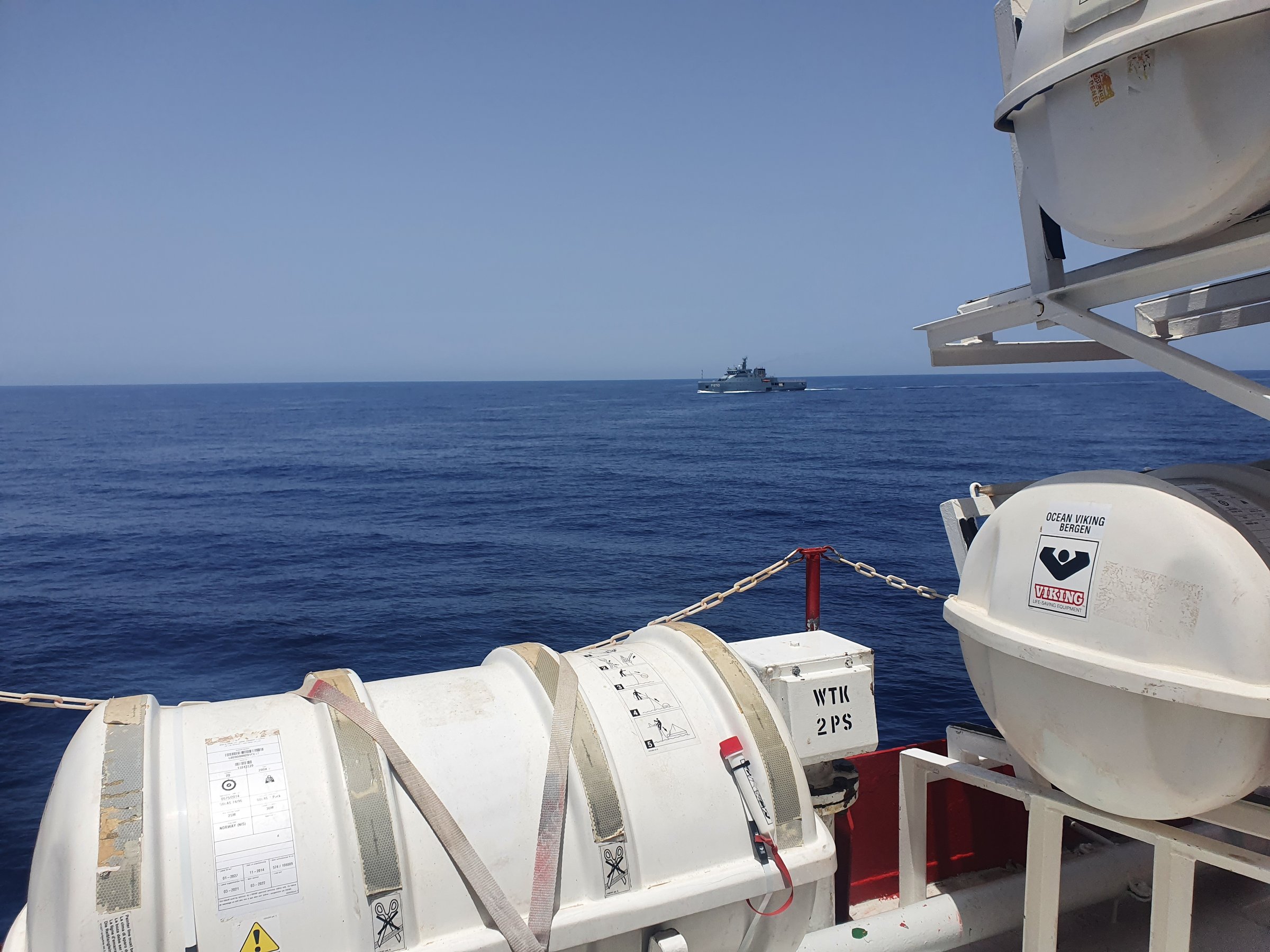
The EU’s border agency, Frontex, shared coordinates of an overcrowded and partly deflated boat in the Mediterranean sea with the Libyan coastguard and then watched them run it over.

The boat was carrying 27 people, including children.

The findings, by Frontex’s own fundamental rights officer, described an incident that took place on 19 June 2026.

And this was just a tiny part of a wider pattern of violence by the EU-backed Libyan coastguard, which has also shot at or near civil rescue vessels.

No one was killed in the June event. But people were tossed into the water. Others, pulled onto the Libyan vessel, were then beaten by Libyan uniformed officers.

Frontex had issued a Mayday relay and then shared the sightings by email with the Libyan rescue centre.

No vessels were reported to be in the vicinity, but the Libyans showed up 90 minutes later.

The internal Frontex findings highlight ongoing tensions in the agency over sharing rescue coordinates with the Libyans in the name of saving lives.

“Saving lives is the absolute sort of absolute right that people have,” Hans Leijtens the agency’s director, told EUobserver earlier this year.

“And it’s our job to contribute to that, and if that sort of starts with looking at which part of the Mediterranean ship is sailing, and if it’s a north African country, we all have to inform the authorities there,” he added.

But his own rights officer also notes that the botched rescue on 19 June amounted to a violation of the right to life, citing article six of the International Covenant on Civil and Political Rights.

He says the standard is not simply whether the migrants were ultimately rescued, but if the operation was planned and executed to minimise risks to human life.

In this case, the Libyans violated that right among others, he says. Frontex did not reply to the findings in the report, as of publication.

Let the court decide

This article continues, but the full version is available only to EUobserver.com subscribers. Visit account.euobserver.com/membership

  •  

Frontex chief calls for better EU border intelligence after Ceuta crisis 

Brussels (European Newsroom) – The European Union should improve how it detects and connects early warnings at its external borders after the mass arrival of migrants in the Spanish autonomous city Ceuta in July, said the chief of the EU border agency Frontex, Hans Leijtens, while insisting that responsibility for border protection must remain with member states. 

“I think we should improve our situational awareness as Europe, and Frontex can play an important role in that,” Leijtens told journalists of the European Newsroom network in Brussels. 

He said a broader picture could be built from satellites, aircraft, observers on the ground and information from social media. Much of the information was already available, he said, but needed to be better connected. 

The remarks come as the European Commission floated plans for a Frontex rapid-response team that could deploy within 24 hours in a crisis. The team would still be sent only at the request of a member state, according to an action plan presented by EU migration commissioner Magnus Brunner in late September. The plan also envisages a larger role for Frontex in returns. 

Leijtens said he did not expect a new Frontex mandate to change the basic division of responsibility. “There I would find it difficult because not only in our mandate but in general protecting European borders is a member state responsibility and we can’t take over responsibility,” he said. 

He described the events in Ceuta as more of a public-order issue than a conventional border incident. Ceuta, a Spanish exclave in northern Africa, saw a sudden mass crossing from Morocco on July 30–31, 2026, triggering a diplomatic dispute among EU countries. Spanish estimates rose from about 72,000 to 80,000 arrivals, while Morocco cited about 40,000. Many people returned before being registered, making the final total uncertain. According to news reports, some 83 people died, and the crisis reignited debate over EU border control, asylum rules, solidarity and Frontex’s role. 

The episode raised a further question for the EU’s early-warning debate: whether the challenge was detecting the signals, sharing them or responding to them. 

Leijtens said the deaths were horrifying and should be prevented. “The fact that so many people lost their lives is absolutely horrifying and something we should prevent.” 

The European People’s Party leader Manfred Weber had called for Frontex to take command in a crisis such as Ceuta. The Commission’s rapid-response plan, by contrast, retains the requirement that a Member State request assistance.  

The Commission’s proposal for a revised Frontex mandate is expected by the end of October. 

  •  

Frontex: Irregular border crossings into EU fall by 26% in 2025

Warsaw (dpa) – The number of irregular border crossings into the European Union fell by more than a quarter in 2025 compared to the previous year, according to figures from the EU border control authority Frontex.

The Warsaw-based EU agency said on Thursday it had registered just under 178,000 crossing attempts last year, the lowest number since 2021.

Frontex described the decline as a significant development, but also warned that the situation at the EU’s external borders remains uncertain. “The trend is moving in the right direction, but risks do not disappear,” said Frontex Director Hans Leijtens.

He said that Frontex’s close cooperation with governments and partners in countries outside the EU has yielded good results.

According to Frontex, last year there were significantly fewer irregular attempts to enter the EU on the West African route (down 63 percent), on the Western Balkans route (down 42 percent) and on the EU’s land border with Belarus (down 37 percent).

Frontex attributed the decline on the Western Balkans route to improved security measures and cooperation with EU candidate country Bosnia-Herzegovina.

Many migrants from Egypt, Bangladesh and Afghanistan

Most of those registered by Frontex trying to make irregular border crossings have Bangladeshi, Egyptian or Afghan nationality. The most frequently used migration route into the EU therefore remains across the Mediterranean, which accounted for almost a third of all irregular border crossings in 2025, with the Libya-Italy route being the most common.

There was hardly any change on the Mediterranean route overall compared to the same period last year: Frontex recorded 66,328 attempts to enter the EU over the sea in 2025 – 1 percent fewer than in the previous year.

Looking only at the eastern Mediterranean, the number of irregular border crossings fell by 27 percent. However, Frontex recorded three times as many attempts to enter the EU from eastern Libya to the Greek island of Crete compared to 2024.

From Algeria to Spain, the numbers increased by 14 percent in 2025.

In contrast, there was a slight decrease in crossings to the United Kingdom. The number of attempts to cross the English Channel fell by 3 percent compared to the previous year. (15 January)

  •  
❌