Third-quarter GDP up by 4.5% compared with last year as industrial output is buoyed by electronics demand
Roaring exports lifted China’s economic growth in the third quarter of this year, with factory output growing much faster than consumer spending.
China’s GDP grew by 4.5% year-on-year between July and September, the National Bureau of Statistics of China reported on Monday. The figures were better than economists had expected and up from the second quarter’s growth rate of 4.3%.
Deputy mayor of Saijo died after becoming trapped under float, days after two similar incidents elsewhere
There is mounting concern over the safety of Japan’s traditional festivals after the death of a senior local official who was reportedly crushed beneath a float at the weekend, days after two men died in similar incidents in another part of the country.
Akihiro Nabae, the deputy mayor of Saijo, in western Japan, was carrying a giant float with other participants in a festival on Saturday when he became trapped beneath the structure, Agence France-Presse reported. Nabae, 62, was taken to hospital and later pronounced dead, local media said, adding that no one else was injured.
Expedition was drawn to Nikumaroro after spotting what was described as a metallic glint in waters off uninhabited island
A US expedition that voyaged to a remote Pacific island in the hope of solving the mystery of what happened to pioneering pilot Amelia Earhart has said an object they suspected to be her plane was a clump of washed-up trees.
“Unfortunately, we weren’t able to find that smoking gun,” said Steve Schultz of Purdue University, standing on the sand in front of a blue lagoon on the atoll of Nikumaroro, about halfway between Australia and Hawaii.
In a bizarre incident, Japan’s Meteorological Agency (JMA) issued a warning about what could have been the world’s worst earthquake ever. The agency retracted the warning a few minutes later, but it still alarmed large parts of the country and unsettled people who had witnessed horrifying disasters.
The JMA estimated a magnitude 9.9 earthquake in the Kuril Islands off Hokkaido on October 16, 2026, but quickly rescinded the alert on account of an error.
The early-warning system had incorrectly placed the earthquake’s epicenter in the Kuril Islands (Chishima Islands) off Hokkaido and calculated a magnitude of 9.9. However, JMA officials later said the system wrongly assumed the quake was about 680 kilometers farther from Japan than it actually was, near Russia’s Kamchatka Peninsula.
The JMA, which has a near-flawless warning system, warned that Hokkaido and the Tohoku region in northeastern Japan would experience shaking up to 7, the highest intensity on the country’s seismic scale. However, a magnitude 6.9 earthquake near Russia’s Kamchatka Peninsula produced only intensity 1 shaking in Hakodate, Hokkaido.
The JMA withdrew the alert just eight minutes after issuing it, marking the first full public retraction of an emergency earthquake warning.
Officials said the magnitude was overstated because its computer system misidentified the earthquake’s focus, though they ruled out a cyberattack. Some local reports noted that one contributing factor may be applying magnitude-calculation methods designed for earthquakes within Japan’s dense observation network to a distant event outside coverage.
Ayataka Ebita, director of the agency’s Earthquake and Tsunami Observation Division, apologized to the public at a news conference, saying, “We deeply apologize for causing great inconvenience.” Meanwhile, Chief Cabinet Secretary Minoru Kihara told reporters that the government regretted the incident. “We caused a great deal of worry and placed a burden upon those who took shelter or took action to ensure their safety, as well as on others such as transport systems and businesses that were affected,” he said.
Several Japanese citizens had learned about the alert through municipal public address systems, TV and radio broadcasts, or their smartphones.
As expected, the false alarm sparked chaos in several parts of the country, disrupting daily life and domestic transit. In Sapporo, Hokkaido, for example, 14 trams stopped for a few minutes after the warning until their operator decided it was safe to continue service. Additionally, bullet train operations between Shin-Yokohama and Toyohashi stations on the Tokaido Shinkansen Line were briefly halted, although the operator later noted that the suspension was not directly caused by the earthquake warning.
Moreover, people sought shelter unnecessarily in some places, and social media later buzzed with netizens expressing confusion after the alert was retracted.
A false magnitude-9.9 earthquake warning jolted people because it is exceptionally scary, and no instrumentally recorded earthquake has ever reached magnitude 9.9.
Photo of the Emergency Alert posted on X
According to publicly available information, the largest instrumentally measured earthquake in history—magnitude 9.5—was the 1960 Valdivia earthquake in Chile that killed more than 1,600 people, injured at least 3,000, and left two million people homeless. The rupture zone stretched 500 to 1,000 kilometers along the country’s coast.
A rupture zone is the area along a fault or rock mass where stress exceeds the material’s strength, causing it to break or fracture during an earthquake.
The false warning could have triggered panic because Japan’s geography puts it in an area of extreme seismic risk. Japan sits at the convergence of four major tectonic plates—Pacific, Philippine Sea, Eurasian, and North American—along the Pacific “Ring of Fire,” making it one of the most earthquake-prone places on Earth.
In fact, about 20% of the world’s magnitude-6.0 or larger earthquakes occur in or around Japan.
Initially, the system located the epicenter near the Kuril Islands off Hokkaido, where a possible magnitude-9-class event is believed possible. Official scenarios for such an event have earlier predicted tsunami heights of up to 30 meters in some places; possible death tolls of close to 100,000; and widespread destruction of buildings and infrastructure.
The so-called erroneous warning predicted intensity 7 shaking across northern Japan. If it had come true, nearly all buildings would have suffered severe or total damage, and landslides, ground cracks, and infrastructure collapse may have occurred.
In a country where even moderate earthquakes bring an otherwise bustling country to a standstill by triggering automatic train halts, elevator shutdowns, and immediate public action, a maximum-intensity alert over such a wide area may have shaken the people.
The eight minutes that the alert was live may have brought back the trauma of 2011 when Japanese people stood witness to the worst natural disaster to hit the country.
The Shadow of the 2011 Disaster
In 2011, Japan suffered its worst natural disaster when a magnitude 9.0 to 9.1 megathrust earthquake struck off Tohoku’s Pacific coast, about 130 kilometers east of Sendai.
The earthquake hit on March 11, 2011, at 2:46 p.m. local time. On that fateful day, a massive undersea megathrust earthquake measuring 9.0–9.1 occurred in the Pacific Ocean some 72 kilometers east of the Oshika Peninsula in Japan’s Tohoku region.
According to publicly available information, the quake was relatively shallow, at about 24-32 kilometers deep, and lasted six minutes. However, it was so violent that it shifted the seafloor and generated a series of powerful tsunami waves.
The waves hit the coast about 30 to 40 minutes after the main shock, toppling seawalls and inundating about 561 square kilometers of land along Japan’s northeastern Pacific coast. In places such as Miyako, these waves attained a maximum run-up height of 133 feet.
The tsunami swept entire towns and coastal communities in Iwate, Miyagi, and Fukushima prefectures, among others, leaving widespread devastation.
Following the tsunami, hundreds of people were reported dead, and hundreds more were reported missing.
As rescue efforts began and the scale of the destruction—particularly in coastal areas—became apparent, the numbers in both categories sharply increased. After two weeks of the disaster, about 10,000 people were officially counted as deceased by the Japanese government, and about 1.5 times as many were still listed as missing and believed dead.
Finally, the official Japanese government or Reconstruction Agency figures were reported to be more than 19,729 dead, more than 2,553 missing, and about 6,200 injured.
The vast majority of fatalities resulted from drowning in the tsunami rather than the earthquake shaking itself. Over 120,000 buildings were completely destroyed, with hundreds of thousands more severely or partially damaged. Furthermore, the disaster also severely damaged and disrupted critical infrastructure, including roads, railways, ports, airports, power lines, and water systems.
A helicopter flies over the port of Sendai to deliver food to survivors- Wikipedia
Adding to this massive toll on the country’s people and economy, the disaster also triggered a major nuclear accident at the Fukushima Daiichi Nuclear Power Plant.
Although the earthquake triggered an automatic shutdown of the reactors, floodwaters inundated the facility and disabled both off-site power lines and emergency diesel generators. Without cooling, three reactor cores melted down, triggering hydrogen explosions and releasing radioactive material, which sparked evacuation en masse.
The event was subsequently rated Level 7 on the International Nuclear Event Scale—the highest level, shared only with the 1986 Chornobyl disaster.
The earthquake and tsunami following the disaster had long-term social, economic, and environmental impacts across northeastern Japan. In fact, recovery and reconstruction from the accident took more than a decade, including rebuilding communities, infrastructure, and coastal defenses, and managing the Fukushima site going forward.
Against this background, the recent false warning was uniquely unsettling because it briefly presented the public with a scenario worse than 2011, as it would have released roughly 20 times or more the energy of the Tohoku quake. Moreover, the predicted location lies along the same subduction zone system that produced the 2011 disaster.
The recent false alarm did not trigger an earthquake, but it may have forced the country to briefly confront the scale of another possible disaster.
Contact the author at sakshi.tiwari13 (at) outlook.com
Beijing warns against ‘discriminatory’ step after France drops opposition to British role in Made in Europe package
No 10 has left the door open to imposing tariffs on Chinese-made electric vehicles as part of the Made in Europe package, prompting a warning from Beijing that such a move would be “discriminatory”.
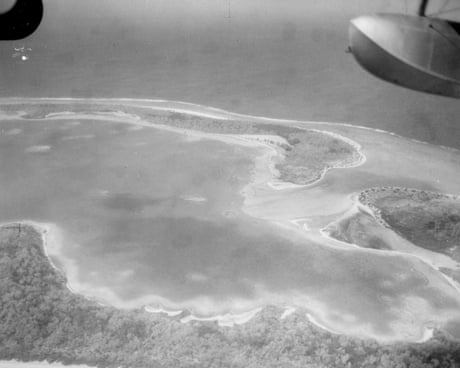
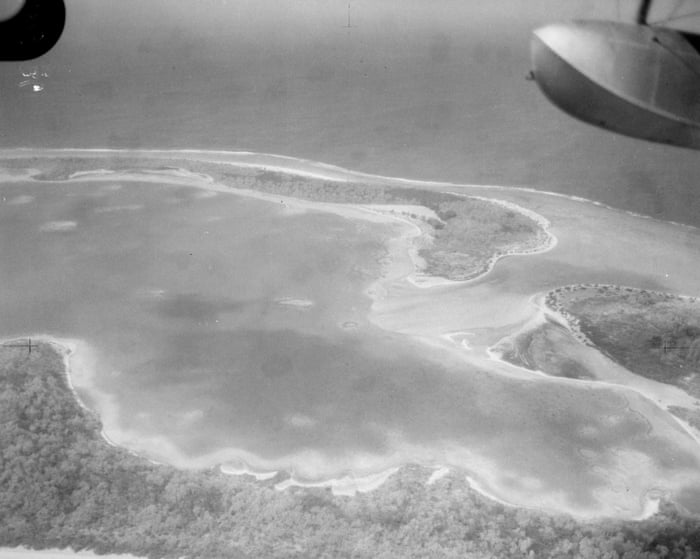
Images from New Zealand aerial survey of Nikumaroro in 1938 offer new clues over aviator’s disappearance
A New Zealand museum has released nearly 50 photos from a 1938 aerial survey of the island where Amelia Earhart is believed to have crash-landed, offering amateur sleuths new evidence to scour for traces of the pioneering aviator and her plane.
The black-and-white images were published by the Air Force Museum of New Zealand after renewed interest in one of the biggest mysteries of the 20th century, spurred by a US expedition to the Pacific atoll of Nikumaroro in search of new clues.
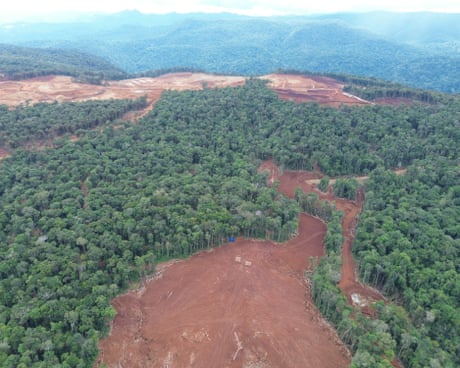
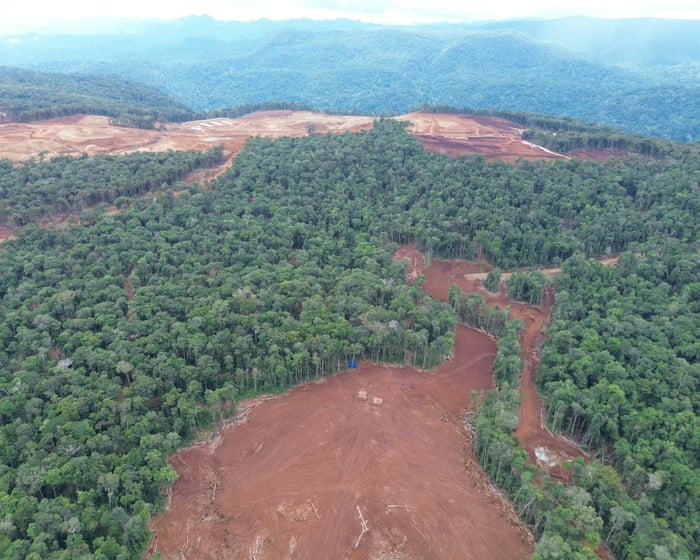
Mines in supply chains of western carmakers linked to widespread deforestation of primary rainforest in nickel-rich lands inhabited by Tolaki people in Indonesia
Volkswagen, Ford and Tesla are among the electric carmakers whose batteries may contain nickel mined in indigenous woodlands plagued by deforestation, an analysis has found, highlighting the struggle to make vehicles that are free from environmental destruction.
Corporate disclosures and trade flows from the last two years show mines in the battery supply chains of automotive giants are linked to the loss of trees in Sulawesi, a wildlife hotspot in Indonesia that houses the world’s largest nickel deposits. The metal is widely used in cathodes in car batteries because it boosts energy density and increases range.
Jio Platforms set the price band for shares sold in its IPO, with the company set to raise a maximum of INR302.1 billion ($3.2 billion) from the float.
In a stock market filing, parent company Reliance Industries announced shares would be priced at between INR1,065 and INR1,119 with 270 million units available. Employees are set to receive a INR54 per share discount.
The latest filing came hours after the publication of a prospectus confirming the offer is scheduled to open on Wednesday 21 October and close two days later. Anchor investors can bid from the start of the week.
Reuters reported if Jio reaches the $108.3 billion valuation the top end would equate to, the company would become India’s fourth largest by market capitalisation behind Reliance Industries, Bharti Airtel and bank HDFC.
It also noted the IPO represented a record offering in the country.
Jio stated in its prospectus the net proceeds are set to be used to pay down debt and for general corporate purposes.
The IPO has been a major media talking point for some time, especially in India. In June 2026 Reuters reported the company was aiming for around $3.8 billion from a sale, a significant drop from how much Bloomberg estimated Jio was targeting from a float during 2025.
An accelerating sell-off of AI-linked shares has hit global markets, as fears over rising inflation and future interest rate hikes spooked traders already wary of the heavily indebted sector.
South Korea’s benchmark Kospi 200index, which is heavily skewed towards the companies that make memory chips, fell more than 8% overnight to a six-month closing low, triggering circuit breakers that brought trading to a halt at various points.
Having tried cloud seeding and water bombing, one pilot project will see dry ice dispersed by plane across the province of South Sumatra
As fires ravage Indonesia, emitting a toxic smoke that has drawn the ire of regional neighbours, the government is testing an unusual new approach to tackle the haze: dry ice.
Having tried cloud seeding, water bombing and sending in army personnel to fight the fires, Indonesia’s coordinating security minister said dry ice would be dropped on the province of South Sumatra on Thursday.
Japan will pump $20 billion in funding into two new semiconductor facilities in the US as part of a trade agreement between the two countries, with GlobalFoundries selected to operate the sites.
The move forms part of a wider trade deal between the countries for Japan to invest $550 billion in return for the US lowering tariffs of Japanese goods.
GlobalFoundries will build the new sites at its Malta, New York, campus with the initiative designed to accelerate trusted semiconductor manufacturing in the US, strengthen critical supply chains and support growing demand across automotive, industrial and connected infrastructure markets.
Japan will make an initial investment of approximately $10 billion, accelerating construction of a new 300mm semiconductor fab which is expected to come online in 2029. It will add approximately 900,000 wafers of annual manufacturing capacity when fully operational.
An additional $10 billion will fund a second fab, which will produce the same amount of wafers. The entire project is expected to create about 27,000 construction and ecosystem jobs and more than 1,000 highly skilled manufacturing jobs in New York’s Capital Region.
Bold GlobalFoundries has also agreed a deal with the US Commerce Department to amend an existing award under the CHIPS and Science Act to reallocate $995 million towards investments in silicon photonics and other areas. This will expand manufacturing capacity for technologies “increasingly critical to communications infrastructure and data centres”.
As part of a separate arrangement, the US government will receive approximately 4% equity in GlobalFoundries, taking its total stake to 7%.
Tom Breen, CEO of GlobalFoundries said the initiative was a bold new step for semiconductor manufacturing, bringing together the US and Japan with differentiated technology and decades of manufacturing expertise.
Howard Lutnick, US secretary of commerce added President Donald Trump’s historic US, Japan trade deal “is delivering another massive manufacturing investment into America”.
FSB security agency said reporter was arrested on island of Sakhalin, alleging he was collecting information about Russia’s defences
Russia has arrested a Japanese journalist on the far east island of Sakhalin and accused him of spying, in the latest sign of rising tensions between Moscow and Tokyo.
Russian foreign ministry spokesperson Maria Zakharova identified the reporter as Yuki Imai, from the Hokkaido Shimbun newspaper, adding that he had been accused of “conducting espionage activities on Russian territory”.
The GSMA board outlined the industry’s connectivity priorities, calling for action on smartphone affordability, online scams and network investment while backing closer international cooperation on future 6G standards.
Following a board meeting in New Delhi, India, the industry association stated that although 97% of the global population live within mobile broadband coverage, 3.4 billion people remain unconnected to mobile internet. The cost of devices remains a significant barrier, with an entry-level internet-enabled handset equivalent to 44% of average monthly income for the poorest 20% of people in low- and middle-income countries.
The GSMA highlighted potential measures to improve affordability including financing schemes, targeted tax cuts and closer cooperation between device makers and memory suppliers.
It also identified scams and fraud as a growing threat, warning that although the mobile industry continues to strengthen network detection and cyber defence tools, “no single sector can tackle the threat alone”. The GSMA noted AI-generated content and deepfakes further add to risks for consumers, public trust and government objectives, calling on the industry to “join forces to counter scams with practical solutions”.
Sustained investment The GSMA also highlighted the need for network investment and supportive policy to accelerate connectivity growth. It found mobile technologies and services generated $6 trillion in economic value in 2025, equivalent to 6.4% of global GDP. This figure is forecast to reach $11.3 trillion by 2030.
In addition, operators are projected to invest $1.2 trillion in capital expenditure between 2025 and 2030 to expand and upgrade networks, with 57% of mobile connections expected to use 5G by the end of the decade.
GSMA director general Vivek Badrinath said the sector’s next priority must be to translate 5G expansion into “meaningful value”, ensuring more people can participate in the digital economy. “This will require sustained investment, enabling policy and collaboration across the wider ecosystem,” he stressed.
Looking ahead, the industry association reiterated its support for global standards and harmonised spectrum as 6G development continues. It highlighted countries representing more than 80% of the world’s population support mobile use of the upper 6GHz band, which could provide the 200MHz to 400MHz channel bandwidths expected to be needed for 6G.
GSMA chair Gopal Vittal said that “by working through global standards and collaborating across markets, we can accelerate innovation, strengthen trust and resilience” as the industry develops the next generation of connectivity.
India’s Adani Enterprises Limited and Apple supplier Jabil signed a memorandum of understanding (MoU) to form a 50:50 joint venture, tasked with manufacturing AI and data centre equipment in the country.
The JV is the next step on from a deal struck by the duo in June 2026 to form a strategic alliance to develop an AI and data centre infrastructure manufacturing ecosystem.
Once established, the pair stated the venture will supply hyperscalers, neoclouds, data centre operators and enterprises, serving accelerating data centre demand.
The companies cited industry forecasts which project India’s AI capacity will reach between 5 gigawatts to 8 gigawatts by 2030 and more than $50 billion in planned hyperscale spending across data centre, cloud and AI ecosystems.
In total, the pair peg the global market opportunity at more than $3 trillion over the next seven years, driven by investment in AI computing.
The duo will look to cash in on this demand by providing a manufacturing base in the country to serve domestic demand and support exports.
Adani Group, which runs the enterprise division, has made a $100 billion commitment to develop 5 gigawatts of green-energy powered, hyperscale AI-ready data centres by 2035, and the proposed venture adds hardware manufacturing to the group’s presence across infrastructure, energy and logistics.
Jabil makes components for Apple and will use the JV to expand its engineering footprint across India. It reported revenue of $36 billion in fiscal 2026.
Gautam Adani, chairman of Adani Group, said “the AI revolution will demand far more than just breakthroughs in algoritms” and the proposed JV would “help build the physical backbone of the global AI economy”.
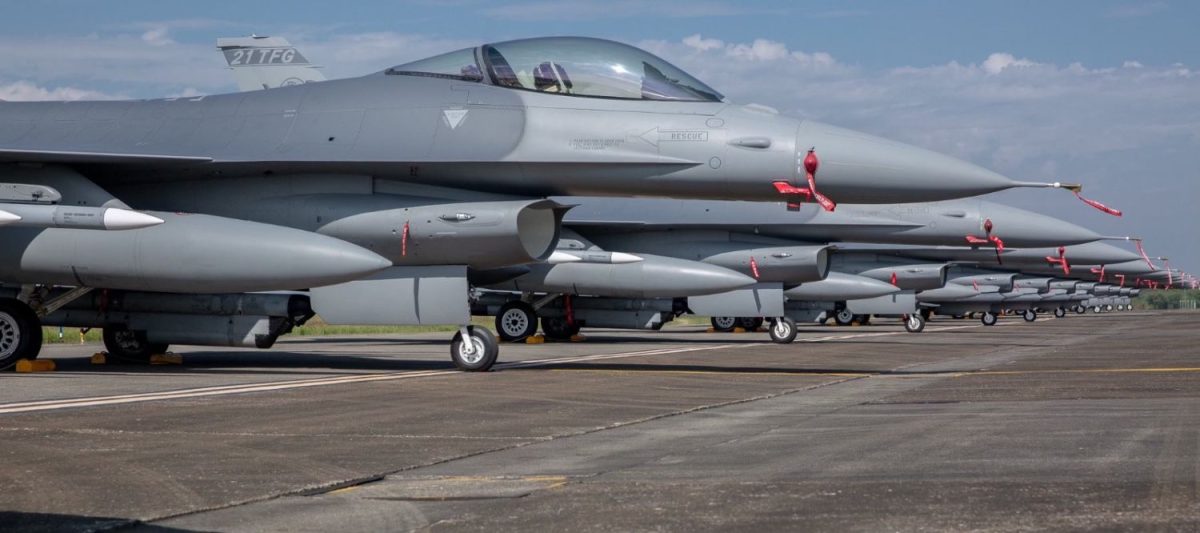
After years of delays and missed timelines, Taiwan recently received its first two F-16V (Viper) fighter jets from the US. Despite the arrival of two cutting-edge jets, Taipei’s problems may have just begun.
The two jets are part of a US$8 billion deal for 66 F-16Vs approved in 2019 during US President Donald Trump’s first term.
Taiwan was originally scheduled to receive the first new F-16V Block 70 fighter jets in 2023, but severe production and software-related delays pushed delivery back nearly three years.
Lockheed is expected to deliver all 66 F-16V Block 70 jets by 2028; however, Taiwan is still negotiating with authorities to finish the deliveries by the end of next year.
Taiwan has already upgraded 140 of its F-16A/B Block 20 fighter jets to the advanced F-16V (Viper) standard under the US$4.5 billion modernization initiative, the Peace Phoenix Rising program, completed in December 2023.
When Lockheed Martin delivers the 66 new jets by 2028, the Taiwanese Air Force will have more than 200 F-16 Viper fighter jets, making it the largest Viper-standard fleet in the Indo-Pacific region.
The Challenge
However, this large F-16 Viper fleet will help Taiwan deter China only if the country has experienced, trained pilots to fly them, which seems like a problem right now, as the country is struggling to find new fighter pilots and retain experienced ones.
To tackle fighter pilot shortages, Taiwan’s defense ministry now plans to allow military pilots to serve until age 58.
Under the plan, pilots could serve until they turn 58, up from about 48 for lieutenant colonels and 52 for colonels, extending their current service limits of 26 and 30 years, respectively.
Effectively, lieutenant colonels will get a 10-year extension, and colonels will get a six-year extension.
Taiwan believes a longer service period will attract new talent, help retain experienced fighter pilots, and address chronic pilot shortages in the air force.
The Taiwanese Air Force would also create 72 additional posts for highly qualified lieutenant colonel and colonel pilots with at least 14 years of service, allowing them to keep their rank and focus on flying rather than command or administrative duties.
These 72 additional posts would be outside the regular personnel establishment, meaning they would not take positions from other officers or have to assume command roles.
“Their job would simply be to fly,” Koo said.
They would also help train and mentor younger pilots, he added.
These changes – allowing fighter pilots to serve longer, creating additional posts so that they can focus exclusively on flying, and reducing their administrative and command duties – are meant to retain fighter pilots in the Air Force when many of them are taking voluntary premature retirement to pursue more lucrative and less stressful careers in civilian airlines.
File Image: F-16V
The Executive Yuan in Taipei is currently considering the defense ministry’s proposals.
Defense Minister Wellington Koo Li-hsiung said earlier this week that the arrangement was designed to keep experienced pilots in uniform when many faced a choice between remaining in the military and pursuing longer, potentially more lucrative careers with commercial airlines, the Hong Kong-based South China Morning Post reported.
Notably, civilian airline pilots can fly until age 65, giving Air Force fighter pilots a strong incentive to switch while they’re still young.
As mentioned earlier, before the changes, lieutenant colonels in Taiwan could fly fighter jets until age 48 and colonels until age 52, meaning they could fly 13 to 17 years longer in commercial airlines.
Extending their service term until age 58 will narrow this gap considerably.
“If they can serve until 58, the gap with civilian airline pilots, who can fly until 65, will not be that large,” Koo told lawmakers in the parliament.
The plan would still require annual health checks and other regular reviews, the minister said. Officers who failed the tests could no longer continue flying.
He said 57 air force pilots had retired so far this year, broadly in line with previous years but fewer than last year. All had completed the minimum required service period.
Defense Minister Koo also underlined that the post-pandemic expansion in commercial airlines has created a lucrative market for pilots, which is making it difficult for the Air Force to retain its fighter pilots.
As a result, many fighter pilots apply for voluntary premature retirement once they reach the minimum service age (20 years), well before the maximum service period for Air Force pilots: 26 years for lieutenant colonels and 30 years for colonels.
The defense ministry proposals also highlight how air forces worldwide place a higher premium on retaining experienced fighter pilots than on recruiting and training new ones.
Recruiting and training new pilots is expensive, time-consuming, and requires lots of effort and resources.
The defense ministry proposals also highlight that air forces worldwide place a higher premium on retaining experienced fighter pilots than on recruiting and training new ones.
These proposals to retain experienced fighter pilots come even as Taiwan has met its recent targets for recruiting new pilots.
The ministry said pilot recruitment reached 96.2 percent of its target in 2024, 112 percent in 2025, and 98.6 percent in 2026.
It also reported that the air force currently has an 87.8 percent personnel fill rate.
Experienced aviators, however, possess accumulated knowledge of aircraft systems, combat tactics, and operational procedures that newly trained pilots cannot easily replicate.
Retaining experienced fighter pilots is even more pressing, as Taiwan will receive over 60 new F-16V fighter jets in the next two years.
Notably, the Block 70 F-16V is an upgraded variant of the F-16 jets the Republic of China (another name for Taiwan) Air Force (RoCAF) has flown for nearly 30 years.
Taiwan first ordered 150 F-16 jets in the 1990s and received the first Block 20 fighters in April 1997.
It still has nearly 140 of these older F-16 jets, now upgraded to the Viper standard.
As a result, many of Taiwan’s fighter pilots already have years of experience flying these jets. This experience could be invaluable as the country starts integrating new F-16 Viper jets into its air force.
Taiwan plans to assign at least 100 fighter pilots to its fleet of 66 new F-16 Viper jets. The ministry informed that the air force had increased pilot positions and training in preparation for the new aircraft.
The first two of the 66 F-16V Block 70 fighters landed at Chihhang Air Base on October 2.
Koo said 63 of the 66 aircraft had entered production, including six that had reached the flight-test stage.
Another factor putting pressure on the RoCAF is almost daily violations of Taiwanese airspace by China’s People’s Liberation Army Air Force (PLAAF).
For instance, Taiwan’s Ministry of National Defense (MND) reported 181 violations of Taiwan’s ADIZ in September alone. Responding to these airspace violations is taking a toll on the RoCAF’s staffing ratio.
These near-daily PLAAF violations mean the RoCAF must keep aircraft and pilots ready at all times.
Asked about pilot fatigue from near-daily PLAAF airspace violations, Air Force Chief of Staff Lieutenant General Lee Ching-jan said the air force had moved away from scrambling fighters to shadow PLA aircraft one-for-one.
Instead, Taiwan was using a combination of fighters already on patrol, naval vessels, and land-based missile systems to monitor and respond to PLA activity, reducing strain on both pilots and aircraft, he added.
It remains to be seen whether Taiwan’s government will accept the proposals and what impact they would have on retaining experienced pilots in the air force.
Sumit Ahlawat has over a decade of experience in news media. He has worked with Press Trust of India, Times Now, Zee News, Economic Times, and Microsoft News. He holds a Master’s Degree in International Media and Modern History from the University of Sheffield, UK.
He can be reached at ahlawat.sumit85 (at) gmail.com
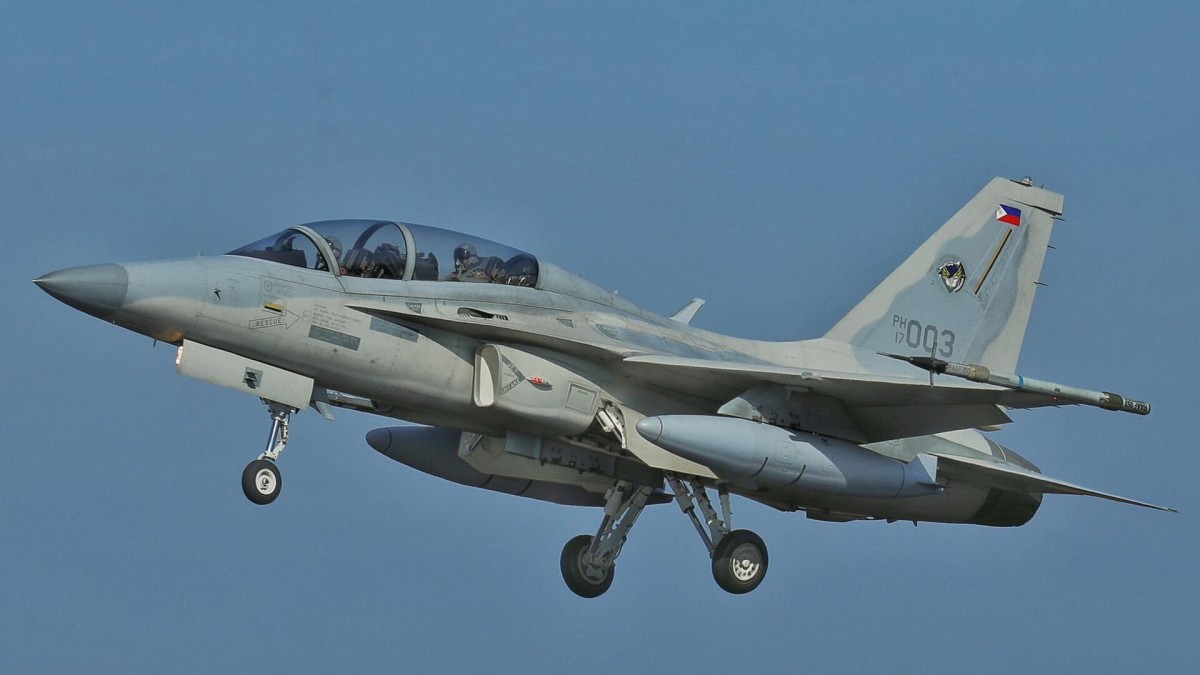
Malaysia expects to receive its Korean-made FA-50M light combat aircraft on schedule, Defense Minister Khaled Nordin said, with the first jets due this month or next.
“According to the schedule, the aircraft will arrive this month or next month – I will announce the arrival date later. So far, I have not received any information regarding a delay in the delivery of the aircraft,” Khaled told reporters after the launch of the Warriors’ Fund Campaign 2026/2027.
In May 2023, Malaysia signed a nearly $920 million contract with Korea Aerospace Industries (KAI) for 18 FA-50 Block 20 light combat aircraft, designated FA-50M, for the Royal Malaysian Air Force.
Earlier, as EurAsian Times reported, India’s LCA Tejas was also competing for a Malaysian fighter-jet contract.
Malaysia, which has long needed to modernize its fast jet fleet, commenced the FLIT-LCA requirement in June 2021.
The country launched the tender to acquire a Lead-In Trainer-Light Combat Aircraft as part of the air force’s Capability 55 plan, released in 2018 and outlining the air force’s objective to achieve an ideal force structure by 2055.
The tender quickly gained traction from several countries, including India. Other contenders included the Turkish Hurjet, China-Pakistan’s JF-17, Russia’s MiG-35, and the Korean FA-50.
The FA-50 and Tejas were the two final shortlisted candidates, with the South Korean aircraft ultimately prevailing. Malaysia selected the FA-50 aircraft over India’s Tejas, with officials citing the Korean jet’s proven service record and combat record as key factors.
Korea Aerospace Industries confirmed in February 2023 that it had secured the Malaysian deal.
Then-Defence Minister Mohamad Hasan said the jet’s service record was the primary consideration. “We cannot take the risk and acquire assets that are still at the prototype stage. Our personnel will use this jet, so safety is in our criteria,” he told a press conference in May 2023, echoing comments made in parliament the previous month.
A Korea Aerospace Industries representative later told Channel News Asia that the Royal Malaysian Air Force viewed the Tejas as lacking an export record, while the FA-50 was already proven in combat.
The Philippine Air Force has used the FA-50, including during the 2017 Marawi campaign, and several regional air forces, including Indonesia, Thailand, and the Philippines, operate it.
Sources at India’s HAL acknowledged the outcome. “We were short-listed for the Malaysian LCA contract. We were hopeful as we were very competitive on several criteria, but unfortunately this has not gone our way,” one source said.
HAL Chairman C.B. Ananthakrishnan reportedly said the company was optimistic after being shortlisted from multiple bidders but had received indications that the order was going to the Korean contender, though it had not yet received formal notification.
KAI and Lockheed Martin jointly developed the supersonic T-50 advanced jet trainer, with the TA-50 as the Lead-in fighter trainer and the FA-50 as a light combat aircraft variant.
The T-50 partly resembles the F-16 Fighting Falcon and is 80% of its size. Development began in the 1990s, funded 70% by the South Korean government, 17% by KAI, and 13% by Lockheed Martin.
The aircraft made its first flight in August 2002 and entered service by February 2005.
KAI and Lockheed Martin pursued a joint international marketing program for the T-50.
The T-50/FA-50 family is operated (or on order) by the Republic of Korea, Indonesia, the Philippines, Thailand, Iraq, Poland, and Malaysia. Total firm orders across the family exceed ~290 airframes, with roughly 220–230 already built or delivered as of late 2026 (around 70 still in production or pending delivery).
FA-50
The T-50 is equipped with a GE F404 engine built under license by Samsung Techwin. GE provides engine kits to Samsung Techwin, which also produces some parts and performs final engine assembly and testing.
The fighter/attack variants are equipped with the Elta EL/M-2032 fire-control radar, the same as the initial LCA MK1. The TA-50 can operate as a full-fledged combat platform with PGMs, air-to-ground weapons, and air-to-air missiles.
The TA-50 can carry pods for reconnaissance, targeting assistance, and electronic warfare. Reconnaissance and electronic warfare variants are also being developed, designated RA-50 and EA-50, respectively.
The TA-50 has an internally mounted three-barrel M61 Vulcan cannon. Wingtip rails can accommodate the AIM-9 Sidewinder missile, and underwing hardpoints can carry a variety of additional weapons.
South Korea is considering arming the FA-50 with a smaller version of the Taurus KEPD 350 missile to give it a 400 km stand-off engagement capability. The aircraft has an internal fuel capacity of 2,655 liters. It can carry 1,710 liters in the three external fuel tanks.
The aircraft has a max take-off weight of 12,300 kg. Its ferry range is 1,851 km, and its thrust-to-weight ratio is 0.96. The seven hardpoints can carry up to 5,400 kg of payload.
The FA-50 can carry more internal fuel, and the engine could be either the Eurojet EJ200 or the General Electric F414, providing up to 25% more thrust. Other AESA radars, such as Raytheon’s AN/APG-79 and Northrop Grumman’s AN/APG-83, are options for future production.
In January 2019, KAI began developing an improved FA-50 known as the Block 10 and Block 20 upgrades. The Block 20 adds munitions such as the AIM-120 AMRAAM. Raytheon PhantomStrike and Northrop Grumman AN/APG-83 were being considered as the future AESA radars.
MBDA has offered to integrate the Meteor and ASRAAM medium- and short-range air-to-air missiles on FA-50 and future KF-X fighter jets.
The T-50/FA-50 lost several competitions or was blocked from sales. The UK arms embargo on British components, such as the ejection seat, thwarted Argentina’s interest. Israel and Singapore instead chose the Italian M-346. Taiwan developed its own T-5 Brave Eagle based on its F-CK-1 fighter. The US chose Boeing’s T-7 and also blocked a proposed sale to Uzbekistan, citing concerns that the technology could reach Russia.
Thailand’s Queen Suthida flew a solo sortie in the Royal Thai Air Force’s Saab JAS 39C Gripen fighter jet, becoming the first Thai female Gripen pilot and the first reigning Queen anywhere in the world to fly a modern combat jet solo.
Without an instructor or a co-pilot in the back seat, Thailand’s Queen Suthida took off from a military airbase in southern Surat Thani on October 8, 2026.
For about 41 minutes, the Queen of Thailand owned the air even as King Maha Vajiralongkorn waited with flowers and a golden patch, an honorary Swedish insignia for those who have flown the aircraft.
Local media reported that the flight marked the culmination of extensive simulator training at the base and about 10 hours in a two-seat JAS39D Gripen. However, she was already a pilot before she began training on the Gripen-C, which forms the cornerstone of the RTAF.
On May 13, 2010, the Queen made her flying debut aboard a Cessna T-41D belonging to Fleet 604 at Wing 6 in Bangkok. Since then, she has amassed 1,188.48 flight hours in various aircraft, including the Cessna T-41, CT-4E Airtrainer, Pilatus PC-9, Mooney M20M, Piper PA-34 Seneca, Boeing 737-400, Boeing 737-800, and a twin-seater Gripen-D.
In the past, the Queen has reportedly served as the king’s co-pilot on both domestic and overseas flights while performing royal duties. The royal duo even successfully landed a royal aircraft at Paro Airport in Bhutan in April 2015, widely regarded as one of the world’s hardest airports for pilots.
Notably, only a few precedents exist of royalty or heads of state flying aircraft beyond performing duties. However, a few notable examples exist.
Thailand’s Queen Suthida made her first solo flight in a single-seat JAS 39C Gripen (Via X)
The Spanish Crown Princess Leonor, for instance, flew her first solo flight in December 2025, piloting a Pilatus PC-21 turboprop trainer. She reportedly concluded her air force training with a joint flight alongside her father, King Felipe VI, with both piloting separate Pilatus PC-21 training aircraft.
Some reports also say she flew in an F-5 fighter jet with an instructor.
Meanwhile, Princess Salma bint Abdullah of Jordan, daughter of King Abdullah II, became the first woman in the Jordanian Armed Forces to complete fixed-wing pilot training and receive her wings in 2020.
She even joined the kingdom’s royal air force in providing humanitarian aid to the war-torn Gaza Strip after Israel launched a devastating bombing campaign on the enclave following the October 7 attack by Hamas.
Interestingly, the Jordanian princess comes from a long line of pilots trained to fly both civilian and military aircraft. Jordan’s current leader, King Abdullah II, qualified as a pilot of a Cobra attack helicopter and other types during his military career. He is also purportedly known for his hands-on involvement with the Royal Jordanian Air Force, which operates F-16 AM/BM fighter jets based at Muwaffaq Salti Air Base.
King Abdullah II’s father, King Hussein, was also a highly skilled pilot who flew a variety of military and civilian aircraft, including the De Havilland Vampire and the Lockheed F-104 Starfighter, Lockheed L-1011 TriStar, and Boeing 737, to name a few.
In one instance, the king, flying an unarmed, twin-engine De Havilland Dove prop airplane, was intercepted by two Soviet-built Syrian MiG-17 fighter jets but managed to get away using low-level maneuvers, as documented in several reports.
Britain’s King Charles III earned his Royal Air Force (RAF) wings in 1971 after completing jet pilot training at RAF Cranwell in Lincolnshire. He trained as a fast-jet pilot on the BAC Jet Provost, but unverified reports suggest he also flew a Hawk and some helicopters. Similarly, King Felipe of Spain trained across the services and flew with the Spanish Air Force, including the Pilatus PC-21 turboprop trainer and the Dassault Falcon 900B.
Meanwhile, former US President George H.W. Bush was a combat-decorated WWII naval aviator. He performed 58 combat flights throughout the war and was awarded the Distinguished Flying Cross for valor after the Japanese shot down his torpedo plane on September 2, 1944. He later flew the Convair F-102A Delta Dagger supersonic interceptor jet while serving in the Texas Air National Guard between 1970 and 1973.
Some civilian heads of state have also flown in military aircraft purely for the love of the game, though they did not pilot them themselves.
For example, Russian President Vladimir Putin flew in the pilot seat of a modernized nuclear-capable Tu-160M “White Swan” supersonic strategic bomber during a 30-minute flight departing from the Kazan Aviation Plant in 2024. Before this, he flew the previous model of the Tu-160 bomber in August 2005. Similarly, Indian Prime Minister Narendra Modi flew in the cockpit of the Tejas LCA, though only as a passenger.
File Image: TU-160M
The Thai Queen, however, has achieved a milestone no other reigning queen in the world has, thereby registering her name in the annals of history.
This development may also boost the popularity of the Gripen, a Swedish-origin jet that forms the backbone of the RTAF alongside the F-16s.
Thailand’s Gripen
Thailand ordered the Gripen C/D fighter jets in 2008, with the first batch comprising six aircraft arriving at Wing 7 in Surat Thani in February 2011.
In 2015, the Thai Gripen-C/D overpowered the Chinese J-11 aircraft during Exercise Falcon Strike 2015. During the first two days of the war game, the J-11s shot down 16 Gripens in a visual-range battle without taking any losses. But the Gripens completely annihilated the J-11s during beyond-visual-range engagements, as the EurAsian Times explained earlier.
Gripen C flown by Queen Suthida on the runway (Via X)
The aircraft were deployed for combat as hostilities broke out with Cambodia last year.
On July 26, 2025, as shelling intensified near the Phu Ma Kua ridge and the ancient Ta Muen Thom temple, the Royal Thai Air Force (RTAF) deployed its Gripen C/D fighters in a targeted strike against Cambodian artillery positions—marking the combat debut of the type not just within the RTAF but anywhere in the world since the jet became operational.
The RTAF is now upgrading by acquiring the Gripen-E/F, the most advanced aircraft in the Gripen family.
In August 2025, Thailand approved buying a dozen Saab Gripen-E fighter jets instead of the American Lockheed Martin F-16 Block 70/72, which was also on offer.
The newly purchased Gripen-E variant will replace the aging F-16s and integrate into the RTA’s existing SAAB Gripen jets.
Whether the Queen will join the Gripen-E’s cockpit as a solo pilot remains to be seen.
Contact the author at sakshi.tiwari13 (at) outlook.com
The best victory is “winning without shedding a drop of blood” is an ancient Chinese proverb attributed to Sun Tzu’s ‘The Art of War,’ written nearly 2,500 years ago.
In 2026, that old strategy has a new rendering: ‘Learning without Bleeding.’
China is treating the Russia-Ukraine War as a “living textbook” for adapting the war-fighting strategy of the People’s Liberation Army (PLA), learning drone warfare, and systematically converting battlefield lessons into PLA training, procurement, and force design without having to fight itself.
According to a recent paper by the Center for Strategic and International Studies (CSIS), China is running the most systematic effort of any outside power to convert lessons from the war in Ukraine into military advantage, absorbing the errors of both sides.
“Chinese analysts are explicit about the value of Russia’s war against Ukraine” and are adopting the war’s lessons into policy debates, weapons procurement, and military doctrine at a breakneck pace.
Analysts in Beijing are describing 2024 as “year one of world drone war,” when the two sides fielded enough drones to show the contours of the new mechanized battlefield.
For the study, the authors reviewed more than 90 Chinese-language sources published over more than four years, from July 2022 to August 2026.
These Chinese-language sources include PLA outlets, defense journals, university research papers, peer-reviewed journals, and research institutions linked to defense industries.
The authors of these Chinese papers include participants in the military learning system. They include researchers at PLA universities and academies, engineers at defense industrial design institutes, civilian academics working alongside numbered military units, and military acquisition organizations that turn battlefield lessons into requirements and procurement.
The study highlights how China is adopting lessons from the war in Ukraine at a breakneck pace.
It finds that “Chinese analysts pick up new battlefield techniques within an average of four months, but turning them into hardware, training, and force structure takes a year or more.”
Essentially, within four months of a new weapon system or war-fighting doctrine/strategy being introduced on the battlefield in Ukraine, Chinese analysts take note and start discussing it in their research papers.
However, filtering these lessons into Chinese military structure, procurement, and industrial production takes nearly a year.
For instance, Sea drones appeared in the war in Ukraine by September 2022, and by November, Chinese analysts were discussing these new weapon systems in their research papers.
Similarly, Fiber-Optic Drones first appeared on the battlefield in Ukraine in March 2024, and Chinese research papers began discussing them that same month. By March 2025, PLA units were already training with Fiber-Optic Drones.
Interceptor drones appeared in the war in Ukraine in February 2024; Chinese analysts noted them by July 2025, and PLA units began training on such interceptor drones by October 2026.
These instances show how quickly Chinese analysts note new weapons systems in the war in Ukraine, followed by PLA units adopting them within a year.
China’s lessons learned fall into two broad areas: offensive capabilities and defensive capabilities.
China copies offensive techniques from Russia, whose army resembles the PLA’s and whose fixes have been tested in combat.
China derives defensive requirements from Ukraine’s attacks and builds them into hardware. Beijing believes that if China goes to war with any Western power, it will face attacks similar to those Russia faced.
However, both offensive and defensive lessons are primarily derived from drone warfare.
Meanwhile, industrial lessons flow into a manufacturing base that already leads the world.
Offensive Learnings in Drone Warfare From the Russian Army
Among offensive techniques, Beijing’s most important lesson is economic.
In March 2025, the PLA Daily treated the claim as settled fact: a single reconnaissance-strike drone costs less than 1 percent of a modern fighter while achieving more than 90 percent of its battlefield coverage.
According to the study, while these figures are rough, the Central Military Commission’s newspaper takes them at face value.
Chinese analysts noted that in 2014, both Ukraine and Russia purchased and used more than a million drones. The Chinese Naval Academy estimated that this amounted to an average of two drones hovering over each soldier deployed on the front line.
The second lesson from drone warfare that China internalized is speed.
File Image
According to the National Defense University’s Joint Operations College, Russian forces can strike a detected target within three to five minutes—compared to hours in earlier wars
Researchers at a PLA unit attribute this to Russia’s reconnaissance-strike complex, in which a low-cost reconnaissance drone pushed deep into the enemy rear serves as the observer and guides another drone’s strike, with Orlan-10s cueing Kub and Lancet loitering munitions.
The copying target is not any single platform but rather the connection between them: drones wired directly into artillery and command networks.
For China, the drone warfare’s third critical lesson is overcommunication and connectivity.
Chinese analysts treat electronic warfare as the deciding factor in the drone war, recording heavy losses on both sides to jamming and countermeasures.
They have also noted with interest Russia’s fiber-optic first-person-view (FPV) drone steered through a thin cable, which is immune to jamming.
The PLA Dailyflagged the shift in May 2024, weeks after the fiber-optic drone’s operational debut, and by April 2025, state media were weighing its trade-offs in detail. In the same month, China Central Television (CCTV) showed a People’s Armed Police unit in Yunnan training with FPV drones and researching fiber-optic models.
Defensive Learnings in Drone Warfare From the Ukrainian Army
While China has tried to internalize Russia’s offensive drone warfare techniques, Beijing has paid even more attention to some of the drone warfare techniques adopted by Ukraine.
Beijing believes that in the event of a military conflict with the West, it could face similar attacks as Russia faces from Ukraine in the ongoing war.
Chinese analysts were especially alarmed by two attacks from Ukraine: first, the use of sea drones for attacking Russian ships, warships, harbors, and bridges.
In the journal of the state shipbuilder’s underwater-warfare institute, a team from the Naval University of Engineering tallied repeated Ukrainian strikes on Russian ships, ports, and the Kerch Bridge and found more than 10 large naval vessels damaged.
They concluded that a systematized sea-drone offensive could be met effectively only with counter–sea–drone equipment that also fights as a system.
Another researcher proposed countering suicide boats with interceptor swarms, in skirmishes devoid of humans entirely.
Another Ukrainian attack that caught China’s attention and alarmed it was Operation Spider’s Web.
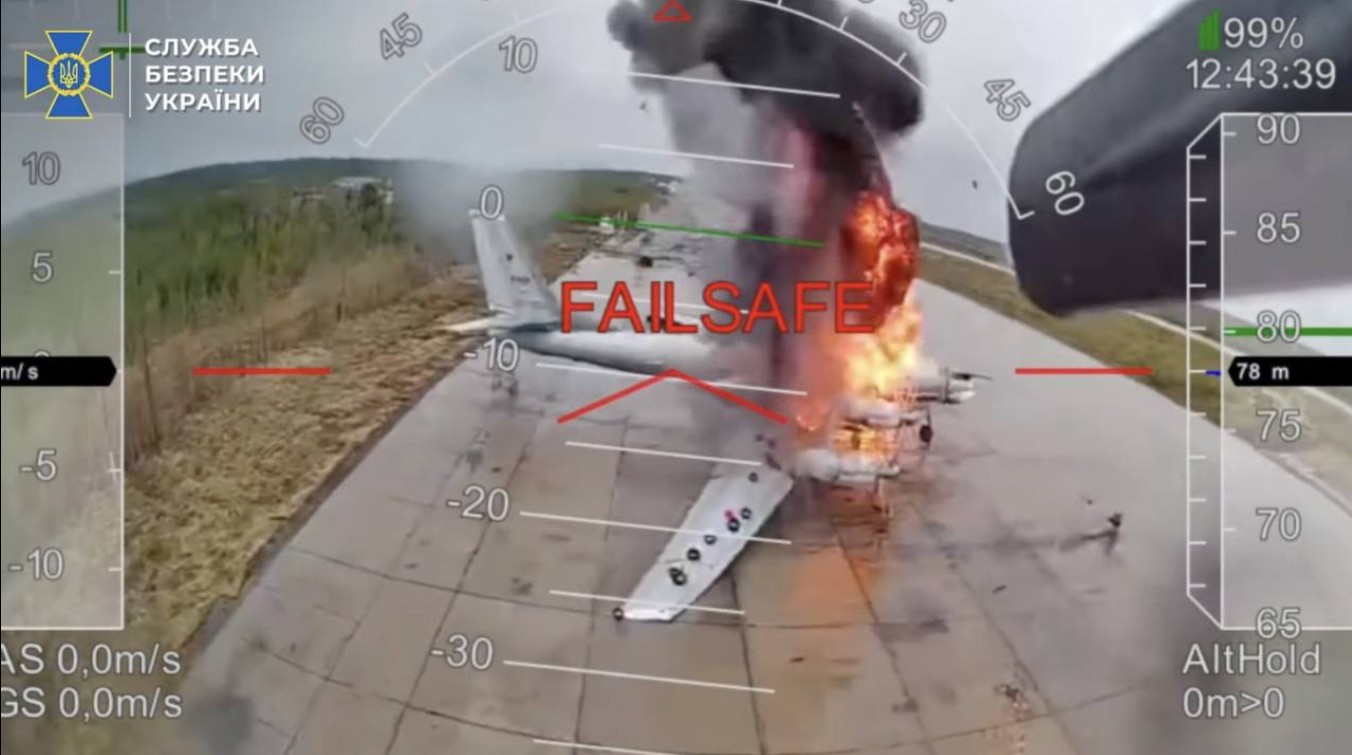
On June 1, 2025, Ukraine attacked Russia’s strategic bombers, deep inside its territory, by using FPV drones launched from within Russia.
Chinese Foreign Ministry’s magazine estimated Russian losses at 11 strategic bombers and identified the raid’s novelty in being launched from inside Russia, at close range.
A photo of a FPV-drone-struck military plane Tu-95 at Russia’s Olenya airbase during the attack. Credits AFU.
The PLA’s training system answered within four and a half months.
In an October 2025 exercise, a brigade defended against a drone attack team of more than 20 operators, using detection gear that locates drones by their radio emissions and matches them against a catalog of more than 800 commercial models, paving a path for Chinese response to a Spider’s Web–style drone infiltration.
Chinese analysts also concluded that a successful drone interception strategy must account for the economics of interception.
According to a Global Times analysis of Ukraine’s interceptor drones, “the cost of procuring one man-portable air-defense missile buys several hundred air-defense FPV drones.”
Therefore, Chinese analysts concluded that the best weapon against a drone is another drone.
China also concluded that if it is attacked, it will be attacked by drones en masse, and therefore it must defend itself against thousands of drones.
In this respect, China has also noted Russia’s defense strategy.
A 2026 review from a Chinese state aerospace design institute recorded that Russia “has built in combat a counter-drone equipment system of electronic jamming first, firepower interception as the backstop, and self-defense interception as the supplement.”
Beijing also noted that Russia was forced to pull its strategic bombers back about 6,000 kilometers to the Chukotka Peninsula and deploy retractable protective nets.
The study noted how quickly these studies are being adopted into hardware.
At the Zhuhai air show in November 2024, the counter-drone systems of the state electronics, ordnance, and aerospace groups dominated Chinese coverage, led by CETC’s Tianqiong, NORINCO’s Hurricane 3000 microwave weapon, and CASIC’s LW-60 laser.
The September 2025 military parade put counter-drone missile-gun systems, high-energy lasers, and high-power microwave weapons on state display.
In late July 2026, CCTV aired footage of an army drone crew putting a missile into a fast boat maneuvering at sea, and in August the army flew armed KVD002 drones against sea drone targets in exercises.
China has also learned that in a war of attrition, production wins.
For Chinese analysts, a drone war is won by the side that can build more, and no country builds more drones than China. So here, China only needs to build on its advantages.
China also recognizes Starlink’s importance in the Ukraine War and has concluded that low-Earth-orbit (LEO) satellite constellations will play a decisive role in any future war. China is therefore working to build its own LEO satellite constellations.
The CSIS study concludes that China is learning from and implementing lessons from the Ukraine War faster than any other country.
As Russia and Ukraine fight a ‘war of attrition,’ China could be the biggest winner.
Sumit Ahlawat has over a decade of experience in news media. He has worked with Press Trust of India, Times Now, Zee News, Economic Times, and Microsoft News. He holds a Master’s Degree in International Media and Modern History from the University of Sheffield, UK.
He can be reached at ahlawat.sumit85 (at) gmail.com
After claiming it intercepted foreign aircraft on two separate occasions last year, China has made another major claim: a “foreign warship” lost power while pursuing a People’s Liberation Army Navy (PLA-N) Type 055 destroyer, seemingly an indirect reference to the USS Benfold.
Zhang Jun, a captain on the PLA Navy’s Type 055 “Zunyi” destroyer, said a foreign warship lost power while his warship, engaged in a routine training exercise at the time, the Chinese state-owned publication Global Times claimed.
Speaking on China Central Television (CCTV), the officer said the destroyer had multiple encounters with foreign warships and aircraft during the exercise.
“During that mission, we were conducting routine training exercises when a foreign warship began tracking our ship. As we sailed at high speed, the foreign vessel had to match our speed. While we were in a standoff, its power and electricity all suddenly went out, its radar stopped emitting, and its navigation lights went dark,” Zhang said. “This lasted for nearly half an hour. But our equipment and our crew had no problems at all,” he added.
When asked whether the engagement made him nervous, the Chinese officer said, “Why should I be nervous? I was definitely not nervous. As long as you are within range of my missiles, I can definitely destroy you.”
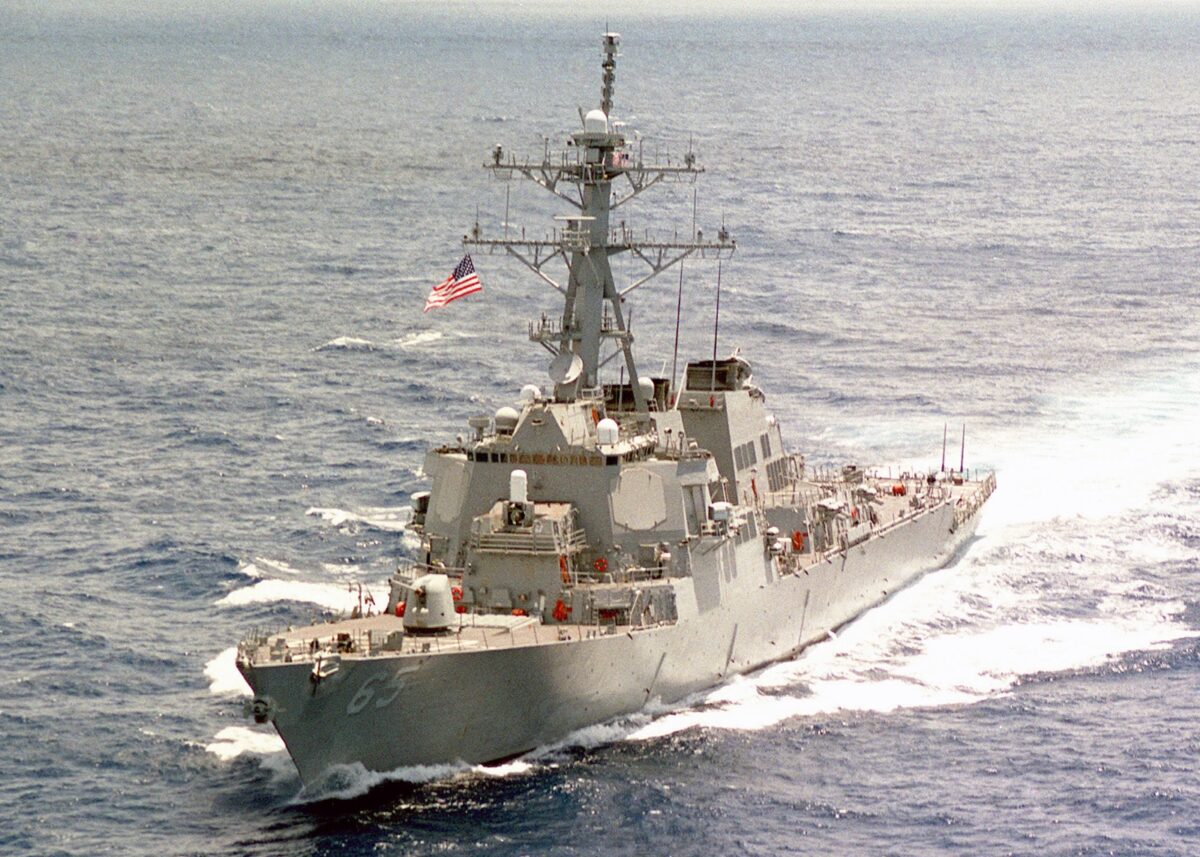
The officer stopped short of providing more details, including the time and place of the encounter and the name of the foreign warship. However, the claims appear aimed at the US Navy warship USS Benfold, which apparently lost power and was stranded in the South China Sea in July 2026, as previously reported by the EurAsian Times.
“On July 24, 2026, while conducting routine operations in the Indo-Pacific, Arleigh Burke-class guided-missile destroyer USS Benfold (DDG 65) reported an engineering casualty involving its generators, causing a loss of power,” Navy Cmdr. Matthew Comer, spokesperson for the 7th Fleet, said in a statement to USNI News in August 2026.
“There were no injuries to the crew, who demonstrated resilience, grit, professionalism and unwavering steadiness in their response,” he added.
The incident reportedly occurred while the USS Benfold was engaged in routine operations in the Indo-Pacific as part of the USS George Washington carrier strike group (CSG).
After the power loss, the guided-missile destroyer reportedly drifted for four days and was supplied by other ships in the South China Sea, which China claims as its sovereign territory and where frequent standoffs occur between Beijing and other forces.
The Seventh Fleet spokesperson did not mention a high-speed pursuit of a Chinese vessel or any engagement between the US carrier strike group and PLA Navy warships, although these encounters are not uncommon in the region.
USS Benfold-Wikipedia
When asked whether China’s claimed scenario is plausible, Indian Navy veteran and commentator Rear Admiral Girish Kumar Garg (retd) told the EurAsian Times, “For an Arleigh Burke-class ship, high-speed propulsion has nothing to do with total power loss. Complete power failure can happen if all onboard power generators fail or the power distribution system malfunctions. Although rare, it is not impossible.”
Further, when probed about potential reasons for the complete power loss, Rear Admiral Garg said, “Can be many reasons- fuel contamination can be a major cause. Power overload due to too many systems operating and loaded on the running generators can also cause them to trip. However, generally, if all onboard power generators are running and connected, then they cater for full ship’s electrical load plus some extra load margin.”
The USS Benfold power loss incident was not the first of its kind. Earlier, the USS Higgins had an “engineering casualty” in its electrical system in May 2026, which caused it to lose power and propulsion for many hours in the Indo-Pacific area. No chase of another vessel had occurred at the time.
Nonetheless, state media and Chinese experts used the opportunity and their purported claims to highlight the enviable capabilities of the PLAN’s Type 055 warships.
Chinese military expert Shi Hong told the Global Times that the Type 055 is considered the world’s best large destroyer in terms of comprehensive capabilities. Meanwhile, Xu Yi, another crew member on the ship that was involved in the purported encounter, said, “We have a powerful offensive and defensive system. In the future, we will definitely conduct operations externally in formation. In fact, we have already begun integrating multiple formations and exploring what makes for the best combination.”
Some pro-PLA observers on social media widely amplified the Chinese claims, aligning with similar previous instances.
However, Beijing deliberately makes specific claims while avoiding direct naming of the foreign assets to avoid a diplomatic response and to eliminate the possibility of a counter-narrative from official sources and a potential bilateral tussle.
Chinese Military Keeps Confronting Foreign Assets
In the past few years, China has claimed to have intercepted and expelled unidentified foreign aircraft from the same region on multiple occasions.
Last year, Chinese state media, CCTV, released a video on June 29 showing two J-16 fighter jets—considered the cornerstone of the PLA Air Force’s interception efforts—being dispatched to warn and drive out a “foreign aircraft” that allegedly breached China’s territorial sea boundary.
“The foreign aircraft flew over at a low altitude, not very disciplined, almost at a vertical 90 degrees, breaching our territorial sea line,” air force aviation brigade member Zhang Zhanfang stated on the broadcast at the time.
The Chinese media did not disclose the exact date or location of the incident, making it challenging to identify the foreign aircraft in question.
Later that year, Global Times reported on a documentary shown on CCTV in October 2025, in which a PLA Air Force (PLAAF) pilot from the special mission aircraft formation claimed he could simultaneously lock two foreign stealth fighter jets while flying the J-16 fighter jet and force both jets to withdraw.
“They headed straight toward our two aircraft. Their intention was very clear—it was a provocation. With our backs to the territorial sea line, we had to intercept them,” Li Chao, a pilot from the People’s Liberation Army’s Western Theatre Command, said while recounting the incident that allegedly took place during a coastal training exercise in 2024.
Although the Chinese did not disclose which foreign stealth aircraft it was referring to, only two aircraft fit the description: the F-22 Raptor and the F-35 Lightning II of the US Air Force (USAF).
Both aircraft are frequently deployed in the Indo-Pacific for training, war exercises, and other operational missions, as the EurAsian Times noted in a detailed report published at the time.
Washington did not acknowledge the claim, but the incident drew a wide debate over whether a 4.5th-generation jet could intercept US fifth-generation stealth fighters.
Separately, US and Chinese ships have had sporadic encounters in international waters, as the US Navy conducts regular FONOPs (Freedom of Navigation Operations) in the region.
Earlier this year, in January 2026, reports noted that a Chinese warship, CNS Taiyuan, encountered a foreign warship during “a long-range training exercise” in undisclosed waters. The report said the foreign ship meant to provoke the Chinese crew, but the crew instead followed orders and drove the vessel away.
Similarly, in January 2025, reports noted that China had claimed that its navy “drove away” a “foreign warship that attempted to spy on its Shandong aircraft carrier during a long-distance training mission. At the time, a Chinese sailor attached to the Type 055 destroyer CNS Yan’an crew said a foreign warship attempted to engage in “illegal reconnaissance” and infiltrate a formation led by the carrier during a routine training mission.
In June 2023, a US destroyer, USS Chung-Hoon, had a close encounter with a Chinese warship in the Taiwan Strait. The US Navy alleged that the Chinese ship executed an “unsafe” maneuver, crossed the US ship’s path, and forced it to slow down to avoid a collision.
Another significant incident occurred in 2018 when a Chinese warship came dangerously close to the USS Decatur in the South China Sea. The US Navy described the action as “unsafe and unprofessional.
Despite a thaw in ties between Chinese and US leaders, the fight over Indo-Pacific dominance continues.
Contact the author at sakshi.tiwari13 (at) outlook.com

 Login