Antibody patterns in the blood may help doctors identify people at risk so they can be treated earlier, research shows
Patterns of antibodies in people’s blood could predict the onset of inflammatory bowel disease (IBD) a decade before diagnosis, according to research that raises hopes for catching the condition early.
Crohn’s disease and ulcerative colitis, the two main forms of IBD, are typically treated only after symptoms appear, when the gut has already been damaged. But scientists found that the immune system sends warning signals up to a decade before diagnosis, paving the way for potentially earlier detection and even prevention.
A Pew Research Center survey found 71% of middle-income earners have cut back on spending on extras, such as eating out.
andresr/Getty Images
A Pew Research survey found only 47% of middle-income earners could save money in the past year.
Lower-income earners are also having a hard time saving and affording necessities.
Inflation moving in the wrong direction doesn't help the affordability situation.
America's middle earners are feeling the squeeze.
A new analysis from the Pew Research Center examines how Americans' finances are faring, an especially salient topic in a midterm season where affordability is very much on the ballot.
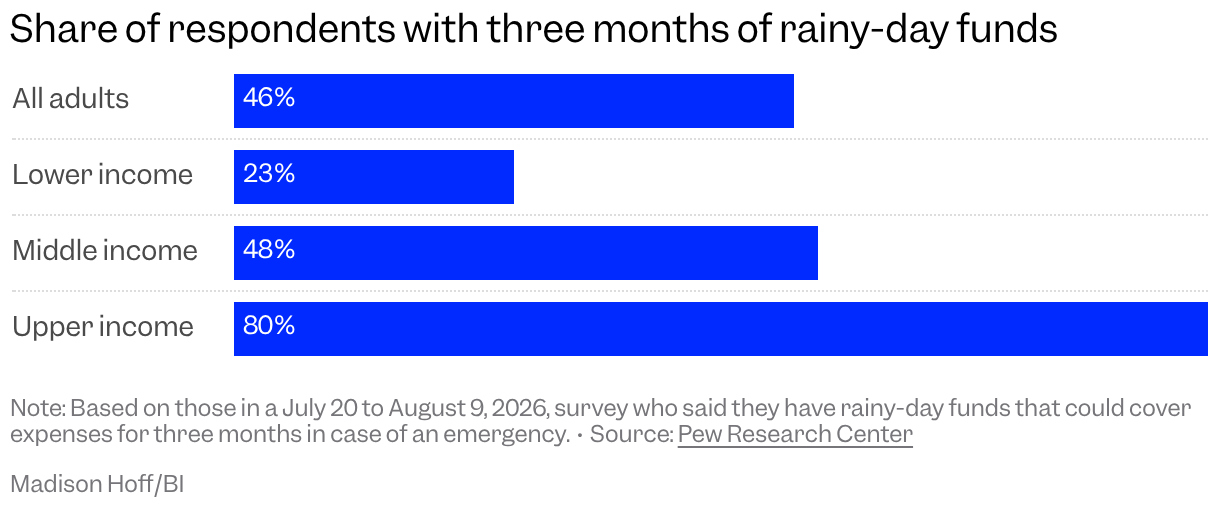
America's middle earners — those who make between $50,700 and $152,000 after adjusting for their family sizes and the cost of living in their areas — increasingly don't have enough saved for an emergency. Just over half of middle-income Americans say they don't have rainy-day funds that would cover expenses for three months in the event of an emergency.
Meanwhile, 47% of middle-income earners — and a measly 24% of lower-income earners — reported being able to save money in the past year. Across all income tiers, the majority of respondents said they had cut back spending on extras like eating out or streaming services.
Those dwindling emergency funds and sacrifices might be due to rising costs, which often take a particularly large bite out of lower-earners' wallets.
It could be getting worse; inflation is moving in the wrong direction. In September, the consumer price index inflation rate rose from 3.4% to 3.7%, just above the 3.6% forecast. Plus, inflation-adjusted wages have been falling for six months.
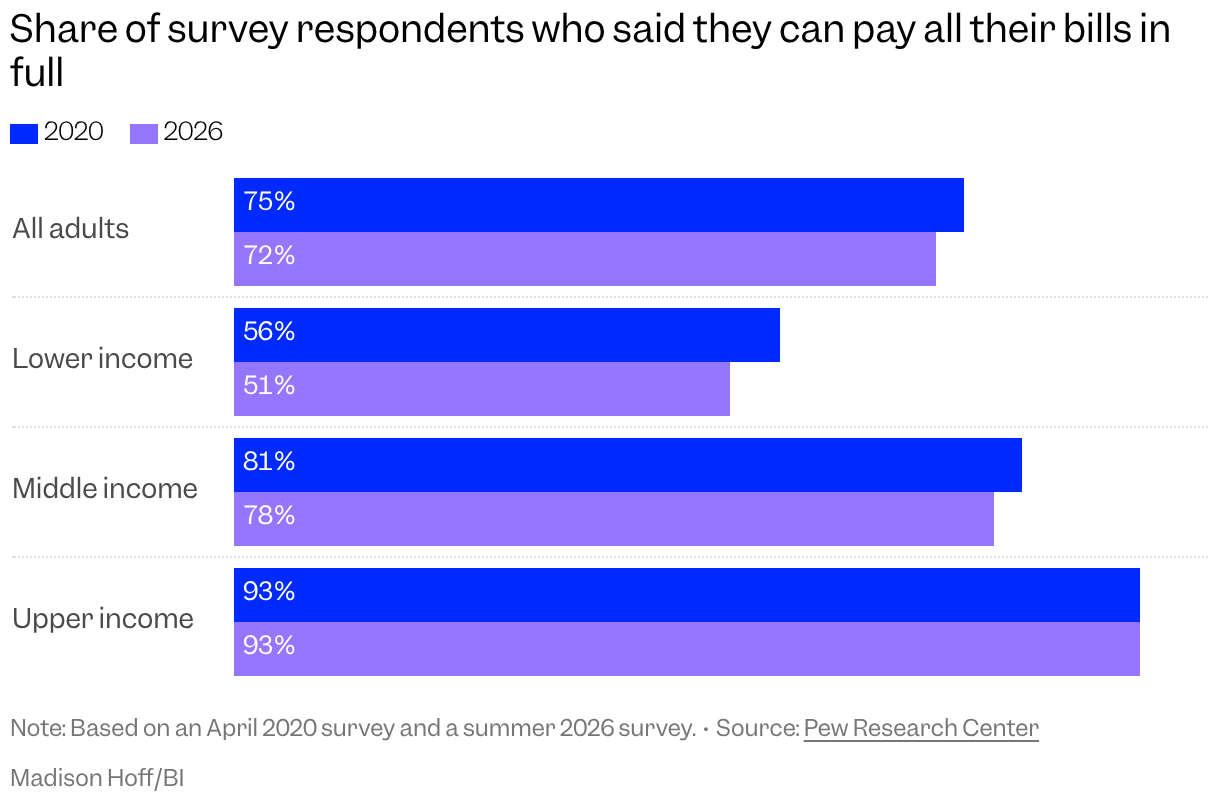
Today's economy is still more difficult for those at the bottom of the earnings ladder. Fifty-one percent of lower-income respondents said they can pay all of their bills in full in the 2026 survey, down from 56% in 2020. For middle-income respondents, the share dropped from 81% in 2020 to 78% in 2026, while the share of upper-income respondents held steady at 93%.
Pew also found 71% of lower-income US adults struggled with at least one kind of basic necessity, like affording medical care or paying their rent or mortgage, in the past year, compared with 39% of middle-income and 13% of upper-income Americans.
But the latest survey marks another sign that middle-income earners are increasingly aligning with their lower-earning peers, a dour sign for the health of the middle class. A separate report from the Urban Institute found that, even as lower-income renters were the most likely to report issues paying the rent, middle-income renters were increasingly likely to report struggling to pay.
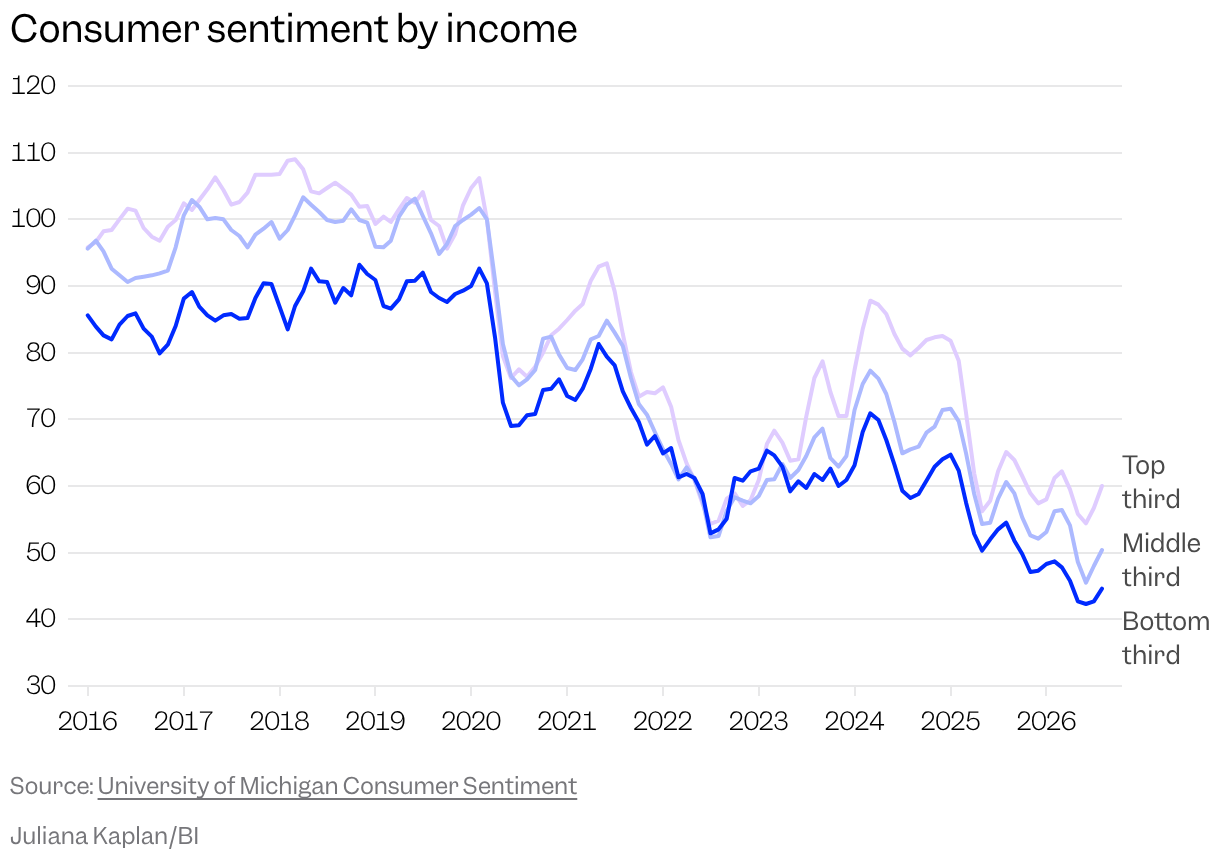
Similarly, middle-income earners' consumer sentiment has switched from mirroring their higher-earning peers to more closely aligning with lower earners — another sign that the middle class is falling on harder economic times.
"Working people are living on the edge, working longer and harder than ever for less money," said AFL-CIO President Liz Shuler. "They're angry every time they fill the tank. They're terrified of what their heating bills will look like this winter."
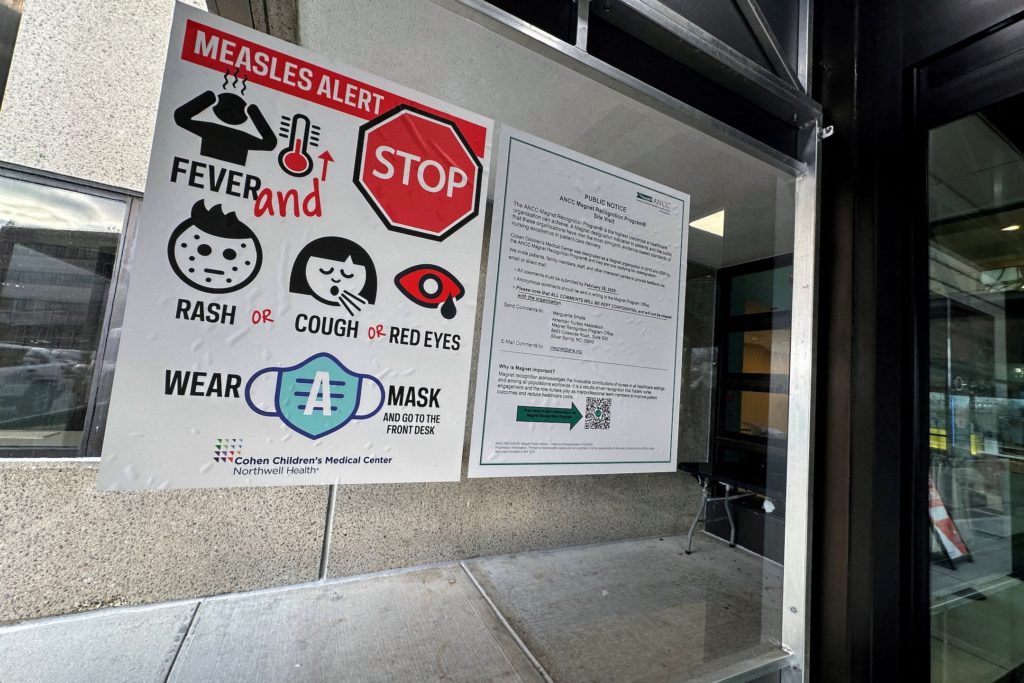
The CDC has confirmed more than 4,000 cases of measles this year as the country grapples with the largest outbreak of the highly infectious virus in 35 years. Nearly a fifth of cases comprise children under the age of five, and 95% are among unvaccinated people. Amna Nawaz spoke with Dr. Evan Shirey, a pediatric infectious disease doctor based in Pennsylvania.
COGAT claims Palestinian merchants halted coordination on shipment of goods due to Hamas intimidation, but Gaza truckers union says Israel made the decision
Calling for single education system and funding transparency, Prof. Dan Ben-David reveals benefits for Haredim outstripped funds for hospitals and higher education combined in 2024
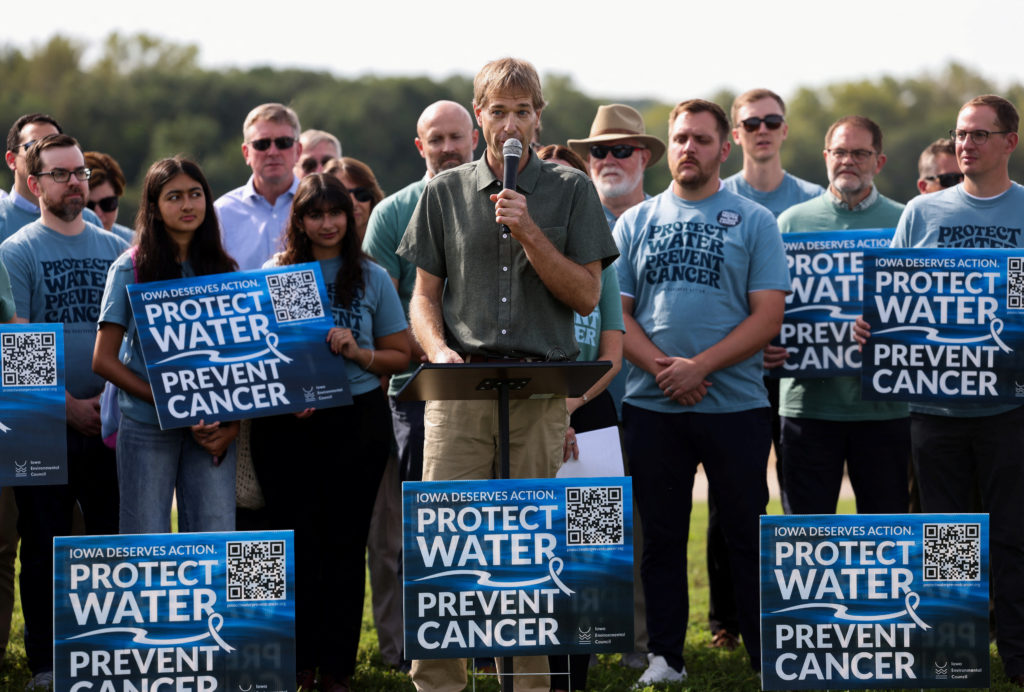
Chemical fertilizers and animal waste contain nitrates and phosphorus that can get washed with rain or snowmelt into the state's rivers. That affects Iowa's more liberal urban centers which rely on rivers and lakes for drinking water.
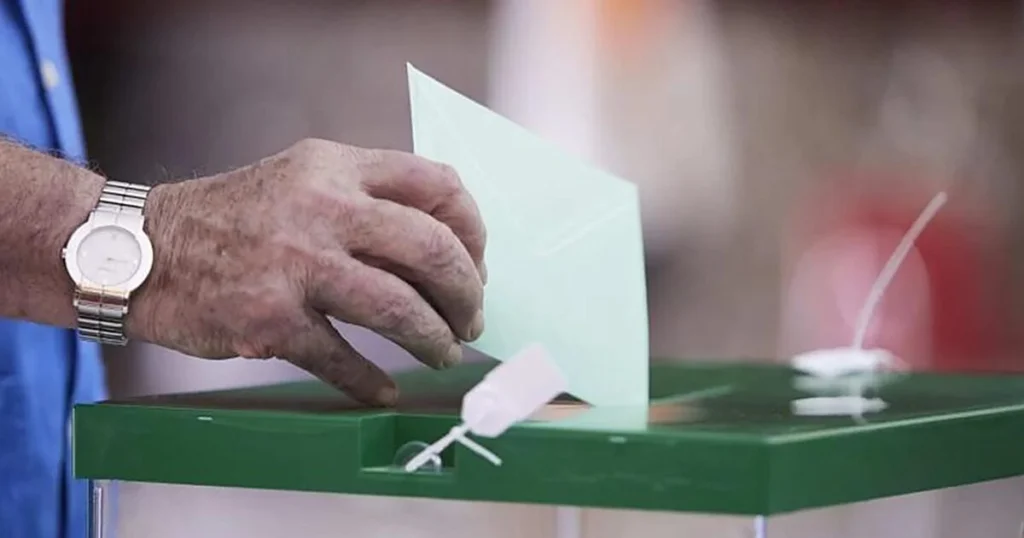
The Spanish Socialist Workers’ Party (PSOE) leads the projected vote share with 34%, while the People’s Party (PP) stands at 22.2%, according to the October barometer from the Center for Sociological Research (CIS), conducted between October 1 and 6 with 5,025 interviews.
The poll, carried out following the eviction of Maricarmen Abascal and amidst the ongoing debate over housing in Spain, gives the Socialists a projected 34% of the vote—three points higher than in September. The People’s Party dropped 3.3 points to 22.2%, widening the gap between the two parties to 11.8 points as the pre-campaign period for the November 29 general election begins.
Meanwhile, the ultra-conservative party Vox has solidified its position as the third-largest political force with 17.1% support, up half a point from the previous barometer. For its part, Frente Amplio reaches 6.1% and Podemos obtains 3.1% of the estimated vote.
The survey was published following the eviction of Maricarmen Abascal on September 23 and the elderly woman’s death on October 7. The case sparked protests and encampments advocating for the right to housing in several Spanish cities.
Housing remains the primary concern for Spaniards, cited by 55.7% of respondents. It is followed by immigration (20.9%) and the economic crisis (20.3%).
📊 El 82,3% de los españoles coincide en que hay que priorizar “el derecho a la vivienda como un derecho constitucional”
— Centro de Investigaciones Sociológicas (@CIS_Institucion) October 14, 2026
The text reads, “82.3% of Spaniards agree that priority must be given to “the right to housing as a constitutional right.” This and other data are included in the October barometer”
Additionally, 82.3% of those surveyed believe that the right to housing should be prioritized as a constitutional right. An earlier CIS barometer, published on October 8, already showed that 91% of respondents called for more public housing and 76% supported state intervention in the sector.
88.9% of those surveyed stated they had heard about Maricarmen’s case. Among those aware of the eviction, 57.1% maintained that the protection of vulnerable people is the most important aspect.
The government introduced two housing decree-laws, but they were rejected in Congress by conservative parties. That parliamentary defeat precipitated the call for early elections announced by Prime Minister Pedro Sánchez on October 5.
Mobilizations regarding access to housing will continue with a general housing strike scheduled for November 11, amidst a climate where the housing crisis sits at the center of the political and electoral agenda.
The barometer also reflects heightened concern regarding the war in the Middle East: 72.6% of respondents described themselves as “very” or “quite” concerned—an increase of 2.5 points compared to the previous survey. The Russian invasion of Ukraine is a source of concern for 68.4%, while 73.6% are worried about climate change.
#Spain | From one eviction to a nationwide political reckoning. Mari Carmen's death comes as Spain heads toward snap elections, with housing rights and rising rents at the center of a growing national debate.#HousingCrisis#teleSUREnglishpic.twitter.com/OhiGM0VBMU
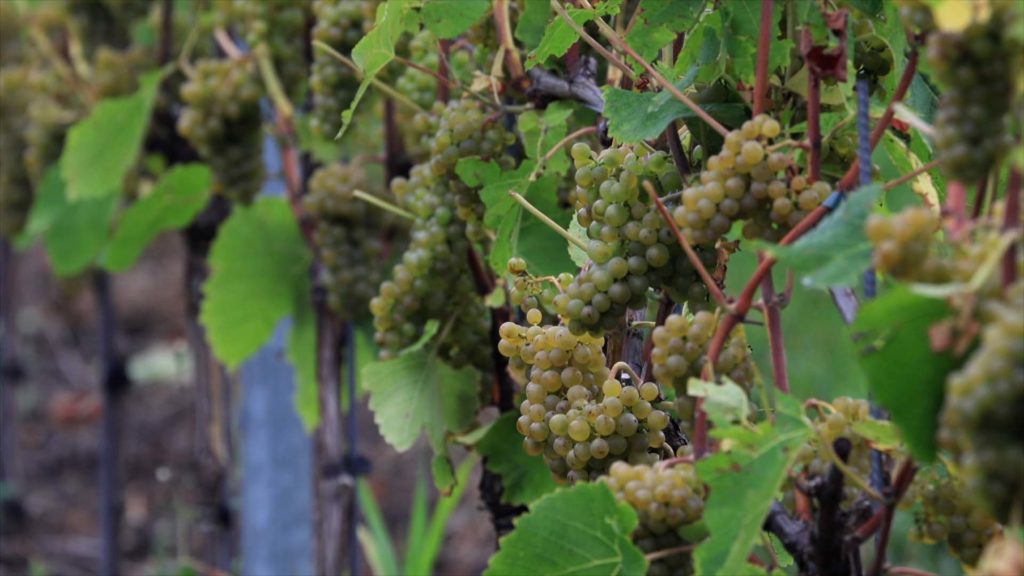
Record high temperatures this year forced European wine producers to harvest grapes much earlier than usual. French wineries fear it will lead to the worst season in 30 years. But Nordic newcomers to the world of wine are toasting what they believe will be a vintage harvest, thanks, in no small part, to climate change. Special correspondent Malcolm Brabant reports from Sweden.
For many Arizona voters, the top concern heading into the midterms isn't inflation, immigration or education. It's water. With the state gripped by prolonged drought, candidates are facing growing questions about how to secure its water future. Stephanie Sy reports for our series, Tipping Point.
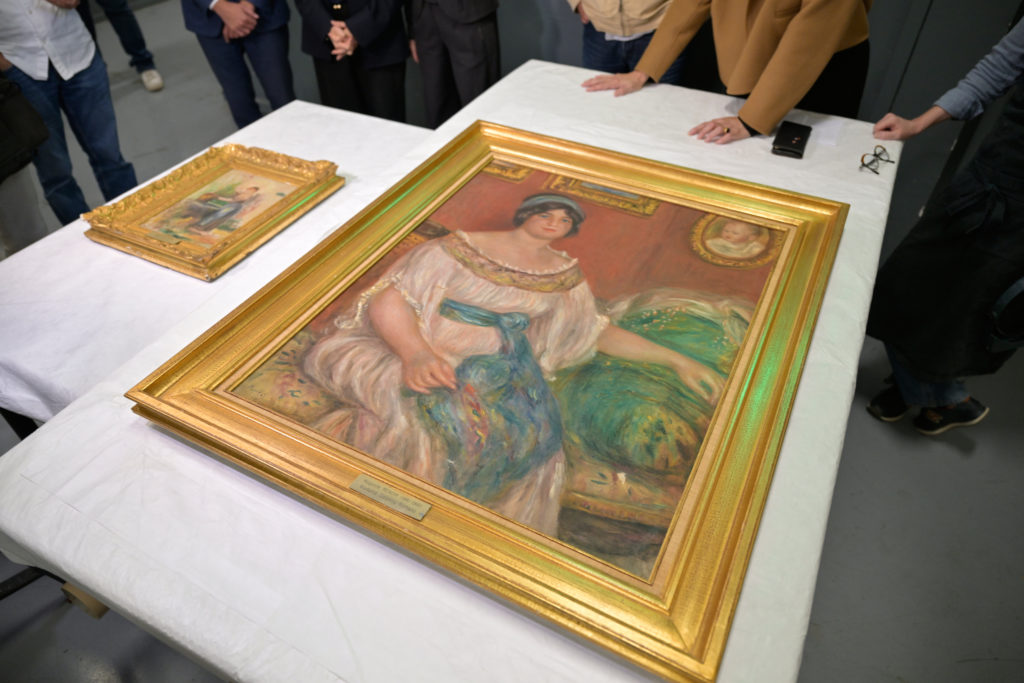
Four men were given preliminary charges in the investigation into the Sept. 8 theft from the small Renoir Museum in the town of Cagnes-sur-Mer on the French Riviera.
At first she told no one. Not her twin sister. Not her mother. Not even her father the scientist.
Six-year-old Jenna Smith knew better than to pee when she was in the bath. But on that night in 1992, in her family’s home in Iowa City, the water felt so comfortable against her skin that she didn’t want to get out of the tub. It seemed like such a small thing. Who would know?
Seconds later the water around her waist turned reddish pink. Blood? It had to be. Jenna wondered if she’d hurt herself. “I was six years old sitting in a bathtub, watching a few seconds of my world stop making sense,” she would recall years later.
The Atavist, our sister publication, publishes one deeply reported, elegantly designed story each month. Support The Atavist by becoming a member.
She kept the blood a secret because she didn’t want to admit that she’d peed in the bath. But when it was still in her urine the next time she used the toilet, she went to her mother. Concerned, her mom called her dad, Richard Smith, and he took Jenna to the emergency room.
Richard was an ear, nose, and throat doctor in the University of Iowa’s school of medicine, a researcher who would become one of the world’s authorities on the genetics of hearing loss. His wife, Lynne Lanning, had worked as both a lawyer and a nurse. They had four young children: twins Jenna and Jessica, who were identical, and two boys, Luke and Rion.
At the ER, doctors ran tests on Jenna, but they couldn’t identify the cause of the blood. In the days that followed the bleeding intensified. At her parents’ urging, Jenna collected samples of her urine in Dixie cups for further testing. The doctors remained stumped, however, and after a while Jenna found the whole thing more annoying than worrisome.
The uncertainty was much harder on her parents. It wasn’t that doctors were misdiagnosing their daughter; they were unable to diagnose her at all. “It was horrible,” Richard said. “Imagine seeing your child and you know something is wrong, and you know the doctors treating her have no clue what to do.” Richard called a pediatric nephrologist he knew in Houston, where the family had lived previously. The nephrologist listed several conditions that could be causing the bleeding and said that, to determine which was to blame, Jenna’s parents should take her to Cincinnati Children’s Hospital Medical Center.
In July 1992, Richard, Lynne, and Jenna drove nearly 500 miles to get answers. Doctors in Cincinnati diagnosed Jenna with dense deposit disease, a condition in which proteins clog and damage the kidneys, leading to renal failure in many patients. There was no cure.
The hospital couldn’t tell the family much else—no one could. The disease was exceedingly rare, afflicting between one and three people in a million. Back home, Richard and Lynne spent hours inside the University of Iowa’s quiet medical library, poring over papers in search of information about their daughter’s illness. They could find no evidence that anyone was actively studying the condition.
Although many Americans—roughly one in ten—suffer from a rare disease, the experience can be lonely. Friends and relatives don’t understand the unique miseries such illnesses impose on daily life. Few doctors are likely to have encountered them before. And because there aren’t many patients, drug companies usually don’t invest in research for treatments.
Richard and Lynne feared that their daughter’s life might be tragically brief. Sometimes the mention of weddings would sink Lynne into melancholy; she couldn’t bring herself to watch the movie Father of the Bride. Richard agonized over what to do. His training compelled him to seek answers, but he wanted to be Jenna’s father, not the scientist charged with curing her. He kept his research focused on hearing loss. At first, anyway.
Stories of scientific discovery almost always celebrate individual researchers, consigning the contributions of loved ones, communities, and colleagues to footnotes. There are exceptions―the teams that built the first atomic bomb and deciphered the human genome, for instance. Science also has its share of famous families. Marie and Pierre Curie, along with their daughter Irène and her husband, Frédéric, won five Nobel Prizes between them for discoveries related to radioactivity. For the most part, however, the history of scientific progress has been mythologized as a succession of brilliant, driven individuals—often men—who chose the lab over the dinner table and competition over collaboration.
Some scientists have embraced the role of maverick. “You have to worry about your own work and ignore what everyone else is doing,” the physicist and Nobel laureate Richard Feynman is said to have told a colleague. The decades-long pursuit of a treatment for Jenna’s disease followed a very different path. There was no single hero, no lone scientist seeking glory. The biomedical quest required the efforts of a family and their neighbors in Iowa City, and the work of scientists around the globe. Together they changed an obscure area of medicine.
Richard and Lynne met in 1977, when both were working at Memorial Hermann-Texas Medical Center in Houston—she as a nurse, he as a medical intern. He noticed a run in her nylons and was smitten by her smile. She liked his down-to-earth manner and intelligence, his humor and kindness. They were working in the hospital’s burn unit when he asked her out.
The couple married in 1981, and except for two years in England, they remained in Houston until 1990. That December they moved to Iowa City, where Richard had a job waiting for him leading the pediatric otolaryngology division and running a research lab at the University of Iowa’s medical school. They had been there only a year when Jenna got sick.
Richard and Lynne learned that their daughter’s disease was caused by a malfunction in her complement system. Believed to have evolved long before other parts of our immune infrastructure, the complement system sends proteins to battle foreign invaders. Unlike antibodies, these proteins are not tailored to fight a specific virus or bacteria, but they kick into gear faster when a threat is detected. In people with Jenna’s condition, the complement system is like a runaway train: Proteins become overstimulated and then accumulate in the glomeruli, tiny filters the kidneys use to clear waste from blood.
Blood in the urine is one symptom of the disease. Others include swelling, high blood pressure, inflammation, and fatigue. When Jenna was in the first grade, her body struggled to make growth hormones. Her production of red blood cells slowed, and she grew increasingly tired. During rehearsals for The Nutcracker ballet around Christmas 1993, she’d finish her part and then lie down backstage, completely spent.
Doctors put her on a heavy dose of the steroid prednisone and on blood-pressure medication. The prednisone caused her body to retain water. She woke up each morning with her eyes swollen shut, then waited in bed until the swelling receded. She couldn’t fit into her clothes or shoes. She wore flip-flops and roomy jumpers Lynne sewed for her.
As twins, Jenna and Jessica had always been close. They played together, made up songs and dance moves, explored the woods near their home, and enjoyed pranking friends and family members. “She made a lot of things feel not so heavy,” Jenna said of her sister. Still, she sometimes thought that Jessica “got off scot-free” by not having dense deposit disease. Neither girl liked feeling different from the other. (Years later, Jessica would be diagnosed with type-1 diabetes; Jenna would not.)
The changes to Jenna’s appearance meant the girls were no longer identical. Once, according to Lynne, when a boy at school said that Jenna couldn’t be a twin anymore because of how she looked, Jessica slugged him. Lynne recalled sitting in the principal’s office, politely listening to a lecture—this is not the way we resolve things!—but understanding why Jessica had lashed out. Nothing was so frightening to her daughters as the idea that they’d stop being twins.
About half of those afflicted with Jenna’s disease progressed to kidney failure within a decade of diagnosis; it took her less than a year. She made it through the last day of first grade. Then, as other children departed for summer camp, she went to a clinic. While her classmates practiced archery and did arts and crafts, she learned about the catheter doctors would surgically insert in her body. Through that tube, a machine would pump fluid into her abdomen, where her peritoneum—her abdominal lining—would take over the filtering function kidneys usually perform.
She would take the peritoneal dialysis machine home with her and use it every day for the foreseeable future, possibly for the rest of her life. When a nurse tried to take Lynne aside to show her how to operate it, Jenna stopped her. “I’m the patient,” the seven-year-old insisted. “I’m learning how to run the machine.”
In such moments, Lynne was surprised at the strength she drew from her daughter. She needed it. Her grief could leave her feeling drained. One day she found herself crying into the soil as she gardened.
But Lynne and Richard were determined that sadness would not define their lives. For a long time, they didn’t have a TV in their house—they wanted the family to talk when they were together, and for the children to build forts, learn to sew, be creative. They had painting nights, creating portraits of one another. There were cooking contests, too. Richard and Lynne made sure to spend one-on-one time with each kid. Richard traveled with Luke to Japan, with Rion to the Grand Canyon, with Jessica to Italy, and with Jenna to England. Lynne took trips with the children to Brazil, England, and Guatemala. There were themed birthday celebrations: a James Bond party for Richard, where everyone was armed with Nerf guns, and one for Lynne where Richard dressed as the artist Bob Ross and the guests painted “happy little clouds.” Richard coached the kids’ hockey and soccer teams. He built harps and lyres from scratch, and Lynne played them.
Every day, Richard left for work at 5 a.m., while the children were still in bed. He returned around six at night. The family joked that they could hear him coming from half a mile away in his rust-bucket Isuzu Trooper with the bad muffler and a hole in the passenger footwell. When he wasn’t seeing patients or in surgery, Richard was in the lab. On Saturdays, Luke would go there with him. Sometimes the other kids joined. They liked to refill the communal candy jars and visit the mice used in experiments.
It seemed a wonder to the lab’s staff that Richard squeezed so much into a day. When they began using email to communicate, they received messages from him time-stamped three or four in the morning. “Why don’t you sleep sometime?” a colleague replied once. Indeed, Richard slept little. At night his mind kept running through the mysteries of his daughter’s disease.
Richard had read that it took 10,000 hours—the equivalent of working full-time for about five years—to achieve expertise in a subject. He believed it. In 1995, he began flying to conferences about kidney disease, where he talked to the few doctors who cared for patients like Jenna. Medicine was getting no closer to finding a treatment.
That year the owner of a ranch where Richard and Lynne’s children took riding lessons offered to host a fundraiser for kidney disease research. The family organized Dressage in the Heartland, which featured riding events, fiddle music, and bowls of chili. After raising upwards of $10,000 for the National Kidney Foundation, they held the event again the following year. There are hundreds of kidney ailments, however, and the foundation didn’t allow the money the family raised to be earmarked for the research of dense deposit disease. (The foundation said it now allows monetary gifts to be dedicated to specific conditions.)
Richard and Lynne ran into more disappointment during a visit to the University of Minnesota in early 1997. A specialist they consulted was blunt. “Nobody is looking at this disease,” he told them. “And barring something unforeseen, nothing will be done in the next twenty years.”
It was a four-and-a-half-hour drive back to Iowa City. In the car, Lynne brought up what the doctor had said. Maybe they would have to be that unforeseen something.
When Eric Leas, a public-health scientist, discovered packages of “magic mushroom” gummies for sale in a smoke shop, he wondered: Were these candies even legal? Had they been properly tested, and did anyone actually know what constituted a safe dose? This Aeon piece follows Leas down a rabbit hole as he investigates whether the Amanita muscaria products currently on store shelves are as safe as their candy-like packaging suggests.
I found a product with a very high reported amount of muscimol. It was a gummy product, one in a benign-looking package that did not have childproofing or clear warnings. I began doing the calculation no one wants to do. If a young child ate the entire package, mistaking it for candy, could they die? I took the reported amount of muscimol, the toxicology estimates (the LD50), a conversion used to translate dosing between species, and the average weight of a small child. The result looked bad. Bad enough that I did not quite trust myself. So, I called a friend, Matthieu Rouffet, a medicinal chemist and the dean of science at a local college, who does toxicology calculations more often than I do. I wanted him to tell me I had made an error. Instead, he was alarmed too.
On September 19, Dou Xiankang, who heads the National Natural Science Foundation of China, described a grant that most young scientists anywhere would envy. Researchers under 35 will get 15 years of support. The money doubles after five years and doubles again after ten, and there are no short-term performance reviews. The only test, Dou […]
The third edition of EU TalentOn closed with the announcement of its winning teams on 11 September in Brest, France. Over five days, 100 early-career researchers aged 21 to 35 of 43 different nationalities, worked in teams to develop concrete responses to some of Europe's most pressing challenges, based on the five EU Missions under Horizon Europe.
The participants competed for a share of an €80,000 prize pool. First and second prizes were awarded in each of the five categories, alongside an Alumni Prize, a Special Jury Prize and the overall Grand Jury Prize.
The teams winning the 1st prize were:
Adaptation to climate change: Alejandro Roman, Marie Johanna Univer, Edoardo Kimani Bellotto and Florin Miron won with IMPRREST - from big data to decisions, a tool thatgives responders one verified assessment of climate emergencies and evidence for adaptation.
Cancer: Xhilda Dhamo, Oliwia Kosecka and Jafar Gura won with CogniVoice - a patient centered speech monitoring platform for post-treatment surveillance of Brain Cancer.
Restore our Ocean and Waters Mission: Gabriel Tejero,Siddhanth Shishodia, Dominika Czekanowska and Gjylije Hoti won with Mission PFASSible – a solution that helps with pollution removal into verified risk reduction: sensing, capturing, concentrating, and proving water safety.
Climate-neutral and smart cities: Lucia Petronio, Samar Momin, Samira Huber and Imen Kaabachi won with Block2City - turning building data into renovation choices, funding guidance and expert handoff, while helping cities map local demand.
Soil: Natasha Waris, Ilaria Bertolini, Felipe Quiroz, and Victoria Boycheva, won with RhizoSentinel – a solution that turns plants into living soil biosensors that reveal hidden soil biological threats before they cause crop losses, enabling earlier intervention and smarter soil management.
The Grand Jury Prize of €12,000 for the best overall project went to RhizoSentinel, while the Special Jury Prize of €3,000 was awarded to Marion Le Meur, Narjes Yazdi, Suresh Ajmeera, and Alberto Galindo Caballero with their project Colospy - a rapid, saliva-based molecular test detecting colorectal-cancer-miRNA signature, designed as a stool-free screening option.
The projects were assessed by a jury of experts from academia, business and government on both scientific merit and market potential – the ability to become real innovations that would contribute to Europe's competitiveness.
Startups, Research and Innovation Commissioner Ekaterina Zaharieva (pictured) said:
“Congratulations to the winners of EU TalentOn 2026. The solutions you have put forward show what European talent can achieve when it is given room to think differently. Results like these underline that Europe's most important asset are its brightest minds.”
Background
EU TalentOn brings together early-career researchers to develop solutions to major societal challenges linked to the five EU Missions under Horizon Europe. By bringing science closer to citizens and building new connections between science and society in open, playful and engaging ways, it supports the objectives of the ERA Policy Agenda.
EU TalentOn is a flagship event of Science Comes to Town, the Commission's year-long initiative bringing research and innovation closer to citizens across three host cities in 2026: Kiel (Germany), Brest (France) and Split (Croatia). With over more than 1,000 activities and with more than 70 partners, Science Comes to Town 2026 is connecting scientific institutions, innovation ecosystems and the public throughout the year.
The programme continues later this month, when Kiel hosts the 36th EU Contest for Young Scientists (EUCYS 2026) from 22 to 27 September, before Science Comes to Town 2026 draws to a close with a joint Closing Event and Ceremony on 14–16 December.
Science Comes to Town will return for a second edition in 2027, hosted by four new cities: Aarhus (Denmark), Genoa (Italy), Kaunas (Lithuania) and Oeiras (Portugal). EU TalentOn 2027 will be held in Kaunas, while EUCYS 2027 will take place in Genoa.
Women accounted for 54% of participants in the 2026 edition, reflecting the growing contribution of female talent to Europe’s research and innovation landscape.

 Login