Videos show shark launching several feet from water as a group of friends pose for photos along Marina state beach
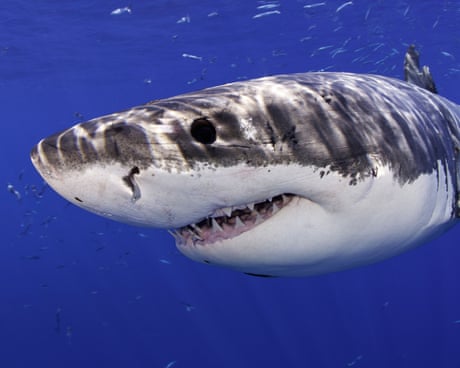
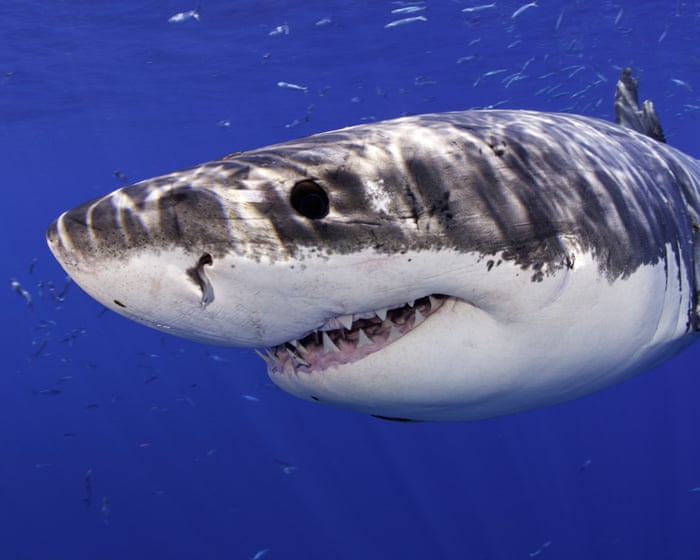
A great white shark put on a spectacular display for California beachgoers over the weekend, leaping from the water off Marina state beach and photobombing visitors.
Videos circulating online show a great white shark launching several feet out of the water in the background as a group of friends pose for photos along the beach.
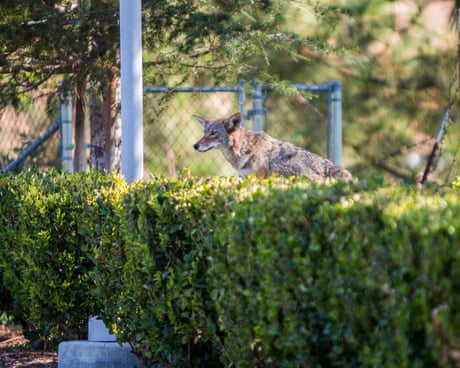
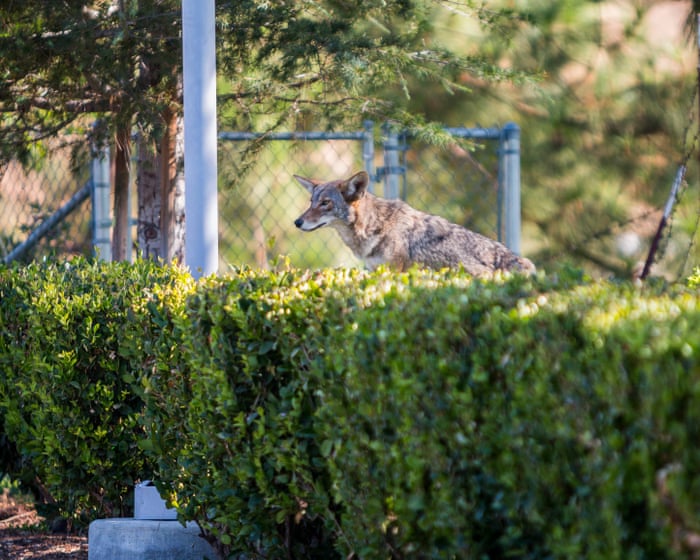
Coyote euthanized after reportedly roaming Atwater Village comfortably for months and attacking one-year-old boy
One Los Angeles neighborhood has been at war over a wild coyote, and over the weekend it all came to a head.
For months, the animal had been roaming the trendy Atwater Village, showing up in broad daylight, sleeping in back yards and approaching residents. At least one person had reportedly fed the coyote and others affectionately nicknamed it Wiley. But some residents feared the creature had become dangerously too cozy.
This as-told-to essay is based on a conversation with Jeff Kinney, the 55-year-old author of the "Diary of a Wimpy Kid" series, who lives in Plainville, Massachusetts. It has been edited for length and clarity.
Every year, when a new "Diary of a Wimpy Kid" book hits the shelves, I'm surprised that kids keep showing up.
I started writing the first book in 1998, while working as a computer programmer and game designer. I wanted to be a newspaper cartoonist, but that didn't work out, so I set out to get my cartoons published somehow. I was inspired by my own childhood experiences.
The first generation of kids who read my books is now almost 30 years old. It's wild to me that there's a new generation of kids encountering these books and finding them fresh.
As an author, I work within a few different spheres: books, my bookstore, movies, and development. I hop from one area to another.
Here's a day in my life.
I wake up before 7 a.m.
I don't set an alarm, so I wake up at that time naturally every day. I stay in bed for a while because after an ankle injury, I have some PT to do, like ankle stretches, while I'm in bed.
I meditate for about 10 minutes, set my intentions for the day, and organize my digital to-do list before I get out of bed.
I do two hours of exercise before breakfast
Right after I get up, I do about two hours of PT yoga, then weightlifting. I do that before I eat breakfast, which is often eggs and sausages.
I'm really committed to my morning physical routine of PT, PT yoga, and exercise. That's now become non-negotiable. I also do some journaling because it orients me toward the day, and it's a calming mechanism.
I've just had my most productive year, during which I wrote two books and two screenplays, so I attribute that to my morning routine. It grounds me.
I stay organized with a habit tracker
I've tried a million different to-do list apps that didn't work, including the pomodoro method and all sorts of others. Then I found a digital habit tracker.
Simon Simard for BI
I'm pretty diligent about checking off my daily habits. These include eating enough fiber, drinking enough water, waking up by a certain time, meditating, and doing stretches and yoga.
My workday starts at around 9:30 a.m.
I have about five or six workspaces, and I like to balance between them. One is a really colorful studio with my whole staff on the top floor of my bookstore, which is about three miles away from my home. When I'm not touring or working on a script, I go into the bookstore.
The bookstore is always top of mind for me, though the day-to-day operations are handled by the staff. Every so often, I'll get involved because we'll have a big author that comes to the store, and I'll interview them.
Another is my guest house, where I sit in the quiet living room. I also have a dark room in the basement where I'll go if I need to shut out everything. The other one is sitting in my car at the cemetery, where it's also very quiet. I can't listen to music because it occupies the same part of my brain needed for creating.
Sometimes I write for 8 to 12 hours a day
I feel most creative in the early morning hours, but sometimes I might write for eight to 12 hours a day.
If I'm illustrating, which I basically do all summer, I'll draw from maybe 9 a.m. until about 9 or 10 p.m. every day for months.
When I'm working on a book, I'll write the jokes first, then the manuscript, and finally I'll illustrate. I do all the illustrations myself. I don't usually combine those activities together.
I'm always stuck creatively, so I use a system
Simon Simard for BI
When I get stuck, I use something called systematic creative thinking, which helps me to produce material even if I'm not feeling creative.
I start with the components. If I'm writing about an airplane, I'll list the parts of the plane inside and out: the wings, the pilots, the lavatory, everything. Then I'll go through each component with a few different tools like subtraction and multiplication, and that's what gives me my raw material.
I'll use my iPad or my computer, or I have this device called a Freewrite, which is a super simple word processor that's not connected to the internet.
I don't stop for lunch
I only eat two meals a day, so I don't really step away for lunch — this is how I roll.
I do have an energy drink, but it's more of a habit than a need. I also don't typically take breaks.
I don't have many work boundaries
A good day is when I can get my to-do list to under 200 items, which is really hard to do. When I'm not illustrating, my wife might say, "Hey, let's have dinner," and that's my backstop for when I stop working.
Work is always on my mind, and I really don't have any boundaries. I don't tell people when I'm going on vacation because they'll reach me anyway, and I don't want to stop them from making progress. I usually make myself available, even if I'm away.
Simon Simard for BI
My team mostly communicates with me by text
Texting is how my team communicates with me. Email has become less useful for me because I get so many emails in a day that I feel like I'm a hockey goalie, and pucks keep whizzing past me.
I can really only answer emails right when I get them. Once they get too far down my list, I'll forget about them. I have a lot of challenges with executive functioning. I really struggle with having a lot of choices.
I've always answered my own emails, and I don't use AI to write.
I'm not often bored; I need stimulation
I don't play a lot. I sometimes go to Celtics games, or I'll go out to dinner with my wife, my friends, or my kids. I'm not often bored.
In fact, I feel very understimulated. I often feel like I'm not getting enough information, or there's not enough that's happening. For example, if I were to drive through the McDonald's drive-thru and get my food, I'd turn on the radio, tune in to some news program, and eat while reading the news on my phone.
Chicken McNuggets with sweet and sour sauce are probably my guilty pleasure. As far as watching TV goes, Survivor is always a staple in our house.
I go to sleep around 9:45 p.m.
These days I go to bed pretty early. I get in bed around 9:45 p.m., put in an earbud, and fall asleep with the news in my ear.
In 2022, I helped push through the international agreement to protect biodiversity. Wars and economic pressures can make nature seem like a ‘nice-to-have’. But it is a critical asset, and Cop17 must deliver real action
When I was five, property developers came to cut down the woods behind my home in La Tuque, Quebec. My mother encouraged me to climb one of the trees in protest, then told the developers, straight-faced, that there was nothing she could do when they asked her to get me down. A few days later, the tree was cut down anyway.
I thought about that tree in the early hours of a freezing Montreal morning in December 2022, as the gavel came down on a global agreement between nearly 200 countries to halt and reverse the loss of nature by 2030. I thought about how important nature is for our health, our food security and our economies, but also how much passion there is around protecting it, and how it has the power to inspire people all around the world.
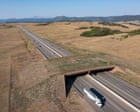
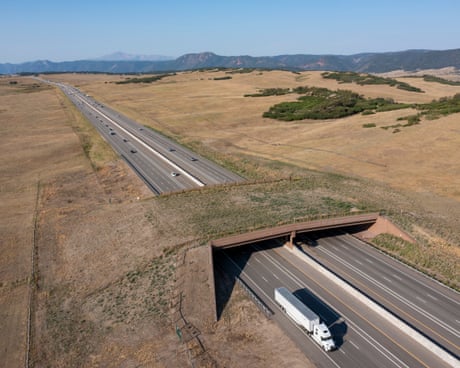
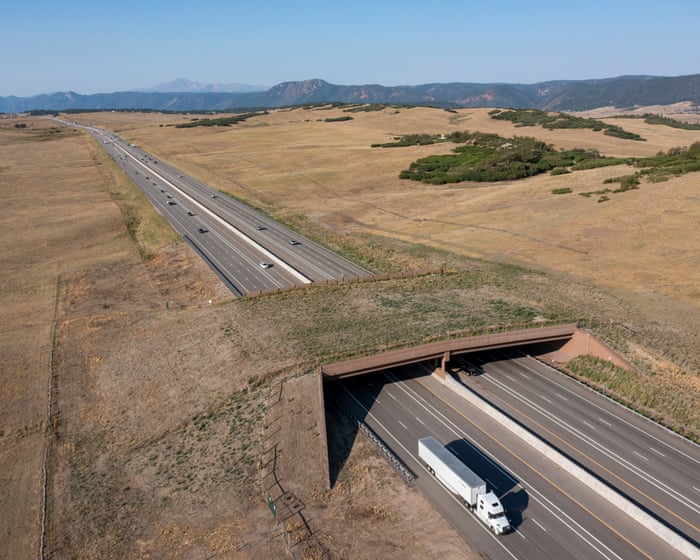
Elk, bear, frogs and other animals have used the overpass, which connects 39,000 acres of habitat, since its completion
Colorado officials have tracked herds of elk, bears, pronghorn and even northern leopard frogs ambling across its new wildlife overpass. According to a newly released report, the overpass, which acts as a bridge over a busy stretch of interstate, has helped cut wildlife-vehicle collisions by 91% since its completion 10 months ago.
The overpass is the centerpiece of a larger system built by the state to assist wildlife crossing the highway, which also includes miles of 8-ft tall fencing and five large wildlife underpasses.
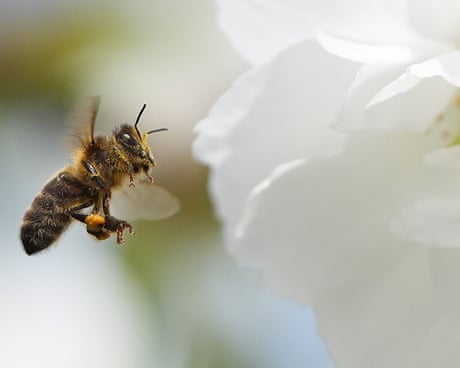
As Cop17 kicks off, records since 1921 show more bee species declining than increasing in all parts of Europe except the Alps
Most of Europe’s wild bee species and about half of its hover fly species have declined over the last century, a study has found, as a UN biodiversity summit begins in Armenia.
Records since 1921 show more bee species are declining than increasing in all parts of Europe except the Alpine region. The richness of bee and hover fly species suffered a persistent drop in the Atlantic and Continental regions, the study found, though trends in other regions were mixed or even positive.
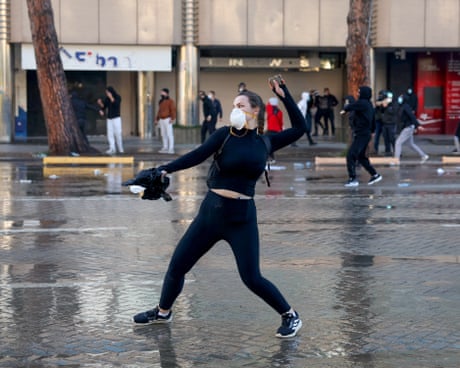
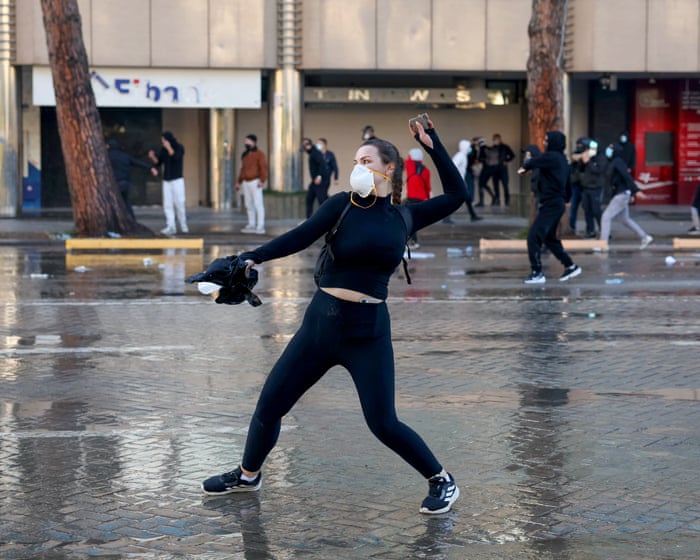
While most of the hundreds of thousands of people who demonstrated across the country did so peacefully, clashes broke out between police and some protesters, with officers firing tear gas.
The unrest began as student protests over worsening school conditions, but has since grown into a broader movement fueled by frustration over the unaffordability of life in France.
The financial pressures facing French households are familiar to Americans: surging energy prices, wages struggling to keep pace with inflation, and the difficulty of making ends meet.
Here are four numbers that help explain the financial frustrations driving the protests.
1. The poverty rate is at a 30-year high
INSEE defines monetary poverty as having a standard of living below 60% of the national median, adjusted for household size. In 2024, that threshold was €1,337 a month for someone living alone.
France's monetary poverty rate stood at 15.4% in 2024, its highest level since annual records began in 1996, according to INSEE data published in July. The figures are the latest available because calculating poverty rates requires detailed tax and benefits records, which take time to compile and analyze.
That means around 9.8 million people in mainland France were living below the poverty line.
2. Energy prices are up more than 60% since 2015
It's not just Americans who are grappling with rising energy costs.
Energy prices in France increased by more than 60% between 2015 and the first half of 2026, according to INSEE. Electricity prices rose 43% over that period, while fuel prices were 31% higher at the end of 2025 than in 2015.
As with much of the world, the war in Iran and the Strait of Hormuz crisis sent fuel prices soaring. By April 2026, fuel prices in France were 30% higher than at the end of 2025, per the INSEE report.
Rising fuel costs were behind French protests in September, and members of that movement have joined students and trade unions in the riots over the past week.
3. Nearly 3 in 10 French people can't afford unexpected expenses
Data from Eurostat, the European Union's statistics agency, shows that 28.8% of people in France lived in households that couldn't afford an unexpected expense without borrowing or seeking financial help in 2025.
France isn't particularly unusual in the wider European context — the EU average was also around 29% — but the figures illustrate the financial insecurity facing almost a third of households as people protest over the cost of living.
4. More than 40% of French people experienced some difficulty making ends meet
More than four in 10 people in France (41.1%) lived in households that reported at least some difficulty making ends meet in 2025, according to Eurostat data.
Of those, 19.4% reported some difficulty, 13.7% reported difficulty, and 8% reported great difficulty, highlighting the widespread financial strain facing French households.
Dutch MEP says government is trying to avoid EU environmental rules as protests over luxury development turn violent
MEPs have accused Albania of deploying “sneaky” practices to fast-track a proposed Trump-linked luxury resort in the country amid protests that have turned increasingly violent.
As the prime minister, Edi Rama, pledged to “listen to the voices of young people” taking to the streets, there was mounting criticism of his failure to address demonstrators who had long opposed the controversial project peacefully.
Four years ago nearly every government on Earth agreed to protect nature. Now, as countries gather for Cop17, the pressure is on to follow through on those commitments
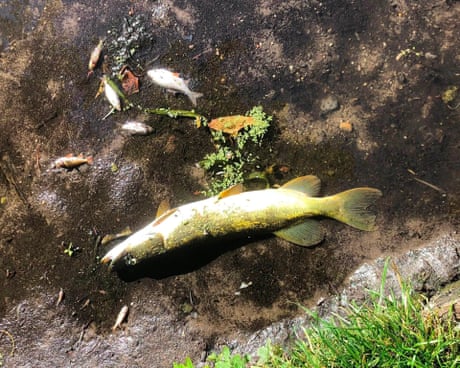
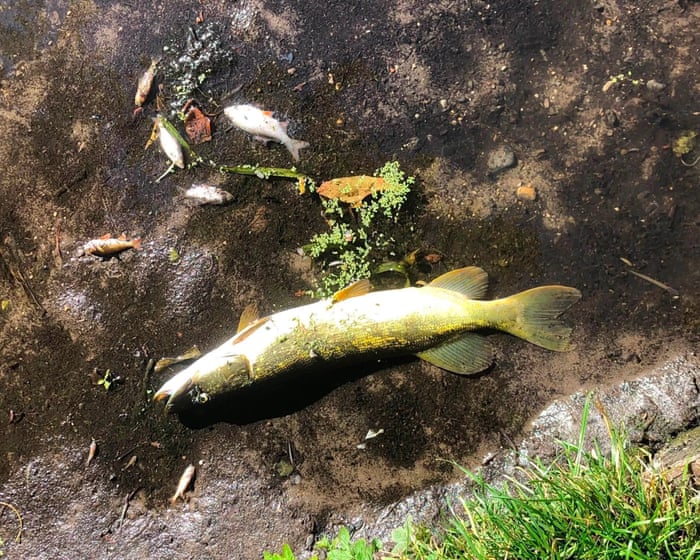
Passersby could smell the dead fish before they saw them. In August, more than 3,000 pike, roach, carp and rudd were found lifeless along the River Wensum in Norwich. Some gasped for air in their final moments, desperate for the oxygen that heatwave conditions had depleted in the water. Investigators believe that the die-off was triggered by heavy rainfall that flushed through high concentrations of pollution at a time when wildlife were already struggling.
The 45-mile (70km) chalk river is one of about 250 in the country. They are a geological accident almost unique to Britain – and one of Earth’s rarest habitats. They emerge from chalk aquifers and are home to species such as freshwater shrimp, otters and stoneflies, also providing drinking water for millions of people. But just 11 have formal protection, with many ravaged by sewage pollution and overextraction. The Norfolk river is one of the few that does have legal protection, but it is in poor ecological health.
Where did it start? How did it grow complex? Why did it get big? Three moments in Earth’s early history when evolution suddenly, inexplicably turned up the dial.
This month, nearly every country on Earth will return to the question of how to stem the rapid destruction of the natural world. Humans are driving it, but so far we have not found a way to stop it.
In late 2022, governments reached an ambitious once-in-a-decade deal to better protect nature amid scientific warnings that the planet is going through the largest loss of life since the extinction of the dinosaurs. Now, they are assessing their progress on the targets for the first time.
The author and her family moved to the Gold Coast this year.
Courtesy of Melissa Noble
My family of five moved from a small country town to a city earlier this year.
I wanted to spend more time with my parents, and there is plenty to love about the city.
However, I miss the slower pace of life and the close-knit community.
I've always been a city mouse, so when we decided to move from Melbourne, Australia, to Bright in country Victoria in 2021, I wasn't sure how long I'd last. Our family ended up falling in love with the slower pace of life and the people, and spent four years in the small alpine town at the foothills of the Victorian Alps.
But in January, we moved from Bright to the Gold Coast, where I grew up. My parents' health was declining, and I wanted to spend quality time with them before it was too late.
Moving from a small regional town of fewer than 3,000 people to a city of almost 700,000 was a profound lifestyle shift for our family of five. We had to make new friends, learn how to navigate a traffic light again (joking!), and get used to the buzzing city life.
Overall, we've gained a lot from moving to the city, and I feel it's been especially beneficial to our kids, as it's helped build resilience. But there are definitely things about country life that I do miss, if I'm being honest.
Life is full of trade-offs, and we've definitely made a few.
We've gained convenience and accessibility
In country Victoria, our nearest major retailer was an hour's drive away. If the kids needed new shoes or I needed new underwear, off we'd drive to the nearest major town. It often felt like a mission just to access simple amenities.
Nowadays, everything we need is at our fingertips. If we want to eat Italian one night and Nepalese the next, we can. The Gold Coast has all the amenities we need, and a good mix of beaches, hinterland hikes, nightlife, festivals, and an up-and-coming food scene.
There are more career and education opportunities
Cities generally offer better career and education opportunities, without a doubt. In our family, my husband has probably benefited the most in that regard.
When we moved here in January, he expanded his Muscle Freedom remedial massage and myotherapy business and started a clinic on the Gold Coast. Since then, the opportunities have been incredible, and he's treated some of Australia's biggest sporting identities. That would likely never have happened in country Victoria (unless they were holidaying there).
Likewise, our kids seem to be thriving at school and in their extra-curricular activities, many of which were unavailable where we used to live.
I enjoy the anonymity, and the diversity here is also a big plus
When I was having a bad mental health day in Bright, there was no escaping friends and family (bless them). Once, at the supermarket, I was weeping in the bread aisle, only to be greeted by my husband's cheerful colleague, who was keen to chat about the weather. I wanted to scream and run away.
In the city, I quite enjoy the anonymity and being a number in the crowd, especially on harder days.
I also love having access to a diverse range of art, music, entertainment, and food on the Gold Coast. After four years living in the country, I began to feel a bit starved of culture.
My kids are also mingling with children from different backgrounds and walks of life, which I am really happy about.
However, we miss having nature at our doorstep, and wide open spaces
Bright is surrounded by mountains, forests, rivers, and cycling trails, with gorgeous national parks a short drive away. It really is a smorgasbord of activities for outdoor enthusiasts.
The Gold Coast has plenty of sunshine and offers some spectacular natural scenery, but you do have to drive to access it. I've actually put on a few kilos living in the city, and I think it's mainly because I'm not walking or cycling as much.
When we recently returned to Bright for a family holiday, I realized how much I've missed those wide open spaces. The air seems to feel fresher there.
Living in suburbia on the Gold Coast, the blocks are tighter, and some areas feel like the properties are on top of each other. Even as I write this, I can overhear the next-door neighbor arguing with her husband about his messy household habits.
I also miss the close-knit community and slower pace
I've been lucky enough to make some wonderful friends on the Gold Coast. The kind who check in on us when we're sick or offer to babysit if my husband and I need a night out. But it also seems that people are busier in the city, and get-togethers happen less often.
In a small town like Bright, it's easier to catch up with people because everyone lives close by. I found that living in the country helped me form deeper connections with friends. That brought a sense of security, knowing that someone always has your back.
Since moving to the city, life has felt frantic. For the first six months, every weekend was jam-packed with catch-ups with family and new and old friends.
In a small country town, the pace of life was much slower. Recently, while we were holidaying in Bright, I felt my shoulders relax, and my stress levels decrease. There's something to be said for a simple life.
What our next chapter holds
We'd intended to give the Gold Coast 12 months and then make a call about where to base ourselves long-term. But now that we're almost at that mark, we've realized it's too soon to make a decision.
And so, we'll be spending 2027 here, then reassessing our options late next year. Part of me craves the open skies, fresh mountain air, and the stillness I took for granted in the country, but I'm also enjoying having Aldi a kilometer away and more choices overall.
I suppose at the end of the day, there's no perfect place to live, just places that suit you at different life stages. For now, the Gold Coast is giving us convenience, variety, and time with my folks, and I intend to enjoy the best of what city life has to offer.
 Login