Amy Acton’s brother calls campaigning on his sister’s sexual abuse from their mother’s husband ‘a despicable low’
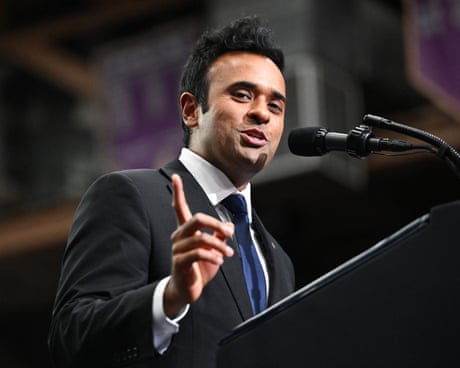
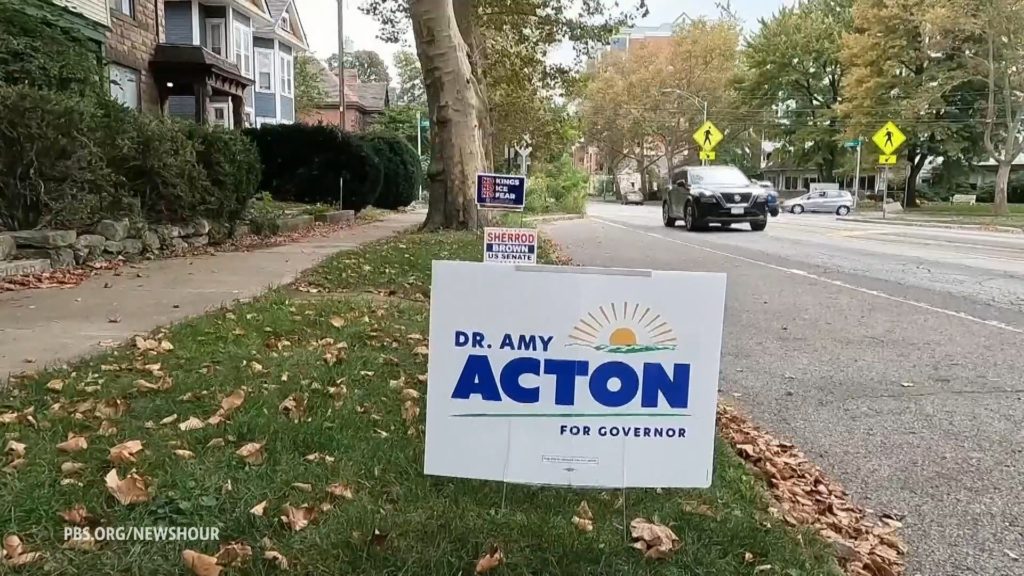
The family of Amy Acton, the Democratic candidate for governor of Ohio, is criticizing her Republican opponent Vivek Ramaswamy for using Acton’s estranged mother in a recently released campaign ad.
In the ad, which has circulated among conservatives on social media, her mother, Donna Arthur, said: “She says she grew up living in a tent. None of that is true. She’s lied her entire life.”
Donna Arthur, the mother of Amy Acton, a Democrat running to become Ohio’s next governor, appears in a campaign ad urging voters not to vote for her own daughter.
Can Republicans just spend their way to success in Ohio? "Republicans have bombarded Ohioans with ads with $19 million spent on competitive races through Oct. 12, intended to sell voters on the tax law that had been called the One Big Beautiful Bill," reportsThe Washington Post. "But the message is struggling to connect with voters amid anxiety over tariffs and the war with Iran, which have pushed up prices for everyday products. The ad blitz, the most spent on the topic in any state with competitive races, is aimed at bolstering vulnerable GOP candidates in a state that was considered safely Republican for the better part of the last decade."
Republicans in states across the Midwest (and the country) have experimented with distancing themselves from the Trump administration and its agenda; it's hard to know if this strategy will prove successful, or if it's just too little, too late. In Ohio, though, Republican candidates are mostly staying close to Dear Leader.
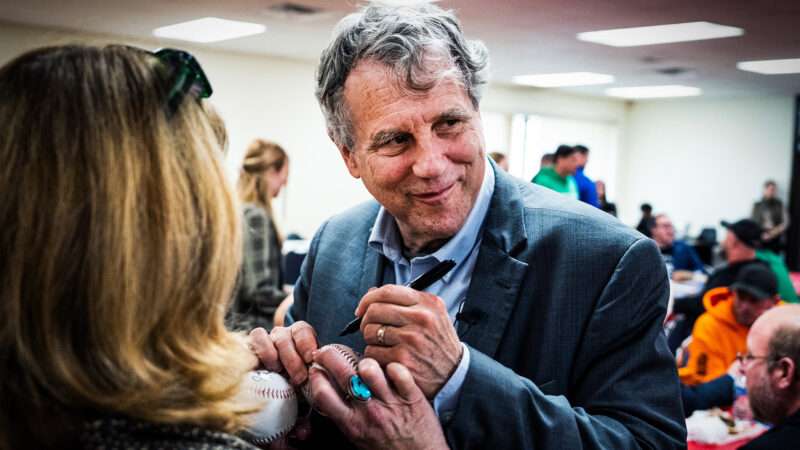
Sen. Jon Husted, a Republican, is running for U.S. Senate against Democrat Sherrod Brown in what looks to be an extremely tight race; ads claim Husted has "supported ending taxes on tips, overtime and Social Security, plus a $200 million investment in rural hospitals," trying to tie him closely to President Donald Trump's agenda. But it's really not clear whether this type of pitch will be enough to make voters forget about tariffs and inflation, the war in the Middle East and gas prices. A New York Times/Siena poll found that 79 percent of likely Ohio voters disapproved of Trump's handling of gas prices. It's hard to sell people on a tax cut when they're paying a different tax, in the form of tariffs, every time they go to the store; Ohio voters might not be so easily swindled.
Gun laws in Oregon: In the aftermath of the tragic shooting at an elementary school in Bend, Oregon, where a 16-year-old killed three little kids and one teacher, some parents of elementary schoolers there are asking what laws can be changed.
But "Oregon earns high marks from gun safety advocates for its firearms laws," notesThe New York Times. "Everytown for Gun Safety, one of the nation's largest gun violence prevention organizations, ranks Oregon 12th in the country for the strength of its laws, citing recent legislation tightening storage requirements, banning untraceable 'ghost guns' and prohibiting devices that can convert semiautomatic firearms into machine guns." Gifting laws are pretty lax, though, and that might be what happened here: The 16-year-old's mother seems to have been the one who purchased the Maverick 88 12-gauge pump-action shotgun, so it's possible she either gifted the gun to her son or that he stole it from her. "Decades ago, Oregon lawmakers made an exception to gun laws that allow parents to give rifles and shotguns to minors. In many areas of the state, as in other parts of the American West and South, it's a rite of passage for a young person to receive a weapon for hunting or target practice."
There's no law that can really prevent theft of weapons, especially when the thief is a teenager living inside the home where the gun is stored, and there's no law that can prevent parents from foolishly gifting guns to teenagers or young adults whom they've misjudged as capable of handling the responsibility. These are terribly unsatisfying realities.
Prosecutors could, of course, attempt to try the parent for the crimes of their teenager. They "could consider charges ranging from reckless endangerment to manslaughter or criminally negligent homicide, a felony punishable by up to 10 years in prison," continues the Times. "But that would require evidence of more than just a parent's awareness that a child was troubled. Prosecutors would have to establish that the mother disregarded—or, in the case of criminal negligence, failed to recognize—a substantial and unjustifiable risk."
Scenes from New York: "Mayor Zohran Mamdani announced on Monday that New York City will expand free child care for 2-year-olds to Staten Island and across the Bronx as the city moves to add 10,000 seats next school year," reportsThe New York Times. Here's why that won't work:
QUICK HITS
Something juicy for you, readers, since I too frequently subject you to my Catholicism. Let's switch it up: "I'd been thinking about turning down the speed on my vibrator for a long time, but I'd considered my affliction personal, not society-wide. Now it was dawning on me that the problem wasn't simply mine. Women are being sold egg-shaped suction devices in the pages of New York magazine, and BookTok influencers pair with sex-toy companies for promotional collabs. Yes, there is a bookmark that doubles as a vibrator," writes Sarah Hepola for The Atlantic. "Does this consumer game of one-upmanship amid the mainstreaming of vibrators even matter? There are too many varieties of women's razors, too, and I don't care. But what worries me is how this points in the direction in which so much of modern life has been barreling: self-pleasure, self-love, self-care, self, self, self.…Like so much of our day-to-day lives, getting off is becoming more efficient, easier, faster. But has it gotten better?"
"Next year, I will give one of my SpaceX shares to every kid in America," wrote Elon Musk on X yesterday. "This will be the first of many."
"Mahmoud Khalil, the Columbia University graduate arrested last year by Immigration and Customs Enforcement agents amid campus protests, appealed to the Supreme Court on Monday in an attempt to prevent his deportation," reportsThe New York Times. "Khalil, a legal permanent U.S. resident who is married to an American, became an early and high-profile example of President Trump's crackdown on pro-Palestinian demonstrations on college campuses."
Ohio gubernatorial candidate Amy Acton’s (D) mother called her a “liar” in a new ad, as her brother labelled the video “a despicable low” on Tuesday ahead of the state’s elections in November. “I love my daughter, but when I saw her lying about her opponent — it is not easy for a mother to…
In recent presidential elections, Ohio has become a reliably Republican state. But in this year's midterms, it's once again a battleground. The races for governor and U.S. Senate are both seen as toss-ups by The Cook Political Report, and there are a handful of competitive House districts. Liz Landers reports on how national issues are affecting Ohio voters as they prepare to head to the polls.
This week, editors Peter Suderman, Katherine Mangu-Ward, Nick Gillespie, and Matt Welch discuss the riots engulfing France and whether the country's increasingly unsustainable welfare state has made it ungovernable. They examine competing claims that immigration and austerity are fueling the unrest, the political gains being made by the French right, and why even modest pension reforms provoke fierce resistance.
The conversation turns to the United States, where President Donald Trump's tariffs are losing support among blue-collar voters and Republicans are struggling in traditionally conservative areas like Ohio. The panelists then discuss the abrupt departure of White House press secretary Katie Zacharia after just five days on the job. Later, they examine Sen. Elizabeth Warren's (D–Mass.) opposition to a proposed $45 billion merger involving McCormick and Unilever. Finally, a listener asks why libertarians don't follow the Democratic Socialists of America's example by trying to reshape the Republican Party from within.
0:00—France's riots and the imploding welfare state
21:29—Trump's tariffs lose support among blue-collar voters.
29:41—Zacharia's tenure as White House press secretary
35:45—Listener question on libertarian influence strategy
45:52—Warren's corporate merger opposition
57:07—Weekly cultural recommendations
Cato Innovation Project: Design your own full-time, paid role at Cato. If we fund your idea, you spend two years executing it. Apply here: cato.org/reason
Katherine Mangu-Ward appears on the left. Nick Gillespie appears on the right. An image of a car that's been set on fire by protesters appears in the center. Bold text across the top of the screen reads "FRANCE RIOTS."
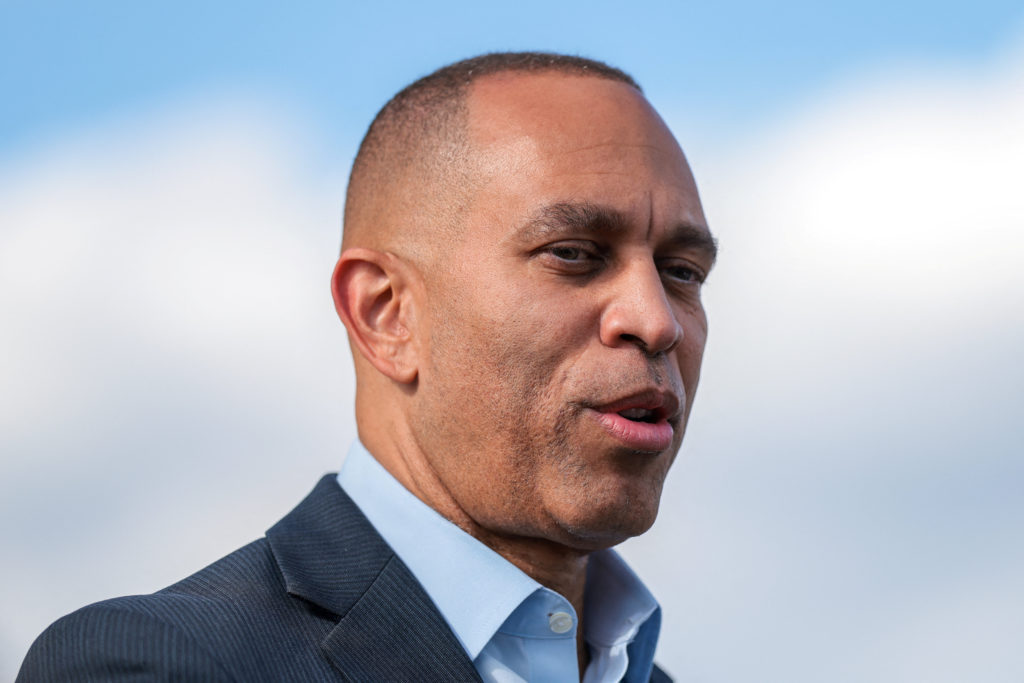
Jeffries, who is in line to become House speaker if Democrats seize the majority, has traveled to some 50 cities campaigning for Democratic candidates.
To boost Senator Jon Husted, who is in a tight race to keep his seat, some Republicans who were making a jobs pitch have pivoted to focus on socialism.
Tanya Karabanovs, a volunteer at the Cuyahoga County G.O.P. headquarters, surrounded by unclaimed yard signs. She said that volunteer turnout had been down this midterm cycle.
Walking through East Cleveland, Ohio, feels a touch like you've wandered onto the set of a postapocalyptic film noir. Grand, gilded homes announce themselves on neighborhood streets, some crowned with turrets, many with windows punched out like missing teeth. Often, no one is home, because no one lives there. It is safer than 1 percent of U.S. cities.
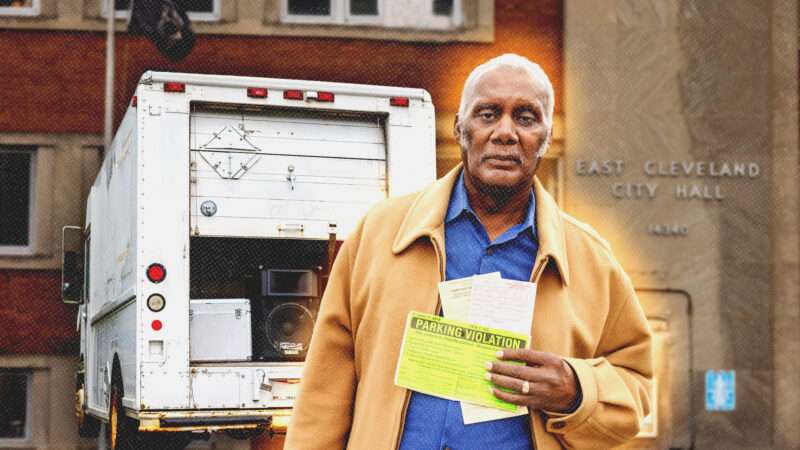
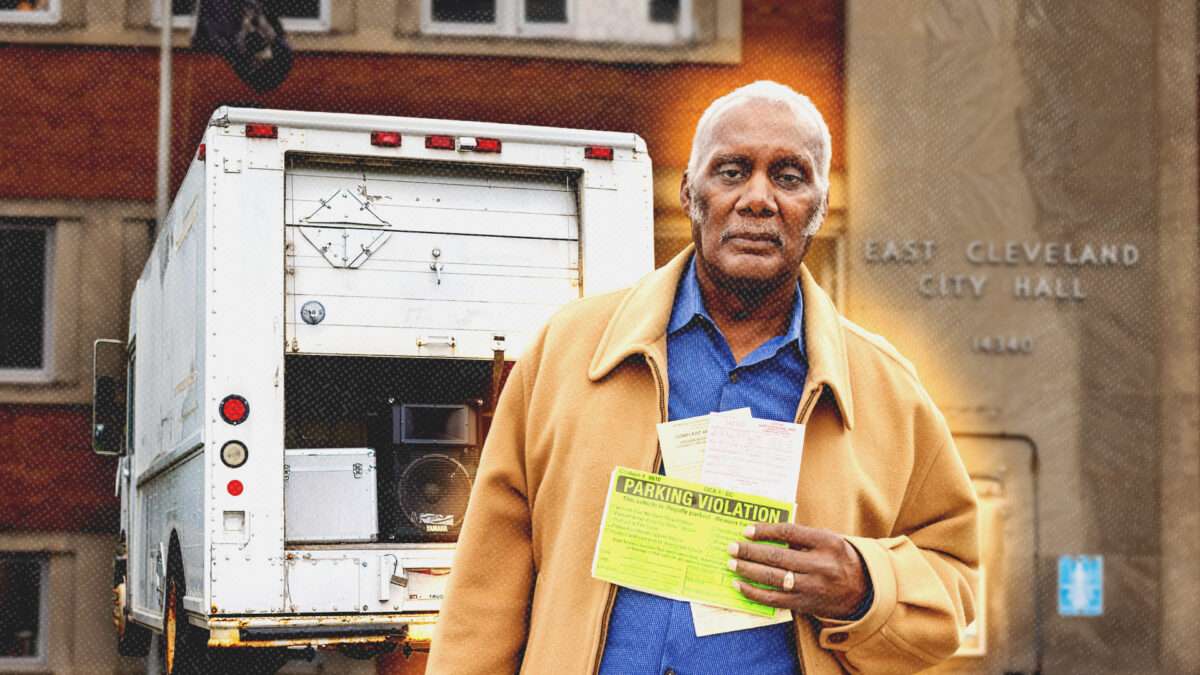
That question is not really a legal one, at least not in the most technical sense. But it is the driving force behind a thorny case a federal court recently resuscitated: Fambrough v. City of East Cleveland, a saga concerning a man whose vehicle became an obsessive target of the East Cleveland Police Department (ECPD) after he used it to campaign for a mayoral challenger.
Some of the facts are in dispute. But the basic gist is as follows: William Fambrough, long a politically engaged East Clevelander, campaigned for Juanita Gowdy—a challenger to then-Mayor Brandon King—by broadcasting messages around the city with his sound truck. That ultimately came to an end after law enforcement impounded the car, cited him for parking and noise violations, and prosecuted him for the latter.
Fambrough sued, alleging the complex legal odyssey set into motion over his step van amounted to First Amendment retaliation, an unreasonable seizure under the Fourth Amendment, and a violation of the 14th Amendment's proscription against selective enforcement. The U.S. Court of Appeals for the 6th Circuit rejected some of those claims. But it resurrected claims against King and his chief of staff, Michael Smedley—depriving them of qualified immunity, the legal doctrine that inoculates state and local government officials from facing lawsuits if their alleged misconduct was not "clearly established" as illegal in prior case law. It also revived Fambrough's retaliation claim against the city.
As the 6th Circuit summarizes: King "says he received a phone call from a resident who complained about Fambrough's sound truck and someone else's box truck being parked in a residential area," so he told someone to take care of it. Scott Gardner, then the city's chief of police, "was concerned about selectively enforcing" the parking ordinance—which prohibits parking a truck in front of residential property, except for loading or unloading—because it is indeed almost never enforced. This was the beginning of a long pursuit, which ultimately saw a swarm of officers dispatched to Fambrough's house in August 2021 to confiscate the vehicle, allegedly resulting in $6,000 in damage. Fambrough also had to pay $528 in fees to get the damaged truck back.
"All the attention City officials gave Fambrough struck Gardner as unusual," the 6th Circuit notes. "The mayor's office wasn't this attentive even in homicide cases. And considering that the City had around only 50 police officers at the time and had 'serious crime problems,' Gardner thought it was odd to devote this much attention to permitting and parking issues." Based on available data, East Cleveland's violent crime rate is 1,409 per 100,000 residents, about four times higher than the national average.
Yet Gardner ultimately got on board. Smedley phoned him on August 9 "extremely upset," according to Gardner, and told the police chief he was "incompetent" for failing to "take care of" Fambrough's sound truck. Smedley wanted the "utmost enforcement as possible." So Gardner sent an email. "Please, find this vehicle and tow it," he wrote to all of ECPD. "Cite the operator with disturbing the peace and loud music. Please contact me as soon as this is complete to claim a surprise." A surprise!
Police succeeded. "On its face, the email told officers to tow Fambrough's truck regardless of whether it was parked illegally," writes the 6th Circuit. "And the Noise Ordinance authorizes seizure only of 'the sound device used,' and only upon conviction. So Gardner's instruction to tow the truck wasn't authorized by municipal law." The court still held that the seizure did not violate the Fourth Amendment. It also gave Gardner qualified immunity, ruling it is not clearly established that someone who acts as a conduit for someone else's alleged retaliation—which here came from the mayor's office—is a "responsible party."
Heather McCollough, the city's assistant law director, subsequently prosecuted Fambrough for allegedly violating the noise ordinance. According to a sworn declaration from Fambrough's attorney, McCollough outlined some of Fambrough's offenses on a call: that he "made complaints about the police department" and filed "public records requests," among other issues. Notably, it is legal to do those things. McCollough was typically willing to resolve minor noise complaints, she added, but not so much in this case, because Fambrough needed to "stand down." (He ultimately pleaded no contest to disorderly conduct, a reduced charge.)
Institute for Justice
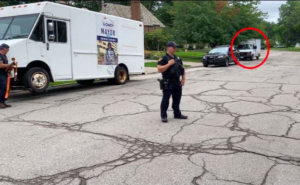
"Only after [Fambrough] began supporting Gowdy's election was the weight of the law thrown against him," the 6th Circuit writes in its analysis of potential municipal wrongdoing. "And the City's police officers didn't uncover Fambrough's violations of their own accord. Instead, City decisionmakers sent them to Fambrough's home each time to enforce the Parking Ordinance. So the timing of the parking-related enforcement actions supports an inference that Fambrough's political speech was the motivating factor—as does the fact that the City rarely enforced the Parking Ordinance against anyone else despite having plenty of opportunities to do so." Incredibly, a photo of another truck can be seen down the street on the same day law enforcement came to fetch Fambrough's vehicle. (The law also includes pickup trucks, so the city arguably has a lot of enforcement to do if it sincerely believes this law matters.)
King allegedly set the chain of events into motion while Smedley took the driver's seat. "Smedley's pattern of incessantly calling and berating Gardner," the 6th Circuit adds, "clashes with the idea that Smedley was chiefly concerned with minor permitting, noise, or parking issues." After all, if that were true, why would the problem appear to begin and end with one person?
Over five years have passed since the ordeal. Although Fambrough is now potentially closer to getting in front of a jury, he has yet to actually state his case, still burdened by the onerous process government actors invoke to kill such suits before the community can assess the merits. King, meanwhile, won that election. He left office in May 2025, however, after he was found guilty of one count of theft in office, four counts of having an unlawful interest in a public contract, three counts of representation by public official or employee, one count of filing a false disclosure statement, and one count of soliciting improper compensation.
In Santa Teresa, a town in the remote New Mexico desert, a group of residents rises up during a town council meeting, holding signs painted with marker pens: “We don’t want data centers! Water is for humans, not data centers!” In Harrisburg, Pennsylvania, a similar scene unfolds: a group of local residents interrupts deliberations in the state legislature carrying banners that read: “We don’t want to be a data center city.” In Memphis, the city where Elvis Presley was born, a recent meeting of the county board of supervisors to consider a possible slowdown in the construction of new data centers ended in a fistfight between supporters of the tech facilities and their opponents.
The battle for the Senate in the midterm elections will determine how much room Donald Trump has to maneuver during the second half of his term: no legislation reaches the White House without first passing through the upper chamber.
Statehouses make health-care policy, guide education, and may redraw congressional districts ahead of 2028. With the stakes high, more than 6,100 legislators will be elected Nov. 3.
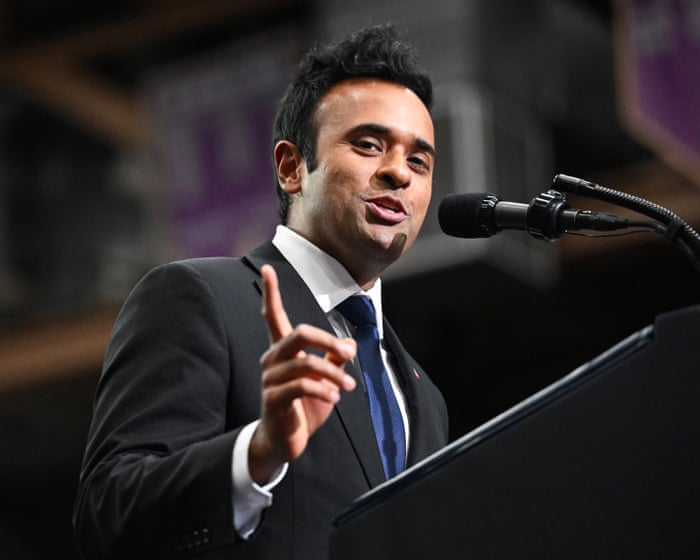
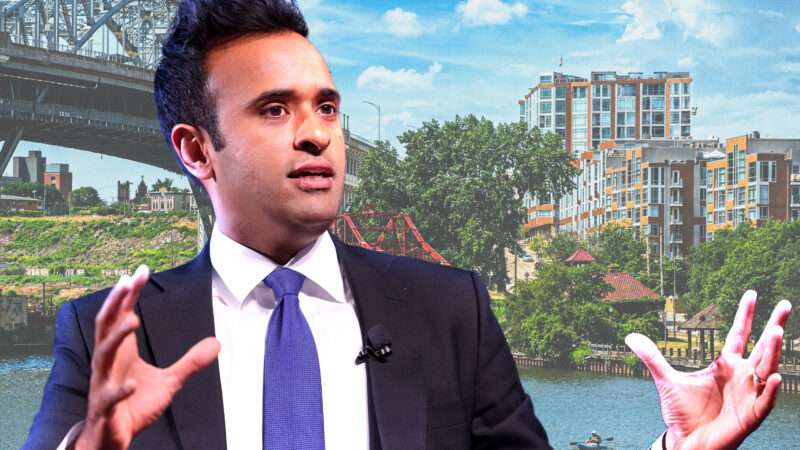
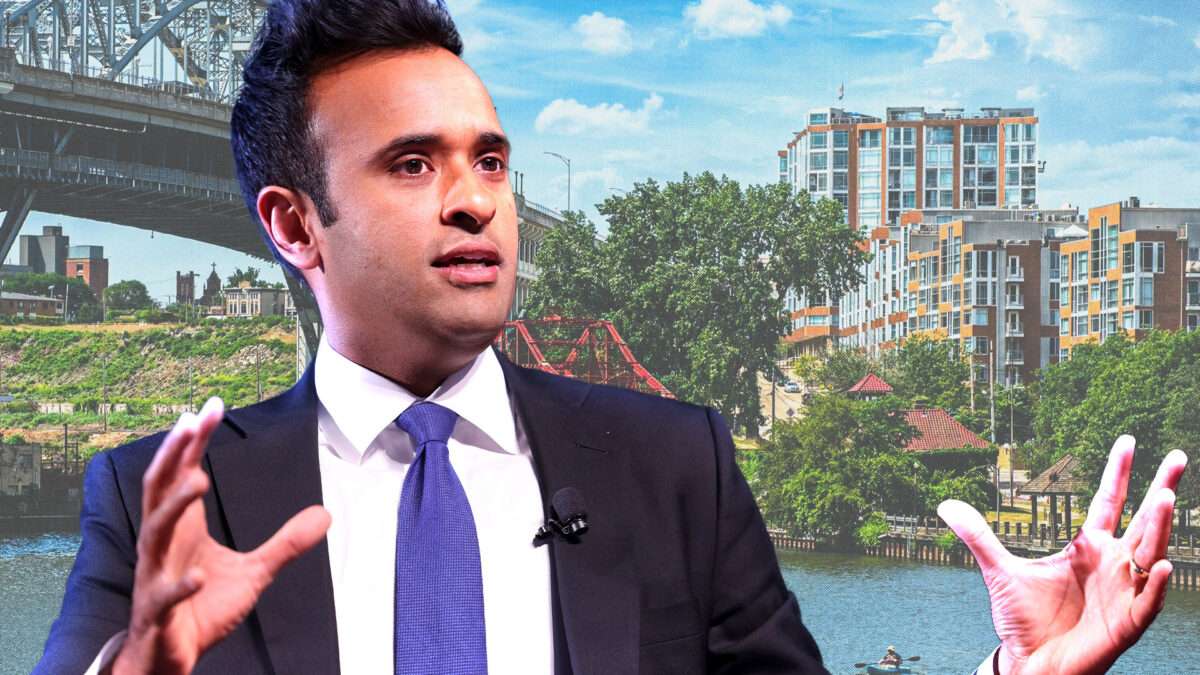
When Vivek Ramaswamy ran for president in 2024, he liked to describe himself as a "national libertarian" whose worldview included skepticism of new Middle Eastern wars and support for free trade (provided it wasn't with China).
In a midterm election season in which voters are increasingly angry about higher prices born of protectionist tariffs and high gas prices caused by a new Middle Eastern war, that would seemingly give Ramaswamy, now running for governor of Ohio, a straightforward story to tell about how he'd bring costs down.
Unfortunately for the Republican gubernatorial candidate, the person responsible for the tariffs and the war is President Donald Trump, whose support he's counting on to get him over the finish line in a surprisingly close race against Democrat Amy Acton.
The latest polls show Ramaswamy slightly ahead of Acton, with many voters still undecided.
Other Republican midterm candidates, most prominently Mike Rogers in Michigan, are escaping this bind by criticizing the tariffs and the war without explicitly naming the president who's responsible for both.
Ramaswamy has chosen a different tactic: Shift the conversation to other sources of voters' cost-of-living anxiety that can't be directly laid at Trump's feet.
In the last weeks of this election campaign, Ramaswamy has focused like a laser on two proposals he says will deliver cost relief to Ohio voters. The first is his proposed rollback of homeowners' property taxes. The second is a moratorium on new data center construction.
Like many Midwestern and Western states, Ohioans' property tax bills have shot up in recent years, driven by a pandemic-era spike in home values.
That's in turn sparked a full-blown property tax revolt in the state. The Republican-controlled Legislature passed a raft of property tax relief measures in 2025. Activists are also collecting signatures to place a full abolition of taxes on real property on the statewide ballot next year.
Ramaswamy hasn't endorsed full property tax abolition, but he is promising voters that he will roll back property tax assessments for homeowners to pre-pandemic levels.
On the data centers, he has staked out a very restrictionist position.
Ohio is currently one of the leading states for data center development. Pew Research counts 57 projects currently in the pipeline there, attracted by cheap land and a robust power grid.
The state's data center boom has caused a backlash in rural communities, where voters have objected to data centers' consumption of land and electricity and the special tax incentives some projects have received.
On the ballot in 10 Ohio localities this November are initiatives that would impose additional restrictions on data center development.
Ramaswamy has proposed to go further with a statewide moratoriumthat will remain in effect until the Legislature passes laws that not only require data centers to cover the full costs of the power infrastructure they need, but also provide property tax rebates and free electricity to nearby homeowners.
Local property tax cuts paired with local reductions in spending would, of course, be well in line with a small government worldview.
But the residential property tax rollback Ramaswamy has proposed doesn't directly do that.
Instead, it would reduce property tax revenues and then leave it up to localities to make up for the lost revenue somehow. That could result in spending cuts.
It could also result in localities shifting tax burdens onto commercial properties, raising non-property taxes (like sales taxes), or relying on the state government for more of their revenues.
In the former two scenarios, local tax regimes would become more hostile to growth, given that property taxes are considered one of the most "efficient" taxes. In the latter scenario, the link between people who pay taxes and the people who consume taxpayer-funded local services would become more distant.
Neither is ideal.
While some data centers in Ohio have received tax subsidies, Ramaswamy's proposed solution is to block new data centers until they're legally required to subsidize their neighbors with free electricity and other community benefits.
All of that is to say that it's a shame to see Ramaswamy adopt increasingly non-libertarian positions to avoid making critiques of Trump's cost-increasing tariffs and Iran war that would align with his erstwhile "national libertarian" worldview.
It's ironic, too, that, in trying to avoid making those critiques, Ramaswamy has wound up being more restrictionist on data centers than Trump himself.
In an August Truth Social post, the president famously urged local communities to "let Data Reign" and welcome data center development. Those that did would become "rich and successful," he predicted. Those that didn't would remain "poor and backward."
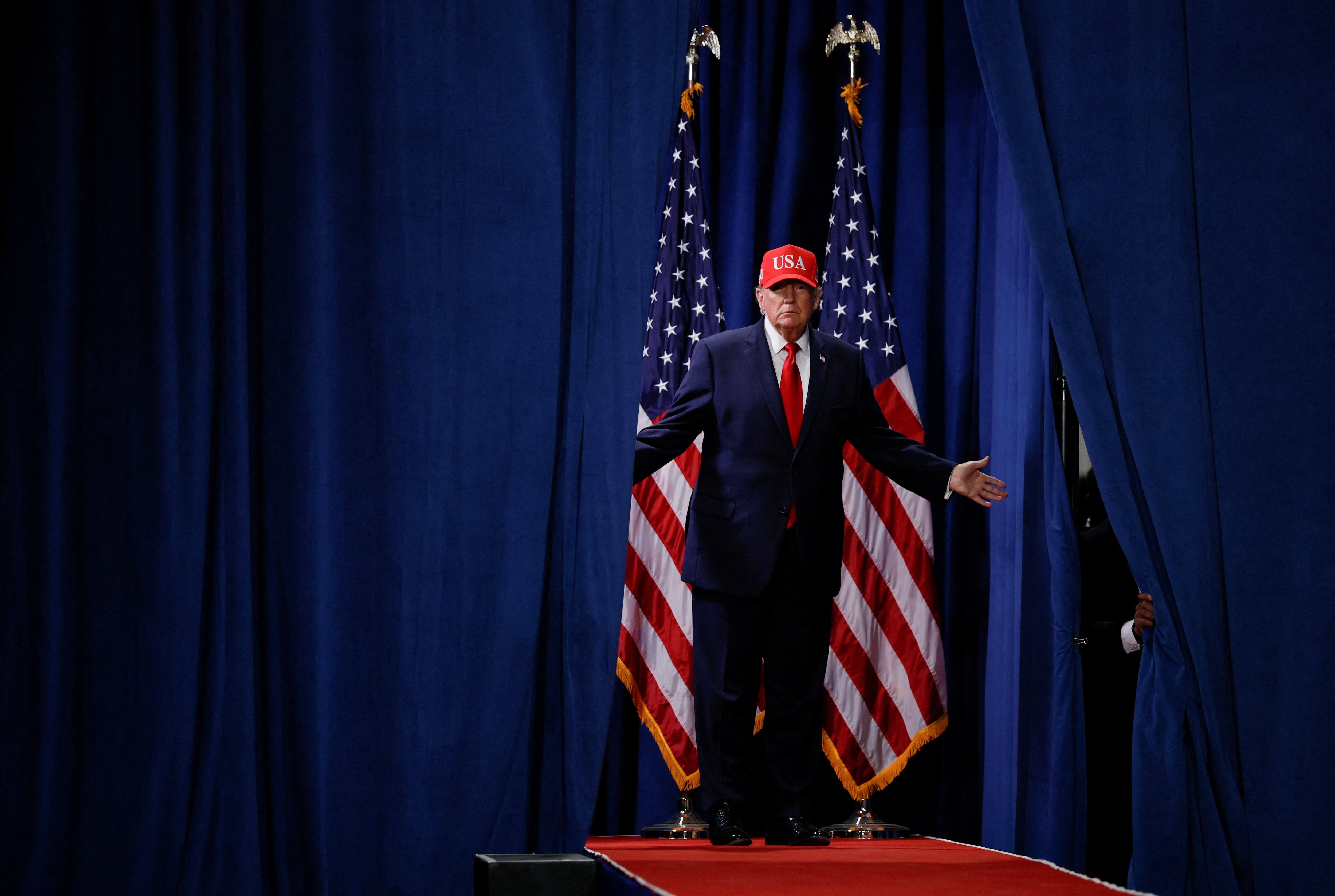
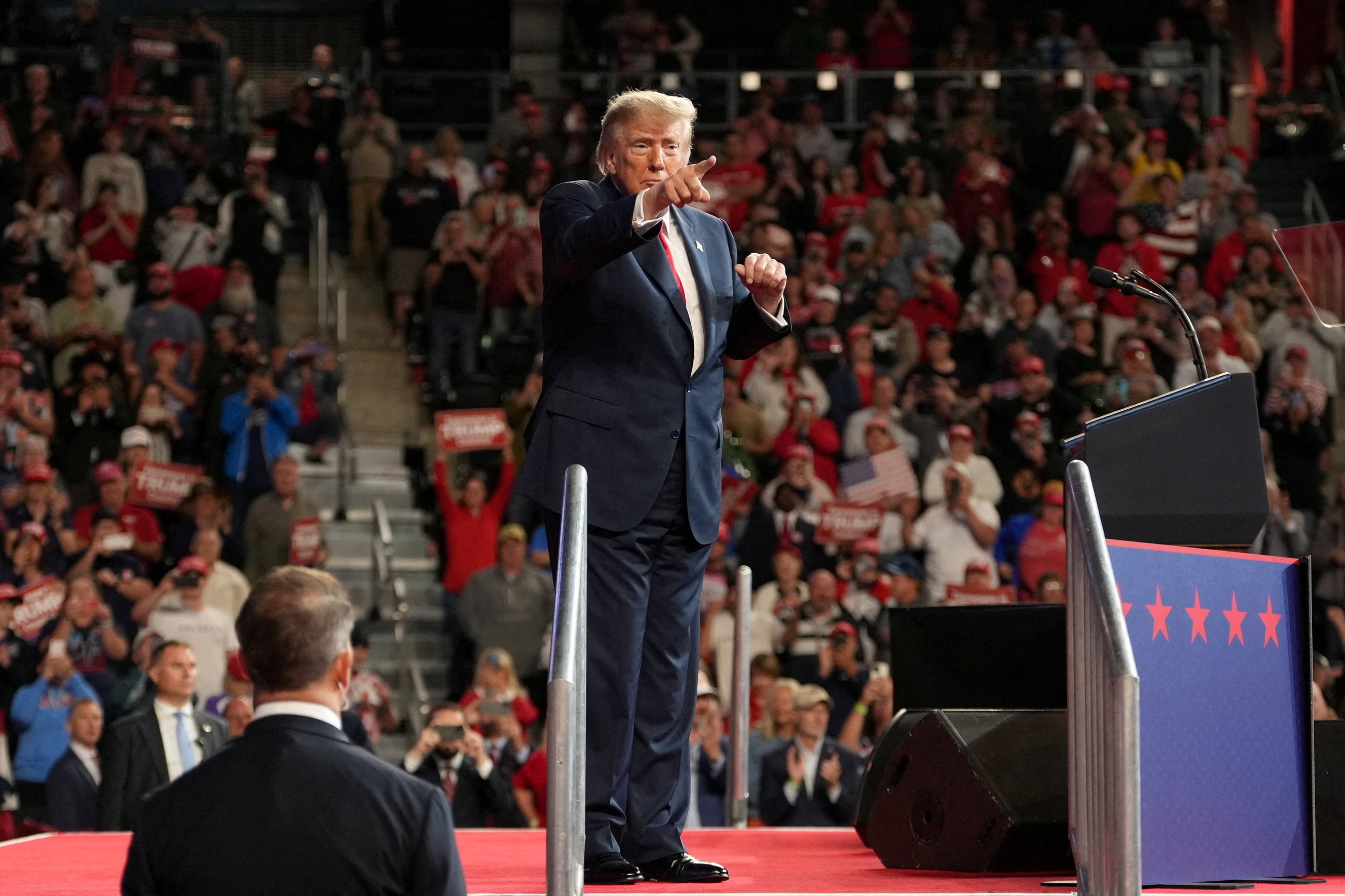
At a rally in Vandalia, Ohio, over the weekend for Ramaswamy and Republican Senate candidate John Husted, Trump reiterated his support for data centers, saying, "We want them. Look, there's so much money to be made for Ohio. You can't just turn them off. They'll go to China."
Rather than criticize the president's statist interventions, Ramaswamy is talking up his own instead. Ohio will be poorer as a result.
At a rally, he spoke highly of the backside of John Husted, the Republican candidate for the U.S. Senate from Ohio. He has posted one video after another of big cats attacking real people before sharing one — created with artificial intelligence — in which he is seen fending off a fearsome lion, dressed in a suit and with his bare hands. And he has repeated tired memes disrespecting Greenland, as well as an endless stream of clips and videos flattering himself.
No longer so red: Long a swing state, Ohio went for President Donald Trump back in 2016, in 2020, and in 2024. Now, with midterms approaching, it looks likely to vote blue again, and there are early indicators that Republicans have failed to win over Ohio's working-class voters in particular.
"After the first days of early voting in Ohio, a state that could help determine control of the Senate, there are clear signs Democrats are more enthusiastic to vote," reports CNN. "So far, affiliated Democrats make up larger shares of pre-election voters than they did two years ago, even in the most Republican parts of the state. At this point in 2024, Republicans had a 30-percentage point lead over Democrats in counties that voted for President Donald Trump by 20 points or more, according to data from the Ohio Secretary of State. This year, that's shrunk to just five points."
Take this data with a grain of salt: It is just early-voter data.
But this is all rather high-stakes because Republicans are defending a Senate seat, as well as the governor's office. Two races for House seats are considered toss-ups. The conventional wisdom has been that Ohio is now solidly red, with three cycles of presidential election data to support that. But it's possible Trump has pissed off the voters who supported him to such a degree that Ohio will be sent back into swing-state territory.
"God knows we didn't vote for this," one voter—a pastor who went for Trump, then Biden, then Trump—told Reuters, referring to inflation. Other voters wonder about the decline in manufacturing jobs and the fact that the president has paid lip service to these problems but done very little to actually improve people's circumstances.
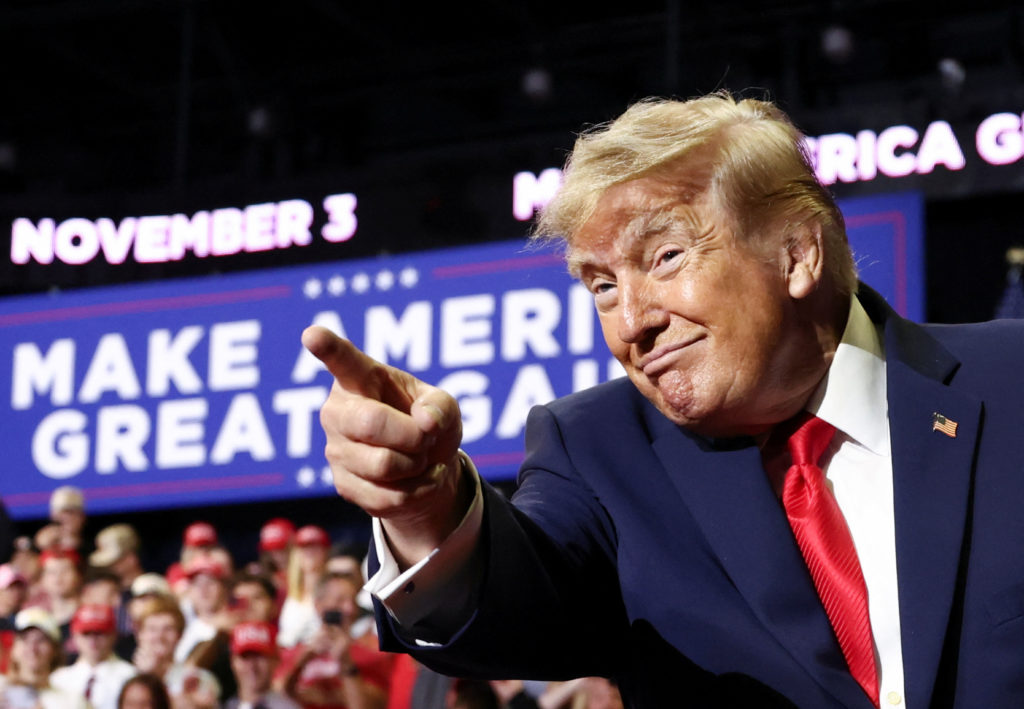
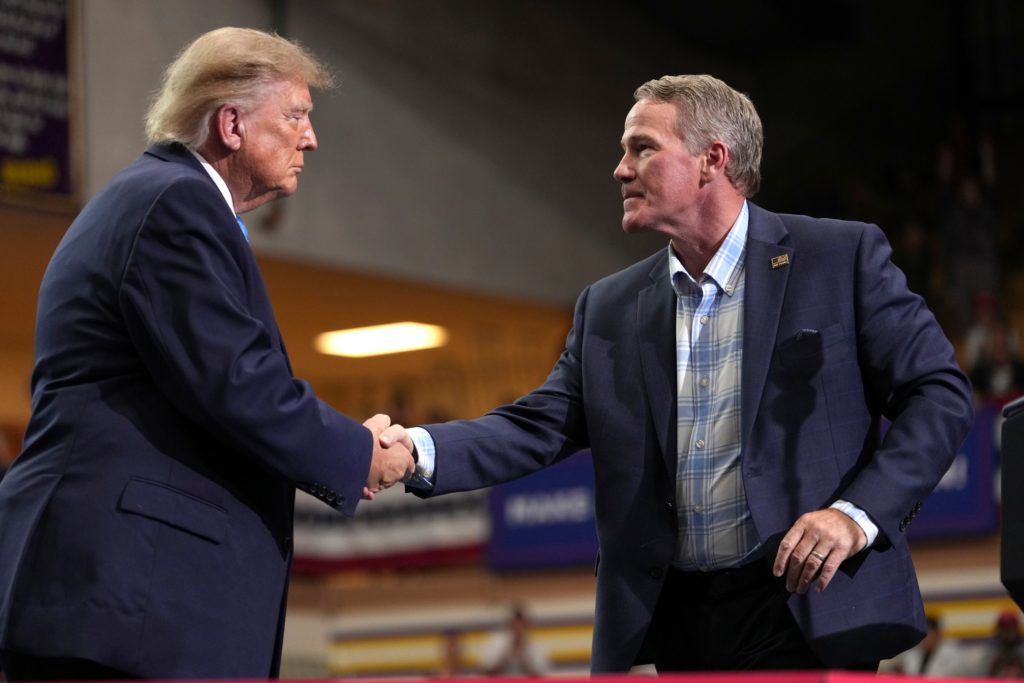
On Monday, Trump rallied in support of Sen. Jon Husted, who hopes to retain his seat. In the Mahoning Valley, the president announced a few new, uh, incentives to voters: a Defense Department facility based in Cleveland, and promises that a heat provider for Youngstown remained open. "The Youngstown area for decades used to vote Democrat, and then you ran for office in 2016 and flipped it red forever," said Husted in his speech. "Is that right, folks?"
OpenAI arrest: The FBI arrested a Saudi national who worked at OpenAI "and charged him with installing a hidden audio recording device in an executive conference room," per the Department of Justice. Abdulrahman Alfozan had worked as an engineer at OpenAI since July 2025, in the San Francisco office. The company found the recording device "plugged into a USB port on the back of a television in an executive conference room," per Reuters. The device had a microphone and allegedly connected to a camera; the data it stored was encrypted.
"At this time, we have no indications of this individual inappropriately accessing or exfiltrating model weights, source code, or customer data. The employee was terminated," said OpenAI. It's not clear who Alfozan may have been working for or with; he has been a permanent resident of the U.S. since 2020, with stints at Meta and Microsoft.
"If convicted, Alfozan faces up to five years in prison, a $250,000 fine and three years of supervised release," notes Reuters.
Scenes from New York: Mayor Zohran Mamdani has reportedly reached a deal with the City Council to ban horse carriages in the city, perPolitico. I'll admit, I don't really care, but I'm intrigued by the fact that the reason this has taken so long to get through has been because the union representing the carriage-drivers has been so successful at advocating for its members' interests.
QUICK HITS
Pope Leo XIV was diagnosed with lung cancer, said the Vatican yesterday. He underwent a successful surgery, and there's no additional information about prognosis at this time.
Daniel Cox's new book, Generation Uncoupled, makes the case "that problems with dating and romantic partnership are downstream from the decades-long deterioration of American social and civic life." Cox tells Derek Thompson (in a wonderful interview worth checking out): "There's a cultural dimension to all of this, as well. It's not entirely that young people have fewer social opportunities, but that they are encouraged to prioritize their own personal experiences and expression. On social media, self-optimization culture teaches young people that the most coveted rewards in life are secured through individual effort and ambition alone. There is a fear that our relational obligations can work against these goals by restricting our autonomy. It explains why more young people worry about what marriage and parenthood will require of them, rather than the benefits they offer. Not surprisingly, rates of family estrangement are at record highs, prenuptial agreements are more popular than ever, and most young people now feel that obtaining a divorce should be made easier." This obsession with self-actualization, or controlling one's circumstances, as well as risk-aversion, is something I'll be covering a bit in my book, City Without Children. This culture is shaping not only our decision to (not) couple up and get married, but also our decision to delay having kids, and how we parent them once they're here.
"The bond-market turbulence last month seeped into results as the banks each posted weaker-than-expected revenue from their businesses trading bonds on behalf of clients, and dealmaking slowed more than they had anticipated," reportsThe Wall Street Journal. "In a somewhat rare occurrence, JPMorgan missed analysts' expectations."
"The White House has asked Kimberly Guilfoyle, the ambassador to Greece, to resign, new White House press secretary Katie Zacharia told reporters on Tuesday, a day after President Donald Trump said he was considering firing her after allegations she asked a political donor for $100,000 to pay her personal American Express bill," reportsThe Washington Post.
The FIRE ("financial independence, retire early") people are now saying the quiet part out loud: that living on canned lentils well into your 40s is practically the same as being imprisoned.
President Donald Trump on Monday tried to boost Sen. Jon Husted's reelection campaign by attacking two groups of Black immigrants during a rally in Ohio.
U.S. President Donald Trump was halfway through his speech at a campaign rally in Clarksville, Tennessee, this Saturday, surrounded by his usual supporters: mostly white, dressed in red, wearing MAGA hats, and displaying messages of support for the Republican. “It’s amazing. I could say the stupidest things and you’d clap me,” he boasted. On cue, the crowd, amid laughter, applauded.

 Login