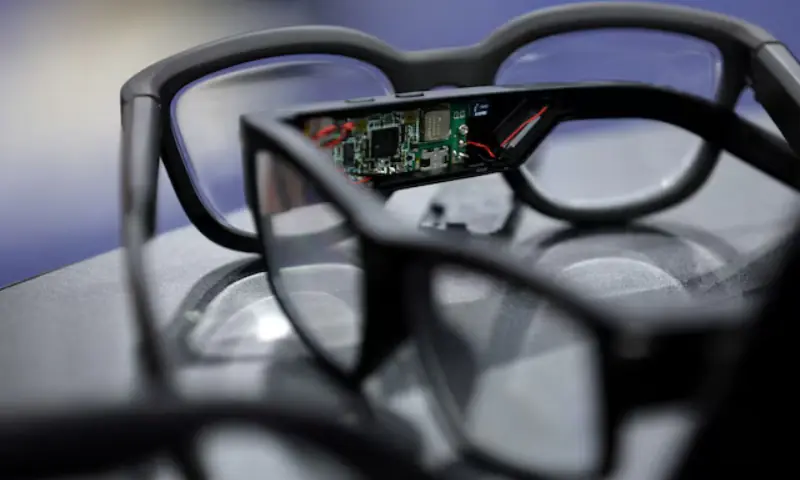
LAHORE: The Punjab government issued an order on Tuesday banning the use and sale of camera-enabled smart glasses and miniature cameras “disguised as everyday objects” for 30 days.
The restriction was notified in an order by the Punjab Home Department secretary in exercise of powers conferred under section 144 of the Code of Criminal Procedure, 1898.
“No person shall wear or operate ‘camera-enabled smart glasses with hidden recording ability’ or ‘miniature cameras with recording ability disguised as everyday objects such as pen, keychain, etc.’,” the order said, adding that the restriction excluded laptops, handheld tablets, mobile phones and terminal equipment approved by the Pakistan Telecommunication Authority.
In addition, the government restricted retailers, wholesale dealers, traders and distributors from “selling or offering these devices for sale, online or off the shelf”.
The order said that it had been reported that the unrestricted use of these glasses and disguised cameras — capable of “capturing, processing and transmitting data in the form of speech, images, videos and sound” — in Punjab could pose a “serious risk” to public order, individual privacy, particularly the integrity and dignity of women and children; security of sensitive data and installations; and institutional integrity.
It named airports, examination centres, secure government establishments, healthcare facilities, shopping malls, court premises and public places as particular areas of risk.
The order also noted that the use of such devices were deemed to “create an imminent apprehension of secret recording, breach of privacy and security, or unauthorised transmission of protected information”.
“Immediate preventive action is necessary to ensure public safety, integrity and dignity of persons particularly women and children, and the maintenance of order within the province,” it stated.
The order said the ban was being enforced with immediate effect and would remain in force for a period of 30 days unless withdrawn earlier. It was also specified that “authorised law enforcement personnel” would be exempt from the restriction.
The ban comes a day after the Punjab government announced its plan to impose the restriction.
Amid concerns about the misuse of such devices, the Lahore High Court (LHC) has also been seized with a public interest petition that challenges the unregulated import and sale of camera and mic-equipped smart glasses, citing threats to people’s privacy, dignity and national security.
Meta in particular has faced pushback for its AI-powered smart glasses, with critics dubbing the eyewear as “pervert glasses”. And while it has not officially listed Pakistan as a market, the petitioner’s counsel in the case before the LHC has contended that its glasses are openly sold online and in shops in Lahore.
Taking up the plea on Thursday, the LHC directed the federal government to forward a summary to the federal cabinet regarding the unregulated import and sale of smart glasses.
ISLAMABAD: The prime suspect accused of defrauding a 20-year-old student, who died allegedly by suicide, was killed after being shot by his accomplices in Islamabad on Tuesday, claimed police.
Laiba Ijaz, a student at International Islamic University, was said to have been defrauded of Rs5 million, which she had paid to move to the United States for further studies. An agent was accused of handing her fake travel documents.
The case drew the government’s attention, with Prime Minister Shehbaz Sharif directing the police to arrest the suspect. Subsequently, he and two of his female accomplices were picked up during separate raids in the federal capital.
According to the Islamabad police spokesperson, the prime suspect sustained injuries when his accomplices opened fire on cops in the jurisdiction of Ramna police station on Tuesday.
The spokesperson said the main suspect has shared information about another suspect, and a police team was taking him to track down the second suspect. It was then that four of the main suspect’s accomplices, who were on two motorcycles, “opened indiscriminate fire on the police party in an attempt get the main suspect freed”, the spokesperson added.
The main suspect was injured in the firing while the police team remained safe “due to bulletproof jackets and protective measures”, the spokesperson said.
The injured suspect was taken to a hospital, where he succumbed to his injuries, he added.
Search operations were underway for arrest of his other accomplices, the spokesperson said.
The case
A case following Ijaz’s death was registered at the Ramna police station under Sections 322 (unintentional murder) and 34 (acts done by several persons in furtherance of common intention) of the Pakistan Penal Code.
Another separate case was registered by the Federal Investigation Agency (FIA) on a complaint filed by Ijaz’s maternal uncle under provisions relating to cheating, abetment and immigration-related fraud.
According to the FIA, the main suspect had allegedly obtained millions of rupees from Ijaz’s family with the help of a female accomplice and by misrepresenting his identity and professional status.
The money was allegedly taken on the pretext of securing employment for her brother and arranging her admission to Harvard University in the US. The suspect was accused of giving Ijaz fake travel documents.
LAHORE: The National Cyber Crime Investigation Agency said on Tuesday that a prime suspect in a case involving the sale of counterfeit US postage stamps had been arrested in Lahore.
The US Attorney’s Office of the Southern District of Florida had identified the suspect as a 33-year-old from Khanewal. It said in a statement last month that he was accused of operating “an unauthorised website that allegedly sold more than five million counterfeit US postage labels”, causing more than $126 million in losses to the US Postal Service
NCCIA’s Lahore Zone Additional Director Atif Ameer announced his arrest at a press conference, saying that the counterfeit postage labels were sold over a period of three years.
He said the suspect operated a website — LabelsBank.com — from August 2023 to September 2026 and used it to market and sell counterfeit US postage stamps online.
“More than five million stamps were sold through the website at a price of around $2 per stamp. Based on the alleged volume of sales, the total value of the transactions has been estimated at approximately Rs35 billion,” he said, adding that the agency also focused on the financial channels used to receive and move proceeds from the business.
Money trail
Flanked by Lahore NCCIA Deputy Director Waqas Saeed, Ameer said that 16 bank accounts had been used in the scam. Seven of the accounts were operated by the suspect, five by his brother, two by his wife, and one each by his sister and aunt.
The NCCIA officer said the agency had expanded the investigation across several parts of the country.
“Eight special teams had been formed in Punjab, Islamabad and Sindh to trace the suspect and investigate the network,” he said and added the teams conducted raids at 35 locations and questioned 47 people as part of the investigation.
“Investigators also employed digital and forensic techniques to establish the suspect’s movements and identify people associated with the operation.”
Ameer said that investigators analysed 122 call-data records, 50 IMEI-tracking reports and audio and video recordings from 120 cameras.
“Artificial intelligence and other modern technological tools were also used during the investigation. A locator operation continued for 10 days as investigators attempted to establish the suspect’s whereabouts and trace his activities,” he said.
The NCCIA said the major focus of the investigation was the financial trail generated by the online sale of the counterfeit stamps.
“We are examining transactions conducted through the 16 bank accounts and attempting to determine the flow of funds between the accounts allegedly belonging to the suspect and his relatives.
“The involvement of family members is also being examined as part of the investigation, particularly the alleged use of their bank accounts in connection with the online business,” the additional director said.
He said the role of other individuals in operating the website, processing orders, receiving payments or distributing the counterfeit stamps was also being probed.
“Investigators are also working to establish the full scale of the operation and verify the volume and value of the transactions,” he said.
ISLAMABAD – Sindh government expands competitive exam opportunities as age limit rises to 33 in relief for those looking to enter service after age of 30.
PPP led government announced major changes to Sindh Public Service Commission (SPSC) rules, offering fresh opportunities to aspiring candidates by raising the age limit, increasing the number of examination attempts and lowering the minimum passing threshold for the Combined Competitive Examination (CCE) 2026.
Sindh Cabinet approved the reforms during a meeting chaired by Chief Minister Murad Ali Shah at the CM House, according to the provincial government spokesperson.
Under new decisions, the maximum age limit for candidates appearing in the CCE has been increased from 30 to 33 years, giving older candidates additional time to compete for government positions.
The cabinet also increased the number of permissible attempts from three to five, allowing candidates more opportunities to clear the competitive examination.
The minimum passing threshold for CCE 2026 has been reduced from 40% to 33%. The decision lowers the required passing score by seven percentage points for the upcoming examination. The provincial government has also approved the introduction of computerised testing for examinations consisting of a single paper, marking a shift towards technology-based assessments under the SPSC system.
The reforms are expected to provide greater flexibility to candidates preparing for provincial competitive examinations, particularly those who previously faced age restrictions or had exhausted their permitted attempts.
Meanwhile, the standard age limit for Punjab PMS and federal CSS examinations is 21 to 30 years, with eligible candidates receiving relaxation up to 32 years. Punjab PMS candidates can benefit from a special relaxation for 2026 and 2027, while federal CSS candidates must meet specified eligibility criteria for the two-year concession.
ISLAMABAD – Pakistan’s new auto policy could bring an additional financial burden for buyers of high-engine-capacity vehicles, with the government proposing a 10% Automotive Development Levy on cars above 2,000cc and a 2% charge on vehicles over 1,000cc.
The draft policy, approved by Prime Minister Shehbaz Sharif, proposes introducing the levy on imported as well as locally assembled or manufactured vehicles, according to sources cited by ProPakistani.
Under proposed framework, the levy rate would vary according to engine capacity and vehicle category, with larger passenger cars facing the highest proposed charge. However, smaller cars and several other vehicle categories would remain exempt. Cars with engine capacities below 1,000cc would attract no levy, while two-wheelers, three-wheelers and agricultural tractors would also fall under the zero-rate category.
The draft sets 2% levy on passenger vehicles classified under PCT 87.03 with engine capacities between 1,001cc and 2,000cc. For cars exceeding 2,000cc, the proposed rate rises to 10%. The policy would also extend the proposed 2% charge to several commercial vehicle categories, including prime movers, except those used for agricultural purposes, trucks, light commercial vehicles (LCVs), buses and vans.
Could Car Prices Rise Under the New Policy?
The proposed levy could affect the cost of vehicles covered by the new framework, although its actual impact on buyers will depend on how the charge is calculated and implemented.
The draft does not mention final calculation method or effective date. These details will be crucial in determining how the levy translates into costs for imported vehicles and cars assembled or manufactured in Pakistan.
For now, the proposed rates remain part of the draft auto policy. The final implementation framework will determine when the levy takes effect and how it applies to the specified vehicle categories.
MIRANSHAH: An additional station house officer (SHO) of the Miranshah police station was martyred in firing by unidentified individuals near Miranshah Bypass Road in in Khyber Pakhtunkhwa’s North Waziristan district on Tuesday, police said.
District Police Officer (DPO) Sajjad Hussain confirmed the details to Dawn, saying that additional SHO Meera Khan was targeted when he was on duty.
“He sustained multiple bullet wounds and succumbed to his injuries,” the DPO said.
Police said a search operation was launched into the area following the incident to trace the attackers. An investigation has also been initiated into circumstances surrounding the incident.
DPO Hussain said the morale of the police force remained high and law enforcers were determined to track down Khan’s attackers.
KP has been witnessing terrorist attacks and security challenges for a long time, including attacks on police personnel.
According to a recent report from the Centre for Research and Security Studies, Pakistan recorded a sharp 83 per cent increase in violence-linked fatalities during the third quarter of 2026, reversing a declining trend reported in the first and second quarters as terrorism and counter-terrorism deaths surged nationwide.
Balochistan and KP remained the epicentres of violence, jointly accounting for 98pc of all fatalities during the period. Balochistan recorded 829 deaths, nearly 59pc of the national total, while KP reported 556 fatalities, accounting for more than 39pc.
On Oct 7, seven policemen were injured when terrorists attacked a police checkpost in Kohat. Later, an official told Dawn that the attack was repulsed, and the injured cops were safe.
It was a day after four Federal Board of Revenue officials were martyred in firing by unidentified men, while a separate attack on a highway traffic police vehicle left a police official martyred and another injured in Dera Ismail Khan.
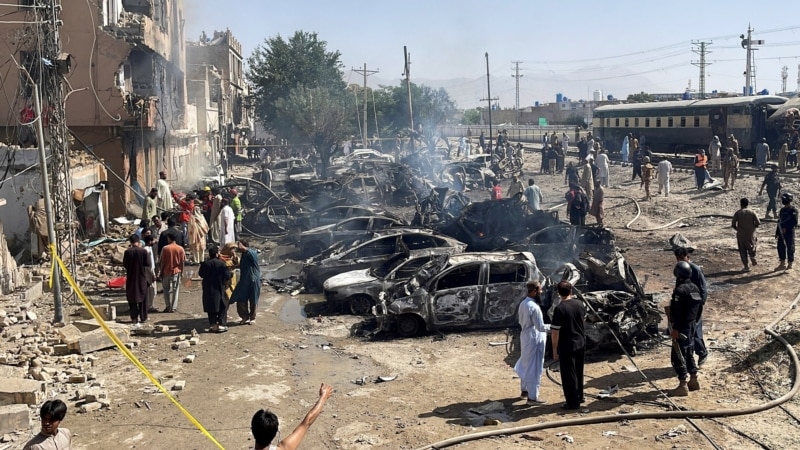
On Sept 27, 14 people, including two rescue officials, were martyred and 35 sustained injuries after a suicide bomber rammed an explosive-laden vehicle into a police checkpost in and then targeted an ambulance taking bodies to hospital in DI Khan.
On Sept 18, an explosives-laden vehicle detonated near a mosque in Kohat Police Lines, following which terrorists stormed the compound and attacked police facilities. The attack resulted in the martyrdom of 17 policemen and six civilians.
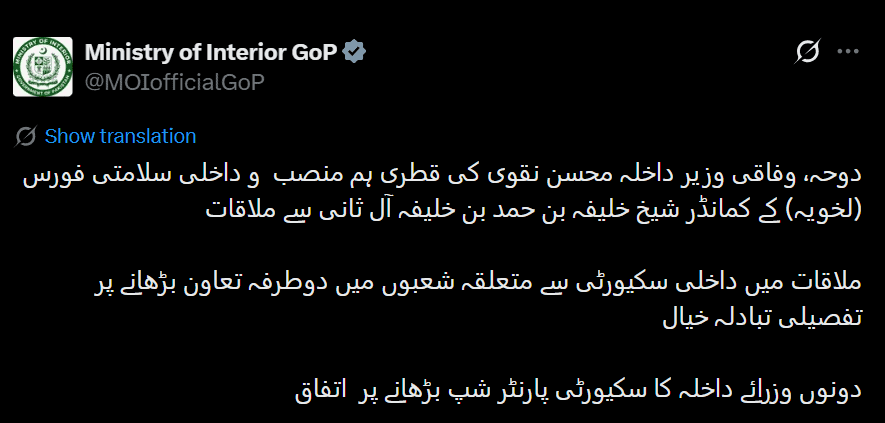
TEHRAN – Pakistan Chief of Defence Forces Field Marshal Asim Munir met Iranian President Masoud Pezeshkian in Tehran, holding high-level discussions alongside Pakistan’s Interior Minister Mohsin Naqvi, according to Iranian media.
The meeting brings together senior leadership from Pakistan’s military and interior security establishment with Iran’s president at a time when bilateral engagement and regional security remain important to both neighbouring countries.
مسعود پزشکیان، رئیسجمهور ایران، با عاصم منیر، فرمانده ارتش پاکستان، و محسن نقوی، وزیر کشور این کشور، در تهران دیدار و گفتوگو کرد.-رسانههای ایران https://t.co/jic8FbpNOL
Pezeshkian held talks with Munir and Naqvi in the Iranian capital. However, details of the discussions, including the specific issues raised and any decisions reached, were not immediately available in the reported account.
Asim Munir’s reported fifth visit to Iran also puts the spotlight on continued high-level engagement between Islamabad and Tehran. His interactions with Iranian leadership are significant given the two countries’ shared border, security concerns and longstanding interest in maintaining regional stability.
Pakistan and Iran have repeatedly emphasised the importance of cooperation on border security, counterterrorism and bilateral relations. The latest meeting could provide another opportunity to discuss these priorities, although its specific agenda and outcomes have yet to be confirmed.
LAHORE: A Multan court on Tuesday granted police three-day physical remand of a suspect accused of killing a 15-year-old boy in the city.
The suspect has been accused of hitting the victim, who used to work for him, with his car. The suspect was arrested yesterday and presented before Judicial Magistrate Saadia Aslam on Tuesday.
Police requested the judge for the suspect’s 14-day physical remand for investigation. However, the judicial magistrate granted them his three-day remand.
Later, Multan City Police Officer (CPO) Akhtar Farooq said while speaking to the media that raids were being conducted for the arrest of a second suspect.
“We all are in deep pain,” the CPO said, adding that the orphan boy had been “subjected to barbarity”.
The CCTV footage of the incident shows a boy running on the road after spotting a car. The car is seen swerving and chasing the boy, eventually hitting him. The boy, who fell, then rams into the gate of a nearby house and dies on impact.
A case has been registered on the state’s behalf at Multan’s DHA police station.
The first information report (FIR) names two suspects and invokes Sections 302 (intentional murder) and 34 (acts done by several persons in furtherance of common intention) of the Pakistan Penal Code.
According to the FIR, the teenage boy had working for the suspects and was being trained as an electrician. His cousin told police that the boy had reportedly faced violence and threats by the suspects, the FIR said, adding that the 15-year-old was fleeing when the suspects pursued him in a car and hit him.
Police arrested one of the suspects while the other escaped, the FIR stated. It added that their vehicle had been taken into custody.
PESHAWAR: The Peshawar High Court (PHC) on Tuesday sought replies from the Khyber Pakhtunkhwa government and senior police personnel, including the inspector general (IG), regarding non-functional provincial chief executive Sohail Afridi’s detention.
Afridi has not been seen since the imposition of governor’s rule and emergency in his province on Oct 11. His whereabouts remained unknown on the day governor’s rule was imposed and a federal minister confirmed a day later that he and some of his cabinet members were in preventative custody.
The PTI has also alleged the detention and arrests of several of its other members, including lawmakers and ministers. Their whereabouts have not been disclosed by the government so far.
Multiple pleas have been filed in the PHC in this connection, and a bench comprising Justice Syed Arshad Ali and Justice Farah Jamshed fixed them for hearing on Nov 3, when the respondents were told to submit their replies.
Apart from Afridi’s detention, the petitions pertain to the disappearance of KP Assembly Speaker Babar Saleem Swati, MNAs Junaid Akbar and Dr Amjid Ali, provincial minister Amjid Ali Khan, MPAs Ikramullah and Aurangzeb Khan, former chief minister of Gilgit-Baltistan Muhammad Khalid Khursheed and several other PTI leaders.
Afridi’s brother Muhammad Aamir filed one of the petitions, alleging that Afridi was “abducted” from the Chief Minister’s House on the night that the emergency was imposed in the province. He had approached the PHC last week.
Aamir sought directives for the respondents, including the KP IG, the Peshawar capital city police officer (CCPO) and others to immediately take all lawful and effective measures to trace and recover his brother.
He also sought that if Afridi was found to be in custody, the PHC order that he be produced so that the legality of his custody could be examined in accordance with Article 199(1)(b)(i) of the Constitution.
The article states that a high court may direct that a person in custody within its territorial jurisdiction be brought before it, “so that the court may satisfy itself that he is not being held in custody without lawful authority or in an unlawful manner”.
The petitioner sought directives for the respondents concerned to submit a comprehensive report regarding the whereabouts, present condition and legal status of Afridi, as well as the details of steps taken to trace and recover him.
He also requested the court to direct the CCPO to submit a detailed report concerning the alleged Oct 11 incident at the CM House — “including the circumstances in which the abductee was allegedly taken away, the security arrangements in place, the people present and the action taken immediately thereafter”.
Presenting his arguments at the hearing on Tuesday, Aamir’s lawyer, Bashir Vazir, claimed that on Oct 11, at approximately 2pm, Afridi was “illegally detained” in the CM House and later on was abducted from the premises, in the presence of the Peshawar CCPO, by “certain unknown armed and masked individuals”.
He contended that Afridi’s detention and disappearance was “wholly illegal, unlawful, without lawful authority and of no legal effect” as the respondents had “not disclosed any lawful order, warrant, abduction order or other legal authority” under which Afridi was taken into custody.
Swati’s cousin, Waqar Ahmad Khan, has also filed a similar petition. His lawyer is also Vazir, who requested the court at Tuesday’s hearing to issue directives for Swati’s recovery.
He claimed that on Oct 11 at approximately 7pm, Swati was “abducted” from the KP Assembly in the presence of the CCPO by “certain unknown armed and masked individuals”.
He stated that the precise sequence of events, the identities of the persons involved and the circumstances in which Swati was taken away required “immediate verification through the relevant official record, eyewitness accounts and other available evidence”.
In both cases, the petitioners prayed that the court direct the respondents to ensure the preservation and lawful examination of all relevant CCTV footage, security logs, entry and exit registers, duty rosters, vehicle access records and other material relating to the incidents.
Furthermore, they sought the registration of a first information report and a prompt, impartial and effective investigation into the alleged abductions, disappearances and detentions.
They contended that the whereabouts and present condition of PTI leaders needed to be immediately ascertained through lawful means, and requested the PHC to issue directives for their release if they were found to be in unlawful custody.
Junaid Akbar’s nephew, Nadir Shah, and Khalid Khursheed’s brother, Hanif Ullah, have also filed pleas, requesting the court to order the recovery and production of the two politicians.
In almost identical petitions, they challenged their “abduction” on the night of Oct 11.
Ya se ha desatado el caos a la hora de investigar qué está ocurriendo exactamente en relación con los últimos movimientos, sin duda turbios y vinculados a EE. UU., en territorio y aguas pakistaníes. Tras una evaluación inicial en Transition Protocol —que, como se reconoció, no proporcionó todas las respuestas necesarias—, profundizamos en un análisis mucho más exhaustivo respaldado por varias fuentes.
Lo que estamos observando en varios puntos clave de la conexión terrestre entre Irán y Pakistán, de extrema sensibilidad, no es un cierre total de la frontera, sino un delicado equilibrio de doble vía por parte de Islamabad entre la tremenda presión financiera de Washington y el salvavidas estratégico de Teherán.
Así que esta es la situación actual, combinando los datos contrastados con nuestras últimas consultas.
El punto clave: el detonante normativo fue una medida de sanciones bancarias, no solo la seguridad fronteriza.
Aunque los responsables provinciales de Baluchistán justificaron públicamente el sábado el cierre de dos puntos clave —Taftan y Gabd–Rimdan— alegando motivos de seguridad, lucha contra el terrorismo y lucha contra el contrabando, lo que más importa es el mecanismo exacto en torno a un memorándum emitido el viernes pasado por el Ministerio de Comercio pakistaní.
Dicho memorándum revocó de inmediato una prórroga, concedida el 3 de octubre, de la exención del Formulario Electrónico de Importación (EIF, en inglés) para mercancías importadas de Irán, y coincidió con la orden de Islamabad de cerrar el puesto de inmigración de la Agencia Federal de Investigación (FIA, en inglés) en Taftan.
Lo fundamental es que, sin la exención del EIF, los importadores pakistaníes deben tramitar las compras iraníes a través de los canales bancarios oficiales de Pakistán —lo que, por supuesto, las sanciones estadounidenses hacen absolutamente imposible.
Peyman Sanandaji, presidente de la Comisión de Transporte de la Cámara de Comercio de Teherán, confirmó oficialmente que ha sido el cumplimiento de las sanciones bancarias (el abandono del EIF) lo que ha paralizado las exportaciones iraníes a Pakistán.
El impacto inmediato en los pasos fronterizos oficiales fue considerable: están en peligro más de 4.000 toneladas de importaciones diarias de GLP iraní a través de Gabd–Rimdan. El expresidente de la Cámara de Comercio de Quetta, Ayoub Miryani, informó de que solo en Gabd–Rimdan hay más de 2.000 contenedores varados, con cientos de camiones de mercancías más atascados en Taftan.
¿Por qué está ocurriendo esto ahora? Debido a la nefasta coincidencia entre el pago del tramo del FMI del 7 de octubre que Pakistán tenía que abonar y la «Operación Economic Outcast» del Tesoro imperial estadounidense.
En el marco de la «Operación Economic Outcast», Washington dio a terceros países un «plazo definido para cerrar» las vías de suministro comerciales relacionadas con Irán o enfrentarse a la expulsión del sistema financiero estadounidense. A esto le siguieron las designaciones de la OFAC del 1 de octubre contra las redes ferroviarias terrestres e industriales de Irán y las medidas del 8 de octubre contra 17 petroleros de la «flota en la sombra».
Pero entonces, el 7 de octubre —solo nueve días antes de que el Ministerio de Comercio revocara la exención del EIF—, Islamabad llegó a un acuerdo con el FMI sobre la cuarta revisión de su Servicio Ampliado del Fondo para desbloquear 1.210 millones de dólares. Esto aún requiere la aprobación del Consejo Ejecutivo del FMI.
Por supuesto, no existe ningún documento público que demuestre una orden directa de EE. UU. o del FMI para cerrar las fronteras entre Irán y Pakistán. Pero fuentes de Islamabad subrayaron que mantener vigente una exención de instrumentos bancarios de duración indefinida antes de la votación del Consejo del FMI se había convertido en una vulnerabilidad insostenible para Pakistán en materia de sanciones.
Las fuentes de Islamabad insisten en que la medida vino acompañada de auténticas preocupaciones por el contrasabotaje y se coordinó discretamente entre Islamabad y Teherán (cursiva mía) para que la pausa no rompiera las relaciones bilaterales.
El portavoz del Ministerio de Asuntos Exteriores iraní, Esmaeil Baghaei, calificó públicamente la interrupción como una pausa temporal debida a «problemas técnicos» y «medidas de precaución».
Las fuentes oficiales pakistaníes, por su parte, insistieron en que el endurecimiento de los controles es una medida conjunta de lucha contra el terrorismo que refleja un «entendimiento mutuo» con Teherán tras un repunte de los atentados en Sistán-Baluchistán; las emboscadas en autopistas; y un ataque marítimo perpetrado el 11 de octubre contra embarcaciones de la Guardia Costera de Pakistán frente a Jiwani —que las autoridades pakistaníes atribuyeron a «actores extranjeros» que pretendían sabotear la mediación de Pakistán en el acuerdo de paz con Irán—.
Vuelta al mismo patrón de siempre: yihadistas salafistas utilizados como arma y manipulados por los sospechosos habituales.
La única llamada telefónica confirmada públicamente entre el viceprimer ministro Ishaq Dar y el ministro de Asuntos Exteriores Abbas Araghchi tuvo lugar el domingo 18 de octubre —dos días después del memorándum del 16 de octubre— y sus comunicados oficiales solo mencionan la diplomacia regional y la reunión de la OCI en Bagdad.
Por lo tanto, la coordinación previa a nivel de los ministros Dar y Araghchi y las detenciones específicas por sabotaje forman parte de nuestra propia información.
Exportaciones asimétricas de alimentos y rutas informales
En resumen, los productos siguen cruzando las fronteras. Islamabad ha permitido deliberadamente que sigan circulando los productos perecederos y las exportaciones alimentarias pakistaníes hacia Irán. Los productos perecederos esenciales —entre ellos, tomates, patatas y cebollas— siguen circulando, junto con los flujos tradicionales de petróleo y combustible, a través de la porosa frontera de 909 km.
El registro normativo explica el motivo: hace ocho meses, Pakistán promulgó una exención bancaria específica para diez productos alimenticios exportados a Irán por vía terrestre (en la que se enumeraban explícitamente el arroz, las patatas, las cebollas, los tomates, la carne y la fruta), además de productos farmacéuticos.
La Cámara de Comercio de Teherán confirmó el pasado sábado que, si bien las exportaciones iraníes a Pakistán se ven paralizadas por la normativa del EIF, las importaciones de Pakistán a Irán continúan, y el comercio informal de combustible y el comercio fronterizo a través de Baluchistán ya alcanzan un volumen estimado de entre 800 millones y más de 1 000 millones de dólares anuales al margen de los controles aduaneros oficiales.
Debe prestarse especial atención a los puertos de Gwadar y Karachi, así como a la arquitectura general de tránsito entre China e Irán. Según nuestras fuentes, el tránsito de terceros países y el tránsito entre China e Irán a través de Pakistán sigue estando protegido.
A nivel jurídico, un documento que detalla el tránsito de mercancías por Pakistán estableció seis corredores de tránsito terrestre designados que unen Gwadar, Karachi y Port Qasim con Gabd y Taftan para la carga de terceros países con destino a Irán bajo una garantía bancaria.
Además, una notificación de la Junta Federal de Ingresos del pasado mes de junio designó formalmente la estación de ferrocarril de Taftan como puesto aduanero terrestre, y los ministros iraníes y pakistaníes han promovido el corredor ferroviario para conectar China con Irán y Europa.
Sin embargo, siguen existiendo dos limitaciones operativas muy complicadas.
La modernización de la línea ferroviaria Quetta-Taftan sigue figurando oficialmente como una mejora prevista; y la designación por parte de la OFAC, el 1 de octubre, de la Compañía Ferroviaria de la República Islámica de Irán (RAI) tenía como objetivo explícito frenar el cambio de Teherán de las rutas marítimas bloqueadas al ferrocarril.
En resumen: se necesita una habilidad extraordinaria para enfrentarse al Imperio de la Piratería.
Islamabad ha llevado a cabo una maniobra clásica y calculada: revocar de forma visible la exención formal de importación del EIF en Taftan y Gabd-Rimdan para proteger su próximo tramo del FMI, de 1.210 millones de dólares, y a los bancos paquistaníes de las sanciones secundarias del Tesoro de EE. UU.
Y todo ello sin dejar de mantener vivas las exportaciones alimentarias paquistaníes, las vías fronterizas informales y los marcos de tránsito de terceros países con Teherán.
Que esto siga siendo un breve reajuste administrativo o se consolide en un cuello de botella más prolongado lo decidirán tres indicadores durante las próximas quince días:
Una notificación modificada del EIF o del trueque por parte del Ministerio de Comercio.
Despacho de aduanas independiente para la carga en tránsito por Gwadar/Karachi.
Movimientos de mercancías documentados a través del enlace ferroviario Taftan-Zahedan.
Que la lección quede grabada en las tierras raras para que todo el Sur Global reflexione: no hay forma de luchar contra el Imperio sin eludir su control del sistema financiero internacional.
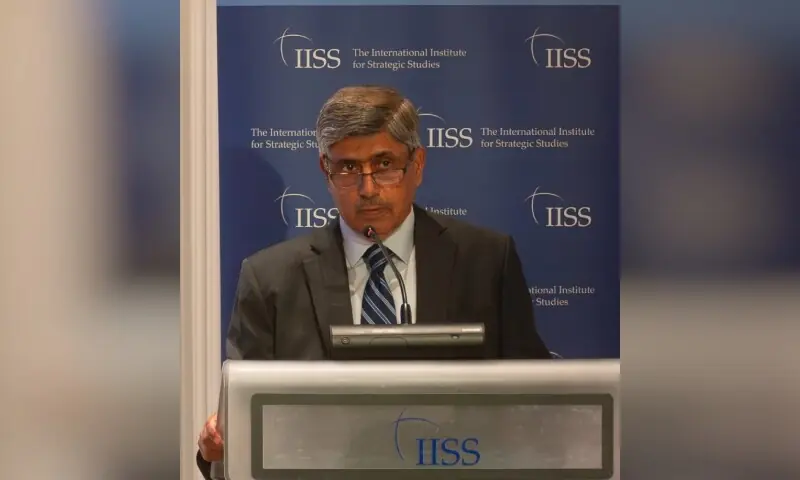
Adviser to the National Command Authority (NCA) and former director general of the Strategic Plans Division (SPD) retired Lieutenant General Mazhar Jamil has warned of the “risky” outcome for South Asia and beyond of a “dangerous ideology” shaping the Indian military mindset.
“Indian military thinking is being shaped by a dangerous ideology, which conflates mythology with national power. The outcome is very risky and delusional Indian military doctrines with a poor strategic sense of nuclear realities are endangering South Asia and beyond,” he said in his key note address at a workshop titled ‘Nuclear Deterrence and Strategic Stability in South Asia’.
The workshop, held last week in London, was organised by the International Institute for Strategic Studies, which shared a transcript of Jamil’s address late on Monday.
He began by saying that a strategic stability model for a region must take into consideration the political beliefs and strategic thinking of states, which formed the basis of policies.
And that shaped the strategic and security environment in the region, he explained.
“The political and strategic thinking of states, therefore, should prefer [a] political approach because military adventurism, hegemonic ambitions are highly risky and unaffordable in the South Asian nuclearised environment,” Jamil stressed, before specifically talking about India and Pakistan.
The two South Asian rivals, he said, had outstanding disputes, Kashmir being the core one.
“It needs to be resolved as per the United Nations Security Council resolutions. But, what we are seeing, on the contrary, is [an] Indian political approach of avoiding the resolution of conflict, because perhaps the Indian leadership believes it has no locus standi on Kashmir when it is presented on the multilateral forums,” Jamil said.
He added that India “tries to manage [the] Kashmir conflict with military violence within occupied Kashmir and through military aggression against Pakistan. This has not worked, and therefore Kashmir remains a nuclear flashpoint, seriously impacting the South Asian strategic and security environment”.
The security perceptions in South Asia had not evolved in a vacuum, Jamil continued.
“Indian revisionist and hegemonic political aspirations have [a] long history of Indian coercion and militant violence against all [of] its neighbours. Indian political ideology is based on its mythological concept of violence and revisionism, according to which South Asia, they believe — this traditional belief — that it belongs to [the] Hindu civilisation.
“And, not surprisingly, the country was given a dual name in the constitution, India, that is Bharat, clearly defining the strategic direction of the state to be Bharat,” he said.
Jamil said Bharat was essentially a “revisionist concept that is rooted in reclaiming [the] vast landmass of South Asia and its domination by Hindu civilisation”.
“Indian political forces, interestingly, do not shy away anymore in projecting what previous governments pursued covertly. Very surprisingly, the map of Mahabharat, the greater Bharat, as they call it, covering [the] entire landmass of South Asia, is on the display in the Lok Sabha. That’s the parliament of India, clearly giving the political direction to the state and the state organisations.
“So, no wonder, beyond [the] core nuclear diet of India–Pakistan, India’s conflict with all other countries serves as a perpetual driver of [the] evolving security dynamics in South Asia,” he added.
He also mentioned a recent “political transformation, led by the extremist Hindutva doctrine, that seeks to marginalise and delegitimise [the] non-Hindu population of the state, especially the Muslims”, in India.
“This has introduced an additional layer of complexity to the regional security environment. This marks a significant shift towards a nationalism, which is prejudiced by extreme theological principles,” Jamil said. “So, what we see is that we have a nuclear-armed neighbour whose political and strategic thinking is subordinated to a revisionist, mythological outlook with an overconfidence to subdue its neighbours. This dangerous political philosophy has trickled into the Indian political, strategic, organisational and even societal culture.”
The NCA adviser went on to say that this mindset had also, “unfortunately, penetrated deeply into Indian military thinking”.
Two diametrically opposing strategic approaches
Continuing his criticism, Jamil said it seemed that the Indian leadership was “frozen in time and is unable to break the shackles of history”.
“Indian political- and mythological-laced stubbornness is not allowing India to realise three very fundamental but significant conclusions and lessons,” he said, adding that those lessons were vital for strategic stability in South Asia.
He said the first of those lessons was that conflicts outlasted military adventurism and wars, unless they were resolved politically.
“The resolution of the Kashmir conflict, therefore, needs a political approach and dialogue to achieve stability at [the] higher political planes,” he asserted.
The second lesson, he said, was that any military misadventurism between two nuclear powers could only escalate the crisis to undesirable consequences and could not serve any purpose to the policy.
In this connection, he added that the Indian leadership needed to understand that it “cannot dictate its unjustified and illegal policy objectives through military aggression to another nuclear power”.
Moving on to the third lesson, Jamil said it was “pivotal to the crisis dynamics of South Asia”. He then cited military scholar Carl von Clausewitz, who Jamil said had warned that “war is the realm of uncertainty and escalation is really a control ladder”.
Elaborating further, he said: “War is the realm of uncertainty and the lesson from the history of warfare and theory alike is clear. Wars that begin with confidence and control often end with the realisation that control was illusory.
“In a nuclearised environment of South Asia, that realisation may come too late to manage safely, if [the] Indian policy of provocation with [a] false sense of achieving escalation domination continues.”
Resultantly, he said, “what we are seeing in South Asia are two diametrically opposing strategic approaches, directed by the political ideology of India and Pakistan […] which define the strategic and security environment of South Asia”.
The Indian strategic approach, he said, sought political and military dominance to be a “regional hegemon with a revisionist political thinking”.
Whereas Pakistan’s strategic approach was directed at the resolution of conflicts through a political process with shared prosperity and to defend the sovereignty with strength against a “regional bully”, he added.
‘Irresponsible nuclear behaviour’
He then shared his views on how the global geopolitical environment and emerging destructive technologies were impacting the strategic stability of South Asia.
“To me, there are three major outcomes of [the] contemporary global strategic environment that have influenced [the] Indian leadership’s strategic thinking and behaviour,” he said.
He said first of those outcomes was that in the Asia-Pacific balance-of-power struggle, India presented itself as a net security provider, to exploit this geopolitical competition for its own global power-projection ambitions.
“The US and Western powers did not dig deep into the actual political motives and capacity of India, [and] rather were too quick to grant this status to India. This, however, gave India a false sense of hegemony in the region,” he said.
The second outcome, Jamil said, pertained to the support by Indian technology partners and, “very strangely, also allowing India to get a Nuclear Suppliers Group waiver, in spite of its irresponsible nuclear behaviour”.
“Resultantly, India, now, is running one of the fastest-growing nuclear and missile programmes. This has been done with no regard and concern to arms control, a key factor in the strategic stability for the region. So, we now see India developing intercontinental ballistic missiles and submarine-launched ballistic missiles to reach the entire globe, with eight reactors outside International Atomic Energy Agency (IAEA) safeguards.”
Pointing out that India was not a party to the Treaty on the Non-Proliferation of Nuclear Weapons, he said its reactors outside IAEA safeguards “are operating as a potential source of fissile material for nuclear weapons”.
“From the nuclearisation of South Asia in 1974 to the nuclearisation of the Indian Ocean by Bharat speaks of its global power ambitions. I think what [we] should now worry about is this ambitious and revisionist state reaching to most of their capitals with no restraints and transparency, even to its own technology partners,” Jamil said.
He said the third outcome was about the policy of appeasement by “certain powers that has made India think that its exceptionalism will always be acceptable to the world”.
“Indian propaganda and [its] disinformation campaign was accepted without scrutiny and responsibility. No questions [were] asked to India about its human-rights violations in Kashmir and against minorities, where state institutions and Hindu extremists [are] conducting heinous crimes as a state policy,” he said, adding that it was only a matter of time before internal uprising in India-occupied Kashmir boiled over.
“That will have a serious impact on the security and stability of our region,” he warned.
In parallel, he said, India’s access to advanced technologies, space-based capabilities, dual-use weapons systems were also impacting strategic stability. “Dual-use platforms with precision-guided systems have blurred the lines between conventional and nuclear technologies, making it more dangerous for South Asia, due to its geographical proximities and also the sensitivities”.
“This also has to be seen against the backdrop of the irresponsible behaviour of India. The case in point is the intentional BrahMos missile attack on Pakistan on 9 March 2022. Strangely, it took India 48 hours to tell its nuclear neighbour about this incident,” Jamil recalled.
He added, “While India claimed this to be an accident, it speaks volumes about the dysfunctionality of Indian command-and-control systems, and maybe the presence of some rogue elements in their organisation, because India never shared the findings of [its] investigations for [the] sake of transparency and building some trust.”
Likewise, the launch of dual-capable BrahMos missiles during the four-day military conflict between Indian and Pakistan in May 2025 “was a deliberate act of provocation that could have caused catastrophic miscalculation”, Jamil said.
“So, it complicates the regional security dynamics, which already lacks institutionalised confidence-building measures and an arms-control mechanism aligned with the emerging technologies.”
Crisis management
Jamil also discussed the “crisis behaviour” of Pakistan and India in the 2019 and 2025 crises, saying that while the crisis management mechanism was vital for stability, responsible behaviour of leadership remained “the spirit and the key” to its success.
In the 2019 crisis, he pointed out, Modi had bragged at an election rally that India was “not storing nuclear weapons for Diwali”. The open threat was followed by the prime minister called the night of Feb 27, 2019 “Qatal ki Raat” or “Night of Slaughter” — “basically, boasting that India could have struck Pakistan with missiles to inflict huge human casualties”, he said.
“Such rhetorics and nuclear sabre-rattling is inconceivable during the crisis, and that too from the highest leadership of [a] nuclear state.”
Similarly, in May 2025, Indian leaders rushed to blame Pakistan for the April 22 deadly terror attack in Pahalgam without evidence or waiting for an investigation, he said. India then launched a military offensive despite Islamabad calling for an independent investigation into the incident.
Jamil said that India’s strategy aimed for “escalation domination” and that it planned to intimidate Pakistan via sheer force and the tempo of the operation; however, “Indian planners closely underestimated Pakistan’s resolve and capability”.
“The crisis of India’s making could have taken South Asia to the brink of nuclear catastrophe, saved only by the strategic restraint of Pakistan,” he stressed.
He added that Indian leadership had dismissed Pakistan’s nuclear deterrent as “mere nuclear bluff” and boasted about being able to “break Pakistan apart”. He emphasised that when “rhetorics and confidence” became policy, blunders were likely.
On the other hand, he said, Pakistan’s retaliation was not impulsive but rather had clear political direction and strategic restraint, denying India the space to “normalise coercive conventional aggression”.
He added that Pakistan made the responsible choice not to escalate and to agree to a ceasefire, noting, “I think in all fairness, India owes a thanks to (US) President Trump.” However, he highlighted that this responsible behaviour was being “deliberately misrepresented” by India as a bluff.
Strategic landscape post-2025
Jamil stressed that in the wake of the May 2025 conflict, there was an increased risk of escalation in the region. He highlighted the “revisionist agenda” of Modi that had “dangerously enhanced the conflict profile” of South Asia by holding the Indus Waters Treaty in abeyance, adding to the flashpoint of Kashmir, and continuing with “threats and compellence to another nuclear power”.
He added that India also supported terrorist organisations such as the Tehreek-i-Taliban Pakistan (TTP) and Balochistan Liberation Army (BLA), “exporting terrorism as an instrument of policy” to engineer instability in Pakistan.
“The space is shrinking between Indian aggressive posturing and Pakistan’s restraint,” he said.
Jamil also pointed out an assessment by a think tank, SIPRI, that India had mated some nuclear warheads with submarine-launched ballistic missiles and conducted sea-based deterrence patrols, without pre-notification.
“While Pakistan remains committed to peace, strategic stability and responsible nuclear stewardship, it cannot ignore these dangerous escalatory steps,” he said. “Pakistan reserves the right to undertake all appropriate measures to safeguard its national security.”
He emphasised that “the perpetual instability in South Asia can only be addressed when [the] strategic and political discourse of India takes a direction of political engagement and [the] resolution of conflicts, instead of political and military dominance”.
He called on India to shun the policy of supporting terrorist organisations such as the TTP and BLA, noting that Pakistan had presented “irrefutable evidence” of Indian state support to these organisations to the international community and the UNSC. He also called for the international community to hold India accountable for its involvement in supporting terrorism.
“It should be realised that the restraint and strategic patience of Pakistan has its own thresholds,” Jamil stated, adding that “in any future military aggression, the aggressor will have to bear a heavy cost”.
He stressed Pakistan’s readiness to move towards a political dialogue to resolve conflicts, including that of Kashmir, as a responsible nuclear state. He added that Pakistan offered to establish a robust crisis management mechanism as a first step towards this.
“Bharatiya leadership should not be allowed to hold hostage the welfare of two billion people of South Asia, in favour of their hegemonic and delusional revisionist aspirations,” he concluded.
LAHORE – National Cyber Crime Investigation Agency (NCCIA) arrested highly wanted suspect accused of running alleged Rs35 billion online fraud involving the sale of more than five million counterfeit US postage stamps through a website operating for over three years.
The suspect, identified as Faheem Akram, allegedly used a website named Labels*Bank*com from August 2023 to September 2026, selling fake US postage stamps for $2 each, according to investigators.
The case gets attention to the scale of the alleged operation, which investigators say involved multiple bank accounts linked to the suspect and his family members.
According to the investigation supervised by NCCIA Lahore Zone Additional Director Atif Amir, a total of 16 bank accounts were allegedly used to facilitate the operation. The accounts included seven belonging to the suspect, five to his brother, two to his wife, and one each to his sister and maternal aunt.
Investigators are examining the financial transactions conducted through these accounts to establish the movement of funds and determine the possible involvement of other individuals. A case has been registered under FIR No. 246/2026, while further investigations are underway.
To track down the suspect and investigate the alleged fraud, the NCCIA formed eight special teams across Punjab, Islamabad and Sindh. The teams carried out 35 raids at different locations and questioned 47 individuals as part of the investigation. Authorities also deployed advanced technological tools and artificial intelligence to analyse digital evidence and trace the suspect’s movements.
The investigation included an examination of 122 call data records, 50 International Mobile Equipment Identity (IMEI) tracking reports, and audio and video recordings obtained from 120 cameras.
Investigators conducted dedicated 10-day locator operation to establish the suspect’s whereabouts. The operation ultimately led to Faheem Akram’s arrest, according to the NCCIA Lahore Zone. The agency is now questioning the suspect to determine the full scope of the alleged operation, including how the counterfeit stamps were marketed and sold online, how payments were processed, and whether other individuals were involved.
NCCIA Lahore Zone said investigations into the case were continuing, with a focus on digital evidence, financial records and possible links to other individuals.
The agency, under Additional Director Atif Amir’s supervision, continues to pursue cases involving cybercrime, online financial fraud and other illegal activities conducted through digital platforms.
Increasing militant attacks along Iran's border with Pakistan by multiple armed groups have stoked fears of further instability in the two countries, both of which already face multifaceted threats of sectarian violence in addition to the broader repercussions of the conflict in the Middle East.
LAHORE – Pakistan’s insulin supply comes under renewed scrutiny amid reports of unavailability of Apidra, which raised concerns among diabetic patients, prompting health authorities to clarify that the disruption is limited to one brand rather than a nationwide shortage.
The clarification comes at critical time for Pakistan, where estimated 3-3.5 Crore adults are living with diabetes, making the country one of the most affected nations worldwide. Officials insist that alternative insulin products remain available, patients’ concerns have reignited questions about the reliability, affordability and long-term sustainability of essential medicine supplies.
Health ministry spokesperson Sajid Shah said Apidra, a rapid-acting insulin manufactured by Sanofi, is currently unavailable because of international supply constraints. He maintained that other insulin products continue to be accessible across Pakistan.
NovoRapid, manufactured by Novo Nordisk, and Humalog, produced by Eli Lilly, are available as alternative rapid-acting insulin analogues. Human insulin formulations and other insulin analogues are also reportedly available.
However, the distinction between a brand-specific disruption and a nationwide shortage offers little immediate reassurance to patients who depend on a particular prescription. Social media discussions and media reports, including coverage highlighting difficulties in Lahore, have drawn attention to the challenges some patients face when trying to obtain Apidra.
Doctors caution that patients should not switch insulin products independently. Different formulations can have varying effects on blood glucose levels, making medical guidance, appropriate dose adjustments and regular monitoring essential when changing treatment.
Recent estimates associated with the International Diabetes Federation’s Diabetes Atlas put the number of adults aged 20 to 79 living with diabetes in Pakistan at approximately 34 million to 34.5 million. By absolute patient numbers, Pakistan ranks behind China and India, while its age-standardised prevalence has been estimated at around 31.4%, among the highest worldwide.
Access to treatment can be even more difficult for families outside major cities, where specialised diabetes services and paediatric endocrinologists may be limited. The cost of ongoing medication adds another burden for low-income households.
Provincial initiatives, including diabetes screening and free-insulin programmes in Khyber Pakhtunkhwa, are among the efforts aimed at improving access. Nevertheless, the latest concerns underline the importance of ensuring that essential treatments remain consistently available.
The insulin issue has also revived concerns over Pakistan’s wider medicine supply chain. Last year, Pakistan Medical Association warned that at least 80 essential medicines were facing shortages, including treatments for diabetes, cancer and heart disease. PMA also warned of potential black-market activity, where shortages can make essential medicines more difficult to obtain and potentially more expensive.
PESHAWAR – The provincial adminitration in Khyber Pakhtunkhwa ordered the termination of all work-charge employees serving in the Khyber Pakhtunkhwa Housing Authority under its austerity drive.
The decision was formalised through official orders issued on October 19, 2026, directing immediate removal of all employees working under the work-charge arrangement.
Director General of the Housing Authority was instructed to initiate immediate action to discontinue their services in accordance with the applicable appointment laws and regulations. The move comes as the provincial government seeks to reduce financial pressure on public-sector institutions and enforce its austerity policy.
The department’s letter said the salaries of work-charge employees were being paid from the Housing Authority’s own resources, creating an additional financial burden on the organisation. The competent authority subsequently approved the termination of their services as part of the cost-cutting measures.
Under new directives, Director General issued a separate office order on the same day, instructing the relevant officials to relieve all work-charge employees of their duties with immediate effect. The order also requires the concerned officers to complete the necessary process and submit a compliance report to the Director General’s office.
The decision is set to affect all employees working at the Housing Authority on a work-charge basis, marking a significant workforce-related development amid the provincial government’s austerity measures.
Copies of the termination order have also been sent to the relevant officials, directors and the Secretary of the Housing Department for information and necessary action.
ISLAMABAD – Pakistan’s automobile industry is approaching crucial policy decision as Prime Minister Shehbaz Sharif prepares to review long-awaited Automotive and Auto Parts Manufacturing Policy 2026–31, with approval possible today if premier is satisfied with the proposed framework.
The proposed policy could reshape the country’s car market over the next five years, with major proposals covering automobile tariffs, locally manufactured parts, export growth, electric vehicles and fresh investment in the industry.
PM convened meeting to look into the proposed framework. A final decision could provide much-needed clarity to automakers and consumers who have been waiting for the government to announce its future direction for the sector.
Car Prices, Imports and Local Manufacturing
One of the key proposals involves gradually reducing automobile tariffs, a move that could change the competitive landscape of Pakistan’s automotive market.
Lower tariffs could potentially put pressure on vehicle prices by increasing competition, although the actual impact on consumers would depend on the final tariff structure, taxes, exchange rates and manufacturers’ pricing decisions.
The proposed policy also aims to strengthen domestic manufacturing by encouraging greater use of locally produced auto parts. The government’s broader objective is to help Pakistani manufacturers become more competitive and integrate local suppliers into international automotive supply chains.
For consumers, manufacturers and auto-parts businesses, the final policy could influence decisions ranging from vehicle purchases to future investment in production facilities.
The urgency surrounding the proposed framework comes after Pakistan’s previous automotive policy expired on June 30, 2026. The prolonged gap has created uncertainty for manufacturers, particularly those making decisions about production, investment and vehicle pricing without a clear long-term policy roadmap.
According to the report, the committee has recommended seven broad principles aimed at transforming Pakistan’s automotive sector. The proposed framework also includes export targets designed to expand the country’s presence in international markets.
Increasing exports would require local manufacturers to strengthen production capabilities, improve technology and meet international market requirements. The plan also seeks to encourage investment and increase local value addition, potentially creating greater opportunities for Pakistani auto-parts manufacturers to supply both domestic and international markets.
Stronger integration into global supply chains could help local businesses expand beyond the domestic market while improving the industry’s overall competitiveness.
EV Part of New Strategy
Electric vehicle adoption is another key area covered by the proposed policy. The framework aims to encourage investment and support the development of the local automotive ecosystem as the industry moves towards newer technologies.
Its implementation could influence future manufacturing priorities, the development of EV-related supply chains and the range of vehicles available in Pakistan. However, the scale and timing of these changes will depend on the final measures approved by the government.
The proposed reforms could have far-reaching consequences for Pakistan’s automobile industry, particularly if tariff reductions increase competition and the government succeeds in attracting new investment.
However, approval of the policy would not automatically guarantee cheaper cars. The impact on prices would depend on how the government implements the proposed changes and how manufacturers respond to the evolving market.
KARACHI: A judicial commission formed to investigate the circumstances and possible negligence in businessman Mir Raza Ali’s murder case has pointed out the police’s “epic failure” in their investigation.
The Sindh cabinet decided to make the report public during a meeting chaired by Chief Minister Murad Ali Shah earlier in the day. The judicial commission, which began its proceedings on Aug 28, held regular hearings to record statements of several individuals linked to the case.
“This case demonstrates an epic failure by the police in their investigation,” declared the 62-page report submitted by Sindh High Court’s (SHC) Justice Omar Sial, who had been heading the judicial panel.
“The police breached all required procedures, both knowingly and unknowingly, necessary to withstand judicial scrutiny and a successful prosecution,” the report stated.
While acknowledging that the initial police response when they were informed of the presence of a body was prompt, the report noted that subsequent events “left a lot to be desired”.
“It was a murder,” the report declared.
It explained that the bullet trajectory, the unusual location of the wound if it had been a self-inflicted injury, the “absence of blood, the state of the body, the principles of medical jurisprudence, acid burns and the anaesthesia detected in the blood all clearly excluded suicide as the cause of death”.
The commission determined that releasing the police findings before a proper investigation was “premature and fell short of professional standards”.
“Even if the death had been a suicide, the police should have established who was responsible for driving a young man to that point, including whether coercion, blackmail, or instigation was involved. They made no such effort.”
It said the police investigation “failed in its most basic duty: to establish the truth”.
It further observed that “incessant public criticism of the police created problems” as the police “went into a shell, completely broke down communication channels, and took a position based on ego rather than on cogent, solid reasons”.
The report pointed out specific issues with the police conduct: “Lack of leadership, seriousness, and supervision, and, in some cases, negligence by the senior officers. The handling of this case has been like a rudderless ship, not aware of its destination.
“Ranging from negligent to criminally negligent, inexplicable, casual, and unprofessional investigation.”
According to the commission, an active cover-up in the initial stages of the investigation cannot be conclusively ruled out. It noted that senior police officers swept clear investigative lapses under the carpet, without acknowledging them, addressing them, or even attempting to do so.
“Too many cooks spoil the broth. The proverb is applicable to this case as far as the police are concerned,” the judicial commission observed.
“Dozens of police officers – authorised and unauthorised – were involved in collecting evidence in this case, approaching and interrogating crucial persons, and in most cases not documenting it in any manner,” it said, adding that therefore, no officer was willing to take responsibility for the lapses.
The inquiry said there was a need to mitigate public speculation by an “honest and timely briefing on the investigation”, but this was not done, and the family or the public were not updated through official disclosures.
“The police did not follow the commission’s recommendation to appoint a focal person for this reason. As a result, public speculation further embarrassed the government and the police.”
Regarding the controversy over the reconstitution of a medical board formed for the exhumation of Ali’s body, the report said: “The overnight bureaucratic manoeuvring was a highly irregular, inexplicable, legally flawed overreach dictated entirely from the upper echelons of the Sindh Health Secretariat, more specifically by the secretary and special secretary, Health.”
It added that the Health Services director general, “being aware that he was not legally competent to form a medical board for exhumation, looked the other way”.
“The two gentlemen who directed the change in the board could not give a cogent reason for the abrupt change, making it extremely controversial, fueling public speculation, and embarrassing the Sindh government.”
Referring to an Aug 9 meeting held at CM House, which “drew considerable speculation and controversy”, the report said that “no ulterior motive can be inferred from this meeting”. The meeting was attended by Medico-Legal Officer (MLO) Dr Osama Sheikh, who conducted Ali’s first autopsy, the Karachi police chief and other senior officials.
Observations on officials
Listing its observations for certain police officials involved in the case, the judicial panel identified “criminal negligence” on the part of Station House Officer (SHO) Adeel Afzal of Ferozabad police station.
“Initiate a comprehensive inquiry into him, leading to dismissal from service. He should be suspended in the interim. He must also be questioned to determine whether he has facilitated the destruction of key evidence,” the report read.
It also found criminal negligence by Sub-inspector Shabbir Leghari, the first investigating officer (IO) in the case, and called for disciplinary proceedings against him and his suspension.
The report also determined criminal negligence of Inspector Ghaus, but did not recommend any action against him.
Regarding DIG Farukh Lanjar and Senior Superintendent of Police (SSP) Samiullah Soomro, the commission noted a “lack of leadership and supervision”.
“Overconfidence. Unprofessional conduct not befitting a medical professional. Must not be assigned medico-legal duties unless he has undergone at least two years of rigorous academic and practical training.”
The report said he was “possibly influenced” and called for the angle to be “conclusively determined”.
Suicide vs murder
The report also said a voice note provided by Alishaz Mushtaq to police was “one of the most suspicious parts of this case”. It said that Mushtaq and ASP Nida Junaid, “played a very important role in supporting the police narrative that the death was due to suicide”.
It said that the person Mushtaq named as his source did not corroborate the information he provided, raising suspicion regarding his conduct.
It further said that the WhatsApp messages Ali sent to Sarim Bin Tahir asking for Rs30m, which was “full of uncharacteristic grammatical errors and truncated spellings and read as acute panic”, suggested the deceased was being “blackmailed or threatened”.
It also noted that while CCTV footage showed Ali with a pistol on the night he was killed, this was “unusual”.
“All his close friends and associates told the Commission that Raza did not possess or use pistols. They said he would probably not even know how to handle one. Witnesses also vouched for his peace-loving, calm, and gentle demeanour. Why he took the pistol remained a mystery. The pistol, however, has not been found to date,” it said.
It further said: “The known financial distress was also not of such a nature that would lead a person to suicide. Ali’s behaviour, until the ride-hailing service dropped him off, did not suggest he was ready to take an extreme step for this reason.”
Recommendations
Suggesting the next steps, the judicial commission said accommodating the family’s request for a joint investigation team (JIT) was the “most viable path to mitigate ongoing reputational damage to the Government of Sindh”.
It recommended that a JIT be constituted under the leadership of Deputy Inspector General (DIG) Irfan Baloch to “balance the need for public accountability with preserving Sindh Police morale and reputation”.
The report said the team should “integrate senior representatives from the Inter-Services Intelligence (ISI), Intelligence Bureau (IB), Pakistan Rangers (Sindh), and the National Cyber Crime Investigation Agency (NCCIA) to ensure an impartial, comprehensive, and credible resolution.
“This extreme step is necessary to restore public trust and end speculation,” it stressed.
The commission contended that any subsequent police actions will inevitably face heavy public speculation, determining that the police department “bears responsibility for this profound trust deficit between itself and society”.
“Even an accurate conclusion or the apprehension of the true culprit is unlikely to be accepted by the public,” it added.
The report pointed out that the case could now “only be resolved through a rigorous, intelligence-based investigation as a “significant portion of physical evidence has been compromised”.
It called for the police to “transparently acknowledge and apologise for past operational lapses”, as well as immediately initiate formal inquiries against the responsible officers in light of the report.
While stating that it did not have investigative powers and that it was difficult to conclude conclusively that an active cover-up occurred, the commission noted that “certain inexplicable actions are difficult to justify and raise the possibility that one may have occurred”.
Therefore, it suggested that a high-level committee, preferably led by the Federal Investigation Agency (FIA), be constituted to initiate criminal action against any police officials it finds culpable.
The committee would inquire into “whether any of the police officials involved in this probe in the first 10 days” were in breach of sections 201 (causing disappearance of evidence of offence), 166(2) (public servant disobeying law, with intent to cause injury) and 218 (public servant framing incorrect record or writing with intent to save person from punishment) of the Pakistan Penal Code (PPC).
The judicial commission also called for initiating police reforms, particularly to address and modernise the investigation protocol.
It suggested forming a committee of “seasoned professionals” to “specifically address first response, crime scene handling, medico-legal dynamics, collection, safekeeping, and analysis of evidence, and recording the entirety of the investigation in written or digital form”.
While it proposed a three-month timeframe for the exercise, the commission said the Sindh government will make the final decision.
Another suggestion was to consider an increase in the investigation budget, with a protocol in place to monitor the fund’s use. The panel further suggested steps regarding training of investigators and enhancing the capacity of Crime Scene Units.
Panel formed to ensure implementation
The judicial panel’s primary mandate was to determine the facts and circumstances of the case; assess whether police and medico-legal investigations were impartial; identify professional negligence, misconduct, evidence manipulation, or cover-ups; review digital/forensic evidence; and recommend further investigation, forensic analysis, or legal/departmental action.
According to a handout issued by the Sindh chief minister’s spokesperson, the judicial inquiry report was presented in seven separate sealed envelopes.
It will be uploaded on the website of the provincial home department on Tuesday, while a copy will also be provided to the aggrieved family.
Further, CM Shah also constituted a three-member sub-committee to ensure the implementation of the report.
According to a notification issued by the Sindh government, the committee comprises Home Minister Ziaul Hassan Lanjar as convener, Local Government Minister Nasir Hussain Shah and Labour Minister Saeed Ghani.
The Sindh advocate general will provide legal assistance to the committee and the additional chief secretary of the Home department will provide secretarial support, the notification said.
The committee will oversee the implementation of the commission’s findings and will submit its recommendations to the Sindh chief minister “at the earliest”, and present them before the Cabinet in its next meeting, it added.
Senior Minister Sharjeel Inam Memon also took to X to announce that the report would be made public on Tuesday.
“The government of Sindh remains committed to transparency, accountability and ensuring that due process of law is upheld,” he said.
Last week, the commission handed over the sealed report to the provincial government after examining 49 witnesses during 15 hearings.
The inquiry report, along with associated documents, was handed over to the focal person of the provincial government and Home Department Additional Secretary Javed Ahmed Abro by the commission registrar, Abdul Majid, on the premises of the SHC.
After receiving the record, Abro told reporters that he would hand over the sealed report along with other records to the provincial government and it was the prerogative of the government to decide whether the inquiry report was to be brought into the public domain or otherwise.
In August, the provincial government formed the commission, which was tasked with making recommendations for further investigation and forensic analysis or legal/departmental action, and it was required to submit its findings and recommendations to the Sindh government within 30 days.
However, the commission had struggled to meet its deadline and sent an application last month to the Sindh government for an extension in its tenure till Oct 15. Therefore, the provincial cabinet granted an extension.
Besides examining 49 witnesses and available record, the commission had also sent questionnaires to Karachi police chief Azad Khan, head of current investigation team DIG Amir Farooqui and DIG East Farrukh Lanjar after dismissing an application by the aggrieved family to summon the senior police officers to testify before the commission.
The 25-year-old businessman and Institute of Business Administration graduate had gone missing on July 28 after leaving his home in PECHS and his body with gunshot wounds was found a day later in bushes in Gulistan-i-Jauhar’s locality.
Initially, the police built the case around suicide on the basis of the first autopsy, which indicated a bullet entry wound on the chest, and by pointing out business losses and money borrowed by the victim.
Police surgeon Dr Summaiya Syed had disputed the findings of the first post-mortem conducted by medico-legal officer Dr Osama Sheikh.
The second post-mortem report termed the findings of the first report “inconsistent” with suicide as the manner of Mir Raza’s death. It said the Exhumation Board was of the unanimous opinion that the death was caused by a gunshot wound to the back.
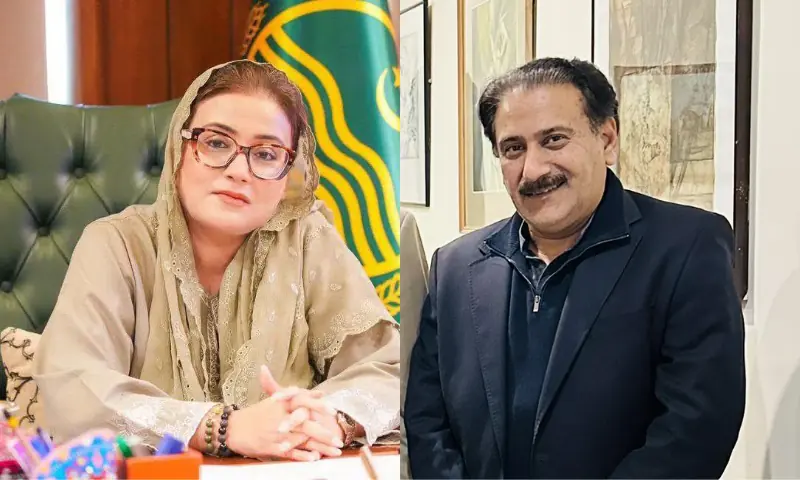
LAHORE: The Punjab Defamation Tribunal on Tuesday ruled in favour of Punjab Information Minister Azma Bokhari in a defamation suit against Punjab Assembly Opposition Leader Moeen Riaz Qureshi, ordering him to pay Rs3 million in general damages.
In January, Bokhari filed the defamation suit against Qureshi seeking damages of Rs800 million. She filed the claim against the opposition leader, alleging that he made “baseless and fabricated” accusations against her.
In a short order issued on Tuesday, the tribunal said that the counsel for both parties had concluded their final arguments.
“The claim of the plaintiff is hereby decreed up to the extent of general damages amounting to Rupees three million (Rs3,000,000),” said tribunal member Anjum Raza Syed in an order seen by Dawn.
However, the tribunal dismissed the minister’s claim for special and punitive damages.
Meanwhile, the PTI said in its statement that its MPA was told to pay Rs84m in damages.
Bokhari’s counsel argued that the defendant, Qureshi, had acknowledged making the remarks in question during a television programme but had failed to produce any evidence to substantiate the allegations.
The tribunal said a detailed judgment would be issued separately.
The information minister had filed the suit following allegations Qureshi levelled at the time of Khyber Pakhtunkhwa’s then-chief minister Sohail Afridi’s visit to the Punjab Assembly.
He had alleged that the provincial minister got 200 paid individuals into the assembly premises, and that the journalists who put questions to Afridi were her salaried employees.
‘Attempt to respond to criticism with fines’
Commenting on the verdict, Qureshi wrote on X: “The voice I raise in favour of the people’s rights, the supremacy of the Constitution, and Imran Khan cannot be silenced.”
He asserted that as the opposition leader, his duty was “not to flatter those in power but to question them, defend the rights of the people, and stand firm against every undemocratic action”.
“Remember! Dissent is the strength of democracy, not its weakness. Attempting to respond to criticism with fines cannot prove any stance wrong.”
In its statement, the PTI expressed its deep concern over the verdict, assailing the Punjab government for being “unwilling to tolerate even political criticism and dissent”.
It contended that the PML-N introduced the Punjab Defamation Act 2024 and used its majority to turn it into law, which it has now employed.
Noting that Qureshi had been attempting to present a resolution in the Punjab Assembly against the imposition of emergency in Khyber Pakhtunkhwa, PTI said the emergence of the verdict “raises questions about its timing and political implications”.
ISLAMABAD – Pakistan raised the alarm over what it describes as India’s increasingly aggressive nuclear posture, warning that the expansion of sea-based nuclear capabilities could push South Asia towards a potentially catastrophic conflict.
Lieutenant General (retd) Mazhar Jamil, an adviser to Pakistan’s National Command Authority (NCA) and former D.G of the Strategic Plans Division, questioned the credibility of India’s declared No First Use (NFU) nuclear policy, arguing that its evolving military capabilities warrant serious international scrutiny.
Addressing the 11th Track 1.5 workshop organised by the International Institute for Strategic Studies (IISS) and the Centre for International Strategic Studies in London, Jamil warned that developments involving India’s submarine-launched ballistic missiles could increase the risk of miscalculation during a military crisis.
Jamil argued that New Delhi’s continued efforts to strengthen its sea-based nuclear deterrent were inconsistent with the assurances conveyed by its NFU policy. He characterised the policy as a diplomatic façade, alleging that New Delhi’s actions pointed towards a more aggressive nuclear posture. His remarks have renewed attention on the nuclear rivalry between Pakistan and India, particularly following their intense military confrontation in May 2025.
Jamil cited assessments attributed to the Stockholm International Peace Research Institute (SIPRI) and other research sources, saying reports indicated that India had begun pairing nuclear warheads with submarine-launched ballistic missiles and conducting maritime patrols.
He warned that the combination of submarine-based nuclear weapons and limited advance notification of missile tests could complicate crisis management, increasing the possibility of misinterpretation and dangerous decisions during periods of heightened tension.
Submarine-launched nuclear weapons are particularly significant because they can operate away from established land-based installations, making it more difficult for rival states to assess their movements and intentions. Jamil argued that India’s development of longer-range missiles and acquisition of dual-use technologies were also affecting the strategic balance in South Asia.
Pakistan has repeatedly advocated a “No War Pact” with India, but continuing military competition between the two nuclear-armed neighbours has complicated efforts to establish lasting confidence-building measures.
While Jamil’s allegations reflect Pakistan’s security concerns, India’s nuclear doctrine and the operational role of its sea-based capabilities remain subjects of wider strategic debate.
Jamil urged the international community to reconsider the Nuclear Suppliers Group’s (NSG) 2008 exemption for India, which opened the way for international civilian nuclear trade despite India not being a signatory to the Nuclear Non-Proliferation Treaty (NPT). He argued that the exemption, coupled with assistance from international technology partners, had helped India expand its nuclear and missile programmes, raising questions about transparency, non-proliferation standards and regional security.
Jamil called for the waiver to be withdrawn, maintaining that India’s evolving strategic capabilities required a reassessment of the international arrangements governing nuclear cooperation.
The warning comes months after the most serious military confrontation between Pakistan and India in more than two decades, which brought the nuclear-armed neighbours into a dangerous cycle of strikes and retaliation.
ISLAMABAD – Pakistan and Qatar agreed to strengthen cooperation in internal security, signalling a renewed push to deepen bilateral coordination amid evolving regional challenges.
Federal Interior Minister Mohsin Naqvi and Qatar’s Interior Minister and Commander of the Internal Security Force, Sheikh Khalifa bin Hamad bin Khalifa Al Thani. The two officials held detailed discussions on expanding collaboration across various areas of internal security, with both sides agreeing to reinforce their partnership and broaden cooperation between their respective interior ministries.
Regional developments, peace and stability also featured prominently in the talks, as Pakistan and Qatar reaffirmed their commitment to closer coordination on matters of mutual interest.
The meeting concluded with an agreement to further strengthen the two countries’ security partnership, although no specific new agreements, operational measures or implementation timelines were announced in the provided statement.
Speaking during the meeting, Naqvi said Pakistan and Qatar were working together to promote peace and stability across the region, underscoring the importance Islamabad attaches to cooperation with Doha. Sheikh Khalifa, meanwhile, said Qatar placed great importance on its relations with Pakistan, reaffirming Doha’s commitment to maintaining strong bilateral ties.

 Login