❌

Reading view

Trump Administration Urges SCOTUS To Uphold Federal Ban on Distilling Liquor at Home

homedistilling | Ioannis Syrigos/Dreamstime/Midjourney

The U.S. Supreme Court's 2026–2027 term just got a whole lot boozier. On Monday, the justices agreed to hear arguments later this year or next in the case of Department of Justice v. McNutt. At issue is whether the 1868 federal ban on distilling liquor at home is unconstitutional because it exceeds the lawful regulatory power of the federal government. If any modern Supreme Court case ever deserved its own drinking game, this one is it.

In April, the U.S. Court of Appeals for the 5th Circuit found the federal ban on home distilling to be unconstitutional because Congress lacked the proper authority to issue such a ban in the first place. It was not a legitimate exercise of the congressional authority "To Lay and collect Taxes," the appellate court reasoned, because "the purpose of a tax is to raise revenue for the government;" yet this law "amount[s] to an anti-revenue provision" that only "prevents distilled spirits from coming into existence." And if it does not exist, of course, the government cannot tax it.

The 5th Circuit also denied that the federal ban on home distilling could be saved by the government's appeal to the Necessary and Proper Clause, which says that Congress has the authority "To make all Laws which shall be necessary and proper for carrying into Execution the foregoing Powers, and all other Powers vested by this Constitution in the Government of the United States, or in any Department or Officer thereof."

But the federal ban on home distilling cannot be "necessary" to the execution of the enumerated taxing power, the 5th Circuit argued, because the provisions of federal law at issue "tax nothing, and are distinct from the regulation of distilling alcoholic products that is permitted by federal tax law."

Nor did the 5th Circuit find the ban to be "proper." "By purporting to ban activity without a plain connection to the exercise of Congress's taxation power," it held, "Congress has essentially—and 'improperly'—invaded the reserved police and regulatory power of the states."

The Trump administration lost this case at the 5th Circuit and has now successfully urged the justices to hear its appeal. In its petition seeking review, the Trump administration faulted the 5th Circuit for its overeagerness to "second-guess" the "legislative judgment" of Congress. Instead, the Trump administration argued, the federal judiciary owes a great deal more deference to the federal government's regulatory priorities in a case like this. "A law is necessary and proper if it is 'convenient' or 'useful' for carrying an enumerated power into effect, and 'plainly adapted' to that legitimate end," the Justice Department's brief argued. "That is the case here."

This case may lead to an interesting divide among the Supreme Court's more conservative members. In United States v. Comstock (2010), a 7–2 Supreme Court embraced the Necessary and Proper Clause as sufficient constitutional grounding for the Adam Walsh Child Protection and Safety Act, which had empowered federal officials to order the indefinite civil commitment of "sexually dangerous" individuals who had already finished serving their prison sentences. Chief Justice John Roberts joined the majority opinion in that case, while Justice Samuel Alito voted in concurrence. In other words, they both endorsed a broad view of congressional power under the Necessary and Proper Clause. By contrast, Justice Clarence Thomas, joined by the late Justice Antonin Scalia, voted in dissent. The Comstock ruling, Thomas protested, "comes perilously close to transforming the Necessary and Proper Clause into a basis for the federal police power that 'we always have rejected.'"

Are we about to see a similar Alito-Thomas split over the proper reach of federal power in this case? And what about Justices Neil Gorsuch, Amy Coney Barrett, and Brett Kavanaugh? Will one or more of them play the Scalia part and similarly reject the Trump administration's broad reading of the Necessary and Proper Clause?

Stay tuned.

The post Trump Administration Urges SCOTUS To Uphold Federal Ban on Distilling Liquor at Home appeared first on Reason Magazine.

  •  

US Sanctions Five Chinese Firms Over AI Trade Secrets Theft

The US State Department sanctioned five Chinese entities on Monday, including Shanghai Zhisuan Technology, over the theft of artificial-intelligence trade secrets from American companies. Former Google engineer Ding Linwei, convicted in January of trade-secret theft, founded the firm; venture capital group MiraclePlus and three related entities were also named.

  •  

Britain Wants To Punish Microsoft for Being Too Successful

Microsoft | Ken Wolter/Dreamstime.

Successful tech companies are being punished—for being successful.

Last week, Britain's Competition and Markets Authority (CMA) proposed designating Microsoft as having strategic market status, which would give the government regulator enormous powers to regulate Microsoft and impose specific conduct requirements on product design. A consultation process has begun, with a decision on whether Microsoft will be given strategic market status expected in February 2027.

If the CMA decides to designate Microsoft as having strategic market status, it could intervene in product bundling (how Microsoft packages Teams, Word, Excel, and Copilot together), interoperability (whether Microsoft should make it easier for competing software and AI developers to integrate with its products), cloud licensing (whether Microsoft's licensing arrangements disadvantage rival cloud providers), and customer switching (whether businesses face unreasonable barriers to leaving Microsoft's ecosystem) in the United Kingdom.

Bizarrely, the CMA's fundamental gripe with Microsoft is that it has made its software so interconnected, convenient, and commercially attractive to buy together that competitors struggle to persuade businesses to use anything else. For example, the CMA says that Microsoft offers customers "technology that is useful, secure, easy to deploy and manage, and available at an attractive overall price." According to its own customer research, Microsoft is seen as "relatively good value for money," and its bundles are "seen as more cost-effective than buying and managing separate licences." Because commercial bundling "makes customers less likely to adopt products from alternative providers," the CMA thinks it must intervene.

Microsoft is not the first tech giant to feel the CMA's wrath for creating products people like. In 2025, the CMA decided Google had strategic market status in general search and search advertising, giving the regulator the power to impose legally binding requirements on how the company operates. Since then, the CMA has ordered Google to use government-mandated standards for ranking organic search results, provide competitors with tools to access users' search data, and give publishers greater control over how their content is used in AI-powered search. (These requirements were imposed without finding that Google had violated competition law.)

"Products working well together at an attractive price used to be called a selling point," but is now "attracting intervention pushed by an overzealous regulator," Matthew Lesh, public policy fellow at the Institute of Economic Affairs, a London-based free market think tank, tells Reason. Lesh is the co-author of Digital Overload, a 2023 report that warns against giving the CMA "extensive, discretionary powers" amounting to the regulator "telling some of the most successful and popular platforms on the planet how to run their businesses."

Lesh argues that including Copilot, Microsoft's AI chatbot, in the designation is "particularly outrageous." Last year, when Google was designated as having strategic market status, the CMA excluded Gemini because the "AI assistant sector is relatively small, nascent, and highly dynamic." Lesh argues that, with Google, the CMA acknowledged "uncertainty about the market's development," but now "proposes sweeping Microsoft's workplace AI into a designation requiring an assessment looking at least five years ahead."

"Five years ago, ChatGPT didn't exist. Anyone confident about who will lead workplace AI in 2031 should be running a hedge fund, not a regulator," he tells Reason.

While European countries have taken a far more interventionist approach to technology, the United States has, at least comparatively, celebrated competition and innovation. But American lawmakers are increasingly flirting with importing similar restrictions on Big Tech.

In June, Sens. Chuck Grassley (R–Iowa) and Amy Klobuchar (D–Minn.) reintroduced the American Innovation and Choice Online Act, which would allow federal and state antitrust enforcers to challenge certain practices by dominant online platforms, including favoring their own products and disadvantaging competitors. Jack Nicastro described the bill in Reason as an "atrocious importation of European-style competition policy," arguing that it would undermine innovation and choice. The following month, Sen. Mark Warner (D–Va.) introduced the AI AGENT Act, which would impose new requirements on major online platforms to accommodate competing AI agents.

These proposals are intended to address similar concerns to those of the CMA in Britain. The idea is that established companies outperforming their competitors is somehow evidence of "market failure," undermining the very innovations that made them successful.

Technological progress has always been driven by entrepreneurs and the companies they've built competing to win over consumers. Britain seems to have forgotten this. If the United States wants to remain a world leader in tech, it should avoid the British approach like the plague.

The post Britain Wants To Punish Microsoft for Being Too Successful appeared first on Reason Magazine.

  •  

A Months-Old Anti-Robotaxi Group Is Steering Transportation Policy From Albany to D.C.

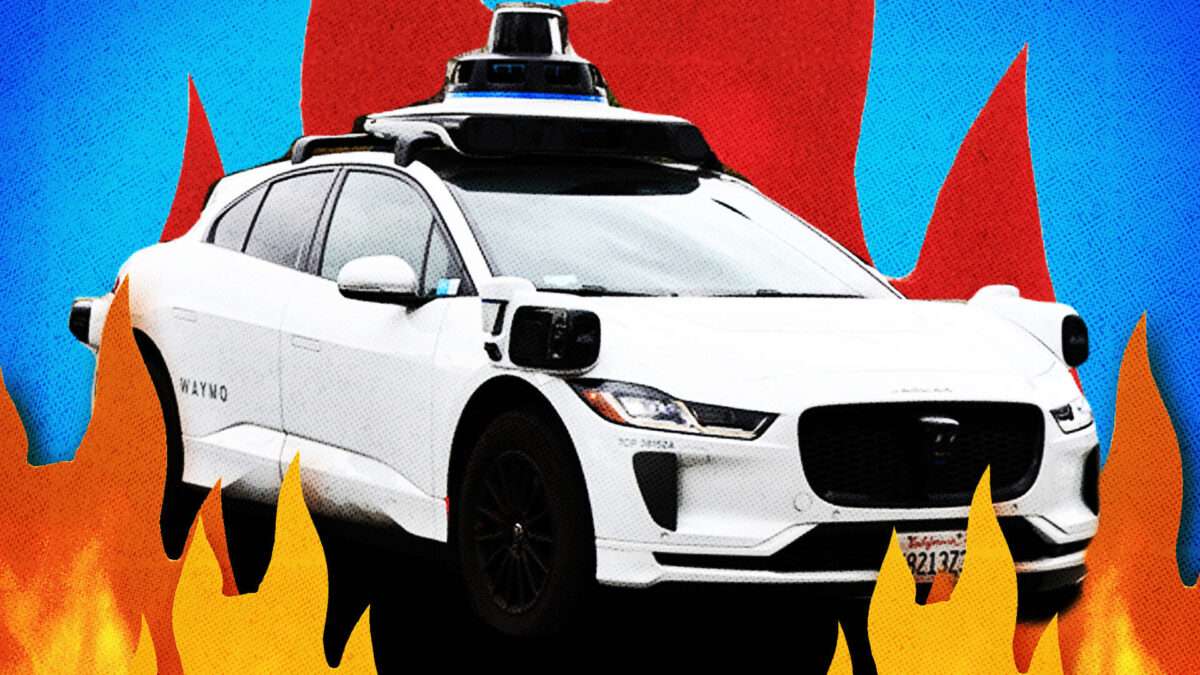
Waymo | Illustration: Walter Cicchetti/Dreamstime/Midjourney/Fatima Ruiz.waymo

At a protest against a bill to legalize Waymo in Washington, D.C., earlier in October, the main tagline was: "Robotaxis don't vote; we vote." Little is known about the group behind it, raising questions about who's fueling the pushback against robotaxis in America's major cities.

People First Transportation Alliance (PFTA), the organization in question, describes itself as a "statewide coalition of labor unions" dedicated to putting "people over untested technology." The PFTA states it's a "coalition of community organizations, safe-streets advocates, and faith leaders." However, as The Washington Post reported on Monday, the group appears to have overstated its affiliation with four of the 13 individuals and organizations listed as its founding members.

"Several groups and individuals said statements made about them on the Transportation Alliance website were inaccurate," the Post reported, adding that PFTA "appears to be newly formed, with a minimal social media presence. Its website domain was created in late April, according to the Internet Corporation for Assigned Names and Numbers." The group created its social media accounts in May, but it has no posts and no followers. 

Apart from its recent interest in the nation's capital, the PFTA lists New York and Philadelphia as its priorities, two cities led by lawmakers who publicly oppose Waymo's presence. Yet for a relatively unknown, recently created organization, the PFTA has found success in its campaign to shut autonomous vehicles like Waymo out of America's Northeast.

In February, the New York Post reported that Gov. Kathy Hochul (D–N.Y.) withdrew her own proposal—which would have allowed commercial robotaxi services such as Waymo to operate in smaller cities in upstate New York—after a PFTA-led coalition prompted enough backlash to kill support for the measure. A Hochul spokesperson told the Post that it was "clear that the support was not there to advance this proposal." 

The PFTA told the Post that the organization would urge the state to "pass legislation requiring a human driver behind the wheel in every vehicle and a comprehensive study leading to a plan to address the impact driverless cars would have on New York State." 

The group's resolution comes despite customer support for autonomous vehicles: A 2025 study on Waymo, Uber, and Lyft by Obi—a company that aggregates real-time rideshare prices—found that 70 percent of riders who've used Waymo preferred it over Lyft or Uber and 42.7 percent of all respondents were willing to pay Waymo's premium price (up to $10 more) to use the service.

Despite consumer support, autonomous vehicles can't count on a fair shake from lawmakers in some of the country's largest cities. In New York City, Waymo's permit to operate a pilot program on public streets expired in March. Mayor Zohran Mamdani has so far been noncommittal on renewing the company's permit. At a press conference that same month, he said his administration would be prioritizing workers such as the city's taxi drivers who "for far too long, have been sold a dream of being able to work their way to the middle class, only to have the rug pulled out from under them." 

Despite the mystery surrounding the PFTA, its D.C. protest drew enough public support to elicit a statement from a person who will likely be the city's next mayor, current D.C. Councilmember Janeese Lewis George. In a post on X, Lewis George said D.C. was "facing a jobs crisis" that would be exacerbated by "rushing the legalization of autonomous vehicles." She urged the D.C. Council—which is currently considering a punitive proposal to legalize commercial autonomous vehicles—to "get this right and not rush Waymo legislation this year."

It's unclear how much longer Lewis George wants the District's residents to wait before autonomous vehicles are available for use. D.C.'s approach to legalizing commercial robotaxis hardly seems rushed. 

Waymo began testing its vehicles in the city nearly two and a half years ago, in spring 2024. The company's co-CEO Tekedra N. Mawakana said its fleet has driven "more than 300,000 miles in Washington, D.C."Meanwhile, the District Department of Transportation (DDOT) has been conducting studies and organizing working groups on autonomous vehicles for nearly a decade. Still, the agency has been unable to draft a regulatory framework that would eventually enable commercial robotaxi use in the nation's capital. In March, UrbanTurf reported that DDOT would be conducting a long-awaited study on autonomous vehicles—originally due in 2022—and "expects to propose recommendations on AV deployment later this year."

Opponents of autonomous vehicles, such as Lewis George and the PFTA, often cite job loss as a reason not to legalize the tech. Still, with only 200 full-time ride-share drivers in a city of roughly 400,000 workers, as Lewis George has reportedly stated, the situation is a far cry from a crisis.

As for PFTA's public safety claims, Waymo's independently reviewed data show that, compared with an average human driver over the same distance, its vehicles caused 95 percent fewer serious-injury-or-worse crashes and 93 percent fewer pedestrian crashes with serious injuries.

PFTA claims it represents the people most directly affected by transportation policy. The little publicly available information suggests the group is more focused on protecting its members' position in the ride-share market than enhancing the experience of riders, who are increasingly opting for robotaxis when given the opportunity.

The post A Months-Old Anti-Robotaxi Group Is Steering Transportation Policy From Albany to D.C. appeared first on Reason Magazine.

  •  

Judge weighs challenge to Trump’s East Potomac Golf takeover after rejecting ‘baseless’ request for recusal

A federal judge on Monday pressed the Trump administration about President Trump’s plan to shut down and renovate East Potomac Park next month despite a previous court order barring any future work at the property while a lawsuit to stop it plays out.    Trump in a Truth Social post just minutes before Monday’s hearing…

  •  

Cyberattack on 700 French Supermarkets Exposes Gaps in Europe’s Infrastructure Security

A cyberattack affecting approximately 700 supermarkets in France has exposed serious weaknesses in the digital systems used to control commercial refrigeration, raising concerns about the vulnerability of European food distribution networks and other essential infrastructure.

The attack began overnight on 11–12th October, when intruders gained access to remotely managed refrigeration equipment and altered operating settings, causing refrigerators and freezers to overheat.

Stores belonging to several major supermarket chains were affected, including Intermarché, Netto, Coopérative U, Carrefour and Monoprix. Some were forced to discard substantial quantities of fresh and frozen food.

French Finance Minister Roland Lescure confirmed that approximately 700 of the country’s 10,000 supermarkets had been affected, although the severity of the disruption varied between locations.

The Paris prosecutor’s office has opened an investigation into the attack, including the damage caused by destroyed merchandise and reported fires.

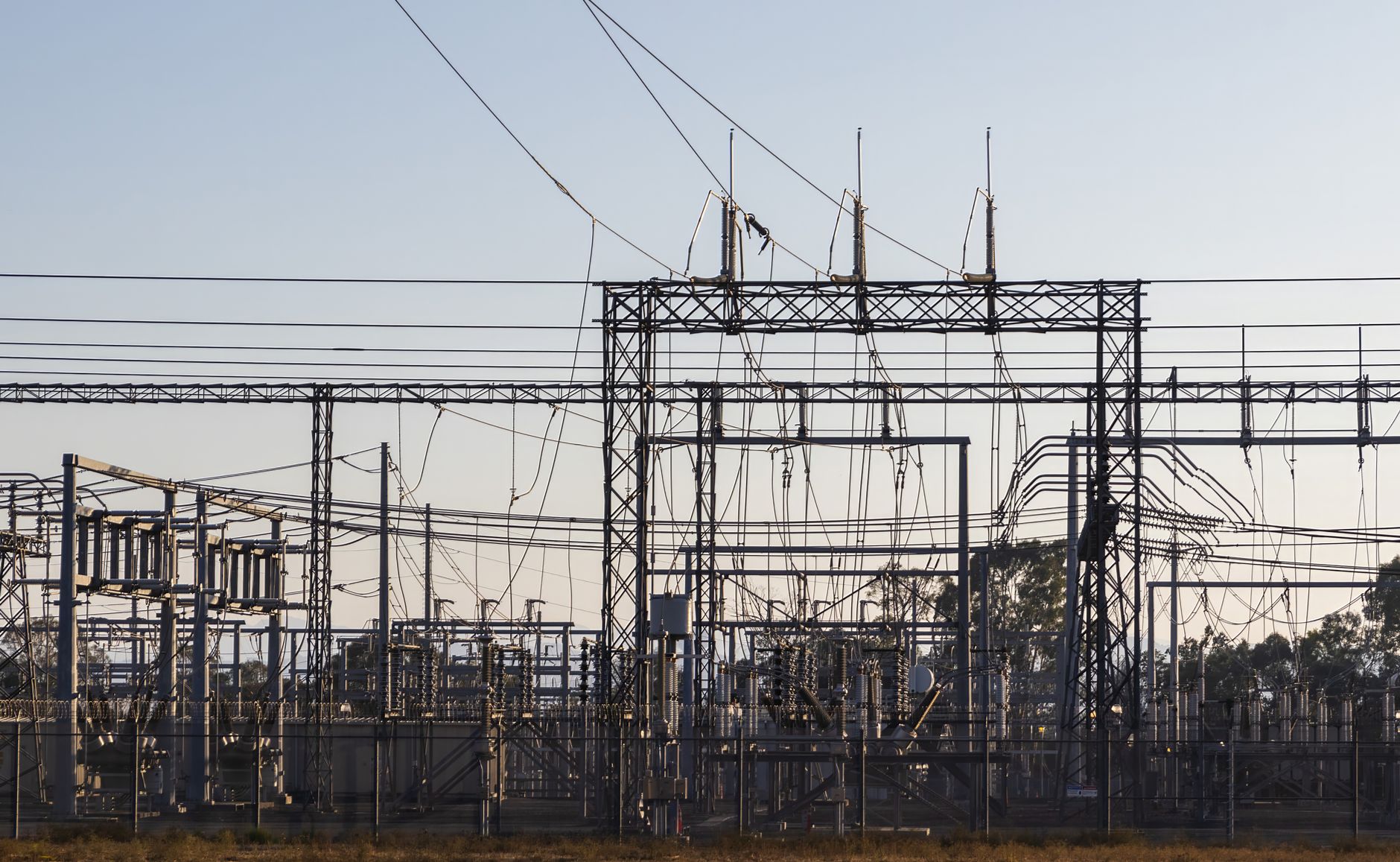
The incident has drawn attention to industrial control systems that are routinely connected to the internet but may receive less cybersecurity protection than corporate networks and customer databases.

Refrigeration systems remotely manipulated

Investigators have established that refrigeration equipment was targeted through vulnerabilities associated with remote monitoring and control systems.

The French cybersecurity authorities identified compromises involving products supplied by Danish manufacturer Danfoss and American company Copeland.

Some of the affected systems used older equipment that no longer received regular security updates.

According to information released by the companies and cybersecurity specialists, certain industrial controllers had been accessible through public internet connections, creating opportunities for unauthorised access.

Hackers reportedly manipulated defrost cycles and increased temperature settings, preventing equipment from maintaining the cold conditions required to preserve food.

The attack affected approximately 300 Intermarché and Netto stores, while Coopérative U reported disruption at around 80 outlets.

Several retailers managed to contain the damage, but others lost substantial quantities of stock.

The consequences extended beyond malfunctioning equipment. Businesses faced the cost of replacing spoiled food, repairing refrigeration systems and restoring normal operations.

The precise financial damage is still being assessed, although estimates from the retail sector indicate that losses across France could amount to tens of millions of euros.

Vulnerabilities in connected equipment

The incident illustrates the security problems created by the growing use of internet-connected industrial equipment.

Modern refrigeration installations allow contractors and maintenance specialists to monitor temperatures, adjust settings and diagnose faults remotely.

These arrangements can reduce operating costs and improve efficiency, but they also create additional access points that attackers may exploit.

Cybersecurity specialists have identified vulnerabilities in commercial refrigeration platforms manufactured by Danfoss and Copeland.

The manufacturers subsequently addressed identified flaws, although older or unsupported equipment remained a concern.

A critical problem for businesses is that industrial machinery often remains operational for many years after its original software has become obsolete.

Replacing entire refrigeration installations can involve substantial expense and operational disruption, encouraging operators to retain equipment that may no longer meet contemporary cybersecurity standards.

The risks are particularly difficult to manage when responsibility for maintenance, software updates and network security is divided between retailers, equipment suppliers and external contractors.

France’s delayed cybersecurity legislation

The attack has renewed scrutiny of France’s implementation of the European Union’s NIS2 Directive, which is intended to strengthen cybersecurity across sectors providing important economic and public services.

The directive establishes common requirements covering risk management, incident reporting, organisational responsibility and protection against cyber threats.

Its scope extends beyond traditional critical infrastructure such as energy, telecommunications and transport to include certain businesses involved in food production, processing and distribution.

EU member states were required to incorporate the directive into national legislation by 17 October 2024.

France was among the countries that received a formal warning from the European Commission in May 2025 over incomplete implementation.

French cybersecurity specialists have since warned that delays have complicated efforts to establish consistent obligations for organisations operating industrial and commercial systems.

However, NIS2 does not automatically cover every supermarket. Its application depends on the nature and size of an organisation and the provisions of national implementing legislation.

The incident therefore raises questions not only about the pace of legislative implementation but also about the practical protection of equipment already in use.

Wider implications for European infrastructure

The disruption demonstrates how a cyberattack can cause physical damage without directly targeting a conventional industrial facility.

Unlike breaches intended to steal customer information, the French incident interfered with machinery responsible for preserving essential products.

The distinction is important for European policymakers, who increasingly face threats to infrastructure that combines digital controls with physical operations.

The European Union’s cybersecurity agency ENISA has organised cross-border exercises to test how authorities and companies would respond to disruption affecting essential services.

The attack itself has been established, but responsibility for it has not been publicly attributed.

French authorities have said there is no immediate threat to national food supplies. Nevertheless, the destruction of merchandise and interruption of ordinary retail operations have demonstrated the potential economic consequences of weaknesses in relatively commonplace equipment.

The continuing investigation must establish how access was obtained, which systems were compromised and whether the vulnerabilities were known to operators before the attack.

For Brussels and national regulators, the case provides a practical test of whether European cybersecurity legislation can translate into effective protection for the connected equipment on which ordinary commercial activities increasingly depend.

  •  

VietJet hit with worldwide asset freeze in London court dispute

A UK High Court judge has ordered a worldwide freeze on VietJet's assets after London investment firm FitzWalter argued the Vietnamese airline could try to hide or spend them amid an ongoing dispute. The ruling prevents VietJet from moving assets beyond the court's reach while the underlying case proceeds. The airline has not publicly detailed its response to the order.

  •  
❌