Applegate revealed that despite the misdiagnosis, she still has "every symptom of someone with MS," adding, "I still have to use wheelchairs when I go to the doctor's office. I can't walk from the car to the room."
O Centro de Ciências do Mar (CCMAR) associa-se, assim, a um grupo reduzido de instituições que detêm este selo no nosso país. O reconhecimento é atribuído pela Comissão Europeia e destaca o compromisso do CCMAR na progressão da implementação dos princípios da Carta Europeia dos Investigadores, promovendo uma melhoria contínua das políticas e práticas de […]
Cancer can strike at any age, often without symptoms. For many cancers, routine screening remains the best way to detect the disease early and reduce the risk of death.
For lung cancer, screening guidelines can vary, as the disease doesn’t always show obvious signals and can occur in both smokers and never-smokers.
Daniel J. Boffa, M.D., chair of the American College of Surgeons Commission on Cancer and a thoracic surgeon at Yale University, noted that lung cancer screening is "one of the most powerful ways" to boost survival.
"It reduces the chance of people dying of lung cancer by 20%," he told Fox News Digital.
The share of Americans who are eligible for screening but don’t comply translates to "tens of thousands of preventable deaths every year," according to Boffa.
"I'm hoping that within four or five years, a screening CT scan will only be confirmatory after they have a positive blood test done at your doctor's office," he added.
That approach could make screening easier and potentially help detect more lung cancers, according to the doctor.
Potential symptoms
In a recent interview with Fox News Digital, Lary Robinson, M.D., an oncologist at Moffitt Cancer Center in Tampa, Florida, noted that in most cases, early-stage lung cancer will not come with any symptoms.
In those who do have symptoms, however, the most common are related to the lungs, including a persistent cough, shortness of breath or coughing up blood.
Unexplained weight loss can result from any form of cancer, according to the oncologist. Neurological symptoms, like persistent headaches, may also warrant seeing a doctor.
Current guidelines
Current lung cancer screening guidelines recommend an annual low-dose CT scan for people between the ages of 50 and 80 who currently smoke or have a history of smoking or have at least a 20 pack-year history of smoking, according to the American Cancer Society (ACS).
Before making the decision to get screened, individuals should speak with their healthcare providers about the purpose of the screening and how it’s done, as well as the benefits, limits and possible harms, ACS advised.
Those who still smoke should be counseled about quitting and offered interventions and resources to help.
Individuals with serious health problems that will "likely limit" their lifespan should not be screened, according to ACS, as well as those who won’t be able to get treatment if lung cancer is detected.
Although one out of seven lung cancers will affect someone who has never smoked, there is currently not a set screening guideline for never-smokers.
Finding individuals who would benefit from screening is an "intense area of research," according to Boffa. For now, people with a direct family history of lung cancer without smoking should consider annual screenings, as should higher-risk demographics like Asian women.
"I would anticipate that in the next year or two, we will have better guidance for people who are at risk for lung cancer, but never smoked," Boffa predicted.
What to expect
Boffa noted that advances in lung cancer treatment have improved survival, even at advanced stages, so screening should not be viewed as a pathway to a terminal diagnosis.
"People are really reluctant to be diagnosed with lung cancer because it does carry a stigma," Boffa said. "For years, there was a reputation that it was a terminal diagnosis. It's just been amazing what research has done for lung cancer."
Most screenings detect a lung nodule or other abnormality, which is more often an infection, scar or inflammation than a tumor, he said.
In about one-third of patients, lung cancer screenings also detect unrelated health issues, including the hardening of heart arteries or a nodule in another part of the body.
"The reality is over 99% of nodules are actually benign," Boffa said. "And so, you need to have a conversation about what you are going to do with that information."
"I think having that conversation ahead of time is really important so that expectations are set – it's not uncommon to find something. Most of the time, it's not something that's going to affect how long you live."
The doctor noted that the CT scan only takes a couple of minutes to perform and does not take place in an enclosed space like an MRI.
"People who get claustrophobic usually don't have a hard time with lung cancer screening," Boffa said. "And it usually takes a few days to get a report back."
For those who are over 50 with a history of smoking, Boffa reiterated that getting screened is "one of the most powerful things you can do to reduce your chances of having your life shortened by lung cancer."
Electric aviation is still in the very early stages of its development. But a number of companies are moving forward with more ambitious plans. In contrast to its approach with other forms of electric transportation, the Trump administration seems willing to embrace a bigger rollout. Aviation correspondent Miles O'Brien reports on the promise and the challenges of the budding industry.
Ending routine vaccination for hepatitis B at birth, as the health secretary has recommended, would increase the number of chronic infections by as much as 83 percent, a team of researchers reported.
Last December, a panel of advisers chosen by Health Secretary Robert F. Kennedy Jr. recommended that parents should decide whether or when infants should get the shot if they were born to mothers who test negative for hepatitis B.
Antibody patterns in the blood may help doctors identify people at risk so they can be treated earlier, research shows
Patterns of antibodies in people’s blood could predict the onset of inflammatory bowel disease (IBD) a decade before diagnosis, according to research that raises hopes for catching the condition early.
Crohn’s disease and ulcerative colitis, the two main forms of IBD, are typically treated only after symptoms appear, when the gut has already been damaged. But scientists found that the immune system sends warning signals up to a decade before diagnosis, paving the way for potentially earlier detection and even prevention.
A Pew Research Center survey found 71% of middle-income earners have cut back on spending on extras, such as eating out.
andresr/Getty Images
A Pew Research survey found only 47% of middle-income earners could save money in the past year.
Lower-income earners are also having a hard time saving and affording necessities.
Inflation moving in the wrong direction doesn't help the affordability situation.
America's middle earners are feeling the squeeze.
A new analysis from the Pew Research Center examines how Americans' finances are faring, an especially salient topic in a midterm season where affordability is very much on the ballot.
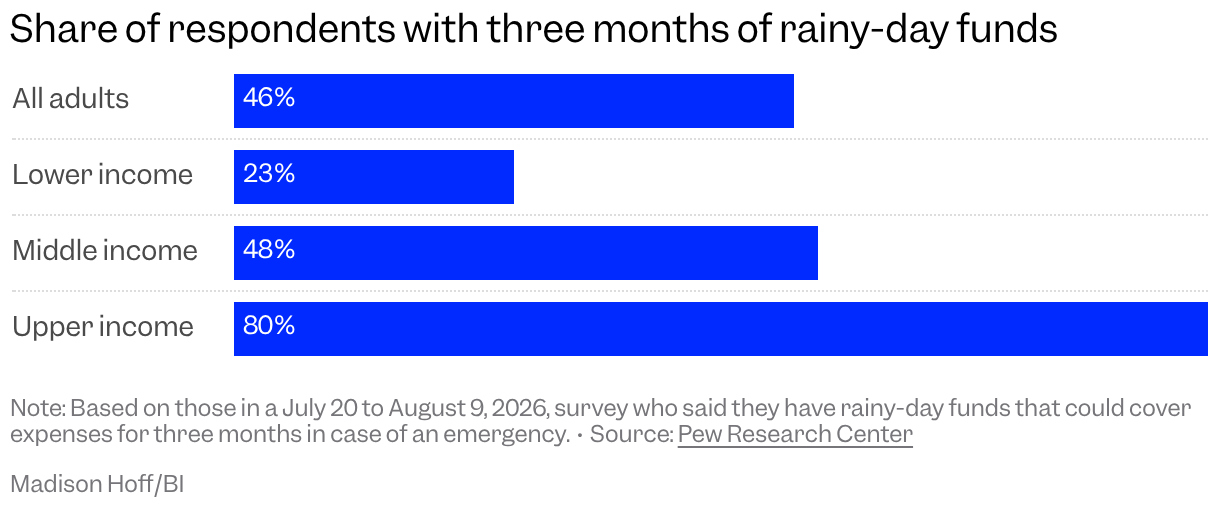
America's middle earners — those who make between $50,700 and $152,000 after adjusting for their family sizes and the cost of living in their areas — increasingly don't have enough saved for an emergency. Just over half of middle-income Americans say they don't have rainy-day funds that would cover expenses for three months in the event of an emergency.
Meanwhile, 47% of middle-income earners — and a measly 24% of lower-income earners — reported being able to save money in the past year. Across all income tiers, the majority of respondents said they had cut back spending on extras like eating out or streaming services.
Those dwindling emergency funds and sacrifices might be due to rising costs, which often take a particularly large bite out of lower-earners' wallets.
It could be getting worse; inflation is moving in the wrong direction. In September, the consumer price index inflation rate rose from 3.4% to 3.7%, just above the 3.6% forecast. Plus, inflation-adjusted wages have been falling for six months.
Today's economy is still more difficult for those at the bottom of the earnings ladder. Fifty-one percent of lower-income respondents said they can pay all of their bills in full in the 2026 survey, down from 56% in 2020. For middle-income respondents, the share dropped from 81% in 2020 to 78% in 2026, while the share of upper-income respondents held steady at 93%.
Pew also found 71% of lower-income US adults struggled with at least one kind of basic necessity, like affording medical care or paying their rent or mortgage, in the past year, compared with 39% of middle-income and 13% of upper-income Americans.
But the latest survey marks another sign that middle-income earners are increasingly aligning with their lower-earning peers, a dour sign for the health of the middle class. A separate report from the Urban Institute found that, even as lower-income renters were the most likely to report issues paying the rent, middle-income renters were increasingly likely to report struggling to pay.
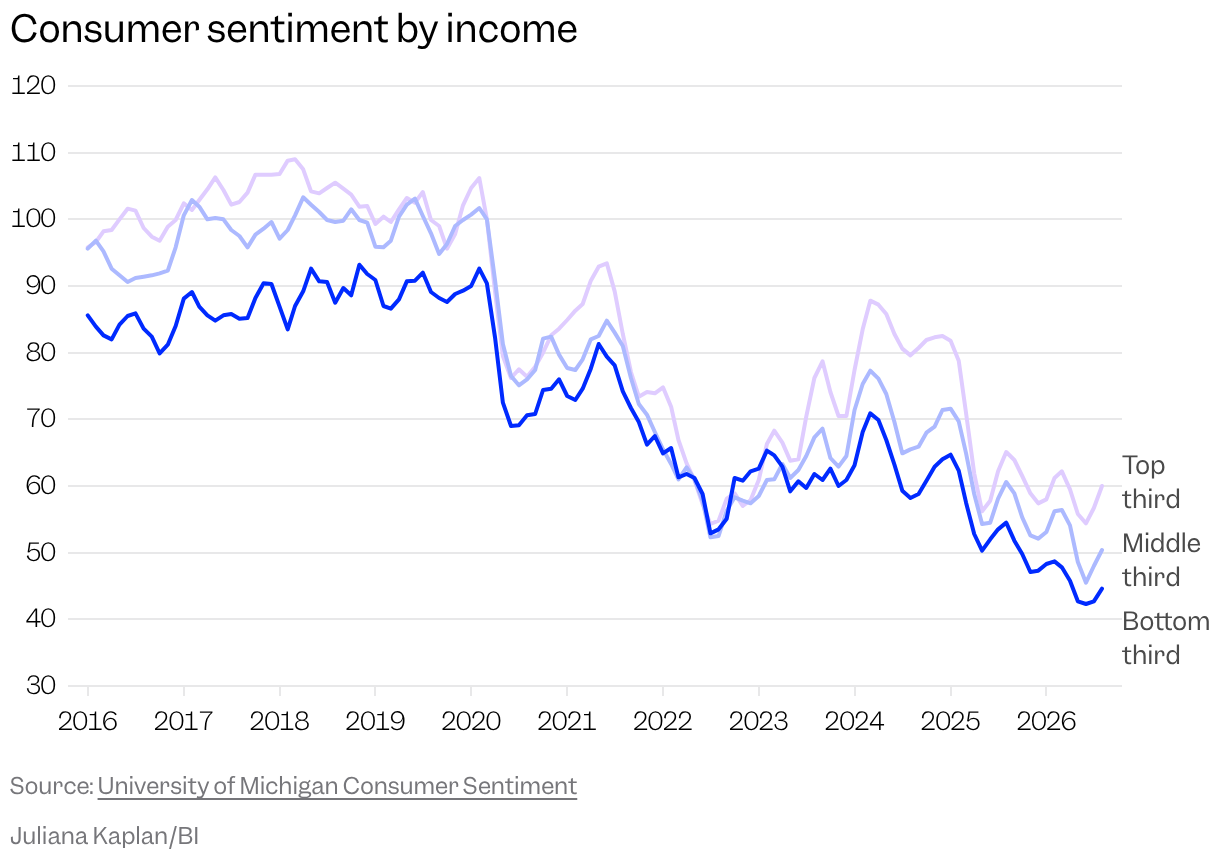
Similarly, middle-income earners' consumer sentiment has switched from mirroring their higher-earning peers to more closely aligning with lower earners — another sign that the middle class is falling on harder economic times.
"Working people are living on the edge, working longer and harder than ever for less money," said AFL-CIO President Liz Shuler. "They're angry every time they fill the tank. They're terrified of what their heating bills will look like this winter."
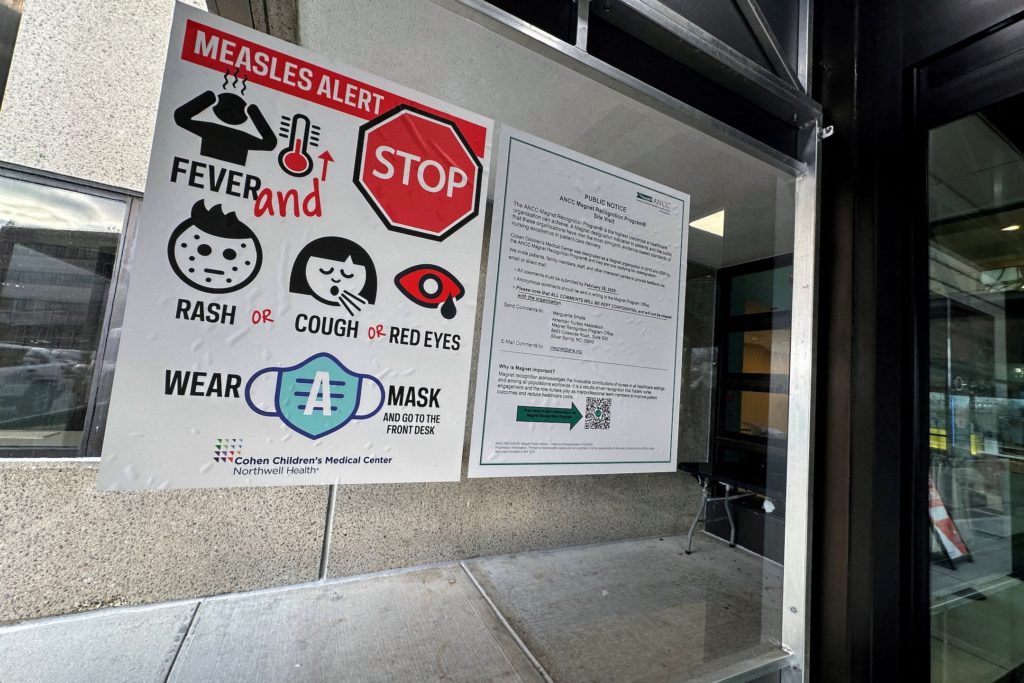
The CDC has confirmed more than 4,000 cases of measles this year as the country grapples with the largest outbreak of the highly infectious virus in 35 years. Nearly a fifth of cases comprise children under the age of five, and 95% are among unvaccinated people. Amna Nawaz spoke with Dr. Evan Shirey, a pediatric infectious disease doctor based in Pennsylvania.
COGAT claims Palestinian merchants halted coordination on shipment of goods due to Hamas intimidation, but Gaza truckers union says Israel made the decision
Calling for single education system and funding transparency, Prof. Dan Ben-David reveals benefits for Haredim outstripped funds for hospitals and higher education combined in 2024
Chemical fertilizers and animal waste contain nitrates and phosphorus that can get washed with rain or snowmelt into the state's rivers. That affects Iowa's more liberal urban centers which rely on rivers and lakes for drinking water.
Record high temperatures this year forced European wine producers to harvest grapes much earlier than usual. French wineries fear it will lead to the worst season in 30 years. But Nordic newcomers to the world of wine are toasting what they believe will be a vintage harvest, thanks, in no small part, to climate change. Special correspondent Malcolm Brabant reports from Sweden.
For many Arizona voters, the top concern heading into the midterms isn't inflation, immigration or education. It's water. With the state gripped by prolonged drought, candidates are facing growing questions about how to secure its water future. Stephanie Sy reports for our series, Tipping Point.
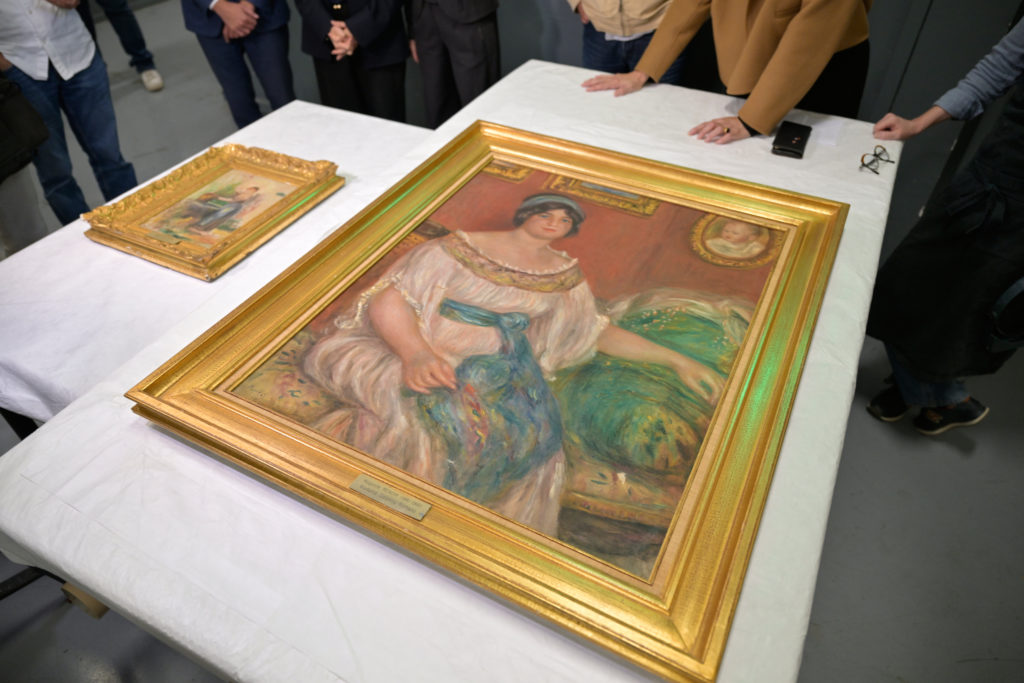
Four men were given preliminary charges in the investigation into the Sept. 8 theft from the small Renoir Museum in the town of Cagnes-sur-Mer on the French Riviera.
At first she told no one. Not her twin sister. Not her mother. Not even her father the scientist.
Six-year-old Jenna Smith knew better than to pee when she was in the bath. But on that night in 1992, in her family’s home in Iowa City, the water felt so comfortable against her skin that she didn’t want to get out of the tub. It seemed like such a small thing. Who would know?
Seconds later the water around her waist turned reddish pink. Blood? It had to be. Jenna wondered if she’d hurt herself. “I was six years old sitting in a bathtub, watching a few seconds of my world stop making sense,” she would recall years later.
The Atavist, our sister publication, publishes one deeply reported, elegantly designed story each month. Support The Atavist by becoming a member.
She kept the blood a secret because she didn’t want to admit that she’d peed in the bath. But when it was still in her urine the next time she used the toilet, she went to her mother. Concerned, her mom called her dad, Richard Smith, and he took Jenna to the emergency room.
Richard was an ear, nose, and throat doctor in the University of Iowa’s school of medicine, a researcher who would become one of the world’s authorities on the genetics of hearing loss. His wife, Lynne Lanning, had worked as both a lawyer and a nurse. They had four young children: twins Jenna and Jessica, who were identical, and two boys, Luke and Rion.
At the ER, doctors ran tests on Jenna, but they couldn’t identify the cause of the blood. In the days that followed the bleeding intensified. At her parents’ urging, Jenna collected samples of her urine in Dixie cups for further testing. The doctors remained stumped, however, and after a while Jenna found the whole thing more annoying than worrisome.
The uncertainty was much harder on her parents. It wasn’t that doctors were misdiagnosing their daughter; they were unable to diagnose her at all. “It was horrible,” Richard said. “Imagine seeing your child and you know something is wrong, and you know the doctors treating her have no clue what to do.” Richard called a pediatric nephrologist he knew in Houston, where the family had lived previously. The nephrologist listed several conditions that could be causing the bleeding and said that, to determine which was to blame, Jenna’s parents should take her to Cincinnati Children’s Hospital Medical Center.
In July 1992, Richard, Lynne, and Jenna drove nearly 500 miles to get answers. Doctors in Cincinnati diagnosed Jenna with dense deposit disease, a condition in which proteins clog and damage the kidneys, leading to renal failure in many patients. There was no cure.
The hospital couldn’t tell the family much else—no one could. The disease was exceedingly rare, afflicting between one and three people in a million. Back home, Richard and Lynne spent hours inside the University of Iowa’s quiet medical library, poring over papers in search of information about their daughter’s illness. They could find no evidence that anyone was actively studying the condition.
Although many Americans—roughly one in ten—suffer from a rare disease, the experience can be lonely. Friends and relatives don’t understand the unique miseries such illnesses impose on daily life. Few doctors are likely to have encountered them before. And because there aren’t many patients, drug companies usually don’t invest in research for treatments.
Richard and Lynne feared that their daughter’s life might be tragically brief. Sometimes the mention of weddings would sink Lynne into melancholy; she couldn’t bring herself to watch the movie Father of the Bride. Richard agonized over what to do. His training compelled him to seek answers, but he wanted to be Jenna’s father, not the scientist charged with curing her. He kept his research focused on hearing loss. At first, anyway.
Stories of scientific discovery almost always celebrate individual researchers, consigning the contributions of loved ones, communities, and colleagues to footnotes. There are exceptions―the teams that built the first atomic bomb and deciphered the human genome, for instance. Science also has its share of famous families. Marie and Pierre Curie, along with their daughter Irène and her husband, Frédéric, won five Nobel Prizes between them for discoveries related to radioactivity. For the most part, however, the history of scientific progress has been mythologized as a succession of brilliant, driven individuals—often men—who chose the lab over the dinner table and competition over collaboration.
Some scientists have embraced the role of maverick. “You have to worry about your own work and ignore what everyone else is doing,” the physicist and Nobel laureate Richard Feynman is said to have told a colleague. The decades-long pursuit of a treatment for Jenna’s disease followed a very different path. There was no single hero, no lone scientist seeking glory. The biomedical quest required the efforts of a family and their neighbors in Iowa City, and the work of scientists around the globe. Together they changed an obscure area of medicine.
Richard and Lynne met in 1977, when both were working at Memorial Hermann-Texas Medical Center in Houston—she as a nurse, he as a medical intern. He noticed a run in her nylons and was smitten by her smile. She liked his down-to-earth manner and intelligence, his humor and kindness. They were working in the hospital’s burn unit when he asked her out.
The couple married in 1981, and except for two years in England, they remained in Houston until 1990. That December they moved to Iowa City, where Richard had a job waiting for him leading the pediatric otolaryngology division and running a research lab at the University of Iowa’s medical school. They had been there only a year when Jenna got sick.
Richard and Lynne learned that their daughter’s disease was caused by a malfunction in her complement system. Believed to have evolved long before other parts of our immune infrastructure, the complement system sends proteins to battle foreign invaders. Unlike antibodies, these proteins are not tailored to fight a specific virus or bacteria, but they kick into gear faster when a threat is detected. In people with Jenna’s condition, the complement system is like a runaway train: Proteins become overstimulated and then accumulate in the glomeruli, tiny filters the kidneys use to clear waste from blood.
Blood in the urine is one symptom of the disease. Others include swelling, high blood pressure, inflammation, and fatigue. When Jenna was in the first grade, her body struggled to make growth hormones. Her production of red blood cells slowed, and she grew increasingly tired. During rehearsals for The Nutcracker ballet around Christmas 1993, she’d finish her part and then lie down backstage, completely spent.
Doctors put her on a heavy dose of the steroid prednisone and on blood-pressure medication. The prednisone caused her body to retain water. She woke up each morning with her eyes swollen shut, then waited in bed until the swelling receded. She couldn’t fit into her clothes or shoes. She wore flip-flops and roomy jumpers Lynne sewed for her.
As twins, Jenna and Jessica had always been close. They played together, made up songs and dance moves, explored the woods near their home, and enjoyed pranking friends and family members. “She made a lot of things feel not so heavy,” Jenna said of her sister. Still, she sometimes thought that Jessica “got off scot-free” by not having dense deposit disease. Neither girl liked feeling different from the other. (Years later, Jessica would be diagnosed with type-1 diabetes; Jenna would not.)
The changes to Jenna’s appearance meant the girls were no longer identical. Once, according to Lynne, when a boy at school said that Jenna couldn’t be a twin anymore because of how she looked, Jessica slugged him. Lynne recalled sitting in the principal’s office, politely listening to a lecture—this is not the way we resolve things!—but understanding why Jessica had lashed out. Nothing was so frightening to her daughters as the idea that they’d stop being twins.
About half of those afflicted with Jenna’s disease progressed to kidney failure within a decade of diagnosis; it took her less than a year. She made it through the last day of first grade. Then, as other children departed for summer camp, she went to a clinic. While her classmates practiced archery and did arts and crafts, she learned about the catheter doctors would surgically insert in her body. Through that tube, a machine would pump fluid into her abdomen, where her peritoneum—her abdominal lining—would take over the filtering function kidneys usually perform.
She would take the peritoneal dialysis machine home with her and use it every day for the foreseeable future, possibly for the rest of her life. When a nurse tried to take Lynne aside to show her how to operate it, Jenna stopped her. “I’m the patient,” the seven-year-old insisted. “I’m learning how to run the machine.”
In such moments, Lynne was surprised at the strength she drew from her daughter. She needed it. Her grief could leave her feeling drained. One day she found herself crying into the soil as she gardened.
But Lynne and Richard were determined that sadness would not define their lives. For a long time, they didn’t have a TV in their house—they wanted the family to talk when they were together, and for the children to build forts, learn to sew, be creative. They had painting nights, creating portraits of one another. There were cooking contests, too. Richard and Lynne made sure to spend one-on-one time with each kid. Richard traveled with Luke to Japan, with Rion to the Grand Canyon, with Jessica to Italy, and with Jenna to England. Lynne took trips with the children to Brazil, England, and Guatemala. There were themed birthday celebrations: a James Bond party for Richard, where everyone was armed with Nerf guns, and one for Lynne where Richard dressed as the artist Bob Ross and the guests painted “happy little clouds.” Richard coached the kids’ hockey and soccer teams. He built harps and lyres from scratch, and Lynne played them.
Every day, Richard left for work at 5 a.m., while the children were still in bed. He returned around six at night. The family joked that they could hear him coming from half a mile away in his rust-bucket Isuzu Trooper with the bad muffler and a hole in the passenger footwell. When he wasn’t seeing patients or in surgery, Richard was in the lab. On Saturdays, Luke would go there with him. Sometimes the other kids joined. They liked to refill the communal candy jars and visit the mice used in experiments.
It seemed a wonder to the lab’s staff that Richard squeezed so much into a day. When they began using email to communicate, they received messages from him time-stamped three or four in the morning. “Why don’t you sleep sometime?” a colleague replied once. Indeed, Richard slept little. At night his mind kept running through the mysteries of his daughter’s disease.
Richard had read that it took 10,000 hours—the equivalent of working full-time for about five years—to achieve expertise in a subject. He believed it. In 1995, he began flying to conferences about kidney disease, where he talked to the few doctors who cared for patients like Jenna. Medicine was getting no closer to finding a treatment.
That year the owner of a ranch where Richard and Lynne’s children took riding lessons offered to host a fundraiser for kidney disease research. The family organized Dressage in the Heartland, which featured riding events, fiddle music, and bowls of chili. After raising upwards of $10,000 for the National Kidney Foundation, they held the event again the following year. There are hundreds of kidney ailments, however, and the foundation didn’t allow the money the family raised to be earmarked for the research of dense deposit disease. (The foundation said it now allows monetary gifts to be dedicated to specific conditions.)
Richard and Lynne ran into more disappointment during a visit to the University of Minnesota in early 1997. A specialist they consulted was blunt. “Nobody is looking at this disease,” he told them. “And barring something unforeseen, nothing will be done in the next twenty years.”
It was a four-and-a-half-hour drive back to Iowa City. In the car, Lynne brought up what the doctor had said. Maybe they would have to be that unforeseen something.

 Login