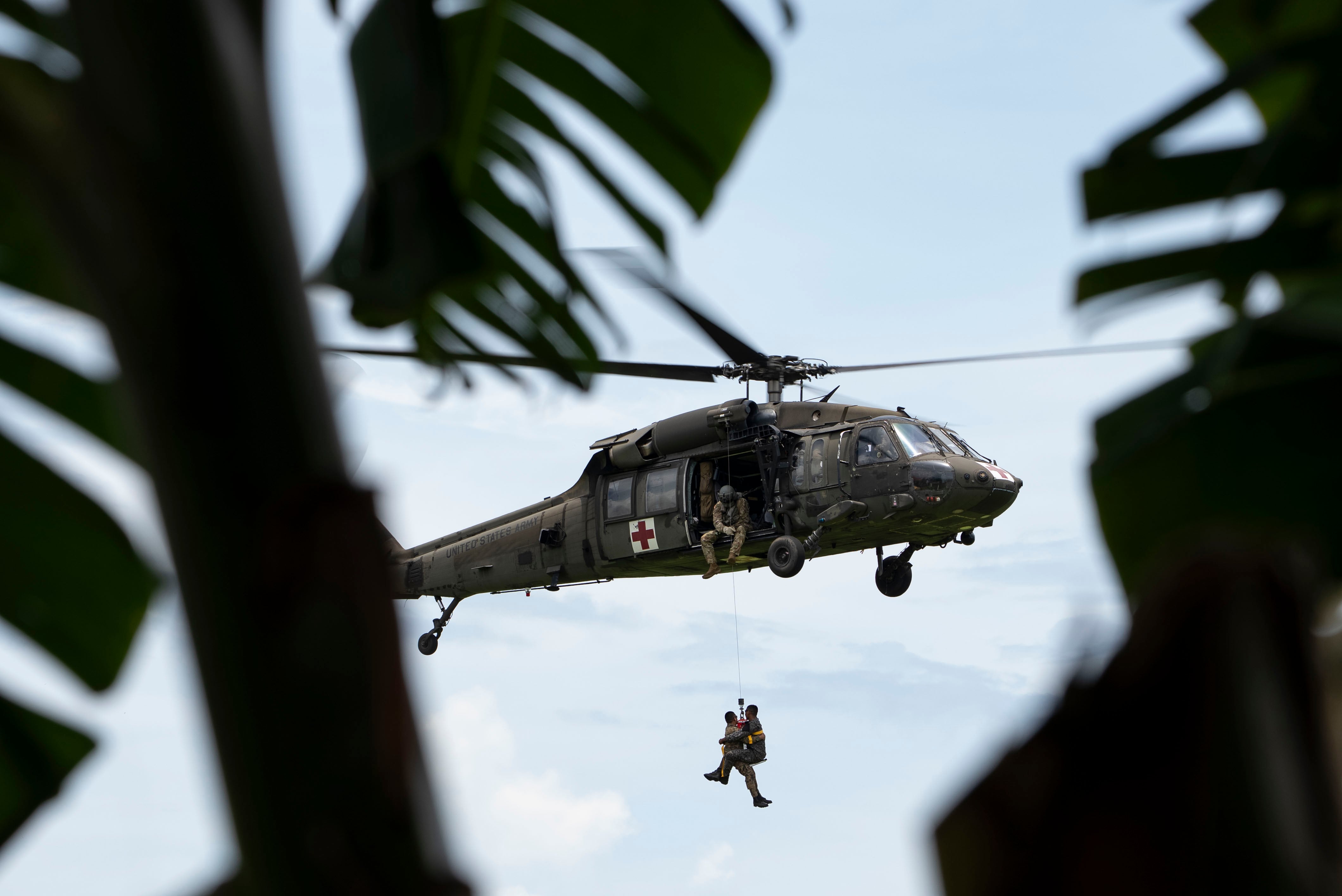
The United States is increasing its military presence in Latin American countries. The U.S. military has sent hundreds of soldiers to conduct training in Panama, an activity they will repeat later in Honduras and Colombia, The New York Times reported. The military detachment is preparing to take part in special operations against drug trafficking cartels, sources for that outlet said.
Los colapsos estructurales golpearon con dureza a sectores vulnerables como la colonia Villa Unión, donde los derrumbes destruyeron 13 viviendas por completo.
Un contingente de la 10.ª División de Montaña de EE.UU. inició su despliegue en Panamá con miras a extender operaciones militares a Colombia y Honduras. La maniobra busca intensificar las acciones antidrogas impulsadas por la Administración de Donald Trump en la región.
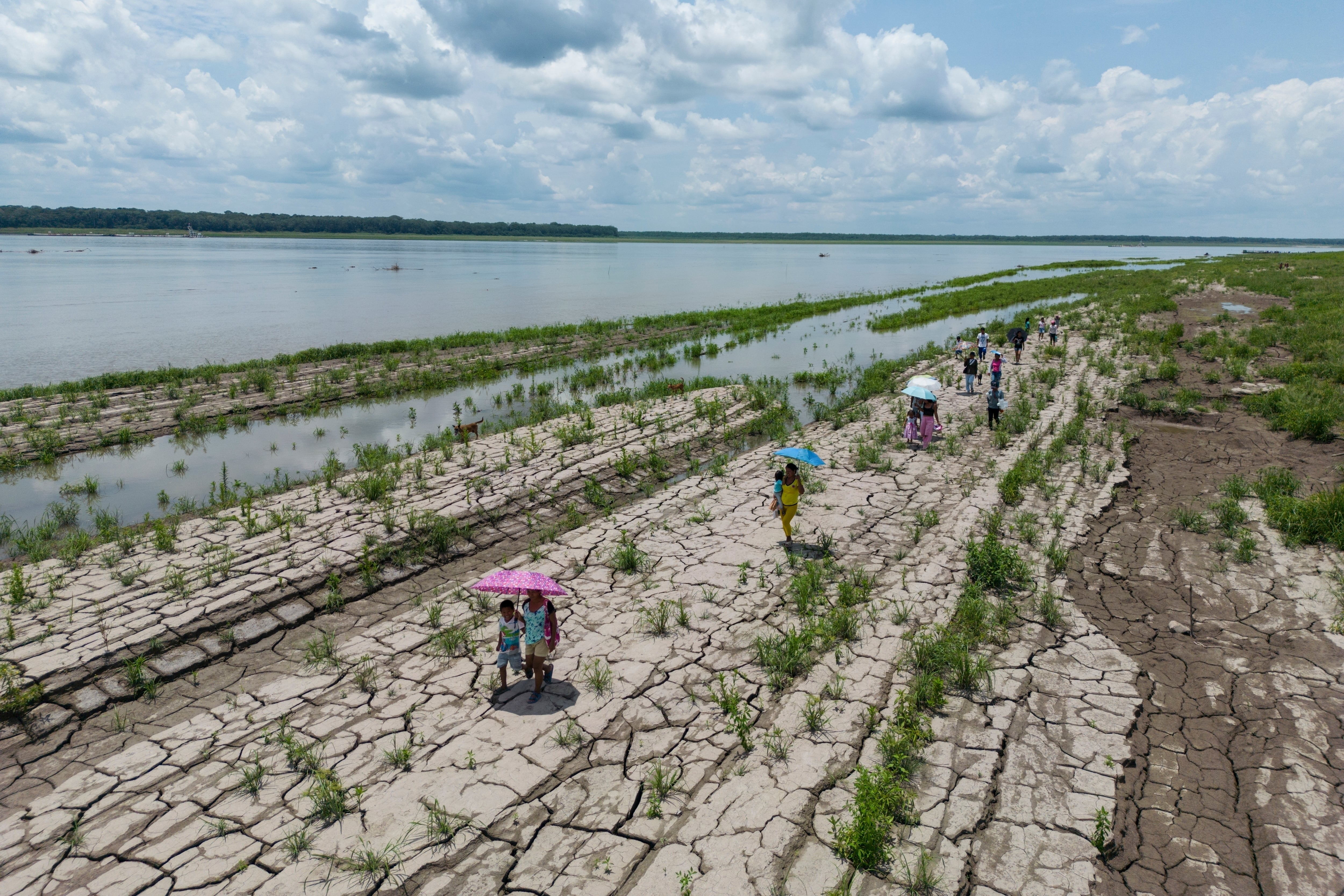
This is the driest year on record in Tegucigalpa. Eighty percent of Honduran territory is on red alert, and the capital has had a potable water rationing system every 12 days for a month. The lack of rain is making maize and bean crops in Guatemala — the main food source in a country with the region’s highest rate of chronic child malnutrition — even more vulnerable. The Panama Canal has begun restricting vessel traffic because of water stress in the basin, and the parched Amazon rivers are isolating dozens of riverside communities in Brazil and hampering fishermen’s work.
Spanish reality show “Survivor” (Supervivientes) has been filming on the land of the Afro-Indigenous Garífuna peoples in Honduras since 2006. The filming of “Supervivientes,” as well as other versions of the “Survivor” show, have sparked intense local protests over land, human rights, restrictions to fishing access, and forced evictions.
In 2025, the Inter-American Court of Human Rights (IACHR) found that the filming of the reality show violated several rights of the members of the Garífuna community. But it wasn’t the first time the Honduran government has been found in violation for its treatment of the Afro-Indigenous people of Central America. In total, the Inter-American Court has issued warnings four times regarding the mistreatment suffered by this community.
This story, though not entirely recent, has resurfaced in recent weeks when, on July 6, nearly two hundred police officers arrived in San Juan to evict several community members, claiming they were on property that did not belong to them.
However, the Garífuna assert that these lands belong to the community, and therefore an eviction order cannot be issued for communal lands that, in essence, are being targeted for privatization in favor of private interests (particularly those of the Rosenthal family, one of the wealthiest and most powerful families in Honduras). The dispute led to the arrest and prosecution of five community members by the Honduran judicial system. Those detained are Deinor Mejía, Irbin López, Carlos Fernández, Onil Hernández, and Sara Acosta.
Protests against evictions
Following this, several members of the Honduran Black Fraternal Organization (OFRANEH) arrived in the capital, Tegucigalpa, to protest in front of the Supreme Court against what they consider to be unfair treatment. They set up the “Viva Berta” Camp and plan to remain there until the proceedings against the five defendants are concluded and the court stops treating the matter as if it were a criminal case.
Furthermore, OFRANEH has rejected the intentions of Supreme Court President Wagner Vallecillo to establish dialogue forums to resolve the conflict, as the organization defending the rights of Black Hondurans asserts that this would imply recognizing that these territories do not belong to the peoples settled there – a fact already established several years ago by international courts and specifically recognized in 2023 by the Inter-American Court of Human Rights, which ruled that the territories of San Juan belonged to the communities settled there.
Thus, while the government promotes negotiations, the Garifuna people continue to resist what they see as an onslaught by private interests that are using the Honduran government to their advantage in order to strip them of something that – despite the racist rhetoric of certain media outlets – is rightfully theirs by virtue of hard-won rights.
Isolated incident or state policy?
However, in the Honduras of right-wing President Nasry Asfura, a law known as the Agroindustrial Law, the Employment and Economic Development Zones (ZEDE), was recently passed. This law authorizes law enforcement to act as they did on the day of the eviction, even though it contradicts the rulings of the IACHR, which could lead to another case against the Honduran state.
OFRANEH asserts that this is part of a long-standing pattern of the Honduran state’s actions against Indigenous peoples. For two decades, various institutions have promoted the dispossession of lands in favor of private interests, they stated. In one such example, the National Agrarian Institute reportedly failed to recognize more than 172 hectares for the Garifuna people but did recognize them for the company Promotur, a firm linked to Jaime Rosenthal Oliva, a prominent Honduran banker and politician who died in 2019.
This organization has also denounced the clear ties between the Rosenthals and the Supreme Court of Justice, which could jeopardize fair treatment and recognition of the territories in favor of Indigenous peoples.
For their part, several United Nations special rapporteurs have called on the Honduran government not to carry out more than 1,000 eviction orders that would affect tens of thousands of peasant, Indigenous, and Afro-descendant families. These orders would jeopardize not only territorial rights but also the food security of thousands of people, as these families rely primarily on working the land for their livelihoods.
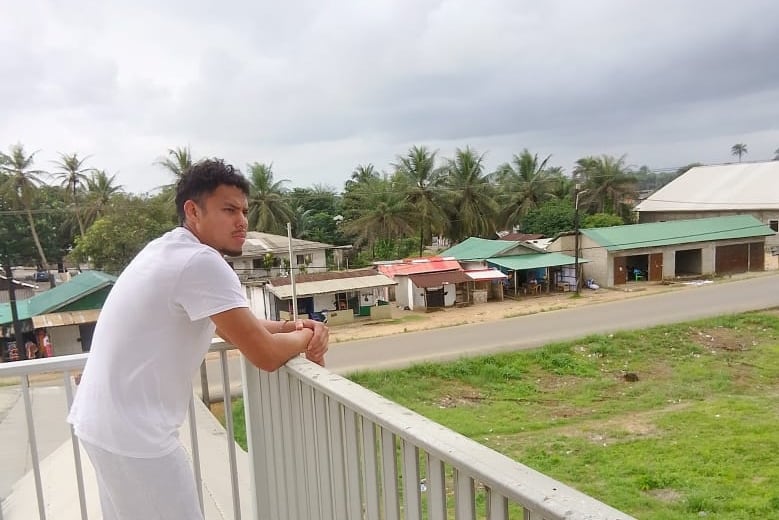
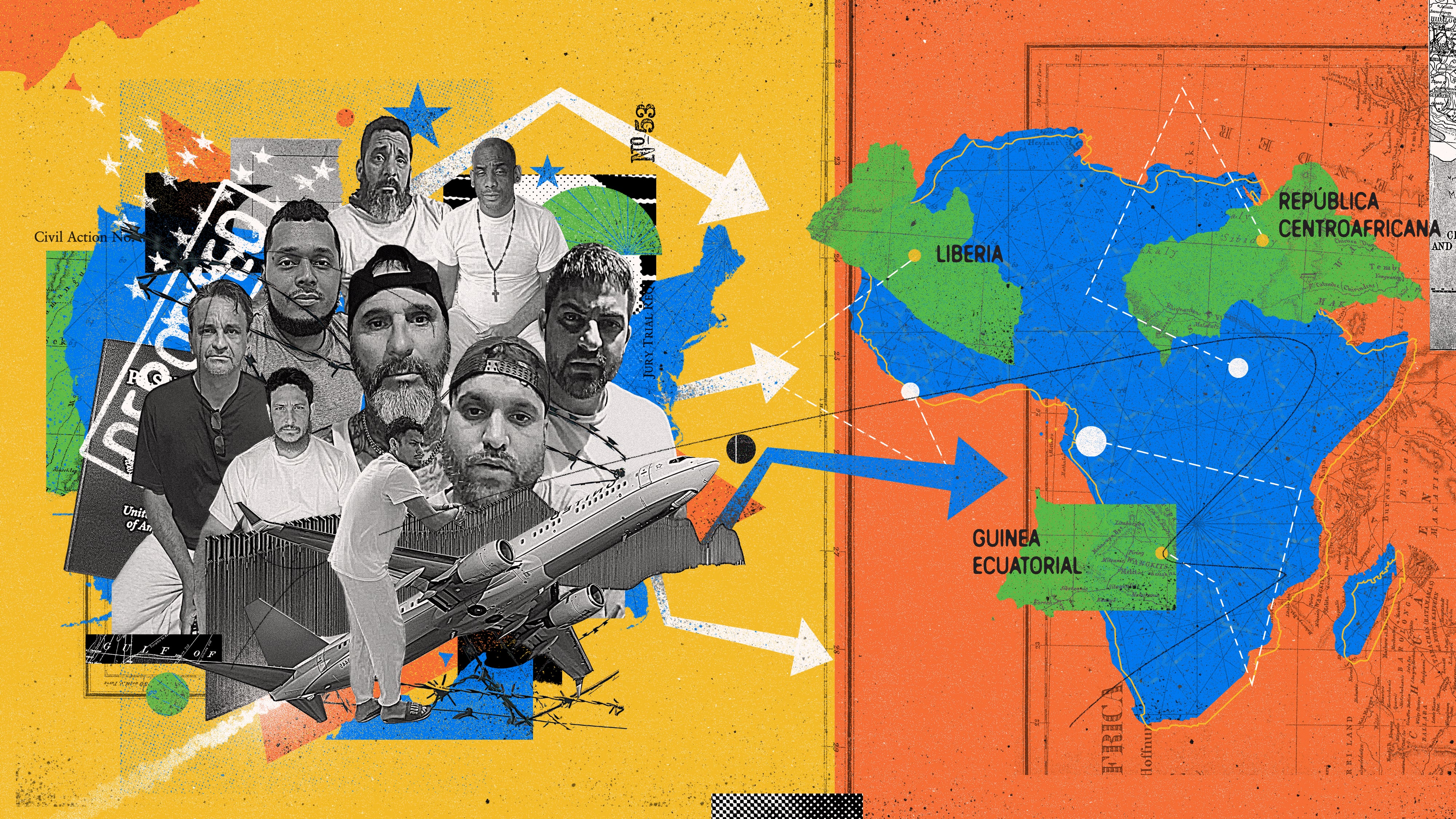
Among so many faces, Roberto Mosquera remembered one in particular the day he arrived in Eswatini, a small country tucked away in southern Africa. He kept seeing that face over the following 14 months, which passed slowly and unbearably in the compressed world between the white and gray walls of the maximum-security cell at Matsapha prison. The man is serious, tall, dark-skinned and wears round glasses. His name is Jabulani Kunene and he is the prison official in charge. For more than a year, Mosquera has asked him the same question every time he passes by: “How long are you going to keep me locked up here?” Kunene has always given him the same answer: “I don’t know, Roberto, I don’t know.”
This story originally appeared in Common Dreams on Aug. 24, 2026.It is shared here under a Creative Commons (CC BY-NC-ND 3.0) license.
The US military has resumed its campaign of bombing alleged drug-trafficking vessels after a two-month pause in a campaign that many legal experts and human rights groups believe constitutes a murder spree.
In a Monday social media post, US Southern Command (SOUTHCOM) said it carried out a “lethal kinetic strike on a low-profile vessel operating along established narco-trafficking routes” in the Pacific Ocean on Sunday. Two people were killed as a result of the attack, SOUTHCOM claimed.
In announcing the strike, SOUTHCOM Commander Gen. Francis Donovan said the attack was part of a campaign of “imposing total systemic friction on narco-terrorists—disrupting their operations, dismantling their leadership, and eliminating cartel terror across the region.”
Donovan’s boasts about the effectiveness of the boat strikes in combating the drug trade come less than a month after a leaked a Drug Enforcement Administration (DEA) analysis revealed that the boat-bombing campaign has not “reduced the amount of cocaine entering” the country, as drug cartels have found alternate methods for shipping their product into the US.
With the latest two casualties, the boat bombing campaign launched nearly a year ago by President Donald Trump’s administration has now claimed the lives of at least 223 people.
Adam Isaacson, director of the Defense Oversight program at the Washington Office on Latin America (WOLA), criticized the administration for resuming its boat bombings despite “overwhelming evidence that they are murder; that many, likely most, of the dead are either super-low-level or uninvolved with drugs; and that cocaine supply is unaffected.”
Brian Finucane, senior adviser to the US Program at the International Crisis Group, delivered a similarly scathing assessment, commenting that “the Trump administration’s lawless killing spree at sea resumes.”
Nicholas Grossman, professor of international relations at the University of Illinois, described the boat strike campaign as “murderous” and “illegal,” adding that its victims are “not terrorists” and “may not even be drug traffickers.”
Investigative journalist Camila Lourdes Galarza observed that “there’s still no proof any of the victims” of the boat strikes were involved in the drug trade.
Lourdes Galarza sarcastically added that if the victims had been drug traffickers, “the US would probably give them a deal” like the one given to Juan Orlando Hernández, the former president of Honduras who was pardoned by Trump last year despite being previously convicted on narcotics trafficking charges.
 Login