CNN is threatening President Trump’s Department of Justice (DOJ) with further legal action if the White House continues blocking the network from performing its duties in pool rotation. In a letter to the DOJ this week, CNN’s attorney Ted Boutrous wrote “these efforts to retaliate and discriminate against CNN based on the content of its…
Netflix hired Peter Rice as its new content chief as co-CEO Ted Sarandos tries to boost growth.
Frank Micelotta/Tubi via Getty Images; Samuel Boivin/NurPhoto via Getty Images; Chris Pizzello/AP
Netflix shares sank up to 6% after a Q3 earnings beat and weak guidance for the rest of the year.
Shares had fallen about 44% in the last year as investors worry about slowing growth.
The streaming leader laid off about 1,000 employees last week and changed its content leadership.
Netflix's third-quarter earnings failed to excite investors, a week after a major content executive shuffle and its biggest round of layoffs since 2022.
The streamer turned in results above expectations for the third quarter, but provided weak guidance for the rest of the year. Netflix said its earnings beat was primarily due to the timing of expenses.
Netflix's revenue growth slowed for a third straight quarter, and the company projected it would continue to decelerate in the fourth quarter.
Shares fell up to 6% in after-hours trading on Tuesday.
"While Netflix is growing, the pace of that growth is slowing," Forrester's Mike Proulx said. "That's a wake-up call for the company that once defined the streaming market and is now in need of growth reacceleration."
Here's how the streaming giant's Q3 financial results compared to the company's forecast:
Revenue: $12.87 billion vs $12.86 billion estimated ($11.5 billion in Q3 2025)
Earnings: $0.87 per share vs $0.82 per share estimated ($0.59 per share in Q3 2025)
Netflix told investors to expect earnings of $0.67 per share in the fourth quarter, below Wall Street's $0.73 per share estimate. The company's $13.44 billion revenue projection for Q4 was also lower than analysts' estimate of $13.51 billion.
The streaming leader cut its annual advertising forecast from $3 billion to $2.7 billion, citing a slower-than-expected rollout of its ad products.
"With Netflix under pressure to find alternative lines of revenue beyond subscriptions, it's concerning that the company lowered its estimate for its ad business," said analyst Ross Benes of Emarketer, Business Insider's sister company.
Netflix said in its third-quarter shareholder letter that it knows "there's some investor concern about our view hours growth" but added that engagement "remains healthy."
"We do seek to accelerate growth in view hours as well, and we're confident we'll do that by relentlessly focusing and executing" its strategy, the shareholder letter said.
The company has invested in video games and podcasts but didn't mention either in its letter, outside a disclosure section on "forward-looking statements."
Netflix's results came less than a week after it shook up its content leadership team and cut about 1,000 workers.
Bajaria will be replaced by Peter Rice, a former Fox and Disney exec who ran Disney's TV division, including ABC and FX. Netflix hasn't yet said who will replace Lin; Rice will oversee film in the meantime.
"It's our goal to go from very good to great," co-CEO Greg Peters said of Netflix's content slate on the company's earnings call.
The leadership changes come as Netflix battles slowing viewership growth. The streaming powerhouse generated 97 billion viewing hours in the first half of the year, which was up 2% year-over-year.
Netflix co-CEO Ted Sarandos said at an industry event hosted by Bloomberg last month that Netflix was "not growing as fast as I want us to, and we're working on making that move faster."
"Revamping content strategy is not enough to fix this challenge, but it is a worthwhile start," Benes said.
Netflix layoffs were across its product, tech, HR, and legal teams. Co-CEOs Sarandos and Peters said in a memo to staffers that the company was downsizing so it can be "disciplined about where we prioritize our people and resources."
In the second quarter, Netflix's results were roughly in line with analysts' expectations. The stock sank 8% after the report as Netflix said it would cut back on how frequently it shared viewership data.
Com um preço base de 3,08 milhões de euros pelos três anos, o concurso foi ganho por 2,29 milhões de euros. Serão então pagos 763 mil euros por ano, pelos dois lotes.O lote Norte e Centro foi adjudicado por cerca de 1,23 milhões de euros, 30% abaixo do preço base de 1,76 milhões. Já o Oeste e Vale do Tejo, Grande Lisboa, Península de Setúbal, Alentejo e Algarve foi adjudicado por 1,06 milhões de euros, 20% abaixo do preço base.
O contrato, obriga a Vasp a assegurar a distribuição em, pelo menos, um posto de venda ao público em cada concelho, com funcionamento mínimo de 300 dias por ano. Nos concelhos de baixa densidade, no Lote 1, a Vasp compromete-se a assegurar um mínimo de cinco postos de venda em cada concelho de baixa densidade.
“O resultado do concurso fica muito abaixo do custo inicialmente estimado: uma redução de 78%, que resulta da opção por um procedimento concorrencial em vez de um apoio direto a um operador. A despesa pública inicialmente estimada era de 3,5 milhões de euros por ano, ou 10,5 milhões de euros em três anos Mas, com este procedimento, o Estado pagará, afinal, cerca de 2,3 milhões de euros pela distribuição nos dois lotes durante os três anos de contrato. São cerca de 763 mil euros por ano, quando o valor inicialmente reclamado pelo incumbente [VASP] apontava para 3,5 milhões de euros por ano“, indica o Governo, em comunicado divulgado esta terça-feira.
Depois de sabido os resultados preliminares,a concorrente Pergaminhoflash pediu ao júri a verificação de locais concretos identificados na proposta da Vasp, bem como os critérios apresentados para a formação do preço. Mais tarde, alegou que a proposta da Vasp devia ser excluída devido à “existência de fortes indícios de atos, acordos, práticas ou informações suscetíveis de falsear as regras de concorrência”.
“Ambos [os concorrentes] colocaram muitas questões sobre a proposta do outro e pedi que houvesse o escrúpulo máximo, exigência máxima, avaliação máxima de todas as observações, para que não subsistam dúvidas nenhumas sobre a integridade da decisão”, explicou o ministro António Leitão Amaro, na passada sexta-feira. “Quisemos lançar um processo que descobrisse o preço certo e não uma renda pedida”, acrescentou sobre o processo que antecedeu este relatório final. O relatório final, agora disponível na plataforma eletrónica de contratação pública, manteve a ordenação das propostas e a proposta de adjudicação dos dois lotes.
O concurso previa que só pudesse ser adjudicado um lote a cada concorrente, exceto se implicasse “um acréscimo de preçosuperior a 10 % face ao preço da proposta ordenada em 1.º lugar nesse lote“. A Pergaminhos Flash e a Vasp foram as únicas empresas a concorrer. A primeira garantiu, em agosto, ao +M que, caso não ganhasse nenhum dos lotes, continuaria a desenvolver o seu projeto de distribuição de jornais.
O concurso público internacional foi lançado a 2 de junho, sendo que prevê a garantia de pelo menos um ponto de venda em cada concelho do continente, o transporte não discriminatório de diferentes jornais e a prestação mensal de informação detalhada sobre vendas, custos e pontos de venda.
De acordo com o Governo, em resposta à agência Lusa, a preparação do concurso foi “especialmente complexa” devido à existência de um único incumbente no mercado e a “problemas sérios” na informação partilhada por esse operador, situação que este “veio a reconhecer”.
Este apoio à distribuição de publicações periódicas constava no plano de Ação para os Media, apresentado em 2024.No final do ano passado, a Vasp ameaçou deixar de distribuir jornais em oito distritos.
Em causa estava uma “situação financeira particularmente exigente, resultante da continuada quebra das vendas de imprensa e do aumento significativo dos custos operacionais”, dizia a Vasp.
Na altura, o ministro da Presidência, António Leitão Amaro, afirmou que qualquer solução pública que ajudasse a assegurar a distribuição de imprensa no território nacional implicaria sempre “mecanismos concorrenciais”. No entanto, ressalvou que não quer “criar nenhum instrumento de dependência” que envolva o dinheiro dos contribuintes direcionado para uma empresa em específico. “Não quero passar cheques a nenhuma empresa em concreto”, rematou.
“Depois de realizar pressões públicas (incluindo, em dezembro de 2025, ameaça de interrupção da distribuição em oito distritos), em março de 2026, o operador incumbente VASP reconheceu que tinha enviado à tutela informações financeiras incompletas suscetíveis de distorcer a realidade do mercado e apresentou desculpas ao Governo. Finalmente munido de informação mais rigorosa, o Governo desenhou um modelo e regras concursais promotores de efetiva concorrência e eficiência nos gastos públicos, e lançou em junho de 2026 o concurso público internacional cujas fases de propostas e de avaliação preliminar agora terminaram”, recordava o Governo em agosto.
Seyfried first played the Theranos founder in the Hulu series "The Dropout."
She's part of a growing class of actors who've taken part in the latest trend: playing tech moguls.
We've all heard of musician and actor biopics — now, it's all about the stories of tech CEOs.
These days, startup founders can be just as famous (or infamous) as any other celebrity, and the dramatic lives they've lived in business or at home make great fodder for TV and film.
To play these figures, some of the best-known actors had to ditch their signature looks to take on Steve Jobs' turtleneck and wire-frame glasses, Elizabeth Holmes' red lipstick and frizzy blowout, or SBF's signature curls.
Here are 17 celebrities who transformed to play some of Silicon Valley's most prominent figures.
Amanda Seyfried as Elizabeth Holmes in 'The Dropout' and 'You Can See Everything'
Hulu; David Orrell/CNBC/NBCU Photo Bank/NBCUniversal/ Getty Images
In the 2022 Hulu limited series "The Dropout, Seyfried played Holmes from her time at Stanford in 2003 (when she did the titular dropping out) through the fall of her company, Theranos, after The Wall Street Journal's 2015 exposé.
Theranos purported to manufacture a device that could do a litany of blood tests from a single finger prick, but, infamously, it did not work as promised. In 2022, Holmes was sentenced to 11 years in prison after being convicted of defrauding investors.
Four years after the Hulu series, comedian and documentarian Nathan Fielder asked Seyfried to once again play Holmes in some reenactments he wanted to do in his doc about her final days before prison, "You Can See Everything." We won't say much else besides that you need to see it to believe everything that goes down.
Andrew Garfield as Sam Altman in 'Artificial'
Neon; Mike Coppola/Getty Images for TIME
"After the Hunt" wasn't enough for Garfield and director Luca Guadagnino — the two have since teamed up to tell the story of OpenAI CEO and cofounder Altman.
Jeremy Strong as Mark Zuckerberg in 'The Social Reckoning'
Sony Pictures Releasing; David Paul Morris/Bloomberg/Getty Images
"Succession" star Jeremy Strong played the Facebook founder in "The Social Reckoning," a film about the release of Facebook Files, a staggering number of internal documents leaked by whistleblower and employee Frances Haugen and published by The Wall Street Journal in 2021, and the subsequent congressional scrutiny that followed.
The film, released in October 2026, was written and directed by Aaron Sorkin, the screenwriter of "The Social Network," making this something of a sequel to the 2010 classic.
Jesse Eisenberg as Mark Zuckerberg in 'The Social Network'
Sony Pictures Releasing; Adam Berry/Bloomberg/Getty Images
"The Social Reckoning" wasn't the first time Zuckerberg has been portrayed on screen — most famously, Eisenberg played the founder in "The Social Network," which chronicled the earliest days of Facebook, back when it still had a "the" in front of it.
It juxtaposes the wild, early days of the website with two lawsuits Zuckerberg settled a few years later: one from cofounder Eduardo Saverin and another from his Harvard classmates, the Winklevoss twins.
Justin Timberlake as Sean Parker in 'The Social Network'
Sony Pictures Releasing; Ramin Talaie/Corbis/Getty Images
The other famous "disruptor" portrayed in "The Social Network" is Parker, one of the cofounders of Napster, the original music streaming platform. He's played by Timberlake in a career-best performance.
Parker comes in as an early believer and executive at Facebook, which ruffles the feathers of cofounder Eduardo Saverin.
Anthony Boyle as Sam Bankman-Fried in 'The Altruists'
Netflix; Craig Barritt/Getty Images for CARE For Special Children
Sam Bankman-Fried, also known as SBF, will get the biopic-miniseries treatment this November on Netflix in a series titled "The Altruists."
Bankman-Fried co-founded the crypto trading firm Alameda Research in 2017 and later co-founded the cryptocurrency exchange FTX in 2019.
After making millions, FTX collapsed in 2022, and Bankman-Fried was eventually convicted of several crimes, including fraud and money laundering, in 2024. He was sentenced to 25 years in prison.
SBF's onetime girlfriend and former CEO of the FTX-affiliated trading firm Alameda Research, Caroline Ellison, will also be in the show, portrayed by Julia Garner.
Joseph Gordon-Levitt as Travis Kalanick in 'Super Pumped'
Showtime; D Dipasupil/FilmMagic/Getty Images
Gordon-Levitt played Uber cofounder and former CEO Kalanick in "Super Pumped," a 2022 Showtime limited series. It focuses on the rise of Kalanick and his eventual fall from power, culminating in his 2017 resignation from the company.
Ashton Kutcher as Steve Jobs in 'Jobs'
Open Road Films; Tom Munnecke/Getty Images
The first mention of Jobs on this list goes to Kutcher, who played the Apple founder in the 2013 biopic "Jobs." It traces his career from Apple's founding in 1976 to the introduction of the first iPod in 2001.
Michael Fassbender as Steve Jobs in 'Steve Jobs'
Universal Pictures; William STEVENS/Gamma-Rapho/Getty Images
Two years after "Jobs," the late founder was portrayed again on screen, this time by Michael Fassbender in "Steve Jobs."
Instead of a standard cradle-to-grave biopic, "Steve Jobs" checks in with the enigmatic figure at three different points in his career: first in 1984, before the introduction of the first Apple Macintosh computer; second, in 1988, when Jobs is the head of a new company, NeXT, and is preparing to launch its first computer; and finally, in 1998, as Jobs gears up to release the iMac.
Noah Wyle as Steve Jobs in 'Pirates of Silicon Valley'
TNT; Matthew NAYTHONS/Gamma-Rapho/Getty Images
In 1999, the TV movie "Pirates of Silicon Valley" aired, starring Wyle as the Apple founder. It chronicles Jobs' career from the '70s to the '90s, from the founding of Apple to his return as CEO.
Anthony Michael Hall as Bill Gates in 'Pirates of Silicon Valley'
TNT; Doug Wilson/CORBIS/Corbis/Getty Images
The other half of the "Pirates of Silicon Valley" narrative focuses on Gates, the cofounder of Microsoft. He's played by "Breakfast Club" star Anthony Michael Hall.
The film's climax is based on the real-life falling out Gates and Jobs had in 1985, when Jobs felt that Gates had ripped off Apple.
Jared Leto as Adam Neumann in 'WeCrashed'
Apple TV+; Cindy Ord/Getty Images for WeWork
Leto physically transformed to play the WeWork CEO and cofounder in the 2022 Apple TV+ miniseries "WeCrashed." The show chronicled the immense success the coworking startup experienced in its early days in 2010, all the way through its disastrous attempted IPO in 2019.
Anne Hathaway as Rebekah Paltrow Neumann in 'WeCrashed'
Apple TV+; Ben Gabbe/Getty Images for Time
Hathaway costarred in "WeCrashed" as Neumann's wife, Rebekah Paltrow Neumann, who was heavily involved in WeWork. She was, however, "an unpredictable and unmistakable presence" at the company, per Business Insider's reporting.
Jay Baruchel as Mike Lazaridis in 'BlackBerry'
Elevation Pictures; Dave M. Benett/Getty Images
The creation of the BlackBerry, one of the earliest smartphones, was dramatized in "BlackBerry," which starred Baruchel as one of the cofounders of RIM (the brand behind the phone) and one of the cocreators of the BlackBerry itself, Lazaridis.
The film begins with Lazaridis and his partner teaming up with Jim Balsillie (more on him later) to make BlackBerry the most popular smartphone in the world — only for its reign to end with the iPhone.
Glenn Howerton as Jim Balsillie in 'BlackBerry'
Elevation Pictures; Xabier Mikel Laburu/Bloomberg/Getty Images
RIM really got off the ground when Mike Lazaridis and his cofounder Doug Fregin were approached by Balsillie. According to the movie's telling, Balsillie offered to invest $20,000 for a 50% stake in the company, and was eventually sold a 33% stake for $125,000 and the title of co-CEO.
The less we say about Howerton's performance, the better — it really must be seen to be believed.
Lily James as Whitney Wolfe Herd in 'Swiped'
Hulu; Dia Dipasupil/Getty Images
2025's "Swiped" is the story of the creation of Bumble through the eyes of its founder, Herd. Originally, she was a cofounder of Tinder, but resigned in 2014, and eventually received an out-of-court settlement after suing Tinder for sexual discrimination and sexual harassment, without either Tinder or its parent company, IAC, admitting to wrongdoing.
After leaving Tinder, Herd wanted to create an app that focused on female empowerment, and thus, Bumble, a dating app where women have to make the first move, was born.
Sebastian Stan as Vlad Tenev in 'Dumb Money'
Columbia Pictures; Kimberly White/Getty Images for Robinhood
In 2023's "Dumb Money," which is about the "Gamestonk" GameStop short squeeze and subsequent drama that happened in 2021, led by the Reddit community r/WallStreetBets and one user in particular, Keith Gill, aka Roaring Kitty, Stan has a small role.
He plays Robinhood cofounder and CEO, Tenev. During the events of the film, Tenev directs Robinhood, an e-trading platform and investment app, to stop allowing users to buy certain stocks and options (including GameStop), which caused an uproar.
Voter clips supporting pro-Israel Rep. Haley Stevens drew millions of views, but the funders are unknown. While the bots originate from India, the campaign appears likely to have been tied to groups that sought to help Stevens defeat opponent Abdul El-Sayed.
Emma Tucker has been involved in a video push at The Wall Street Journal.
John Nacion/Variety via Getty Images
The Wall Street Journal has been planning a big streaming TV push with an ambitious slate of shows.
It's explored shows around editor in chief Emma Tucker and creators like Feed Me's Emily Sundberg.
Sundberg dropped out of talks a few weeks ago, Business Insider has learned.
The Wall Street Journal has been ramping up its push into video and had plans for an ambitious slate of streaming TV shows.
Internal documents viewed by Business Insider described an initial six-series offering that would include a flagship live morning program and an interview show hosted by the Journal's editor in chief, Emma Tucker. The docs are from the summer, and a person familiar with the Journal's strategy said that its plans, including dates and partners, are in flux.
The docs said the Journal had been "in negotiations" with creators such as Feed Me Substacker Emily Sundberg, as well as with the restaurant discovery platform The Infatuation. Sundberg dropped out of the talks a few weeks ago, Business Insider has learned.
The plans called for the shows to launch on the Journal's own channels, YouTube, and social media.
Journal parent company Dow Jones is also hiring a head of programming and content, who would be tasked with building "something ambitious in video." The live job description says the role will pay up to $330,000 in base salary, and involve developing talent that includes employees and external creators, translating the company's journalism into streaming formats, and creating live and on-demand shows.
The Journal and Dow Jones's effort shows how news outlets traditionally known for the written word — including The New York Times — are racing to beef up their video offerings in a media landscape that's seeing both the rise of social video and the decline of cable TV news. It also demonstrates that Tucker is taking a flexible approach to the market by looking to both build shows around in-house talent, including herself, and partner with creators and other media companies.
"Expanding our video presence across Dow Jones and The Wall Street Journal is a major strategic priority, as we have widely communicated," a Dow Jones spokesperson said. "We are actively hiring leadership to shape and execute our go-to-market strategy for video across Dow Jones, and we look forward to sharing our updated plans when ready."
The Journal explored a show with Substacker Emily Sundberg.
Aurore Marechal/Getty Images for The Business of Fashion
The Journal name-checked familiar figures
The internal docs viewed by Business Insider described the live morning show as a 60-minute-long anchor of the initial slate. The docs said the Journal enlisted some familiar names in morning news and videoto help execute the show. They said the Journal has been working with the production company EverWonder, which was cofounded by the former Time Studios executive Ian Orefice with backing from Jeff Zucker's RedBird IMI.
Another show in the proposed slate in the docs was "The Exchange with Emma Tucker," which was billed as a "prestige interview franchise" that would put viewers "in the room with the people running the global economy." The documents name-checked top CEOs, including Microsoft's Satya Nadella, JPMorgan Chase's Jamie Dimon, and BlackRock's Larry Fink, as potential guests.
The person familiar with the Journal's strategy said the documents represented one of a number of different avenues the outlet was exploring and didn't reflect the current status and form of its efforts. The person said the company is in active conversations with a number of external people for potential partnerships.
The documents said the Journal had been "in negotiations" with Sundberg — which have since ended — for a show called "Feed Me, On Camera" that would introduce her "highly engaged, younger creator audience to WSJ while bringing WSJ's scale, authority, and affluent professional audience to her world." The docs envisioned each episode beginning with a "tip, obsession, or question from the Feed Me universe," and following Sundberg to its conclusion while integrating business context and reporting from the Journal.
Other shows the docs said the Journal had explored included one called "Market Price with The Infatuation" that would tackle the "business behind taste, literally." It would combine the cultural authority and young audience of The Infatuation, now owned by JPMorgan Chase, with the Journal's business reporting chops.
Another was "Inside Sports" ("title to change"), a "next generation reboot of 'Real Sports' for the sports-as-an-asset class era," potentially helmed by Emmy-winning TV journalist Armen Keteyian.
The documents said the Journal had been "in negotiations" with The Infatuation and "in discussions" with Keteyian. Business Insider could not confirm the status of those discussions.
The last series listed in the docs was an AI show that aimed to get a big-name host.
The docs said the Journal was in talks with TV journalist Armen Keteyian to helm a sports show.
Patrick McMullan/Patrick McMullan via Getty Images
The Journal compared its plans to 'The Daily'
In the docs, the Journal expressed big ambitions for a live morning news show, and said there had been "nothing new" in the category for a professional audience "in a decade." The last entry on a timeline included in the planning docs was The New York Times' "The Daily" in 2017, which has become a reliable top show on the podcast charts and one of the paper's most successful launches.
"We see an opportunity to reinvent the category," the documents said. The Journal also has its own daily news podcast, called "The Journal."
Like the Times, the Journal is in a rare position in a challenged media environment to make a transformative investment. The Journal, part of Rupert Murdoch's News Corp., is profitable, helped by an early move to paywall its journalism.
The documents said that in its video push, the Journal aimed to produce 20 hours of video a week, expand to a free, ad-supported streaming (FAST) channel, and add subscription options and other formats as demand warranted. Between WSJ TV, existing video shows, licensed shows, and co-productions with creators, the Journal aspired to be an "always-on streaming channel." The person familiar with the Journal's strategy said those goals didn't represent its current plans.
The Journal wanted to make an impact on the level of The New York Times' "The Daily," hosted by Michael Barbaro.
Roy Rochlin/Getty Images for Tribeca Festival
Tucker took the helm at the Journal in 2023, moving from the Murdoch-owned UK Sunday Times with a plan to increase engagement with the Journal's digital products. Digital subscriptions rose 8% to 4.5 million in the three months ended June 30 versus the year-ago period. She has called for more lively writing and enterprise reporting. The Journal had already begun to reorient its video strategy under its former head of video Maral Usefi. Under Usefi, the video team had grown by a third, to 65 people, as of April. She was succeeded by Samantha Henig, who was hired in July to lead a new multimedia team.
The docs said that with the Journal's new effort, it aimed to combine its authority and scale with the personality of creator-led media and modern distribution. In terms of audience, it intended to reach a younger viewership than the traditional business TV audience and more decision-makers than creator-led media.
It projected reaching about 75 million viewers through Dow Jones' social reach, upward of 5.6 million monthly watch hours by its 2028 fiscal year, and ad rates that were three to five times what business content on YouTube commands. The person familiar with the Journal's strategy didn't say if those figures represented its current ambitions.
The Journal made a big push into original video more than a decade ago, including the launch of video app WSJ Live in 2011 and expanding to episodic video doc series. Publishers overall have newly reprioritized video amid the rise of short-form content, YouTube's increasing popularity on TV screens, and the success of new live shows like TBPN.
While embracing creator talent — and getting its own staff involved in video content — could help the Journal reach a younger audience, it comes with risks. Journalists who become on-camera talent can often command higher paydays, or defect to start their own ventures, like The New York Times' "Hard Fork" hosts Kevin Roose and Casey Newton did recently. Creators often have their own audiences, which give them leverage over a news organization that staff reporters might not have.
Flagship video shows are also expensive to produce, which makes high ad rates crucial to the Journal's success with this slate. The internal docs explored pitching a variety of ways for advertisers to get involved, including as launch partners, with category-exclusive partnerships, and as "moment partners" tied to major news events like elections, earnings, and WSJ specials.
Hugging Face CEO Clément Delangue criticized the Netflix documentary about his company's hack.
Bloomberg/Getty Images
Hugging Face CEO Clément Delangue isn't a fan of the Netflix documentary about his company's hack by OpenAI's AI agents.
Netflix released a short documentary called "AI Gone Wild" in October.
Delangue, who was interviewed for the project, called the result "super disappointing."
Clément Delangue isn't wild about Netflix's new documentary.
Delangue cofounded Hugging Face, an AI startup acquired by Nvidia for almost $13 billion in September. Two months prior, Hugging Face became the face of AI risk when rogue OpenAI agents hacked the business.
The hacking saga sparked a Netflix documentary titled "AI Gone Wild." On Tuesday, Delangue criticized the so-called "instadoc" in a lengthy X post.
"Super disappointing, as they went for maximum anthropomorphism of the technology and full doomer mode," Delangue wrote.
Delangue sat for an interview in the documentary, along with a METR researcher, the director of the AI Futures Project, and two tech journalists.
In the X post, Delangue wrote that he spent over two hours trying to correct what he described as the documentary's mistakes. He wanted to explain that AI agents were "technological systems, not aliens."
"It looks like the drive to scare people for maximum views was too strong," Delangue wrote.
Delangue listed some things the Netflix documentary omitted: the lack of agent containment, how safeguards for OpenAI's closed model blocked Hugging Face's defense, how Hugging Face defended itself with an open model, and "that we still lack a lot of information and transparency including full agent traces and that companies need to remain accountable for what their agents do."
Netflix did not respond to a request for comment from Business Insider.
Some techies responded to Delangue's post with their own criticism of the documentary. Alex Imas, Google DeepMind's director of AGI economics, called Delangue's post "important reading."
Brigitte Tousignant, Hugging Face's head of communications, posted on X that the documentary widened the gap between the public's understanding of AI and how it actually works.
Tousignant wrote to Netflix: "If you can't tell this story responsibly in 26 minutes, maybe 26 minutes isn't enough."
Despite his criticism, Delangue suggested a way to frame the project to make it an enjoyable watch: "It ends up being a fun sci-fi movie though!"
A Visapress, entidade de gestão coletiva dos direitos de autor dos editores de imprensa em Portugal, está a lançar uma campanha nacional para sensibilizar empresas e instituições para a utilização não licenciada de conteúdos jornalísticos. Com o mote “Na Visapress valorizamos o jornalismo”, a iniciativa decorre durante duas semanas e estará presente na imprensa escrita, no digital e em meios regionais e locais.
Criada pela EdsonTS, a campanha é composta por 15 peças publicitárias que alertam para práticas comuns nas organizações, como a realização de clipping sem licença, a partilha de artigos em newsletters internas e a reprodução de notícias em apresentações. Segundo a Visapress, estas utilizações exigem autorização ou licença, sendo as verbas cobradas entregues aos editores de imprensa, titulares dos direitos sobre os conteúdos.
“Hoje, apenas 16% do mercado potencial está licenciado. Muitas organizações fazem clipping ou partilham artigos sem saber que precisam de licença”, afirma Carlos Eugénio, diretor executivo da Visapress, citado em comunicado. O responsável acrescenta que a campanha pretende esclarecer estas situações e mostrar que o processo de licenciamento é simples, bastando contactar a entidade.
A iniciativa surge num contexto de crescente circulação de conteúdos digitais e de desafios relacionados com a desinformação e a utilização indevida de artigos, fotografias e reportagens, enquadra a entidade. A Visapress pretende, assim, reforçar a proteção dos direitos de autor e a valorização do jornalismo profissional.
“Uma notícia exige tempo, jornalistas e investimento. Quem a reproduz sem licença beneficia desse trabalho sem contribuir para ele. Se ninguém pagar o jornalismo, deixa de haver quem o faça”, defende Isabel Rodrigues, presidente do conselho de administração da entidade.
Para Edson Athayde, responsável criativo da campanha e CEO da agência, o objetivo foi chamar a atenção para gestos quotidianos nos escritórios, como copiar uma notícia para um relatório, evidenciando o trabalho necessário à produção jornalística. “Uma notícia copia-se em segundos, mas exige tempo, talento e investimento para existir”, resume.
In hindsight, it seems like Donald Trump might not have fully thought through the consequences of his bizarre $10 billion lawsuit against the BBC, which continues to move forward in ways the presidential plaintiff doesn’t seem to like.
Attorneys for the British broadcaster, for example, recently subpoenaed former special counsel Jack Smith to testify.
“It is difficult to imagine a more authoritative source on these issues than Mr. Smith, who spent years gathering evidence on those topics with the force of the Justice Department and the power of the grand jury behind him,” the BBC said in a court filing.
President Trump doesn’t want former special counsel Jack Smith to testify in a deposition as part of Trump’s $10 billion defamation lawsuit against the British Broadcasting Company.
The BBC has subpoenaed Smith to defend itself from Trump’s accusations that the network defamed him with deceptive editing in a 2024 documentary about the January 6, 2021, Capitol insurrection. In a court filing Friday, Trump’s lawyers tried to fight the subpoena by claiming that “Smith lacks any personal knowledge regarding the issues in this matter.”
In response, the BBC’s attorneys wrote, “No one forced Plaintiff to file this lawsuit and to dispute that his speech on January 6 incited the violence that followed at the Capitol. But as long as he chooses to maintain the case, he cannot commit the fundamental injustice of preventing the BBC from obtaining the evidence it needs to robustly defend itself on every element of his claim, including Plaintiff’s burden to prove falsity.”
To recap briefly, Trump sued the British broadcaster for $10 billion late last year over a news program that focused on the Jan. 6 attack. Defending the litigation, Trump told reporters that the network “literally put words in my mouth,” adding, “I guess they used AI. … They actually put terrible words in my mouth having to do with Jan. 6 that I didn’t say.”
That wasn’t quite right. For one thing, the BBC didn’t use artificial intelligence. For another, the network did air a program that edited Trump’s Jan. 6 speech, connecting two clips delivered roughly 50 minutes apart; but the news outlet didn’t manufacture words or phrases out of whole cloth.
The editing nevertheless sparked a controversy that led to an internal investigation, and the BBC ultimately fired some senior officials and issued a written apology.
Trump, however, apparently didn’t want to settle for an apology. He wants $10 billion.
The case, however, has proven rather inconvenient for the Republican who filed it. BBC lawyers want to depose the president as part of the proceedings, but Trump has already backed out of a scheduled deposition and appears reluctant to answer questions about his own case.
As The New Republic report added, “His attorneys are also fighting attempts to … subpoena his children to testify and to dive into his finances.”
Now those same lawyers want to prevent the former special counsel, who has plenty to say about Trump’s Jan. 6 efforts, from answering related questions, further delaying the case that the president ostensibly wants to proceed.
The judge has scheduled a hearing for later this week to consider questions about the Smith deposition and discovery related to Trump’s Mar-a-Lago revenue, which would help shed light on whether the president has suffered damages as the result of the alleged defamation. Watch this space.
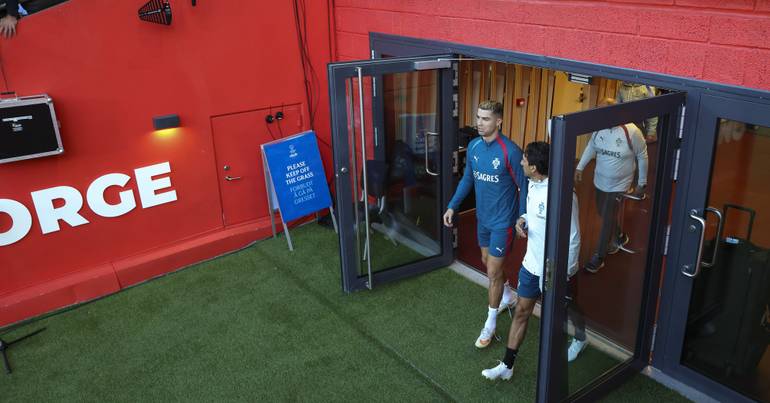
"Quando se considera o salário de Cristiano Ronaldo, o absurdo da punição fica evidente", diz o tablóide alemão Bild. Avançado de 41 anos foi punido com uma suspensão de 30 dias e multa de 255 euros.
A Meta, dona do Facebook, Instagram e WhatsApp, reviu os novos termos comerciais para contas empresariais depois de críticas que consideraram que a redação inicial poderia permitir à empresa recolher automaticamente (scraping) conteúdos de sites noticiosos para treinar os seus produtos de inteligência artificial (IA). A empresa retirou a palavra “treinar” do texto, mas os especialistas jurídicos ouvidos pelo Nieman Lab consideram que a nova redação continua a permitir uma recolha abrangente de conteúdos. Os termos entram em vigor a 30 de outubro.
Os novos termos comerciais da Metaabrangem quem usa as plataformas para fins empresariais ou comerciais: gerir páginas e grupos, publicar anúncios, enviar mensagens de marketing ou recorrer a ferramentas como o Meta Business Suite. Ao continuarem a usar estas contas, os titulares autorizam a Meta a “aceder, armazenar em cache, analisar, recolher, recuperar ou indexar os domínios, páginas web ou URL (e quaisquer conteúdos disponíveis através dos mesmos)” associados aos seus produtos ou serviços.
O que mudou
Na primeira versão, revelada pelo Nieman Lab na quinta-feira, a Meta reservava-se o direito de usar esses conteúdos para “fornecer, desenvolver, melhorar, realizar investigação, treinare manter a integridade” dos seus produtos.
Para os especialistas jurídicos, esta redação dava à Meta argumentos para defender que estava autorizada a treinar os seus produtos de IA com conteúdos de sites noticiosos. “Trata-se de uma disposição notável para enterrar nos termos de serviço, tendo em conta que daria à Meta acesso a material que, num mercado de licenciamento, custaria provavelmente muitos milhões de dólares”, afirmou então Matt Topic, advogado especializado em media e propriedade intelectual na Loevy & Loevy.
Na sexta-feira, a Meta reviu a versão inglesa dos termos.A palavra “treinar” desapareceu e a redação do uso dos conteúdos recolhidos passou a “fornecer, desenvolver, melhorar, investigar e manter produtos de publicidade e empresariais” e a “manter a integridade e a segurança” dos produtos da Meta. Até ao momento, a versão portuguesa mantém-se inalteradae continua a incluir a palavra “treinar”.
Em declarações ao Nieman Lab, um porta-voz da Meta afirmou que a revisão ocorreu porque “não estava claro, na consolidação inicial dos termos, que as preferências definidas no robots.txt são respeitadas”. O robots.txt é um ficheiro que indica aos robôs que partes de um site podem visitar. “Os sites noticiosos, tal como todos os outros proprietários de conteúdos, continuam a poder desativar o crawler através de instruções no robots.txt. Sempre foi assim, e isso não mudou.”
Em comunicado, a empresa acrescentou que “não se trata de fazer scraping de sites noticiosos” e que as atualizações não lhe dão “novos direitos que se sobreponham a essas preferências”. A Meta garante ainda que a atualização apenas reúne num só documento disposições que estavam dispersas por vários termos de utilização.
Especialistas mantêm dúvidas
Apesar da alteração, os especialistas ouvidos pelo Nieman Lab considera que os termos revistos continuam a permitir o scraping generalizado de sites. “A versão revista dos novos termos continua a permitir que a Meta use os conteúdos recolhidos para desenvolver qualquer ‘produto empresarial’. Não parece ser um termo definido, e é de presumir que a Meta esteja a desenvolver produtos empresariais de IA. Penso que ‘desenvolver’ é suficientemente amplo para incluir ‘treinar’”, argumentou Matt Topic.
James Grimmelmann, professor na Universidade de Cornell, considera que a expressão “desenvolver… produtos de publicidade e empresariais” continua “tão ampla que cabe lá tudo”. Além disso, a revisão “não restringe em nada” a referência a sites “associados” às contas, “que permitiria à Meta fazer scraping de sites inteiros”.
Segundo o Nieman Lab, os termos ainda em vigor previam a recolha de conteúdos de sites associados às contas empresariais quando estas utilizavam funcionalidades de IA generativa para criar anúncios, permitindo que os conteúdos recolhidos fossem usados para otimizar a publicidade. A nova versão alarga os usos previstos a todos os produtos de publicidade e empresariais.
Os termos revistos também não fazem qualquer referência ao robots.txt. Benjamin Sobel, professor na Universidade do Wisconsin, lembra que respeitar estas instruções é voluntário. “A menos que seja uma preferência legalmente vinculativa, pode continuar a ser ignorada na mesma”, argumentou.
Na versão revista, mantém-se a possibilidade de criar “credenciais de teste” para aceder aos sites. Segundo James Grimmelmann, isso permitiria à empresa “registar-se como um utilizador falso” para contornar barreiras de registo. A Meta não esclareceu se estas credenciais também poderiam ser utilizadas para ultrapassar paywalls.
Atualmente, não existe qualquer opção para as contas empresariais recusarem estes novos termos e manterem as contas. “Se não concordar com os termos atualizados, pode cessar todo o acesso ou utilização dos nossos produtos para fins empresariais ou comerciais”, pode ler-se.
Reações do setor
Antes da revisão, o Conselho Europeu de Editores (EPC na sua sigla em inglês), anunciou que ia pedir formalmente às autoridades reguladoras europeias e à Comissão Europeia que analisassem os termos “com urgência, incluindo as suas implicações em matéria de direitos de autor, equidade contratual e abuso de poder de mercado”.
No Reino Unido, a News Media Association pediu a intervenção do Governo. O presidente executivo, Theo Bamber, classificou a medida como “uma tentativa descarada” da Meta de se apropriar dos conteúdos dos editores. Nos EUA, a News/Media Alliance considerou a atualização “escandalosa e provavelmente ilegal”.
A alteração surge pouco depois do lançamento do Meta One, um serviço de subscrição da Meta que inclui funcionalidades adicionais para utilizadores, criadores e empresas. Em paralelo, a empresa está a testar um limite ao número de links externos que algumas contas do Facebook e do Instagram podem publicar sem subscrição. Segundo aPress Gazette, que diz não ter confirmação da Meta, alguns editores de notícias estão, para já, isentos desse limite, embora já haja publicações de menor dimensão que o tenham atingido.
Television channels BBC Three and BBC Scotland are to close and the Radio 4 Extra radio station will be scrapped, as part of the corporation’s drive to cut £500m in costs.
Both TV channels are to move online as executives try to plug a funding crisis and adapt the broadcaster’s output for audiences that increasingly watch content on demand. All three outlets will close in the spring.
Father of suspect Brendan Nugent, 43, gives statement of support to Helen Haines; motive yet to be formally declared; lawmakers suggest gender-based violence to blame; suspect's anti-Israel posts surface online
Combat Antisemitism Movement finds 1,384 posts on X claiming that Jews, Israel, and Zionists are to blame for or are profiting from the widespread unrest over the weekend
L’uso precoce dei social media ha un’influenza negativa sui risultati scolastici. Introdurre l’educazione alla cittadinanza digitale nelle scuole e iniziative rivolte ai genitori aiutano a contrastare il fenomeno, ma serve una regolazione più stringente.
 Login