For travelers seeking the warmth of autumn in China, the timing of the trip is less important than understanding which coast you are actually visiting. The country's geography creates two distinct experiences that are often conflated in travel brochures: a tropical south that remains steamy and a temperate north that cools into crisp clarity. The decisive factor in choosing between them is not the calendar date, but the specific tolerance for humidity and the willingness to navigate the distinct weather risks associated with each region.
In the south, specifically Hainan Island, the climate is defined by consistent heat. By October, air temperatures stabilize around 27°C, and the water remains warm enough for swimming. This is the destination for those who prioritize classic tropical resort services. The bay of Yalong Bay is frequently cited for its high level of service and water clarity suitable for diving. Further north on the island, Wanning offers a different proposition: from November, the region sees a shift in wind patterns that marks the beginning of the kitesurfing season. For travelers seeking Russian-speaking infrastructure, Daduhai remains a common choice, with menus and services adapted for guests from the CIS region.
The Northern Trade-off: Clarity over Warmth
Conversely, the northern coasts offer a different kind of value. In Qingdao, September is the optimal window for visiting. During this period, the summer humidity recedes, and the seasonal algal blooms that can cloud the water typically subside, leaving a cleaner sea. The city's architecture, a mix of colonial German structures and modern facilities, pairs well with the temperate weather. Beaches such as Shilaoren and Huangdao are considered the most developed for swimming during this cooler period.
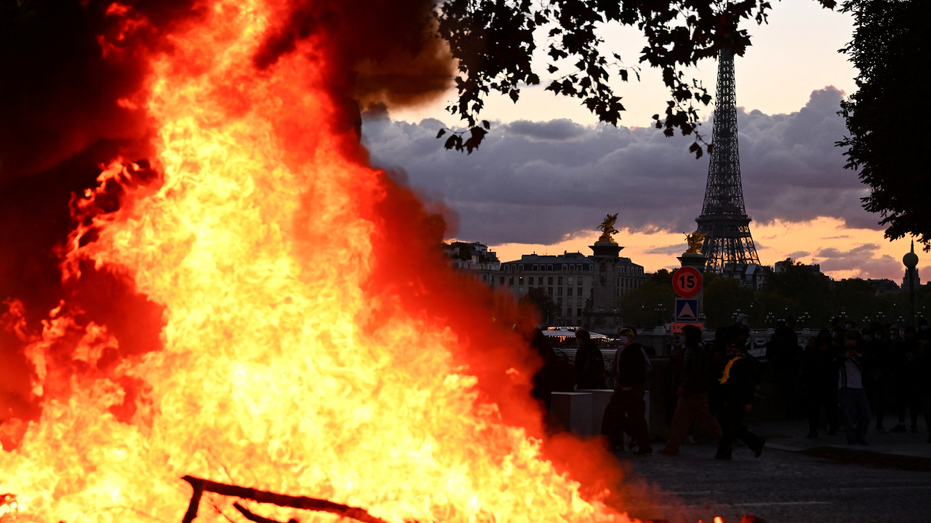
The U.S. Embassy in France is warning Americans to steer clear of violent protests as unrest sparked curfews and raised concerns about travel disruptions across the country.
The riots — fueled by a range of grievances, including rising living costs and mass migration — have been reported across France, with protests reported in cities including Paris, Lille and Lyon. Authorities have imposed localized curfews as a result.
The embassy said in a Monday statement that partial curfews had been introduced in several French cities, with additional restrictions possible.
"Following the October 17 protests that turned violent, media report the Prime Minister’s office introduced partial curfews for Monday, October 19 and Tuesday, October 20 in several cities across France, including Lille," the embassy said.
"Media report more curfews may follow for parts of Paris and in prefectures across the country, and that scattered protests could continue."
In Paris, authorities also imposed overnight curfews in areas including Place de la République and the Les Halles Shopping District, according to The Associated Press (AP).
Riot police deployed tear gas across the streets near Place de la République in an attempt to disperse crowds during the escalating street battles, the same source reported.
Major tourist attractions have also been impacted.
The Louvre Museum in Paris was forced to close Monday after protesters blocked its entrances, Fox News Digital previously reported.
Travelers visiting Paris are being advised to avoid popular protest gathering spots, including Place de la République, Place de la Bastille and Place de la Nation, along with major thoroughfares such as Boulevard Voltaire, which are frequently used for demonstrations, according to The Times of London.
Outside the capital, Lyon's tourism office at Place Bellecour was vandalized and set ablaze during the Oct. 17 demonstrations, according to city officials.
Visitor services have since been relocated to a temporary facility on the same square.
The violence also spread to other French cities, including Limoges, where the historic town hall was set ablaze during the Oct. 17 unrest, according to numerous reports.
In Bordeaux, the mayor reported that as many as 100 stores had been looted during the demonstrations, Reuters reported.
Despite the violence, flights to and from Paris have largely continued operating, according to flight data reviewed by Fox News Digital.
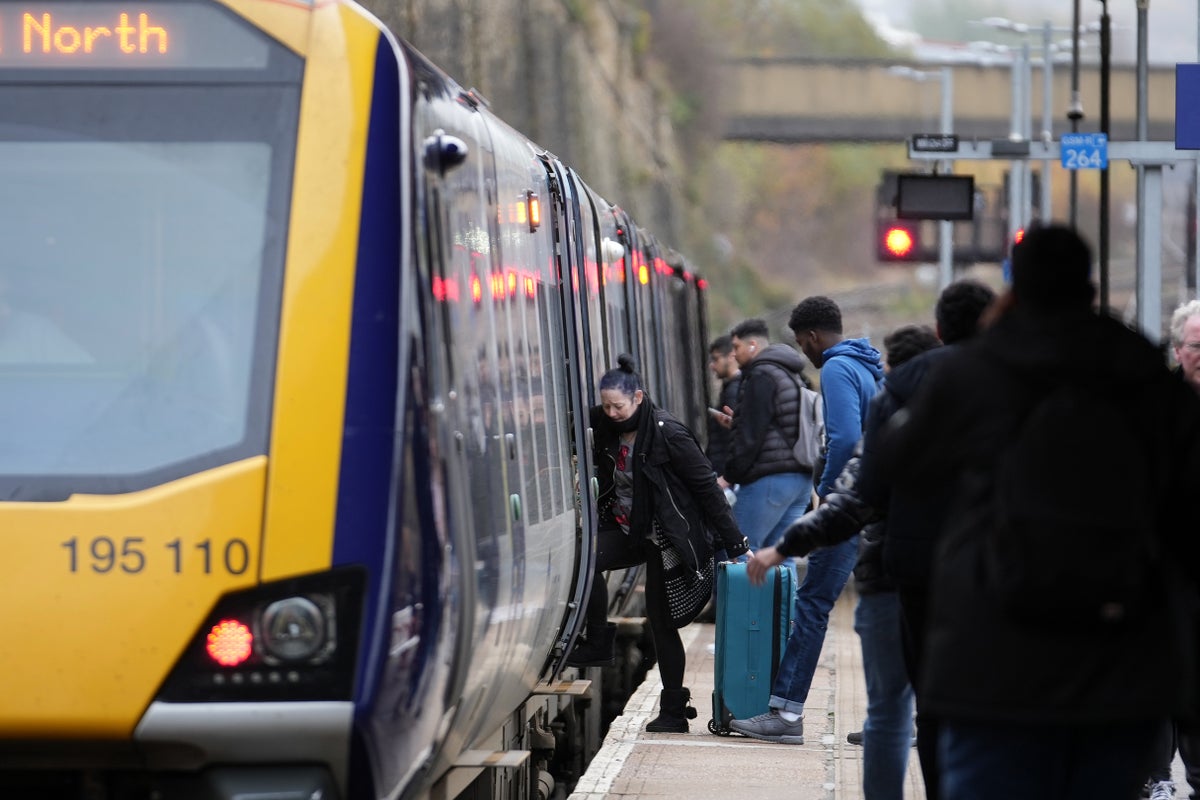
However, travelers could still face disruptions on the ground, with the embassy advising Americans to check for Metro station closures and other transportation interruptions before heading out.
The embassy also urged travelers to confirm flight schedules directly with their airlines and allow extra time to reach their destinations.
"Monitor media and local resources for updated information and curfews in your area," the statement added. "Plan alternative routes and allow extra travel time for travel."
Fox News Digital reached out to the State Department for comment.
A tourist was killed in a freak accident while visiting an architectural landmark designed by one of America's greatest architects last week, according to authorities.
Rogério Renato Mateucci, 55, was killed around 2 p.m. on Friday when strong winds blew a piece of roofing material off a roof — striking him in the head.
Mateucci, the rector of the Pontifical Catholic University of Paraná in Brazil, had been touring Taliesin West, a historic architectural landmark designed by famed American architect Frank Lloyd Wright.
Taliesin West was built in 1937. It is now closed to the public, according to the Frank Lloyd Wright Foundation's website.
Joe Spector, CEO of the Frank Lloyd Wright Foundation, told Fox News Digital he was extending his "deepest condolences" to Mateucci's family and loved ones.
"The Scottsdale Police Department is aware of the incident, and no further details will be shared out of respect for privacy and to allow officials to complete their work," said Spector.
"The property is closed to the public until further notice."
In an Instagram post, the university announced Mateucci's death with "profound sadness."
The school canceled classes at three of its campuses on Oct. 17 and 19 and suspended administrative operations on Oct. 19 as it mourned his passing.
Vidal Martins, vice rector of the Pontifical Catholic University of Paraná, told FOX 10 Phoenix that strong winds blew a piece of clear roofing material into their path, striking Brother Rogério in the head.
Mateucci was reportedly eager to visit the property, given his interest in art.
Elon Musk says his descendants might have a "tiny fraction" of his wealth.
Jae C. Hong/AP
Elon Musk says "money becomes irrelevant" if he's right about what the future holds.
The Tesla and SpaceX CEO said AI and robots will be better than humans at everything.
The world's richest man said his fortune could be virtually gone within a few generations.
Elon Musk says money could be meaningless one day, and the vast majority of his wealth will likely be gone within a few generations.
The world's richest person predicted that advances in robotics and space travel will create a multiplanetary economy, at which point "money becomes irrelevant" and "conventional currency will not matter."
Value will be measured in mass and power or energy, he continued. "So that's my guess," he said, adding that it seemed a "pretty obvious" outcome to him.
The Tesla and SpaceX CEO shared his vision of a post-money future and his outlook on his personal fortune with his biographer, Walter Isaacson, on "The Builders" podcast. The interview was taped in early August and released on Tuesday.
Musk recommended earlier this year that people stop saving for retirement in 10 or 20 years, as he expects AI and other technologies to supercharge productivity and usher in an age of abundance where people can have "whatever stuff they want."
He made a similar argument to Isaacson, saying "there won't be anything that humans can do that the AI and the robots can't do better." People will likely turn to hobbies like growing their own fruits and vegetables, or making art, to find purpose in life, he said.
Musk's plans for his own money
Musk, who briefly became a trillionaire after SpaceX went public in June, topped the Bloomberg Billionaire Index at Monday's close with an estimated $920 billion net worth.
He defended his personal wealth on the podcast, saying that it mostly reflects his ownership of SpaceX and Tesla, and he needs large stakes in both companies to retain voting power and remain in charge.
His fortune is "going to be taxed quite heavily," Musk said, adding that there isn't "some magical way to avoid taxes" because "if there were, I would know about it."
Musk said his wealth will "get whittled down and a few generations from now — if money still matters, which I don't think it will — my descendants would have a tiny fraction of what I have."
He also outlined what he hopes his foundation will spend his fortune on after he's gone: "Continue the goals. Make life multi-planetary, extend consciousness to the stars, improve sustainable energy on Earth."
Notably, Musk pledged on Monday to gift a share of SpaceX to every child in the US next year, a contribution worth over $10 billion today.
His announcement has won praise from President Donald Trump, who hailed Musk's "incredible generosity" and labeled him a "legendary friend" in an X post.
Musk teased a charitable pledge in late July after Nobel economist Daron Acemoglu publicly challenged him over his prediction of a post-money future.
"If money won't matter in 2036, why don't you pledge to donate your current wealth of approximately $1 trillion to charity no later than 2036," Acemoglu wrote on X.
"I am actually going to do something along these lines!" Musk responded.
As much as I enjoy shopping and collecting, travel has helped me realize what's really important.
Mar Yvette
Living abroad with only what fits in a carry-on has changed my definition of "enough."
I no longer buy "just in case" stuff that rarely gets used, and I've found joy in a simple wardrobe.
Ironically, the more I appreciate the things we own, the less attached I've become to them.
I'll admit it: I love shopping and the thrill of getting something new.
But ever since my husband and I started doing extended stays in Paris and other cities throughout Europe, I've surprised myself with how little I actually need.
We never check luggage because it's such a hassle, so whenever we get home after living out of carry-on suitcases for three months, I'll look around our apartment, open my closet, and think, "Wow, I forgot about most of this stuff."
Even though I'm a lifelong declutterer and keep our space tidy and organized, I've come to realize that getting by with only what fits in a carry-on has changed my definition of "enough."
Having fewer clothes makes getting dressed easier
A few cozy turtlenecks have gotten me through most seasons in Europe and in the States.
Mar Yvette
It's kind of ironic that going to Paris, the fashion capital of the world, is where I've ended up with the smallest wardrobe. But as it turns out, having fewer options saves me a lot of mental energy and has made me more creative and intentional about what I wear.
I pack versatile pieces that work together so I can mix and match, rewear the same few pairs of pants, and do laundry every week. Even winter trips, when I have to pack bulkier clothes, have proven that I can get by with much less than I ever thought possible.
I have dozens of sweaters at home since I'm a bit of a collector, but all I really need are just a few Quince cashmere fisherman turtlenecks.
I love clothes, but I don't mind having fewer options whenever I travel.
Mar Yvette
I also love jewelry, hats, and sunglasses, and usually have multiple options based on my mood. But being away for months at a time has made me realize that I'm perfectly fine with having just a few accessories to rotate through.
Whenever I get back from one of our trips, I end up editing my closet because I realize there's so much I don't wear. Yes, it's nice to have all my clothes and accessories, but it also gets easier each time to give stuff away to friends, family, neighbors, or donation centers.
I've stopped buying so many 'just in case' items
Shopping is fun, but there's a difference between stuff I want and stuff I need.
Mar Yvette
It's easy to imagine all sorts of scenarios where I might need certain things, especially when traveling. (Should I pack a pair of heels in case we go to an ultra-fancy dinner? Or what if I suddenly need that scarf I haven't worn in five years?)
News flash: I've never needed something I didn't pack. It's a lesson that has made me less likely to shop on impulse.
I still love going on a T.J. Maxx run and filling up a cart while browsing my favorite sites. However, before I make a purchase, I ask myself if it's something I'll genuinely use or just something that I might hypothetically need one day.
If it doesn't pass the reality check, I don't buy it.
I'm much more thoughtful about what I bring into our apartment
Plant shopping is one of my favorite things to do, but I keep purchases to a minimum
Mar Yvette
Because we're on the move so much, being at home feels even more comforting. I love that our space is decorated with objects that spark joy, but over the last few years, I've become less interested in accumulating stuff.
Instead, I find myself appreciating what we already have — from our shelves full of books and framed photos of our family and travels to my houseplants that our wonderful neighbors take care of while we're away.
Funnily enough, though, the more I appreciate the things we own, the less attached I've become to most of them. I don't even feel much of an urge to buy things for our apartment because I know we'll be leaving again soon.
Having more options doesn't necessarily make life better
I often find myself reaching for the same bags and garments over and over again.
Mar Yvette
Whether it's my wardrobe, household items, or even food, I've realized I don't need endless options. Like, do I really need 12 types of tea in my cupboard at any given moment? Often, I'm fine with just a few bags of my go-to blends.
Traveling with just a carry-on has made me realize that day to day, I tend to stick to my core favorites and don't really need a million choices for everything. I get plenty of variety when I'm out exploring.
At home, I'm happy to keep things simple and enjoy what I already have. That's more than enough for me.
I took my mom on a two-week trip to multiple countries, including Montenegro.
Agnes Groonwald
My husband and I took my 75-year-old mom to Croatia, Montenegro, and Bosnia and Herzegovina.
During the two-week trip, I had to make some adjustments to my typical travel style.
Overall, though, my mom really impressed me and I was surprised by what she could handle.
"I want to go to Montenegro," my mom told me over the phone. She was back home in Chicago, and I was in France, where my husband and I had moved three years earlier.
It wasn't entirely surprising. Since we moved abroad, my mom has been eager to travel more. But Montenegro? The idea felt a little random, which made it all the more intriguing.
Turns out she'd spotted a video of the country on Facebook, likely on one of the Polish-language pages she follows.
I was excited to share another adventure with her, especially one she'd chosen. And if we were going that far, I figured we may as well see more of the region.
After all, I'm a travel blogger and journalist, and my mom has become increasingly interested in seeing what I do and experiencing firsthand what I enjoy so much about travel.
She'd visited us a few times since we moved to France, but the Balkans would be a bigger adventure.
I planned for my husband and me to take her to three countries (Croatia, Montenegro, and Bosnia and Herzegovina) over two weeks. This meant navigating border crossings outside the European Union, handling several layers of logistics, and creating a plan that would work for my mom, who would turn 75 on the trip.
I knew my usual travel pace wasn't going to work for this trip, so we had to plan ahead
When planning the trip, I made sure to take my mom's needs into account.
Agnes Groonwald
My husband and I are active travelers. We regularly rack up 20,000-step days, love a hike to a panoramic viewpoint, and push through heat and discomfort because we're of the "We may never come back here" mindset. Whenever we can, we also take public transit.
My mom travels differently. She spent 40 years as a server, so she's no stranger to being on her feet and is generally in good health, but retirement has slowed her down.
Even on her most active days, she moves at a gentler pace. Hills are particularly challenging, and long stretches of walking, especially on uneven surfaces, can catch up with her.
Before booking accommodations or transportation, I considered the physical demands of each day. I checked elevation changes for walks between hotels and the places we wanted to visit, looked for ways to avoid unnecessary uphill treks, and ruled out extra-long guided tours.
I also hired private drivers ahead of time to give us more flexibility. This way, we could tailor the stops to our needs rather than follow a big group's schedule, including when we stopped, where we were dropped off, and how long we stayed.
We made small adjustments throughout to ensure my mom was comfortable
We began by exploring the beautiful Old Town in Dubrovnik, Croatia.
Arsty/Getty Images
We started with three easy nights in Dubrovnik, Croatia. During our stay, we explored the popular Croatian city's Old Town and lingered over meals of fresh fish. We spent a lot of time in the pool, since I learned my mom has far more energy in the water than on land.
After that, we were driven into Montenegro, where we learned the importance of rest. On a hot day in Perast, she loved the short boat ride to the man-made island, Our Lady of the Rocks.
But by midday, the heat had made us all a little testy. Ice cream helped, but the real fix was learning to schedule breaks before we reached the point of needing them.
My husband and I usually take a late-afternoon break rather than staying out until dinner anyway. With my mom, we just moved it up a few hours. She never asked us to accommodate her, but I learned to tell when she needed one.
Sometimes, the best adjustment was giving ourselves permission to split up. In the Old Town of Kotor, Montenegro, which was walking distance from our base in Dobrota, my husband and I hiked up to the Kotor Fortress while she stayed behind to rest and feed the cat that adopted us for our three-day stay.
When we got back, she was ready to go, and we spent a few hours exploring together.
After resting, my mom joined us to explore Kotor, Montenegro.
Agnes Groonwald
Our next leg of the trip was to Bosnia and Herzegovina, which included a four-hour stretch of winding mountain roads that left all of us feeling a little green — my mom most of all. This is where a private driver really paid off.
He pulled over so she could get some air and rest, waited without complaint or worry that we were on a tight schedule, and let her ride up front the rest of the drive.
On a big bus, she likely would have had to suffer through it.
By the end of the trip, I was surprised by what she could handle
By the time we reached our final stop, I was in awe of my mom.
Agnes Groonwald
Our group of three felt almost like a well-oiled machine by our last stop to Sarajevo, Bosnia and Herzegovina. At this point, I knew what worked and what didn't. Steep hills were a no-go. Long car rides were hard and great to avoid, when possible. She could handle a full day if we built in breaks.
In Sarajevo, we took several guided tours to learn about the city's history and war. My mom had lived through hardship herself in Poland before immigrating to the U.S. in the 1980s, so I wasn't sure how she'd react to heavier subjects. She was fascinated.
During the siege, a narrow tunnel — known as the Tunnel of Hope — was dug under the airport to move food, supplies, and people. Today, you can walk through a short restored section. I assumed she'd wait outside, but she walked right through.
That's what I learned most from traveling with my mom. I couldn't assume what she could or couldn't do. Instead, I simply had to pay attention.
She didn't need me to plan a completely different trip. She needed me to understand that her version of a good travel day looked a little different from mine, and that it can be just as full.
A passenger flight was forced to make an emergency landing shortly after takeoff following reports of a strange odor on board that left travelers fearing for their lives.
An American Airlines flight departed from St. Louis Lambert International Airport on Oct. 17, bound for Philadelphia, before turning back to the airport.
Gary Leff, a Texas-based aviation expert who founded the blog "View from the Wing," told Fox News Digital that engine oil entering an aircraft's air supply could potentially explain the odor, although the cause of the incident has not yet been confirmed.
"When that happens, you can get smoke, you can get vibration, you can get loud noises. It can also wind up making people ill," Leff said.
FlightAware data reviewed by Fox News Digital showed that the plane was in the air for 34 minutes before landing back at St. Louis Lambert International Airport.
In a statement to Fox News Digital, American Airlines confirmed that the flight returned to St. Louis shortly after takeoff following a reported odor on board.
The airline said the aircraft landed safely and was taken out of service for inspection by its maintenance team.
The flight had already been delayed roughly two hours following a reported engine issue before passengers experienced trouble in the air, according to a couple who spoke to local outlet First Alert 4.
The passengers — Tessa and Mark Springer of Waterloo, Illinois — were traveling to Pennsylvania for work when they heard a troubling noise coming from the back of the plane before takeoff.
"We heard just this really horrible noise coming from the back of the plane. It was like ... real loud buzzing, kind of [a] grinding sound," Mark Springer said.
Mark Springer said the pilot then announced there was a mechanical issue.
"The pilot comes back on and says, ‘Uh, there’s a problem with the engine on the airplane,’" the passenger added. "'We can’t get it started.'"
After the delay, the plane finally departed. But about 15 minutes into the flight, passengers experienced a sudden jolt that sent them lunging forward, according to Mark Springer.
"All of a sudden, the plane just felt like it hit a ... like in a car, when you slam on your brakes. ... Everybody kind of lunges forward like this," he said.
"And then, maybe a minute later, the plane just kind of goes boom and drops. … All of the oxygen masks fall. And we just kind of looked at each other like, is this serious? Is this real?" added Mark Springer.
Tessa Springer recalled fearing for her life as the plane turned back toward the airport, telling First Alert 4 she was terrified she would die.
She texted her children, "Problem on our plane, love you guys," per the outlet.
"I was like, we’re going to die," Tessa Springer said.
The couple said that once they landed, they evacuated the plane by jumping from its wing, with fellow passengers helping catch one another as they made their way to the ground.
"I don’t think I’ll ever be able to get on another airplane ever again," Mark Springer said.
Despite the frightening ordeal, Leff of "View from the Wing" said a lengthy delay due to a mechanical issue does not necessarily indicate that a flight is unsafe.
"Part of that delay is diagnosing, part of it's addressing it and part of it's getting all the paperwork right and just doing all the final readbacks and rechecks to make sure that everything is safe for departure," Leff said.
"A long delay in and of itself is not a safety concern," he added.
Leff also noted that aircraft are equipped with multiple safety systems and emergency procedures designed to protect passengers when problems arise.
"There are tremendous redundancies of systems and emergency procedures in place, such that the cockpit crew immediately reacted, responded and got everyone on the ground and off the aircraft to safety," Leff said.
"It's certainly not something that you want to go through — but even when something goes wrong, that doesn't mean that things end badly at all," he added.
The Algarve branch of the CDS-PP party has welcomed the selection of Lufthansa as a strategic partner for TAP Air Portugal but is calling on the government to ensure the
Officials have disclosed the causes of death for three festivalgoers at this year's Burning Man event in Nevada, weeks after the annual gathering was rocked by multiple fatalities.
The causes of death ranged from cardiovascular disease to drug toxicity, according to local outlet KOLO 8 News, citing information from the Washoe County Regional Medical Examiner's Office.
Burning Man, held annually in Nevada's Black Rock Desert, ran from Aug. 30 through Sept. 7 this year, with all three deaths occurring during the festival.
One man, 62, of Santa Monica, California, was pronounced dead at the festival's Rampart Medical Center on Sept. 3 after suddenly collapsing, KOLO 8 reported.
His cause of death was determined to be hypertensive and atherosclerotic cardiovascular disease.
Another man, 51, of Truckee, California, died in an ambulance on Sept. 4 after experiencing chest pain at the festival.
His death was linked to methamphetamine and MDMA toxicity, heart disease and Type 2 diabetes, with chronic methamphetamine use also contributing, the same outlet said.
A third man, age 60, of Yuma, Arizona, was found dead in his vehicle.
In a statement earlier in September, Burning Man organizers expressed condolences to the families of those who died and said the three deaths initially appeared to be from natural causes.
"The deaths of three Burning Man participants in 2026 all appear to be from natural causes, but we defer to the medical examiner for official determinations," the organization said.
"We encourage and ask that people focus on the contributions of the individuals lost and avoid speculation about the circumstances of their passing out of respect for the participants and their families."
In a conference room in Beijing, the pitch to Chinese travel operators wasn't about the Red Square or the Hermitage. It was about the volcanic landscapes of Kamchatka and the Arctic waters of Murmansk Oblast. The shift is subtle but significant: the new wave of Chinese interest in Russian tourism is less about sightseeing and more about exclusive, nature-based experiences, driven largely by a younger demographic seeking untouched ecosystems.
This pivot was highlighted at a meeting organized by the Center for Strategic Research (CSR) under its 'Discover Russia' brand, where representatives of the Chinese tourism industry outlined a clear break from traditional itineraries. While older generations still favor cultural tours centered on Moscow and St. Petersburg, younger travelers are demanding hard-to-reach destinations with unique ecological value.
Jan Shuo, General Manager of the International Department at China Professionals-Workers International Travel Service, noted that these remote regions hold the greatest potential for exclusive tour products. The commercial data backs up the enthusiasm. According to Utour, revenue for its Russia-focused operations grew by more than 38% in 2025, and Russia's share of trips within the North-East Asia structure has increased 2.5-fold.
On the east coast of England, specifically in the counties of Norfolk and Suffolk, the menu at the table is often dictated not by a chef's whim, but by the calendar of tides. This is a region where the concept of maritime terroar applies with particular force: the mineral composition and water temperature of the North Sea directly shape the flavor profile of local oysters, crabs, and mussels, distinguishing them from shellfish produced elsewhere in Britain or Europe. For travelers seeking a gastronomic experience driven by seasonal availability rather than year-round frozen stock, this area offers a distinct advantage, particularly during the autumn and winter months.
The choice of timing is critical here because the quality of the catch fluctuates with the seasons. Autumn is traditionally the peak for blue mussels, which have recently benefited from warmer waters that contribute to a meatier texture in the Norfolk region. Winter, conversely, is considered the golden season for oysters. Fishing consultant Mike Warner notes that the colder water intensifies the taste of bivalves, giving them a richer, oilier, and creamier profile. Additionally, the return of the herring to the North Sea offers a historical shift in the local cuisine. After a ban on herring fishing that remained in effect from 1977, the population has recovered sufficiently for restaurants to reintroduce the fish into their menus, serving it in various preparations from marinades to roasts with sharp sauces.
Where to eat
The geographic dispersion of the best seafood venues requires a practical approach to logistics. Most of the notable establishments are located in small fishing villages rather than urban centers. To move efficiently between key spots such as Brancaster, Cromer, and Aldeburgh, a private car is generally necessary, as public transport links in these rural areas can be limited.
Jason Cranwell stayed at Marcliffe - Aberdeen's only five-star hotel - while the city awaits to find out if Prime Minister Andy Burnham will approve proposals for the Jackdaw gas field

 Login