❌

Reading view

Trump Presses Zelensky to Reach Peace Deal

U.S. president warns the situation will only worsen without an agreement.

On Tuesday, U.S. President Donald Trump insisted that he wants Ukrainian President Volodymyr Zelensky to reach a peace agreement with Russian President Vladimir Putin.

RELATED:

Colombia And Ukraine Discuss Matters Related to Soldiers Of Fortune

“Zelensky has to want to end this war; if he doesn’t, I think it will be something very negative,” he said in response to questions about the meeting in Oslo between the Ukrainian leader and White House negotiator Steve Witkoff.

Trump stated that he “would like to see an agreement reached” and added that he believes “the immense hatred” between Zelensky and Putin is “to a large extent, the reason why they have not been able to reach an agreement” to end the war.

“We want Zelensky to reach an agreement; he can do it (…) Ukraine must have the will to make a deal, given that the United States has spent a fortune, just like Europe. Europe is already tired of all this, and if they don’t reach an agreement, in the long run, in my opinion, the situation is simply going to get worse,” he warned.

BREAKING: In a completely humiliating moment, CNN's Senior Data Analyst Harry Enten just broke down all of the polls (there's more than 1) where Donald Trump has hit historic lows in terms of approval. Every American should watch this and see how despised Trump is. pic.twitter.com/vPiYTZXSXL

— Democratic Wins Media (@DemocraticWins) October 20, 2026

Trump also recalled that his country has delivered to Ukraine “hundreds of billions of dollars” in aid and weapons shipments. “We have received nothing in return, except a high price for diesel,” he repeated, referring to his accusations that Ukrainian attacks on Russian energy facilities have driven up fuel costs, which have soared for months due to the U.S. war on Iran.

His statements come after he signed a fuel purchase agreement with Russia and eased sanctions on Moscow, amid a sharpening of tensions between his administration and Zelensky, who has denounced delays in deliveries of Patriot interceptor missiles.

Added to this are the Ukrainian’s complaints about interruptions in the flow of U.S. intelligence and restrictions on connection to Starshield (the military satellite version of Starlink). Zelensky has attributed all of this to an alleged intention by Trump to force Ukraine to capitulate to Russia.

On Wednesday, Witkoff will travel to St. Petersburg to convey to Putin a proposal to relaunch peace contacts put forward by Zelensky.

teleSUR/ JF

Source: EFE

  •  

Fars Province's Gas Shift: Fuel Demand Skyrockets 17% Amidst Infrastructure Push

Vehicle fuel consumption in Iran's Fars province has shifted significantly toward compressed natural gas (CNG), resulting in a measurable reduction in liquid fuel usage. Official data indicates that average daily gas consumption in the region reached 1.2 million cubic meters during the first six months of the current year, representing a 17% increase compared to the same period last year. This growth in demand coincides with the regional infrastructure capable of servicing 150,000 vehicles per day, a capacity currently supported by an operational network of 133 CNG stations equipped with a total of 700 dispensing nozzles. The physical distribution of this infrastructure consists of 85 dedicated CNG stations and 48 combined gas and petrol service points. While 97% of these active stations meet current standards, the expansion of the network includes 10 new stations under construction aimed at addressing logistical bottlenecks and accommodating further growth in the gas-powered vehicle fleet. The primary operational consequence of this shift is the conservation of liquid fuel resources; the province recorded savings of 220 million liters of gasoline over the six-month period. This diversion from liquid fuel reduces the load on oil refining capacities and lowers associated state production costs. The transition also alters the local environmental profile in major urban centers like Shiraz, where a reduction in toxic transport emissions has been observed as part of the broader shift away from gasoline engines.

  •  

Te Pae o Tararua highway design revised to keep all bridge piers out of the Ōhau River

Construction on the 24-kilometre Te Pae o Tararua highway, the final segment of the Road of National Significance connecting Ōtaki to north of Levin, is currently in its second year. The project, valued at $2.1 billion, aims to replace existing State Highway 1 routes that currently carry upwards of 15,000 vehicles daily. At its northern terminus, two roundabouts will integrate the new controlled-access road with the existing surface network. A railway overbridge, nearly complete at this end, is being repurposed to allow construction heavy haulers to cross the site perimeter without turning onto public roads, reducing local congestion and safety risks during the build phase. Structural Adaptation and Environmental Constraints The physical design of the highway has been modified in response to environmental constraints along the Ōhau River. Lloyd Steward, overseeing the northern half of the project, described the bridge spanning this waterway as the largest structure on the alignment, measuring approximately 200 metres in length. The design originally called for piers within the riverbed but was revised to place all 22 supporting piles on the riverbanks. This configuration minimises the ecological footprint in the waterway while maintaining structural integrity for the connection to the southern section. The elevation of this bridge provides a vantage point towards Kāpiti Island, with the Tararua Range forming the backdrop. Further south, at the Waikawa Bridge site, the construction approach differs due to the specific geotechnical and load-bearing requirements. Hugh Milliken, who manages the southern section, supervised the creation of piers for this structure, which is 140 metres long and constructed with steel. This is the second-longest structure on the new alignment. The contrast between the earth-supported piles of the Ōhau bridge and the steel piers at Waikawa illustrates how the physical infrastructure adapts to varying terrain and environmental sensitivities across the 24-kilometre corridor.

  •  

Ministry of Education pushes back on claims Gloriavale school shut down was rushed

The registration of the school serving the Gloriavale Christian Community on the West Coast has been cancelled by the Secretary for Education, Ellen Macgregor-Reid, following a failed Education Review Office (ERO) report. While the school remains open due to an ongoing legal challenge by its board, the Ministry of Education is currently seeking to lift the interim orders that prevent the closure. The mechanism of closure The process for cancelling a school's registration is governed by safety and compliance standards. In this instance, the Ministry triggered the closure based on ERO findings that the school was not a physically or emotionally safe environment for its approximately 80 students. The Ministry argues that the process was not rushed, spanning five months and including a notice to comply issued in July 2025, as well as a previous cancellation attempt in December 2025. Conditions for registration and safety To maintain registration, a school must demonstrate it can protect students from harm. The ERO report cited a pattern of institutional failure, specifically alleging that the school knowingly employed staff with prior convictions unsuitable for work with children and failed to act when risks to students were identified. Evidence presented by the Ministry included a teacher's guilty plea to a historic assault and a recent complaint regarding a historic sexual assault by a staff member.

  •  

Trump Refrains from Endorsing Le Pen for the French 2027 Election

He linked protests in France to immigration policy and reiterates warnings to European leaders.

On Tuesday, U.S. President Donald Trump declined to express his electoral support for Marine Le Pen, the French far-right candidate for the 2027 presidential election.

RELATED:

France Reports 855 Arrests in Paris After Protests

“Well, I don’t know her. I’ve never met her personally. But I thought they treated her badly,” he responded when asked in the Oval Office about a possible endorsement of the National Rally (RN) candidate.

The U.S. president criticized Le Pen’s conviction for embezzling European public funds, which resulted in an electoral ban that was later reduced following an appeal, allowing her to regain the possibility of running for president.

“I would consider that political weaponization. When they did what they did, I thought that, you know, she was leading. But after this, she’s definitely the conservative voice,” Trump said and credited his electoral endorsements with contributing to the rightward shift in several Latin American countries, including Abelardo de la Espriella’s victory in Colombia.

Marine Le Pen would win any runoff in France’s 2027 presidential race, poll finds pic.twitter.com/bMGRxRDRbo

— NewsWire (@NewsWire_US) October 20, 2026

The Republican leader again linked the protests in France to immigration policy and accused the French government of encouraging immigration. He said he had conveyed his warnings to French President Emmanuel Macron, with whom he said he had a good relationship.

“I said, if you don’t stop the immigration problem, you’re not going to have a country left. And I said it to Germany, and I said it to the United Kingdom,” Trump said.

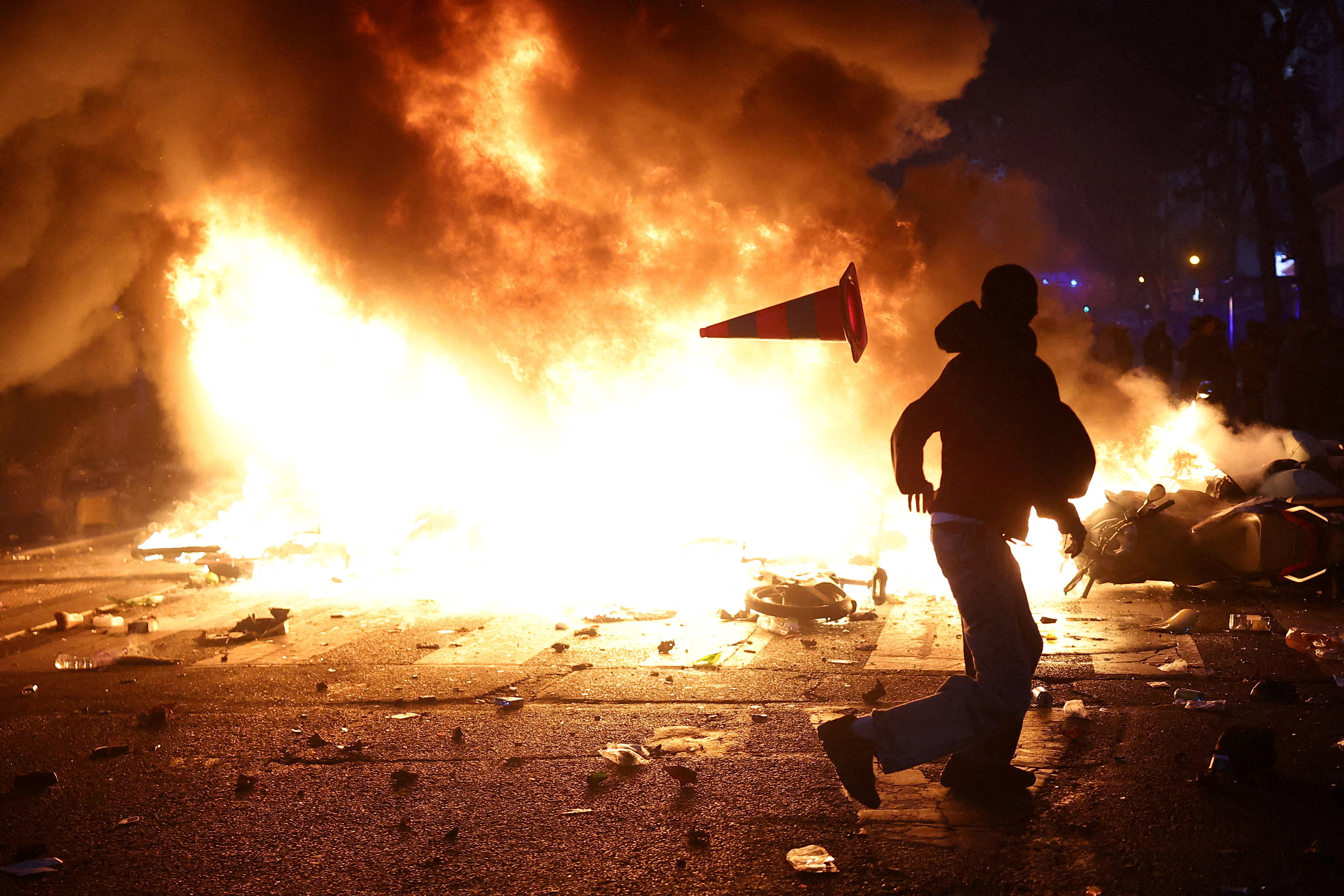
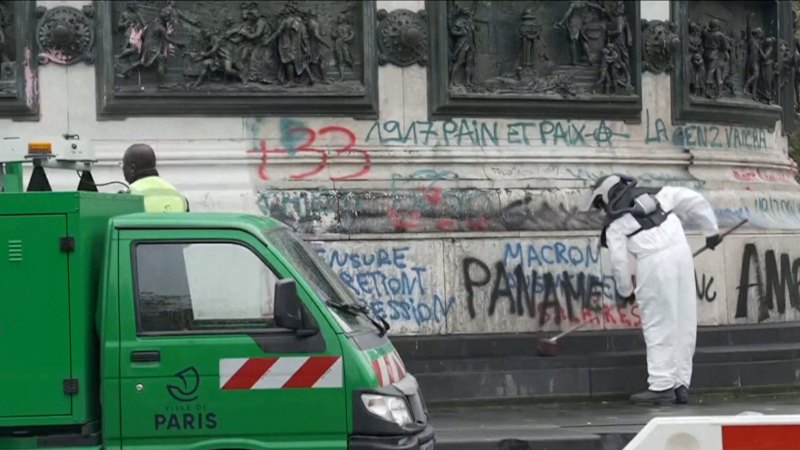
On Oct. 17, thousands of French people took to the streets to protest inflation, the loss of purchasing power and support for U.S.-promoted wars. The protests led to violent clashes with police and property damage in several cities.

teleSUR/ JF

Source: EFE

  •  

Reporter's Notebook: France braces for more unrest after parts of Paris spun out of control

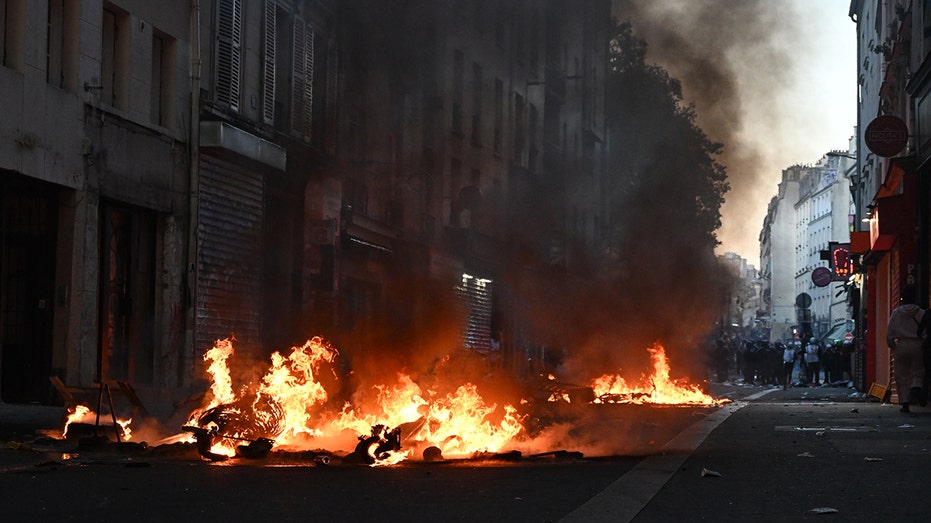
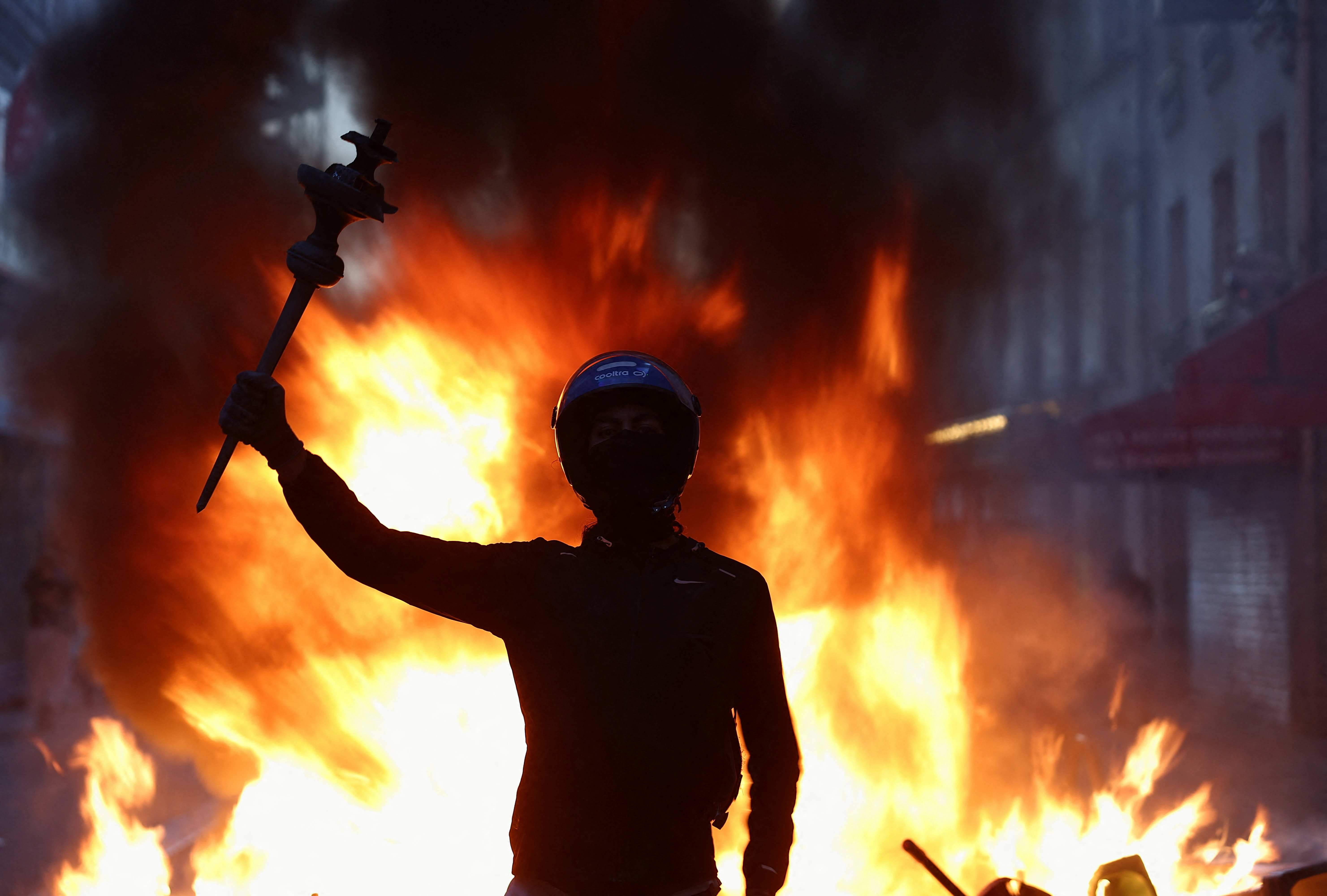
PARIS, France: Paris is burning. Yet again. But this time, according to officials and analysts, it’s different. And unrest here could have a lasting impact on France… perhaps the world.

I have been covering protests in France for decades. I lived in Paris for nine years. I know that the French are very skilled at taking politics to the street. The recent upheaval has many worried.

From all the people I hear from on the ground here, the rioting has been more violent, more destructive, more profound. Domestic strife seemingly out of control.

FRANCE IS DEVOURING ITSELF AS SCHOOL RIOTS REVEAL A CRISIS FAR BIGGER THAN BROKEN CLASSROOMS

When I approached the bar at a brasserie near Place de la Republique, the server asked if I was an American and a journalist. After replying yes to both he concluded, "So you’ve come to cover the civil war."

The numbers tell the tale. Some 2,500 arrests during the last weekend of clashes between protesters and police. Around 1,000 officers injured. Many hurt, some seriously, on the activists’ side. And about 3,000 businesses impacted, trashed, looted. Damage estimated over one billion dollars.

FRANCE'S MASSIVE INTEL FAILURE SPARKS RESIGNATION OFFERS AMID DAYS OF RIOTING

What was most striking were the attacks on official buildings. An historic city hall in Limoges. A police headquarters in crime-ridden Marseille. An important tourist office in Lyon. Symbols of a French government under siege.

The mostly peaceful protests supporting recent student concerns, as well as working and middle-class economic worries, hijacked by those bent on anarchy. And opportunistic young crooks looking for cheap thrills.

Yes, there are immigrants and foreigners amid the rabble. Plus, those said to have ties with so-called "ultra-left" groupings. But this remains a very French uprising. Which in a way makes it even more unsettling.

Nearly ten years of rule by President Emmanuel Macron has left this country more divided, with promises unfilled, anger near the surface. And violence a real danger.

FRENCH NEWSPAPER RIPS MACRON AFTER RIOTS ERUPT ACROSS FRANCE: ‘INDELIBLE STAIN’

What was also deeply troubling about the latest bout of violence — and authorities have admitted it — is that there were periods of time when parts of Paris and other cities were out of control. Shop owners were forced to fend for themselves.

All of this plum pickings for politicians on the left and right. Either sympathizing with protesters’ demands. Or calling for more law and order. Both sides slamming those in power. With presidential elections upcoming in six months, timing is everything.

With the French treasury bare, it seems the more pressing and more promising route for the current authorities is greater security.

CLICK HERE TO DOWNLOAD THE FOX NEWS APP

That’s why top government officials have been speaking out about their planning for the next big protest set for this weekend. French Prime Minister Lecornu says it will be countered by a "massive police operation" backed by the military. Activists will have to choose, Lecornu went on to say, between "violence" and the French "republic."

"Do or die" talk that still does not address the underlying problems, not just facing France but other countries as well. That’s why, in addition to the curiosity factor of everyone being intrigued by France, it could also provide some real-time lessons on how or how not to deal with a brave new world of inequality and dwindling resources.

See you at the "barricades."

  •  

France to deploy troops, admits to failures over weekend unrest

France will reinforce police with troops and mount a huge security operation for more protests planned on Saturday, the government said on Tuesday, acknowledging failures in its response to last weekend’s violence.

“The deployment next Saturday will be massive,” Prime Minister Sebastien Lecornu said, adding that the immediate priority was to restore order after rioting and looting swept Paris, Marseille, Lyon and other cities on October 17.

In a sometimes rowdy debate, Interior Minister Laurent Nunez said the military would be deployed alongside police, while the government pledged to overhaul tactics after widespread criticism that city centres had been left vulnerable.

TARGETED CURFEWS HELP RESTORE CALM

Framing the crisis as a choice “between violence and the Republic”, Lecornu blamed the unrest on far-left groups, who in turn have accused the government of underestimating public anger over high living costs and declining public services.

The turmoil shocked France because of both its scale and the apparent inability of police to contain it, inflaming tensions ahead of presidential elections next year with candidates from the far right and hard left performing strongly in polls.

Protests in other European countries, including Italy and Albania, have added to concerns that anger over living standards risks spreading around the continent at a time when many nations, including France, are struggling with budget woes.

A night of relative calm in France followed targeted curfews imposed in several areas affected by the chaos, which the government said had helped reassert control. The localised curfews, some directed at children and teenagers under age 18, were extended to Tuesday night, police said.

Lecornu acknowledged shortcomings in the state’s response at the weekend, saying there had been intelligence failures, while police deployments had been too static and authorities had erred by not cancelling planned police leave.

Nunez apologised for the mistakes. “I deeply regret what happened. I accept my share of responsibility,” he said.

SUSPECT ARRESTED FOR LIMOGES TOWN HALL DESTRUCTION

Parliament is setting up a commission of inquiry to establish the causes of the unrest, while authorities have assigned 200 investigators to identify and track down those involved in the street violence.

Police arrested on Tuesday a man suspected of starting a blaze that destroyed a historic town hall in the central city of Limoges during the rioting. Officials said he had been on a security watch list and belonged to an ultra-left group.

Sylvain Maillard, a Renaissance deputy for Paris, told Reuters some apps had become “a walkie-talkie system for rioters and looters”.

Underscoring the broad impact of the crisis, French borrowing costs rose further on Tuesday as investors fretted about the prospect of more unrest, with the yield on benchmark 10-year government bonds touching its highest level in 24 years.

Supermarket chain Carrefour said it had lost tens of millions of euros through theft and damage, warning that it faced an “unprecedented situation” because of the disorder.

France’s main student union UNEF has called for further protests on Saturday, pledging to maintain pressure on Macron’s government over what it says is a deteriorating and underfunded education system. “We carry on,” it said on social media.

Separately, groups identifying themselves as “Gilets Jaunes” (Yellow Vests) called for protest actions over rising fuel costs.

The yellow vest movement, largely inactive in recent years, sprang up in 2018 during Macron’s first term over plans to raise petrol taxes. Traffic blockades continued for months until the government made costly concessions it can ill afford now.

ITALY FACES NEW FORM OF UNREST, MINISTER SAYS

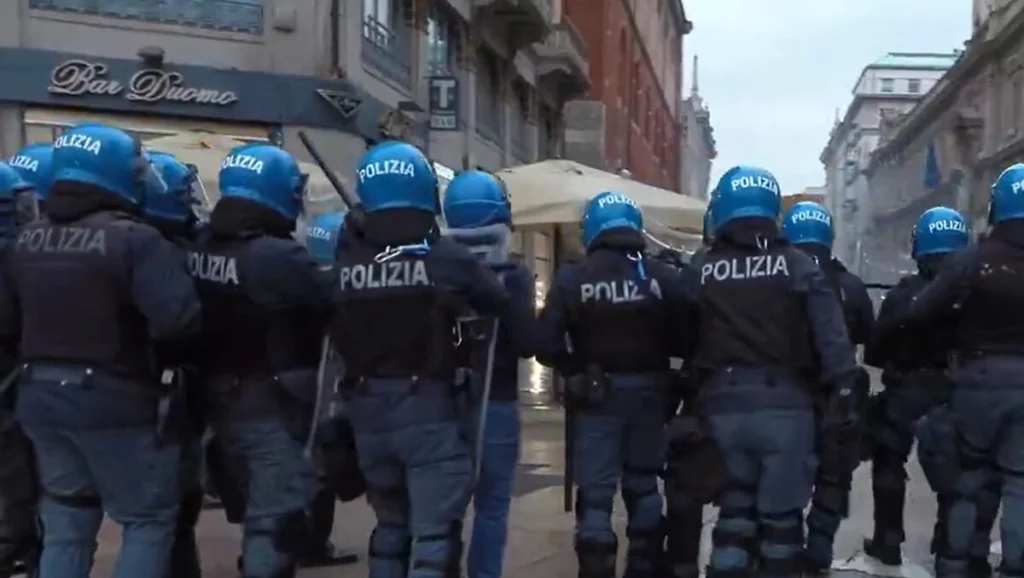
Northern Italian cities, including the financial capital Milan, were also hit by riots last weekend.

Though not on the scale seen in France, the unrest nonetheless jolted Prime Minister Giorgia Meloni’s government, which was expected to introduce new security measures at a cabinet meeting on Tuesday.

Defence Minister Guido Crosetto described the disturbances as a form of “hybrid warfare” conducted through social media platforms such as TikTok, YouTube and other online networks.

“The events in Milan and elsewhere in Italy are fundamentally different from those seen in other eras,” Crosetto wrote on social media. “The West has yet to realise this or take any meaningful action in response.”

In Milan’s central Corso Vittorio Emanuele II, sportswear retailer On and a Levi’s store that were targeted during the unrest had reopened on Tuesday but remained boarded up. Luxury stores had restored merchandise to window displays after temporarily removing it for security reasons.

In Albania, protesters were expected to take to the streets of Tirana for a seventh consecutive day against the government of Prime Minister Edi Rama.

  •  

Carrefour warns of up to €200 million hit from riots and looting

Carrefour cut its annual earnings forecast on Tuesday, blaming an “unprecedented situation” in France as riots, looting and curfews raised costs and disrupted trading at its stores.

The supermarket chain said it now expects “stable to slight” growth in 2026 adjusted earnings per share, having previously forecast growth in a high single-digit percentage. It also forecast a slight decline in free cash flow compared with 2025.

Adding to widespread criticism of the government’s policing efforts, Carrefour CEO Alexandre Bompard said he hoped security would be better for the next protests planned on October 24, but that he expects a business impact regardless.

“Carrefour was directly and strongly affected. Around 50 of our stores were hit on day one, many were looted and the damage is considerable,” Bompard said on a call with analysts.

“Many of our teams and partners faced deeply distressing situations,” he added, saying the retailer is helping workers to reopen affected stores as soon as it is safe.

The unrest is hurting consumer confidence that was already weak because of high fuel prices and is reducing footfall at Carrefour stores as the key fourth-quarter trading period begins.

Finance chief Matthieu Malige said the total impact could be between €80 million ($90 million) and €200 million of operating income.

“The direct costs add up to several tens of millions of euros … of stolen or destroyed merchandise, damaged stores, damaged equipment, and then there are also the stores we were forced to close,” Malige told reporters.

“In the weeks to come we will continue to be impacted as some stores have to close earlier due to curfews, and more broadly we think we’re in a new situation marked by deep uncertainty for our customers.”

Many of Carrefour’s 6,000 stores across the country were closed in anticipation of unrest, including on Sunday and Monday, Malige said, declining to disclose the total number of stores shut.

Costs have increased as stores took measures to protect themselves, including the hiring of external security guards, Malige said, adding that Carrefour was among the most affected retailers because of its wide network of convenience stores in cities such as Paris, Lyon, and Marseille.

As a result, Carrefour said it would invest less in France, cutting its capital expenditure forecast for the year to €1.6 billion from €1.7 billion.

The retailer had been gearing up to begin its Black Friday sales events in the coming days, Malige added.

  •  

Israeli Occupation Army To Remain in Southern Lebanon

It warned of possible military advances toward Nabatieh and the Litani River.

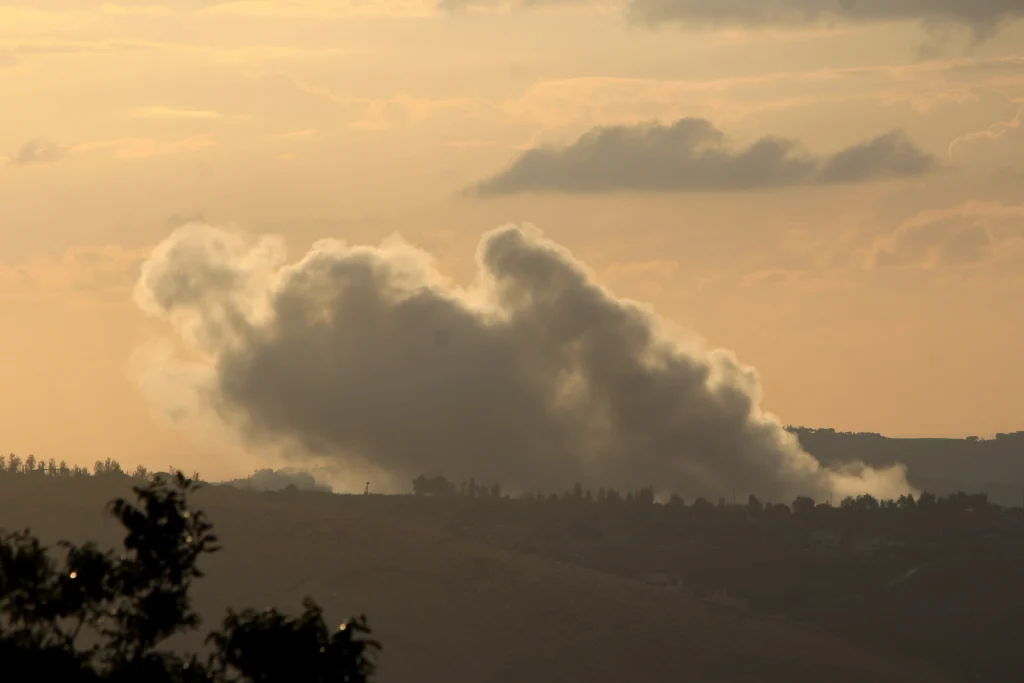
On Tuesday, Israel warned that it could maintain its military presence in southern Lebanon indefinitely and conditioned any withdrawal on the complete disarmament of the Shiite movement Hezbollah, amid stalled negotiations between the two sides.

RELATED:

Lebanon Honors Child Victims, Rejects Israel Peace Deals

Israeli Defense Minister Israel Katz stated that Israeli occupatory forces will not abandon the areas currently under their control. He also warned of possible military advances toward Nabatieh and the Litani River if further attacks occur.

Katz asserted that Israel is applying the so-called “Gaza model” in southern Lebanon. According to his statements, dozens of villages have been destroyed in the occupied area during military operations.

According to United Nations estimates, some 330,000 people remain displaced by the conflict, in addition to another 200,000 who have fled areas occupied by Israeli forces.

The Lebanese Ministry of Health reported at least 4,389 deaths and 12,424 injuries since the escalation of hostilities began in early March. Lebanese President Joseph Aoun accused Israel of violating the ceasefire agreement reached in June with U.S. mediation.

🔴This is life under Israeli occupation and a typical night in south Lebanon.

Machine gun combing and illumination flares in Zouwtar Al Sharqia. pic.twitter.com/l3BqUx42se

— courtneybonneauimages (@cbonneauimages) October 18, 2026

Aoun also maintained that the Israeli military presence prevents the full deployment of the Lebanese army along the border, one of the provisions of UN Security Council Resolution 1701.

Given the lack of progress in implementing the agreement, a Lebanese military delegation will participate in talks in the United States to achieve a cessation of Israeli operations and establish a withdrawal timetable.

The military delegations from Lebanon and Israel will resume direct negotiations at the headquarters of the U.S. Central Command (Centcom), after three months of stalled dialogue.

The process was suspended in August by the Lebanese government, which protested the continued Israeli military actions despite the ceasefire. Six months after the start of the talks, none of the core commitments have been fully implemented.

#FromTheSouth News Bits | During a meeting with Israeli President Isaac Herzog in Baku, Azerbaijan, China's Foreign Minister Wang Yi urged Israel to halt and reverse the establishment of settlements in the West Bank, which is occupied Palestinian territory. pic.twitter.com/xm7RduwpW6

— teleSUR English (@telesurenglish) October 19, 2026

teleSUR: JP

Source: teleSUR

  •  

US envoy Witkoff to meet Russians, Trump presses Kyiv to settle

US special envoy Steve Witkoff will travel to Russia on Wednesday after meeting in Oslo with Ukrainian President Volodymyr Zelenskiy and leaders of Norway and Finland, while President Donald Trump said it was time for Kyiv to end the war with Moscow.

Zelenskiy travelled to Oslo in a bid to repair relations with Washington, which have sunk to new lows as Trump has courted Moscow. Kyiv has complained that Washington has withheld vital military support and intelligence.

Earlier on Tuesday, Zelenskiy spoke by phone with US Secretary of State Marco Rubio.

Zelenskiy said Ukraine was again receiving early warnings of Russian missile attacks.

“Now it works, it’s great,” he said, adding he and Rubio had also discussed supplies of Patriot missile interceptors and the US-provided satellite-based Starlink system, which Kyiv complained had stopped working when mounted on fast-moving objects such as drones.

Trump’s recent gestures toward Moscow, including a deal to buy Russian diesel and waiving new sanctions, have sparked bipartisan pushback in the US Congress and worry in European capitals.

Zelenskiy said he expected to talk to Rubio again in 48 hours.

He said he had discussed security guarantees for Ukraine in Oslo, including “Article 5-like” guarantees, referring to the NATO stipulation that an attack on one ally is an attack on all.

“I am thankful to the American side that they underlined again that it will be strong,” he said.

“There are different kinds of security guarantees which are in the paper, in the document, which Steve (Witkoff) will share with the Russians,” he said. “And we will hear his feedback one day after.”

Zelenskiy reiterated that Ukraine hoped to discuss key issues on how to end the war during a trilateral meeting of leaders of Ukraine, Russia and the US.

Norway’s Prime Minister Jonas Gahr Stoere said the Oslo meeting had been good and constructive.

“Steve Witkoff will fly tomorrow to Saint Petersburg where he will be meeting with Russian leadership, and exchange ideas from this meeting and the proposals that have been worked on by European and American colleagues, and possibly pave the way for a meeting at leaders level,” Stoere said.

“I think the (peace) process is back on track,” Finnish President Alexander Stubb told the news conference, in which Witkoff did not take part.

Earlier the US envoy and Zelenskiy clasped one another in a hug as they went into the talks that Trump’s son-in-law Jared Kushner joined remotely.

Washington has denied deliberately hindering Ukraine’s war effort. But Trump, who has waived sanctions on Russia in what he says is an effort to lower US fuel prices, has repeatedly rebuked Zelenskiy, and called for him to be replaced.

On Tuesday, Trump called on Ukraine to make a deal to settle the war with Russia, and said Moscow wanted to get it done. “Ukraine has to want to settle this war,” Trump told reporters in the Oval Office.

Trump suggested Moscow had the upper hand in the fight because “Russia is a big machine — they just keep grinding forward, and that’s what they’ve done. They’ve taken a very large piece of land.”

On Monday, Trump said Zelenskiy, who has rejected Russia’s conditions for ending its war, was “not helping matters much”, and that Kyiv should find “somebody else to negotiate”.

RUBIO SAYS US MISSILES MAY NOT HAVE BEEN DELIVERED YET

The US under Trump has largely stopped providing weapons directly to Ukraine but lets European countries buy US weaponry on Kyiv’s behalf under the so-called Prioritised Ukraine Requirements List (PURL). It has also provided intelligence and technology that Europe cannot match.

A source familiar with the matter said most weapons deliveries under PURL continued to flow, but US Defense Secretary Pete Hegseth has not approved Ukraine’s latest requests for Patriot interceptors.

Rubio acknowledged on Tuesday that a consignment of interceptors bought by European countries for Ukraine may not have been delivered, but denied that the US had changed policy.

“There has not been some deliberate political directive to go out and harm Ukraine,” he said on a visit to India.

The Kremlin said it was hoping to set up a meeting between Witkoff and Russian President Vladimir Putin.

As US ties with Ukraine have deteriorated, Russia has stepped up attacks on Ukrainian cities, particularly targeting power stations and fuel, despite a call from Trump for both sides to spare each other’s energy systems.

Russia bombarded cities in western Ukraine overnight, targeting electricity systems and knocking out power across swathes of the country that had previously been spared.

Ukraine held back for several days last week from hitting Russian oil refineries in deference to Trump’s request, but has resumed strikes after Russia showed no sign of complying. Both sides have also struck data centres.

Trump has repeatedly condemned Ukrainian attacks on Russia while saying little about Russia’s far more severe attacks on Ukraine, which have grown even more deadly as Kyiv says US support has been withheld for its air defences.

RUSSIAN ATTACKS

Russia’s defence ministry said on Tuesday it struck three cargo vessels in Ukraine’s port of Reni and two other cargo vessels en route to Odesa. Russian forces also hit two logistics hubs, it said.

Energy facilities were attacked in seven Ukrainian regions overnight, knocking out power, and the western Lviv region was struck again during the day. Russian drones also struck an energy facility in Kyiv on Tuesday, mayor Vitali Klitschko said, with authorities saying power was out in four districts.

The deterioration of US-Ukraine relations began 10 days ago when Trump lifted sanctions on Russian diesel in a deal agreed with Putin. Trump said this would help reduce high fuel prices that have upset US voters ahead of midterm legislative elections on November 3.

At the weekend, Trump issued a broad waiver for tougher sanctions on Russia that were meant to have begun this week.

  •  

‘I was terrified’: Military families describe their harrowing evacuation from a Navy base in Bahrain

When Iran started launching retaliatory attacks against American troops on bases across the Middle East earlier this year, the U.S. military evacuated more than 1,250 people from a major U.S. naval base in Bahrain, according to U.S. Navy officials.

MS NOW spoke to four active-duty spouses and one civilian employee who were part of the Navy’s evacuation of military families from Bahrain in March and said the process was disorganized and chaotic. The spouses and the civilian employee were granted anonymity for fear of retaliation.

They described living with their children through traumatic days under fire in Bahrain, jolting during constant alerts on their phones warning of incoming missiles, seeing smoke clouds from bombs that hit buildings of the base and hearing the booms of interceptor missiles blowing up incoming Iranian drones and rockets.

“I was terrified. I laid really close to my kids because I was like at least if we die, we’ll die and one person won’t be left,” one spouse said.

For two families, their service member spouses were relocated out of Bahrain before the U.S. bombing of Iran began on Feb. 28, leaving them alone in the country. They felt the military had transferred their spouses away and left their families behind and in harm’s way.

“Our spouses who weren’t there. They’re sitting there like ‘my family’s in a war zone and I can’t help them because I’m not there.’ Why weren’t we out? They knew something was going on and they literally left us there as sitting ducks,” said one spouse, whose husband evacuated before the war.

In the opening days of the war, Iranian missiles hit Naval Support Activity Bahrain, the headquarters for the Navy’s Fifth Fleet, which serves as an important logistics, supply and maintenance hub for American warships in the region.

The military reduced staff on the base to “mission critical status,” and the Navy had to rely more heavily on a small logistics base on the remote island of Diego Garcia in the Indian Ocean, 2,200 miles away from the Gulf of Oman, for resupplying the carrier strike groups they had deployed to fight the war.

The move slowed down supplies to the ships and the thousands of service members who were living and working on them, causing food and supplies to be rationed for periods of time.

According to a September report to Congress, Bahrain has been the fourth most targeted country by Iranian missile and drone attacks in the region since the war began. In the opening days of the conflict, Iranian attacks damaged the command headquarters, two satellite communications terminals, warehouses and a dozen other buildings, with estimates of the damage nearing $400 million.

Prior to the war, the Navy base in Bahrain served 8,300 military personnel, civilian contractors and dependents, according to the Navy. After the evacuations, that number reportedly dwindled to a fraction of that.

In a recent interview, acting Secretary of the Navy Hung Cao said that Iran “blew the hell out of Bahrain” and that he has assigned a task force to look into whether or not the base should be repaired.

‘Living in a nightmare’

The families interviewed by MS NOW said they have been living in limbo ever since their hasty departure from Bahrain.

Many left with only one suitcase per person, leaving behind household furniture and personal items with no clear idea when they may see those things again.

They described moving between multiple continents, draining their financial savings and soothing children who were traumatized by the nearby explosions they heard during the Iranian attacks.

Some said they temporarily moved to Germany so their children could be in U.S. military-run schools with some of the same children they had known on the base in Bahrain. The Navy told the families they had to relocate to the United States by June, according to the families, which many scrambled to do, even though they didn’t have the things left behind in Bahrain.

Most of them moved into either short-term furnished rentals or hotels. They said the financial costs of the past year have been devastating.

“My savings is gone, my savings is zero,” one spouse said. She said she has spent tens of thousands of dollars on basic necessities, including an inexpensive car to get her kids around.

Additional funds from the military to cover evacuation costs are scheduled to run out at the end of November. But the families MS NOW spoke to still don’t feel settled, and many said they feel traumatized by the experience and let down by the Navy.

“I feel like I’m living in a nightmare, it’s awful,” another spouse said.

MS NOW reached out to U.S. Central Command for more information and clarification about the evacuation process and what the next steps are for the evacuees. CENTCOM officials did not return requests for comment.

‘Constant alarms’

The families of service members are still grappling with fresh memories of those frightening days in March in Bahrain

The spouse of another service member said she didn’t leave her house in Bahrain for days, shutting all the blinds and curtains and hunkering down with her kids and pets. She said she made a bathroom area inside her house for her pets because she was terrified of leaving.

“My priority was making sure my kids are alive,” she said.

Another spouse said a family friend who also serves in the Navy came to check on her and her sons because they had heard it was going to be a night of heavy attack. She said she hid in a parking garage with the sailor and her sons for seven hours.

“It was surreal thinking about how scared my children were. It is something I will never forget for the rest of my life,” she said.

Even the civilian employee, who spent more than 20 years in the Navy, said the days following Feb. 28 were shocking.

“To just sit there in your house and listen to the war over top of you in the sirens and the constant alarms,” the civilian employee said. “It’s rough to put yourself in that situation, it’s even rougher when the whole time you’re thinking well I put my family in the situation. They’re sitting on the couch next to me.”

Some of the spouses ended up not being able to leave Bahrain for almost two weeks after Feb. 28. The ones whose husbands left before them said they are infuriated that the Navy decided to leave their families in a war zone.

“He can’t talk about it still to this day even to his friends that come over without literally crying every time he says it out loud,” one wife said.

‘I was very ashamed’

Almost all of the evacuees MS NOW spoke to had lived in Bahrain for years and said they loved living in the country that felt like home to them. They described their kids thriving in the schools there in a community of close-knit international families.

Some said they had grown close to many expats who had come to Bahrain for a better life from other countries to work in the hospitality and service industry. They said since they have left Bahrain, many of those people, whom they have stayed in touch with on social media, have lost their jobs because of the mass exodus of Americans from the region.

“We should have done more to protect our regional allies. There’s so many people who don’t have the resources to just leave like we did,” one spouse said. “I have a weird mix of stress, guilt and invalidation about my experience.”

She said she felt enormous guilt about leaving Bahrain.

“I was very ashamed to be American and panicking and like ‘we have to get out of here’ because of this huge mess that we [the United States] made,” she said when she had to grapple with the fact that she was leaving behind a local community in Bahrain that would still be subjected to the danger she was able to escape from.

‘It was utter chaos’

Each member of the group of evacuees MS NOW spoke to are married to someone who spent more than 15 years in the military or had served themselves. They all said they had never experienced something like the evacuation this spring, and most of them had previously been evacuated during the 12-day war in the summer of 2025. During that evacuation, they said they were taken back to the U.S. for 90 days prior to the military operations beginning.

The spouses interviewed by MS NOW said there was very little communication from official channels or their husbands’ commands, leaving them to rely primarily on the U.S. Embassy’s social media pages for information and WhatsApp group chats with other family members trying to figure out how to evacuate.

“It was utter chaos. I had no one to talk to, no access to information, nothing,” one spouse said.

With the airport shut down in Bahrain after Iranian threats, many of the families had to be evacuated overland through Saudi Arabia.

One spouse said that when she finally made it to the bus meeting point to go to Riyadh in Saudi Arabia from Bahrain, she learned that there were some families where both parents were in the military and had to stay behind in Bahrain because they were considered “essential personnel.” Those families were trying to find adults who would evacuate their minor children out of the region.

“I was on a bus with a lady who had two other kids from two different families on top of her own kids and her pet and someone else’s pet and I was like ‘God bless you’,” one spouse said. “Some of these weren’t even teenagers, these were like 10 year old kids.”

‘Not telling the truth’

Most of the military spouses said their husbands are already eligible for retirement, which means they have served at least 20 years on active duty. All of the spouses said that because of this experience, their husbands are considering getting out of the military, with one already having submitted his retirement paperwork.

“It has been a challenge, let me tell you, for somebody who has over two decades of government service in active duty and now almost five as a civilian … this last year has made me realize that the call of service is starting to wane,” the civilian employee said.

“No one’s ever spoken a word to us besides, like ‘we’re proud of your resilience’. That’s not enough,” one spouse said. “I’m angry because no one will acknowledge any of it, and they just keep tiptoeing around it … I’m pissed at the Navy.”

“They’re not telling the truth. They’re not telling the full story. They’re not telling how much damage there really was,” another said.

One spouse said she thinks this entire experience has weighed heavily on her husband and other service members who were put in a position of having to fight in a war while being concerned about their families’ safety.

“I don’t know how they can be performing their best when their families are under so much stress,” she said.

That spouse has written letters to members of her congressional delegation and the newly formed Military Spouse Commission run by Secretary of Defense Pete Hegseth’s wife, Jennifer Hegseth. The spouse said she received responses of acknowledgement of her letter from her lawmakers but nothing from the commission yet.

“The government has an obligation to keep me safe and that includes having a plan for my protection and my safety for myself and my children,” she said.

Rep. John Garamendi, D-Calif., a member of the House Armed Services Committee said to MS NOW in a statement: “The rushed evacuation of the military base in Bahrain is emblematic of President Trump and Secretary Hegseth’s war in Iran: chaos, confusion, and completely avoidable. The servicemembers and their families should receive transparency on this process and the military needs to treat their concerns expeditiously and with respect.”

The post ‘I was terrified’: Military families describe their harrowing evacuation from a Navy base in Bahrain appeared first on MS NOW.

  •  

Bulgaria introduces short-term motorcycle and moped insurance options

Motorcycle, moped, camper, and caravan owners in Bulgaria can now purchase mandatory civil liability insurance for short terms of one, three, or six months. Previously, policies were available only on an annual basis, creating financial burdens for those using such vehicles seasonally. This change allows drivers who return to the country briefly or operate only during the summer months to remain legally compliant without paying for unused months. Lyubomir Zhingov, an organizer of motorcycle protests, noted that this flexibility should help more drivers stay current with their documentation and pay premiums in full. Ivan Efremov, a member of the community, argued that the one-month option is the most reasonable, as it avoids large lump-sum expenses in case the vehicle breaks down or an incident occurs.

  •  

Canary Islands Ranks Fifth Poorest Region in Spain With 36.2% of Residents in Lowest Income Bracket

Low annual income limits access to basic welfare for 36.2% of the population in the Canary Islands, where more than 803,000 people fall into the lowest of four income categories. This places the archipelago among Spain's poorest regions, ranking fifth behind Murcia (58.7%), Extremadura (57.5%), Andalusia (56%), and Castilla-La Mancha (45.7%). Data from the National Statistics Institute (INE) underscores a persistent economic divide between northern and southern Spain. While the proportion of low-income residents is 1.3% in the Basque Country, 3% in Navarre, and 5% in the Balearic Islands, those in the south and the Canary Islands remain in the minimum payment zone. Although the average annual net income per capita in Spain rose by 6.1% to 15,948 euros in 2024, the growth is unevenly distributed. Average figures in the Canary Islands provinces remain significantly below the national average: 14,794 euros in Las Palmas and 14,286 euros in Santa Cruz de Tenerife. In contrast, Gipuzkoa, the country's leading province, saw average income reach 20,790 euros.

  •  

Meloni Announces Decree Targeting Juvenile Gangs and Violent Street Demonstrations

The Italian prime minister sends more soldiers to Milan in anticipation of the protests scheduled for Oct. 24.

Through a video posted on Tuesday, Italian Prime Minister Giorgia Meloni announced the promulgation of a decree aimed at cracking down on “juvenile gangs” and “violent street protests.” She authorized reinforcing with military personnel security forces in Milan.

RELATED:

Giorgia Meloni Set to Become Italy’s Longest-Serving Government Leader

“Five hundred more military personnel are arriving in Milan, until the end of the year alongside police and carabinieri. And to juvenile justice we are giving more magistrates and more places in centers, so that the certainty of punishment also applies to those who are 16 years old,” the far-right politician said.

Approved at a meeting of the Council of Ministers, the decree establishes that the soldiers will reinforce “Operation Safe Streets,” an initiative implemented in 2008 that keeps some 5,000 Army personnel deployed in numerous “hot spots” across the country.

Her decree will take effect immediately, will have a 60-day period to be ratified by the Italian Parliament, and includes the creation of the “crime of violent participation in a demonstration.”

Nuova giornata di guerriglia a Milano. Gruppo di incappucciati assalta negozi in via Torino. pic.twitter.com/BBI4x47NJH

— Local Team (@localteamit) October 18, 2026

The text reads, “Another day of guerrilla-style unrest in Milan. A group of hooded individuals attacks shops on Via Torino.”

“If during a march or a demonstration you join a group of 5 or more people, you start throwing stones, firecrackers, sticks, you endanger everyone’s safety, you risk up to 5 years in prison and up to 20,000 euros in fines,” Meloni said, and clarified that the decree introduces the principle that “the breaker pays, and if the breaker is a minor, his or her parents pay.”

Aggravating factors may be applied to this new crime if the person has their face covered or if someone has been injured. Biometric identification assisted by artificial intelligence is also authorized, explained the Italian outlet TG La 7.

In the criminal sphere, authorities will be able to immediately apply preventive detention to minors between 14 and 18 years old, and the police chief will be able to apply oral warnings and bans on gathering in public places to young people with a record of violent acts.

IL FUTURO È UNA SCELTA
La vittoria al referendum sulla giustizia ha dimostrato che, insieme, possiamo fare la differenza. Oltre cento associazioni già aderiscono alla Via Maestra. Unisciti a noi.

LAVORO, PACE, AMBIENTE, WELFARE, COSTITUZIONE.
INSIEME SULLA VIA MAESTRA.

La… pic.twitter.com/5d5lWrAwJq

— CGIL Nazionale (@cgilnazionale) October 13, 2026

“THE FUTURE IS A CHOICE. The victory in the referendum on justice has shown that, together, we can make a difference. More than a hundred associations have already joined “The Main Path.” Join us.

WORK, PEACE, ENVIRONMENT, WELL-BEING, CONSTITUTION. TOGETHER ON ‘THE MAIN PATH.’ The Constitution points to a clear way: a country founded on work, social justice, equality, and peace.

This way remains our ‘Main Path.’ Today, however, Italy is moving in the opposite direction. We choose a different path: the path of the Constitution. Hear from Francesca Cantagallo, of the ‘Knowledge Network’, and join us.

OCTOBER 17, ROME. National demonstration. The demonstration will begin at 1:30 PM. Participants will gather at Republic Square and, following a march, the event will conclude at People’s Square around 5:00 PM.”

Initially, Meloni’s decree also contemplated exceptionally assigning police functions to the military for three months, which would have allowed them to make arrests. This provision, however, was left out of the approved text.

Referring to the demonstrations of the past weekend, Meloni said that security forces had detained or identified 330 people, half of them of foreign origin, among whom are people born outside Italy and others born in the country but to foreign parents.

Meloni’s decision comes in response to the protests promoted for Saturday, Oct. 24 by the “October 17 Movement” (17M10), a youth protest group that emerged as a result of the recent clashes in downtown Milan and that has announced permanent mobilizations until the fall of the Meloni administration.

“We are the ones from the squares. Those who see the only violence in the police stick. The violent ones are you who have denied us the future. Now we take that future into our own hands. Violent is this system that kills us. Permanent mobilization every Saturday until this thieving government falls,” the 17M10 stated.

teleSUR/ JF

Sources: EFE – TG La 7

  •  
❌