Mardi 20 octobre, à Paris, le ministère public a réclamé dix mois de prison avec sursis et deux ans d'inéligibilité contre Rima Hassan, eurodéputée de La France insoumise (LFI), jugée pour un tweet, supprimé depuis, où elle citait l'un des auteurs de l'attentat de 1972 à l'aéroport de Tel-Aviv, qui avait fait 26 morts. La décision du tribunal sera rendue le 30 novembre.
Près de deux siècles après l'abolition de l'esclavage en France, en 1848, le Parlement a entériné, mardi 20 octobre 2026, par un ultime vote du Sénat, l'abrogation symbolique du Code noir et des principaux textes ayant encadré l'esclavage dans les colonies françaises.
Le Parlement roumain a approuvé, mardi 20 octobre, le gouvernement du Premier ministre pro-européen Luca Niculescu, mettant fin à plusieurs mois d'impasse politique.
El presidente francés, Emmanuel Macron, busca asegurar 200.000 toneladas adicionales de diésel al mes de Emiratos Árabes Unidos y Bahréin durante su gira por el Golfo, según anunció este martes 20 de octubre el Elíseo. Los acuerdos buscan garantizar el suministro y reducir los precios de los combustibles en Francia, tras un fin de semana de disturbios y saqueos en medio del descontento por el aumento del costo de vida.
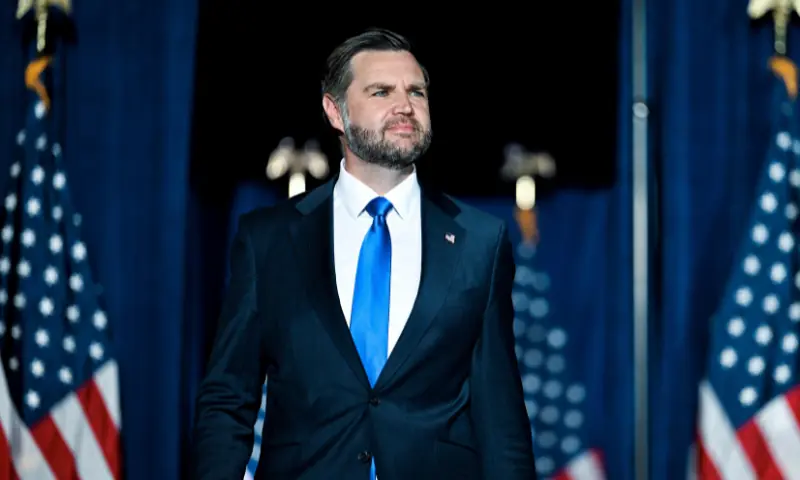
US Vice President JD Vance said he would not be following Donald Trump in endorsing Israeli Prime Minister Benjamin Netanyahu and wanted to stay on the sidelines.
“I’m not anti-endorsing him. I’m not pro-endorsing him. I’m not getting involved in Israeli elections,” Vance said of Netanyahu, in an interview on Monday with journalist Mark Halperin.
“I endorse American candidates and that’s where I’m focused on is the (US) midterms,” he added.
Trump on Sunday issued a public endorsement of his right-wing ally Netanyahu, who is seeking a new term as premier in Israel’s Oct 27 parliamentary election.
Vance’s reticence to weigh in on the Israeli vote contrasts with his approach to European elections.
Days before Hungary’s parliamentary election in April, he flew to Budapest to support then-prime minister Viktor Orban, another right-wing figure.
Vance, who is widely viewed as aiming to succeed Trump in 2029, reportedly expressed opposition to launching the US-Israeli war with Iran, but has since defended the campaign.
The vice president also had notably strong words for Israeli officials who criticised a short-lived US-Iran ceasefire agreement in June.
“Trump is the only head of state in the entire world who is sympathetic to the nation of Israel at this moment,” he said at the time.
“If I was in the cabinet of the Israeli government, I might not be attacking the only powerful ally that I have anywhere left in the entire world,” he added.
British fighter planes will be deployed to help Saudi Arabia defend itself against increasing attacks from Yemen’s Houthi rebels, the UK government announced on Tuesday.
The defence ministry said the deployment formed part of “additional defensive military support” to Riyadh.
“The UK will fly defensive counter air missions to support the protection of Saudi cities and critical national infrastructure against aerial attack, using RAF Typhoon fighter jets,” the Ministry of Defence (MoD) said in a statement.
“These aircraft will operate in a defensive role and will not conduct offensive strikes against the Houthis.”
Britain will also deploy a military transport aircraft “to support the movement of defence material within Saudi Arabia alongside UK military advisers to support Saudi staff officers”, the statement added.
“The continuing attacks from the Houthis on our ally Saudi Arabia are absolutely despicable,” said Defence Minister Wes Streeting.
“The targeting of the airport in Riyadh in particular shows the lengths the Houthis are going to (to) escalate the situation in the region,” he added.
The Saudi capital’s international airport has been targeted by strikes 20 times since the beginning of the month, with a recent attack killing 13 people and wounding more than 300.
The Houthis have imposed a naval blockade on Saudi Arabia, hitting its tankers, seizing swathes of Yemen’s Red Sea coast vital for oil exports and causing energy prices to jump, while also raining missiles on the kingdom.
Yemen’s civil war — in which Saudi Arabia has led a military coalition supporting the government since 2015 — reignited in September after the collapse of a years-long truce.
Saudi Arabia, the Yemeni government and the United States accuse Iran of backing the Houthis — an allegation Tehran denies.
Japón lanzó este martes 20 de octubre la sonda MMX, que busca recoger y traer a la Tierra las primeras muestras de Fobos, la mayor luna de Marte. La misión aspira a esclarecer el origen de las lunas marcianas y aportar pistas sobre la formación del sistema solar, además de sentar las bases para una futura exploración humana del planeta rojo.
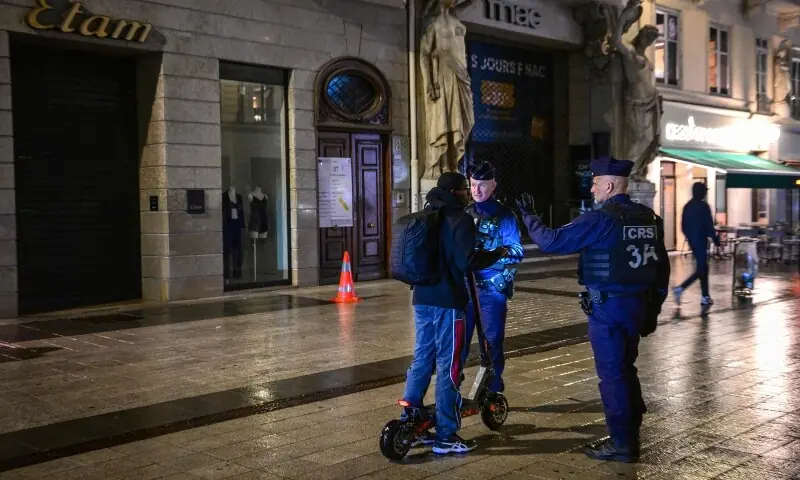
France will impose new curfews in areas where needed on Tuesday, Prime Minister Sebastien Lecornu said, adding that the measures introduced in several cities the previous day had “helped keep the night calm”.
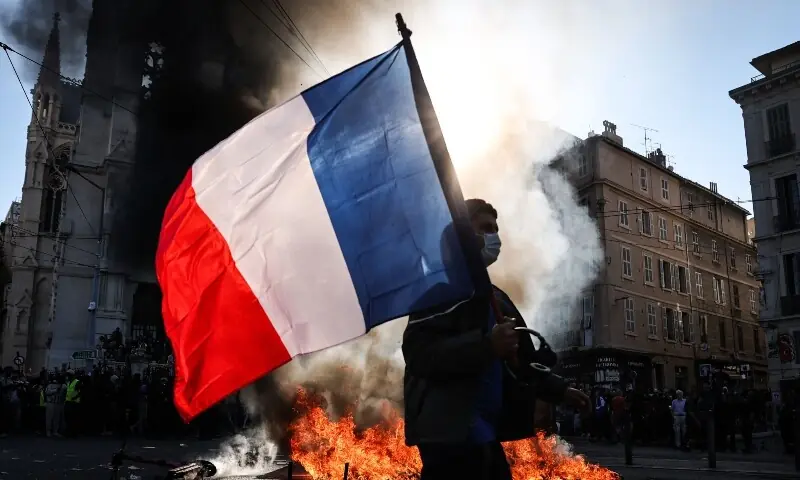
France was rocked on Saturday by some of its worst rioting in recent years, just six months before the country elects a successor to President Emmanuel Macron.
Accused of failing to anticipate and contain the street violence, the government has pledged to restore order, and had announced partial curfews in Paris and some other cities on Monday.
“Targeted curfews have contributed to calm overnight,” Lecornu wrote on X.
“Tonight new curfews will be decided where the situation requires it. These decisions will be made on the ground, by the prefects, in coordination with the mayors,” he said.
Police confirmed the night had passed without major incidents across France.
Several cities, including Paris, the southwestern city of Bordeaux and Nice on the French Riviera, introduced partial curfews on Monday in response to urban unrest that followed weeks of student demonstrations over poor learning conditions in high schools.
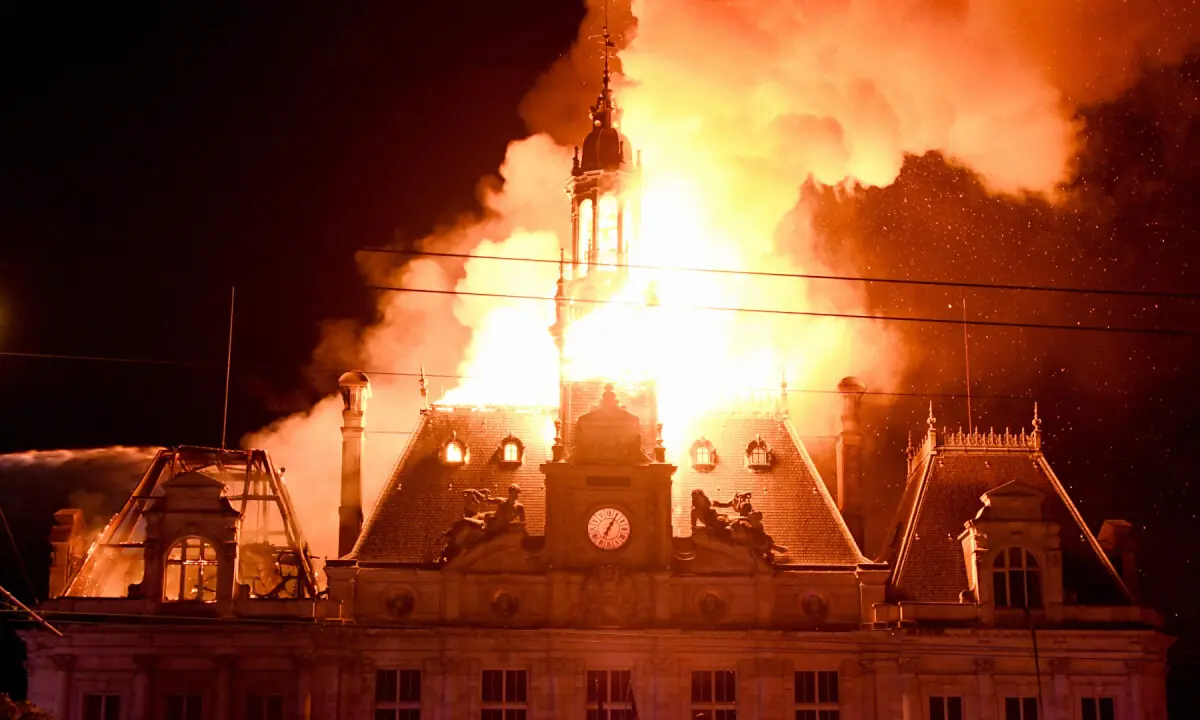
This photograph shows a fire burning and destroying the city hall after a group of individuals forced entry into the building during ongoing protest action against the “high cost of living”, in Limoges, central France on Oct 17, 2026. — AFP/File
While some restrictions, such as those in Paris, initially applied only for the night from Monday to Tuesday, others, particularly in Bordeaux and Nice, were set to remain in force for several days.
During the night, a helicopter flew over the French capital’s Place de la Republique, one of the epicentres of the unrest, sweeping a powerful searchlight across the square to monitor compliance with the curfew.
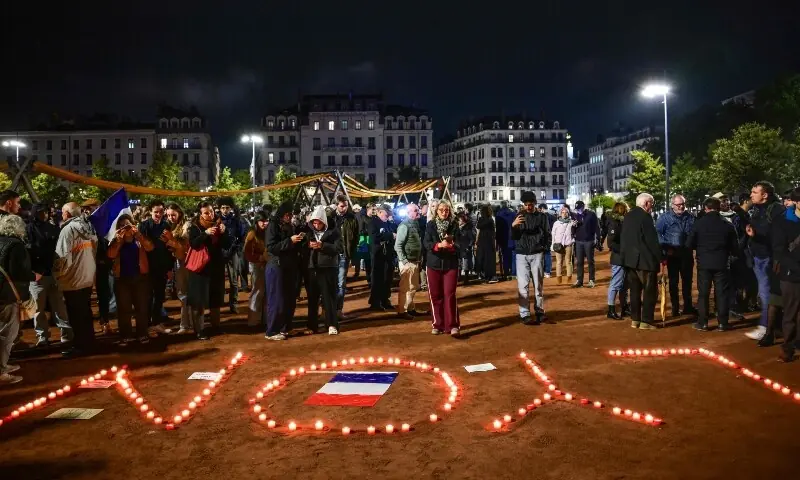
In Lyon, despite a ban on demonstrations, around 500 people gathered on Monday evening outside the tourism office that was set on fire, to show support for shopkeepers affected by looting, according to organisers.
The word “LYON” had been spelled out on the ground with candles.
People lit candles in front of the Lyon tourist office before a partial curfew in Lyon on October 19, 2026, following weekend demonstrations over soaring prices degenerated into some of the worst street violence in recent years. —AFP
A banner hung on a fence nearby read “Anti-Rioters Lyon” and “Doucet Resign”, referring to Green mayor Gregory Doucet, an AFP journalist said.
Under pressure, the government scheduled another series of emergency meetings on Tuesday, including talks involving representatives of major social media platforms.
Finance Minister Roland Lescure pledged support measures for shopkeepers and craftspeople.
Patrick Martin, the head of France’s Medef business lobby group, on Tuesday accused the state of having “failed” during the urban unrest that hit at least 3,000 businesses, according to preliminary estimates.
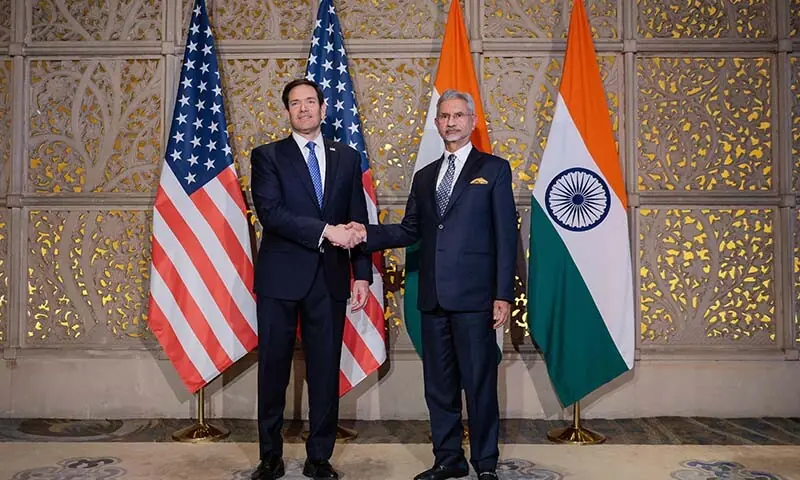
US Secretary of State Marco Rubio said on Tuesday that India had made “substantial progress” in diversifying its energy supplies, including away from its key importer, Russia.
“What India has expressed repeatedly is their desire to diversify their energy portfolio, which is a smart thing to do,” Rubio said on a visit to India’s economic capital, Mumbai.
“Obviously, it’s not easy to do that from one day to the next, so I think they’ve made substantial progress in that regard, and we’re happy to see that.”
This is Rubio’s second official visit to the country this year, as he pursues an Asian tour blending diplomacy and trade. He has visited Uzbekistan, where he called for stronger partnerships with Central Asian countries, before landing in Mumbai for talks with Foreign Minister Subrahmanyam Jaishankar and meetings with business leaders.
India is a major importer of Russian oil, and US President Donald Trump’s tariff war launched in April last year has added to friction between Washington and New Delhi.
“Obviously, we think we could be a source of some of their energy inputs,” Rubio said.
The top US diplomat will visit Jamnagar, in the western state of Gujarat, a port and stronghold of billionaire Mukesh Ambani’s Reliance conglomerate and its flagship refinery, the world’s largest.
“India is a refining superpower,” said Rubio.
Indian Prime Minister Narendra Modi is not scheduled to meet Rubio this time.
Washington’s top diplomat is also due to lay a wreath in memory of the 2008 Mumbai attacks that killed 166 people.
The top US diplomat visited New Delhi and Kolkata in May this year, while also touring the Taj Mahal and meeting Modi.
Ukrainian President Volodymyr Zelensky said on Tuesday he had also spoken to Rubio and raised issues with the US military satellite system that Ukraine uses, as well as missile delays.
Zelensky, expected in Oslo for talks with US envoys, said he told Rubio that “Starlink/Starshield needs to be restored” and that ballistic missile interceptors “are needed to protect lives”.
‘Energy supplies’
Rubio’s visit comes as India and the United States struggle to finalise a trade deal, a persistent source of friction between the two countries.
“We’re very very close; I would say we’re about as close as you can be without having an executed agreement. I think there’s a small number of items left to wrap up,” Rubio said. “Hopefully have some good news to announce fairly soon, and perhaps the leaders can sign it thereafter.”
Speaking in Samarkand earlier this week, Rubio said Washington and New Delhi were “very close” to an agreement.
However, a deal during his visit appears unlikely.
Asked about temporary US sanctions waivers for Russian oil, Rubio said Washington had to juggle multiple factors “including our bilateral relationships with other countries and what they realistically are capable of being able to do in terms of their own energy supplies”.
“You also can’t unravel the economy of other countries because of one central issue,” he said.
The two countries reached an interim trade agreement in February aimed at reducing US tariffs on Indian goods.
But days later, the US Supreme Court struck down Trump’s sweeping tariffs, fuelling uncertainty over when the agreement would take effect.
The two sides have been negotiating ever since.
Indian Finance Minister Nirmala Sitharaman said this month the talks had reached “a plateau, beyond which giving or taking might be very, very difficult”.
Jaishankar met with his United Arab Emirates counterpart in Mumbai earlier on Tuesday. The UAE is a key supplier of Indian energy, especially liquefied natural gas (LNG).
“The situation in the Gulf remains a matter of deep concern,” Jaishankar told UAE Foreign Minister Sheikh Abdullah bin Zayed Al Nahyan, in public comments broadcast before their meeting started.
He said India continues to support “free, safe and unimpeded flow of trade, energy and fertiliser”.
Escolas no Reino Unido, Hungria e Sérvia receberam falsos alertas de bomba. Na Irlanda, as ameaças “pareciam vir de islamistas”, com a ameaça de que a lei da sharia iria ser imposta no país. Centenas de escolas na Irlanda do Norte, Escócia, Hungria e Sérvia receberam esta segunda-feira ameaças de bomba. Algumas foram evacuadas. Segundo as autoridades, os alertas pareciam ser falsos. Ainda não se sabe se os casos estão relacionados entre si. “A polícia que investiga as circunstâncias dos emails ameaçadores enviados esta manhã a escolas de toda a Irlanda do Norte está a tratar o caso como um
Cristiano Ronaldo a écopé d'une sanction assez clémente de 30 jours de suspension pour avoir quitté le rassemblement de l'équipe nationale après un conflit avec son sélectionneur le 30 septembre, a annoncé lundi 19 octobre la Fédération portugaise de foot (FPF).
Stéphane Séjourné, vice-président exécutif de la Commission européenne, a défendu, lundi 19 octobre au Congrès calédonien, un partenariat stratégique avec l'Union européenne concernant la filière nickel. Les indépendantistes, qui s'y opposent, ont boycotté la séance.
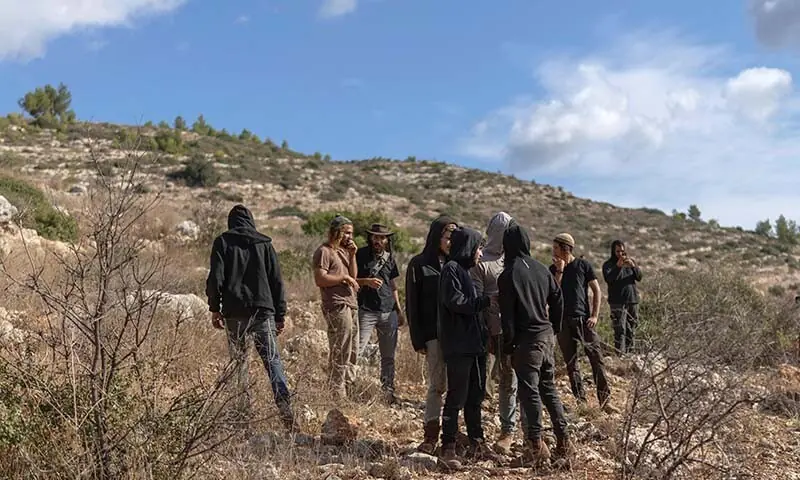
Israeli police said on Monday that they had arrested 10 people in the occupied West Bank after settler attacks on an American photographer and a French mayor that drew international condemnation but mixed messages from the government.
In a rare action against rising settler violence, police said they raided several locations across the occupied territory and seized cars and potential evidence related to the attacks.
“Following the severe incidents of violence over the past weekend, including the assault of a media worker and the suspected attacks on foreign civilians, an arrest operation was conducted before dawn,” said Major General Moshe Finchi, the Israeli police’s West Bank commander.
“Suspects were arrested on suspicion of involvement in the violent incidents, violating a military commander’s order concerning a closed military zone, and illegal construction,” he said.
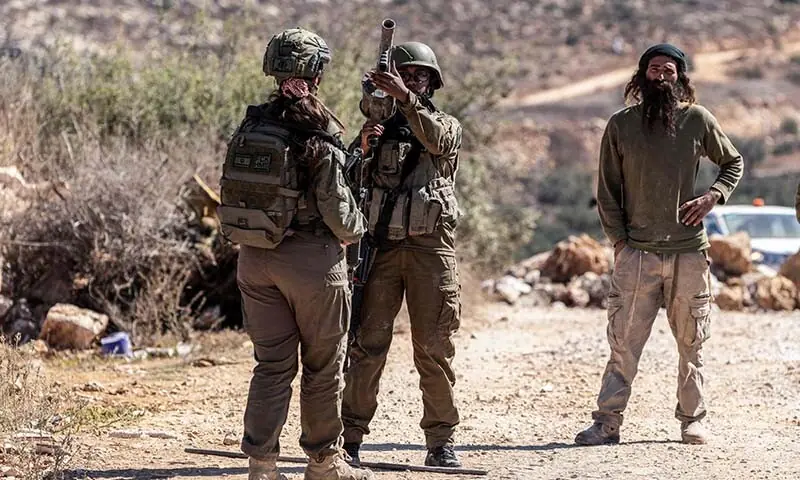
Israeli settlers gather as Palestinians harvest their olive trees in the Israeli-occupied West Bank village of Deir Abu Mashal on October 19, 2026. — AFP
Witnesses say that settlers have been stepping up violent attacks on Palestinians during the ongoing olive harvest, aiming to seize their land during a season that carries cultural importance for the community.
Rights groups note that Israel rarely prosecutes settlers when the victims are Palestinian. The Israeli human rights group Yesh Din said it documents 561 acts of settler or military violence against Palestinians since September 27 — more than 26 incidents a day.
Prime Minister Benjamin Netanyahu, who is facing a tight race for a new mandate, has tried to shore up his pro-settlement right-wing base and has cast doubt on the circumstances behind the recent settler attacks on Westerners.
Netanyahu’s tone has brought unusually strong criticism from the opposition, which has accused him of tarnishing Israel’s image.
US Ambassador Mike Huckabee, a staunch ally of Israel, had called Friday’s beating of veteran photographer Heidi Levine an “act of terror” and demanded punishment. He called Monday’s arrests a “very positive development”.
Levine, 65, who was on assignment for The Washington Post, was taken to a hospital with broken vertebrae. She was visited at her hospital bed both by President Isaac Herzog, who holds a largely ceremonial role, and centre-left opposition leader Yair Golan.
Golan, in a social media post afterwards, said that if he takes power, there will no longer be “a reality in which Jews instil terror in the name of Jewish supremacy, and stain the state we built here”.
Rising international attention
One day after Levine’s beating, settlers attacked a convoy of European diplomats, including the French and Belgian consuls general in Jerusalem as they went through the town of Taybeh in the West Bank on Saturday.
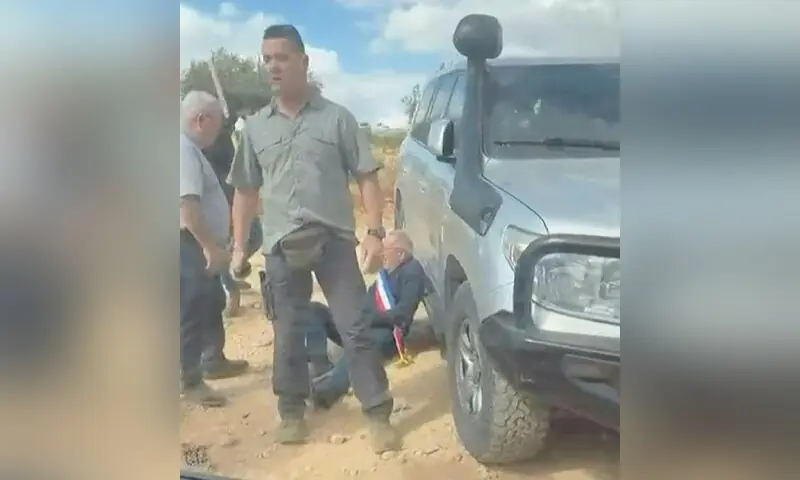
The settlers beat up Bernard Baudoux, 78, the mayor of the northern French town of Aulnoye-Aymeries, who was wearing a sash in the French tricolour during a goodwill visit in which he helped harvest olives.
The mayor, wearing a blue, white and red sash, leans against a vehicle as masked men intercept and surround a car at a village in the occupied West Bank. — AFP
Netanyahu earlier questioned the facts behind the two recent incidents.
On Levine’s beating, he alleged that Palestinians and “far-left” activists were fanning violence. With the attack on the diplomatic convoy, he pointed out that the mayor was a leftist supporter of the Palestinian cause and said that diplomats should have coordinated with the Israeli military.
The top official on human rights in the US State Department, Riley Barnes, on Sunday visited the same town where the mayor was beaten, which is largely Christian, on a trip coordinated with the military. He was unharmed.
The violence by settlers has led British Foreign Secretary Ed Miliband to accuse Israel of an “ethnic cleansing” campaign and for London to impose sanctions on goods from settlements.
Marking Monday’s deadline for Israel accepting construction tenders for the E1 settlements, a major new project that Palestinians fear will divide the West Bank in two, Miliband warned businesses about consequences.
“They should be aware of legal and reputational consequences, including the risk of involving themselves in serious breaches of international law,” Miliband said in a statement.
Israeli Foreign Minister Gideon Saar hit back against what he called an “obsession” with Israel by British Prime Minister Andy Burnham’s government.
“The days when Israel would quietly accept threats, sanctions and attempts to dictate its policies are over,” Saar said.
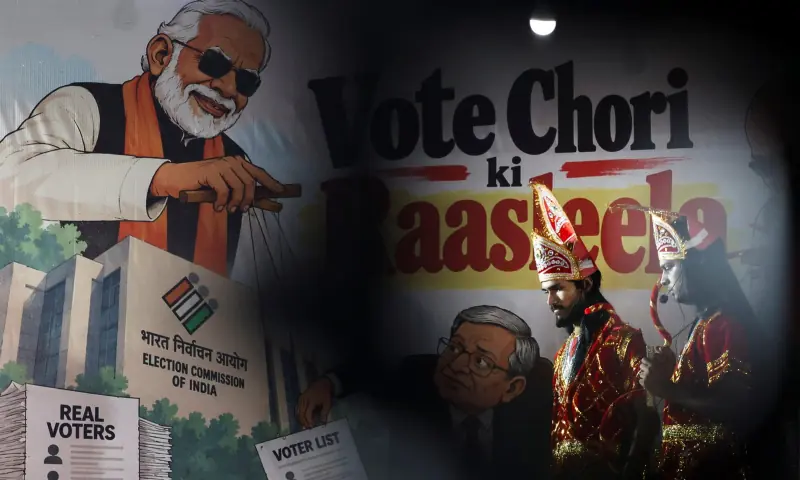
A New Delhi magistrate extended the detention of two leaders of India’s youth-led Cockroach Janta Party (CJP) movement by two days on Monday, after they were remanded in custody five days ago.
CJP activists and opposition parties have defied a security crackdown to demand the resignation of India’s chief election commissioner, accusing the poll body of manipulating voter rolls to benefit Prime Minister Narendra Modi’s ruling party.
The commission, which oversees voting in the world’s most populous nation, has denied any wrongdoing.
Television footage showed CJP leaders Ashutosh Ranka, 30, and Saurav Das, 27, being taken away in a blue police van from a police station where the hearing took place.
“This is an absolute mockery of the justice system,” the movement’s legal affairs head Ratna Singh told reporters.
Das and Ranka were taken into custody on Oct 14 for their “alleged repeated attempts to disturb public peace and violate the law”, the police said in a statement at the time.
The pair had jumped security barricades to wave the national flag at Jantar Mantar, a decades-old protest site that police have barred people from using.
“Their alleged attempts to instigate others through social media to engage in similar unlawful activities were also taken into consideration,” the statement said.
Jantar Mantar, in the heart of the capital, has been sealed off with yellow metal barricades for more than a week and guarded by security personnel.
Delhi police said last week they had removed the site from the list of designated protest venues.
Quasiment un an après la finale de la CAN 2025, le Tribunal arbitral du sport (TAS) annoncera « fin novembre » sa décision sur le recours sénégalais contre la victoire du Maroc sur tapis vert, a indiqué lundi 19 octobre cette juridiction.
Près de deux millions d'hectares de forêts ont brûlé en Indonésie entre janvier et la fin du mois de septembre de cette année, selon les estimations d'un organisme de surveillance de la déforestation par satellite.
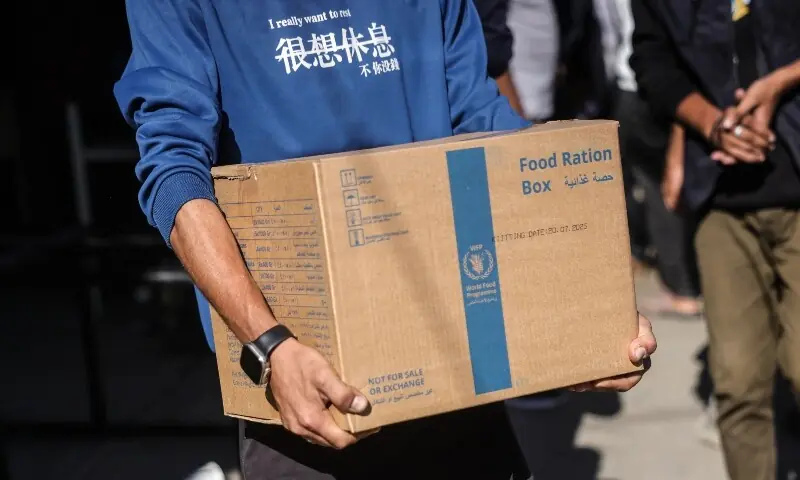
Le Programme alimentaire mondial (PAM) a annoncé, lundi 19 octobre, devoir réduire, faute de moyens, ses opérations humanitaires à Gaza, diminuant de 500 000 le nombre de personnes aidées chaque mois, tout en appelant le monde à ne pas « détourner le regard » du territoire dévasté par la guerre.
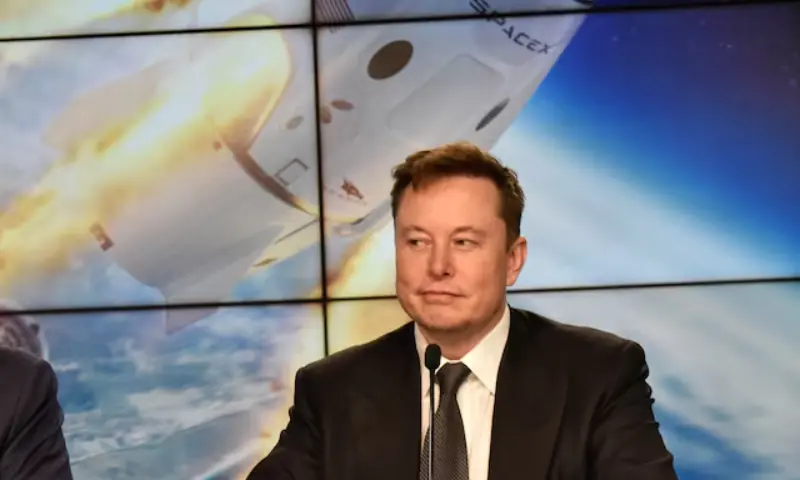
Tech billionaire Elon Musk said on Monday that he would give every child in the United States a share in his SpaceX rocket company.
“Next year, I will give one of my SpaceX shares to every kid in America,” Musk, the richest man in the world, said on X.
“This will be the first of many,” he said, without providing details about how the scheme would work.
There are around 73 million children under the age of 18 in the United States, according to 2024 data from the US Census Bureau.
Musk owns 38 per cent of SpaceX, according to Forbes.
His announcement comes after US President Donald Trump promised last month to give every American adult $5,000 if his Republican party retains control of Congress in November’s midterm elections.
SpaceX set the record for the largest initial public offering in history, raising $85.7 billion in June.
The company’s Starship megarocket reached orbit for the first time in September, a milestone for the rocket central to Musk’s Mars ambitions.
France announced partial curfews in Paris and other cities on Monday after weekend demonstrations over soaring prices degenerated into some of the worst street violence in recent years.
Prime Minister Sebastien Lecornu did not rule out imposing a state of emergency after the interior minister said police had “lost control”.
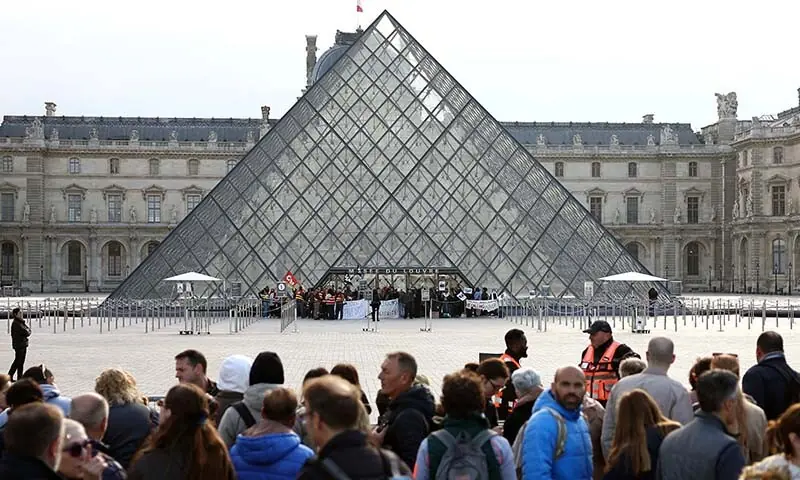
Tourists in Paris had a taste of the disruption on Monday when they found the Louvre closed because of a small group of student protesters.
Facing accusations that it failed to anticipate and respond to the violence, the government has vowed to re-establish order, while officials scrambled to contain public anger.
The unrest, erupting just six months before France elects a successor to President Emmanuel Macron, threatened to continue, with organisers calling for a new round of protests next Saturday.
Authorities said partial curfews would be enforced from Monday evening to Tuesday morning in a number of cities including Paris, Lille and Lyon, to protect businesses.
In the capital, a curfew was ordered from 11pm (2am PKT), while demonstrations were banned from 8pm.
“I’m absolutely determined to restore public order”, Lecornu said.
Other European countries have also seen demonstrations over rising prices, with smaller clashes breaking out in Milan and Belgium over the weekend and protests simmering in Spain and Portugal.
Some half a million people turned out across France on Saturday to denounce the surging cost of living, a culmination of four weeks of protests that began with students demanding better conditions at high schools.
What started as peaceful demonstrations descended into violence in many cities, as masked groups attacked law enforcement, broke into public buildings and set some ablaze, looted shops, and set fire to cars, bicycles and scooters.
Listings for ‘stolen goods’
On Monday, France’s digital minister, Anne Le Henanff, urged online resale platforms to remove listings for “stolen items” following Saturday’s looting and summoned representatives of companies including Vinted and eBay.
CCTV footage shows a masked group breaking into a jewellery shop in Lyon, France, October 17, 2026, in this screengrab obtained from a handout video. — Reuters
After the weekend scenes of chaos, Interior Minister Laurent Nunez offered his resignation, but Macron refused to accept it.
More than 2,500 people were arrested and nearly 1,000 members of the security forces injured. Protesters were also hurt, with one demonstrator’s hand blown off by a police crowd-control grenade.
Macron acknowledged failures in the government response, which had seen 60,000 law enforcement personnel deployed on Saturday.
Nationwide, more than 2,513 people have been taken into police custody since the weekend, Justice Minister Gerald Darmanin said. He added that 67 had been jailed and “dozens” of criminal cases opened.
Darmanin also said authorities would use facial recognition on social media to identify perpetrators.
At least 3,000 shops were damaged, with the cost running into hundreds of millions of euros.
In an address to the nation on Sunday, Macron slammed the “unbridled” violence.
The European Union called the violence “unacceptable” but warned that the right to peaceful protest “must be protected” in France.
Germany condemned the violence and updated its travel advice for France, saying “further outbreaks of violence in the coming days cannot be ruled out”.
China has warned citizens travelling to France to be aware of risks and take safety precautions, state broadcaster CCTV reported.
Louvre blocked
In Paris on Monday, a dozen demonstrators blocked the entrance to the Louvre, the most visited museum in the world, while bewildered tourists looked on.
“We don’t want to get involved. We want to stand back and get away from them,” Pat Boland, a tourist from Australia, said of the protests.
The pensioner, 73, spoke to AFP outside barricades that had been erected at the Louvre, which was closed because a small group of protesters stood by its famed glass pyramid entrance.
Protesters and students from art and culture schools block the entrance to the Louvre Museum during a demonstration in support of a high school student movement demanding better school conditions and government action, in Paris, France, October 19, 2026. — Reuters
The unrest has flared before presidential elections in April and May that will elect a new French president after a decade of centrist Macron.
Marine Le Pen, the far-right presidential candidate, is riding high in the polls.
The government has accused ultra-left groups of stoking the violence to boost the chances of the far-left firebrand Jean-Luc Melenchon in the presidential polls.
The interior minister and intelligence services were to meet late Monday to discuss the violence.
Europe
During the weekend, clashes broke out on the sidelines of a cost-of-living demonstration in Milan.
“I’m very worried because it’s a new phenomenon, which also originates from an international scenario and therefore feeds itself,” mayor Giuseppe Sala said.
In Belgium, police fired tear gas and water cannon to disperse protesters in Brussels and Liege.
In Spain protesters have set up tents in the heart of Madrid to denounce soaring housing costs, with similar encampments going up in neighbouring Portugal’s main cities of Lisbon and Porto.
The World Food Programme said Monday it would end monthly assistance to 500,000 people in Gaza due to a funding shortfall, despite acute needs in the war-battered Palestinian territory.
With the cutbacks, 1.1 million Palestinians in Gaza — still about half the population — will be receiving either food or cash assistance each month from the UN agency, in reduced amounts.
The World Food Programme (WFP) said its efforts had mitigated the effects during a famine last year in Gaza and warned that conditions had not improved to the point that it can take away aid.
“People are not safe. Airstrikes continue on a daily basis. People continue to be displaced,” Shaun Hughes, the WFP country director, told AFP at the agency’s office in east Jerusalem.
“Almost everybody remains without a permanent home to live in. And the humanitarian conditions are brutal,” he said.
According to the latest assessments, 1.4 million people — or two-thirds of Gaza’s population — are still “acutely food insecure” and need humanitarian assistance to survive, he said.
In August last year, the UN’s Integrated Food Security Phase Classification said that Gaza was suffering famine conditions.
The famine classification was lifted in December, two months after a US-brokered ceasefire was announced in Gaza. Israel has kept striking Gaza since then, vowing to kill anyone involved in the October 7 attack.
Since the ceasefire, the WFP has been able to step up assistance and had been reaching between 1.5 million and 1.8 million people every month.
“This has been a lifeline. But now, rather than being able to sustain and scale up that assistance, we’re actually having to reduce it,” Hughes said.
“And that’s not because we don’t have humanitarian access to deliver food; that’s because we don’t have funding.”
Less aid to each recipient
In addition to reducing the number of people who receive rations, the WFP has been forced to shrink the content.
Families receiving food assistance will now get only one food parcel instead of two and a smaller bag of wheat flour, the WFP said in an operational note.
The 75,000 families who receive assistance in cash will see the amount reduced from 1,250 to 750 shekels ($400 to $240) per month.
The WFP is funded by governments as well as private donors. It has seen a sharp drop in resources, including after President Donald Trump returned to power in the United States and drastically slashed contributions to UN agencies as well as bilateral aid.
The agency says it needs about $450 million over the next six months for its operations in Gaza and the West Bank, but in 2026 it has only received about half the usual financing for the Palestinian territories.
In September, the agency also reduced by half the number of aid recipients in the West Bank, which Israel has occupied since 1967, from 400,000 to 200,000.
“Now is not the time in the history of Palestine and Gaza to turn away from what is happening in Gaza,” Hughes said.
The WFP says that conditions have moderately improved in Gaza but noted that needs could rise again with the onset of winter.
Israel has allowed more goods into Gaza under the terms of the Trump ceasefire but still imposes heavy restrictions, turning away shipments of anything that is seen as having potential military use — a policy that has included blocking even prosthetic limbs, according to the United Nations.
Israel has ramped up longstanding criticism of the United Nations since the Gaza war, accusing the world body of bias and perpetuating dependency among Palestinians.

 Login