Ter mais dinheiro no banco, uma casa ou outros investimentos são formas de acumular património. Mas nem todas as famílias têm as mesmas oportunidades de o fazer. Afinal, como tem evoluído a riqueza em Portugal e quem detém a maior parte? Saiba mais, neste episódio do Economia dia a dia, podcast diário do Expresso
El riesgo país de Argentina alcanzó 710 puntos básicos al comienzo de la jornada bursátil de este martes. El indicador elaborado por el JPMorgan se encuentra en su nivel más alto desde el 24 de octubre del año pasado. El Gobierno mira con atención a esta cifra, porque refleja el nivel de credibilidad que puede instalar en los mercados sobre la capacidad de pago de su deuda. Y esas expectativas están estrechamente ligadas a cómo puede desempeñarse La Libertad Avanza el año próximo.
Los títulos soberanos argentinos denominados en dólares acumularon una baja promedio de 6% durante el último mes, con retrocesos superiores a 7% entre los bonos de plazos más extensos. La referencia de JP Morgan avanzó unas 35 unidades hasta las 10:15 y encadenó ocho ruedas consecutivas de alzas. El indicador mide la diferencia entre las tasas de los bonos argentinos y las de los títulos del Tesoro de Estados Unidos de duración similar.
En el equipo económico afirman que este indicador crece por dos factores centrales. Uno de estos es externo. Afirman que hay una situación internacional que genera fuertes shocks hacia la Argentina, siendo el principal la suba de tasas en mercados de referencia (como Estados Unidos, Europa o Japón), que incentiva a los inversores a refugiarse en esos activos y no en los mercados emergentes, que en un contexto de volatilidad global producto de los múltiples conflictos (bélicos o comerciales) se vuelven menos atractivos.
Pero quienes trabajan en el Palacio de Hacienda afirman que hay un componente interno y eminentemente político que afecta a la medición del banco estadounidense. El Gobierno todavía no logró la suspensión de las PASO que está incluida en la Reforma Política; para los jugadores financieros, este es un dato de importancia.
Por un lado, si el oficialismo logra hacerlo tendrá capacidad de aplazar la incertidumbre electoral de agosto hacia octubre, dando más posibilidades a la economía para una eventual recuperación y, así, a que se incrementen las chances de que Javier Milei sea reelecto. Por el otro, el Gobierno no puede promover esa reforma sin antes acordar con los espacios aliados y los gobernadores. El mercado miraría con intranquilidad que La Libertad Avanza no realice acuerdos tácticos porque se multiplicarían los competidores contra el oficialismo.
El ministro de Economía, Luis Caputo, es uno de los principales impulsores al interior del Gobierno de acelerar los acuerdos políticos con los gobernadores, lo que supondría que La Libertad Avanza debería menguar sus intenciones de jugar fuerte en las elecciones provinciales. Esto colisiona con el armado que vienen desplegando los responsables del partido político nacional, Eduardo “Lule” Menem y Martín Menem, que consideran que ese pedido hace mella en su área de influencia y que, por el contrario, debe ser el plan económico el que propicie un incremento del caudal electoral.
En ese dilema de cómo podría incidir, o no, un acuerdo político reside la interna que hoy en día atraviesa al círculo chico de funcionarios de la Casa Rosada. Quienes se posan del lado de Caputo son su sobrino y asesor presidencial Santiago Caputo, el jefe de Gabinete, Diego Santilli, y la senadora Patricia Bullrich; mientras que Karina Milei es quien todavía no bajó el martillo para decidir sobre cualquiera de los dos lados. “Mientras la situación siga así, se interpreta que le está dando la razón a los Menem. Son una minoría muy intensa”, dicen sus detractores.
La insistencia del Palacio de Hacienda es tal que afirman que “con un acuerdo político con la oposición y fundamentos macroeconómicos el riesgo país va a bajar a menos de 300 puntos” y que “no hay margen para dar marcha atrás con el plan económico”. “Hay que seguir con la ortodoxia monetaria y fiscal para fortalecer el balance del Banco Central”, afirman.
El cálculo que hacen en la Casa Rosada
Santilli es el funcionario que lidera las conversaciones con los gobernadores y espacios opositores para movilizar la Reforma Política. En su despacho afirman que hay 36 votos en total que podrían estar disponibles si se consigue el visto bueno de los Milei para avanzar a acuerdos concretos.
Hay 21 senadores que son propios de La Libertad Avanza, mientras que 10 son de la Unión Cívica Radical, 3 del PRO, 1 de Despierta Chubut y 1 de La Neuquinidad. El desafío está en todos los bloques. En el espacio radical hay bancas que responden de manera directa a gobernadores y otros que no tienen una correspondencia con el oficialismo de sus provincias, pero con los que se podría hablar igual.
En el partido amarillo también hay dudas si habilitarle la herramienta electoral sin contraprestación, pero en el Gobierno dicen que la senadora Andrea Cristina se posicionará como le diga el gobernador Ignacio Torres. Lo mismo afirman para el caso de Edith Terenzi, de esa misma provincia pero quien tiene su monobloque. Por último, Santilli mira a la senadora Julieta Corroza, quien responde de manera directa a los designios del gobernador de Neuquén, Rolando Figueroa.
“Después de eso solo nos queda negociar un voto. Basta con conseguir a algún peronista o buscar por el lado de Santa Cruz. Si el Colo tiene la autorización política para meter presión, los votos van a estar”, afirma una fuente en estricta reserva.
Aunque se habló de que la Reforma Política se podía tratar a fines de octubre o principios de noviembre, en el Gobierno ahora se extienden algo más con los plazos y le quitan dramatismo a la demora. “Hasta el 10 de diciembre hay tiempo”, afirman, aunque no son pocos los funcionarios que ya reconocen que se podrían extender las sesiones ordinarias hasta finales de año o, simplemente, llamar a sesiones extraordinarias, lo que habilitaría a que solo se discutan las iniciativas que se propongan desde la Casa Rosada.
La Sala III de la Cámara Contencioso Administrativo Federal le dio la razón al Ministerio de Capital Humano y ordenó que la justicia revise si la medida cautelar sobre financiamiento universitario sigue o no vigente. El tribunal consideró que el Estado Nacional enfrentaba un perjuicio irreparable al verse obligado a cumplir una orden cuya vigencia está en disputa.
El Ministerio de Capital Humano, a través de la Secretaría de Educación y la asistencia legal de la Procuración del Tesoro, liderada por Sebastián Amerio, había reclamado ante la Cámara porque el juez de primera instancia le negó el derecho a apelar. La causa de fondo es el amparo promovido por el Consejo Interuniversitario Nacional (CIN) y otras instituciones contra el Decreto 759/25 del Poder Ejecutivo Nacional, que recortó fondos universitarios.
“La vamos a seguir a muerte”, respondieron fuentes de primera línea del Ministerio de Capital Humano al ser consultados por el fallo judicial. “La Justicia todavía no nos está sugiriendo ‘no cumplan con la cautelar’, pero lo que nos dice es que van a revisar si la tenemos que cumplir”, explicó uno de los principales patrocinadores legales del Gobierno. Aun así, en otros despachos legales son más enfáticos: “La intepretación de que el efecto del recurso admitido suspende su aplicación es válida”.
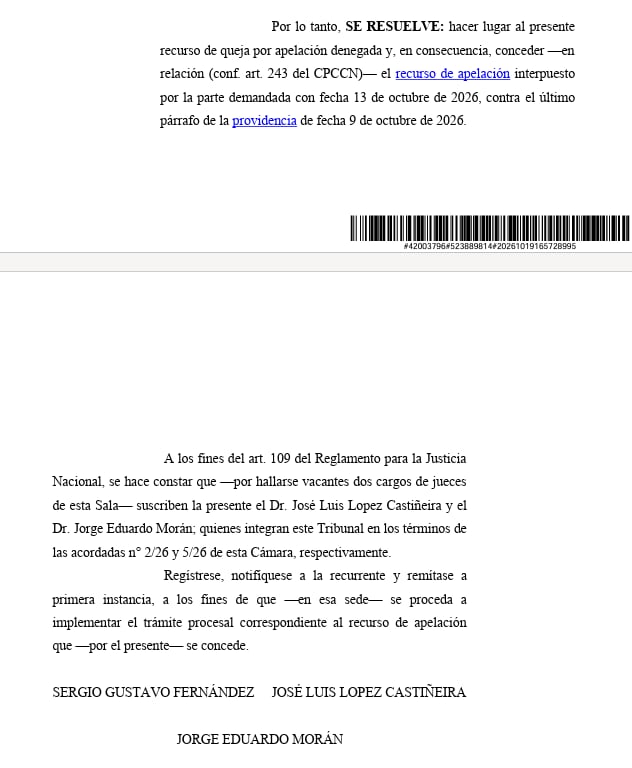
La Cámara no resolvió si el Estado cumplió o no con la medida cautelar. Lo que decidió, el 20 de octubre de 2026, es más acotado: que el juez de primera instancia se equivocó al bloquear la apelación, y que esa apelación debe tramitarse.
La resolución fue firmada por los jueces Sergio Fernández, José Luis López Castiñeira y Jorge Eduardo Morán. El Ministerio de Capital Humano argumentó que la medida cautelar original tenía un límite temporal expreso y que ese plazo ya había vencido. Desde esa postura, continuar con la ejecución de la orden equivalía a extender artificialmente una tutela que había caducado.
Los mismos magistrados también dieron a conocer esta mañana otra decisión clave, ya que habilitaron una apelación del Estado Nacional contra la intimación que le ordenaba cumplir, en cinco días, la medida cautelar vinculada con la Ley de Financiamiento Universitario, bajo apercibimiento de imponer multas diarias —astreintes—.
El Gobierno sostuvo que ya cumplió con las obligaciones previstas en los artículos 5 y 6 de la ley 27.795, vinculadas con la actualización de salarios universitarios y becas. Argumentó que los incrementos salariales acumulados entre diciembre de 2023 y agosto de 2025 superaron la variación del Índice de Precios al Consumidor y cuestionó que el juzgado no precisara qué aspectos de la cautelar permanecían pendientes. También afirmó que las becas alcanzadas por la norma son las del Programa 26, entre ellas las Manuel Belgrano, y no las becas Progresar.
El origen del conflicto
El amparo fue impulsado por el CIN tras la sanción del Decreto 759/25, que modificó la distribución del financiamiento para las universidades nacionales. El juzgado federal N° 11 dictó una medida cautelar que obligó al Estado a garantizar recursos mientras se resolvía el fondo del asunto. La sentencia de primera instancia se dictó en el expediente principal. Contra esa sentencia, el Estado interpuso un recurso de apelación que fue concedido en ambos efectos, lo que en términos prácticos paraliza la ejecución de la condena mientras la Cámara resuelve.
El nudo del problema apareció cuando el mismo juez ordenó, en paralelo, que el trámite de ejecución de la medida cautelar continuara en el incidente vinculado, con un plazo de cinco días para cumplir bajo amenaza de sanciones. El Estado intentó apelar esa decisión, y el juez lo rechazó.
La postura del Ministerio descansó en un principio procesal: si la medida cautelar fue otorgada con un límite temporal, ese límite forma parte del contenido de la orden y no puede ampliarse por vía interpretativa. “La limitación temporal no fue accesoria ni irrelevante, sino que integró expresamente los términos de la tutela concedida”, sostuvo el Estado en su presentación ante la Cámara.
Además, el Ministerio señaló que las sumas exigidas eran de “dimensión extraordinaria” y que no existía una liquidación concreta que permitiera determinar con exactitud cuánto debía pagar. Denunció que se le imponía cumplir una “manda judicial imprecisa, genérica, omisiva y sin datos ciertos”, sin posibilidad de revisión por parte de un tribunal superior.
La Cámara no evaluó el fondo de ese debate. Lo que analizó fue si el bloqueo de la apelación generaba un perjuicio concreto e irreparable para el Estado. La conclusión fue afirmativa: dejar al Ministerio sin posibilidad de recurrir mientras corría el plazo de cumplimiento, con sanciones conminatorias latentes, configuraba un agravio que justificaba abrir la instancia de apelación.
Con la queja aceptada, el recurso de apelación del Estado quedó concedido “en relación”, una modalidad que, según el artículo 243 del Código Procesal Civil y Comercial de la Nación, no suspende automáticamente la ejecución de la resolución apelada. La causa regresa ahora al juzgado de primera instancia para que implemente el trámite correspondiente.
La Cámara dejó expresamente aclarado que su decisión no anticipa ninguna opinión sobre si el Estado cumplió o incumplió la medida cautelar original. Esa pregunta quedará para una resolución posterior, una vez que el recurso de apelación tramite en forma.
As novas ferramentas (APIs) permitem às empresas avaliar sinais de fraude antes de autorizar acessos ou transações. Para as operadoras, representam uma oportunidade de criar receitas com serviços de segurança
Pregunta. Tengo un piso alquilado por habitaciones. Quiero utilizar la vivienda para mí y no renovar a las tres personas alquiladas. Con la nueva normativa, ¿cómo tendría que actuar? V. De los Reyes
The brief statement from the office of Attorney General Lynn Fitch said the officer was “justified” in his “use of force” when he shot the baby, Kohen Wiley, in a Walmart parking lot on June 14. The statement did not mention Kohen by name or identify the officer involved in the shooting.
Local media outlet Action News 5 identified the officer as Hunter Foster based on a records request of officer-involved shootings.
The shooting occurred in Senatobia, a city of about 8,000 people in the northern part of the state, about 40 miles south of Memphis, after police responded to a shoplifting call. According to the statement initially released by the Mississippi Bureau of Investigation, two adults — later identified as Kohen’s mother and a family friend — and a “juvenile child,” referring to Kohen, fled the store and then drove toward officers at the scene, at which point one of the officers fired his gun.
But an independent autopsy released by the family’s legal team and reviewed by MS NOW found that the baby was shot through the side of his body, throwing into question the authorities’ claim that the car was driving toward police. At a press conference this summer, the family’s legal team displayed a photo of the passenger-side window of the vehicle almost entirely blown out.
Kohen’s mother, Vellesiya Wiley, said at a press conference earlier this year that the officer fired three to four shots — even after she held Kohen up to show them there was a baby in the car — and that one hit her son’s ribcage as she held him in the passenger seat. MS NOW could not reach Wiley for comment on Monday.
Ben Crump, the civil rights attorney who represents the family, slammed the news from Fitch’s office on Monday, asking, “How can anyone accept that conclusion when Kohen’s family and the public still have not been allowed to see the body-camera footage?”
“If the footage supports the state’s decision, release it,” Crump continued. “We will not stop fighting until this family gets the truth.”
Mississippi Today and The New York Times previously reported that Foster allegedly made racist remarks toward two co-workers, one of whom is Black and the other of whom is white and has a child with a Black partner.
When MS NOW reached out to Martin Zummach, a lawyer the Times identified as representing Foster, he would not answer MS NOW’s questions about the case and hung up the phone.
Spokespeople for the attorney general’s office, the Senatobia Police Department and Senatobia Mayor Greg Graves did not respond to MS NOW’s requests for comment. Graves acknowledged the community’s “tremendous pain” in a video statement a few days after the killing.
At his funeral, Kohen was remembered as “goofy,” a fan of the cartoon character Bluey and a beloved baby with a family excited for his future, NBC News reported.
A Lindt afastou o presidente executivo após rever em baixa as previsões de vendas para 2026, num contexto de fraco desempenho na Europa. A fabricante suíça de chocolates junta-se a empresas como PayPal, Nestlé, Starbucks e Danone, que também substituíram os seus líderes perante resultados abaixo das expectativas e pressão dos investidores
On Monday, Mayor Zohran Mamdani announced that 10,000 more seats under his signature free childcare for two-year-olds program will be covered in fall 2027. Under the expansion, all of the Bronx and Staten Island's school districts will be eligible.
"For far too many New York City families, the joy of welcoming a child comes with a terrifying set of questions: How will I afford child care? Will I need to give up my job? Will I be forced to leave the city I love?" Mamdani said in a statement. "Today, for 10,000 more families, we have an answer."
Those affordability questions loom large for urban parents around the country. Cities including New York have seen their under-five population fall since the onset of the pandemic.
Between April 2020 and July 2024, the population of children under five fell by 18% in New York City, per an analysis from the Economic Innovation Group. That population collapsed by 15% in San Francisco, 15% in Chicago's Cook County, and 14% in Los Angeles County over the same period. Lowering childcare costs, a key plank of Mamdani's platform, was one area where even CEOs agreed with the socialist.
In New York, families with kids under six were more than twice as likely to leave the city as families without younger children, according to a Fiscal Policy Institute analysis.
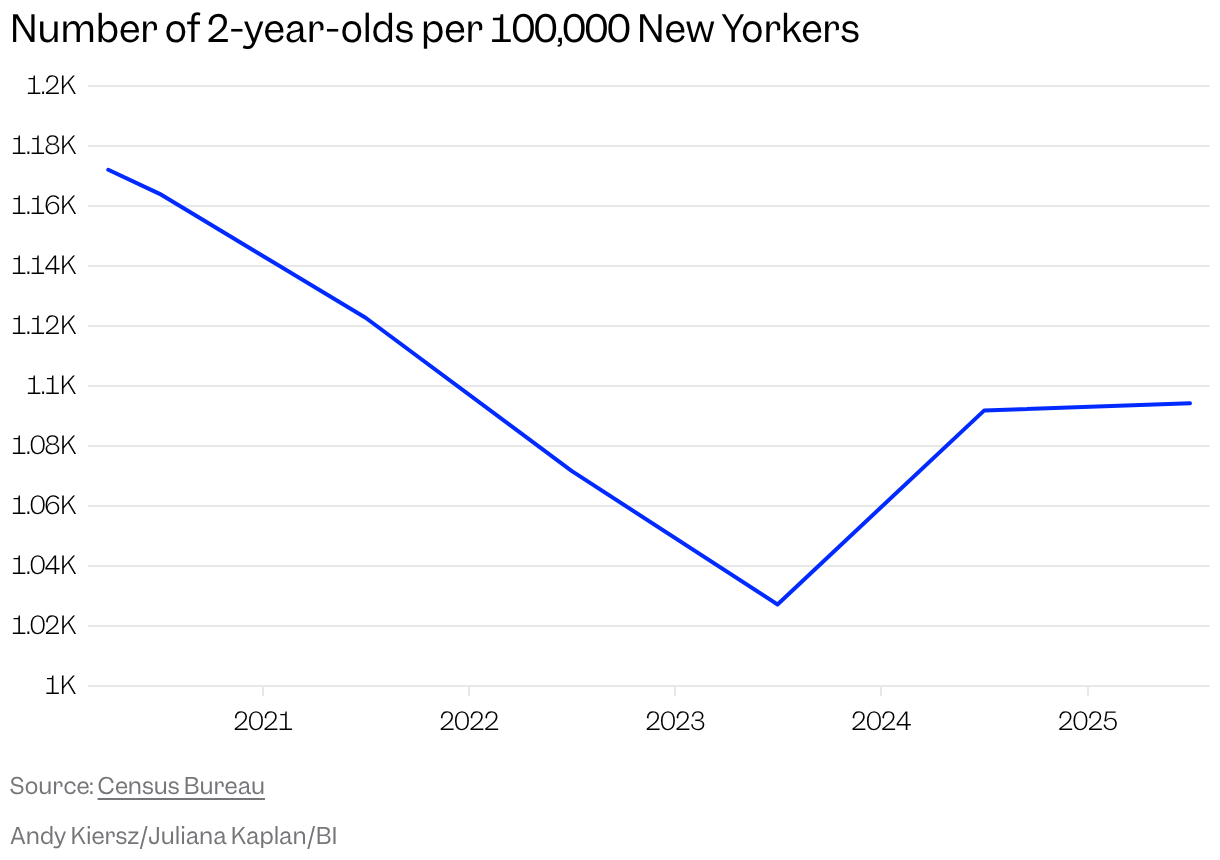
The share of two-year-olds in New York City's population fell as families fled the city during the pandemic, before rebounding somewhat in 2024 and 2025.
For parents still in the city, childcare costs for toddlers in care centers reached $23,400 annually in 2024, per an analysis from the comptroller's office. That means a New York family would have to earn at least $334,000 to pay only 7% of their family income for childcare, the federal definition of affordable.
The new 2-K program, which has reportedly faced implementation problems including funding and payment delays, initially targeted a handful of districts based on economic need and childcare demand.
Even as providers wrangle with funding issues and the program's rollout, children across the city recently started their first days in 2-K. At a Friends of Crown Heights center in Brooklyn, mother Jessica Arroyo said it meant "everything" to have her daughter accepted into 2-K.
"I can work in peace," Arroyo said. "She can learn, make new friends."
Are you a New Yorker or childcare provider involved with 2-K? Share your story with this reporter at jkaplan@businessinsider.com.
França atravessa um período de crescente incerteza. Os problemas económicos acumulam-se e encontrar soluções torna-se cada vez mais difícil. Mas até que ponto pode esta situação comprometer a estabilidade de uma das maiores economias europeias? Saiba mais, neste episódio do Economia dia a dia, podcast diário do Expresso
Mate Rimac fundou uma fabricante de desportivos elétricos, mas exclui um Bugatti 100% elétrico dos planos para a próxima década. Para o CEO, a mecânica, o som do motor e o trabalho artesanal fazem parte do que os clientes procuram num carro que custa milhões de euros
As the Iran War continues, gas prices remain high — a real strain for consumers.
The conflict has kept diesel, crude oil, and gas prices high; inflation is eating up pay hikes.
As America heads into midterms, it's a hard affordability position for President Donald Trump.
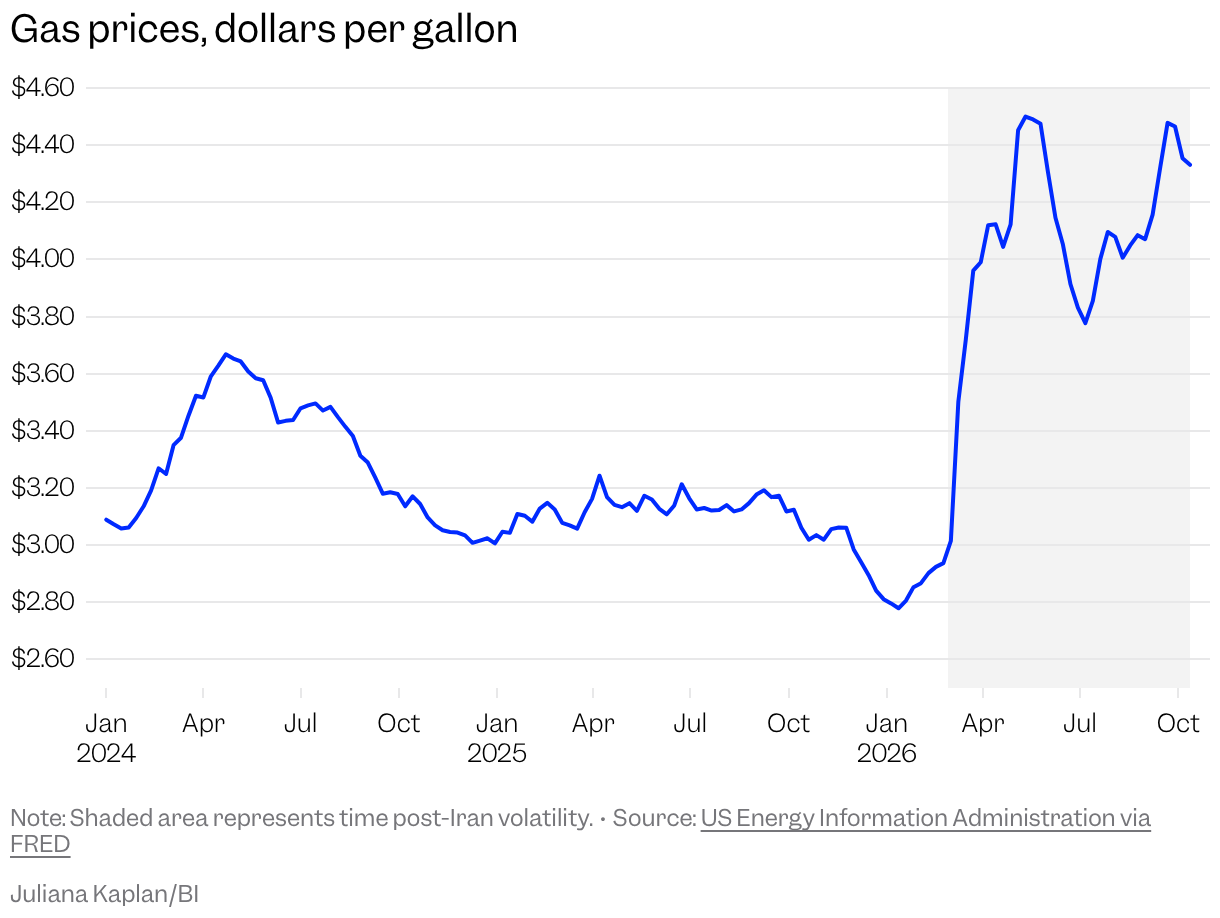
It's expensive out there: Gas prices have been stuck at over $4 a gallon for more days this year than any other. The war in Iran shows no signs of cooling off. Inflation is swallowing any raises you might have gotten at work.
It's a recipe for a challenging midterm cycle for President Donald Trump, who faces an affordability crisis at home that's not going away — and a far-away war that's only making costs go up.
The volatility surrounding the contested Strait of Hormuz, a key oil and gas transit waterway, has hit American consumers hard.
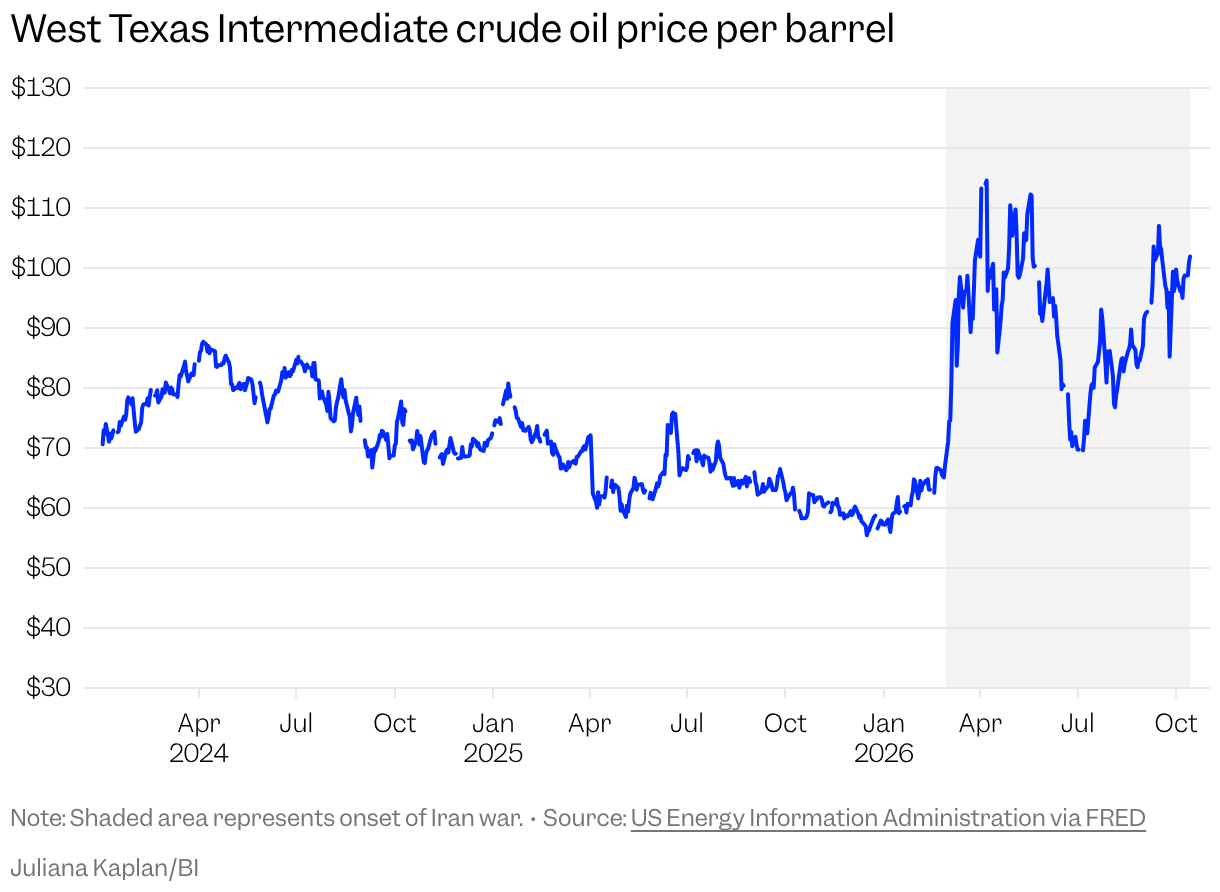
Since the Iran war first kicked off in February and the Strait was subsequently closed, gas and oil prices have skyrocketed. Diesel prices have hit record-breaking highs in recent weeks. That paints a dreary picture for Americans struggling with high costs, who likely won't feel any relief at the pump in the near future — especially as more potential military action looms.
Trump has highlighted the broader goals of the war and argued that the increase in gas prices would be transient. In an October 8 Truth Social post, he wrote, "a temporary increase in the price of Gasoline is a small price to pay for Iran not having a Nuclear Weapon."
While the US military has not carried out airstrikes against Iran directly in several months, it has kept a significant force presence in the Middle East, including more than a dozen warships, dozens of fighter jets, and thousands of sailors and Marines.
US forces in the region are maintaining a naval blockade against Iran, and since July, they have disabled four commercial ships that the Pentagon said were sailing in violation.
After the start of the war in February, crude oil prices soared and remain significantly higher than when Trump's second term began.
Tanker traffic through the Strait of Hormuz nearly ground to a halt early in the Iran war, severely disrupting a waterway that normally carries about a fifth of the world's oil supply. Shipments have since recovered substantially but remain below prewar levels.
The Trump administration said it aims to alleviate issues related to oil. "The President wants to see prices at the pump fall and continues to take historic measures to alleviate temporary disruptions as oil flowing through the Strait of Hormuz approaches pre-conflict levels," White House spokeswoman Taylor Rogers said.
Vessels carrying oil and other products have continued to take fire from both sides, putting more pressure on commerce traveling through the area. US forces have carried out additional strikes on Iranian-linked targets. The Pentagon said they have destroyed 10 tankers tied to the Islamic Revolutionary Guard Corps, or IRGC, since July.
Meanwhile, several merchant ships have come under attack in and around the Strait of Hormuz this month, according to the Royal Navy-affiliated United Kingdom Maritime Trade Operations Center. US Central Command, which oversees American military operations in the Middle East, has attributed some of these strikes to Iran.
The ripples of volatility in oil prices are showing up at the pump. Long gone are the days of gas stations touting below-$3 prices; prices are still hovering in the mid-$4 range. High gas prices are even tamping down spending among higher-income consumers, and soaring costs have led to a rise in "hypermilers" — drivers who try to optimize and gamify their habits to get the best value per gallon.
Diesel prices in the US have spiked even more, up to around $6.18 per gallon, an over $2.50 increase over the year, per the Energy Information Administration. In California, diesel is hovering over $8 a gallon.
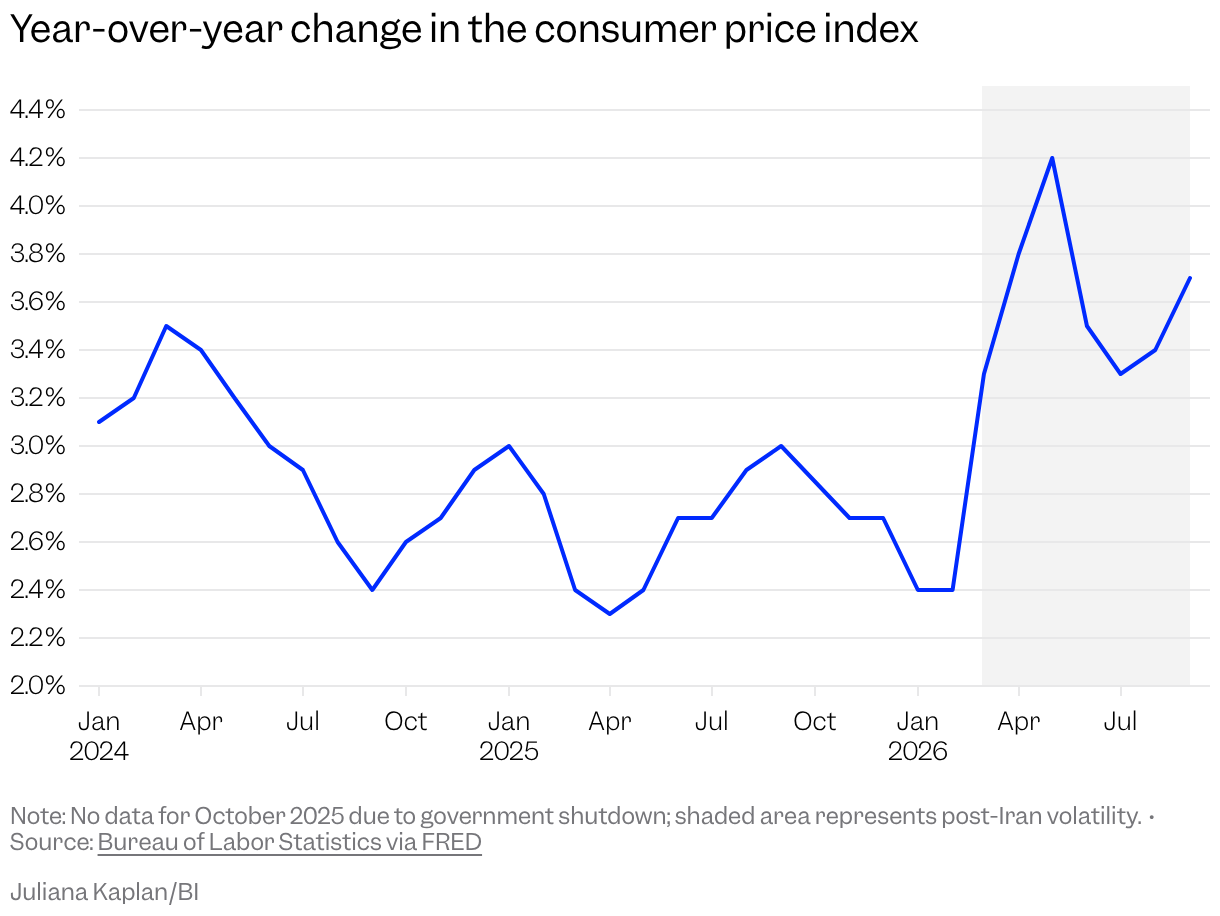
Those fuel and energy strains are pushing up costs across the economy. Inflation as tracked by the consumer price index increased to 3.7% year-over-year in September — higher than economists expected. That was driven in large part by soaring gas and energy prices, with energy rising by 20.4% year-over-year and gas by 34.2% in the same period.
Higher inflation has put pressure on the Fed and bond markets. In September, the central bank raised rates for the first time in three years to try to combat rising prices, with one more hike potentially coming by year's end. The 10-year Treasury yield, which influences borrowing costs for mortgages, auto loans, and credit cards, has surged since the war began, from below 4% at the end of February to a high of 5.31% this month. The 30-year mortgage has risen nearly in lockstep, going from just under 6% to 7.5% during the eight-month conflict.
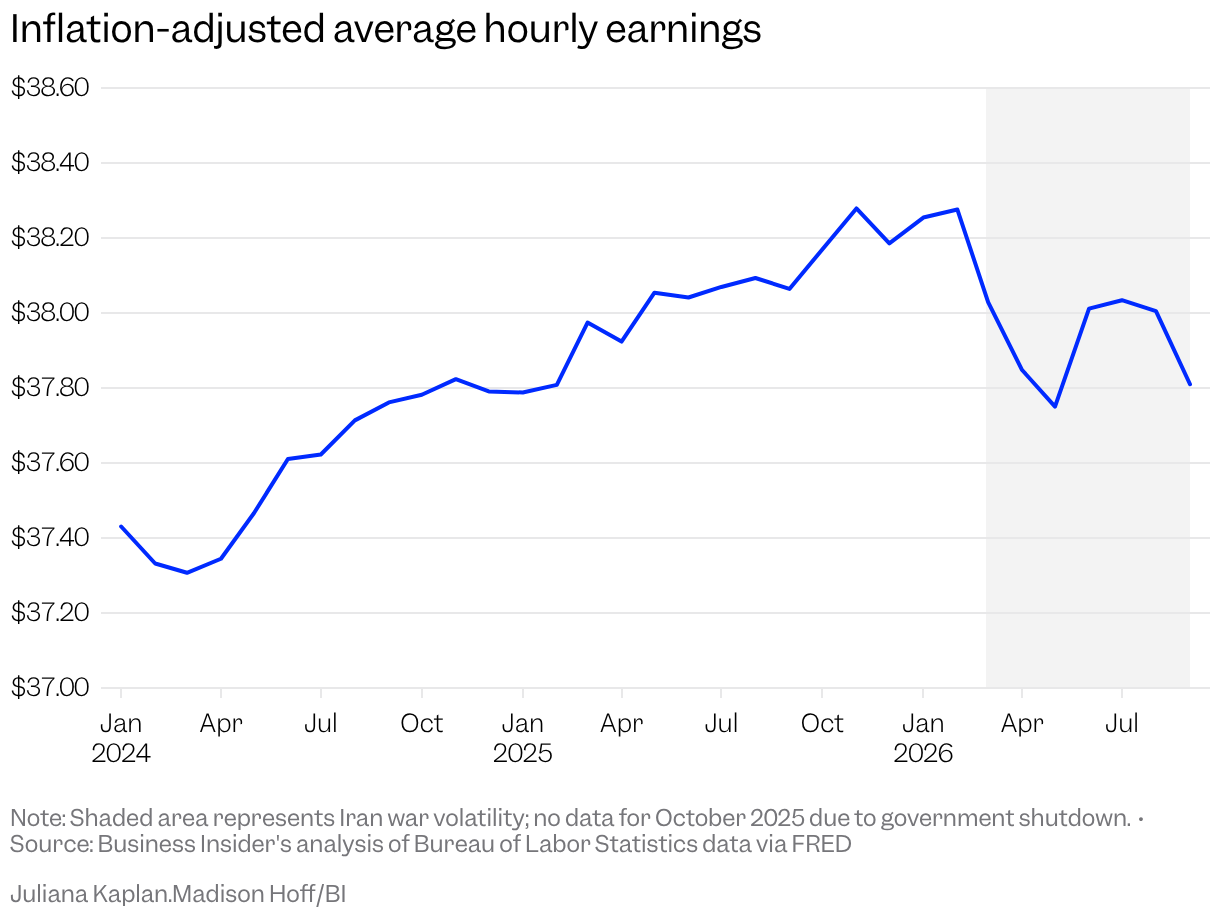
For everyday Americans, all of these international strains amount to what is, essentially, a pay cut. Wage growth remains slow and steady, but, over the past few months, rising prices have outpaced pay increases. Inflation-adjusted wages have slumped since the start of the war, and have given up nearly all their gains since the start of Trump's second term.
When asked for comment, the White House highlighted that by some measures, earnings are still outpacing inflation. "Under President Trump, private sector workers have seen their wages continue to outpace inflation, with average annual earnings growing by more than $600," said White House spokesperson Matthew Middleton.
And, with midterm season in full swing, affordability is on the ballot for many voters. The current economic situation shows no immediate signs of changing — another blow for Trump, who's been on a quest to bring down gas prices.
There are growing signs that the US could be preparing for fresh military action against Iran. Another aircraft carrier strike group is sailing across the Pacific and is expected to enter the Middle East.
The Trump administration is also facing a resurgence in attacks from the Houthis, a rebel group in Yemen. In recent weeks, the Iran-backed rebels have seized key territory along the Red Sea, allowing them to threaten the Bab al-Mandeb Strait, another maritime chokepoint like Hormuz, and have ramped up missile strikes against Saudi Arabia.
The Houthis previously tormented Red Sea shipping, leading the Trump administration to launch a major bombing campaign last year that ended in a ceasefire. The rebels have since rearmed.
Any other disruptions there might be bad news for consumers, potentially bringing more price spikes across the many goods shipped through that chokepoint.
Escolher entre várias opções nem sempre se torna mais simples quando há mais informação disponível. Neste episódio do Minuto Consumidor, olhamos para o que mais pesa quando é preciso tomar uma decisão, de que forma o medo de errar pode atrasar uma escolha e como algumas técnicas de venda procuram acelerar esse processo
Escolher entre várias opções nem sempre se torna mais simples quando há mais informação disponível. Neste episódio do Minuto Consumidor, olhamos para o que mais pesa quando é preciso tomar uma decisão, de que forma o medo de errar pode atrasar uma escolha e como algumas técnicas de venda procuram acelerar esse processo
A privatização da TAP abre um novo capítulo na história da companhia e volta a pôr em discussão o papel do Estado e o dinheiro dos contribuintes. O que pode Portugal ganhar com este negócio? A análise deste tema foi feita pela jornalista da secção de Economia do Expresso Anabela Campos. O que nos contam os últimos dados do Eurostat? Saiba mais, neste episódio do Economia dia a dia, podcast diário do Expresso
An Immigration and Customs Enforcement agent has been placed on leave after striking a man with his vehicle in Houston on Saturday, a Department of Homeland Security spokesperson confirmed to MS NOW.
The unnamed agent struck 48-year-old Miguel Parra, an undocumented immigrant, shortly after 7 a.m. local time on Saturday, according to the Harris County Sheriff’s Office. Parra was hospitalized with injuries following the incident, Maj. Anthony McConnell, who leads the Special Investigations Bureau at the sheriff’s office, said at a Saturday press conference.
The DHS spokesperson told MS NOW on Friday that it is “standard practice” for an agent to be placed on leave while an internal investigation is pending, adding that it is “not any indication of wrongdoing.” The spokesperson did not immediately respond to follow-up questions.
In a statement provided to the outlet over the weekend, an ICE spokesperson said immigration agents were not targeting Parra, but that he fled on foot after a traffic stop. Surveillance footage obtained by NBC affiliate KPRC of Houston appears to show Parra and another passenger get out of a vehicle and run before a vehicle strikes Parra. The second person who fled remains unaccounted for, according to the sheriff’s office.
The agent’s placement on leave is the latest controversy to roil ICE as the agency faces scrutiny over seceral recent incidents and high-profile killings. New York City Mayor Zohran Mamdani demanded ICE end its operations in the city after an agent shot and wounded a Dominican man while attempting to arrest him earlier this month, while his 5-year-old child was in the backseat. On Thursday, California Attorney General Rob Bonta filed a lawsuit alleging ICE agents were unconstitutionally taking people into custody near state courthouses.
Speaking about the incident in Houston, Harris County District Attorney Sean Teare told NBC News that he believes the ICE agent intentionally struck and ran over Parra, an allegation that, if substantiated, could lead to aggravated assault charges. But the DHS spokesperson rejected the allegation that the agent intentionally struck Parra, calling it “RECKLESS and FALSE” in a statement to MS NOW.
Teare, a Democrat, also told NBC News that the federal government was not cooperating with an independent investigation being conducted by his office and the Harris County Sheriff’s Office. A spokesperson for the Harris County DA’s Office referred MS NOW to Teare’s public statements.
McConnell, from the Harris County Sheriff’s Office, initially said Parra’s leg was broken in the incident. But Cesar Espinosa, the co-founder of FIEL, a local immigration advocacy organization, said at a Wednesday press conference that Parra’s leg was not broken. Espinosa said, however, that Parra had sustained “multiple fractures” and was “very, very injured.”
As of Wednesday, Parra was still hospitalized, according to Espinosa.
Parra’s lawyer did not respond to questions from MS NOW on Friday.
This story has been updated with additional information provided by the sheriff’s office.
A preparação da chegada da alta velocidade a Lisboa prevê a ampliação da Gare do Oriente, a construção de uma nova estação de comboios em Chelas/Olaias e a modernização de vários troços ferroviários entre Lisboa e Loures. O projeto da Infraestruturas de Portugal, em consulta pública até 25 de novembro, inclui obras com duração prevista de até 3 anos e meio, alterações na circulação ferroviária e intervenções que vão implicar demolições e a ocupação de novos terrenos
A inflação voltou a subir na Europa, numa altura em que a guerra no Médio Oriente continua a pressionar os preços da energia. O que nos contam os últimos dados do Eurostat? Saiba mais, neste episódio do Economia dia a dia, podcast diário do Expresso

 Login