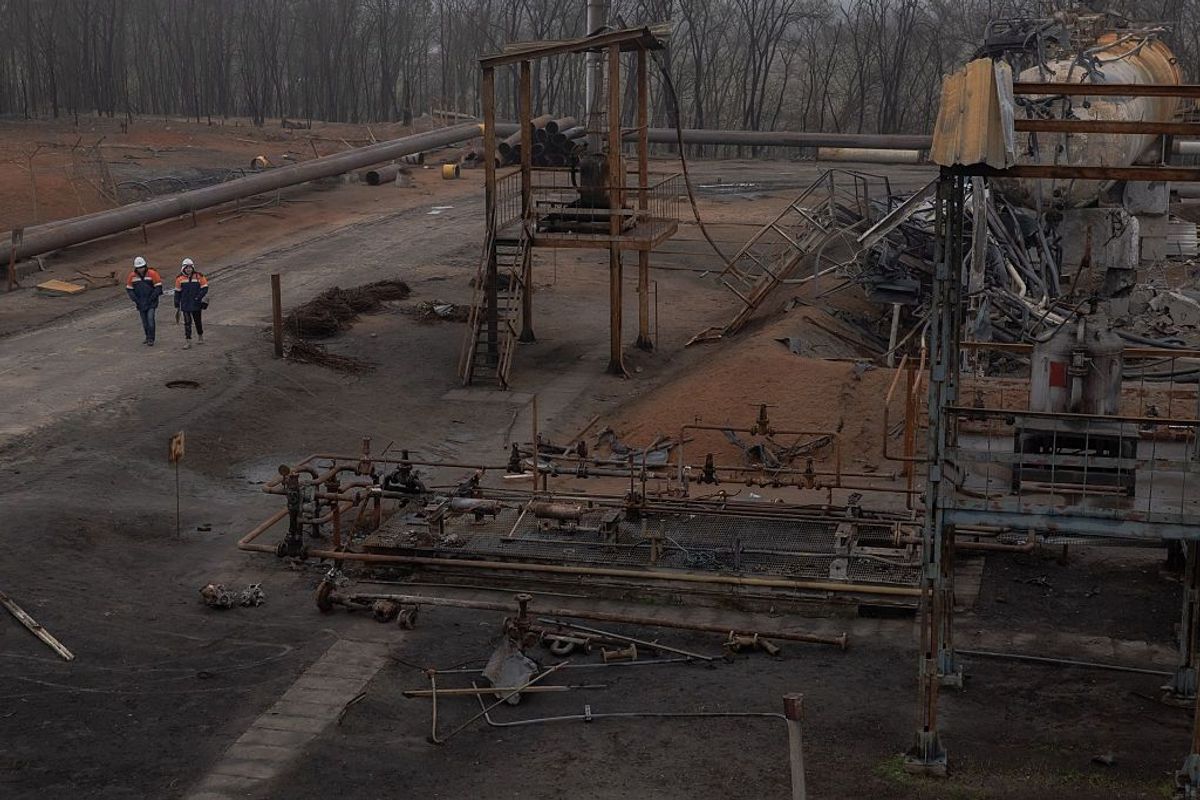
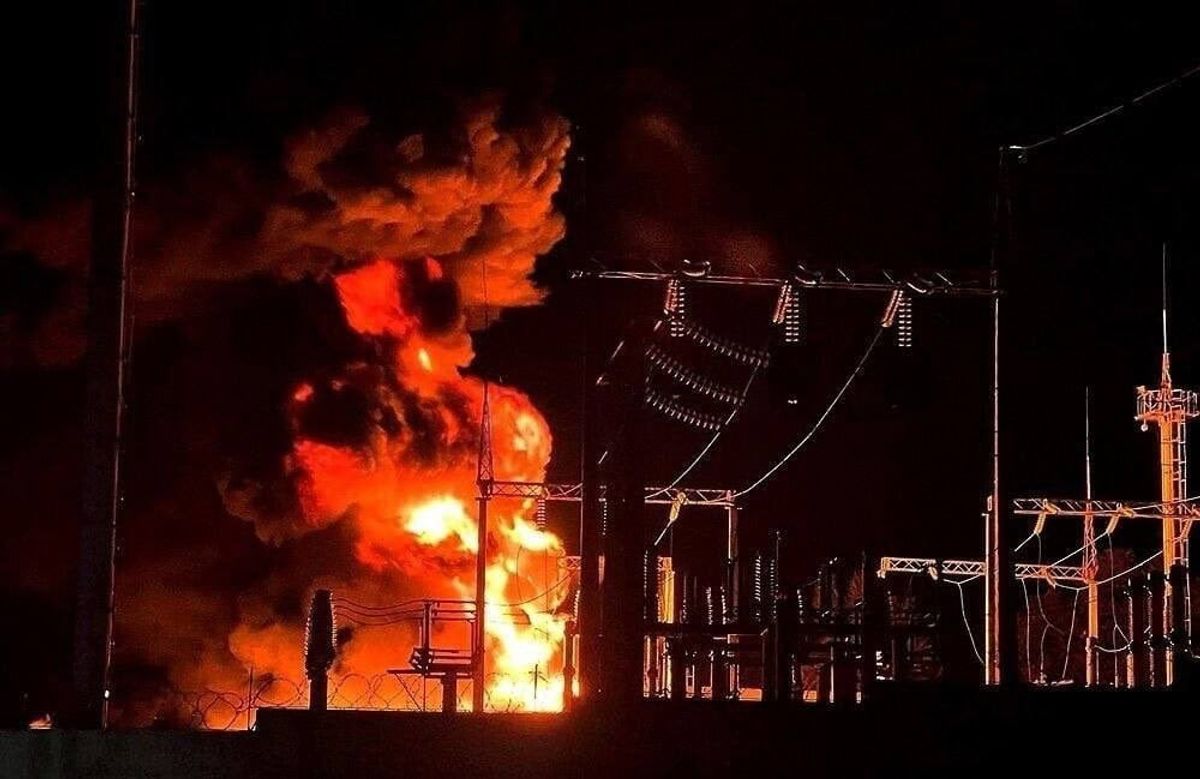
Acting Naftogaz CEO Serhii Fedorenko said that Russia had struck the company's facilities more than 400 times since the beginning of 2026 — twice as often as during the same period last year.
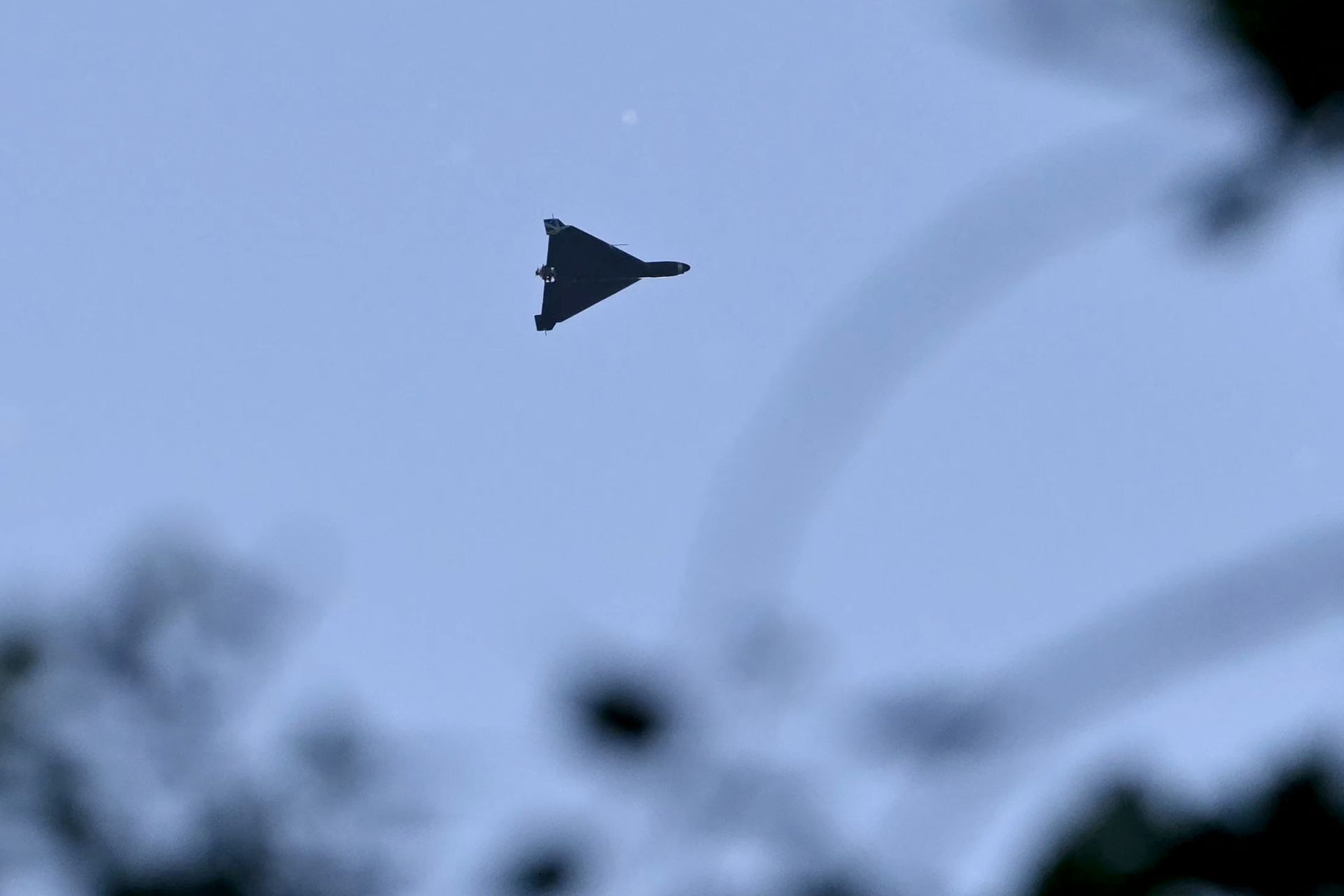
Russian troops launched attacks against Ukraine overnight with Iskander-K cruise missiles and 186 drones, including Shahed-type ones, the Air Force reported.
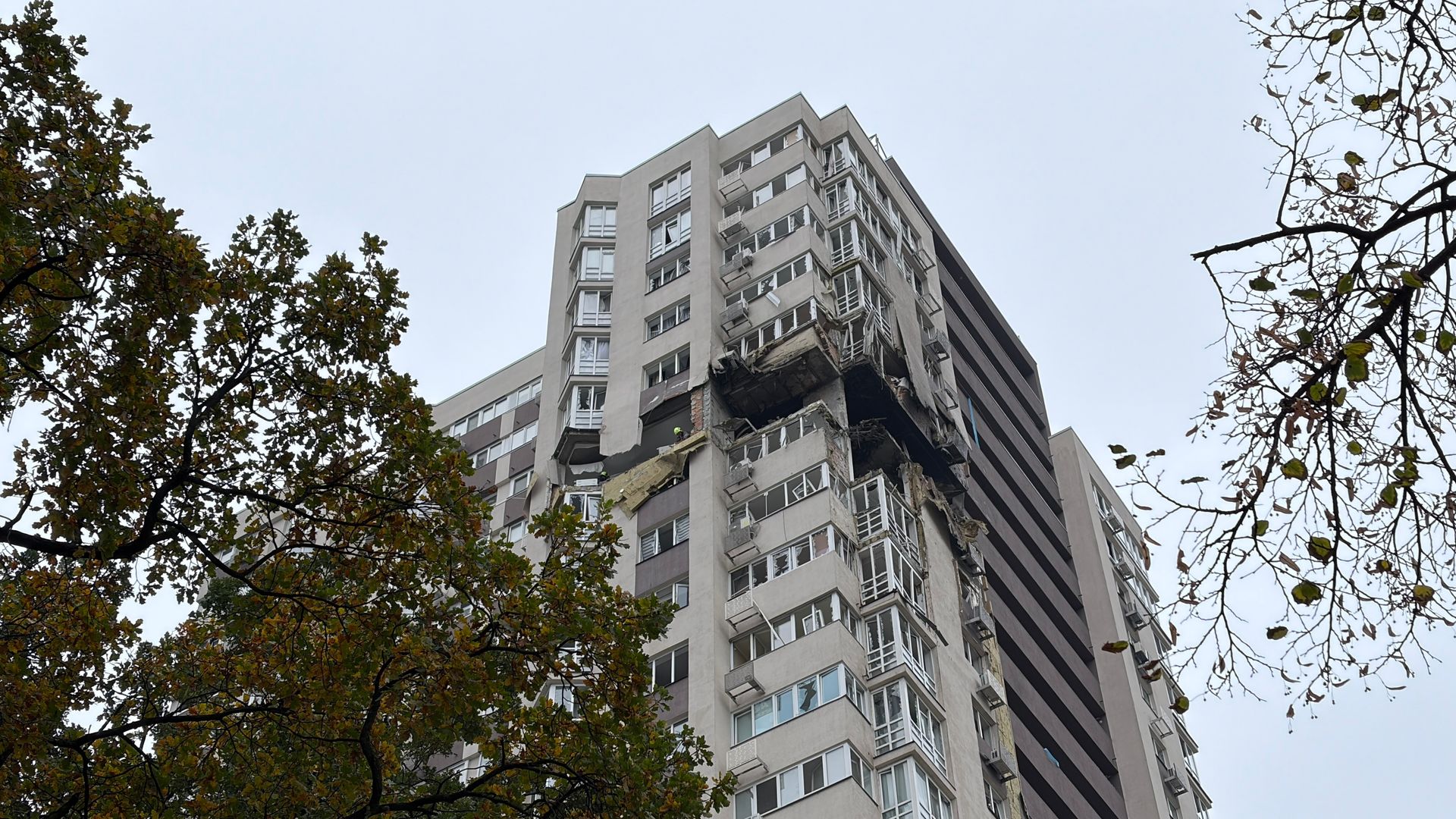
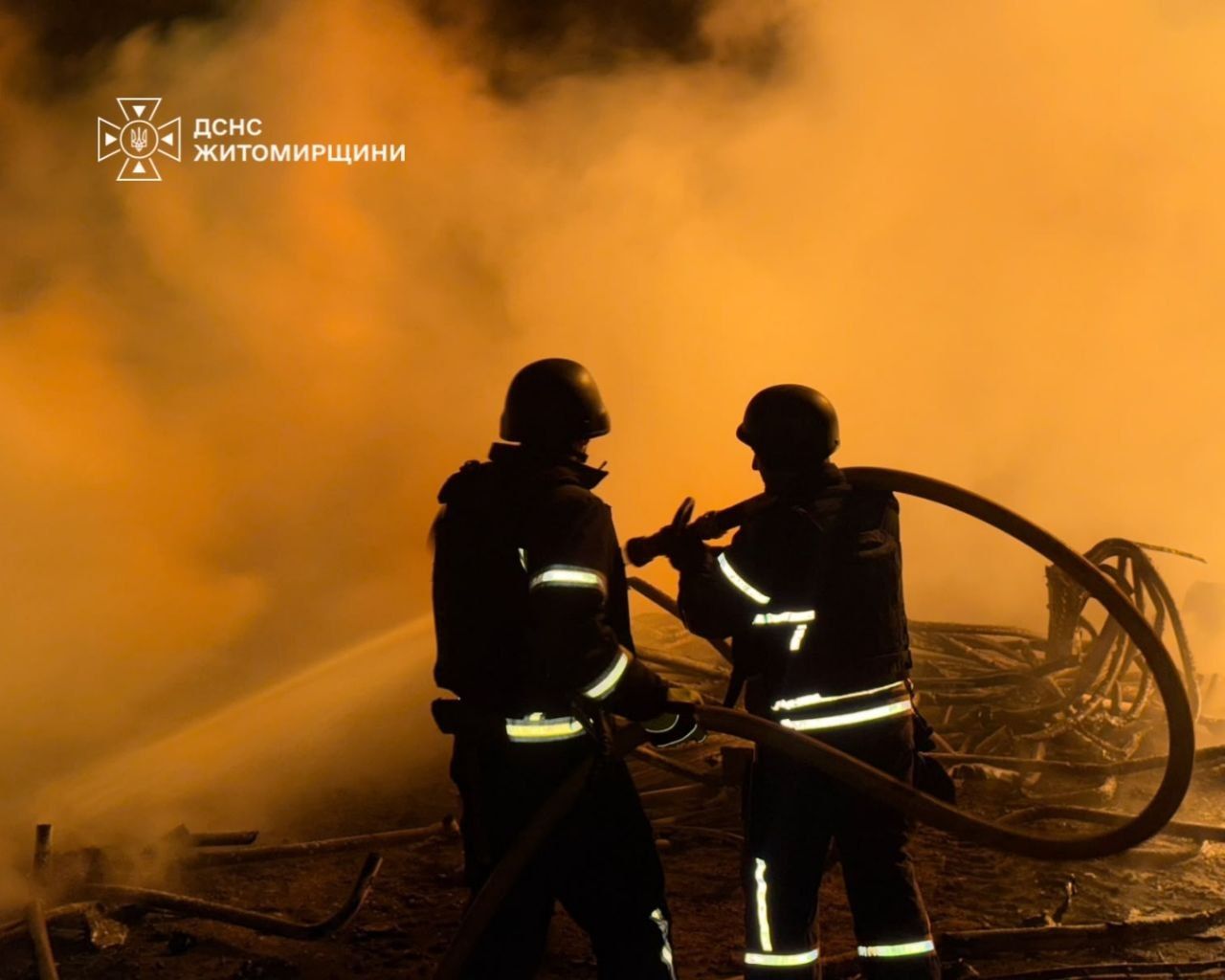
Russian drones struck a 24-story apartment building in Kyiv, a university building in Kremenchuk, warehouses, and hypermarkets overnight on 21 October, killing two people in the capital and an elderly couple near Kharkiv, Ukrainian officials said. The attack went well beyond Ukraine’s power grid, hitting places where people live, study, and shop. Over the past day, Russian strikes also killed three more civilians and injured dozens across several oblasts.
Russia has kept up nightly drone and missile attacks on Ukrainian cities through the autumn, mostly aimed at the energy system. It struck Ukraine’s energy 76 times during a US-declared truce, and fired 39 ballistic missiles at the grid three days after Washington announced it. This time the targets also included homes, a university, warehouses, and shops.
Overnight, Russia launched 186 Shahed-type and other attack drones, 88 of them jet-powered, along with Iskander-K cruise missiles, Ukraine’s Air Force said. Air defenses downed or jammed 150 drones. Hits were recorded at 27 locations, and debris fell at 13 more.
Two killed on the 20th floor in Kyiv
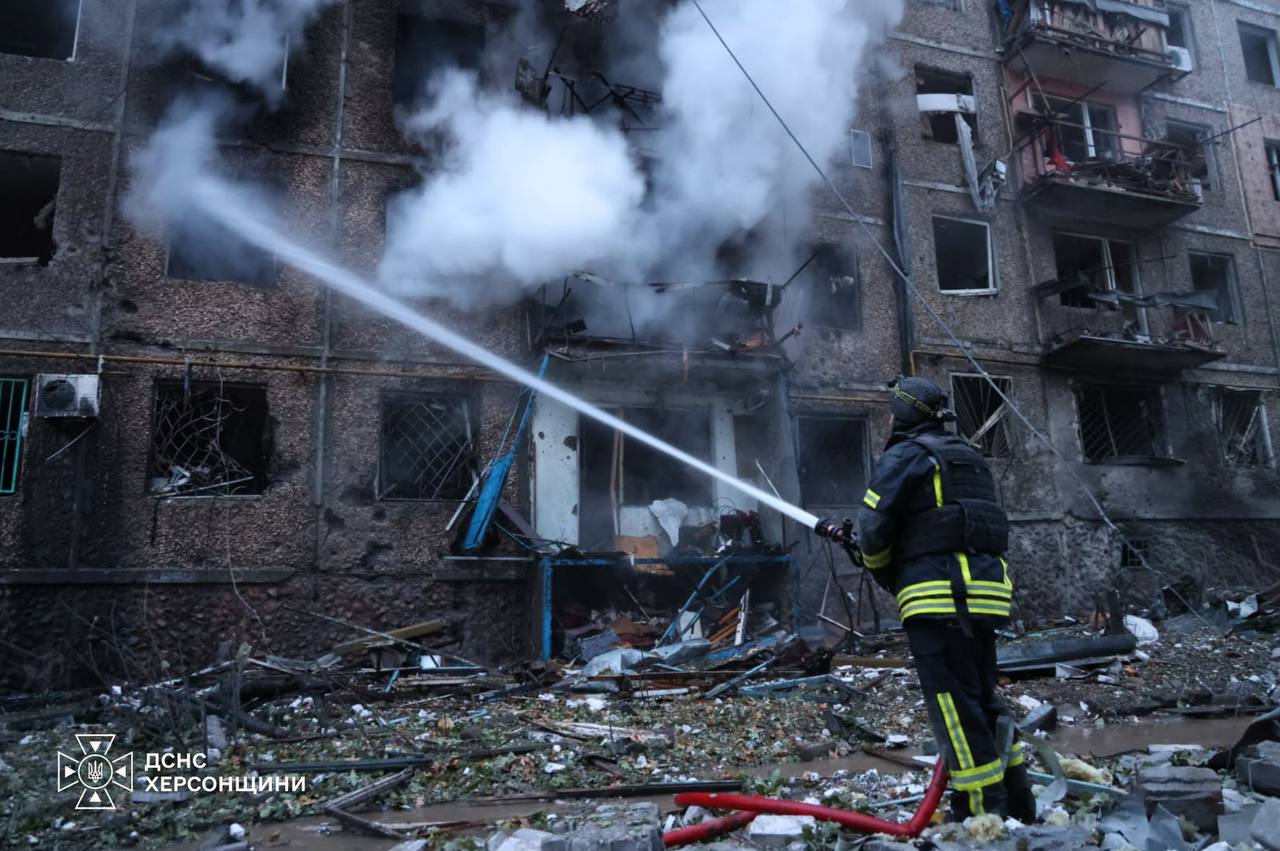
A drone hit a 24-story residential building in Kyiv’s Sviatoshynskyi district at the level of the 20th floor, starting a fire, Mayor Vitali Klitschko said. The fire spread over about 70 square meters, and rescuers found the bodies of two people while clearing debris, the State Emergency Service said. Two people were injured and hospitalized, Klitschko said, including a 46-year-old man who was walking past the building, according to the police.
A rescuer carries a cat out after a Russian drone strike on an apartment building in Kyiv, 21 October 2026. Photo: State Emergency Service of Ukraine
In the Desnianskyi district, seven parked cars caught fire, the State Emergency Service said; police put the number at about 10. The evening before, drones hit a warehouse building in Desnianskyi and a transport facility in Solomianskyi district.
An elderly couple killed near Kharkiv
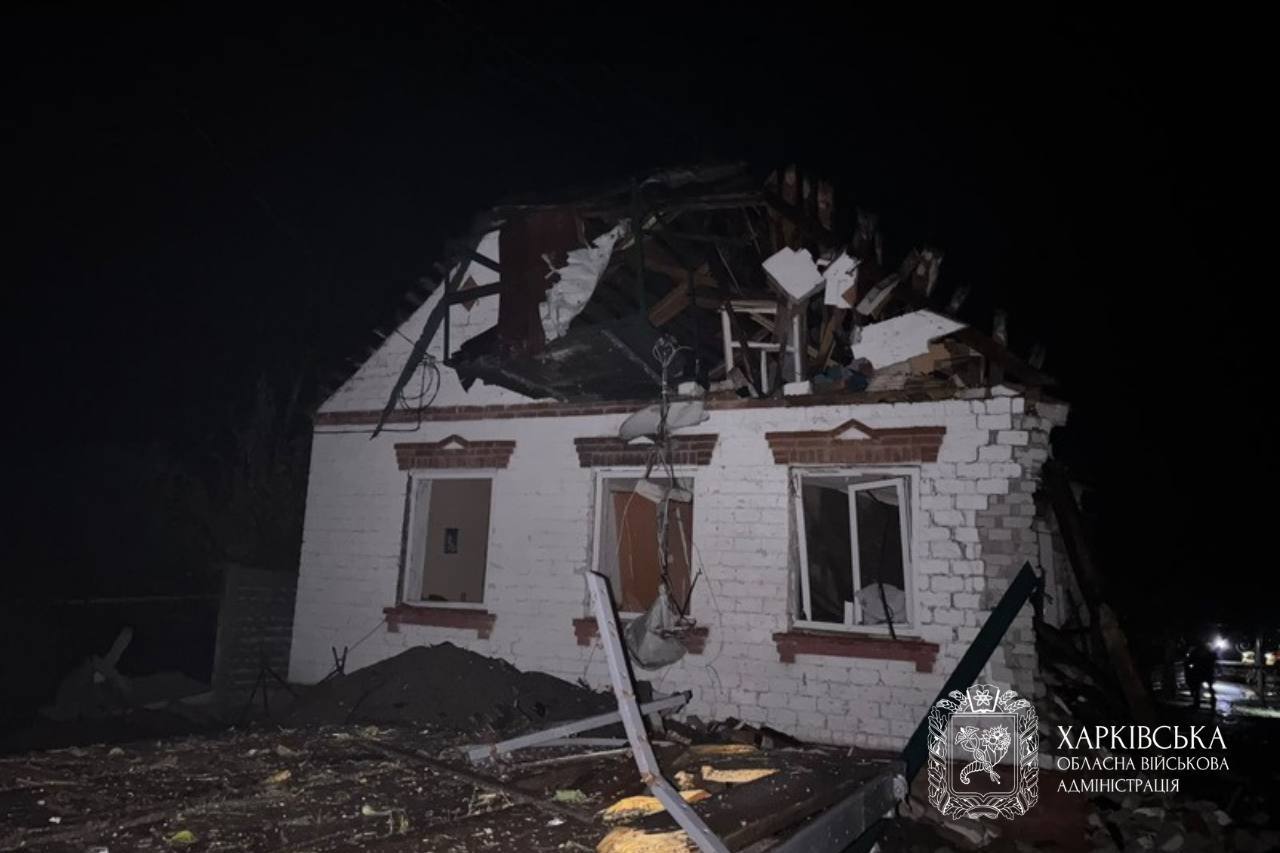
In the village of Korotych near Kharkiv, Russian drones killed an 81-year-old woman and an 83-year-old man, Kharkiv Oblast Governor Oleh Syniehubov said. Rescuers recovered their bodies from the rubble of their house, the State Emergency Service said. Eleven people, including a two-month-old boy and an eight-year-old girl, were treated for acute stress, and 13 houses were damaged.
A house destroyed by a Russian drone strike in Korotych, Kharkiv Oblast, 21 October 2026. Photo: State Emergency Service of Ukraine
A university, warehouses, and hypermarkets
In Kremenchuk, a drone hit a building of the Mykhailo Ostrohradskyi National University, setting it on fire, the State Emergency Service said. Three people were injured, including a 16-year-old who was hospitalized with a concussion, Poltava Oblast Governor Vitalii Diakivnych said. In the Poltava community, drones damaged an administrative building and warehouses.
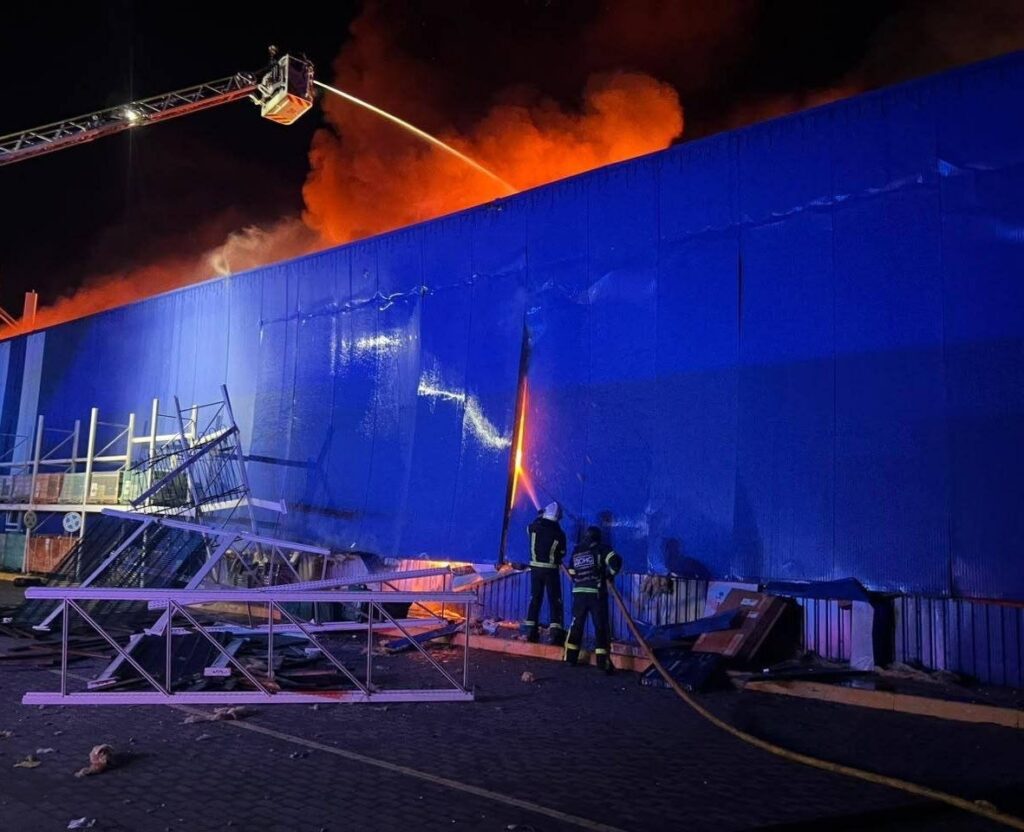
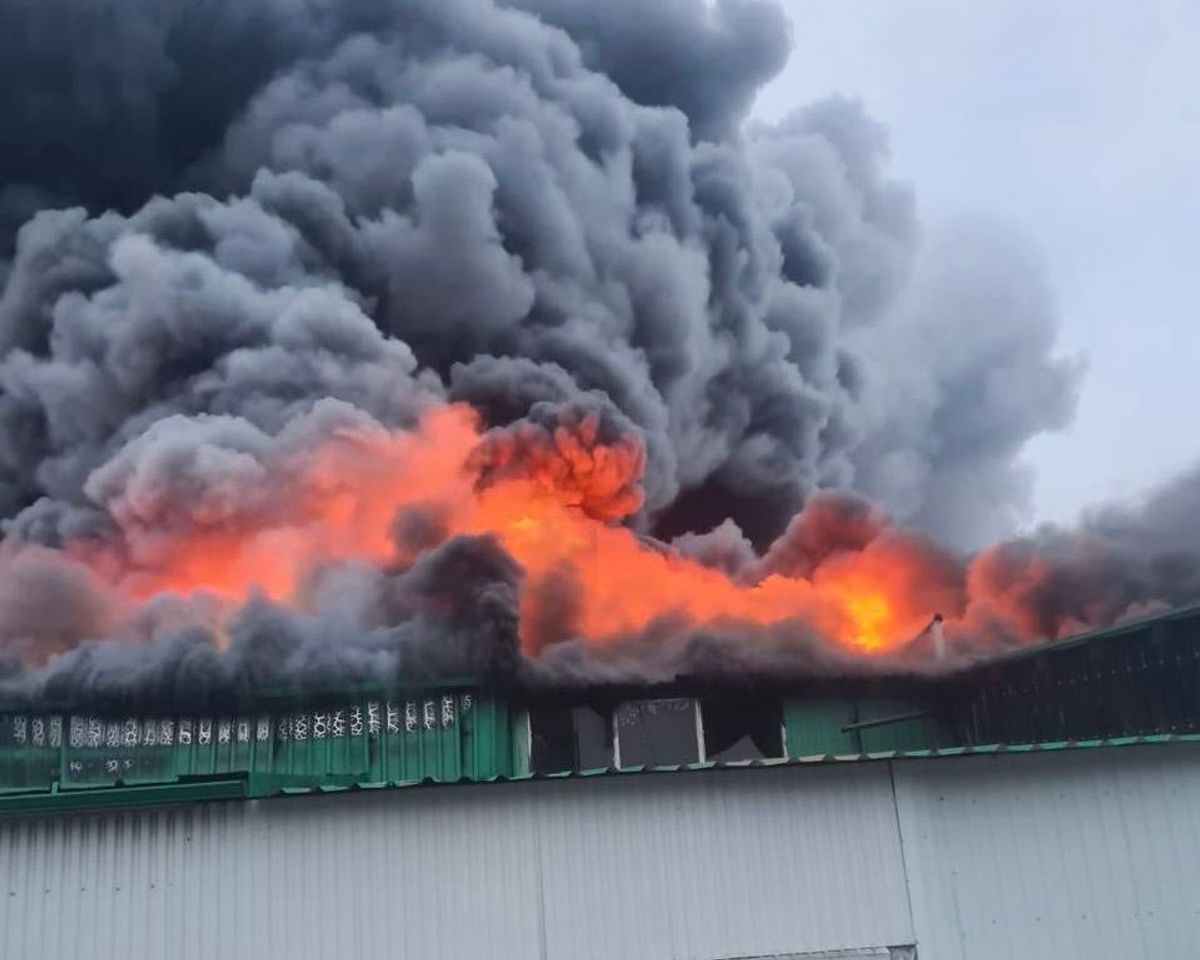
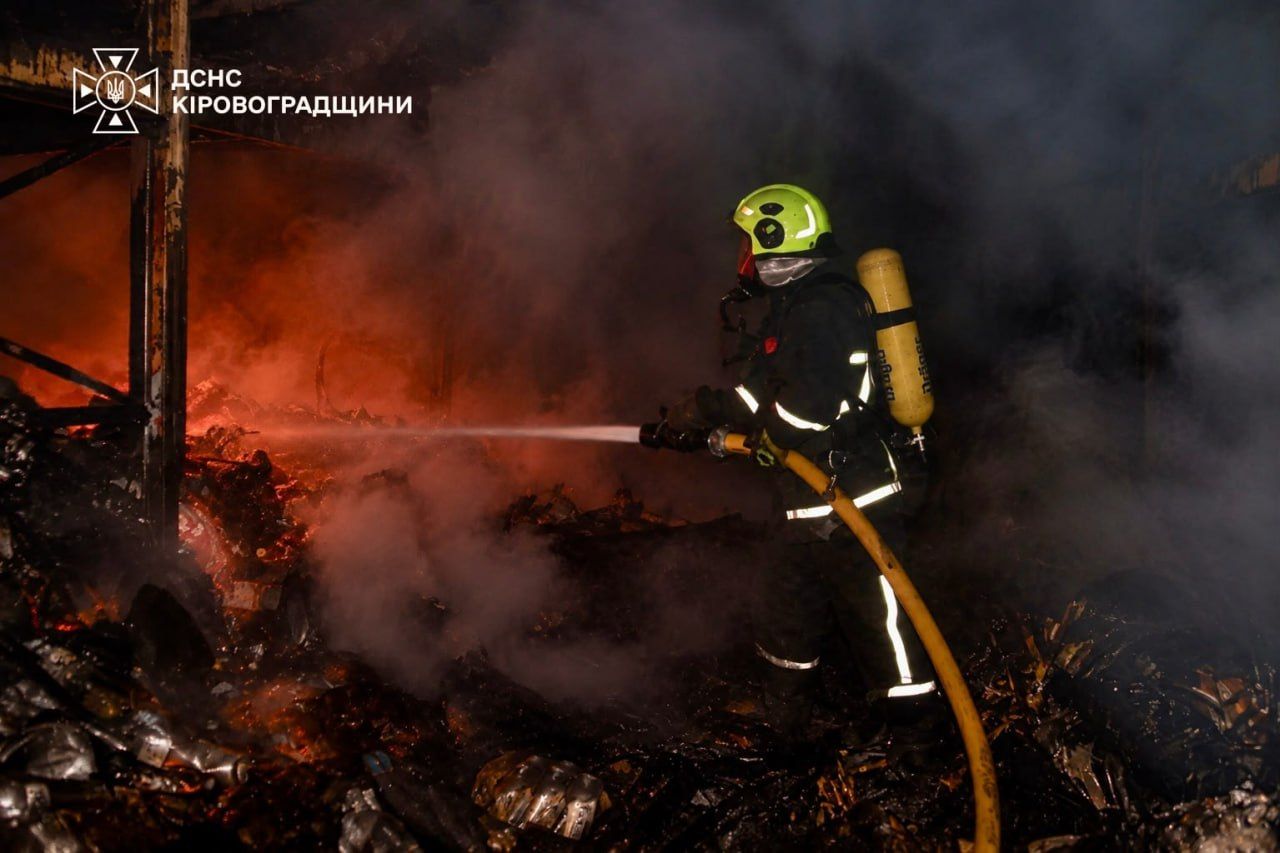
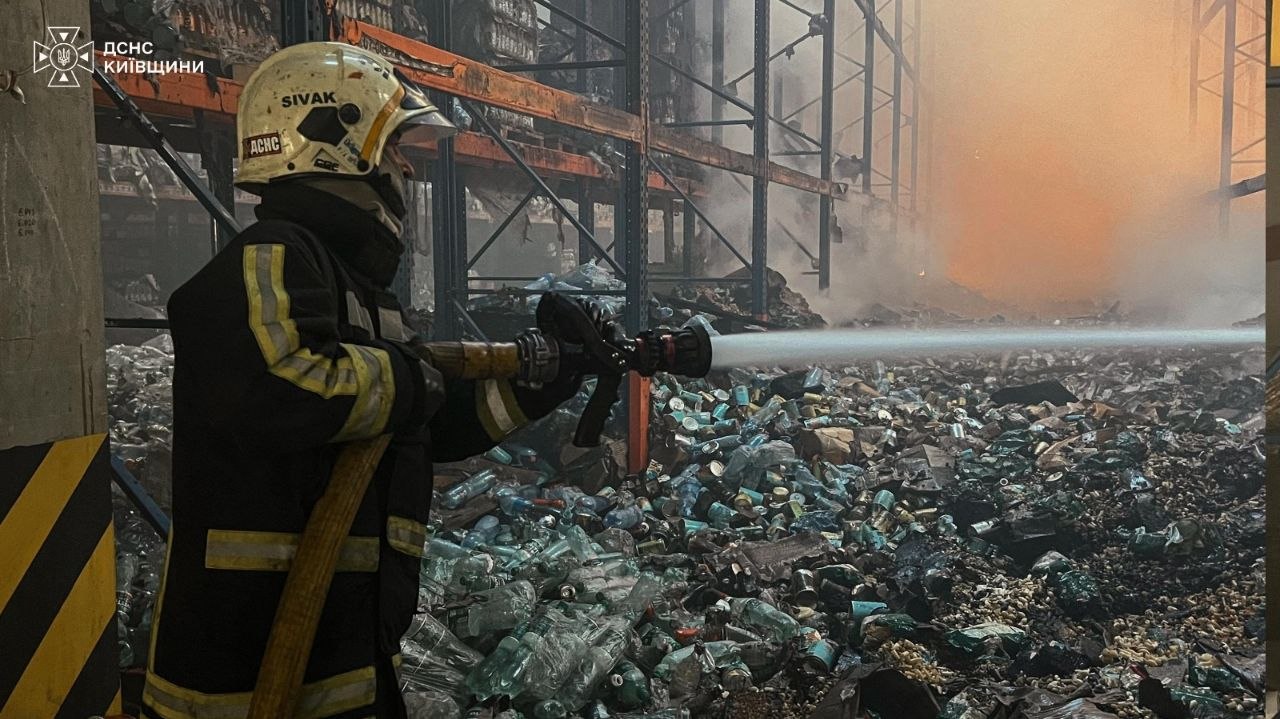
Firefighters put out a fire at an enterprise in Lviv district after a Russian attack, 21 October 2026. Photo: State Emergency Service of Ukraine
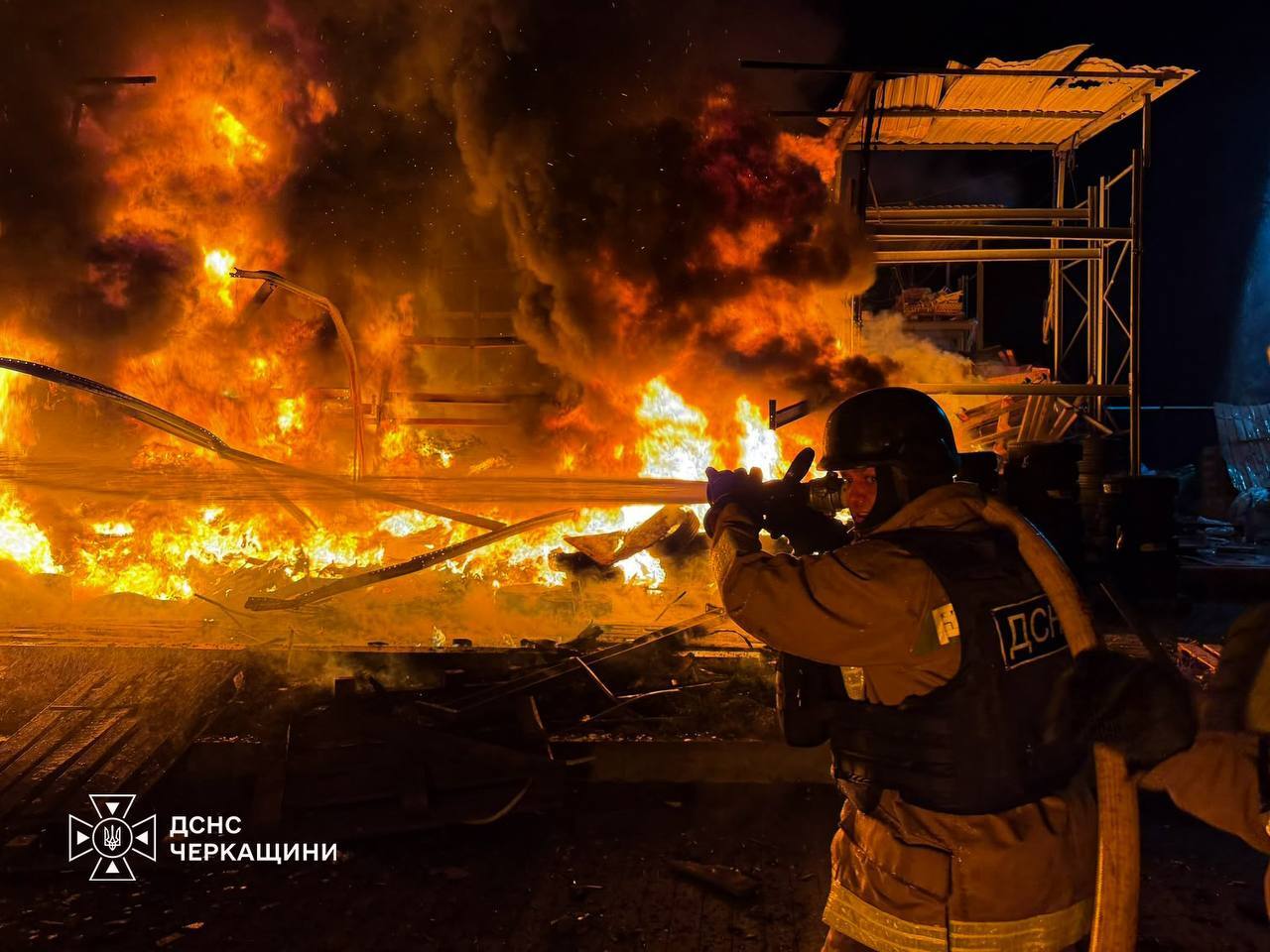
In Lviv Oblast, an attack set fire to an enterprise in a village in Lviv district and injured two people, while a house was damaged in a neighboring village, the State Emergency Service said. In Uman, drones hit a hypermarket and damaged a hotel, injuring one person, Cherkasy Oblast Governor Ihor Taburets said.
A hypermarket in Uman damaged by a Russian drone strike, 21 October 2026. Photo: Cherkasy Oblast Military Administration
On the evening of 20 October, a drone hit an Epicentr hypermarket in Pervomaisk, Mykolaiv Oblast, injuring eight people, acting Governor Heorhii Reshetilov said. Russia also struck a hypermarket in Rivne Oblast several times that day, injuring four and forcing rescuers to pull back while they fought the fire, the State Emergency Service said.
More dead and injured over the past day
The overnight strikes followed a day of attacks. In Kyiv, Russian strikes on 20 October killed one person and injured 21, three of them seriously, Klitschko said. An administrative building caught fire, rescuers freed four people trapped on its upper floors, and a healthcare facility was damaged, the State Emergency Service said. In Dnipropetrovsk Oblast, two men were killed and seven people injured that day, regional officials said.
In Kharkiv Oblast, Russian attacks over the past day injured 11 more people in Kharkiv, Derhachi, and Shestakove, Syniehubov said. In Kherson Oblast, 13 people were injured, three of them children, the regional administration reported. In the Chernihiv region, an 89-year-old woman and a young woman were hurt in strikes on villages and on Novhorod-Siverskyi, Governor Viacheslav Chaus said, and a 21-year-old woman was injured in the Sumy community, according to the Sumy regional administration.
More than 5,000 subscribers lost power in Volyn Oblast’s Lutsk district, Governor Roman Romaniuk said. In Ternopil Oblast’s Kremenets district, 7,949 subscribers remained without power after earlier Russian strikes on energy facilities, the regional administration reported.
A city stretches out beneath the lens of a Russian drone. Roads, apartment blocks, parks, and office buildings come into view as the weapon closes in on its target.
Footage like this has become all too familiar over the course of Russia's full-scale war, usually captured by small
An 81-year-old woman and an 83-year-old man were killed when Russian drones attacked the village of Korotych, Kharkiv Oblast Governor Oleh Syniehubov reported.
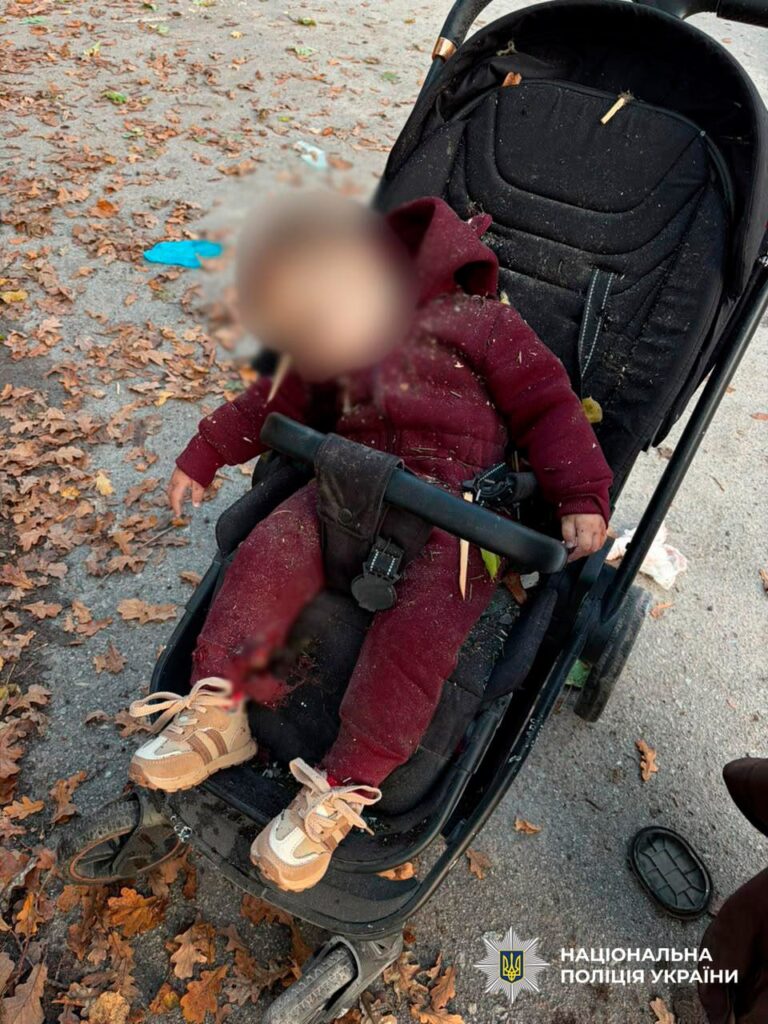
Six people were killed in a Russian strike in the settlement of Nova Vodolaha in Kharkiv Oblast, including girls aged 1 and 11. Another 15 people were injured, including seven children, Kharkiv Oblast Governor Oleh Syniehubov said on 20 October. Russian forces struck a park with a drone while families with children were there, Ukraine’s Minister of Internal Affairs Ivan Vyhivskyi said.
Russian forces continue to attack Ukrainian cities, killing civilians and destroying civilian infrastructure. The Kharkiv Oblast Prosecutor’s Office has opened a war-crime investigation into the strike. The strike was aimed at people, Yurii Yurchenko, head of a police department in Kharkiv Oblast, said in a comment to Suspilne.
The 14-month-old girl was named Anhelina
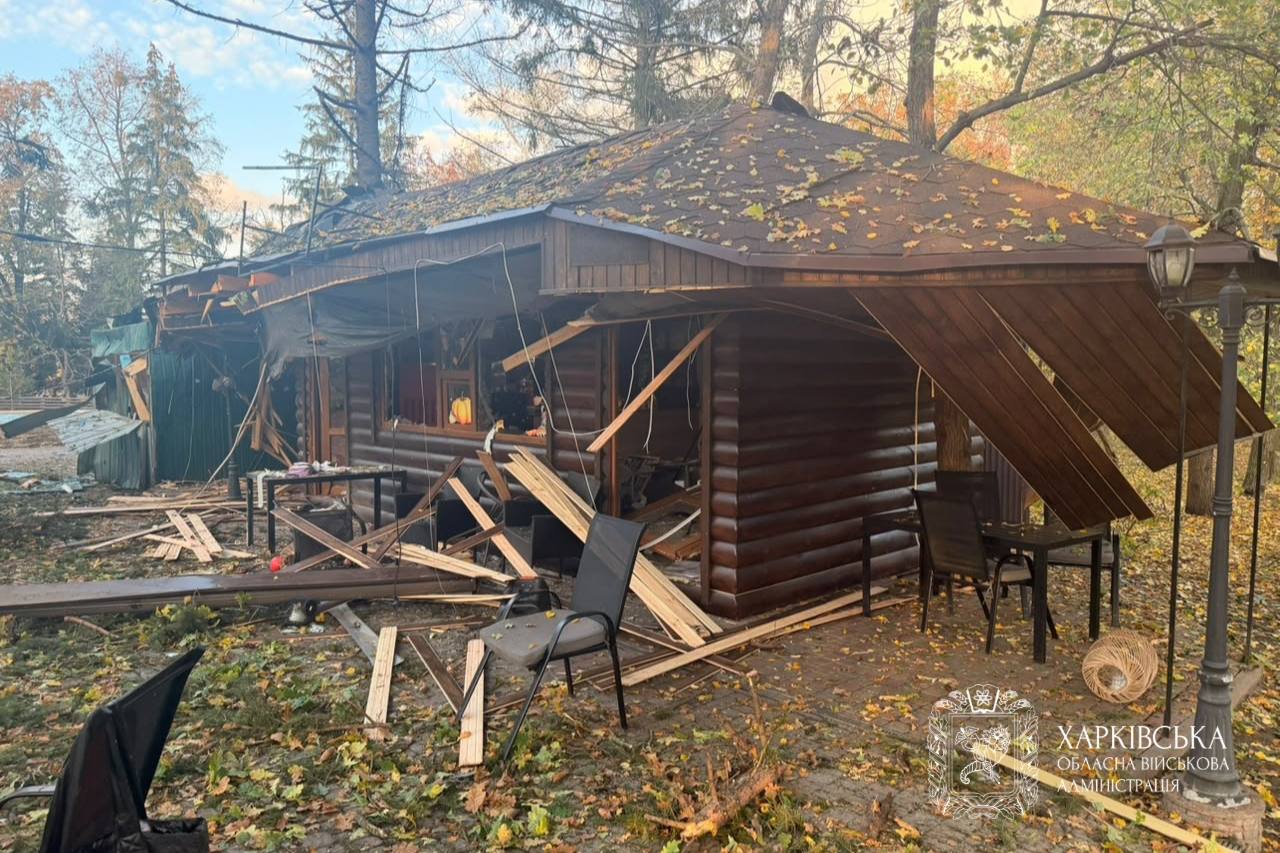
The Russian drone circled the park several times before crashing, Yurchenko said. He said the drone struck a tree near a café, and the blast wave and shrapnel hit people at the establishment. The attack came at around 16:30, the prosecutor’s office said, adding that Russian forces had preliminarily used a Geran-3 drone.
The café damaged in a Russian strike on a park in the settlement of Nova Vodolaha, Kharkiv Oblast, on 19 October 2026. Photo: Kharkiv Oblast Military Administration
The Russian strike killed three women, aged 28, 34 and 36, a man around 40 years old, and two girls, aged 14 months and 11 years, Syniehubov said in his statement.
The youngest girl, named Anhelina, was born in August 2025, Ukrainian President Volodymyr Zelenskyy said. Her mother, Inna, died in the hospital, he added.
Zelenskyy shows US senators photos of the aftermath the same day
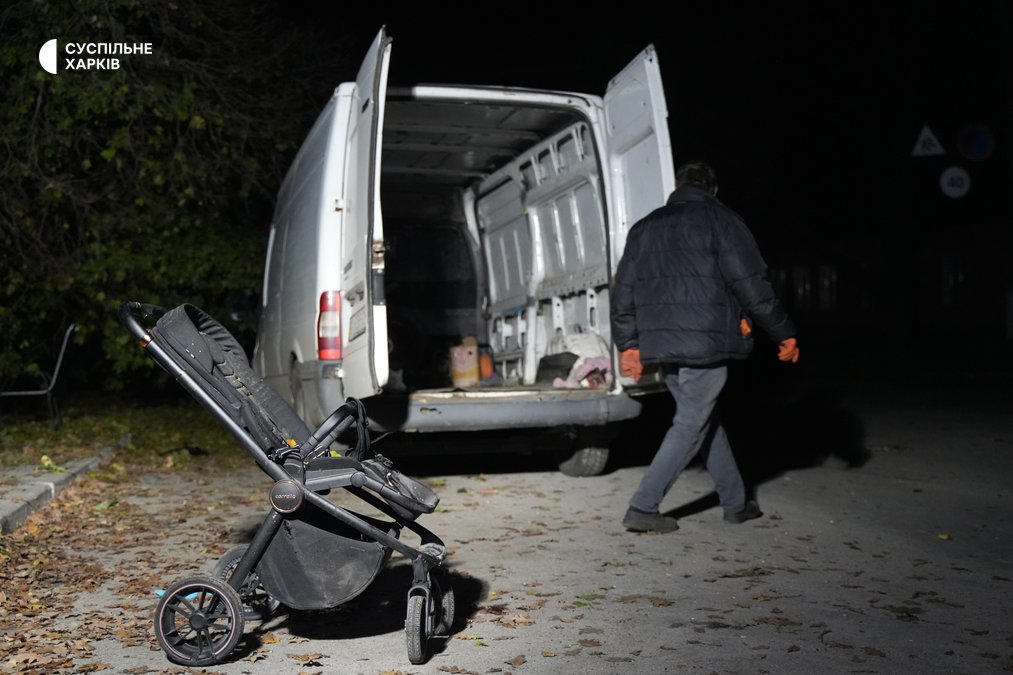
Zelenskyy met with US Senators Richard Blumenthal and Thom Tillis, along with their colleagues from both parties and both chambers of Congress, according to a 19 October post on his social media accounts. During the meeting, he discussed the Russian attack in Kharkiv Oblast and showed lawmakers photographs from the scene, including one of the infant who was killed in a stroller.
“This is how Russia responds to the lifting of sanctions and the easing of pressure,” he said in the post.
The stroller in which 1-year-old Anhelina was killed, Nova Vodolaha, 19 October 2026. Photo: Suspilne Kharkiv/Viacheslav Mavrychev
Zelenskyy said Ukraine needs air defense and that no one should think about making money with Russia while it continues its war. He asked that sanctions on Russia stay in place until the killing stops, urged the US to “be strong” and apply Lindsey Graham’s law, and called on Europe to keep supporting Ukraine.
"The trend this year continues," Zelensky said, "Since the start of fall, our warriors have liberated more territory than the Russians have managed to capture. The same was true at other points this year."
Ukrainian forces downed 289 out of the 332 drones, including jet-powered attack drones, launched by Russia overnight, the Air Force reported. Russian drones and ballistic missiles of the Iskander-M or the North Korean KN-23 model struck 22 different locations, and debris fell in three areas.
Kyiv's centralised heating systems will be turned on, starting with social institutions such as schools, hospitals, and kindergartens. The decision was sparked by "extreme conditions" created by constant bombardment, Klitschko said.
The suspect was identified as 36-year-old Leonid Ryzhikov, a Russian citizen from St. Petersburg who served in the 2nd Battalion of Russia's 1009th Motorized Rifle Regiment.
Ukraine’s six-wheeled Frodo ground robot fired on targets during a demonstration in Kharkiv Oblast for the Pomsta (Revenge) Border Guard Brigade, a border guard detachment posted on Facebook. Frodo made its public debut only on 30 September.
Ukraine had contracted more than 22,000 ground robots for 2026 by July, mostly logistics carriers, with combat models the smallest group, the Defense Ministry said. Frodo’s first reported mission was an evacuation. The demo shows its armed version to a fighting brigade, the kind of robot Ukraine has ordered least.
What the armed version carries
The platform completed its tasks at a training ground in near-combat conditions, said the 3rd Border Guard Detachment named after Hero of Ukraine Colonel Yevhenii Pikus. The Buria turret mounted on Frodo can fire either a Mk 19 automatic grenade launcher or a Browning M2 heavy machine gun. It engaged targets at up to 1.3 km (0.8 mile), the detachment said.
Frodo ground robotic vehicle (UGV). Screenshot from a video by the 3rd Border Guard Unit
The 47-kg (104-lb) module has a ballistic calculator, stores up to 256 targets, aims in three seconds, and has a stated autonomous run time of up to 48 hours, the post said. Frodo is rated for up to 150 km (93 miles) on paved roads and 75–80 km (47–50 miles) over rough terrain, the post added. A Frontline Robotics Zoom reconnaissance drone flew reconnaissance during the test.
The developer, Frontline Robotics, describes its core philosophy as arriving fast, doing the job, and leaving very fast—hit and run, the detachment’s post said. Familiarizing the brigade’s soldiers with such systems aims first and foremost to preserve personnel’s lives and health, the detachment said.
A robot first reported as a medevac
Frontline Robotics told Militarnyi at the unveiling that Frodo had passed Defense Ministry codification and was built for logistics, evacuation, and strike missions. The robot reaches 40 km/h (25 mph) and carries up to 200 kg (441 lb) of payload, or 400 kg (882 lb) at most, the company said. A single soldier can swap its batteries.
The 92nd Assault Brigade used an early test unit to evacuate a wounded soldier, Frontline Robotics told Militarnyi. An operator, callsign Tango, named the robot’s speed and its ability to handle complex maneuvers as its main advantages, Militarnyi reported.
While the humanitarian crisis in the Russian-occupied front-line city of Oleshky recently garnered media attention, all regions of occupied Ukraine face worsening humanitarian issues at the hands of Russia's occupation authorities.
Across all occupied territories, civilians face failing water and electricity systems, shortages of qualified doctors, deteriorating municipal
Russia hit central Ukraine’s Kirovohrad Oblast with its largest attack since the full-scale invasion, killing residents of the oblast capital, Kropyvnytskyi, the oblast’s head said. Russian strikes hit more than a dozen oblasts, and Ukraine’s president said Moscow escalated deliberately after sanctions relief.
Russia’s full-scale war against Ukraine continues on the front line and behind it, where its drones, missiles, and glide bombs strike towns daily. Kyiv is drafting winter crisis plans as Russia targets the biggest cities, and logistics is hit too: Russia struck one retailer’s warehouse hub 10 times in a day.
Three dead in Kropyvnytskyi
Oblast head Andrii Raikovych counted almost 360 Russian drones over Kirovohrad Oblast and hits on 26 locations, mostly in Kropyvnytskyi. In his words, “the enemy deliberately struck critical infrastructure, transport enterprises, logistics facilities, and residential buildings.” In a post after midnight, he reported a third death and six injured, five of them in hospital.
Air-raid alerts around the city ran from 15:20 on 14 October to 05:33, and Suspilne correspondents heard more than 20 explosions in Kropyvnytskyi, the public broadcaster reported. The national emergency service counted 25 struck locations, and rescuers were still putting out fires in the morning, the service’s spokesperson in the oblast said.
People and a damaged car in the yard of an apartment block in Kropyvnytskyi after the Russian drone attack of 14–15 October 2026. Photo: Andrii Raikovych/Telegram
A wave Kyiv ties to sanctions relief
Nationwide, Russia launched 580 drones and two Kh-59 guided missiles from 18:00 on 14 October, and air defenses downed or suppressed 536 drones by 08:00, the Air Force reported. Ukrainian President Volodymyr Zelenskyy said Russia killed three people in Kropyvnytskyi and three in Dnipropetrovsk Oblast, where oblast head Oleksandr Hanzha reported two dead.
Explore further
Ukraine is going back to hitting Russian oil after its Trump-pressured pause, during which Kyiv got no US warnings of incoming ballistic missiles
Zelenskyy counted more than 850 Iranian-designed Shahed attack drones between the start of 14 October and 09:00 the next day, “precisely at the time of an artificial speed limitation for our defensive capabilities.” Overnight into 14 October, SpaceX capped speeds on its military Starshield satellite service, disrupting Ukrainian missions. He added that Russia escalated “deliberately, having received a relaxation of sanctions and seeing attempts to pressure Ukraine.” Last week, Washington cleared Russian diesel trade after a call between US President Donald Trump and Kremlin leader Vladimir Putin.
Strikes from Kyiv to Odesa Oblast
In Kyiv, a drone fell into a residential yard, Mayor Vitali Klitschko wrote, later putting the injured at six. Drones hit two industrial enterprises in Poltava Oblast, its head Vitalii Diakivnych wrote, and a later strike on Poltava injured three people, rescuers said in a preliminary count. Ukraine’s state gas company Naftogaz said a drone set one of its gas production facilities in the oblast on fire, halting its work.
Russian guided aerial bombs injured two women and a man in Izium, Kharkiv Oblast, on 15 October, according to preliminary data from oblast head Oleh Syniehubov, who had counted nine injured in the oblast over the previous day. Over that day, Russian attacks killed three people in Donetsk Oblast, the oblast police said, and one in Kherson Oblast, where oblast head Oleksandr Prokudin reported five more injured. In Kherson city, a drone injured a man, the oblast administration said. In Sumy Oblast, a drone hit a house and left two people in acute stress, its administration said.
A house destroyed by Russian guided aerial bombs in Izium, Kharkiv Oblast, 15 October 2026. Photo: Kharkiv Oblast Military Administration/Telegram
In Odesa Oblast, strikes damaged two apartment blocks, a company, and a bank office without casualties, oblast head Oleh Kiper said. Later, a jet-powered Shahed hit a store in the oblast, Zelenskyy wrote, and Kiper counted four injured in a preliminary tally. Drones also hit an enterprise in Ternopil Oblast, and five people sought medical help, rescuers said, while drones damaged two homes in Rivne, oblast head Oleksandr Koval said.
Russia fired 39 ballistic missiles and more than 120 drones at Ukraine’s energy system overnight into 14 October, President Volodymyr Zelenskyy said. The barrage came three days after US President Donald Trump announced an energy ceasefire, which the Kremlin never confirmed, saying on 12 October only that contacts were continuing.
Ukraine held off strikes on Russian energy for two days after the announcement, Zelenskyy wrote on 13 October. Russia’s barrage opened that evening with a ballistic strike on Kyiv. For the second time in two days, it came without a launch warning from partners.
How the night unfolded
The Air Force described one massive combined strike that began at 18:00 on 13 October. By 09:00 the next day, it had counted 39 missiles on ballistic trajectories and 128 drones, aimed mainly at Kyiv, Kyiv Oblast, and Kharkiv Oblast. Air defenses downed or suppressed four missiles and 115 drones, but missiles and drones hit 22 locations, the Air Force said.
Explore further
Russian ballistic missiles hit Kyiv before sirens, gap that lands hard amid fears that Washington could cut data that warns of launches
The first wave hit Kyiv late on 13 October. Its primary target was CHP-4, a key power plant in the city, and there were hits, Zelenskyy said. Ukrainian systems spotted the missiles only on approach, with no warning from partners. After a call with Canadian Prime Minister Mark Carney, Zelenskyy wrote that Ukraine had not been warned for the second time. On 13 October, Trump said the US was still sharing intelligence with Ukraine.
A Russian strike also hit a high-rise in Desnianskyi district. Rescuers saved 16 residents, the State Emergency Service reported, and three women were killed there, the Kyiv City Prosecutor’s Office said. The prosecutor’s office counted 19 injured in the building, including a girl officials described as seven or eight, and five more hurt by shattered windows next door. Across Kyiv, the evening and morning attacks killed four people and injured 25, the prosecutor’s office said, while Suspilne counted 32 injured.
A rescuer helps a person evacuate a building in Kyiv after Russia’s 13–14 October 2026 attack. Photo: Kyiv State Emergency Service
The second wave came early on 14 October and hit several of the capital’s energy facilities, Kyiv Mayor Vitali Klitschko reported. It killed one person in Holosiivskyi district, he added. Russia attacked all three of Kyiv’s combined heat and power plants and key facilities in Kyiv Oblast that power the capital, Prime Minister Serhii Koretskyi said. Energy company DTEK reported emergency outages in five Kyiv districts.
Damage and demands
Zelenskyy reported damage to facilities and equipment at 26 elements of the power system and at four oil and gas facilities. At least 600,000 people lost electricity, he said, and outages could grow. He called the strike deliberate and said Russia had never before shown such demonstrative disrespect toward America.
A rescuer at the site of a Russian strike in Kyiv, 13–14 October 2026. Photo: Kyiv State Emergency Service
He asked Trump for strong sanctions under the Lindsey Graham sanctions law, which he said was recently passed and signed. He also asked for additional Patriot interceptors.
Ukraine’s prosecution service has dismissed eight people named in connection with an anti-corruption probe into the alleged protection of scam call centers, acting Prosecutor General Anton Kovalskyi reported. His office is also running internal checks on several officials linked to the case. A separate probe covers the trip abroad of his predecessor, who left Ukraine in September.
Ukraine’s main prosecution service is auditing itself while the country’s anti-corruption agencies investigate an alleged scheme run from inside it. The National Anti-Corruption Bureau (NABU) and the Specialized Anti-Corruption Prosecutor’s Office (SAPO) allege that a PGO official set up a criminal organization in mid-2025. They say it drew in serving prosecution employees and unofficial associates, took bribes for leaving scam call centers alone, and laundered the proceeds. The investigation is called Operation Carthage.
A probe from the outside, an audit from the inside
Ukraine’s main prosecution service is auditing itself while the country’s anti-corruption agencies investigate an alleged scheme run from inside it. The National Anti-Corruption Bureau (NABU) and the Specialized Anti-Corruption Prosecutor’s Office (SAPO) allege that an official of the Prosecutor General’s Office (PGO) set up a criminal organization in mid-2025. They say it drew in serving prosecution employees and unofficial associates. The group allegedly took bribes for leaving scam call centers alone and then laundered the proceeds. The case is known as Operation Carthage, Espreso reported.
Dismissals and polygraph tests
Seven of the eight dismissed people worked at the PGO, Kovalskyi said. Separately, four people were removed from administrative posts, including the heads of the IT department and the cybercrime directorate. Kovalskyi said 24 prosecutors took polygraph tests. The results went to a commission running an internal investigation. He wrote that trust in the prosecution service would be restored not through announcements of change but through consistent, balanced decisions and concrete results.
Explore further
Zelenskyy suspends prosecutor general who charged the bureau probing his own office
The internal probe concerning former Prosecutor General Ruslan Kravchenko covers his trip abroad. Investigators are checking whether he followed established procedure and how the business trip was organized. Kravchenko left Ukraine in an official car on the night of 13–14 September, Ukrainska Pravda reported, citing law enforcement sources. He explained his departure as an official trip to Lithuania.
On 14 September, Kravchenko announced he had signed a notice of suspicion against NABU director Semen Kryvonos. That evening, his own office said Kryvonos had never been properly served and that the register entries were cancelled.
On 15 September, lawmakers backed Kravchenko’s resignation 317–0. Two days later, President Volodymyr Zelenskyy assigned Kovalskyi the duties of prosecutor general by decree. Before that, Kovalskyi headed the Khmelnytskyi Oblast Prosecutor’s Office.
Two Carthage figures under internal review
The PGO completed an internal investigation into Aidyn Khudiiev, a former deputy department head, Kovalskyi said. Its findings will go to the Qualification and Disciplinary Commission of Prosecutors, and the PGO abolished his post. SAPO prosecutor Mykola Karas told a court hearing that detectives seized $50,000 at Khudiiev’s workplace during the Carthage searches.
Explore further
Ukraine’s chief prosecutor fled. Politicians still choose the man who can prosecute them.
The PGO is also investigating Serhii Kropyva, former deputy head of its international cooperation department. NABU detained him on 4 September, the first day of the operation. The internal probe looks at whether he used his powers for private interests and interfered in other prosecutors’ work. The PGO’s General Inspectorate has filed a disciplinary complaint against him with the same commission, and his post was also abolished.

 Login