Western governments are rebuilding ties with India even as they accuse it of foreign interference and of running intelligence operations against people on their soil. The contradiction was on display October 13, when Canada’s Prime Minister, Mark Carney and India’s Prime Minister, Narendra Modi, reaffirmed plans to expand trade and security cooperation, though underlying security […]
China’s Global Times, a mouthpiece of the Chinese Communist Party, has once again published a propaganda editorial against India titled “India’s ‘Victory Narrative’ Will Only Hit a Wall on China-India Border.” The article was published on October 14, 2026.
One notable characteristic of Chinese commentaries and diplomats is that they use polite language in their statements but then, within the same text, suddenly shift to intimidating language and issue warnings.
They act like a “big brother,” offering suggestions, dictating terms, and adopting a dominant attitude toward other countries, which stems from their “Middle Kingdom syndrome”—a mindset rooted in a historical Sinocentric worldview that exhibits king-subject thinking and demands homage and subservience.
This pattern is also reflected in what is commonly described as “wolf warrior diplomacy,” in which Chinese diplomats adopt a more confrontational tone when their country’s interests or positions are challenged.
Similarly, Chinese diplomats may appear cool and calm at first, then abruptly use fierce language to assert dominance and make strong statements.
Beijing’s Revisionist Map Games
This article targets India because New Delhi has recently stepped up its “counter-cartography” policy, formally assigning standardized names to key locations along the India-China border.
This includes the Home Ministry’s October 2026 announcement standardizing 28 strategic features in Ladakh—specifically covering crucial Line of Actual Control (LAC) friction points like Gogra and Hot Springs, alongside peaks, passes, and glaciers.
It also follows India’s August 2026 mapping of 27 critical sites in Arunachal Pradesh, including historic flashpoints like Longju and Thag La. The Global Times article claims that by assigning these names, India “creates the self-delusion that its border claims have been settled.”
The text further asserts that “first comes an administrative announcement, followed by the names being entered on official maps, and then repeated amplification through the media.” It thus criticizes India’s approach; however, China does exactly the same through its own lawfare.
Beijing has repeatedly used map manipulation as a geopolitical tool to assert its claims—such as by releasing multiple rounds of standardized Mandarin names for locations in Arunachal Pradesh (which it calls Zangnan).
This is a typical Chinese way of doing things; China historically used these exact cartographic and administrative assertions before annexing Tibet in 1950, and it continues to use maps as an aggressive tool to project its territorial claims today.
It says that “India is playing games,” but this is exactly what China does in its dealings with India by failing to honor its agreements, including those reached in 1993 (Maintenance of Peace and Tranquility), 1996 (Confidence-Building Measures), and 2003/2005 (Political Parameters and Modalities).
If peace and tranquility have prevailed along the India-China border or LAC for an extended period, it is because India has unilaterally honored and abided by these agreements.
For instance, before 1962, China signed the Panchsheel Agreement (Five Principles of Peaceful Coexistence), under which Beijing promoted the narrative of mutual interests, mutual benefits, and peaceful relations through the slogan “Hindi-Chini Bhai-Bhai,” but then suddenly attacked India.
Similarly, in 2020, sensing India’s vulnerability when the country was battling one of its worst COVID-19 crises, China tried to grab more Indian land and attacked Indian soldiers in Galwan through deception, killing 20 Indian soldiers.
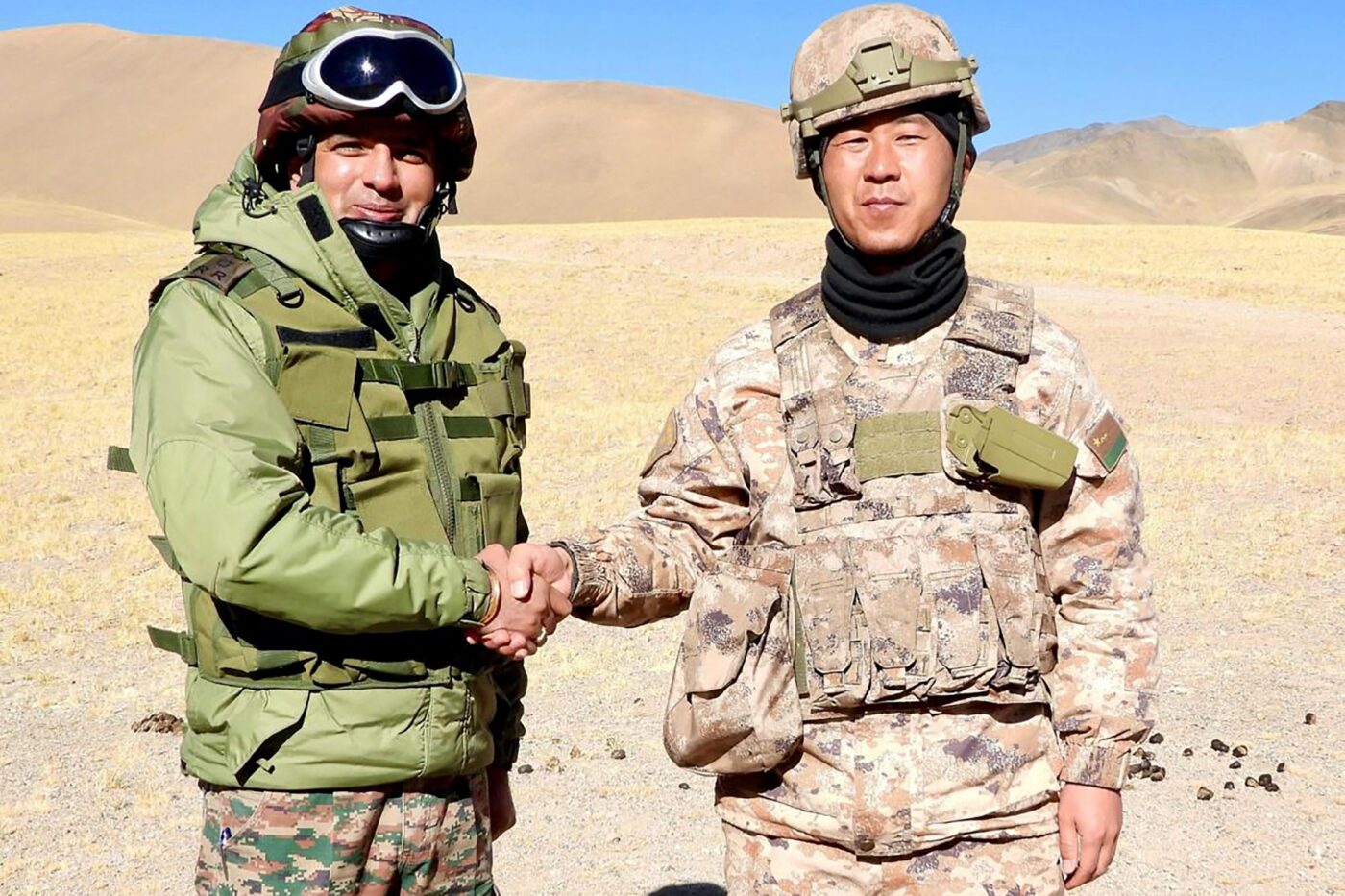
Indian and Chinese army greet each other along the Line of Actual Control (LAC) near Karakoram pass in Ladakh on October 31, 2024, on the occasion of Diwali. Chinese troops greeted Indian soldiers and exchanged sweets on October 31 at two points along their contested border to mark a major Indian festival, army sources said, a week after leaders of the Asian rivals held their first bilateral meeting in five years. (Photo by Indian Army / AFP)
Cartographic Fraud
Then it says that, in 2019, “India unilaterally amended its domestic laws, revoked relevant constitutional provisions, and announced the creation of the so-called ‘Union Territory of Ladakh,’ deliberately incorporating Chinese territory in the western sector of the China-India border into its own administrative jurisdiction.”
However, when India revoked Article 370 of its Constitution and reorganized Jammu and Kashmir, it was an internal decision of India’s sovereignty, over which no foreign country has any say. India has historical claims to this region, and it has been an integral part of India for centuries.
China cannot dictate to India when it changes names, reorganizes its territories, or makes administrative changes. China has actually occupied Aksai Chin since the 1950s, consolidating its control during the 1962 war. It has also occupied the Shaksgam Valley, which it continues to hold illegally.
It then says the China-India border has historically belonged to China and that “China possesses sovereignty over the relevant areas, including the Aksai Chin region in Northwest China’s Xinjiang Uygur Autonomous Region, and has ample historical and legal grounds for its claims.” How can China claim historical ownership when it has no historical claim to these territories? This is a complete distortion of history.
In reality, China’s administrative footprint never historically extended south of the Kunlun Mountains, and its own official records contradict its claims.
For instance, the Postal Atlas of China—officially published by the Chinese government between 1917 and 1933—as well as the 1925 Peking University Atlas, explicitly marked the international boundary along the Kunlun range, placing the entire Aksai Chin plateau completely outside of China and within India.
Furthermore, India’s legitimate administrative and historical rights were formally established under the 1842 Treaty of Chushul, signed between the Dogra Kingdom of Jammu & Kashmir and Tibet/the Qing Empire, which solidified Ladakh’s traditional frontiers.
The 1865 Johnson Line precisely mapped this boundary, and the Maharaja of Kashmir even built a military fort at Shahidulla (Xaidulla) to safeguard trade routes.
China established a presence in Aksai Chin only in the 1950s by covertly building the Xinjiang-Tibet Highway (G219) across Indian territory while New Delhi focused on peaceful diplomacy, and it eventually occupied it by force during the 1962 war.
Using Multilateral Forums as Geopolitical Tools
It then says that when Prime Minister Narendra Modi met Xi Jinping, they discussed improving ties. It then gives a warning to India, a typical Chinese way of behaving: first bullying and then giving advice.
It says that “India should exercise greater restraint on border issues of this kind rather than provoke tensions.” It further says that “some Indian politicians are now keen to stage political shows over the border issue to divert attention from domestic problems and pander to nationalist sentiment.”
It thus links India’s renaming of places with an attempt to divert attention from domestic issues. However, this description fits China’s all-weather ally, Pakistan, which always seeks to externalize its internal threats toward its neighbors, particularly India and Afghanistan.
In stark contrast, India has robust political stability under a strong parliamentary mandate, a functioning electoral democracy, and the title of the world’s fastest-growing major economy, with resilient GDP growth of around 6.5% to 7% despite global slowdowns. It faces no major internal crisis that would force it to externalize its problems.
It then says that “China and India are important neighbors, major developing countries,” and that their relationship extends beyond bilateral ties to global forums, where they must cooperate through platforms such as BRICS and the United Nations to address global challenges and uphold international fairness and justice.
It says this as if India is the irritant preventing China from cooperating with it. However, China uses these forums to its advantage and sometimes directly against India. In these global forums, Beijing consistently blocks India’s rightful interests and actively seeks to constrain India’s rise.
For instance, at the UNSC, China repeatedly uses its veto to block India’s permanent seat and places technical holds to shield Pakistan-based terrorists from global sanctions. Furthermore, Beijing single-handedly blocks India’s entry into the Nuclear Suppliers Group (NSG) while using BRICS to push its own geoeconomic agendas that violate Indian sovereignty.
Then, in typical Chinese style, it concludes with another warning: “We urge India to act in the broader interests of bilateral relations, exercise prudence in both words and actions on the boundary issue, and follow the important understandings reached by the two countries’ leaders.”
Ultimately, this Global Times article stands as a textbook example of Chinese doublespeak and strategic hypocrisy. It attempts to lecture India on restraint and respect for agreements while China itself has a long, documented history of violating bilateral treaties, executing covert land-grabs, and aggressively weaponizing cartography against its neighbors.
By trying to portray India’s sovereign, internal administrative decisions as “political shows” or “provocations,” Beijing is merely projecting its own anxieties onto New Delhi. India’s robust economy, stable democracy, and firm counter-cartography policy prove that it will no longer remain passive in the face of China’s “salami-slicing” tactics and lawfare.
If China truly wants “peace and tranquility” on the border, it must shed its outdated Middle Kingdom syndrome, look at India as an equal, and stop using global forums and state media to launch malicious propaganda against Indian sovereignty,
THIS IS AN OPINION ARTICLE. VIEWS PERSONAL OF THE AUTHOR
Imran Khurshid is an Associate Research Fellow at the International Center for Peace Studies (ICPS), New Delhi. He specializes in India-US relations, Indo-Pacific studies, and South Asian security issues.
Connect with the author at: khurshidimran (at) gmail.com
American audiences will be able to watch an English-dubbed version of “Ramayana,” a Hindi film based on a South Asian epic tradition, in theaters in November 2026. The Sanskrit “Ramayana,” or “Journey of Rama,” is an epic poem that was composed sometime between 400 BCE and 400 CE. The epic follows Rama, an exiled prince […]
TOKYO – Narendra Modi’s “Make in India” campaign has become a global brand. As China’s economy slows and multinationals look to diversify supply chains, the world’s most populous nation has eagerly cast itself as the obvious alternative. This was supposed to be the year the story came together. The Bharatiya Janata Party (BJP) billed 2026 […]
As US President Donald Trump deepens his ties with Pakistan’s powerful military chief Asim Munir, the nation’s government has detained the elected leadership of the last province controlled by jailed former Prime Minister Imran Khan’s opposition party – a move critics have condemned as a coup. Pakistan’s president, Asif Ali Zardari, declared a state of […]
As the United States reassesses its global commitments, the opening of Afghanistan’s Wakhan Corridor creates a new trade artery between China, Central Asia and South Asia — giving Russia and China new openings to reshape the Eurasian order. The Changing Global Balance of Power On 4th October 2026, Afghanistan opened the Wakhan Corridor, which means […]
Malaysia expects to receive its Korean-made FA-50M light combat aircraft on schedule, Defense Minister Khaled Nordin said, with the first jets due this month or next.
“According to the schedule, the aircraft will arrive this month or next month – I will announce the arrival date later. So far, I have not received any information regarding a delay in the delivery of the aircraft,” Khaled told reporters after the launch of the Warriors’ Fund Campaign 2026/2027.
In May 2023, Malaysia signed a nearly $920 million contract with Korea Aerospace Industries (KAI) for 18 FA-50 Block 20 light combat aircraft, designated FA-50M, for the Royal Malaysian Air Force.
Earlier, as EurAsian Times reported, India’s LCA Tejas was also competing for a Malaysian fighter-jet contract.
Malaysia, which has long needed to modernize its fast jet fleet, commenced the FLIT-LCA requirement in June 2021.
The country launched the tender to acquire a Lead-In Trainer-Light Combat Aircraft as part of the air force’s Capability 55 plan, released in 2018 and outlining the air force’s objective to achieve an ideal force structure by 2055.
The tender quickly gained traction from several countries, including India. Other contenders included the Turkish Hurjet, China-Pakistan’s JF-17, Russia’s MiG-35, and the Korean FA-50.
The FA-50 and Tejas were the two final shortlisted candidates, with the South Korean aircraft ultimately prevailing. Malaysia selected the FA-50 aircraft over India’s Tejas, with officials citing the Korean jet’s proven service record and combat record as key factors.
Korea Aerospace Industries confirmed in February 2023 that it had secured the Malaysian deal.
Then-Defence Minister Mohamad Hasan said the jet’s service record was the primary consideration. “We cannot take the risk and acquire assets that are still at the prototype stage. Our personnel will use this jet, so safety is in our criteria,” he told a press conference in May 2023, echoing comments made in parliament the previous month.
A Korea Aerospace Industries representative later told Channel News Asia that the Royal Malaysian Air Force viewed the Tejas as lacking an export record, while the FA-50 was already proven in combat.
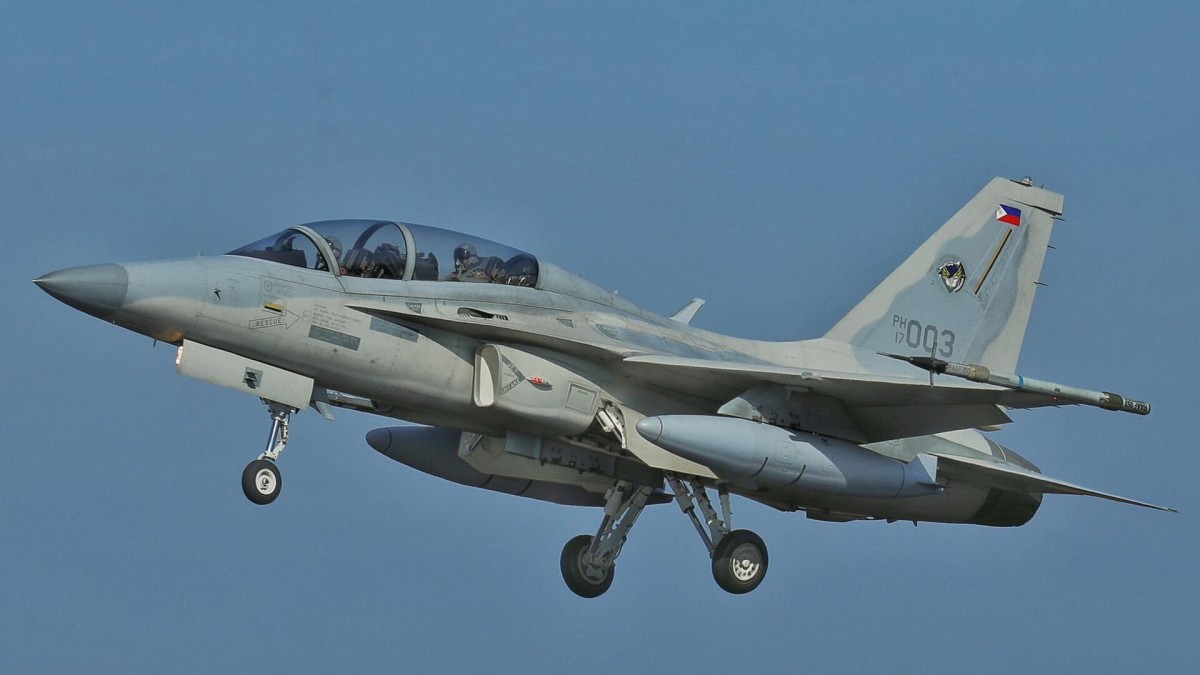
The Philippine Air Force has used the FA-50, including during the 2017 Marawi campaign, and several regional air forces, including Indonesia, Thailand, and the Philippines, operate it.
Sources at India’s HAL acknowledged the outcome. “We were short-listed for the Malaysian LCA contract. We were hopeful as we were very competitive on several criteria, but unfortunately this has not gone our way,” one source said.
HAL Chairman C.B. Ananthakrishnan reportedly said the company was optimistic after being shortlisted from multiple bidders but had received indications that the order was going to the Korean contender, though it had not yet received formal notification.
KAI and Lockheed Martin jointly developed the supersonic T-50 advanced jet trainer, with the TA-50 as the Lead-in fighter trainer and the FA-50 as a light combat aircraft variant.
The T-50 partly resembles the F-16 Fighting Falcon and is 80% of its size. Development began in the 1990s, funded 70% by the South Korean government, 17% by KAI, and 13% by Lockheed Martin.
The aircraft made its first flight in August 2002 and entered service by February 2005.
KAI and Lockheed Martin pursued a joint international marketing program for the T-50.
The T-50/FA-50 family is operated (or on order) by the Republic of Korea, Indonesia, the Philippines, Thailand, Iraq, Poland, and Malaysia. Total firm orders across the family exceed ~290 airframes, with roughly 220–230 already built or delivered as of late 2026 (around 70 still in production or pending delivery).
FA-50
The T-50 is equipped with a GE F404 engine built under license by Samsung Techwin. GE provides engine kits to Samsung Techwin, which also produces some parts and performs final engine assembly and testing.
The fighter/attack variants are equipped with the Elta EL/M-2032 fire-control radar, the same as the initial LCA MK1. The TA-50 can operate as a full-fledged combat platform with PGMs, air-to-ground weapons, and air-to-air missiles.
The TA-50 can carry pods for reconnaissance, targeting assistance, and electronic warfare. Reconnaissance and electronic warfare variants are also being developed, designated RA-50 and EA-50, respectively.
The TA-50 has an internally mounted three-barrel M61 Vulcan cannon. Wingtip rails can accommodate the AIM-9 Sidewinder missile, and underwing hardpoints can carry a variety of additional weapons.
South Korea is considering arming the FA-50 with a smaller version of the Taurus KEPD 350 missile to give it a 400 km stand-off engagement capability. The aircraft has an internal fuel capacity of 2,655 liters. It can carry 1,710 liters in the three external fuel tanks.
The aircraft has a max take-off weight of 12,300 kg. Its ferry range is 1,851 km, and its thrust-to-weight ratio is 0.96. The seven hardpoints can carry up to 5,400 kg of payload.
The FA-50 can carry more internal fuel, and the engine could be either the Eurojet EJ200 or the General Electric F414, providing up to 25% more thrust. Other AESA radars, such as Raytheon’s AN/APG-79 and Northrop Grumman’s AN/APG-83, are options for future production.
In January 2019, KAI began developing an improved FA-50 known as the Block 10 and Block 20 upgrades. The Block 20 adds munitions such as the AIM-120 AMRAAM. Raytheon PhantomStrike and Northrop Grumman AN/APG-83 were being considered as the future AESA radars.
MBDA has offered to integrate the Meteor and ASRAAM medium- and short-range air-to-air missiles on FA-50 and future KF-X fighter jets.
The T-50/FA-50 lost several competitions or was blocked from sales. The UK arms embargo on British components, such as the ejection seat, thwarted Argentina’s interest. Israel and Singapore instead chose the Italian M-346. Taiwan developed its own T-5 Brave Eagle based on its F-CK-1 fighter. The US chose Boeing’s T-7 and also blocked a proposed sale to Uzbekistan, citing concerns that the technology could reach Russia.
Unlike the F-35, India has received a formal offer from Russia for the Sukhoi Su-57 fifth-generation fighter but has not yet decided whether to evaluate it, the head of the Indian Air Force said.
Air Chief Marshal A.P. Singh told reporters on the sidelines of the Exercise Tarang Shakti in Jodhpur that the Indian Air Force was aware of Moscow’s proposal.
“As far as the Su-57 is concerned, we have received information that an offer has been made, but no decision has been taken on whether to evaluate it,” he said.
“Once a decision is made, we will assess how well it meets our requirements.”
Russia has repeatedly pitched the Su-57 to India.
Earlier, as EurAsian Times reported, Russian President Vladimir Putin personally renewed the Su-57 offer to India.
Speaking on the sidelines of the St. Petersburg Economic Forum, Putin reaffirmed Russia’s readiness to cooperate with India on the Su-57, including exporting and jointly producing the aircraft.
“It’s fifth-generation technology — I think it’s the best in the world as of now,” the Russian President said at the forum.
President Putin recalled Indo-Russian 5th-gen aircraft collaboration and said: “As far as the Su-57 goes, at one point we proposed to our Indian friends to work together on this technology. “But back then, our Indian friends said: ‘Go ahead on your own, and then we will see – maybe we’ll join’…The aircraft could have been our joint project. We built it independently, but we are ready to work with India in this field – to supply this aircraft and to keep developing it,” the Russian President told the reporters. “We don’t have any issues with it or any limitations. The same goes for air defense systems,” he added.
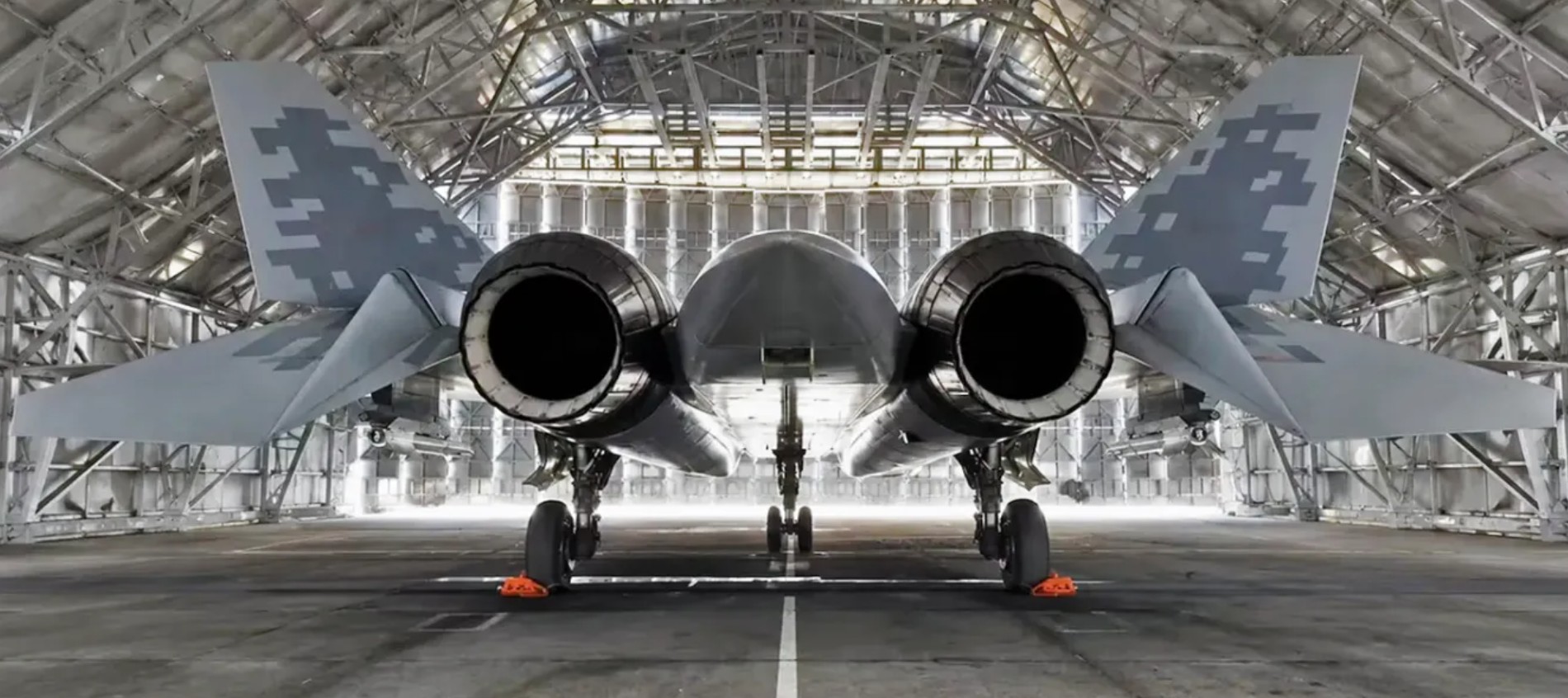
The Su-57 is a supersonic, twin-engine fifth-generation aircraft designed to destroy air, ground, and naval targets. Developed to compete with the F-22 and F-35, the ‘Felon’ jet features enhanced stealth through composite materials and can cruise supersonically.
It is a multi-role fighter jet capable of air superiority missions, ground attacks, reconnaissance, and electronic warfare. Russia is integrating a range of lethal weapon systems on the Su-57 platform, including the long-range R-37M missile and hypersonic missiles, as reported by the EurAsian Times.
Additionally, the aircraft is being integrated with Artificial Intelligence (AI) to enhance threat detection, decision-making, and pilot support. However, these features have failed to attract buyers, especially India.
If India proceeds with the Su-57 deal and Moscow meets all Indian prerequisites, including technology transfer, it could inject billions into Russia’s sanctions-hit economy. India would also get an interim fifth-gen fighter till the indigenous AMCA arrives.
Russia’s defense exports have historically benefited through high-profile deals with India. An excellent example is the Su-30MKI, India’s customized variant of the Su-30.
India’s acquisition of the Su-30MKI in the early 2000s influenced other nations, such as Malaysia, which modeled its Su-30MKM on the Indian version. Its versatility—including thrust-vectoring engines, canards, and integrated avionics from multiple countries—made it a flagship for Russian technology.
Another bigger success story is the BrahMos supersonic missile.
India’s DRDO and Russia’s NPO Mashinostroyeniya launched the joint venture in 1998 to develop and produce the BrahMos, one of the world’s fastest supersonic cruise missiles.
The Philippines was the first customer of the BrahMos, signing a contract worth approximately $375 million with BrahMos Aerospace in January 2022 for three shore-based anti-ship missile batteries.
The package, intended for the Philippine Marine Corps, includes mobile launchers, missiles, operator and maintainer training, and integrated logistics support. Deliveries began in April 2024 with the first battery and continued through 2025 and into 2026, with the third and final battery nearing completion.
Philippine Defense Secretary Gilberto Teodoro has indicated interest in further adapting or expanding the capability to suit the country’s geography and operational needs.
Another Southeast Asian country, Indonesia, became its second customer.
An agreement for “cooperation on the BrahMos System” was struck during the visit, Indian foreign ministry spokesman Randhir Jaiswal said in a post on X.
The two countries also reached an agreement on air-to-air missile cooperation that “enhances technology collaboration and defense capabilities”, he said.
Indian PM Modi hailed the “growing trust” between Jakarta and New Delhi after meeting Prabowo, which he said underpinned cooperation in “defense, security and maritime affairs”.
“Today, we reached an agreement to enhance defense exchanges, disaster management, and industrial cooperation,” Modi told reporters.
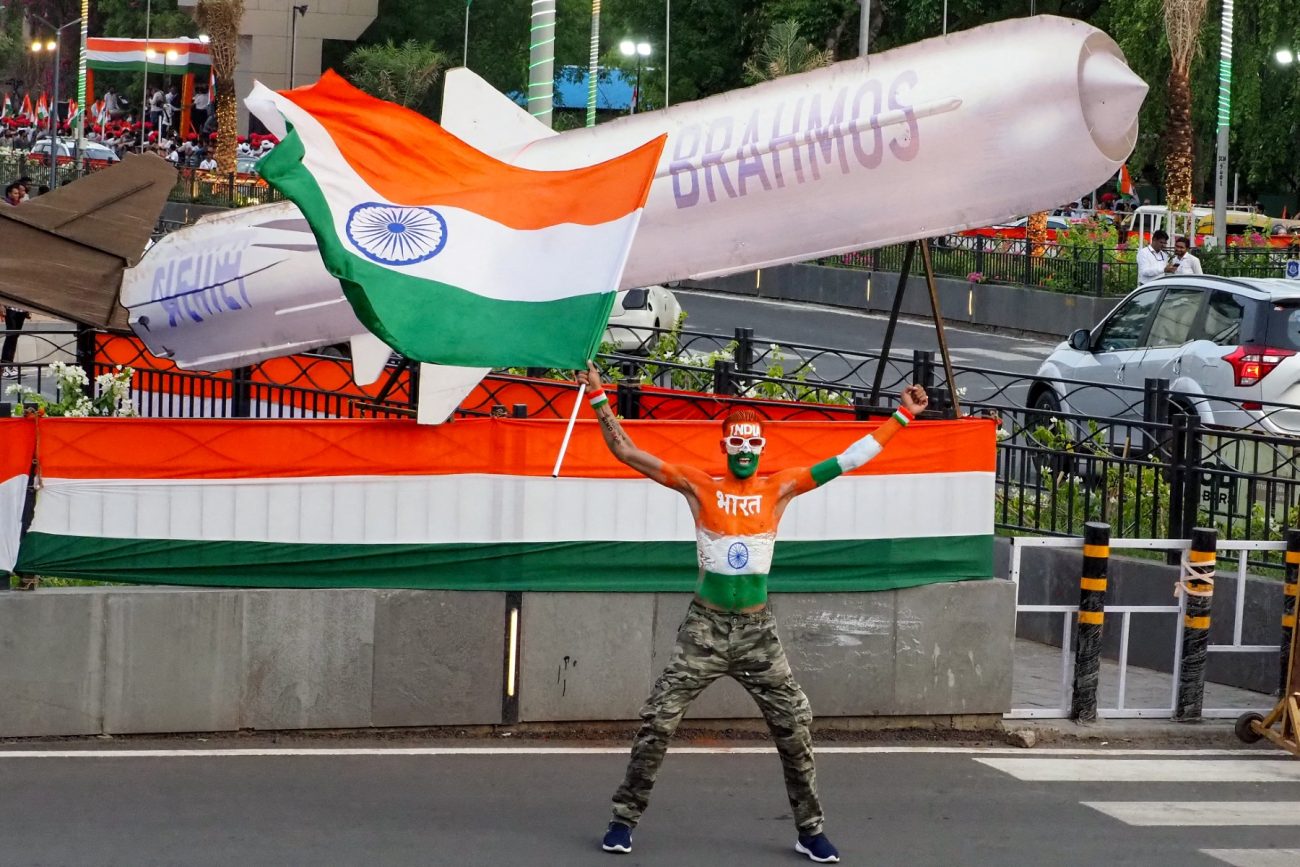
A man waves India’s national flag in front of a replica of the Indian Army’s BrahMos missile system during Prime Minister Narendra Modi’s roadshow in Ahmedabad on May 26, 2025. (Photo by Sam PANTHAKY / AFP)
Earlier, Indonesia’s Ministry of Defense (MoD) spokesperson, Rico Ricardo Sirait, told Reuters on March 9 that Jakarta has agreed to buy the BrahMos missile system from India.
The Indian Navy inducted its first BrahMos system in 2005 aboard INS Rajput. The Indian Army followed in 2007 with its own regiments, and the Air Force later introduced an air-launched version from the Su-30MKI in 2019.
The BrahMos missile saw combat use during Operation Sindoor in May 2025, when Indian forces employed air-launched variants from the Su-30MKI. IAF reportedly fired 15-19 BrahMos missiles.
The Indo-Russian missile could have more export customers.
India sketched a list of “friendly nations” it deemed potential buyers, including the Philippines, Vietnam, Saudi Arabia, the UAE, and South Africa. The list has since changed, with several countries dropping interest and others queuing up to assess the combat-tested missile system.
India reportedly started talks with Vietnam to sell off the supersonic cruise missile in 2023. An official with BrahMos Aerospace Ltd told the EurAsian Times at the time: “Vietnam had shown interest in the system. But the negotiations have just started.”
Further evidence of BrahMos’s widespread appeal in Southeast Asia is Malaysia’s sustained interest in the missile system, particularly the air-launched variant, which could be integrated with the Royal Malaysian Air Force’s Su-30MKM fighter jets.
By 2025, Malaysia appeared in lists of countries “queuing up” or actively negotiating for BrahMos. In fact, in August that year, reports suggested Malaysia had begun preliminary negotiations with Russia and India for the missile, aiming to revolutionize its Indo-Pacific airpower projection.
Besides Southeast Asia, the Middle East could be a potential market for the BrahMos missile.
Alexander Maksichev, Co-Director of BrahMos Aerospace, explicitly emphasized the UAE as a potential customer. Additionally, India has repeatedly listed the UAE among “friendly nations” eligible for BrahMos exports.
Other countries that have reportedly shown interest in the missile include Saudi Arabia, Qatar, Oman, and Egypt. BrahMos has also gained traction in South America, with countries such as Brazil, Chile, Argentina, and Venezuela showing interest.
The Indo-Russian BrahMos is a major export success, and Putin may want to replicate that success with the Su-57, using Russian tech and Indian co-production and marketing.
Whether India will bite the bullet remains to be seen.
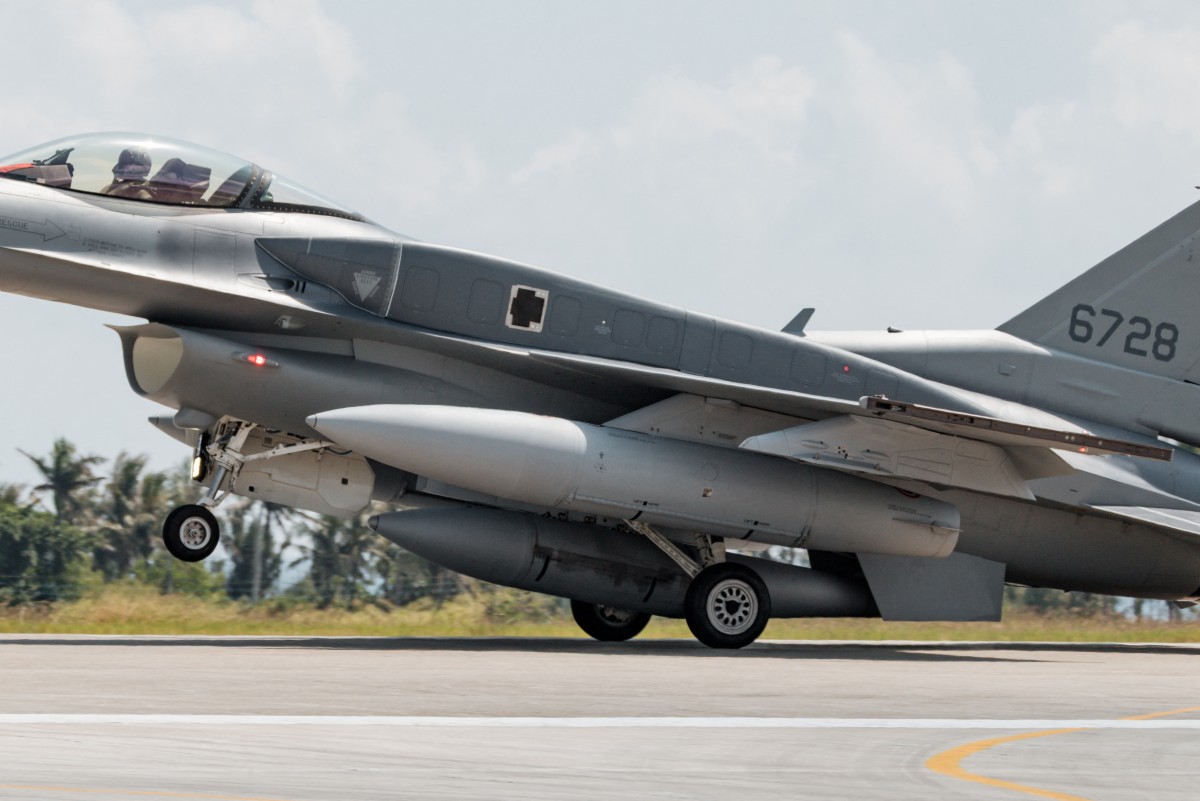
Taiwan recently received its first two F-16V (Viper) fighter jets from the US under an $8 billion deal for 66 F-16Vs, approved during US President Donald Trump’s first term.
The F-16 Vipers landed at Taiwan’s ChihhangairAir Force Base in Taitung. President Lai Ching-te called it “a major milestone in elevating Taiwan’s air defense capabilities” and thanked the US for its “long-standing support.”
When Lockheed Martin delivers the 66 new jets by 2028, the Taiwanese Air Force will have more than 200 F-16 Viper fighter jets, making it the largest Viper-standard fleet in the Indo-Pacific region.
Meanwhile, another Asian country, wary of China’s military, plans to acquire 114 Rafale jets from France.
IAF (Indian Air Force) already operates 36 Rafales and has ordered 26 Rafale-M (Marine) fighter jets for its Navy. If and when the IAF acquires all 114 Rafale jets, it will become the largest operator of Dassault jets outside France.
A newly purchased F-16V Block 70 fighter jet lands at Chihhang Air Base in Taitung on October 2, 2026. Taiwan received its first two US-made F-16V fighter jets, as the island democracy upgrades its military capabilities to deter a potential Chinese attack. The warplanes are part of an $8 billion deal for 66 F-16Vs approved during US President Donald Trump’s first term and scheduled for delivery this year. (Photo by CHENG Yu-chen / AFP)
Rafale vs F-16V
Both Rafale and F-16V are powerful fighter jets, but one massive advantage makes the US Vipers “superior” to the French Rafales, at least theoretically.
On paper, the twin-engine, nuclear-capable Dassault Rafale looks far more lethal than Lockheed Martin’s F-16 Viper, a single-engine lightweight fighter that first flew in 1974, more than five decades ago.
However, in modern times, fighter-jet battles are rarely one-on-one platform contests.
As heroic dogfights between fighter jets became a relic of the past and gave way to beyond-visual-range (BVR) contests, the battle for aerial supremacy became a system-of-systems contest rather than a straightforward one-on-one contest.
In this system-of-systems contest, a much less capable fighter aircraft can trounce a much superior aircraft if it integrates ground-, air-, and space-based sensors, capable radars, sensor fusion, an integrated battlespace display, and precision targeting.
In short, a networked fighter jet, even if less capable, is more lethal than a stand-alone aircraft.
Additionally, fighter jet deals are rarely purely military decisions; they are as much geopolitical as they are military.
It’s no surprise that a capable, cost-effective combat aircraft like the Saab JAS-39 Gripen struggled to find an export customer for over a decade. Again, after signing a deal with Brazil for the Gripen E/F variant in 2014, the aircraft failed to win other export customers for more than a decade.
While Gripen is a cutting-edge aircraft with state-of-the-art weapons, its biggest weakness was the lack of a powerful, influential backer on the global stage like the US or France.
Sweden, where Saab is based, is not really a global powerhouse, has a modest military, is not part of the nuclear club, and is not a member of the UN Security Council, unlike the US, Russia, France, the UK, and China, all of which are permanent members of the UNSC and enjoy veto power that could offer myriad advantages in geopolitical contests.
Brazil’s military transport aircraft, the Embraer C-390 Millennium, faces a similar challenge. Though capable and boasting an enviable safety record, it sells far fewer units than the American C-130J Super Hercules.
In other words, countries not only buy fighter jets; they also prefer to buy from countries with strong military and geopolitical clout.
This is where the US has an unmatched lead over competitors, including France, Russia, and China.
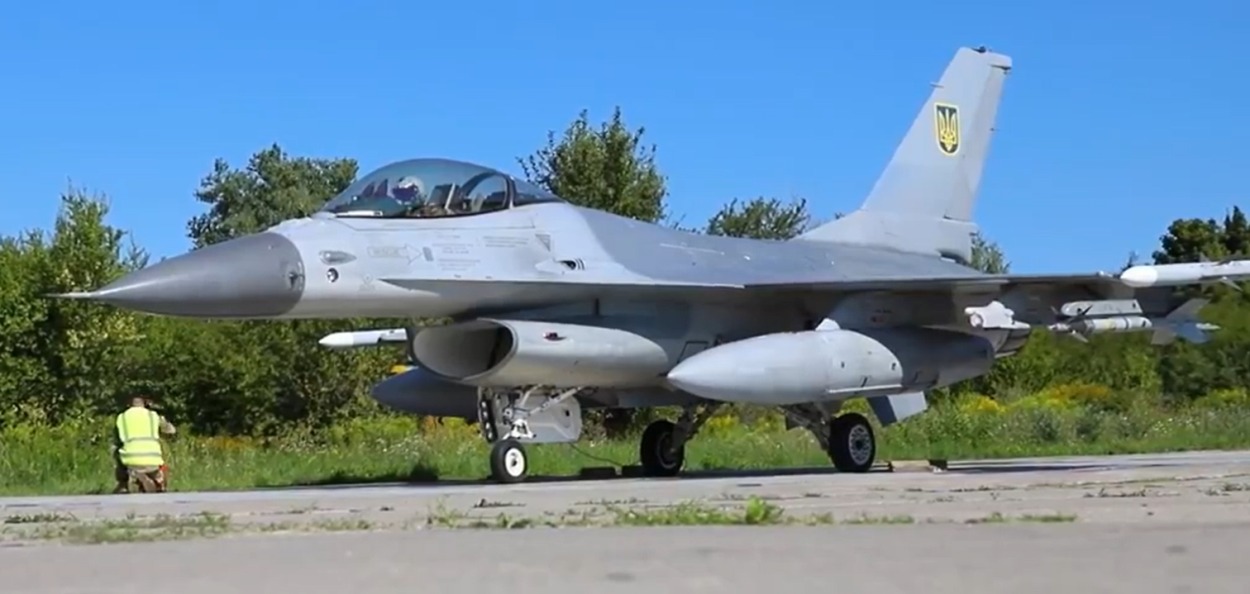
Consider, for example, Ukraine.
It not only received used F-16 fighter jets, but it also received Starlink support and US intelligence inputs, which allowed it to target military targets deep inside Russian territory.
Ukrainian F-16 Fighter Jet.
Without this satellite and intelligence support, the F-16s would be only half as effective.
Similarly, consider Israel in the Middle East.
It has not only received advanced US fighter jets such as the F-15 and the F-35, but Jerusalem also gets full US intelligence support, pinpoint information on adversary military targets, and their military movements.
Similarly, Jerusalem gets early warning whenever Iran launches ballistic missiles towards it.
The US has nearly 20 military bases in the region and maintains advanced surface-to-air missile batteries, such as Patriot and THAAD, sea-based missile defense platforms, and AN/FPS-132 missile early-warning radar in the Middle East.
This diversified radar network ensures that not only does Israel receive early warning of every Iranian attack, but Iranian missiles and drones have to pass through a layered missile defense infrastructure spread over the whole of the Middle East before their projectiles can reach Israel.
It is these incremental weapons, missiles, radar and sensors, intelligence, and satellite support that ensure that Jerusalem comes out on top in every regional military conflict.
In the Six-Day War in 1967, Israel’s adversaries, Egypt, Jordan, and Syria, had advanced Soviet fighters, and yet Jerusalem was able to trounce their combined military might, thanks to the intelligence support it received.
Export of military platforms is perhaps the US’s most successful export commodity since the two World Wars.
According to SIPRI, between 2021 and 2025, the US was the world’s top military exporter, accounting for as much as 42% of global military exports.
France was a distant second with just a 9.8% share of global military exports.
However, this uncontested leadership depends on the superior performance of its military platforms in conflict.
So, basically, the US has a vested interest in ensuring the victory of militaries that field US military platforms.
On the other hand, countries that do not field US military platforms often struggle with poor intelligence support.
India, for instance, repeatedly requested Washington to provide satellite reconnaissance pictures to target Pakistani military positions on mountains during the Kargil War in 1999. But Washington declined India’s requests.
Had India bought US military planes, Washington would have, most probably, provided New Delhi with satellite imagery to target Pakistani military positions, so that India could hit these targets and Washington could market the efficiency of its jets.
In a potential conflict between China and Taiwan, Washington would provide Taipei with every possible intelligence and satellite support so that its fighter jets and other military platforms are not trounced against Chinese weapon systems.
As we have seen in the Ukraine War, no other country currently has a satellite network comparable to Starlink. In a potential conflict with China, this US support could be decisive.
With this US support, the F-16 Vipers could be far more lethal than they actually are.
Rafale is a very capable platform. It has an AESA radar, a SPECTRA electronic warfare suite, long-range air-to-air missiles such as Meteor, precision-strike munitions such as Hammer guided bombs, a long-range SCALP EG cruise missile, twin engines, and nuclear capability, which make it a lethal fighter.
However, despite its status as a major military power, France lacks the heft of the United States.
Despite the current “frosty” US-India ties, New Delhi must find a way to work with the US while preserving its strategic autonomy and boosting its Make-in-India initiative.
This is an Opinion Article
Sumit Ahlawat has over a decade of experience in news media. He has worked with Press Trust of India, Times Now, Zee News, Economic Times, and Microsoft News. He holds a Master’s Degree in International Media and Modern History from the University of Sheffield, UK.
He can be reached at ahlawat.sumit85 (at) gmail.com
India’s air force chief said on Saturday that the U.S. has made no formal offer to sell India F-35 stealth fighters, and added that American personnel have not even allowed Indian officers near the stealth aircraft.
Air Chief Marshal Amar Preet Singh made the comments at a press conference marking the end of the multinational Exercise Tarang Shakti-2026 in Jodhpur, while seated alongside U.S. Pacific Air Forces commander Gen. Kevin Schneider.
“Your people don’t even let us go near the aircraft, and you are talking about selling it to us,” Singh said.
Six U.S. Air Force F-35As, accompanied by more than 200 personnel, participated in Tarang Shakti. This was the first time the American stealth fighters had drilled against Indian jets on Indian soil.
Singh also said the Indian government has not yet decided whether the air force should evaluate Russia’s offer of the Su-57.
“Once the decision is conveyed to us (by the government), we will evaluate how well it meets our requirements,” he said.
Earlier in 2025, U.S. President Donald Trump said, during Indian Prime Minister Narendra Modi’s visit to Washington, that the United States would pave the way for India to acquire the F-35.
Later, Vice President J.D. Vance reiterated the offer during his visit to India in April 2025, saying, “We, of course, want to collaborate more. We want to work together more. And we want your nation to buy more of our military equipment, which we believe is best-in-class. American fifth-generation F-35s, for example, would give the Indian Air Force the ability to defend your airspace and protect your people like never before.”
Earlier, as EurAsian Times reported, Lockheed Martin CEO Jim Taiclet discussed selling the F-35 to India and raised the prospect of selling the F-21, a highly sophisticated F-16 derivative.
“I think the F-16 also has strong legs, if you will, and more and increasing interest as we go forward from several countries that aren’t quite ready for F-35,” Taiclet said. There are “some countries that could see F-21 or F-16, for India, for example, as a stepping stone to F-35.”
The sale of the F-35 is subject to rigorous U.S. export controls under the Arms Export Control Act, which requires approval from the State Department, the Pentagon, and often Congress. The White House maintains strict policies on technology transfers, regional stability, and the internal politics of the potential recipient state to safeguard its sensitive technology.
The U.S. hesitation is straightforward: sharing it with other countries could put sensitive technology in the hands of enemies, especially if the recipient country has ties to countries like China or Russia, which would try to exploit or reverse-engineer it.
Earlier, writing for EurAsian Times, Air Marshal Anil Chopra (retired) said: The F-35 soft pitch faced almost immediate limitations due to subsequent tariff frictions and India’s core push for technology transfer for domestic manufacturing of its AMCA fifth-gen warplanes and aero-engines.
GE Aerospace has faced immense delays on its 2021 contract to supply 99 F404-IN20 engines to Hindustan Aeronautics Limited (HAL) for the Tejas Mk1A fighter program. Only six out of the promised engines have been delivered instead of the targeted 12-plus a year, prompting HAL to invoke contractual penalty clauses.
Tariffs on “friend” India and delayed engines for AMCA have badly weakened Indo-US ties.
India also operates Russian-supplied S-400 systems, a factor that previously caused friction between the U.S. and Turkey.
India already operates the Russian-origin S-400 AD System. The U.S. fears these networks could compromise classified F-35 stealth data. The jet relies on the U.S.-controlled Operational Data Integrated Network for software and logistics.
The U.S. may already be accessing such data through many other American platforms on Indian soil.
Meanwhile, introducing a complex new Western platform adds severe maintenance challenges to an already diverse military fleet. Even in the U.S., very few airbases can service stealth coatings.
Buying foreign fifth-generation jets risks diverting funds from India’s indigenous AMCA project. Putting too many military aviation eggs in the unreliable U.S. basket is also a risk. Americans can be “very unreliable” when it comes to imposing sanctions and freezing spares and maintenance support.
Operationally, the F-35 could offer major strategic advantages for the IAF, but any deal involves deep geopolitical, logistical, and financial complexities. Acquisition costs range from $80 to $110 million per jet, plus very high hourly operating expenses, creating budgetary challenges for New Delhi.
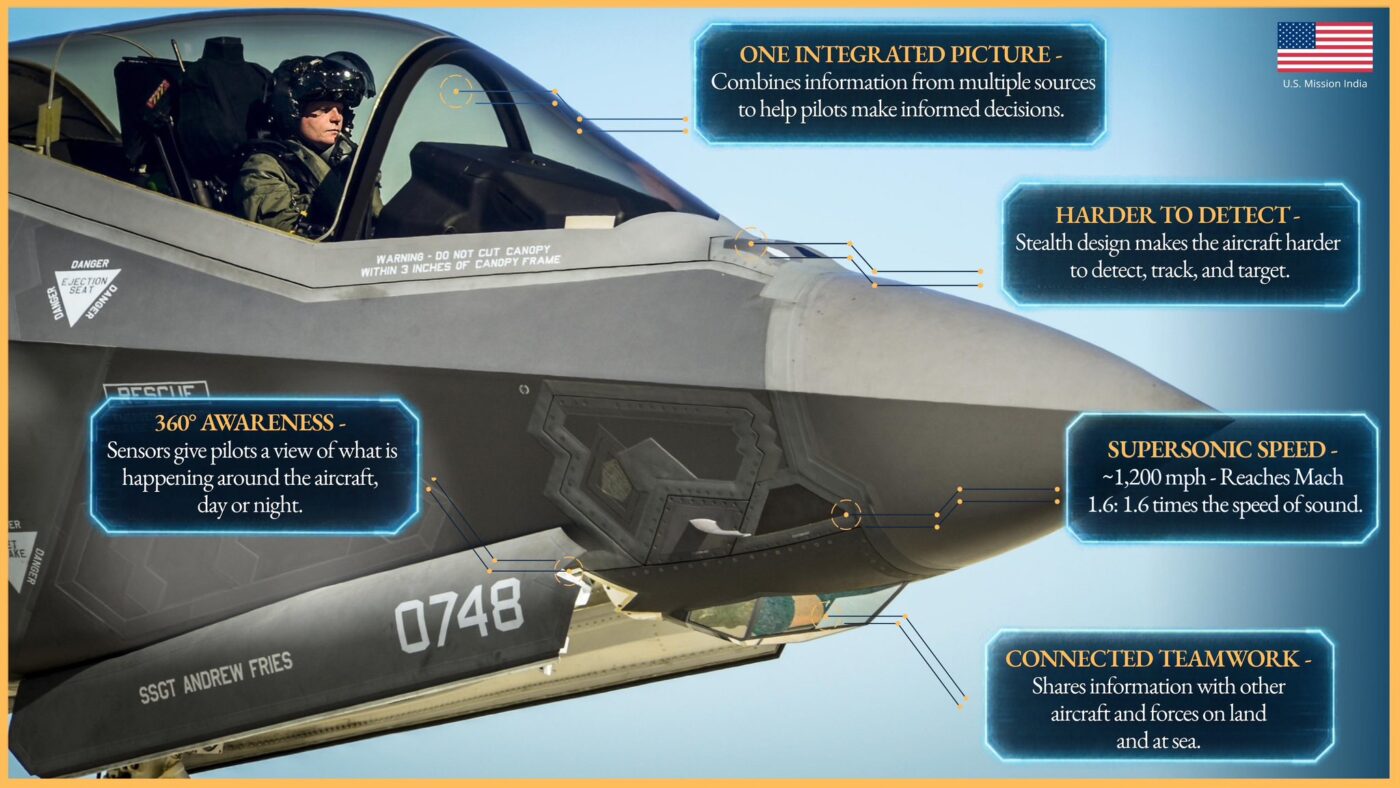
F-35: Image via U.S. Embassy, New Delhi
After two decades of stable ties, the last two years have seen distrust between the world’s largest and oldest democracies.
While many hope this is a transitory phase, it is becoming clear that the U.S. is not interested in India’s rise as a global power. U.S. Deputy Secretary of State Christopher Landau stated at the last Raisina Dialogue in New Delhi that Washington will not repeat its past approach (read: mistake) with China by granting India unfettered market and tech access that could lead to strong commercial competition.
The U.S. wants India strong enough only to serve as a bulwark against China, not to become an independent power center or a technology and economic power.
The U.S. seems keen only to supply platforms to India through large contracts. Even for aero-structures and smaller components, it prefers make-in-India “Build to Print” over significant technology sharing.
Even the proposed India-USA deal to co-produce GE Aerospace F414 engines with HAL faces major hurdles. The main complications include a nearly threefold cost surge, intense disputes over sensitive hot-end technology transfer, and the risk of delays to India’s Tejas Mk2 and AMCA programs.
Many Indians wonder whether we have invested too much in a partner with a high trust deficit and a vacillating foreign policy. U.S. is known to have “dumped” friends and allies for immediate national interests. The Trump administration’s recent public threats and admonishments to its NATO allies further strengthen Indian concerns.
The U.S. has already deepened its ties with India’s airborne platforms, supplying transport aircraft (C-17, C-130), maritime patrol aircraft (P-8I), UAVs (MQ-9), and helicopters (Chinook, AH-64 Apache, and MH-60R).
For a long time, the U.S. was trying to sell the F-16 ‘Viper’ (renamed F-21) and the F-18 Super Hornet as part of India’s Multi-Role Fighter Aircraft (MRFA) proposal. Later, it offered the F-15EX. The U.S. never officially offered the F-35.
Despite being the oldest democracy, the U.S. finds it easier to deal with dependent military Generals, and West Asian Sheikhs, rather than growing democracies. The U.S. has a poor opinion of India’s “Non-Alignment” and “Strategic Autonomy.”
Washington continues to prefer Pakistan, which helps it connect with China, the West, and Central Asia, and is willing to toe the American line for a few bucks. This Pakistan connection further erodes India’s trust.
Most analysts feel that letting the USA into India’s fighter-aircraft ecosystem is not a great idea. Any F-35 deal, like other aircraft deals, will be only a supply-and-support contract. There will be no technology transfer and no “Make-in-India” element.
While India pushes its own AMCA program, the Su-57 may still be the better choice for an interim fighter.
China is increasingly trying to diversify its connections to the region as Pakistan’s actions in Afghanistan create new security and strategic problems for Beijing. The opening of a road through the Wakhan Corridor is an important step in that effort. Afghanistan has formally inaugurated a 121-kilometer road through the corridor, running from Broghil to the […]
Pakistan has outrighty rejected a New York Times (NYT) report that claimed PAF fighter jets were involved in strikes against Houthis, calling the claim “fake and fabricated.”
“The claim in the above-referenced NYT report that Pakistan Air Force aircraft are being used against the Houthis is fake and fabricated,” Pakistan’s Information Ministry said.
In an X post, Pakistan’s Ministry of Information & Broadcasting wrote: Fact Check | Ministry of Information & Broadcasting NYT above referred story attributing employment of PAF aircraft against Houthis is fake and fabricated. International Media houses are again asked to avoid speculative reporting with regards to employment of Pakistan’s Military Forces under Makkah Joint Defence Agreement. Details of any employment, if necessary will be given by concerned authorities. Truth Prevails over Falsehood.
The report came days after Pakistan and Turkey agreed to deploy troops to Saudi Arabia under the Mecca Joint Defense Agreement.
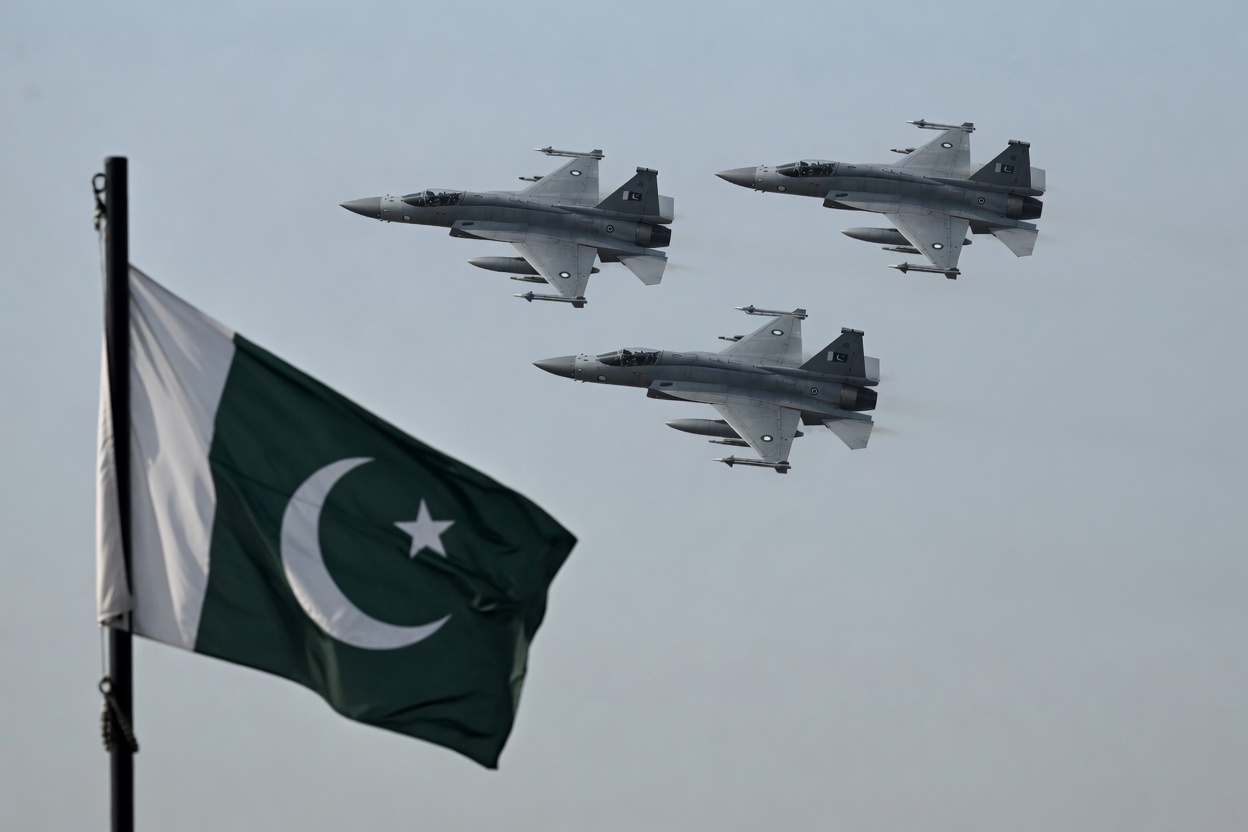
File Image: JF-17 Jets
Earlier, a senior Pakistani military official, speaking on condition of anonymity, told NYT that Pakistan Air Force jets were being used in strikes against the Houthis.
Another Pakistani official said Islamabad’s role was aimed at degrading Houthi drone and missile threats through air support rather than a ground offensive in Yemen, the NYT claimed.
Col. David O. Smith, a former U.S. Army attaché in Pakistan and former Defense Intelligence Agency analyst, said he had no classified figures, but that the analyst consensus was about 8,000 Pakistani troops deployed in Saudi Arabia. He said the force included a Pakistan Air Force contingent and Army air-defense units, that they would likely help secure oil infrastructure, and that Pakistani soldiers were unlikely to fight the Houthis directly because Islamabad is trying to preserve its relationship with Iran.
Pakistan’s military spokesman, Lt. Gen. Ahmed Sharif Chaudhry, confirmed to CNN that Pakistani troops are already in Saudi Arabia and described any role as defensive, without saying whether they would operate across the border in Yemen.
Interestingly, Pakistan earlier furiously denied a social media buzz that claimed Pakistan had lost three JF-17 fighter jets due to a Houthi missile attack that targeted King Abdulaziz Air Base in Saudi Arabia.
“This is absolutely fake. No credible or official source has also reported any sort of damage to PAF JF-17s,” the Ministry of Information reportedly said in its statement. The “deliberate fabrication of damage to PAF aircraft and their alleged evacuation is only blatant Indian propaganda, part of Hindutva deceit and a deceptive mindset,” the Ministry said.
The Pakistani Air Force jets and support aircraft, including JF-17 jets, arrived in April 2026 under the Strategic Mutual Defense Agreement that Pakistan and Saudi Arabia signed in September 2025.
Meanwhile, Turkey’s foreign minister has rejected sending troops to Yemen, despite the “Mecca pact” with Saudi Arabia.
“This is a defense agreement,” said Hakan Fidan, adding: “If one of the countries is attacked, you support its defense. This is not an offensive agreement.” Turkey “will not send its troops to another country’s territory to launch an attack”, he emphasized.
Fidan said Turkish and Saudi military delegations would work together to assess what defensive measures might be needed, without giving details.
It’s not often that events in Mumbai reverberate through global markets. But the Reserve Bank of India’s first interest rate hike in almost four years speaks volumes about the chaotic state of play. The inflation slamming Asia’s third-biggest economy and the rupee’s drop to record lows left RBI Governor Sanjay Malhotra with no choice but […]
Five years after seizing Kabul, the Taliban’s strongest argument for international acceptance rests on control. The Taliban governs every provincial capital and faces no conventional army capable of marching on Kabul. It repeatedly cites improved security as proof that Afghanistan’s post-2021 order is settled. But armed resistance is becoming more geographically dispersed, more organizationally diverse […]
Russia appears to be preparing to revive and modernize its inventory of the Soviet-era Pechora S-125 short-to-medium-range surface-to-air missile system, in a move that the IAF leadership could well take note of.
S-125 is the same missile that was used to shoot down the US Air Force’s F-117 Nighthawk stealth fighter-bomber over Serbia on March 27, 1999, during the Kosovo War.
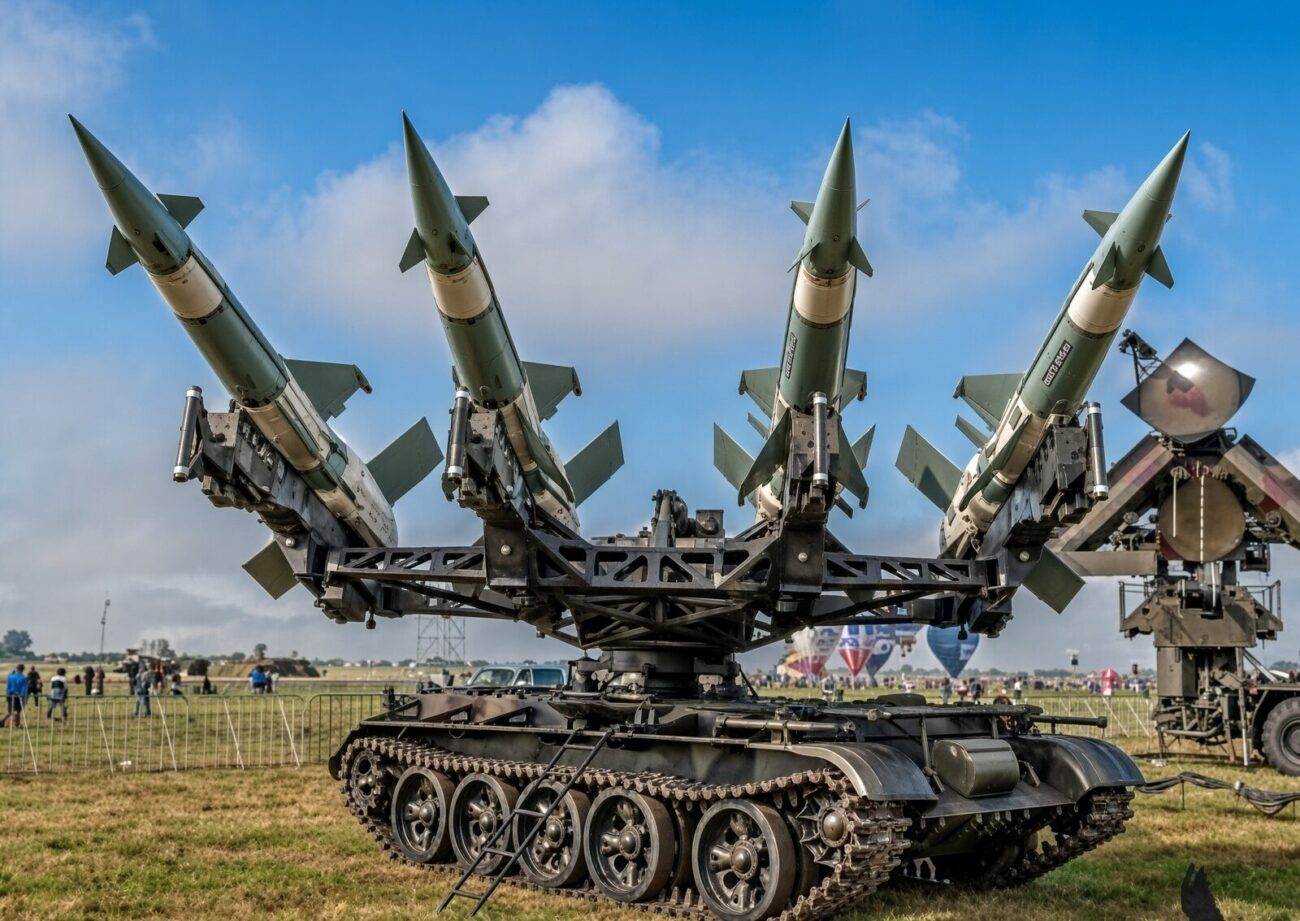
The Pechora S-125 (SA-3 Goa) is a legacy Soviet static, short- to medium-range surface-to-air missile system developed to engage low- to medium-altitude air threats using command guidance.
The IAF also modernized its S-125 inventory to plug an operational gap that widened due to delays in procuring MRSAM and Akash air-defense systems. However, the IAF did not pursue modernization to the extent that the capability gains matched the more comprehensive modernization offered by the Russian Pechora-2M.
According to Militarnyi, a Ukrainian media outlet focused on military affairs, the Minsk Wheel Tractor Plant (MZKT) has signed a contract with Moscow-based JSC Oboronitelnye Sistemi to supply 30 specialized wheeled chassis that appear intended for components of the Pechora-2M system.
The Pechora-2M is a heavily modernized Pechora derivative with a self-propelled truck-mounted launcher, digital electronics, an extended engagement envelope, and day/night electro-optical tracking, giving the system much greater tactical mobility.
Under the terms of the contract, Russia would receive 20 MZKT-8021-021 chassis, as well as five each of the MZKT-8022-021 and MZKT-80211-021.
The MZKT-8021/8022 family of specialized chassis was developed specifically to accommodate components of the Pechora-2M air-defense missile system.
Pechora Revival
The delivery schedule extends to 2029, suggesting a planned multi-year acquisition rather than a one-off procurement to meet an immediate operational requirement.
More likely, Russia is seeking to expand its air-defense capacity in response to the heightened threat from the prolific use of drones and other low-cost aerial threats in modern warfare.
Drone warfare has increased the aerial threat severalfold, so it is logical for any nation to increase the density of its AD systems by a corresponding factor.
Russia appears to be increasing its reliance on legacy systems rather than simply discarding them.
Russian Modernisation
The modernized Pechora-2M system was developed as a deep modernization of the Soviet S-125, incorporating a self-propelled, highly mobile launcher and modernized electronics. The modernization transformed the legacy stationary S-125 into a rapidly deployable air-defense platform capable of shoot-and-scoot tactics, reducing its vulnerability to anti-radiation weapons and precision strikes.
The 2M replaces the legacy four-rail stationary ground launcher (5P73) with a twin-rail launcher mounted on a heavy 6×6 truck chassis. The reduction in launch rails was necessary to maintain launcher stability when mounted on a mobile chassis.
The legacy S-125 required considerable time to disassemble, pack onto trailers, move, and re-erect at a new site. In contrast, the Pechora-2M can reportedly be brought into action in roughly 20–25 minutes, facilitating shoot-and-scoot operations.
Besides the self-propelled launchers, the tracking/fire-control radar and other system components are also mounted on high-mobility truck chassis rather than being confined to towed equipment.
File Image: S-125
IAF Pechora Modernization
In 2016, the Indian MoD issued a $272-million tender to digitize 16 Pechora systems. The tender was restricted to Indian companies to support the government’s Make in India policy. The eventual contract, worth ₹591.3 crore, was awarded to Alpha Design Technologies Ltd (ADTL) in 2020.
Russia’s Almaz-Antey is the original equipment manufacturer of the Pechora system. At the time, Indian officials indicated that Russian defense companies preferred to work through Russian state-owned entities, limiting the scope for direct OEM participation by Indian companies.
The scope of the Indian Pechora upgrade was primarily the electronic and mechanical modernization of the existing system rather than a fundamental redesign of its architecture. It included refurbishment and digitization of the missile-guidance radar and integration of the system with the IAF’s Integrated Air Command and Control System (IACCS).
Alpha Design Technologies Ltd executed the upgrade, focusing on digitization and electronic modernization. It replaced vintage electronic components with modern semiconductor-based electronics and digital processing, while modernizing operator consoles and other system elements.
No Mobility
The system retained its original static, four-rail, ground-mounted configuration (5P73 launcher) and towed transport arrangement because the Indian upgrade scope did not include mobility.
Because it lacks mobility, the IAF has traditionally used the Pechora for point defense of fixed, high-value infrastructure such as air bases, radar stations, and other military installations.
A statically deployed AD system protecting a high-value asset made considerably more sense when precision-guided munitions were either unavailable or relatively uncommon. In contemporary warfare, where precision weapons can routinely achieve single-digit-meter accuracy, a static air-defense system defending a high-value asset can itself become a priority target.
Recall the failed PAF attempt to strike the S-400 system deployed to defend Aadampur air base during Op Sindoor. With foresight, and by leveraging the S-400’s mobility, IAF leadership relocated the system before the attack. The episode illustrates the importance of mobility and survivability for high-value air-defense assets.
A Still-Capable System
Despite its vintage, the Pechora remains a potentially useful AD system. Endowed with mobility and modern sensors and electronics, it would acquire significantly greater survivability and tactical utility.
One of its strengths is electro-optical tracking, which permits passive target tracking without radar emissions, reducing vulnerability to anti-radiation weapons. Both Russian and Indian modernization programs have improved the system’s electro-optical capability.
The Indian upgrade incorporates thermal-imaging-based fire-control equipment, while the Pechora-2M also incorporates TV and thermal/infrared electro-optical channels.
Thermal imaging provides a passive night-and-day detection and tracking capability and, unlike conventional television cameras, does not depend on visible light. However, adverse atmospheric conditions can degrade its effectiveness.
It is interesting to note that the IAF chose to upgrade its Pechora systems without fundamentally modifying the missile. Contemporary reporting on the original upgrade program indicated that the IAF considered the existing missile adequate and concentrated instead on digitization, radar, communications, networking, and other system improvements.
The 5V27 family missile has a substantial fragmentation warhead of around 70 kg and uses command guidance. Its continued availability is one possible reason why extending the life of the Pechora system remains attractive.
Russia may also be reviving and revitalizing Pechora-2M systems because it has a substantial existing inventory of 5V27-series missiles. If so, the approach illustrates an important principle of modern warfare: the value of an old weapon system can change when it is combined with modern sensors, electronics, mobility and networking.
In the immediate future, the IAF will need to deploy many more AD systems than it currently does in order to field a robust air-defense capability spanning the entire gamut of aerodynamic threats—aircraft, helicopters, cruise missiles, guided bombs and drones.
Developing additional AD systems may prove more challenging and time-consuming than upgrading existing legacy systems such as the Pechora.
Upgrading the Pechora to add mobility, modern electro-optical sensors and improved networking should be well within Indian technological capability. Even locally manufacturing additional upgraded systems under an appropriate OEM arrangement could be a cost-effective way to augment India’s air-defense capability.
Russia’s apparent decision to extract additional combat value from an old missile system should therefore be viewed less as a revival of obsolete technology and more as an example of how legacy weapons can be adapted to the changing economics and character of air warfare.
Vijainder K Thakur is a retired IAF Jaguar pilot, author, software architect, entrepreneur, and military analyst.
Recently, during the 5th Halla Bolle Conclave held at the Radisson Collection in Srinagar, Jammu and Kashmir, the same separatist discourse once again found space.
The conclave brought together mainstream political leaders and a former separatist figure, with discussions focusing on issues such as restoring statehood, Article 370, autonomy, political rights, governance, youth aspirations, reconciliation, and India-Pakistan relations.
Many of the questions asked and answers given reflected narratives that have long been nurtured in the Valley and closely resemble Pakistan’s longstanding propaganda on Kashmir.
The participation of mainstream political leaders alongside former separatist figures also showed how some of these old narratives still find space in Kashmir’s contemporary political discourse.
Selective Politics of Kashmir’s Mainstream Leaders
Aga Syed Ruhullah Mehdi, the National Conference Member of Parliament (MP) representing the Srinagar Lok Sabha constituency, who behaves like some philosopher-king, is systematically promoting Pakistan’s propaganda and narratives.
He tries his best to hurt India whenever he gets the chance.
For instance, when asked to state his position on the situation in Muzaffarabad and Pakistan-occupied Jammu and Kashmir (PoJK), he said that he would not talk about it until people in the Valley were ‘empowered’, deflecting by declaring, ‘Return our dignity & we will talk about Muzaffarabad’. He then went on to claim that Kashmiris face the status of ‘second-class citizens’ in the Valley, asserting that ‘our reality is that we are disenfranchised as second-class citizens.’
This is exactly the problem. He avoids questions concerning PoJK but remains extremely vocal when criticizing India.
He is actually misusing his constitutional right to freedom of speech and expression and using Indian democracy as a shield while promoting narratives that are completely in line with Pakistan’s interests. He actually doesn’t want to hurt his masters sitting in Rawalpindi.
He also claims that there is no freedom of speech, frequently protesting that, “as a Kashmiri Muslim voice, I was denied the opportunity to speak.” Yet his actions contradict this narrative. He himself makes the most noise, using every available platform to speak publicly, give interviews, address gatherings, speak in Parliament, and criticize India regularly.
If he is supposedly not allowed to speak, then how is he able to constantly and systematically spread venom and engage in anti-India propaganda repeatedly?
There is a clear difference between legitimate democratic criticism of a government and repeatedly using the democratic space available in India to promote narratives that portray India itself as the source of Kashmir’s problems while giving Pakistan a free pass for its sponsorship of cross-border terrorism and the killing of innocent civilians in J&K and the rest of the country.
Then, an audience member asked National Conference president Farooq Abdullah why Kashmir had aligned with ‘Hindu-majority India’ in 1947. The very framing of the phrase ‘Hindu-majority India’ exposes the toxic ideology behind the question.
However, those who push such narratives desperately need to look at what actually happened to the regions that joined Pakistan in 1947, as well as those parts of the subcontinent that were forcibly taken by Pakistan, and the misery their people endure today.
Look at Balochistan. Look at Khyber Pakhtunkhwa. Look at the political and institutional failures that ultimately led to the secession of Bangladesh, demonstrating that a shared religious identity alone could not keep Pakistan united. Most importantly, look at the disaster that is Pakistan-occupied Jammu and Kashmir (PoJK) today.
For years, the people of PoJK have taken to the streets to protest Islamabad over basic political, economic, and social rights. The recent protests have faced deadly crackdowns, reportedly leaving more than 150 people killed, while the brutal authorities have even gone so far as to restrict the supply of essential goods, including food, flour, medicines, and fuel, during periods of unrest.
When Pakistan’s Failures Are Blamed on India
Yet Pakistan’s propaganda machinery has repeatedly played its cards well in Kashmir. Its influence remains deeply entrenched in the Valley, allowing narratives about Pakistan and India to persist regardless of what happens inside Pakistan.
Pakistan can have Imran Khan in jail, political repression, a deeply constrained democratic system, and an army that continues to exercise enormous influence over the country’s politics, elections, government formation, policymaking, and even the broader political system, yet people in Kashmir are repeatedly told that Pakistan’s problems are somehow the result of an Indian conspiracy.
Even when Pakistan itself is burning, its failures are deflected towards India rather than examined as the consequences of its own political and institutional failures.
This should force Indian authorities to rethink their approach and ask why such narratives continue to resonate in the Valley. Simply dismissing them as propaganda will not be enough. There needs to be a serious effort to understand the channels through which they spread, the political actors who amplify them, and the reasons they continue to influence public discourse.
Certain mainstream political parties and leaders in Jammu and Kashmir have also played a major role in keeping this discourse alive. They have repeatedly used the blood and suffering of Kashmiris for their own political objectives. Rather than challenging narratives promoted by Pakistan, they have often sustained and magnified them.
Take PDP chief Mehbooba Mufti, for example. She has advocated opening the Line of Control in Kashmir so that trade can take place with Central Asia, Afghanistan, and other regions, invoking the old Silk Route and China’s connectivity. One has to ask: what world is she living in?
Does she not understand the region’s geopolitics? Does she not understand the cross-border terrorism and terrorist infrastructure operating from Pakistan-occupied territory? Does she not understand the India-Pakistan dispute over PoJK? Does she not understand China’s illegal territorial claims against India in Jammu and Kashmir, the Shaksgam Valley territory ceded by Pakistan to China in 1963, the recent Galwan clashes, and China’s broader geostrategic interests in the region?
It is not simply a matter of opening India’s borders and assuming that will solve everything. Other players have their own interests and nefarious designs, and they too have agency. Besides, extra-regional powers have their own interests. The region is not operating in a geopolitical vacuum.
The problem with Kashmir’s political leadership is that they rarely talk about the issues that actually matter to the people, for which they were elected, and instead think that by playing separatist politics, they can secure their votes and political future.
They rarely talk about how to improve the living standards of common people, eliminate corruption, generate employment, improve infrastructure, attract investment, or make governance more accountable and responsive.
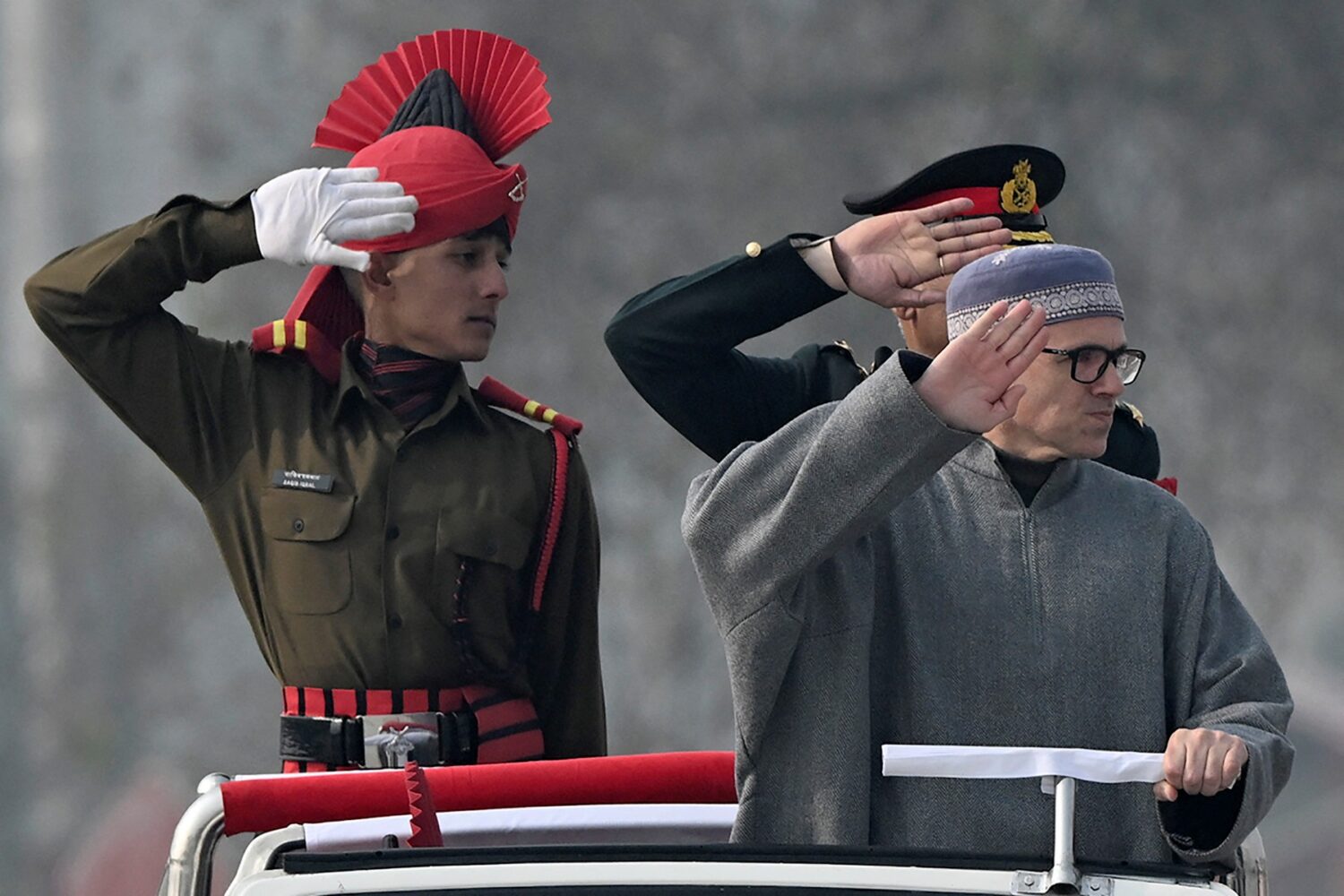
IMAGE FOR REPRESENTATION: Omar Abdullah (R), Chief Minister of Jammu and Kashmir, salutes as he inspects newly recruited Indian Army soldiers from the Jammu and Kashmir Light Infantry (JAKLI) during a passing-out parade at the JAKLI Army headquarters in Srinagar on December 4, 2025. (Photo by Tauseef MUSTAFA / AFP)
Instead, they have often tried to frame the relationship between the people of Kashmir and the central government in colonial terms, as a master-slave relationship. They repeatedly use words such as “Delhi,” while saying that Kashmiris have to “fight Delhi.” They rarely speak about constructive engagement with the central government.
They now say that Kashmiris have been “disempowered” after the abrogation of Article 370 in 2019. But what happened before 2019? Were Kashmiris not being described as “alienated” and “disempowered” before 2019 as well? Were these same political leaders not making exactly the same arguments then?
If they were making the same arguments before 2019, then what exactly did they do for the people of Kashmir when they had the political power they now claim to have lost?
This is something that needs to be asked.
Need to Move Beyond the Politics of Alienation and Victimhood
Moreover, the words “alienation” and “disempowerment” are not being used accidentally. They carry a specific political meaning and fit into a particular narrative. The problem is that these leaders have never really looked at the relationship between Jammu and Kashmir and the central government in the same way that political leaders in other parts of India look at their relationship with the Center.
The current noise over statehood also needs to be understood in this context. They present the demand for statehood as though it is entirely about the interests of the common people. But is it?
Of course, statehood is important, and people can legitimately demand its restoration. But it also involves political interests. These political parties want more political power and greater control over the administration.
After losing statehood, they feel they lost a significant part of their political authority. They also want statehood because it would give them greater political control and a shield from the scrutiny and accountability they currently face from different agencies and institutions. In this sense, the demand for statehood is also about restoring their own political power and reducing accountability.
But the common people have other priorities. They want good governance. They want corruption to be eliminated. They want development, employment, better infrastructure, better public services, and an improved standard of living.
The question is: when there was statehood before 2019, what did they do to improve the lives of common people?
If the mainstream political parties in Jammu and Kashmir had pursued positive, constructive, forward-looking, and pragmatic politics instead of sustaining and magnifying narratives that have served Pakistan’s interests, the Valley could have been very different.
Political parties have every right to criticize the government. They have every right to demand statehood, greater powers, development, and political representation. But when criticism of India becomes constant while questions concerning Pakistan are systematically avoided, and when every issue is presented through the prism of alienation and disempowerment, it becomes necessary to ask whose interests this politics is ultimately serving.
The mainstream political leadership in Jammu and Kashmir needs to understand that the people of Kashmir cannot be kept permanently trapped in the politics of grievance, alienation, and victimhood. The people deserve politics that focuses on their future, not politics that continuously recycles past narratives.
Views Personal of the Author
The author is a prominent journalist from Jammu & Kashmir and wishes to keep his identity concealed for security reasons.
For any feedback on the story, email us at editor (at) eurasiantimes.com
After years of lobbying by Riyadh, the United States recently greenlit a potential sale of F-35 fighters to Saudi Arabia. Meanwhile, Turkey is looking to rejoin the F-35 program and is aggressively pursuing the Trump administration to approve the sale of stealth jets.
Another interesting case is India, which is hosting Exercise Tarang Shakti, where six F-35 jets are participating. Indian experts call it a unique opportunity for the IAF to evaluate US stealth jets and see how Indian ground and airborne radars detect them.
Notably, this is the first time F-35s are participating in drills with Indian jets on Indian soil.
Many see this as an historic opportunity to train alongside arguably the world’s best jets and give real-time exposure to the IAF’s Rafale, Su-30MKI and Tejas aircraft. Even IAF critics who don’t favor a potential F-35 sale to India see this as a historic opportunity.
Earlier, a EurAsian Times report said the US State Department announced the proposed sale of F-35 Lightning II and related equipment to Saudi Arabia on September 17, 2026. The proposed sale is expected to cover 48 F-35 aircraft and 49 Pratt & Whitney F135-PW-100 engines, along with communications gear, training, spare parts, and other support as requested by Riyadh.
The approval followed years of lobbying by the Saudi kingdom to procure the highly sought-after stealth fighters.Earlier, the Obama administration explicitly ruled it out in late 2015, stating that Israel would remain the sole F-35 recipient in the region to preserve its qualitative military edge (QME).
Later, the Biden administration explored linking a potential F-35 deal to Saudi-Israeli normalization, but talks stalled after the October 7 Hamas attack on Israel.
The US State Department’s proposed sale still requires congressional approval, and analysts believe Saudi’s purchase of the F-35 could hit a roadblock amid concerns about Riyadh’s ties with China and Israel’s opposition to the deal.
Despite being a founding member of the F-35 program and making a significant financial investment, the US expelled Turkey from the consortium and sanctioned it under CAATSA for purchasing the S-400 despite repeated warnings.
Ankara has been actively pursuing a strategy to divest itself of its Russian-made S-400 and sell it off to a potential third-party buyer.
Earlier, the US President similarly responded to questions about lifting CAATSA sanctions on Turkey by saying, “I’ll always speak to President Erdogan. He is a friend of mine, as you know. And I’ll always make him happy.”
For now, Turkey’s path to obtaining the F-35s is still full of hurdles that both Washington and Ankara may find hard to remove, including Israel’s stiff opposition, as the EurAsian Times has explained before.
Like Saudi Arabia and Turkey, several countries have made unsuccessful attempts to obtain the F-35, widely regarded as the leading fifth-generation multirole fighter thanks to its advanced low-observable stealth and groundbreaking sensor fusion.
Functioning as a highly networked airborne command node—often described as the “quarterback of the skies”—it shares data seamlessly across friendly platforms. In fact, analysts believe that it is the most capable fifth-generation fighter in service anywhere in the world.
Despite this, India — a country that faces the dual threat of China and Pakistan along its borders — has been somewhat indifferent to what many consider the world’s best jets.
US Pitch for F-35s
Donald Trump unofficially pitched the F-35 to India during a meeting with Indian Prime Minister Narendra Modi in February 2025. “Starting this year, we will be increasing military sales to India by many billions of dollars. We are also paving the way to provide India with the F-35 stealth fighters ultimately,” he said at the time.
F-35: Image via US Embassy, New Delhi
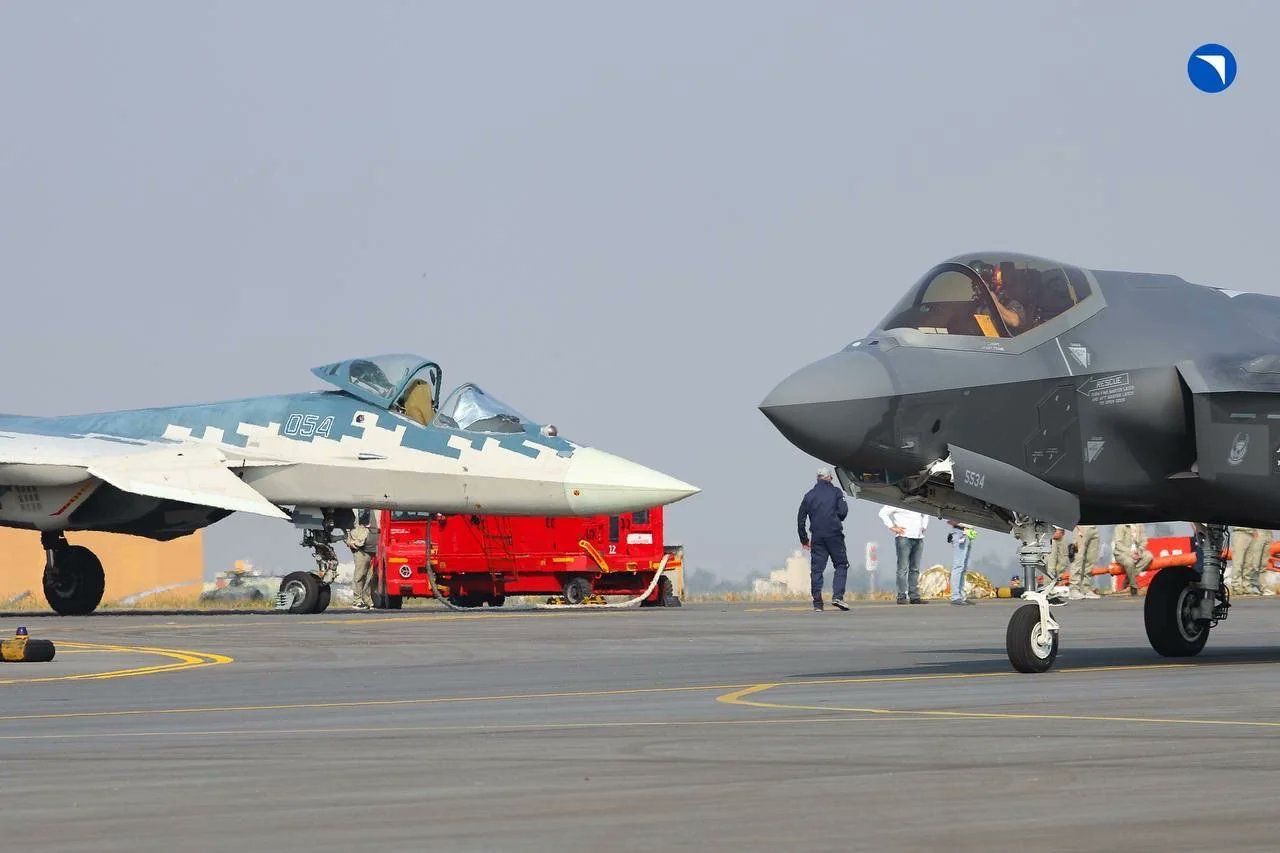
The F-35s were also displayed at Aero India 2025 the same month, where they met the Russian Su-57 on the tarmac for the first time.
During his April 2025 visit to India, US Vice President J.D. Vance appeared to reiterate the offer.
“We, of course, want to collaborate more. We want to work together more. And we want your nation to buy more of our military equipment, which we believe is the best in class. American fifth-generation F-35s, for example, would give the Indian Air Force the ability to defend your airspace and protect your people like never before,” he said, making a more direct appeal.
Although the US never made an official offer, the verbal F-35 pitch and the prospect of acquiring a cutting-edge stealth fighter looked great on paper, particularly since China operates two fifth-generation aircraft (the J-20 and J-35A) and is allegedly exporting the J-35A to Pakistan.
However, India’s defense community and Indian Air Force (IAF) veterans seemed unimpressed by the F-35 offer despite acknowledging the aircraft’s potent capabilities, a stance recently reiterated as six F-35s made their debut in India-hosted “Exercise Tarang Shakti 2026” in Jodhpur, Rajasthan.
Seven Reasons Why IAF Veterans Oppose F-35
First, Indian analysts and experts believe that buying an expensive stealth fighter off the shelf from the United States would be a liability, since it would do nothing for the Indian defense manufacturing sector and come with an enormous price tag.
Each F-35 is expected to cost $80 to $120 million, with even higher life cycle costs. Therefore, a fleet of F-35s would impose a heavy financial burden that the Indian Air Force would rather allocate to indigenous programs and more flexible and diverse acquisitions.
Second, analysts and veterans have argued that the US would never part with its technology, eliminating domestic manufacturing. They reckon the F-35 procurement would run counter to the “Make in India” and “Aatmanirbhar Bharat” policies.
Air Marshal Anil Khosla (retd), the former Vice Chief of Air Staff (VCAS), earlier stressed that even with approval of limited technology transfer and local manufacturing, significant challenges would remain. At the time, he highlighted production risks arising from the F-35’s complex global supply chain, noting that Lockheed Martin sources components from multiple countries. He cautioned that any disruption or delay in delivering these parts could halt the entire manufacturing process.
Air Marshal Khosla further noted that India’s continued reliance on foreign suppliers would constrain genuine localization, and the IAF would struggle to manage such disruptions.
Notably, this concern takes on greater significance as delivery of Tejas Mk-1A fighter jets to the Indian Air Force has been delayed due to delays in delivery of F404-IN20 turbofan engines, affecting the service’s preparedness.
File: F-35 Lightning II and Su-57 Felon captured in the same frame for the first time in history at Aero India 2025
Third, there is concern that diverting resources to acquiring the F-35 would inevitably affect India’s own fifth-generation Advanced Medium Combat Aircraft (AMCA), which aims to deliver a fifth-generation platform with advanced sensors, electronic warfare systems, and networked combat features while fostering a domestic aerospace industrial base.
Experts have urged the IAF to focus on its indigenous programs rather than getting trapped in another round of imports.
Fourth, analysts have also cited logistical challenges and operational incompatibility with India’s diverse air force fleet comprising a mix of Russian Su-30MKIs, French Rafales and Mirage 2000, and Tejas. They believe that adding another fighter type would further complicate maintenance, training, and logistics for an already varied inventory.
Fifth, India operates Russian-supplied S-400 systems, which previously caused friction between the US and Turkey.
“An F-35A deal would likely come with strings attached—most notably, a U.S. demand that India abandon its Russian S-400 air defense systems in favor of the American THAAD,” IAF veteran and commentator Squadron Leader Vijainder K. Thakur earlier stated.
The S-400 is deeply embedded in India’s layered air defense network, and New Delhi has been considering an additional order, meaning it would inevitably become a point of contention in any potential deal.
Sixth, the US has been flagged as an unreliable partner.
“Putting too many military aviation eggs in the unreliable US basket will also be an issue. Americans can be “very unreliable” when it comes to putting sanctions and freezing spares and maintenance support,” IAF veteran and aviation analyst, Air Marshal Anil Chopra (retd), earlier wrote in a detailed EurAsian Times article.
Adding the repeated threat of sanctions by the US and a rapidly changing geopolitical scenario further complicates the purchase.
Seventh, the F-35 is embedded in the US-controlled networks, including the Operational Data Integrated Network (ODIN), which sends information back to American servers. Indian experts view this as a breach of operational independence.
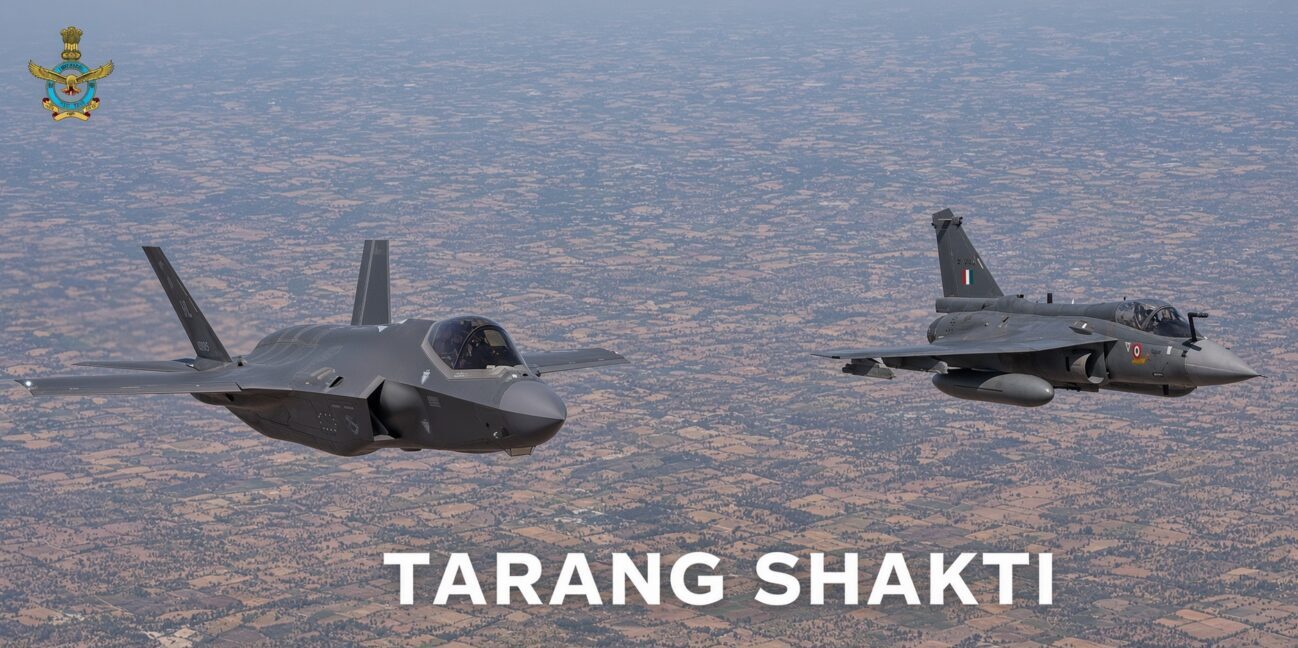
Tarang Shakti: F-35 and Rafale
Furthermore, they have cautioned that the US imposes stringent operational restrictions on its system and could try to limit the F-35’s use in combat, particularly against Pakistan.
Critics worldwide have also stressed that an unpredictable US administration could restrict free F-35 operations by limiting hardware and software supplies, commonly referred to as a kill switch. In fact, this is the reason why countries like Canada and Portugal decided to look for an alternative to the American stealth fighter.
Indian strategic discussions generally prioritize accelerating Tejas production, advancing the AMCA, and exploring local manufacturing options for platforms such as the Rafale. If a foreign fifth-generation fighter is ultimately considered, many experts have indicated a preference for the Russian Su-57 because of the technology transfer, local production, and twin-seat variant.
Contact the author at sakshi.tiwari13 (at) outlook.com
During his interaction with the press ahead of Air Force Day on October 8, 2026, the Chief of the Air Staff (CAS) stated that, in the near future, the Indian Air Force would have a “healthy mix” of LCA Tejas Mk 1A, LCA Mk 2, the French Rafale and the indigenous fifth-generation AMCA.
On the face of it, there is little to quarrel with what the CAS stated.
These aircraft will undoubtedly constitute important elements of the IAF’s future fighter fleet. However, the projection has some infirmities that are difficult to overlook.
The first question is what the CAS meant by the “near future”.
If the statement is intended to describe the fighter fleet that the IAF will field over the next decade or so, the mix is understandable. But if it projects the force structure into the 2040s—and beyond—it raises a more fundamental question.
How far into the future was the CAS extrapolating current procurement plans to arrive at the projected “healthy mix”?
Based on the past record of Indian fighter aircraft development projects, I would think at least 15 years from now, well into the 2040s.
By then, Tejas Mk 1A, Tejas Mk 2, Rafale and AMCA could indeed form the backbone of the IAF’s manned combat-aircraft fleet. But describing that combination alone as a “healthy mix” ignores a major transformation already underway in air warfare.
The manned fighter is no longer the whole equation
There is little doubt that the IAF will continue to depend predominantly on the 4th-generation fighters named by the CAS, quite possibly for the next 20 to 30 years. Fighter aircraft have long service lives, and India’s continuing dependence on legacy and contemporary 4th-generation platforms is therefore likely to persist well into the 2040s and perhaps beyond.
But the fighter force of the 2040s cannot be assessed merely by counting manned fighters across different generations.
The changing character of air warfare will demand a mix of manned and unmanned platforms, with different levels of survivability, autonomy and weapons heft.
This matters because the most dangerous missions in a future conflict will likely involve penetrating increasingly dense and sophisticated air-defense networks. A manned 4th-generation fighter, however capable, is not necessarily the most appropriate platform for every such mission.
The Unmanned Component
The IAF’s future force structure will therefore need an increasing proportion of unmanned combat aircraft.
At one end of the spectrum would be relatively inexpensive unmanned systems able to perform reconnaissance, electronic warfare, decoy and weapons-truck functions. At the other end would be sophisticated unmanned combat aircraft capable of operating alongside manned fighters as loyal wingmen.
The latter could substantially increase the effectiveness of a manned fighter formation. An unmanned aircraft could carry additional weapons, extend the formation’s sensor coverage, perform electronic attack or act as a decoy, while exposing no pilot to the risk of a mission in heavily defended airspace.
There is also an important economic dimension. An unmanned platform does not necessarily have to replicate the capabilities, complexity, or cost of a manned fighter. A future air force could therefore field far more expendable or attritable unmanned combat aircraft than it could afford to field manned fighters.
This would fundamentally alter the arithmetic of air combat.
Why describe only the present procurement mix?
The “healthy mix” the CAS referred to was therefore, in my view, probably intended primarily for mainstream media consumption.
That is not necessarily a criticism of the CAS.
Mainstream reporting tends to operate at shallow depths and gravitates towards readily understood narratives. In India’s case, the Atmanirbharta (self-reliance) narrative is particularly attractive.
Tejas Mk 1A, Tejas Mk 2 and AMCA fit neatly into that narrative, while Rafale provides the foreign component of the mix.
But the full spectrum of capabilities that the IAF will require in the 2040s is considerably more complicated.
It would include manned 4th-generation fighters, 4.5-generation fighters, 5th-generation VLO aircraft and an expanding family of unmanned combat aircraft ranging from relatively inexpensive attritable systems to sophisticated loyal wingmen.
Image for Representation: Indian Air Force
The Uncomfortable Technological Reality
I suspect that the IAF leadership understands this reality.
India’s indigenous technological capability in unmanned combat aircraft is still far short of what it would take to develop and field the full range of systems a future air force will need.
The problem is not simply the airframe. Autonomous operation, artificial intelligence, manned-unmanned teaming, secure communications, distributed sensing, electronic warfare and the ability to operate in a heavily contested electromagnetic environment all present formidable challenges.
MoD bureaucrats are unlikely to be unaware of these limitations either.
Under the circumstances, articulating the full range of what a truly “healthy mix” would entail would perhaps serve little purpose in a public interaction with the media.
But that does not make the issue any less important.
The Real Challenge
The real challenge is not recognizing that India needs a mix of manned and unmanned combat aircraft. It is developing the technologies and industrial ecosystem needed to field them in meaningful numbers.
The IAF of the 2040s will almost certainly still contain large numbers of 4th-generation fighters. There is nothing inherently wrong with that. The question is what surrounds them.
If the future force consists predominantly of today’s manned fighter concepts, supplemented by a relatively small number of AMCA aircraft, it may represent a healthy mix of India’s current procurement programs.
It may not, however, be a healthy mix for the wars India could have to fight in the 2040s and beyond.
The distinction is important. A force structure should not be called “healthy” merely because it contains a balanced selection of aircraft India can build or procure today.
It should be judged against the operational environment in which that force will actually have to fight.
Vijainder K Thakur is a retired IAF Jaguar pilot, author, software architect, entrepreneur, and military analyst.
Indian High Commissioner Dinesh Trivedi has conveyed a few home truths to his host country, Bangladesh.
They seem to have been forgotten while demanding that ousted former Prime Minister Sheikh Hasina be returned: on August 5, 2024, she was “not brought by the Indian Air Force or the Indian Army.”
India had “hardly any choice” and was “unprepared” when she arrived.
Now a diplomat, the politician avoided stating the obvious: she was brought from Dhaka to India on a Bangladesh Air Force aircraft.
Another reminder: “At that point in time, Hasina was still the prime minister of Bangladesh.”
He said that legal procedures were ‘underway’ for her extradition, and that they take time.
Of course, he didn’t mention Hasina’s repeated announcement in December that she would return of her own discretion.
How times have changed! Once considered the ‘friendliest’ in South Asia, India’s relations with Bangladesh have become complex, even delicate.
Sheikh Hasina’s exile in India and her proposed return have added another layer of complexity to an already extraordinarily complicated relationship.
Addressing the media and her Awami League cadres through audio calls, she has repeated that she will return home, despite knowing that arrest and prosecution await her.
Seeking international support from lawmakers and human rights organizations, she has addressed seminars in London and Geneva via audio.
Prime Minister Tarique Rahman’s government expressed ‘outrage’ at her audio address in Delhi and has banned domestic media from reporting it. It did not respond to India’s twin invitations, one bilateral and the other for the BRICS summit in New Delhi.
A brief update is essential.
Following Hasina’s ouster, an interim government led by Muhammad Yunus sustained itself on anti-Hasina and, since she was in India, anti-India sentiment.
Since this year’s February elections, a party with a history of problematic relations with India has been in power. The elections also brought to power an opposition force of Jamaat-e-Islami and students who worked to oust Hasina and see India as an adversary.
As India tries to rebuild bilateral ties under totally changed circumstances, hosting Hasina has complicated them. Rahman’s possible visit in November has been discussed at different levels, but exploring dates and announcing final dates are different.
To anyone unversed in India-Bangladesh ties, the two issues—Hasina’s return and Tarique’s visit—may appear separate. In reality, they are closely intertwined.
The government in Dhaka wants Hasina back, convicted of serious crimes and sentenced to death. Since it involves a bilateral extradition treaty, India cannot simply hand her over.
In this photograph taken on July 28, 2025, images and cartoons related to Bangladesh’s ousted prime minister Sheikh Hasina are seen pasted on a board inside her former official residence before the inauguration of the July Memorial Museum in Dhaka. Once a heavily guarded palace, the former official residence of Bangladesh’s ousted prime minister Sheikh Hasina is being turned into a museum as a lasting reminder of her autocratic rule. (Photo by Munir UZ ZAMAN / AFP) /
As Rahman faces pressure, especially from the opposition, he must weigh in on Hasina’s presence while visiting India. His government’s grievance, also used as leverage, affects ties with Delhi.
Delhi, meanwhile, has a larger strategic interest: building a workable relationship with the government in Dhaka, whoever leads it. Bangladesh is too important to India to let the relationship remain permanently hostage to a former prime minister’s fate.
That is why the proposed Tarique visit matters. But it is also why it is difficult. There is a certain diplomatic stalemate.
Dhaka cannot easily separate Hasina’s presence in India from its own domestic politics. It wants Delhi to accept the new political reality. Yet the Hasina question remains the most emotionally and politically charged issue between them.
Both neighbors want a relationship based on mutual interests and reciprocity. But neither wants to be seen conceding on Hasina to facilitate Rahman’s visit. Any ‘understanding’ with India on this would expose Rahman at home to the charge of having surrendered.
This explains why Rahman’s visit in November is possible, but not certain.
Because after November comes December.
Assuming Hasina returns, another question becomes unavoidable: what happens to her safety?
If the Rahman government arrests and prosecutes her, it is also duty-bound to protect her.
It may regard her as responsible for grave political and human-rights abuses. It may even seek to establish her responsibility through courts. But it cannot allow her fate to be decided by an assassin, a mob or an extremist organization.
With several past attempts on her life, Hasina herself has acknowledged that she could face death if she returns. The Bangladesh government has responded by saying that she would receive full security and legal protection.
The world witnessed the assassination of another former prime minister, Benazir Bhutto of Pakistan, in 2007. It reminds us that government protection does not make an extremist threat disappear. A politically prominent person can remain a target even when the state has formally undertaken to protect her.
One would not like to push the Benazir angle too far. Nothing so far suggests a conspiracy or that Hasina is destined to meet the same fate. But religious extremism has deep roots in Bangladesh. It also witnessed killings of people in jail in 1975. Hence, the threat to Hasina’s life cannot be dismissed.
That creates a paradox for Rahman’s government. It is not just a political gesture to an adversary; Hasina’s protection is a state obligation.
Indeed, this matters because Hasina is not merely another former prime minister. She is the daughter of Sheik Mujibur Rahman and has been at the center of Bangladesh’s political life for decades. To her supporters, she represents a political tradition that is now under assault. To her opponents, she represents a period of authoritarian rule for which she must answer.
If she returns and faces trial, Bangladesh will certainly be under an international microscope. If the proceedings are conducted peacefully and in accordance with the law, the government can argue that the country has chosen the judicial route.
If she is imprisoned, the government will have to show that imprisonment is not an excuse for political revenge.
And if, despite state protection, she were killed by extremists, the political consequences could be enormous—even if the government itself had nothing to do with the assassination.
Hasina could become a martyr. The now-banned Awami League could acquire a powerful new symbol. The new government’s credibility could be damaged. And Bangladesh’s already polarised politics could become even more dangerous.
Both must consider the wider strategic considerations.
India cannot build its Bangladesh policy entirely around Hasina.
Her nearly 16-year rule created a close relationship between New Delhi and Dhaka, particularly on security and connectivity. But governments change. India has to deal with the Bangladesh that exists, not simply the Bangladesh it would prefer to see.
That means engaging Tarique Rahman’s government. It means rebuilding political contacts and restoring economic and commercial links. It means addressing border security, connectivity, water, the Northeast, and China’s growing influence. It means recognizing that the new Bangladesh will have its own political priorities.
But normalization does not require India to forget Hasina. Nor does it require Bangladesh to abandon its demand for justice.
Perhaps the two countries can eventually learn to separate these questions.
Tarique Rahman can visit India.
OPED by Mahendra Ved
President (2016-2022), Commonwealth Journalists Association (CJA)
As India hosts Tarang Shakti 2026 multinational drills, one learns not only from large-force engagements or one-on-one combat debriefs, but also from peculiar approaches, mannerisms, body language, and professional conduct.
The Americans have long followed the dictum of stating capabilities as they evolved, and in a way intimidating and making the opponent subservient with their larger-than-life persona.
Americans have led and driven military technologies and used never-ending conflicts to test weapons and doctrines. This gave them confidence and sometimes overconfidence in their approach.
Also, after the end of the Cold War, they chose to be global policemen and thought they would dictate all geopolitical outcomes, although they burned their fingers in most cases, at great cost to American lives and the exchequer.
The Soviet Union invested heavily in military, space, and nuclear power in the four decades after WW II and was a major competitor to the USA and the West. But the Soviet communist economy was otherwise hollow, and geopolitical power ultimately became unsustainable.
For long, the Russians, and their Soviet predecessors, believed in secrecy that kept the opponents guessing, and often being unsure, were frightened of the unknown capabilities.
The French have long worried about a possible Soviet juggernaut overwhelming and running over Europe, and have traditionally not trusted the Americans for their security. They just chose to have their own independent aircraft industry.
Indian military aviation gained valuable experience in WW II and, immediately after independence, began seeing air combat action that continued as recently as Op Sindoor. India benefited from exposure to British, Russian, American, and French aerial platforms and learned operational employment concepts from each.
It is worth understanding each one’s peculiarities.
American Air Operations Approach
The U.S. Air Force (USAF) operations approach has traditionally focused on integrating airpower across all domains to deter, compete, and win in contested environments. They believe in the “Competition Continuum” and view operations through a continuous framework of cooperation, competition, and conflict as part of their core operational concepts.
They believe that you are either with them or against them.
USA has long tried to use its technological edge to overwhelm its opponents. But that did not always work. American air power achieved tactical and operational successes in Vietnam, but it ultimately failed to accomplish its primary strategic and political objectives.
Coercion may not break the “Will” of a determined enemy.
The strategic bombing campaigns, such as “Operation Rolling Thunder” (1965–1968), failed to break the resolve of the North Vietnamese leadership or stop the continuous flow of men and supplies down the Ho Chi Minh Trail.
Political constraints of employment prevented air power from delivering a decisive blow. Heavy conventional bombing can be counterproductive against an asymmetric, rural insurgency, as was the case in Vietnam, often alienating the local population instead of winning “hearts and minds”.
US air power worked well in uncontested campaigns in Iraq and Afghanistan, but failed to achieve worthwhile political objectives. More recently, in “Operation Epic Fury” against Iran, the massive air campaign combined high-altitude dominance with sustained heavy bomber strikes against Iranian infrastructure.
They used stealth platforms (B-2 and F-35) and heavy bombers (B-52) to strike command centers, air defenses, and missile sites simultaneously across Iran. The B-52 missions were meant to target deeply buried, fortified military installations.
The US air power largely achieved its technical objectives, degrading conventional Iranian military production, force projection, and air defense networks. But the air dominance failed to force an unconditional surrender or collapse the regime.
Iran adapted by ceding high skies and shifting focus downward to the lower airspace over the Strait of Hormuz using low-cost drones and missiles, disrupting global shipping and raising transit costs for the U.S. Navy. Iranian missile and drone counter-attacks successfully struck regional forward bases in countries like Saudi Arabia, Jordan, Bahrain, and Kuwait, damaging U.S. ground infrastructure and support aircraft.
The U.S. has been focusing on Joint All-Domain Operations (JADO), synchronizing air, space, cyberspace, land, and maritime capabilities seamlessly across services. NATO has shifted to Agile Combat Employment (ACE), moving operations away from large, centralized bases to dispersed, makeshift locations to increase survivability.
New approach to “Point Defense” requires integrated systems to protect critical base infrastructure from drone and missile threats. USAF is now preparing for “Force Generation” by restructuring how combat-ready forces are presented, trained, and sustained for high-end peer conflicts with China in the Indo-Pacific.
USAF continues to prepare for global vigilance, global reach, and global power. US air warriors are highly professional and focused on leading the world in technology employment, doctrine, and tactical concept development.
FILE IMAGE
Russian Approach to Air Operations
Russia fields the world’s second-ranked military power. Russia possesses the largest nuclear weapons stockpile globally, estimated at over 5,400 warheads.
Russia operates the world’s third-strongest air force, backed by a massive total inventory of over 4,000 military aircraft. Production lines for key tactical aircraft like the Su-34 strike fighter and Su-35 air superiority jet have continued, helping offset operational attrition.
The integration of ultra-long-range air-to-air armaments, such as the R-37M missile, allows Russian jets to threaten targets at extended stand-off ranges.
Advanced 4.5-generation aircraft like the Sukhoi Su-35S feature thrust-vectoring engines for high maneuverability, powerful phased-array radars, and robust electronic warfare suites, alongside early-production fifth-generation Su-57 stealth fighters. Large stockpiles of cruise and ballistic missiles allow for persistent strategic and tactical bombardment.
The Russian Sukhoi Su-57 fifth-generation fighter aircraft prepares to take-off during Aero India 2025, a military aviation exhibition at the Yelahanka Air Force Station in Bengaluru on February 12, 2025. (Photo by Idrees MOHAMMED / AFP)
Russian forces maintain advanced, dense electronic warfare systems that can disrupt enemy communications and neutralize incoming drones. The highly sophisticated integrated air defense systems feature long-range surface-to-air missile (SAM) platforms like the S-400 and S-500.
During the Cold War, the Soviet air arm was designed for long-range, high-altitude interceptions under close ground control. Aircraft were supplemented with long-range air-defense missiles.
Aircrews train extensively in extreme post-stall maneuvers such as the “Cobra,” using vectored engine thrust to maintain control at near-zero airspeeds. For long, Russia treated airpower as an army-centric, ground-support extension, or flying artillery, rather than an independent offensive strike force.
The Russian Aerospace Forces (VKS) was not designed to execute independent, deep-penetration air campaigns like NATO doctrine. Russia lacks comprehensive suppression of enemy air defenses (SEAD) capabilities for wide offensive dominance.
Russia prioritizes layered defense against adversary aerospace threats using advanced mobile SAMs integrated closely with fighter aviation. Lessons from Ukraine have made them switch to stand-off attacks.
Fighters like the Sukhoi Su-34 release glide bombs from 35 to 50 kilometers away to mitigate the risk of entering dense adversary air defenses. They are switching to high-volume usage of tactical and long-range attack drones, along with synchronized cruise missile strikes.
Integration of domestic and foreign-supplied drone technology has expanded real-time reconnaissance and strike coordination on the front lines.
French Approach to Air Operations
The French approach to air operations relies on centralized command and control, rapid global power projection, and a strategic doctrine focused on using precise, minimal necessary force. France has combined air and space into a single force, as the domains are considered contiguous.
The National Air Operations Center (CNOA) at Lyon-Mont Verdun acts as the core command node. This setup allows France to control domestic airspace defense and international expeditions simultaneously.
The French Air and Space Force (FASF) emphasizes rapid responses. French aircraft are designed for agile response. They can project global power, such as deploying multiple Rafale fighters and multi-role tanker transports within hours.
FASF believes in “precision over mass,” using high-tech advanced sensors and specialized platforms like the Rafale. By maintaining very small fleets, they can handle technological upgrades and logistics better.
France favors swift, lethal, targeted actions over extended, nation-sapping campaigns. France is also actively pushing for longer-range air-to-air missiles to counter advanced peer competitors.
The FASF is participating in joint global deployments like Mission Pégase and multinational exercises like Tarang Shakti in India. They also regularly study partner experiences and the Indian Air Force’s (IAF) operational insights to refine modern combat tactics.
France is one of the few countries that builds entire aircraft domestically, reducing dependence and arm-twisting from larger powers like the USA.
French aircrews are heavily trained in dynamic, austere tactical approaches designed to operate in high-threat or completely unprepared environments.
French transport aircrews regularly qualify for tactical approaches onto unprepared surfaces like grass, dirt, and raw Arctic sea ice. French tactical air traffic controllers work alongside aircrews to coordinate stealthy, steep tactical descent profiles to avoid ground fire.
During transits, crews do not fly standard civilian airline tracks, instead simulate full tactical engagements, utilizing low-altitude terrain masking, defensive manoeuvring, and variable cockpit configurations.
The French take some of the most intensive approaches to joint crew mission debriefs, structured around a meticulous three-pronged framework: a specialized learning mode, learning structure, and learning culture. The goal is to seamlessly blend individual pilot progression with overall collective squadron performance, capitalizing directly on individual tactical mistakes to systematically update institutional knowledge.
Rafale fighter jet. Credits: NATO.
The “Pégase” doctrine trains to rely less on massive permanent foreign bases and to demonstrate its aircrews’ ability to deploy multi-role Rafale fighters, A330 MRTT tankers, and A400M transports anywhere in a short time. FASF prioritizes decentralized command and empowering junior aircrew leaders with high autonomy to execute missions quickly inside an adversary’s OODA loop without waiting for centralized approvals.
Indian Aircrew and Dynamic Operations
From years of real combat experience and exercises with major global air forces, the Indian approach to air operations has fundamentally transformed, evolving from a traditional tactical army-support instrument into a highly lethal, multi-domain, strategic aerospace power.
Documented across successive IAF doctrines, India’s operational philosophy is dictated by unique regional geopolitics, primarily the two-front challenge of Pakistan and China, both with nuclear arms.
The IAF operates on a refined Western-style command philosophy tailored for high-tempo operations. IAF believes in centralized command, distributed control, and decentralized execution. While headquarters handle macro-level operational decision-making and resource allocation, local commanders retain execution autonomy to ensure flexibility, agility, and rapid responsiveness in highly dynamic environments.
Historically restrained, India’s modern operational blueprint emphasizes strategic coercion and escalation dominance through its “No-War-No-Peace” strategy. The IAF acknowledges a grey-zone interregnum between total peace and overt war. India mandates using air power as a deterrent instrument of statecraft, with selective tactical application to manage cross-border crises, without inevitably triggering full-scale escalations.
Unlike Western concepts that envision protracted air campaigns, the Indian leadership focuses on intense, precise, and swift achievement of objectives to decisively penalize an aggressor before international political pressures force a ceasefire. A clear plan for quick action and conflict termination.
Faced with advanced missile networks and drone saturation, India has fused its defensive and offensive architectures. IAF’s Integrated Air Command and Control System (IACCS) is the backbone of India’s air operations. IACCS aggregates data from satellites, AWACS, ground radars, and fighter sensors into a single, real-time digital picture. Systems like the indigenously developed Akashteer (Army) seamlessly mesh with the IAF’s IACCS.
This enables autonomous low-level airspace tracking and swift coordination between ground-based systems (like the S-400 and Akash missiles) and interceptor aircraft.
Air operations depend heavily on space for targeting, navigation, and early warning. This evolution has driven an official push to rename the service the Indian Air and Space Force (IASF) to solidify its cross-domain mandate.
Through large multilateral exercises like Exercise Tarang Shakti, the IAF tests its ability to plan and communicate alongside global air assets (such as the F-35, Rafale, and Su-30MKI), building the plug-and-play capability needed for coalition frameworks.
Driven by the national Make in India initiative, India is transitioning from “threat-based” procurement to a “capability-demanded” force structure. Operational planning actively favors indigenously produced platforms (like the Tejas fighter, Light Combat Helicopter, and SkyStriker loitering munitions) alongside advanced electronics, AI-driven sorting algorithms, and electronic warfare suites to ensure technological self-reliance during a prolonged crisis.
Indian aircrew balance high-stakes strategic execution with advanced technological adaptation across diverse geographical environments. Indian military aircrews operate in some of the world’s most unforgiving geographies, requiring specialized tactical approaches. Modern aircrew treat the air and space domains as a single continuum. Crew maintains readiness for both kinetic, punitive precision strikes and non-kinetic shaping operations.
Aircrew train for complete tri-service integration and multi-domain synergy. IAF and Army Aviation crews continuously practice high-tempo combined maneuvers, such as combat para-drops, fast-roping troops from Advanced Light Helicopters (ALH Dhruv), and deploying heavy underslung artillery via Chinook helicopters. Exercises like Yudh Abhyas and tri-service operations (Kargil, Operation Sindoor) train crews to blend air assets seamlessly with ground-based precision weapons, air defense grids, and electronic warfare units.
Indian crews train in agile combat employment, practicing approaches, controlled landings, and rapid departures from dual-use public infrastructure, such as national highway emergency landing strips. India’s aircrew approach leans heavily on simulation and advanced technical upgrades. Indian military crews have traditionally excelled in international air exercises and earned wide recognition.
US vs Russian vs French Networking Traits
The American personal and professional networking culture relies heavily on a mix of proactive communication, authenticity, and a “give-first” mindset.
They listen more than they speak, following a two-ears-to-one-mouth ratio to understand others’ needs.
They are sincere and unpretentious, avoid feigned interest, and build trust quickly. Successful professionals share resources, insights, and introductions freely without keeping an immediate score. They exhibit an upbeat, approachable demeanor and act as a social magnet.
They turn brief chats into long-lasting bonds. Once friendly, they enjoy drinks and laughs.
Russian networking culture relies heavily on deep, trusted inner circles and the traditional exchange of mutual favors, contrasting sharply with more superficial or transactional Western networking styles.
Initially, Russians are naturally suspicious or reserved toward strangers and people outside their immediate circle. Trust is not given automatically. It must be earned over time through repeated, honest interactions.
Once you are accepted into a Russian’s inner circle, the relationship becomes a deeply loyal, enduring bond marked by mutual support and strong personal generosity.
Russians value blunt honesty, clarity, and directness over polite small talk or excessive smiling, which they may view as insincere. They are open to leveraging personal connections to bypass bureaucratic hurdles or solve complex problems.
They love Indians and have watched portrayals of the underprivileged’s carefree, happy-go-lucky demeanor in Hindi movies from the 1950s to the 1980s. They will dance over shots of vodka, singing Hindi songs. Long “Hindi-Russi Bhai Bhai” speeches are always punctuated with shots of neat Vodka.
French personal networking relies on building deep, long-term trust, intellectual engagement, and strict boundaries between professional and personal life.
So don’t expect to be invited to someone’s home or meet their family until you’ve built a deep, multi-year relationship.
Unlike the transactional and rapid-fire approach often seen in Anglo-Saxon business cultures, the French value quality over quantity. First impressions are heavily anchored in respect and hierarchy.
The French value critical thinking and logic. Conversations with the French often turn into a discussion about industry trends, philosophy, or culture. Politely challenging ideas is not seen as rude.
The French love long lunches, paired with wine and cheese. They have a subtle sense of humor. With Indian aviators, they find common ground in the Mirage-2000 and Rafale.
Indians befriend everyone quickly. They can be loud. But they are great hosts and may overdo gifting.
A hug is a very natural way of greeting in India. Handshakes can be firm.
Finally, aviation has its own language. Aviators can get together and drive each other crazy with jokes, fun, laughter and mirth. In a bar, one can see all aviators ending up scissoring and locking their arms into combat maneuvers. Socializing is no less exciting than the air combat they did earlier in the day.
Tarang Shakti is about all this and more.
Air Marshal Anil Chopra (Retired) is an Indian Air Force veteran fighter test pilot and former director-general of the Center for Air Power Studies. He is currently the strategic advisor (aerospace) at SIDM.

 Login