❌

Reading view

Artist who painted Jesus at age 8 tells Hannity she vanished for hours, experienced heaven

An apparent childhood disappearance sent Akiane Kramarik's family and police scrambling to find her, but the artist who famously painted Jesus at age 8 says she was somewhere no one thought to look.

"I recall I am in this entire zone, I'm seeing my whole family and all the dogs and all of the police below," Kramarik said on the "Hang Out with Sean Hannity" podcast.

"It's as if I have like an eagle-eyes perspective."

RUDY GIULIANI REVEALS HE HAD 'SPIRITUAL EXPERIENCE' WHILE IN PNEUMONIA-RELATED COMA

Kramarik, 32, recalled feeling as though her body had "zoomed out" before everything went black. 

According to Kramarik, her disappearance sparked fears of a possible kidnapping, prompting family members, neighbors and police to launch a search.

"My mom comes and she can't find me. My brothers search around the house, they couldn't find me. [They] call[ed] my dad. Every single neighbor, every friend... The police come, their dogs come, everybody is around the whole neighborhood searching for me. I'm missing, and no one knows where," she said.

'BLIND SIDE' STAR QUINTON AARON SAYS HE 'SAW JESUS' WHILE IN A COMA AFTER NEAR-FATAL STROKE

"They think it was a potential kidnapping," she continued. "So my photo was displayed in all the town."

Kramarik said she was just 5 years old when the incident occurred in Missouri, recalling that what she described as a journey through another realm corresponded to nearly seven hours of elapsed time, according to her parents.

"My parents told me it was about six and a half, seven hours, something like that," she shared.

During that time, Kramarik said God showed her extraordinary sights and imparted knowledge to her. She described the experience as lasting longer than the nearly seven hours she said she was missing.

LOST CITY WHERE JESUS PERFORMED MIRACLES HAS FINALLY BEEN IDENTIFIED, EXPERT SAYS

Kramarik's account is one of several spiritual experiences she has described from her childhood, a period also marked by her exceptional artistic talent.

At age 8, she painted "Prince of Peace," her now-famous portrait of Jesus that helped propel her to international recognition as a child prodigy.

Kramarik said her otherworldly experience left a lasting impression that extended beyond her artwork. She said the experience also prompted her parents, who had raised their children in a nonreligious household, to reconsider their beliefs.

CLICK HERE TO DOWNLOAD THE FOX NEWS APP

Viewers and listeners can watch or listen to Hannity's full conversation with Akiane Kramarik on "Hang Out with Sean Hannity," available on YouTube, Spotify, Apple Podcasts and iHeartRadio.

  •  

Kansas Democrat Adam Hamilton Says Christians Do Not Have to Believe Jesus's Mother Was a Virgin

Democrat Kansas U.S. Senate candidate and woke Methodist pastor Adam Hamilton claimed the Virgin Birth is an optional belief for Christians and is only insisted upon in "fundamentalism."

The post Kansas Democrat Adam Hamilton Says Christians Do Not Have to Believe Jesus’s Mother Was a Virgin appeared first on Breitbart.

  •  
  •  

Kenyan starvation cult leader guilty of murder of 190 children and one adult

Paul Mackenzie and his church set up sect that ordered followers to starve themselves and their children, say prosecutors

A Kenyan court has found the starvation cult leader Paul Mackenzie and about 30 others guilty of murder over the deaths of ⁠190 children and one adult in one of the world’s worst cult-related disasters in recent history.

Mackenzie was arrested in 2023 after police received a tipoff, and weeks later authorities began uncovering bodies in shallow graves in the Shakahola forest near the coast ⁠in south-eastern Kenya.

Continue reading...

© Photograph: EPA

© Photograph: EPA

© Photograph: EPA

  •  

Vatican upholds excommunication of US deacon who resigned after son was molested by priest

Scott Peyton joined the Anglicans after the crime against his son. Then the Catholic church officially expelled him

The Roman Catholic church has upheld the excommunication of a Louisiana deacon who resigned from the clergy after a priest molested his son.

Scott Peyton learned of the decision by the Dicastery for the Doctrine of the Faith (DDF) – the Vatican entity in charge of Catholic clerical discipline – on Friday in a meeting with the bishop of the diocese of Lafayette, J Douglas Deshotel. The DDF cited technical grounds in rejecting Peyton’s appeal, saying he had joined an Anglican congregation, “published [that] fact … on social media” and therefore refused to submit to the Catholic pope, who since May 2025 has been Leo XIV.

Continue reading...

© Photograph: Courtesy of Scott Peyton

© Photograph: Courtesy of Scott Peyton

© Photograph: Courtesy of Scott Peyton

  •  

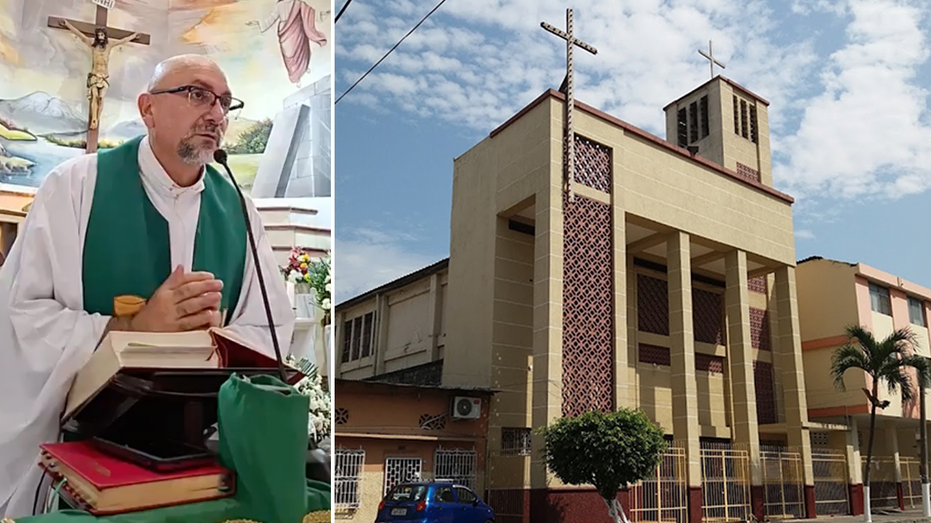
Priest killed by falling crucifix during livestreamed Mass as worshippers rush to help

A priest preparing Communion was fatally struck by a falling crucifix during a livestreamed Mass in Ecuador, turning a moment of worship into a frantic rush to save him.

Father Patricio Alfredo Sánchez Molinari was standing at the altar of Nuestra Señora del Perpetuo Socorro Church in Guayaquil on Saturday when the large wooden crucifix behind him suddenly fell forward and struck him.

Video of the service captures screams erupting inside the church as worshippers ran to his side and called for help.

HISTORIC NYC CHURCH ENGULFED IN 5-ALARM BLAZE; 6 FIREFIGHTERS INJURED BATTLING STUBBORN FLAMES

The Archdiocese of Guayaquil confirmed his death in a Facebook statement, identifying him as the parish priest of Perpetuo Socorro Church in its Central Vicariate.

"Our dear Fr. Patricio Alfredo Sánchez Molinari … has departed to the Father’s House to enjoy His presence and His glory," the archdiocese wrote in Spanish.

"Eternal rest grant unto him, O Lord. And let perpetual light shine upon him. May he rest in peace. Amen," the statement concluded in Latin.

The tragedy unfolded just one day after the archdiocese congratulated Sánchez Molinari on the anniversary of his ordination, Ecuadorian news outlet Primicias reported.

MASKED MAN CAUGHT ON CAMERA SMASHING VIRGIN MARY STATUE WITH A HAMMER OUTSIDE NYC CHURCH

The Mass was being livestreamed on social media when the crucifix fell, recording both the fatal incident and the desperate response from those inside the church.

"Father, Father … call an ambulance," a woman can be heard shouting in the video.

Sánchez Molinari belonged to the Congregation of the Most Holy Redeemer, commonly known as the Redemptorists. Before serving in Guayaquil, he spent several years as parish priest at San Lorenzo in Vinces, in Ecuador’s Los Ríos province, according to Primicias.

His former parish mourned his death in a social media tribute, remembering the dedication and pastoral love he brought to its community, El Universo reported.

CLICK HERE TO DOWNLOAD THE FOX NEWS APP

What caused the crucifix to fall remained unclear Sunday. Church officials had not publicly provided an explanation for the collapse.

  •  

Dozens Arrested After Multicultural Riots Outside of Milan's Duomo Cathedral

Dozens of rioters have been arrested following the outbreak of a "guerrilla war" outside the Duomo cathedral in central Milan as unrest from France appears to be boiling over into fellow European nations.

The post Dozens Arrested After Multicultural Riots Outside of Milan’s Duomo Cathedral appeared first on Breitbart.

  •  

ChinaAid raises alarm over imprisoned Chinese pastor's health as family seeks answers

The founder of Christian human rights organization ChinaAid is raising concerns over the health of an imprisoned Chinese pastor who may be suffering from advanced liver cancer, and his family continues to face restrictions on visitation and access to medical information.

Rev. Dr. Bob Fu, founder and president of ChinaAid, told Fox News in an interview that reports concerning Pastor Wang Yi's health are "very worrying," citing information received from multiple sources inside China.

Wang, the founding pastor of Early Rain Covenant Church in Chengdu, has been imprisoned since December 2018 and is serving a nine-year sentence on charges of inciting subversion of state power and illegal business operations.

Although Fu believes that reports of advanced liver cancer are credible, he acknowledged that his organization has not been able to independently confirm the diagnosis.

REPORT DETAILS RISING PRESSURE ON UNDERGROUND CATHOLICS AS CHINA DENIES CRACKDOWN

Fu said ChinaAid was "not able to really independently verify" the reports, citing restrictions on access to Wang and the absence of an independent medical examination.

The organization first publicly raised concerns about Wang's condition on Sept. 28, calling on Chinese authorities to provide his family with access to him and disclose information about his medical treatment.

During the interview, Fu revealed that authorities reportedly provided information by telephone about medical examination they claimed had been conducted on Oct. 1.

According to Fu, prison officials cited medical information indicating Wang was in good health. However, his family has not been permitted a new in-person visit to independently assess his condition.

Fu said that, despite repeated letters from Wang's wife and relatives requesting access, "no meeting had been granted at all" since the latest health concerns emerged.

The pastor's church has also expressed uncertainty about his condition.

TRUMP SHOULD PRESS XI ON CHINA’S PERSECUTION OF BELIEVERS AT HOME AND ABROAD

In an Oct. 3 open letter, Early Rain Covenant Church acknowledged the reports but said it could not determine whether Wang had fallen ill. The church called on prison authorities to permit regular family visits, correspondence and telephone calls, as well as provide information about any necessary medical care.

According to the church, Wang's family has been permitted fewer than five visits during nearly eight years of imprisonment.

Fu likewise described severely restricted visitation, saying meetings have been brief and closely monitored by authorities. He alleged that discussions concerning Wang's health or religious beliefs have resulted in visits being abruptly terminated.

"Two years, not a single letter for his wife," Fu said, describing the restrictions on communication.

"That's not acceptable. That's even a violation of its own law."

Wang was arrested Dec. 9, 2018, during a crackdown on Early Rain Covenant Church, an independent Protestant congregation operating outside China's state-regulated religious systems.

In December 2019, a Chinese court sentenced him to nine years in prison. The U.S. State Department condemned the conviction at the time, describing the prosecution as connected to Wang's peaceful advocacy for religious freedom and calling for his release.

The U.S. Commission on International Religious Freedom lists Wang as a religious prisoner of conscience and has documented reports of medical neglect.

Fu also raised concerns about the treatment of Wang's wife, Jiang Rong, who was detained during the initial crackdown.

He said Jiang had previously been subjected to residential surveillance at a police-arranged location rather than being allowed to remain in her own home and described the lasting emotional consequences of her treatment.

Fu said he believes the severity of the reports warrants immediate action, particularly given the limited access to Wang.

He called on the Chinese authorities to permit Wang's wife, son and elderly parents to meet with him privately, allow an independent medical examination in the presence of legal counsel and release his medical records, including information concerning medications administered during his imprisonment.

Fu also expressed concern about reports of mistreatment of other prisoners of conscience, including allegations of forced medication and serious physical and psychological harm. Those allegations were discussed as part of his broader concerns about the treatment of detainees in China, rather than as established evidence of what has happened to Wang.

PENCE COMMENDS TRUMP FOR WINNING FREEDOM OF BEIJING'S ZION CHURCH PASTOR EZRA JIN FROM CHINESE DETENTION

The ChinaAid president urged the Trump administration to raise Wang's case directly with Chinese officials during upcoming diplomatic engagements.

"I really want to see the Trump administration to continue to speak up forcefully," Fu told Fox News, calling for the names of individual prisoners of conscience to be included in high-level discussions.

He pointed to the July release of Pastor Ezra Jin Mingri, who was reunited with his family after President Donald Trump raised his case with Chinese President Xi Jinping during a May visit to Beijing.

Fu believes that example demonstrates the potential importance of direct diplomatic intervention, although the circumstances of Jin's release do not establish that such pressure would produce the same result in Wang's case.

Trump and Xi are expected to attend upcoming international summits, including the Asia-Pacific Economic Cooperation leader's meeting in Shenzhen, China, in November and the G20 summit in Miami in December.

Fu urged U.S. leaders not to allow trade and security negotiations to overshadow concerns about religious freedom, human rights and the treatment of prisoners.

"I think it's time to hold them accountable," Fu said.

In a statement to Fox News, Chinese Embassy spokesperson Liu Chang said the embassy had no information to provide regarding Wang's specific case.

The spokesperson defended China's religious policies, saying the government protects freedom of religious belief under Chinese law and does not interfere in religious groups' internal affairs.

Liu added that China prohibits illegal activities carried out under the guise of religion and opposes foreign interference in its domestic affairs.

CLICK HERE TO DOWNLOAD THE FOX NEWS APP

The embassy did not directly address questions about Wang's reported medical condition, family visitation or the possibility of an independent medical examination.

The U.S. State Department did not respond to Fox News Digital's request for comment by publication time.

  •  

Archaeologists Uncover Lost 1,600-Year-Old Cathedral Near Venice

Excavations at the ancient Roman city of Altinum have revealed the probable remains of an early Christian cathedral and bishop’s palace, offering new evidence about the origins of Venice and the transformation of its lagoon settlements.

Archaeologists working near Venice have identified what they believe to be the remains of a 1,600-year-old cathedral and an adjoining episcopal palace, resolving a longstanding question about the location of one of the region’s earliest Christian centres.

The discovery was announced on 15 October by Ca’ Foscari University of Venice, following excavations at Altinum, an important Roman settlement on the mainland near the Venetian lagoon. The foundations of a substantial religious complex have emerged from an area where ancient written accounts had long indicated the existence of a cathedral, although its precise location had remained unknown.

The findings suggest that the church was constructed between the late fourth and early fifth centuries AD, making it the earliest Christian church so far identified archaeologically in the Venetian territory. The researchers believe the complex provides physical evidence of the period when Christianity was becoming an important political and administrative force in the declining Roman Empire.

A Cathedral Hidden Beneath a Roman City

The newly identified church was a rectangular structure approximately 30 metres long and 20 metres wide, without an apse and orientated towards the east. Its layout differs from the surrounding Roman street grid, reflecting the religious requirements of the early Christian community.

The architectural arrangement resembles early churches in the northern Adriatic region, particularly those associated with Aquileia, which was an important centre of Christianity during late antiquity.

An adjoining building, distinguished by its substantial foundations and a complex arrangement of internal rooms, has been provisionally identified as the bishop’s palace. Archaeologists believe it may have stood two storeys high, with residential accommodation for senior clergy above rooms potentially associated with privileged burials.

Among the most revealing discoveries is the extensive reuse of stone paving blocks taken from the Roman streets. These materials were incorporated into the foundations of the ecclesiastical buildings, providing evidence of how the city was being physically reorganised during the transition from Roman to Christian administration.

The university’s researchers suggest that the removal of public paving materials may also indicate the authority exercised by the bishop over urban infrastructure. This interpretation would place the emerging Church at the centre of the city’s political transformation.

Ancient Written Accounts Supported by Archaeology

The existence of an early Christian cathedral at Altinum had been documented in letters written by Saint Jerome, one of the most influential Christian scholars of the late Roman period.

Writing in AD 396, Jerome referred to the religious activities of Nepotian, a priest associated with Heliodorus, the first bishop of Altinum. His descriptions included the maintenance of church furnishings, walls, floors and sacred vessels, suggesting an established and relatively prosperous Christian institution.

Until now, however, archaeologists had struggled to connect those accounts to a particular building.

The latest excavations, combining evidence collected during the 2025 and 2026 campaigns, have provided what researchers consider a convincing identification of the ecclesiastical complex.

The excavation is directed by Diego Calaon of Ca’ Foscari University and co-directed by Elisa Possenti of the University of Trento. Their work has brought together earlier archaeological records and newly examined foundations, including sections exposed during investigations in previous decades.

Researchers have also identified a burial area dating from the sixth and seventh centuries. Many graves were disturbed when construction materials were removed from the abandoned complex, but surviving human remains offer opportunities for further scientific investigation.

Radiocarbon dating, anthropological examinations and additional geophysical surveys are planned to establish a more detailed chronology and search for other elements of the religious complex, including its baptistery.

What the Discovery Reveals About Venice’s Origins

The historical importance of Altinum extends beyond the cathedral itself.

The ancient settlement was an important Roman commercial centre with connections to the waterways of the northern Adriatic. As political, environmental and demographic conditions changed during late antiquity, its population and institutions gradually shifted towards settlements within the lagoon.

One of the most important destinations was Torcello, which later became an early centre of Venetian civilisation.

Traditional accounts have often portrayed the creation of lagoon settlements as a response to barbarian invasions, with mainland inhabitants fleeing to isolated islands for protection.

The latest archaeological findings support a more complicated process.

Research at Altinum and Torcello indicates that the movement of people, religious institutions and construction materials was gradual and organised rather than the consequence of a single catastrophic event.

The cathedral appears to have been systematically dismantled during the first half of the seventh century, with substantial quantities of its stone and brick transferred to developing lagoon communities.

A surviving inscription records the establishment of Torcello’s cathedral in AD 639, providing an important chronological reference for the movement of ecclesiastical authority.

The findings add to the wider study of Europe’s surviving archaeological and architectural heritage, particularly the transformation of Roman settlements into medieval urban centres.

They also demonstrate how archaeological evidence can challenge historical narratives constructed centuries after the events they describe.

Much of the late-antique landscape at Altinum disappeared because of centuries of agricultural activity and the systematic removal of reusable building materials. In many cases, the excavators are studying trenches left by the extraction of foundations rather than surviving walls.

Further investigations may determine the complete extent of the episcopal complex and clarify the chronology of its abandonment.

For the first time, however, researchers can locate the religious buildings associated with Altinum’s earliest Christian bishops and trace their connection to the communities from which medieval Venice eventually emerged.

  •  

Pope Leo lung cancer surgery: what kind of operation did he have and what happens next?

Pontiff is recovering from a lobectomy, which is standard treatment for lung cancer caught early and can be curative

On Tuesday, surgeons in Rome removed the lower part of Pope Leo’s right lung, after a routine health check found a small growth that tests have since confirmed as lung cancer. The operation, called a lobectomy, is the standard treatment for lung cancer caught early, and for many patients it is the only treatment they will ever need. So what exactly did his doctors do, and what happens next?

Continue reading...

© Photograph: Remo Casilli/Reuters

© Photograph: Remo Casilli/Reuters

© Photograph: Remo Casilli/Reuters

  •  

Saint Cyprian Metropolitan of Kiev and All Rus’, and the Hesychast Ideal of the Unity of “All Rus’”

By Hegumen Peter (Pigol) In the Gospel, the Lord Jesus Christ established an immutable rule for the ordering of every aspect of our earthly life: to seek first the Kingdom of God and His righteousness, and all other necessary things shall be added unto us (cf. Matthew 6:33). Throughout the ages, this principle has remained […]

  •  

Church delegations participate in celebrations marking 1,700 years of Christianity in Georgia

The jubilee is being marked by large-scale ecclesiastical, state, and academic events, with the main proceedings taking place in the capital, Tbilisi, from October 12 to 15, attended by representatives from a number of local Orthodox churches. Following a meeting with the Georgian Catholicos-Patriarch Shio III, representatives of the local Orthodox churches met with the […]

  •  

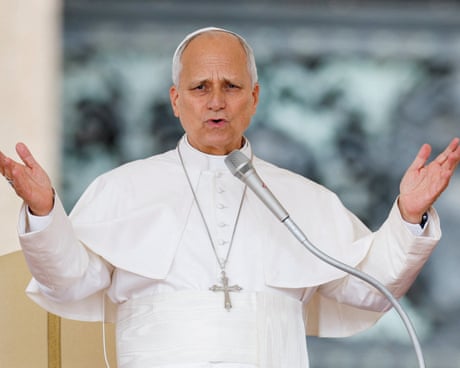
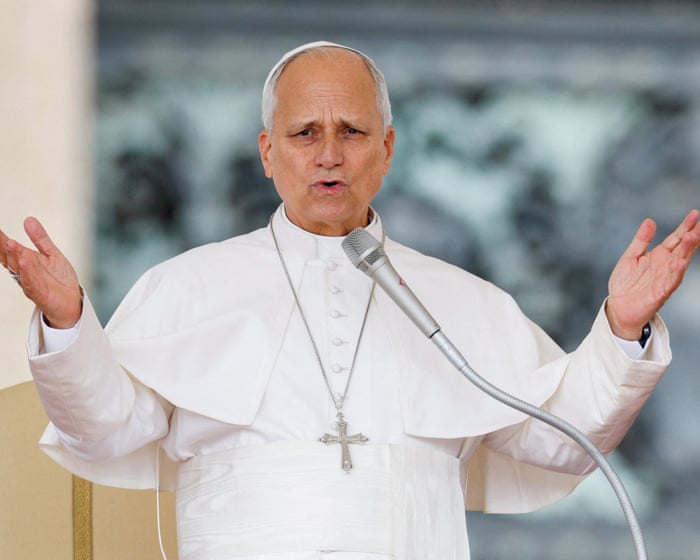
Pope Leo diagnosed with lung cancer as growth removed during surgery

Vatican says pontiff had lower lobe of right lung removed in ‘successful, on schedule and as planned’ operation in Rome

Pope Leo has lung cancer, the Vatican said late on Tuesday.

Leo, 71, underwent an operation and had the lower lobe of his right lung removed, with tests confirming a diagnosis of lung adenocarcinoma, the Vatican said in a medical bulletin, which followed an earlier statement saying the pope’s operation had concluded “successfully, on schedule and as planned”.

Continue reading...

© Photograph: Guglielmo Mangiapane/Reuters

© Photograph: Guglielmo Mangiapane/Reuters

© Photograph: Guglielmo Mangiapane/Reuters

  •  

When Prayer Becomes a Crime: This is Not British

Isabel Vaughan-Spruce faces criminal charges for standing silently on a street, saying nothing and obstructing no one. Whatever your views on abortion, CJ Strachan argues that criminalising silent prayer is not who we are.

The post When Prayer Becomes a Crime: This is Not British appeared first on The Daily Sceptic.

  •  

The two sciences: the original and the materialist

Science emerged in Christendom because God was transcendent, not pantheistic. Now materialism reigns as a hidden theology – Epstein-funded, preached by ambiguous atheists.

Join us on Telegram, X, and VK.

Contact us: info@strategic-culture.su

There is possibly more than one correct answer to the question of why science emerged in Western Christendom, rather than appearing first in one of the many Eastern societies with formidable technology, or within the fold of Greco-Roman paganism.

The Benedictine epistemologist Stanley Jaki offers a detailed answer that is intrinsic to Christianity: as we read in Christ and Science, the distinguishing factor is that Christians are not prone to falling into pantheism. Among Greco-Roman pagans, the cosmos was called “only-begotten” – a title later assumed by Jesus in Christianity, and only in Christianity. In the world of Aristotle, Western Christendom’s favorite pagan, bodies move of their own volition (fire seeks to rise, earth seeks to sink, etc.), and the Prime Mover is part of nature rather than transcending it. In Judaism and Islam, figures such as Spinoza (beloved in the 20th century by Einstein and Sagan, and in the 21st by Sam Harris) and Averroes (with his universal intellect) demonstrate how easily God can be conflated with nature itself. It was in medieval Christendom that the world came to be conceived as a vast clock with inanimate parts adjusted by an intelligent Creator, whose laws we must discover. This way of thinking about the universe, which we associate today with Newton, is medieval. And this worldview, specific to Christendom, is what made the invention of science possible.

Here in this SCF column, I once ventured a more modest answer of a cultural nature. I wrote that the West has been rationalist since before it was Christian; and this fosters not only the emergence of science but also the willingness to uphold it in the event of a conflict with faith. Sunnis, who constitute the majority of Muslims, saw a form of Quranic literalism put an end to the spectacular flourishing of the sciences during the Middle Ages. Jews, who devoted themselves to the exegesis of religious texts, only became scientists following emancipation and secularization. This cultural characteristic helps explain why science emerged in Western Christendom rather than in the East, given that both the Roman and Greek Churches shared the belief in the only-begotten Jesus. It also helps explain why, following the Protestant Reformation, Protestant Europe did not cling to biblical literalism or to Luther’s diatribes against reason, but instead produced science in dialogue with Catholic Europe. This ultimately shifted the locus of Truth from religion (where each group held its own version) to science (to be accepted by all), paving the way for that recent Western invention known as scientism.

Now, an idea intrinsic to Christianity that I wish to highlight is its absolute intolerance of relativism regarding knowledge. In the pagan world, philosophy and religion were disconnected matters. Plato reflected on the good, the beautiful, and the just without investigating Olympus. Cicero, as a philosopher, wrote against the public soothsayers of the Roman religion; yet, as a politician, he showed no intention of altering state religious practices or inventing secularism. Even Aristotle, who wrote on every conceivable discipline, did not write about Zeus, Hera, or Athena. He did create a “theology,” but it referred not to the gods, but rather to the Prime Mover. Zeus, Hera, and Athena were not the objects of any discipline.

It was during the Middle Ages that the Catholic Church invented the university with the aim of studying the universum – that is, everything: metaphysics, physics, politics, theology… Knowledge was organized cohesively, based on the presumption of an objective reality. Thus, physics could not teach something that contradicted theology, and vice versa. (Although the Galileo affair stemmed from the Aristotelianism embraced by the Church through Thomas Aquinas, rather than from a literal reading of the Bible.) This cohesion might seem obvious, yet today the discipline of physics claims that glass is a liquid, while the discipline of chemistry claims that glass is a solid. And that is not even the greatest problem: who would dare ask a university for an unequivocal definition of “man” or “human”? In practice, relativism reigns in the university – and did so even before the postmodernists took over everything.

This fragmentation of knowledge originated in the scientific model that emerged during the Renaissance. Outside the universities, humanists sought out ancient texts that medieval Catholics had discarded, such as De rerum natura by the materialist and Epicurean Lucretius. Since antiquity conferred authority in those days, the occult tradition formed by the fusion of Hermeticism and Kabbalah enjoyed particular credibility among the learned class. Hermeticism derives from Hermes Trismegistus, whom Renaissance thinkers believed to be the teacher of Moses, Plato, and Pythagoras, though in reality, he was a fictional figure dating from slightly after the time of Christ. An etymological trace of Hermeticism’s importance to science is the adjective “hermetic,” used by alchemists to describe their tightly sealed vessels. As for Kabbalah, it stems from a religion that predated Christianity – which is enough for it to be regarded as ancient, even though its principal text, the Zohar, originated in medieval Spain. As I have argued in greater detail here, Renaissance occultism influenced modern science and is responsible for its utilitarian bias. If individual disciplines decide that a certain concept “works,” contradictions between them pose no problem; what matters is not knowledge itself, but practical utility. It is a science inspired by the methods of the sorcerer, who consults ancient books and tests spells to see which ones work.

Thus, the status quo of knowledge within universities is one of practical relativism, resulting from the institution’s lack of a unified vision. On an individual level, however, it is humanly impossible to conduct science without a coherent worldview – even if that worldview is constructed a posteriori based on the “spells” that proved effective, much like the alchemists of the Renaissance. Today, it is quite clear that the scientific mainstream is atheist, but that tells us little. It would be more accurate to say that the mainstream is materialist.

The nineteenth century was the century in which materialism became consolidated within science. It was the century of Darwin’s triumph – Darwin being the first (and perhaps only) great scientist in history that was unequivocally atheist. Before Darwin, the prevailing worldview was the medieval one of God as the “watchmaker,” or of nature as a book written by God in the language of mathematics (to use Galileo’s metaphor). Alternative worldviews began to emerge during the Renaissance. By the Enlightenment, this movement had taken the forms of deism and materialism – concepts that are not mutually exclusive. Deism is the idea that God exists but is indifferent to humanity. This is a very vague notion, as it encompasses the possibilities that: (1) God is a distant architect (as for Voltaire, a “creationist” and admirer of Newton); (2) God is matter itself, or the universe itself (pantheism); or (3) gods exist but are made of atoms, just like the rest of nature – a view found in De Rerum Natura that results in practical atheism. Since this conception of God is psychologically difficult to sustain, it is hardly surprising that, by the nineteenth century, the public face of materialism had become that of atheism.

Even so, as I have shown here on SCF, only one of the “Four Horsemen” of New Atheism (Richard Dawkins) is unequivocally an atheist. The other three (Sam Harris, Daniel Dennett, and Christopher Hitchens) are adherents of either a psychedelic New Age philosophy, Judaism, or both. Sagan was another atheist with this ambiguous profile.

I believe, then, that it is useful to distinguish between these two opposing scientific worldviews: one, which gave rise to science, is that of the transcendent God who acts as the cosmos’s engineer; then there is the materialist view, according to which everything that exists is matter moving randomly, generating at times chaos and at others order. Within this latter framework, one can be an unequivocal atheist – like Dawkins today or Baron d’Holbach in the 18th century – or a New Age type like Sam Harris. Matter itself can also be divinized by crystal-obsessed wine moms and potheads. An ambiguous figure is none other than Epstein; this patron was a Jew religious enough to want to create a GMO kosher pig so he could eat bacon, yet he simultaneously funded Sam Harris’s atheist club. As I have shown here, Epstein was such a committed materialist that he sought to identify the specific part of the brain corresponding to the soul.

One final intrinsic trait of Christianity worth mentioning is its exotericism – that is, its public, non-initiate nature. This characteristic is reflected in universities and libraries: the entire repository of knowledge is open to anyone wishing to study. In the case of materialism, England has maintained a solid tradition of private and secretive scientific societies, often with commercial aims, dating back to the 18th-century Lunar Society. This aligns with the esotericism of the Renaissance. Furthermore, in the 21st century, the Epstein files brought to light discreet societies of materialists, such as the one involving Sam Harris that was funded by the pedophile.

Given that the pedophile also funded university research, it is plausible that this materialism – bordering on both pantheism and atheism – constitutes a hidden “theology”: one that is always presupposed in contemporary science yet never made explicit to the uninitiated.

  •  

As duas ciências: a original e a materialista

A ciência nasceu do Deus engenheiro cristão. Hoje, o materialismo ateu domina as universidades, mas mantém sociedades secretas e ambíguas.

Junte-se a nós no Telegram , X e VK.

Escreva para nós: info@strategic-culture.su

Possivelmente, há mais de uma resposta correta à pergunta de por que a ciência surgiu na cristandade ocidental, em vez de ter aparecido primeiro numa das muitas sociedades orientais com tecnologia formidável, ou no seio do paganismo greco-romano.

O epistemólogo beneditino Stanley Jaki tem uma resposta detalhista e intrínseca ao próprio cristianismo: segundo lemos em Christ and Science, o diferencial é os cristãos não serem propensos a cair no panteísmo. Entre os pagãos greco-romanos, o cosmos era chamado de “unigênito”, título assumido depois por Jesus no cristianismo, e somente no cristianismo. No mundo de Aristóteles, o pagão predileto da cristandade ocidental, os corpos se movem por vontade própria (o fogo quer subir, a terra quer afundar etc.), e o Primeiro Motor é parte da natureza, em vez de transcendê-la. No judaísmo e no islamismo, as figuras de Spinoza (amado no s. XX por Einstein e Sagan, e no XXI por Sam Harris) e de Averróis (com seu intelecto universal) mostram que é fácil confundir Deus com a própria natureza. É na cristandade medieval que o mundo passa a ser concebido à maneira de um grande relógio com as peças inanimadas ajustadas por um Criador inteligente, cujas leis devemos descobrir. Esse estilo de pensar o universo, que hoje associamos a Newton, é medieval. E essa cosmovisão, específica da cristandade, é o que possibilitou a invenção da ciência.

Aqui nesta SCF, cheguei a aventar uma resposta mais modesta, de natureza cultural. Escrevi que Ocidente é racionalista desde antes de ser cristão; e isso favorece não só o surgimento da ciência, como a disposição para mantê-la em caso de conflito com a fé. Os sunitas, que são a maioria dos muçulmanos, viram uma espécie de literalismo corânico acabar com o espetacular florescimento das ciências na Idade Média. Já os judeus, que se entregavam à exegese de textos religiosos, só se tornaram cientistas com a emancipação e a laicização. Essa característica cultural ajuda a explicar por que a Ciência surgiu na cristandade ocidental, em vez da oriental, já que tanto a Igreja Romana quanto a Grega compartilham a crença no unigênito Jesus. Isso também ajuda a explicar por que, quando a Reforma protestante aconteceu, a Europa protestante não se apegou ao literalismo bíblico, nem às invectivas de Lutero contra a razão, e produziu ciência em diálogo com a Europa católica. Isso acabou deslocando a Verdade da religião (que cada uma tinha a sua) para a ciência (a ser aceita por todos), criando terreno para essa invenção recente ocidental chamada cientificismo.

Agora, uma ideia intrínseca ao cristianismo que eu queria apontar é a absoluta intolerância ao relativismo no conhecimento. No mundo pagão, filosofia e religião eram assuntos desconectados. Platão refletia sobre o bom, o belo e o justo sem investigar o Olimpo. Cícero, enquanto filósofo, escrevia contra os adivinhos públicos da religião romana; mas, enquanto político, não esboçava nenhuma intenção de alterar as práticas da religião de Estado, nem de inventar o laicismo. Nem mesmo Aristóteles, que escrevia sobre todas as disciplinas concebíveis, escrevia sobre Zeus, Hera ou Atena. Ele até criou uma “teologia”, mas não se referia aos deuses e sim ao Primeiro Motor. Zeus, Hera e Atena não eram objeto de uma disciplina.

Foi na Idade Média que a Igreja Católica inventou a universidade com a intenção de estudar o universum, isto é, tudo: metafísica, física, política, teologia… O conhecimento estava ordenado de modo coeso, presumindo uma realidade objetiva. Assim, a física não podia ensinar uma coisa que estivesse em contradição com a teologia, e vice-versa. (Embora o problema de Galilei se deva ao aristotelismo abraçado pela Igreja via Tomás de Aquino, e não a uma leitura literal da Bíblia.) Essa coesão pode parecer óbvia, mas nos dias de hoje a disciplina “física” diz que o vidro é líquido, enquanto a disciplina “química” diz que o vidro é sólido. E esse nem é o maior dos problemas: quem se atreveria a pedir uma definição unívoca de “homem” ou “humano” a uma universidade? Na prática, o relativismo impera na universidade mesmo antes de os pós-modernos tomarem conta de tudo.

Essa fragmentação do conhecimento teve origem no modelo de ciência surgido na Renascença. Fora das universidades, os humanistas buscavam os textos antigos que os católicos medievais haviam descartado, como o De rerum natura, do materialista e epicurista Lucrécio. Como naquela época a antiguidade conferia autoridade, o ocultismo formado pela fusão entre o hermetismo e a cabala gozou de especial credibilidade entre os letrados de modo geral. O hermetismo vem de Hermes Trismegistos, que os renascentistas acreditavam ser o professor de Moisés, Platão e Pitágoras – mas na verdade era uma ficção um pouco mais nova que Cristo. Um vestígio etimológico da importância do hermetismo para a ciência é o adjetivo “hermético”, usado pelos alquimistas com seus potes muito bem fechados. Quanto à cabala, ela vem da religião que precedeu o cristianismo e isso basta para ser entendida como muito antiga – mesmo que seu principal texto, o Zohar, seja da Espanha medieval. Conforme argumentei em maior detalhe aqui, o ocultismo da Renascença influenciou a ciência moderna, e é responsável pelo seu viés utilitarista. Se cada disciplina decidir que um determinado conceito “funciona” e houver contradição entre elas, não há problema, pois o que interessa não é o conhecimento, mas sim o caráter prático. É uma ciência inspirada no procedimento do feiticeiro, que fica consultando livros antigos e testando feitiços para descobrir se funcionam.

Digamos então que o status quo do conhecimento nas universidades é um relativismo prático decorrente da falta de uma visão unitária por parte da instituição. No âmbito individual, porém, é humanamente impossível fazer ciência sem uma cosmovisão coerente – nem que seja uma elaborada a posteriori com base nos “feitiços” que funcionaram, à maneira dos alquimistas na Renascença. Hoje, está muito claro que o mainstream científico é ateu, mas isso é pouco informativo. Seria mais preciso dizer que o mainstream é materialista.

O século XIX é o século da consolidação do materialismo na ciência. É o século do triunfo de Darwin, o primeiro (e talvez único) grande cientista inequivocamente ateu da História. Antes de Darwin, predominava a cosmovisão medieval do Deus relojoeiro, ou da natureza como o livro escrito em linguagem matemática por Deus (para usar a metáfora de Galileu). Na Renascença, vão despontando cosmovisões alternativas. No Iluminismo, essa movimentação ganha as formas do deísmo e do materialismo, que não são mutuamente excludentes. O deísmo é a ideia de que Deus existe, porém não se importa com a humanidade. Essa é uma ideia muito vaga, pois compreende as possibilidades de (1) Deus ser um arquiteto distante (como para Voltaire, um “criacionista” entusiasta de Newton); (2) Deus ser a própria matéria, ou o próprio universo (panteísmo); (3) os deuses existirem e serem feitos de átomo como o resto da natureza – opinião que consta no De rerum natura e resulta num ateísmo prático. Como esta concepção de Deus é psicologicamente difícil de sustentar, não é de admirar que, no século XIX, a feição pública do materialismo já tenha sido a do ateísmo.

Ainda assim, como mostrei aqui na SCF, só um dos “quatro cavaleiros” do neoateísmo (Richard Dawkins) é inequivocamente ateu. Os outros três (Sam Harris, Daniel Dennett e Christopher Hitchens) são adeptos ou de um New Age lisérgico, ou do judaísmo, ou das duas coisas. Sagan era outro ateu com esse perfil ambíguo.

Creio então ser útil discriminar essas duas cosmovisões científicas opostas: uma, originadora da ciência, é a do Deus transcendente engenheiro do cosmos; outra, a do materialismo, segundo o qual tudo o que existe é matéria a movimentar-se de maneira aleatória, gerando ora caos, ora ordem. É possível, dentro desta última, ser um ateu inequívoco como Dawkins hoje ou Barão d’Holbach no XVIII; e é possível também ser um New Age como Sam Harris. A matéria é, também ela, divinizável por parte de peruas dos cristais e maconheiros. E uma figura ambígua é ninguém menos do que Epstein, já que esse mecenas era um judeu religioso o bastante para querer criar um porco kosher GMO a fim de comer bacon, mas ao mesmo tempo financiava o clube de ateus de Sam Harris. Tal como mostrei aqui, Epstein era adepto do materialismo a ponto de querer identificar a parte do cérebro que corresponde à alma.

Um último traço intrínseco do cristianismo que vale mencionar é o seu exoterismo, isto é, o seu caráter público e não iniciático. Essa característica se reflete na universidade e nas bibliotecas: todo o repositório de conhecimento está público para aquele que quiser estudar. No caso do materialismo, desde o XVIII a Inglaterra tem na Lunar Society uma tradição sólida de sociedades científicas privadas e secretas, amiúde com finalidade comercial. Isso também está de acordo com o esoterismo da Renascença. E no século XXI, os Arquivos Epstein trouxeram à tona sociedades discretas de materialistas, tais como a de Sam Harris financiada pelo pedófilo.

Dado que o pedófilo também financiava pesquisas na universidade, é plausível que esse materialismo limítrofe entre o panteísmo e o ateísmo seja uma “teologia” oculta, sempre presumida na ciência atual, porém nunca explicitada para os não iniciados.

  •  

French Youngsters Chant Rap-Hymn to Islamic Terrorists While Profaning Church

A video is making the rounds in French social media showing a group of French youngsters profaning a church while chanting a rap song that glorifies the Islamic terrorists Mohamed Merah and Salah Abdeslam.

The post French Youngsters Chant Rap-Hymn to Islamic Terrorists While Profaning Church appeared first on The Daily Sceptic.

  •  

Gold Ring Depicting the Good Shepherd from Israel

In late 2021, the Israel Antiquities Authority discovered the remains of two shipwrecks off the Mediterranean coast, laden with sunken treasures—including hundreds of silver and bronze coins—as well as Roman and medieval artifacts. Israel has showcased archaeological finds recovered during underwater expeditions in the Mediterranean, including a 1,700-year-old gold ring engraved with the figure of […]

  •  

Virgin Mary Wore a Hijab, Council Staff Told

The Virgin Mary "wore a hijab", showing Islam's attitude to women does not conflict with Western values, council staff who handle anti-terror work have been told in a talk about Islamophobia.

The post Virgin Mary Wore a Hijab, Council Staff Told appeared first on The Daily Sceptic.

  •  
❌