❌

Reading view

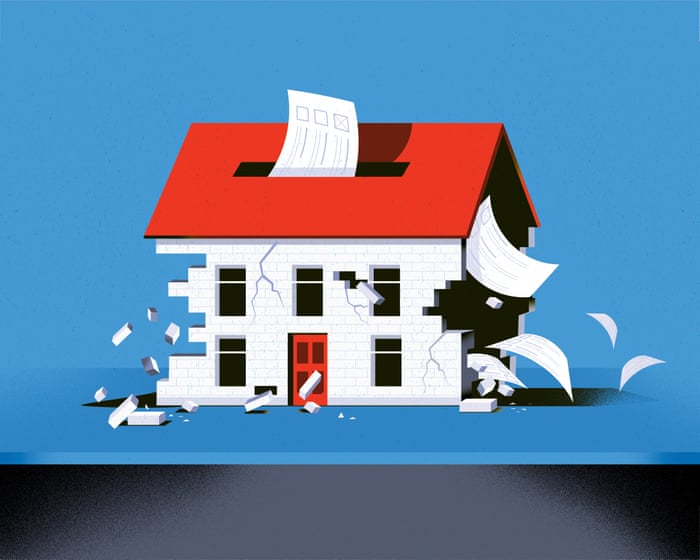
House prices falling in every Australian capital city for first time in 15 years

House prices in Sydney are at a two-year low after falling 4.7% in the September quarter to $1.66m, according to Domain report

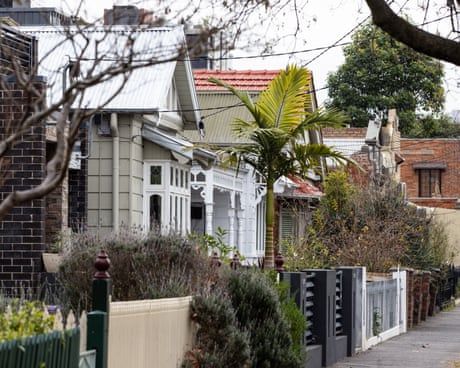
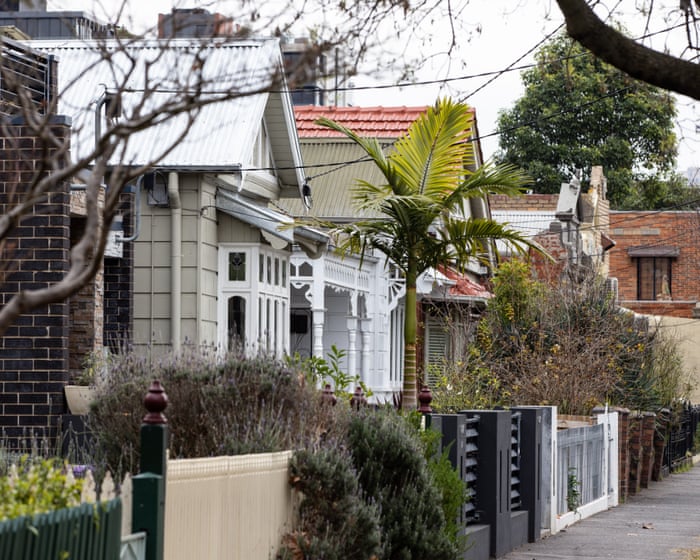
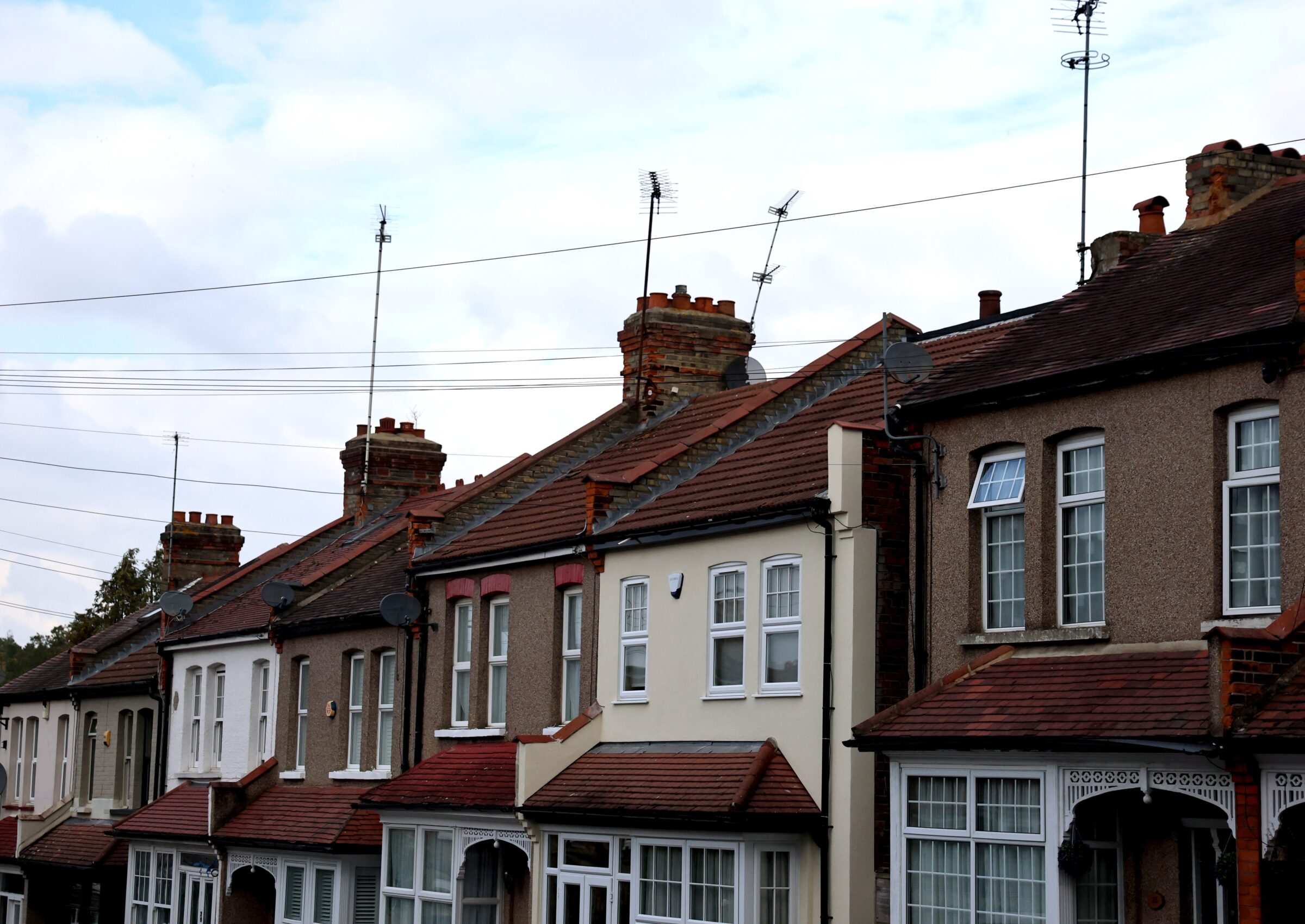
House prices are falling across every capital city for the first time in 15 years and the second time on record, according to figures from Domain’s September Quarter 2026 House Price report.

House prices in Sydney are at a two-year low after falling 4.7% in the September quarter, to $1.66m.

Continue reading...

© Photograph: Diego Fedele/AAP

© Photograph: Diego Fedele/AAP

© Photograph: Diego Fedele/AAP

  •  

Peggy Flanagan Promised Millions to Somali-Focused Nonprofits: They 'Know How to Spend that Money Best'

Minnesota Lt. Gov. Peggy Flanagan (D), now running for U.S. Senate, promised a Somali audience in 2023 to seek funding for “culturally relevant treatments and care” and support multifamily housing.

The post Peggy Flanagan Promised Millions to Somali-Focused Nonprofits: They ‘Know How to Spend that Money Best’ appeared first on Breitbart.

  •  

[Interview] ‘I hear MEPs say Muslims are a threat, with no consequences. I say Free Palestine and I’ll be arrested’ – MEP Benedetta Scuderi warns protest repression is being normalised in Europe

As protests continue to ripple across European cities, the Italian Green MEP Benedetta Scuderi reflects on her own experiences of police repression, from holding a peace flag near a Brussels protest to facing the fury that followed the flotilla to Gaza. She spoke to EUobserver about the EU’s housing priorities, Italy’s elections, and how the far-right has captured freedom of expression for its own use.

You were detained by police in July, a few hundred meters from a far-right protest calling for “re-migration”. How has the rise of the far-right stalled some key areas, like freedom of speech?

The rise of the far-right is really threatening European democracy as we know it. It has never been perfect, but it allowed people to protest. Now, we only let certain people express their dissent. 

In the European Parliament, people can discriminate and use hate speech because of their freedom of expression, but as you go out of parliament with a Palestinian flag, then you’re a terrorist. So, how is it possible that last Strasbourg plenary, I could hear my colleagues saying that Muslims are a threat, and there are no consequences? And then I go out and I say, “Free Palestine,” and I’ll be arrested.

This double standard is extremely problematic. The fact that not allowing fascist symbols within the parliament also meaning that no other symbol can be shown, is not okay. Because we need to be fine to say that certain things are discriminatory and against European values, without having to say that everything else is not allowed. 

We also need to be able to accept dissent. What is happening all over Europe, with violence increasing towards activists, we’re seeing it target only a certain kind of activists. In Italy, fascist protests are ignored by police. Farmers can come to the parliament with tractors, and that’s completely fine. And then we have 20 people doing a sit-in for Palestine in front of the parliament, and getting their heads smashed. 

This article continues, but the full version is available only to EUobserver.com subscribers. Visit account.euobserver.com/membership

  •  

Greek Students Protest Rising Rents, Demand Affordable Housing

Greek students and teachers protest rising rents and demand affordable housing in Athens and Thessaloniki.

Students and teachers in Athens and Thessaloniki demand affordable housing, higher wages and increased funding for public education.


Students and teachers in Greece have mobilized in Athens and Thessaloniki to demand affordable housing, higher wages and greater investment in public education, joining a wave of youth-led protests over rising living costs and housing insecurity across Europe.

RELATED: Meloni Announces Decree Targeting Juvenile Gangs and Violent Street Demonstrations

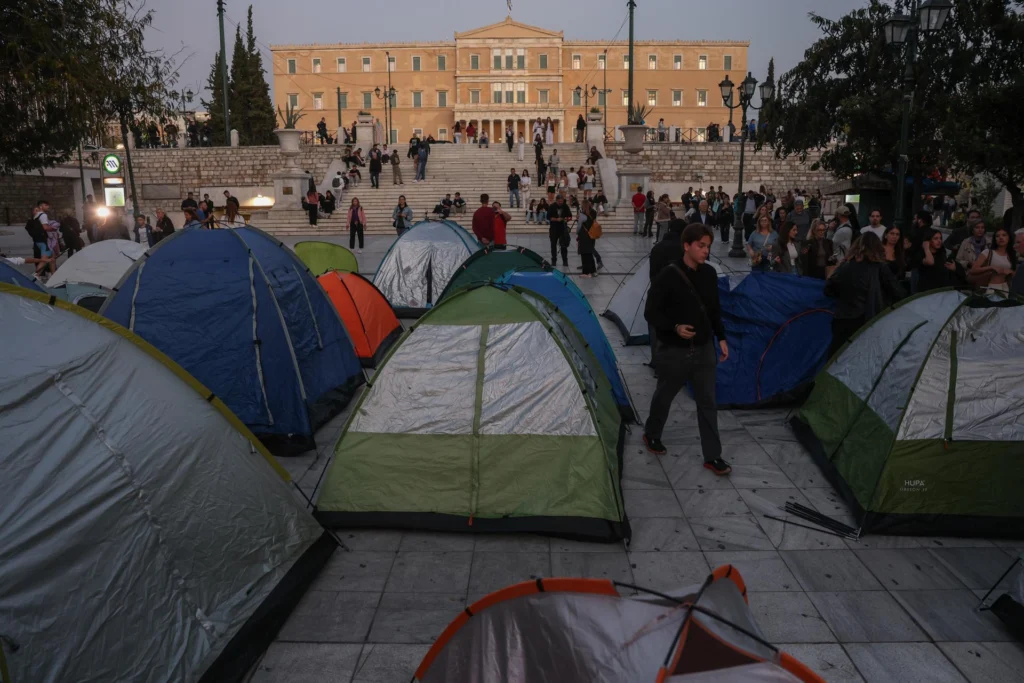
Tents have been erected in Athens’ Syntagma Square and in Thessaloniki as demonstrators call for fair rents, more university housing and increased funding for public education.

Authorities deployed more than 3,000 police officers in Athens to monitor a demonstration scheduled for Wednesday, organized by students and teachers. The protests come amid similar mobilizations in France, Spain, Italy, Portugal and Albania, where young people are challenging housing costs that they say make it increasingly difficult to combine work or study with securing a home.

Students pitch tents near Greek parliament over rising costs

📍 Students set up tents in Athens’ Syntagma Square, near the Greek parliament

➡️ The protest highlights rising living costs and soaring rents in Greece https://t.co/oWWMU3xUax pic.twitter.com/N8YzeW9lZa

— Anadolu English (@anadoluagency) October 20, 2026

The Greek primary school teachers’ union, DOE, called a 24-hour strike to demand a 20% pay rise, housing assistance for teachers assigned to work in other cities and improvements to school facilities.

Around 20 student associations in Athens joined the mobilization, planning to march alongside teachers. Their demands include decent housing for all university students, particularly those from low-income families who move to other cities to pursue their studies, higher student allowances and more places in public university residences.

Students are also calling for lower electricity and heating fuel costs, highlighting the pressure of energy expenses alongside the cost of accommodation.

The demonstrations reflect broader grievances among young Europeans over housing affordability. Protesters across several countries have pointed to property speculation, tourism-driven pressures on housing and austerity policies imposed by the European Union as factors affecting their ability to secure a home.

Athens Mayor Haris Dukas, a social democrat, expressed support for students and teachers while making clear his opposition to violent protests.

The demonstrations add Greece to a broader wave of Generation Z mobilizations across Europe over housing costs, economic pressures and access to public services, with students and educators pressing for changes to living and working conditions.

  •  

The Portuguese Continue to Fight for the Right to Housing

Protesters condemn police violence after authorities dismantle a housing encampment.

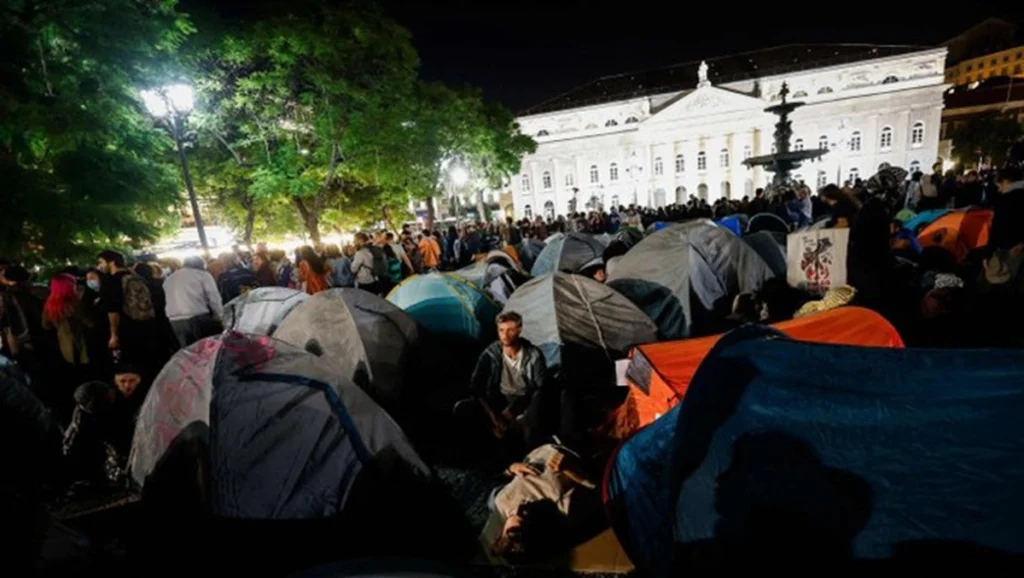
On Tuesday, thousands of people gathered in central Lisbon for a popular assembly where they decided to set up again the housing encampment that police dismantled in the early hours of the morning.

RELATED:

Portuguese Police Attack Housing Protesters in Oporto

At Don Pedro IV Square, citizens protested with signs and chants against the housing crisis and condemned police violence. They were particularly critical of Prime Minister Luis Montenegro and Interior Minister Luis Neves, whom they blamed for the beatings, shoving and removal of tents while people were still inside them.

In this context, the protesters said security conditions were not in place to continue the encampment on Tuesday, but left open the possibility of pitching the tents again Wednesday.

“The proposal is as follows: Is there a popular will in this square to resume the encampment with tents starting tomorrow?” one of the movement’s spokespeople asked before inviting anyone who wished to speak to present their demands. Those in attendance voted in favor of setting up the tents again tomorrow.

🇵🇹 À Lisbonne et à Porto, aux premières heures de la matinée du 20 octobre, la police portugaise a démantelé les tentes des manifestants qui y avaient campé pour revendiquer un logement décent, à Lisbonne et à Porto. pic.twitter.com/kDn9ZIh8Jj

— Press TV Français (@fr_presstv) October 20, 2026

The text reads, “In the early hours of October 20, Portuguese police dismantled the tents of protesters who had been camping in Lisbon and Porto to demand decent housing.”

Demonstrations and protests for the right to housing have spread across the country, including in cities such as Faro and Coimbra, although the largest gatherings have been in Lisbon and Porto.

“More than 400 people gathered at 8 de Maio Square in Coimbra, near City Hall and the Monastery of Santa Cruz, to demand solutions to the housing crisis,” Portuguese outlet SIC Noticias reported.

“‘I want a roof, I want a floor, I want the right to housing,’ protesters shouted. They also called for concrete and urgent measures to resolve a problem that persists across all ages and social classes.”

“Housing is a right. Without it, nothing works,” “The housing problem cannot be solved with baton blows,” “Peace, bread, and the right to housing” and “Homes to live in, not to speculate on” were among the slogans chanted by protesters.

Gathered at Largo da Republica, demonstrators also held signs emphasizing that the “Right to housing is enshrined in the Constitution.”

Tensions between protesters and authorities have been escalating for several days, as the government maintains that street protests cannot continue into the early hours of the morning.

“There is a right to demonstrate and to explain the reasons for doing so, all of that in complete peace of mind, with complete normality and within the law. Anything that crosses the boundaries of legality and constitutes a violation of the law will, naturally, receive an appropriate response from the security forces,” said the Interior Minister, who believes the encampments have come to an end.

teleSUR/ JF

Sources: EFE – SIC Noticias

  •  

MEPs push to use EU regional funds for affordable housing and climate‑proofing cities

The European Parliament has called for more spending to build affordable houses — using funds for regional development that currently make up a third of the EU budget.

Cohesion funds should be used to protect the ‘right to stay’ in rural areas or in small cities, a principle that the parliament wants to write into the new budget legislation.

Peripheral regions often face depopulation due to few job opportunities, according to a parliamentary non-binding report passed with 601 votes in favour, 20 against, and 36 abstentions on Tuesday (20 October).

MEPs are also calling for strong cohesion funds that would allow cities to better prepare for climate emergencies and provide a budget for additional investments in housing.

Cohesion funds, which account for a total of €48.03bn in the existing 2021-2027 EU budget, usually finance infrastructure projects, like bridges, roads, or railways in countries with a lower-than-average per capita gross national income.

The commission proposed significant cuts to reduce regional funds in the next multi-annual budget, set to cover 2028-34, but a group of 16 member states, often benefitting from the funding, opposed the reduction.

Regional development plays a key role in European integration since it is the “only instrument which can unite all of us,” and should not be reduced in the next EU budget, said Left Lithuanian MEP Vytenis Povilas Andriukaitis during a plenary debate on Monday (19 October).

Cohesion funds “could be the response to the radicalisation of Europe,” Fredis Beleris, a German centre-right MEP said.

For that to happen, cohesion funds must be accessible for small and medium-sized cities, who often struggle with formalities linked to EU funds, said Denis Nesci, Italian conservative MEP spearheading the file.

Small municipalities should be able to access cohesion funds “on an equal footing as bigger cities,” he said, echoing the dominant centre-right commission’s position and its aim to simplify regulations.

  •  

Housing Slump Worsens Amid Higher Rates

The American housing market deteriorated sharply in September as rising mortgage rates drove pending home sales to a record low and sent home construction tumbling, according to reports released Tuesday. The National Association of Realtors said its index of pending

The post Housing Slump Worsens Amid Higher Rates appeared first on Breitbart.

  •  

High prices put Trump’s economy in the spotlight as the GOP fights to hold Congress

While Americans prepare to cast their ballots for who should control Congress and their local governments, the cost of filling a gas tank, paying rent and buying a home is becoming a defining test of the economy leading up to the 2026 midterms.

The latest inflation report underscores the challenge facing President Donald Trump and Republicans as they campaign on the economy and vow to improve conditions for American consumers. Trump returned to the White House promising to lower costs and is now campaigning for GOP candidates in key races, but the reality is something quite different.

With Election Day less than two weeks away, rising prices are testing whether voters feel like Republicans have done enough to improve the economy and their financial well-being.

ONE STATE IS GROUND ZERO AS TRUMP'S MULTIBILLION-DOLLAR TECH AMBITIONS FACE A MIDTERM TEST

And that pressure showed up in the latest inflation report, which found consumer prices rose 3.7% over the past year and 0.6% in September alone. The Consumer Price Index (CPI) tracks the prices households pay for a broad range of goods and services, from food and gasoline to housing and medical care.

Gasoline was a major driver, with its index jumping 9.1% for the month. But the gas to fill up the tank is not the only fuel cost putting pressure on households.

The diesel used to power trucks, farm equipment and freight trains is also surging, which has raised the cost of moving groceries, packages and building materials — another charge that has trickled down to how much Americans pay for those goods.

Additionally, the Iran war has disrupted shipping through the Strait of Hormuz, further tightening global fuel supplies, while disruptions to Russian energy infrastructure have added pressure.

Utility costs are adding to the squeeze as colder weather approaches. Electricity prices were up 4.4% from a year earlier in September, while piped natural gas service rose 5%, according to the CPI.

Those figures track prices, not what any one household paid, so a local customer's bill can show how the increase is landing in real life.

REPUBLICANS JUST GOT A POWERFUL NEW PLAYBOOK FOR THE BATTLE FOR CONGRESS. HERE'S WHAT'S INSIDE.

Housing costs also continued to climb. The shelter index, which tracks rents and a measure of what homeowners would pay to rent their homes, rose 3.2% over the past year. Grocery prices offered some relief, dipping 0.1% in September, though they remained 1.8% higher than a year earlier.

Additionally, Trump's trade agenda is another part of the affordability debate.

A New York Fed study found that tariffs in place through February added 2.9 percentage points to consumer-goods inflation. Tariffs are taxes on imported goods, and U.S. companies that pay them can pass some of the added cost along to shoppers.

The study found that higher prices also affected some goods made in the United States, as domestic producers faced less competition from imports. The White House has argued that its trade policies will strengthen U.S. manufacturing and that foreign exporters bear the costs.

Housing presents a different affordability challenge. The median price of an existing home reached $417,500 in September, up 1.3% from a year earlier, while the average 30-year mortgage rate was 7.4%.

AMERICAN-MADE GOODS ALSO GOT MORE EXPENSIVE UNDER TRUMP TARIFFS, NEW RESEARCH FINDS

CLICK HERE TO DOWNLOAD THE FOX NEWS APP

The latest figures give voters a snapshot of what they are paying, but not a verdict on who is to blame.

With Election Day approaching, Trump and Republican candidates will have to convince voters that their policies can make everyday costs more manageable.

  •  

Exclusive — HUD Secretary Scott Turner Defends Trump’s Housing Reforms: ‘America Cannot Regulate Its Way to Affordability’

Housing and Urban Development (HUD) Secretary Scott Turner defended the Trump administration’s efforts to address housing affordability in an exclusive statement to Breitbart News on Monday, as newly released data showed confidence among U.S. homebuilders falling to its lowest level since June 2012 amid rising mortgage rates, construction costs, and weakening buyer demand.

The post Exclusive — HUD Secretary Scott Turner Defends Trump’s Housing Reforms: ‘America Cannot Regulate Its Way to Affordability’ appeared first on Breitbart.

  •  

EU Ministers Agree New Homelessness Measures as Housing Costs Continue to Rise

European Union ministers have adopted a new recommendation calling for stronger measures to prevent homelessness and housing exclusion, as governments face increasing pressure over housing shortages and the cost of accommodation.

The recommendation was approved at a meeting of employment and social affairs ministers in Luxembourg on Monday, 19 October, and forms part of the European Commission’s wider efforts to address Europe’s housing crisis.

It proposes measures ranging from early intervention for households facing eviction to increased investment in affordable housing, improved access to social services and more coordinated support for people without permanent accommodation.

However, the recommendation is not legally binding. Member States will retain responsibility for deciding which measures to introduce, how they should be financed and the extent to which existing national housing policies should be changed.

More than one million people affected

According to the Council’s announcement, more than one million people are estimated to experience homelessness across the European Union.

The problem extends beyond people sleeping on streets or using emergency shelters.

The term housing exclusion also encompasses households living in inadequate accommodation, people facing imminent eviction and those unable to secure stable housing because of financial or personal circumstances.

The Council identifies poverty, unemployment, domestic violence, disability, poor health and insufficient affordable housing among the factors contributing to the problem.

Housing costs have also risen considerably faster than incomes in several European countries.

Between 2013 and 2024, nominal house prices increased by more than 60 per cent across the EU. In some Member States, average increases exceeded 220 per cent during the same period.

These developments have placed additional pressure on households with lower incomes, particularly in cities where rental accommodation is increasingly expensive and social housing is limited.

The shortage affects not only unemployed people but also individuals in paid employment whose earnings are insufficient to cover market rents.

Prevention before eviction

A central element of the new recommendation is the introduction or strengthening of national strategies intended to prevent homelessness before people lose their accommodation.

The Council encourages Member States to establish early-warning mechanisms capable of identifying households experiencing serious financial or housing difficulties.

Proposed interventions include debt counselling, emergency rental assistance, mediation between landlords and tenants, and appropriate safeguards against forced eviction.

The emphasis on prevention reflects the potentially substantial social and financial consequences of losing stable accommodation.

Once a person becomes homeless, obtaining employment, maintaining healthcare arrangements and securing permanent accommodation can become considerably more difficult.

The Council also calls for particular attention to children, young people leaving care and people facing domestic abuse.

Member States are encouraged to ensure that children have access to adequate housing and that young people leaving institutional or foster care are not placed at risk of homelessness because appropriate support arrangements are unavailable.

Greater emphasis on permanent housing

The recommendation promotes a housing-led approach, under which securing suitable and stable accommodation becomes a central element of the response to homelessness.

This differs from policies relying primarily on emergency shelters or temporary accommodation, although such facilities remain necessary for people facing immediate housing difficulties.

Housing-led programmes can include permanent accommodation accompanied by individual support services, depending on the person’s circumstances.

The Council also proposes simplifying access to social and healthcare services through integrated arrangements that allow people to obtain assistance without repeatedly approaching different public authorities.

One suggested model involves providing access to relevant services through a single contact point, with support from social workers, healthcare professionals and other organisations.

However, access to permanent housing ultimately depends on the availability of suitable properties.

The recommendation therefore calls for increased public and private investment in affordable and social housing, renovation of existing accommodation and support for non-profit housing models.

Questions over implementation and funding

The non-binding character of the recommendation remains one of its principal limitations.

European institutions can coordinate policies, provide guidance and support investment, but national governments and local authorities retain substantial responsibility for housing provision and social welfare arrangements.

The recommendation does not automatically establish a new EU housing entitlement or provide dedicated funding to every Member State.

Its effectiveness will depend on whether governments introduce measures capable of increasing housing supply and reducing the number of people entering homelessness.

The European Federation of National Organisations Working with the Homeless, known as FEANTSA, previously welcomed the Commission’s proposal while identifying shortcomings.

In its assessment of the original proposal, the organisation argued that EU policy should place greater emphasis on permanently ending homelessness rather than primarily managing housing exclusion.

It also questioned the adequacy of funding arrangements and the proposed five-year interval for national progress reporting.

Five-year assessment planned

Under the adopted recommendation, Member States are encouraged to provide the European Commission with information on the effectiveness of their national strategies every five years.

The Commission is expected to evaluate national progress and report to the Council five years after the recommendation’s adoption.

The policy follows the European Affordable Housing Plan, presented in December 2025, and the EU’s Anti-Poverty Strategy, introduced in May 2026.

Together, these initiatives seek to expand the Union’s role in coordinating housing policy without transferring national housing responsibilities to Brussels.

The first indication of whether the recommendation will produce measurable results will come from national decisions on social housing investment, eviction prevention and access to permanent accommodation. Without changes to those practical arrangements, the Council’s commitments will remain principally a framework for voluntary cooperation.

  •  

Stop ‘cash to trash’ housebuilding in Norfolk Broads, says Labour MP

Exclusive: Chris Hinchliff urges environment watchdog to block rules that will allow almost 16,000 new homes in one of UK’s most protected areas

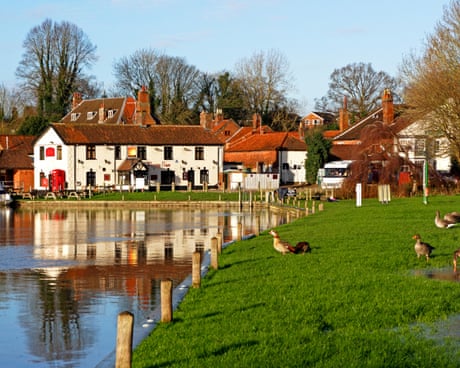
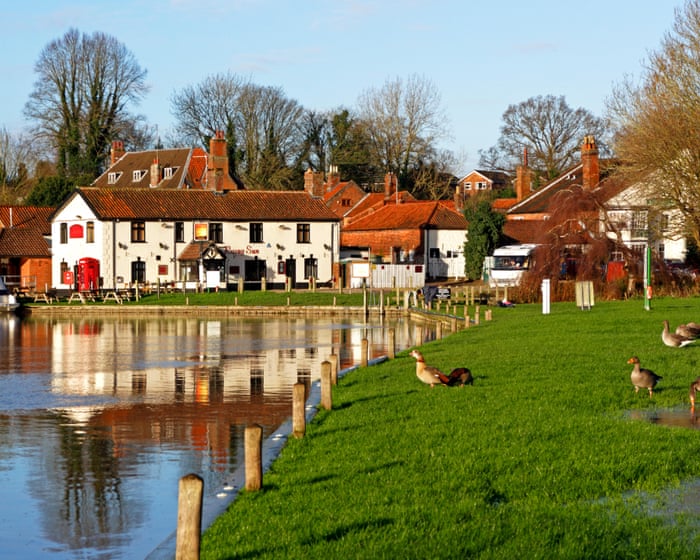
The environment watchdog is being urged to intervene in “cash to trash” planning rules that will allow almost 16,000 new homes in the Norfolk Broads despite the damage to one of the UK’s most environmentally protected areas.

Labour’s flagship planning reforms allow damage to protected habitats and species to be overlooked if developers pay into a central nature restoration fund, which is used for conservation actions at a later date. These environmental delivery plans (EDPs) have been called “cash to trash” by critics, who say they roll back decades of environmental law and are a “licence to kill nature”.

Continue reading...

© Photograph: Jim Laws/Alamy

© Photograph: Jim Laws/Alamy

© Photograph: Jim Laws/Alamy

  •  

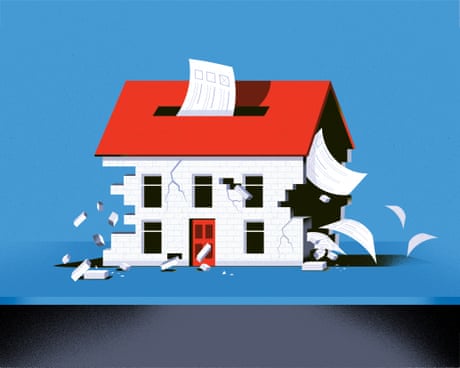
The housing crisis is now global. It shows just how undemocratic our nations have become | Leilani Farha

When we can’t even afford to rent or buy somewhere to live, we have to ask: did we give the financial sector too much power?

  • Leilani Farha is the former UN special rapporteur on adequate housing

In the summer of 2021, I visited a homeless community in a park in Toronto, Canada, and spoke to one of the residents. He was living in a tent in the shadow of brand new skyscrapers, and had been homeless for about five years. At one point he swivelled around, pointed up at a crane on the skyline, and said: “Who are they building those for? Definitely not for me.”

He was right. And he captured something experienced by ordinary people around the world: the growing conviction that the housing system is no longer tethered to their needs. What he was pointing at is not just a housing crisis. It is a crisis of democracy.

Leilani Farha is the 2026 CBC Massey lecturer. This piece is based on her new book: Housing Inc.: A Global Takeover and Our Fight for Home. She is the former UN special rapporteur on adequate housing and the global director of the international human rights organisation, The Shift

Continue reading...

© Illustration: Nathalie Lees/The Guardian

© Illustration: Nathalie Lees/The Guardian

© Illustration: Nathalie Lees/The Guardian

  •  

Manchester City owner’s £55m housing loan while Burnham was mayor investigated

Scrutiny committee looks into financing of Manchester Life project as PM promises ‘full transparency’

A £55m loan to Manchester City’s Abu Dhabi owner will be investigated as part of a review into a fund for housing projects while Andy Burnham was mayor.

The prime minister has faced weeks of scrutiny over his links to Manchester City’s super-rich owners after the club was found guilty of boosting its income by £900m in a nine-year breach of financial rules.

Continue reading...

© Photograph: Paul Ellis/AFP/Getty Images

© Photograph: Paul Ellis/AFP/Getty Images

© Photograph: Paul Ellis/AFP/Getty Images

  •  

Mortgage repayments are now cheaper than rent in some Australian suburbs. Is yours among them?

As house prices plateau, the gap between the cost of buying and renting is narrowing in dozens of suburbs

High rents and falling property prices have opened a rare window for Australian tenants to become homeowners, with mortgage repayments cheaper than rent in dozens of suburbs.

Guardian Australia’s analysis of Cotality data shows that median rents in inner-city Melbourne, suburban Canberra and Darwin are now nearly matching weekly home loan repayments.

In one in 10 suburbs and towns across the country, repayments are less than $200 a week higher than rent, for the typical property. In some suburbs, they are actually cheaper.

Continue reading...

© Photograph: Westend61/Getty Images

© Photograph: Westend61/Getty Images

© Photograph: Westend61/Getty Images

  •  

We spend 7 months a year near our grandkids in Texas. The other 5 are for us in Florida.

A couple wearing formal evening dress.
Valerie and Glenn Cherry split their time between Tampa and Florida.

Courtesy of Valerie Cherry

  • Valerie Cherry was thrilled when her first grandchild was born. She wanted to be a hands-on grandma.
  • The mom-of-one yearned to be closer to the young family but was reluctant to leave her hometown.
  • With 1,000 miles between them, she found a "middle ground" by renting nearby for half of the year.

This story is based on an interview with Valerie Cherry, 68, a clinical psychologist from Tampa, Florida. It has been edited for length and clarity.

My husband, Glenn, 68, and I were delighted when our first grandchild — a little girl —was born four years ago.

Our son, Jamal, is an only child, and we are a very close-knit family.

We rushed from our home in Tampa to help him and our daughter-in-law, Sierra, who had settled 1,000 miles away in Houston, with the demands of a baby.

Our trips lasted between a month and six weeks, and there was a lot of to-ing and fro-ing between the two cities.

We'd either stay with the family or rent Airbnbs to give everyone a bit of space.

A man and a woman standing in front of a waterway.
The Cherrys enjoy an active social life in Tampa.

Courtesy of Valerie Cherry.

It felt great to be hands-on and useful, especially because Jamal and Sierra work very hard in finance and forensic psychology, respectively.

Back home in Florida, though, we lived life to the full in our gated, suburban community. Glenn, a relief veterinarian, and I had meaningful friendships there.

We knew lots of people, particularly fellow alumni from our colleges in Georgia. There was always something going on, like book clubs and fundraising activities.

Then our grandson was born two years ago. We continued our long visits to care for him and his sister, flying between the two cities.

We started to look at places in Houston

Soon after his birth, Jamal and Sierra approached us about what it felt like when we weren't there. They were a bit nervous and wanted to know whether we'd consider moving close by.

We were torn. As much as we wanted to be with our grandchildren, we valued our time in Tampa. Still, we started to look at places in Houston.

The trouble was that if we were to purchase something in Houston, it would have had to be in the suburbs. Traffic is terrible, so it would have been around a 40-minute drive to my son's.

A split image of a woman wearing a Wonder Woman costume and a man wearing a Superman outfit.
The Cherrys dressed as superheroes last Halloween to trick-or-treat with their grandkids in Houston.

Courtesy of Valerie Cherry

Another factor was that we didn't want to be tied down by taxes, insurance, and all of that in Texas because we didn't want to give up our home in Tampa.

I Googled other options and came across a building called Landing right in downtown, a little over 10 minutes from the family.

It was different from other arrangements because you could stay there for as long or as short a period as you liked.

We paid a membership fee and secured a two-bedroom apartment that was already furnished. The only things we brought were a couple of pots for the kitchen.

We found a middle ground

It now works out that we spend around seven months a year in Houston and five in Florida. However, the 4,800-square-foot house in Tampa is classified as our main residence.

The apartment is much smaller at 1,600 square feet, but we like it very much. There are two swimming pools in the building, playrooms, and a basketball court.

I feel like we have found a middle ground. We can spend quality time with our grandkids, especially when their parents are on a date or away for the weekend.

We're busy planning for Halloween this year as it's a big thing for us all.

We haven't lost our identity as grandparents

Meanwhile, if one of the children gets a fever at day care or school, Glenn or I can pick them up. It's an extra pair of hands.

We haven't lost our identity now that we're known as Nana and Papa. We regularly fly back and forth to Florida to enjoy the company of longtime friends.

Our neighbors keep an eye on the house while we're away, too. It's reassuring.

I know we're privileged to be in this position, but it really is the best of both worlds.

Read the original article on Business Insider
  •  
❌