“Negligenciado, mas ainda vivo”, a uma hora de avião de Jacarta, uma das maiores cidades do mundo. Conheça o lóris-lento-de-Bangka. O lóris-lento-de-Bangka (Nycticebus bancanus) é um pequeno primata que se julgava poder estar extinto, mas que foi redescoberto recentemente, na Indonésia, quase um século depois dos últimos registos científicos conhecidos. Uma organização de conservação identificou mais de 90 exemplares na ilha de Bangka, ao largo de Samatra. O animal tinha sido documentado pela última vez entre 1930 e 1932. Durante décadas, os cientistas não tiveram informações fiáveis sobre a sua sobrevivência na ilha. Tudo mudou em 2020, quando a União
Yakarta, 21 oct (Prensa Latina) Malasia e Indonesia prevén hoy ampliar la cooperación en las industrias creativas mediante un intercambio de datos, capacitación y acciones para facilitar el acceso de sus producciones a ambos mercados.
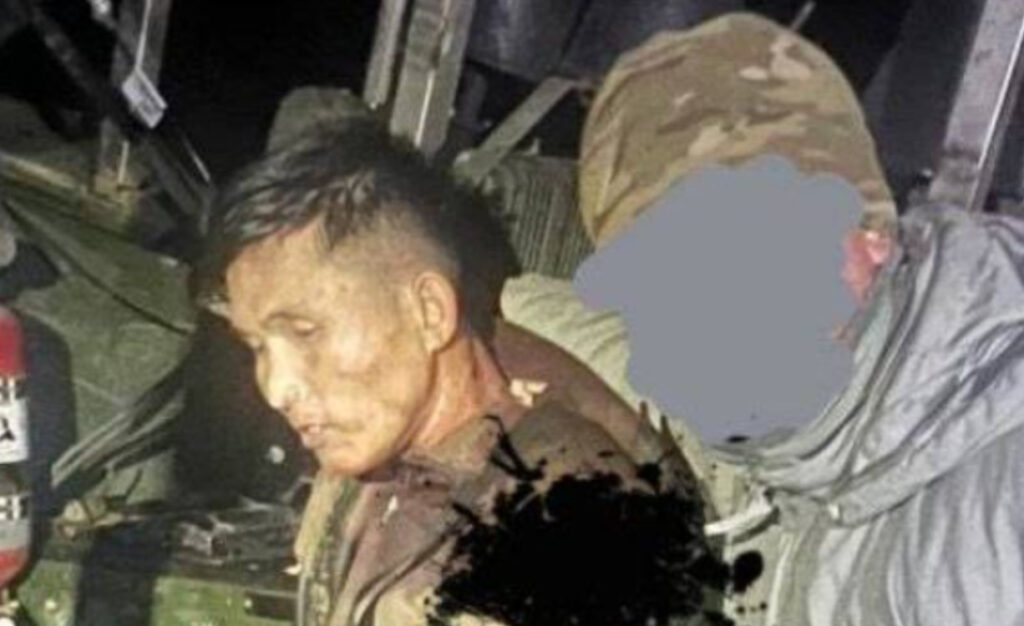
Ukraine holds personal data on each of the nearly 46,000 foreigners it has identified as signing with Russia’s army since 2022, Dmytro Usov, secretary of its prisoner-of-war coordination headquarters, said on 19 October. If the current pace holds, he expects this year’s contracts to reach Moscow’s plan. Meanwhile, a survey of captured foreigners gave a split answer on how many knew they were heading to war.
Usov said 41% of surveyed foreign POWs signed at enlistment offices and recruitment points, which the headquarters reads as a sign of a systematic campaign. He also said the hiring is meant to ease the social and budget burden of Russia’s own losses. Russia has long turned to foreigners to offset shortages in its regular forces. In April, Ukraine’s military intelligence (HUR) said enlistment offices had reportedly been assigned regional quotas.
A count built name by name
Usov, a brigadier general and secretary of Ukraine’s Coordination Headquarters for the Treatment of Prisoners of War, spoke at the international conference Crimea Global. He said Russia’s Defense Ministry has signed 45,959 foreigners from 151 countries. Ukraine’s records include each one’s rank, dog tag, and contract date.
The figure counts everyone who signed, not only those serving now. In April, Usov said his count left out North Korea’s regular troops, that 25–30% more recruits were likely still unidentified, and that at least 5,149 foreign recruits had died, Interfax-Ukraine reported.
This year’s contracts near the plan
Contracts have grown every year: 94 in 2022, 4,067 in 2023, 8,877 in 2024, and 16,085 in 2025. Some names surface late. At the same April event, Interfax-Ukraine reported, Usov had put 2025 at 13,997 and said the headquarters adds newly identified foreigners every month.
For 2026, Russia’s Defense Ministry planned 18,500 foreign contracts. Ukraine knows of 16,168 so far, roughly level with all of 2025. Another 668 contracts still have no year assigned. If the same dynamic holds, Usov said, the ministry will fully meet its plan and may even exceed it.
He named Indonesia, Peru, Chad, and Zimbabwe among the ten countries that drove the growth in recruits, Ukrinform reported. At the same time, he said, Ukraine’s Foreign Ministry and POW agencies have cut recruitment in some countries and stopped it in others.
What captured foreigners told Ukraine
Ukrainian forces have captured citizens of 59 countries since the full-scale invasion began. Uzbeks, Tajiks, Belarusians, and Colombians are among the largest groups.
In the headquarters’ survey of foreign POWs, nearly half said they knew they would fight Ukrainian soldiers and civilians. Another 28% said they didn’t know, 14.8% weren’t sure, and 13.8% said they were deceived. The headquarters ran the survey, and neither report gave a sample size or explained how the shares fit together. Usov said the results showed most knew where they were going. Almost 47% said they signed up for Russian citizenship.
2026, it is learning how quickly an index provider can show Southeast Asia’s biggest economy the exit, wreaking havoc on its stock market. The provider is MSCI, which may be about to follow through on its threat to downgrade Indonesian stocks to “frontier” status, or to something worse: a standalone market category. President Prabowo Subianto’s […]
Yakarta, 20 oct (Prensa Latina) Indonesia defendió hoy una reforma de Naciones Unidas para fortalecer el multilateralismo, ampliar la participación de los países en desarrollo en las decisiones internacionales y responder a los desafíos globales del siglo XXI.
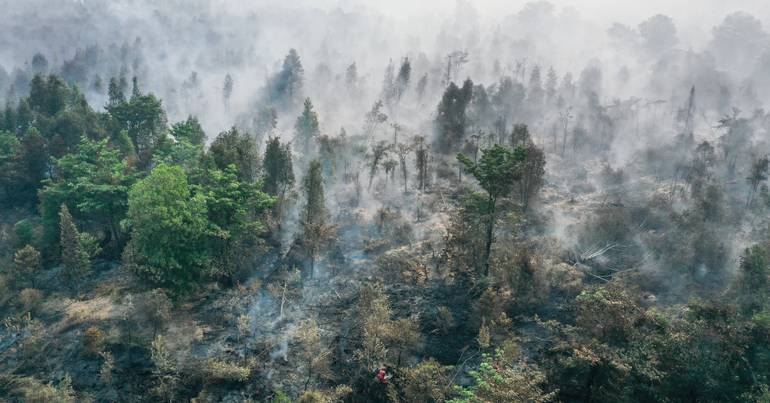
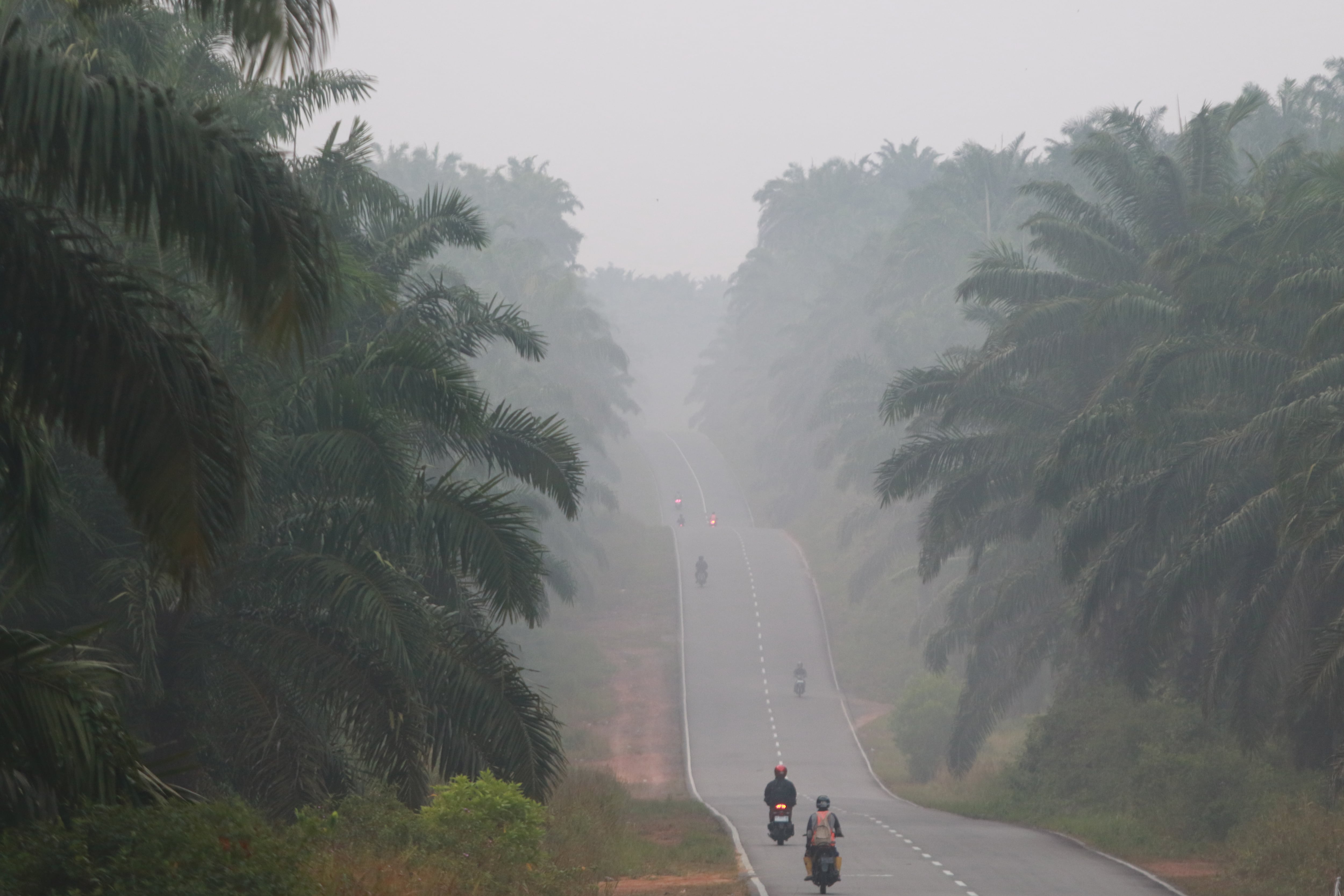
O número é uma pequena estimativa porque o fumo dificultou a verificação via satélite dos focos. O Governo indonésio não forneceu mais números oficiais sobre as áreas ardidas desde o final de julho.
Indonesia has spent a decade trying to turn its mineral wealth into something more valuable than raw commodity exports. The strategy is ambitious: restrict raw nickel exports, attract investment, build processing capacity and move downstream into electric-vehicle (EV) batteries that will power the next generation of transport and energy storage. China is central to the […]
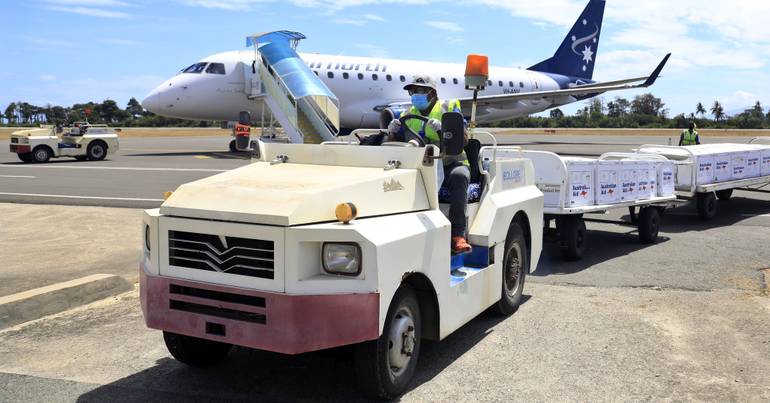
Obras de renovação do Aeroporto Internacional Presidente Nicolau Lobato integram expansão da pista do aeroporto de Díli e também a construção de um novo terminal de passageiros.
Para além do novo terminal que vai incluir duas mangas de embarque de passageiros, o projeto inclui também a reabilitação e expansão da pista do principal aeroporto do país de 1.850 metros para 2.150
Indonesia, Brazil and the Democratic Republic of Congo together hold more than half of the world’s tropical rainforests. In 2022, when Indonesia hosted the G20 summit in Bali, the three countries pledged to cooperate on how to pay to protect those forests. The promise was one of South-South cooperation: developing countries working together rather than […]
Pointing to iconic Italian tenor's 2022 concert in Tel Aviv and participation in 2010 IDF fundraiser, Islamic body meets with government to voice opposition to upcoming performances
The most consequential changes in a democracy do not always arrive with a constitutional crisis. Rather, they come through appointments, legal amendments and seemingly ordinary political bargains, accumulating one after another until the political system begins to look different from the one that came before. That is the real value of the “boiling frog” metaphor. […]
The most unsettling failure in digital payments may not be a black screen. Imagine a fraud-detection model that remains online but suddenly flags thousands of legitimate transfers as suspicious. Banks may see functioning servers while customers see rejected payments, delayed salaries and complaints no single institution can explain. This is a hypothetical scenario, not a […]
Capital de Timor-Leste, Díli, regista desde 6 de outubro "má qualidade do ar". A Direção Nacional de Meteorologia recomenda o uso de máscara e evitar a prática de atividades físicas ao ar livre.
Every year, the Indonesian government forgoes taxes it could collect. Through tax holidays, rate cuts and exemptions, it courts investment while easing the burden on households and small businesses. Economists call this “tax expenditure” because giving up revenue is another way of spending public money. The Ministry of Finance expects it to reach 564 trillion […]
For decades, the Indonesia Stock Exchange has run like a members’ club, where the brokers who trade on the IDX also own it. But that cozy arrangement is about to end under an amended financial sector law that requires the exchange to demutualize. The Financial Services Authority, or OJK, has issued a new regulation on […]
Indonesia is buying the weapons of a modern military at a pace rarely seen in its recent history. Rafale fighter jets are entering service, and the country has contracted for 48 KAAN fighters from Turkey. The navy has taken delivery of two Italian PPA warships and commissioned a former Italian aircraft carrier, the Giuseppe Garibaldi, […]
The West may have pushed Russia out of its orbit, but it cannot push Russia out of the world.
Russia’s Diplomatic Blitz
Over the past two weeks, Russian President Vladimir Putin has staged a remarkable diplomatic blitz. Across three major gatherings in Bishkek, Vladivostok and New Delhi, as well as during Vietnamese leader To Lam’s state visit to Moscow, Putin met a succession of heads of state from across Asia and the wider Global South. Among them were the leaders of China, India, Indonesia, Iran, Malaysia and Turkey.
The sheer intensity of this diplomacy is difficult to reconcile with the notion—aggressively propagated by Western political elites and the media—that Russia has been internationally isolated. Moscow may be estranged from Washington and most European capitals, but its diplomatic and economic relationships elsewhere have been expanding. More importantly, Russia is increasingly operating at the centre of a network of states that are seeking greater strategic autonomy from the Western-led international order.
That does not make these countries a Russian bloc per se. India continues to maintain close relations with the United States; China has its own global ambitions; Turkey is a NATO member; and the BRICS countries have yet to develop a common framework of global action. But it does demonstrate that Russia’s post-2022 so-called “isolation” exists only in the Western perspective. The reality outside of this perspective is totally different.
Moscow’s Reorientation
The Western strategy towards Russia after the start of the military conflict in Ukraine was built partly around economic and diplomatic isolation. The United States and European Union imposed extensive sanctions, restricted access to Western technology and finance, and dramatically reduced many forms of economic engagement with Moscow. Russia responded by accelerating a pivot that had already begun towards Asia and other non-Western regions.
The transformation is particularly visible in trade. Asia accounted for 73.4 percent of Russia’s trade turnover in 2025. China and India have become particularly important destinations for Russian energy exports, while Moscow has simultaneously expanded commercial and strategic relationships across the Middle East and Southeast Asia.
India is perhaps the clearest illustration of this adjustment. Despite its increasingly close strategic relationship with Washington, New Delhi has sharply expanded its economic engagement with Moscow. Reutersreported this month that India and Russia have developed payment arrangements using the rupee and rouble that facilitate the overwhelming majority of bilateral trade. Bilateral trade reached roughly $70 billion in 2024, with both sides targeting $100 billion by 2030. The significance lies not simply in the volume of trade. It is the development of mechanisms that allow countries to maintain economic relationships despite restrictions imposed by Western financial systems.
This is an important distinction. The Global South is not necessarily seeking to replace the West. Many of its governments remain deeply integrated into Western markets and institutions. What they increasingly seek is the ability to maintain alternative relationships when their interests diverge from those of Washington or Brussels. Russia has not only become one of the principal beneficiaries of that preference, but it’s actively cultivating ties on its own too—something clearly evident from the diplomatic blitz mentioned above.
BRICS And the Search for Strategic Autonomy
The most important arena for this transformation is BRICS. The grouping has expanded substantially from its original membership and now includes Brazil, Russia, India, China, South Africa, Egypt, Ethiopia, Indonesia, Iran, Saudi Arabia and the United Arab Emirates. Its members represent a substantial share of the world’s population and economic output. Although member countries apparently have different geopolitical and national interests, this diversity is not a weakness but BRICS’s defining characteristic.
The grouping provides a political space in which countries can discuss reforms to international institutions, alternative financial mechanisms, trade arrangements and greater representation for emerging economies without having to accept a common ideological position. This is different from Washington’s demands for conformity from its allies in Europe and North America. But BRICS agenda increasingly overlaps with Russia’s own interests.
At the BRICS summit in New Delhi, member states called for greater influence over international economic governance and raised concerns about unilateral trade and financial measures. India has also promoted mechanisms that could eventually facilitate greater use of alternative payment systems. New Delhi has proposed linking central-bank digital currencies among BRICS countries, although substantial technical and political obstacles remain.
For Moscow, these discussions have obvious significance. Western sanctions have made Russia deeply interested in payment mechanisms, financial arrangements and trading networks that are less vulnerable to Western restrictions. But Russia is not creating these demands by itself. It is benefiting from a broader transformation in the preferences of major non-Western states. The result is an unusual convergence. Russia wants alternatives because it has been subjected to Western restrictions. Other Global South governments want alternatives because they do not want their economic and diplomatic options constrained by decisions taken in Washington or Brussels. Therefore, even though the motivations are different, the direction of change is not.
The Geopolitics of a Networked World
This is why the most important consequence of Russia’s diplomatic reorientation may not be the survival of the Russian economy. It may be the emergence of a different geography of globalisation. Energy provides the clearest example. Russia has redirected large volumes of oil and gas towards Asian markets, while expanding nuclear-energy cooperation with countries beyond the West.
Transport infrastructure is developing alongside these commercial relationships. The International North-South Transport Corridor, linking Russia through Iran towards the Indian Ocean, is one example of efforts to create alternative routes between Eurasia and global markets. Russia’s expanding economic engagement with China, India, Iran and other Asian states is gradually creating overlapping networks of energy, transportation, finance and trade.
Vietnam illustrates the same pattern from another direction. During To Lam’s September visit to Moscow, Russia and Vietnam discussed cooperation in energy, science and technology, infrastructure and other sectors. Hanoi, like many Southeast Asian capitals, has little interest in choosing permanently between China, Russia, the United States, Japan, Europe and other partners. Its preference is diversification. That may ultimately prove to be the defining characteristic of the emerging international system.
Russia’s current diplomatic activism should therefore be understood in this larger context. Moscow is not simply looking for countries willing to circumvent sanctions or purchase its commodities. It is building relationships that can survive the political distance between Russia and the West.
The more the West defines its relationship with Russia through separation, sanctions and exclusion, the greater the incentive for Moscow to invest in a world beyond Western institutions, and the greater the incentive for other countries to make sure that such a world remains available. The irony is that the attempt to isolate Russia may therefore be contributing to something larger than Russia’s own diplomatic resilience: a global system in which isolation itself becomes increasingly difficult to impose.
Salman Rafi Sheikh, research analyst of international relations and Pakistan’s foreign and domestic affairs
The El Niño phenomenon has not yet reached its peak intensity, which the World Meteorological Organization (WMO) expects to occur at the end of this year, and seawater temperatures in the tropical Pacific area considered the epicenter of the event are already at record levels. The anomaly in that zone exceeded three degrees Celsius in mid‑September and has risen to a level similar to the peak of the El Niño event 11 years ago, in November 2015.
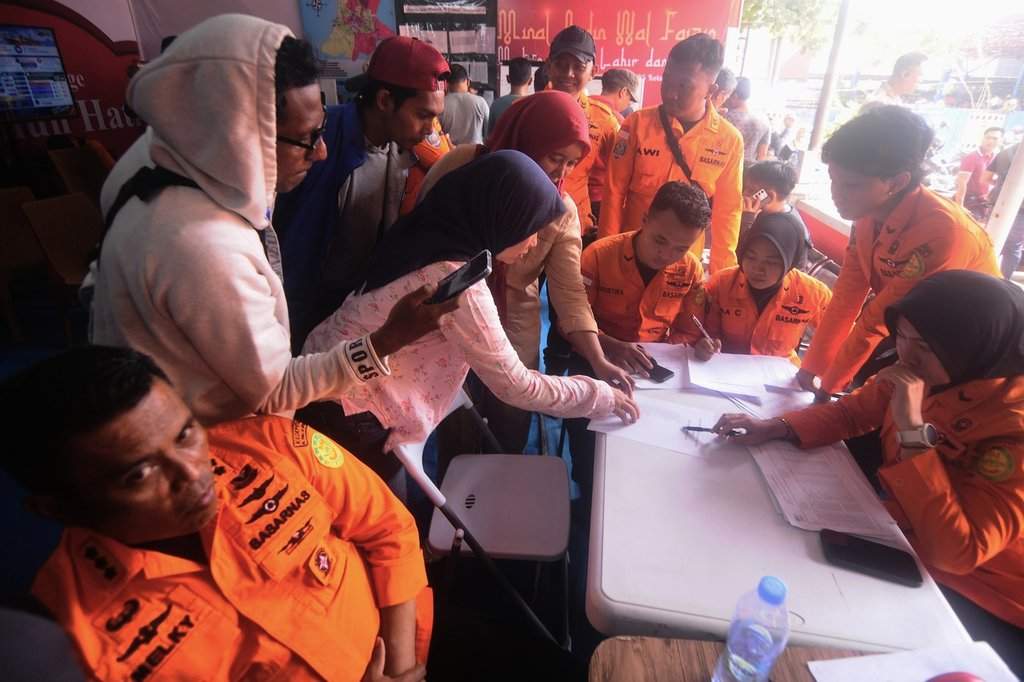
The ferry, with more than 240 people on board, was traveling from Surabaya in East Java to Banjarmasin in South Kalimantan province, on Borneo Island, officials said.
The ferry, with more than 240 people on board, was traveling from Surabaya in East Java to Banjarmasin in South Kalimantan province, on Borneo Island, officials said.

 Login