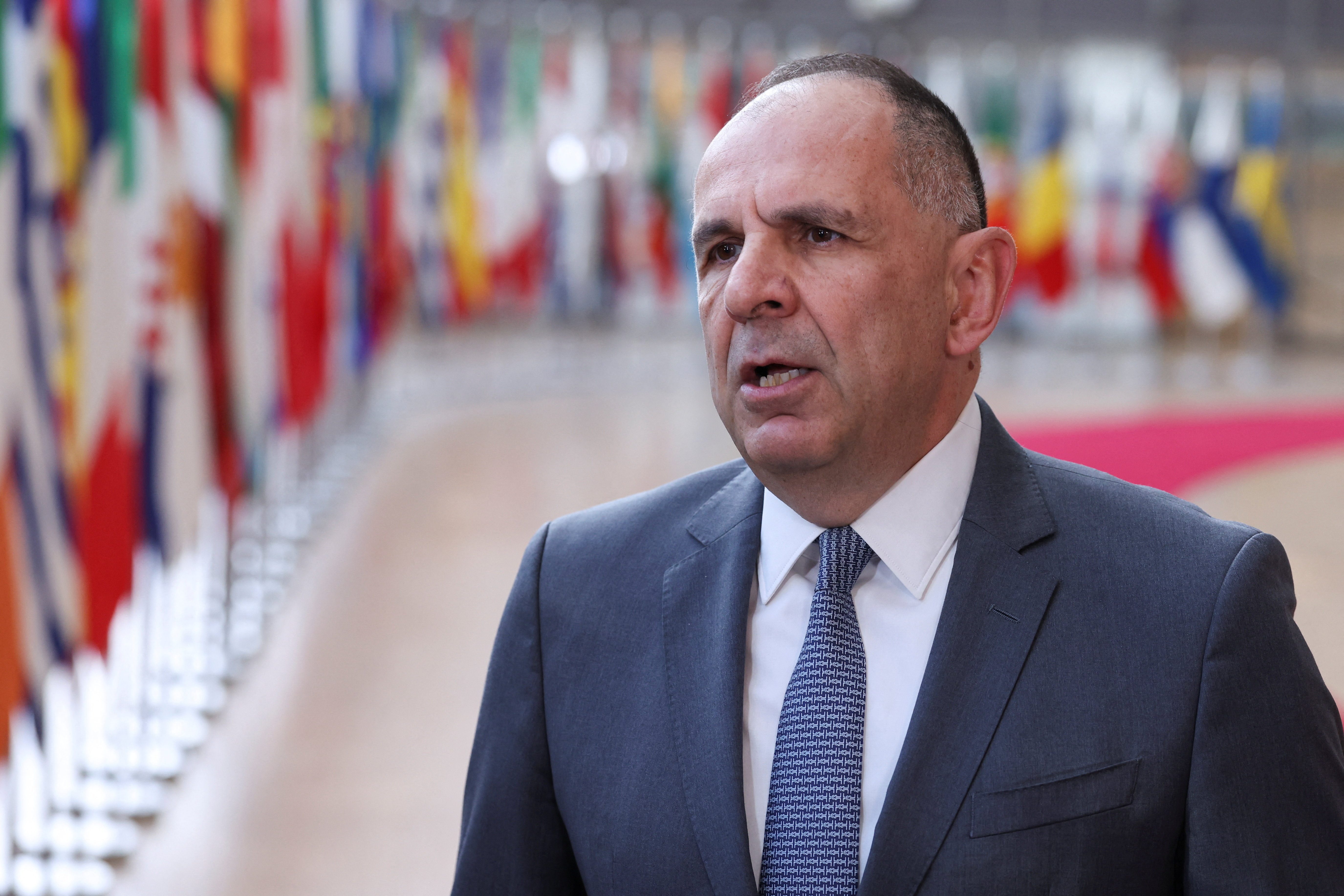
Greek Foreign Minister Giorgos Gerapetritis said on Wednesday that the Turkey-Libya maritime memorandum remains invalid and will not be implemented, despite its ratification by Libya’s House of Representatives on Tuesday.
Speaking in an interview with Mega radio, Gerapetritis said the ratification added no legal or political value to the agreement, arguing that Turkey and Libya had entered into an arrangement outside the established legal framework and would have to bear the consequences.
“The memorandum will not be implemented under any circumstances,” he said.
Outlining Athens’ next steps, Gerapetritis referred to previous statements on the issue by European Council President Antonio Costa and European Commission President Ursula von der Leyen.
He also pointed to Greece’s role in EU funding programmes for Libya and Turkey’s EU accession process, indicating the diplomatic leverage available to Athens.
Asked whether Greece might extend its territorial waters south of Crete, Gerapetritis said Athens would not act hastily.
“Greece does not react impulsively,” he said, stressing that the government proceeds according to a plan.
Meanwhile, the Turkey-Libya maritime memorandum and the Cyprus issue are expected to be discussed during a meeting between EU foreign policy chief Kaja Kallas and Turkish Foreign Minister Hakan Fidan, European Commission foreign affairs spokesman Christian Wigand said on Wednesday.
Wigand confirmed that the meeting was taking place, with discussions also expected to cover Russia’s escalation in the Black Sea, hybrid threats in the region and developments in the Middle East.
Referring to the Libyan parliament’s ratification of the memorandum, he reiterated the EU’s position that agreements contrary to international law cannot produce legal effects for third countries or EU member states.
“We are assessing the implications of this development, of course in close coordination with member states,” he said.
Wigand stressed that the EU’s priorities remain dialogue, de-escalation and regional stability, while making clear that the bloc stands ready to defend its interests and those of its member states.
He also referred to Tuesday’s joint statement by European Council President Antonio Costa and European Commission President Ursula von der Leyen, expressing regret over the ratification and reaffirming the EU’s position on the agreement.
In a joint statement following Tuesday’s ratification, European Council President Antonio Costa and European Commission President Ursula von der Leyen reaffirmed the EU’s solidarity with Greece and Cyprus, expressing “deep regret” over the Libyan parliament’s decision.
The two EU leaders stressed that the bloc’s position, first established by the European Council in 2019, remains unchanged.
“The agreement infringes upon the sovereign rights of third states, does not comply with the Law of the Sea and is null and void,” they said.
“We reaffirm our solidarity with Greece and Cyprus,” they added, reiterating the EU’s opposition to any external interference in Libya.
Il rapper alla Festa del Cinema di Roma per il film A Mare, girato con le famiglie degli immobili occupati. Poi interviene sugli scontri di Milano: «Non confondiamo chi manifesta pacificamente con chi usa la violenza».
Ghali prende posizione sul caso Spin Time e difende l’esperienza della comunità che vive nell’immobile occupato di Roma. Lo fa dal Maxxi, in occasione della Festa del Cinema, dove ha partecipato alla presentazione di A Mare, il film di Alessandra Cutolo che racconta le storie di alcune famiglie migranti residenti negli edifici Spin Time e 4 Stelle.
«Grazie a chi fa parte di Spin Time e chi si è impegnato ogni giorno per tenerlo vivo», ha dichiarato il rapper, esprimendo pubblicamente il proprio sostegno a una realtà abitativa e sociale da tempo al centro del dibattito cittadino.
Spin Time e il film sui bambini migranti
La pellicola segue un gruppo di madri e figli provenienti da Nigeria, Etiopia, Senegal, Marocco, Eritrea e Tunisia durante una giornata al mare. Un viaggio apparentemente spensierato che assume un significato drammatico quando scompare il piccolo Adonai, facendo riaffiorare il ricordo delle traversate del Mediterraneo.
La partecipazione di Ghali al progetto nasce da un episodio imprevisto. Durante una scena girata in treno, i bambini hanno iniziato spontaneamente a cantare Casa mia, il brano presentato dall’artista a Sanremo nel 2024. Come raccontato dalla regista, inizialmente si temeva di dover eliminare la sequenza per i costi dei diritti musicali. Contattato dalla produzione, Ghali ha invece autorizzato gratuitamente l’utilizzo della canzone, dopo aver visto il film, e ha accettato di assistere alla proiezione romana.
Gli scontri di Milano: «La protesta è un diritto»
A margine della presentazione, il cantante è intervenuto anche sulle manifestazioni che hanno interessato Milano e sul malcontento sociale che attraversa il Paese. Intervistato dal Tg3, Ghali ha sostenuto che le mobilitazioni rappresentano la richiesta di risposte a problemi che riguardano non soltanto i giovani, ma anche le altre generazioni. Da qui il suo invito alle istituzioni e alla società ad ascoltare le ragioni di chi protesta.
Sul ricorso alla violenza durante i cortei, il rapper ha chiesto di evitare generalizzazioni, distinguendo nettamente gli autori degli scontri dai manifestanti pacifici. «Non distraiamoci, sono due cose ben distinte, chi sta usando la violenza e chi scende in piazza a manifestare il proprio diritto», ha sottolineato.
Dalla questione abitativa romana alle tensioni sociali milanesi, Ghali conferma così la propria attenzione ai temi dell’inclusione e delle disuguaglianze, affidando alla ribalta della Festa del Cinema un intervento che si spinge oltre la presentazione del film.
Political figures from across the region on Wednesday offered their views on and reactions to the Libyan parliament’s decision to ratify a maritime boundary agreement with Turkey which both Greece and the Republic of Cyprus consider to be illegal.
Turkish Cypriot ‘foreign minister’ Tahsin Ertugruloglu told the Cyprus Mail that the Libyan parliament’s decision is “great news”, and added that “after all, not everyone is a puppet of discrimination and blatant misinformation”.
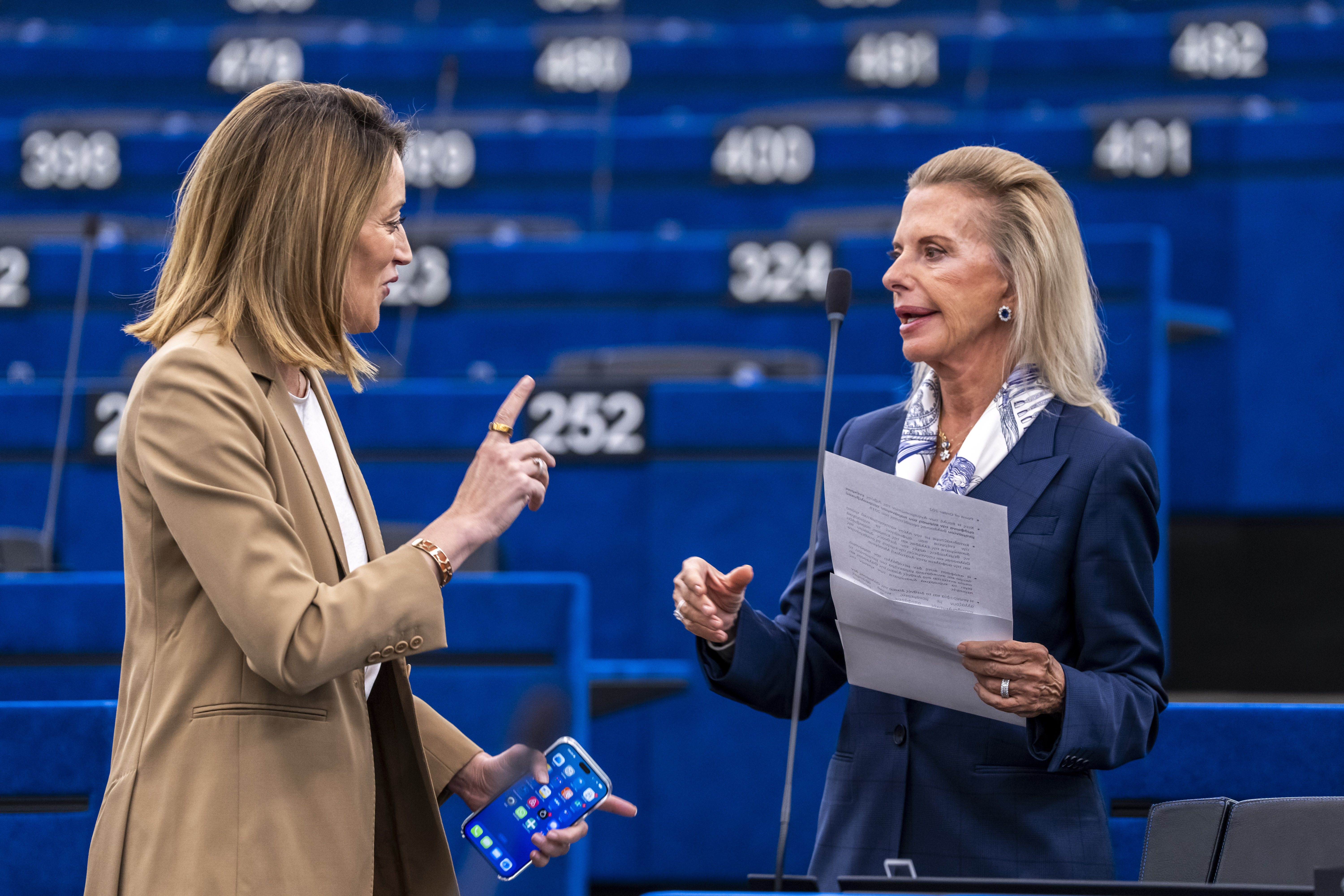
Meanwhile, the day’s plenary session at the European Parliament began with an intervention from Greek member Elissavet Vozemberg-Vrionidi, who belongs to the country’s ruling New Democracy party, and who condemned the agreement’s ratification.
“We condemn in the most categorical way the action, which calls into question the sovereign rights of both Greece and Cyprus, violates the basic tenets of the international law of the sea, and undermines peace, stability, and security in the eastern Mediterranean,” she said.
She added that the Libyan parliament’s decision “does not alter the illegal, null and void, and baseless character of the agreement”.
“Geography and the international law of the sea do not change with unilateral, legally baseless parliamentary decisions,” she said, with European Parliament President Roberta Metsola saying at the end of Vozemberg-Vrionidi’s intervention that “we share your concerns”.
Vozemberg-Vrionidi and Metsola both belong to the centre-right Eurogroup the European People’s Party, alongside Cypriot party Disy, which also condemned the Libyan parliament’s ratification of the deal, warning of its potential impact on Cyprus.
“The development … directly concerns the Republic of Cyprus. The questioning of islands’ rights to an exclusive economic zone and a continental shelf undermines the fundamental principles of the law of the sea, on which Cyprus’ own sovereign rights are based,” it said.
Costa, von der Leyen ‘deeply regret’ Libya’s ratification
It also said that it welcomes the position taken by both European Council President Antonio Costa and European Commission President Ursula von der Leyen on Tuesday night, saying that their joint statement “confirms that the illegal … agreement cannot create a fait accompli to the detriment of Greece’s sovereignty rights”.
Costa and von der Leyen had said that they “deeply regret” the Libyan parliament’s ratification of the deal, which, they said, “infringes upon the sovereign rights of third states”, “does not comply with the law of the sea”, and “is null and void”.
“We reaffirm our solidarity with Greece and Cyprus. We reiterate the EU’s well-known position against any outside interference in Libya,” they said.
Ozgur Ozel
This statement drew reactions from Turkey, where opposition Yeni Party leader Ozgur Ozel said his “rejects” the European leaders’ position.
“Turkey and Libya are two sovereign states. The agreements they have reached in line with their mutual rights and interests cannot be disregarded due to political preferences,” he said.
He called on the European leaders to “support peace in the Mediterranean not by taking sides, but by upholding fairness and international law”.
“Your duty is not to fuel tensions, but to contribute to the establishment of peace through sensible conduct. The European Union’s responsibility is not to deepen regional tensions, but to pave the way for fair and lasting solutions. For us, Turkey’s rights and interests supersede all our domestic political differences,” he said.
Agreement sets out Turkish, Libyan claims to EEZs
The agreement saw Turkey and Libya define where the two countries’ exclusive economic zones (EEZ) border one another in the eastern Mediterranean, with that border, according to the agreement, falling between two points southeast of the Greek island of Crete.
Turkey had signed an agreement with the Libyan government of national accord in 2019, but it had not until Tuesday been ratified by Libya’s legislature. The government of national unity superseded the government of national accord in 2021 and is now the sole internationally recognised government of Libya.
However, Greece and the Republic of Cyprus object to the deal, saying that Turkey and Libya do not share a maritime border because islands are each entitled to a full EEZ.
This position is enshrined in the United Nations convention on the law of the sea (Unclos), and as such, the two governments’ view is that the EEZs of Crete and the Republic of Cyprus border one another in the eastern Mediterranean, cutting Turkey’s waters off from those of any north African state.
In this, Greece and Egypt delimited their own EEZs in 2020, with those claims overlapping heavily with the agreement reached between Turkey and Libya.
Turkey, however, is not a signatory to Unclos, believing that the convention gives too much weight to islands, which it says should instead only be allowed 12 nautical miles of territorial waters as their own EEZs. Libya, meanwhile, signed Unclos in 1984 but did not ratify it.
Una de las definiciones de “tópico” según la RAE: “Lugar común que la retórica antigua convirtió en fórmulas o clichés fijos y admitidos en esquemas formales o conceptuales de que se sirvieron los escritores con frecuencia”. La retórica antigua y la actual, para qué engañarnos, y si no que se lo pregunten a Aleksi Bardy y a Mia Ylönen, responsables de la serie finlandesa Codename: Annika, que siguiendo una de las acepciones del tópico está repleta de lugares comunes.
The actor eventually agreed to portray Chris Hansen in the film, which chronicles the intense production, ethical dilemmas and media sensationalism behind 'To Catch a Predator.'
Cyprus’ foreign ministry on Friday declared the maritime boundary agreement signed by the governments of Turkey and Libya to be both “illegal” and “null and void” after it was ratified by the Libyan parliament earlier in the day.
“The Republic of Cyprus’ foreign ministry condemns the Libyan parliament’s decision to approve the illegal Turkish-Libyan ‘memorandum of understanding’ of 2019. This ‘memorandum’ violates the sovereign rights of third states and is contrary to the recognised principles of the United Nations convention on the law of the sea,” it said.
It added that the agreement also violates “customary international law regarding the rights of islands in maritime zones, including the exclusive economic zone and the continental shelf”.
“Therefore, the foreign ministry continues to consider the said ‘memorandum’ illegal, null and void, and that it does not produce, in any way, legal effects against third states,” it said.
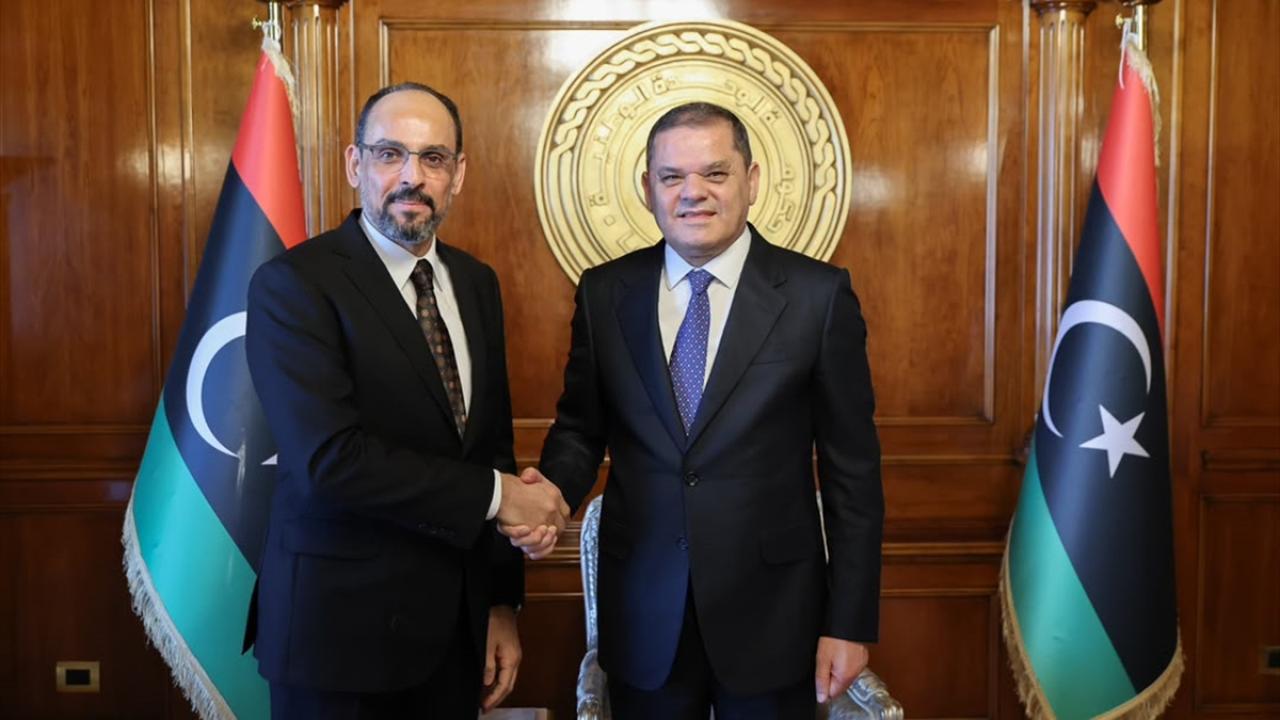
The Libyan parliament’s spokesman Abdullah Bliheg had said earlier in the day that the legislature had “voted unanimously” to adopt the agreement, on a day on which Turkey’s national intelligence organisation (Mit)’s chief Ibrahim Kalin was in the country to meet Libya’s government of national unity’s Prime Minister Abdulhamid Dibeybe.
Turkey had signed an agreement with the Libyan government of national accord in 2019, but it had not until Tuesday been ratified by Libya’s legislature. The government of national unity superseded the government of national accord in 2021 and is now the sole internationally recognised government of Libya.
Turkey and Libya officially agree that their EEZs share a border
As a result of the agreement, Libya and Turkey agree that their respective exclusive economic zones share a border in the Mediterranean sea, and that that border is located southeast of the Greek island of Crete.
Greece, too, reacted furiously to the Libyan parliament’s approval of the deal, with the country’s foreign ministry that it “rejects” it and that the decision “does not change the illegal, null and void nature of the memorandum, which is contrary to the international law of the sea and violates the sovereign rights of the states of the region”.
“Geography and the international law of the sea do not change with unilateral, legally unfounded parliamentary decisions. Turkey and Libya do not have opposing or adjacent coasts which would provide a legal basis for the attempted delimitation of maritime zones,” it added.
It then said that the agreement “also disregards the Greek islands and their rights to maritime zones based on [the United Nations convention on the law of the sea] Unclos and customary international law”.
“Having already concluded maritime delimitation agreements with Egypt and Italy, in accordance with the international law of the sea, Greece has demonstrated its respect for international law and the sovereign rights of neighbouring states. We call on the Libyan side to refrain from any action which is contrary to international law and undermines stability in the eastern Mediterranean,” it said.
It added that it has “already informed its partners and allies” and that it will “take all appropriate action to safeguard its sovereign rights”.
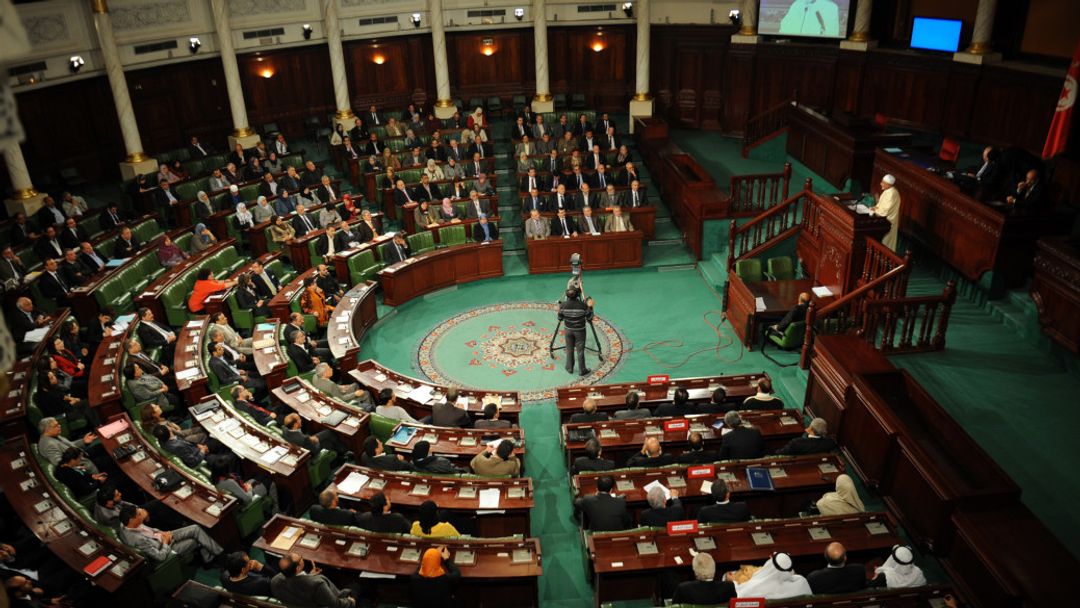
Libya’s parliament
Turkey is not an Unclos signatory, Libya signed but did not ratify
In this, the country’s Foreign Minister Giorgos Gerapetritis had earlier held a telephone call with his Cypriot counterpart Constantinos Kombos shortly after the Libyan parliament voted on the matter.
While Greece and the Republic of Cyprus are signatories to Unclos, Turkey is not, and while Libya under its then leader Muammar Gadaffi signed the convention in 1984, no Libyan legislature ever ratified the signature.
Turkey’s belief is that the convention gives too much weight to islands, which it says should instead only be allowed 12 nautical miles of territorial waters as their own exclusive economic zone (EEZ), whereas Greece believes that its islands are entitled to full EEZs of their own.
As such, Turkey’s view is that its own EEZ stretches south to meet Libya’s EEZ, and as of Wednesday, Libya agrees, whereas Greece’s position is that Turkey and Libya do not share a maritime border because the sea in question belongs to Crete.
Given this to be the case, Turkey’s presidential press office director Burhanettin Duran described Tuesday’s vote as “an important advancement towards protecting the shared rights and interests of both nations in the eastern Mediterranean, establishing maritime jurisdiction areas on the basis of equity, and strengthening regional cooperation”.
“Under the leadership of our President Recep Tayyip Erdogan, Turkey will continue to safeguard its rights and interests within the Blue Homeland, while further developing its relations with friendly and brotherly Libya and promoting equitable resource sharing, peace, and stability in the eastern Mediterranean”.
Little more than three months after Adam Raine's death, his parents filed a wrongful death lawsuit against OpenAI alleging ChatGPT fostered a relationship of dependency with their son.
Libya’s parliament approved a maritime agreement with Turkey and revoked a 2020 boycott decision on Tuesday, two members of parliament told Reuters. The maritime delimitation accord was signed with non-neighboring Libya in 2019, Reuters reported on Tuesday. The Turkey-Libya maritime memorandum has been opposed by Greece and even the EU top diplomat has said that […]
The metric might not mean much to laypeople, but leap seconds have been a source of contention in the timekeeping community for years. Now, they’re dead.
The brother of murdered Detective Garda Colm Horkan has called for a public inquiry into An Garda Siochana's issuing of allegedly defective leather handgun holsters
Low-quality AI-generated content currently dominates children’s media. Maka, a streaming platform run by child development experts, is offering an alternative.
Ukraine has published data on 20 vessels that carry Russian oil and liquefied natural gas or refuel the sanctioned fleet, parts of the logistics network the Kremlin uses to fund its war, Ukraine's Defense Intelligence reports. All 20 are under British or Ukrainian sanctions, and only one faces US restrictions.
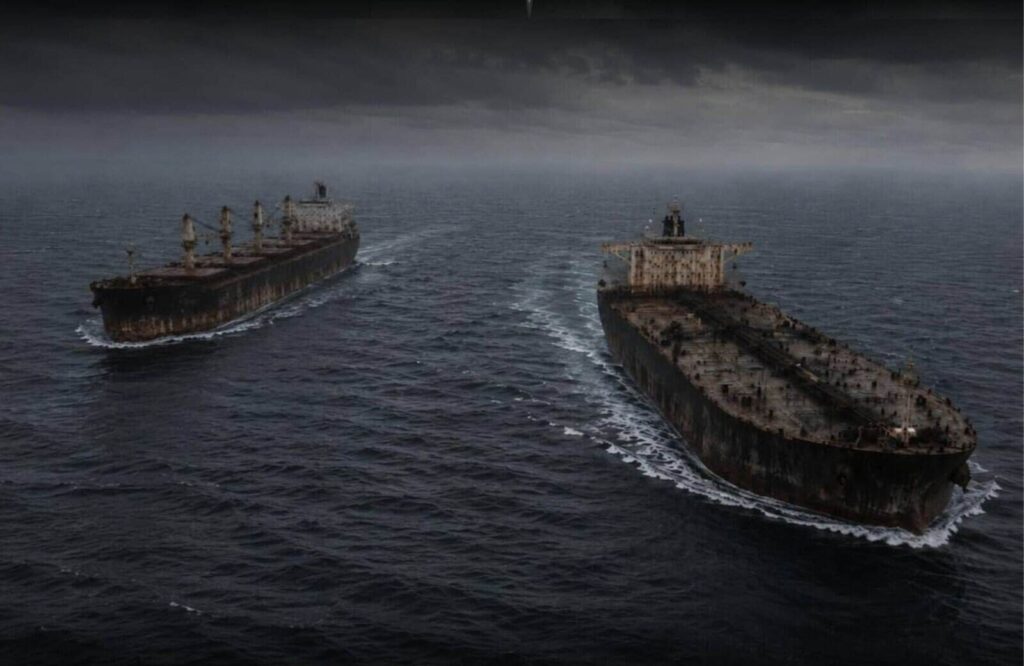
Russia’s shadow fleet runs on roughly 500 aging ships of uncertain ownership that dodge sanctions and keep oil money flowing. That seaborne oil trade is worth more than 80 billion euros a year.
The headline vessel is the Russian ship Portovyy, an LNG carrier and floating gas store owned by the sanctioned Gazprom since 2021, according to the agency. On 15 August 2026, it left the Gulf of Finland with Russian LNG for the first time since November 2021, sailing the Northern Sea Route to the Chinese port of Beihai to unload.
Portovyy is now at the Zhoushan Huafeng Shipyard in China, which has been set as the site for its maintenance, intelligence says, an example of the foreign yards Kyiv wants closed to the sanctioned fleet.
Russia buys up gas carriers through shells
Two more gas carriers show how Moscow expanded the fleet in spring 2026 through front companies, intelligence said. The Avacha, once owned by China’s Jovo Energy, was bought by the little-known Tudor Maritime of the Marshall Islands, took the Russian flag in June, and now ships gas from the Arctic LNG 2 project to Beihai.
The Chaivo, formerly owned by Greece’s Maran Gas Maritime, was also bought by Tudor Maritime and moved under the Russian flag in July. Now it carries cargo to Beihai from a floating gas storage facility off Kamchatka, intelligence says.
A call to close the loopholes
Intelligence urged partners to act together: tighten control over sales of commercially owned ships, block servicing of the sanctioned fleet at foreign yards, and cut off the energy revenue that Russia turns into weapons against civilians.
Russia is building ice-class ships at home and, at the same time, widening its shadow fleet through offshore networks. The UK Foreign Office made the same point on 1 October, saying Moscow is assembling a new shadow fleet to keep its gas revenues flowing.
Nearly 60 years ago, John McPhee rafted the Colorado River with a longtime Sierra Club reader and his nemesis, taking notes as the men argued over the fate of the land, the future of Lake Powell. Today, McPhee is 95 years old and widely acknowledged as a singuler chronicler of place, people, and time. As David Schurman Wallace notes, he also has “a good chance of outlasting the lake.” In a stimulating review of Encounters with Wild America, a four-book collection by McPhee, Wallace sets a master’s time-intensive and famously lengthy projects against the contemporary attention economy and the media industry. Longform writing didn’t spring from a hashtag; it was a natural outcome of applying narrative frames to complex subjects, including nature itself. Now, writes Wallace, “this work of dedicated attention, so essential to thinking about, say, the environment, is at risk of becoming a relic.”
[McPhee’s] work is an artifact, one that aids reflection, but demands you stop first and take things slowly. It’s no accident that the books that Library of America have chosen to canonize first are about nature and the people who inhabit it. To appreciate, or even just think about an expanse—a nearly deserted forest, a glacier, a stretch of tundra—is difficult. You can look at an image, but you can just as quickly turn away or scroll past. His writing is a tool that helps us feel distance. You have to spend time on the page getting to know it, trying to imagine things you will most likely never experience yourself.
A Eurociudad del Guadiana projeta o seu modelo desportivo e transfronteiriço nos ACES Video Awards 2026 de Macerata. A Eurocidade do Guadiana está a participar de forma destacada nos ACES Video Awards 2026, um encontro celebrado na cidade italiana de Macerata no âmbito do festival Overtime, evento internacional dedicado à cultura, à ética e à […]
Il deficit 2025 confermato dall’Istat al 3,1 per cento del Pil ha riacceso il dubbio che le prime stime sottovalutino l’economia. Ma le revisioni del Pil spostano il rapporto deficit/Pil di centesimi, non di decimi. E il problema non è chi fa i calcoli.
Over recent decades, herrings in the Gulf of Bothnia have grown more slowly. Several factors could be behind these changes, but a clearer understanding of the actual causes is needed. Closing this knowledge gap is the aim of ImproFish.
Every year, scientists carry out research surveys in the Gulf of Bothnia to monitor the status of one of the most valuable fish species in the northern Baltic Sea: herring. Together with sprat, it forms the backbone of the region’s fishing industry, supports coastal communities and provides food for seals, seabirds and predatory fish higher up the food chain.
But despite this close monitoring, several knowledge gaps remain. Over recent decades, herrings in the Gulf of Bothnia have grown more slowly, reached maturity earlier and shown variations in weight and abundance. The research survey struggles with accurately understanding this fluctuation.
Several factors could be behind these changes, from modifications in the food web to the fishery itself. But without a clearer understanding of the actual causes of these changes, it becomes harder to manage the fishery in a way that the stock becomes and then remains healthy over the long term, and fisheries managers are left trying to steer a stock that keeps changing shape beneath them.
Closing this knowledge gap is the aim of ImproFish. Coordinated by theNatural Resources Institute Finland (Luke) together with the Swedish University of Agricultural Sciences (SLU), and co-funded by the EU through the European Maritime, Fisheries and Aquaculture Fund (EMFAF), the project runs from May 2024 to October 2026. Its goal is to provide a stronger scientific basis for assessing the herring stock in the Gulf of Bothnia, so that fisheries advice can finally catch up with what is actually happening in the sea.
As Laura Uusitalo, the project coordinator from Luke, explained:
“Healthy herring stocks are important for both marine ecosystems and coastal livelihoods. We believe that the new knowledge and methods developed in this project can improve the reliability of stock assessments and support better-informed quota setting for years to come.”
Three scientific advances for a healthier stock
Despite yearly combined acoustic and trawl survey, as well as extensive catch sampling, the assessment of the Gulf of Bothnia herring stock has remained uncertain for a long time. Stock Synthesis 3, a newer stock assessment model used since 2021, has improved stability, but significant gaps remain, especially regarding the abundance of young fish.
ImproFish addresses this through three recommendations:
improving the fishery-independent abundance indices by extending the acoustic survey closer to the coast and taking into account oceanographic conditions such as temperature and wind-driven water mixing
deepening the understanding of what drives the growth and size of fish, in order to sharpen the reference points used in fisheries management
identifying potential sub-populations, since early genetic findings point to a more complex population structure than previously assumed, with locally adapted groups
Together, these improvements would make the stock assessment more biologically realistic and better aligned with ecosystem-based management, while still remaining achievable with a moderate research investment.
EU funding bringing two countries’ science together
Through ImproFish, EU funding is allowing Finland and Sweden to combine their analyses on the acoustic survey, herring catch sampling and genetic analyses across the Gulf of Bothnia, instead of each country conducting research on the shared stock on its own.
For fishing that spans the water of both countries, this joint effort finally makes it possible to study the stock with a more comprehensive data coverage, and bring the assessment and advice closer to ecosystem-based management.
This also contributes to the priority of the European Ocean Pact of protecting and restoring ocean health, while supporting a fishing sector that stays sustainable and economically viable for the communities who depend on it.
A fishery worth understanding better
Reaching this point requires as much work on the water as in the laboratory: acoustic surveys, genetic analyses, catch data from commercial fleets and growth data collected on research vessels like R/V Aranda directly feed into the improvements that ImproFish develops.
Most of these benefits will take shape over the medium and long term, but their reach may extend even further: since herring share many traits with other fish, the methods developed here could help scientists elsewhere in Europe facing similar uncertainties, well beyond the Gulf of Bothnia itself.
 Login