
❌

Reading view

Flávio Bolsonaro’s Campaign Uses AI to Engineer Fake Support

Flávio Bolsonaro at a rally for his presidential campaign. Photo: JOTA.

Digital models modified Flávio Bolsonaro’s event photography to artificially expand audiences and simulate support from female voters.


The Brazilian presidential election has become an arena for modern, dirty digital tactics. Senator Flávio Bolsonaro, representing the Liberal Party (PL), has centered his campaign strategy around coordinated digital reach and automated content production.

RELATED: UN Experts Raise Concerns Over Meta’s Handling of Political Expression During Brazil Elections

Rather than working as a traditional political campaign of physical rallies, the operation relies heavily on digital distribution infrastructure across social media platforms.

Flávio’s strategy operates through two main mechanisms. First, the campaign uses synthetic consensus tools, automated social media accounts, AI image generation, and digital avatars to simulate organic public backing.

Second, the campaign benefits from algorithmic distribution asymmetries on digital platforms, which amplify far-right material while placing system restrictions on competing political content.

Collected evidence by independent researchers, journalism networks, and electoral authorities indicates that systemic digital manipulation and platform-level infrastructure played a decisive role in shaping voter perception and electoral engagement in Brazil.

Industrial Bot Networks

A core component of Flávio Bolsonaro’s digital strategy involves the commercial purchase of automated networks designed to manufacture artificial public support.

An investigation by The Intercept Brazil revealed that Flávio Bolsonaro paid Elytron, a cybersecurity firm, to carry out data collection and voter identification to spread rumors and create fake accounts.

These automated tools operate primarily across WhatsApp, Instagram, and X, generating synchronized posts and artificial engagement to bypass standard organic distribution patterns.

This infrastructure uses astroturfing techniques to alter online public discourse. By deploying thousands of automated accounts programmed to post identical messaging scripts, the campaign artificially inflates engagement metrics, pushes specific political hashtags into regional trending lists, and floods comment sections on public news pages.

This creates a false impression of widespread popular momentum, designed to sway undecided voters through perceived consensus.

Technical evaluations submitted during electoral court proceedings reveal the scope of these automated operations. Data presented to electoral monitors shows coordinated account clusters posting at frequencies humanly impossible without software automation.

🚨 BREAKING: Flávio Bolsonaro paid R$600,000 to a company that offered AI to manipulate elections, according to Intercept Brasil. pic.twitter.com/eFcRp74vNw

— Pop Core (@TheePopCore) October 16, 2026

Deepfakes, AI Avatars, Demographic Manipulation

Various social organizations and media outlets have denounced the deployment of AI image and video generation tools as another facet of Flávio Bolsonaro’s digital strategy.

A prominent example occurred during campaign launch events, where the campaign broadcast an AI-generated digital avatar of former president Jair Bolsonaro endorsing his son’s candidacy. This technique allowed the campaign to maintain the political presence of the former president Bolsonaro in public events despite judicial rulings restricting his direct participation in political activities.

In addition, the campaign used AI tools to manipulate visual documentation of campaign gatherings. Documented instances show event photography processed through image generation models to alter crowd compositions.

These AI modifications included scaling up crowd sizes to exaggerate physical attendance and digitally swapping male attendees with female faces. The primary objective of this demographic engineering was to simulate broader support among female voters, a demographic group where polling data consistently showed lower support for the candidate.

An investigation by a Brazilian media outlet identified more than 50 TikTok videos altered using AI, specifically on-the-street interviews in which subjects claimed they would vote for Flávio Bolsonaro. These videos garnered over 7 million views, yet in only 18% of them did the platform indicate that the individuals featured were AI-generated.

While Brazilian law prohibits the use of AI-generated videos in political campaigns, it is difficult to determine when such content is created by third parties with no direct affiliation to the campaigns.

Due to a lack of female supporters, Brazilian presidential candidate Flávio Bolsonaro has resorted to using AI to transform middle-aged men into attractive young women.

This AI-generated creation has been dubbed the "Bolsonaro Bombshell." pic.twitter.com/ap1ecKou9K

— Vatnik Soup (@vatniksoup) October 20, 2026

Disinformation and Aggressive Public Discourse

Flávio Bolsonaro’s public communications strategy relies heavily on coordinated attack campaigns directed against President Luiz Inácio Lula da Silva and the Workers’ Party (PT).

The Flávio campaign’s public messaging routinely utilizes sensationalist allegations and targeted attacks. Online networks affiliated with the campaign circulate manufactured claims regarding public safety, economic stability, and social values, framing the current administration in terms of moral crisis.

On Sunday the 18th, the public debate between the two candidates took place, and Flávio Bolsonaro spent most of his time attacking Lula during his turns to speak.

Throughout the debate, Flávio was sarcastic and mocking toward President Lula; he attempted to intimidate him physically, to which Lula responded by moving away, stating that he did not want to be near either Flávio or the Bolsonaro family.

Furthermore, when the discussion turned to public safety, Flávio claimed that Lula is the preferred candidate of organized crime, pointing out that Lula received a large number of votes from within the country’s prisons. Lula replied, “I want 100% of them to vote for me -even your father,” a reference to the fact that Jair Bolsonaro is currently incarcerated.

This aggressive messaging strategy directly impacts the broader political environment. By flooding public discourse with inflammatory claims, the campaign creates heightened polarization, distracts from substantive legislative evaluations, and systematically delegitimizes established democratic processes and electoral monitoring bodies.

Hundreds of Brazilians protested outside Meta’s São Paulo offices, accusing the technology giant of limiting President Luiz Inácio Lula da Silva’s campaign reach while boosting far-right candidate Flávio Bolsonaro, just six days before the presidential runoff. The demonstration… pic.twitter.com/KRAxExFjMO

— teleSUR English (@telesurenglish) October 20, 2026

Meta’s Structural Bias in the Campaign

The Brazilian presidential race was shaped by asymmetries within Meta’s platforms, including Instagram, WhatsApp, and Facebook.

Filings submitted to the Superior Electoral Court (TSE, in Spanish) by President Luiz Inácio Lula da Silva’s legal team documented clear disparities in how content from both campaigns was handled by the different platforms.

A primary issue involved Meta’s generative AI features. When users requested campaign materials incorporating Lula’s official ballot number, 13, the system repeatedly rejected the prompts, citing political content restrictions. Conversely, identical requests containing Flávio Bolsonaro’s candidate number, 22, were routinely processed, generating promotional material for the far-right campaign.

In other instances, the AI tool inserted Bolsonaro’s electoral number into completely unrelated image requests. Following formal complaints, the Superior Electoral Court ordered Meta to ensure equal treatment. Meta attributed these outcomes to technical errors and implemented broad restrictions on political image generation.

Internal Meta communications revealed that technical errors caused Lula’s official Instagram profile to be excluded from platform search results and recommendation engines, while Flávio Bolsonaro’s profile remained fully discoverable and actively recommended to users. Furthermore, internal technical escalations confirmed that temporary account restrictions had hindered the reach of Lula’s messaging assets.

WHO'S THE REAL THIEF? LULA CHALLENGES BOLSONARO TO SHOW RECORDS

Ahead of Brazil’s presidential election, Brazilian President Lula da Silva publicly challenged rival Flávio Bolsonaro to open his bank accounts, release his phone records, and let the Brazilian people decide who… pic.twitter.com/U6Ge0yOV6A

— Sovereign Media (@sov_media) October 21, 2026

Regulatory Imperatives and Popular Sovereignty

The execution of Flávio Bolsonaro’s digital presidential campaign illustrates the evolving mechanics of far-right electoral operations.

By combining commercial bot procurement, generative AI deepfakes, coordinated public attacks, and platform-level algorithmic advantages, the campaign constructed a heavily synthetic media environment designed to influence voter perception.

These developments underscore the limitations of existing legal and regulatory frameworks in addressing digital campaign manipulation. While judicial interventions by the Superior Electoral Court forced technical corrections, reactive oversight remains insufficient to counteract real-time automated suppression and algorithmic imbalance.

Protecting democratic processes requires structural regulatory reform, including mandatory algorithmic transparency, strict auditing of generative AI systems, and clear accountability standards for global technology corporations operating within national borders.

Exposing the mechanics of digital manipulation through independent research and data-driven journalism remains essential to safeguarding electoral integrity against automated distortion and platform bias.

Sources: Brasil de Fato – Agência Brasil – Gov.br – O Globo – Folha de S.Paulo – O Estado de S.Paulo – El País – CNN Brasil – EFE – Instituto Tricontinental – La Base América Latina – Diario Red – The Intercept – El Salto

  •  

Meta creates a new stock class to keep Zuckerberg in control

Mark Zuckerberg smiles while holding a smartphone on a blue-lit presentation stage.
Meta wants to continue its "founder-led model" — so it's creating a new stock class.

Bloomberg/Getty Images

  • Meta established a new class of stock to ensure Mark Zuckerberg stayed as CEO.
  • The stock class will "continue the founder-led model that has driven the company," Meta said in its third-quarter earnings.
  • Zuckerberg has taken a leading position in Meta's AI era.

Meta's board wants Mark Zuckerberg to stick around.

The company announced a new category of non-voting Class C stock in its third-quarter earnings report. It listed several reasons for creating the new class — one of which is to keep the CEO in control.

A Special Committee established by Meta's board determined that Zuckerberg was the best fit to lead the company into its future, and highlighted the CEO's creative vision and management abilities.

"The creation of the Class C common stock will continue the founder-led model that has driven the company's success since its inception," Meta said.

The stock class will also provide Meta the ability to finance its growth, the earnings report said. Meta is spending big on AI and the data centers needed to power it. The company reported $34.91 billion in third-quarter capital expenditures.

Meta's press release said the distribution would effectively amount to a two-for-one stock split for existing shareholders. Susan Li, Meta's chief financial officer, said that the stock will be distributed to existing shareholders.

Other tech companies have issued stock to access new capital without diluting their CEO's voting power. Google performed a stock split in 2012 for a similar reason. Semafor was first to report the new stock class.

Zuckerberg has long been the face of Meta. He's strengthened his leadership through the AI boom, going "startup mode" and getting hands-on with the tech. The company's AI team set up their desks around where Zuckerberg sits.

The success of Muse, Meta's AI agent, has raised the profile of another Meta executive: Alexandr Wang. The chief AI officer has joined Zuckerberg for podcasts and spoken onstage at keynotes.

A Financial Times profile last week touted Wang as a "potential successor to Zuckerberg." It's clear the board wants Zuckerberg there for the long haul.

Read the original article on Business Insider

  •  

Meta CEO Mark Zuckerberg says Muse and Reality Labs are highly unprofitable — for now

Meta CEO Mark Zuckerberg
Meta CEO Mark Zuckerberg.

Finn Gomez/Getty Images

  • Meta's AI agent, Muse, is unprofitable due to "very high compute costs," CEO Mark Zuckerberg says.
  • Meanwhile, Meta expects Reality Labs, its AI glasses division, to lose $15 billion next year.
  • The social media giant has a plan to fix that.

Meta says some of its biggest cash incinerators could finally start turning profits.

The social media giant, which generated over 97% of its quarterly revenue from ads, has faced persistent questions from investors about the lack of profitability in its AI and hardware initiatives.

Meta CEO Mark Zuckerberg addressed those concerns head-on during its third-quarter earnings call on Wednesday.

Zuckerberg said that Muse, the AI assistant it launched last month, is unprofitable since it's "very compute intensive to run." Meta expects to start turning that around next year by massively improving Muse's efficiency.

"If compute efficiency continues improving quickly for another few years, which we think is highly likely, then Muse will be highly profitable over multiple years," he said.

Meta plans to make money from Muse by taking a small transaction fee off of purchases it drives, Zuckerberg said at Meta's Connect conference last month.

Zuckerberg added that Muse, which launched only in the US and Canada, wasn't launched globally due in part to the amount of compute it requires. (Meta's North American users are generally its most lucrative.)

Zuckerberg also struck a positive note about its cash-hemorrhaging Reality Labs division, which makes products like Meta Ray-Bans and virtual reality glasses.

Meta expects Reality Labs to narrow its losses to about $15 billion in 2027, down from the $18 to $19 billion it expects to lose this year. The division should start trending toward profitability next year, as Meta's AI systems make it more useful, Zuckerberg said.

"I continue to believe that the path to delivering holographic experience, of bringing together the physical and digital worlds and everyday glasses, will come through VR first," Zuckerberg said.

Have a tip? Contact this reporter securely on Signal at charlesrollet.12 or +1-628-282-2811. Use a personal email address and a non-work device; here's our guide to sharing information securely.

Read the original article on Business Insider

  •  

Walmart rolls out AI agent shopping features while Amazon tries to curb the tech

A person uses a smartphone beside a retail display of folded Bluey children's pajama sets.
Walmart is adding tools it says will make AI agent shopping easier.

Bloomberg/Getty Images

  • Walmart is rolling out two new tools to help third-party AI agents shop on behalf of customers.
  • The company says the tools give people more control of their bots, and help bots be more accurate.
  • Walmart's move contrasts with Amazon's approach, after it blocked Meta's agent Muse from its site.

Walmart wants your bot to shop.

The retail giant said Wednesday that it has two new tools to help third-party AI agents shop on customers' behalf: agent profiles and an agent gateway.

The agent profiles link all transactions to the bot that performed them, and allow Walmart customers to manage authorizations and spending limits as they would for an additional user on their credit card account, the company said.

With agent gateways, bots no longer have to navigate a website that is designed for humans. Instead, Walmart is granting access through a model text protocol that it says will help agents work more quickly and accurately.

Walmart's move contrasts with Amazon's approach, which recently blocked Meta's agent Muse from its site, saying agents violate Amazon's conditions of use. Amazon has also pushed back on other third-party agents, including a lawsuit against Perplexity and restrictions on agents from Google and OpenAI.

"As customers begin using agents to help them shop, we're building connections, permissions and options that complement those tools and support how customers want to use them," the company said in a statement.

The company also said the gateway protects the information that Walmart has about its customers, and only provides what is necessary for completing a given transaction. In particular, the gateway can share a relevant pattern or preference — such as a customer's favorite laundry detergent brand — without sharing their entire purchase history with the agent.

The company also laid out a set of terms and conditions regarding how AI agents are expected to operate when shopping.

Under the terms, the company said it will honor its usual returns policy and that agents will always see the same pricing that a human would see on Walmart.com.

Read the original article on Business Insider

  •  

Tesla targets shipping Optimus to customers by the end of 2027

A prototype of Tesla's Optimus robot.

CFOTO/Future Publishing via Getty Images

  • Tesla has begun production of its humanoid robot, Optimus, in Fremont, California.
  • Musk said he expects to begin delivering Optimus to customers at the end of 2027.
  • Musk said it will take at least a year to produce 20,000 Optimus units a week.

Tesla has begun producing its long-awaited humanoid robot, Optimus, at its Fremont factory, the company said in its quarterly earnings report.

"The bots coming off this line are the first production-quality bots that we have manufactured," Tesla said, saying the current manufacturing process is "suitable for a commercial product."

"There's still some things we need to tweak about the design, because you need to deliver a robot that is safe and reliable and has long duration," CEO Elon Musk said on Tesla's Q3 earnings call. "It can't, like, wear out after a month."

Musk said the company will take at least a year to scale up Optimus production to 20,000 units a week in Fremont. He said he expects to begin delivering Optimus to customers at the end of next year.

Musk tempered expectations about how quickly Tesla can scale up Optimus production because it is "such a radically new product." He said the early stages of production will be "somewhat bumpy" because "there's like 10,000 things that have to go right" to build the robot. One of the big challenges Musk outlined is building robot hands.

Musk said Tesla is building an "Optimus Academy," where robots will practice tasks and generate data to improve the AI models that power them. The company also plans to install its next-generation AI5 chip in Optimus in April, which will give the robots more computing power and be a "big step change in intelligence," Musk said.

The latest version of Optimus has not been unveiled. Musk said he expects to release a video of Optimus within one or two months. He previously said Tesla was keeping the robot under wraps to prevent competitors from copying its design.

Tesla stopped producing the Model S and Model X at its Fremont, California, plant earlier this year to make room for an Optimus line designed to eventually produce a million robots a year. A second line under construction in Austin is planned to have an annual capacity of 10 million robots.

Tesla is competing in a crowded humanoid market. Agility Robotics, which plans to go public, has deployed its Digit robot across nine customer facilities, while Figure AI has announced deployments in logistics and distribution centers this year. Sunday Robotics, 1X, and Weave Robotics are preparing to ship robots into homes this fall.

Have a tip? Contact Rya Jetha via email at rjetha@businessinsider.com or Signal at rjetha.07. Use a personal email address and a non-work device; here's our guide to sharing information securely.

Read the original article on Business Insider

  •  

Anthropic launches Claude Duet, its answer to Meta and OpenAI's personal agents

Ami Vora, Anthropic's chief product officer, and Daniela Amodei, its president, sit on stage.
Ami Vora, Anthropic's chief product officer, and Daniela Amodei, its president.

Don Feria/AP Content Services for Anthropic

  • Anthropic has its answer to AI agents like Meta's Muse and OpenAI's Dots.
  • Claude Duet, built on Anthropic's flagship model, has entered the personal agent frenzy.
  • Karan Ahuja, a recent departee from Meta, led Claude Duet's development.

Anthropic is joining the personal AI agent craze.

The company announced the new app Claude Duet on Wednesday, billed as a "proactive agent" that can run in the background, surface tasks to a user, and handle a variety of work. The tool is in research preview for now with a waitlist, meaning it won't immediately compete for the larger market with other new agents like Meta's Muse and OpenAI's Dots.

Still, the announcement ramps up the pressure on those companies — Anthropic says it built Duet around its flagship Opus 5.5 model, which was released in late September and has already become one of the industry's most popular. Recent model breakthroughs have made AI better at handling work on its own, spurring a rush to build these "always-on" personal agents.

"It can have the discernment and judgment around when to be proactive, when to act on your behalf," said Mike Krieger, a co-lead of Anthropic's Labs team, said in a Duet launch video.

The tool, Anthropic says, will send users a brief each morning about what's happening on their connected apps, and message them when something needs attention. Like other companies' offerings, it runs outside a user's computer, sends notifications, and asks for approval on certain tasks.

Anthropic announced Duet on the day of Meta's earnings report and used the opportunity to mention a new poach from Mark Zuckerberg's company. Karan Ahuja led product management for Meta Superintelligence Labs until July, according to his LinkedIn, before starting at Anthropic in August and leading Duet's development.

He wrote on X that he's been using Duet to build Duet, and said the team "built it for professionals and small business owners juggling a lot at work and at home."

Ahuja also wrote that Anthropic is letting people into Duet from the waitlist "as quickly as possible."

The news didn't go unnoticed at Meta. Alexandr Wang, who heads Meta Superintelligence Labs, posted a meme about Duet's similarity to Muse.

Anthropic is fast approaching a giant initial public offering, which could value the company at as much as $2 trillion. Like other AI players, the company navigates a high-wire competition to win over users, secure computing power, build state-of-the-art models, and deliver AI-native products.

The data firm Apptopia estimates that Muse had more than 14 million installations as of Wednesday. It found that Claude users who installed the Muse app were using Claude more than before, though still for fewer minutes per day than they spent on the Meta product.

Have a tip? Contact this reporter via email at scouncil@businessinsider.com, or over text, Signal, Telegram, or WhatsApp at 415-757-8198. Use a personal email address, a non-work WiFi network, and a non-work device; here's our guide to sharing information securely.

Read the original article on Business Insider

  •  

Meta narrows capex forecast as it leans into the AI agent wars

Mark Zuckerberg, chief executive officer of Meta Platforms Inc., during the Allen & Co. Media and Technology Conference in Sun Valley, Idaho, US.
Meta, led by Mark Zuckerberg, has spent big on infrastructure for its AI development.

Bloomberg/Getty Images

  • Meta spent $34.91 billion in capital expenditures in its third quarter.
  • The company is spending big on data centers and other infrastructure for its AI development.
  • Meta predicted $135-145 billion in capex for 2026, aligning with analyst expectations.

Meta is making it rain for AI.

The company spent $34.91 billion in capital expenditures during the third quarter of 2026. That's up from the second quarter's sum, $31.08 billion.

For the year 2026, Meta said it expects to spend between $135-145 billion in capital expenditures, narrowed from its prediction of $130-145 billion last quarter.

Meta's forecast includes the yearly capex prediction that analysts expected: $139.79 billion.

As Meta bets big on AI, it is investing heavily in its development. It has built massive, costly data centers and spent big on computing power.

The spending uptick was expected. On the "Cheeky Pint" podcast earlier this month, CEO Mark Zuckerberg recounted early conversations about the investment — and said he'd bet up to $200 billion on AI, before he knew the models would work.

Investors haven't loved Meta's massive capex forecasts in past quarters. The stock tumbled almost 10% last quarter after earnings per share missed Wall Street estimates, and sank 6% the quarter before on raised capex guidance.

This quarter, Meta has a new hero product: Muse.

The AI assistant has reached over 2 million daily users and 3 million downloads. It quickly scaled the App Store. Muse users told Business Insider they chatted with it to help plan trips and ace exams.

The energy around the company is ebullient, as Alexandr Wang, Meta's chief AI officer, continues to post memes of Muse's squishy-looking mascot.

At Meta's Connect keynote event in September, Zuckerberg said Muse "has a novel business model."

"We believe that Muse will make you money, and we're standing behind this by making Muse free for a huge number of tokens with the expectation that over time, we will profit by taking a small fee from transactions," he said.

Muse could help justify the capex guidance for some investors. The stock was trading up 4.12% after-hours at the time of publication.

Read the original article on Business Insider

  •  

OpenAI expande anúncios do ChatGPT para mais países

A OpenAI anunciou nesta quarta-feira (21) que está expandindo anúncios no ChatGPT para mais 26 países, elevando o total para 89. A medida é uma tentativa da empresa de reforçar seu negócio de publicidade e impulsionar a receita antes de uma possível oferta pública inicial (IPO).

A empresa afirmou em agosto que seu negócio de publicidade havia atingido uma receita anualizada de US$ 1 bilhão.

A OpenAI começou a testar anúncios no ChatGPT nos Estados Unidos no início deste ano. Desde então, mais de 100 mil anunciantes já veicularam campanhas na plataforma, segundo a desenvolvedora.

A expansão adiciona mais 14 países da América Latina, incluindo Argentina, Chile, Colômbia e Peru. México e Brasil já contavam com anúncios no chatbot de IA.

A publicidade também está sendo incorporada em mercados da Europa, Oriente Médio, África e Ásia, incluindo Nigéria, África do Sul, Sérvia, Ucrânia, Camboja, Bangladesh e Paquistão.

Os anunciantes podem acessar os anúncios do ChatGPT nos novos mercados por meio de parceiros tecnológicos ou obter acesso de autoatendimento via Gerenciador de Anúncios.

As propagandas serão exibidas apenas nos planos Gratuito e Go do ChatGPT. Assinaturas Plus, Pro e Enterprise permanecerão sem anúncios.

Em setembro, a OpenAI apresentou ferramentas com inteligência artificial para anunciantes e começou a testar agentes patrocinados por empresas com anunciantes selecionados nos EUA.

  •  

Trump Orders Data Centers to Generate Their Own Power, Provide 'Dividend' to Communities

President Trump announced early Wednesday that large data centers will be required to produce their own electricity and share any surplus with the communities around them in the form of a "dividend."

The post Trump Orders Data Centers to Generate Their Own Power, Provide ‘Dividend’ to Communities appeared first on Breitbart.

  •  

Geoffrey Hinton, the godfather of AI: ‘I’m not a doomer. I think there’s a 1% chance it will destroy us’

Years ago, when people asked Geoffrey Hinton why he worked on artificial intelligence, he would repeat a line from J. Robert Oppenheimer, one of the creators of the atomic bomb: “When you see something that is technically sweet, you go ahead and do it.”

Seguir leyendo

© Ramón de la Rocha (EFE)

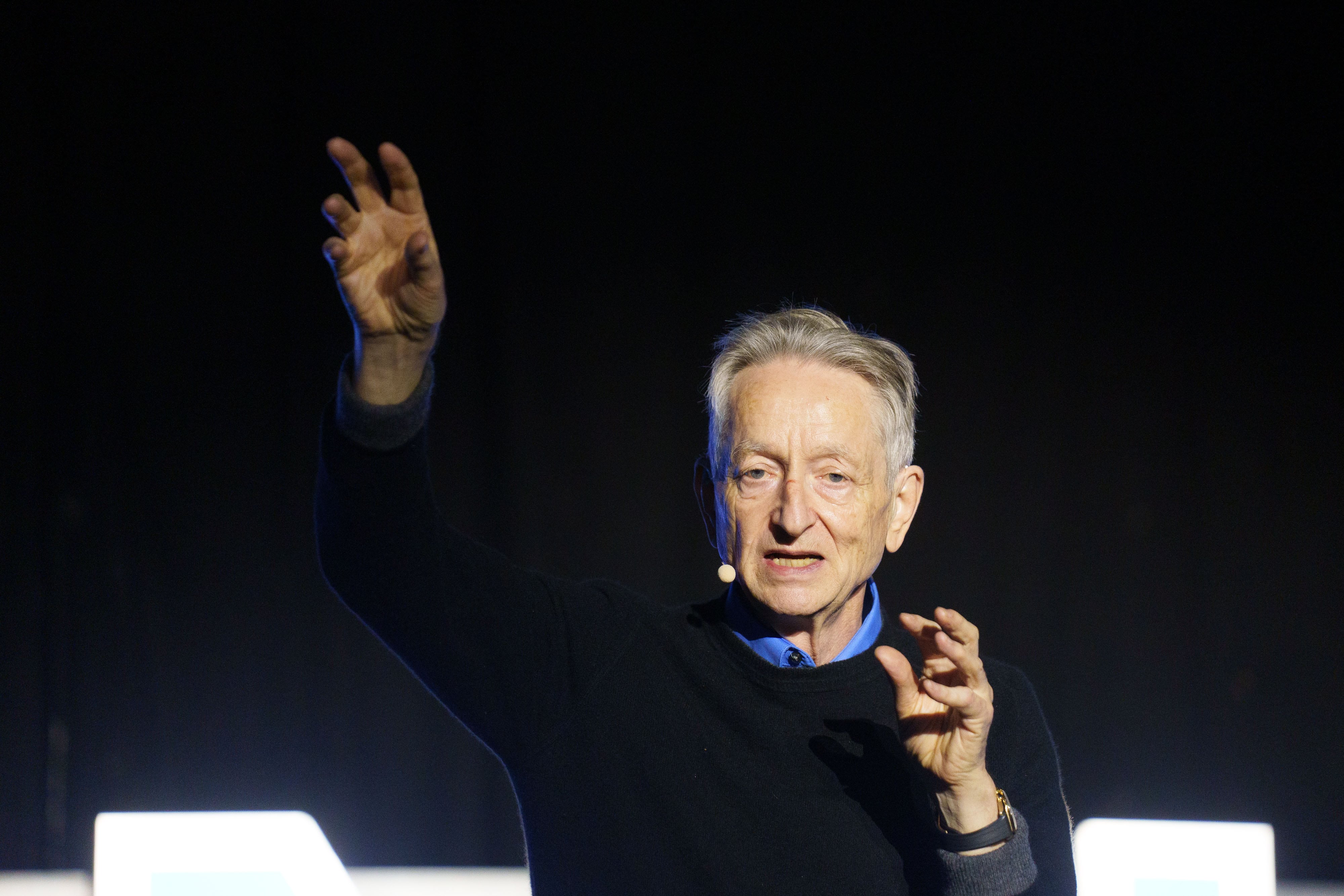
Computer scientist and Nobel Prize in Physics laureate Geoffrey Hinton during the Starmus Festival 2026, held this Tuesday in the municipality of Arona in Tenerife.
  •  

Nolte: Axios Uses Fake AI Image to Run Damage Control for Somali Politician Who Spoke Next to Upside-Down Flag

To defend a leftist politician who spoke in front of an upside-down American flag, Axios published a fake fact check claiming the video was “doctored” by AI and that, in reality, the flag was right side up.

The post Nolte: Axios Uses Fake AI Image to Run Damage Control for Somali Politician Who Spoke Next to Upside-Down Flag appeared first on Breitbart.

  •  

NSA warns organizations to patch security flaws identified by AI

The National Security Agency (NSA) warned organizations Wednesday to immediately patch a pair of security flaws or take their systems offline after artificial intelligence discovered vulnerabilities in a key programming language. “Effective Immediately, all organizations using PHP for their systems are advised to be prepared for an update addressing two critical vulnerabilities,” the NSA’s cyber…

  •  

Nvidia marketing executive Laura Fay, who reported to CEO Jensen Huang, has retired after a decade

The Nvidia logo is seen at the company's annual GTC developers conference at the SAP Center in San Jose.
Nvidia.

JOSH EDELSON / AFP via Getty Images

  • Nvidia vice president Laura Fay has retired after a decade at the company.
  • Fay grew Nvidia's enterprise marketing team from roughly 60 to 600 employees.
  • Nvidia brought in Google Cloud's Alison Wagonfeld as its first chief marketing officer this year.

Laura Fay, a longtime Nvidia marketing executive who reported to CEO Jensen Huang, retired in July after roughly a decade at the AI chip giant.

Fay formerly served as Nvidia's vice president of global enterprise marketing, overseeing campaigns, events, analyst relations, and partner marketing. She said her team grew from roughly 60 to 600 people by the time she left.

Fay was among 36 employees on an internal list obtained by Business Insider last year of company leaders reporting directly to Huang. Prior to joining Nvidia, she spent 22 years at Cisco, concluding her tenure there as VP of global marketing.

Fay said Huang recruited her to build Nvidia's enterprise marketing organization as the company looked to expand beyond gaming.

"I want to change the world, and I want you to change it with me," she recalled him telling her on their first call.

Fay said she began considering retirement around her 10th anniversary in January, though a call from Huang congratulating her and expressing hope that she'd stick around for another decade persuaded her to stay a little longer.

Nvidia declined to comment.

Fay's retirement came as Nvidia also brought in new marketing leadership. In February, the company hired Google Cloud executive Alison Wagonfeld as its first chief marketing officer.

The Wall Street Journal reported at the time that Wagonfeld would oversee all marketing and communications teams and assume responsibilities previously divided among several leaders.

Those changes follow another longtime marketing departure. Greg Estes, Nvidia's former vice president of corporate marketing and developer programs, retired in 2025 after roughly 15 years at the company.

Several other longtime Nvidians have retired this year, including sales chief Jay Puri, chief accounting officer Donald Robertson, and VP of hardware engineering Robert Huang. Some retirees told Business Insider that Nvidia's exponential stock run helped precipitate their decisions.

Nvidia's communications organization has also undergone a shake-up as scrutiny around the company has intensified, with roughly 15 employees departing since 2025 amid a reorganization under new leadership.

Have a tip? Contact this reporter via email at gweiss@businessinsider.com or Signal at @geoffweiss.25. Use a personal email address, a non-work WiFi network, and a non-work device; here's our guide to sharing information securely.

Read the original article on Business Insider
  •  
❌