❌

Reading view

Texas School Police Referred Tens of Thousands of Children to Prosecutors for Minor Misbehavior

An illustration of a police officer standing in front of a school bus and a school | Luckydoor/Tom Dowd/Dreamstime

School resource officers (SROs) in Texas referred tens of thousands of elementary and middle schoolers for prosecution for relatively minor misconduct over the last decade, a news investigation found.

An analysis by The New York Times and the San Antonio Express-News reported that, as the number of SROs in Texas grew, children in Texas ages 10 to 13 were referred to prosecution for misbehaving in school more than 47,000 times since 2014. A referral doesn't necessarily result in charges being filed, but each one represents a minor being taken into police custody and put in contact with the criminal justice system, which can have long-lasting educational, emotional, and financial impacts for students and their families.

"Most of the students were accused of minor offenses, like making threats, using cannabis vapes or lashing out at classmates or teachers," the papers reported. "Few caused serious physical harm."

Among the examples cited by the Times and Express-News were an 11-year-old who bumped into a school counselor, a 10-year-old who said he saw someone on campus with a weapon, and a 10-year-old who kicked an assistant principal after his cellphone was taken away. 

In one case, a 12-year-old girl who refused to go to the principal's office was handcuffed, arrested, and driven to the school police headquarters. "When she would not put her hand on a fingerprint machine, officers twisted her opposite arm behind her back until she screamed and complied, according to body camera footage," the outlets reported.

The analysis found that referrals of children 10 to 13 increased by a greater percentage than referrals of older students. (Children under 10 cannot be prosecuted under Texas law; many other states don't set a minimum age for delinquency.)

The two outlets published another joint investigation in May on how SROs in Texas schools have used heavy-handed tactics, including Tasers and pepper spray, against students over seemingly minor misconduct.

The findings mirror other recent studies. A report published in July by the American Civil Liberties Union (ACLU) of Iowa found that, while SROs were placed in Iowa schools to keep students safe from violence, the threat they most commonly dealt with was illicit vaping.

The number of police in schools nationally dramatically increased in recent years, growing by 23 percent at high schools, middle schools, and elementary schools between 2018 and 2021, largely under the justification of stopping mass shootings and handling violent situations.

Organizations like the National Association of School Resource Officers (NASRO) say that carefully selected, well-trained officers act as a filter and decrease arrests by building strong relationships within the school with staff and students.

Civil liberties groups and disability advocates have long argued that increases in school police and zero-tolerance policies for petty disturbances have fueled the "school-to-prison" pipeline and led to disproportionate enforcement against minorities and students with disabilities. Those groups have been aided by viral news stories of police arresting and assaulting school children.

Following the police killing of George Floyd in 2020 and national calls for police reform, several major school districts across the country ended their SRO programs. 

However, several states that experienced horrific school shootings, like Florida and Texas, moved in the opposite direction, passing laws that required police officers or armed guardians in public schools.

A 2020 Reason investigation described how Florida schools had become a high-stakes experiment in policing after Florida more than doubled the number of SROs across the state following the mass shooting at Marjory Stoneman Douglas High School in 2018. A study published in 2020 found that after the increase, the number of Florida school arrests—which had been declining for years—suddenly started to rise. There was also a sharp increase in the use of physical restraint against students.

A 2021 working paper by the Annenberg Institute at Brown University, which billed itself as the broadest and most rigorous examination at the school level of how SROs impact student outcomes, found that while SROs "do effectively reduce some forms of violence in schools," they did not prevent school shootings or gun-related incidents.

Another study by researchers at the University of Maryland and the firm Westat, who studied several dozen middle and high schools in California, found that increasing the number of SROs led to both immediate and persistent increases in the number of drug and weapon offenses and the number of suspensions and expulsions of students.

The post Texas School Police Referred Tens of Thousands of Children to Prosecutors for Minor Misbehavior appeared first on Reason Magazine.


  •  

Jewish NY congressional candidate briefly detained while joining Palestinian olive harvest

Police claim Brad Lander and 80 other activists didn't coordinate, despite IDF maps showing no coordination needed in area; Israel accuses Lander of 'harvesting headlines'
  •  

What We Saw at Fast-Track Trials of Riot Suspects in France

At the Tribunal de Paris, judges have supervised a carousel of expedited and often chaotic hearings for those detained during recent unrest.

© Lou Benoist/Agence France-Presse — Getty Images

Police officers confronting protesters in Paris this month.
  •  

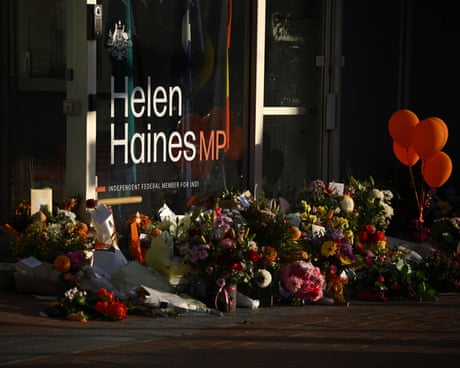
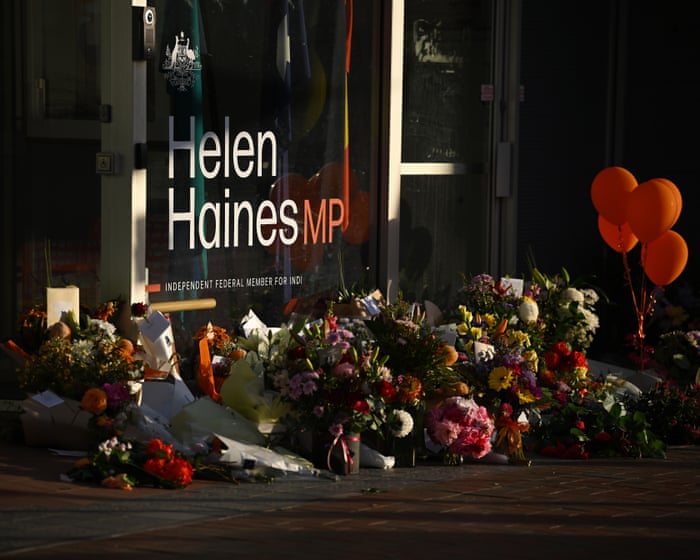
Labor, Coalition and crossbench MPs afraid at home and work after alleged attack on Helen Haines

Home and office safety a common concern in Australian federal police and Asio safety briefings with politicians following alleged attack on MP Helen Haines

Security agencies will review safety precautions for MPs’ homes and offices after numerous federal politicians told police and Asio in safety briefings that they were worried about widening threats after the alleged attack on Helen Haines.

The Labor government and politicians across the parliament are still considering how they will respond when they return to Canberra next week, with ideas being floated including a new committee on MPs’ safety, greater resources for police, and motions of condolence for Haines, who lost both her legs after Monday’s incident. Renewed calls from the crossbench for reforms to question time and the tone of debate in parliament are unlikely to be taken up by the major parties.

Sign up for Guardian Australia’s Politics, really newsletter here

Continue reading...

© Photograph: James Ross/EPA

© Photograph: James Ross/EPA

© Photograph: James Ross/EPA

  •  

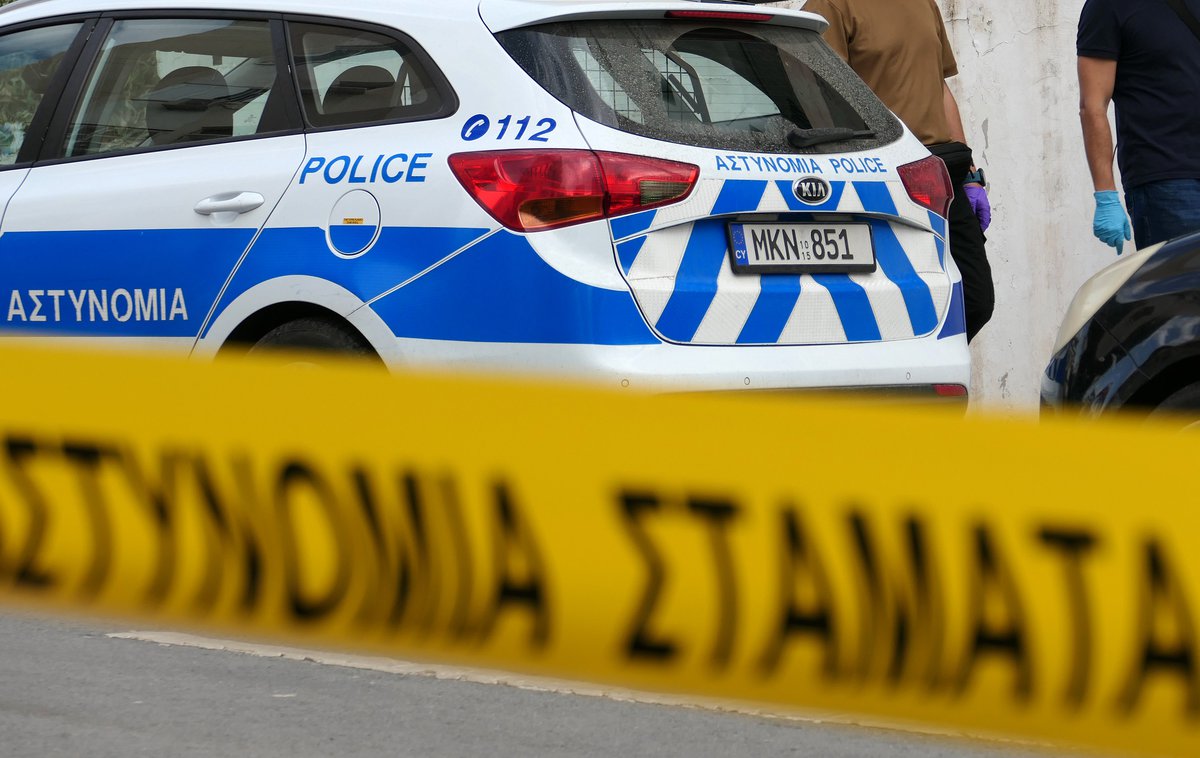
Five arrested over armed robbery of couple in Limassol

Five suspects have been arrested in connection with an armed robbery in Limassol on October 8, during which a couple were tied up inside their home and robbed of cash and jewellery worth more than €100,000.

According to police, the suspects, aged 29, 27, 25, 24 and 20, were arrested following an investigation by Limassol CID and an assessment of evidence gathered in the case.

During a search of the residence where the suspects were staying in Limassol, carried out under a court warrant, officers seized clothing and tools believed to have been used in the robbery.

The incident was reported by a 36-year-old woman, who told police that she and her 43-year-old husband were asleep when five masked intruders entered their bedroom armed with knives and a pistol.

The assailants allegedly restrained her husband with adhesive tape before demanding that she open a safe located in the bedroom.

They reportedly stole €5,000 in cash, $1,000 and jewellery valued at more than €100,000.

Before fleeing the scene, the intruders also tied up the woman with adhesive tape.

The five suspects are expected to appear before Limassol district court at around 10.30am on Wednesday, where police will seek their remand in custody.

  •  

Jess Phillips hopes supreme court ‘sees sense’ and overturns domestic abuse ruling

Court of appeal decision prevents woman from suing police and CPS for disclosing her address to violent ex-partner

The Labour MP Jess Phillips has said she hopes the UK’s highest court “sees sense” and overturns a ruling preventing a domestic abuse survivor from suing Sussex police and the Crown Prosecution Service (CPS) for disclosing her address to her violent ex-partner.

Phillips said that if the supreme court upheld the court of appeal’s decision when it hears the case on Wednesday and Thursday, it would prevent police from being held accountable for failures in cases of violence against women and girls.

Continue reading...

© Photograph: Joe Giddens/PA

© Photograph: Joe Giddens/PA

© Photograph: Joe Giddens/PA

  •  

One arrested, 247 traffic offences recorded in overnight police operations

One person was arrested for offences including unlawful possession of burglary tools and unlawful possession of property during nationwide police operations on Tuesday night, police said on Wednesday.

According to a statement from the police communications branch, officers carried out organised patrols at key locations in urban areas across Cyprus, aimed at preventing serious crime, maintaining public order and improving public safety.

During the operations, police stopped 441 vehicles and checked 552 occupants. Officers also inspected 35 premises as part of efforts to tackle illegal activity, with no offences reported.

Traffic checks resulted in 247 reports for various violations, while a further 10 suspected traffic offences are under investigation.

Of the violations recorded, 43 involved speeding, while seven vehicles were impounded.

Police also conducted 94 alcohol tests, resulting in six reports, as well as six preliminary drug tests, three of which returned positive results.

Police said preventive operations would continue daily, with increased patrols, targeted checks and immediate operational action aimed at combating crime, protecting the public and maintaining order.

  •  

AFP warns Australia of ‘tsunami of youth crime’ and radicalisation accelerated by AI

Children as young as 12 among dozens subject to federal police operations since 2020, parliamentary inquiry hears

Australia is facing a “tsunami” of youth crime as artificial intelligence accelerates the pace and scale of radicalisation, a parliamentary inquiry has heard.

The Australian federal police acting deputy commissioner Sandra Booth told the hearing on Wednesday that, while radicalisation had traditionally taken years or months, that process could now happen within days.

Continue reading...

© Photograph: Oleg Elkov/Getty Images/iStockphoto

© Photograph: Oleg Elkov/Getty Images/iStockphoto

© Photograph: Oleg Elkov/Getty Images/iStockphoto

  •  

2 Recent Cases Illustrate the Limits of a Doctrine That Often Blocks Civil Rights Claims

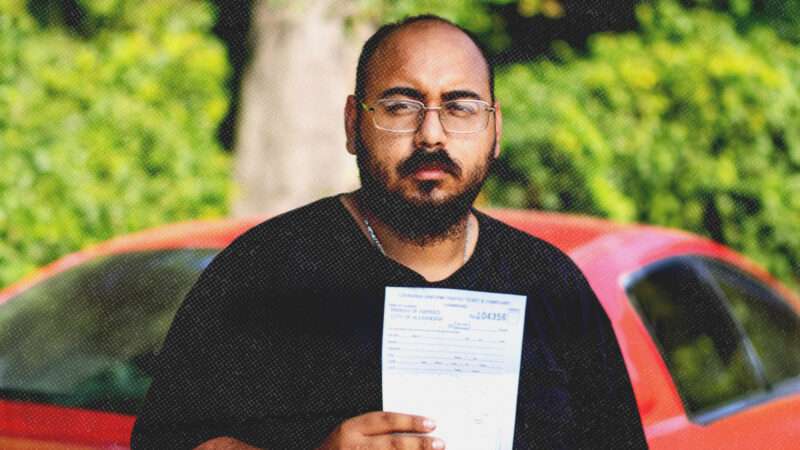
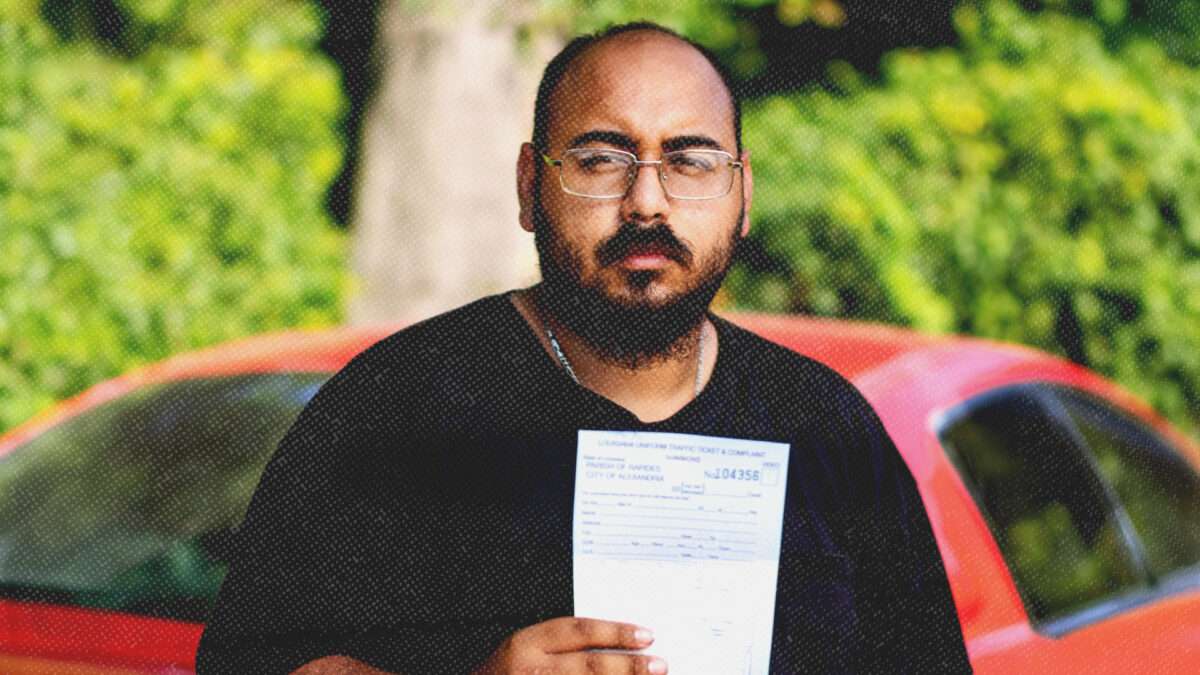
Mario Rosales holds a citation he received after a traffic stop in Alexandria, Louisiana | Institute for Justice

Since 1871, a federal statute has authorized Americans to sue state and local officials for violating their constitutional rights. But since 1982, thanks to the court-invented doctrine of qualified immunity, such claims have been allowed only when they allege violations of "clearly established" law.

Because courts often require plaintiffs to meet that standard by citing precedents involving closely similar facts, qualified immunity can prove insurmountable even for victims of outrageous abuses. But as two recent cases illustrate, there are limits to this license for misconduct, meaning officials may still be held accountable when they flout longstanding constitutional principles, even when they do so in novel ways.

In 2022, Mario Rosales and Gracie Lasyone sued two Alexandria, Louisiana, police officers, Samuel Terrell and Jim Lewis, alleging that they had pulled Rosales over without legal justification. The cops ordered Rosales and Lasyone, his girlfriend, out of the car and detained them for 21 minutes, during which they grilled the couple about illegal drugs, frisked Rosales, and instructed him to empty his pockets.

Terrell and Lewis sought refuge in qualified immunity. But last month, the U.S. Court of Appeals for the 5th Circuit ruled that Rosales and Lasyone had plausibly alleged several Fourth Amendment violations, including a stop based on a "fabricated traffic violation," an improperly prolonged detention, and unjustified searches.

In reaching that conclusion, the 5th Circuit relied mainly on a 1968 decision in which the Supreme Court said police may detain someone only if they reasonably suspect he is involved in criminal activity and may frisk him only if they reasonably suspect he is "armed and dangerous." Assuming the facts alleged in the lawsuit are true, the three-judge panel unanimously held, Terrell and Lewis had failed both of those tests.

When the officers stopped Rosales, the principles that the 5th Circuit applied had been the law of the land for more than half a century. Terrell and Lewis nevertheless argued that "any constitutional violation arising from the traffic stop was not clearly established," which gives you a sense of the chutzpah that qualified immunity invites.

Police commonly pull drivers over, ostensibly for traffic violations, in the hope of implicating them in drug crimes. A case that the U.S. Court of Appeals for the 8th Circuit considered this month involved a much more unusual scenario: a judge who locked two children in jail cells because he was frustrated by their resistance to a parental custody decision.

During a 2019 hearing in Taney County, Missouri, a divorced couple agreed that the mother would have primary custody of their two children, then 12 and 14. But contrary to that agreement, the children did not want to go home with their mother, which led to an argument in the courthouse lobby.

Judge Eric Eighmy intervened, telling the children they had to leave with their mother and repeatedly warning them that they could end up in foster care if they refused to do so. When that did not work, Eighmy jailed them until they became more cooperative.

"The time spent in the holding-cell area was between twenty and forty minutes," the 8th Circuit noted. And since Eighmy did not have probable cause to believe the children had committed any offense, "much less one that justified placing them in a holding cell," the court said, their confinement clearly violated the Fourth Amendment.

If so, Eighmy argued, he had no way of knowing that. The 8th Circuit panel unanimously disagreed: "As we put it over a decade and a half ago, long before the events in this case, 'it is clearly established that a warrantless arrest, unsupported by probable cause, violates the Fourth Amendment.'"

Notably, the 8th Circuit did not think the bizarre details of the case counted in Eighmy's favor. "We are not concerned about the lack of a prior case" with "fundamentally similar" facts, it said. "Indeed, given how clear the law is, it would have been surprising to find one."

© Copyright 2026 by Creators Syndicate Inc.

The post 2 Recent Cases Illustrate the Limits of a Doctrine That Often Blocks Civil Rights Claims appeared first on Reason Magazine.
  •  

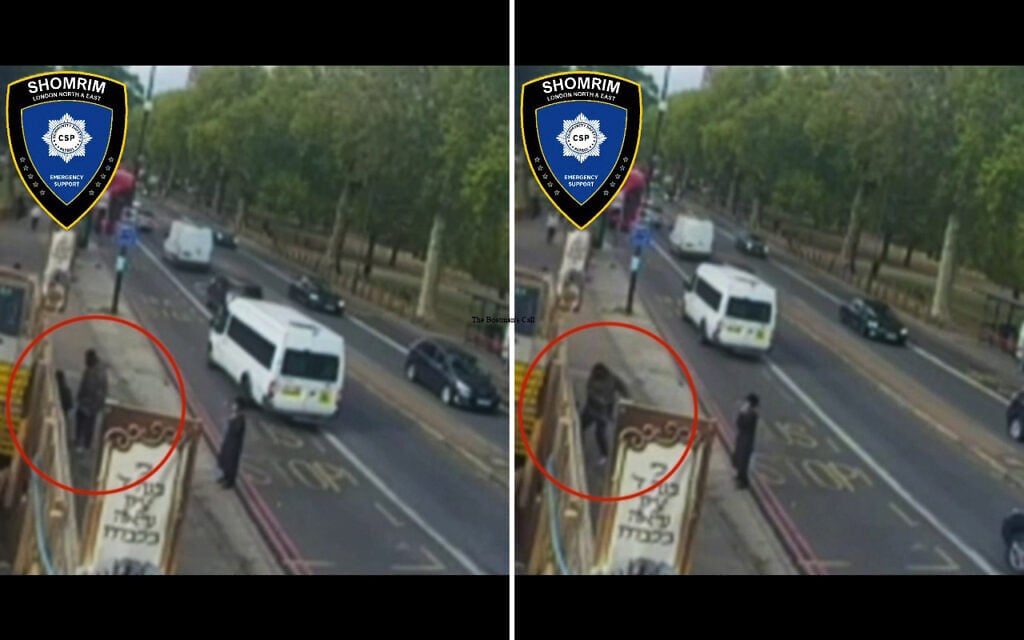
At least three Jewish women attacked in north London in alleged hate crime

Suspect arrested after being detained by Jewish security volunteers who quickly arrived on scene; victims, including mother with baby, believe they were assaulted due to their faith
  •  

Colombia Arrests Four Policemen for Donovan Balanta’s Death

The officers are being investigated for the crimes of homicide and aggravated torture.

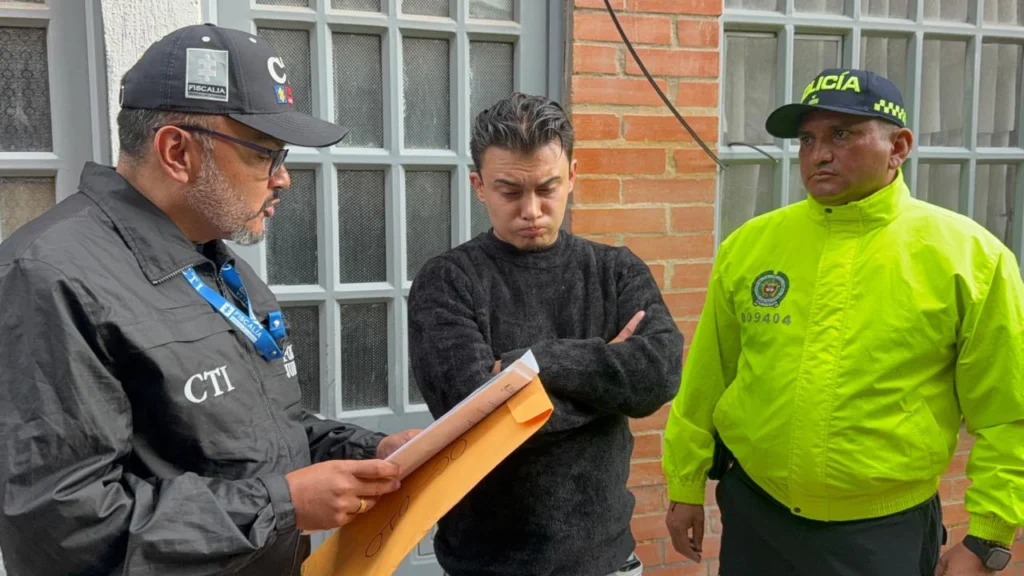
On Tuesday, the Technical Investigation Unit of the General Attorney’s Office arrested four members of the National Police for their responsibility in the death of Afro-Colombian Donovan Balanta, which occurred while he was in police custody in Bogota.

RELATED: Colombia Groups Demand Justice Over Donovan Balanta Death

The officers are being investigated for the crimes of homicide and aggravated torture. The investigation seeks to clarify both the reported physical assaults and the alleged failure to provide medical assistance that preceded the victim’s death.

According to authorities, the events date back to September 20, when a patrol responded to a dispute between neighbors in southern Bogota, which escalated into a confrontation between civilians and police officers.

During the operation, Donovan was detained by the officers. The Attorney General’s Office maintains that a sub-lieutenant and three patrol officers allegedly handcuffed him, punched and kicked him, and used a Taser on him.

Se conocen nuevos detalles del caso Donovan Balanta: capturan a cuatro policías y buscan a otros dos

Ampliación 👉 https://t.co/cAFAhkNcOT pic.twitter.com/reGjVavYX4

— Noticias Caracol (@NoticiasCaracol) October 19, 2026

The text reads, “New details emerge in the Donovan Balanta case: four police officers captured and two others sought”

The investigation indicates that, after his arrest, Balanta was taken to a police station, where the violence allegedly continued while he was detained within the official facilities.

According to the case file, the victim repeatedly requested medical attention due to respiratory difficulties and severe chest pains. Another detainee also reportedly requested assistance for Balanta, but he did not receive timely help.

The National Institute of Legal Medicine determined that the cause of death was a cardiac arrhythmia caused by the electric shocks he received during the procedure, according to the results of the forensic analysis.

Experts also documented multiple burns and various injuries on different parts of his body, evidence that supports the hypotheses investigated by the Prosecutor’s Office regarding possible acts of torture.

Demonstrators gather in Bogota to defend labor rights, public education, and social reforms.

Trade unions, social movements, and students took to the streets of Bogotá to protest in defense of labor rights, public education, and key social protections achieved for workers.… pic.twitter.com/Mfx1HL1vpN

— teleSUR English (@telesurenglish) October 14, 2026

teleSUR: JP

Source: teleSUR

  •  

Gang makes off in stolen Porsche after kidnapping couple near Torres Vedras

PJ police seize 556kg of cocaine in Porto

A couple endured moments of sheer terror on Sunday night when their Porsche was rammed by another vehicle in Torres Vedras, leading to a violent confrontation with five men, at

The post Gang makes off in stolen Porsche after kidnapping couple near Torres Vedras appeared first on Portugal Resident.

  •  

The Mayor of a City in Haiti Warned of a Massacre. No One Listened.

The mayor of Kenscoff, a town near Haiti’s capital, wrote government officials hundreds of letters to warn of gang threats. Then dozens of people died, and he did, too.

© Michael Anthony Adams/The New York Times

The former mayor of Kenscoff, Haiti, Jean Massillon, showing bullet holes outside Kenscoff City Hall after a gang attack in August that killed 47 people. He died two weeks after this photo was taken.
  •  

How Do Airports Prepare for a Plane Crash? Go Inside JFK’s Disaster Drill.

U.S. airports are required to hold a full-scale disaster drill every three years. Go inside a simulated plane crash at Kennedy Airport last weekend.

Emergency workers attended to a volunteer playing a victim of a simulated plane crash during a drill at Kennedy Airport on Saturday.
  •  

Brickbat: Sticky Fingers

Fairfax County, Virginia, Police uniform | Fairfax County Police Department

Fairfax County, Virginia, police officer Scott Abram was charged with two counts of misdemeanor shoplifting for stealing merchandise from two Target stores. Police say that while using the self-checkout at a Target in Burke, Abram scanned a cheaper item's barcode to pay less for another item, then left the store with both products despite only paying for one. Abram was in uniform and on duty at the time. Police say he had committed a similar theft at a Target in Springfield the day before, while off duty. A 23-year veteran of the Fairfax County Police Department, Abram chose to retire rather than face termination. Each charge is a misdemeanor that can carry up to 12 months in jail and a $2,500 fine if convicted.

The post Brickbat: Sticky Fingers appeared first on Reason Magazine.
  •  

Mississippi Says It Won’t Bring Criminal Charges in Police Shooting of Toddler

Attorney General Lynn Fitch issued a terse statement, months after officers, responding to a report of stolen diapers, surrounded a car, guns drawn.

© Chris Day/The Commercial Appeal, via USA Today, via Reuters

Demonstrators marching down Norfleet Drive in Senatobia, Miss., in June, after Kohen Wiley, a 1-year-old child, was shot and killed by police.
  •  

Meloni Prepares New Security Measures After Milan Riots Leave Hundreds Detained

Italian Prime Minister Giorgia Meloni has convened an emergency government meeting following two days of violent unrest in Milan and other northern cities, where demonstrators clashed with police, looted shops and damaged public property during protests over living costs and deteriorating public services.

Police brought 271 people to police headquarters following Sunday’s disturbances in Milan, including 220 minors. Of those detained, 32 were formally arrested and another 28 were reported to the judicial authorities, according to figures released on Monday, 19th October.

The violence has prompted the Italian government to consider further restrictions on those involved in violent demonstrations, potentially introducing additional powers directed at organised disorder and juvenile offenders.

Milan city centre hit by looting

The disturbances began during demonstrations on Saturday, 17th October, organised amid growing dissatisfaction over household expenses, public services and wider political grievances.

Although the protests initially included peaceful participants, groups of masked individuals subsequently confronted riot police in central Milan. Officers used tear gas and water cannon as demonstrators erected burning barricades and threw objects at security personnel.

The unrest continued on Sunday, when shops were attacked close to Piazza del Duomo, one of Milan’s principal commercial and tourist areas.

Among the premises targeted were branches of Decathlon, Arc’teryx and Vodafone. Television footage showed damaged shopfronts, overturned street furniture and burning rubbish containers.

According to police figures reported on Monday, 174 of those taken to police headquarters were subjected to preventive detention measures introduced under recent Italian security legislation.

Fourteen members of the security services were reported injured during Sunday’s disturbances, including ten police officers and four members of the municipal police.

The judicial authorities are examining the conduct of individuals suspected of taking part in attacks on businesses and confrontations with officers. Prosecutors have sought custodial measures against several adults accused of offences including devastation, looting and aggravated resistance.

The large proportion of minors among those detained has become a central issue in the political response.

Violence spreads across northern Italy

Milan was not the only city affected by disorder. Saturday’s demonstrations also produced confrontations in Turin, Bologna, Brescia and Bergamo.

Italian police reported arrests across the affected cities, while the scale and organisation of the disturbances have raised questions about whether different groups were acting independently or using demonstrations as opportunities for coordinated violence.

There is not yet sufficient publicly established evidence to attribute the disorder to a single organisation or political movement.

The clashes coincided with major protests in neighbouring France, where similar concerns over living costs and public administration have contributed to increasingly confrontational demonstrations.

Although the grievances overlap, the Italian and French movements have different political backgrounds and organisational structures.

Government considers emergency legislation

Following a meeting at Palazzo Chigi on Monday, Meloni’s government indicated that it was considering a legislative response, potentially through an emergency decree.

According to details of the government discussions, proposals under examination include additional measures against violent offences, changes to preventive policing and possible restrictions addressing road blockages.

Some measures could be drawn from security legislation already under consideration in the Italian Senate. Ministers have also discussed the need for more effective intervention against juvenile offenders.

The meeting included Deputy Prime Ministers Matteo Salvini and Antonio Tajani, Interior Minister Matteo Piantedosi, Defence Minister Guido Crosetto and senior officials from the police, Carabinieri and intelligence services.

The government has stressed that peaceful demonstrations must remain protected while arguing that violence and organised destruction require a stronger response.

No final legislative text had been adopted at the conclusion of Monday’s meeting. A decree could be considered by the Council of Ministers as early as Tuesday, although the precise content remains subject to further examination.

Dispute over responsibility for policing

The unrest has also produced a dispute between Milan’s municipal authorities and the national government.

Mayor Giuseppe Sala questioned the adequacy of the policing arrangements, arguing that the number of officers initially deployed was insufficient to control the disturbances.

Interior Minister Matteo Piantedosi rejected that criticism, while senior government figures accused local political leaders of failing to condemn the violence unequivocally.

The disagreement reflects a wider question over how responsibility for anticipating and containing serious public disorder should be divided between local administrations and national security authorities.

Italy’s opposition has also challenged the government’s handling of the disturbances. Former Prime Minister Matteo Renzi criticised Meloni and Piantedosi over their failure to prevent the violence, calling for a change in leadership at the Interior Ministry.

The political argument is likely to intensify if the government proceeds with emergency legislation. Supporters of stronger police powers argue that the existing framework is insufficient to deal with rapidly organised disturbances, while opponents will scrutinise the proportionality of new restrictions and their effect on peaceful protest.

The immediate test for the government will be whether additional legal powers can improve public-order operations without replacing effective policing, intelligence gathering and judicial enforcement.

  •  
❌