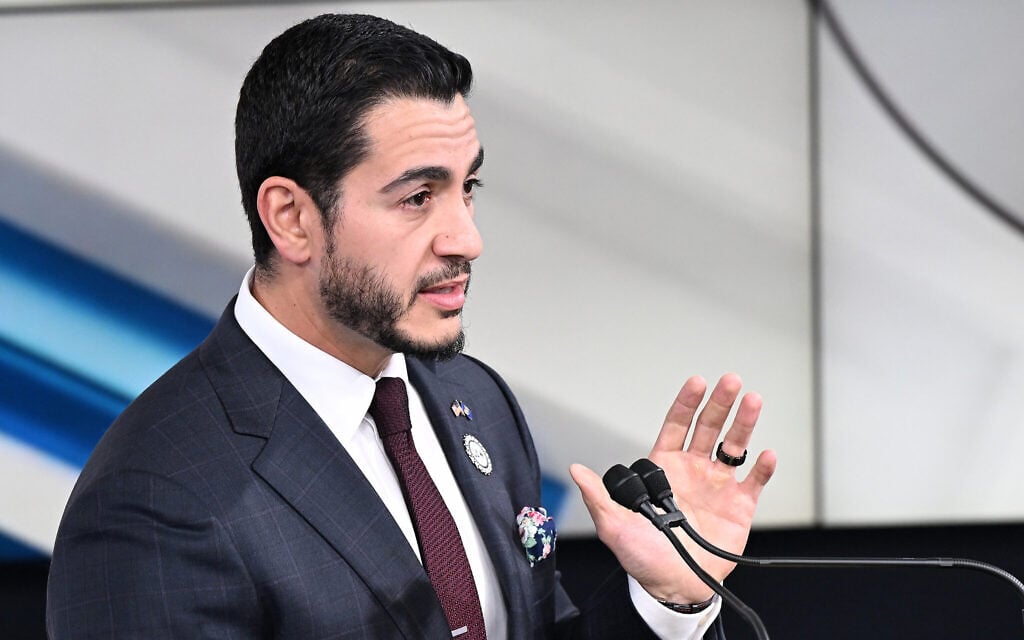
Romania has formed a new government after six months of political deadlock, with parliament approving a minority administration led by independent diplomat Luca Niculescu on Tuesday, 20 October. The vote brings an end to repeated failed attempts to establish an executive, although the new prime minister faces considerable uncertainty over his government’s parliamentary support.
Niculescu secured 280 votes in favour and 58 against, comfortably exceeding the 233 required for confirmation. His ministers were sworn in before President Nicuşor Dan at the Cotroceni Palace in Bucharest later that evening, formally ending the prolonged government formation process.
The new administration comprises 18 ministers, including two delegated ministers. The Social Democratic Party (PSD) controls the majority of portfolios, while independent specialists hold several important positions, including finance and foreign affairs.
A government built on temporary parliamentary support
The appointment represents a political success for President Dan, who nominated Niculescu on 5 October following three unsuccessful attempts to assemble a functioning government.
EU Today reported earlier this month on Niculescu’s nomination, which followed the collapse of previous negotiations and growing pressure on Romania’s political institutions.
The new cabinet is heavily dependent on agreements between parties that have frequently disagreed over economic policy and public spending. Although the parliamentary vote demonstrated sufficient support for its installation, the arrangement does not provide the government with a permanent majority.
The National Liberal Party (PNL) and the Democratic Alliance of Hungarians in Romania (UDMR) supported the investiture while remaining outside the administration.
The arrangement gives Niculescu an opportunity to govern, but each major legislative proposal will require continued cooperation between parties with competing priorities.
The Social Democrats, who hold 11 of the ministerial positions, will exercise substantial influence over domestic policy, particularly decisions involving public-sector spending, welfare and taxation.
Budget deficit presents immediate challenge
Romania’s public finances represent the government’s most urgent problem.
The previous administration, led by Ilie Bolojan, collapsed in May following unpopular austerity measures. Political opposition to fiscal consolidation has complicated efforts to stabilise the budget and meet Romania’s commitments under the European Union’s fiscal framework.
Niculescu has indicated that addressing the deficit will be an immediate priority. Finance Minister Alexandru Nazare, appointed as an independent, faces the task of establishing a credible budget programme without provoking another parliamentary crisis.
The choices are politically difficult. Spending reductions risk resistance from public-sector employees and households already affected by higher living costs, while substantial tax increases could place further pressure on businesses and consumption.
Failure to establish a credible fiscal programme would prolong uncertainty over Romania’s borrowing requirements and its ability to comply with European budgetary obligations.
Brussels has a direct interest in the outcome. Romania remains subject to EU fiscal oversight, and the European Commission will assess whether the new administration’s financial plans are consistent with the country’s obligations.
The government’s credibility will depend on whether its parliamentary supporters are prepared to approve the measures that fiscal consolidation requires.
European funds and political credibility
The change of government also comes at a sensitive moment in Romania’s relationship with European institutions.
Romania has faced scrutiny over reforms linked to the EU’s Recovery and Resilience Facility, particularly legislation concerning public integrity and institutional accountability.
EU Today previously examined the European Commission’s assessment of Romania’s integrity legislation and its implications for recovery funding.
Although the EU recovery programme reached its principal implementation deadline in August, outstanding assessments and financial decisions continue to carry consequences for national budgets.
A functioning government is therefore important not only for domestic legislation but also for negotiations with Brussels over fiscal commitments, investment and the wider EU budget.
Romania must also address longer-term weaknesses in public administration, infrastructure financing and the implementation of European legislation.
Political stability remains uncertain
Niculescu takes office against the background of Romania’s unusually turbulent political history since the annulment of the 2024 presidential election amid allegations of Russian interference.
The subsequent institutional disputes damaged confidence in the political system and contributed to the fragmentation of parliamentary support.
Opposition parties, including the nationalist Alliance for the Union of Romanians (AUR), are positioned to challenge the government’s legitimacy and economic measures as the administration begins work.
Romania’s strategic importance extends beyond its domestic political difficulties. As an EU and NATO member bordering Ukraine and Moldova, it plays a substantial role in Black Sea security, military logistics and regional infrastructure.
Prolonged instability in Bucharest has therefore affected a country whose decisions carry consequences for European security and cross-border economic cooperation.
For the new prime minister, the immediate objective is to translate Tuesday’s parliamentary majority into support for legislation. His first serious test will come when the cabinet presents the fiscal measures that its supporters have so far struggled to agree upon.
The parliamentary vote has ended Romania’s government formation crisis. It has not resolved the disagreements that produced it.

 Login