❌

Reading view

Historic First for Indian Rafale Jets: Australian KC-30A Refuels IAF Fighters During Pitch Black 2026

For the first time, an Indian Air Force (IAF) Dassault Rafale fighter aircraft was refueled by a Royal Australian Air Force (RAAF) Airbus KC-30A Multi-Role Tanker Transport (MRTT) taking part in Exercise “Pitch Black” 2026.

The refueling of the Indian Rafale—making their debut at “Exercise Pitch Black”—was conducted during the second week of the exercise, which began on 20 July and runs through August 7, 2026. The jets that refueled mid-air have been identified as a single-seat Rafale EH and a twin-seat Rafale DH, as noted by Janes.

According to the Australian Department of Defense, the KC-30A, operating from RAAF Base Darwin, refueled 14 fighter aircraft from partner nations during a five-hour sortie over Australia’s Northern Territory. Meanwhile, the Royal Australian Air Force (RAAF) highlighted the mission on X with video footage that also showed RAAF Super Hornets, Republic of Korea Air Force F-15Ks, and German Eurofighter Typhoons being refueled mid-air.

Flight Lieutenant Sara Whitehead, commander of the KC-30A, said, “The first to visit the aerial bowser were two IAF Rafales, completing fuel transfers by wing-mounted hose-and-drogue before returning to their missions.”

Before this, the RAAF KC-30A Multi-Role Tanker Transports refueled IAF Su-30MKIs during Exercise Pitch Black 2018 for the first time.

A RAAF KC-30A delivered fuel to Indian Rafales @IAF_MCC, RAAF Super Hornets, Republic of Korea Air Force F-15Ks @ROK_MND and German Eurofighter Typhoons @Team_Luftwaffe, demonstrating seamless multinational interoperability at #PitchBlack26. pic.twitter.com/5u7F4U29bs

— Royal Australian Air Force (@AusAirForce) July 28, 2026

Notably, the latest refueling event was the visible execution of an agreement signed by Australia and India in November 2024, enabling RAAF KC-30As to refuel aircraft of the Indian Armed Forces. It is, however, noteworthy that the KC-30s refueled the IAF’s most advanced fighter jet, which has now become the cornerstone of its air power.

Interestingly, the Rafales arrived in Australia a little over a year after the May 2025 India–Pakistan crisis, in which Indian fighters engaged Chinese-origin Pakistani aircraft, and at a time when India is advancing plans for the acquisition of 114 additional Rafales.

This is not the first time that a refueling aircraft of a partner nation has refueled Indian Rafales. Earlier, for instance, the first IAF Rafales were mid-air refueled by French Air Force Airbus A330 Multi-Role Tanker Transport (MRTT) aircraft during their ferry flight from Merignac (Bordeaux), France, to Al Dhafra Air Base in the UAE.

Separately, the UAE Air Force Airbus MRTT tankers provided in-flight refueling for several subsequent ferry flights of IAF Rafales from France to India, enabling non-stop flights.

Having said that, the latest long-range deployment to Australia tested the Rafale’s strategic reach and ability to sustain operations far from home bases.

Image
IAF Rafale being refueled mid-air by RAAF’s KC-30 (Picture courtesy of RAAF)

The Indo-Pacific is a vast theater where combat aircraft need extended range and endurance. Therefore, this kind of mutual support strengthens collective readiness, deterrence, and the ability to sustain operations far from home bases — goals repeatedly highlighted in India–Australia statements about a “free and open Indo-Pacific.”

The IAF Rafale’s debut in Pitch Black comes at a time when India and Australia are strengthening their defense ties. For the ongoing drills, the IAF sent at least four Rafales, two Boeing C-17 Globemaster III transport aircraft, one Ilyushin Il-78 Midas aerial refueling aircraft, and an estimated 120 troops to RAAF Base Darwin.

The IAF Rafales were expected to fly alongside the F-35 stealth fighters during these keenly watched multinational drills.

Fielding Rafales for the first time in 2026 and successfully receiving Australian tanker support underscores deepening air-power cooperation. It complements other engagements, including maritime patrol aircraft interactions and joint exercises, and signals growing ability to operate together in coalition settings.

India-Australia Strengthen Defense Ties 

Earlier this week, Australian High Commissioner Philip Green stated that India has become a “top-tier” security partner for Australia, noting that Indian Prime Minister Narendra Modi’s recent trip to Melbourne has strengthened security ties.

India and Australia have developed one of the fastest-growing defense partnerships in the Indo-Pacific, based on the Comprehensive Strategic Partnership signed in 2020. This core framework is apparently built on shared democratic values, economic ties, and a common vision of a free, open, peaceful, stable, and prosperous Indo-Pacific

After this, the two sides signed the Mutual Logistics Support Arrangement to provide reciprocal logistical support and facilitate more complex exercises and deployments. Subsequently, New Delhi and Canberra inked the Air-to-Air Refueling Arrangement in 2024.

The defense ties received a further boost this month as Narendra Modi and Australian Prime Minister Anthony Albanese signed the Joint Declaration on Defense and Security Cooperation during the third Annual Leaders’ Summit in Melbourne. It renews and expands the 2009 framework, committing the two sides to deeper strategic consultations, more complex exercises, faster interoperability and information sharing, expanded aircraft deployments from each other’s territories, and greater personnel exchanges.

Not just that, the two sides agreed on a Maritime Security Collaboration Roadmap focused on operational coordination, information sharing, and capability development in the maritime domain—the area of greatest geographic and strategic overlap.

Beyond Bilateral defense frameworks, India and Australia are bound by a host of institutional mechanisms, such as the QUAD, which also includes the US and Japan.

Meanwhile, the military cooperation spans all three services and has grown in frequency and complexity. In addition to Air Force-focused Pitch Black, India and Australia have participated in naval exercises such as Exercise Malabar, AUSINDEX, Milan, and Kakadu.

Additionally, the two sides have participated in AustraHind, an exercise that brings together the armies of the two countries, which now appears to be expanding to include amphibious or littoral elements.

India has also reportedly participated in Talisman Saber, hosted by Australia in 2025, and is looking forward to an enhanced role planned for the 2027 edition.

In his latest interview, Green also highlighted the value of common platforms such as the Boeing P-8 maritime patrol aircraft, bolstering interoperability.

The two sides frequently engage with each other’s industries. For instance, Australia participated in Aero India 2025, while a delegation from India attended the Avalon Australian International Airshow 2025.

A key driver of this close defense partnership is the shared concern about regional stability, freedom of navigation, and the rules-based order in the Indo-Pacific. Although maritime security has been the strongest pillar of alignment amid shared threats and China’s rapid expansion in the Indian and Pacific Oceans, the defense industrial collaboration is expanding through trade missions, industry roundtables, and efforts to build resilient supply chains and co-develop capabilities.

The Rafale’s debut in Pitch Black and the refueling exhibit the strength of ties between the two states.


The post Historic First for Indian Rafale Jets: Australian KC-30A Refuels IAF Fighters During Pitch Black 2026 appeared first on EURASIAN TIMES.

  •  

Su-57 For IAF: India Rules Out New Sukhoi Fighter Jets, To Prioritize Su-30 MKI Upgrades

A senior official from the Indian Ministry of Defense (MoD) has indicated that New Delhi is not currently planning to buy new Sukhois. The statement comes as Moscow has been aggressively pushing to export its Su-57 fighter jets to the IAF

In a recent interview with Moneycontrol, Defense Secretary Rajesh Kumar Singh stated that India has no plans to acquire a “new version of the Sukhois.”

“No, we have not thought about Sukhois. If you are asking about the new version of the Sukhois, the answer is no. But we are actively considering upgrading the existing Sukhois… It is a success story. It is a very important platform with the induction of BrahMos missiles, and we hope to further upgrade and improve it,” Singh said when asked whether there are any plans to buy a fifth-generation aircraft outside of the AMCA (Advanced Medium Combat Aircraft), India’s own indigenous fifth-generation fighter program.

While he did not name either aircraft, the remarks have been widely interpreted as referring to Russia’s Su-57 fifth-generation fighter. In fact, the statement marks a clearer official signal against a near-term Su-57 acquisition, in contrast to previous signals.

In April 2026, for instance, Chairman and Managing Director of the state-run Hindustan Aeronautics Limited (HAL), Dr. D.K. Sunil, said, “A committee of Russians has also studied and said that roughly 50% of the facilities can be used for producing this aircraft, but some new investments will be required.” Thus, hinting that, while India was neither committing to nor rejecting the offer, it was merely in a pre-decision, information-gathering phase.

Meanwhile, the Indian Air Force (IAF) chief, Air Chief Marshal A.P. Singh, indicated last year that the service might have to opt for an off-the-shelf purchase of a fifth-generation stealth aircraft.

“As far as the Su-57 is concerned, I just want to say that we have to weigh all the options, and we in the defense ministry and the Indian Air Force have a very set process for the induction of any weapon system, and that process will be followed. So what comes will depend on what meets the requirement and what is best for us,” he stated.

Singh’s latest comments also align with the IAF’s upgrade program for the Su-30MKI fleet aimed at modernizing avionics, sensors, and other systems while increasing domestic content.

“We are processing an upgrade program for the existing Su-30 MKI fleet. This will be the first time an indigenous upgrade of any fleet is being planned,” the IAF chief told Prakash Nanda, the Chairman of the Editorial Board of the EurAsian Times.

India’s Su-57 Conundrum

Russia first publicly offered the Su-57E export variant to India at Aero India in February 2025. This was followed by a “golden deal” that included the supply of off-the-shelf aircraft, the production of the Su-57 in India, and assistance in developing India’s fifth-generation Advanced Medium Combat Aircraft (AMCA).

Later, the Russian state arms exporter Rosoboronexport expanded it to include the use of existing Su-30MKI infrastructure to facilitate local manufacturing of the Su-57E in India, as previously reported by the EurAsian Times.

In June 2026, Russian President Vladimir Putin publicly renewed the pitch, citing the former FGFA (Fifth-Generation Fighter Aircraft) collaboration between the two allies and calling it the world’s best fifth-generation aircraft. Additionally, he stated that Russia was ready to work with India “without any issues or limitations.”

Notably, India and Russia had earlier collaborated on the Fifth-Generation Fighter Aircraft (FGFA) program under a 2007 agreement. However, India later withdrew from the program, amid shortfalls in stealth performance, engine capability, insufficient access to design data and source code, and concerns that the aircraft did not fully meet the Indian Air Force’s requirements for independent upgradeability and maintenance, as explained in a detailed EurAsian Times report you can read here.

Ex-Rafale Pilot Who Praised China’s J-10C & JF-17 Fighter Jets Now Under Investigation for Beijing Ties

In fact, doubts about the aircraft’s stealth characteristics and the extent to which Moscow would be willing to part with technology persist to this day, and are believed to be one of the reasons why India has been reluctant to acquire the Su-57.

Moreover, critics have expressed skepticism that the purchase or joint production of the Russian fighter may divert attention from India’s AMCA fifth-generation fighter program and put the indigenous aircraft on the back burner, as has happened in the past.

However, the situation has become increasingly complex, as AMCA appears to be farther away than initially anticipated. Defense observers and veterans predict the first flight may slip to 2032, as private manufacturers may not meet tight deadlines.

This would leave the IAF with a major stealth gap vis-à-vis the People’s Liberation Army Air Force (PLAAF), which has two operational fifth-generation fighters, the J-20 and the J-35. In fact, it has expanded its J-20 inventory to 500 fighters, according to recent reports.

Not just that, China has been testing two different sixth-generation prototypes: the J-36 and the J-50, both of which are regularly spotted in flight, suggesting that development is taking place at an unprecedented pace. In fact, Beijing may be ready to induct a sixth-generation fighter by the time India inducts its first AMCA.

The situation can become overly dangerous if Pakistan acquires the Chinese J-35A stealth fighters, as consistently noted by media reports.

The Russian Sukhoi Su-57 fifth-generation fighter aircraft prepares to take off during Aero India 2025, a military aviation exhibition at the Yelahanka Air Force Station in Bengaluru on February 12, 2025. (Photo by Idrees MOHAMMED / AFP)

Staring at a dwindling squadron strength, the IAF is currently inching closer to signing a deal for 114 Rafale fighter jets, 94 of which will be produced locally.

F-16 Crashes in Ukraine: Days After “Historic” Su-35 Shootdown, Ukraine Loses Its Fifth Fighting Falcon

While this acquisition will help add the numbers needed for a large-scale two-front war, it will not arrest the growing technological gap between India and its adversaries.

Some veterans have argued that a limited off-the-shelf purchase of Su-57s could serve as an interim measure, provided it does not divert resources or attention from the AMCA.

“The 114 Rafales will address the quantitative requirement but not the qualitative enhancement requirement. That leaves only the Su-57 as the only available near-term option, though it is not perfect,” the IAF veteran and ex-Vice Chief of IAF, Air Marshal Anil Khosla, earlier told the EurAsian Times. “A deal for a limited number may be considered, provided it advances the AMCA program rather than curtails it.”

Others emphasize viewing large-scale commitment to a foreign fifth-generation platform as carrying industrial, sustainment, and strategic risks.

For example, IAF veteran, Air Marshal Anil Chopra, told EurAsian Times: “India should focus on producing the Rafale locally, advance work on AMCA and its variants, accelerate production of the indigenous Tejas fighters, and buy about 40 Su-57 fighters off-the-shelf from Russia as an interim solution instead of getting into local production.

Earlier this year, the Indian MoD informed the Parliamentary Standing Committee on Defense of its interest in joining a sixth-generation fighter. India has two options: join the UK-Japan-Italy GCAP program or team up with France for their potential 6th-gen aircraft.

The post Su-57 For IAF: India Rules Out New Sukhoi Fighter Jets, To Prioritize Su-30 MKI Upgrades appeared first on EURASIAN TIMES.

  •  

After Saudi Arabia, Pakistan Formalizes Defense Pact with Kuwait Amid Gulf Security Crisis and US-Iran War

Three years after signing a broad defense cooperation agreement with Pakistan, Kuwait has reportedly ratified the pact with Islamabad. 

The agreement was approved through decree-law no. 73 of 2026 and published in the official gazette Kuwait Al-Youm on July 26.

The pact establishes a framework for cooperation between the two armed forces, focusing on military training, education, intelligence sharing, logistics, defense technology, research and exchanges of expertise, with the aim of strengthening institutional military ties between the two countries, Kuwait Times reported.

The agreement also includes cooperation in military manufacturing, electronic communications systems, scientific research, military media and cultural and sports activities. A joint military committee will oversee implementation, including organizing exercises, official visits and other joint programs.

It also includes provisions governing the protection of classified information exchanged between the two sides, preventing the transfer of confidential documents or materials to third parties without prior written approval.

According to reports, the agreement will remain in force for five years and will be automatically renewed unless either country chooses to withdraw.

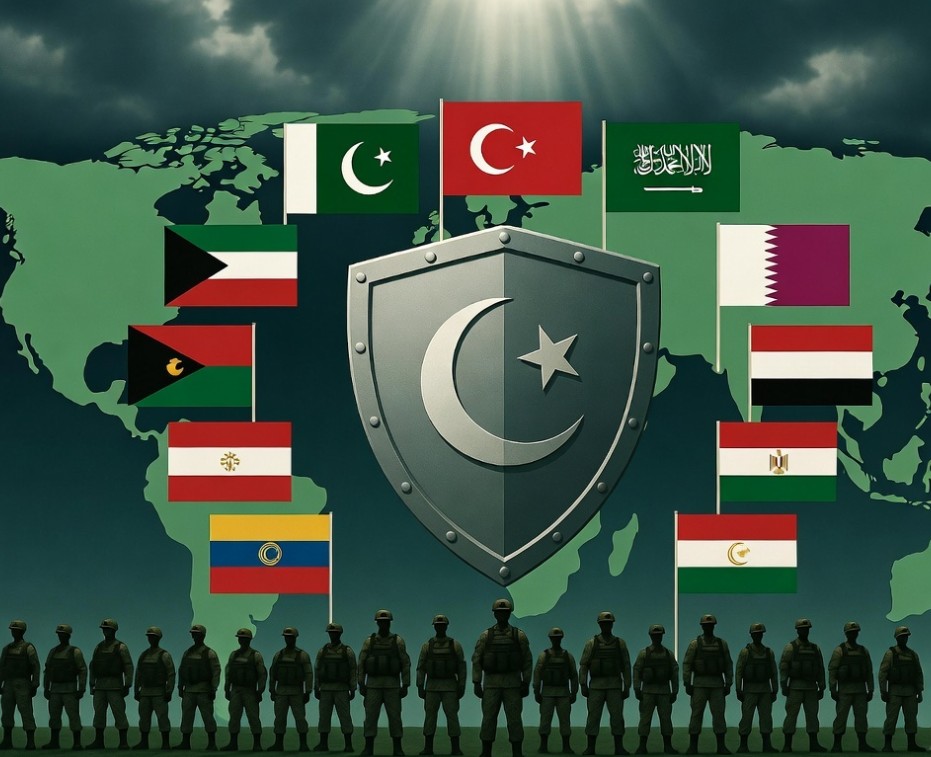
Islamic NATO. AI Image for representation only.

The agreement was ratified at a time when all Gulf countries, including Kuwait, are facing renewed security challenges due to the ongoing US-Iran War.

Notably, just one and a half years ago, Pakistan signed a defense agreement with Saudi Arabia, which also included a mutual defense clause on the lines of NATO’s Article 5, wherein an attack on one country is considered an attack on both countries, obliging the other country to provide military, economic, intelligence, and diplomatic support to the attacked country.

Earlier, Pakistan had suggested that Turkey and Qatar are also considering joining the Pakistan-Saudi Strategic Mutual Defense Agreement (SDMA).

Pakistan-aligned strategic thinkers even quipped that the agreement will bring in Turkish arms, Pakistani nuclear weapons, and Saudi and Qatari Petro-dollars and energy security.

While the Pakistan-Kuwait defense agreement does not include a mutual defense clause on the lines of NATO’s Article 5, the signing of the agreement will nevertheless further ignite speculation about an Islamic NATO in the making, which will seek a collective security arrangement outside traditional Western frameworks and independent of the United States.

However, talks of an Islamic NATO are largely symbolic rather than substantive, constrained by deep-seated internal rivalries, enduring structural dependence on the United States, and broader geopolitical calculations that render it operationally unviable and impractical.

In fact, the narrative of an Islamic NATO, largely driven by Pakistan, echoes the earlier rhetoric of an “Islamic bomb” that Islamabad promoted throughout the 1970s and 1980s, a vision that ultimately came to nothing.

A West Asian Security Architecture Without the US?

For decades, all West Asian countries, with the sole exception of Iran, have depended on the US for their defense and security.

In fact, the US has as many as 18 military bases in the region.

The US has strategic security partnerships with Saudi Arabia, Egypt, Jordan, Kuwait, Bahrain, the UAE, and Qatar.

Turkey, meanwhile, is a NATO member. It also hosts American nuclear weapons at the Incirlik Air Base as part of a NATO nuclear-sharing agreement. An estimated 20 to 50 B61 nuclear gravity bombs are stored there under US control, though Turkey has no independent authority to use them.

However, ever since the Hamas terror attacks on Israel in October 2023, the West Asian region has been going through a churning.

In the aftermath, Israel declared its goal of ‘Total Victory’ and has since attacked six regional countries, including Palestine, Lebanon, Syria, Qatar, Yemen, and Iran. While Israel has often had brief wars and skirmishes against the first three (Palestine, Lebanon, and Syria), it attacked Yemen, Qatar, and Iran for the first time.

The Israeli “belligerence” is believed to have fueled collective insecurities and made Gulf states look for new security guarantees and new partners.

In September 2025, Pakistan and Saudi Arabia signed the Strategic Mutual Defense Agreement (SDMA) on the lines of NATO’s collective defense clause. The most important clause of the agreement states, “Aggression against one country shall be considered aggression against both.”

While not explicitly stated, some Pakistani leaders, including Defense Minister Khwaja Asif, had suggested that the agreement extend Pakistan’s nuclear umbrella protection to Saudi Arabia.

Notably, the agreement was signed just weeks after an Israeli airstrike on Qatar on September 9, 2025, which reportedly took even Washington by surprise.

Qatar hosts the largest US military base in the region, but that was not enough to deter Israel.

In the same month, Doha signed a new security pact with the US, in which Washington explicitly pledged Qatar’s security.

“The United States shall regard any armed attack on the territory, sovereignty, or critical infrastructure of the State of Qatar as a threat to the peace and security of the United States,” it said, adding, in the event of such an attack, the United States shall take all lawful and appropriate measures — including diplomatic, economic, and, if necessary, military — to defend the interests of the United States and of the State of Qatar and to restore peace and stability.

However, the US-Iran War that began earlier in February this year once again destabilized the entire region and demonstrated the inability of the US to provide foolproof security in the region.

In the aftermath, Iran attacked Jordan, Iraq, Israel, the UAE, Kuwait, Bahrain, and Saudi Arabia.

The US’s inability to thwart these attacks is further pushing Gulf countries to explore new security partners. In this atmosphere of geopolitical upheaval, Pakistan is pushing itself as a credible security partner that can fill the vacuum left behind by the US.

Can Pakistan Deliver Its Promises on Security

Since Pakistan and Saudi Arabia signed their much-publicized mutual defense agreement, Pakistan has been fighting a war with Afghanistan, whereas Saudi Arabia was repeatedly attacked by Iran.

Last week, Yemen’s Houthi rebels launched attacks on Saudi Arabia and have now declared a naval blockade of the country.

As per the terms of the agreement, by now Pakistan should have declared a war on Iran and the Houthis, and Saudi Arabia should have declared a war on Afghanistan. However, neither has this happened, which highlights that the mutual defense clause has loopholes.

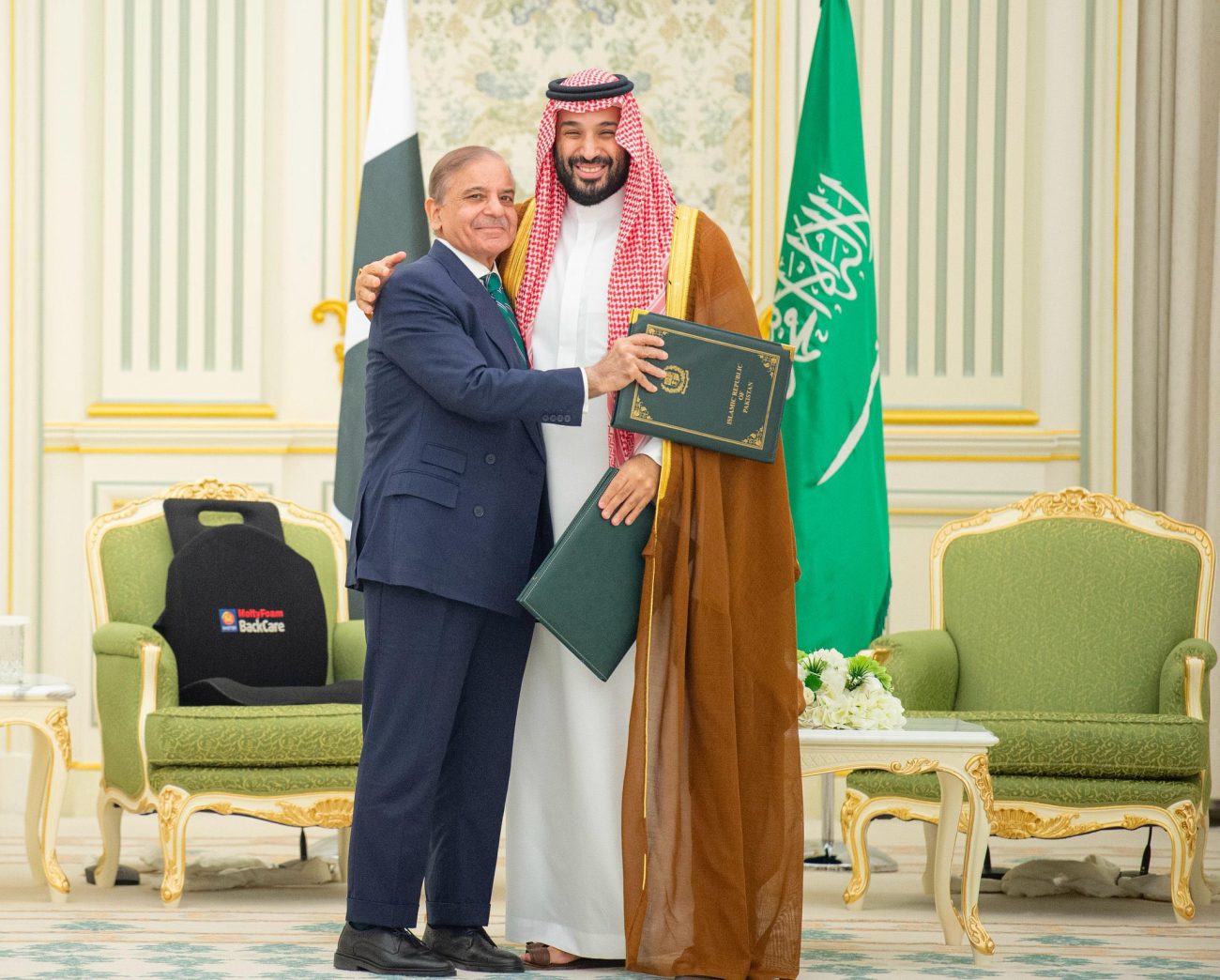
Crown Prince Mohammed bin Salman and Pakistan’s Prime Minister Shehbaz Sharif sign the Joint Strategic Defense Agreement

In fact, far from attacking Iran, Pakistan was hosting the US-Iran peace talks on its territory, even when Saudi oil fields were under Iranian attacks.

Security analysts have already highlighted that Riyadh is unlikely to come to Islamabad’s aid if there is war between India and Pakistan.

In fact, under Crown Prince Mohammed bin Salman’s Vision 2030, Saudi Arabia is pursuing economic transformation and requires strong partnerships with major economies. Riyadh views India as a long-term economic partner as it diversifies away from oil dependence.

Islamic NATO a Myth?

Despite the rhetoric from Islamabad, the fact remains that all these countries of the prospective Islamic NATO are heavily dependent on the US for their defense and security.

Turkey is already part of NATO, and Qatar has also signed a mutual defense agreement with the US.

It is beyond comprehension why these countries will swap US security guarantees for Pakistani ones.

Meanwhile, Pakistan, often portrayed as a central pillar of this imagined alliance because of its nuclear capability, itself operates under severe constraints, as its economic, financial and military dependence on the US remains overwhelming.

Pakistan needs Washington’s blessings for constant IMF bailouts that keep its economy afloat.

Washington’s influence over the Pakistani military establishment and its decision-making process can hardly be overestimated. It is inconceivable that in any potential conflict between Israel and any Gulf state, Pakistan would launch an attack on Israel.

In fact, the very term NATO is misleading as NATO is not just a mutual defense agreement signed between various states; rather, it is a deeply institutionalized military bloc, with integrated command structures, regular joint training, shared military doctrines, common and interoperable weapons systems, and decades of coordination.

This structure can not be replicated by merely signing an agreement.

Additionally, deep-seated internal rivalries between Islamic states – Saudi Arabia vs Iran, Turkey vs Arab states, Egypt vs Turkey, the new emerging axis of Saudi Arabia against the UAE, and the aspirations of Pakistan itself to portray itself as the natural leader of the Islamic world- make any Islamic NATO alliance a non-starter.

And, lastly, the biggest myth is that the US is withdrawing from the Middle East, and the Gulf States are looking for partners to replace US security guarantees.

While Gulf states are actively seeking to diversify their security alliances and signing defense pacts with new partners, they aim to complement rather than replace their existing arrangements with the United States.

In fact, there is an argument that the recent military pacts, such as the Saudi-Pakistan and Pakistani-Kuwaiti defense pacts, enjoy tactical US support.

The US and Israel will not tolerate an Islamic NATO forged in opposition to Western domination, and an Islamic NATO, forged with the tactical support of Washington and Jerusalem, will have no strategic autonomy to formulate an independent security policy.

  • Sumit Ahlawat has over a decade of experience in news media. He has worked with Press Trust of India, Times Now, Zee  News, Economic Times, and Microsoft News. He holds a Master’s Degree in International Media and Modern History from the University of Sheffield, UK. 
  • He can be reached at ahlawat.sumit85 (at) gmail.com

The post After Saudi Arabia, Pakistan Formalizes Defense Pact with Kuwait Amid Gulf Security Crisis and US-Iran War appeared first on EURASIAN TIMES.

  •  

GCAP For India: Leonardo CEO Says Join 6th-Gen UK-Japan-Italy Fighter Jet Program by End-2026 or Miss the Boat

After Canada became the first country to join the Global Combat Air Program (GCAP) as its first observer nation, Lorenzo Mariani, CEO of Leonardo, said at Farnborough that if a nation wishes to join the GCAP program, it must do so by the end of 2026, with a final deadline of 12 months

The tri-national Global Combat Air Program, launched in 2022, aims to develop a supersonic sixth-generation stealth fighter by 2035 to replace the Eurofighter Typhoon used by some European countries and Japan’s Mitsubishi F-2.

Earlier this week, Canada confirmed it is joining GCAP as an observer country. While Canada’s observer status does not make it a full program partner, it will still provide Ottawa with greater visibility of GCAP’s governance, capabilities and industrial structure, as it looks to diversify its defense partnerships away from the US.

Meanwhile, following the collapse of the Franco-German-Spanish Future Combat Air System (FCAS), Germany is also exploring its options for joining the GCAP.

On July 22, Germany’s largest fighter jet manufacturer, Airbus Defense and Space, said at the Farnborough Air Show in the UK that it was open to joining forces with Britain, Italy and Japan on the GCAP program. 

The head of Airbus’s defense division in Munich, Michael Schoellhorn, said the company could collaborate with the UK on developing the new aircraft if it had sufficient control over the program and work share. 

“What we’re ready to do is to join something or to build something where we have a significant portion of the work and the leadership. That’s currently being explored,” Schoellhorn told reporters.

Separately, Leonardo chief executive Lorenzo Mariani said on the sidelines of the Farnborough airshow that German participation in GCAP would be “beneficial”.

Mariani said “strong competence of the German industry, debt funding capability from the German state and joint experience within the community” on previous fighter jet projects would be beneficial for all partners.

“The only real risk is disruption in timescales and work share,” he said.

While the FCAS Collapsed, GCAP gained momentum after receiving a major funding boost this month with the award of a £4.6 billion (approximately US$6.1 billion) contract from the UK-Japan-Italy to continue its development.

On July 3, the GCAP awarded the 18-month contract to Edgewing, the trinational joint venture of BAE Systems (UK), Leonardo (Italy), and Japan Aircraft Industrial Enhancement (JAIEC).

This came shortly after the UK’s Defense Investment Plan committed £8.6 billion (US$11.5 billion) in UK funding to GCAP over four years, ending months of uncertainty and delays.

The momentum gained by GCAP, the recent funding boost, and Canada’s accession as an observer country will definitely enhance GCAP’s appeal to countries seeking to join a sixth-generation project.

In fact, after the collapse of FCAS, GCAP is the only practical option available to countries, as both the US (F-47) and China (J-36 and J-50), which have sixth-generation fighter jets under development, are not looking for international partners.

France’s Dassault has announced plans to pursue a next-generation fighter jet development program and is seeking partners, but the program is still in its infancy, and Paris has been an “unreliable partner” in joint fighter jet development programs.

In its presentation of its half-year results, Dassault Aviation stated that “discussions are under way with the French government to launch an alternative, either on a purely French basis or through cooperation, involving a demonstrator for a future combat aircraft.”

Éric Trappier also said that the aim would be to secure “a demonstrator, based on French requirements, which could fly in 2031 or 2032.” However, he also clarified that Dassault would not be interested in an arrangement in which the French aircraft manufacturer would be lead contractor without sufficient industrial control.

This non-compromising attitude, single-minded focus on French requirements, and France’s previous unreliable role in joint fighter jet development programs, including FCAS, Eurofighter Typhoon, and Tornado, mean that any country seeking to join a reliable sixth-generation fighter jet program has only one credible option: the GCAP.

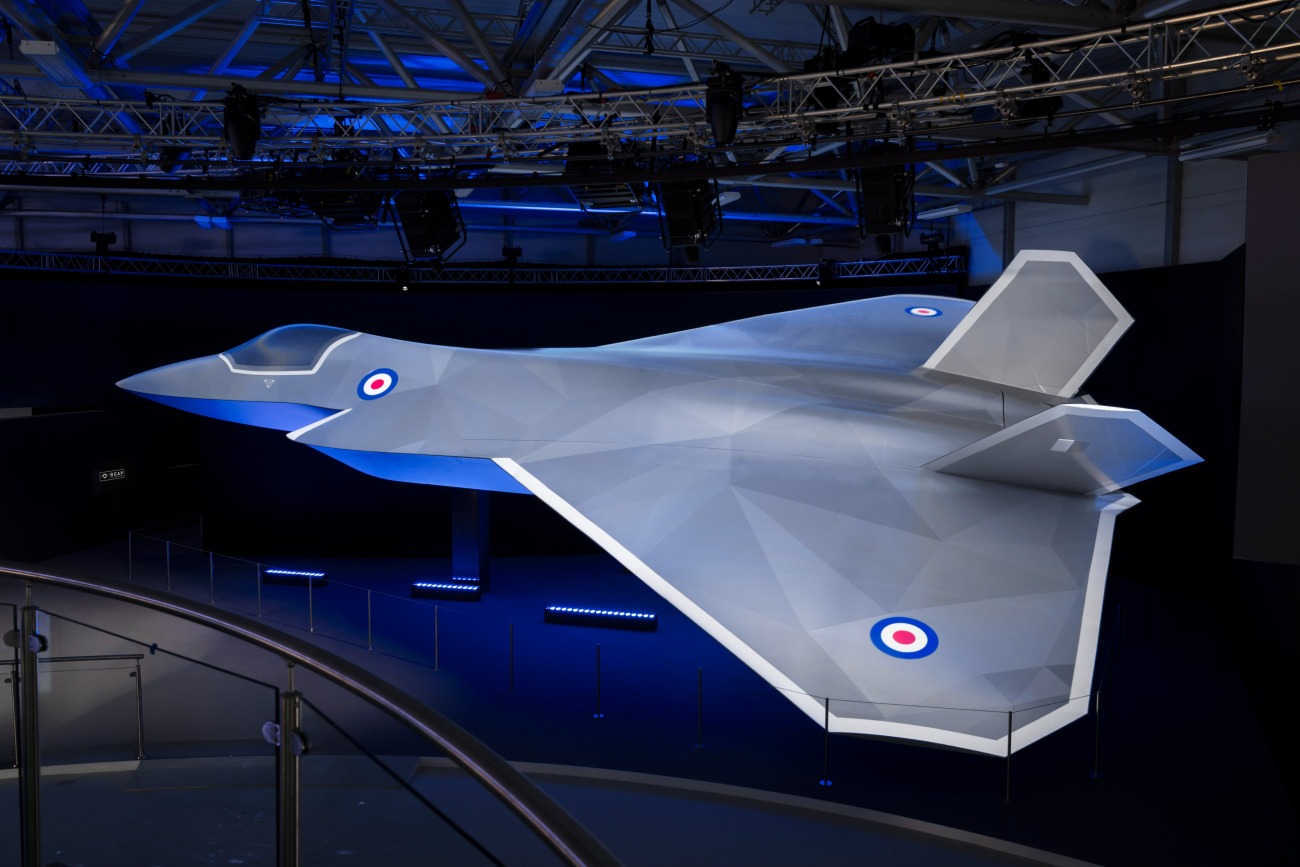
New GCAP Concept Aircraft.

Can India Join GCAP?

In March this year, India announced that it is considering joining one of Europe’s ambitious ‘sixth-generation’ fighter jet programs.

The 20th report of the Standing Committee on Defense said the IAF is exploring collaboration with one of two European consortia currently working on sixth-generation fighters.

“The committee has been informed that two consortia are working on the sixth-generation aircraft. One is a consortium of the UK, Italy and Japan and the other is a consortium of France and Germany, and both are developing aircraft. The committee has also been informed that Air Force (IAF) will try to join forces with one of the consortia and begin considering a sixth-generation fighter right away with a view to ensure that they do not lag behind in achieving the target for advanced aircraft.”

The IAF is in a dire state now as not only is it critically short on squadron strength, but it is also trailing behind China in next-generation fighter jets. Though the IAF’s authorized strength is 42 fighter squadrons, it now has only 29 active fighter squadrons.

Also, China already has over 300 fifth-generation J-20 stealth fighter jets and is on its way to operationalizing a second stealth fighter, the J-35. China is also testing two sixth-generation fighter jets, the J-36 and the J-50.

Reportedly, Pakistan is also planning to buy  J-35A jets from China.

“The committee understands that in view of technical advancement of fighter aircraft globally and to meet the present security scenario, technical upgradation of aircraft is required on top priority for enhancement of its combat capability. The committee recommends the ministry to chalk out a trajectory in this regard and step forward the planning process for development and acquisition of sixth-generation (6G) aircraft which would eventually enhance India’s air domain capabilities in today’s highly air-centric modern warfare,” it said.

The standing committee shortlisted two consortiums: GCAP and FCAS.

However, since the FCAS has already collapsed, the only realistic option for India is to join GCAP.

Also, India has already received an invitation from GCAP to join the program. Japan reportedly approached India to join the GCAP program earlier this year.

Japanese officials visited India in February. They explained the Japan-UK-Italy “Global Combat Air Program (GCAP)” to Indian officials and proposed their participation.

Following the reports of Japan’s offer to India to join GCAP, an editorial in Japan Times in June 2025 said that “the idea of including India, one of the world’s fastest-growing economies and an increasingly assertive geopolitical actor, makes strategic sense.”

It further said that including India in GCAP could re-energize the Japan-India relationship by offering a “high-stakes, high-visibility partnership that aligns with India’s long-term security and technological ambitions.”

“Including India could bring financial investment, manufacturing capacity and political clout to the initiative,” it said.

However, it suggested that India should join GCAP around 2027-2028, when the project has already passed the foundational design and industrial division phases.

Earlier, the UK had also reportedly invited India to join its Tempest program, the predecessor to GCAP. “We are looking for international partners to access the best assured capability [for developing the Tempest],” Nik Khanna, the head of BAE Systems India, was quoted as saying by the Business Standard. As to India’s specific role in the Tempest project, Khanna said: “A big cost driver for a futuristic aerospace system is going to be the requirement for more and more software engineers. India has a huge capability in that area.”

Several military experts and veterans who have spoken to the EurAsian Times in the past have said: buy Rafales to manage squadron strength and bolster numbers, develop the fifth-generation AMCA for long-term capability, buy off-the-shelf Su-57 fifth-generation fighters to bridge the current stealth gap with China, and join a sixth-generation fighter program to stay ahead of the curve.

The GCAP has set a very ambitious target: to fly its first demonstrator by 2027 and field the aircraft by 2035.

If India joins GCAP, it could have a sixth-generation fighter jet by 2035, bridging the widening capability gap with China.

Furthermore, participation in a sixth-gen fighter jet program could also help India in its own underdevelopment fifth-generation fighter jet program, the AMCA.

Retired Air Marshal Sanjeev Kapoor (former Director General, Inspection and Flight Safety, IAF) said, “India should Look East in fighter jet manufacturing. Japan runs the F-35 final assembly line and is working on FX platforms; India must partner with Japan on #GCAP (fresh MoD invite, Mar 2026) & South Korea on KF-21-style programs to set up full co-production & final assembly right here in India… To fast-track, we must use the model of global tech + distant local manufacturing, which leads to jobs, tech sovereignty & Atmanirbharta. Added advantage, Asian Value System which is different.”

  • Sumit Ahlawat has over a decade of experience in news media. He has worked with Press Trust of India, Times Now, Zee News, Economic Times, and Microsoft News. He holds a Master’s Degree in International Media and Modern  History from the University of Sheffield, UK. 
  • He can be reached at ahlawat.sumit85 (at) gmail.com

The post GCAP For India: Leonardo CEO Says Join 6th-Gen UK-Japan-Italy Fighter Jet Program by End-2026 or Miss the Boat appeared first on EURASIAN TIMES.

  •  
❌