
❌

Reading view

France: Public Debt Surges Past €3.5 Trillion, Raising Serious Concerns

The Ministry of Finance in Paris (Bercy). Jean-François Gornet / Flickr, CC BY-SA

The Ministry of Finance in Paris (Bercy). Jean-François Gornet / Flickr, CC BY-SA

France has crossed a critical threshold as its public debt exceeded €3.5 trillion in the first quarter of 2026, reaching 117.5% of GDP. The French Court of Auditors has sounded the alarm over what it describes as an “alarming” fiscal situation, as public deficits hit record levels and debt-interest costs continue to soar.

The Ministry of Finance in Paris (Bercy). Jean-François Gornet / Flickr, CC BY-SA

Public Debt Exceeds €3.5 Trillion

During the first quarter of 2026, France’s public debt passed the symbolic milestone of €3.5 trillion, reaching €3.5361 trillion at the end of March. The figure underscores the scale of the country’s budgetary challenges.
To put this amount into perspective, France would theoretically have to sell its entire gold reserve, all publicly traded and privately held state assets—including companies such as EDF, Engie, and Airbus—as well as all government-owned buildings and land in an attempt to repay the debt in a single payment. Even such a drastic measure would likely fall short.

In just one quarter, France’s Maastricht-defined public debt increased by €75.6 billion, a sharp rise in a very short period. This growing debt burden reflects a longstanding reality: for more than fifty years, the French government, local authorities, and social security system have collectively spent more each year than they have collected in revenue, particularly through taxation. To cover this structural gap, France has continued borrowing from financial markets.

Debt-to-GDP Ratio Nears Historic High

Beyond the headline figure, analysts and financial institutions are particularly concerned about debt relative to economic output. According to France’s National Institute of Statistics and Economic Studies (INSEE), public debt now equals 117.5% of gross domestic product.

The increase has been dramatic. In 1980, public debt represented only 20% of GDP. By 2000, it had risen to approximately 60%. Over four decades, the debt-to-GDP ratio has nearly increased sixfold.

The current level of 117.5% is approaching the all-time record of 117.8% recorded in the first quarter of 2021 during the COVID-19 pandemic. At that time, President Emmanuel Macron launched an unprecedented economic rescue effort, pledging to spend “whatever it takes” to prevent economic collapse.

Although the health crisis has long since passed, France’s debt trajectory has not slowed significantly. Within the European Union, only Greece and Italy have higher debt ratios, making France the third most indebted country in Europe.

Warnings from the Court of Auditors

In response to what it views as a critical situation, France’s independent Court of Auditors, responsible for overseeing public finances, issued a warning report describing the state of the nation’s finances as “alarming.”

The report, revealed by France Inter and released ten months before the 2027 elections, calls for “strong, credible, and swift measures” to restore fiscal stability.

The court highlights several aggravating factors. First, France remains the only country in the eurozone whose debt level is higher today than it was at the end of the COVID-19 crisis. Second, public deficits continue to break records. France posted a budget deficit equal to 5.1% of GDP in 2025, the second-highest in the eurozone after Italy.

The government’s goal of keeping the deficit at 5% is viewed as unrealistic by the Court of Auditors, which fears a further deterioration of public finances.

Debt-Interest Costs Are Soaring

A particularly troubling development is the rapid increase in debt-servicing costs. As debt accumulates and interest rates rise in financial markets, the amount spent on interest payments has grown dramatically.

In the current state budget, debt-servicing expenses have become the government’s single largest expenditure category, surpassing spending on the national education system (excluding pension obligations).

Paradoxically, this situation coincides with a significant increase in taxation. Taxes rose by €38 billion across 2025 and 2026 as part of efforts to limit further deficit growth. Yet France already has the highest overall tax burden in Europe when taxes and social contributions are combined.

This creates both political and economic tensions: higher taxes have not been sufficient to slow the growth of public debt, raising questions about the effectiveness of current fiscal measures.

Structural Challenges Extend Beyond Short-Term Solutions

France’s current trajectory highlights a troubling economic reality: structural public spending is growing faster than tax revenues, creating a persistent deficit that is difficult to eliminate.

Programs such as social welfare, pensions, healthcare, and public investment involve long-term commitments, while tax revenues tend to fluctuate with economic conditions.

This divergence between economic growth and debt growth raises a fundamental question for France’s public finances. If GDP expands by only 1% to 2% annually while debt continues to grow by 3% to 4% per year, the debt-to-GDP ratio will inevitably continue rising unless major policy changes are implemented.

French voters heading to the polls in 2027 will likely face a difficult choice between maintaining current levels of public services and restoring fiscal sustainability.

Breaking the Debt Spiral

To reverse the trend, experts and institutions such as the Court of Auditors recommend a combination of measures: controlling the growth of public spending, improving the efficiency of existing expenditures, broadening the tax base without increasing marginal tax rates, and accelerating economic growth to boost revenues.

As the eurozone’s second-largest economy after Germany, France possesses significant economic resources. However, meaningful structural reforms will require political consensus and a willingness to accept difficult compromises.

In the short term, the government must demonstrate that its deficit-reduction commitments are credible. In the medium term, comprehensive reforms of public spending—particularly in pensions and healthcare—appear unavoidable. Over the long term, only sustained economic growth combined with spending discipline will be capable of reversing the debt dynamics that have characterized France for decades.

L’article France: Public Debt Surges Past €3.5 Trillion, Raising Serious Concerns est apparu en premier sur FrenchDailyNews.

  •  

Marc Bloch at the Panthéon: A republican ritual honoring the historian

Le Panthéon, Paris (Par Moonik — Travail personnel, CC BY-SA 3.0)

Le Panthéon, Paris (Par Moonik — Travail personnel, CC BY-SA 3.0)

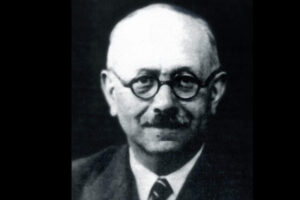
On June 23, 2026, Marc Bloch and his wife, Simonne Vidal, will symbolically enter the Panthéon, completing a republican rite that recognizes the extraordinary contribution of the founder of the Annales School to French historiography. This pantheonization honors not only a visionary scholar, but also a soldier and resistance fighter whose legacy continues to inspire generations of researchers and citizens committed to truth and freedom.

Marc Bloch: A multifaceted figure finally receiving broad recognition

Marc Bloc, historian and member of the Resistance, is inducted into the Panthéon alongside his wife, Simone Vidal (Wikipedia)

Marc Bloch represents an exceptional life that transcends the traditional divide between academia and civic engagement. A towering figure for historians and the social sciences, he remains paradoxically little known to the wider public, making this induction all the more symbolic. The French historian transformed his discipline through groundbreaking methodological innovations and through his direct involvement in the major issues of his era.

His admission to the Panthéon reflects a desire to share his intellectual and moral legacy with new generations. Three fundamental pillars explain this solemn recognition: his major scholarly work, his innovative teaching, and his unwavering courage.

The pantheonization ceremony

Key stages of the ceremony

The ceremony follows a carefully choreographed protocol marked by highly symbolic moments. It begins outside the monument with the gradual arrival of the coffins along Rue Soufflot, allowing the public to accompany the procession to the forecourt of the Panthéon, a place deeply imbued with republican significance.

At the heart of the ceremony is the solemn crossing of the threshold by the coffins carried by members of the Republican Guard. The Great Bronze Doors, normally closed, are opened especially for the occasion, symbolizing the deceased’s definitive entry into the Panthéon and admission among those who have contributed to the glory of France.

Presidential tribute and placement in the crypt

Once inside the monument, the coffins are placed at its center to receive the tribute of the President of the Republic, a moment when the nation as a whole bows before the memory of a great figure. This official homage forms the emotional and political centerpiece of the ceremony, publicly acknowledging the significance of the deceased’s contribution to French history.

After a vigil maintained by the Republican Guard, the coffins descend into the crypt, where they join the other men and women honored by the nation. Their final placement signifies permanent integration into France’s collective memory.

Simonne Vidal: the historian’s wife finally receiving recognition

Marc Bloch’s induction is accompanied by the symbolic entry of his wife, Simonne Vidal, in recognition of the vital role she played in his life and work. Mother of six children, whom she raised while supporting her husband’s scholarship, Simonne Vidal made an essential though often invisible contribution to his intellectual achievements.

Although she died in Lyon in 1944 and her remains could not be formally identified, her inclusion in the Panthéon carries profound symbolic meaning. It represents a belated but solemn acknowledgment of the women who stood behind many of France’s great thinkers and helps restore their place in history.

Organizing a state ceremony

Leadership by the Presidency and Government Ministries

The pantheonization is a major state event coordinated directly by the Presidency of the Republic in close cooperation with several ministries. The National Monuments Center oversees the project as administrator of the Panthéon, while a steering committee brings together ministries reflecting the many dimensions of Marc Bloch’s life.

The Ministry of Culture coordinates cultural and memorial aspects. The Ministry of the Armed Forces is involved because of Bloch’s military service in both world wars. The Ministry of the Interior and the Ministry of National Education handle public security and educational outreach. Finally, the Ministry of Higher Education and Research oversees the scholarly and academic dimensions of this national tribute.

The role of the family and practical arrangements

The Bloch family, which includes six children and numerous descendants, has played a central role in preparing the ceremony. Suzette Bloch, Marc Bloch’s granddaughter, and Matis Bloch, his great-grandson, were chosen to represent the family in discussions and decisions concerning the induction.

One distinctive aspect of this ceremony is the family’s wish that Marc Bloch’s remains remain buried in Bourg d’Hem, in the Creuse region, where he has rested since 1977 alongside his six children. As a result, the ceremony is symbolic rather than involving the transfer of his remains. Cenotaphs—empty symbolic tombs—will be installed in the crypt, and the names of Marc and Simonne Bloch will be permanently engraved on its walls, allowing visitors to pay tribute and reflect upon their legacy.

Marc Bloch the fighter : soldier, resistance member, and seeker of truth

The ceremony highlights Marc Bloch’s fighting spirit, both literally and figuratively. Literally, his commitment to defending France and the Republic was demonstrated through his service in both world wars and his clandestine involvement in the Resistance during the Nazi occupation. This courageous aspect of his life remains little known to many.

Figuratively, Bloch was an unrelenting champion of methodological rigor and historical truth. Alongside Lucien Febvre, he founded the Annales School and revolutionized historical inquiry by moving beyond event-based narratives to explore the social, economic, and mental structures shaping human societies. His intellectual rigor and relentless search for truth explain why his ideas remain profoundly relevant more than seventy-five years after his death.

A legacy for future generations

A message for young people

One explicit aim of the induction is to introduce a major historical figure to the broader public, especially younger generations. This educational mission is crucial in transmitting the values embodied by Marc Bloch: clarity of thought, courage, conviction, and resilience in the face of adversity.

Since the official announcement of his entry into the Panthéon, the response from academic and educational communities has been remarkable. The Ministry of National Education has already recorded thousands of initiatives and educational projects devoted to Marc Bloch and his work. This intellectual vitality demonstrates the enduring relevance of his message: truth must never yield to convenience, and scientific inquiry requires uncompromising moral discipline.

Permanent exhibition and free public access

Beyond the June 23 ceremony, the Panthéon has organized a series of initiatives to preserve and transmit Marc Bloch’s legacy. From June 25 to June 28, admission to the monument will be free, enabling everyone to pay tribute to Marc Bloch and his wife.

A major exhibition entitled Marc Bloch: The Spirit of History, curated by Yann Potin, will remain open until January 10, 2027. Through original archives, manuscripts, and other historical materials, visitors will discover the many facets of this remarkable figure: the methodological innovator, the devoted teacher, the courageous soldier, the committed resistance fighter, and the intellectual in the service of truth.

Keeping Marc Bloch’s inspiration alive

The pantheonization of Marc Bloch and Simonne Vidal represents far more than a commemorative ritual. It embodies the nation’s commitment to transmitting the values they exemplified to present and future generations. Marc Bloch stands as a model of the engaged intellectual, the rigorous scholar, and the courageous citizen—qualities that remain essential at a time when historical and scientific truth face constant challenges.

His revolutionary methods, his transformative teaching, and his ultimate sacrifice in defense of France and the Republic constitute an inexhaustible source of inspiration. Entry into the Panthéon marks not an end, but the beginning of a broader rediscovery of the “spirit of history” that Marc Bloch devoted his life to cultivating and transmitting.

Further Reading

“Marc Bloch at the Panthéon: Sharing the Historian’s Legacy” – French Ministry of Culture

L’article Marc Bloch at the Panthéon: A republican ritual honoring the historian est apparu en premier sur FrenchDailyNews.

  •  

NGTs: Europe legalizes a new generation of GMOs

OGM (DR)

OGM (DR)

On June 17, 2026, the European Parliament formally adopted regulations governing “New Genomic Techniques” (NGTs), marking a major turning point for European agriculture.

The decision paves the way for a new generation of genetically modified crops capable of withstanding drought and disease, but it has also raised legitimate concerns about the privatization of living organisms and potential environmental risks. The debate has divided the continent, pitting supporters of technological innovation against advocates of traditional farming.

What are NGTs and how do they differ from traditional GMOs?

NGTs, or New Genomic Techniques, represent a significant advance in plant genome editing. Unlike first-generation genetically modified organisms, which involve introducing foreign DNA from different species, NGTs operate on a fundamentally different principle.
These techniques allow scientists to modify a plant’s genome using only genes originating from the same species. For example, it may now be possible to make a tomato more resistant to aphids by transferring a gene from another naturally resistant tomato variety. Although these plants are technically genetically modified organisms, seeds produced through NGTs are not transgenic—a distinction that plays a key role in European regulations.

Two categories of NGTs and different regulatory standards

The compromise negotiated by the European Commission and member states established a two-tier classification system. Category 1 NGTs, involving a limited number of naturally occurring mutations, will be treated as equivalent to conventional varieties and will benefit from partial deregulation.
By contrast, NGTs engineered for herbicide resistance or designed to produce insecticides will not be authorized for commercial use, in the interest of sustainability and environmental protection.
Another major restriction is that no NGT crops will be allowed in organic farming, creating a clear divide between agricultural production using these technologies and certified organic agriculture.

European agriculture confronts climate challenges

Supporters of NGTs—including major farming organizations such as Copa-Cogeca and leading European seed companies—argue that these technologies are essential for maintaining competitiveness and adapting to climate change. NGTs could significantly accelerate the development of crop varieties capable of tolerating severe drought and extreme heat, both of which are becoming increasingly common across Europe.
For some farmers, particularly in the French Caribbean territories, NGTs offer a practical solution to existing plant diseases. Banana plantations, for example, have been devastated by black Sigatoka, a destructive fungal disease against which NGTs could provide natural resistance. Such practical applications have helped mobilize support within the agricultural sector for the new regulations.
Advocates also emphasize that the European Union is creating a “sovereign European model” distinct from those of the United States and Brazil, with specific safeguards governing approved techniques and strict oversight of the sector.

Environmental concerns and the privatization of life

Critics of NGTs raise fundamental concerns about agricultural sustainability and intellectual property rights. According to opponents, the safety of NGTs for human health and the environment has not been sufficiently established through democratic processes. They are calling for mandatory traceability and a ban on patenting living organisms.
Farmers’ unions such as the Confédération Paysanne view NGTs as a “Trojan horse” for major seed and agrochemical corporations. Their primary concern is the gradual monopolization of seeds by a handful of agribusiness giants, forcing smaller seed companies and farmers to pay licensing fees. Critics argue that such a trend could accelerate crop uniformity and reduce agricultural biodiversity.
They also warn that increasing corporate control over genetic resources could marginalize small farmers and undermine their autonomy. Thomas Gibert, a market gardener in Haute-Vienne and spokesperson for the Confédération Paysanne, has described the issue as a “major risk” involving the “privatization” of life driven by the “ultra-powerful agribusiness lobby.”

The european parliament’s decision-making process

The European Parliament approved the NGT regulation on June 17, 2026, after rejecting all amendments proposed by Green and Socialist lawmakers. These amendments sought to make traceability mandatory and prohibit patent protection for NGTs, two measures strongly supported by left-wing parties and environmental groups.
The legislation ultimately received broad political support, ranging from the centrist Renew group to the far right, with backing from the European People’s Party. This unusual coalition illustrates how NGTs have transcended traditional political divisions, bringing together pro-competitiveness forces around a technological agenda.
Centrist Member of the European Parliament Pascal Canfin defended the measure, saying, “We have created a sovereign European model for new genomic techniques that will serve our farmers,” underscoring Europe’s geopolitical ambitions in the face of global agricultural powers.

Scientific assessments and the timeline for market introduction

The European Food Safety Authority (EFSA) endorsed the European Commission’s approach to authorizing NGTs. However, other scientific bodies have adopted a more cautious stance. In 2024, France’s National Agency for Food, Environmental and Occupational Health Safety (ANSES) recommended case-by-case evaluations of potential health and environmental risks before any products are marketed.
These differing approaches reflect the lack of a complete scientific consensus regarding the long-term implications of NGTs. Despite the swift adoption of the legislation, several years are expected to pass before foods produced using NGTs actually reach European consumers. The interval between the testing of new varieties and their commercial release will remain substantial.

Balancing innovation and caution

The legalization of NGTs marks a significant shift in Europe’s agricultural strategy in response to climate change and increasing global competition. Yet the move also highlights unresolved tensions between the drive for technological innovation and legitimate concerns regarding the environment, public health, and the concentration of economic power within the food sector.
The challenge now lies in the practical implementation of the NGT regulations. Safeguards such as the prohibition of herbicide-resistant NGTs and their exclusion from organic farming represent important protective measures. Nevertheless, the issue of mandatory traceability remains highly controversial, with major implications for consumer transparency and the protection of small farmers’ interests.
Ultimately, the success or failure of Europe’s NGT experiment will depend largely on the ability of regulators to ensure rigorous oversight, maintain transparent communication with the public, and continuously adapt regulations in light of emerging scientific evidence. Europe has embarked on a narrow path between necessary technological innovation and the precautionary principles that have long defined its approach.

L’article NGTs: Europe legalizes a new generation of GMOs est apparu en premier sur FrenchDailyNews.

  •  
❌