❌

Reading view

Saudi, Turkey, Pakistan Defense Pact Not a Military Axis or Sectarian Bloc Against Any Country: Riyadh & Ankara

A Saudi official said Friday that the joint defense pact signed with Turkey and Pakistan was not linked to “any nuclear ambitions” and was not a threat to any country in the region.

“The agreement does not represent an effort to establish a military axis or a sectarian bloc. Nor is it linked to any nuclear ambitions or arms race; rather, it is focused on building sustainable capabilities,” said Deputy Minister for Public Diplomacy Rayed Krimly in a post on X.

He said the deal “does not constitute a threat to the security of any country in the region, nor does it represent an escalation of tensions between any two states”.

Meanwhile, Turkey insisted on Friday that its joint defense pact signed with Saudi Arabia and Pakistan amid the US-Iran war was “not aimed at any particular country”.

“The Mecca Agreement, which is not aimed at any particular country, will strengthen the shared security and collective deterrence of the three nations… thereby making significant contributions to the preservation of peace and stability in our region,” Burhanettin Duran, the Turkish presidency’s communications director, posted on X.

Saudi, Turkey & Pakistan Sign Defense Pact

Saudi Arabia, Turkey and Pakistan signed a joint defense pact amid the US-Iran war.

Riyadh is looking to strengthen its security ties against the backdrop of war between the United States and Iran, which has drawn in surrounding nations and disrupted shipping through the Strait of Hormuz and Red Sea.

The war has emboldened Iran and its Houthi allies in Yemen, both of which have attacked Saudi Arabia, while analysts say Washington is now seen as an increasingly unreliable partner.

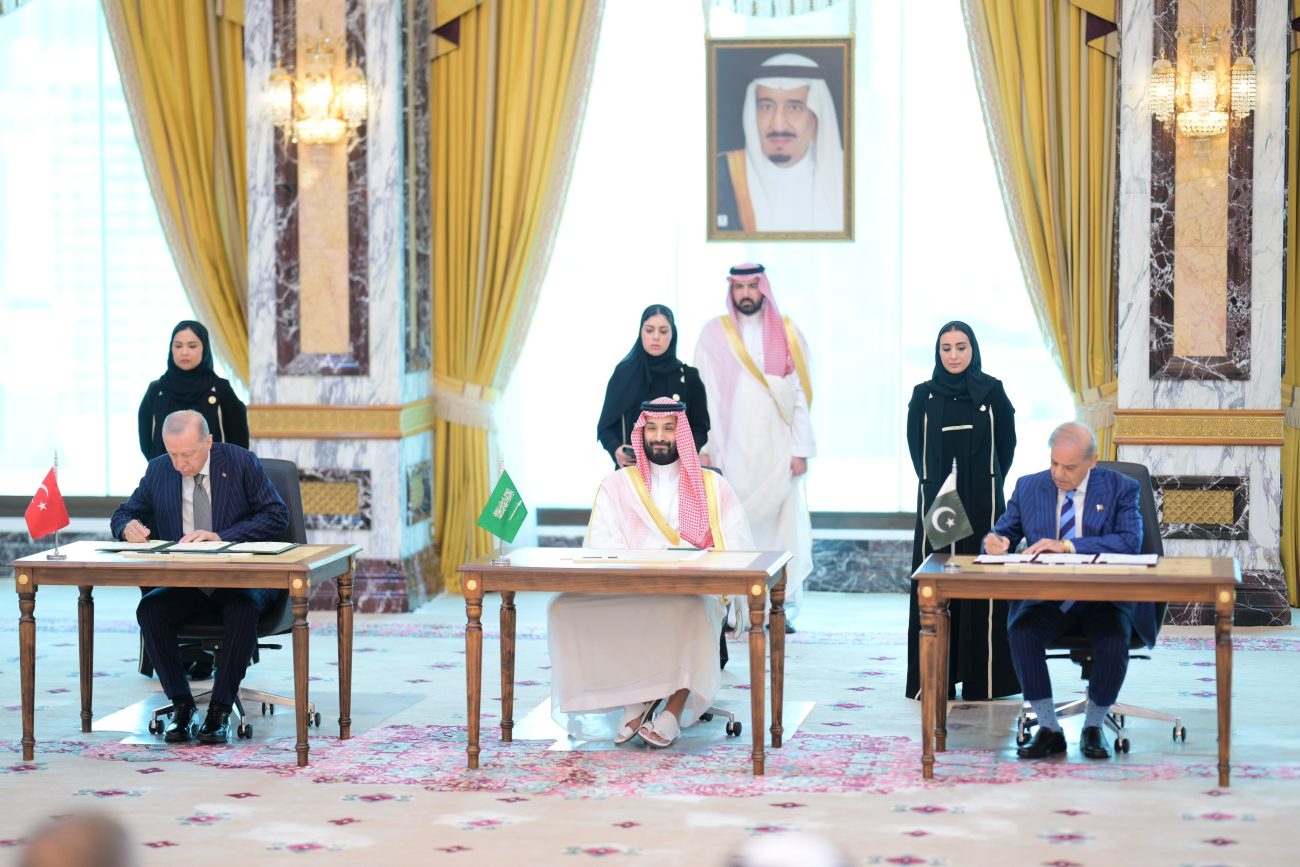
In a joint statement published by the official Saudi press agency and Pakistan’s foreign ministry, the three countries announced the signing of the “Mecca Joint Defence Agreement”.

They declared a “shared commitment to further strengthening their collective security and to promoting peace, security and stability in the region and beyond”.

The Pakistani foreign ministry said the pact meant an attack on any member would be regarded as an attack on all, adding it was “intended to strengthen collective deterrence”.

Since the onset of the regional war, Saudi Arabia has grown closer to Turkey, Egypt and Pakistan, which have been pushing for mediation and a resolution to the conflict.

Umar Karim, an expert on Saudi foreign policy at the University of Birmingham, called the deal a “highly significant development”.

The alignment “is clearly oriented towards Iran and meant to address Iran’s new strategic approach which is geared towards dominance of the broader Gulf region”.
File Image

The fact that Turkey and Pakistan border Iran means they could “exercise a different kind of leverage” on Tehran, he added.

A source close to the Saudi military and government told AFP before the signing that although the agreement had been under discussion for a long time, “the latest developments in the region expedite it”.

Andreas Krieg of King’s College London said the deal showed a clear desire to diversify alliances beyond the United States.

“Saudi Arabia, Turkey and Pakistan are not trying to replace the United States. They are building the capacity to protect their interests when Washington cannot or will not do so.”

Riyadh, in particular, he said, “wants several layers of security rather than one American umbrella”, after the shock of the Iran war.

The deal will support Saudi Arabia’s ambitions to become an organizer of regional security and diversify its defense umbrella, while Turkey and Pakistan gain political clout and access to potential Saudi investments, he said.

Turkish President Recep Tayyip Erdogan met Saudi Crown Prince Mohammed bin Salman in Mecca on Friday, the Turkish presidency said on X, sharing an image of the meeting.

Pakistani Prime Minister Shehbaz Sharif and army chief Asim Munir also traveled to the Gulf kingdom for the signing.

“Although taking place against the backdrop of heightened tensions in the Gulf, the visit will carry significance beyond the immediate crisis and short-term considerations,” Pakistani foreign ministry spokesman Tahir Andrabi said on Thursday.

The deal reflects closer ties between the three Muslim-majority nations.

Saudi Arabia and Pakistan had already announced a mutual defense pact in 2025, a move that drew attention because Pakistan is the Muslim world’s only nuclear-armed state.

Pakistan has also sought to mediate efforts to end the US-Iran war, while Turkey has played a diplomatic role in negotiations aimed at ending the war in Gaza.

Renewed Houthi attacks

The deal also comes as a truce between Riyadh and the Houthi rebels in neighboring Yemen has broken down, with the Houthis launching attacks on Saudi soil and declaring a maritime blockade against Saudi Arabia, which they have attempted to enforce by attacking Saudi tankers.

The Houthis, backed by Iran, have added pressure to Gulf energy exporters, who are already under strain from Tehran’s blockade of the Strait of Hormuz, by threatening Red Sea shipping — another key route for oil exports.

Saudi Arabia has led a military coalition in support of Yemen’s internationally recognized government against the Houthis since 2015.

A truce was agreed four years ago which largely held until hostilities broke out again in recent weeks.

On Thursday, the Houthis killed at least 58 Yemeni government troops in missile and drone attacks, a military source said, in one of the deadliest days in the conflict for years.

Yemen’s civil war has killed hundreds of thousands of people and triggered a major humanitarian crisis.

By AFP

The post Saudi, Turkey, Pakistan Defense Pact Not a Military Axis or Sectarian Bloc Against Any Country: Riyadh & Ankara appeared first on EURASIAN TIMES.
  •  

China Confirms Deaths of 2 Sailors in 2025 South China Sea Collision While Chasing Philippine Ship, Calls Them “Martyrs”

China has confirmed the deaths of two sailors in a collision in the South China Sea, according to government statements nearly a year after the incident.

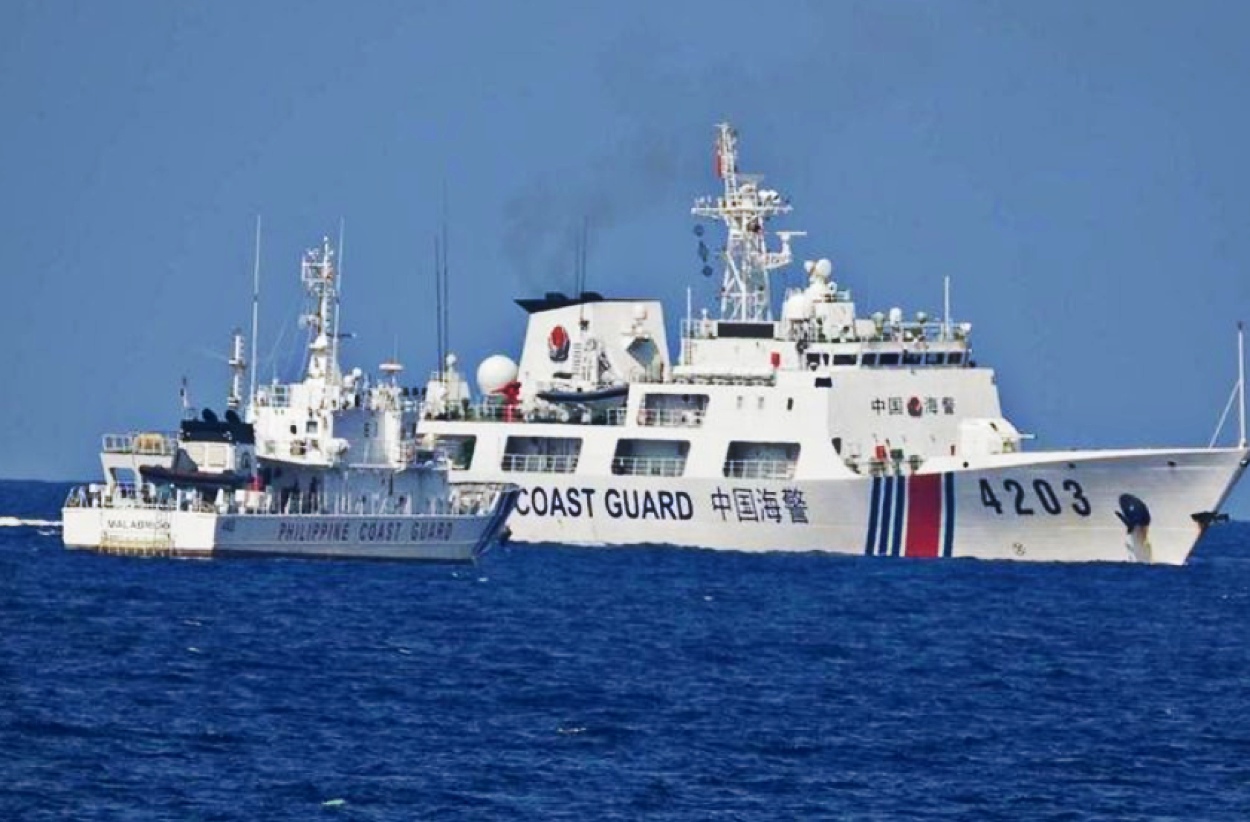
In August 2025, a Chinese navy vessel collided with one from its own coast guard while chasing a Philippine patrol boat near a disputed shoal.

A Chinese Coast Guard spokesperson confirmed at the time that there had been a confrontation, but did not mention the collision, nor injuries or deaths.

The People’s Armed Police Force said on social media Wednesday it had awarded four “martyrs” — including Coast Guard sailors Yi Xinyu and Cheng Long — a special title for “steadfast political convictions, exemplary deeds and outstanding achievements”.

Yi and Cheng both died on August 11, 2025 — the date of last year’s collision — in a “rights defense operation”, according to their profiles on the government’s “China Martyrs Network”.

“Yi sacrificed his life… while participating in a frontline rights defense operation in the South China Sea,” according to the website.

Cheng “heroically sacrificed his life during a maritime rights defense operation”, the website reads.

It is not clear when the sailors were given the designation of “martyr”, which awards their families special housing and medical support among other aid.

Yi was 21 years old at the time of his death, and Cheng was 25, according to their profiles on the website.

The incident had occurred near the contested Scarborough Shoal as the Philippine coast guard escorted boats distributing aid to fishermen in the area, spokesman Commodore Jay Tarriela had said in a statement.

The Philippine Coast Guard (PCG) accused China of shadowing and harassing two ships

Video released by Manila showed a China Coast Guard ship and a much larger vessel bearing the number 164 on its hull colliding with a loud crash.

“The (China Coast Guard vessel) CCG 3104, which was chasing the (Filipino coast guard vessel) BRP Suluan at high speed, performed a risky maneuver from the (Philippine) vessel’s starboard quarter, leading to the impact with the PLA (People’s Liberation Army) Navy warship,” Tarriela said.

“This resulted in substantial damage to the CCG vessel’s forecastle, rendering it unseaworthy,” he said.

The collision was another series of confrontations between China and the Philippines in the South China Sea, which Beijing claims almost entirely despite an international ruling that the assertion has no legal basis.

🚨🚨🚨🇨🇳#PLA Navy ship collision with #China Coast Guard ship while harassing 🇵🇭#Philippines mission at Scarborough Shoal! https://t.co/U1cB3cnGjZ

— Ray Powell (@GordianKnotRay) August 11, 2025

The Scarborough Shoal — a triangular chain of reefs and rocks — has been a flashpoint between the countries since China seized it from the Philippines in 2012.

Tarriela told AFP the Chinese crew “never responded” to the Filipino ship’s offer of assistance.

By Agence France-Presse

The post China Confirms Deaths of 2 Sailors in 2025 South China Sea Collision While Chasing Philippine Ship, Calls Them “Martyrs” appeared first on EURASIAN TIMES.

  •  

Starlink, Dead Rockets & 17,000 Tons of Space Junk: How a UK Observatory is Fighting & Tracking Space Debris

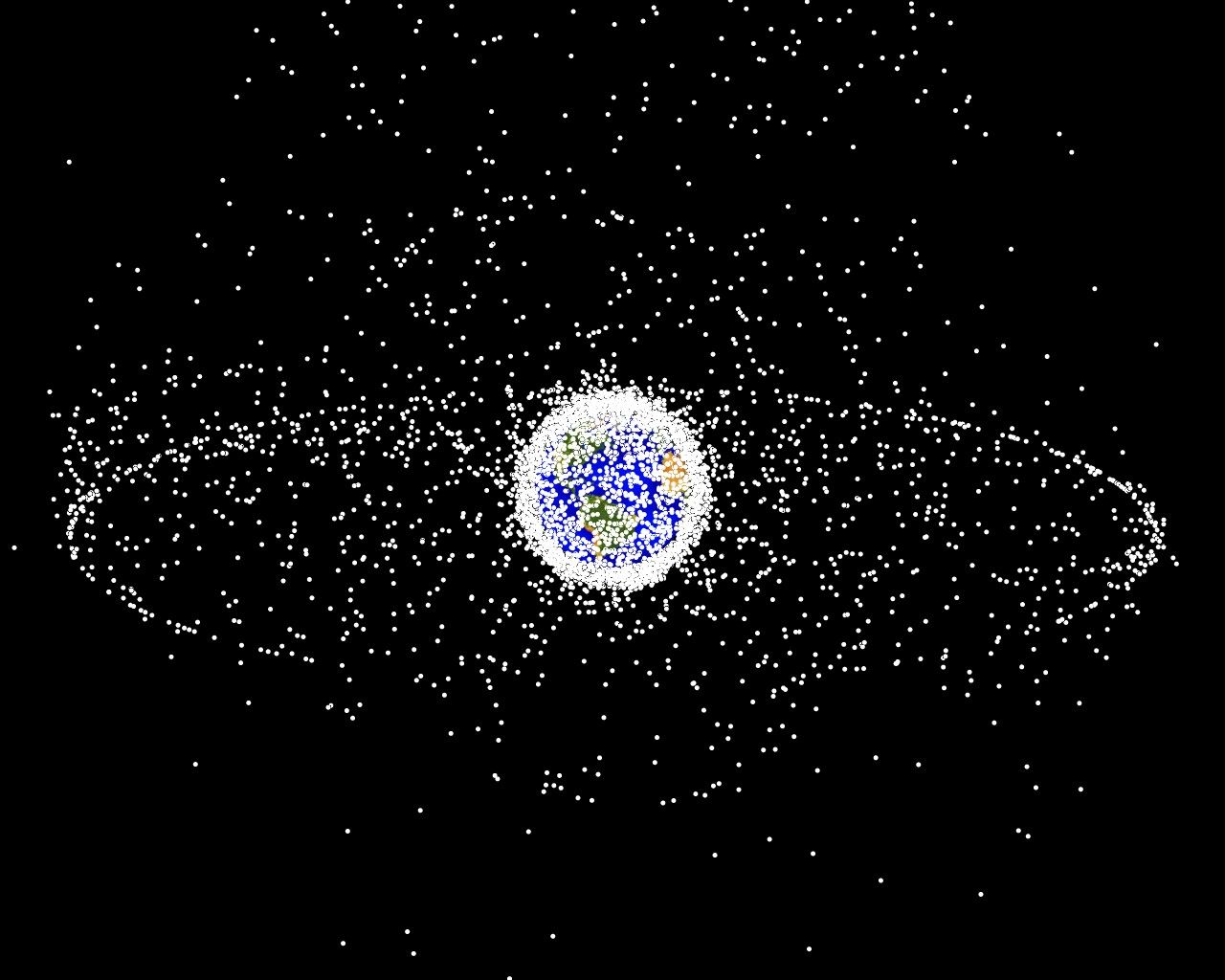
Space is no longer the empty void it once appeared. Thousands of dead satellites, spent rocket stages and shattered fragments now circle Earth at tens of thousands of kilometers an hour, turning near-Earth orbit into a crowded and increasingly dangerous place.

As Matthew Archer, Deputy Director for Launch and Space Domain Awareness, UK Space Agency, said earlier: “Most of those don’t collide with anything, most of the time. But any of them can cause significant damage or even destroy potential satellites.” “The growing number of objects is making space far more congested, so the need for this capability is growing all the time.”

Officials at Chilbolton Observatory, UK, track a rising flood of objects circling Earth.

Their data powers Britain’s space monitoring efforts. As the massive antenna swings into place, control-room screens light up with every detection: stars, working satellites, and abandoned rocket bodies.

Experts at Chilbolton Observatory, operated by the UK’s national space laboratory RAL Space, monitor UK-licenced satellites and fast-multiplying fragments of space debris swirling around them.

The space junk includes defunct man-made objects like rocket bodies, dead satellites and fragments from launches, explosions and collisions that threaten to re-enter Earth’s atmosphere or crash into functioning satellites.

According to the European Space Agency, there are more than 46,000 pieces of debris weighing a total of 17,000 tonnes currently in orbit.

“Most of those don’t collide with anything, most of the time,” Matthew Archer, deputy director for launch and space domain awareness at the UK Space Agency, told AFP on a visit to the observatory.

“But any of them can cause significant damage or even destroy potential satellites.”

On Wednesday, part of a SpaceX rocket about the size of a bus slammed into the Moon, unleashing a stream of debris. Researchers warn the growing density of space junk could trigger the so-called “Kessler syndrome” cascade of collisions.

Chilbolton Observatory feeds data to the National Space Operations Center (NSpOC) — led by the UK Space Agency and UK Space Command — that works around the clock to prevent orbital collisions and track debris re-entering Earth’s atmosphere.

“Our role is to look at everything that happens and is in space,” said Archer.

Space infrastructure underpins some 20 percent of the UK economy, said Archer. The growing “number of objects is making space far more congested, so the need for this capability is growing all the time.”

As he speaks, multiple Starlink devices — part of the constellation of thousands of internet satellites launched by US tycoon Elon Musk’s SpaceX — float by on the control room screens.

There are currently 14,000 satellites orbiting Earth, with some 1.7 million satellites planned in the coming years. SpaceX alone has unveiled plans to begin launching more than one million satellites in 2028.

The UK has pledged to invest $114 million in the NSpOC, which issues around 3,000 monthly collision warnings to satellite operators.

The researchers also monitor to ensure satellite operators are complying with their licenses and track foreign “adversaries”.

“We see examples of countries that have demonstrated the ability to get close or to fly by certain objects,” said Archer. “We do have to track … threats regularly from a military perspective.”

And when space debris re-enters the atmosphere, scientists are on stand-by to issue alerts for objects which may not burn up before landfall.

In January, Britain and European countries closely watched the re-entry of a Chinese rocket, amid fears fragments could land in Britain. The rocket eventually splashed down in the Pacific Ocean.

Space Sustainability: Britain Puts Its Money Into A Litter-Picking Spacecraft That Will Remove Two Dead Satellites From Space
File Image: Space Junk

Asteroids

“The whole environment is changing,” said Chilbolton Observatory’s facility leader Sarah Nash. “It really is a multinational environment, and there are so many objects that are not controllable.”

“The only way that all of this can continue to operate safely is by keeping track of where everything is,” Nash told AFP.

Another branch of their work is planetary defense, which involves identifying threats like comets and asteroids.

Last year, the UK Space Agency became a member of the International Asteroid Warning Network (IAWN), which monitors the movement of asteroids including those that could hit Earth.

“We work in partnership with NASA and others in the US to effectively give a percentage chance that (it) might hit the Earth and when that might happen,” said Archer.

While smaller space rocks frequently burn up in Earth’s atmosphere, large orbiting rocks like asteroids are rarer.

The UK will support the European Space Agency’s 2029 mission to study a 375-meter (1,230 feet) wide asteroid called Apophis as it flies by Earth.

“Asteroids are a really interesting challenge in many ways. It’s unusual for an asteroid to come out of nowhere,” explained Nash.

The giant space rocks are generally monitored by optical sensors, as they are too far away for Chilbolton’s radar dish to detect.

“If they’re close enough for the (radar) antenna to see them, then we have bigger problems,” laughed station manager Graham Marshall.

  • By Agence France-Presse
  • Edited by ET Online Desk

The post Starlink, Dead Rockets & 17,000 Tons of Space Junk: How a UK Observatory is Fighting & Tracking Space Debris appeared first on EURASIAN TIMES.

  •  
❌