❌

Reading view

USAF Stands Up Unit To Fly HH-60W Helicopters In Doomsday Evacuation Role In Nation’s Capital

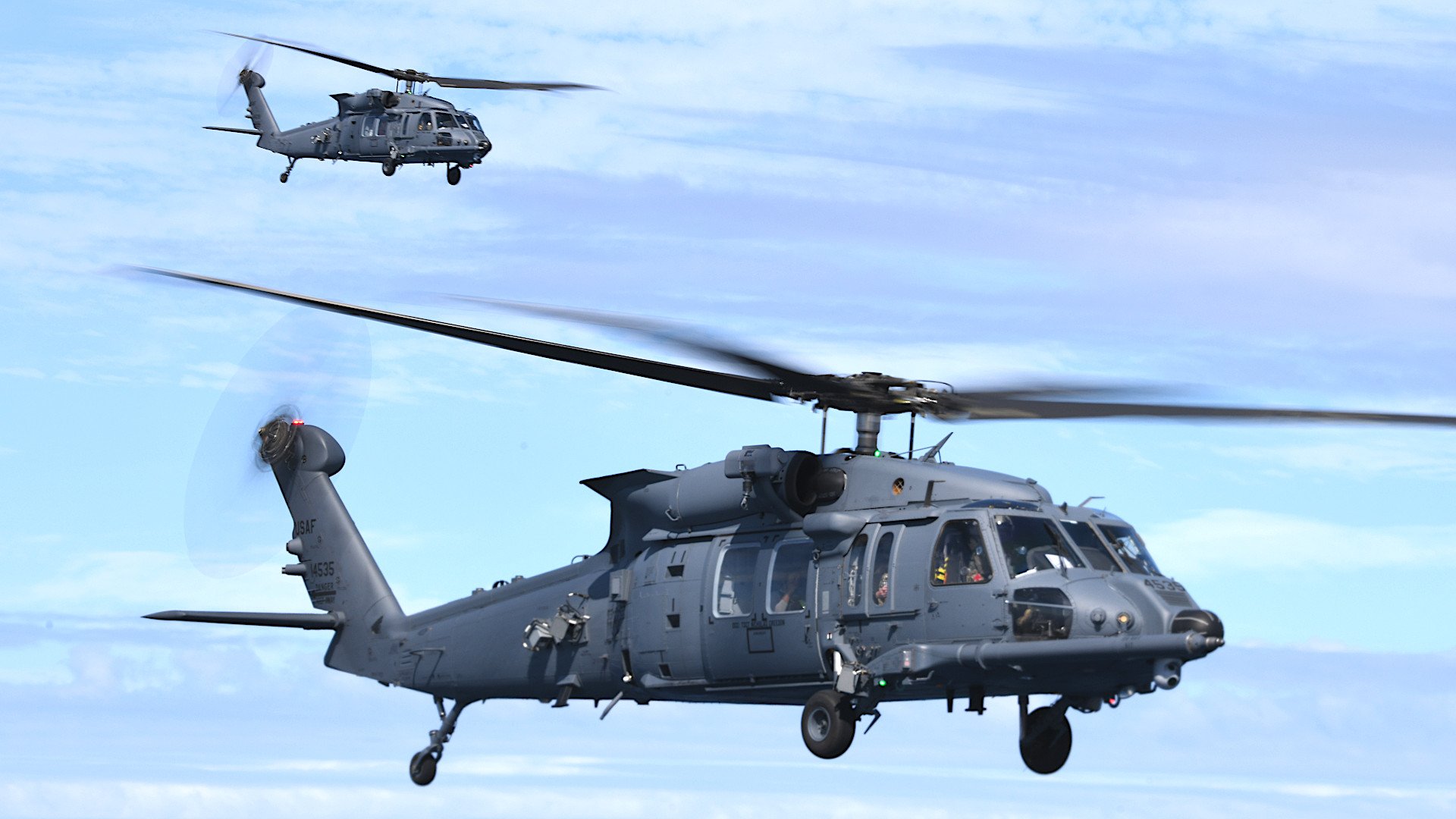
The U.S. Air Force has stood up a new squadron at Andrews Air Force Base to manage the arrival of HH-60W Jolly Green II helicopters to replace aging UH-1N Twin Hueys. Originally designed for combat search and rescue (CSAR) missions, the HH-60Ws assigned to the 5th Helicopter Squadron will be in a specialized configuration to take on the tasks of ferrying VIPs around the nation’s capital and supporting continuity of government plans. Questions have been raised about using Jolly Green IIs in these roles, and how this may impact the ability of the overall fleet of these helicopters to meet CSAR demands.

The Air Force held a ceremony at Andrews yesterday to mark the formal activation of the 5th Helicopter Squadron, also sometimes abbreviated as 5 HS. The 1st Helicopter Squadron (1 HS), with its UH-1Ns, will continue to operate throughout the transition to the HH-60W, which is expected to be completed in 2030, to avoid any gaps in capacity to meet critical operational requirements. A total of 26 Jolly Green IIs are set to be based at the facility, which is situated just outside Washington, D.C., a one-for-one replacement for the Twin Hueys that are there now. The arrival of the new helicopters will also lead to a small increase in total personnel, 60 in total, at Andrews.
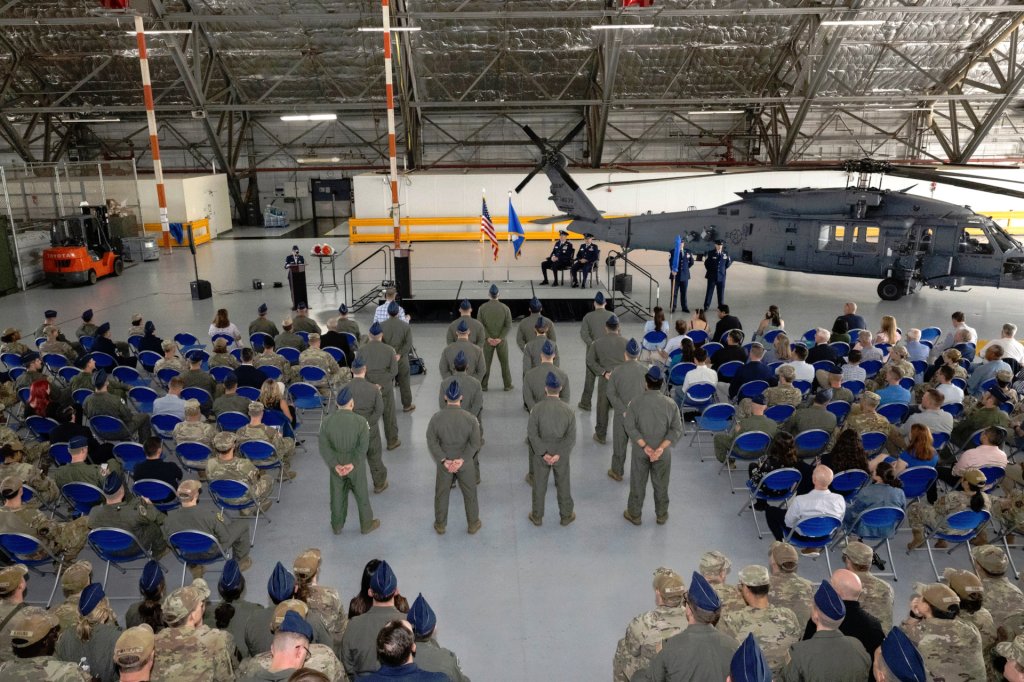
A view from yesterday’s ceremony marking the activation of the 5th Helicopter Squadron at Andrews. An HH-60W Jolly Green II is seen at top right. USAF

The Air Force originally planned to supplant all of its UH-1Ns worldwide with new MH-139 Grey Wolf helicopters, which is a more direct replacement in terms of size and capability. The service is still acquiring MH-139s to supplant UH-1Ns elsewhere, including ones assigned to Air Force Global Strike Command (AFGSC) units that help provide security around Minuteman III intercontinental ballistic missile (ICBM) silos. We will come back to this later on.
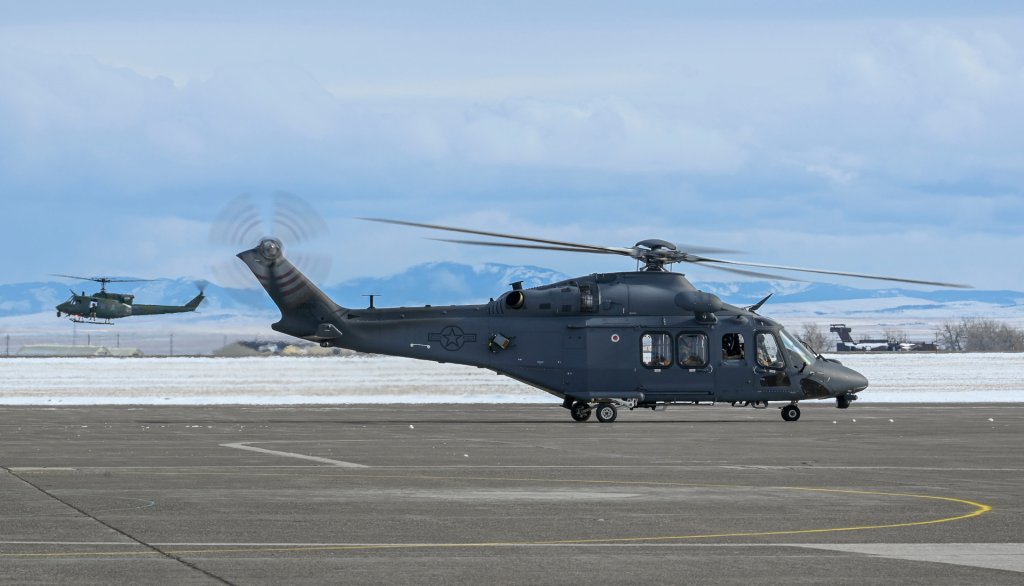
The first Air Force Global Strike Command (AFGSC) MH-139A at Malmstrom Air Force Base in Montana, with a UH-1N seen flying in the background. USAF The first AFGSC MH-139A at Malmstrom Air Force Base in Montana, with a UH-1N seen flying in the background. USAF

“The HH-60W’s increased speed, range and carrying capacity will better deliver safe operations for U.S. senior leaders, service members, and the communities around the region,” the Air Force said in a press release regarding the 5th Helicopter Squadron’s activation.

The Jolly Green II also has in-flight refueling capability, something that is not found on the UH-1N or MH-139, and could be very valuable for missions around Washington, D.C. The HH-60Ws heading to Andrews are set to receive additional modifications, including to the main cabin seating arrangement, communications suite, and defensive capabilities, as you can read more about here.

Graphics depicting how the HH-60W’s cabin can be configured now for CSAR missions. Lockheed Martin

“In the next few years, the 5 HS will train aircrew and maintainers, establish operational and maintenance processes, and receive new aircraft as it prepares to execute the national security mission within the National Capital Region,” the release yesterday added.

National Capital Region (NCR) refers to a larger area that surrounds Washington, D.C., proper. Air Force operations in and around the NCR are primarily managed through a unit called the Air Force District of Washington (AFDW).

The HH-60Ws will be taking over an AFDW mission set from the UH-1Ns that currently includes daily airlift sorties transporting U.S. and foreign VIPs around the nation’s capital. The helicopters will also be in position to swing into action as part of continuity of government plans. In such a scenario, the Jolly Green IIs would be tasked to help rush senior officials and lawmakers to safety to ensure the continued functioning of federal authorities following an attack or a similarly serious contingency. 1st Helicopter Squadron’s role in responding to the terrorist attack on the Pentagon on 9/11 was highlighted during the activation ceremony at Andrews yesterday.

A stock picture of 1st Helicopter Squadron UH-1Ns. USAF

The NCR presents particular challenges for crisis response missions and routine day-to-day flight operations. The airspace around Washington, D.C., is most densely defended and heavily monitored anywhere in the United States, and packed full of military and civilian air traffic every day. Where and when military helicopters can operate over the nation’s capital has been a hot topic of debate since a fatal mid-air collision involving an Army UH-60 Black Hawk and a PSA Airlines Bombardier CRJ700 regional jet in January 2025. The Black Hawk was conducting a continuity of government training flight at the time. This has been more recently highlighted by an incident involving a Marine One helicopter carrying President Donald Trump earlier this month. A subsequent Federal Aviation Administration (FAA) investigation has highlighted communication issues and factors tied to the construction of a new helipad at the White House.

It is also worth noting here that Marine Helicopter Squadron One (HMX-1), the primary unit responsible for the Marine One presidential helicopter mission, would play a role in any continuity of government scenario in the NCR. Helicopters from the U.S. Park Police, as well as ones belonging to other law enforcement and civilian agencies, would be utilized, too.

As mentioned, there are significant questions about the impacts of basing HH-60Ws at Andrews will have on the rest of the Air Force’s Jolly Green II fleet. This is something TWZ highlighted when the Air Force confirmed it was moving ahead with the AFDW HH-60W plan with the release of its 2027 Fiscal Year budget request earlier this year.

A particular issue is the Air Force’s decision years ago to scale back total purchases of HH-60Ws, from 113 helicopters down to 91. If the service does not order more Jolly Green IIs in the coming years, this will mean that roughly a third of the entire fleet will be assigned to the AFDW mission.

The Air Force previously confirmed the plan will involve taking HH-60Ws out of “back up inventory.” In the past, the service has defended this decision as being “more cost effective” than a move to “procure additional MH-139A aircraft” to meet AFDW requirements. Whether or not there were other specific operational considerations that factored into the decision to use Jolly Green IIs to meet these needs instead is unknown. The acquisition plan for the Grey Wolf has also been significantly truncated, with the Air Force now planning to buy just 56 of these helicopters instead of 80.

“The MH-139A Grey Wolf was competitively selected to replace the UH-1N for intercontinental ballistic missile security and National Capital Region missions, including continuity of government and transport of United States government officials and security forces,” members of the House Armed Services Committee wrote in a report accompanying a draft of the annual policy bill, or National Defense Authorization Act (NDAA), for the 2027 Fiscal Year, back in May. “The committee remains concerned regarding the justification for transitioning these missions to an alternate rotary-wing platform and seeks additional details on cost and operational implications.”

At that time, the House Armed Services Committee explicitly directed “the Secretary of the Air Force to submit a report to the congressional defense committees not later than December 1, 2026, assessing operational, cost, infrastructure, and readiness impacts of assigning any non-MH-139A rotary-wing aircraft to continuity of government and transport of United States government officials and security forces in the National Capital Region.” The lawmakers stressed that the report had to include “a comparison of procurement cost, cost per flight hour, infrastructure and aircraft modification requirements, and training and manpower impacts” and an assessment of the cost, schedule, and operational disruption associated with required upgrades to Joint Base Andrews facilities for each aircraft type.”

Separate questions have been raised in recent years about the utility of traditional CSAR helicopters in future operations, especially in the context of a high-end fight, such as one between the United States and China in the Pacific. Air Force officials openly talked about exploring alternatives for rescuing aircrew downed deep inside contested environments, but details about those plans remained limited.

At the same time, demand for traditional CSAR capabilities has certainly not gone away entirely. This was underscored by the operation to retrieve the crew of an F-15E Strike Eagle that went down inside Iran in April. HH-60Ws were part of the larger force package sent into Iranian airspace to help recover those aviators.

Wild footage from a USAF C-130 fueling two helicopters over Iran shared by telegram channels. The cars & the dialect are Iranian and from southwest. pic.twitter.com/K9cufOOY26

— Ramin Khanizadeh (@RKhanizadeh) April 3, 2026

Footage of Iranian police firing small arms at a pair of USAF HH-60Ws searching for the downed F-15E crew earlier today. pic.twitter.com/9SwhyhY1Aw

— OSINTtechnical (@Osinttechnical) April 3, 2026

In the meantime, the Air Force’s UH-1Ns, a type the service first began operating in the early 1970s. are only getting older and harder to sustain, too. Three of the UH-1Ns currently assigned to 1st Helicopter Squadron saw combat during the Vietnam War. Just last week, one of the unit’s Twin Hueys made a precautionary landing in an open field in Maryland “after experiencing unusual mechanical noise” while on a training flight. This is hardly the first time such an incident has occurred.

There is a possibility that Congress could more directly intervene in the Air Force’s move to start flying HH-60Ws around Washington, D.C. With the expectation that UH-1Ns will remain in service at Andrews for another four years, there is time for the service’s own plans to evolve further.

With the activation of 5th Helicopter Squadron, the Air Force has now taken an important step toward an all-new helicopter force in the nation’s capital.

Contact the author: joe@twz.com

The post USAF Stands Up Unit To Fly HH-60W Helicopters In Doomsday Evacuation Role In Nation’s Capital appeared first on TWZ.
  •  

U.S. Expanding B-52 Bomber Capacity At Moron Air Base In Spain

The U.S. military is planning to revamp Moron Air Base in Spain, including creating new parking spaces for as many as nine additional B-52 Stratofortress strategic bombers. This effort comes even after Spain denied permission to use the base, and its naval station in the country, for direct strike operations on Iran during Operation Epic Fury. Long-range strikes by bombers flying from Europe played a major role in that operation. It also comes as the Pentagon is reviewing its posture in Europe, which could include major basing changes that fit the Trump administration’s vision for NATO and who it prefers to work with the closest, as well as tactical and strategic concerns.

The makeover is part of a nearly half-billion dollar construction program for U.S. facilities primarily in the Rota, Spain, area, which provide a great deal of support for American forces in Europe, Africa and the Middle East. It was announced on Thursday in a pre-solicitation notice posted on the government’s contracting portal that a contract is expected to be awarded next month.

Moron, located in southern Spain, is a Spanish Air Force Base, used by the U.S. Air Force to provide expeditionary combat support and the bed-down of transient aircraft. It also plays a major role in the “staging of aircraft and personnel in support of U.S. and NATO plans, exercises and contingency operations; and to provide Base Operating Support to tenant units,” according to the Air Force Fiscal Year 2027 Military Construction plan.

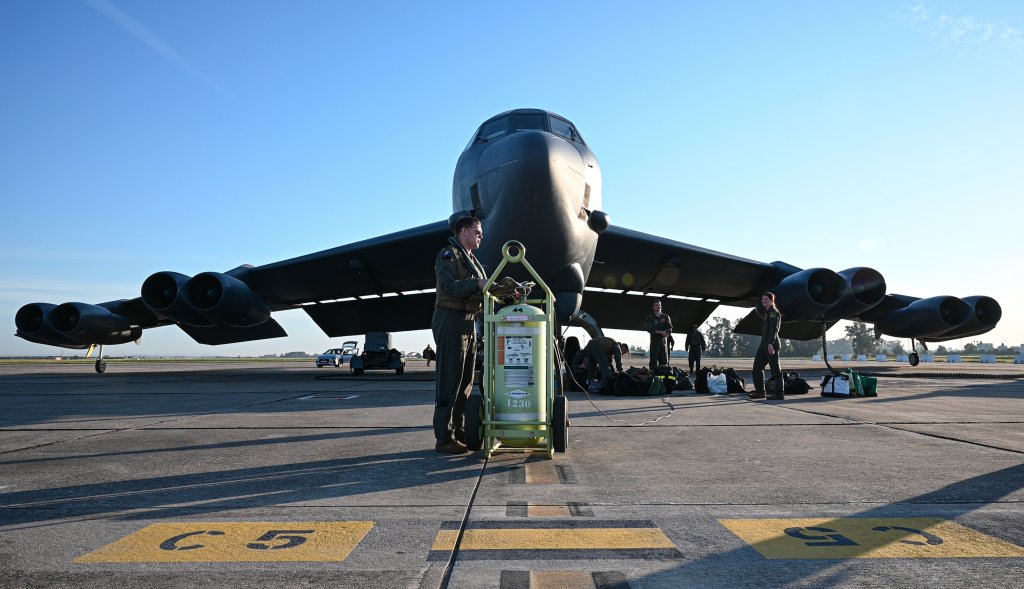
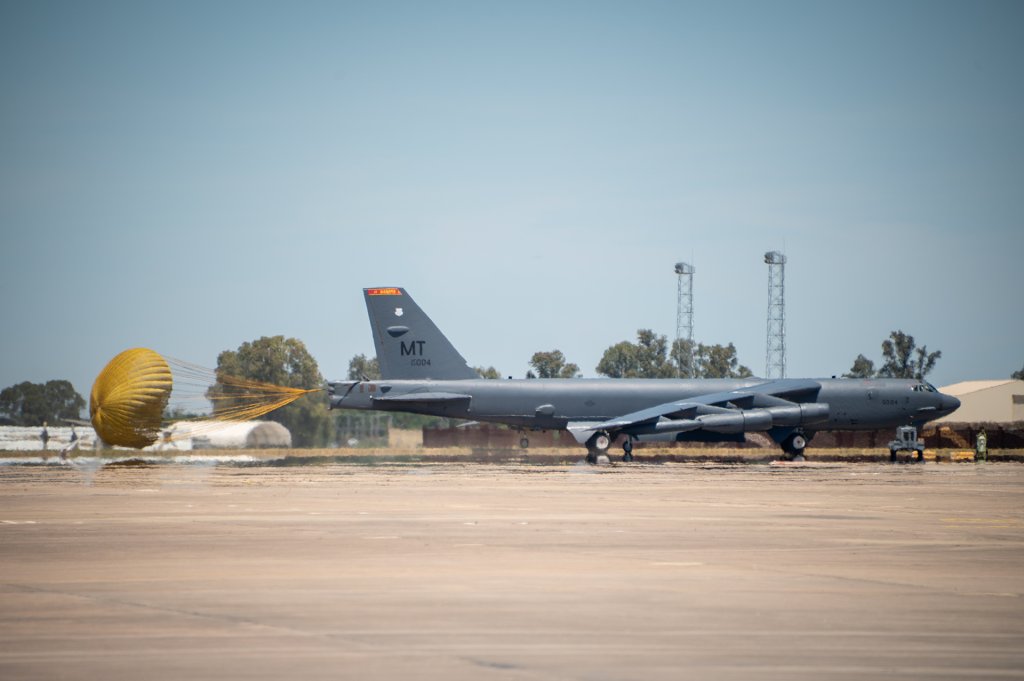
A U.S. Air Force B-52 Stratofortress assigned to the 5th Bomb Wing deploys a drag chute to slow down after landing at Morón Air Base, Spain, during a Bomber Task Force Europe deployment, May 20, 2025. The 496th Air Base Squadron delivered full- spectrum support, enabling the aircraft to safely operate from the Spanish Air Force installation. (U.S. Air Force photo by Cristina Oliveira)
A U.S. Air Force B-52 Stratofortress assigned to the 5th Bomb Wing deploys a drag chute to slow down after landing at Morón Air Base, Spain, during a Bomber Task Force Europe deployment, May 20, 2025. (U.S. Air Force photo by Cristina Oliveira) Cristina Oliveira

The first order of business is “a Combat Aircraft Parking Apron in Moron, Spain,” the recent pre-solicitation notice states. The plan calls for the “expansion of the Aircraft Parking Apron to provide nine (9) new aircraft parking spots in an unloaded condition, or three (3) new B-52 aircraft parking spots in a live ordnance [sic] loaded condition.”

The issue of being able to store live ordnance is critical, since extra space is needed for safety purposes in case of an unintended explosion.

“The current apron is not capable of supporting any loaded strategic bombers due to limiting factors associated with unrelated facilities violating inhabited building safety arcs,” the Air Force budget document explains.

U.S. Air Force 23rd Expeditionary Bomb Squadron aircrew prepare a B-52 Stratofortress aircraft for flight during a Bomber Task Force mission at Moron Air Base, Spain, May 27, 2025. U.S. Strategic Command regularly tests and evaluates the readiness of strategic assets through BTF missions to ensure our extended deterrence commitments are strong and credible. (U.S. Air Force photo by Staff Sgt. Bryan Guthrie)
U.S. Air Force 23rd Expeditionary Bomb Squadron aircrew prepare a B-52 Stratofortress aircraft for flight during a Bomber Task Force mission at Moron Air Base, Spain, May 27, 2025. (U.S. Air Force photo by Staff Sgt. Bryan Guthrie) Staff Sgt. Bryan Guthrie

Beyond the new parking spaces, the planned expansion at Moron also calls for 10 new fuel pits and associated piping, the relocation of a Civil Engineer Storage Complex – including a new covered storage building and an open storage yard – and the extension of apron shoulders and access roads, among other items.

The Air Force sees these improvements as an imperative.

“This project is required to enhance readiness capabilities at Moron Air Base, Spain,” the Air Force Fiscal Year 2027 military construction budget documents note. “A key enabler for training and combat operations is substantial infrastructure, promoting a quick response and positioning of forces within prescribed response times. The expanded Strategic Bomber Aircraft parking apron will increase Moron Air Base’s ability to meet future mission requirements.”

If these improvements are not made, “[a]dequate airfield infrastructure will not be available to the DoW [Department of War] or its allied partners, and personnel, aircraft, and resources will lack key facilities and infrastructure to support expanded airfield operations for training and contingency environments,” the budget document warns. “This limitation will impede sortie generation and flying schedules, directly limiting airfield presence and impairing airfield capability and readiness. Therefore, responsiveness for bilateral and multilateral exercises and training missions would be compromised, directly limiting theater presence and impairing mission capability, readiness, and contingency support.”

The project has a price tag of between $25,000,000 and $100,000,000 and is “expected to be completed 1,038 calendar days after notice to proceed,” according to the pre-solicitation notice.

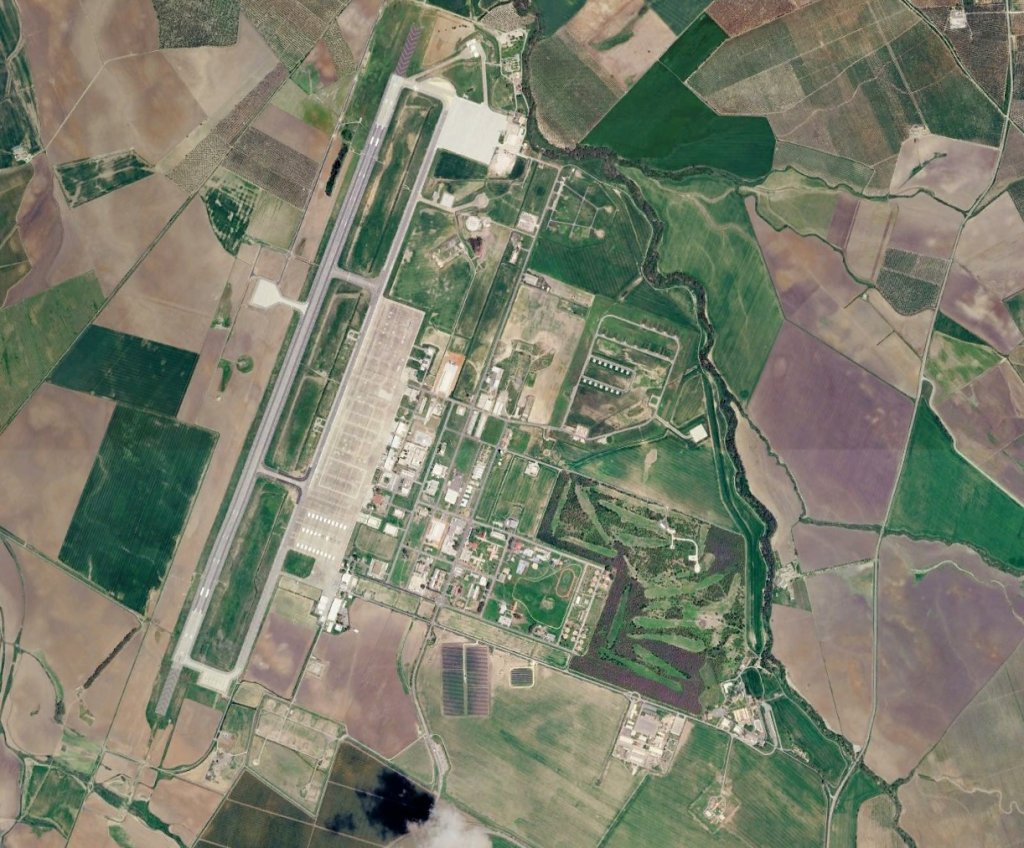
Moron Air Base, Spain. (Google Earth)

In addition, the Multiple Award Construction Contract (MACC) calls for new construction, renovations, alterations, demolition, repair work, and any necessary design to a wide range of U.S. assets in the region. This includes “airfield, industrial, infrastructure, administrative, training, retail, food service, munition storage, community support facilities and both vertical and horizontal construction in the Rota, Spain region or other areas managed by NAVFAC EURAFCENT, [Naval Facilities Engineering Systems Command/Navy Region Europe, Africa, Central],” the pre-solicitation notice explains. “This tool may also be used throughout the NAVFAC area of responsibility (AOR), worldwide.”

However, as the Air Force budget documents stress, the Moron project is a priority.

The installation has long played an important role for American airpower. It has served as a host for B-1B Lancer and B-52 Bomber Task Force missions and as a way station for a wide array of other aircraft from fighters to aerial refueling tankers.

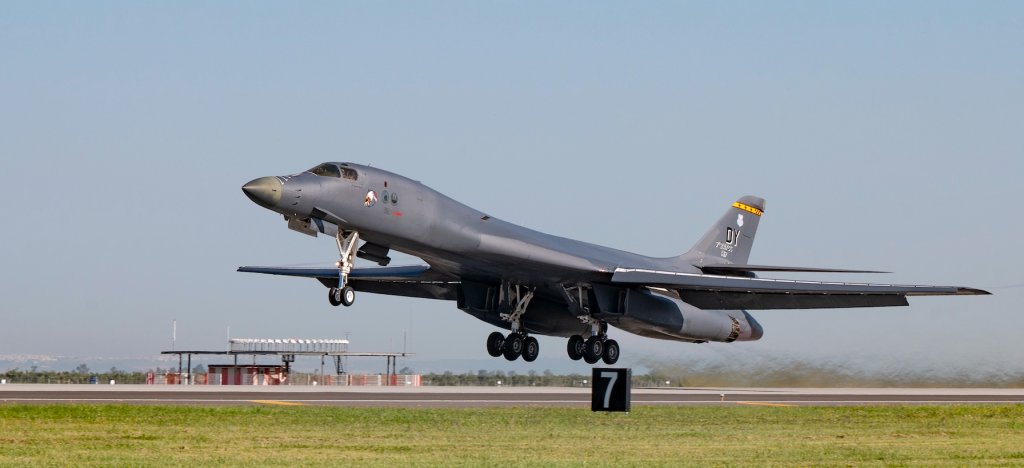
A B-1B Lancer assigned to the 9th Expeditionary Bomb Squadron from Dyess Air Force Base, Texas, departs Morón Air Base, Spain, in support of Bomber Task Force Europe, April 12, 2024. (U.S. Air Force photo by Airman 1st Class Emma Anderson)

“Morón Air Base is a vital link in any operation moving east from the United States due to its strategic location close to the Mediterranean and the Middle East, its massive flight line, long runway, aircraft refueling systems and excellent weather,” according to the 496th Air Base Squadron, the facility’s host unit.

The facility played a key role in the run-up to Epic Fury, providing a midway point for a wide array of U.S. military aircraft.

In March, Spanish Prime Minister Pedro Sánchez, one of Europe’s most vocal critics of Epic Fury, refused to allow the U.S. to use its bases in his country for direct attacks on Iran. In addition, Sánchez denied permission for the U.S. to use Spanish airspace for Epic Fury, creating a logistics headache for American aircraft movements to the Middle East.

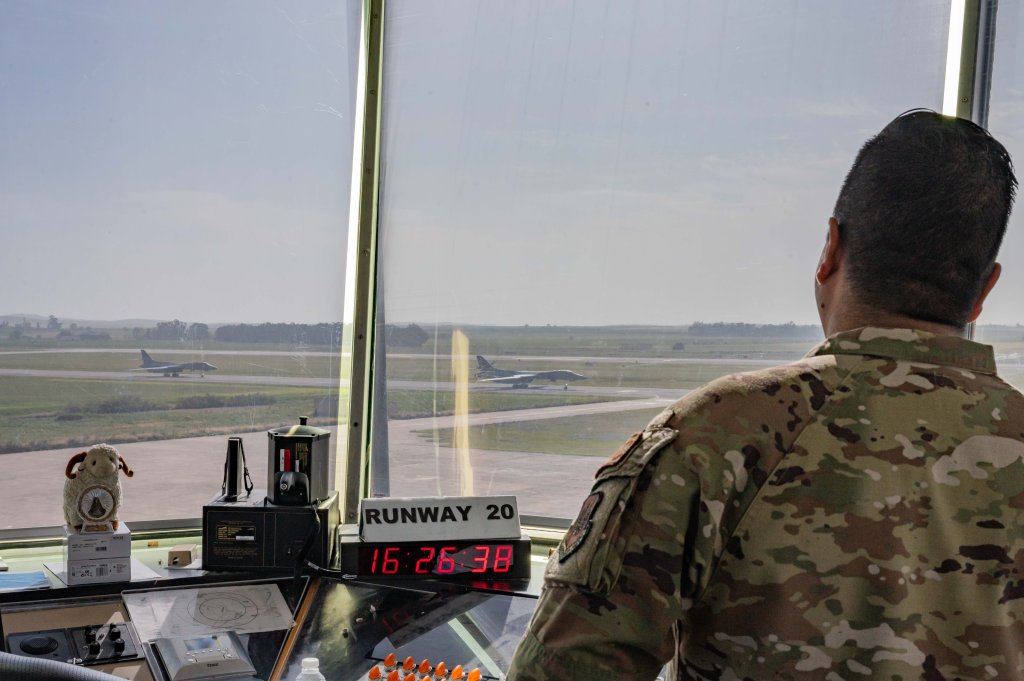
U.S. Air Force Staff Sgt. Arturo Herrera, 496th Air Base Squadron Operational Support Team tower watch supervisor, observes two B-1B Lancers taxiing at Morón Air Base, Spain, April 17, 2024. U.S. Air Force air traffic controllers assigned to the 496th ABS work alongside Spanish air traffic control allies and are required to attend the Defense Language Institute Foreign Language Center for Spanish before arriving at Morón AB. (U.S. Air Force photo by Airman 1st Class Eve Daugherty)
U.S. Air Force Staff Sgt. Arturo Herrera, 496th Air Base Squadron Operational Support Team tower watch supervisor, observes two B-1B Lancers taxiing at Morón Air Base, Spain, April 17, 2024. (U.S. Air Force photo by Airman 1st Class Eve Daugherty) 2nd Lt. Eve Daugherty

Sanchez’s decision affected Naval Station Rota, another major U.S. installation in that country. Rota supports the movement of personnel, equipment, fuel, and supplies through its three operational piers. It also has a 670-acre airfield capable of supporting U.S. Navy and Air Force aviation operations, and some of the largest weapons and fuel storage facilities in Europe.

Rota is also the home of Destroyer Squadron 60 (DESRON 60), one of three U.S. Navy destroyer squadrons permanently based outside the continental United States and the only one of these to call Europe home.

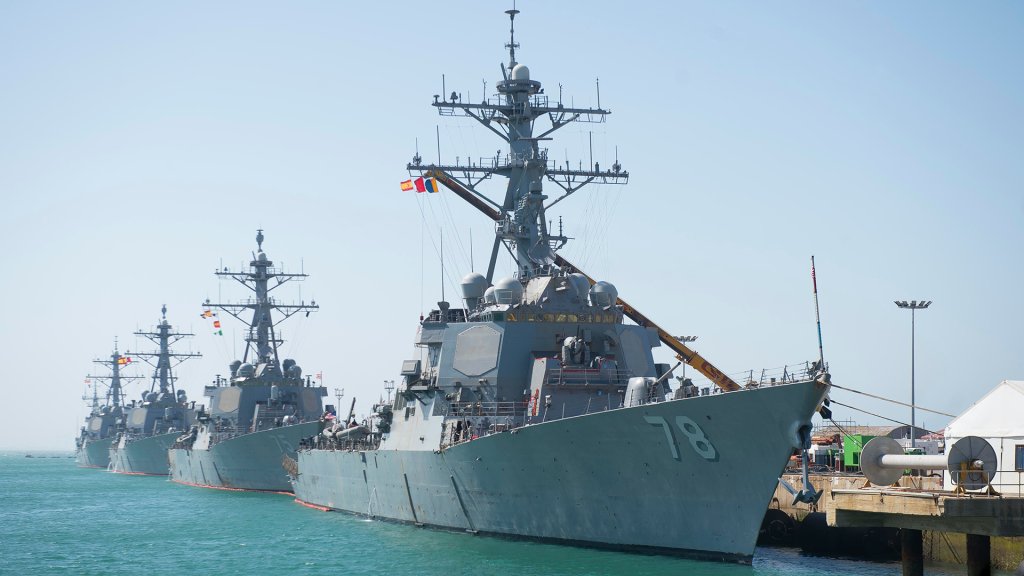
The Arleigh Burke-class guided-missile destroyers USS Porter (DDG 78), front, USS Donald Cook (DDG 75), USS Carney (DDG 64) and USS Ross (DDG 71) are moored at Naval Station Rota, Spain.
The Arleigh Burke class guided-missile destroyers USS Porter (DDG 78), front, USS Donald Cook (DDG 75), USS Carney (DDG 64) and USS Ross (DDG 71), moored at Naval Station Rota, Spain. (Specialist 3rd Class Robert S. Price/Released)

Sanchez’s moves set off U.S. President Donald Trump, who was already angered by Spain’s refusal to raise defense spending to 5% of GDP, previously agreed to at last year’s NATO summit. In March, the American leader called Spain “a terrible partner” and threatened to cut off trade.

The situation reached a critical juncture at the NATO Summit in Turkey in July, with Trump again threatening Madrid. 

“We don’t want to do any trade business with Spain anymore… I’d like you to cut it off,” Trump fumed in Ankara to Treasury Secretary Scott Bessent during a press conference with NATO Secretary General Mark Rutte. “Spain is a terrible partner in NATO. They don’t participate; they don’t pay. I don’t want anything to do with Spain. Cut off all trade with Spain, please, including visits. Watch them, watch them come running back; oh, they’ll come running back.”

At a NATO summit, Trump said he had ordered Treasury Secretary Scott Bessent to cut off all trade with Spain, calling Madrid a 'terrible partner' in the alliance https://t.co/1E2VkRee2j pic.twitter.com/Vt2oNxW8QM

— Reuters (@Reuters) July 8, 2026

However, the rift eased after Sánchez agreed to bump up his country’s defense budget, Trump claimed.

On his way back to the United States after the summit, he told reporters aboard Air Force One: “I did have issues, and ​I still do. But Spain, they came back all the way today. Spain was very generous today.”

Asked what Spain had ​done, he said: “They honored a request for lots of payments, and if they didn’t, we wouldn’t have even ⁠talked to them.”

The two leaders displayed new-found cordiality for the cameras while sharing a box at the World Cup Final between Spain and Argentina at MetLife Stadium in New Jersey. 

EAST RUTHERFORD, NEW JERSEY - JULY 19: President of the United States Donald J. Trump greets Spanish Prime Minister Pedro Sanchez during the FIFA World Cup 2026 Final match between Spain and Argentina at New York New Jersey Stadium on July 19, 2026 in East Rutherford, New Jersey. (Photo by Europa Press Sports/Europa Press via Getty Images)
President of the United States Donald J. Trump greets Spanish Prime Minister Pedro Sánchez during the FIFA World Cup 2026 Final match between Spain and Argentina at New York New Jersey Stadium on July 19, 2026, in East Rutherford, New Jersey. (Photo by Europa Press Sports/Europa Press via Getty Images) Europa Press Sports

Though the Moron construction planning predated any of the political drama, as we noted earlier, the Pentagon is reviewing how many troops it will maintain in Europe and where it will base them. Undersecretary of War Elbridge Colby made a rare visit to NATO headquarters on Thursday to meet with officials to discuss the way forward. There, he pointed out that the Pentagon’s review is “designed to ensure that NATO is moving fast and irreversibly toward Europe leading, stepping up to take primary responsibility for the defense of Europe, stepping up to ensure our forces are postured for America’s global needs, and making sure that our access, basing, and overflight are clearly delineated and assured.”

There are a number of other military construction projects on the books for European installations, including about $4 billion earmarked for improvements to bases in the U.K. The largest planned expenditure is more than $1.6 billion for RAF Lakenheath, according to the Guardian. That’s where it is believed that the U.S. is poised to bring nuclear bombs back to the United Kingdom after nearly two decades.

Despite the geopolitical tiffs between the two nations, the investment in Moron and the larger construction package for Spain is a clear signal of how much the military and Congress value having access to bases in that country.

Contact the author: howard@twz.com

The post U.S. Expanding B-52 Bomber Capacity At Moron Air Base In Spain appeared first on TWZ.

  •  

Saab’s Gripen F Two-Seater Takes To The Air For The First Time

Saab’s first Gripen F two-seat fighter has taken to the air, marking the beginning of the flight-test campaign for a variant being developed in close cooperation with Brazil.

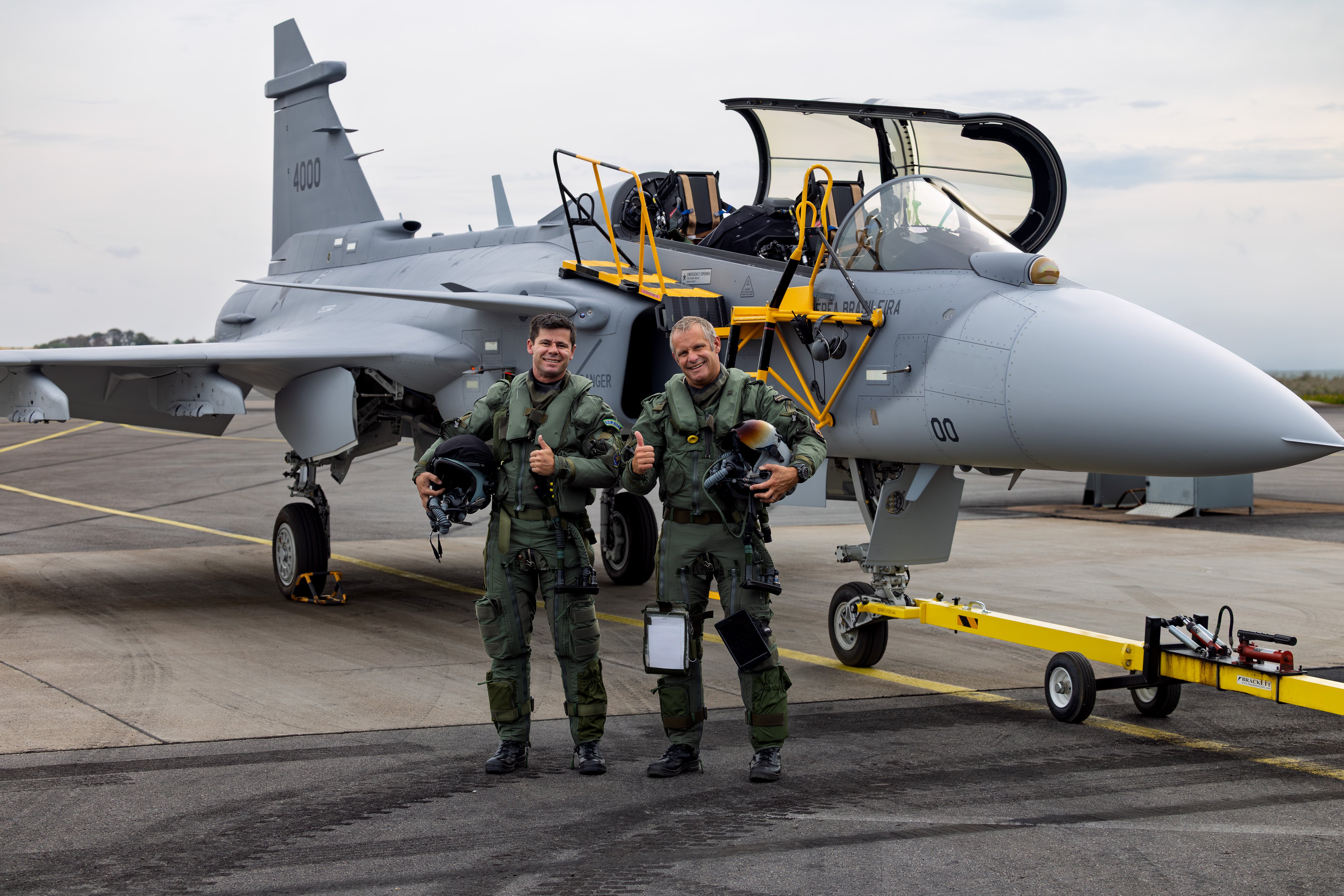
The aircraft departed Saab’s airfield at Linköping, Sweden, at 9:40 a.m. local time today and remained airborne for approximately 40 minutes. Saab chief test pilot Jakob Högberg and Brazilian Air Force test pilot Lt. Col. Aviator Abdon de Rezende Vasconcelos were in the cockpit for the inaugural sortie.

Gripen F test pilots Jakob Högberg and Lt. Col. Aviator Abdon de Rezende Vasconcelos. Saab

According to Saab, the flight was intended primarily to verify the aircraft’s core systems and initial flying characteristics. The company says the aircraft will now enter a more extensive test program, including progressive expansion of its permitted flight envelope.

That work will eventually cover the aircraft’s speed, altitude, G-loading, and angle-of-attack limits, as well as the tactical capabilities and systems associated specifically with the rear cockpit.

“This first flight represents an important step forward for both Saab and the Brazilian Air Force,” said Lars Tossman, head of Saab business area Aeronautics.  “Seeing Gripen F take to the skies is particularly significant for all the Swedish and Brazilian teams whose years of engineering work have helped turn this aircraft into a reality. It is designed to accelerate pilot training while enhancing operational performance in advanced combat missions.”

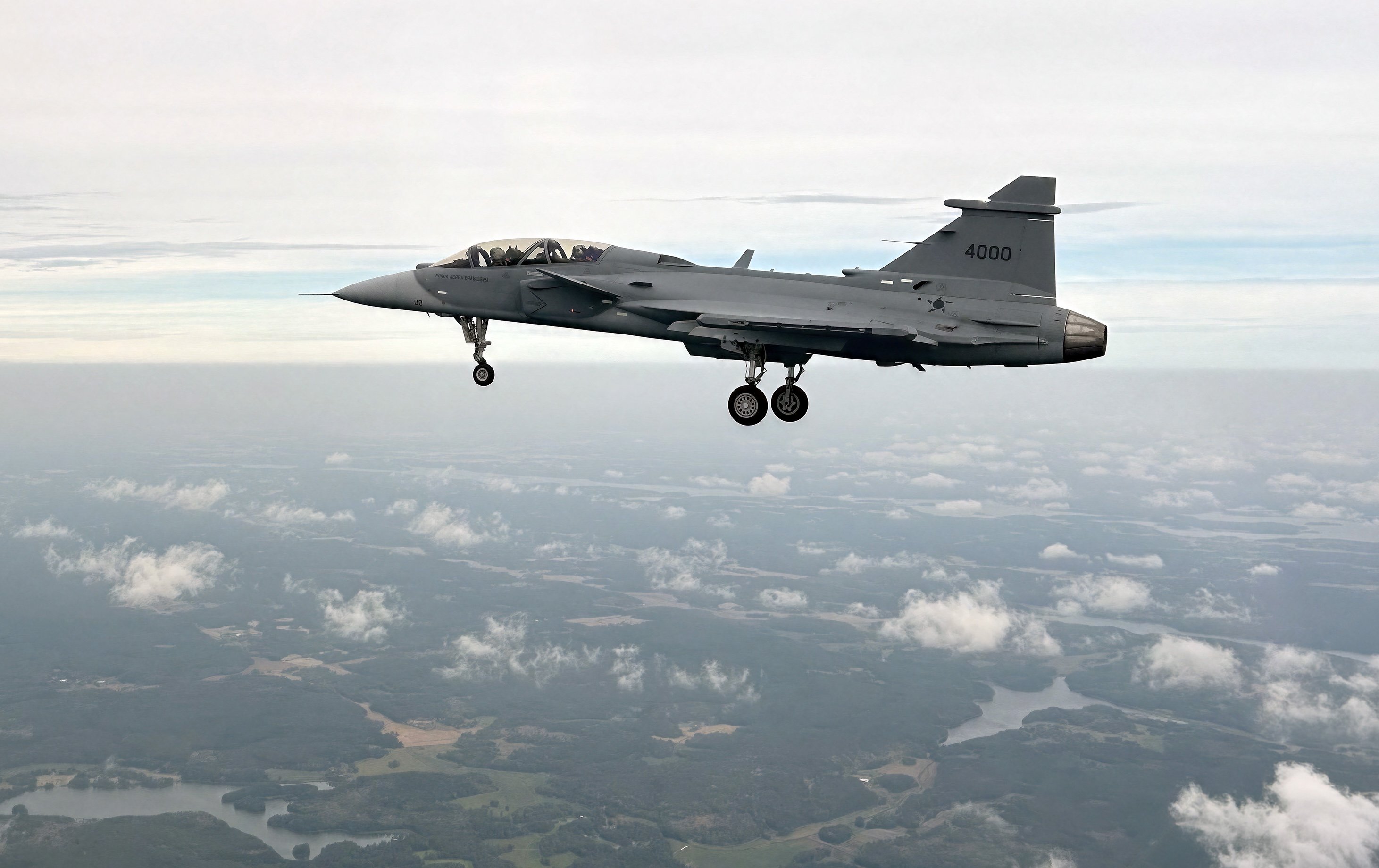
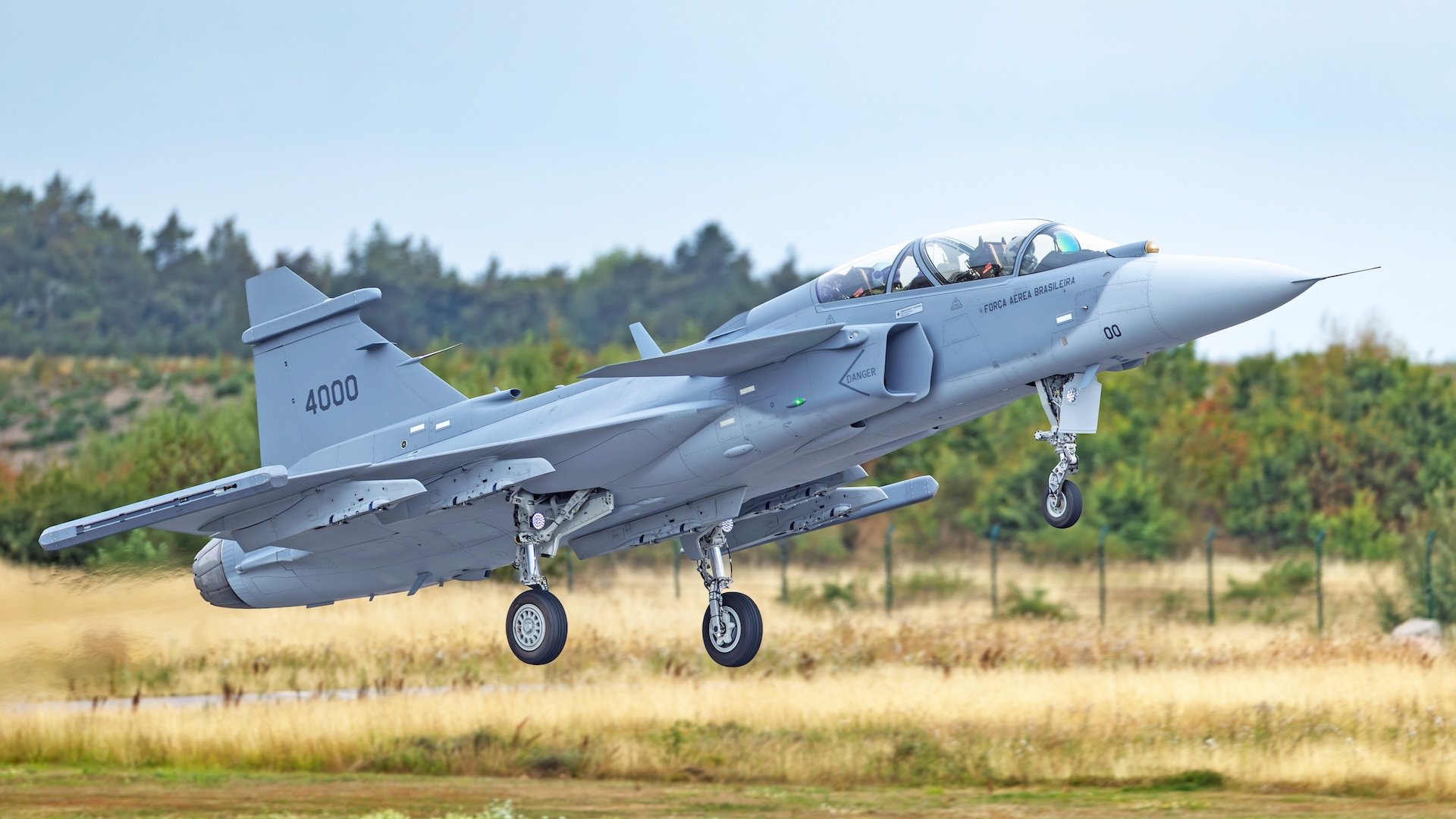
First flight of the Gripen F, with landing gear extended. Saab

The Gripen F is the two-seat derivative of the Gripen E, but it is not simply a conventional trainer version of the single-seat fighter. Saab has designed the rear cockpit to be independently functional, allowing the aircraft to retain an operational combat role while carrying a second crew member.

The configuration is therefore intended to support conversion training and mission preparation while also offering potential advantages during complex combat missions through the division of cockpit workload. This could also include as a ‘drone controller,’ a growing area of interest for many air forces and something that Saab is also working toward with its uncrewed aircraft plans.

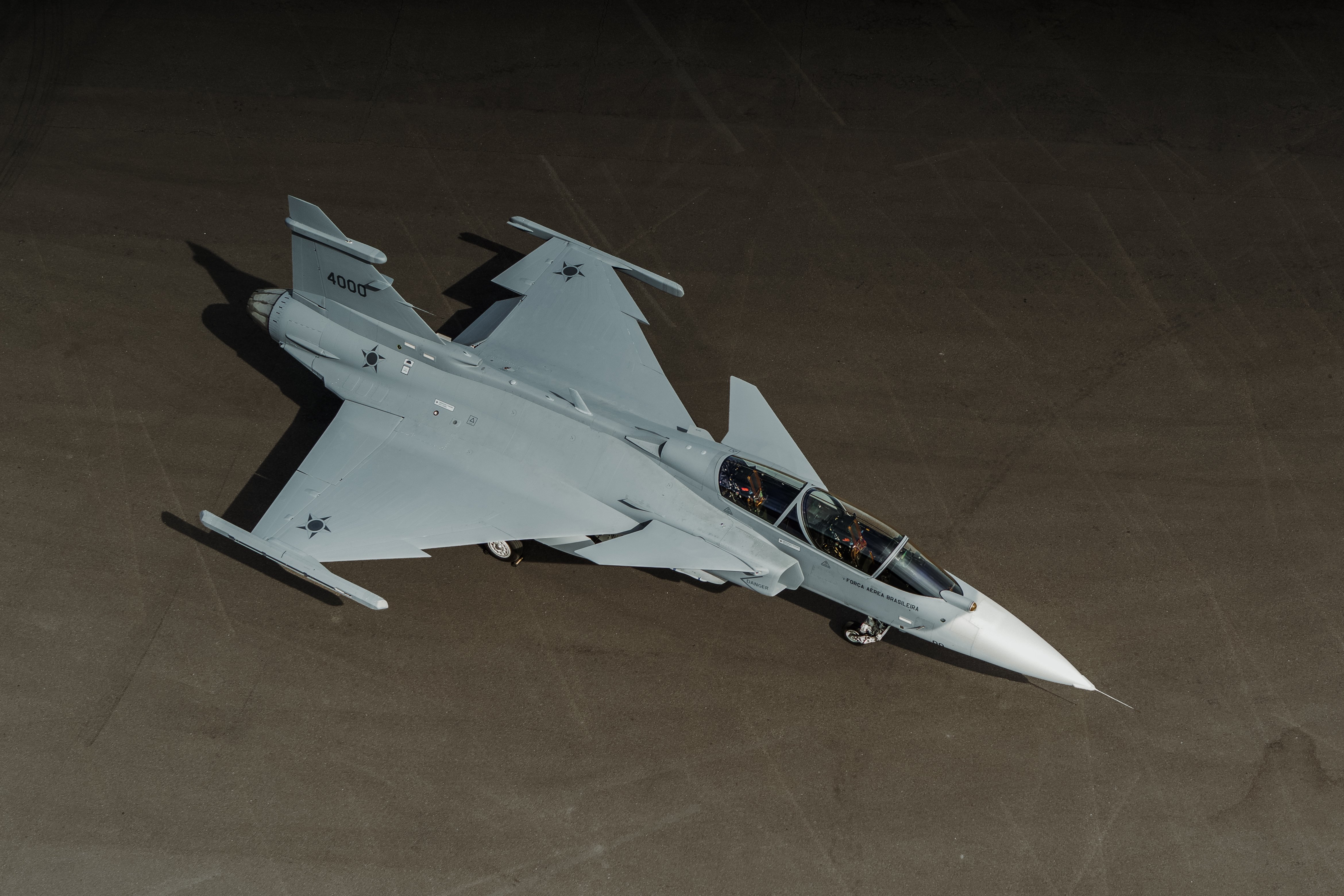
The Gripen F before its first flight. Saab

Combining the Gripen F, in particular, with a high-end drone of the kind that Saab envisages, would make a good deal of sense.

Saab has already pitched its stealthy, supersonic Autonomous Collaborative Platform (ACP) ‘fighter drone’ as an adjunct for the single-seater, describing it as “a great asset to the Gripen E.” Saab envisages the Gripen E serving as a tactical mission commander for one or more ACPs, working in conjunction with the company’s GlobalEye airborne early warning and control (AEW&C) aircraft.

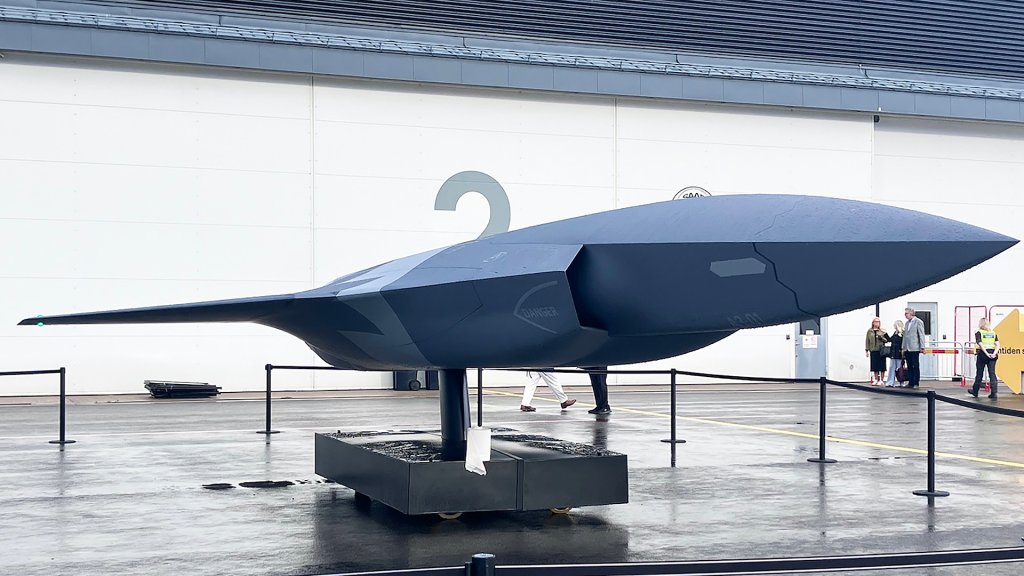
Saab has unveiled its roadmap for its Autonomous Collaborative Platform (ACP) program, a stealthy, supersonic ‘fighter drone,’ which could enter service in the 2030s with the Swedish Air Force and potentially other customers. The aerospace and defense company is already working on two uncrewed technology demonstrators and today presented a full-scale mock-up of an operational drone that those two aircraft could inform.
The Saab A3 concept for its future Autonomous Collaborative Platform (ACP) ‘fighter drone.’ Thomas Newdick Thomas Newdick

The dual-crew benefits of the Gripen F, combined with the ACP, could give Saab an even more compelling route into the CCA market. After all, a fourth-generation fighter like the Gripen (Saab, it should be noted, rigorously avoids using this generational terminology), can remain highly relevant when teamed with CCAs, and a high-performance, stealthy drone like the ACP could make that combination even more potent. It could, at least possibly in some cases, allow air forces to skip the sixth-generation crewed combat air platforms altogether, or at least greatly reduce the need for them.

Brazil is central to the Gripen F program. The country was the launch customer for the two-seat variant and participated directly in its development as part of the broader technology-transfer arrangement underpinning its Gripen acquisition.

The first Gripen F was formally rolled out at Saab’s Linköping facility in June. Brazil’s original 2014 agreement with Saab covers 36 aircraft, in the form of 28 single-seat Gripen E fighters and eight Gripen F two-seaters. Deliveries of Brazilian Gripens began in 2020.

Rollout of the Gripen F. Saab

The F-model has also attracted interest beyond Brazil. Saab has subsequently received Gripen F orders from Thailand and Colombia. The South American nation will get two Gripen Fs, while the breakdown of Thailand’s Gripen E/F order has not been revealed. According to Saab, the 16 new-build Gripens ordered for Ukraine will all be single-seaters.

As for the Swedish Air Force, it plans to buy 60 single-seat Gripen Es, but bearing in mind the changing security situation in Europe, and the increasing focus on uncrewed aircraft, a future Gripen F order should not be ruled out. In particular, Saab has said it expects the Swedish government to acquire new Gripen E/Fs to backfill the 12 earlier Gripen C/D variants it has donated to Kyiv, and which are expected to arrive in Ukraine early next year.

Ukraine intends to purchase 20 Gripen E/F aircraft. In conjunction with the sale, Sweden will donate up to 16 Gripen C/D, including advanced ammunition. To replace the donated aircraft, new modern Gripen E/F will be procured for the Swedish Air Force. https://t.co/kPHjVDXnSb pic.twitter.com/IxEhsy2yvN

— Försvarsdepartementet (@ForsvarsdepSv) May 28, 2026

Saab also remains upbeat about the prospect of a Canadian order for the Gripen E/F.

Sweden has made a strong push to sell Gripen to Ottawa, and Saab offered to build the jet in Canada, in an effort to secure support for its previous bid, which it lost to Lockheed Martin and the F-35. Since then, Saab has also emerged as the preferred candidate to supply Canada with its future AEW&C capabilities via its GlobalEye.

Days after trade talks between Ottawa and Washington collapsed this month, further straining the Canada-United States relationship, Saab chief executive Micael Johansson told TWZ and other journalists that Gripen would be the “perfect” option if Canada moves ahead with a joint fighter purchase. The Swedish jet would add “combat mass” alongside the F-35, according to Johansson.

“I don’t think Canada will give up the F-35 completely; they will go forward with that to some extent,” Johansson said.

Johansson also pointed to the Gripen’s ability to operate from highway strips as well as conventional runways: “You get to use all kinds of airstrips that you cannot use with the F-35,” he added.

Part of the Saab pitch to Canada is the establishment of a new domestic final assembly line for the Gripen E/F, which would be the third such facility after Sweden and Brazil.

As for the Brazilian connection, this extends well beyond aircraft procurement. Saab says more than 350 Brazilian engineers, technicians, and pilots have participated in activities covering Gripen development, production, flight testing, and maintenance. Brazilian industry, including Embraer, has consequently become deeply involved in the program.

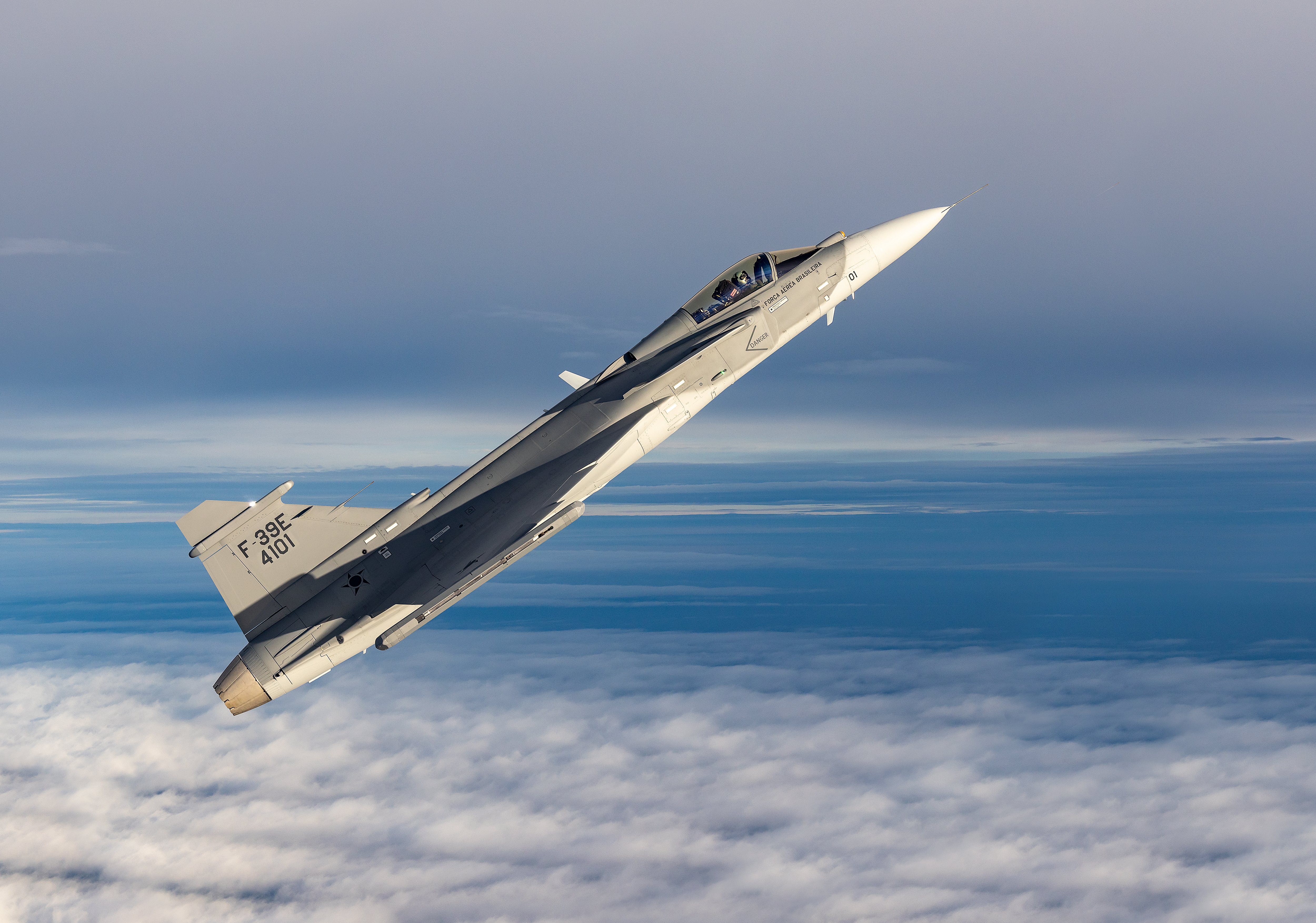
A Brazilian Air Force Gripen E. Saab

Meanwhile, Saab is continuing to expand what the fighter can actually do once it leaves the factory.

Recent work has included a test launch of the Taurus KEPD 350 cruise missile, as well as last year’s integration of Helsing’s Centaur AI agent, which was tested in a beyond-visual-range combat scenario.

🇸🇪 TAURUS LAUNCH
Today a TAURUS KEPD 350 cruise missile was launched from a Swedish JAS 39 Gripen for the first time. The test was conducted at the Vidsel Test Range in Norrbotten.
Today TAURUS is a long-range cruise missile that introduces a new deep-strike capability.
📷 FMV pic.twitter.com/vYcL75Lu4p

— Flygvapnet (@flygvapnet) August 21, 2026

Speaking last week, Johan Segertoft, head of Saab’s Gripen business unit, points to the fighter’s digital architecture as a key enabler of the rapid integration of new capabilities. The company says the Centaur integration took just 10 weeks.

“We chose BVR because it’s one of the most complex things to prove that we could take third-party software and do it, but there’s a lot of things in an aircraft and outside an aircraft that benefit from the advancement of software,” Segertoft said.

Since the Gripen E first flew in 2017, Saab has implemented around 300 capability upgrades, according to Segertoft. He contrasts that with what he describes as a theoretical maximum of around five upgrades for competing aircraft.

The Gripen E used in the Centaur AI trials. Saab

That approach is summed up by Saab’s internal mantra, Segertoft says: “code in the evening, deploy in the morning, learn by lunch.”

The Gripen F test campaign will now move beyond basic systems checks toward progressively more demanding flight conditions. Saab’s Flight Test Center in Sweden will conduct the campaign before the aircraft undergoes the remaining acceptance procedures and is eventually handed over to the Brazilian Air Force.

The first flight therefore represents a milestone not only for Saab’s new two-seat fighter but also for the industrial partnership that produced it. Potentially, that model could be repeated in Canada in the future.

Contact the author: thomas@thewarzone.com

The post Saab’s Gripen F Two-Seater Takes To The Air For The First Time appeared first on TWZ.

  •  

NASA’s Hunt To Replace Its Iconic T-38 Talon Jets Kicks Off

NASA is starting to explore options to fill the gaps that will be left by the eventual retirement of its iconic T-38 Talons. Since the 1960s, NASA has been using the jets to support astronaut training and as chase planes. However, the Talons are aging, supportability is already a problem, and challenges to sustain them further are expected to grow as the U.S. Air Force replaces its T-38 fleet with new T-7A Red Hawks.

The Johnson Space Center (JSC) in Houston, Texas, put out a contracting notice today seeking information about potential T-38 successors. NASA currently has 25 Talons in its inventory, according to the Federal Aviation Administration’s (FAA) online database.

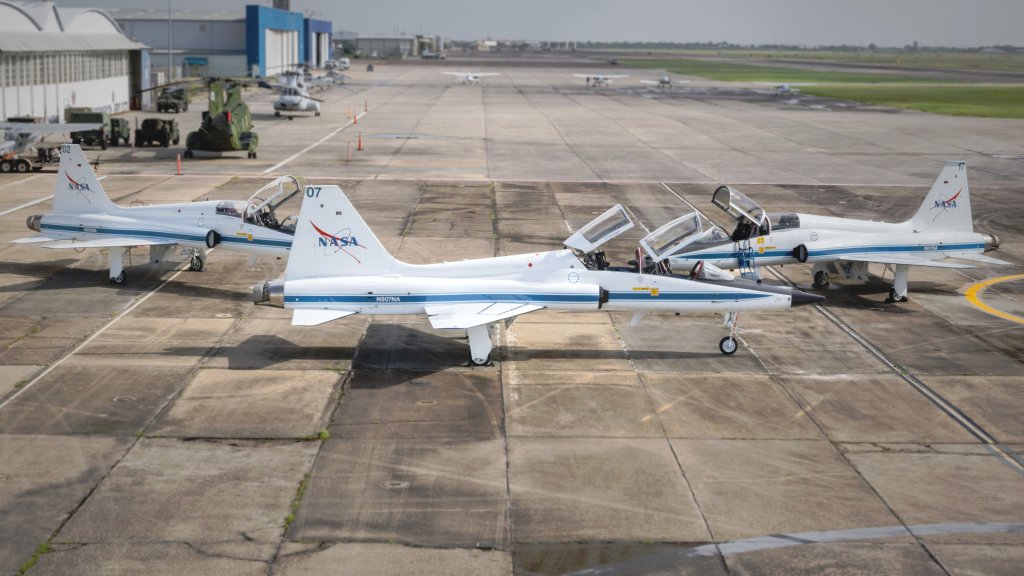
A trio of NASA T-38s at the Johnson Space Center (JSC) in Houston, Texas. NASA

“NASA JSC is conducting market research to obtain industry information regarding availability, capability, schedule, sustainment models, and cost efficacy for modern high-performance jet aircraft that could be used in evaluation and an evaluation program for supporting NASA’s astronaut SFRT [Spaceflight Readiness Training] requirements,” the notice explains. “NASA has operated the T-38N fleet in support of astronaut SFRT for several decades. With the U.S. Air Force planning to retire the T‑38 fleet in the 2030-2035 timeframe, NASA is evaluating options to transition to a more modern high-performance aircraft.”

The T-38N variant is specific to NASA and distinct from the T-38A/B/C variants the Air Force currently operates. The U.S. Naval Test Pilot School also has a handful of T-38Cs. Both the N and C variants are based on the original T-38A, which first entered Air Force service in 1961. The Air Force bailed the first Talons to NASA three years later.

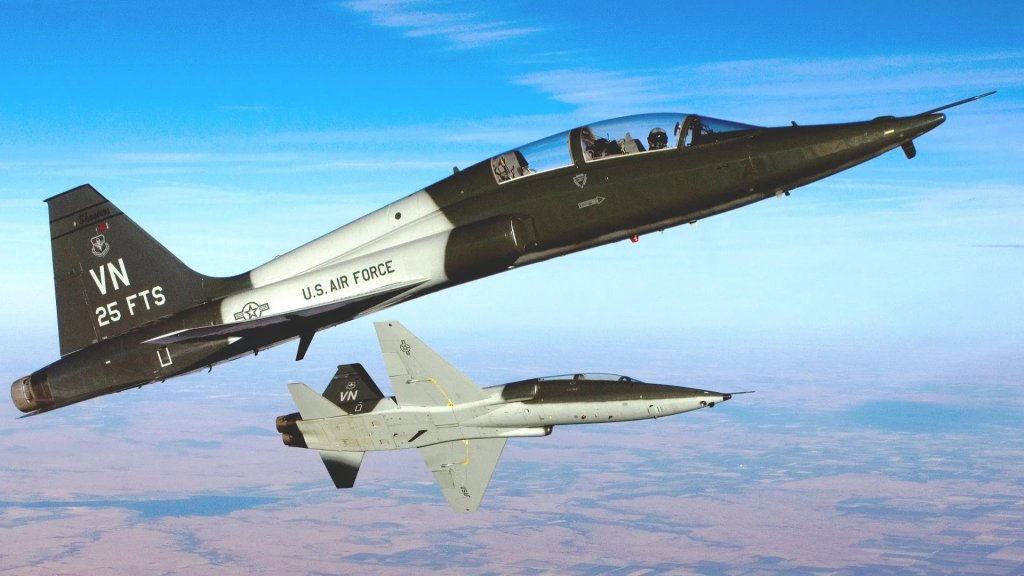
A pair of US Air Force T-38 Talon jet trainers. USAF

The N models have received various upgrades over the years, including the integration of new modern ‘glass cockpits’ with digital displays starting in the 1990s. As of 2011, compared to contemporary C variants, “the T-38N aircraft includes differences in communications and navigation, such as the addition of weather radar, a data link weather system, the terrain avoidance and warning system, the terminal collision avoidance system, GPS with localizer performance and vertical guidance approach capability, and redesigned electrical, inlet, ejector nozzle, and flight management systems,” according to a report from the National Research Council of the National Academies of Sciences, Engineering, and Medicine.

Now, “NASA is seeking information on existing, production, or near-production high-performance jet aircraft capable of supporting SFRT,” per today’s contracting notice from the JSC. “NASA is not restricting industry responses to a specific performance class or aircraft design heritage.”

The notice does provide the following list of desired characteristics:

  • “High reliability with established maintenance documentation”
  • “Self-starting engine capability”
  • “Performance comparable to a modern jet trainer/light fighter aircraft”
  • “Capability to support dynamic maneuvering, formation flying, and cross-country navigation”
  • “Dual-seat, dual-control configuration (tandem or side-by-side)”
  • “Modern avionics compatible with instrument flight operations”
  • “Aircraft capable of being single-pilot qualified from either seat is highly desired”

“Prior to any fleet transition, NASA seeks to conduct a limited-scope evaluation program using a small number of modern aircraft,” the notice adds. “This evaluation program is not a full fleet buy or replacement. It is intended to operate a small number of aircraft within JSC’s existing operational framework to assess compatibility, logistics, cost efficacy, and training impact.”

Furthermore, “NASA anticipates evaluating a small number of aircraft over a multi-year period,” it continues. “NASA requests information on potential procurement options such as lease, lease-to-own, barter, or other arrangements due to limited upfront procurement funding.”

A quartet of NASA T-38 jets flies in formation past Launch Pad 39B at NASA’s Kennedy Space Center. NASA

NASA is looking to be solely responsible for flight operations of the jets, but is expecting contractors to handle maintenance, whether the aircraft are government-owned or not.

The contracting notice does also say that “NASA is open to operating the aircraft under reasonable flight hour limits, maneuver restrictions, or operational envelopes consistent with contractor recommendations.”

Just what kind of limits and restrictions NASA might be willing to accept is unclear. The entire reason for operating the T-38s now is to offer a high-performance platform with a good degree of maneuverability to support the SRFT requirements. These are attributes that are also valuable when flying as a chase plane and otherwise supporting flight research and test activities.

NASA certainly seems to be willing to consider a wide range of potential operations, both in terms of aircraft and operating schemes. When Boeing won the Air Force’s T-X competition to replace the T-38 with what became the T-7A, TWZ noted the possibility that other Talon operators, including NASA, could follow suit.

One of the US Air Force’s New T-7A Red Hawks. USAF The first pre-production T-7A lands at Edwards Air Force Base. USAF

There are a wide variety of other jet trainers available on the open market. This includes Korea Aerospace Industries’ (KAI) T-50, a design capable of supersonic flight that has been offered on the U.S. market before through a partnership with Lockheed Martin. A version of the T-50 was one of the losing entrants in the Air Force’s T-X competition.

There are several private companies that operate relevant jet trainer types to provide flight training and ‘red air’ aggressor services, too. NASA’s current administrator, Jared Isaacman, founded one of those companies, Draken International, making him once the owner of the world’s largest private air force. He has also personally bought various demilitarized fighters and jet trainers over the years. During this year’s July 4th celebrations in Washington, D.C., he somewhat controversially flew over the nation’s capital in one of the F-5 Tiger II jets that he owns.

With expectations that funding for new jet trainers will be limited, at least initially, NASA could well seek to enter into some kind of new arrangement with the Air Force (or another branch of the U.S. military) just like it did in the 1960s. It’s also worth noting here that the T-7A program continues to suffer significant delays due to technical issues and other factors. This has led the Air Force to repeatedly push back its own T-38 replacement timeline. The service’s original goal was to reach initial operational capability with the Red Hawk in October of last year, but it is now targeting August 2027 to achieve that milestone. A full-rate production decision is now not expected to come until January 2029. So, the prospect of NASA actually getting T-7s anytime before the USAF gets all the jets it badly needs is questionable.

There are also no indications that NASA’s SFRT requirements will slow in the meantime, either. If anything, these training demands could grow as work continues toward the resumption of crewed missions to the Moon under the Artemis program. The Artemis IV mission, currently scheduled for 2028, is set to be the first time astronauts have set foot on the lunar surface since Apollo 17 in 1972.

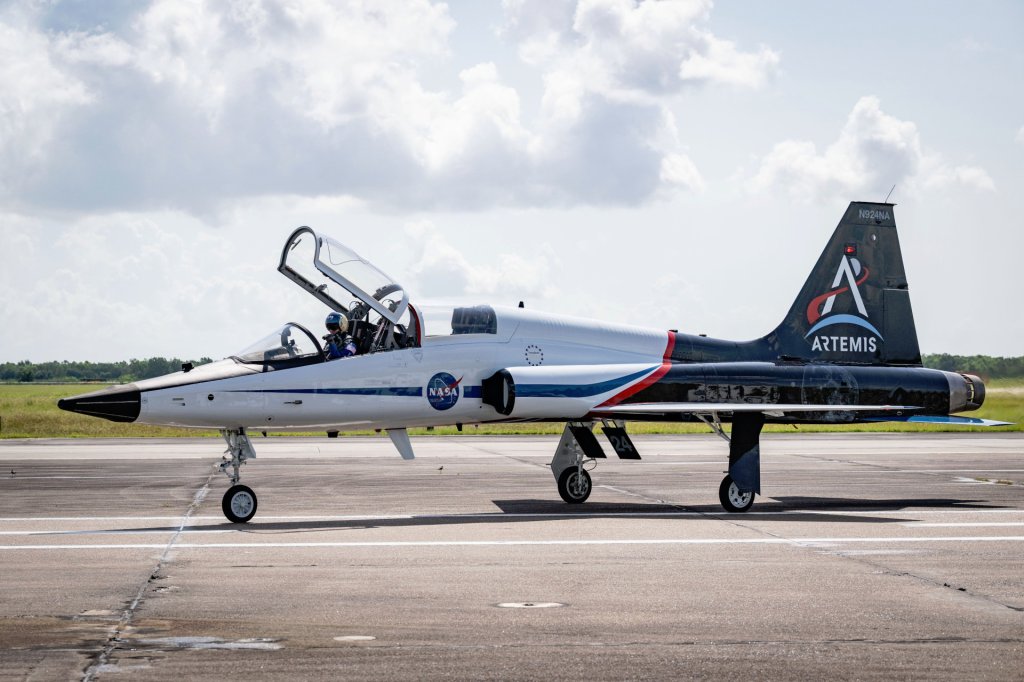
A NASA T-38 wearing a special Artemis program paint scheme. NASA

From the wording of today’s contracting notice from JSC, NASA is still some years away from making a final decision on what will come after the T-38N, but the hunt is now on.

Contact the author: joe@twz.com

The post NASA’s Hunt To Replace Its Iconic T-38 Talon Jets Kicks Off appeared first on TWZ.

  •  
❌