❌

Reading view

Site Expansions Underpin Lockheed Martin’s Munitions Production Ramp

As spades went into the ground to signal the start of construction of the new Building 47 at Lockheed Martin’s Munitions Production Center in Troy, Alabama, it marked a significant development in accelerating production of the company’s Terminal High Altitude Area Defense interceptor, better known as THAAD. The expansion of factory space in Troy is a key element of the company’s $8-9-billion commitment to expand its munitions production footprint across the United States.

The Department of War’s Acquisition Transformation Strategy is part of a long-term plan that signals clear demand for critical munitions and it enables industry to confidently invest in facilities and workforce development, along with supply chain expansion and advanced manufacturing capabilities. In addition to enlarging the facility in Troy, Lockheed Martin is also growing its plant in Camden, Arkansas, which is another site that’s vital for building more munitions at a faster pace.
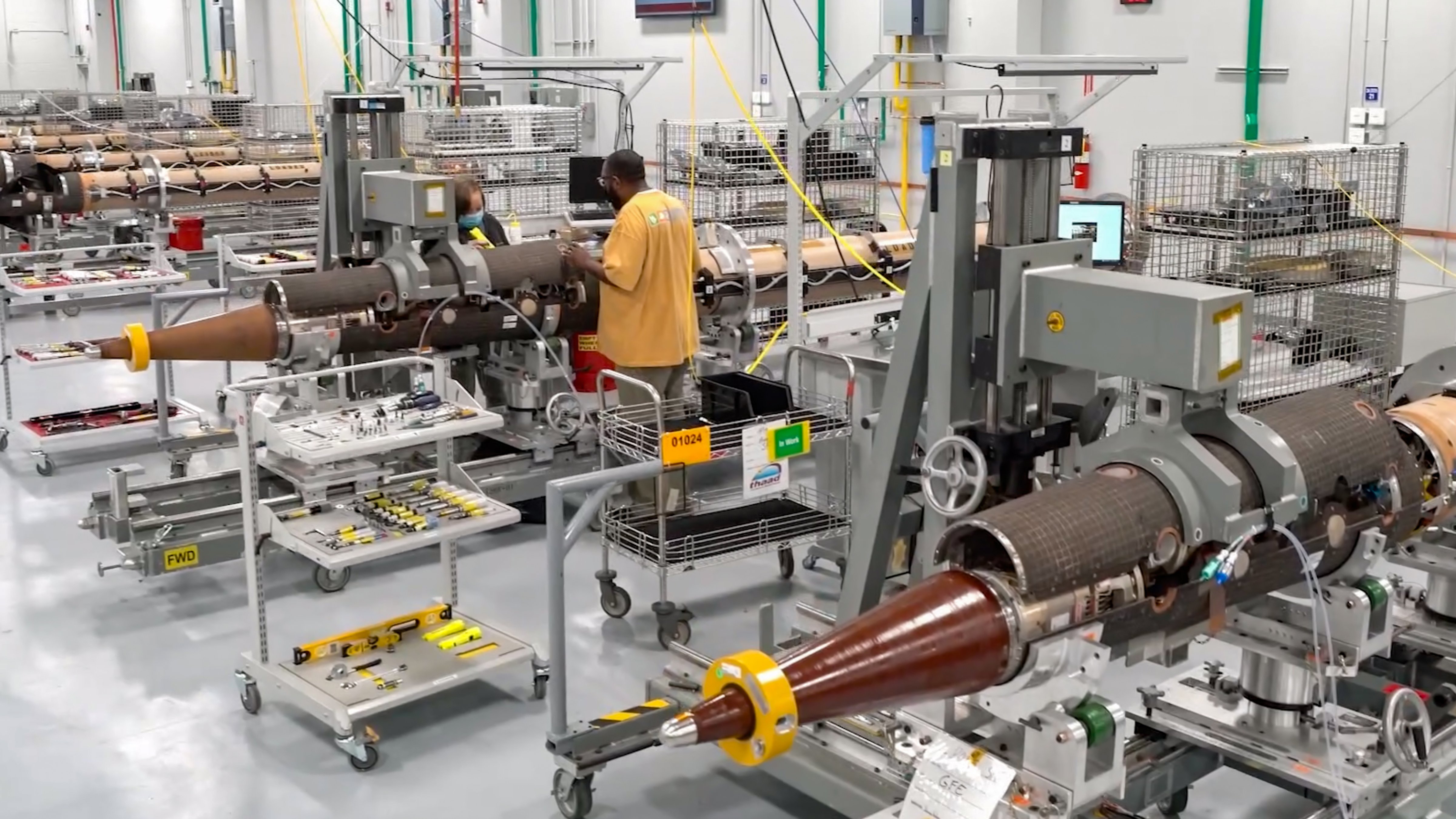
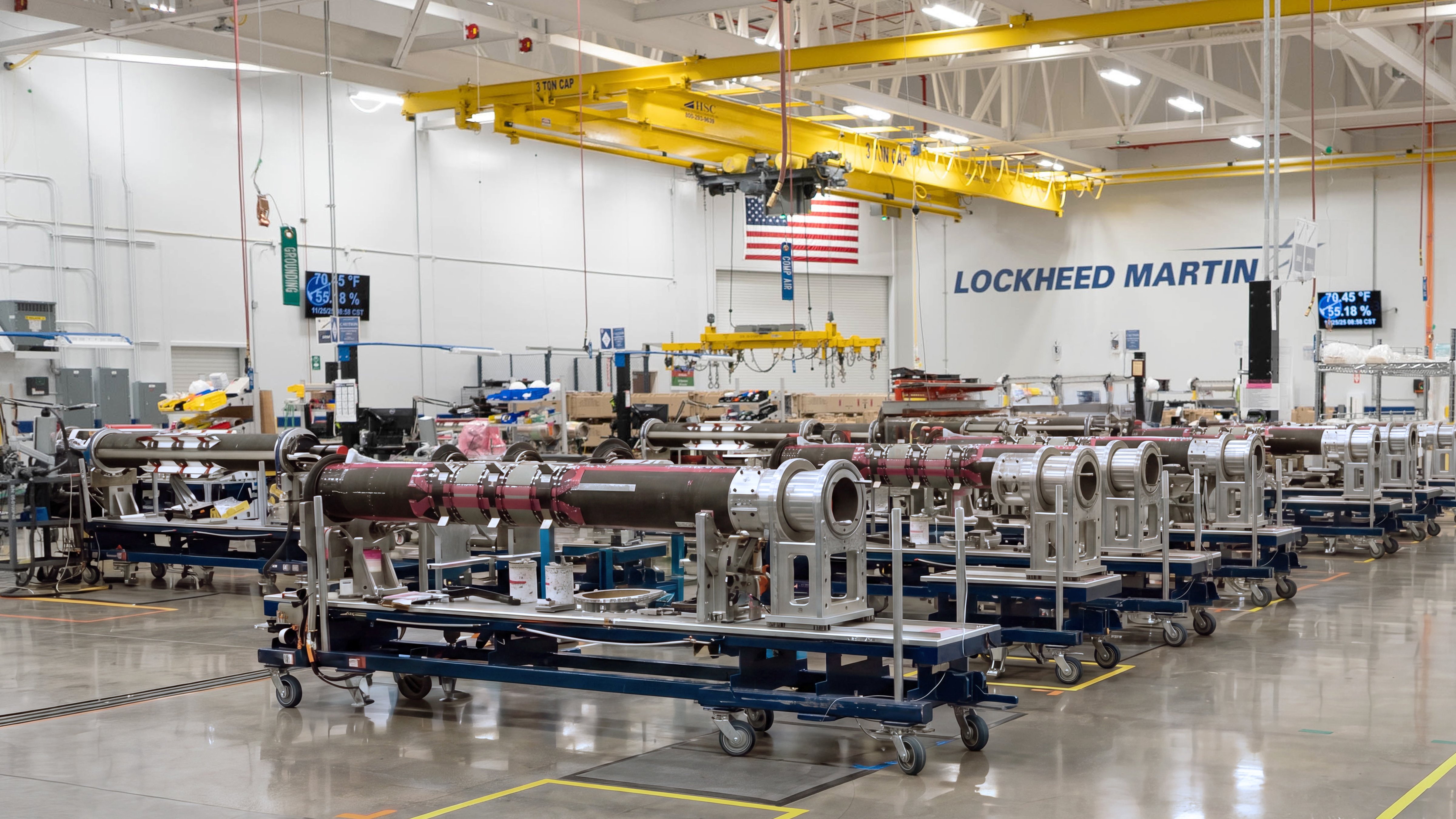
The THAAD production line in Troy, Alabama. Lockheed Martin

“My job is to interface and collaborate with the Department of War in achieving the call to action to produce these critical munitions, not only at speed but also at scale, multiplying the current production rates by two, three, or even four times the current rates,” Dan Nimblett, Lockheed Martin’s vice president for Munitions Acceleration Integration told TWZ on the ground in Troy during the groundbreaking event.

“Fundamentally what’s occurred changes how acquisition works [with] long term demand agreements. These long term procurement agreements enable Lockheed Martin and our supply base to make the necessary investments with confidence of the future demand. This allows us to make the investments not only in our people and our facilities, but in the technology necessary to build [these munitions] at a scale and a speed that’s relevant to the threat today,” explained Nimblett.

Lockheed Martin was the first company in the U.S. defense industry to announce a framework agreement with the DoW for munitions acceleration of high-demand missiles – initially tripling production capacity of the PAC-3 Missile Segment Enhancement (MSE) interceptor, followed by a second agreement to quadruple the production capacity of advanced THAAD interceptors. These two defensive missiles are cornerstones of a layered air and missile defense system, and both have been integrated together via Joint All-Domain Operations, including with the U.S. Army’s Integrated Air and Missile Defense Battle Command System (IBCS).

In response to the DoW’s call to action, the company has already invested more than $2 billion in its production facilities and in the related tooling, its key suppliers, and its workforce in order to accelerate production rates.

PAC-3 MSE in production in Camden, Arkansas. Lockheed Martin

Lockheed Martin plans to effectively double the factory footprint in Troy and dramatically increase the workforce. “We’re going to increase that [workforce] by drawing in college students, high school students, veterans, everybody’s welcome,” explains Jason Reynolds, vice president and general manager for integrated air and missile defense. “When they come to Lockheed Martin, they receive training, they get opportunity, and because these programs are on a ramp and in production in such high demand, this is where you come to start your career and you [can] work here for a long time.”

Lockheed Martin currently employs around 1,100 workers at its Camden site, but this is also growing. The Camden training center is seen as being critical in providing the swift increase in skilled operators needed to support this acceleration. “We work closely with the state of Arkansas as well on looking at what else we can do in the community and the infrastructure in that community to support people moving, hopefully into Camden as we ramp up,” says Reynolds.

“People here [in Troy] really know their work matters. It’s meaningful for both the community as well as for our national defense. So, we’re really proud of our employees and we’re on a growth trajectory. We’re hiring and we want as many qualified people to come join our team as possible.”

The Camden site is also accelerating its work on the long-range Precision Strike Missile (PrSM), which is also set to quadruple production over the next few years. Reynolds added that building missiles faster using automation and advanced manufacturing technologies, plus increasing the production line capacity, are some of the vital means for success.
Lockheed Martin is developing the new PAC-3 Adapted Capability Effector (ACE) to help build ammunition reserves faster. Lockheed Martin

“PAC-3 MSE and THAAD are the most capable air defense interceptors on the planet. They’re in extreme demand [and] we’re doing everything possible,” says Reynolds. “With PAC-3, we have been doubling that production over the last four years and now, like I said, we’re going to triple it. We’re working very carefully with our suppliers, with the U.S. government and with our partners and allies all around the world to get all the parts in and get them into factories like you see behind us today to assemble them and get them out to the warfighter as quickly as possible.”

Another way Lockheed Martin is accelerating the delivery of advanced air defense capabilities is the through the introduction this summer of the PAC-3 Adapted Capability Effector, or PAC-3 ACE. This new missile leverages the PAC-3 fire-control system and provides for full integration with the Patriot weapon suite.

The main differentiator of PAC-3 ACE is that it would be produced at less than half the unit cost of MSE and first flight could occur within 18 months. A core part of the rapid fielding strategy is an international, joint-development model. Lockheed Martin is partnering with both American and European industry, sharing production lines, supply chains and expertise.

Lockheed Martin says PAC-3  ACE provides a “cost-effective, multi-threat solution.” The interceptor is engineered to engage a broad spectrum of air-breathing threats, cruise missiles, and both short and medium-range ballistic missiles. By offering a low-cost “kill” per-engagement, it is designed to address the current climate that demands deeper ammunition reserves without compromising on performance.

The keys to munitions acceleration

This year, Lockheed Martin has made significant progress in a series of production acceleration projects for munitions programs under its Missiles and Fire Control division. “I was supposed to retire last year. I’m here because this is the most exciting time in the 30 years I’ve been in this industry,” says Dan Nimblett. “These long-term agreements provide us the certainty to enable us to make these investments.”

“What recent conflicts have demonstrated is that Lockheed Martin and the American defense industrial base never lost the technological edge. The technology and the capability has always been there – we have the best systems in the world. We’ve proven that through real world performance.”

Nimblett explained that Lockheed Martin’s supply chain is following suit, and that they are all now investing in similar ways to ensure they meet the demand signals. “We’re evaluating how we produce and increase additive manufacturing and robotics. We’re also looking at how we develop, which I think is a fundamental part of getting capability into the warfighters’ hands at a speed and scale that’s relevant to the threat.”

A PrSM test firing during the missile’s development. Lockheed Martin

Having received Milestone C approval from the U.S. Army in July 2025, PrSM manufacturing has relied on a high level of automation. PrSM was engineered from the start for automated, robot-driven production – automating tasks once done by hand – and that early-stage streamlining is paying dividends as Lockheed Martin seeks to accelerate output.

“We have a lot of robotics built into our munitions production,” explains Gaylia Campbell, vice president, Tactical Missiles. “A lot of times we use robotics to help increase the safety of the assembly, like an explosive charge that has to be integrated into a munition, and we have a robotic arm that places that and tests the placement. We also robotically paint and coat [PrSM]. So, we have a lot of robotics already in Camden and that’s really going to help us with this ramp-up in production – the fact that so much of it is [already] automated.”

Campbell emphasizes that PrSM entered production with a mindset of acceleration. “We got PrSM through preliminary and critical design reviews, and into first flight in times roughly half of what it would normally have taken us. We’ve been amazingly successful on all these flights. Those early [test] flights went off one after the other during the COVID-19 pandemic, at a time when there were a lot of challenges for all of us in our daily lives, and yet we were able to continue to fly and prove the operational performance.”

Lockheed Martin is reshaping the munitions supply chain with an unprecedented slate of manufacturing initiatives that pull together new facilities, strategic partnerships, and workforce development. The company is also expanding a number of its other production facilities, such as a $60-million investment in its complex in Archbald, Pennsylvania, that will add 700 jobs in support of high‑priority programs including PrSM, THAAD, PAC‑3, and Apache sensors. In Orlando, Florida, three legacy paint bays have been merged into a high‑performance shop that can retool a work cell in hours rather than weeks, while Ocala’s new Progressive Work Smart Assembly Line has cut seeker and mission control unit build times by roughly 50 percent.
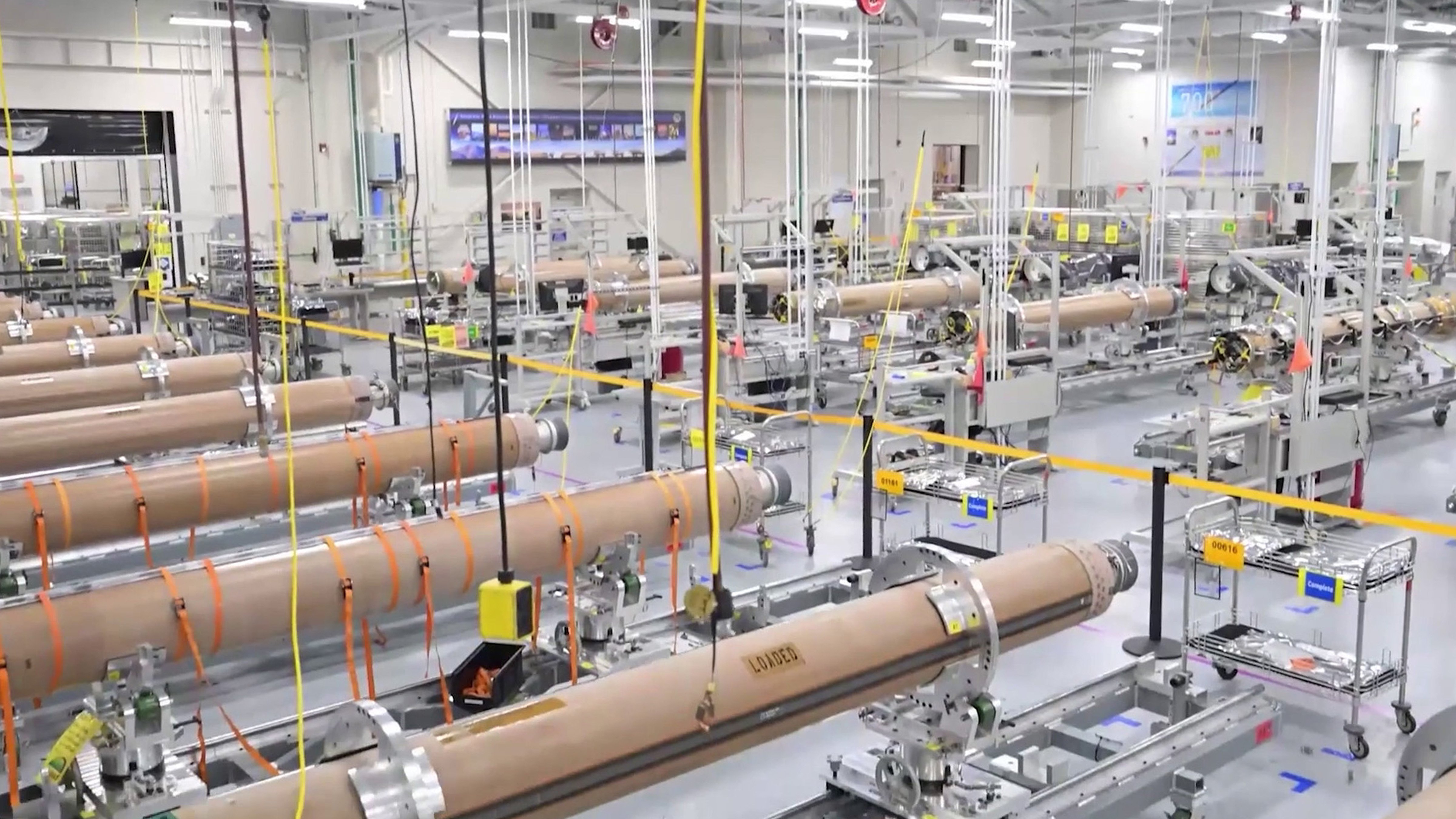
Production capacity for THAAD is expanding in Troy, Alabama. Lockheed Martin

A partnership with General Motors will bring high‑rate commercial manufacturing expertise into Lockheed Martin’s production processes, and the new Rapid Fielding Center in Grand Prairie, Texas, is tasked to reduce traditional manufacturing development timelines. What once took years of design, testing and tooling is aimed to be prototyped, fabricated and validated in a matter of months.

Echoing endorsement of the DoW’s initiative, Campbell underscores that knowing what the demand signal will be is a critical differentiator when it comes to production ramp-up. “We can plan for some of those really critical rare earth minerals that we need, the batteries for example in our munitions, we need certain rare earth minerals for that. We need to know the total demand signal and that means we can negotiate with the suppliers and guarantee that we have access. That can really help us accelerate.”

To support the wider munitions efforts Lockheed Martin is also investing in solid rocket motor development and production, as well as lower-tier parts that go into solid rocket motors. “We’re working with different suppliers to develop new sources of supply for solid rocket motors,” says Campbell. “We’re investigating heavily right now in designing and prototyping several motors that we plan to test and take to production, and that really will develop a whole new supply chain and will really be critical for all munitions production.”

Having a five-year contract instead of annual contracts allows the manufacturer to have far more buying power to secure sub-components for a far better price point. “I can go and invest. Invest in more capacity, invest in my supplier’s capacity,” explains Campbell.

“Production is all about velocity. Keeping the line moving and not having to stop because we don’t have a part. Being able to order bigger quantities of things up front is really huge when it comes to acceleration.”

Contact the author: Jamie.Hunter@teamrecurrent.io

The post Site Expansions Underpin Lockheed Martin’s Munitions Production Ramp appeared first on TWZ.
  •  

Israeli LORA Ballistic Missiles Fired From German Frigate

The German Navy has demonstrated the launch of Israel Aerospace Industries’ (IAI) LORA ballistic missile from an F125 frigate, with at least two missiles fired from the Sachsen-Anhalt during a test in the North Atlantic last night. The demonstration points to a potentially significant new long-range strike capability for Germany’s surface fleet, should it be adopted.

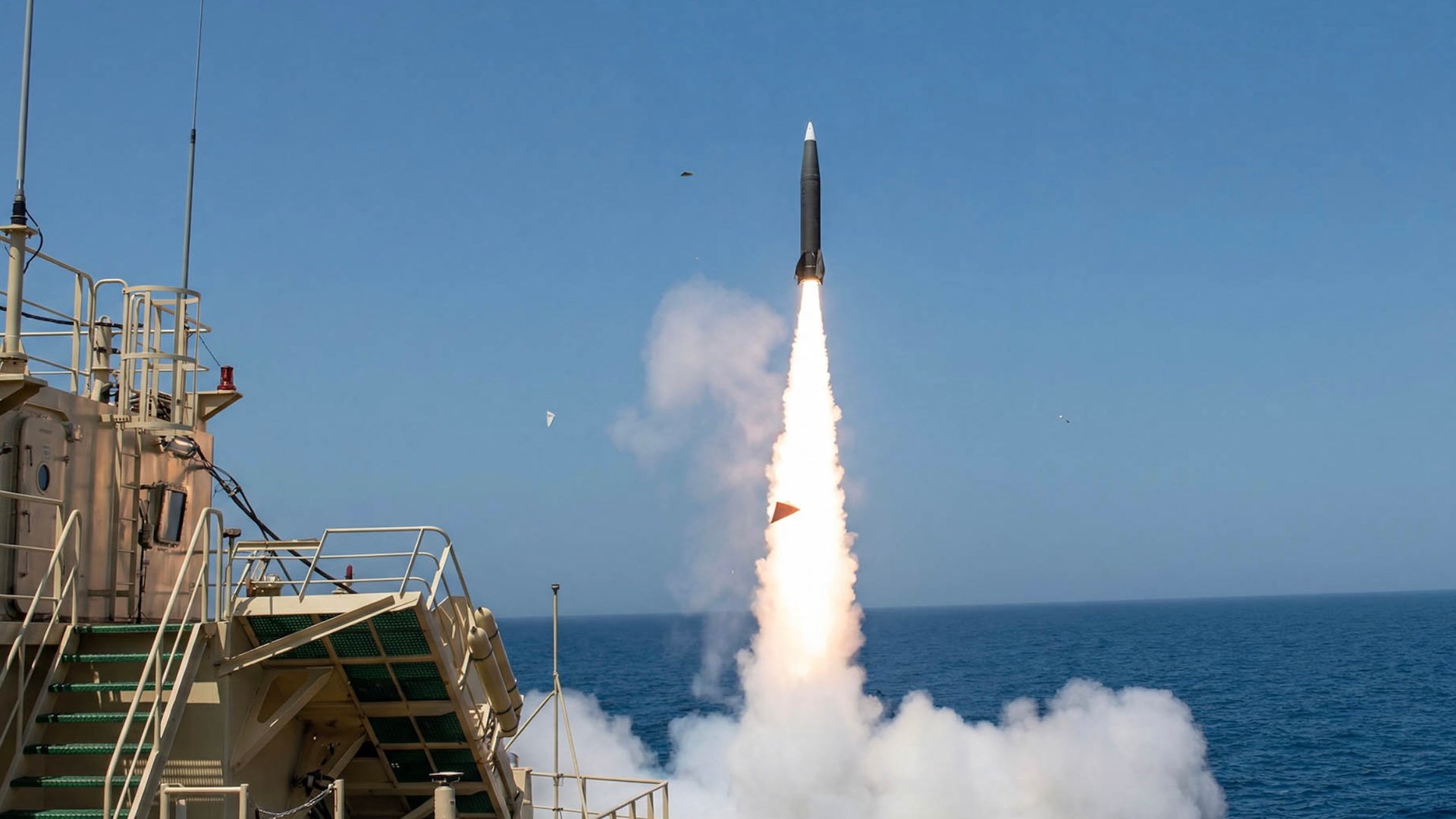
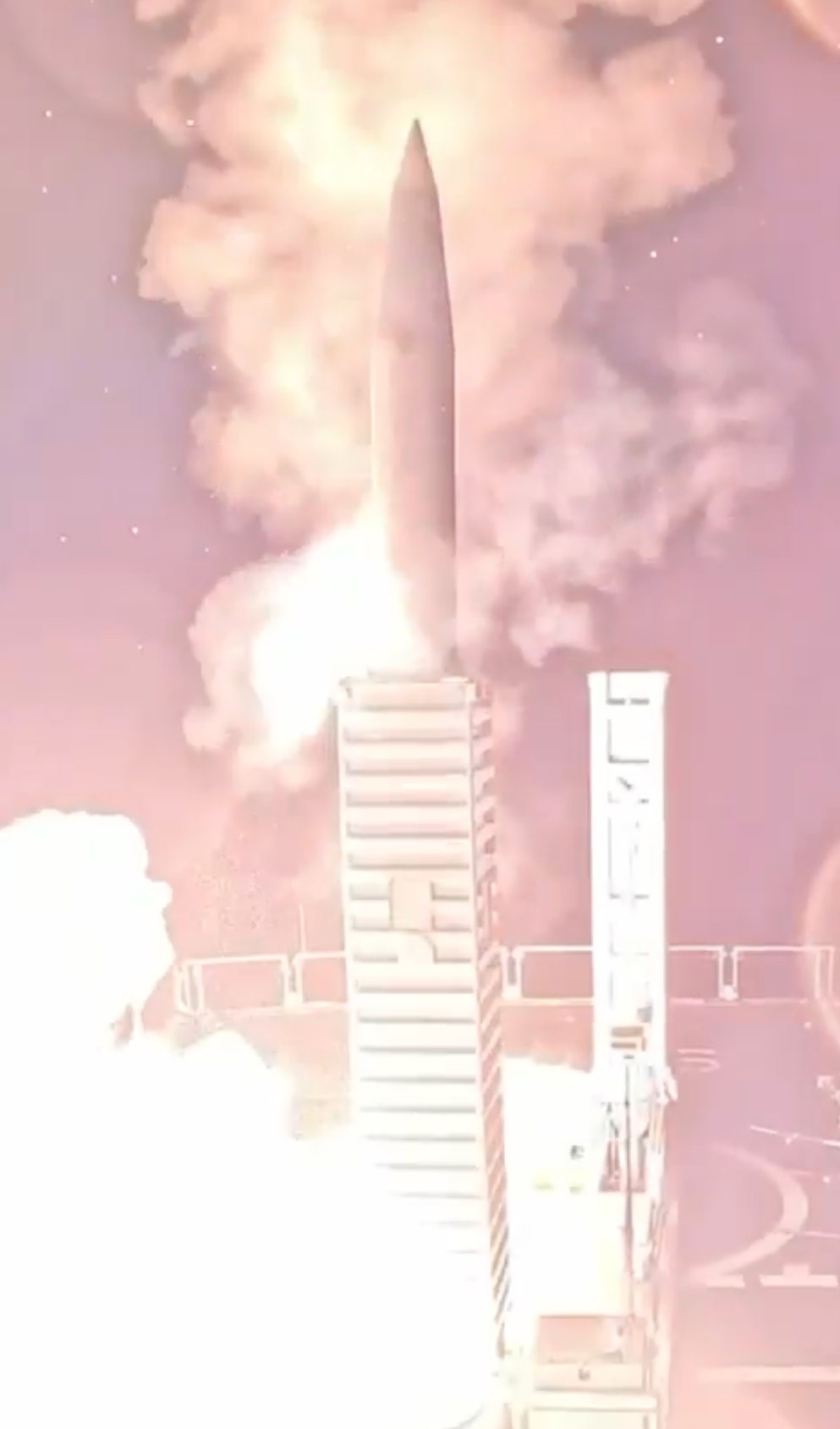
A LORA missile leaves the launch canister on the flight deck of the frigate. German Ministry of Defense/screencap

Video released by the German Ministry of Defense alongside the test shows two LORA launch canisters positioned on the frigate’s flight deck, followed by a missile launching from each container.

🇩🇪Die Fregatte „Sachsen-Anhalt" (Klasse 125) hat im Nordatlantik mindestens zwei ballistische Raketen vom Typ LORA (IAI) verschossen – gestartet aus Kanistern auf dem Flugdeck. Die Erprobung erfolgte im Rahmen der OPEX-Serie.

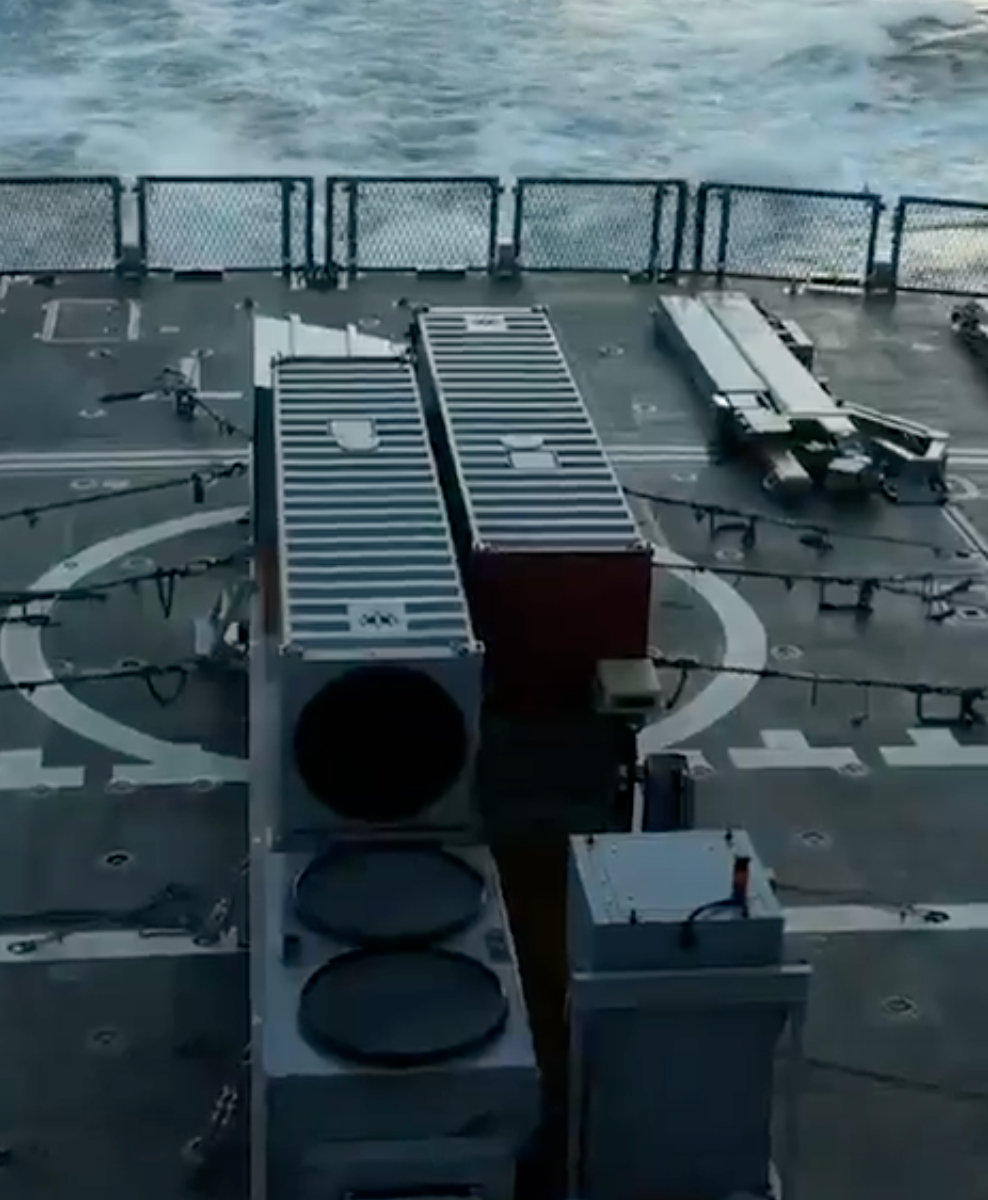
Video: Deutsche Marine pic.twitter.com/eV3yzjrcgg

— Clemens Speer (@clemens_speer) September 2, 2026

The launches were conducted as part of the Bundeswehr’s operational experimentation (OPEX) program in cooperation with the Bundeswehr Innovation Center in Erding. Reportedly, two German frigates were deployed to the waters between Ireland and Iceland for the test, and a warning was issued to maritime and air traffic 45 days beforehand.

The test marks a notable expansion of the weapons capabilities demonstrated by Germany’s F125 frigates and could provide a pathway toward a new long-range naval strike capability.

A LORA canister is raised into the launch position. German Ministry of Defense/screencap

German Navy Inspector General Vice Adm. Jan Christian Kaack described the event in a statement distributed through the Bundeswehr’s official WhatsApp channel:

“With the successful launch of a ballistic missile last night in the North Atlantic, we have made naval history. I am extremely pleased with this achievement. The system can be successfully deployed by our units, and its potential range exceeds anything we have seen before. For the protection of Germany and our allies, this test marks a new chapter in deterrence and defense readiness at sea.”

IAI also confirmed the results of the test, stating that both missiles followed their planned trajectories and struck their targets with high precision.

The exact targets, engagement ranges, flight profiles, and missile configurations used during the test have not been disclosed.

There is no possibility that Sachsen-Anhalt will retain the launchers in their current location, since they mean the F125’s flight deck cannot be used, depriving it of a critical capability. Potentially, they could be installed elsewhere on the vessel, but, moreover, it is unclear if the current experiment will lead to a formal acquisition program.

The two LORA canisters on the flight deck of the frigate. German Ministry of Defense/screencap

At the same time, LORA is a substantially different weapon from the anti-ship and land attack cruise missiles normally associated with modern surface combatants.

Available for ship- and ground-launch, the missile is approximately 17 feet long, 25 inches in diameter, and weighs around 3,500 pounds. It follows a quasi-ballistic trajectory and has an officially stated range of approximately 60 to 270 miles. An air-launched derivative has also been developed.

A weapon capable of reaching targets hundreds of miles away would give German surface combatants a long-range strike option extending far beyond the range of traditional naval guns and many shorter-range precision weapons.

Its quasi-ballistic flight profile also differentiates LORA from a conventional cruise missile. A ballistic-style trajectory allows the weapon to cover distance rapidly and presents an air-defense challenge different from that posed by a low-flying cruise missile. This type of missile also impacts its target with much greater kinetic energy, making it especially useful for striking more hardened target sets.

LORA uses a navigation architecture combining GNSS satellite navigation with an inertial navigation system and can achieve a circular error probable, or CEP, of approximately 33 feet. IAI also says LORA can be launched within minutes, including from unprepared positions, and can attack a target within its range in less than 10 minutes after a decision to launch.

Back in 2017, as you can read about here, IAI successfully test-fired LORA from a containerized launcher on the back of a truck sitting on the deck of a cargo ship. The missile successfully struck a target on land.

What is less clear is its ability to strike targets at sea.

A long-range anti-surface application would be particularly interesting for the German Navy, although the weapon, in its basic form, has no terminal seeker. This limits the missile to use against targets with a fixed location, rather than autonomously finding and tracking a maneuvering warship during the terminal phase of flight.

In a 2020 test, IAI demonstrated firing two LORA missiles from a ship before hitting separate floating targets at approximately 60 miles and 250 miles. However, striking a static floating target is different from an enemy warship that is maneuvering and potentially employing electronic warfare and air defenses.

Regardless, Germany has an even clearer requirement for land attack capabilities, which LORA is fully capable of fulfilling, as we will return to later.

As for Germany’s F125 frigates, these were designed primarily for long-duration deployments, maritime security, stabilization operations, and other missions requiring a persistent naval presence. Their overall lack of firepower is something we have examined in detail before now.

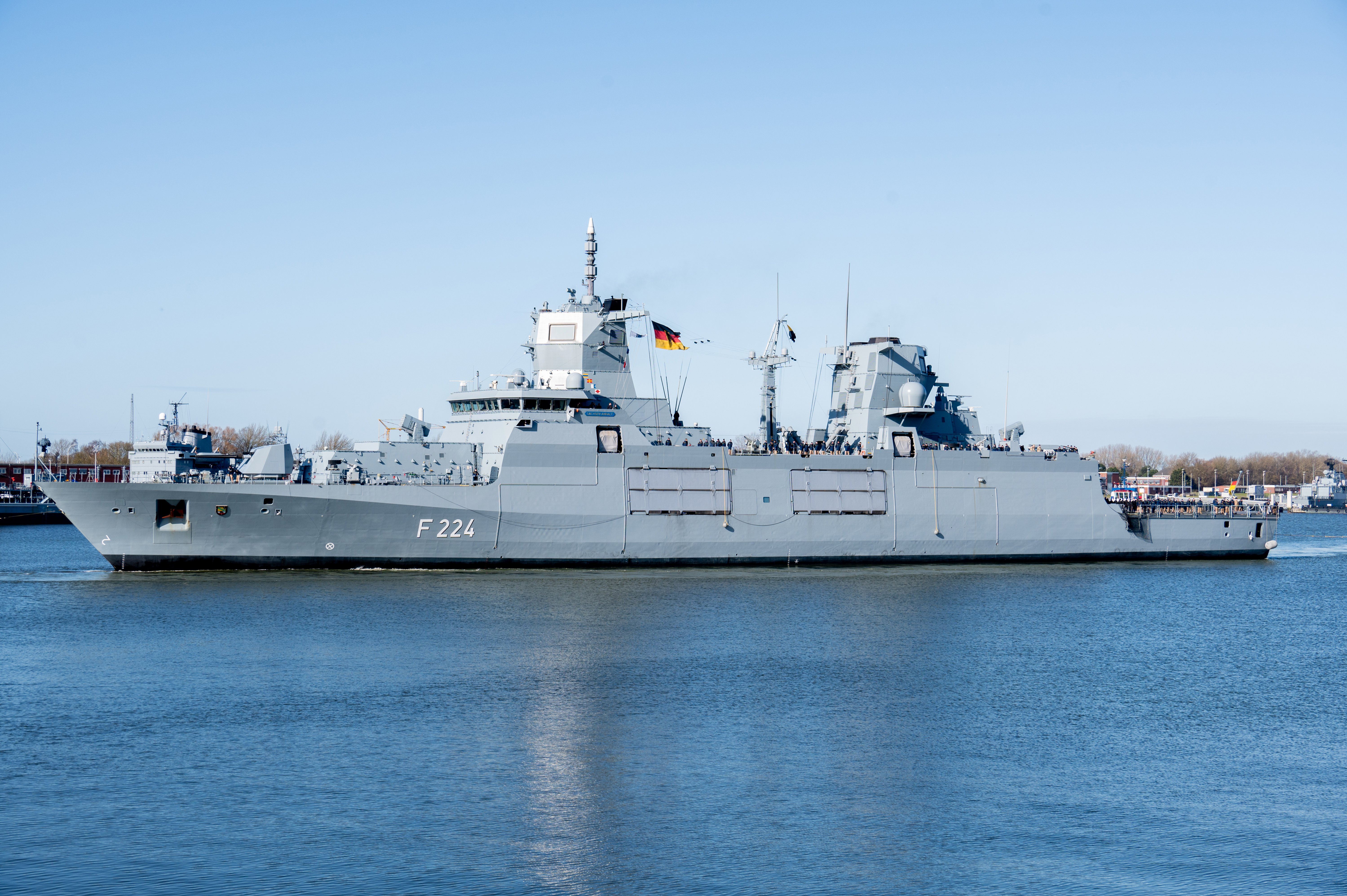
01 March 2026, Lower Saxony, Wilhelmshaven: The frigate "Sachsen-Anhalt" (F 224) arrives in port at the naval base after a deployment lasting several months. The crew supported the Lebanese Navy off the coast of Lebanon with maritime surveillance and training as part of the Unifil mission. Photo: Hauke-Christian Dittrich/dpa (Photo by Hauke-Christian Dittrich/picture alliance via Getty Images)
The frigate Sachsen-Anhalt (F 224) arrives in port. Photo by Hauke-Christian Dittrich/picture alliance via Getty Images picture alliance

The latest test involving the Sachsen-Anhalt is in line with the Bundeswehr’s OPEX framework, which is intended to evaluate emerging technologies and operational concepts under realistic conditions before decisions are made about wider adoption.

There is precedent for such experimentation leading to operational capabilities. Israeli-developed systems, including IAI’s Blue Whale autonomous underwater vehicle, have previously been evaluated through German naval experimentation efforts and subsequently moved toward formal adoption.

As well as the four F125 hulls, Germany might look to incorporate LORA from the start on its future F127 multi-purpose frigates and/or its planned Large Remote Missile Vessels (LRMV), uncrewed vessels that will serve as arsenal ship ‘wingmen,’ supporting conventional surface combatants.

A highly provisional diagram shows the F127 frigate (top) and the LRMV (below). German Navy

It is worth noting that Germany has recently acquired various other Israeli-made missile and rocket systems. These include the Arrow 3 anti-ballistic missile system — the largest-ever Israeli defense export deal — and the PULS multiple rocket launcher. A German purchase of the land-based version of LORA would also be an option, with the truck-mounted system also able to be launched from ships at sea.

Meanwhile, Germany is a major provider of weapons systems to Israel, among them its most powerful surface combatants and submarines.

The LORA test also reflects a broader European push toward longer-range precision fires.

Russia’s war in Ukraine has underscored the importance of ballistic and cruise missiles, while NATO countries have increasingly sought weapons capable of holding targets at greater distances at risk.

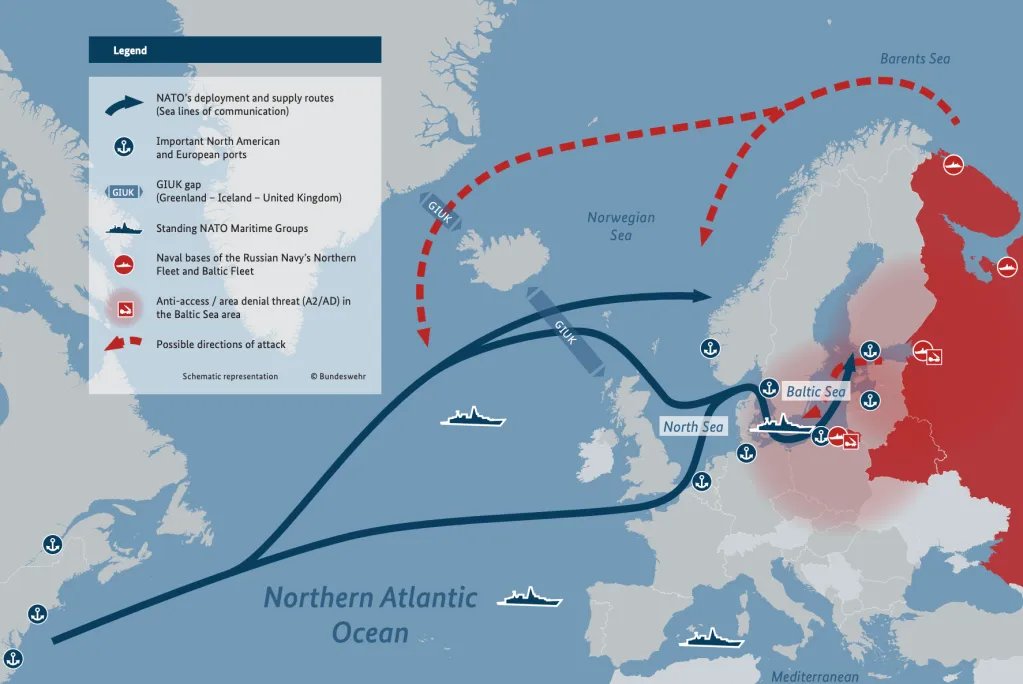
Key German Navy operating areas, including likely Russian attack routes. German Navy

Germany has historically possessed comparatively limited deep-strike capability. The Bundeswehr is now working to expand its ability to conduct long-range precision engagement, both independently and within NATO structures. This includes planned procurement of land-based Tomahawk cruise missiles, with a range exceeding 1,000 miles depending on the exact configuration.

Very deliberate NATO messaging right here – interesting to see the alliance using this kind of signalling https://t.co/BYvpzkq0Vq

— Deborah Haynes (@haynesdeborah) September 2, 2026

A naval LORA capability could add another layer to that effort and would allow Germany to distribute long-range fires across surface combatants, complicating an adversary’s targeting problem while giving its naval forces a more meaningful role in high-end combat operations. With the security situation in Europe deteriorating, the potential deterrence factor that such a weapon would bring to Germany, and to NATO, should also not be underestimated.

Contact the author: thomas@thewarzone.com

The post Israeli LORA Ballistic Missiles Fired From German Frigate appeared first on TWZ.

  •  
  •  

Bacon’s Rebellion, the Colonial Virginia Civil War Considered the Origin of American Racism

It is clear that ethnic differences, like religious ones, have been the origin of countless conflicts throughout the world from Antiquity to the present day. It is not surprising, then, that this also occurred when the Old and New Worlds established definitive contact after Columbus’s arrival in 1492. These differences manifested in Spanish America through […]

  •  

Minister for European Affairs outlines plans for the work of Ireland’s EU Presidency

European Affairs Minister Thomas Byrne TD (pictured), has highlighted key policy objectives for the work of the Irish EU Presidency over the coming months as the EU institutions prepare to resume their normal programme of activities following the summer break. 
 
In his role as chair of the General Affairs Council, Minister Byrne will lead discussions at EU level on several areas of priority for the Irish Presidency, including the approach to the EU’s next long-term budget and the simplification of EU rules, an important aspect of the Union’s competitiveness agenda.

The Irish EU Presidency, which began its term on 1 July, is focusing its work on three core thematic priorities of competitiveness, values and security. Substantial progress has already been made in the opening weeks of the Presidency on policy and legislative initiatives across these three priority areas.

Minister Byrne said: “We have been very pleased with the results we have already been able to deliver early in our Presidency term. For example, in July I chaired four Inter-Governmental Conferences to advance the EU accession processes of Albania, Moldova, Montenegro and Ukraine - the largest number of accession conferences held in a single day in over two decades. Across many areas of policy, there is scope for us to achieve really significant progress between now and the conclusion of our term at the end of the year, and we are determined to ensure the Irish Presidency delivers meaningful outcomes for citizens across Europe.”

As part of Ireland’s Presidency meetings programme, nine informal Ministerial meetings will take place in Ireland during the month of September. Minister Byrne will host an informal meeting of Ministers for European Affairs (General Affairs Council) in Dublin Castle on 3 and 4 September. This meeting will provide an opportunity for wide-ranging discussions on three of the major strategic priorities for the EU during the Irish Presidency term: progressing enlargement, advancing negotiations on the next long term EU budget, and taking steps to strengthen democracy across Europe. 

Minister Byrne said: "I look forward to welcoming my counterparts from across Europe – including from nine candidate countries and potential candidates – to Ireland in early September to discuss our approach to a number of major issues on the European agenda. These discussions will help build a consensus on a shared approach to the key challenges facing the EU”.

A central aspect of the work of the Presidency is engagement on behalf of the Council with the other EU institutions as part of the Union’s legislative process. As Minister for European Affairs, Minister Byrne will participate in the regular plenary sessions of the European Parliament in Strasbourg and Brussels throughout the autumn, representing the Council in debates on policy and legislative initiatives. 


Minister Byrne said: “The European Parliament is an important partner for us in delivering the EU’s legislative agenda. We have built very strong relations with the Parliament, and the priorities and policy objectives for the Irish Presidency were very well received by MEPs when the Taoiseach addressed the Parliament’s plenary session in Strasbourg in early July. Since then, I have been among 12 Irish Ministers to meet with European Parliament committees to discuss our Presidency priorities, and more of these meetings are scheduled for September. I look forward to working closely with MEPs from across all Member States and political groups as we take forward the ambitious legislative agenda for the remainder of this year.”

Details of the Presidency policy programme, the calendar of Presidency meetings and events, and other updates are available on the Irish Presidency website at www.eire2026.eu and www.ireland2026.eu. 

  •  

Is Europe’s ‘Competitiveness Man’ causing division in Europe?

Mario Draghi’s new think tank, born out of frustration with Brussels, excludes Central Europe while giving a prominent place to business interests linked to the United States. The man credited with saving the euro and the discussions over the European competitiveness with his report to reignite growth, now faces an unexpected accusation: that his latest […]
  •  

Bundesregierung wirft Russland offiziell hybride Kriegsakte gegen Deutschland vor

Die Pressekonferenz von Innenminister Dobrindt und Außenminister Wadephul dauerte kaum zehn Minuten. Zuerst erklärte Dobrindt, warum die Bundesregierung Russland vorwirft, hinter dem Drohnenvorfall von Leipzig zu stecken. Allerdings präsentierte Dobrindt keinerlei Belege, sondern nur Verdachtsmomente, die man aber auch ganz anders interpretieren kann. Dobrindt begründete die Anschuldigungen gegen Russland wie folgt: „Erkenntnisse unserer Dienste und […]
  •  
❌