❌

Reading view

USS Abraham Lincoln Looks Like It’s Been Through Hell After 286 Days At Sea

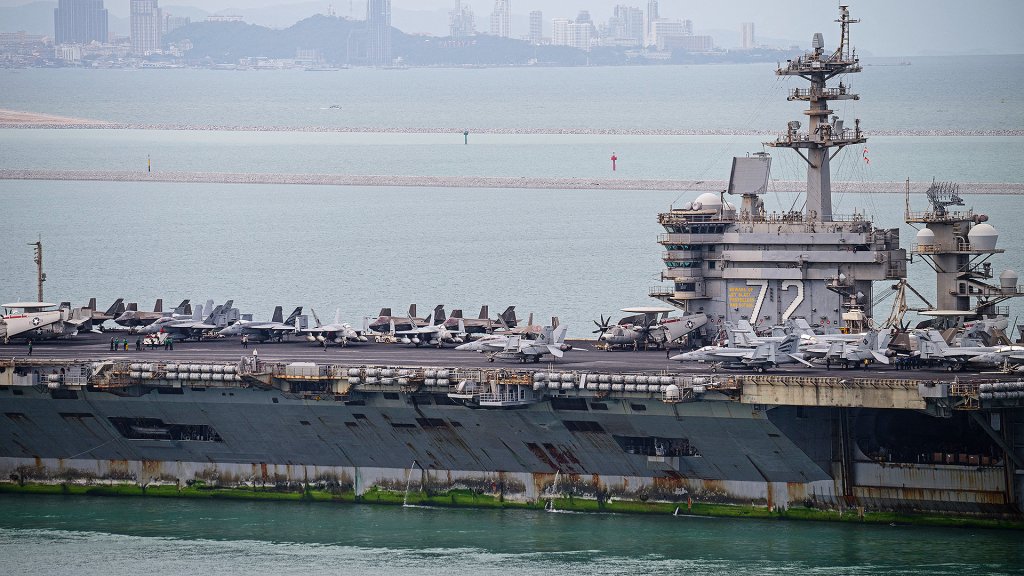
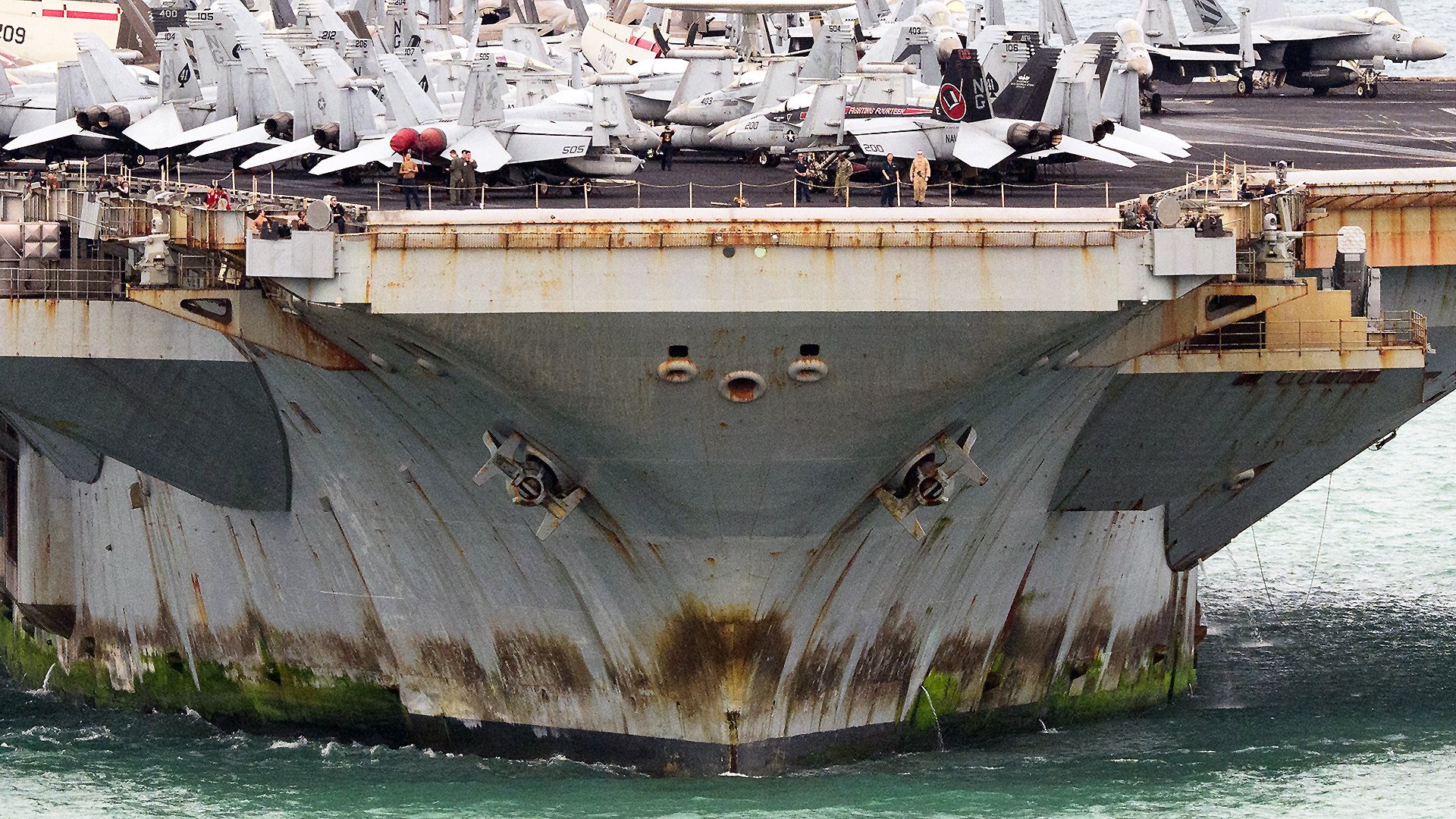
The U.S. Navy’s supercarrier USS Abraham Lincoln is now in Thailand for a much-deserved and highly publicized liberty port call. The carrier had gone 286 days without making such a stop, with much of that time spent executing grueling combat operations against Iran. The ship has been run very hard, relying on at times a rickety conveyor of sea replenishments to continue operating for months on end, and it has the scars to show for it. The Lincoln looks very much worse for wear, with so-called “running rust” and algae caked all along the sides of the hull, as well as around the edges of the flight deck and sponsons on either side. It’s something of a startling appearance for one of the most powerful ships on the planet and a major symbol of U.S. power projection, but it is also a reminder of what the vessel and its crew have endured for months on end.

The Lincoln arrived in the Thai port of Laem Chabang earlier today. The carrier did make a stop in Guam in December 2025 and reportedly made another one somewhere in the Middle East in July. However, in both cases, these have been characterized as brief logistical stopovers that did not offer any real opportunity for personnel onboard to disembark. Thai media reports say the carrier is expected to remain in Laem Chabang through the end of the weekend.

“Our arrival in Laem Chabang provides a well-deserved opportunity for our Sailors and Marines to rest and recharge. It also underscores the strong and enduring partnership and alliance between the United States and Thailand,” Rear Adm. Robert E. Loughran, commander of Carrier Strike Group 3 (CSG-3), said in a statement in a press release today. “What this strike group has accomplished is truly historic. I could not be prouder of the exceptional professionalism and expertise demonstrated by every member of this team during our operations in the U.S. Central Command area of responsibility.”
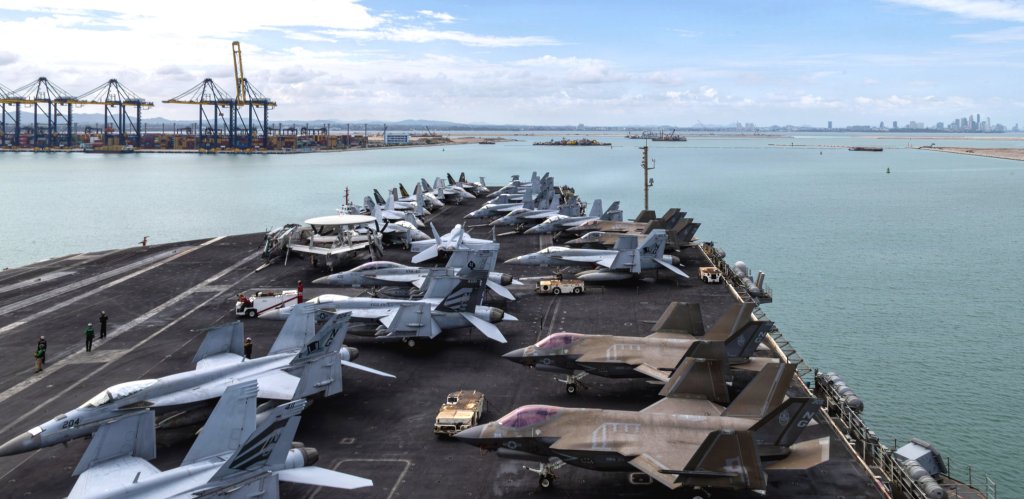
An official picture the US Navy has released of the USS Abraham Lincoln arriving in Thailand today. USN

Lincoln and its strike group had left port in San Diego in November 2025 for what was originally expected to be a routine cruise in the Pacific. The carrier, its air wing, and escorts were subsequently directed to the Middle East and arrived in that region in January 2026.

CSG-3 took part in the opening salvo of strikes on Iran on February 28 as part of what the U.S. military dubbed Operation Epic Fury. Lincoln and the rest of the strike group continued to support Epic Fury and subsequent operations against Iran for months thereafter. The decision was finally made to rotate the carrier out of the region last month following a raft of reports of severely flagging morale and mental health among the crew, which we will come back to later.

Two of the Arleigh Burke class destroyers assigned to CSG-3, the USS Michael Murphy and the USS Spruance, are still understood to be operating in the Western end of the Indian Ocean. A third destroyer in the strike group, the USS Frank E. Petersen Jr., accompanied the Lincoln to Thailand and is now docked in a separate port in Sriracha, near Laem Chabang. The Ticonderoga class cruiser USS Robert Smalls also helped escort the carrier, and that warship “also arrived in Map Ta Phut, Thailand for their own scheduled port visit,” according to the Navy.

As mentioned, Lincoln definitely looks like it’s been at sea more or less continuously for the last nine and a half months or so. Pictures and videos of the ship in Laem Chabang seen throughout this story plainly show big dark rust stains all around the hull and other similar signs of wear elsewhere. There is also a bright green ring of algae layered on the hull at the waterline. While carriers have very large crews and usually keep the ship’s appearance up relatively well while on cruise, there is only so much that can be done out of port on particularly long deployments, where all resources are focused on sustained high-tempo combat operations.
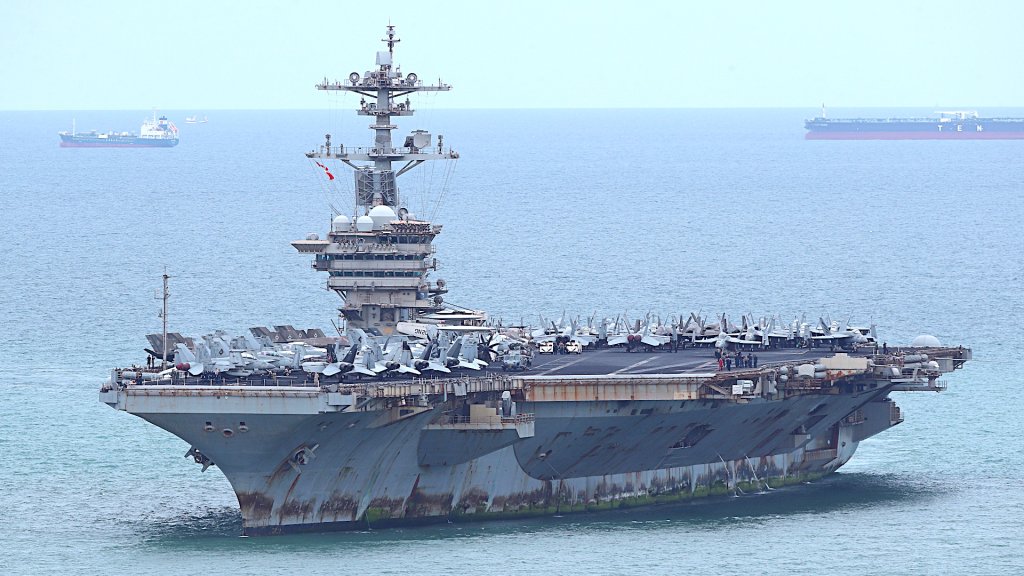
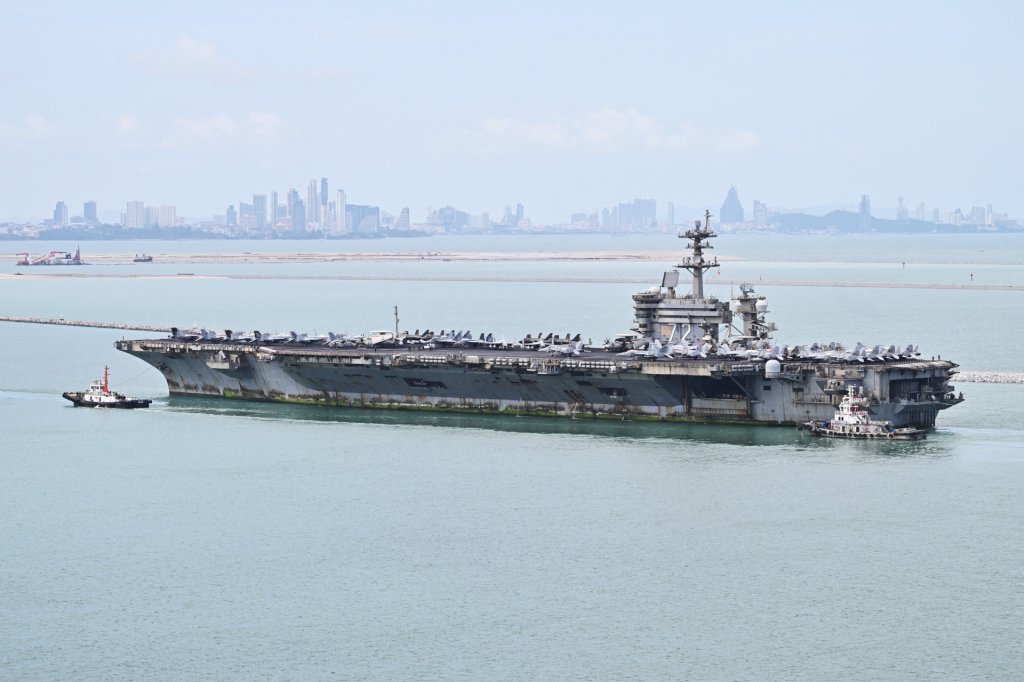
USS Abraham Lincoln seen arriving in Laem Chabang, Thailand, today. Thananuwat Srirasant/Getty Images
Another look at the Lincoln arriving in Thailand today. ANTHONY WALLACE / AFP via Getty Images
A closer look at the side of Lincoln‘s hull, with ‘running rust’ and algae plainly visible. ANTHONY WALLACE / AFP via Getty Images

Running rust on U.S. Navy ships has been something of a lightning rod for criticism in recent years, including from President Donald Trump. This is in part due to the negative optics of such visible wear and tear on American naval vessels, especially during calls in foreign ports.

“It’s terrible. I think they should be ashamed,” John Phelan told members of Congress at a hearing last year after being shown pictures of a very worn-looking Arleigh Burke class destroyer, the USS Dewey, during a stopover in Singapore. “Would you want to go on that ship?”

Phelan was testifying at the time regarding his nomination to be Secretary of the Navy. At the time, he said that President Trump had already been texting him in the middle of the night regarding the issue. Phelan was subsequently confirmed and served as the Navy’s top civilian until he was unexpectedly fired in April, reportedly over disagreements regarding the new Trump class battleships and other more general friction within the administration,
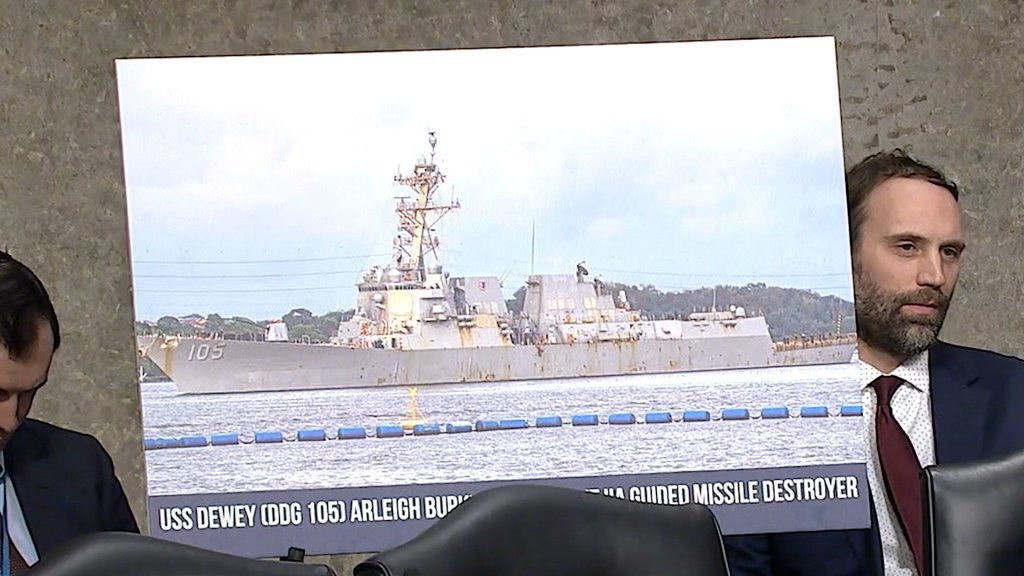
A picture of the USS Dewey covered in “running rust” during a recent port visit in Singapore is shown at the confirmation hearing for Secretary of the Navy nominee John Phelan on January 27, 2025. Senate Armed Services Committee capture

Lincoln‘s current condition is, of course, an extreme case that is the result of very specific operational circumstances. The carrier has already been in the news for weeks now due to the aforementioned morale issues, which family members of those onboard have been very vocally calling attention to through the media. One sailor had to be rescued last month after deliberately jumping overboard. There were reports that at least one other individual onboard had attempted to do the same. President Donald Trump and Secretary Pete Hegseth, among others, have pushed back on concerns about mental health and other issues on the ship. In a statement shared on social media on August 16, Navy Adm. Brad Cooper, head of U.S. Central Command (CENTCOM), acknowledged, but still downplayed, the seriousness of the mental health situation, in particular.

At the same time, the carrier’s marathon deployment is indicative of larger shipbuilding, readiness, and other issues that the Navy continues to struggle with. Strains on the service carrier fleets in particular have been steadily building for years and are now becoming a low-level crisis. The USS Gerald R. Ford wrapped up a historic 326-day-long deployment in May. The Navy has publicly said that the USS Theodore Roosevelt, which is set to begin its latest cruise soon, could be away from home for at least eight months. The longer the ships remain deployed, the longer they typically have to spend in port afterward, further compounding the situation with each passing day during months-long extensions. This all has very worrisome cascading impacts on even routine maintenance cycles, let alone deep overhauls and upgrade efforts, as well as personnel management matters, as we have explored in detail in the past.
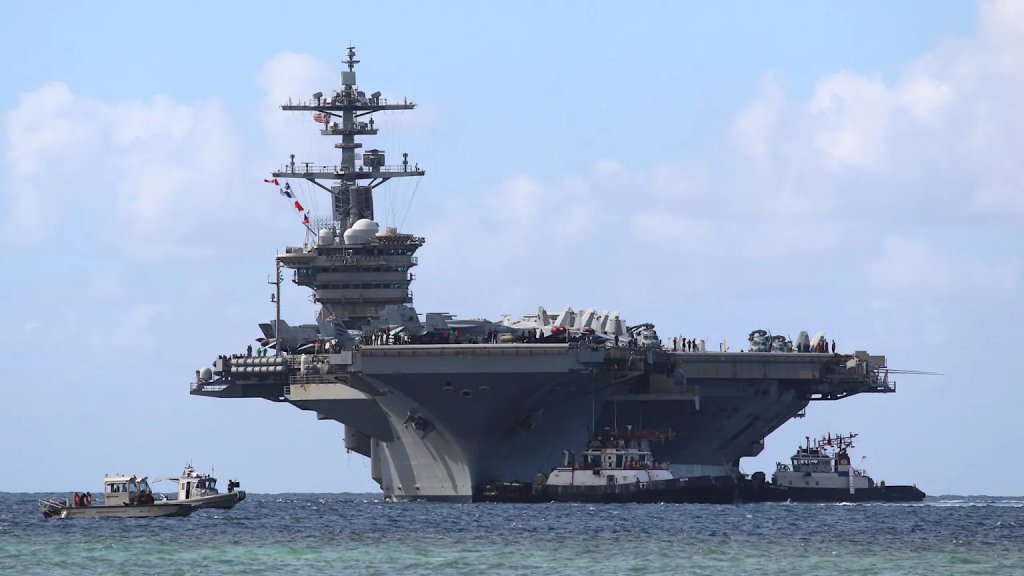
USS Abraham Lincoln in Guam in December 2025. USN

“It’s my earnest attempt to really try to keep those [deployments] at seven months,” Chief of Naval Operations Adm. Daryl Caudle, the Navy’s top officer, said during a question-and-answer session at Fort Meade, Maryland, Monday, which was livestreamed. He also said he wanted a Navy “that can sustain a seven-month deployment and still give our combatant commanders the amount of naval force they need to accomplish their missions, solve their key operational problems, and make sure they have all the naval force necessary to do what they need to do.”

Caudle had notably acknowledged concerns about strains on the Ford while speaking to TWZ and other outlets at the Surface Navy Association’s annual symposium back in January.

The Lincoln‘s visibly worn state certainly draws new attention to the stress on America’s carrier fleets as personnel onboard are now finally getting a much-earned reprieve in Laem Chabang.

Contact the author: joe@twz.com

The post USS Abraham Lincoln Looks Like It’s Been Through Hell After 286 Days At Sea appeared first on TWZ.
  •  

Peau noire, Dieu blanc : pourquoi ce livre devait être écrit

J’ai écrit Peau noire, Dieu blanc : Essai sur l’aliénation spirituelle des Noirs en sachant que son titre pourrait déranger certains. Je l’ai choisi en toute connaissance de cause. Je ne cherche pas à rassurer. Je cherche à réveiller. Je suis un Africain noir. Je connais les blessures de notre histoire. Je connais aussi les […]

L’article Peau noire, Dieu blanc : pourquoi ce livre devait être écrit est apparu en premier sur .

  •  

EU approves €20 million relief scheme for Italian region’s agriculture and fisheries companies

The European Commission has approved a €20 million state aid scheme for agricultural and fishing companies in the Italian region of Friuli Venezia Giulia that are facing increased fuel and fertiliser prices due to the Middle East crisis. The scheme was approved under the Middle East Crisis Temporary State Aid Framework (METSAF) adopted by the Commission on 29 April 2026.

The scheme, which will run until 31 December 2026, aims at mitigating the impact of the increase in agricultural fuel and fertiliser prices, as well as in fishery and aquaculture fuel prices. The aid will take the form of direct grants and subsidised loans. It will be determined on the basis of the size of land used for the primary production of agricultural products, and on the basis of estimates of fuel consumption in the primary production of fishery and aquaculture products, capped to €50,000 per beneficiary. The aid is paid by the autonomous region of Friuli Venezia Giulia.

The Commission assessed the scheme under EU state aid rules, in particular Article 107(3)(c) of the Treaty on the Functioning of the EU, which enables Member States to support the development of certain economic activities subject to certain conditions, as well as Sections 1 and 2.1 of the METSAF. The Commission found that the scheme is in line with the conditions set out in the METSAF. In particular, aid will be granted based on a scheme with a clear estimated budget and will be provided to temporarily support the development of companies active in primary production of agricultural products. The Commission concluded that the scheme is necessary, appropriate and proportionate to facilitate the development of an economic activity and does not adversely affect trading conditions to an extent contrary to the common interest. On this basis, the Commission approved the Italian regional scheme under EU State aid rules.

For more information

  •  

New training paths available for Taxation and Customs officers from candidate and potential candidate countries

Discover the new available training paths for taxation and for customs officers on the EU Learning Potal.

Two curricula modules for taxation and for customs officers from candidate and potential candidate countries have been released on the DG TAXUD Customs, Tax & CBAM EU Learning Portal. These modules are gateways that guide and provide direct access to targeted training resources designed for taxation officers or customs officers in candidate and potential candidate countries.  

The modules feature links to selected courses of the training catalogue of the portal, displayed in a pre-determined order, to provide an extensive knowledge on the EU customs and taxation acquis and its implementation. Taxation and customs officers can also select a specific course according to their competence and/or need. 

Access to the Courses 

  •  

Jobseekers know your rights in the age of AI hiring

AI is playing a bigger role in hiring, but laws protect you. Here is what you need to know.

Europe needs top talent, and employers want high-quality hires – the best person for the job – quickly and in a cost-efficient way. So, given this urgency, it’s no surprise that more and more companies are using AI in their hiring processes. From CV screening to interviews, AI can streamline each stage, reduce hiring times and make the whole process more cost-effective. 

But there’s a downside to AI-driven recruitment, as a recent Instagram post highlighted. It describes how a jobseeker from Vienna felt ‘dehumanized’ by an AI interview. 

The EU takes AI action

This concern isn’t limited to Austria, which is why the EU AI Act classifies using AI in employment decisions as ‘high-risk’. Given the growing AI adoption in HR by businesses across the globe (39 % by the end of 2025), the AI Act addresses risks by introducing rules that help make its use more transparent and accountable. 

Under the AI Act:

  • No AI tool can make final hiring decisions without a qualified human in the loop. 
  • Using AI to infer emotions, stress levels or personality traits and assign people numerical scores is banned.
  • Starting 2 August 2026, companies using AI tools for hiring, evaluating performance or other employment decisions must check regularly for safety risks and bias, keep detailed technical records, ensure human oversight and transparency, and continuously monitor their systems.
  • Obligations apply not only to the providers of these AI systems, but also the businesses that use them.
  • These rules even apply to non-EU companies, if their AI system is used or affects people in the EU.

As for the Viennese candidate, here’s what went wrong during the AI interview process:

  • It repeatedly interrupted the interviewee, jumped to the next question and moved on even when asked to go back.
  • If the jobseeker paused even briefly during a response, it sometimes took it for a complete reply.
  • There were errors in the interview transcript.
  • Instead of answering the applicant’s questions, the AI just recited the company’s ‘About Us’ page.

Only about one in four companies had begun to prepare for the EU AI Act’s strict requirements for high-risk AI systems. As AI becomes increasingly common in recruitment, it is therefore important to remember that you have the right to:

  • be informed beforehand on its use and the role it plays in the company’s hiring decision;
  • ask that a human reviews the hiring decision; 
  • not to have your facial expressions, voice tone or body language analysed by AI during an interview; and
  • know what data is being collected and, in many cases, to have it deleted once the hiring process is over. 

In an increasingly AI-driven labour market, EURES continues to offer human support through its network of trained advisers, who can provide information and guidance on practical, legal and administrative matters related to living and working across Europe. 

In the meantime, online interviews are here to stay, so gear up for that final step by reading up on some tips for tackling remote interviews.
 

Related links

‘Daily Austrian News’ Instagram post

EU AI Act

The State of AI in HR 2026

AI Hiring Tools at Risk: 6 Critical EU AI Act Compliance Steps Every HR Leader Must Take (2026)

Chat with EURES Advisers

The new ‘rules’ of the remote interview

Read more 

European Job Days

Find EURES Advisers

Living and working conditions in EURES countries

EURES Jobs Database

EURES services for employers

EURES Events Calendar 

Upcoming Online Events

EURES on Facebook

EURES on Twitter

EURES on LinkedIn

  •  

Top 10 European 'ghost towns' perfect for remote workers

An August 2026 report on remote work destinations in Europe found that Palencia, Spain, is the best small town for digital nomads. A new study by the digital entertainment platform BC Game reveals the top 10 hidden gems where remote workers can spend this summer. 

  • Palencia, Spain, is the best small town for working remotely in Europe, offering fast 267 Mbps Wi-Fi and safe neighborhoods. 
  • With rent at just $525 a month, Le Havre is the cheapest way to spend summer on the French coast as a digital nomad.
  • Akureyri is the best reason to finally make the Iceland trip happen, with close to 30 places to open a laptop and Arctic scenery all around.

The research examined 20 European towns with smaller populations to find which ones work best for remote workers. The report looked at factors like average Internet speeds, monthly rent for a one-bedroom city center apartment, and personal safety ratings. It also considered the number of cafes and coworking spaces, coffee prices, and the cost of a meal at an inexpensive restaurant. Each town received a final score out of 100, with higher scores meaning that the city is more suited for digital nomads. 

Here's a look at the top 10 European small towns for remote workers:

CityCountrySafety IndexAverage Broadband Download Speed (Mbps)Monthly Rent (1 Bedroom/City Centre)Coffee
PalenciaSpain94267$698$1.8
SoriaSpain87277$582$2.2
VaduzLiechtenstein92286$1,427$6.7
Le HavreFrance43312$524$2.7
AngersFrance61257$664$2.8
Akureyri Iceland80279$1,783$4.9
ReimsFrance45288$705$3.7
DijonFrance47271$646$3.9
TartuEstonia77136$659$4.2
MateraItaly8087$737$2.1

You can access the complete research findings here.

1. Palencia, Spain

  • Safety Index: 94.12/100
  • Broadband speed: 267 Mbps
  • Monthly rent (1BR, city center): $698
  • Coffee price: $1.75
  • Meal at an inexpensive restaurant: $11.64
  • Score: 100/100

Palencia is the best small town in Europe to work remotely this summer. The destination has a 94/100 safety rating, which matters a lot for anyone arriving in an unfamiliar city for the first time. The Internet is also fast at 267 Mbps, so video calls and file transfers are never going to be an issue. One-bedroom rentals in the city center go for around 700 USD a month, and staying fed and caffeinated while working from a local spot costs very little, with meals under 12 USD and coffee at 1.75 USD.

2. Soria, Spain

Soria is the most affordable hidden gem for remote workers looking to set up a base for a couple of months. Rents here average just 580 USD a month, and Internet speeds reach 277 Mbps, so there's no trade-off on connectivity. The safety score of 87/100 also means it's a comfortable place to be, whether walking home late or leaving a laptop at a cafe table. It's also a small city of around 41K people, quiet and easy to get around, which is exactly what a lot of remote workers are actually looking for.

3. Vaduz, Liechtenstein

Vaduz is for digital nomads who put safety and connectivity above everything else. The city’s safety rating of 91/100 is second only to Palencia, and Internet speeds exceed 285 Mbps, making it one of the best-connected small towns in Europe. The trade-off is cost: rent runs at around 1,440 USD a month, and a coffee is nearly 7 USD, so the daily expenses add up fast. But for anyone earning well and looking for a calm base with fast Internet in the middle of Europe, Vaduz is hard to look past.

4. Le Havre, France

Le Havre has the best Internet of any small town in Europe at 312 Mbps, faster than even the capital, Paris. That alone is a good reason to be here for anyone doing heavy digital work. Rent is also among the cheapest at around 525 USD a month, and a meal at a local restaurant costs under 14 USD. Beyond that, the city has up to 20 cafes and co-working spaces where remote workers can get the job done. 

5. Angers, France

Angers rounds out the top five small towns for digital nomads. Typical studios here get listed for under 670 USD a month, while the Internet is fast enough for stand-ups, deadlines, and everything in between, at 257 Mbps. Angers is also quite safe for a city this size, and there are plenty of cafes and coworking spaces (up to 20) to rotate between when working from home gets boring. With around 161K residents, the city also has an active social scene to make longer stays feel less isolating. 

The CEO of BC Game commented on the study: "Most remote workers pick their next destination based on photos on Instagram or a Reddit thread someone wrote two years ago. The problem is that those places are usually packed by the time you get there, and the rent has gone up. The smarter move is to look one step outside the obvious choices. If everyone is going to Lisbon, look at a smaller Portuguese city like Faro. If Madrid is getting expensive, look at a town two hours away. The infrastructure is usually the same, the costs are lower, and you actually get to feel like you live somewhere rather than just being another nomad in a queue for a coworking desk."

  •  

'Any citizen can get shot,' warns the Brussels prosecutor in comment on gang war

"Any citizen can get shot. This is not going to calm down," warned Julien Moinil, (pictured) the King's Prosecutor of Brussels, during a press conference on Friday, dedicated to the recent wave of violence linked to drug trafficking. Approximately 150 shootings have been recorded since the firearm attack on 5 February 2025 at Metro station Clémenceau. Accompanied by the head of the Brussels-Midi police zone, Jurgen De Landsheer, and the director of the Federal Judicial Police of Brussels, Eric Jacobs, the prosecutor outlined recent events, the judicial response, and several points of concern.

The current wave began on 20 August. It is believed to be related to a conflict between two groups involved in drug sales. Three individuals have been arrested in connection with the shootings over the past few weeks. Around a hundred shooters have also been detained since the violence started. No link has currently been established between this conflict and the shootings targeting the police station last weekend in Anderlecht. "They have touched a sensitive point: a police station," emphasized Julien Moinil. No one has been injured, but the prosecutor reminded everyone of the daily risks police officers face and assured them of the prosecution's support. He praised the work of both local and federal police but called for structural investment.

The current prosecutor's office staff includes 49 magistrates out of the 63 planned. He reiterated his requests for more investigators in the federal judicial police and the installation of jamming devices at Haren prison, noting that at least one mastermind operating from a cell has been definitively identified. "The solution must not only come from the Justice Department," insisted Julien Moinil, calling for mobilization of the social and health sectors as well. He advocates activating a task force led by the prime minister.

  •  

Minister for European Affairs outlines plans for the work of Ireland’s EU Presidency

European Affairs Minister Thomas Byrne TD (pictured), has highlighted key policy objectives for the work of the Irish EU Presidency over the coming months as the EU institutions prepare to resume their normal programme of activities following the summer break. 
 
In his role as chair of the General Affairs Council, Minister Byrne will lead discussions at EU level on several areas of priority for the Irish Presidency, including the approach to the EU’s next long-term budget and the simplification of EU rules, an important aspect of the Union’s competitiveness agenda.

The Irish EU Presidency, which began its term on 1 July, is focusing its work on three core thematic priorities of competitiveness, values and security. Substantial progress has already been made in the opening weeks of the Presidency on policy and legislative initiatives across these three priority areas.

Minister Byrne said: “We have been very pleased with the results we have already been able to deliver early in our Presidency term. For example, in July I chaired four Inter-Governmental Conferences to advance the EU accession processes of Albania, Moldova, Montenegro and Ukraine - the largest number of accession conferences held in a single day in over two decades. Across many areas of policy, there is scope for us to achieve really significant progress between now and the conclusion of our term at the end of the year, and we are determined to ensure the Irish Presidency delivers meaningful outcomes for citizens across Europe.”

As part of Ireland’s Presidency meetings programme, nine informal Ministerial meetings will take place in Ireland during the month of September. Minister Byrne will host an informal meeting of Ministers for European Affairs (General Affairs Council) in Dublin Castle on 3 and 4 September. This meeting will provide an opportunity for wide-ranging discussions on three of the major strategic priorities for the EU during the Irish Presidency term: progressing enlargement, advancing negotiations on the next long term EU budget, and taking steps to strengthen democracy across Europe. 

Minister Byrne said: "I look forward to welcoming my counterparts from across Europe – including from nine candidate countries and potential candidates – to Ireland in early September to discuss our approach to a number of major issues on the European agenda. These discussions will help build a consensus on a shared approach to the key challenges facing the EU”.

A central aspect of the work of the Presidency is engagement on behalf of the Council with the other EU institutions as part of the Union’s legislative process. As Minister for European Affairs, Minister Byrne will participate in the regular plenary sessions of the European Parliament in Strasbourg and Brussels throughout the autumn, representing the Council in debates on policy and legislative initiatives. 


Minister Byrne said: “The European Parliament is an important partner for us in delivering the EU’s legislative agenda. We have built very strong relations with the Parliament, and the priorities and policy objectives for the Irish Presidency were very well received by MEPs when the Taoiseach addressed the Parliament’s plenary session in Strasbourg in early July. Since then, I have been among 12 Irish Ministers to meet with European Parliament committees to discuss our Presidency priorities, and more of these meetings are scheduled for September. I look forward to working closely with MEPs from across all Member States and political groups as we take forward the ambitious legislative agenda for the remainder of this year.”

Details of the Presidency policy programme, the calendar of Presidency meetings and events, and other updates are available on the Irish Presidency website at www.eire2026.eu and www.ireland2026.eu. 

  •  

Chinese Cargo Ships Clandestinely Gather Signals Intelligence: Report

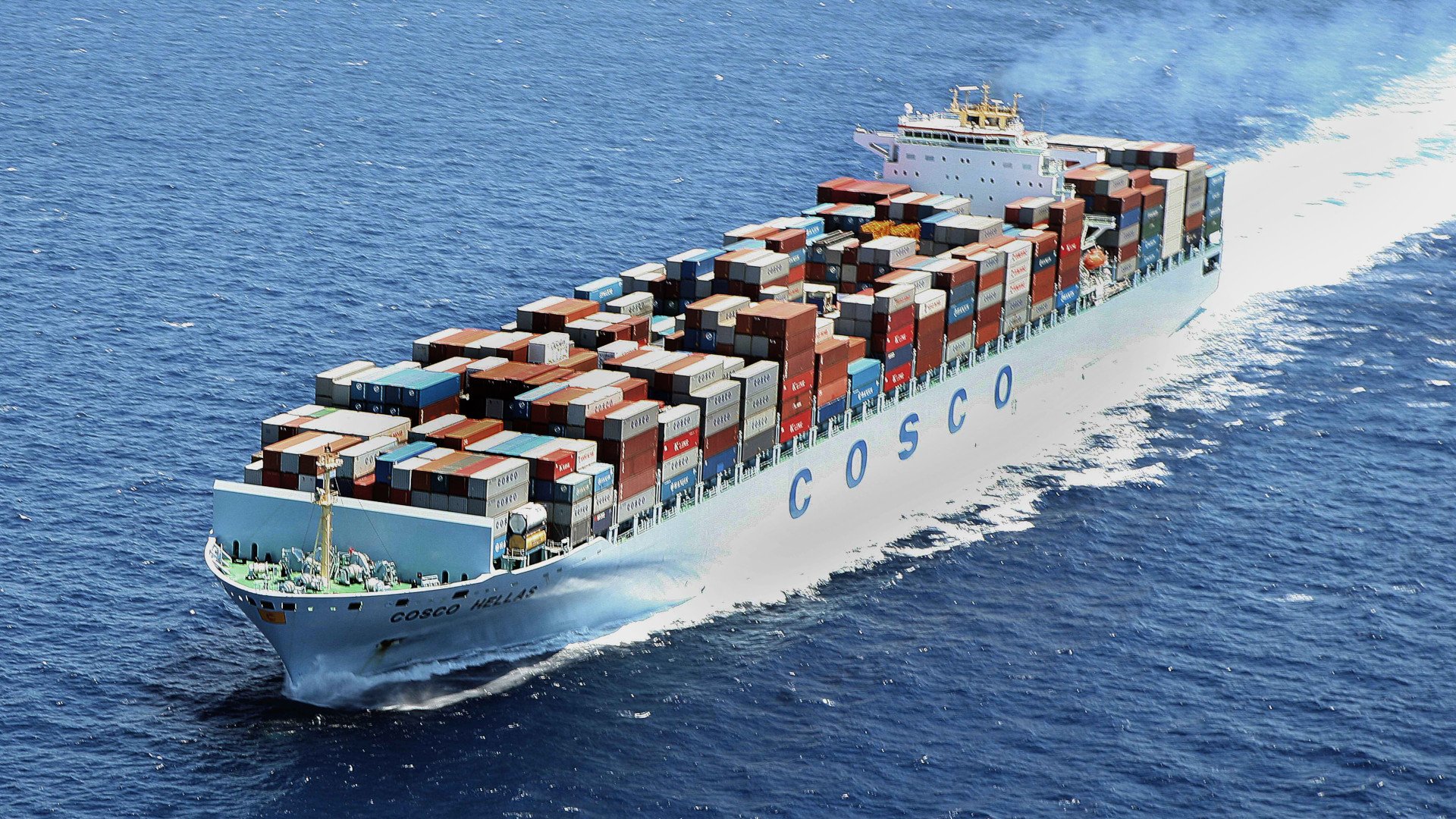
Chinese state-run shipping company COSCO has been using concealed systems on its vessels to gather signals intelligence around North American, European, and Asian coastlines for decades, it has been alleged. Similar claims have been made in the past, and overlap between nominally civilian enterprises in China and the country’s military and intelligence services is well established at this point.

Reuters first reported on the use of COSCO ships as discrete signals intelligence platforms earlier today, citing two unnamed officials within President Donald Trump’s administration.

“The officials, who spoke on condition of anonymity to discuss the U.S. assessment of the Chinese program, said COSCO has a decades-long intelligence-collection partnership with Beijing,” according to the report. “The arrangement allows China to collect communication signals from vessels ​and aircraft operating across Europe, North America and Asia, they said.”

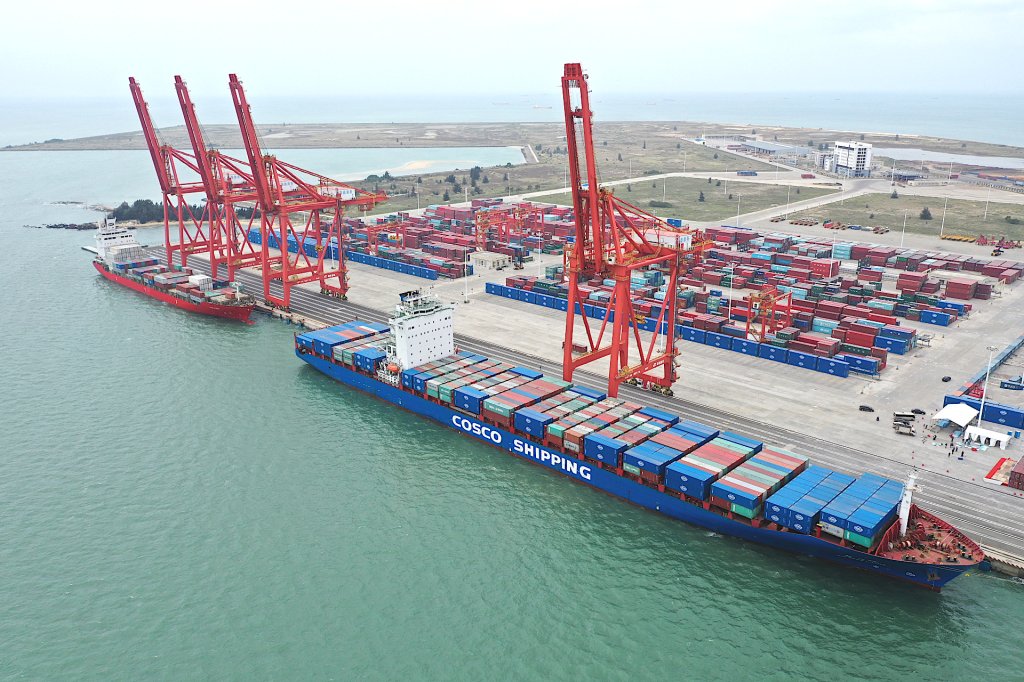
COSCO container ships in port. COSCO

It is worth noting here that China’s National Intelligence Law, enacted in 2017, includes a specific provision that requires all organizations and citizens within the country to support state intelligence work as required. It also obligates the state to protect entities that do so.

“The advanced equipment aboard the ships is intended to enable China ​to gather information about ‘military communications technologies and encryption developments,’ one of the officials said,” Reuters‘ story today added. “The officials did not detail the type of equipment COSCO ships were allegedly using, but said they were ‘sophisticated signals intelligence collection’ platforms, not routine communications hardware.”

Officials at the Chinese Embassy in Washington, D.C., unsurprisingly denied these assertions, according to that outlet.

Purpose-built signals intelligence suites can range widely in size and shape, as can their capabilities. They can be very small and basic or far more elaborate systems. Even the latter could be concealed as modern commercial ships, which already feature lots of antennas.

COSCO

What might happen to intelligence collected by the ships is unknown. At the very least, systems onboard could record the data, which could then be batched out when safe to do so, either physically or via transmission. Basic passive signals suites can also run autonomously, or even be controlled from anywhere in the world if the ship is connected via satellite communications (SATCOM). High-bandwidth SATCOM is very common now on ships around the globe.

Personnel on the ship could also operate the systems, and even process receptions of interest. It might be possible to fit the ships with suitable datalinks to then transmit the collected data in near-real-time to other nodes, including ones back in China, for further analysis and exploitation.

Reuters‘ sources said scooping up data on “military communications technologies and encryption developments” was a priority for the commercial vessels turned spy ships. Signals intelligence can take many other forms, from emissions from radars to communications chatter. Depending on what is collected and how, specialists can use that information to glean details about how systems function, as well as insights into standard operating procedures and other details. This is especially true when multiple forms of intelligence are fused together. Generally speaking, signals intelligence is routinely used to help build out so-called ‘electronic orders of battle’ detailing the disposition and capabilities of an opponent’s forces, especially air defense and command and control networks.

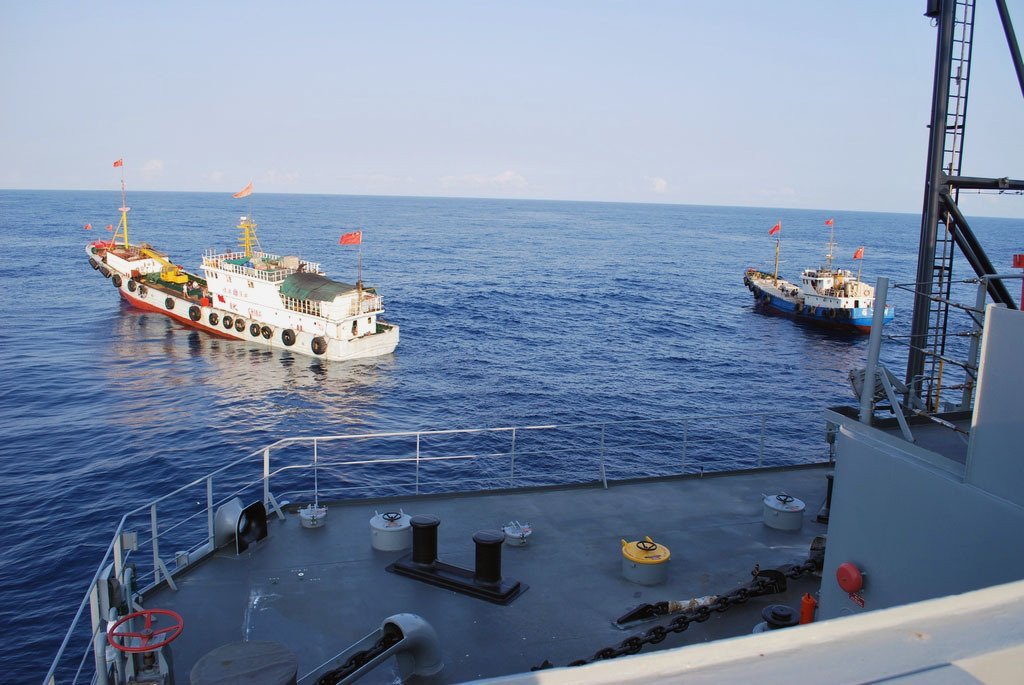
As mentioned, this is not the first time claims in this general vein have emerged, either. At least some evidence has been presented in the past, through open-source analysis. Reuters‘ sources directed that outlet to a report published last year by the China Maritime Studies Institute at the U.S. Naval War College exploring exactly this topic in relation to China’s quasi-military maritime militia. The maritime militia is made up of ostensibly civilian fishing fleets, but has direct ties to the People’s Liberation Army (PLA) and the Chinese Coast Guard. It is routinely used to harass and intimidate foreign vessels in disputed waters, especially in the South China Sea.

Chinese fishing vessels seen stopped right in front of US Navy’s ocean surveillance ship USNS Impeccable in 2009. USN

“Undergirding these operations is a cadre of maritime militia intelligence specialists called ‘information personnel.’ Information personnel are organized into force contingents that support operational militia forces,” according to that report. “Most have day jobs in the fishing industry, but many hale [sic; hail] from other sectors, including marine shipping and even maritime law enforcement units.”

“It is more likely than not that PRC [People’s Republic of China] vessels operating overseas have already begun embarking information personnel to serve intelligence collection and reporting functions. In the case of China’s fishing fleet, serving this foreign intelligence collection function could be as simple as adding a new duty to the ‘information personnel’ that already embark aboard some distant-water fishing vessels,” that report added. “Aside from their primary responsibilities of tallying and reporting production numbers, serving as experts on international and national fisheries regulations that affect their work, and handling interactions with foreign officials while at sea and in port, they might also be tasked with collecting and reporting military and political intelligence while operating overseas.”

“Similar processes may already be in place in the commercial shipping industry,” it continued. “For instance, Guangxi province’s Beihai city has built up its ranks of maritime intelligence specialists by recruiting from among marine shipping personnel.”

No explicit mention is made in the report about signals intelligence gathering.

In the past year or so, there have been multiple reports that Russia is also using its so-called ‘shadow fleet’ of oil tanker ships in a secondary role as intelligence-gathering platforms. The primary job of those vessels is to help the Kremlin evade sanctions.

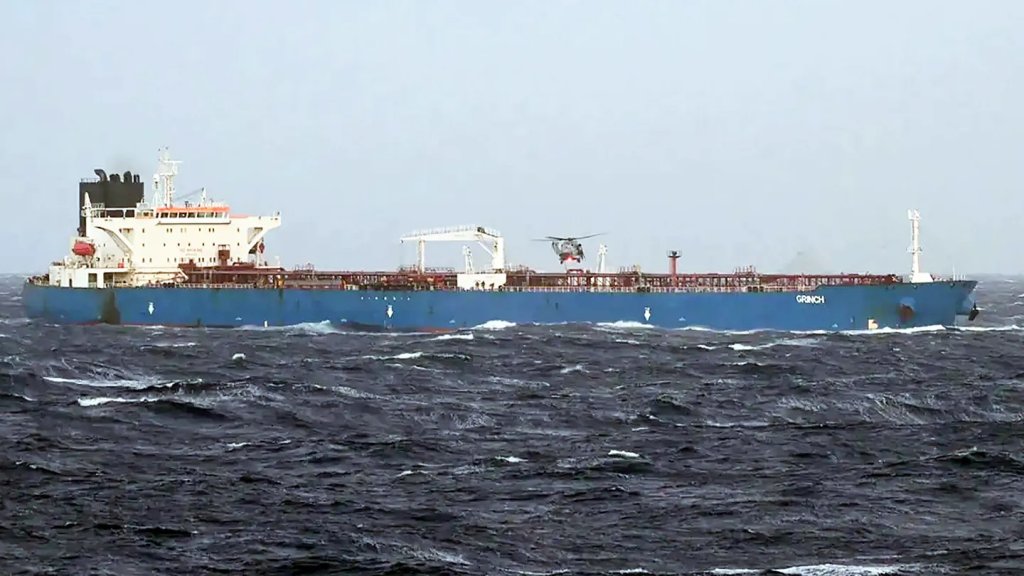
French forces seen boarding the Comoros-flagged tanker Grinch, part of Russia’s so-called ‘shadow fleet,’ in January 2026. French Navy

There is other tangential evidence that also lends credence to today’s report from Reuters. As mentioned, in the midst of still mysterious drone swarms that harassed U.S. Navy ships off the coast of southern California back in 2019, U.S. authorities at least explored the possibility that a Hong Kong-flagged bulk carrier, the M/V Bass Strait, might have been a launch point. It remains unknown, at least publicly, whether the Bass Strait or another nearby ship might have been the source of the harassment, or if it came from somewhere else, potentially further away. TWZ was the first to report on this detail as part of a deeper investigation into these incidents, which came amid a spike in news about claimed sightings of what are now commonly referred to as unidentified aerial phenomena (UAP). We have been saying for years now that, while some UAP sightings do remain unexplained, many more are likely to have been drones (as well as balloons), which foreign governments could be using for intelligence gathering and other malign purposes.

A US Navy briefing slide discussing an interaction with the M/V Bass Strait on July 15, 2019. This says that at least at that time the bulk carrier was assessed to be “likely using UAVs to conduct surveillance on US Naval Forces while transiting to [a] scheduled port of call, [in] Long Beach, CA.” USN via FOIA

It’s also worth noting here that intelligence collection from international waters and airspace is a practice that nation state armed forces and intelligence agencies globally, including those in the United States, engage in regularly with varying degrees of openness. Leveraging nominally civilian ships, as well as aircraft, for these purposes is hardly new.

Despite the official denials to the Reuters piece today, it would be hard to imagine Chinese authorities not making use of commercial ships for this purpose, if possible, given that major deepwater ports worldwide are often dual-purpose civilian/military facilities. Radar sites and other critical facilities are often positioned along or near coastlines. Cargo ships and tankers often pass by major exercises and under major military operating airspace, where they could scoop up critical data.

With commercial ships already plying their routes, this would also just offer the Chinese government ways to readily bolster maritime intelligence-gathering capacity at low cost and low risk. China’s commercial fleets dwarf any other on Earth, making their presence commonplace and providing many opportunities to hide these operations.

A 2021 report published through the U.S. National Geospatial-Intelligence Agency’s (NGA) Tearline Project also highlighted the possibility of Chinese-owned facilities at ports around the world being used for intelligence gathering or even for launching non-kinetic attacks, including electronic warfare jamming. It specifically noted how COSCO’s facility in Belgium’s Port of Zeebrugge is “in close proximity to a Belgian Naval Base and thus could fulfill additional militarized requirements.”

Concerns about land owned by Chinese companies and nationals being used to collect intelligence or for other purposes have become an increasingly hot topic of discussion in the United States in recent years.

Reuters‘ piece does not say what, if any, steps U.S. authorities have taken or may be planning to take now to monitor for or take more active countermeasures against Chinese-flagged ships being used for intelligence gathering, despite this being said to be a decades-old practice. The report does note that “the Pentagon put COSCO on its list of companies linked to China’s military in January 2025, a designation that carries serious reputational costs for companies ​as well as U.S. government procurement ​bans, but does not entail ⁠formal sanctions.”

Though no hard evidence has yet been provided, Chinese authorities using cargo ships as additional discreet signals intelligence-gathering assets is very plausible, and would certainly seem to be an issue that should be taken seriously, if it is not already being addressed.

Contact the author: joe@twz.com

The post Chinese Cargo Ships Clandestinely Gather Signals Intelligence: Report appeared first on TWZ.

  •  
❌