❌

Reading view

Orchestrators, not customers: A new role for European governments in defence

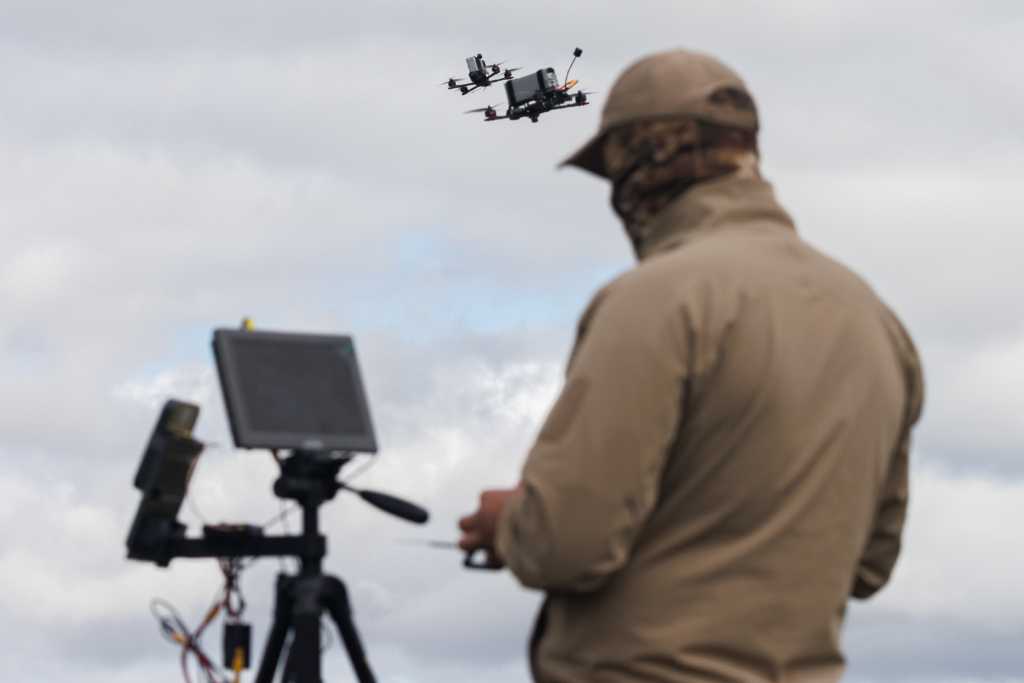
Ein Foto zeigt eine Person in beiger Jacke und Cap, die an einem Monitor einen Controller hält, während zwei kleine Drohnen v
Instructor at the training ground of the Unmanned Systems Troops (UAVS). | picture alliance / Picvario Media | Sergey Elagin

Europe is rearming. Defence budgets are rising, factories are expanding, and new EU instruments are pouring money into ammunition production and joint procurement. But money is only part of Europe’s defence problems. The main constraint is that its systems remain slow, fragmented and poorly suited to an age when military technology can change in months rather than decades.

Three transformations are hitting the continent at once. Russia’s invasion of Ukraine has brought back large-scale war to European soil. Washington’s growing focus on the Indo-Pacific, its renewed interest in Greenland and its push to move NATO from “burden sharing” towards what might be called “burden shifting” mean that Europe will have to provide not only more money for the alliance but also a larger share of its combat power. At the same time, technology is changing warfare faster than traditional procurement systems can keep up.

At present, procurement systems work as follows: a military identifies a requirement; officials draw up specifications; companies compete for a contract and, years later, a system enters service. The problem is that, by then, the technologies shaping the battlefield may have changed dramatically. Promising technologies can become obsolete or fall by the wayside before they ever reach soldiers.

Ukraine has demonstrated a different model. Operational problems generate ideas; engineers turn them into prototypes; soldiers test them; manufacturers improve and scale them; battlefield experience feeds into the next iteration. Technology can also work in the other direction: new capabilities, such as cheap drones, can create tactics that planners had not previously considered.

The real measure of defence-industrial success should not be how many platforms roll off the line, but how fast capability can be imagined, built, tested, industrialised, fielded and adapted again

Europe needs to make this cycle permanent. I propose a model called Adaptive Defence Industrial Ecosystem Management, or ADIEM. The principle is for governments to move from being regulators and buyers to orchestrators of a defence ecosystem that links governments, armed forces, defence and tech companies, start-ups, universities and investors in a continuous loop. The real measure of defence-industrial success should not be how many platforms roll off the line, but how fast capability can be imagined, built, tested, industrialised, fielded and adapted again.

Industrial resilience and human capital are central to this model. Ukraine has shown that sustained operations depend on raw materials, reliable energy, resilient logistics and skilled labour quite as much as on the platforms themselves. And because digital capability now depends as much on software and data engineering as on heavy manufacturing, Europe’s defence sector competes directly with the commercial tech industry for the same scarce talent. This makes the appeal of a defence career a strategic question.

How to make ADIEM work

Reform defence governance. Create permanent structures that bring together military planning, industrial policy, innovation and procurement around shared capability goals. Give them room to depart from standard rules where those rules are the obstacle.

Start with battlefield problems. Build capabilities around what armed forces need to achieve. It works in reverse too: a new system needs a concept of operations written for it before it is bought at scale. Treat these as living documents that evolve with experimentation and real-world lessons.

Make procurement faster and more flexible. Use a hybrid procurement method. While central procurement agencies buy major systems, individual units are allowed to meet certain urgent combat needs. Alongside that, break large procurements into smaller contracts with incremental delivery, allow continuous software updates, use open architecture and speed up certification.

Build a genuine innovation ecosystem. Give start-ups, universities and public labs clear routes to deployment. Reward experimentation and operational relevance over novelty for its own sake.

Achieve affordable mass. Create dedicated programmes for weapon systems that are effective enough, cheap enough to buy in large numbers and simple enough to replace quickly. These include drones, autonomous vehicles, loitering munitions, low-cost intelligence, surveillance and reconnaissance (ISR) systems and electronic warfare.

Invest in human capital. Build a long-term pipeline of software engineers, AI specialists, systems engineers and skilled production workers, and change how the sector is perceived—presenting it as a high-technology field, not just a traditional military one.

Institutionalise experimentation. Set up permanent centres where soldiers, engineers, researchers and industry jointly evaluate new operational concepts and technologies. Test continuously rather than only in the run-up to a procurement decision.

Develop digital defence infrastructure. Invest in a sovereign defence cloud, secure data architecture, digital twins and common digital standards.

Governments also need to reform the institutions through which capability is developed, not just the funding lines that feed them. And while Europe has much of what it needs­—sophisticated armed forces, world-class manufacturers, strong universities and a growing defence-tech sector—it still lacks a system capable of connecting them quickly enough. That is the purpose of ADIEM: to connect these actors in a continuously adapting ecosystem, with governments acting as orchestrators rather than simply regulators and buyers.

Source

  •  

A no to the EU, not to Europe: What Icelanders actually voted on

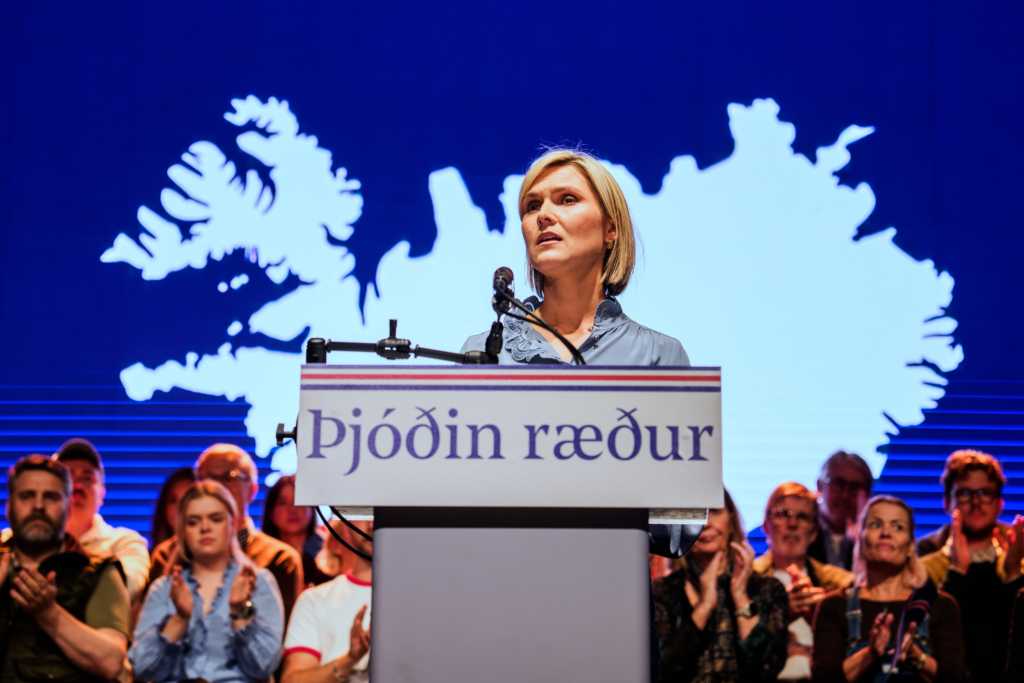
Ein Foto zeigt eine Frau am Rednerpult, sie spricht vor einem Publikum mit einer großen Karte der Insel im Hintergrund.
Cover image: picture alliance / AP Photo/Marco Di Marco

It took Europe’s far-right leaders no time at all to work out what Icelanders meant on August 29th, when they voted 52.8% to 47.2% against resuming negotiations to join the EU: a prosperous democracy had looked hard at Brussels and said no. Britain’s Nigel Farage congratulated them on “voting to keep their independence”. France’s Marine Le Pen went further, calling the result a reminder that “another Europe is possible”.

But Iceland did not vote against Europe—it voted to keep the Europe it already has.The country sits inside the single market through the European Economic Area (EEA) agreement, is part of the Schengen area, and adopts swathes of EU legislation to stay compliant with standards set in Brussels. Short of membership, there is no closer relationship with the EU on offer.

Opposition to tight integration with Europe remains at the fringes of Icelandic politics and does not appear in any party’s manifesto. The foreign ministry’s latest annual survey showed that only 6% of Icelanders believe that international co-operation diminishes our sovereignty, against 69% who think it strengthens it. On the EEA agreement, 58% take a positive view and only 19% a negative one.

The Icelandic electorate has never shown much enthusiasm for politics built on distrust of institutions, conspiracy theories or the dissolution of the post-1945 international system. A country whose biggest annual festival is the Pride parade, and where women hold the offices of president, prime minister, foreign minister, bishop of the national church, mayor of the capital, chief of police and deans of both main universities is not a promising beacon for movements in the West that are uncomfortable with the inclusive nature of liberal democracy.

That being said, there is no denying that there was more than a whiff of culture wars in the no campaign. The masculine energy was palpable, and much effort went into far-fetched notions of an EU plot to expropriate Icelandic wealth. Young people were, by all accounts, targeted on social media and inundated with phone calls; one of the most potent messages was that EU accession could see them drafted into a European army. The yes side also played loose with the facts, not least in assertions that lower euro interest rates would automatically ease young people’s access to the housing market. Highly nationalistic messaging left some voters in a charged emotional state—and those voices were the loudest online, both during the campaign and in celebrating the outcome.

Still, the result was not a victory for the reactionary fringe. The fringe just happened to be on the winning side. The reasons Icelanders voted no are deep, domestic and largely unglamorous: fish, the currency, a comfortable arrangement with the world and a belief that the international order will remain relatively unchanged, despite temporary turbulence.

Iceland already has the Europe it wants

Through the EEA and the European Free Trade Association (EFTA), Icelanders and Icelandic businesses already enjoy the free movement of goods, services, capital and people. Every knowledgeable Icelander understands that without the market access, Iceland would not have prospered as it has. No serious politician dares to entertain abandoning the EEA. In fact, the no side ran on defending the agreement as the better alternative to full membership.

On defence and security, Iceland is a founding member of NATO and has a bilateral defence agreement with the US. For a country of 400,000 people that has never in its history had a military, these two pillars seem more than adequate, untested as they may be.

Full membership in the EU would require amending the constitution, which currently does not permit the transfer of sovereign powers that accession involves. This is sensitive in any debate about independence and sovereignty. As things stand, obligations arising from the EEA agreement only reach Icelandic law when the Icelandic parliament, the Althingi, legislates for them.

Hypervigilance about resources

Iceland owes its rise from poverty to prosperity in the 20th century to controlling the rich maritime resources that surround it. For centuries, foreign fleets exploited those grounds while Icelanders were kept out of large-scale fishing by both restrictions imposed by Denmark (which ruled Iceland from 1380 to 1918) and a lack of financial infrastructure.

At the start of the last century, new technology and financing opportunities unleashed an explosion of entrepreneurial activity in the sector. Iceland then pushed its fisheries zone outwards until it reached its present limit in 1975, over fierce British opposition in stand-offs known as the “cod wars”. It was the closest the country has ever come to a military confrontation. Legal victory in that dispute is a tremendous source of national pride and a standing reminder of the importance of natural resources to our economy. Furthermore, Iceland’s track record in managing this resource compares very favourably with efforts elsewhere.

Accepting the EU’s common fisheries policy is, on the face of it, a requirement for full membership. For most Icelanders, this is where the conversation stops.

It follows that a crucial question is whether Iceland could join the EU and keep control of its fisheries. Accepting the EU’s common fisheries policy is, on the face of it, a requirement for full membership. For most Icelanders, this is where the conversation stops. It is out of the question. Therefore, much of the historical debate about EU membership has revolved around whether a permanent carve-out is possible, and much energy has gone into reading cryptic remarks on the matter from EU representatives. The application launched in 2009 produced no answer. Talks were shelved before this vital question was seriously engaged.

For the yes camp, applying again was the only way to find out the real answer. The no side held that a satisfactory answer was simply not on the table—a belief that makes a no vote logical even for people who do not object to membership in principle. Why board a train if you do not believe it will reach its destination?

Our love-hate relationship with our currency

Since its adoption in 1918, the króna has been one of the most consistent sources of frustration in Icelandic public life. It started out at par with the Danish krone and, by that benchmark, has since lost 99.9% of its value. Long protected by import, export and currency controls, and propped up by punishing interest rates, it has now been largely abandoned by the big Icelandic businesses that operate internationally. They have mostly chosen the euro as their operating currency.

Despite its drawbacks, the flexibility that a national currency provides a small economy reliant on natural resources is not to be discounted. Some economists claim that the currency is a valuable tool to smooth out external shocks and protect Icelanders from economic setbacks turning into societal hardships such as mass unemployment. For many, the costs of maintaining a tiny currency that is attuned to our specific economic conditions are well worth the benefits of keeping unemployment at a minimum. For others, these benefits are overstated, and the costs in perennially high interest rates and market risk do not make economic sense.

Europe looks sluggish from Reykjavík

Iceland’s business and finance community is very focused on topline economic figures that show European growth lagging behind America’s. The prevailing narrative is that Europe buries its entrepreneurial talent under the weight of regulation while the US offers a superior environment for economic activity and technical innovation. Iceland’s business and financial community sees the country’s relative economic success as too valuable to risk with full EU membership.

Counter-narratives that build on broader measures of well-being do not seem to gain traction. Even extensive first-hand experience of European quality of life stands little chance when pitted against economic metrics.

Icelanders often cite Mario Draghi’s bleak assessment of the EU’s competitiveness as evidence that even consummate EU insiders have lost faith. The claim of the EU’s supposed economic feebleness does more than feed the economic debate; it has also become a thinly veiled contribution to the culture-war caricature of a weak Europe in contrast to a muscular America.

The old order still looks solid from the North Atlantic

The biggest disconnect between international affairs experts and the general Icelandic population lies in how each reads the way geopolitics is evolving. Contrary to much international reporting, the volatile state of the world barely featured in the campaign, which was mostly fought on domestic issues. Even threats from the American president, Donald Trump, against our Greenlandic neighbours have not moved the needle. Perhaps most Icelanders viewed the episode as too outlandish to be taken seriously, or too uncomfortable to contemplate.

Icelanders are very supportive of Ukraine and disdainful of Russia’s aggression, but they seem to judge the war far enough away not to affect them. Many are perplexed by America’s current foreign policy yet treat it as a deviation from a norm that will eventually re-establish itself. Bogi Ágústsson, a respected Icelandic journalist, recently told The Economist that Icelanders are in denial about how serious some recent international developments are. I believe most close observers of US politics would tend to agree with him.

During the campaign, warnings about an impending rupture in the world order that underwrites Iceland’s peaceful existence found few takers. The government had brought the referendum forward from a planned 2027 precisely because of these international developments, but worries about Europe’s security and NATO—that now dominate international policy discussions—were simply not top of mind.

In this context, it bears mention that Iceland has never suffered a violent invasion or a hostile occupation, which leaves matters of security and defence largely a theoretical exercise.

Did emotions run too high?

While the referendum’s result does not represent what some far-right European leaders wish it did, some elements of the campaign should give cause for concern. The intensity of the rhetoric was excessive considering the low stakes of the vote. Any accession treaty would itself have gone to a second referendum.

The international reaction to the result also suggested that some elements within Icelandic politics are embedded within the international anti-globalist movement. Micro-targeting, emotional pressure and unsupported claims proved effective. A sense of crisis or impending disaster was invoked, inviting a mindset that loosens the scruples that normally keep political discourse civil and constructive. The success of this approach could provide a campaign blueprint that all parties might find hard to resist in future elections, to the detriment of Iceland’s hitherto relatively civil political culture.

As any fisherman knows, illegal bait might get you an easier catch a few times, but eventually will ruin the fishing for all. Trust in elections is a common stock too, and it does not tend to replenish on demand.

Source

  •  

Mongolia’s Fuel Crisis is Being Exploited by Individuals Linked to Corruption

While the country queues for petrol, import licences are being given to the network behind Mongolia’s largest corporate fraud. Mongolia spent August rationing petrol, as the country faces an ‘unprecedented’ fuel crisis. In response, the Government has made importing fuel more profitable, and has sped up the process for issuing new licences.[1]

By opening the gates, the government has allowed existing networks to exploit the crisis, including the one connected to Jononbayar Erdenesuren, the disgraced Mongolian businessman reportedly as being allegedly responsible for the $1.1 bn fraud scheme operated through Lex Oil, the fuel importer that was run by his aunt.[2]

Mongolia is heavily reliant on foreign oil, primarily from Russia. To import it, businesses need an ‘all-types fuel import licence’, issued by the Ministry of Industry and Mineral Resources, which decides through paperwork checks.[3] Foreign businesses cannot import directly — they must sell through a Mongolian-licensed entity.[4]

Some 164 companies hold an import licence. Of these, 34 have been granted since 2025.[5] The number of companies licensed to import fuel has more than doubled in under five years.[6]

They have also become considerably more valuable. Duty and excise on fuel have been zeroed, importers offered preferential loans and subsidised storage for reserves, and the customs service has been told to expedite clearance of petrol consignments.[7]

A number of companies granted all-types fuel import licences in 2025 and 2026 are connected to Jononbayar Erdenesuren and the Lex Oil network behind his $1.1bn scheme. That scheme was executed through the very exploitation of import licences.

None of these importers are required to disclose the amount of oil they import. Only 11 of the 164 licence holders imported fuel in the first days of August. When asked which 11, and how much each imported, the Customs General Administration refused to answer, citing customs law.

Lex Oil’s network is growing

Since 2025, two former Lex Oil CEOs have taken positions in dormant companies that then received fuel licences. In one case, the licence was obtained the same day the shareholding was registered.

Following five years of inactivity,[8] Standard Oil Gas appointed a new Director, Erdenebat Indra, in December 2025. Indra ran Lex Oil from January 2019 until February 2024 – nearly the whole period in which the losses accrued.[9] Six weeks later, Standard Oil was granted an import licence. Indra became a shareholder that same day.[10]

The pattern was replicated by Indra’s successor at Lex Oil, Banzragch Batdavaa.[11] Batdavaa bought into Best Dragon, a company with no prior fuel operations, in July 2025. It was granted import permits just two months later.[12] Batdavaa remains in business with both Mongolian and offshore entities linked to the scheme,[13] amongst them two Dubai entities – Peak Solutions (co-managed with Jononbayar’s mother)[14], and his own APEXPP commodities.[15]

Two other companies, granted licences in the spring of 2025, were already owned by individuals in the network. Tod Oil received its first licence in April 2025, although the company was incorporated six years earlier by entities closely tied to Jononbayar.[16] Its founder, Tod Petroleum, was co-founded by Lex Oil and former VS Oil CEO Bataa Anarchuluu.[17] Bataa continues to operate within the network, serving as the Executive Director of the helicopter business linked to both the scheme and the son of former Prime Minister Oyun-Erdene.[18]

Another, Apex Petroleum, was incorporated in October 2024 – the month the $1.1bn provision was made public.[19] Three of the five founding shareholders had previously founded businesses with Jononbayar himself.[20] These three include Mönkhjargal Javkhlan (son of a licensed importer linked to the Government)[21] and Jononbayar’s rumoured mistress, Yalaltbayar Khongorzul.[22]

Three further entities — ABR Eco Trans, Petro Spark and Standard Energy and Oil — have links to Jononbayar’s network. ABR was incorporated in October 2024 and licensed to import fuel in April 2025.[23] It has since taken on the founder of BID Energy, Bold Luvsandagva, as its shareholder and executive director.[24] In February 2026, ABR moved into the same unit BID Energy had occupied until that December.[25] BID Energy is Indra's other licensed importer. It was granted import licences in 2024, 11 weeks after Indra left Lex Oil.[26] Indra bought into the company and is now its ultimate beneficial owner.[27]

Another, Petro Spark, was licensed on the same day as Apex Petroleum.[28] Its owner, Yadamsüren Dorjchanga, holds a network of businesses with Yondon Uuganbayar.[29] Uuganbayar bought shares in Jononbayar’s family’s meat business, Erdenet Makh Market, two weeks after the Lex Oil scheme was disclosed in October 2024.[30]

The seventh company, Standard Energy and Oil, was licensed in 2025.[31] In May 2026, it was taken over by N. Monsor.[32] Monsor is a reported close contact of Jononbayar.[33] He was director of a Mongolian company, Sky Professional Logistics,[34] when it received over $7.5 million from an offshore entity called Class Trading Limited,[35] and distributed it the same day among nine recipients. These included Jocondy, a company owned by Jononbayar’s aunt, the founder of Lex Oil.[36] Jocondy was reportedly directed by Jononbayar at the time.[37] It is reported that Jononbayar had previously made transfers into Class Trading.[38]

These are not the network's first import licences. Nine companies linked to Jononbayar, the first being Lex Oil itself in 2019, were granted import licences before 2025,[39] meaning at least 16 of the 164 importers are connected to his network.

New Licences, Existing Networks

Even outside that seven, what distinguishes a successful candidate is often the individual owner, as opposed to the company profile. One grantee, TES Petroleum Trade,[40] is owned by the reported son of Baagaa Battömör,[41] a sitting MP who had previously run both Mongolia’s tax and customs administrations.[42] Two licences went to companies owned separately by partners in an existing fuel business.[43] Four more went to Chinese-controlled businesses, two of them on the same day. None was set up as a fuel business, and three were still unregistered for fuel activity when they were licensed.[44]

Of the 34 companies granted import licences by the Ministry of Industry and Mineral Resources in 2025 and 2026, 14 had been incorporated less than two years before the award.[45] Eight more of the organisations granted licences changed hands shortly before they were licensed.[46]

The Government’s Response

On 17 August, the Ministry of Industry and Mineral Resources warned that importers who failed to keep filling stations supplied could lose their licences. The Minister admitted that some importers were holding stock and not selling it.

Revoking a licence removes a registration but has no bearing on the individuals behind the businesses. With fewer regulatory checks, and more demand than ever, the doors are being left open to actors who previously exploited Mongolia’s fuel import regulations.

Mongolia scored 31 out of 100 on Transparency International's 2025 Corruption Perceptions Index, ranking 124th of 182 countries, its worst score on record. In September 2025 the US State Department reported that businesses in Mongolia face "substantial and unpredictable regulatory burdens at every level", with officials across ministries and agencies routinely contravening existing law and regulation. Unless the country creates laws transparently and implements them predictably, it warned, "investors may find Mongolia too risky and opt for more competitive countries."[47]

The victim of Jononbayar’s fraud scheme, Trafigura, used to be one of the most important importers of oil into Mongolia.[48] The fraud orchestrated by the playboy,[49] which personally enriched both himself and his family,[50] put that to an end. Now, the individuals involved are being allowed back in to exploit the crisis at the expense of ordinary Mongolians.

The crisis was a chance to show that direction had changed. Instead, the Government zeroed duty, offered importers preferential loans and subsidised storage, and issued 34 new licences — leaving at least 16 of the 164 with one network.  Now agents known to have exploited the same system previously, are being allowed in again.

Photo by Zbynek Burival on Unsplash


[1] Government’s announcement that fuel import licence applications should be processed quickly and the licences granted, reported: https://ikon.mn/n/3pep and https://sonin.mn/newsDetail/18284

[2] Lex-Oil LLC granted fuel import licence in 2019: https://opendatalab.mn/search/5623979. Owned through his aunt, Dorjgochoo Erdenetul.

[3] In order to gain these, an applicant must produce its registration documents, prove membership of the relevant professional association, and file its contract with the fuel supplier in original: https://legalinfo.mn/mn/detail?lawId=208190

[4] https://www.bloomberg.com/news/articles/2024-11-02/trafigura-mongolia-oil-fraud-how-trader-faces-1-billion-loss

[5] Data as of 20 August, taken from https://license.mn/  (official electronic licence system)

[6] 80 companies Eighty companies held a licence to import fuel into Mongolia on 1 January 2022, recorded in the Ministry of Mining and Heavy Industry's register of petroleum products special licences, 22 March 2022: https://mmhi.gov.mn/wp-content/uploads/2022/03/ГТБ-тусгай-зөвшөөрлийн-жагсаалт-2022.03.22.pdf. 164 currently hold licences, per license.mn, the Ministry of Industry and Mineral Resources official register, as of September 2026: https://license.mn/.

[7] Tax and lending measures: https://mmhi.gov.mn/2026/08/06/. Expedited customs clearance: E. Oyun-Erdene, GoGo.mn, 17 August 2026, https://cmsm.mongolcontent.mn/r/6k9g8

[8] Standard Oil Gas LLC’s fuel import licence expired in 2020, and it recorded no other activity in the intervening period: https://opendatalab.mn/search/6120954  

[9] CEO of Lex Oil 2019-224: https://opendatalab.mn/search/5623979

[10] 6 February 2026: https://opendatalab.mn/search/6120954

[11] Batdavaa sat as Executive Director of Lex Oil from Feb-April 2014: https://opendatalab.mn/search/5623979

[12] Best Dragon, incorporated 2020, dormant until 2025 when ownership was transferred to Batdavaa. Fuel import licence granted 26 September 2025: https://opendatalab.mn/search/6574246

[13] B.Batdavaa is currently a shareholder of Diamond Oil and Energy alongside Oyunbileg Sainbileg https://opendatalab.mn/search/6552544. Sainbeleg is known to a key actor alongside Jononbayer, and remains director of one of the family’s  companies, Zuunnaim Oil: https://opendatalab.mn/search/5272378  

[14] Cedar Rose UAE corporate data accessed via Sayari, 21 August 2026: PEAK SOLUTION DMCC, commercial register DMCC194234, licence DMCC-855346, incorporated 5 August 2022;

[15] Offshore link reported in https://www.eureporter.co/world/mongolia/2026/08/13/the-helicopter-that-helped-topple-mongolias-prime-minister-linked-to-lex-oil-scheme/, Batdaava’s Linkedin states him as CEO of APEXPP Commodities: www.linkedin.com/in/batdavaa-banzragch-46120115a

[16] Tod Oil, incorporated 2019 by Tod Petroleum, granted licence 23 April 2025: https://opendatalab.mn/search/6415636

[17] Tod Petroleum, founded Lex Oil and Bataa Anarchuluu https://opendatalab.mn/search/6104894. Bataa served as VS Oil CEO https://www.opendatalab.mn/search/6225578.

[18] Listed as UBO of Alpha Aurora Aviation: https://www.opendatalab.mn/search/8376344

[19] Apex Petroleum was incorporated 17 October 2024 (https://opendatalab.mn/search/7078633). Trafigura’s statement on losses 30 October 2024: https://www.trafigura.com/news-and-insights/press-releases/2024/statement-re-trafiguras-petroleum-products-business-in-mongolia/

[20] Three founders:  Bayardalai Erdenezaya (founded Kem Tek with Jononbayar in 2016, and Commodity Trans with his mother in 2019); Mönkhjargal Javkhlan (registered at the same two businesses, alongside Diamond Oil and Energy), Yalaltbayar Khongorzul (co-founded Khongorfinance with Jononbayar in 2015),

[21] Reported to be the brother in-law and former campaign manager for the Minister of Economic Development: https://ergelt.mn/news/22/singile/40012

[22] Archived article: https://web.archive.org/web/20241113103634/https://www.reelnews.mn/a/1225 and X: https://x.com/miigaasbntv/status/1852208500715459004

[23] ABR Eco Trans LLC, incorporated 15 October 2024; wholesale permit 0016 from 20 March 2025 and all-types fuel import licence 0015 from 25 April 2025; https://opendatalab.mn/search/7077609

[24] Luvsandagva registered as ABR shareholder and joint beneficial owner on 24 November 2025 and as executive director on 29 January 2026; he founded BID Energy on 13 December 2023 with Baterdene Lkhagvadulam and was its first executive director: https://opendatalab.mn/search/7077609 and https://opendatalab.mn/search/8454485

[25] BID Energy moved from Bayanzürkh, 3rd khoroo, 12th microdistrict, Tsendgüni 30b, unit 53 on 1 December 2025; ABR moved into that unit on 2 February 2026, from Tokio 24a, unit 134 in the same microdistrict: https://opendatalab.mn/search/8454485 and https://opendatalab.mn/search/7077609

[26] BID Energy LLC, import licence 0015 granted 24 April 2024; https://opendatalab.mn/search/8454485. Indra was executive director of Lex Oil from January 2019 to February 2024: https://opendatalab.mn/search/5623979.

[27] Indra registered as BID Energy shareholder and executive director on 16 August 2024 and as sole ultimate beneficial owner on 1 December 2025: https://opendatalab.mn/search/8454485

[28] Petro Spark LLC, incorporated 8 May 2024, sole shareholder and beneficial owner Yadamsüren Dorjchanga; import licence 19 May 2025, the same date as Apex Petroleum: https://opendatalab.mn/search/7025169

[29] Joint holdings with Yondon Uuganbayar: Mongolian Truck Union Group LLC, https://opendatalab.mn/search/6840175; Novel Development Union LLC: https://opendatalab.mn/search/6894402; and the Gobi Genetics, https://opendatalab.mn/search/3646203  

[30] Uuganbayar owns Mon Beef Cattle: https://opendatalab.mn/search/8324328 . Mon Beef Cattle acquired Erdenet Makh Market LLC, from Dorjgochoo Erdenetuyaa 24 October 2024, days before the scheme was disclosed.

[31] Standard Energy and Oil, received wholesale permit in June, the import licence that September:  https://opendatalab.mn/search/6754244

[32] Monsor became the director of Standard Energy and Oil on 5 May 2026. It was acquired the same day by an investment fund, then owned by Dorj Enkhtuya (renamed KK Real Estate private fund two days later): https://opendatalab.mn/search/6607829. Mansor was the previous manager of that fund, and founded it himself through another vehicle he still owns and manages, Ulaanbaatar Asset Management: https://opendatalab.mn/search/5493498 . He became the CEO of Standard Energy and Oil on the day it was taken over by KK Real Estate.

[33] Reported in https://www.livetv.mn/p/11193/ and in https://www.polit.mn/a/69636

[34] Monsor is reported to have run Sky Professional Logistics: https://www.livetv.mn/p/11193. Court records state the executive director of Sky Professional Logistics concluded a wagon-transport agreement with the head of Ulaanbaatar Railway on 28 July 2017, naming him as Н.Монсов: https://shuukh.mn/single_case/19024

[35] Reporting states that US$7,545,900 was transferred from Class Trading Limited to Sky Professional Logistics on 8 August 2017 https://gogo.mn/r/5292y. Class Trading Limited was incorporated in the Turks and Caicos Islands and registered a Hong Kong place of business on 13 May 2015: Hong Kong Companies Registry, Company Particulars, BRN 64752427.

[36] Jocondy was founded by Dorjgochoo Erdenetuul, https://opendatalab.mn/search/5247632. She is Jononbayar's maternal aunt and the owner of Lex Oil LLC: https://opendatalab.mn/search/5623979 and https://zuv.mn/n/16a3.

[37] Reporting records US$612,400 paid to Jocondy and describes Jononbayar as its director at the time: https://gogo.mn/r/5292y and https://dardas.mn/news/view/2970

[38] Reported that Jononbayar sent $500,000 to Class Trading in 2014: https://dardas.mn/news/view/2970

[39] 2019: Lex Oil, 2019 https://opendatalab.mn/search/5623979,Tod Petroleum, https://opendatalab.mn/search/6104894. 2020: ICIC, https://opendatalab.mn/search/5288193 VS Oil, https://opendatalab.mn/search/6225578, Zuunnaim Oil https://opendatalab.mn/search/5272378. 2022: Argal Oil https://opendatalab.mn/search/6309011. 2023: Alpha Aviation Fuel https://opendatalab.mn/search/8403473. 2024:  BID Energy https://opendatalab.mn/search/8454485 · Interasia Energy Mongolia, 2024 https://opendatalab.mn/search/6902987. Register of all 164 holders: https://opendatalab.mn/licences/15

[40] Tes Petroleum Trade, licenced 21 February 2025: https://opendatalab.mn/search/6373135

[41] Paternity reported in: https://ergelt.mn/news/22/single/40012

[42] Battömör has sat in the State great Khural since 2016, he was deputy head, then head of the State Customs General Administration from 2008-11 and Head of the Tax General Administration from 2011-13: https://www.24tsag.mn/a/227052  

[43] Greenjob, owned by Batsukh Baigalmaa, granted licence in October 2025: https://opendatalab.mn/search/5645867; and Gobi Petroleum GPT, owned by Onurbat Ragchaa, granted a licence September 2025: https://opendatalab.mn/search/7121913. Together they are exclusive owners and directors of Green Oil Trade since incorporation in 2020: https://opendatalab.mn/search/6528716 

[44] Tana Khiimori Oil - received import licence 11 August 2025, First registered for fuel-related activities 15 August 2025

: https://opendatalab.mn/search/7080033; Talnutgiin Ayalal - received import licence 11 August 2025, First registered for fuel-related activities 15 August 2025: https://opendatalab.mn/search/5887488; 

Achit Güür MS - received import licence 14 Jan 2026, Remains unregistered for any kind of fuel-related activity (registration codes are for freight, agriculture, tourism and motor vehicle sales): https://opendatalab.mn/search/6891802; Söüd Mont Forest - received import licence 11 December 2025, Registered for fuel wholesaling 6 December 2025,  (previous registration codes are for motor vehicles, freight, automotive sales and machinery),  https://opendatalab.mn/search/7058649.

[45] Data as of 20 August, taken from https://licence.mn/  (official electronic licence system)

[46] Data as of https://licence.mn/ checked against https://opendatalab.mn/search/[registration number]. “Changed hands” to mean change of shareholder, director or beneficial owner within twelve months on either side of grant.

[47] https://www.state.gov/wp-content/uploads/2025/09/638719_2025-Mongolia-Investment-Climate-Statement.pdf

[48] Trafigura supplied around a third of the region’s oil products, particularly diesel: https://eulerpool.com/news/markets/trafigura-in-crisis-mongolian-oil-credit-causes-million-loss; deals undertaken through the scheme said to account for around 80% of Mongolia's imported oil products: https://eguur.mn/556936/

[49] Jononbayar known for “parties he threw for friends and contacts” per Bloomberg: https://www.bloomberg.com/news/articles/2024-11-02/trafigura-mongolia-oil-fraud-how-trader-faces-1-billion-loss; reported to have thrown some of the “most expensive parties in Mongolia” https://eguur.mn/556936/

[50] https://zuv.mn/n/16a3; https://itoim.mn/a/2024/07/22/news-break/ugg

  •  

EU Mission Soil Board welcomes new Chair

The European Commission has appointed Mihail Dumitru (pictured) as new chair of the Mission Board EU Mission “A Soil Deal for Europe”. M. Dumitru is a former Minister of agriculture and rural development of Romania and former Deputy Director-General in the Commission’s Directorate-General for Agriculture and Rural Development. He will bring his extensive experience on agricultural and soil issues, the Common Agriculture Policy (CAP), rural development and research and innovation to provide advice and help achieve the Mission’s objectives. 

M. Dumitru is starting in his new role on 1 September 2026 and will take part in the conference 'Mission forward: Shaping the future through mission-oriented policy' organized by the OECD on 24-25 September in Paris, and in the European Mission Soil Week to be held on 17-18 November in Dublin.

The Mission Soil Board is composed of the following members:

  • Mihail Dumitru - Chair
  • Adrian Ferrero Fernandez, Economistas de la Innovación Slne, Biome Makers Inc, Spain
  • Anna Krzywoszynska, University of Twente, Netherlands 
  • Diego Marazza, Università di Bologna, Italy
  • Endre Dobos, University of Miskolc, Hungary
  • Gabriele Broll, University of Osnabrueck, Germany     
  • Harry Vereecken, Forschungszentrum Jülich GmbH, Germany        
  • Iustina Boajă, National Institute for Research and Development in Environmental Protection, Geological Institute of Romania
  • Mateusz Ciasnocha, Ciasnocha Family Farms, European Carbon Farmers, Poland
  • Muriel Mambrini Doudet, Institut de recherche pour le développement, France
  • Paloma Melgarejo, Ministerio de Agricultura, Pesca y Alimentación, Spain
  • Pandi Zdruli, CIHEAM Mediterranean Agronomic Institute of Bari, Italy
  • Teresa Pinto-Correia, University of Evora, Portugal

Background

The role of the Mission Soil Board is to provide strategic advice for the Mission Soil implementation and to promote its activities.

More information

EU Mission: A Soil Deal for Europe

  •  
❌