Mary Austin was the woman behind Freddie Mercury, quietly supporting him for decades, from their intense early romance to the long years they remained close friends after accepting that he was gay. The vast legacy he left her—his home, much of his fortune, and his most personal belongings—has been a mixed blessing that she has spent her life trying to navigate with loyalty and discretion. As Simon Hattenstone explores Austin’s life in this interview, the unresolved emotion of the shared past with Mercury is still palpable.
Did the piano change him? “Yes, there was much more purposeful energy. He would sit at the piano, play the odd key, hum a bit and he looked very happy. Transported.” By now they were spending less time together. When she was working at Biba, he would often be sleeping. When she returned home, he would be preparing for a gig.
They’d been living together for four years when Mercury said he had something to tell her. He struggled to get the words out. He said, ‘I think I’m bisexual.’ I said ‘No, Freddie, I think you’re gay.’” He didn’t argue. Was that a huge upset? “No, it was a huge relief, because I wasn’t sure whether we were travelling in the same direction any more. Some time earlier I saw a dress and thought, that would be a really nice wedding dress. I asked Freddie, is it worth me buying it, and he looked at me and shook his head. So I knew from there on …”
The European Commission wants to cut the EU’s public procurement rulebook from around 900 pages to 200, in a sweeping reform that aims to simplify tendering while giving governments greater scope to favour European economic and security interests, writes Catherine Feore.
Executive Vice-President Stéphane Séjourné held up the existing body of rules alongside its much slimmer replacement, to illustrate his point.
“These here are the European rules which currently govern public procurement in Europe: 900 pages,” he said. “And this is what we are proposing today… down to 200 pages.”
The proposed Public Procurement Act would replace three EU procurement directives with a single regulation, with a view to simplifying procurement provisions spread across 26 sectoral laws and cutting the number of procedures from five to three.
The Commission estimates the changes could save businesses and public authorities €650 million a year in administrative costs.
The reform matters because of Europe’s massive purchasing power involved. EU public procurement exceeds €2.5 trillion annually, around 15% of EU GDP, covering everything from trains and hospitals to energy infrastructure, schools and IT systems.
From lowest price to strategic purchasing
The proposal is not just about cutting red tape. Brussels wants governments to use their purchasing power more strategically.
The Best Price-Quality Ratio would become the standard method for awarding contracts, with quality normally accounting for at least 30% of the assessment and 50% for labour-intensive contracts. Authorities could consider environmental and social performance, innovation, security and resilience alongside price.
The commitment to a so-called European preference has been tempered by the EU’s international commitments, but access can be restricted when a country doesn’t reciprocate market access. Restrictions could also be imposed where reliance on foreign suppliers creates security-of-supply dependencies or threatens EU economic security.
“European public money should, wherever possible, create jobs, investment and opportunities in Europe rather than filling the order books of our competitors,” Séjourné said.
Five procurement procedures would become three: open, dynamic and innovation procedures. Each would allow negotiation between buyers and bidders.
The Commission also plans an integrated EU digital procurement marketplace connecting national e-procurement platforms. A company registered through one connected system should be able to bid elsewhere in Europe without repeatedly submitting the same documentation. This is intended to reduce bureaucracy and tackle one of the current system's weaknesses: too little competition, particularly from SMEs and companies bidding across borders.
National, regional and local priorities may appreciate this flexibility in theory, but constrained budgets often mean that price will remain the bottom line for many. This legislation offers greater freedom in determining needs, but it remains to be seen what its impact will be.
Classes are over at Madrid’s Complutense University, and the corridors of the Faculty of Physical Sciences are nearly empty. But Héctor Socas, 53, a researcher at Spain’s Institute of Astrophysics of the Canary Islands, is spending part of an early summer morning in a meeting of the international AtLAST consortium, which is promoting the construction of a major radio telescope in Chile. Socas also directs the European Solar Telescope Foundation, one of Spain’s most ambitious astronomy projects.
The price of oil surpassed $100 a barrel for the first time since July after attacks on oil facilities and ships in the Middle East threatened an already weakened supply chain.
The price of oil surpassed $100 a barrel for the first time since July after attacks on oil facilities and ships in the Middle East threatened an already weakened supply chain.
The election of Mahnaz Maimanat (pictured) to lead the People’s Mojahedin Organization of Iran highlights more than three decades of continuous female leadership within one of Iran’s principal organised opposition movements. An important development has taken place within the Iranian democratic opposition. On 6 September, the People’s Mojahedin Organization of Iran (PMOI/MEK), the principal organized component of the National Council of Resistance of Iran (NCRI), elected Mahnaz Maimanat as its new Secretary-General, at the beginning of the organisation’s 62nd year.
The election took place through three successive rounds involving PMOI members in seven countries — France, Germany, the United Kingdom, Sweden, Switzerland, the Netherlands and Albania. In the first round, Maimanat received 56% of the votes, ahead of Badri Pourtabbakh and Narges Azdanlou. The position is for a two-year term and may be renewed by the PMOI’s Central Council. Born in Tehran in 1959, Maimanat has spent most of her adult life in the movement.
She became acquainted with the PMOI as a university student and participated in demonstrations against the Shah’s dictatorship. She joined the organization following the 1979 revolution and went on to assume a succession of senior responsibilities: she became a member of the Executive Committee in 1989, the Leadership Council in 1993, the Central Council in 2014, and co-Secretary-General in 2021. Her personal history also reflects the heavy price paid by many PMOI families under the clerical regime. Her mother, Akhtar Mowlavi, a teacher, was killed by the Revolutionary Guards in 1988.
One of her brothers, Massoud, was executed in Evin Prison at the age of 19 after months of imprisonment and torture. Another brother, Mahmoud, an architecture student, was executed during the 1988 massacre of political prisoners. The significance of the election, however, goes well beyond a change of office-holder. Mahnaz Maimanat is the tenth woman to serve as Secretary-General of the PMOI. Maryam Rajavi became the first woman to hold the organisation’s top leadership position in 1989, and for more than three decades every PMOI Secretary-General has been a woman.
Eight women succeeded Mrs Rajavi before Maimanat. This is particularly significant in the Iranian context. Within the PMOI, women’s leadership is not simply a matter of ceremonial representation or political imagery. Its female Secretaries-General have exercised real executive and organisational authority, often during extraordinarily difficult periods involving clandestine activity inside Iran, severe repression, imprisonment and executions, attacks on PMOI members, displacement from Iraq and the subsequent rebuilding of the organisation.
After assuming responsibility for leading the National Council of Resistance of Iran in 1993, Maryam Rajavi ceased to hold a formal organisational position within the PMOI. Nevertheless, she remains the most prominent political figure of the Iranian Resistance and, for many Iranians, particularly women, has become a symbol of resistance to religious fundamentalism and a pioneer of women’s equality and political leadership. This model of female leadership has also had important consequences inside Iran. Women have increasingly assumed leading responsibilities within the PMOI’s underground Resistance Units, which the movement says have played an active role in successive uprisings against the regime, including the nationwide protests of January 2026.
For young Iranian women confronting compulsory veiling, institutional discrimination and a political system that treats women as second-class citizens, the sight of women exercising genuine authority within an organised opposition movement carries considerable political and cultural significance. It also helps explain the intensity of the attacks directed against the PMOI’s leadership by the Iranian regime and, increasingly, by hardline monarchist circles. Both have devoted considerable efforts to portraying the PMOI, and particularly its female leadership, as illegitimate.
Yet the central issue is that the PMOI remains a highly organised democratic opposition movement with an extensive network inside Iran and therefore represents a serious challenge to the survival of the ruling theocracy. The election of its tenth female Secretary-General should therefore be viewed in a broader perspective. It represents more than three decades of continuous female leadership and constitutes a profound ideological and cultural challenge to Islamic fundamentalism: not simply women demanding equality, but women assuming responsibility, exercising authority and leading an organised struggle against a system built upon their discrimination and subordination.
The Kazakh Government has announced the formation of a pool of 215 investment projects totaling 78.6 billion US dollars, marking the start of a new investment cycle, Qazinform News Agency cites the government’s press service.
Kazakhstan is launching a new investment cycle with a strong focus on manufacturing, deep processing, high-tech industries, and localization.
The country has a three-tier investment attraction system in place, where regions compile priority projects and conduct targeted investor searches.
Fast Track procedures were launched to accelerate approvals along with the National Digital Investment Platform.
The next step is to develop Kazakhstan Investment House on the basis of Kazakh Invest, following a “one-stop shop” principle.
66 investment agreements worth 17.8 trillion tenge in investments have been signed.
Since early 2026, 25 agreements worth 4.4 trillion tenge were concluded in pharma, energy, metallurgy, agriculture, infrastructure, and healthcare. Capital investment rose to 23.5 trillion tenge, nearly doubling since 2019.
In manufacturing, investments tripled to 3 trillion tenge, now accounting for 12.7% of total investment.
Foreign direct investments reached 20.5 billion US dollars in 2025, up 14.4%, with capital increasingly directed to non-resource sectors like manufacturing, finance, and communications.
173 billion US dollars invested in four new projects to localize 356 medicines and expand domestic production.
To note, agro-industrial projects by Dalian Hesheng Holdings, Fufeng Group, and Tiryaki Agro focus on deep processing of wheat, corn, and legumes for food, pharma, and biotech.
In Ekibastuz, a Data Center Valley is being developed near GRES-1, with 30 billion US dollars in planned investment and energy capacity from 300 MW to 1 GW. The project will integrate infrastructure for cloud services, processing capacities, and AI.
Earlier Qazinform reported Kazakhstan and Germany aimto implement new joint investment and industrial projects.
The U.S. Navy has lost an advanced uncrewed underwater vehicle (UUV), and it is now in Iranian hands. Here’s what we know about the Dive-LD drone and its apparent seizure, and its implications.
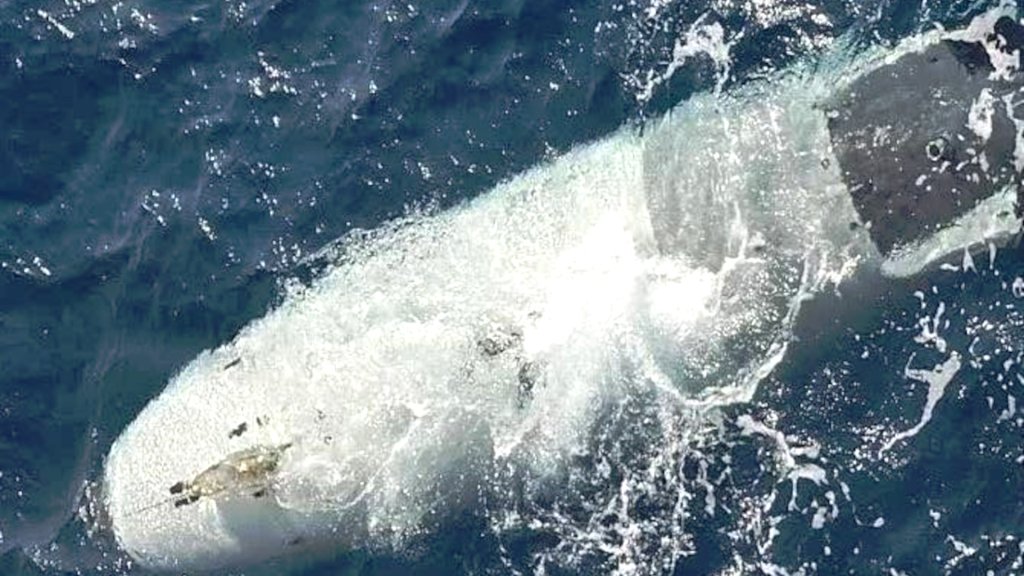
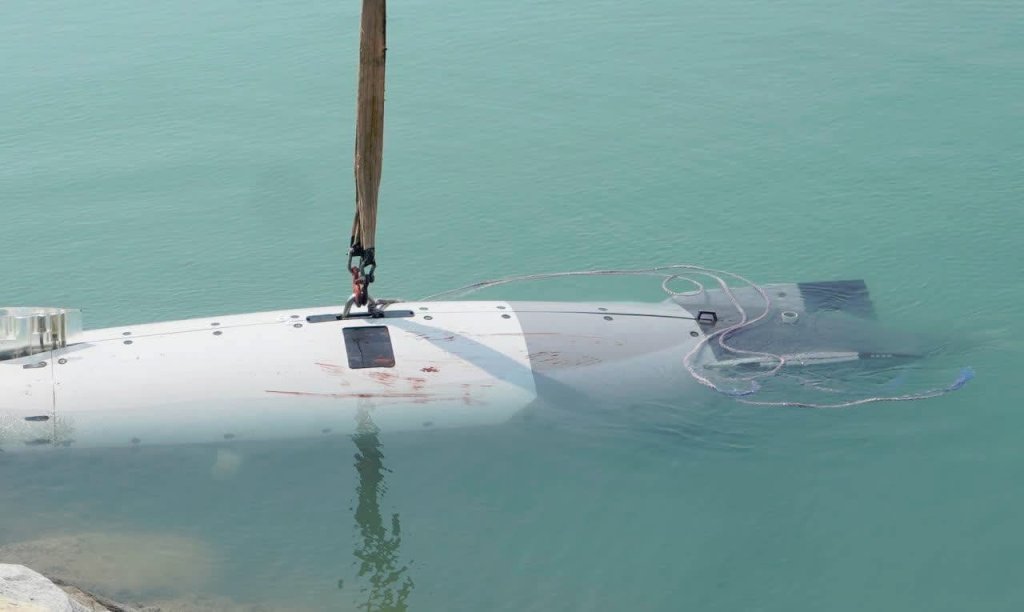
Authorities in Iran said earlier today that they had retrieved a U.S. Dive-LD uncrewed underwater vehicle (UUV) largely intact near the Strait of Hormuz. The regime in Tehran subsequently released pictures and video clips of the UUV being lifted out of the water, seen at various points below. This looks to be the first known instance of an operational deployment of the Dive-LD. This is still a relatively new capability for the U.S. Navy that only began entering service a little more than a year and a half ago. American officials have previously confirmed the use of UUVs, in general, to help keep the Strait of Hormuz free of Iranian naval mines, one of many threats that have dramatically slowed maritime traffic through this critical waterway.
Iran’s Islamic Revolutionary Guard Corps (IRGC) “captured one of the most modern, unmanned, and smart submarines … at the entrance to the Strait of Hormuz in a complex intelligence and operational action at dawn today,” according to a statement shared earlier today via Iranian state media. The exact circumstances surrounding the seizure remain unconfirmed.
“An underwater drone operated by U.S. forces malfunctioned more than a day ago,” a U.S. official said in response to our queries about the Iranian claims. “It was surveying regional waters in support of ongoing operations. The defective drone was an older model that neither collected sensitive data nor carried any classified sonar or radar equipment. U.S. operations in area waters continue.”
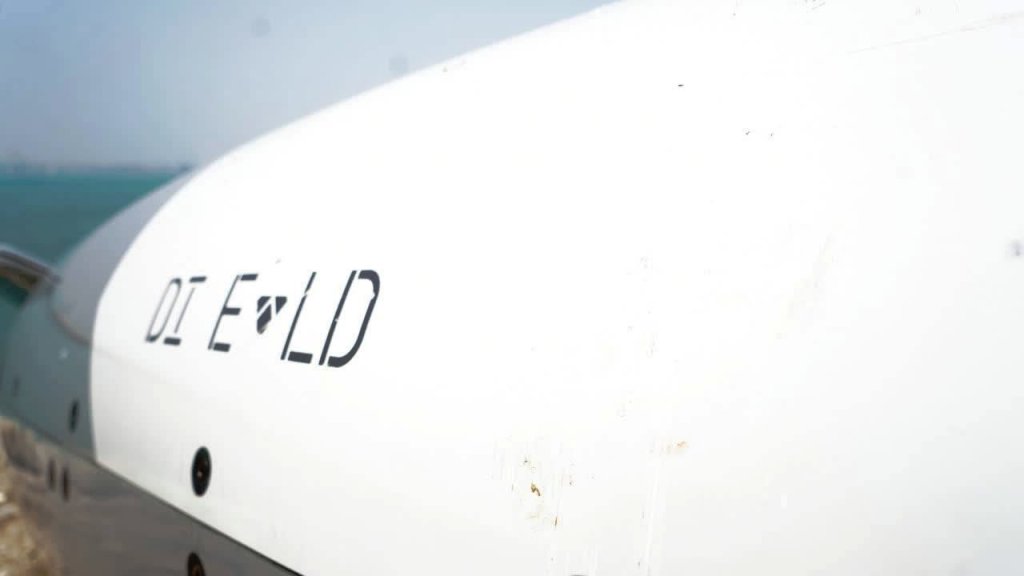
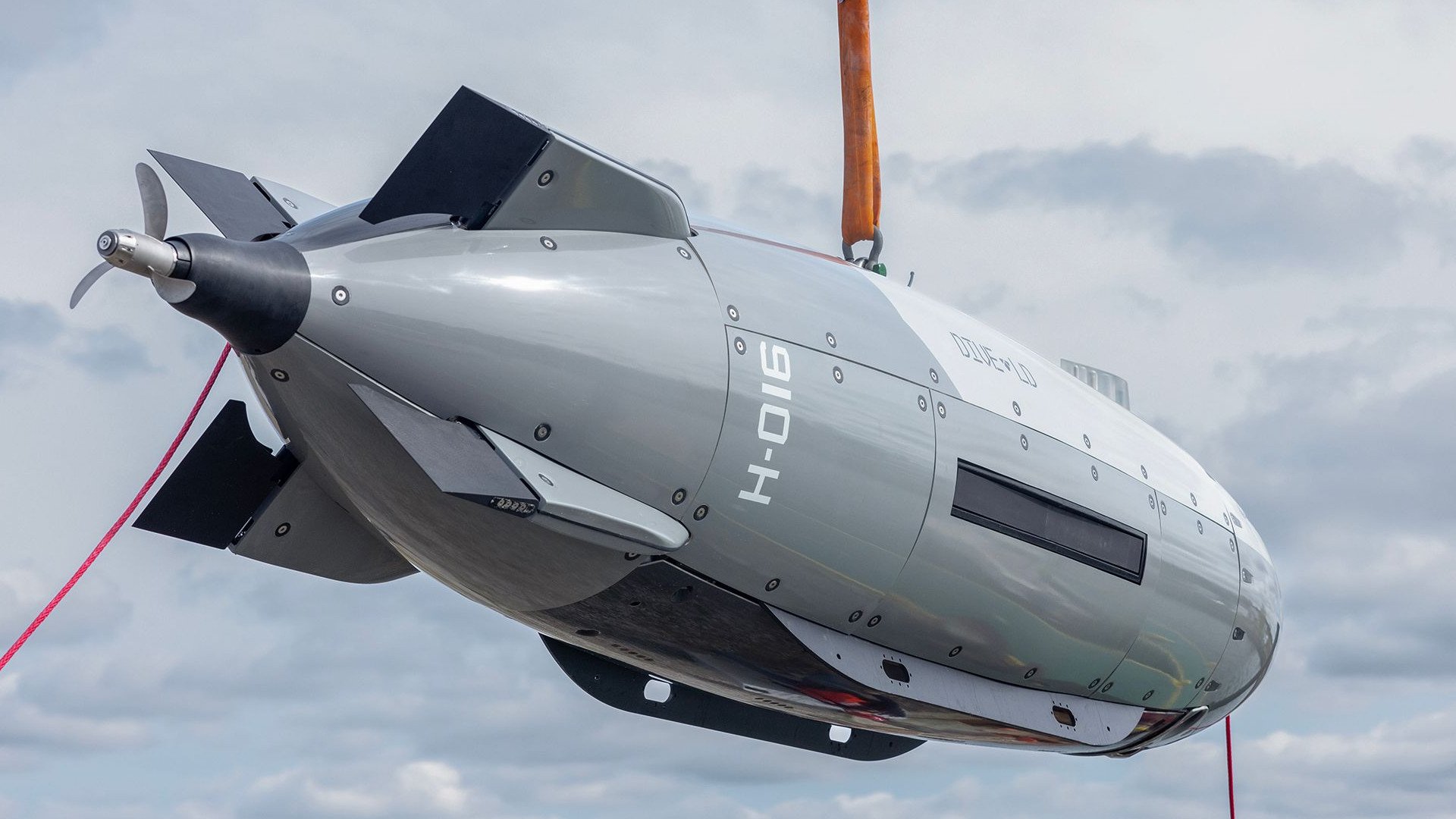
A top-down look at the Dive-LD Iran said it recovered. Iranian quasi-state media via XAn image showing the Dive-LD UUV being hoisted out of the water. Iranian quasi-state media via XThe Dive-LD markings, with the “V” worn away, seen on the side of the UUV. Iranian quasi-state media via X
The official did not confirm or deny the type of UUV in question, or that Iran had retrieved it. They also did not elaborate on the nature of the malfunction. TWZ also reached out to Anduril, which initially deferred any questions to U.S. Central Command (CENTCOM). However, they subsequently confirmed the loss of a Dive-LD operating in the region.
“Dive-LD is an attritable autonomous system, meaning it is designed from the outset to operate in dangerous environments where loss of the vehicle is an expected possibility. Its purpose is to keep warfighters out of the most dangerous parts of the undersea mission,” an Anduril spokesperson told us in a statement. “This vehicle had already delivered significant value operating thousands of hours in months-long operations in CENTCOM.”
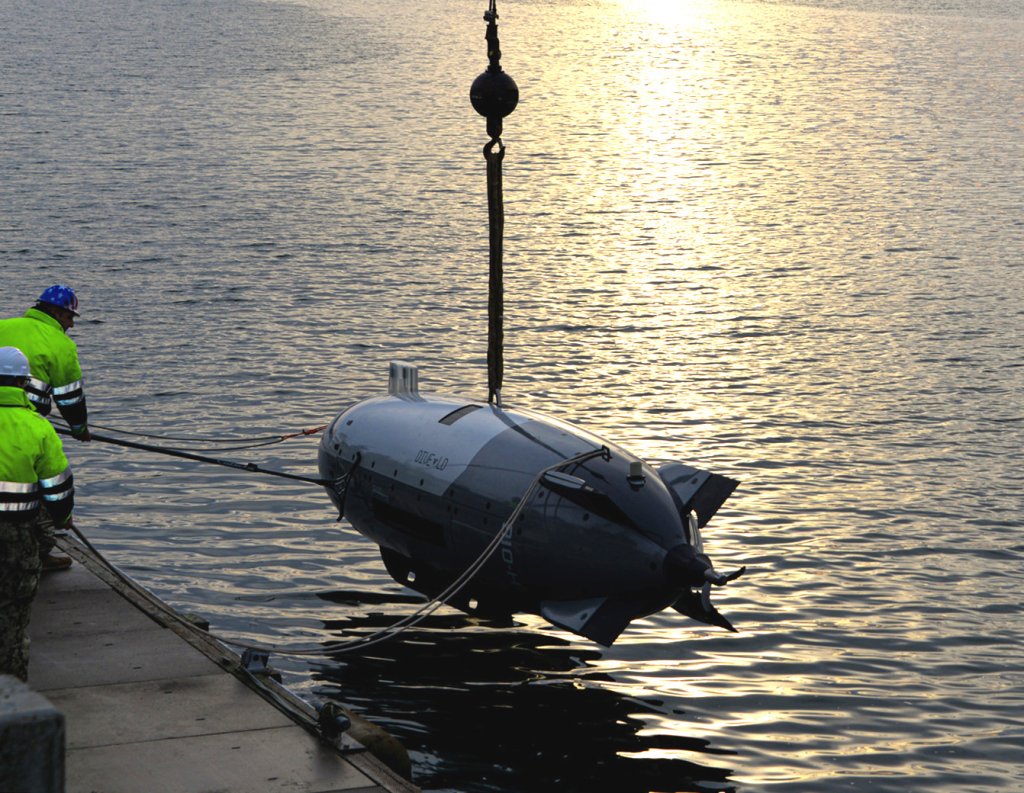
Categorized as a large UUV, the Dive-LD is 19 feet (approximately 5.8 meters) long, four feet (around 1.2 meters) in diameter, and has a gross weight of close to three tons. The design features a 3D-printed exterior, but is said to be capable of diving down to depths of some 19,685 feet (3.7 miles or 6,000 meters). The UUVs can also remain at sea for around 10 days at a time, depending on their exact configuration, and do so with a high degree of autonomy. Dive-LD was originally developed by U.S.-based Dive Technologies, which was founded in 2018 and then acquired by Anduril in 2022.
Anduril announced the delivery of the first Dive-LD to the U.S. Navy’s Unmanned Undersea Vehicle Group One (UUVGRU-1) in April 2025. The Navy had already released a picture of personnel training with one of these UUVs five months earlier. How many Dive-LDs are now in U.S. service is unclear.
Members of Unmanned Undersea Vehicle Group One (UUVGRU-1) and Undersea Vehicle Squadron Three (UUVRON-3) train with a Dive-LD UUV in December 2024. USN
The Dive-LD has a highly modular design. Anduril’s website says that the UUV can be configured for various military missions, including so-called intelligence preparation of the operational environment (IPOE); general intelligence, surveillance, and reconnaissance (ISR); mine warfare; and precision placement of objects underwater. IPOE refers to the collection of various types of intelligence on a specific area as part of planning for upcoming operations.
As mentioned, U.S. officials have previously stated that UUVs have been supporting mine-clearance operations in and around the Strait of Hormuz. Broadly speaking, uncrewed underwater platforms offer a way to find and record the location of naval mines using sonars, cameras, and other sensors, while helping keep friendly forces further away from potential threats. Afterward, depending on the type of mines that are found, various methods can be employed to neutralize them. Mine sweeping is time-consuming and dangerous, even in permissive environments, let alone when conducted under the threat of enemy attack.
This past weekend, the Financial Times newspaper in the United Kingdom published a story saying U.S. forces have been using UUVs in exactly this way to help clear Iranian mines, citing “people familiar with the operation.”
“Mostly at night, it [the U.S. military] sent Navy Seal [sic SEAL] divers, robot boats and specialised underwater craft into the perilous strait for a four-month mine-clearance mission,” according to FT‘s report. “U.S. Navy divers worked in small teams using inflatable-hulled craft. They located Iranian mines with the help of robot boats and submersibles – such as the U.S. Navy’s Common Uncrewed Surface Vessel – operating towed sonar arrays.”
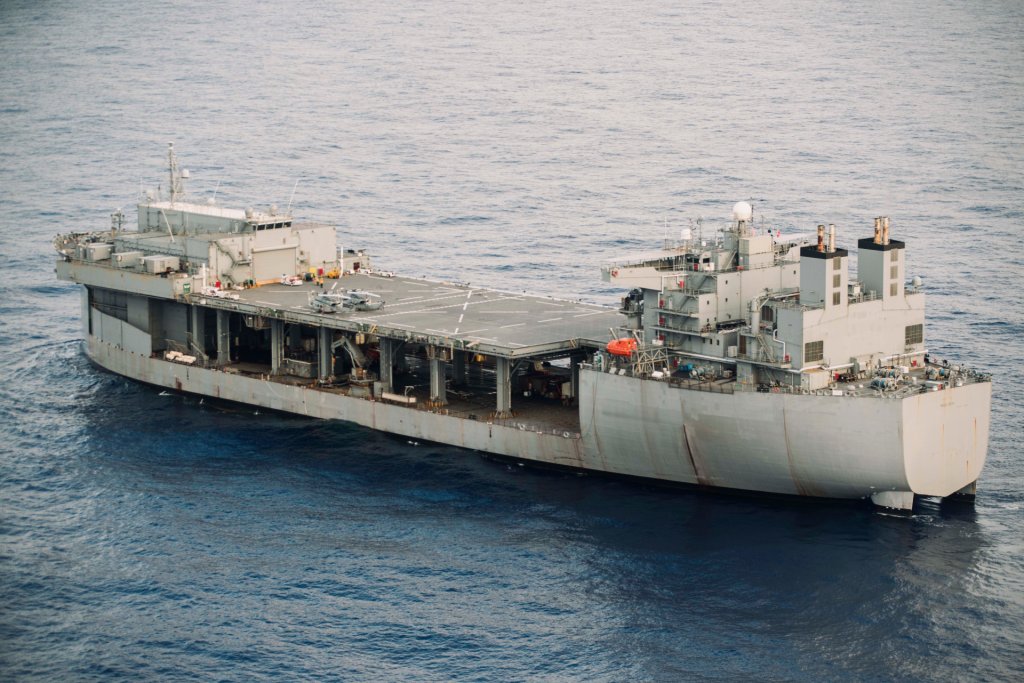
The Common Uncrewed Surface Vessel (CUSV) is a speedboat-sized drone boat that has been in Navy inventory since the early 2020s, explicitly for counter-mine operations. FT‘s story does not say where any USVs, UUVs, and/or boats full of divers were launched from as part of these operations in and around the Strait of Hormuz, but it posited that the Navy’s Expeditionary Sea Base ship USS Miguel Keith could have been involved.
A stock picture of the US Navy’s Expeditionary Sea Base ship USS Miguel Keith. USMC/Sgt. Luis Agostini
A trio of Independence class Littoral Combat Ships specifically configured for mine-sweeping duties, including using CUSVs, had been forward deployed in Bahrain before the start of the conflict with Iran in February. At least two of those ships, USS Santa Fe and USS Tulsa, emerged thousands of miles away in Southeast Asia in March, something TWZ was the first to report on. At the time of writing, those ships currently appear to be in Singapore. The exact disposition of the third of these LCSs, the USS Canberra, is unclear, but USNI News reported today that it is sailing in the South China Sea.
The Navy has a host of other warships in the Middle East that could support counter-mine missions. With a 10-day endurance, Dive-LDs, specifically, could potentially have been launched from locations away from the Strait of Hormuz, including friendly ports.
Dive-LDs could also be used for other missions beyond mine clearance in the region. As mentioned, the U.S. official told TWZ the UUV had malfunctioned while “surveying regional waters.” While this would be a relevant task in the context of a larger mine-sweeping operation, underwater surveys would be valuable for other purposes, too. For months now, U.S. forces have been facilitating the movement of ships in and out of the Persian Gulf via a route that hugs the Omani coastline, keeping them as far from Iranian threats as possible. Having up-to-date and highly accurate maps of the seafloor in these areas would be critical to ensuring they are deep enough for large commercial vessels to pass through safely.
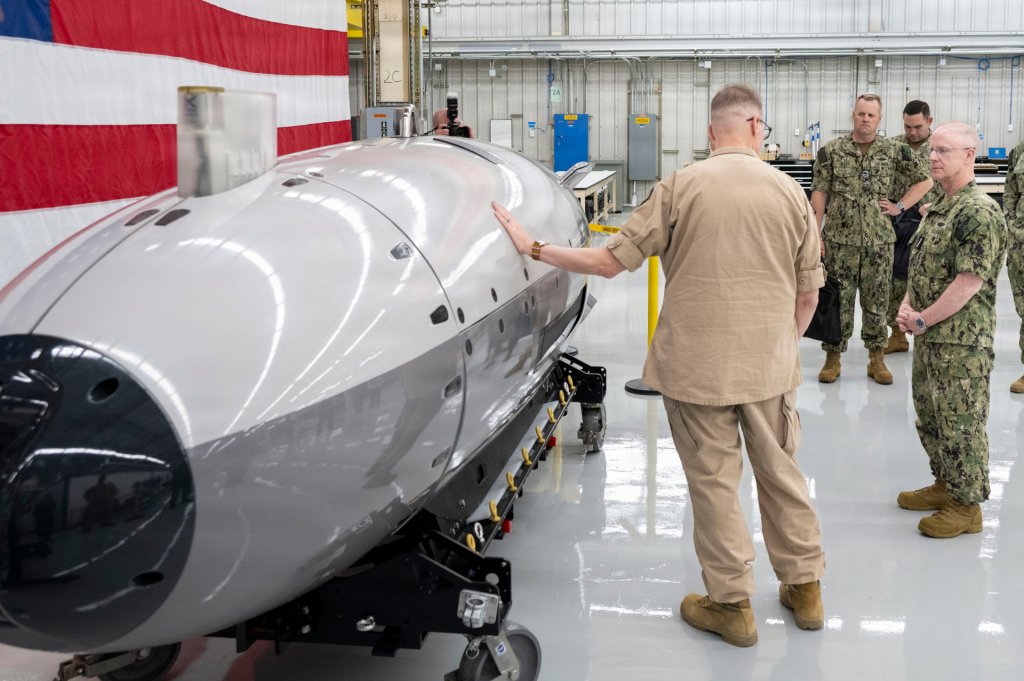
Chief of Naval Operations Adm. Daryl Caudle, at right, is shown a Dive-LD UUV during a visit to Naval Base Kitsap-Keyport, Washington, in June 2026. USN
IPOE and general ISR support, above and below the waves, would be part of any current or future U.S. activities in the region. This includes a new campaign of strikes targeting Iranian tanker ships that began last month and monitoring general port activity in Iran as part of the ongoing blockade.
Employing Dive-LDs in operations against Iran also provides a valuable real-world opportunity to prove out new UUV capabilities and associated tactics, techniques, and procedures, which could prove critical in a future high-end fight against a peer opponent like China. Dive-LD has been feeding into Anduril’s development of an even more capable large UUV called Ghost Shark, the first customer for which is the Royal Australian Navy. Ghost Shark is a militarized version of a design called the Dive-XL that followed the Dive-LD. In March, Anduril announced it was among those selected for the Combat Autonomous Maritime Platform Project (CAMP), an extra-large uncrewed underwater vehicle rapid prototyping effort being run by the Pentagon’s Defense Innovation Unit (DIU) and the Navy. Anduril did not say what platform it would be supplying for that project, but used a picture of Ghost Shark to illustrate the announcement.
The U.S. military is already known to have taken advantage of the ongoing conflict with Iran to demonstrate new weapon systems and other capabilities, including uncrewed maritime systems. In June, a Saronic Corsair drone boat conducted a first-of-its-kind at-sea rescue of the crew of a U.S. Army AH-64 Apache attack helicopter that had gone down in the Gulf of Oman. The following month, U.S. forces launched their first known kamikaze USV attack on Iran’s Bandar Abbas Naval Base using explosive-laden Corsairs.
With all this in mind, it is worth noting that the apparent loss of a Dive-LD intact to Iran is still significant, even if the core design is not brand new and if it does not have any especially sensitive mission systems onboard. It is not necessarily ‘exquisite,’ bleeding-edge technology as it is designed to be optionally attritable, but is still an advanced modern system in operational U.S. service now. Insights into its capabilities and limitations would certainly be of interest to Iran and others. What attempts the U.S. military made to recover the Dive-LD are also unknown. However, the fact that it was not destroyed before or while the Iranians were retrieving it points to American forces having completely lost any sense of its location beforehand.
For its part, Iran has long been a collector of foreign military hardware, primarily U.S. and Israeli, including drones of all types. The capture of a largely intact RQ-170 Sentinel in 2011 is the most famous (or infamous) example. The regime in Tehran also regularly works to reverse engineer what it recovers to varying degrees, and has promised to do the same with the Dive-LD. It could also share its latest prize with its own international partners, including Russia and China, for further analysis and exploitation. The Chinese People’s Liberation Army Navy (PLAN) notably has its own very active UUV programs.
On top of all this, the seizure offers propaganda benefits for the Iranian government, which is already making heavy use of the information space to push back against U.S. military and economic pressure.
The current conflict with Iran has only further underscored the important roles that uncrewed maritime platforms are playing in U.S. operations now, which are only set to keep growing as time goes on. As those same operations expand, so will the risks of capture and other losses.

 Login