In our relentlessly optimized world, Justin Neuman calls for more nothing. More time for both adults and kids to engage in free, unstructured play. More opportunities to play games without competition or scoring. More chances to do things without needing to produce outputs or achieve goals. More “transitional spaces” through which we can practice, imagine, and think.
For years, I’ve commuted on foot from Grand Central Station to 14th Street, 30 blocks, give or take. I told myself it was exercise, or that I was saving the subway fare, or that I liked the air. But the truth is I was thinking. Or rather, I was letting thinking happen. The lecture I couldn’t outline at my desk would assemble itself somewhere around 34th Street, the important points falling into sequence with my footfalls, the argument clarifying as if the motion itself were doing the editing. I wasn’t working on the lecture. I was walking in it, the way my kids were playing in Catan.
“Since becoming the chief, I’ve had the privilege of spending time with airmen throughout CENTCOM [U.S. Central Command],” said Wilsbach, who assumed the position in November. “I have walked flight lines, visited maintenance hangars, and stood inside operations centers where young Americans were managing missions overhead. Let me tell you about a few courageous airmen I met on my recent trip to the Middle East. They told me about their experience on the flight line during an attack.”
Burning Hangar
“As missiles were inbound, airmen sprinted toward bunkers,” the service chief said, without providing details about which base. “Moments later, a missile struck nearby in a hangar, and the aircraft inside burst into flames. The bunker withstood the blast, but the force of the impact damaged the door so badly it wouldn’t open, trapping the airmen inside.”
“Picture the scene,” Wilsbach explained. “Fire was spreading, an aircraft was burning only feet away, their teammates were trapped inside, and they had no way out. Despite the danger, airmen ran toward the flames.”
“A security forces NCO grabbed a pry bar and forced the door open,” he continued. “Calmly communicated with the airmen trapped inside. Seconds later, the ejection seat on the burning aircraft ignited, sending glass and metal fragments through the air. Finally, the door gave way, and the airmen escaped and ran for cover.”
“Wherever I went, I saw airmen with that steely-eyed look of warriors, determined to get the mission done and protect their fellow airmen,” the chief noted. “More than 30,000 airmen deployed in support of Epic Fury to a dozen locations. They served alongside soldiers, sailors, Marines, Guardians, and Coalition partners.”
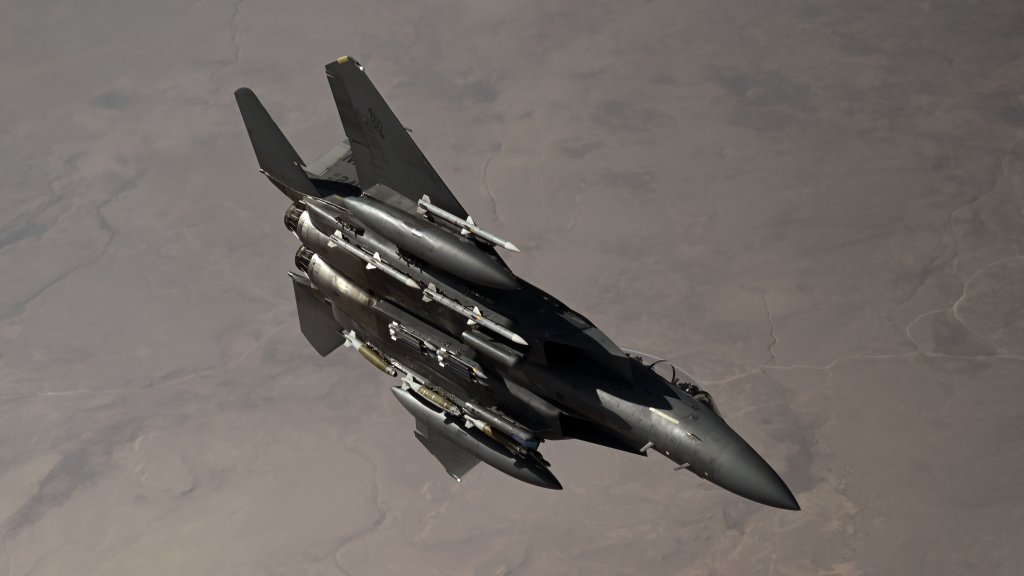
Launching F-15Es Under Fire
“Operation Epic Fury will be studied for its scale, precision, and speed,” said Wilsbach. “Over 38 days of combat operations, the Joint Force struck more than 13,000 military objectives. Five hundred aircraft executed 10,000 sorties, an average of more than 250 sorties every day. Our airmen accomplished this through 1,200 alarm reds while executing 48 airfield repairs and completing more than 420 reportable explosive ordnance disposal, long lonely walks.”
“That walk is exactly what the name suggests,” Wilsbach proffered. “EOD technician leaving a place of relative safety and approaching a suspected bomb or unexploded munition to render it safe for everyone else.”
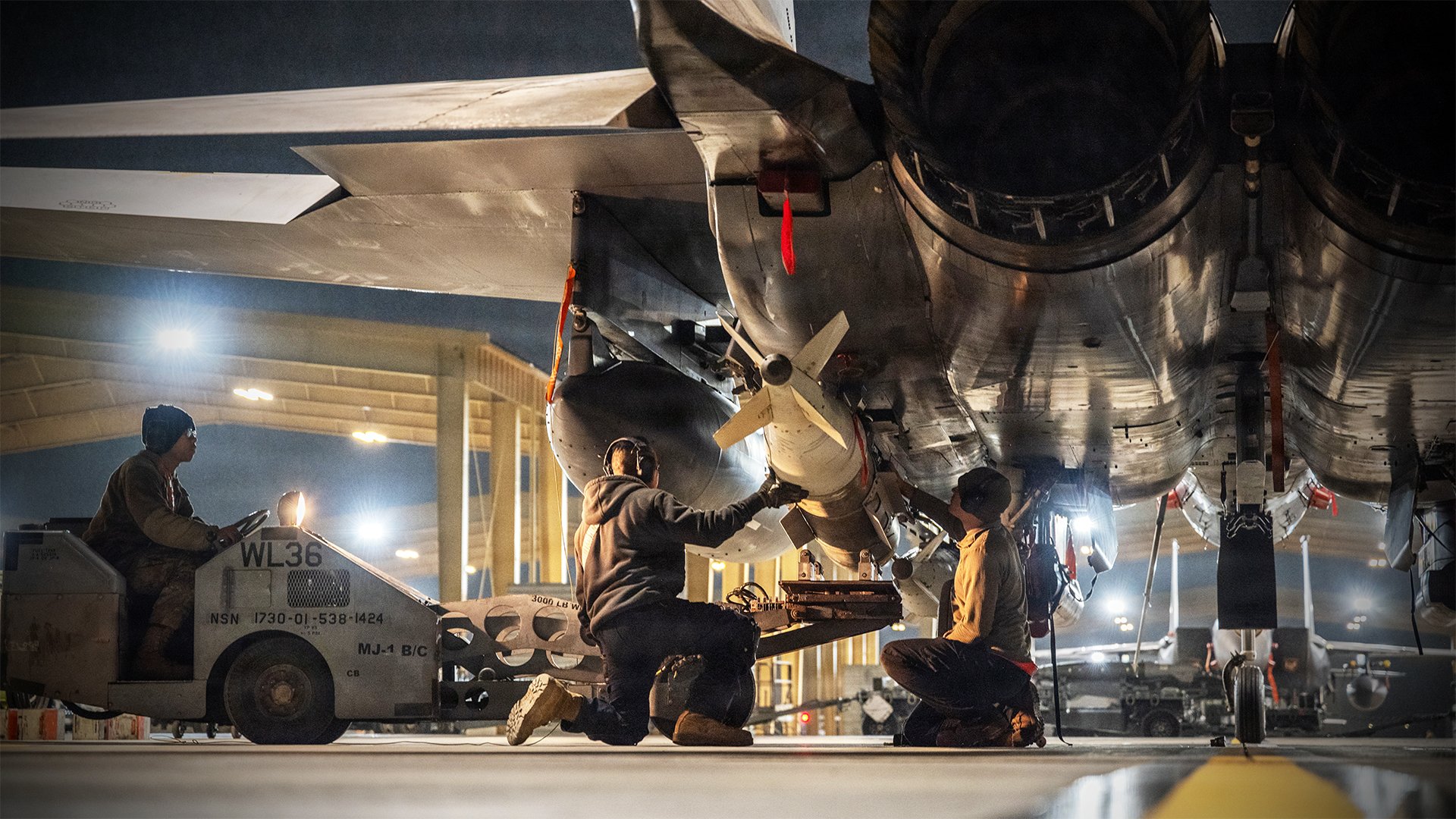
“Behind those numbers were thousands of decisions made by airmen who had to keep the mission moving while the enemy was actively trying to stop them,” Wilsbach stated. “One was Garrett, a staff sergeant F-15E crew chief from East Texas. He joined the Air Force to travel and see the world. We sure allowed him to achieve that goal, but I’m not sure the Middle East was exactly what he had in mind. On the second day of Epic Fury, Garrett was on the flight line launching four Strike Eagles when alarm red sounded. Airmen around him started running for shelter. Garrett’s adrenaline spiked. He knew exactly what that alarm meant. Danger was inbound, but his launch was not complete.”
A U.S. Air Force F-15E Strike Eagle in the CENTCOM region. (U.S. Air Force photo by Staff Sgt. Gerald R. Willis) Tech. Sgt. Gerald Willis
“A young airman was working with him, and Garrett sent him to the bunker,” the service chief continued. “Garrett stayed. The rest of the team was separated, so he armed the weapons and cleared the jet. Proceed… While everyone else ran for cover, he decided to stay. Garrett understood why those Strike Eagles were in theater. He knew they were one of their best lines of defense, so he stayed until the job was done. Only after the last fighter taxied out, Garrett finally took cover. Later, when someone asked why, his answer was simple: his fellow airmen needed those airplanes in the air.”
Swatting Down Drones Under Fire
“Hundreds of miles away, two senior airmen, Shanae and Nolan, tracked a swarm of enemy drones headed toward their base,” Wilsbach pointed out. “Shanae joined the Air Force to provide for her family. During the opening days of Epic Fury, she found herself protecting another family – the hundreds of airmen depending on her.”
“People sprinted for shelter as alarm red announced an incoming attack, but Shanae and Nolan stayed focused on the screens in front of them because every inbound track could be a weapon aimed at their teammates,” the general said. “Shanae is 27 years old, and Nolan is 21. Think about the responsibility we placed on these two airmen. Hundreds of lives depended on them to identify the threats and employ countermeasures. Every second mattered. The stakes were life and death. Together, Shanae and Nolan achieved more than 10 surface-to-air kills that night, defeating threat after threat before it could reach the airmen they were protecting. There were moments when they were afraid, and most people would be, but courage is not the absence of fear. Courage is overcoming it. They stayed locked on, trusted their training, and did the job everyone around them was counting on.”
Picking Up The Pieces After An Attack
“Peter is a senior airman from New York who spent nine months in the Middle East as an air transportation airman,” Wilsbach said. “With his team, he moved heavy ordnance, prepared missile systems, and downloaded Patriot equipment, while ballistic missiles and attack drones repeatedly target their airfield.”
“One of those attacks became very personal,” the service chief noted. “Enemy fire destroyed Peter’s living quarters and nearly everything he had brought from home. Imagine coming back after a 12-hour shift to find the wreckage of your hooch. The few pieces of home he carried halfway around the world were gone. Peter’s response told me everything I needed to know about him. He said that his possessions could be replaced, but the mission could not.”
Keeping The Reapers Flying
“More than 4,000 dynamic targets had to be found, identified, validated, and engaged,” Wilsbach said. “Remotely piloted aircraft, airborne ISR platforms, cyber operators, space professionals, and countless others turn enormous amounts of data into intelligence commanders could use.”
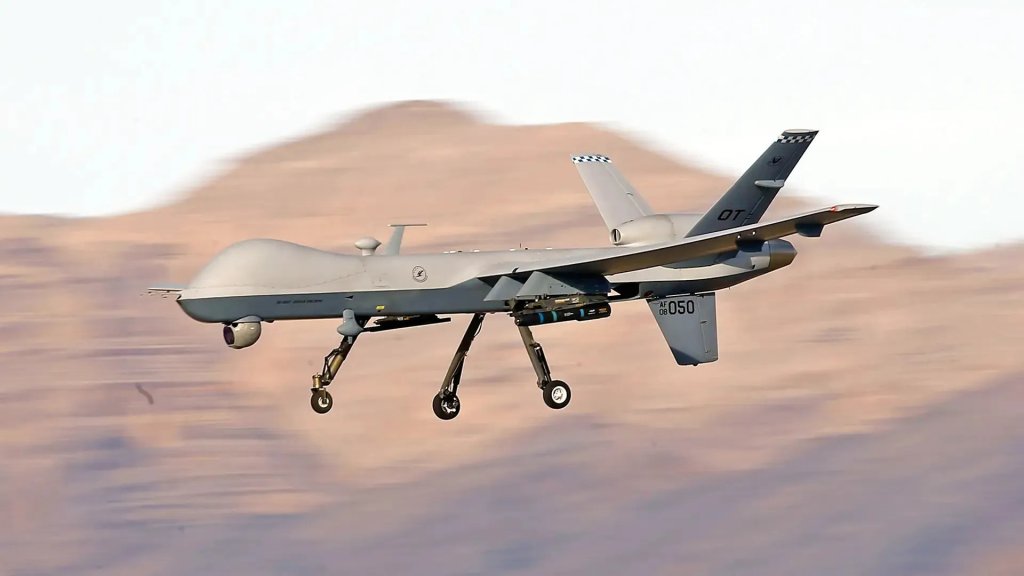
“Suit is a first lieutenant with a family tradition of excellence,” Wilsbach said of one MQ-9 Reaper pilot. “Both of his grandfathers served in the Army. I’m sure they wanted a better life for their kids, which is why his parents chose the Air Force. Today, Suit flies the MQ-9 and carries his family tradition forward. He also scored a perfect 100 on its physical assessment this year, so apparently excellence runs in the family.”
MQ-9 Reaper (USAF)
“MQ-9s flown by pilots like Suit supplied critical ISR and kinetic strike capabilities, launching them from bases within range of enemy fires,” said Wilsbach. “Suit planned and launched an MQ-9 combat sortie during an active attack. While missiles hit the airfield, Suit taxied out and got his Reaper airborne. He handed off control to another crew, then switched to the ground control station to recover a different MQ-9. His crew destroyed a priority target and then turned their sensors back toward their own airfield to inspect the runway for damage and determine whether operations could continue.”
“The MQ-9 was a workhorse for combatant commanders during Epic Fury. It provided real-time intelligence, struck 860 targets, and gave our forces the edge while denying the enemy freedom of movement. Airmen-like Suit made sure this asset stayed in the fight and maximized its impact. The MQ-9 success demonstrates the need for a capable follow-on aircraft that achieves the same effects with greater survivability, adaptability, and at a lower cost.”
Rescuing An F-15E Crew Shot Down Over Iran
“Peaches is an air battle manager from Texas,” the chief stated. “During Epic Fury, she found herself in the middle of a story of her own her family will be telling for generations. Peaches led 134 joint and coalition operators responsible for command and control across a complex battle space. Her team supported operations involving more than 1,000 one-way attack drones and 1,200 enemy ballistic missile threats. Those numbers are difficult to comprehend, but for Peaches, command and control was not a collection of symbols moving across the screen.”
“Every symbol represented something real: an aircraft, a threat, a crew, an airman,” he explained. “It was during this time two of those airmen became isolated inside of Iran. What followed became one of the defining moments of the operation. Over 50 hours, Peaches was one of the many who coordinated the combat search and rescue effort, leading her team to integrate 176 aircraft, fighters, bombers, tankers, intelligence platforms, and Air Force Special Operations Command forces that converged on one objective: bringing those Americans home.”
“Think about the complexity of that problem,” Wilsbach noted. “Aircraft operating at different speeds, altitudes, fuel states, with different sensors, weapons, and responsibilities, while an adversary was actively trying to stop them. Maintenance teams generated additional fighters. Tanker crews extended the range and endurance of the force, intelligence professionals track the threats. AFSOC [Air Force Special Operations Command] airmen brought specialized capabilities need[ed] to reach out to our isolated teammates and get them out. Every one of those airmen was doing something different, yet all were contributing to the same mission.”
“The Dude 44 rescue demonstrates why integration matters,” Wilsbach added. “To someone outside of our profession, committing that much combat power to recover two people might appear extraordinary. To an airman, the reason is simple: we make a promise to one another in our Airman’s Creed. I will never leave an airman behind. If you are isolated, injured, or trapped behind enemy lines, we are coming to get you. The courage and performance displayed during that mission was so impressive that 10 airmen received battlefield promotions. I had the distinct honor of promoting six of those heroes, ranging from staff sergeant to chief master sergeant during a recent trip. Everyone understood that their success depended on someone else doing their job. That is how our air and space forces fight.”
President Kassym-Jomart Tokayev called for deeper practical co-operation between Kazakhstan and BRICS countries in trade, logistics, artificial intelligence, critical minerals and water security, positioning the format as a platform for broader economic ties amid growing geopolitical fragmentation.
Speaking at the BRICS Plus plenary session in New Delhi on Sept. 13, Tokayev said Kazakhstan sees cooperation with the group as an opportunity to expand access to new markets, attract investment, strengthen transport links and advance technological development. President Kassym-Jomart Tokayev during the BRICS Plus plenary session in New Delhi on Sept. 13.
Tokayev described the current global environment as an era of “great fragmentation,” a term used in the 2026 Global Peace Index to characterize geopolitical confrontation, rising militarization, weakening multilateral institutions and growing trade barriers. He noted that BRICS, representing nearly half of the world’s population and around 40% of global GDP, has both the capacity and responsibility to help overcome global divisions and deliver concrete results. “Peace and strategic stability are necessary conditions for economic and sustainable development,”
Tokayev said, calling for a shift from the de-escalation of individual conflicts toward long-term stability based on political dialogue and diplomacy. Against this backdrop, Tokayev positioned BRICS as a platform for practical cooperation rather than an alternative to the existing international system.
“As a partner country, Kazakhstan views BRICS as an open platform for practical cooperation that complements the multilateral system with the central role of the United Nations and connects peoples, regions and markets,” he said. He added that Kazakhstan always seeks to find a “common ground on every difficult issue,” describing the approach as consistent with the country’s “balanced, goal-oriented foreign policy.” Anastasia Golyakova, founder of the ThinkBricks YouTube channel, said the approach reflects BRICS’ broader focus on resilience, innovation, cooperation and sustainability, priorities that have gained greater relevance amid rising geopolitical tensions.
Anastasia Golyakova, founder of the ThinkBricks YouTube channel. said closer cooperation among BRICS members could help address shared challenges while giving partner countries such as Kazakhstan greater access to the bloc’s growing trade, investment and technological opportunities. “BRICS gives much support to each other. So, from this point of view, for Kazakhstan, it’s a prosperous future, in my opinion,” Golyakova told The Astana Times.
Ayanangsha Maitra, an editor and a geopolitics specialist, echoed this view, saying Kazakhstan’s BRICS partnership could open new opportunities for economic cooperation and market access. “Although Kazakhstan is not a full BRICS member, its partnership with the grouping adds value at a time of growing geopolitical tensions and economic uncertainty,” Maitra told The Astana Times.
“BRICS could offer Kazakhstan additional avenues for cooperation with countries beyond its traditional economic and political partners,” he added. Expanding trade and investment The economic dimension of Kazakhstan’s BRICS engagement was central to Tokayev’s address. According to him, trade between Kazakhstan and BRICS members and partners was around $72 billion in 2025. “Having significant industrial, transit and technological potential, we intend to diversify trade, economic and investment ties with all BRICS countries.
As chairman of the Eurasian Economic Union, Kazakhstan supports the expansion of economic cooperation with BRICS and the advancement of work on concluding a free trade agreement with India,” Tokayev said.
Tokayev also called on the New Development Bank, a multilateral development bank established by the group, to consider financing commercially viable projects in BRICS countries, including Kazakhstan.
Maitra identified critical minerals, jewelry, fashion and textiles as areas with potential to expand Kazakhstan-India trade. “Despite Kazakhstan’s relatively modest population of around 20 million, the country has a strong entrepreneurial spirit and growing commercial links with India,” he said, pointing to increasing connectivity between the two countries.
Turning geography into connectivity Transport connectivity was another central element of Tokayev’s vision. “Last year, transit cargo volumes through Kazakhstan approached 40 million tons. Our long-term goal is to increase that figure to 100 million tons annually. Overall, our transit network already handles up to 85% of overland freight between China and Europe,” he said.
As part of the Trans-Caspian International Transport Route, Kazakhstan serves as a link between Asia and Europe through the Caspian Sea. Tokayev called for greater synergy between the Trans-Caspian route, China’s Belt and Road Initiative and the International North-South Transport Corridor. Maitra highlighted that Kazakhstan’s position within the EAEU, the Commonwealth of Independent States and the Shanghai Cooperation Organization provides access to major regional markets. Its participation in the International North-South Transport Corridor adds another layer of connectivity.
“BRICS could expand that network beyond Kazakhstan’s traditional regional partners. The partnership adds another dimension by opening access to markets across a wider group of countries,” he said. AI as a new layer of cooperation AI represents another area where Kazakhstan sees room for practical BRICS cooperation.
Tokayev said Kazakhstan is ready to use its computing infrastructure and national and UN digital centers to expand cooperation in AI and proposed establishing a BRICS Plus Partnership in Artificial Intelligence. The initiative, he said, could connect national AI centers, facilitate access to laboratories and research projects and support the development of multilingual AI solutions.
For Maitra, AI could also become an important area of Kazakhstan-India cooperation because the two countries bring complementary strengths. “India has a strong IT sector and a large pool of software engineers and technology professionals, while Kazakhstan has established connections across the CIS and wider Eurasian markets. That combination could help Indian technology companies reach markets where language and regional expertise remain barriers,” he said. Water security broadens the agenda Tokayev also linked sustainability to one of the country’s longstanding international priorities: water security. He reiterated Kazakhstan’s proposal to establish an International Water Organization as a specialized UN agency, arguing that global water governance remains fragmented and requires stronger international coordination.
“I invite the BRICS member states and partners to join the international consultations initiated by our country,” Tokayev said. Meeting with Narendra Modi On the sidelines of the summit, Tokayev also met with Indian Prime Minister Narendra Modi, highlighting India’s growing economic and technological weight and the expanding relationship between the two countries. Modi highlighted the potential for closer ties in high technology and the creative industries, including cooperation between Astana Hub and Hyderabad’s Cyberabad technology ecosystem. He also invited Kazakh representatives, particularly young people, to take part in the WAVES creative industries summit in Mumbai next year. The two leaders also discussed prospects for expanding economic ties between India and the Eurasian Economic Union.
Tokayev said Kazakhstan, as the current chair of the EAEU, supports negotiations on a free trade agreement between the bloc and India and is ready to help advance the process. Tokayev said around 600 companies with Indian capital operate in Kazakhstan, while nearly 150,000 Indian citizens visited the country last year. He also cited the large number of Indian students studying in Kazakhstan and cooperation between Astana and New Delhi within international organizations.
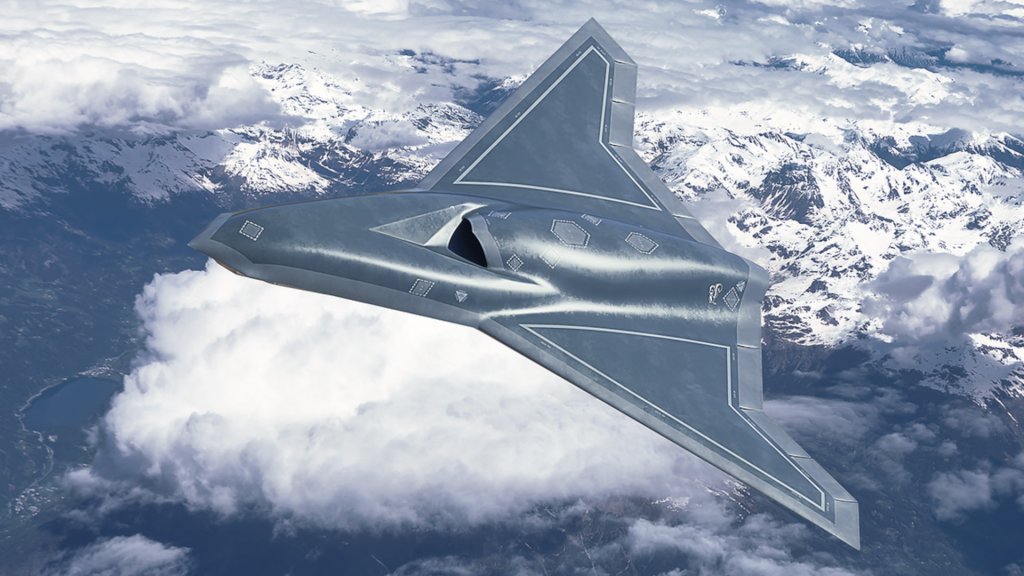
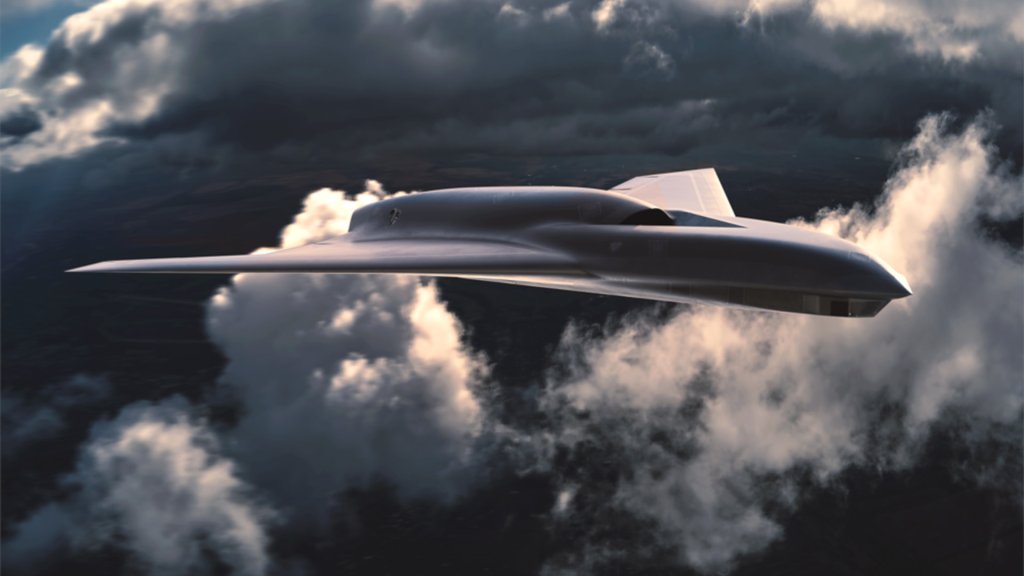
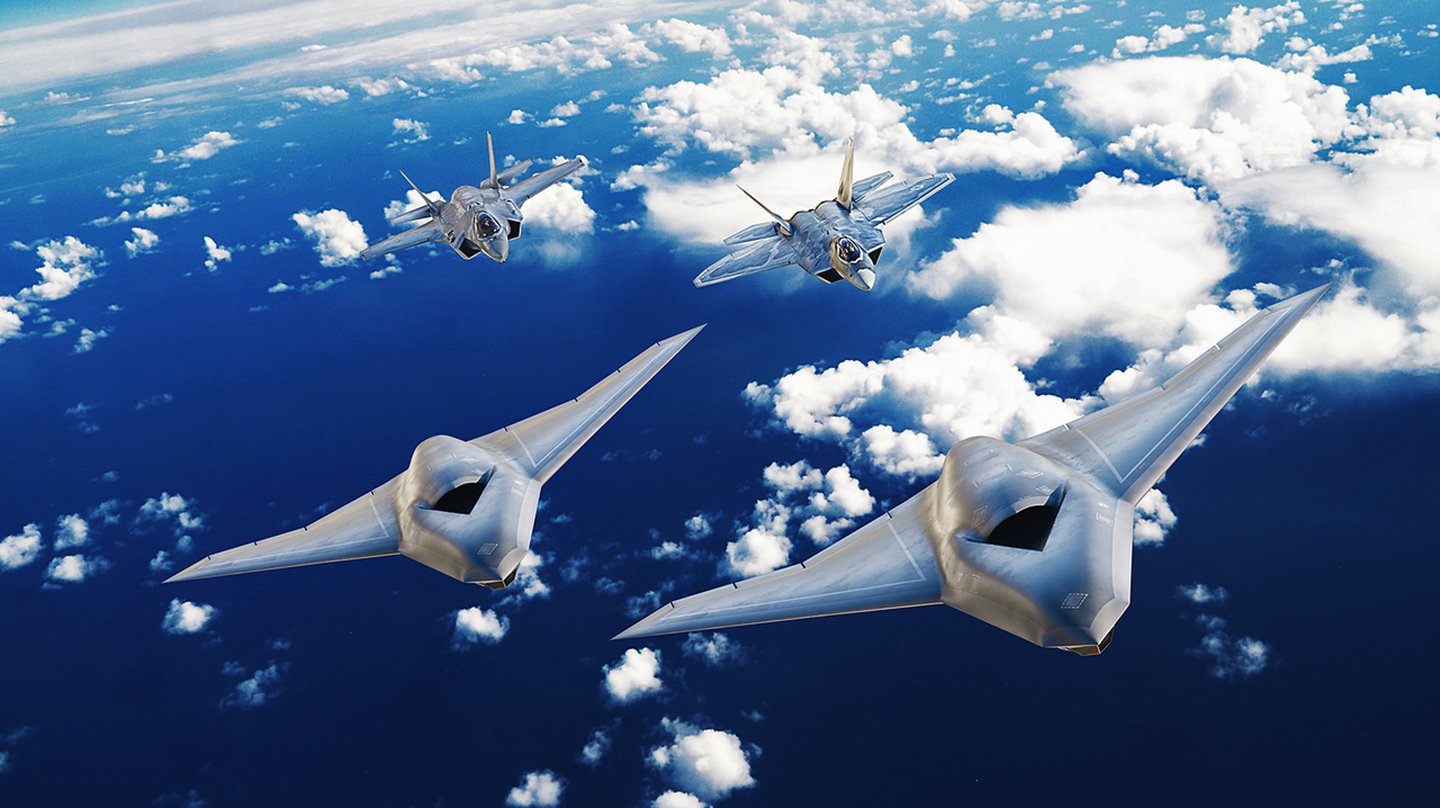
Lockheed Martin’s Skunk Works advanced projects division has shared all new information about its stealthy Collaborative Combat Aircraft (CCA) type drone design named Vectis, which it first unveiled a year ago. One of the most intriguing details is the true nature of its air inlet configuration, pointing to the premium on survivability the Skunk Works has placed on its CCA offering, especially when compared to other CCA designs.
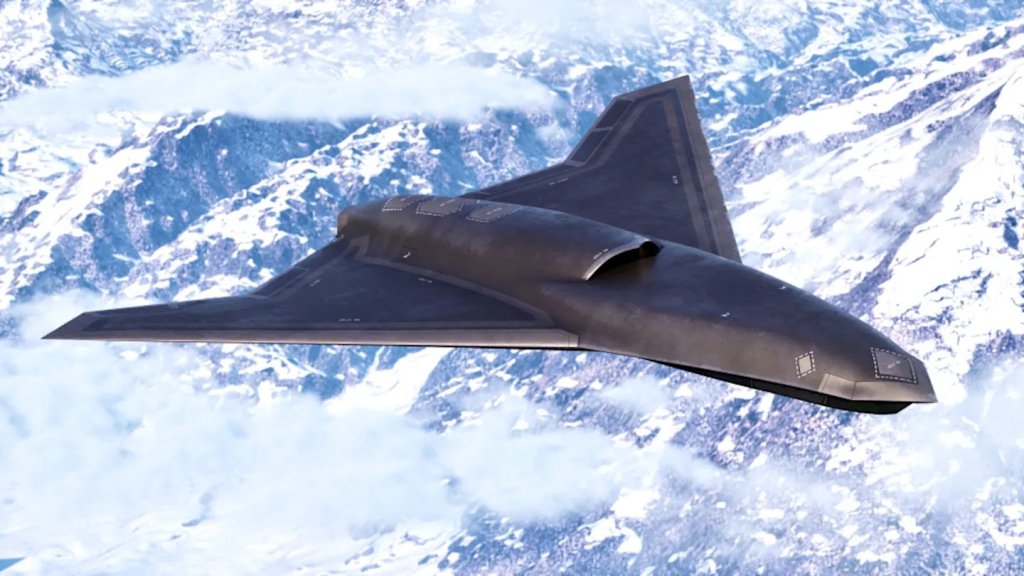
Vectis has a far more exotic, deeply recessed “submerged” top-mounted air intake than was originally disclosed when Vectis first came out of the shadows. This further underscores the heavy emphasis Skunk Works says it has been placing on its CCA’s ability to stay undetected and live to fight another day. Vectis is also the first tailless CCA design we have seen from a U.S. manufacturer.
An updated view of Vectis. Lockheed Martin Skunk Works Lockheed Martin
Ron Fehlen, Lockheed Martin Vice President and General Manager of Skunk Works, gave TWZ and other outlets an update on Vectis last week ahead of today’s start of the Air & Space Forces Association’s 2026 Air, Space & Cyber Conference. Skunk Works says work on constructing the first prototype of Vectis – a word that means lever or pole in Latin, and that Lockheed Martin has said reflects the ‘leverage’ the drone offers – is underway now. The goal is to have it flying by the end of next year. There are already plans to build four more prototypes using internal funding.
Check out the Skunk Works’ new Vectis video below:
Source: Lockheed Martin
“It is designed, as you can likely see, to be both survivable and affordable and flexible across the range of missions that our customers need, have needed, and continue to need into the future,” Fehlen said by way of introduction. “The technical specs, as you can imagine, are designed to meet and, in some cases, exceed the customer sets that we are working with and their requirements and their mission needs.”
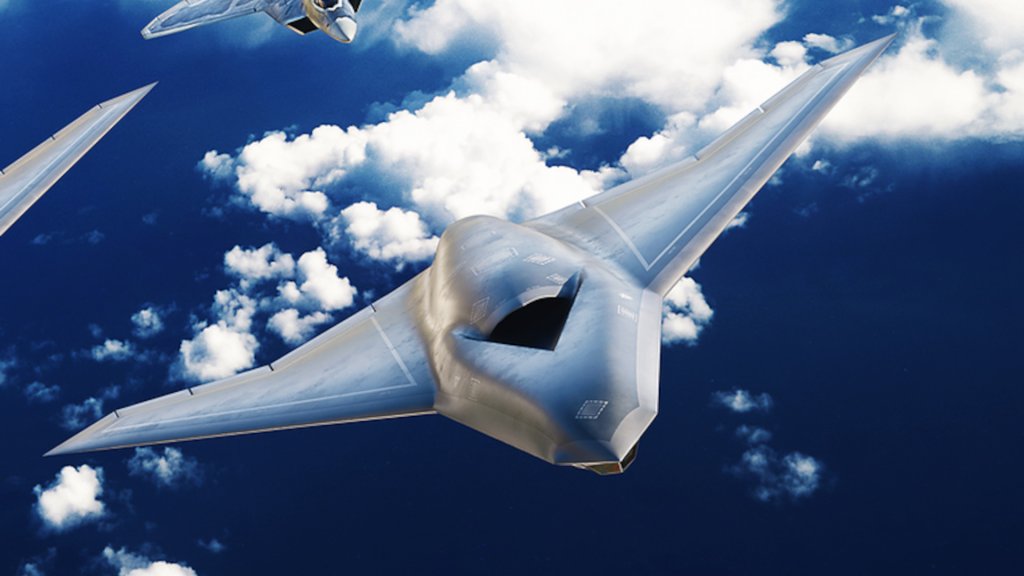
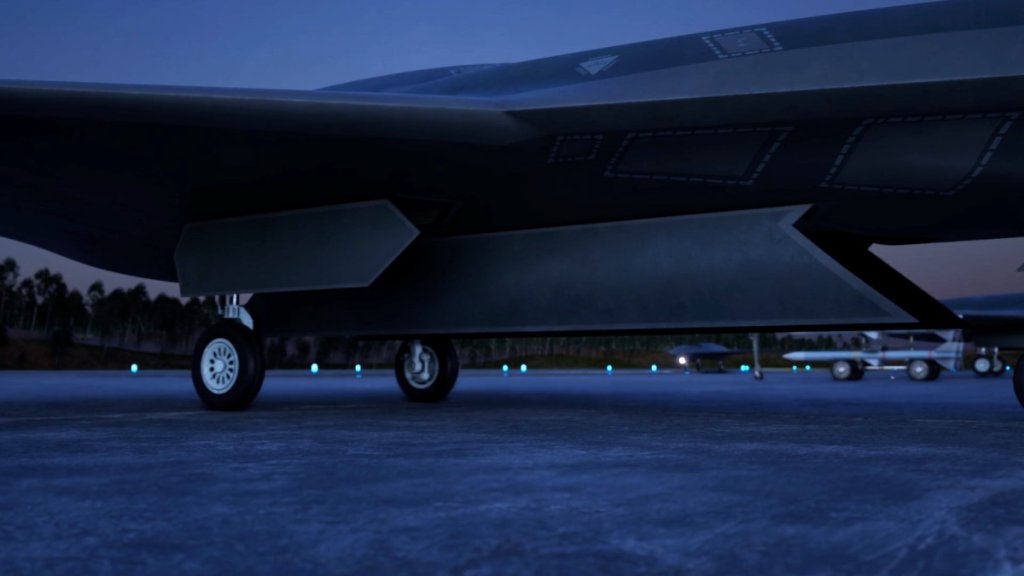
The basic core of the single-engine Vectis that we have seen now is largely unchanged from what had been shown at the time of the unveiling last year. It is still a tailless drone that has a lambda wing planform and air intake mounted on top of the central part of the fuselage, as well as a prominent chine line around the forward end and a shovel-like shape to its nose. New renderings do show revised positions for various conformal antennas and/or sensor apertures around the central fuselage. These are all established features of low-observable (stealthy) aircraft designs.
Skunk Works’ Fehlen also shared last week that Vectis is approximately 34 feet long and has a wingspan of around 38 feet. As a comparison, the Navy’s two-seat primary jet trainer, the T-45 Goshawk, is roughly 39 feet long by 30 feet wide.
The biggest new detail, as mentioned, is the shaping and position of Vectis’ air inlet. Fehlen stressed that this is actually not a new feature, and has “been a part of the design since the beginning,” but was not reflected in previously released renderings and scale models.
Another newly released rendering of Vectis showing the submerged intake. Lockheed Martin Skunk Works
The intake was depicted in the past as having a relatively straightforward configuration. It did appear to have a saw-tooth leading edge, another indication of stealthy design considerations. The visuals we have now show the intake is deeply recessed into the top of the fuselage, sitting behind a downward-sloping v-shaped channel.
A rendering of Vectis that Lockheed Martin released last year that did not depict the submerged intake. Lockheed MartinSkunk Works
Vectis doesn’t have a fully flush-mounted inlet, like what is found on Boeing’s MQ-25 Stingray tanker drone, among other designs, but it is close to it, very loosely similar to what’s found on the B-21. The rear is slightly raised above the v-like pocket where air flows down into the intake. Flush or near-flush intakes offer particular benefits when it comes to low-observability (stealthiness) and aerodynamic efficiency, but are also notoriously problematic, especially in certain flight regimes, as you can read more about here. This is even worse for high-performance aircraft that have a wide operating envelope and have to maneuver at higher angles of attack. The CCA would likely fit into this category, at least to a degree.
When it comes to Vectis, “there’s a lot of different reasons behind it [choosing this submerged intake configuration], but I’ll pick up on a couple here for you,” Skunk Works’ Fehlen explained. “The first is it reduces that frontal drag. So, anything sticking out in the wind, as many – as all of you know, I’m sure, creates drag on the aircraft itself. So, if you want better performance from a range, et cetera, then you need to be able to reduce that drag, and that’s an example.”
“It’s also interesting to me, particularly as the Air Force speaks about Agile Combat Employment, the ACE concept, as you’re aware. There is an advantage to having an inlet on the top of the aircraft if you’re out in more austere environments and you’re concerned about FOD [foreign object debris] pickup off of a runway,” he added.
Another newly released rendering offering a different perspective on the submerged intake. Lockheed Martin Skunk Works
Fehlen also confirmed that the inlet’s design has to do with survivability, but did not elaborate in any detail, which is unsurprising considering the sensitivities of such design elements. The original Vectis promotional video Lockheed Martin put out last year, seen below, showed an S-shaped duct behind the air intake and exhaust shrouding, which are features designed to further reduce a platform’s signature.
In terms of performance, Lockheed Martin has yet to share any hard specifications it is targeting for Vectis, or disclose details about the engine the design will use. Fehlen did also highlight the drag-reducing performance advantages of the drone’s tailless design, including for maximizing range.
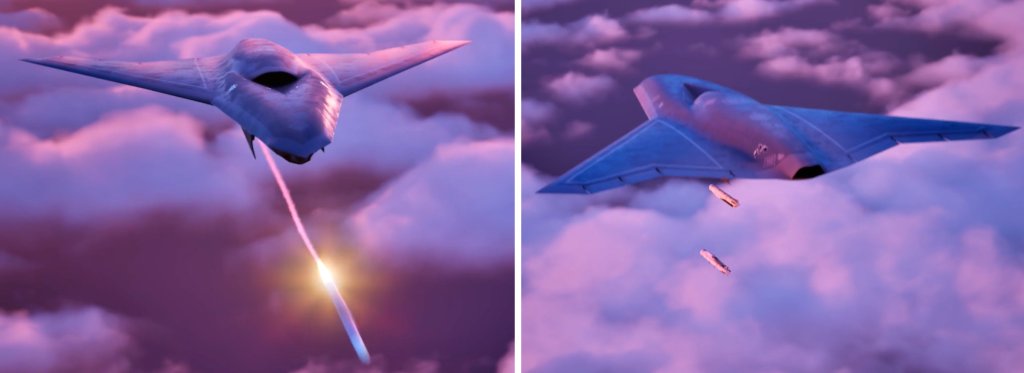
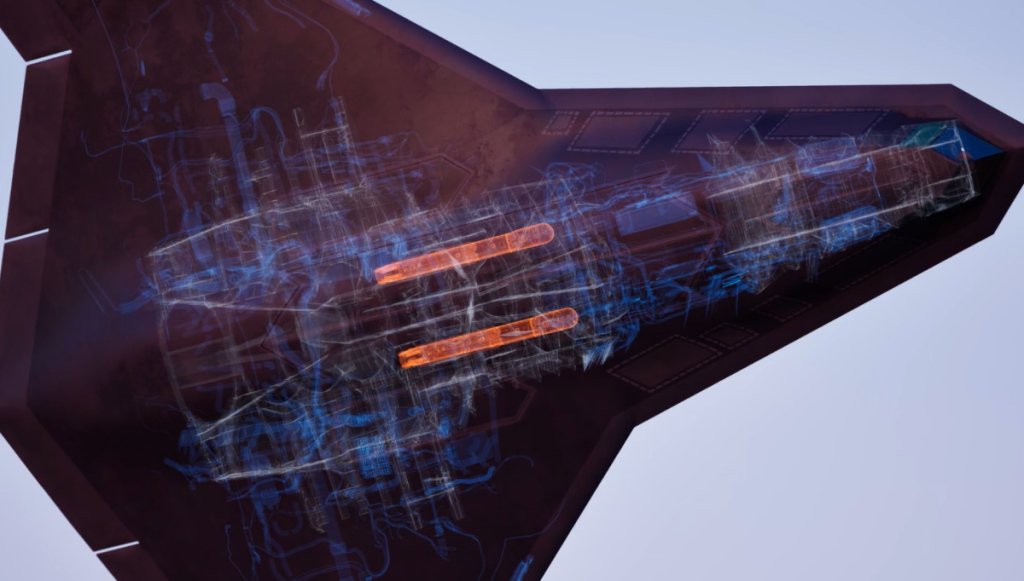
Details about what other capabilities Vectis might have are still limited. Fehlen noted that the design is expected to be capable of both air-to-air and air-to-ground mission sets. In a new computer-generated promotional video, seen earlier in this story, the drones are depicted launching what look to be AIM-120 Advanced Medium Range Air-to-Air Missiles (AMRAAM) and GBU-53/B Small Diameter Bomb II (SDB II) glide bombs, also known as StormBreakers. The AIM-120 has already emerged as something of a default initial weapon for Western CCA-type drones. The video also confirms Vectis has an internal bay that is able to accommodate at least two munitions, likely the size to accommodate medium-range air-to-air missiles.
Captures from Lockheed Martin’s new Vectis promotional video depicting the drones launching what looks to be an AIM-120 missile, at left, and a pair of GBU-53/B SDB IIs, at right. Lockheed Martin capturesA rendering of Vectis with its elongated internal bay open from the new promotional video. Note the AIM-120 in the background. Lockheed Martin captureAnother screen capture from the new Vectis promotional video showing two munitions loaded inside the drone’s internal bay. Lockheed Martin capture
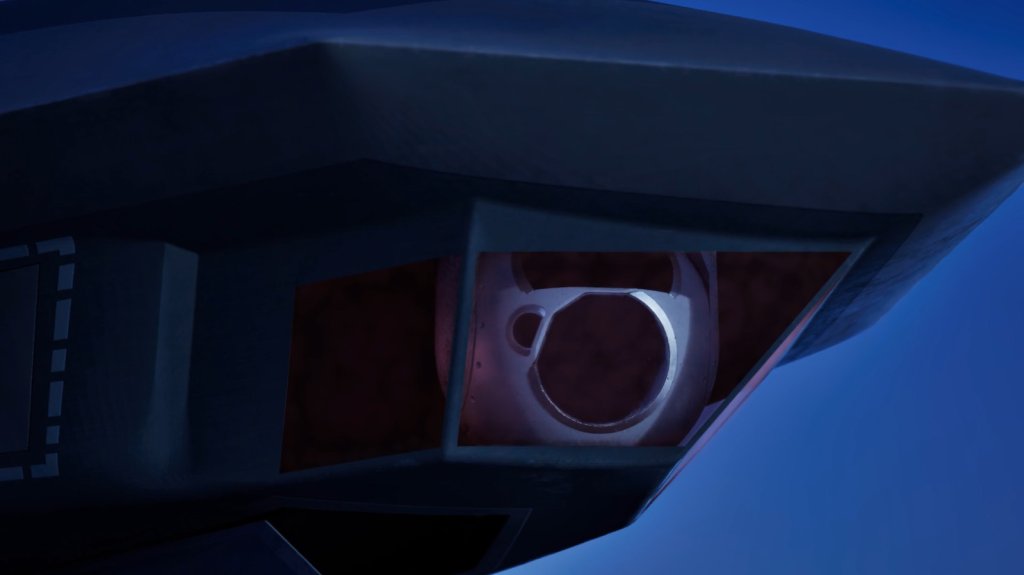
In addition, the video shows Vectis as having a traditional electro-optical/infrared sensor turret behind a stealthy faceted enclosure under the nose. When the drone was first unveiled last year, TWZ noted that it could carry a variety of sensors, including compact radars and/or infrared search and track (IRST) systems, which would be particularly relevant in the air-to-air role.
The sensor turret inside the stealthy faceted enclosure as seen in the new Vectis promotional video. Lockheed Martin capture
During the press call, Skunk Works’ Fehlen reiterated that Vectis is being designed with an eye toward modularity and open-architecture systems. This, in turn, will make it easier to integrate new and improved capabilities and functionality down the line. Open architecture is at the heart of every CCA offering we are aware of at this time.
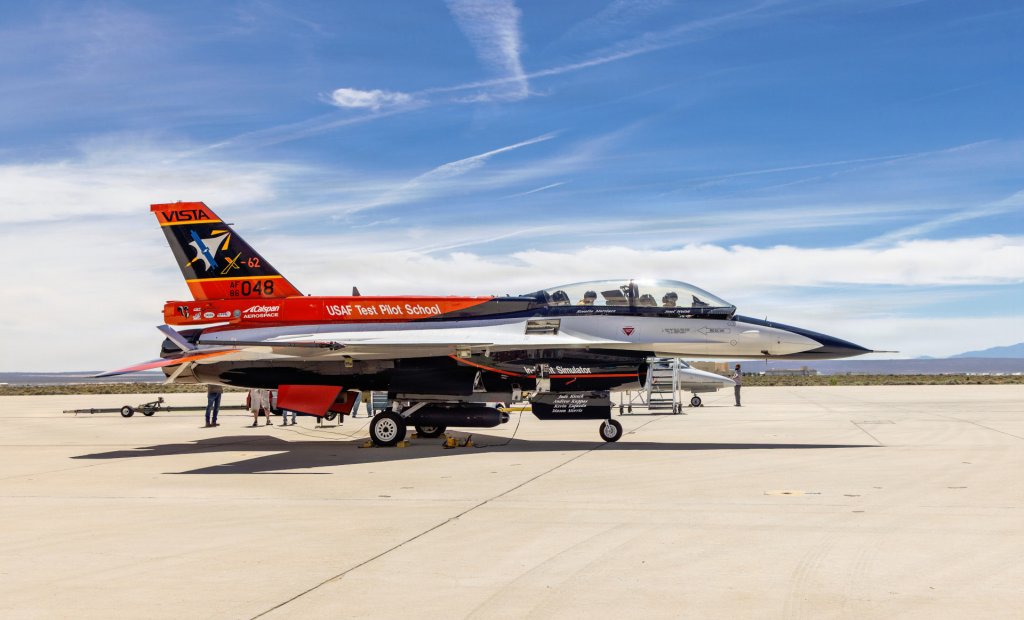
Fehlen further highlighted Lockheed Martin’s extensive work to date on advanced autonomy packages and crewed-uncrewed teaming capabilities. This includes the development of the Multi Domain Combat System (MDCX), an “autonomy platform” that is already central to the U.S. Navy’s plans for the carrier-based MQ-25 Stingray. The head of Skunk Works also explicitly called attention to autonomous air intercept testing conducted in cooperation with the Air Force earlier this year using the unique X-62A test jet, and said that work is feeding into Vectis’ development.
The X-62A test jet seen during the autonomous air intercept testing earlier this year. USAF
On top of all this, Lockheed Martin is already actively laying the groundwork for the U.S. Air Force’s F-22 and F-35 fighters to control future CCA drones, via in-cockpit touchscreen-type user interfaces, likely involving tablets, at least at first.
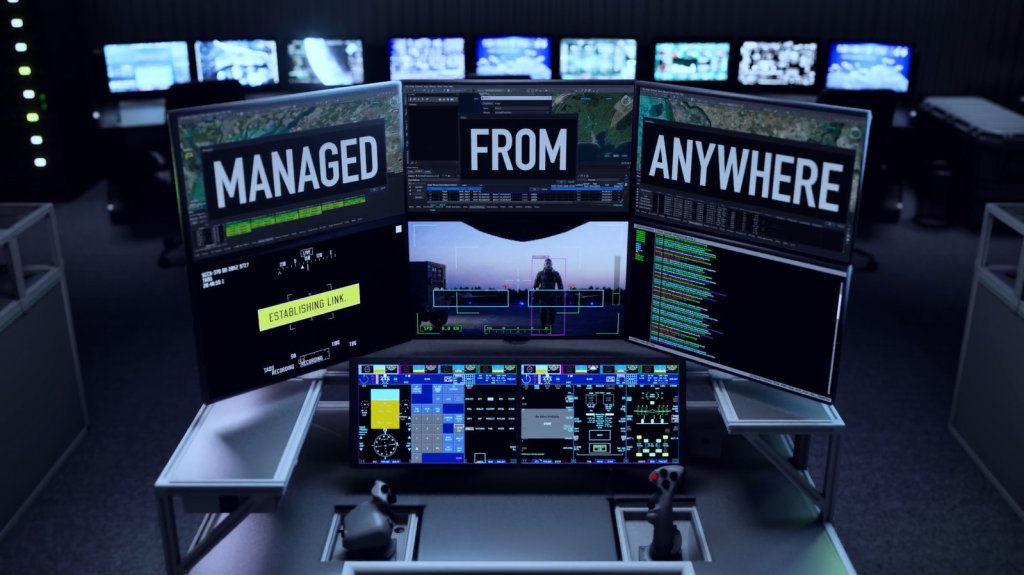
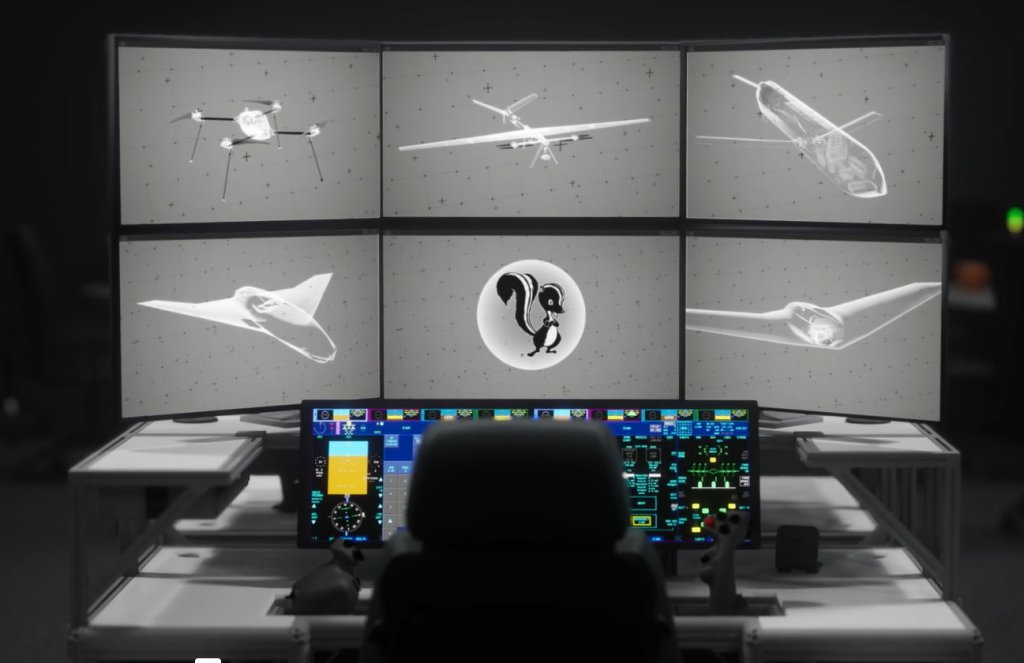
The new Vectis promotional video also shows a traditional ground control station being used to direct the drones, but with the phrase “managed from anywhere” on the screens, as seen below. Fehlen did say that any specific requirements for autonomy, command and control, and other operational capabilities would be up to individual customers, and that third-party vendors could be involved.
Lockheed Martin
Beyond Vectis’ design and expected capacities, Fehlen touted the speed at which work on the first physical prototype is progressing, and highlighted the use of digital design techniques and advanced manufacturing processes.
“This team, when kicked off, took a design on a napkin, which we will likely frame one day in my office … two months later, they were in the wind tunnel validating the design,” he said. “So, in under two months, we’re already getting in the wind tunnel straight from off of a napkin. We had the first digital build in six months, and the first part release in eight months. So it gives you a touch of a sense for exactly how fast we’re moving.”
“This aircraft was designed in a fully integrated digital environment,” he added. “Really, it’s creating that unbroken digital thread from the design all the way through sustainment.”
“We’ve used advanced design and manufacturing processes developed for many years under our own internal investment … for other Skunk Works programs, we’ve pulled that into this, of course, to continue to advance our manufacturing as well as the advanced design capability,” Fehlen continued. “They’re using real production processes.”
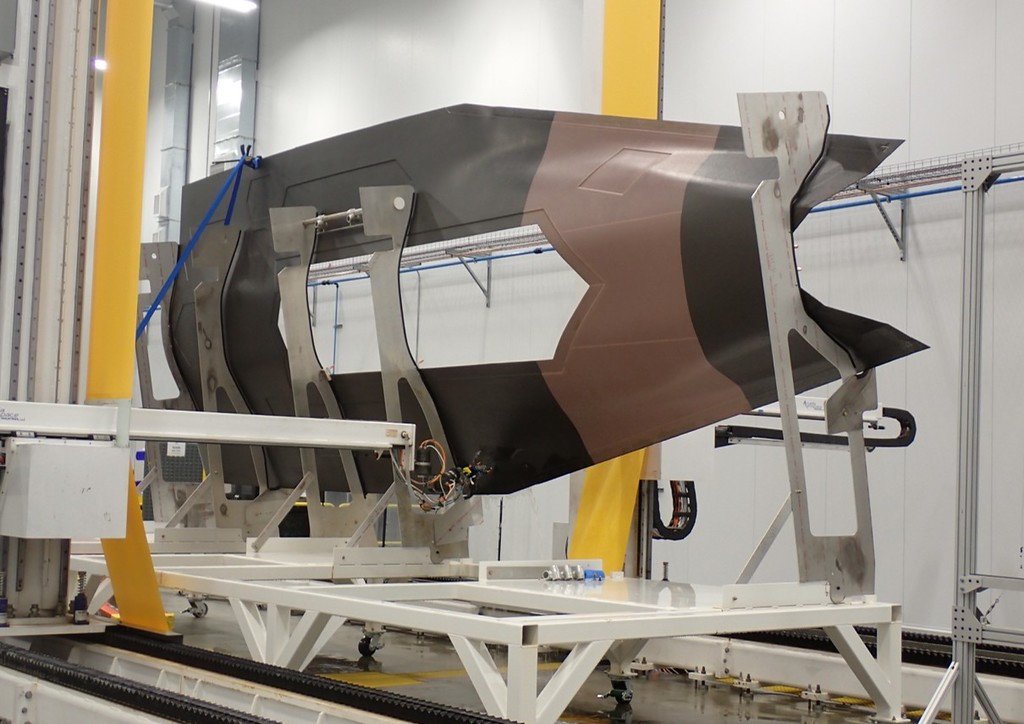
A central fuselage part of the first Vectis prototype now under construction. Lockheed Martin Skunk Works
The Skunk Works boss stressed that this approach offers advantages not just for accelerating development and prototype, but also for reducing costs and positioning Vectis to enter full-scale production.
“It gives you the reliance and the confidence as you continue to move forward that you’re ready to off and build these things because you’re using those real production processes,” he explained. “An example of that is a technique that we call minimal tooling determinant assembly. It’s a technique that really enables an increased level of affordability and speed through really reducing the amount of touch labor required and increasing the first pass yield. We’ve seen, in many cases, an 80 percent reduction in labor hours to build up the aircraft itself.”
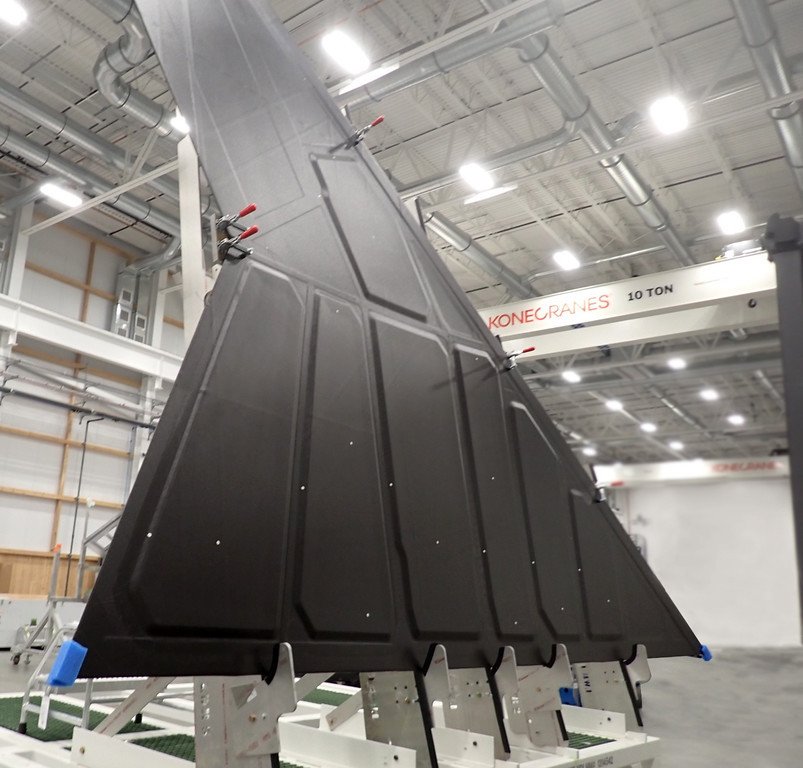
Part of one of the wings for the first Vectis prototype. Lockheed Martin Skunk Works
Fehlen made an indirect reference to flat-pack furniture from IKEA to provide additional context, in extremely general layman’s terms, about what this technique offers.
“That’s what we’re talking about, that idea that it can come together very quickly, limited touch, and limited error. We constrain that to reduce the number of labor hours, which is not just a cost implication, but also buoys the speed and how fast we’re going to be able to produce them,” he said. “You can imagine, as well, there’s a lot of simplification that goes into this. We have significantly reduced the part count. Again, back to simplify the build so that you can have a positive impact on speed and affordability, not new techniques, but we’ve applied them here with vigor to ensure that we are getting to the cost point that the services and our customers need in order to make this system effective.”
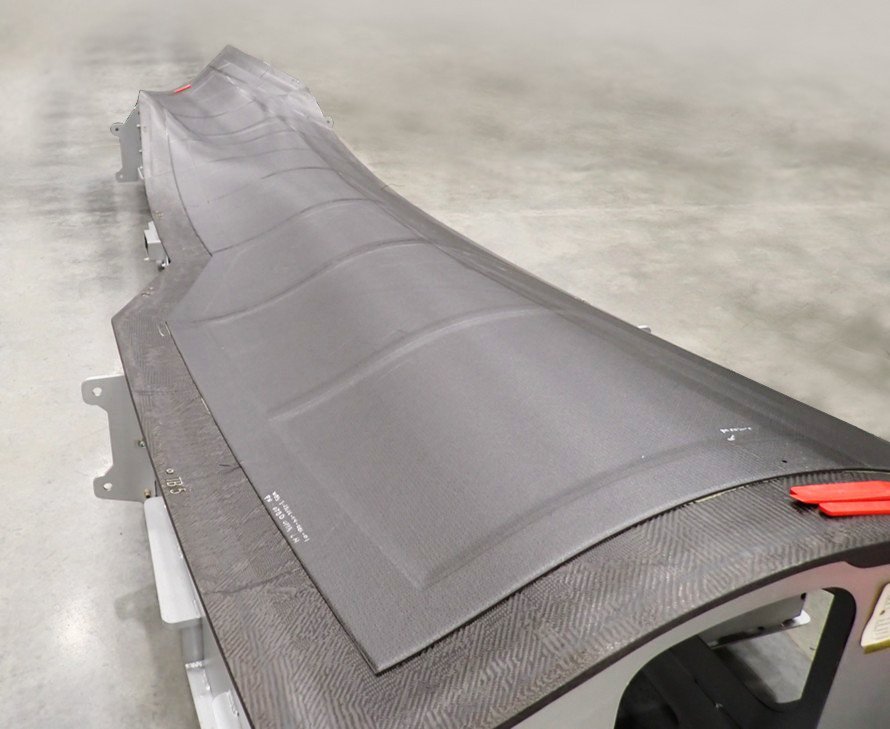
Another element of the first Vectis prototype, which is now being built. Lockheed Martin Skunk Works
In terms of actual unit cost, “we’re always looking at, and, of course, we’re targeting to be [at] the CCA competitive price, so we’re very cognizant of it and make trades associated with that,” according to Fehlen. Vectis is “focused more on the CCA side of the house, and obviously the price points that are highly relevant in that regime, and then, of course, making trades along the way, and to make sure that we can meet it.”
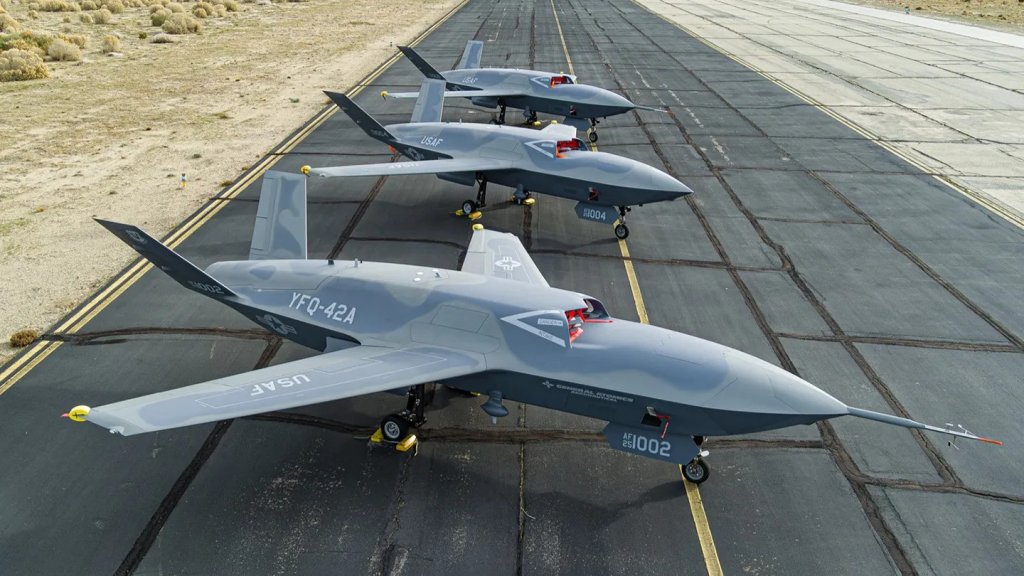
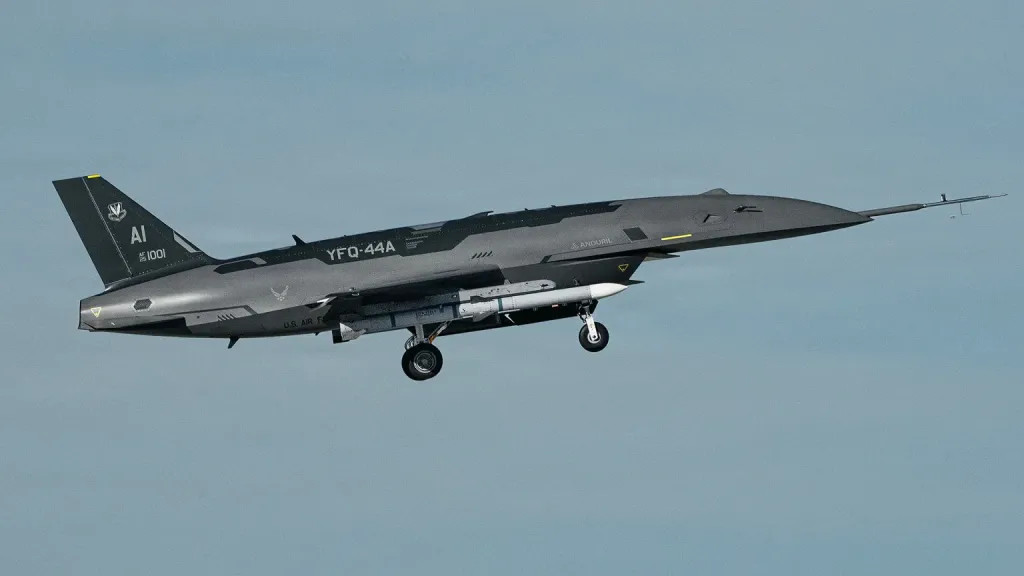
The head of Skunk Works was responding here specifically to a question that mentioned the Air Force’s target of a roughly $20 million unit price for drones acquired under the first phase, or Increment 1, of its CCA program once full-scale production is achieved. The service announced in June that it was ordering fleets of both of the Increment 1 designs now in development, General Atomics’ FQ-42A Dark Merlin and Anduril’s FQ-44A Fury. The Air Force has plans for at least one more increment to this program, and has said in the past that it could pursue lower-cost (and less exquisite) designs.
A trio of YFQ-42A Dark Merlin prototypes. GA-ASIA YFQ-44A Fury prototype with an inert AIM-120 missile under its wing. USAF
“While not discussing suppliers, you can imagine we are ensuring that all of the decisions we make in the development and then the build out of these aircraft are designed around achieving that competitive cost point, while at the same time maximizing the amount of capability,” Fehlen added. “Those are the things that our customers are looking for, and we put it in a survivable solution.”
“There are some [companies] that are really going down the attritable [route], which defines a different price point than the CCA community has been targeting,” he also noted. Attritable designs are “quite a bit less from a cost point perspective and often from a capability perspective.”
With this in mind, there are still larger questions about where exactly Vectis may fit into U.S. military CCA plans, as well as those emerging from allied and partner air arms globally. Skunk Works has said in the past that it was eliminated from the Air Force’s CCA Increment 1 competition because it put forward a very stealthy “gold-plated” design that was not what the service wanted. Lockheed Martin had also indicated that its view of the capability/cost balance on new CCA-type designs had subsequently shifted very much in the opposite direction. Though it is still not entirely clear, what we’ve learned about Vectis in the past year would seem to signal that the pendulum at Skunk Works has swung back the other way again, at least to a degree.
As an interesting point of comparison, Northrop Grumman had also entered a higher-end design for the Increment 1 competition. In the wake of that loss, the company produced a much more familiar CCA design with a more traditional planform, which is now known as the YFQ-48A Talon Blue.
It’s also worth noting here that Skunk Works had publicly shared a future crewed-uncrewed teaming vision that included multiple tiers of drones back in 2022. This ranged from a cruise missile-like design the company now calls the Common Multi-Mission Truck (CMMT) all the way up to a concept for what could have been a very low-observable (stealthy) and highly autonomous flying wing uncrewed combat air vehicle (UCAV).
“We listen closely to our customers to deeply understand the operational environment and use those insights and our own analysis to inform the diverse solutions we develop for different mission sets,” Lockheed Martin told TWZ directly after the press call last week in response to a follow-up question about whether the 2022 vision was still relevant and if Vectis had supplanted the upper-tier concept shown at that time. “We continue to evaluate a range of crewed and uncrewed concepts against evolving customer needs.”
“Lockheed Martin Vectis addresses a warfighter need for a survivable, flexible and multi-mission capability, both domestically and internationally,” the company added in its statement. “We’re leaning into that demand, making strategic investments to accelerate Vectis’ progress and maturity and to deliver the capabilities our nation and allies need.”
A screen capture from a more recent Lockheed Martin video showing renderings of various different drone designs, including Vectis (at lower left), the CMMT (at upper right), and the stealthy flying-wing (at lower right). Lockheed Martin capture
Lockheed Martin and a host of other companies globally are being presented with a clearly expanding CCA market, but there is also still obvious interest in higher-tier UCAVs. China, in particular, has positioned itself as the current leader in the stealthy flying wing UCAV space, as well as a dominant actor in advanced combat drone developments more generally speaking. Russia, India, Turkey, and France continue to pursue flying wing UCAVs, as well. That being said, Skunk Works’ Vectis is arguably the closest we have seen to a low-observable UCAV to come out of recent CCA developments.
Regardless, Skunk Works is confident that there is a place for Vectis, together with autonomy and other capabilities it is developing, domestically and internationally, in this future uncrewed air combat ecosystem. It “is a survivable autonomous multi-mission platform, which we believe is the solution needed within today’s operational environment and into the future,” Fehlen said last week.
Skunk Works is committed to “delivering what’s next across … airframes, open architectures, to include artificial intelligence and autonomy, and then crewed-uncrewed integration,” he added. “Make no mistake, it will take advancements across all these areas to get to where our customers are going. We look at the full picture. Vectis is a holistic weapon system from our perspective.”
Altogether, “it’s an urgent need. We know that. We can hear it.”
UPDATE: 3:10 pm EDT
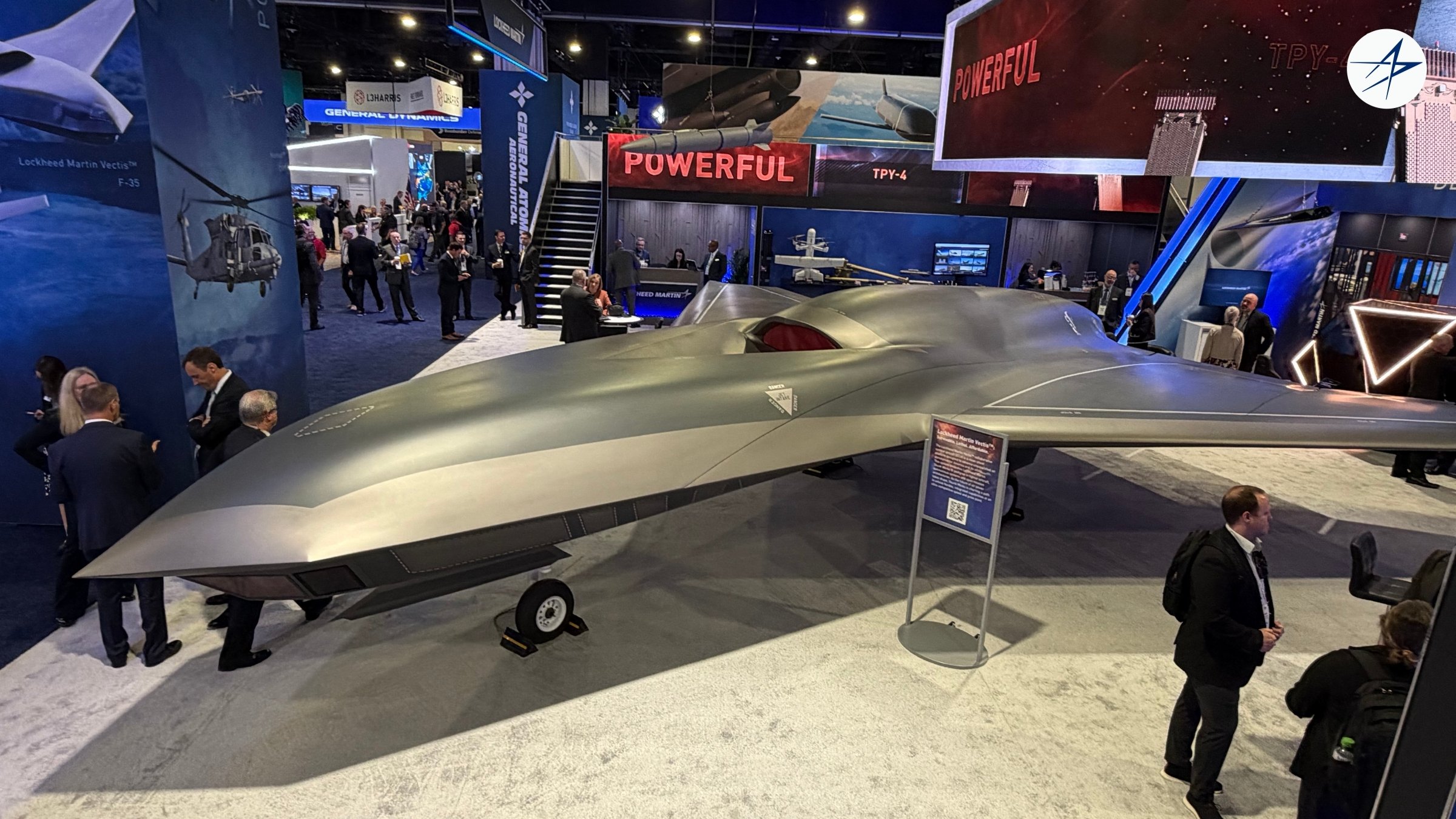
We now have a photo of the full sized Vectis mockup on the floor or Air, Space, Cyber 2026:
Long constrained by its landlocked geography, Kazakhstan is seeking to turn its position between Europe and Asia into a source of economic and geopolitical leverage. As trade disruptions and competition drive demand for diversified supply chains, Astana is investing in new transport corridors to establish itself as an indispensable transit hub and translate connectivity into diplomatic influence.
The Middle Corridor route “Transport diplomacy has long been a pillar of economic diplomacy. Today, efficient transport and logistics networks are becoming strategic assets that shape economic competitiveness, and a country’s role in regional economic cooperation,” Head of Research Department of the Eurasian Development Bank (EDB) Alexey Kuznetsov told The Astana Times.
Alexey Kuznetsov, Head of Research Department of the Eurasian Development Bank. Photo credit: The EDB’s press service Located between China, Europe, Russia, Central Asia and the Caspian Sea, Kazakhstan is developing railways, roads, ports and logistics hubs while expanding connections along several international transport corridors. The scale of the sector is reflected in recent figures. Kazakhstan transported 540.5 million tons of cargo in January-July, up 0.9% from the same period a year earlier, according to the Bureau of National Statistics.
Cargo turnover increased 1%, while road freight transportation grew 6.2%. Government data shows that transit freight reached 21.7 million tons in January-June, up 24% from 17.5 million tons a year earlier. Building Eurasian connectivity Kazakhstan is seeking to strengthen its role not simply as a transit country but as a major regional connectivity hub. “For Kazakhstan, modern transport, logistics, and warehousing infrastructure are essential for addressing the challenges of a landlocked geography.
"At the same time, the country has become one of Eurasia’s most important transit hubs,” said Kuznetsov. He said international transport and logistics partnerships are central to Kazakhstan’s connectivity diplomacy, positioning the country as an influential player in shaping Eurasia’s regional agenda. According to the EDB’s Transport Projects Observatory, Kazakhstan accounts for 53% of transport corridor investments planned or under implementation in Central Asia through 2035.
“More than $32 billion is expected to be invested in 55 major transport projects, including construction of the Center-West motorway, the Uralsk-Atyrau and Kyzylorda-Saksaulsk roads, and the Moiynty-Kyzylzhar railway. These investments will strengthen East-West and North-South trade routes and further position Kazakhstan as a strategic transport crossroads linking Europe and Asia,” Kuznetsov said. Road construction, reconstruction and repairs cover around 11,000 kilometers nationwide in 2026. Kazakhstan also plans to repair 11,000 kilometers of railway tracks by 2029. International financing is supporting part of the expansion.
In February, the World Bank approved an $846 million guarantee to mobilize $1.41 billion in commercial financing for a major railway connectivity project along Kazakhstan’s section of the Middle Corridor. However, Kuznetsov emphasized that infrastructure alone cannot determine whether a transport route succeeds. “Transport connectivity depends equally on ‘soft infrastructure’: harmonized regulations, efficient border-crossing procedures, coordinated corridor development, and digitalization of transport services and documentation,” he said.
The World Bank estimates cited by Kuznetsov suggest that cutting border delays by 50% through regulatory harmonization and digital solutions could increase exports from Central Asian countries along transport corridors by an average of 18%. For Kazakhstan, this means that the competitiveness of its routes will depend not only on the number of roads, railways and terminals built, but also on how efficiently they operate.
The Middle Corridor and geopolitics At the center of Kazakhstan’s connectivity strategy is the Trans-Caspian International Transport Route, which connects China with Kazakhstan, the Caspian Sea, Azerbaijan, Georgia and Europe. For political scientist Tair Naumov, the importance of such routes extends beyond trade. “Investment in transit infrastructure requires a certain level of trust between countries, including confidence in political relations and the security of investments,” Naumov said in an interview with The Astana Times. Once a route becomes operational, however, it can also strengthen those relations by creating greater economic interdependence.
“When countries rely on the same transport routes, their interests become more closely connected. If a corridor becomes important to foreign trade, there is a stronger incentive to maintain stable relations and keep existing agreements in place,” he said. Naumov noted that this interdependence can eventually acquire a security dimension. “If a country becomes an important transit hub, its stability becomes an interest not only for the country itself but also for its neighbors and major trading partners,” he said. Damir Kayumov, PhD, with a bachelor’s degree in economics and law. Damir Kayumov, PhD, with a bachelor’s degree in economics and law, takes a similar view, emphasizing the economic interests created by shared logistics networks.
“Good logistics creates mutual interest between countries. The more participants there are, the safer it becomes. And the more economic ties pass through Kazakhstan, the greater its role in the region,” Kayumov told The Astana Times. The Middle Corridor illustrates this dynamic. While it does not yet account for a dominant share of Kazakhstan’s transit flows, its rapid growth could give it greater strategic importance.
From transit to economic value For Kazakhstan, stronger economic ties along these routes are only part of the opportunity. The bigger question is how the country can turn growing transit flows into broader economic value at home.
“I would not reduce the transport strategy to transit alone. If a container simply passes through Kazakhstan, the country earns comparatively little. It is much more interesting when logistics centers, warehouses, manufacturing and service companies emerge alongside the route,” Kayumov said. Such an approach would allow Kazakhstan to capture more value from its position in Eurasian supply chains. “Then the transport corridor begins to work for the regions and for our industry. Kazakhstan receives much more income. The service model that develops around the entire flow allows us to earn more and create more jobs,” he said.
Kayumov noted that attracting cargo also requires competitive and predictable routes. Border delays, limited port capacity, container shortages and differences in procedures can increase costs and make a route less attractive to businesses. “A convenient route must be fast, clear and predictable. For business, it matters how long cargo remains at the border, how quickly documents are processed and how much railway capacity is available,” he said. According to Kayumov, digitalization can help address some of these challenges. Electronic document management, for example, can reduce corruption risks while speeding up operations.
TRIPP and the wider connectivity network The development of new routes beyond Kazakhstan could expand the country’s connectivity options. The Trump Route for International Peace and Prosperity (TRIPP) is a proposed transport link through Armenia connecting Azerbaijan proper with its Nakhchivan exclave. Kazakhstan has expressed interest in participating in the project and linking it with the Middle Corridor. “For the Trans-Caspian route, TRIPP provides an additional option for moving cargo after the Caspian Sea toward Türkiye and Europe. The more such branches there are, the more resilient and attractive the entire corridor becomes,” Kayumov said.
For Kazakhstan, the interest is largely pragmatic. As a landlocked country, it needs several reliable routes to major markets. However, Kayumov noted that the project’s value for Kazakhstan would depend on how effectively it is integrated into the country’s existing transport network. “What is more important for us is not formal participation in the project, but its integration with our existing transit hub. This means having unified tariffs, digital borders, digital document management and clear, predictable delivery times,” Kayumov said. “The more reliable routes connect Central Asia with Europe through Kazakhstan, the greater the economic and political value of our geography and our role in connecting different markets,” he added.

 Login