O Presidente da República promulgou como Decreto-Lei o diploma do Governo que altera o Decreto-Lei n.º 129/2012, de 22 de junho, que aprova a Orgânica do Instituto do Turismo de Portugal, I.P., e estabelece o regime jurídico aplicável ao recrutamento, contratação, natureza do vínculo e estatuto remuneratório dos diretores e trabalhadores das equipas de turismo no estrangeiro do Instituto do Turismo de Portugal, I.P.
El Real Madrid de Mourinho es más de lo mismo. Más de ese vestuario aburguesado que aburrió a Ancelotti y terminó echando a Xabi Alonso cuando les quiso hacer trabajar. Con Mourinho no ha cambiado nada. Los blancos no proponen con el balón en los pies y viven de su pegada. Además de dejarse ir en las segundas partes. En esta ocasión salió cara y el gol de Espí en el descuento les dio el triunfo, pero deja malas sensaciones de cara al derbi del domingo.
Un trabajador ha muerto este martes por la tarde mientras realizaba tareas de mantenimiento en una fosa séptica situada en la tercera planta del aparcamiento subterráneo del Mercado Central de Tarragona.
Since it’ll largely be overlooked by other Christian outlets, I wanted to add one further point to the recent debate between Anglican minister Mark Leach and Edward Schuller—one that goes to the heart of the question of how a sinner can be made right with God.
Jesus was unequivocal: “Unless your righteousness exceeds that of the scribes and Pharisees, you will never enter the kingdom of heaven” (Matt. 5:20).
The question, then, is obvious: How does a sinner obtain the righteousness necessary to enter God’s kingdom?
Moses presents two possible grounds on which a person might seek righteousness before God: righteousness based on obedience to the law, and righteousness based on faith.
The first, however, is a dead end for fallen sinners.
The law demands perfect obedience. It doesn’t grade on a curve. It doesn’t offer us a pass based on our ethnicity and bloodline. It doesn’t overlook some sins because we have done enough good deeds to compensate for them. And because we are sinners in Adam, none of us has kept God’s law perfectly.
That’s precisely why the law cannot be the means by which sinners establish their own righteousness. Its purpose is to expose our unrighteousness.
Paul explains that “whatever the law says it speaks to those who are under the law, so that every mouth may be stopped, and the whole world may be held accountable to God.” He then adds: “For by works of the law no human being will be justified in his sight, since through the law comes knowledge of sin” (Rom. 3:19–20).
The law shuts every sinner’s mouth.
It leaves us guilty.
It strips away every claim to self-righteousness.
And, having shown us that we cannot achieve righteousness by our own obedience, it drives us to the only other ground of righteousness: faith in God’s promise.
And that promise ultimately centres on a person—the promised Seed, Jesus Christ.
This is not a new doctrine introduced in the New Testament. It is the consistent way God has justified sinners throughout redemptive history.
The Old Testament saints were justified by faith in the promised Seed who was still to come. The New Testament saints are justified by faith in the promised Seed who has now come.
Abraham is the clearest example. God promised, and “Abraham believed God, and it was counted to him as righteousness” (Gen. 15:6; Rom. 4:3).
Notice what Abraham did not do. He did not present God with a record of sufficient moral achievement. He believed God’s promise, and that faith was counted to him as righteousness.
Paul makes the principle explicit: “The righteous shall live by faith” (Rom. 1:17).
And this is why the gospel is not simply that salvation is somehow through Christ. The biblical gospel is that sinners are justified through faith in Christ.
Those are not interchangeable statements.
Christ is the ground of our salvation. His righteousness, death and resurrection are the basis upon which God justifies the ungodly. But that righteousness is received by faith—not by ancestry, ethnicity, law-keeping, religious affiliation, or any other human qualification.
There is therefore no righteousness apart from faith in God’s promise, and no justification apart from faith in Christ.
That leaves no room for the idea that someone can be saved through Christ while simultaneously rejecting faith in Christ. Christ does not save people apart from Himself, and faith does not bypass Christ. The promised righteousness is received through faith in the promised Redeemer.
This is why Paul can say that there is “no distinction between Jew and Greek; for the same Lord is Lord of all” and that “everyone who calls on the name of the Lord will be saved” (Rom. 10:12–13).
There is no ethnic exemption from the universal problem of sin.
And there is no ethnic exemption from the universal remedy of faith.
The law cannot save the sinner because the sinner cannot perfectly keep the law. The law instead exposes our guilt and points beyond ourselves to the righteousness God provides.
Le carburant coûte de plus en plus cher en France : 2,68 euros le litre de diesel et 2,49 euros pour l'essence. La guerre au Moyen-Orient et les blocages du détroit d'Ormuz, où transitait 20 % du gaz et du pétrole mondiaux, et du détroit de Bab El-Madeb, expliquent ces augmentations. Parallèlement, la demande française pour le diesel n'a pas baissé, ce carburant étant utilisé par la moitié des véhicules particuliers et dans l'industrie, de la pêche au transport routier, en passant par l'agriculture.
El mundo del fútbol quedó conmocionado hace apenas unas semanas cuando Lionel Messi anunció que dejaba la selección argentina tras más de 20 años. El astro de la albiceleste, campeón del mundo en 2022 y dos veces campeón de América, confirmó que la final ante España en el Mundial del verano pasado fue su última cita como capitán de la absoluta.
El Valencia ha logrado este martes la primera victoria de la temporada ante el Deportivo Alavés (0-1), con Óscar Sánchez como técnico interino tras la destitución de Carlos Corberán. El club levantino continúa sus gestiones para encontrar nuevo entrenador tras la renuncia de Ernesto Valverde. Javier Aguirre parece ahora el mejor posicionado para tomar las riendas del equipo después de parón de selecciones.
The top U.S. Air Force officer in Europe, who also serves as the NATO Allied Air Command leader, said he has been tasked with enacting new alliance plans to defend against cruise missiles and drones. He was responding to questions about a drone that NATO had to shoot down after it entered Lithuanian airspace overnight. European Commission President Ursula von der Leyen said Tuesday morning that the incident was “part of a broader pattern of Russian aggression and provocation against Europe, testing our readiness and our resolve.”
We now know that Russia is responsible for the attempted explosive attack at Leipzig airport. Russia's repeated hybrid attacks on Germany and Europe are unacceptable. (1/4) pic.twitter.com/o3vBjgpeb1
“I don’t know what’s in the mind of Putin or his fielded forces about those one-way attack drones or even cruise missiles, like we’ve seen enter Polish airspace just a few months ago. In July, we had an AS-23 cruise missile enter Poland,” Lt. Gen. Jason T. Hinds, Commander, U.S. Air Forces in Europe/U.S. Air Forces Africa (USAFE), and Commander of the Allied Air Command, said in response to a question about the drone shootdown over Lithuania. He was speaking during a media roundtable at the Air & Space Forces Air, Space and Cyber Conference that TWZ is attending.
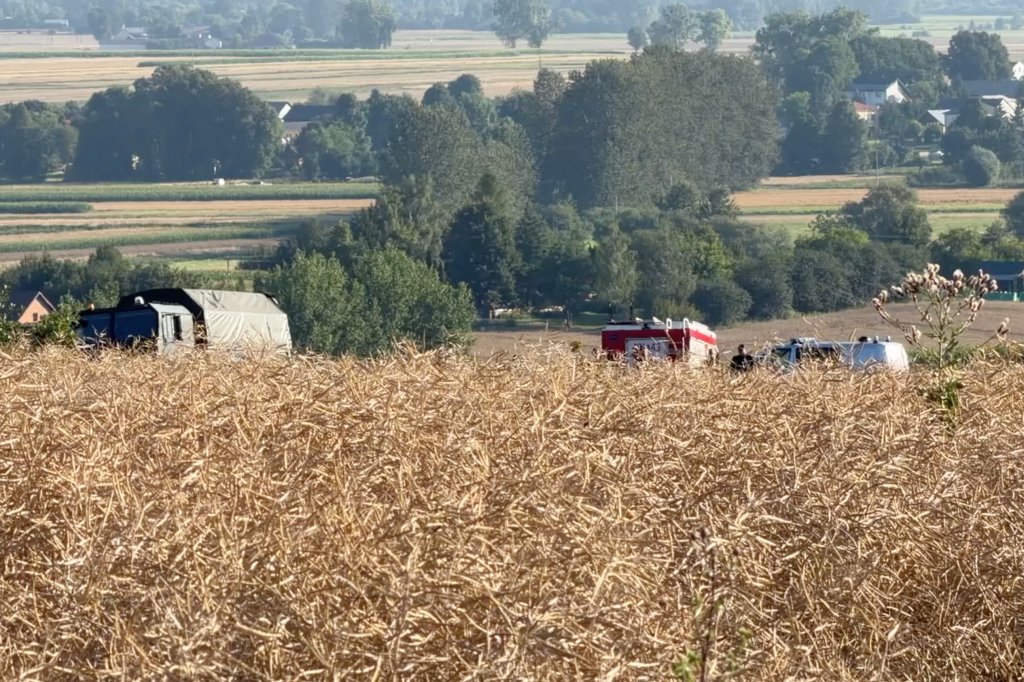
This video grab taken from footage from TVN Poland on July 30, 2026, shows the Polish army securing a large crater from a Russian missile that crashed in Poland. (Photo by various sources / AFP) –
Hinds added that while he doesn’t “know the why behind” the drone incursion into Lithuania, he has been tasked by U.S. Air Force Gen. Alexus G. Grynkewich, who serves as NATO Supreme Allied Commander Europe (SACEUR), “to fully implement EVA [Enhanced Vigilance Activity] Eastern Sentry and now its Standing Defense Plan 12000, which gives the nations the capabilities that they need to defend their airspace against either one-way attack drones like the one that you described last night, or a cruise missile.”
EVA Eastern Sentry is a mission NATO stood up in September 2025 after “an unprecedented number of Russian drones and planes violated the airspace of several NATO Allies,” according to the alliance. “Allies are contributing additional capabilities and assets to NATO’s deterrence and defense – for instance, more fighter jets, helicopters, transport aircraft, air defense systems, surveillance aircraft and frigates – and improving the coordination of these assets through NATO.”
Standing Defense Plan 12000 is a new plan for integrated air and missile defense across the alliance. Grynkewich introduced the concept during testimony to Congress in March.
Hinds acknowledged that Russia could be testing the alliance.
“It’s not about the small UASs; that’s typically a national responsibility, and it could be probing,” the Air Force general noted. “Regardless of the intent behind it, what we want to be prepared for is the second that a one-way attack drone or a cruise missile is first and foremost detected – hopefully well before it enters NATO territory – we want to know it. We want to know where it’s coming from. We want to have the capability to sense it. We want to be able to have the C2 [command and control] systems to be able to decide what to do about it, and then have the right kit to be able to act.”
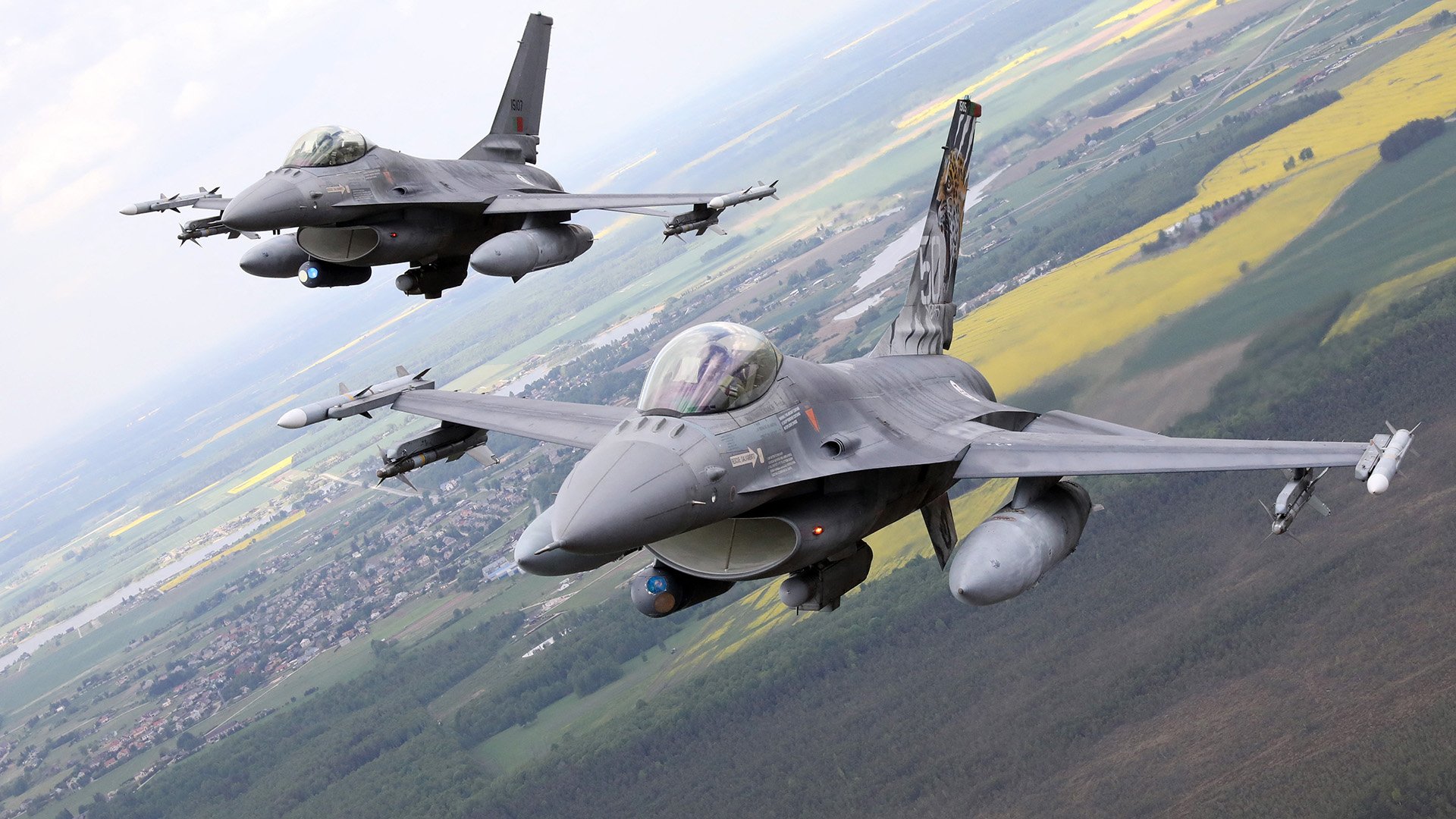
Despite an integrated air and missile defense system that includes Patriot surface-to-air missile batteries, NATO currently is primarily “using air power” against drones and cruise missiles “and that’s not putting us on the right side of the cost curve,” Hinds stated. “But we want to get there.”
Using NATO jets to take down drones “is very effective, just like what you saw last night, and many other times,” but not necessarily efficient, Hinds explained.
“I think there’s been at least five other cases of allied nations providing air power to shoot down one-way attack drones,” he proffered. “I want to get to the point where we’re doing it efficiently, using lower-cost interceptors, hopefully ground-based, and in some cases air-based that are cheaper to use, so we’ll see what the intent may be. Intelligence organizations are going to provide us with that intelligence later on, but I just don’t know yet.”
You can see one of those NATO jet engagements with drones in the following video.
The Defence Procurement Agency has successfully completed integration testing of 68 mm laser-guided rockets on the Rafale fighter jet. The time between the contract being awarded for this new capability and initial operational capability being achieved was less than 8 months. pic.twitter.com/rR2Nij9EzY
— French Aid to Europe (@aidefranceukr) July 13, 2026
As the threats have evolved, NATO has “transitioned away from air policing, and we’ve transitioned to air defense for some specific reasons,” the general pointed out. “One is readiness. Air policing is a readiness decrementing mission that the alliance has done for years. There’s also an assurance mission that we did for 32 nations. That’s transitioned to air defense now. Air defense means we have the right kit, multi-domain, to be able to be put in the right place based on indications, warnings, or real threats, like you saw last night, inside of the Baltic nations, to be able to respond decisively and quickly.”
“There’s also a deterrence value there,” Hinds added. “So if Russia does fly a one-way attack drone or a cruise missile, they know that we’re going to be in the right spot to be able to detect it and then defend against it.”
“These are limited incursions, right? Small numbers. Here’s what I see: hybrid activities may, in fact, only be one of the few levers that Putin has available to him, because he sees that he does not have an advantage in geography, domain, or readiness,” Hinds suggested.
“Think about that,” he urged. “So what are we seeing? We’re not seeing a massing of forces across the opposite side of Finland, a new NATO nation. We’re not seeing a massing of forces whatsoever in any domain opposite of Poland, Latvia, Lithuania, or Estonia. You’re seeing a significant number of one-way attack drones in the Black Sea targeting Ukraine. Some of them are entering Romania. What you’re not seeing is a direct confrontation in geography. We’re not seeing direct competition in domains. And I think Putin knows that we are ready. I know he knows that we’re a defensive alliance. I know he knows that we have an advantage in every domain against them, and I think that’s likely why you’re seeing things like what you’re seeing with hybrid activity.”
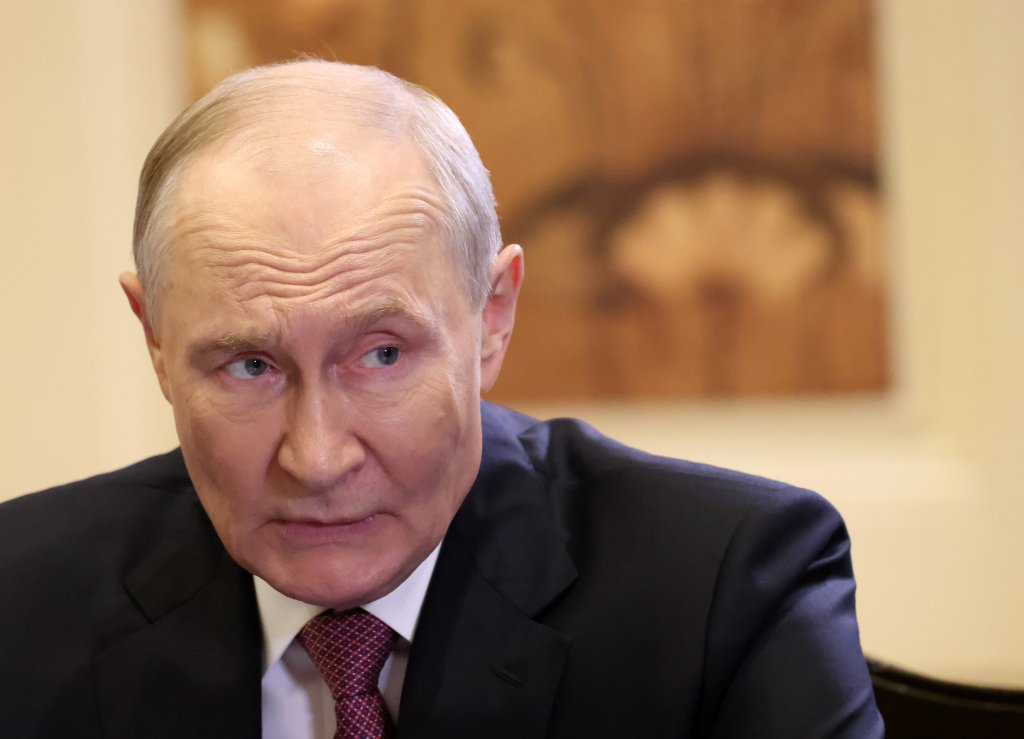
Russian President Vladimir Putin. (Photo by Contributor/Getty Images) Contributor#8523328
Though below the level of armed conflict, these Russian activities raise the potential for something worse, Hinds posited.
“The risk about hybrid activity, from my perspective, is it could lead to escalation, and that’s where I hope that we get back towards deterrence again, and that the nations they’re going to decide to do what they want to do when it comes to these hybrid activities,” the general said. “Some of them are law enforcement. Some of them are military responses, and that’s up to the nations to decide how they’re going to deal with that. Not me.”
“But what I owe General Grynkewich is to ensure that we are demonstrating our deterrence each and every day, and we’re doing that effectively across all domains,” Hinds added. “And to ensure that Putin knows that if he tries something against the alliance, that we will be there, and we’re ready to win decisively if challenged.”
El Grupo Municipal Socialista de Los Realejos llevará al próximo Pleno una moción para exigir que se respete el acuerdo adoptado por unanimidad en junio de 2025 contra la instalación de la Planta de Generación de Emergencia Tigaiga en el municipio. El PSOE sostiene que el nuevo emplazamiento planteado en La Cruz Santa no cambia el sentido de aquel pronunciamiento.
El Martínez Valero fue escenario este martes de un gesto de solidaridad con Ceuta antes del duelo entre el Elche y el Real Madrid. Los jugadores de ambos equipos saltaron al césped con una camiseta blanca con el mensaje ‘Todos somos Caballas’, pero hubo tres excepciones que llamaron especialmente la atención: Kylian Mbappé, Vinicius Junior e Ibrahima Konaté.
El Congreso ha rechazado este martes tramitar una propuesta de Vox de reforma de la ley de defensa nacional para que las Fuerzas Armadas puedan actuar activamente contra la inmigración irregular, de tal forma que "Ceuta y Melilla tengan sus fronteras protegidas por el Ejército de forma permanente".
La desactivación de la alerta por calor para pasar a prealerta permitirá que este miércoles 16 de septiembre se reanude la actividad lectiva presencial en Canarias. Tras el regreso a las aulas queda el balance de una jornada que dejó a más de 52.000 estudiantes afectados, mientras centros de Gran Canaria y Tenerife activaban, además, la salida anticipada por el calor.
El 'tarifazo' que pretendía Aena se queda en nada. O al menos en casi nada. El Gobierno de Pedro Sánchez ha desoído al gestor aeroportuario y ha limitado al 0,33% anual la subida media de las tarifas entre 2027 y 2031. El incremento equivale a unos tres céntimos por pasajero y año y queda muy lejos del 3,82% —43 céntimos— que pretendía la empresa pública. La decisión calma así a las aerolíneas después de siete meses de pulso con la compañía semipública que preside Maurici Lucena. Y calma también al sector turístico y el Ejecutivo canarios.
Dentro de la diversificación tecnológica que desde hace unos meses ha inciado Renault Group, el consorcio francés acaba de anunciar una inversión de 319 millones de euros de la mano de su socio Geely en Brasil, para acabar de configurar la estrategia de futuro en Latinoamérica.
Pedro Cabrita Reis inaugura esta quarta-feira, no MAAT, em Lisboa, a exposição “Com o coração livre de cuidados”. A mostra reúne trabalhos de pintura, escultura e desenho criados para a exposição. À Renascença, o artista plástico defende que a arte pode ajudar na educação e a formar pessoas melhores.

 Login












 (@aidefranceukr)