❌

Reading view

NATO Air Commander Details Thinking Behind The Alliance’s New Air Defense Plan

The top U.S. Air Force officer in Europe, who also serves as the NATO Allied Air Command leader, said he has been tasked with enacting new alliance plans to defend against cruise missiles and drones. He was responding to questions about a drone that NATO had to shoot down after it entered Lithuanian airspace overnight. European Commission President Ursula von der Leyen said Tuesday morning that the incident was “part of a broader pattern of Russian aggression and provocation against Europe, testing our readiness and our resolve.”

The drone incursion into Lithuania took place against the backdrop of the ongoing Russian war on Ukraine and amid a spate of so-called ‘hybrid’ or ‘gray zone’ actions Moscow has been accused of carrying out throughout Europe, including a recent attempted drone attack on the Leipzig-Halle airport in Germany.

We now know that Russia is responsible for the attempted explosive attack at Leipzig airport. Russia's repeated hybrid attacks on Germany and Europe are unacceptable. (1/4) pic.twitter.com/o3vBjgpeb1

— German Embassy Washington (@GermanyinUSA) September 1, 2026

“I don’t know what’s in the mind of Putin or his fielded forces about those one-way attack drones or even cruise missiles, like we’ve seen enter Polish airspace just a few months ago. In July, we had an AS-23 cruise missile enter Poland,” Lt. Gen. Jason T. Hinds, Commander, U.S. Air Forces in Europe/U.S. Air Forces Africa (USAFE), and Commander of the Allied Air Command, said in response to a question about the drone shootdown over Lithuania. He was speaking during a media roundtable at the Air & Space Forces Air, Space and Cyber Conference that TWZ is attending.

This video grab taken from footage of TVN Poland on July 30, 2026 shows the Polish army securing a large crater, the probable impact site of a projectile linked to the strikes carried out in Ukraine overnight by Russia, in Tarnawa-Kolonia, eastern Poland. Residents of this locality in the Lublin region heard, shortly before 4:00 a.m. (2:00 a.m. GMT), a powerful explosion that shook the windows of their homes. The impact site is located around 80 km from the Ukrainian border. NATO said on July 30 it was in close contact with Warsaw as it blamed Russia for a missile that crashed in Poland, and vowed to "continue to take all necessary measures to defend" alliance territory. (Photo by various sources / AFP via Getty Images)
This video grab taken from footage from TVN Poland on July 30, 2026, shows the Polish army securing a large crater from a Russian missile that crashed in Poland. (Photo by various sources / AFP) –

Hinds added that while he doesn’t “know the why behind” the drone incursion into Lithuania, he has been tasked by U.S. Air Force Gen. Alexus G. Grynkewich, who serves as NATO Supreme Allied Commander Europe (SACEUR), “to fully implement EVA [Enhanced Vigilance Activity] Eastern Sentry and now its Standing Defense Plan 12000, which gives the nations the capabilities that they need to defend their airspace against either one-way attack drones like the one that you described last night, or a cruise missile.”

EVA Eastern Sentry is a mission NATO stood up in September 2025 after “an unprecedented number of Russian drones and planes violated the airspace of several NATO Allies,” according to the alliance. “Allies are contributing additional capabilities and assets to NATO’s deterrence and defense – for instance, more fighter jets, helicopters, transport aircraft, air defense systems, surveillance aircraft and frigates – and improving the coordination of these assets through NATO.”

Standing Defense Plan 12000 is a new plan for integrated air and missile defense across the alliance. Grynkewich introduced the concept during testimony to Congress in March.

Hinds acknowledged that Russia could be testing the alliance.

“It’s not about the small UASs; that’s typically a national responsibility, and it could be probing,” the Air Force general noted. “Regardless of the intent behind it, what we want to be prepared for is the second that a one-way attack drone or a cruise missile is first and foremost detected – hopefully well before it enters NATO territory – we want to know it. We want to know where it’s coming from. We want to have the capability to sense it. We want to be able to have the C2 [command and control] systems to be able to decide what to do about it, and then have the right kit to be able to act.”

Despite an integrated air and missile defense system that includes Patriot surface-to-air missile batteries, NATO currently is primarily “using air power” against drones and cruise missiles “and that’s not putting us on the right side of the cost curve,” Hinds stated. “But we want to get there.”

Using NATO jets to take down drones “is very effective, just like what you saw last night, and many other times,” but not necessarily efficient, Hinds explained. 

“I think there’s been at least five other cases of allied nations providing air power to shoot down one-way attack drones,” he proffered. “I want to get to the point where we’re doing it efficiently, using lower-cost interceptors, hopefully ground-based, and in some cases air-based that are cheaper to use, so we’ll see what the intent may be. Intelligence organizations are going to provide us with that intelligence later on, but I just don’t know yet.”

You can see one of those NATO jet engagements with drones in the following video.

NATO airpower in action this morning, safeguarding Latvian airspace. pic.twitter.com/Ugzbx8aaZS

— Marko Mihkelson 🇪🇪🇺🇦🇪🇺 (@markomihkelson) June 8, 2026

It should be noted that Europe is starting to follow the American lead in using less expensive laser-guided, air-to-air rockets as drone-killing weapons. TWZ was the first to report about the use of 70mm Advanced Precision Kill Weapon System (APKWS) rockets by the U.S. The U.K. Royal Air Force announced in May of this year that its Typhoons were now equipped with APKWS rockets while the French recently tested their own 68mm laser-guided rockets from Rafale fighters.

The Defence Procurement Agency has successfully completed integration testing of 68 mm laser-guided rockets on the Rafale fighter jet. The time between the contract being awarded for this new capability and initial operational capability being achieved was less than 8 months. pic.twitter.com/rR2Nij9EzY

— French Aid to Europe 🇨🇵 🇪🇺 (@aidefranceukr) July 13, 2026

As the threats have evolved, NATO has “transitioned away from air policing, and we’ve transitioned to air defense for some specific reasons,” the general pointed out. “One is readiness. Air policing is a readiness decrementing mission that the alliance has done for years. There’s also an assurance mission that we did for 32 nations. That’s transitioned to air defense now. Air defense means we have the right kit, multi-domain, to be able to be put in the right place based on indications, warnings, or real threats, like you saw last night, inside of the Baltic nations, to be able to respond decisively and quickly.”

“There’s also a deterrence value there,” Hinds added. “So if Russia does fly a one-way attack drone or a cruise missile, they know that we’re going to be in the right spot to be able to detect it and then defend against it.”

“These are limited incursions, right? Small numbers. Here’s what I see: hybrid activities may, in fact, only be one of the few levers that Putin has available to him, because he sees that he does not have an advantage in geography, domain, or readiness,” Hinds suggested.

“Think about that,” he urged. “So what are we seeing? We’re not seeing a massing of forces across the opposite side of Finland, a new NATO nation. We’re not seeing a massing of forces whatsoever in any domain opposite of Poland, Latvia, Lithuania, or Estonia. You’re seeing a significant number of one-way attack drones in the Black Sea targeting Ukraine. Some of them are entering Romania. What you’re not seeing is a direct confrontation in geography. We’re not seeing direct competition in domains. And I think Putin knows that we are ready. I know he knows that we’re a defensive alliance. I know he knows that we have an advantage in every domain against them, and I think that’s likely why you’re seeing things like what you’re seeing with hybrid activity.”

NEW DELHI, INDIA - SEPTEMBER 11: Russian President Vladimir Putin speaks during a Russian-South African bilateral meeting, on September 11, 2026 in New Delhi, India. Russian President Vladimir Putin is in India for a three-day visit starting Friday, 11 September 2026. The high-profile trip revolves around Russia's participation in the 18th BRICS Summit, which India is hosting at the Bharat Mandapam this weekend. The trip marks Putin's second face-to-face engagement with Indian Prime Minister Narendra Modi in less than two weeks, following their bilateral meeting at the SCO Summit in Bishkek. (Photo by Contributor/Getty Images)
Russian President Vladimir Putin. (Photo by Contributor/Getty Images) Contributor#8523328

Though below the level of armed conflict, these Russian activities raise the potential for something worse, Hinds posited.

“The risk about hybrid activity, from my perspective, is it could lead to escalation, and that’s where I hope that we get back towards deterrence again, and that the nations they’re going to decide to do what they want to do when it comes to these hybrid activities,” the general said. “Some of them are law enforcement. Some of them are military responses, and that’s up to the nations to decide how they’re going to deal with that. Not me.”

“But what I owe General Grynkewich is to ensure that we are demonstrating our deterrence each and every day, and we’re doing that effectively across all domains,” Hinds added. “And to ensure that Putin knows that if he tries something against the alliance, that we will be there, and we’re ready to win decisively if challenged.”

Contact the author: howard@twz.com

The post NATO Air Commander Details Thinking Behind The Alliance’s New Air Defense Plan appeared first on TWZ.
  •  

Lockheed Flexes To Modular AGM-158 JASSM Missile Concept

Lockheed Martin has unveiled a modular airframe concept for its stealthy and combat-proven AGM-158 Joint Air-to-Surface Standoff Missile (JASSM) family that could support multiple configurations, launch methods, and sensor packages while making use of the existing JASSM and Long-Range Anti-Ship Missile (LRASM) production infrastructure. Highly survivable, the missiles are an incredibly important and staple weapon for the U.S. military, and for select export customers.

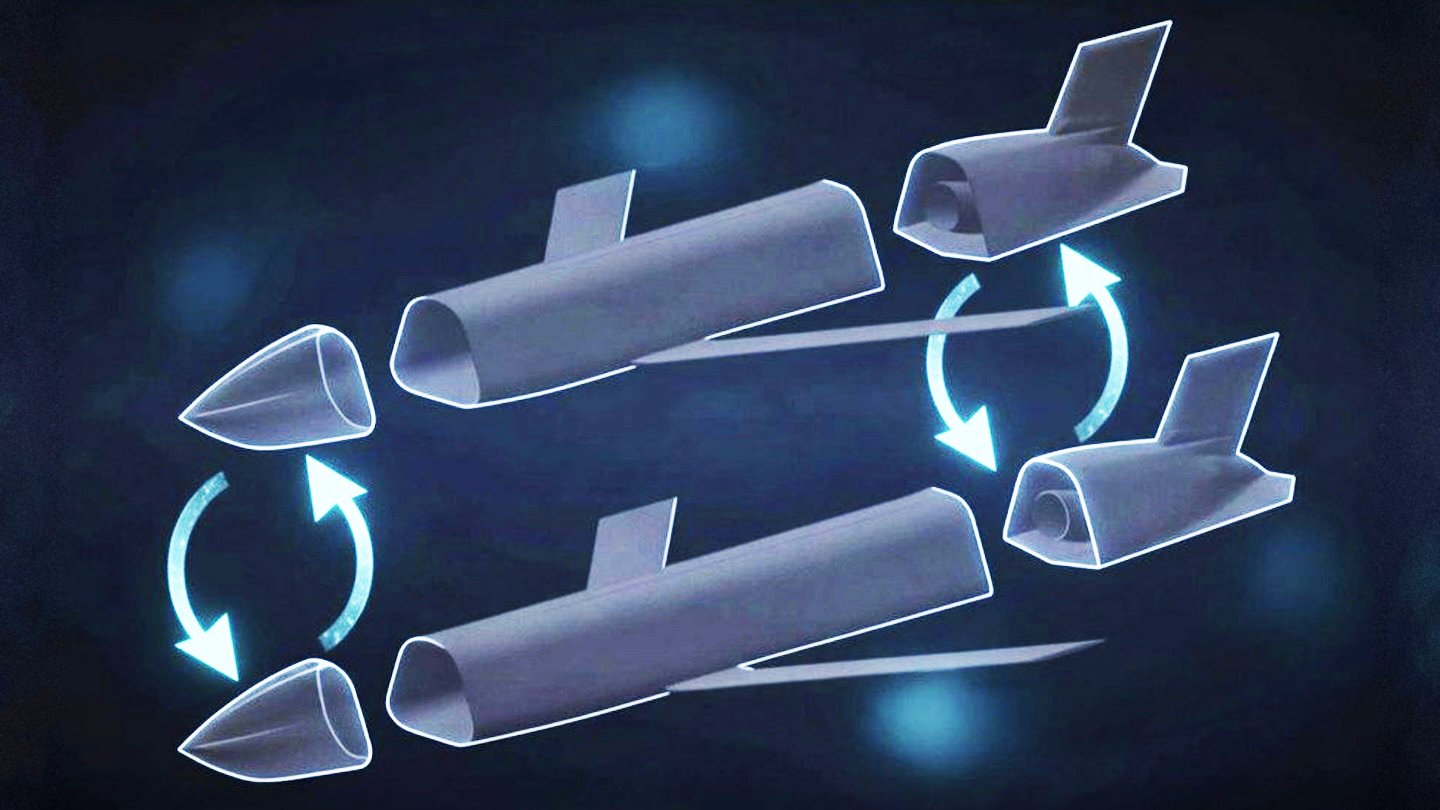
Called AGM-158 FLEX, the new concept is centered on a common airframe with interchangeable components. Lockheed Martin says it has invested more than $35 million of its funds in the effort so far, including airframe design, testing, prototype production, subsystem qualification, and work with suppliers.

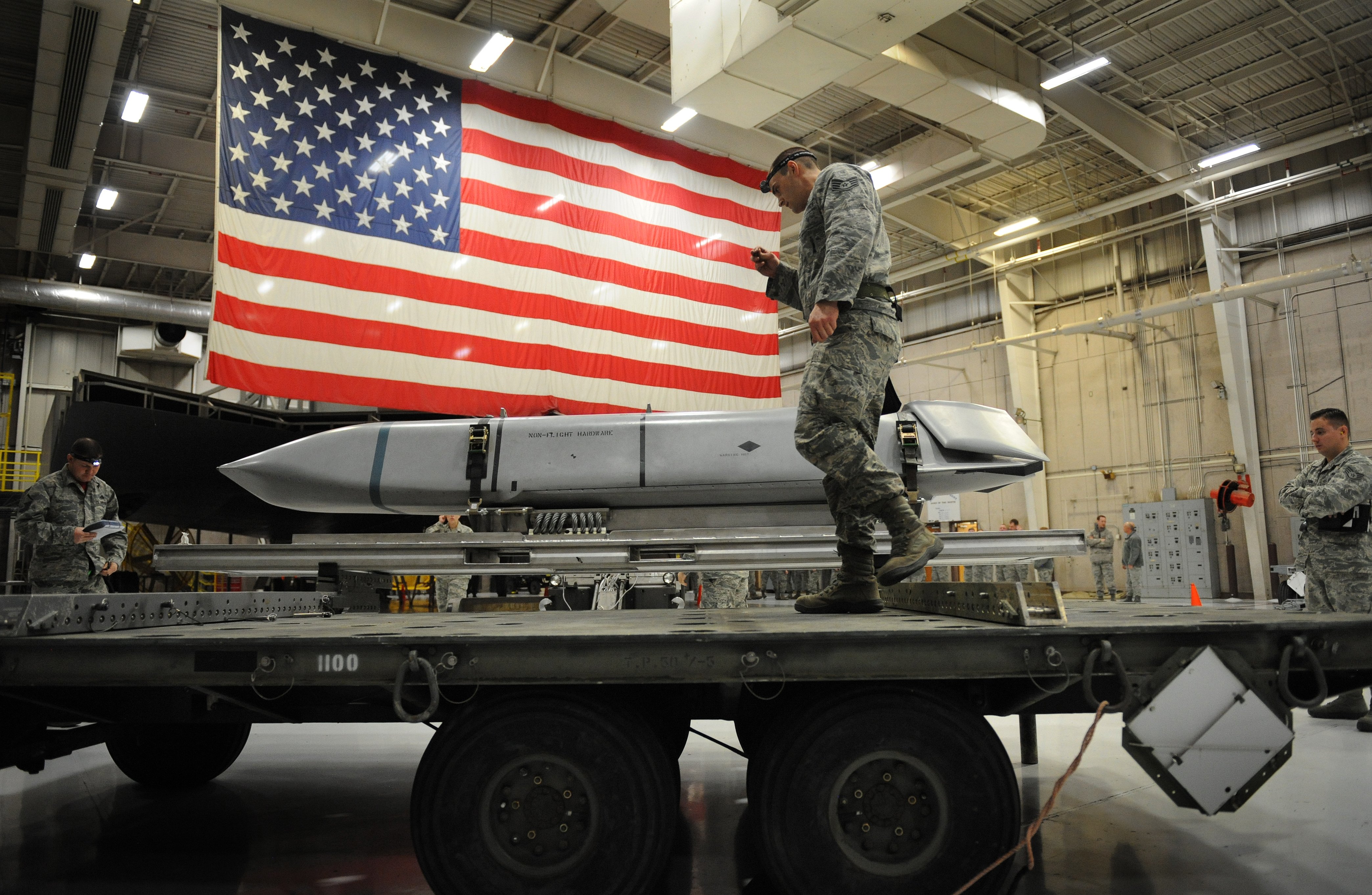
U.S. Air Force Staff Sgt. Joseph Herdliska, 131st Aircraft Maintenance Squadron load crew member, prepares to load an AGM-158 Joint Air-to-Surface Standoff Missile onto the B-2 Spirit weapons load trainer during a weapons load competition at Whiteman Air Force Base, Mo., Jan. 23, 2015. The competition is designed to showcase the teamwork, precision and attention to detail amongst Airmen in support of nuclear deterrence and global strike operations. (U.S. Air Force photo by Airman 1st Class Joel Pfiester/Released)
An Air Force load crew member prepares to load an AGM-158 Joint Air-to-Surface Standoff Missile onto the B-2 Spirit weapons load trainer during a weapons load competition at Whiteman Air Force Base, Missouri. U.S. Air Force photo by Airman 1st Class Joel Pfiester/Released Tech. Sgt. Joel Pfiester

The company says the FLEX design will use removable nose sections that can accommodate sensor suites associated with the AGM-158 family. A removable boat tail would allow the same basic airframe to be configured for different launch methods, including air, surface, and subsurface launch. That would open the AGM-158 architecture up to ground-, ship-, and submarine-launched applications, although Lockheed Martin has not provided details on the specific launchers, platforms, or configurations envisioned. It’s worth noting the LRASM has been tested in vertical launch configuration for vessels equipped with the Mk 41 launch system.

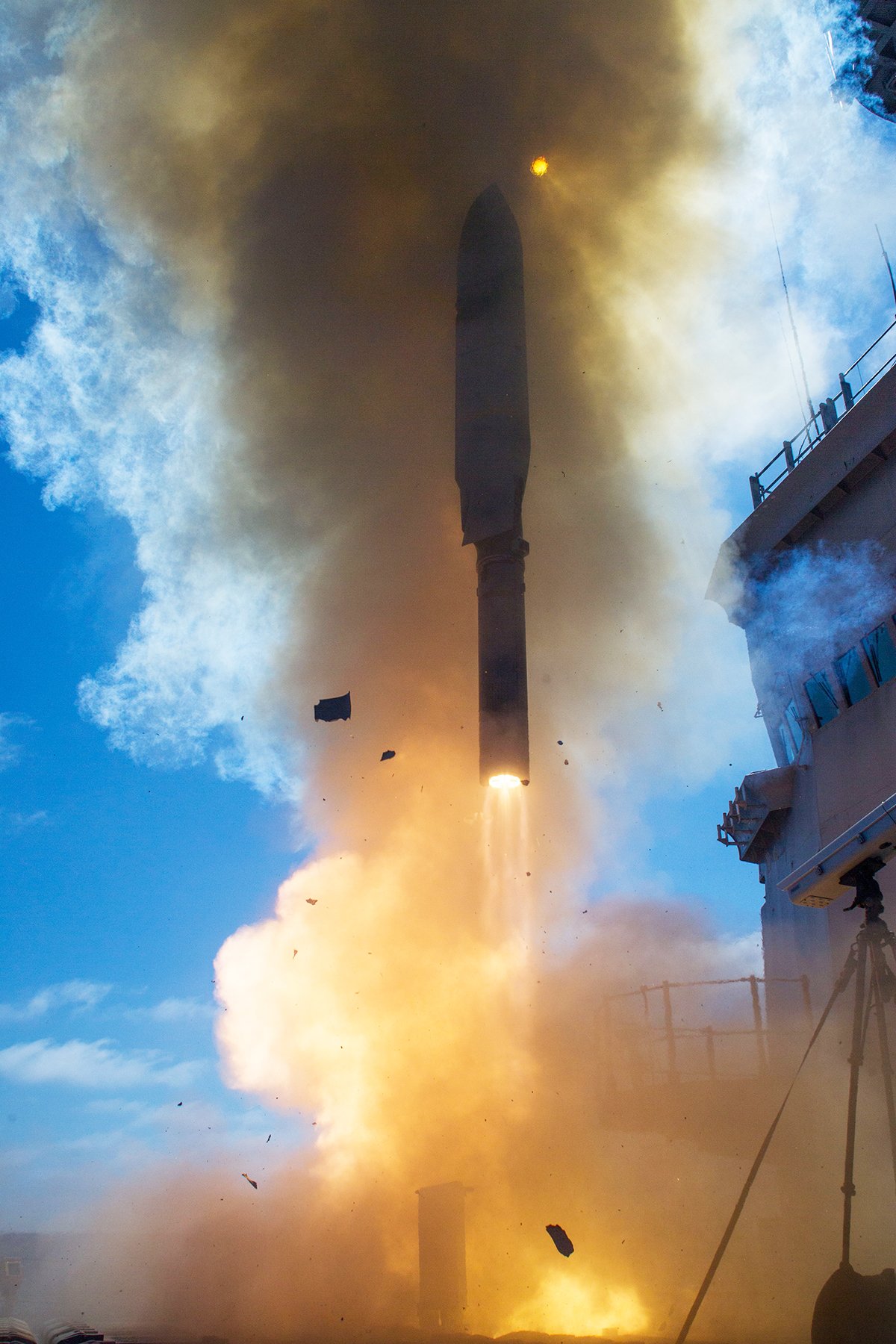
A 2016 test of LRASM from a Mk 41 launcher on the Navy’s Self Defense Test Ship. Lockheed Martin

In addition to the Navy vertical launch tests, the idea of moving the JASSM family beyond its traditional combat aircraft launch platforms is not new. The Air Force’s Palletized JASSM concept, better known as Rapid Dragon, has demonstrated the ability to deploy JASSM-ER from palletized launchers carried inside cargo aircraft, using an expendable airdrop system. FLEX takes a different approach by building those kinds of launch options into the airframe architecture itself, with modularity supporting various launch configurations for the same basic weapon.

For aircraft-launched weapons, Lockheed Martin says FLEX will retain compatibility with current and future JASSM and LRASM launch platforms.

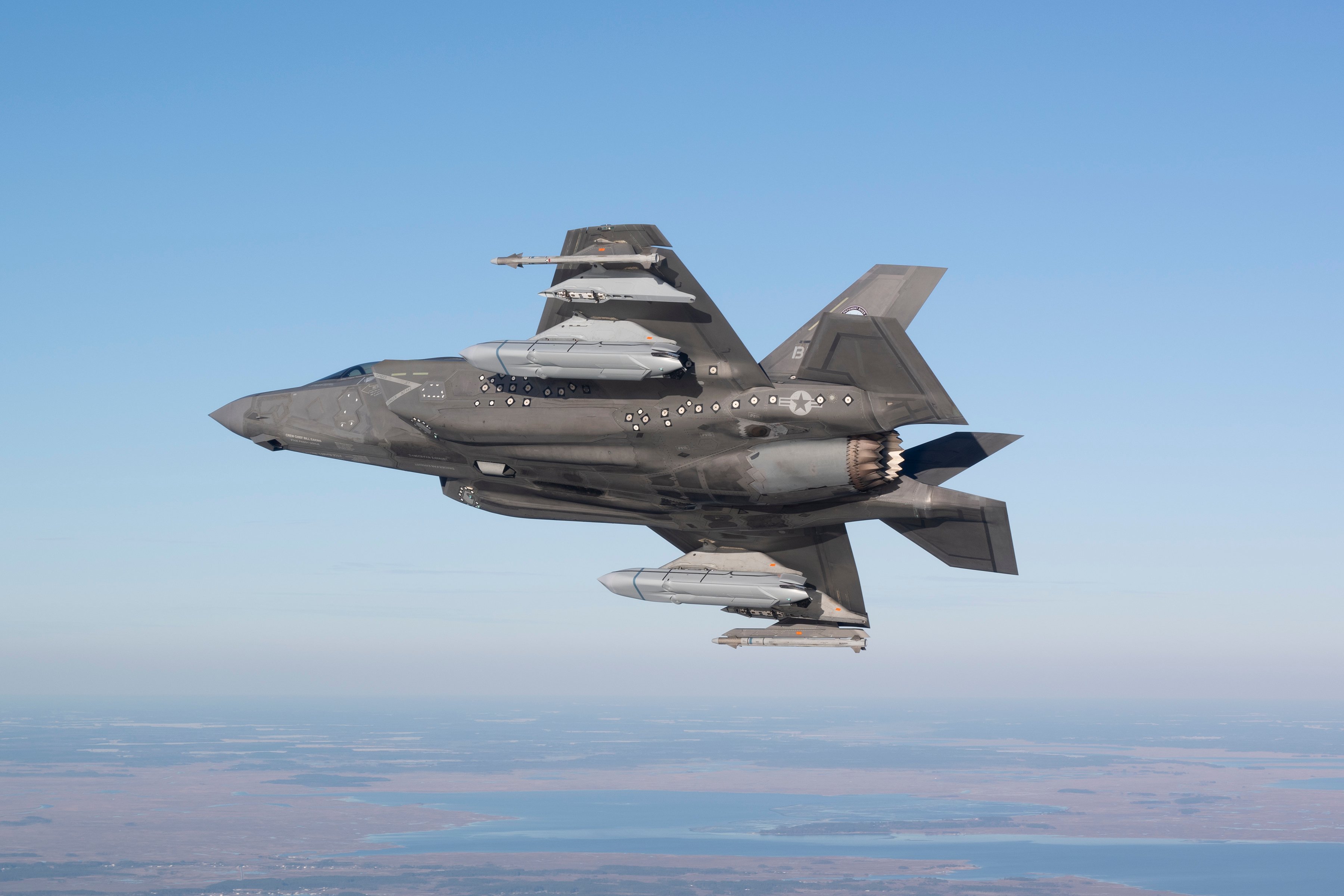
NAS PATUXENT RIVER, Md. -- An F-35 Lightning II test pilot conducts the first flight test to certify the F-35B short takeoff and vertical landing variant of the fighter aircraft for carrying the AGM-158C Long-Range Anti-Ship Missile (LRASM). As part of ongoing weapon integration efforts, the Pax River F-35 Integrated Test Force (Pax ITF) team for the first time flew test flights Jan. 14 with two AGM-158 loaded on external stations. LRASM is a defined near-term solution for the Offensive Anti-Surface Warfare (OASuW) air-launch capability gap that will provide flexible, long-range, advanced, anti-surface capability against high-threat maritime targets. The Pax River ITF’s mission is to effectively plan, coordinate, and conduct safe, secure, and efficient flight test for F-35B and C variants, and provide necessary and timely data to support program verification / certification and fleet operational requirements.
An F-35B carrying the AGM-158C Long-Range Anti-Ship Missile (LRASM). U.S. Marine Corps Kyra Helwick

The company is also proposing multiple airframe lengths. A 206-inch configuration is associated with the supersized JASSM-XR, while a 168-inch version is consistent with the dimensions of JASSM-ER. Lockheed Martin says JASSM-XR will be the first configuration of the FLEX airframe.

The AGM-158 family has already grown well beyond the original JASSM. The AGM-158A is the baseline stealthy air-launched land-attack missile, with a publicly reported range of roughly 230-330 miles, while the AGM-158B JASSM-ER uses a more efficient engine and additional fuel to roughly double that reach, to around 575 miles or more.

Alongside the land-attack variants is the AGM-158C LRASM, which uses the JASSM airframe but substitutes a sophisticated imaging infrared anti-ship seeker, electronic support measures, datalink, and other capabilities, for operations against heavily defended surface combatants.

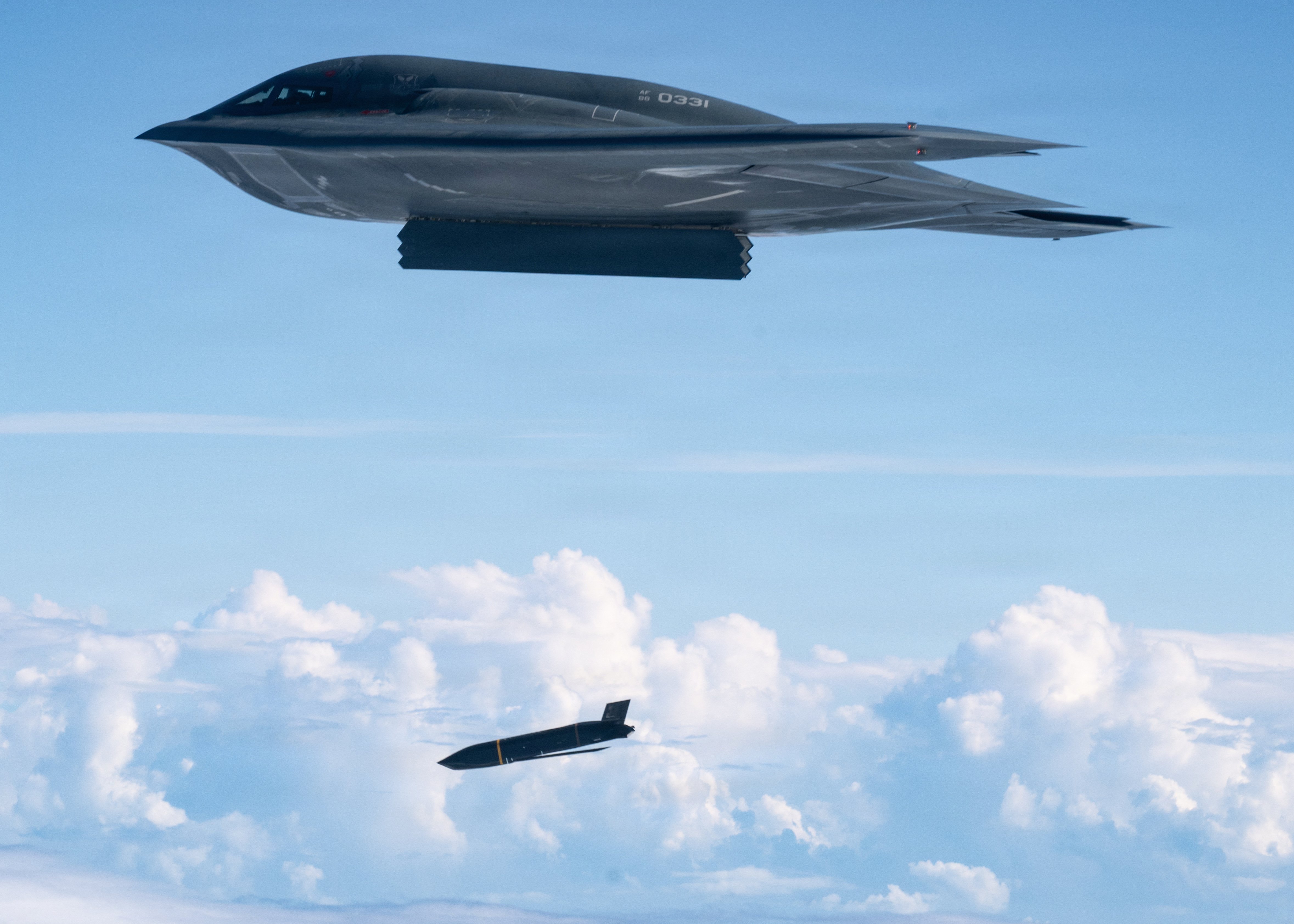
A U.S. Air Force B-2 Spirit Stealth Bomber, assigned to the 509th Bomb Wing, deploys an AGM-158C Long Range Anti-Ship Missile to support a live-fire sinking exercise as part of Valiant Shield 2026 over the Philippine Sea, June 27, 2026. The B-2 flew into the Mariana Island Range Complex to successfully employ the AGM-158C LRASM and demonstrated flexibility across the globe and hold maritime vessels at risk. (U.S. Air Force photo by Tech Sgt. Thomas Barley)
A B-2 deploys an AGM-158C Long Range Anti-Ship Missile to support a live-fire sinking exercise as part of Valiant Shield 2026 over the Philippine Sea, June 27, 2026. U.S. Air Force photo by Tech Sgt. Thomas Barley Tech. Sgt. Thomas Barley

Finally, the much larger JASSM-XR is being developed with a substantially stretched fuselage to carry more fuel and a larger 1,000-pound-class warhead, with a range expected to approach or exceed 1,000 miles. This would give it a similar striking capability as the Tomahawk cruise missile, although in a stealthier package.

Beyond range and launch options, the company is pitching its new FLEX concept as a way to simplify future upgrades. Components could be replaced as they become obsolete or new capabilities become available without necessarily requiring a completely new missile design.

That approach could have an industrial-base advantage, particularly as the United States seeks to increase production of long-range weapons. Lockheed Martin says FLEX would use the existing JASSM/LRASM production line, supply chain, mission-planning infrastructure, and software ecosystem rather than establishing an entirely new manufacturing and support architecture.

The company says its JASSM/LRASM production infrastructure includes a 225,000-square-foot facility opened in 2022 with increased automation and a robotic paint line.

Notable, however, is the fact that FLEX is being proposed at a time when the U.S. Air Force is pursuing affordable mass as a key priority.

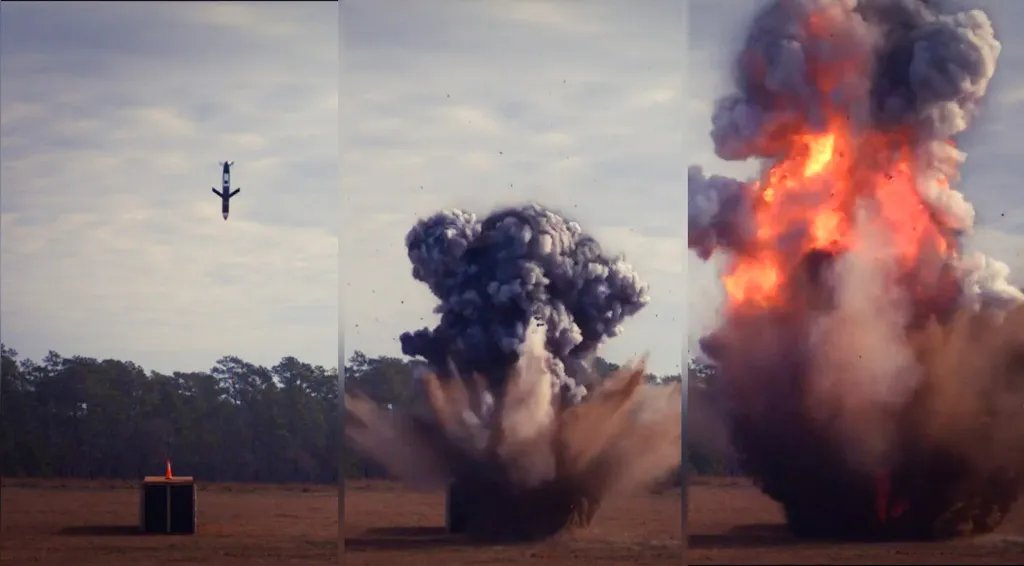
For example, as part of a slew of low-cost cruise missile offerings, the service has been moving ahead with the Extended Range Attack Munition, or ERAM, a new air-launched missile explicitly intended to provide a relatively low-cost, rapidly producible standoff weapon. The Air Force conducted a live-warhead ERAM test in January of last year, less than 16 months after the program received its initial contract, and described the weapon as a means of generating mass against fixed targets. ERAM is understood to have a range of between 150 and 280 miles, putting it below the reach of the baseline JASSM, let alone the JASSM-ER or XR.

The Extended Range Attack Munition live-fire test on Jan. 22, 2025, at Eglin Air Force Base, Florida. via U.S. Air Force

However, the emerging class of lower-cost weapons are intended very much more to complement than compete with JASSM. While the Air Force plans to buy thousands of the cheaper missile, the JASSM will still be needed to take up the higher end of the cost and capability list.

Lockheed Martin mentions that FLEX should “unlock future cost savings,” but this sounds more about giving customers the ability to swap out components and upgrade capabilities on existing missile rounds, to avoid obsolescence, rather than facilitate mass production.

As it stands, JASSM has evolved into a family of increasingly capable and longer-range weapons, but those capabilities necessarily come with a different set of cost and production considerations than a weapon designed from the outset around large-scale production. Lockheed Martin’s announcement does not disclose a target unit cost for FLEX, nor does it explain how the eventual cost of a FLEX-derived weapon would compare with a baseline JASSM or LRASM. The unit price of the latest subvariants of the JASSM-ER is around $1.2 and $1.5 million, according to official budget documents.

The new weapon is a way of getting more variants and launch options out of the established JASSM/LRASM architecture, potentially with less development work than creating entirely new weapons. Whether that translates into enough savings or production capacity to satisfy the military’s growing demand for large numbers of standoff weapons remains to be seen.

For Lockheed Martin, the proposal also offers a way to extend the relevance of the AGM-158 family as the company and the Pentagon pursue additional range, new launch platforms, and potentially new launch methods.

The flexibility of the missile could be particularly relevant to the Agile Combat Employment concept, and the wider U.S. military in the Indo-Pacific, where forces are expected to operate from a larger number of dispersed and potentially austere locations. A common missile architecture that can be adapted to different launch platforms and different target sets could allow weapons to be positioned and employed across a distributed force rather than tying particular missile variants to particular launchers.

The original JASSM/LRASM has also become a significant export weapon, with Australia, Finland, Poland and several other U.S. allies cleared to acquire variants of the missile. While the advanced capabilities of the weapon have seen its export opportunities carefully controlled, FLEX could potentially open up the market to more customers, including less-advanced, ‘sanitized’ versions.

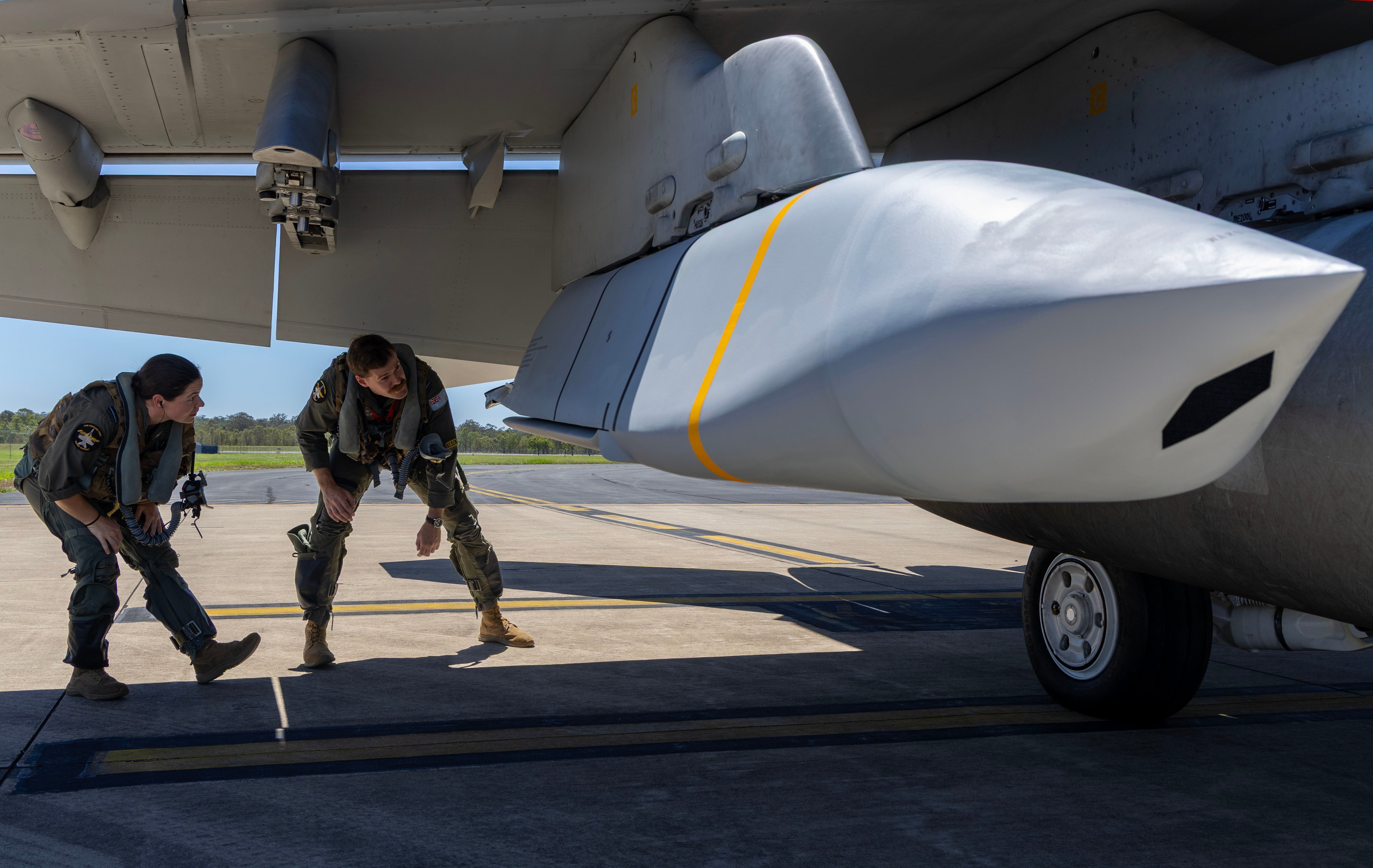
Pilot and Weapon Systems Officer conduct a pre-flight check on the JASSM-ER loaded to a Royal Australian Air Force F/A-18F Super Hornet at RAAF Base Amberley, Queensland. Australian Department of Defense LAC Campbell Latch

Lockheed Martin’s announcement provides few details on FLEX’s eventual cost, production rate, schedule, or specific performance beyond the stated airframe dimensions. For now, the concept demonstrates that the company is seeking to create a more adaptable architecture around an established missile family, one that has played a critical role in numerous operations since its introduction.

Contact the author: thomas@thewarzone.com

The post Lockheed Flexes To Modular AGM-158 JASSM Missile Concept appeared first on TWZ.

  •  
❌