❌

Reading view

USMC Used Its Expeditionary Operations Playbook In Combat For First Time During Epic Fury

The 31st Marine Expeditionary Unit’s (31st MEU) recent deployment to the Middle East marked the first time the United States Marine Corps (USMC) used its Expeditionary Advanced Base Operations (EABO) concept in a combat setting, the service confirmed to TWZ on Thursday. At its core, EABO involves relatively small groups of Marines quickly establishing bases of operation in forward areas, often within the enemy’s weapons range. During operations in the fight against Iran, Marines refueled and rearmed their own aircraft, as well as those from the joint force, at these austere locales. They also set up remote sensing locations, among other actions from the EABO playbook.

This employment of EABO for Epic Fury is a highly significant development. After years of progressively evolving the EABO playbook, it was no longer an experimental exercise. This meant that Marines were forward deployed in a contested area in a region where established bases were taking heavy fire from Iranian missile and drone barrages. Troops were killed in some of these attacks and U.S. aircraft, buildings and equipment were damaged and destroyed across the Middle East. Pushing aircraft from the MEU, as well as the joint force, to FARPs (forward arming and refueling point) would have been a relevant asset preservation tactic as well as one that would help accelerate combat operations, and it’s exactly what EABO is meant to do.

The 31st MEU’s six-month deployment began in January in the Pacific, before the unit was ordered to the Middle East in March, returning to Okinawa, Japan, in July. That’s where it is stationed as the USMC’s only continuously forward-based MEU.
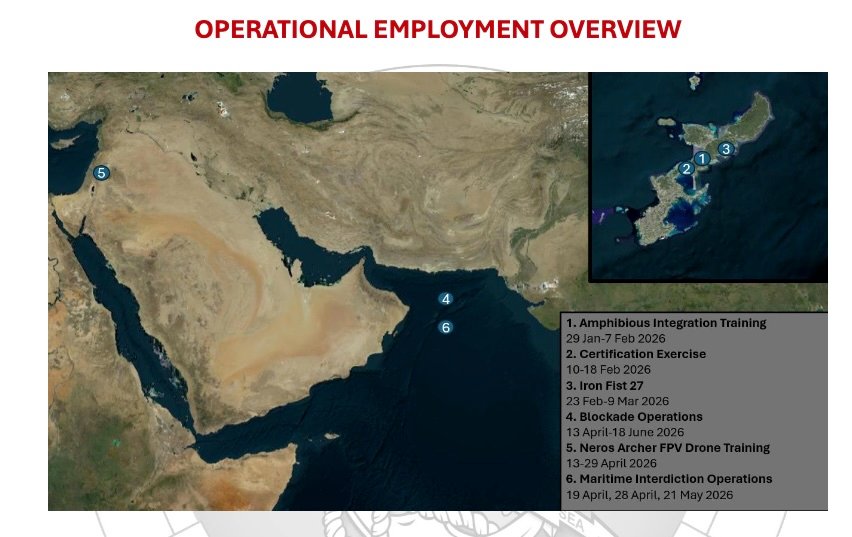
A map of the 31st MEU’s deployment. (31st MEU)

“This was the first time we were able to implement EABO in combat operations since the concept was created for the force,” Capt. Steven J. Keenan, a USMC spokesperson, told us. “We have practiced it many times, but this was a first for supporting a Joint Force named operation with forward FARPs and forward bases that supported joint ops and combat power sustainment.”

EABO was first introduced in 2020 by then-Commandant Gen. David Berger in his Force Design 2030 plan for the future of the Corps. It was created with a fight against China in mind, especially utilizing small Pacific islands. The idea is to have highly mobile, low-signature forces deployed forward in austere, contested or potentially contested maritime locations. The mission is to “support sea control operation, conduct sea denial operations within the littorals, contribute to maritime domain awareness, provide forward command, control, communications, computers, combat systems, intelligence, surveillance, reconnaissance, targeting, and counter-targeting capability and forward sustainment,” according to the Marines.
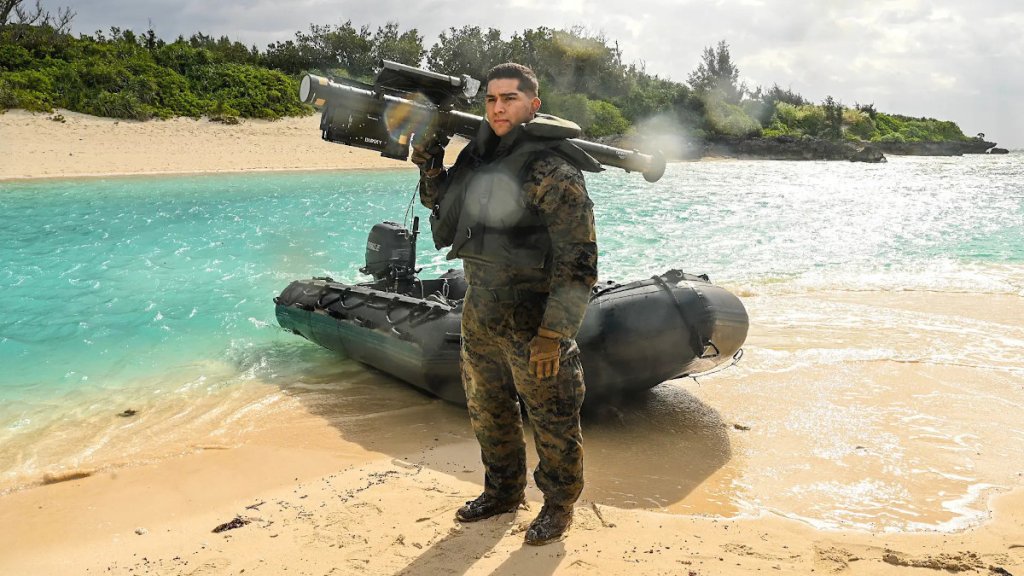
A Marine holding a Stinger missile launcher stands in front of a Combat Rubber Raiding Craft on Ukibaru Island off the coast of Okinawa during Exercise Hagatna Fury 21. (USMC) A Marine holding a Stinger missile launcher stands in front of a Combat Rubber Raiding Craft on Ukibaru Island off the coast of Okinawa during Exercise Hagatna Fury 21. USMC

The news of the first activation of the EABO concept in combat came Wednesday during a media roundtable with Col. Chris P. Niedziocha, who commanded the 31st MEU during its deployment to the Middle East in support of Operation Epic Fury. Now director of the USMC Expeditionary Warfare School, Niedziocha discussed EABO and a range of other operations during that deployment, including boarding vessels during the blockade of Iranian ports.

The 31st MEU was embarked aboard the Tripoli Amphibious Ready Group (ARG), which consisted of the America class amphibious assault ship USS Tripoli, San Antonio class amphibious transport dock ship USS New Orleans, and Whidbey Island class dock landing ship USS Rushmore. You can read more about the ARG/MEU and its assets in our initial story about the deployment to the Middle East here.
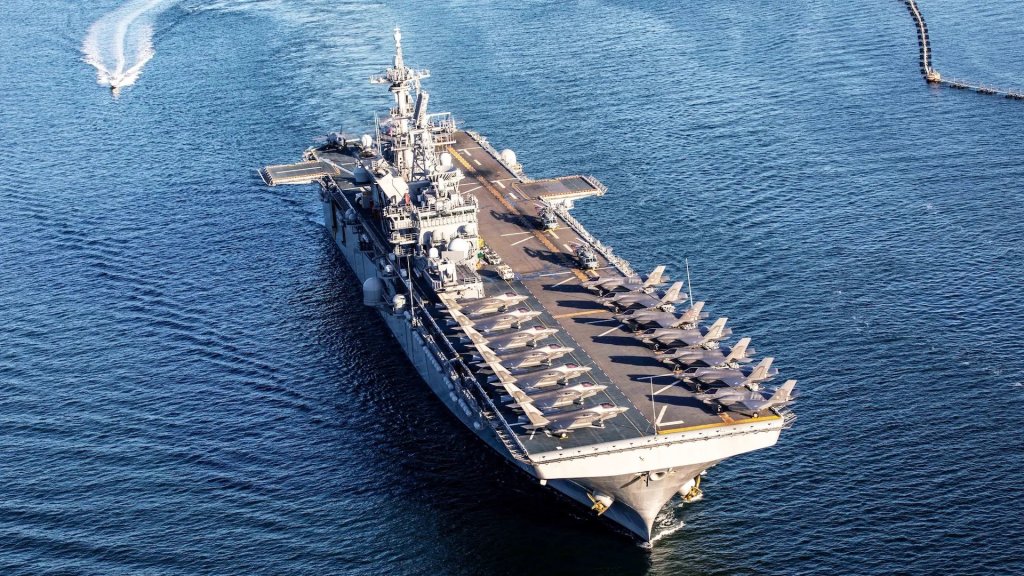
USS Tripoli. (Staff Sgt. Samuel Ruiz)

“You’re starting to see this has been validated,” the colonel said of the EABO concept during the roundtable TWZ attended virtually. “It’s still nascent, but we actually, for the first time, demonstrated what we thought we were able to do, which I think is pretty exciting. And then things like forward arming and refueling to extend the operational reach of aircraft and expeditionary reloading, and then the ever-present logistic challenge of doing something like that. So that’s pretty significant.”

“We successfully implemented critical Expeditionary Advanced Base Operations (EABO), establishing sensor expeditionary advanced bases and forward arming and refueling points (FARPs) where none existed,” the colonel added. “Through our forward logistic elements, we proved that an agile Marine Air-Ground Task Force can sustain itself and generate ready, lethal power in contested maritime environments, directly setting the theater for follow-on joint forces.”

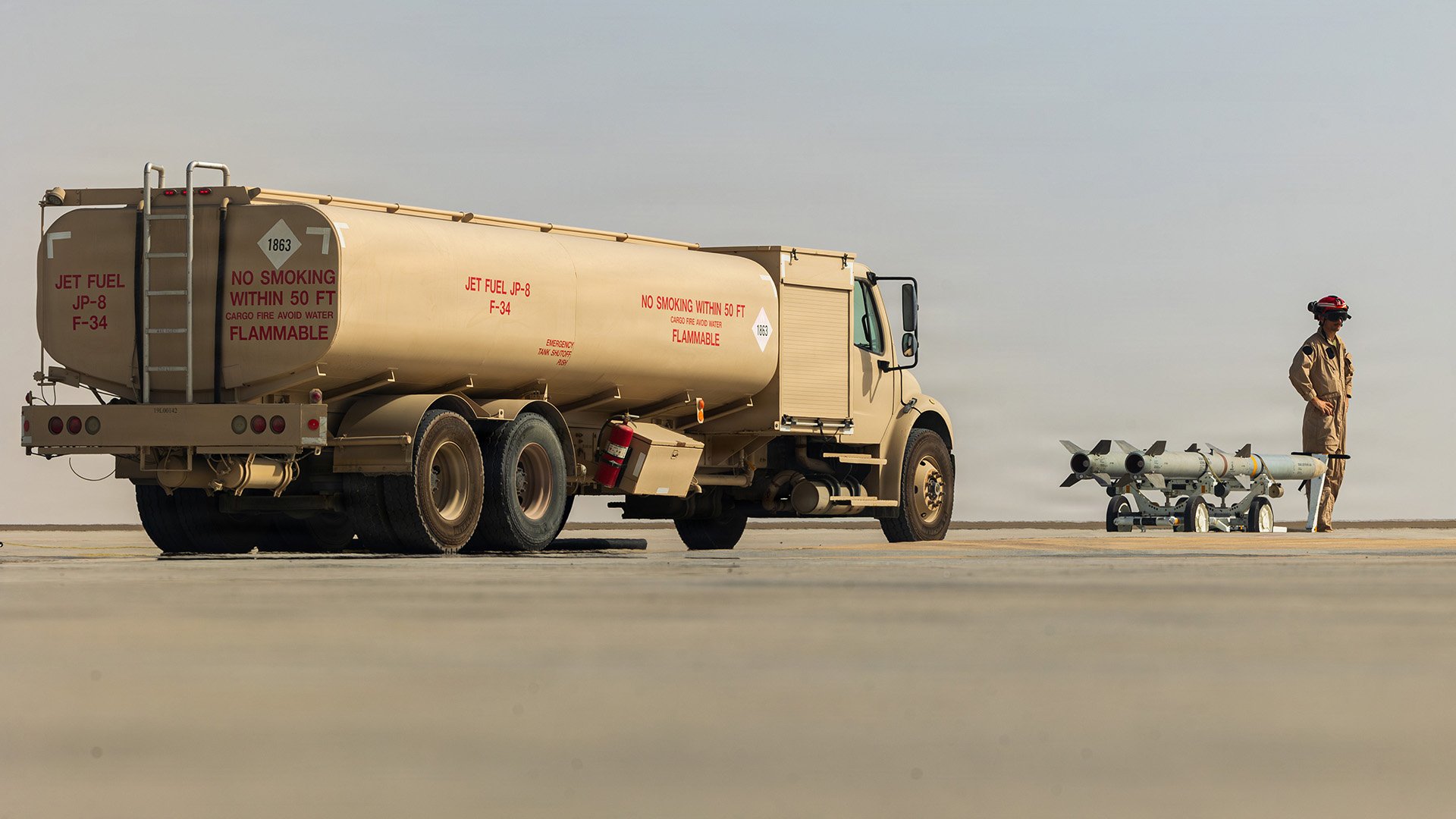
One of the objectives of the FARPs was to reduce reliance on the Marines’ fleet of KC-130 aerial refuelers and serve as jumping-off points for its F-35B Lightning II fighters.

“There was all manner of tankers all the time, but the FARP is to extend the operational reach, and if you can do it, you reduce the load on that,” Niedziocha noted. “Because there’s some aircraft that are basically for expeditionary austere operations, especially the F-35B,” the Marine Corps’ variant of the aircraft designed for short take off and vertical landing. 

“There are some trade-offs associated with the Bravo,” Niedziocha pointed out, using a slang for the jets. “There’s less internal fuel, but you have the lift [system], which gives you the option to do these kinds of things. So, the goal there was to walk that fine line between providing the full sortie over wherever you needed it, and keeping the ships far enough away to make them as survivable as possible.”
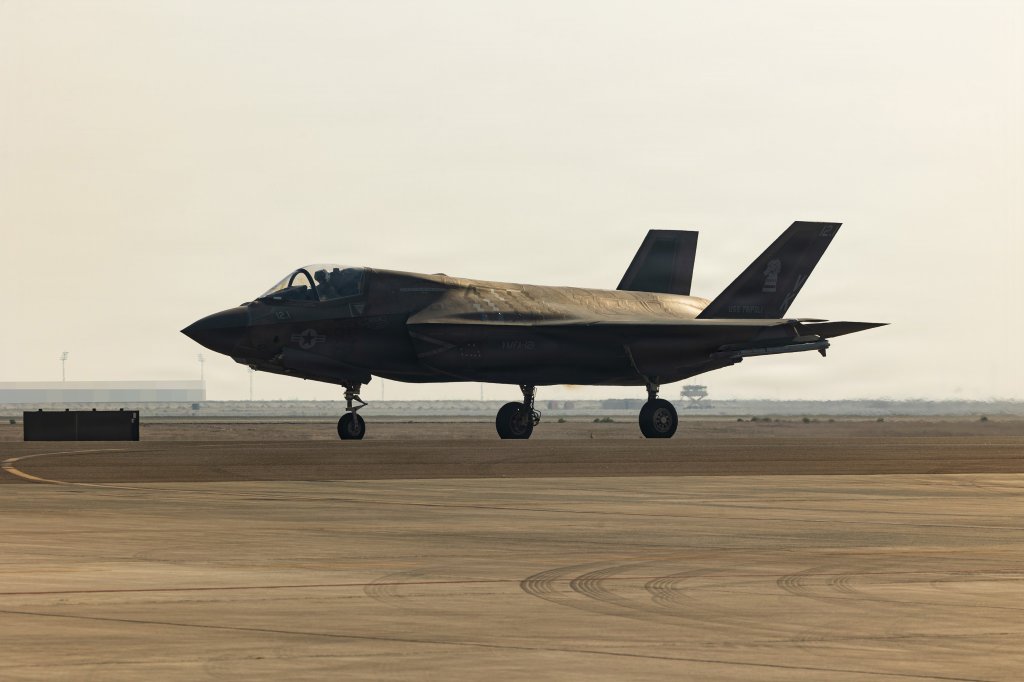
An F-35B Lightning II aircraft taxis to a forward arming and refueling point in the U.S. Central Command area of responsibility, May 26, 2026. (U.S. Marine Corps photo by Cpl. Maksim Masloboev)
An F-35B Lightning II aircraft taxis to a forward arming and refueling point in the U.S. Central Command area of responsibility, May 26, 2026. (U.S. Marine Corps photo by Cpl. Maksim Masloboev) Cpl. Maksim Masloboev

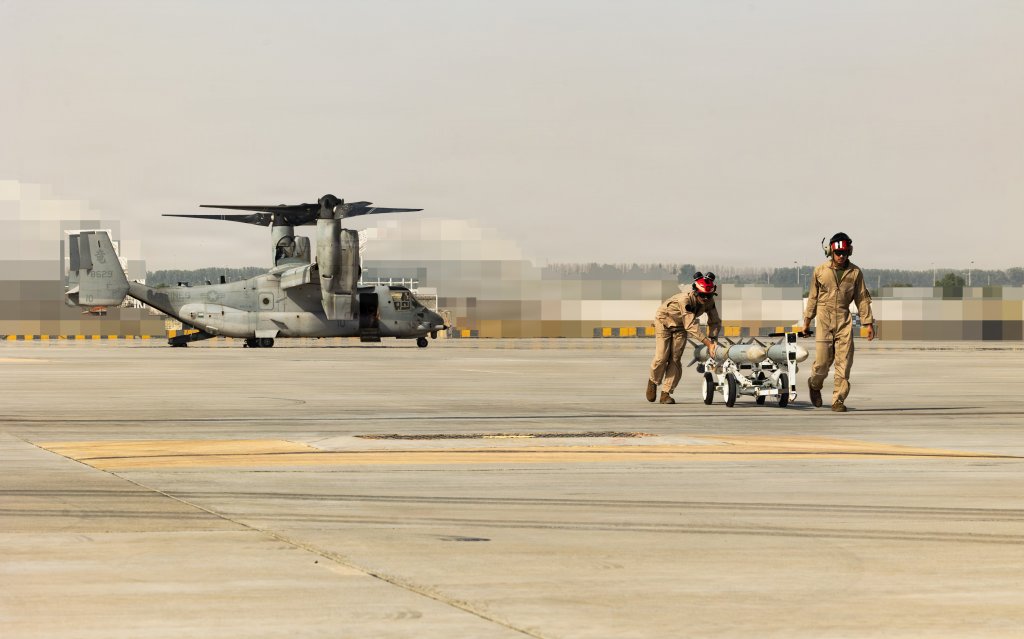
In addition to the F-35Bs and other aircraft organic to the 31st MEU, the FARPs were also used by Army helicopters, Keenan told us. Imagery posted on the Pentagon’s image distribution site also showed U.S. Army Gray Eagle drones and Marine MV-22B Osprey tiltrotor aircraft were included.
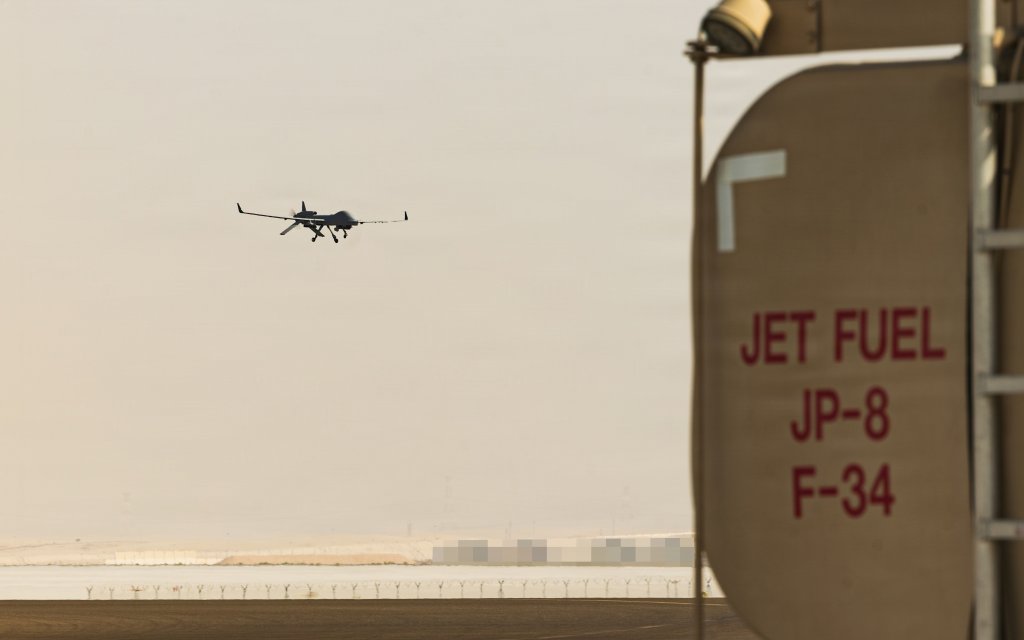
An MQ-9 Reaper drone lands at a forward arming and refueling point in the U.S. Central Command area of responsibility, May 26, 2026. (U.S. Marine Corps photo by Cpl. Maksim Masloboev)
A Gray Eagle drone lands at a forward arming and refueling point in the U.S. Central Command area of responsibility, May 26, 2026. (U.S. Marine Corps photo by Cpl. Maksim Masloboev) Cpl. Maksim Masloboev

U.S. Marines with the 31st Marine Expeditionary Unit, transport aircraft ordinance to a forward arming and refueling point in the U.S. Central Command area of responsibility, May 26, 2026. (U.S. Marine Corps photo by Cpl. Maksim Masloboev)
U.S. Marines with the 31st Marine Expeditionary Unit transport AIM-120 AMRAAMs to a forward arming and refueling point in the U.S. Central Command area of responsibility, May 26, 2026. (U.S. Marine Corps photo by Cpl. Maksim Masloboev) Cpl. Maksim Masloboev

Niedziocha did not provide details about where the FARPs were set up, but a U.S. defense official told us they were “disaggregated throughout the Middle East.” The official declined to provide further information, citing operational security concerns since they are still being used.

“Throughout the deployment, the Tripoli ARG and 31st MEU successfully conducted over 1,600 mishap-free flight hours of combat aviation missions, including precision strikes, transporting 800,000 pounds of cargo, and moving 5,000 personnel,” a 31st MEU overview of the deployment explained. “The units also provided sustained combat support to joint force operations by delivering critical intelligence and refueling over 300 aircraft ashore and underway.”

The colonel also didn’t provide details about the sensor expeditionary advanced bases. According to the Marines, “a sensing expeditionary advanced base (SEAB) brings together coastal surveillance radars, electronic sensors, and Marines ashore to extend maritime domain awareness, complementing the radars and sensors already at work aboard naval ships off the coast.”

“When SEAB systems identify surface vessels in nearby sea lanes, small unmanned aircraft system (sUAS) operators launch their platforms to visually identify and track the contacts,” the Marines added. “Sensor data and imagery are transmitted in real time across the blue-green command network to decision-makers.”
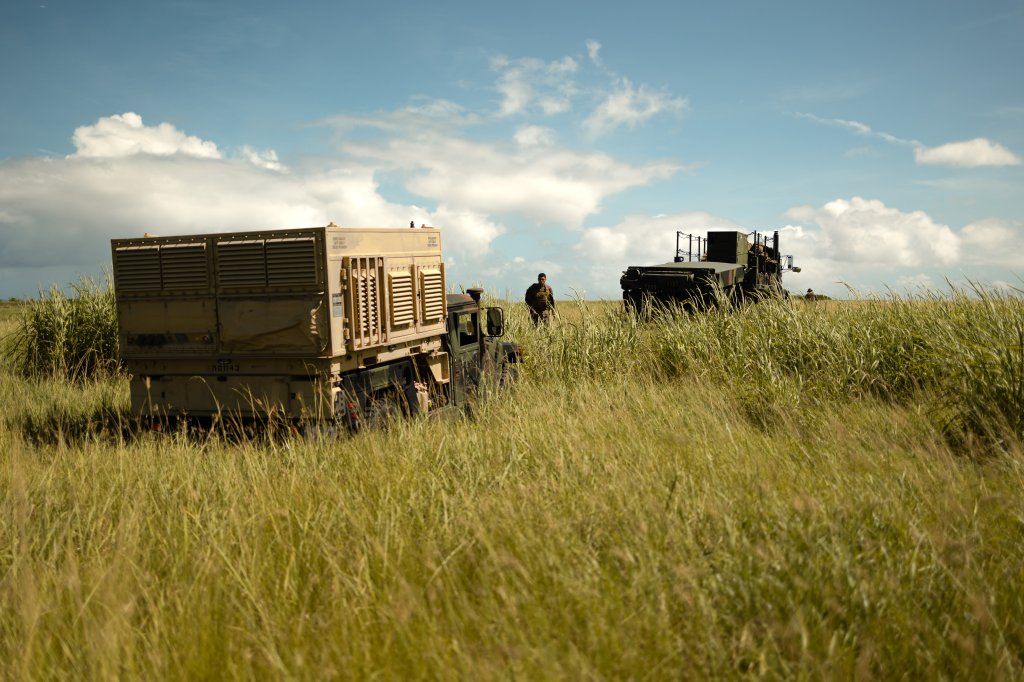
U.S. Marines with 12th Marine Regiment, 3rd Marine Division, prepare to set-up a Ground/Air Task Oriented Radar (G/ATOR) system during a routine unit level training exercise on Iejima, Okinawa, Japan, July 15, 2023. The G/ATOR provides an air defense and surveillance capability and is used to locate enemy weapon systems. As the stand-in force aviation combat element, 1st MAW is utilizing expeditionary advanced bases to expand kill chain functions and bridge Marine aviation command and control (C2), sensor, and shooter capabilities across the joint force. (U.S. Marine Corps photo by Staff Sgt. Manuel A. Serrano)
U.S. Marines with 12th Marine Regiment, 3rd Marine Division, prepare to set up a Ground/Air Task Oriented Radar (G/ATOR) system during a routine unit level training exercise on Iejima, Okinawa, Japan, July 15, 2023. (U.S. Marine Corps photo by Staff Sgt. Manuel A. Serrano) Gunnery Sgt. Manuel Serrano

This capability could have been used to track Iran’s remaining fleet of small boats that it has used to harass shipping and mine the Strait of Hormuz, as well as larger vessels trying to transport oil. Other sensors, like radars and counter-drone systems, could also help identify incoming threats and provide general situational awareness. The EABO concept was employed as part of the 31st MEU’s larger role in supporting the blockade and mine clearance efforts.

The 31st MEU interdicted four vessels during the deployment, three of which led to boardings. On April 19, Marines boarded the MV Touska; on April 28, the MV Blue Star III; and on May 19, the MT Celestial Sea.

The Touska was boarded after USS Spruance fired multiple 5-inch rounds, targeting the engine room and disabling the vessel’s propulsion. The crew of the vessel was retained for about two weeks before being repatriated.

Niedziocha told us that none of the crews offered any resistance.

“At two in the morning, when 30 Force Reconnaissance Marines fast rope onto your vessel, [you are] just compliant with a capital C. They did exactly what they were directed to do. The overmatch that you put onto that vessel is pretty surprising. And then there’s overwatch provided by UAS and manned aircraft, so you create this bubble around the vessel. So yeah, they complied.”

You can see the Touska being boarded in the following video.

The U.S. just released a video of its forces boarding and seizing the Iranian container ship M/V Touska near the Hormuz Strait after it tried to break the U.S. naval blockade pic.twitter.com/FpB2obb3jY

— Visegrád 24 (@visegrad24) April 20, 2026

Two years ago, as the EABO concept was maturing, TWZ was invited to get an exclusive look at how an advanced EABO concept would be put into action, including how squadrons operated the F-35B out of an austere combat environment while generating combat sorties. It was an unprecedented and exclusive peek into the EABO playbook and what a real fight in the Pacific with the USMC’s most advanced fighter aircraft could actually look like. You can read about that in our story here. It appears the operations in the Middle East mirrored this exercise closely.
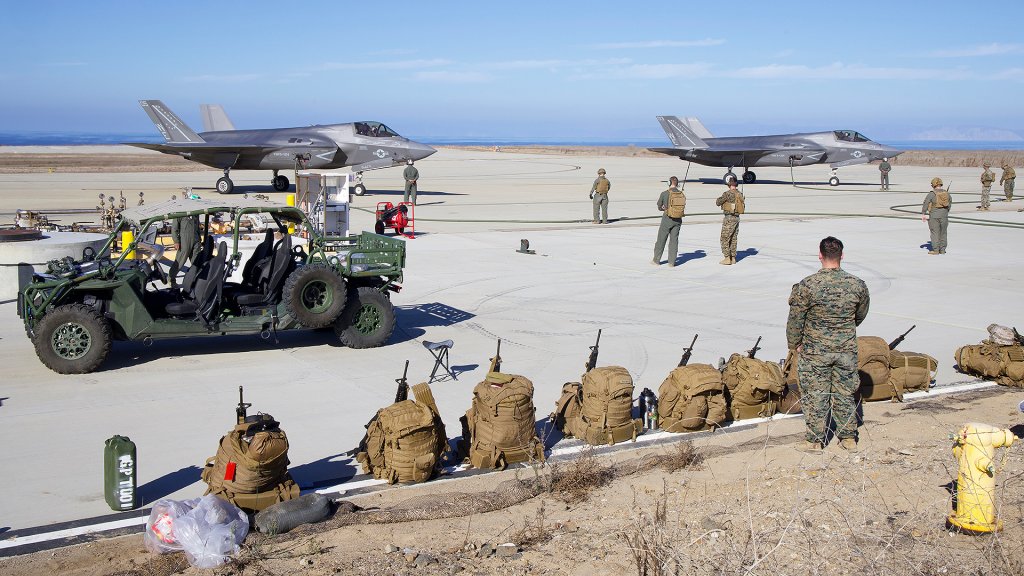
F-35Bs on san clémente island for austere operations training during Steel Knight exercise.
James Deboer

Now back in Japan, the ARG/MEU is getting ready for a new deployment, said the colonel.

“We got back to Okinawa, I think July 22nd, and they had already begun their workup cycle in earnest to be on the water in early January to go out and do another Iron Fist [training exercise] with the Japanese, and then long periods of a crisis response,” said Niedziocha, who relinquished command in August before moving on to his new role. “Just being there, present in the First Island Chain to partner with your allies, demonstrates the resolve and commitment to deter whatever needs deterring.” 

As noted earlier in this story, the EABO concept was designed with a Pacific fight in mind. Its first combat employment in the Middle East clearly offers lessons that can now be adapted to enhance EABO operations globally.

Contact the author: howard@twz.com

The post USMC Used Its Expeditionary Operations Playbook In Combat For First Time During Epic Fury appeared first on TWZ.
  •  

F-16 Crashes In Michigan

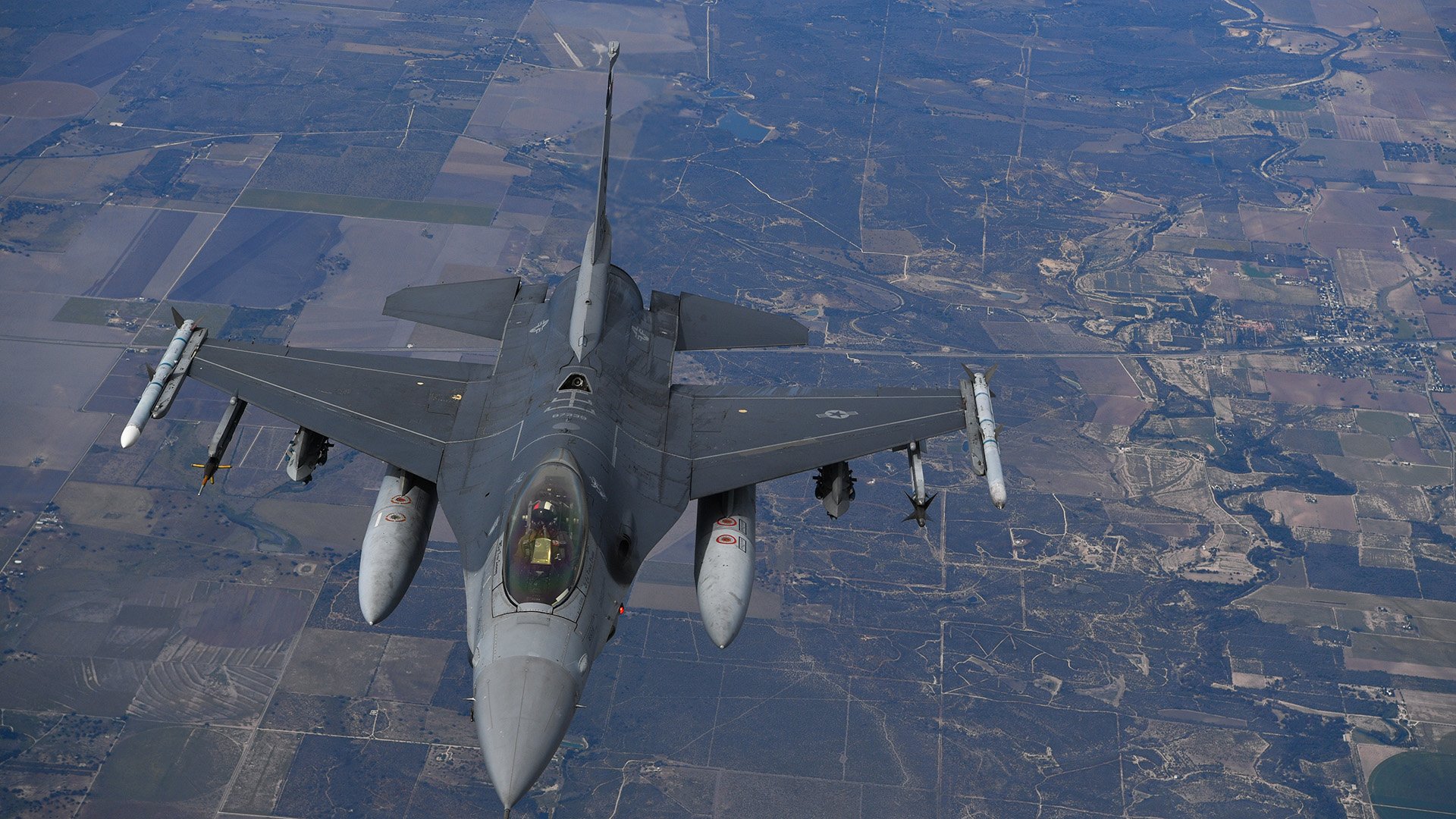
A U.S. Air Force F-16 Fighting Falcon crashed in northern Michigan today, according to WOOD-TV, a local NBC affiliate. The pilot was reported to be in stable condition after ejecting from the aircraft.

A spokesperson with the Michigan Department of Military and Veterans Affairs told the station that “the F-16 is a part of the 149th Fighter Wing from Joint Base San Antonio-Lackland in Texas.” 

Video emerging on social media showed what is claimed to be the wreckage of the aircraft in flames.

FOX 2 Detroit confirmed that the plane which crashed in Blair Township, Michigan was a F-16.

Seeing reports that the pilot was able to eject safely. pic.twitter.com/CfT2qriwJq

— AZ Intel (@AZ_Intel_) September 17, 2026

According to air traffic control (ATC) audio, the pilot’s wingman said, “we have a possible mayday. My wingman may have taken a bird.” TWZ cannot independently confirm what caused the crash. The audio continues and offers a fairly dramatic and raw look at how the incident occurred over the air waves.

F-16 crash ATC audio, BUCK 11 flt x2 F-16s were flying along the VFR low level route VR634 when the 11 advised MINNEAPOLIS CENTER that his wingman may have hit a bird and was going to eject just south of Traverse City, Michigan

Audio via @liveatc https://t.co/sUR7KZBR2j pic.twitter.com/QdcE4ePiUd

— Thenewarea51 (@thenewarea51) September 17, 2026

We have reached out to the 149th Fighter Wing, the Michigan Department of Military and Veteran Affairs, the Grand Traverse County Sheriff’s Office and the Grand Traverse County Emergency Management Office for further details.

A shelter-in-place order was issued by Grand Traverse County Emergency Management for residents near the plane crash.

“Shelter indoors, close windows/vents,” the order stated. “Follow instructions from emergency personnel. More information to follow. This shelter in place applies to residents in the indicated area ONLY.”

This is a developing story.

Contact the author: howard@twz.com

The post F-16 Crashes In Michigan appeared first on TWZ.

  •  

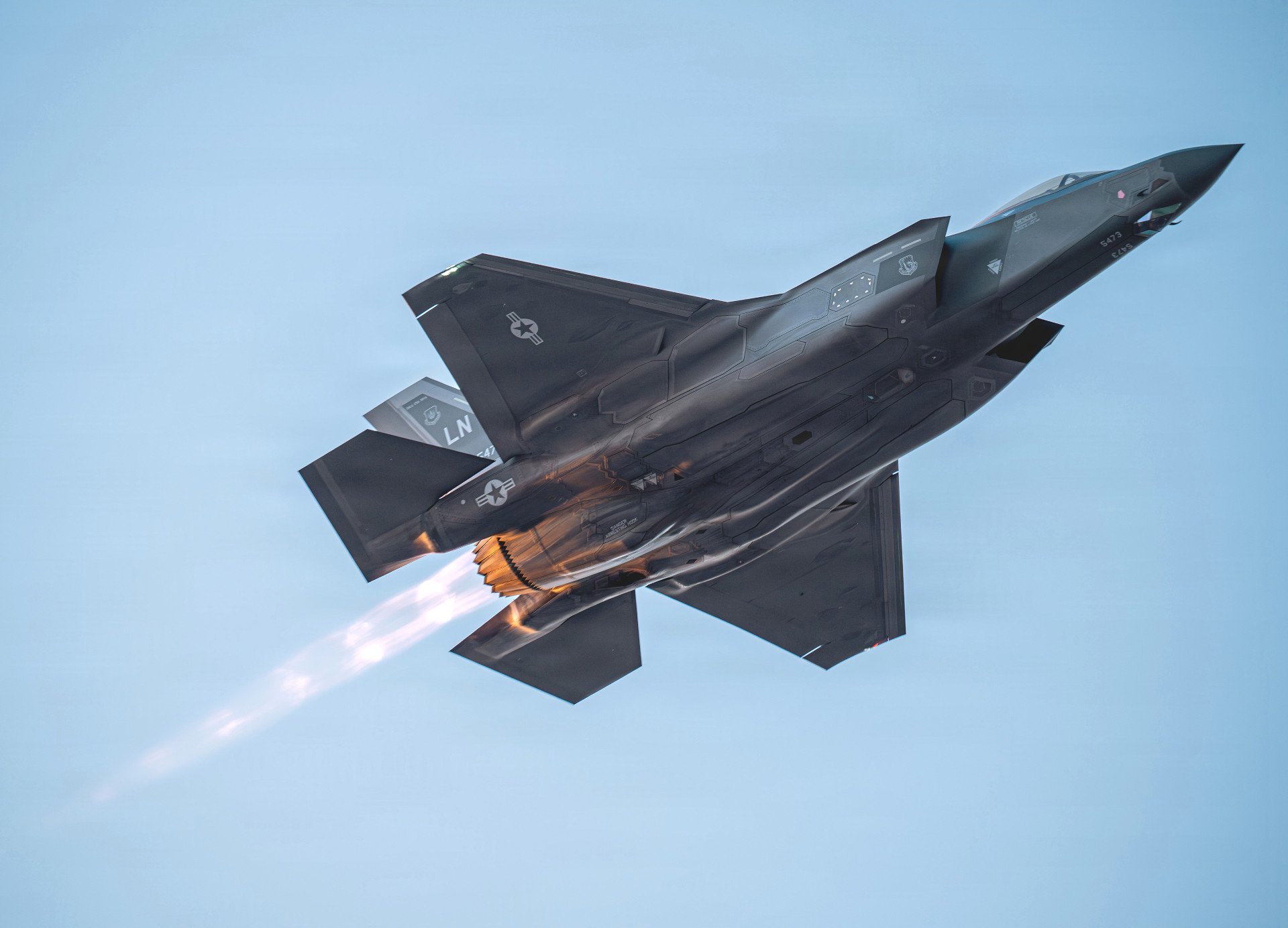
F-35 Sale To Saudi Arabia Approved By State Department

The U.S. State Department today approved the possible sale of 48 F-35 Lightning II Joint Strike Fighters to the Kingdom of Saudi Arabia.

The proposed deal, worth an estimated total cost of $24.3 billion, was announced as the Kingdom is in the midst of a fierce fight against the Houthi rebels of Yemen. It marks a major policy shift, with Washington previously being unwilling to export the advanced stealth fighters to Arab states and will likely serve as a reminder at a very challenging time for the Saudis of the unique security capabilities that only the U.S. can provide them.

In addition to the jets, which will be conventional takeoff and landing variants, Saudi Arabia has requested 49 Pratt & Whitney F135-PW-100 engines, support and other items.

Despite concerns from Israel that providing Saudi Arabia with the advanced fighters will tip the balance of power in the region, the proposed sale of this equipment and support “will not alter the military balance in the region,” the State Department noted. 

The United States has a requirement to maintain Israel’s so-called qualitative military edge, which essentially guarantees that Israel will be prioritized for advanced U.S. weapons ahead of Arab states in the region. Among these advanced weapons, the stealthy F-35 is highly prominent.

You can read our past feature about the wide-ranging impacts of an F-35 sale to Saudi Arabia here.

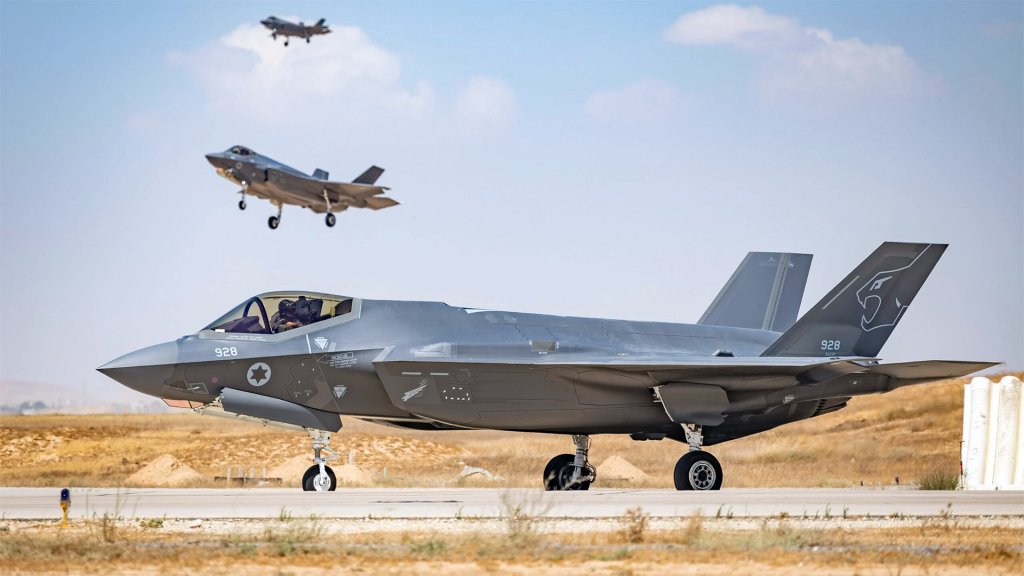
Israeli Air Force F-35i fighters. (Israeli Air Force)

“This proposed sale will support the foreign policy and national security objectives of the United States by improving the security of a major non-NATO ally that is a force for political stability and economic progress in the Gulf region,” the State Department wrote. “The proposed sale will improve Saudi Arabia’s capability to deter current and future threats by strengthening its homeland defense, and improving interoperability with U.S. forces, and other regional and NATO forces.  The proposed sale will also augment Saudi Arabia’s operational aircraft and enhance its air-to-air, and air-to-ground self-defense capability.  The Kingdom of Saudi Arabia will have no difficulty absorbing this equipment and services into its armed forces.”

In November, “President Trump approved a major defense sale package, including future F-35 deliveries, which strengthens the U.S. defense industrial base and ensures Saudi Arabia continues to buy American,” according to the White House.

Trump has pushed for closer ties between Israel and Saudi Arabia and wants the Kingdom to join the Abraham Accords initiative. This is a set of agreements that establish normalized diplomatic relations between Israel and different Arab states. Doing so would be a major breakthrough, following the United Arab Emirates, Bahrain, Morocco, and others.

A Saudi F-35 deal was also discussed under the Biden administration, as part of a broader deal that sought to normalize the Kingdom’s relations with Israel.

This is a developing story.

Contact the author: howard@twz.com

The post F-35 Sale To Saudi Arabia Approved By State Department appeared first on TWZ.

  •  

How The Air Force Patched Up A Shrapnel-Damaged KC-135

The head of Air Mobility Command (AMC) on Wednesday offered some new details about what went into repairing a KC-135 Stratotanker riddled with shrapnel holes from an Iranian attack. We have previously written about a couple of these jets damaged during Operation Epic Fury (OEF) as they came through RAF Mildenhall in the U.K. on their way back to the U.S. for comprehensive repair work. We are also getting new information of how AMC kept its fleet operating at such a prolonged high-tempo ahead of and during OEF.

The discussion about the damaged tanker took place during a panel at the Air & Space Forces’ Air, Space and Cyber Conference that TWZ is attending. The tanker in question was damaged as it was preparing for a mission, explained AMC commander Lt. Gen. Daniel H. Tulley.

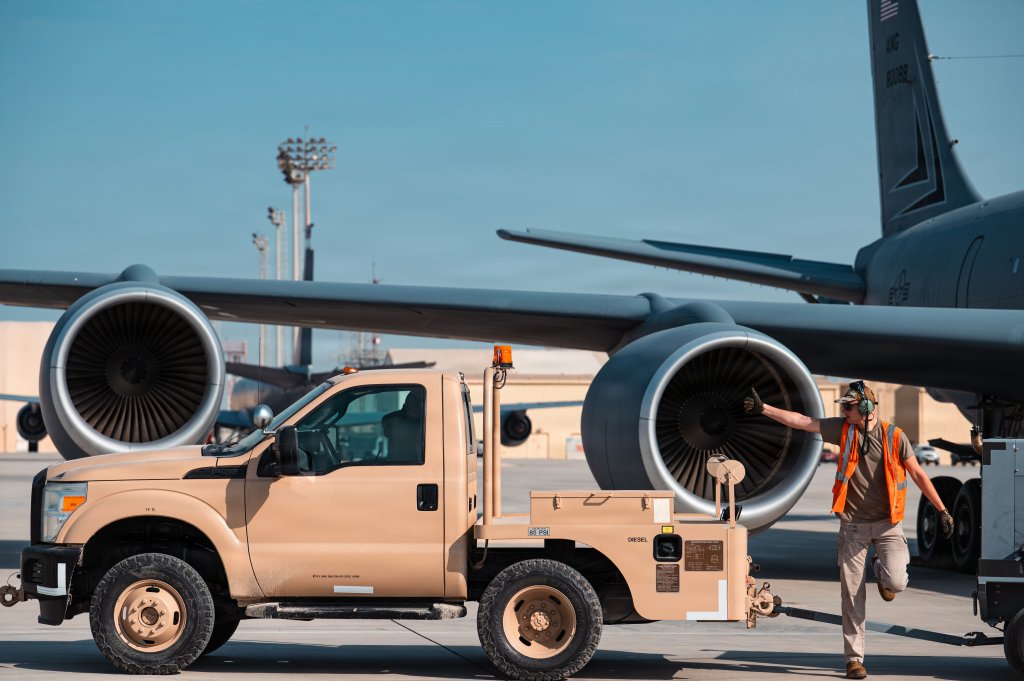
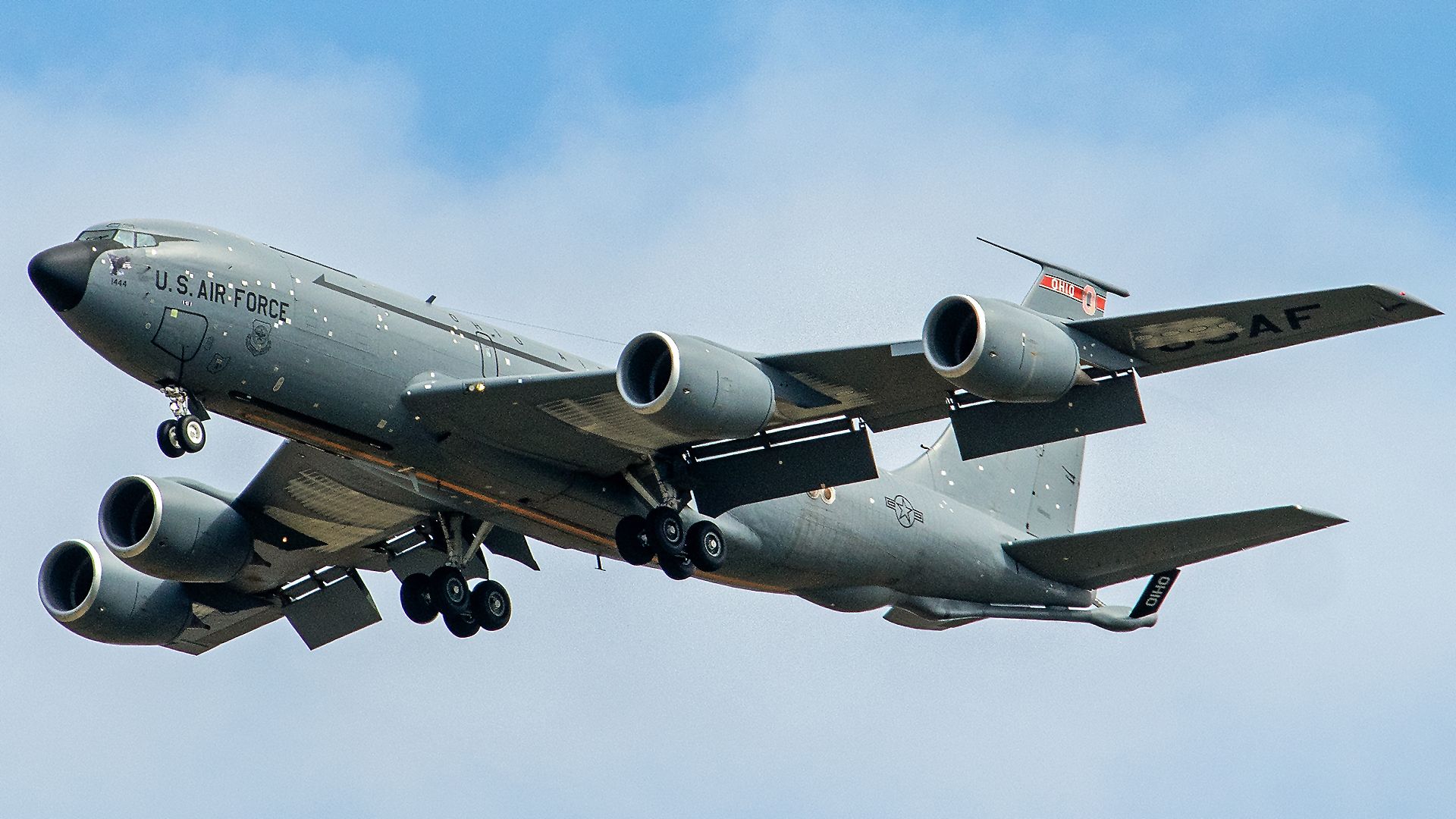
A U.S. Air Force maintainer performs preflight maintenance on a KC-135 Stratotanker refueling aircraft at a base in the Middle East, April 30, 2026. (U.S. Air Force photo by Master Sgt. James Cason)
A U.S. Air Force maintainer performs preflight maintenance on a KC-135 Stratotanker refueling aircraft at a base in the Middle East, April 30, 2026. (U.S. Air Force photo by Master Sgt. James Cason) Master Sgt. James Cason

“A KC-135 ops crew is in the jet,” he said. “KC-135 maintenance team is about to launch this jet. Unexpected Alarm Red [an attack warning]. Everyone jumps in a bunker.”

After the barrage, the airmen emerged from their bunkers and checked out the plane.

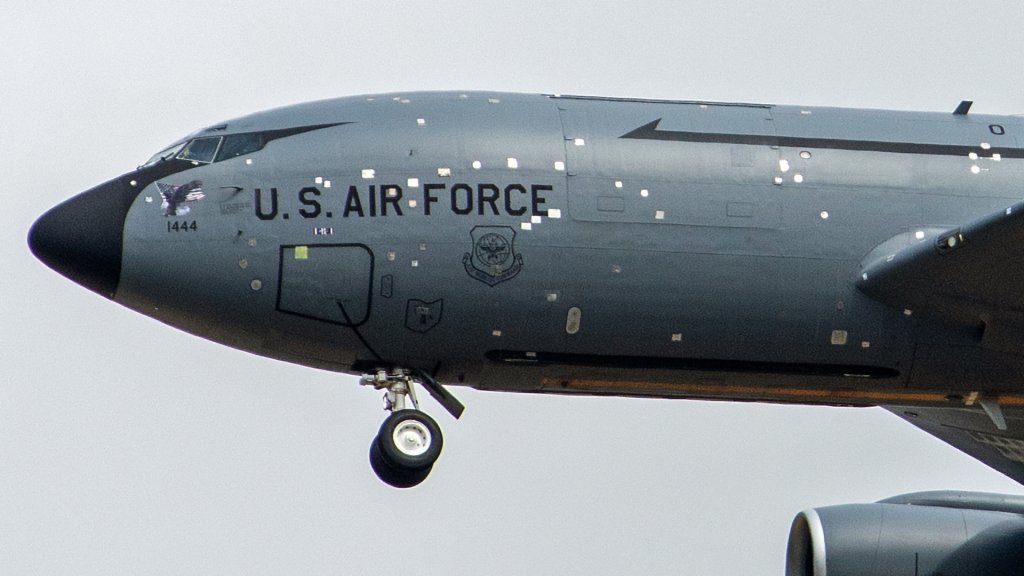
“That aircraft is smoking,” Tulley said. “There are holes in it, and it’s a fully loaded KC-135. Two hundred thousand pounds of jet fuel. Took 48 hours for that [fuel] to be drained out of that aircraft. In the meantime, first on the scene was I think the pro super [production superintendent] and the expediter. They immediately began to collect the fuel… They start to patch the holes. They start to fix all the systems. Long story short, they were eventually able to get that plane to make a transoceanic flight back home to be fully repaired.”

Tulley did not say where the attack took place. However, as we have previously reported, five tankers were reportedly damaged in an Iranian long-range strike on Prince Sultan Air Base (PSAB) in Saudi Arabia on March 14. That was later confirmed in a Department of War Inspector General report released earlier this week.

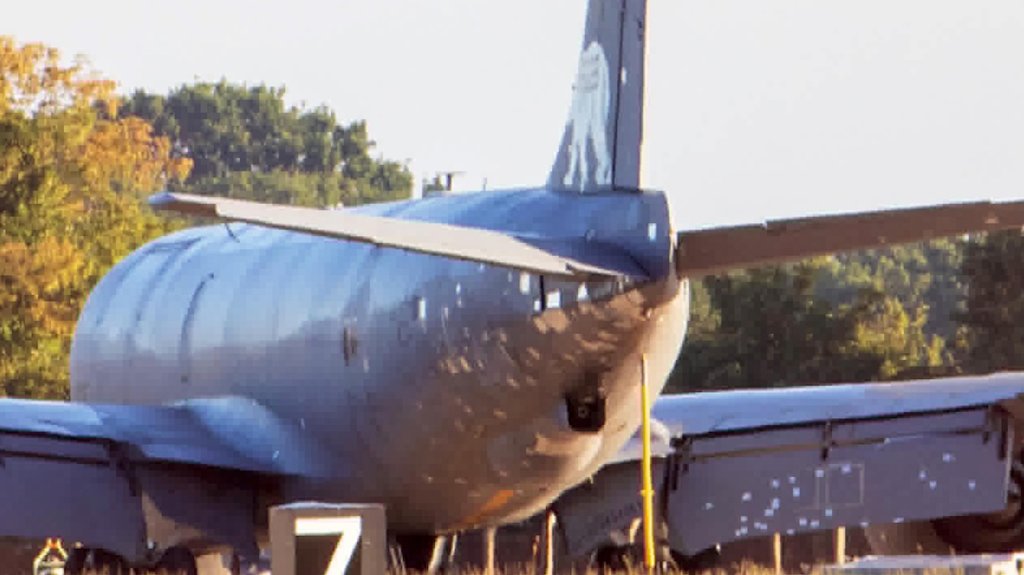
You can see two of the shrapnel-damaged KC-135s as they passed through the UK on the way home in the following photographs shared with us by aviation photographer Andrew McKelvey. We do not know if either of these is the one discussed by Tulley.

(Andrew McKelvey)
Another battle-damaged KC-135 Stratotanker aerial refueling jet arrived at RAF Mildenhall.
(Andrew McKelvey)

Lt. Gen. Linda Hurry, Commander of Air Force Materiel Command (AFMC), followed Tulley’s comments with additional details about the repair work.

“I’ll pick right up on that because it was our aircraft battle damage repair team that was actually able to patch their aircraft back together to get it back to Tinker [Air Force Base in Oklahoma] that can put it completely back where it needed to be,” she noted. Tinker is home to the Expeditionary Depot Maintenance (EDMX), which is “responsible for maintaining the Air Force’s sole source for Aircraft Battle Damage Repair (ABDR) rapid repair capabilities for the entire tanker and bomber fleets,” according to the Air Force.

“So with Operation Epic Fury, we’re asking those questions: What can we sustain for how long? And it begs a question about regeneration,” Tulley further explained. “You know, our new teammates have regeneration as part of their doctrine, so readiness in contact is the way we’re approaching this. What can we do to improve how we generate capability while under fire, in contact, persistently in an extended or protracted conflict? Lots of great examples of work being done to get after this. General Hurry’s team has brought a lot of capability forward at Mildenhall Air Base.” 

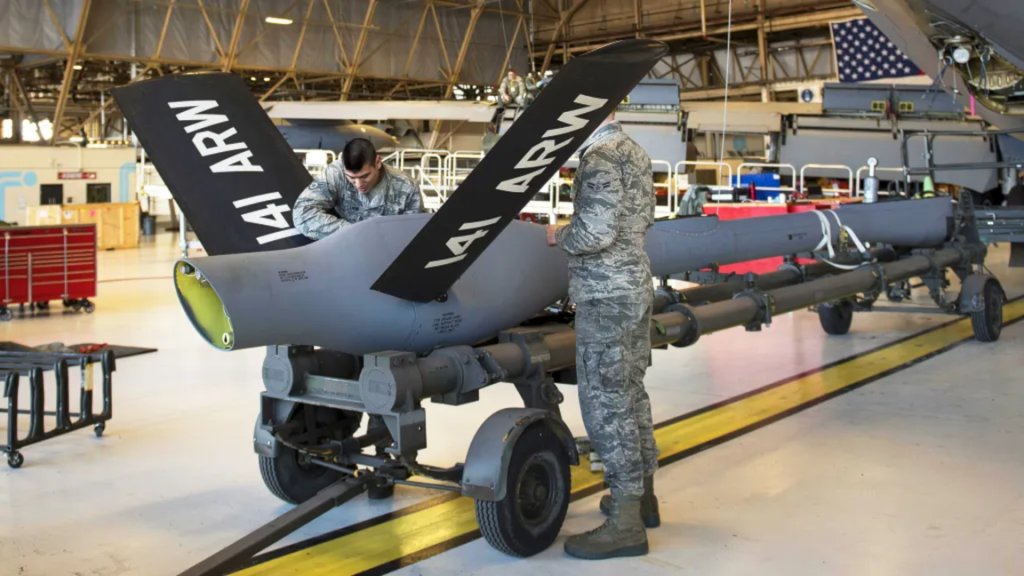
One example of how this has worked has been repairing damaged aerial refueling booms in the U.K. instead of all the way back to the U.S., Tulley highlighted. The booms, which extend from the back of tankers so that receiving aircraft can get their gas, can be damaged by the process, especially during combat refueling.

“I think we turned 30 booms instead of bringing them all the way back to the states,” Tulley noted.

A KC-135 refueling boom. (USAF)

Repairing battle damage is certainly a unique situation for AMC airman, but keeping hundreds of the command’s tankers and cargo aircraft moving at such a high rate prior to and during the war was a huge undertaking that was helped by new maintenance concepts. The Air Force sent maintainers and parts to bases in Europe to drastically speed up major maintenance that would have demanded the aircraft return stateside.

“We moved some maintenance actions forward, so they didn’t have to – the aircraft didn’t have to go all the way back to the states,” Air Force Chief of Staff Gen. Kenneth S. Wilsbach said during his keynote speech earlier this week. “We put some of them in Europe, so they could get through some normal safety inspections that were either due or deferred. Got those done, and the aircraft doesn’t have to go all the way back to the states. They can go somewhere in Europe, get the thing done, and then get right back to the flight. And so, those measures by Air Mobility Command paid dividends in the readiness of our mobility fleet.”

Air Force Global Strike Command (AFGSC), which maintains the service’s fleet of strategic bombers and its ICBM force, did something similar at RAF Fairford in the U.K., AFGSC commander Gen. Stephen L. Davis explained.

“It’s a complex problem,” said Davis. “I would say in the past we probably didn’t do this the right way. When we thought a conflict was kicking off, the first thing we do is start sending bombers forward, and that actually consumes our readiness. So I think we got it right during OEF.”

“We pushed maintainers and support personnel forward to RAF Fairford, and then we actually took the bombers, we loaded them up in CONUS [Continental United States]. We took them to the Middle East. They actually did a mission. They employed, deployed, conducted a combat mission, and then landed at Fairford. And then for the next, well, I guess they’ve been there for now six-plus months.”

“They’ve been conducting nearly daily operations out of there,” Davis proffered. “When bombers are back at home base, they build readiness. When we deploy it forward, they consume readiness. And then, as [Gen. Hurry] said, we’re getting great support in terms of parts, in terms of supplies, and in terms of forward depot support. So that fleet remains healthy.”

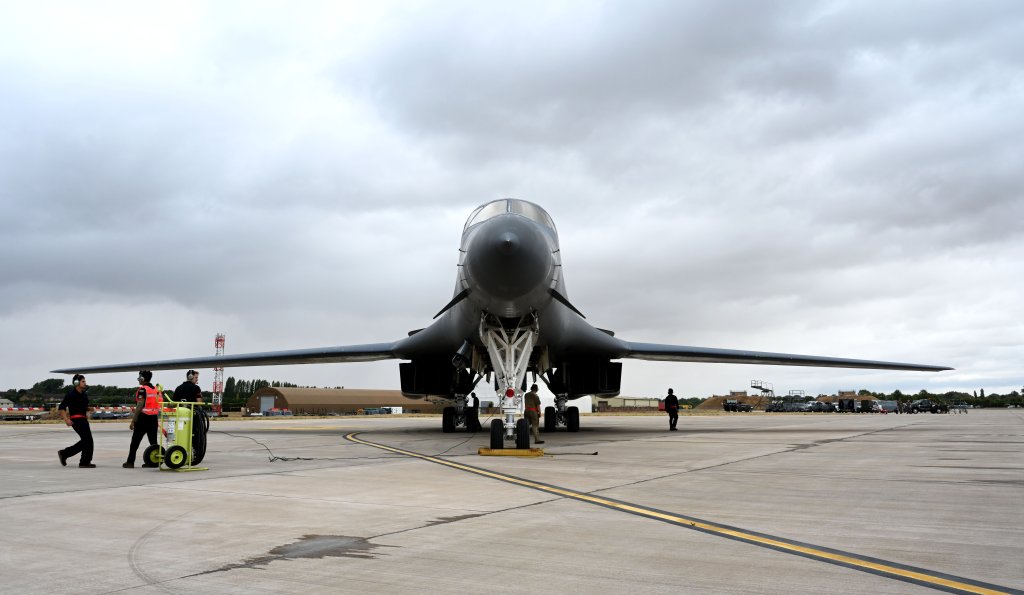
A U.S. Air Force B-1B Lancer assigned to the 37th Bomb Squadron, Ellsworth Air Force Base, S.D., arrives to participate in the Royal International Air Tattoo at Royal Air Force Fairford, England, July 15, 2025. The Lancer is slated to participate in RIAT, which has more than 80 aircraft are scheduled to attend from July 18-20, 2025. (U.S. Air Force photo by Tech. Sgt. Robert M. Trujillo)
A U.S. Air Force B-1B Lancer at RAF Fairford, England, July 15, 2025. (U.S. Air Force photo by Tech. Sgt. Robert M. Trujillo) Tech. Sgt. Robert Trujillo

Being able to do as much repair and maintenance work as close to the front lines as possible will be hugely important in any future fight against China, and, unfortunately, repairing battle damaged aircraft will be necessary too. Clearly, the Air Force has learned some very important lessons from Epic Fury.

Contact the author: howard@twz.com

The post How The Air Force Patched Up A Shrapnel-Damaged KC-135 appeared first on TWZ.

  •  
❌