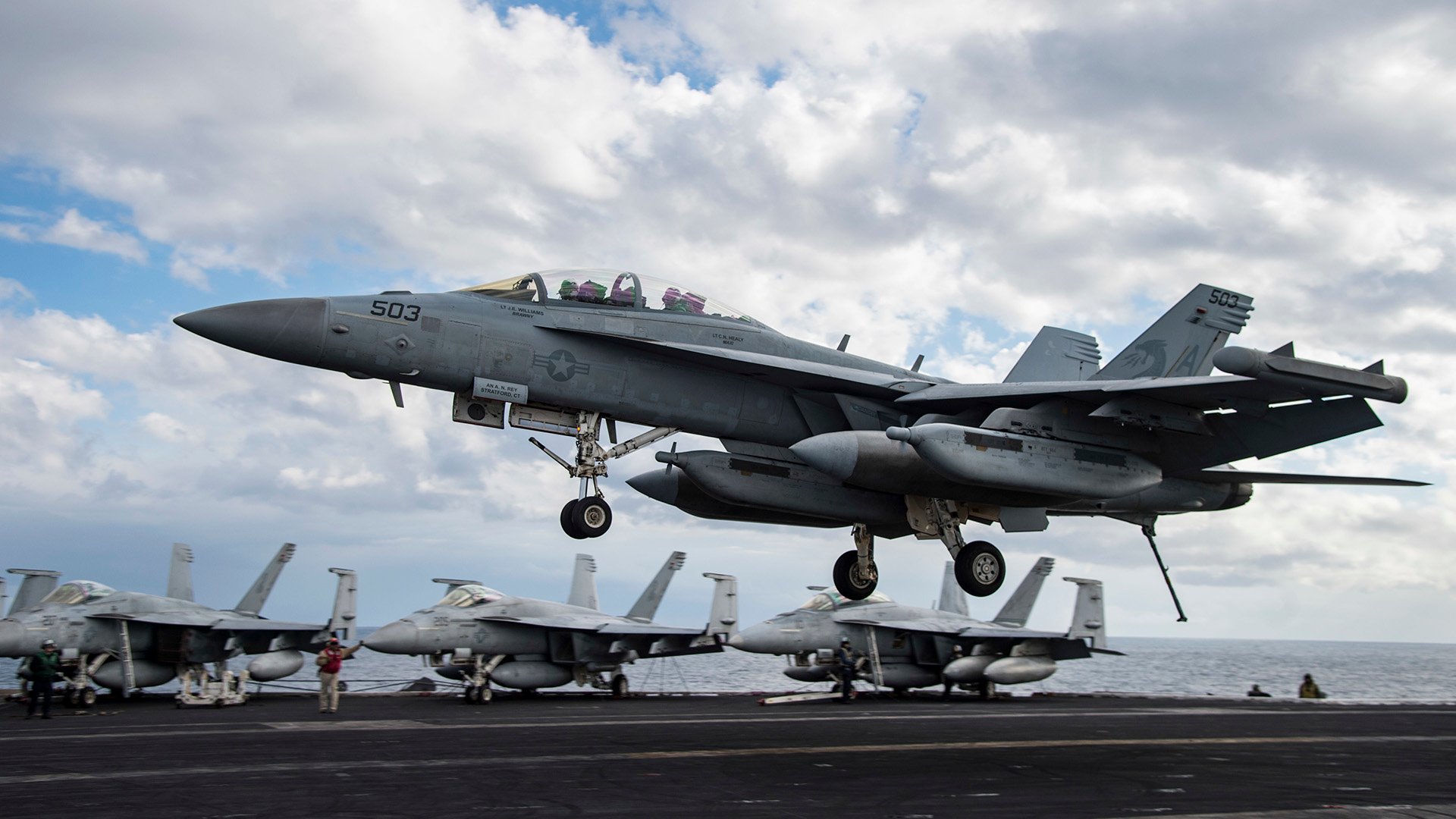
The Navy has identified the aircraft type at the center of last night’s mishap aboard the aircraft carrier USS Dwight D. Eisenhower. The service said the incident involved the crew of an EA-18G Growler electronic warfare jet who were forced to eject after the aircraft experienced an arresting gear failure while trying to land. This took place about 6:18 p.m. Eastern Daylight Time Monday as the vessel was off the coast of Virginia.
The Growler crew, attached to the “Zappers” of Electronic Attack Squadron (VAQ) 130, was “promptly recovered by search-and-rescue personnel assigned to Helicopter Sea Combat Squadron (HSC) 7. Both aviators were safely returned to the ship,” the Navy added. The cause of the mishap is still being investigated.
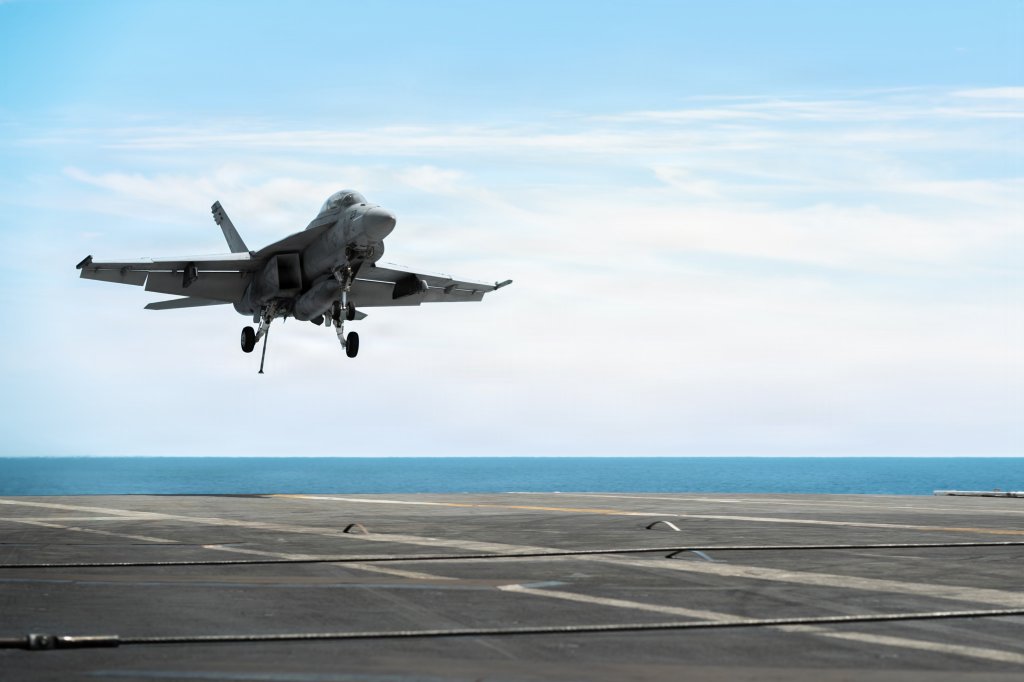
A U.S. Navy F/A-18F Super Hornet approaches the flight deck of Nimitz class aircraft carrier USS Dwight D. Eisenhower (CVN 69), June 20, 2026. Eisenhower is underway in the Atlantic Ocean conducting carrier qualifications, supporting East Coast fleet replacement squadrons. (U.S. Navy photo by Mass Communication Specialist 2nd Class Miguel Santiago) Petty Officer 2nd Class Miguel Santiago
The two aviators and two additional sailors injured on the flight deck were flown to Naval Medical Center Portsmouth for follow-on evaluation, the Navy explained. Another sailor was flown to a Norfolk-area hospital for treatment of non-life-threatening injuries. All told, eight sailors had to be evaluated by the ship’s medical personnel following the incident.
Air traffic control audio has emerged indicating that the injured sailor flown to the area hospital was transported to Sentara Norfolk General Hospital.
DSTY613 (MH-60S) brought the injured into Sentara Norfolk General Hospital last night.
It is unclear at the moment whether the aircraft was lost or if there was any damage to the carrier itself. We have reached out to the Navy to find out more details.
The failure of an arresting wire is one of the worst nightmares carrier-based fixed-wing naval aircrews and sailors on deck can face. The wire turns into a falling steel whip that can cut a person in half as it slices through the air across the flight deck, and usually, the aircraft it broke away from, ends up in the sea as it doesn’t have enough airspeed or time to get airborne again. You can read more about this type of mishap in our past reporting here.
The mishap took place as Eisenhower was working up in preparation for a future deployment scheduled for 2027, which TWZpreviously reported. This followed an extended 16-month Planned Incremental Availability (PIA) that wrapped in April. The carrier had been pierside at Naval Station Norfolk since Sept. 2 after completing a 12-day underway for Fleet Replenishment Squadron and Training Command Carrier Qualifications in the Virginia Capes and Jacksonville Operating Areas.
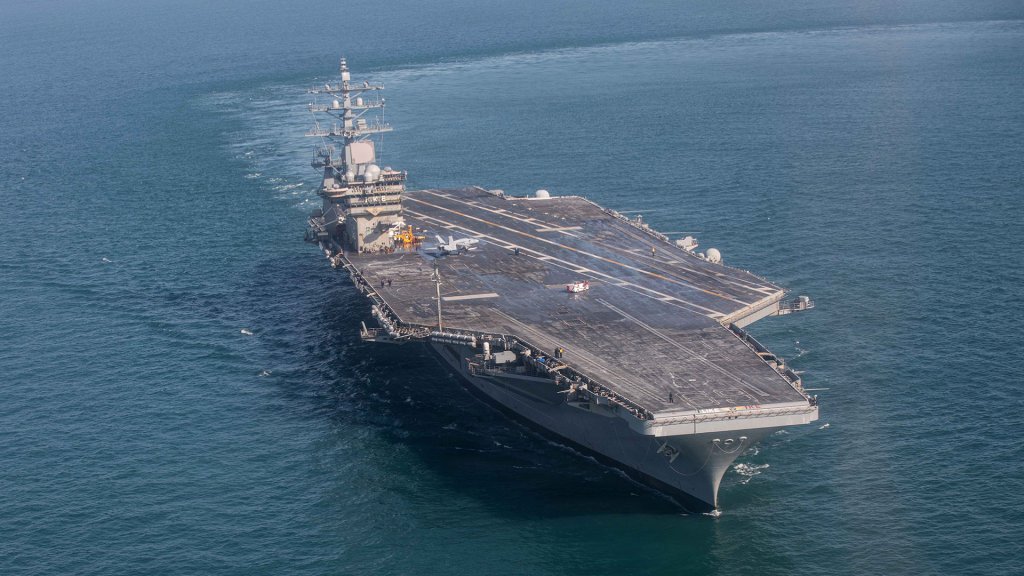
U.S. Navy Nimitz class aircraft carrier USS Dwight D. Eisenhower (CVN 69) conducts a full power demonstration during Sea Trial in the Virginia Capes, Apr. 22, 2026. Eisenhower returned to sea and is now in the Basic Phase in the Optimized Fleet Response Plan. (U.S. Navy photo by Mass Communication Specialist Seaman Nicole Schweigert) Seaman Apprentice Nicole Schweigert
Eisenhower got underway again on the afternoon of Sept. 28, according to ship spotters, for a Tailored Ship’s Training Availability and Final Evaluation Problem. That’s one of the final steps before onloading ammunition for the Composite Unit Training Exercise, when the full strike group gathers to complete pre-deployment training.
The U.S. Navy’s schedule for getting USS Connecticut, one of its prized Seawolf class nuclear attack submarines, back into service has slipped into next summer. The boat suffered severe damage, especially to its bow, in a collision with an underwater seamount in the South China Sea in 2021. The service had previously hoped that repairs would be finished before the end of this year, and planning is also now underway for the submarine’s retirement in 2031. This would mean it could serve for just four years before being pulled from service once and for all.
“USS Connecticut (SSN 22) is currently undergoing a complex Extended Docking Selected Restricted Availability (EDSRA) at Puget Sound Naval Shipyard & Intermediate Maintenance Facility. Current work consists of structural and systems restoration and required lifecycle maintenance,” a Navy official told TWZ today. “The Navy’s target completion date for the availability is the summer of 2027. PSNS & IMF is dedicated to executing this work with the highest standards of safety, technical accuracy, and craftsmanship to ensure the ship returns to the fleet ready to take its place at the tip of the spear in defense of our nation’s interests.”
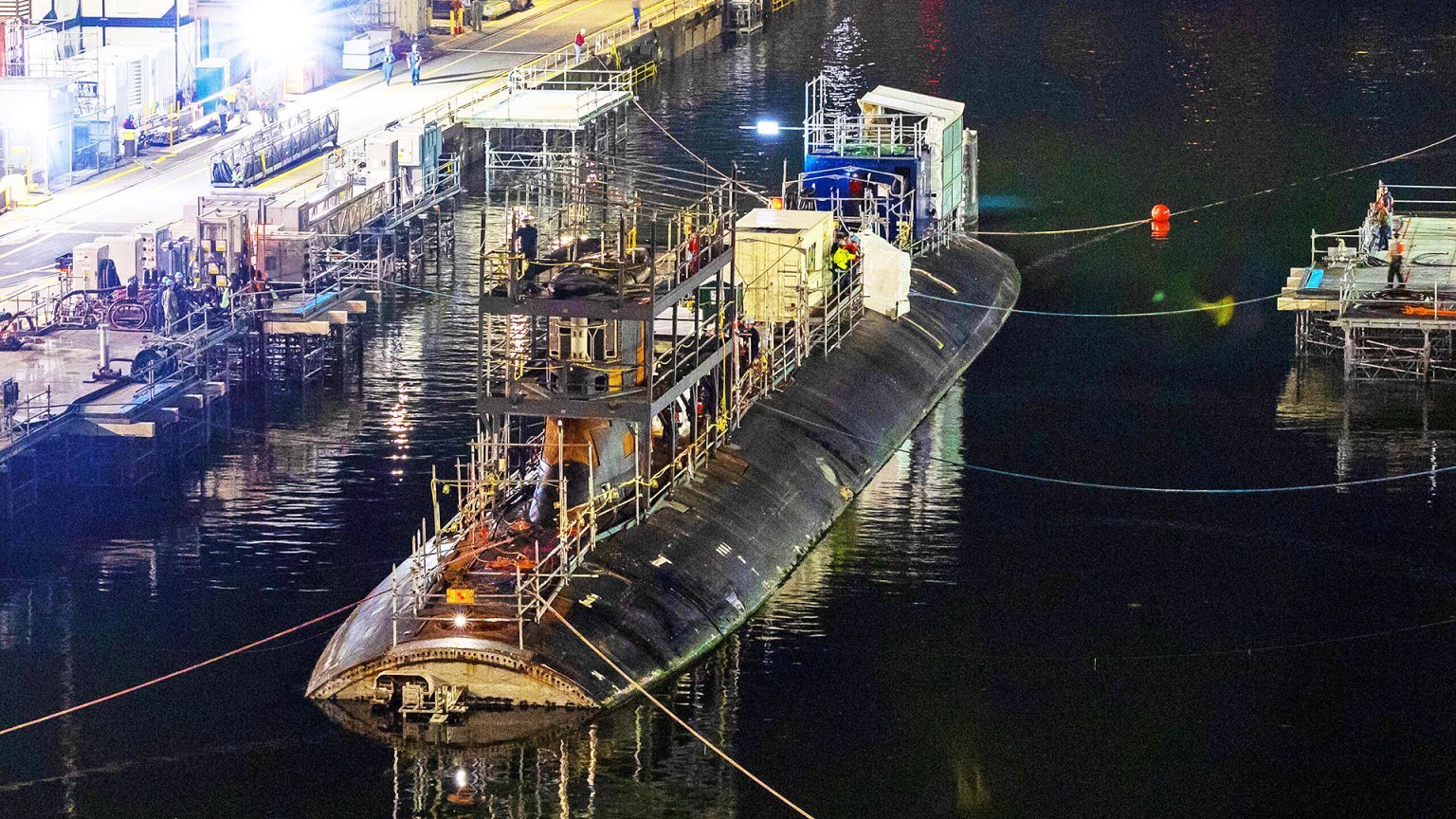
The USS Connecticut seen at the Puget Sound Naval Shipyard in 2023. USN
USS Connecticut is the second of just three Seawolf class submarines commissioned between 1997 and 2005, the others being USS Seawolf and USS Jimmy Carter. The Jimmy Carter, which came last, is a one-of-a-kind subvariant of the design that is optimized for underwater espionage missions. However, the Seawolf and Connecticut also feature advanced capabilities compared to other submarines in the Navy’s inventory today, and the service utilizes all three for a variety of specialized tasks, for which they are in very high demand.
After USS Connecticut hit the seamount in October 2021, the submarine first limped to Guam, and then made its way to San Diego in southern California. From there, it headed north to the Puget Sound area, where it has been ever since. The Navy’s investigation into the incident put heavy emphasis on how a weak command environment and lax attitudes toward the performance of key tasks had put the submarine on a path to the accident, as you can read more about in detail here.
The EDSRA formally began in February 2023. At that time, the Navy projected that the repairs would be completed in September 2025. By July 2023, the schedule had already shifted to early 2026, according to Naval News. In July 2025, the service confirmed to TWZ that the timeline had moved again to the right, to late 2026.
Another view of USS Connecticut at the Puget Sound Naval Shipyard in 2023. This picture offers a good sense of the extent of the damage to its bow. USN
The exact reasons for the delays are unclear. TWZ has stressed the particular complexities of major repairs to any of the Navy’s trio of Seawolf class submarines in our past reporting on Connecticut. As we wrote in 2023 around the start of the EDSRA:
“As for the USS Connecticut, as the images show, her state remains relatively the same, at least in terms of what is visible, compared to when she arrived over a year and a half ago. Her sonar dome is still missing and, clearly, the boat has been idle for some time, with huge sections of its anechoic coating missing from its sail.”
“Major repairs to the submarine’s bow, sonar, and other underside structure components will be challenging as the Seawolf class is long out of production. On top of that, just three boats were ever built, with one being a heavily modified sub-type in its own right, the highly secretive USS Jimmy Carter (SSN-23). In the past, similar damage has been fixed by leveraging spare parts and entire sections of decommissioned submarines of the same class. That simply is not an option in this case.”
The Navy’s 2025 Fiscal Year budget proposal highlighted exactly these broader issues in seeking funds for spare bow domes “for use in the event replacement is required,” separate from the incident with the USS Connecticut. The original sustainment strategy for the Seawolf class did not include these items, which have a “three plus year lead time” to produce.
With the EDRSA, the Navy is also taking the opportunity to conduct a deep overhaul of USS Connecticut, which could include the integration of various upgrades. The Navy’s budget documents have long highlighted efforts to modernize key systems on all three Seawolf class submarines, some of which were first designed in the 1970s.
USS Connecticut underway in 2009. USN
How much the repairs and accompanying overhaul will cost is also not clear. In 2021, Congress approved $40 million for “emergency repairs” for Connecticut and an additional $10 million for a new bow dome, but the full price tag is expected to be far steeper. The Seawolf class submarines were extremely expensive to procure in the first place, costing approximately $3.1 billion apiece in 1983, or some $10.6 billion in 2026 dollars. This was due in large part to the truncated order, from 29 down to three, as a result of post-Cold War drawdowns.
Depending on when repairs to the USS Connecticut are actually finished, the Navy could find itself for at least a time with just one Seawolf class submarine in active service. USS Seawolf is currently scheduled to start a routine maintenance availability next May, which will then run through February 2030, per Navy budget documents. As mentioned, the Navy is now also planning to inactivate USS Connecticut in 2031, making it the first Seawolf class submarine to be retired, per its most recent annual shipbuilding plan.
The service still has plans to acquire a new class of attack submarines, which has been discussed in the past as something closer to a true successor to the Seawolf class than the Virginia class boats being procured now. However, these new submarines, currently referred to as SSN(X), are not expected to arrive until the mid-2040s at the earliest. Between now and then, the Navy is set to acquire a one-of-a-kind seabed warfare version of the Virginia, which could well take over for the USS Jimmy Carter, as you can read more about here. In August, the service announced that stretched Block IV and V Virginia class submarines with Virginia Payload Modules (VPM) will now be categorized as guided-missile types (SSGN), as well.
When it comes to USS Connecticut, the Navy remains committed to getting the highly capable submarine back to the fleet after being sidelined for nearly five years now. At the same time, the boat has now already entered the twilight of its career, with just four years of active service life left if the current repair schedule holds.
On Sunday, NBC News reported that Marines were injured during an Iranian cruise missile attack while transiting the Strait of Hormuz on Sept. 14. The network’s sources said the Marines were not on a U.S. Navy ship, but they did not identify which vessel they were on. However, a former Royal Mail vessel that at one point was being converted into a floating armory stands out as a strong possibility.
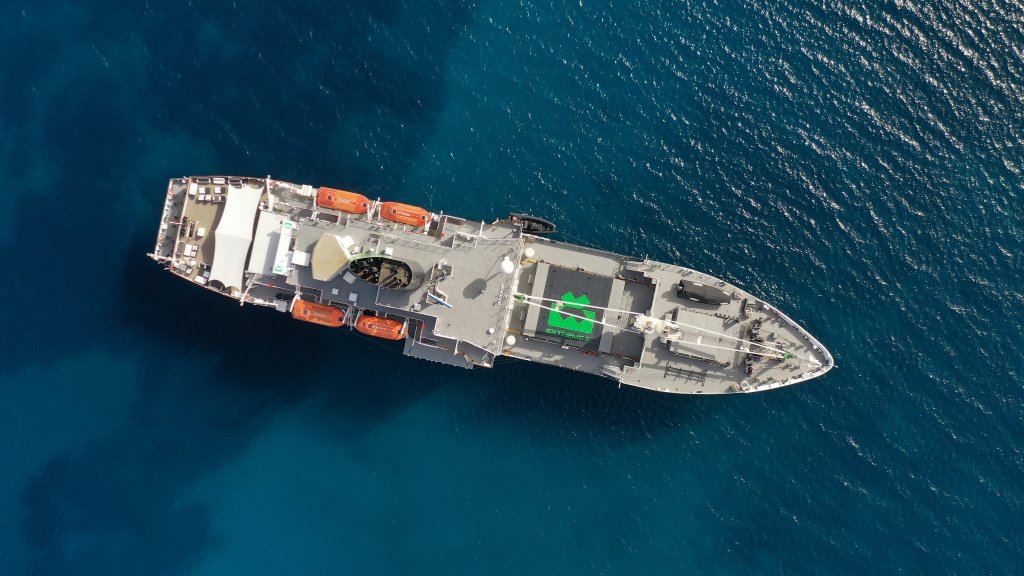
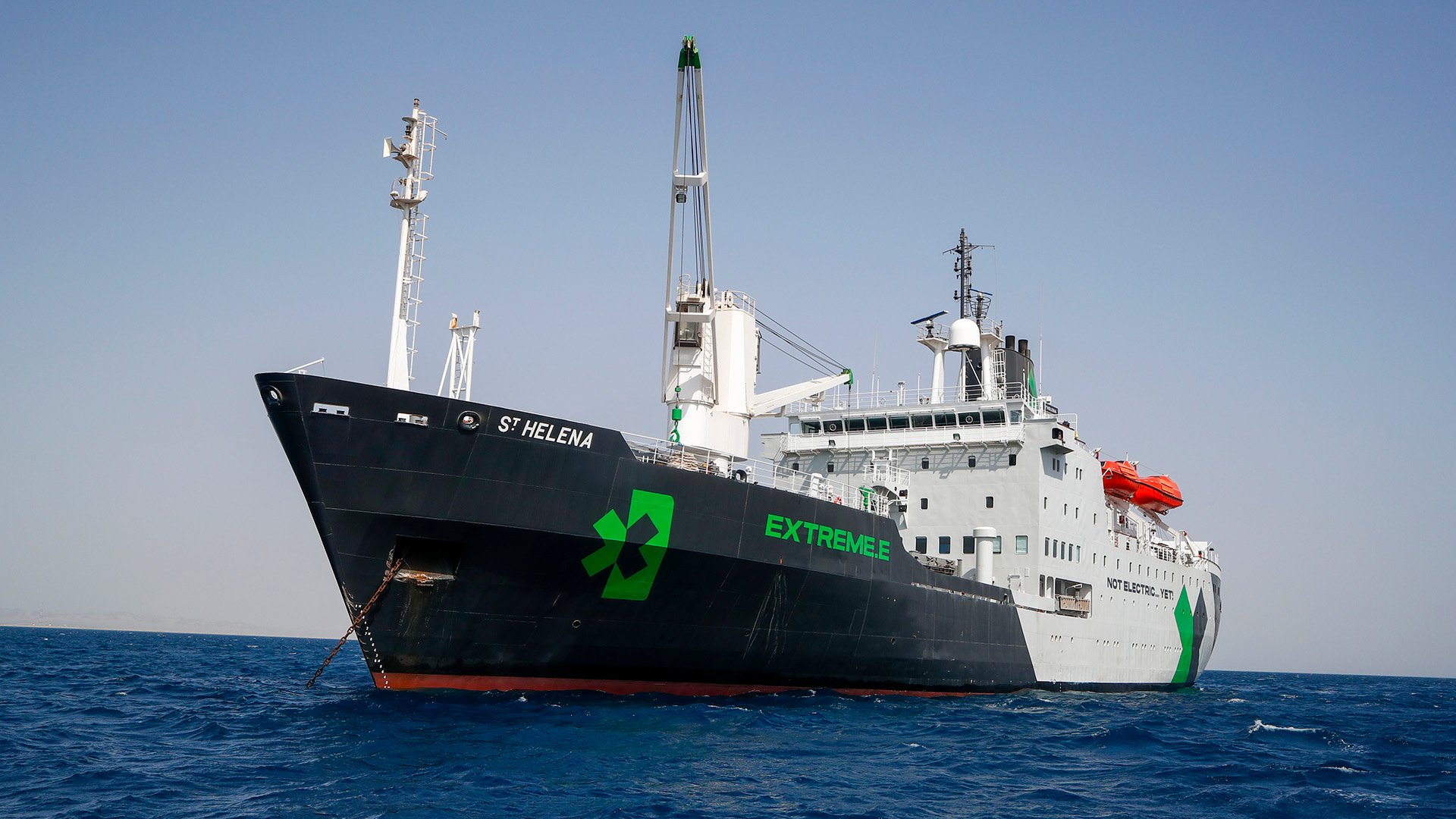
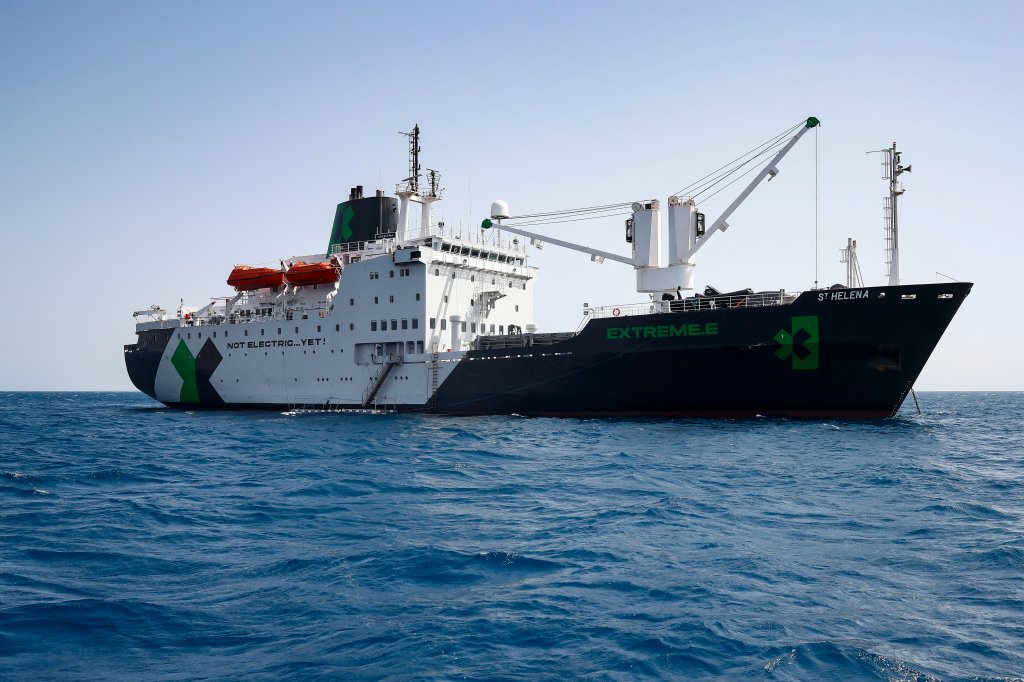
While much remains unclear about the Sept. 14 incident, there was only one vessel known to have been struck that day, according to the United Kingdom Maritime Trade Operations (UKMTO) and a maritime security official we spoke with. The ship was eventually identified by several maritime media outlets as the M/V St. Helena. Again, the St. Helena’s involvement remains unconfirmed, but the ship’s interesting background is of particular note.
The St Helena logistics ship during the Saudi Arabia on March 30, 2021. Photo by Colin McMaster
“Eight U.S. Marines were injured two weeks ago when an Iranian cruise missile attacked the ship they were operating on in the Strait of Hormuz,” NBC reported, citing three U.S. officials. “The Marines were not seriously injured, but they sustained smoke inhalation and possibly traumatic brain injuries, as they had symptoms of concussions, such as headaches, the officials said.”
“The Marines, seven of them enlisted and one officer, all returned to duty soon after the Sept. 14 attack, the U.S. officials said,” according to the network. “The officials said the Marines were operating as part of a battalion landing team during the Iranian anti-ship cruise missile attack.”
TWZ cannot independently confirm that Marines were on board the St. Helena or that they were injured. We reached out to the Pentagon and U.S. Central Command (CENTCOM) for more information. The Pentagon referred us to CENTCOM, and CENTCOM declined comment.
The incident took place amid an uneasy truce between Iran and the U.S. broken up by sporadic Iranian attacks on ships transiting the Strait of Hormuz. At the same time, the U.S. military is enforcing a blockade on Iranian ships, during which it has struck several for trying to bypass that effort as well as in retaliation for Iranian attacks on shipping. Negotiations between Washington and Iran have ebbed and flowed, and U.S. President Donald Trump is once again mulling a choice between continuing talks or renewing large-scale attacks.
As we noted earlier in this piece, after the vessel was struck, several maritime industry trade publications identified it as the St. Helena.
“Iran has attacked a historic former British Royal Mail passenger ship in the Strait of Hormuz,” TradeWinds News reported on Sept. 15, a day after the incident. “Maritime security sources identify the 6,800-gt St Helena (built 1989) as the latest vessel to be hit by an ‘unknown projectile’ in the war-torn waterway. The attack was reported late on Monday, according to UK Maritime Trade Operations, which cited a ‘verified source’ for the incident without identifying the vessel.”
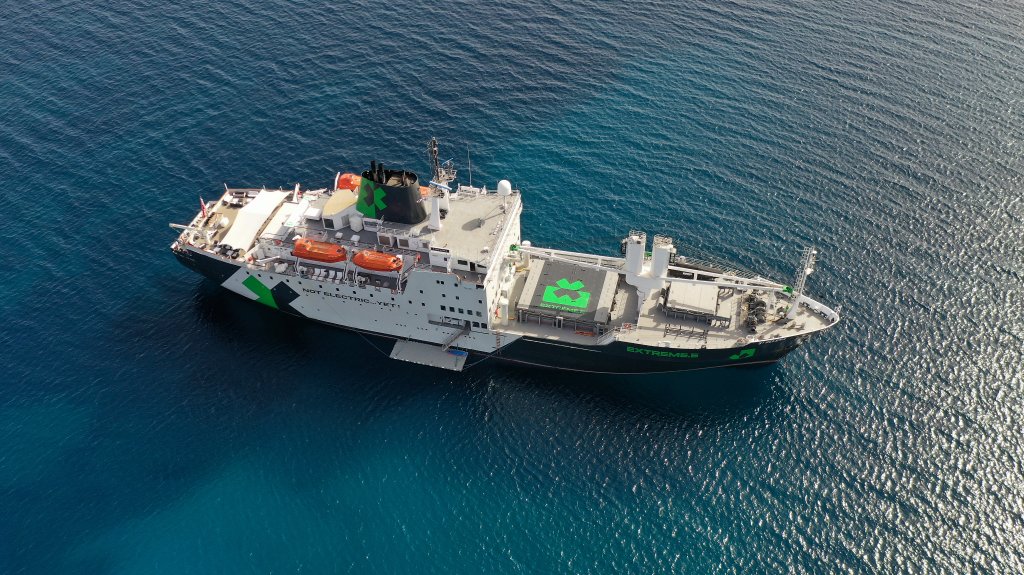
Aerial view of the St Helena transport ship in the sea off Porto Pino during the Sardinia on July 4, 2022. Photo by Sam Bagnall
“UKMTO has received a time late report of an incident within the Strait of Hormuz,” the organization reported on Sept. 15, citing an incident that took place a day earlier. “A verified source has reported that a vessel has been struck by an unknown projectile.”
“There is no reported damage or environmental impact,” UKMTO added. “Authorities are investigating.”
According to Lloyd’s List, the ship was being operated by the Ambrey maritime security firm at the time it was struck. Ambrey declined to comment.
Shipping expert Sal Mercogliano and open-source investigator Tom Bike were among those suggesting the St. Helena could have been the vessel at the heart of the NBC report.
So piecing together the evidence it appears that the US may have converted St Helena into a armed merchant cruiser.
The Marines looked at putting Armed Guards on board commercial ships three years ago as reported by @USNINews.
Exactly what the St. Helena was doing at the time it was struck is unclear; however, the ship has had a very unusual past.
The vessel entered into service in 1990 and “sailed between Cape Town, South Africa and Saint Helena and Ascension Islands, carrying both passengers and cargo, some of which was Royal Mail, earning her the rare RMS designation,” according to Cruise Arabia and Africa.
The St. Helena was Britain’s last working postal ship, according to Maritime Executive. After it was retired in 2018 because it was no longer needed for that function, things got really interesting.
Two different organizations took over the vessel, including, as we noted earlier in this story, a company that was planning to use it as a floating armory in the Middle East.
“Renamed MNG Tahiti, the 103-meter (340-foot) ship is being readied by her new owner MNG Maritime to become a floating armory working in the Gulf of Oman,” Maritime Executive wrote on April 22, 2018. “She will deliver security guards and weapons to vessels sailing through the region and is expected to be operational in her new role in the next few months.”
It is unclear what happened to that plan. However, two years later, an off-road racing series called Extreme E said that it “secured exclusive use of the former Royal Mail ship in 2018.” After that, the ship underwent “an extensive refurbishment process, which has included total overhaul of steelwork, engines, generators, propellers, interior and cabin space, and more, making it not only fit for purpose, but also as efficient as possible ahead of its new mission.”
Aerial view of the St Helena transport ship in the sea off Porto Pino during the Sardinia on July 4, 2022. Photo by Sam Bagnall
The ship was “specifically designed to transport all the infrastructure and equipment the Extreme E needs for their race weekends,” the organization stated. The plan was to have the ship serve “as its freight and logistics hub due to her versatility and ability to carry and unload a mixture of cargo, like all 10 of the championship’s ODYSSEY 21’s [electric off-road racecar], as well as team members and guests. This was also fit with a Science Laboratory so research can be conducted enroute to the race locations.”
On Sept. 17, 2024, the St. Helena was put up for sale, according to Horizon Ship Brokers. The current ownership is unclear. We reached out to Horizon Ship Brokers for more details.
Horizon Ship Brokers
Last year, the saga of the St. Helena took a new turn. A company called Terra Nova Expeditions chartered the vessel for Antarctic cruises, but those plans were scrubbed last month because the vessel was stuck in the Persian Gulf and was no longer available for the Antarctic sailing season.
While we can’t confirm that Marines were onboard when St. Helena was hit, Marines have been training for this exact mission set. USNI News reported in 2023 that a “force of 100 Marines, newly trained by Navy personnel,” stood ready “to respond, if ordered, to provide armed security aboard foreign commercial ships transiting the Strait of Hormuz.”
Those Marines were members of the 26th Marine Expeditionary Unit (MEU) embarked on the three-ship Bataan Amphibious Ready Group (ARG), USNI added at the time.
It is unclear if those plans are still in place and if Marines in the region have actually been ordered to provide armed security for foreign vessels sailing through or near the strait. Regardless, Marines could be quickly trained to take on this mission set and have drilled for ship boarding and searches for years, especially special operations and specially-tasked units. CENTCOM declined to comment when we asked if there are U.S. personnel embarking on commercial ships transiting the Strait of Hormuz.
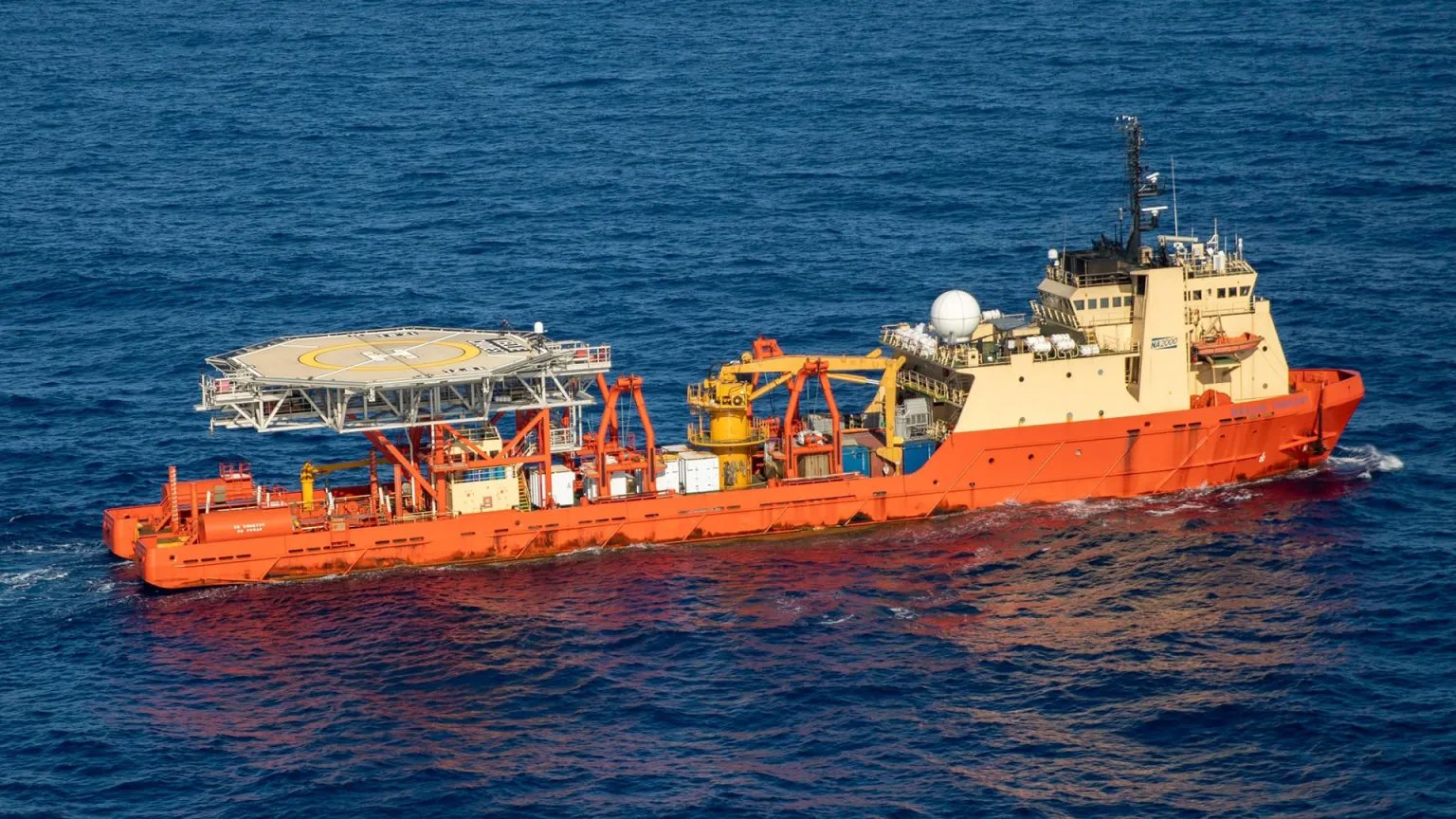
At the same time, it is possible that the unique attributes of St. Helena made it a convenient host ship for sea base operations for U.S. forces in the region specifically for this crisis. Adapting commercial vessels for exactly this purpose has a long history around the Strait of Hormuz, as it was a central facet of the Tanker Wars during the 1980s, that saw U.S. forces operate from barges in the region. Today, commercial vessels remarkably similar to St. Helena operate in similar roles, especially in support of special operations and interdiction operations.
The special mission ship U.S. Motor Vessel Kellie Chouest steams in the Caribbean Sea while participating in a passing exercise (PASSEX), with the Dominican Republic Navy and USS Billings (LCS 15) Oct. 24, 2021. Kellie Chouest is deployed to the U.S. 4th Fleet area of operations to support Joint Interagency Task Force South’s mission, which includes counter-illicit drug trafficking missions in the Caribbean and Eastern Pacific. Photo by Petty Officer 2nd Class Austin C
Once again, we have no idea what the ship’s mission was at the time of the incident and if Marines were simply helping it transit safely out of the Persian Gulf or something more, but the attack did expose the fact that individual Marines are more involved with activities in this tumultuous body of water than it may seem.

 Login






 (@mercoglianos)