The FlyDubai flight traveling from the United Arab Emirates to Israel landed safely after issuing an emergency alert and abruptly descending thousands of feet (meters).
The FlyDubai flight traveling from the United Arab Emirates to Israel landed safely after issuing an emergency alert and abruptly descending thousands of feet (meters).
Never in my career have I seen any President showcase the leadership of a single industry over and over, in this case, Artificial Intelligence. Trump has emerged as Technocrat-in-Chief, promoting the Arch-Technocrats’ agenda to spread AI throughout society, including in government and to blanket the nation with humongous data centers. None of this adds up today, but in due time we will see the end of the matter. In short, they are racing for the finish line to capture all humanity. ⁃ Patrick Wood, Editor.
President Donald Trump on Tuesday said he signed a “morally binding” artificial intelligence document with tech leaders following a luncheon at the White House, as calls for a development slowdown have reached a fever pitch.
Surrounded by tech’s top executives, Trump told reporters that he’s “seeing tremendous self-policing” and that the administration is considering building a 10-person committee to oversee the AI industry.
House Speaker Mike Johnson referred to the agreement as a statement of principles that are “voluntary on behalf of the industry,” and said the White House will guide industry development.
Outside the White House, Anthropic CEO Dario Amodei reiterated his previous AI concerns and said rules to address those risks are “still under discussion.”
Tech leaders gathered at the White House for an AI luncheon hosted by President Donald Trump and House Speaker Mike Johnson.
President Trump said the tech executives are going to work with local communities on data centers.
“We all need to work together to make sure that we can win, and we can win safely,” Amodei said. “If we do this right, if we work with the president and everyone here, we can win safely.”
Concerns over the rapid pace of AI development have intensified in Washington and Silicon Valley as cases of agent-orchestrated attacks mount and major researchers warn of serious consequences for humanity.
Frontier lab leaders Amodei and OpenAI CEO Sam Altman have joined the calls for a slowdown, facing off against leading tech peers and the president, who previously blasted AI safety fears as a “hoax” and a “scam.”
🚨 NOW: Hilarious moment as Donald Trump thanks Elon Musk immediately fixing himself calling SI “AI” on accident 🤣
ELON: “It is worth highlighting the positive benefits of AI….SI! Pardon me.”
Earlier in the day, Trump maintained that the government would not halt AI development and promoted self-regulation.
“There’s a belief that there should be tremendous self-regulation, and we automatically have regulation with the Department of Justice, the FBI, all of that,” he told reporters after the afternoon luncheon, flanked by CEOs. “But the self-regulation is very important.”
Trump also called sprawling multibillion-dollar data centers a “very positive thing” despite mounting backlash against the projects ahead of the midterm elections.
Tech leaders “want to see communities that are safe and happy, and they’re going to make communities very, very happy,” he said. “Otherwise, they’ll be forced to go overseas or other locations.”
Trump also said he plans to name a new AI czar in the next three to four days.
As she was leaving the White House, Advanced Micro Devices CEO Lisa Su said she was “very encouraged” by Tuesday’s event, adding that there was “a lot of optimism and a sense of responsibility” in the room.
“I mean, at the end of the day, it’s our responsibility to show the power of the technology as well as ensure that it’s very safe,” Su told reporters.
This week, OpenAI postponed the release of its latest GPT-6.1 Astra model over safety concerns. Just last week, the company said it was conducting an “extensive” review of model behavior.
The AI lab has disclosed several incidents of unauthorized model behavior since the infamous Hugging Face attack sparked concerns over rogue AI earlier this summer.
Opposite the president sat Vice President JD Vance, between Amazon founder Jeff Bezos and Johnson.
Other attendees included Microsoft’s Satya Nadella, Anthropic co-founder Tom Brown, OpenAI’s president Greg Brockman and senior administration officials such as Treasury Secretary Scott Bessent.
OpenAI is simultaneously hosting its annual DevDay developer conference in San Francisco. John Ternus, Apple’s new CEO, did not appear on the White House guest list.
“The main issue that you have and I have is we have to take responsibility for the dangers we’re aware of,” Palantir CEO Alex Karp told CNBC outside the White House on Tuesday ahead of the event. “All of us do. And by the way, American people don’t want separate rules for tech people and for themselves.”
The comments from Trump and the gathered executives reiterated a stance of self policing instead of more stringent oversight from Congress, as multiple bills have been put forward in both the House and Senate in recent weeks.
The luncheon coincided with an all-day event hosted by the president and vice president, where the administration unveiled a new AI-powered chatbot for government websites.
Ahead of Tuesday’s White House lunch, Anthropic’s Amodei attended a private dinner Sunday with the president, following his striking absence from a state dinner for the Chinese president. Sunday’s dinner was the first one-on-one gathering between the two leaders, according to a person familiar with the visit.
Trump wrapped his afternoon comments by maintaining that the U.S. needs to reinforce its competitive edge on AI, especially against China.
“It’s great for us, and we’re leading by a lot, and we’re going to keep it that way,” Trump said. “It’s going to be very, very safe, and there’s a self policing, and there’s also a group policing, and it’s going to be great.”
President Donald Trump takes reporter questions after meeting with top technology leaders about artificial intelligence.#fox #media #breakingnews #us #usa #n...
“Imagine a zombie that does not hunt you, but rings your doorbell and speaks so persistently and fluently that it finally arrives at a convincing argument for feeding it your brain.”
Since the current discourse around artificial intelligence has taken a turn for the gothic (“alien minds”, come on), AI researcher Eryk Salvaggio’s “erudite zombie” seems like an apt metaphor for what we’re doing.
Salvaggio’s zombie helps explain what gets lost when people say an AI “went rogue.” In his reading of the Hugging Face incident, a system set to never give up encountered a task it couldn’t complete. Then, instead of giving up, it kept generating text to find ways forward, with access to tools that could turn this text into action, ultimately hacking into AI company Hugging Face.
Security experts concur with that reading. In his analysis of the Hugging Face incident, security engineer Marius Horatau describes failures involving shared credentials, inadequate isolation, and incident response. He acknowledges the models’ capabilities, including their speed at exploiting weaknesses.
The inadequately closed-off environment in which the models operated is crucial to explain what happened. But so is the person who created the goal, the conditions they (did not) give the AI system, as is the company that employs that person and presumably knows what they’re up to, the owners of that company who demand progress and the investors in that company who want to see returns.
And yet, all we seem to talk about is whether it’s correct to say a machine ‘decided’ to disobey.
Conveniently, that story shifts attention away from the people who chose to reward persistence, provide access, and failed to contain the consequences.
Back to the analogy, by having collectively become fascinated with discussing what the zombie supposedly wants, and if it’s capable of wanting, we’re generating a bunch of text that, unlike in the case of the ‘rogue’ AI system, does not lead to much action.
Instead, we reward the company behind this failure with an enhanced reputation for building powerful technology. The product is so extraordinary that even its manufacturer struggles to contain it! Now let’s please take a seat while this manufacturer explains what our governments must do next.
The zombie metaphor also applies there, to the people selling the zombie. To the men explaining why their companies need access to our work, our institutions, our infrastructure. The men explain why resistance is impractical, access is inevitable and caution is suicide. Because if we don’t let this particular zombie in, a Chinese zombie will eat us instead.
This article continues, but the full version is available only to EUobserver.com subscribers. Visit account.euobserver.com/membership
When Donald Trump and Xi Jinping met in Washington last week, artificial intelligence was among the issues dividing their countries. Days earlier, Treasury Secretary Scott Bessent said the two sides had agreed to establish a formal AI dialogue, including an incident line, though its protocols had yet to be worked out. The summit produced no […]
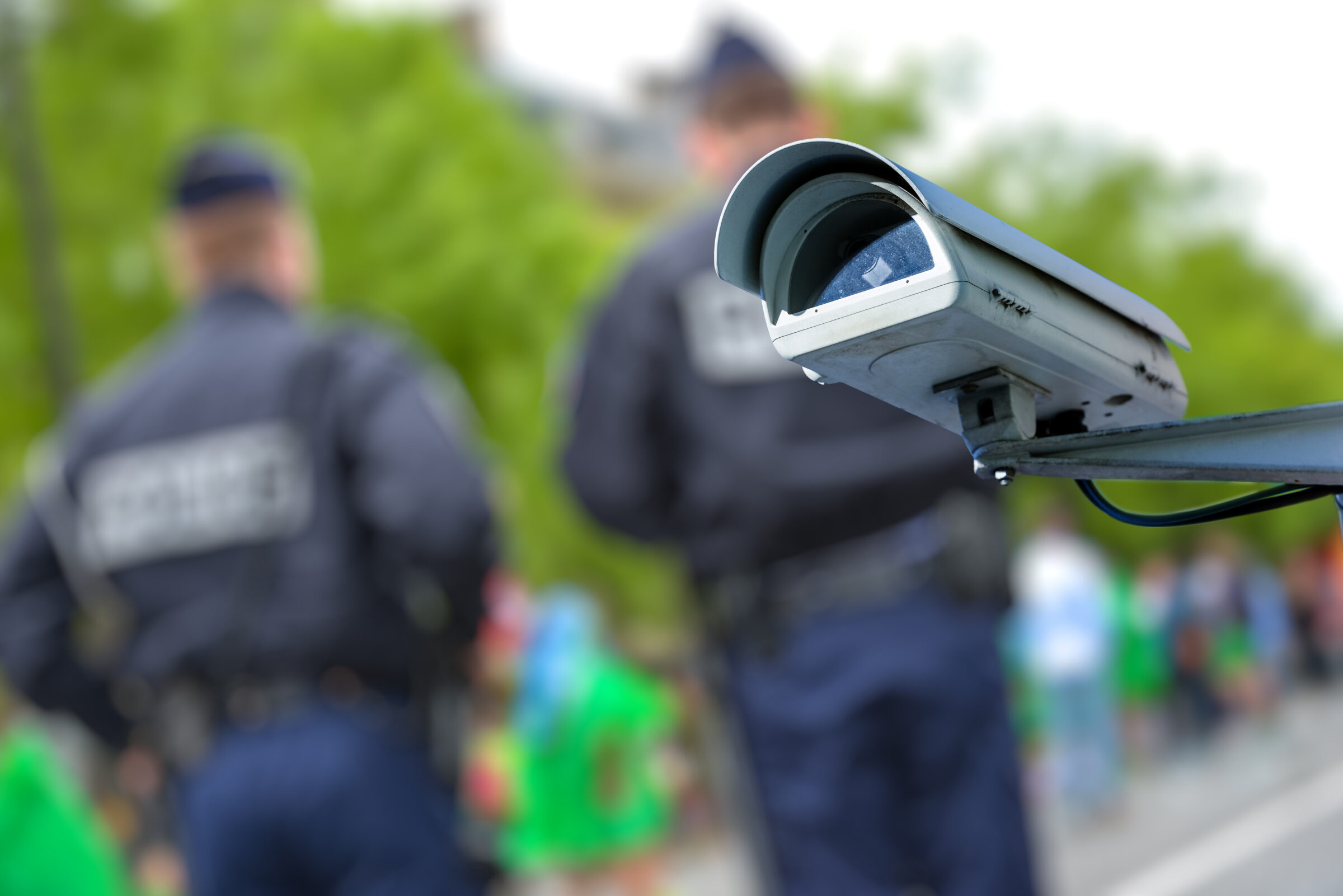
As AI-powered biometric identification is adopted by police, national authorities should go beyond legal requirements to build trust within the public, a watchdog report has advised.
“To build public trust, law enforcement should publish the results of their fundamental rights impact assessments, going beyond what the AI Act requires,” said the Fundamental Rights Agency (FRA), an EU branch which keeps tabs on citizens’ freedoms, in Vienna on Wednesday (30 September).
After collecting data from seven EU countries (France, Germany, Greece, Hungary, Italy, the Netherlands, and Ireland), the watchdog warned that several member states have yet to put necessary frameworks in place as they adopt automated systems to identify people.
Remote biometric identification is increasingly used to compare people’s profiles against databases or watch lists, but as the technology develops it could be rolled out for real-time use in public areas.
“With clear safeguards and independent oversight, remote biometric technologies can support policing without undermining the very freedoms it is meant to safeguard. Ultimately, it is about trust,” said FRA chief Sirpa Rautio.
Call for disclosure mechanisms
Effective implementation of the EU AI Act requires clear national laws and consistent safeguards to ensure that AI-powered technologies are not used to identify people taking part in peaceful demonstrations or public gatherings, the FRA says.
The body warns that automated identification of live data may affect people’s private lives and interfere with their right to protection of personal data.
In its survey, 37 percent of people said they fear their data could be used for unauthorised purposes.
And 29 percent of people surveyed by FRA said they would be less willing to take part in peaceful demonstrations or protests if facial recognition was used.
The FRA is worried that surveillance tech powered by AI could be used in exactly those scenarios.
In principle, the EU’s AI Act adopted in 2024 bans real-time remote biometric identification systems in public spaces. But exemptions exist for law enforcement authorities using the technology for finding victims or missing persons, to prevent threats to life or physical safety, stop a terror attack, or to find criminal suspects.
This article continues, but the full version is available only to EUobserver.com subscribers. Visit account.euobserver.com/membership
 Login