Perante o aumento do custo de vida e as desacertadas respostas neoliberais em Portugal e na União Europeia, que alterações nas políticas públicas de crédito e de desenvolvimento são urgentes? Continuamos a colocar no debate público ideias simples para melhorar o futuro. As taxas de juro, sobretudo as relacionadas com o endividamento hipotecário de longo prazo, fazem parte das preocupações de tantos portugueses, dado o seu impacto na prestação mensal da casa e no rendimento disponível. No (…)
No espaço público e mediático, o tratamento do sistema prisional português tende a ser tratado pelo ângulo dos «abusos» e do que terá corrido mal para se verificarem condições penitenciárias «degradantes» ou até doença e morte. Mas quais as características estruturais que produzem estas condições, e o que dizem elas sobre desigualdades sistémicas que as democracias não resolveram? «As prisões têm olhos e ouvidos, mas não têm vozes» Mumia Abu Jamal, jornalista aprisionado nos Estados (…)
O universo mediático assemelha-se ao «mundo ao contrário» que o escritor uruguaio Eduardo Galeano descrevia. Quanto mais os Estados Unidos espezinham o direito internacional, mais a China é acusada de se mostrar ameaçadora. É o caso do conflito no Irão, desencadeado por Washington e Telavive, mas no qual seria sobretudo Pequim a «avançar os seus peões» e a dar rédea solta às suas veleidades imperiais… Algumas análises parecem autorretratos. Ao revelarem os pressupostos que lhes estão (…)
Em 27 de outubro, os eleitores israelitas vão deslocar-se às urnas para renovar o seu Parlamento. Para lá da questão do futuro político do primeiro-ministro cessante, Benjamin Netanyahu, neste escrutínio está em jogo a confirmação, ou não, do crescimento do sionismo religioso. Esta corrente, que defende a anexação dos territórios palestinianos, contribui para uma polarização extrema da sociedade. A aplicação do projeto sionista demorou várias décadas antes do nascimento de Israel. A (…)
Un mois après la disparition du directeur de la Radio Télévision Saraounia, Moussa Kaka, au Niger, Reporters sans frontières (RSF) saisit le groupe de travail sur les disparitions forcées ou involontaires des Nations unies. Les autorités nigériennes doivent réagir et tout mettre en œuvre pour que Moussa Kaka puisse retrouver les siens au plus vite. […]
Anyone over the age of about 35 has no idea how far Western universities have fallen into the mire of DEI, collapsing standards and Left-wing monoculture, says Professor James Allan. It's time to sort them out.
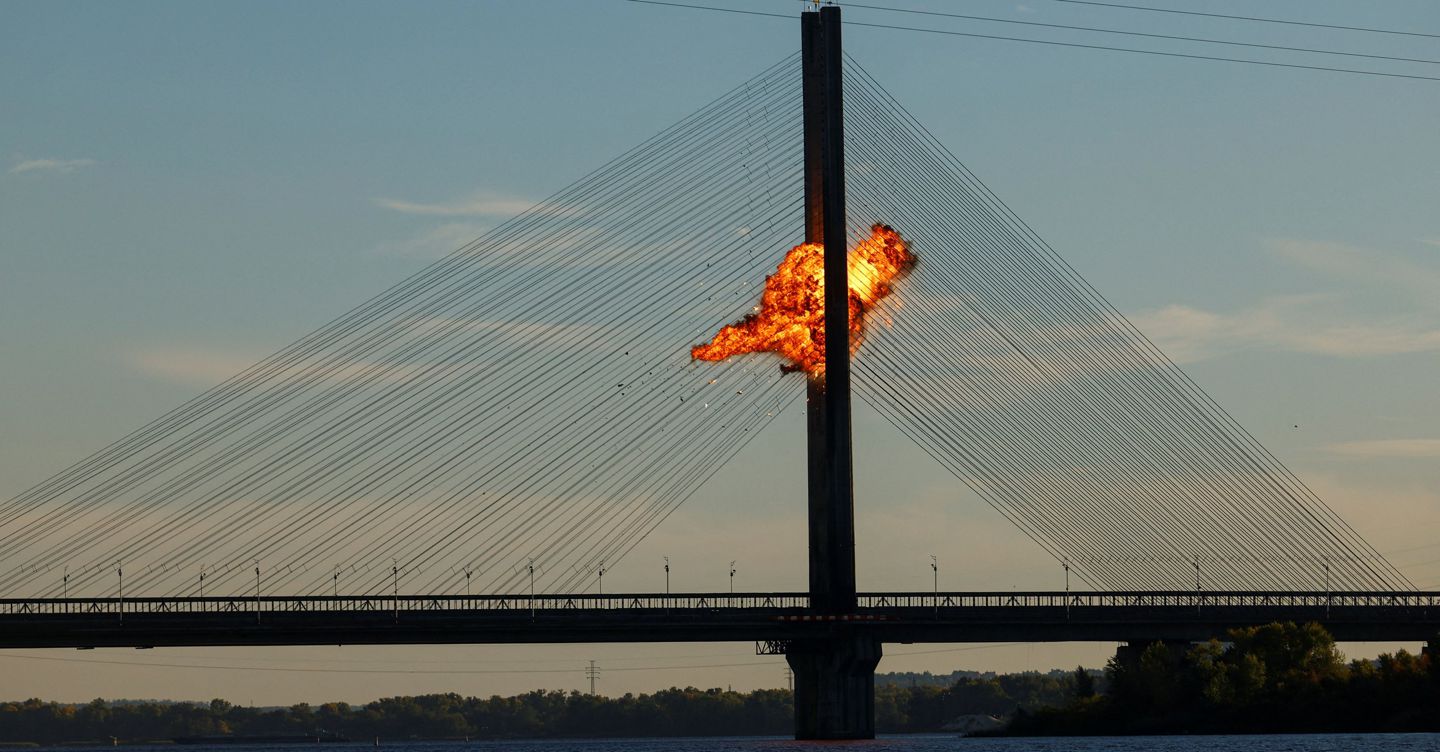
La paralisi del traffico di Kiev è l’ennesima prova imposta alla capitale ucraina dagli attacchi dei russi, che negli ultimi giorni hanno oltrepassato una nuova linea rossa accanendosi sul Pivdennyi,...
La paralisi del traffico di Kiev è l’ennesima prova imposta alla capitale ucraina dagli attacchi dei russi, che negli ultimi giorni hanno oltrepassato una nuova linea rossa accanendosi sul Pivdennyi,...
Some expected a change in Hungary’s pro-Russian foreign policy after Viktor Orbán’s fall. But they failed to take into account the domestic political pressures on Hungary’s prime minister Péter Magyar.
An unexpected source of tension in Ukrainian-Hungarian relations came at a meeting of the newly formed ‘Carpathian Eight’ (C8) in late September. At the meeting in Kyiv, PM Magyar was embroiled in a sharp exchange with Ukrainian foreign minister Andrii Sybiha, who criticised Budapest for not taking part.
Magyar responded to Sybiha by claiming that Hungary had been included in the C8 without his consent.
“To claim that a sovereign country is a member of an international cooperation (Carpathian Integration) without prior consultation or consent of the country concerned is completely unacceptable,” Magyar said on social media.
This comes after Hungary-Ukraine relations began to improve rapidly following the formation of the Tisza government in May.
Under Orbán’s government, relations had fallen to a historic low, raising the prospect of escalation. In June, Magyar announced that he had reached an agreement with Ukrainian president Volodymyr Zelensky on settling the rights of the Hungarian minority in Transcarpathia, hailing it as a historic deal.
Ukraine’s Deputy PM Vsevolod Chentsov informed me that legislation on minority education rights will be submitted to Parliament. I welcome this step after weeks of 🇭🇺🇺🇦 expert consultations. Thank you to all Hungarian and Ukrainian colleagues for their constructive work. Looking…
Since June, however, Hungary has repeatedly blocked Ukraine’s EU accession negotiations, arguing that progress on settling the rights of Hungarians in Transcarpathia has fallen short of expectations.
Orbán’s Fidesz party previously used the same argument to block Ukraine’s integration efforts.
Three months after the so-called historic agreement, Ukraine’s foreign minister Sybiha wrote that although Orbán had lost the election, Orbánism (a policy based on isolation and obstruction) prevailed in Hungary.
“Orbanism has done no good, neither to Hungary nor to the broader region, in the past — and it will not do anyone any good moving forward,” said Sybiha on social media.
Domestic Hungarian politics can explain the dispute.
MOL, an oil company, signed a memorandum with Ukraine’s Naftogaz at the C8 meeting on the possible establishment of Ukrainian oil storage facilities in Hungary.
The deal was criticised by Fidesz politicians, and Magyar’s government strongly distanced itself from the deal, too. Fidesz may have contributed to Magyar entering the dispute over C8 participation so very forcefully.
What is the Carpathian Eight?
In August, Zelensky announced the creation of the C8 to bring together countries from the wider Carpathian border region. The Ukrainian president said its members would focus primarily on the economy, security, the environment and investment.
Ukraine described it as a project intended to strengthen cross-border cooperation even with countries that do not provide it with military aid. Alongside Ukraine were to be Romania, Serbia, Poland, Slovakia, Czechia, Austria and Hungary.
Michal Lebduška, an analyst at the Association for International Affairs in Prague (AMO), said that it was one of many regional initiatives. While he did not believe it would trigger “major cooperation”, it could nevertheless be important.
The inaugural summit of the newly formed C8 was held last month (18 September) in Bukovel, in the Ivano-Frankivsk region, around 160 km from both the Slovak and Hungarian borders. Zelensky called it “an important beginning” and thanked the countries of the Carpathian region for being among Kyiv’s most reliable allies.
From Ukraine’s perspective, however, the meeting had mixed results. On the one hand, several leaders travelled to Bukovel in person, lending the gathering greater diplomatic weight. Polish PM Donald Tusk, Romanian president Nicușor Dan and Serbian president Aleksandar Vučić all attended in person.
On the other hand, the remaining countries sent lower-ranking representatives. Slovakia’s PM Robert Fico had initially indicated that he would attend, and was originally due to meet Tusk. At the last minute, however, he announced that he could not attend the summit due to sudden illness.
Slovakia was ultimately represented by Marek Eštok, state secretary at the foreign ministry.
Andrej Babiš’s Czech government all but completely ignored the initiative. As Respekt magazine wrote, Babiš declined the opportunity to visit Ukraine and did not send any representative to Bukovel.
So Czechia was represented at the summit only by opposition deputy Senate president Jiří Drahoš.
And Austria was ultimately represented by Christine Schwarz-Fuchs, president of the Federal Council.
Hungary sent Ádám Ceglédi, the acting chargé d’affaires at the Hungarian embassy in Kyiv, as the Hungarian foreign ministry confirmed to Telex.
According to the analyst, Ukraine may have hoped that Orbán’s fall would bring a clear shift in Hungary’s Ukraine policy. Anita Orbán, as foreign minister, has confirmed this by pursuing a foreign policy moving away from Russia.
However, Ukrainians did not take Magyar’s domestic political interests into account.
Magyar panders to anti-Ukraine crowd
This article continues, but the full version is available only to EUobserver.com subscribers. Visit account.euobserver.com/membership
Decades ago, I was at the Wailing Wall in Jerusalem, which is considered a synagogue. At the entrance, I started to take off my baseball cap and put on one of the kippahs they had there. The guard stopped me and said the cap was better. I suppose it’s less likely to fall off. Here,... Continue Reading
Donald Trump would like you to know that the Strait of Hormuz is in tremendous shape. Possibly the best shape in its history. On September 27, he told reporters that “last night, we took a record amount of oil out of the Hormuz Strait, more than we took out before the war.” Three days later...

 Login