
❌

Reading view

Russia’s war against Ukraine sends the bill to its own companies: bond defaults head for a 17-year high
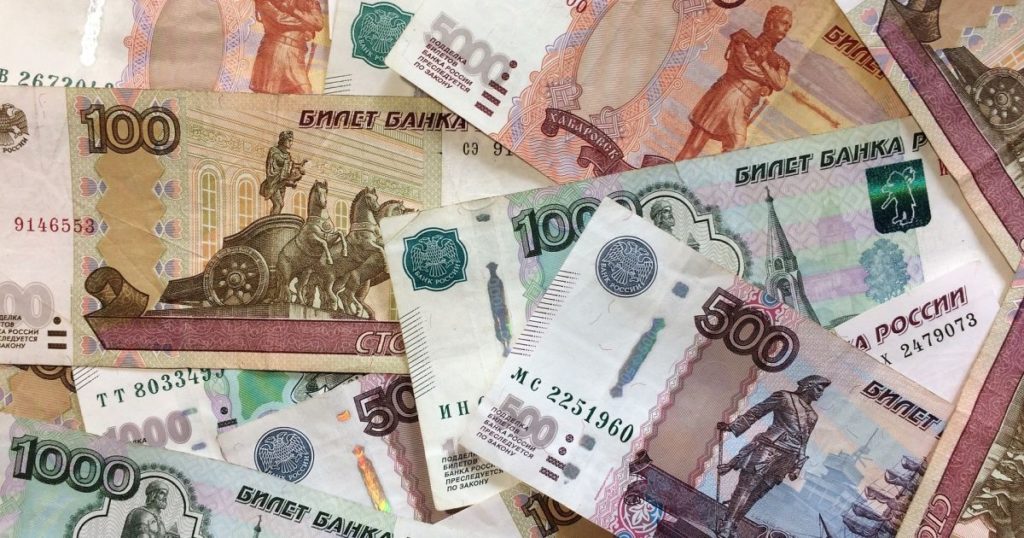
russia facing record number corporate defaults second time decade one main causes being same—waging war against ukraine · post russian rubles tsn money news ukrainian reports

More than 50 Russian companies could default on their bonds this year, the most since 2009, a rating-agency analyst told Russian newspaper Izvestia, which reported it on 6 October.

Russia's wartime economy is straining under high interest rates, and the budget is too: the 2026 deficit has nearly doubled from the earlier forecast to a record $88 billion, with more deficits planned for the next three years as Moscow raises taxes to fund the war and plans its biggest defense budget since the full-scale invasion began.

A default is a situation in which a company cannot make promised interest payments to investors on time or repay borrowed money. If a payment is not made by the agreed deadline, the company becomes delinquent, which under certain conditions is recognized as a default.

So far this year, 20 companies have defaulted for the first time, compared with 24 in all of 2025, said Mikhail Nikonov of the Expert RA rating agency. Most of the companies that missed payments are small issuers of high-yield bonds, Izvestia reported.

In 2026, Russian companies have missed payments totaling 41 billion rubles (about $490 million), compared with 34 billion rubles (about $410 million) the previous year, according to investment bank Sinara.

Russia faces a new wave of corporate defaults

By the end of 2026, the number of Russian companies unable to service their ruble-denominated debt on time could reach 40–50, the highest level since 2010, said Pavel Zholobov, junior managing director at the NRA rating agency.

The number of bond defaults in 2026 has already reached its highest level in a decade, Zholobov said. Similar figures were recorded in the mid-2010s: in 2014, 35 companies missed payments; in 2015, 52 did so; and in 2016, there were 44 issuers. This occurred in part after Western sanctions were imposed on Russia over its annexation of Crimea and its war in Donbas, as well as amid a halving of oil prices and a sharp weakening of the ruble.
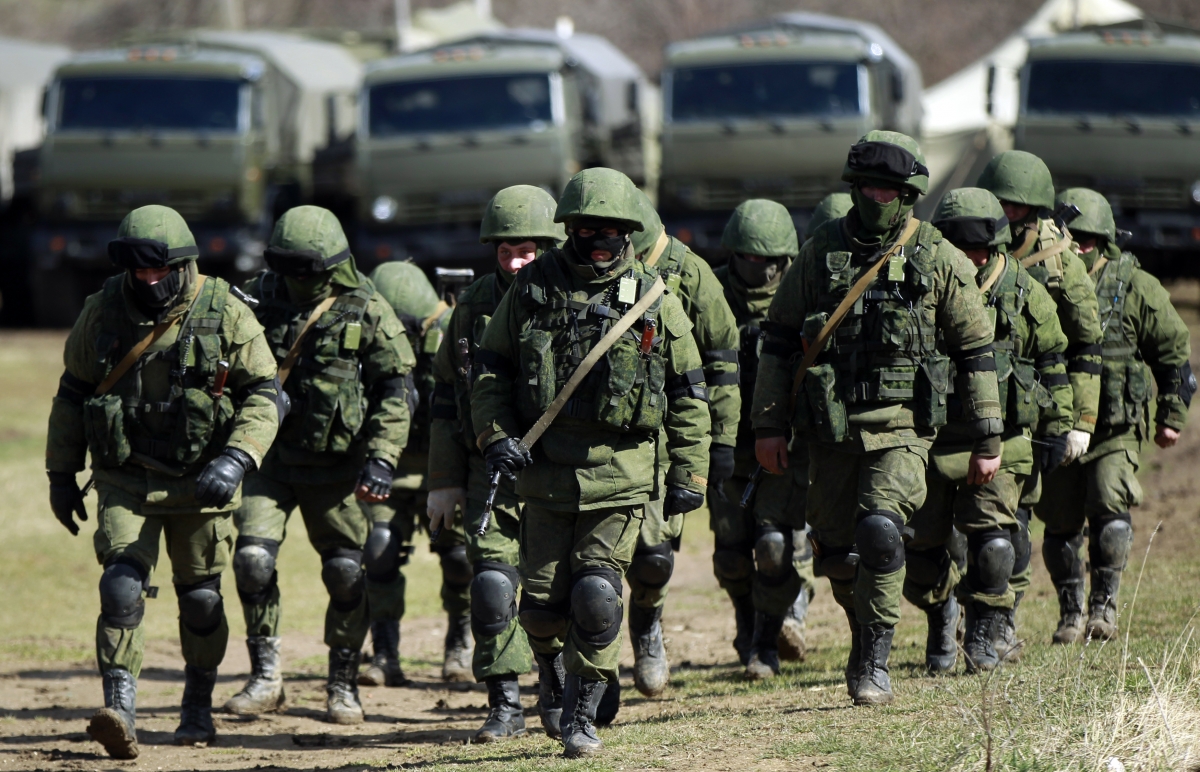
So-called "little green men" (the Russian occupation troops comprised special forces who removed insignia, wear face masks to prevent identification and call themselves a "Crimean self-defense force") surround a Ukrainian military base in Perevalne, Crimea, during the Russian annexation of the peninsula in February-March 2014.

There were more defaults only in 2009. At the time, amid the fallout from the global financial crisis, more than 100 issuers faced payment problems, while the volume of distressed debt reached nearly 200 billion rubles, Zholobov noted.

High interest rates put pressure on companies

This time, the main reason for companies' difficulties in making bond payments has been the prolonged period of high interest rates, which has continued since 2023. Companies are raising financing at high interest rates but are unable to refinance their debt on more favorable terms, explained Ekaterina Sidorova, head of the Foreign Exchange, Commodities and Debt Markets Department at SberCIB Investment Research.

At the same time, the situation does not yet resemble a systemic debt crisis: defaults are primarily being recorded among companies with low credit ratings and high debt burdens, Sidorova said.

If a company fails to repay bond debt, it is given 10 business days to meet its obligations. If it fails to do so, the company may offer investors a restructuring—for example, by postponing payments in exchange for a higher interest rate.

The number of defaults will remain high in 2027, Sidorova believes.

High interest rates were a response to accelerating inflation in Russia. Domestic demand was outpacing production, Russia's Central Bank said in October 2023. Sanctions over the war and rising defense spending had also hit the economy and the ruble, which had lost about 25% against the dollar that year. The bank raised its key rate from 7.5% in the first half of 2023 to 15% by the fall.

Ukraine targets Russia's oil industry to weaken its war economy

Ukraine is also seeking to weaken Russia's economy as part of efforts to reduce its ability to finance the war. In particular, Defense Minister Yevhenii Khmara said strikes on oil refineries are aimed at "bleeding the Russian war machine" and destroying its military and economic potential. According to the ministry, the attacks have knocked out more than 51% of Russia's oil refining capacity.

In the first half of July, Russian oil refineries processed about 3.9 million barrels of oil per day—the lowest level since March 2005. Due to the production cuts, Moscow was also forced to restrict fuel exports.

  •  

Von der Leyen Offers Extra Year on EU Methane Rules as Energy Costs Bite

The European Commission is preparing to give fossil-fuel exporters another year of flexibility under the EU’s methane regime as Brussels responds to high energy prices, pressure on European refineries and concerns over security of supply.

European Commission President Ursula von der Leyen has announced an additional year of flexibility for energy exporters facing new EU methane requirements, marking the latest adjustment to climate legislation as Brussels attempts to contain rising energy costs.

Addressing the European Parliament in Strasbourg on Tuesday, von der Leyen said Europe remained exposed to high energy prices and volatile international fossil-fuel markets and confirmed that exporters would receive “one more year” to prepare for the methane rules.

She also announced a strategic dialogue with the European refining sector aimed at reducing costs and protecting supplies, according to the Commission’s published remarks.

The announcement affects a regulation that has increasingly become an energy-security issue rather than solely an emissions policy.

The EU’s Methane Regulation, adopted in 2024, introduced progressively stricter requirements for companies supplying oil, natural gas and coal to the European market. Importers have already been required to provide information about the origin of fuel and the systems used to measure and reduce methane emissions.

A more demanding stage was due from January 2027. Importers would have to demonstrate that fuel supplied under contracts concluded or renewed since August 2024 came from producers operating monitoring, reporting and verification systems equivalent to EU standards.

The rules are technically complex because European importers do not always buy directly from producers. Gas and oil may pass through traders, hubs, blending systems and several contractual relationships before reaching Europe.

The Commission’s own guidance for importers acknowledges those difficulties, particularly where companies must trace production information through complicated supply chains.

EU Today highlighted the problem in July, when an International Energy Agency assessment raised concerns that the rules could restrict Europe’s available oil supply. The dispute has since intensified because European fuel markets have become considerably tighter.

That pressure can also be seen in the cost of imported energy. EU Today reported last month that the value of EU petroleum imports had risen by 55.8 per cent in the second quarter of 2026 even though the physical volume purchased increased by only 1.2 per cent.

Von der Leyen’s intervention therefore comes against a different market background from the one in which the methane legislation was originally adopted.

The Commission has not abandoned its objective of reducing methane emissions from fossil-fuel production. Methane remains one of the most powerful greenhouse gases, and the regulation is intended to use the size of the European energy market to influence production standards outside the EU.

Instead, Brussels is attempting to adjust implementation so that regulatory requirements do not further restrict supply at a time of elevated energy prices.

The precise legal form of the additional year of flexibility has not yet been detailed in von der Leyen’s announcement. Existing requirements remain contained in Regulation (EU) 2024/1787, meaning that changes to deadlines or enforcement will have to be translated into the appropriate legal or administrative measures.

The Commission had already moved towards greater flexibility earlier this year. In July it issued recommendations designed to clarify contractual arrangements and advised national authorities on the application of penalties to importers while security-of-supply concerns persisted.

The broader problem is European energy competitiveness.

Von der Leyen told Parliament that Brussels intends to begin a strategic dialogue with refineries. European refining capacity has contracted over the longer term, leaving the continent more dependent on imported diesel and other finished petroleum products when individual plants close or external supply routes are disrupted.

The Commission is also expected to propose measures aimed at increasing electricity’s share of European energy consumption as part of its attempt to reduce dependence on imported fossil fuels.

The latest methane adjustment therefore fits a wider shift in Brussels. Climate targets remain formally intact, but implementation is increasingly being examined alongside energy prices, industrial competitiveness and the security of physical supplies.

The extra year gives exporters additional time. It also gives the Commission another year to resolve a question that has become much more urgent in 2026: how far Europe can tighten conditions on imported energy while remaining heavily dependent on those imports.

  •  
❌