❌

Reading view

B-21 Raider: Northrop, US Air Force Break Ground on New Palmdale Line. Flight Test Runs Ahead of Schedule

The US Air Force’s next strategic bomber, the B-21 Raider, is moving from flight test to the flight line, and the industrial base is expanding to match that pace. As part of this effort, the Department of the Air Force and the manufacturer broke ground on a new bomber final assembly line at Plant 42 in Palmdale, California.

“It’s more than construction… we’re moving fast to build B-21s! The Department of the Air Force & @northropgrumman have broken ground in Palmdale, CA, on over 1M sq ft of new facilities that will be the final assembly line at Air Force Plant 42,” Secretary of the Air Force Dr. Troy E. Meink recently wrote in a post on  X.

The B-21 Raider is the USAF’s next-generation nuclear- and conventional-capable, long-range penetrating bomber optimized for highly contested environments.

The new assembly line likely supports an agreement signed in February 2026 to increase annual B-21 production capacity by 25% using $4.5 billion in funding from the fiscal year 2025 reconciliation legislation.

Separately, Northrop Grumman is investing approximately $2.5 billion of its own capital over several years in related facilities and capacity. In September 2026, the company also opened the East Gate 3 manufacturing campus in Layton, Utah, to produce key B-21 components.

The construction of an all-new assembly line shows that expansion at the B-21’s production facility has moved from planning and funding to active construction.

This expansion is meant to give the service extra manufacturing capacity as the B-21 advances through flight testing and into initial operational deliveries. 

The USAF plans to buy at least 100 B-21 bombers to replace the B-1B Lancer and B-2 Spirit and eventually complement the B-52 Stratofortress.

The B-21 Raider program remains in low-rate initial production, meaning Northrop Grumman is building a small number of aircraft to test and refine the production process before full-rate production begins.

At the same time, senior officials have said the Air Force may need more than the current minimum of 100.

In April, Defense Secretary Pete Hegseth told the Senate Armed Services Committee that he believed “a lot more” B-21s were needed. Indo-Pacific Commander Admiral Samuel Paparo had earlier said he would favor a fleet of 200 for nuclear deterrence and penetrating strike.

A Mitchell Institute report has likewise argued that 100 is a raid force, not a campaign force. None of those comments changes the program of record, and the Palmdale construction is tied to the February capacity agreement, not to an approved increase in the buy.
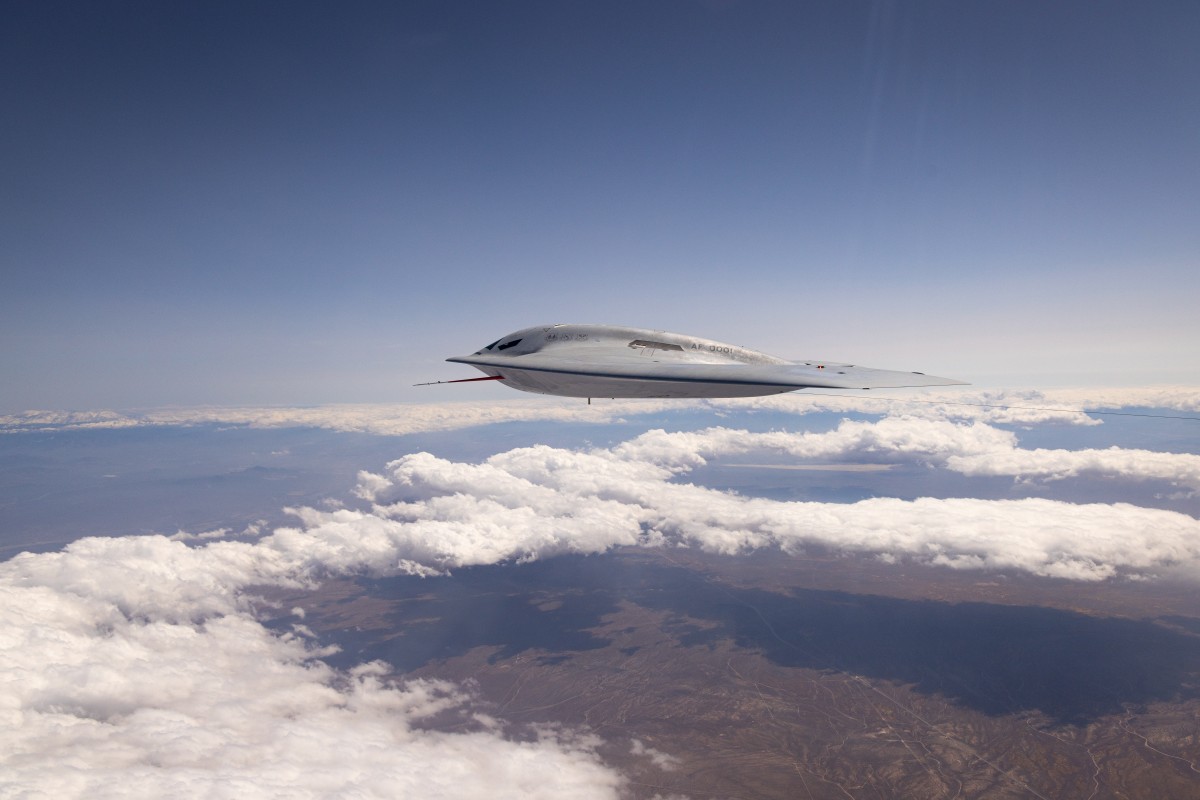
A B-21 Raider conducts flight testing, including ground testing, taxiing, and flight operations, at Edwards Air Force Base, California. Courtesy photo

Furthermore, a report by the Mitchell Institute for Aerospace Studies said the USAF’s current plans to purchase “at least” 100 B-21s match one-time operations into hostile airspace but are insufficient to maintain pressure in a larger conflict because they are “a raid force, not a campaign force.”

Meanwhile, the USAF has said the sixth-generation bomber—which currently has no analogs in the world—is “close” to entering service. In fact, it is expected to reach Ellsworth AFB in South Dakota, one of the three bases selected to host the Raider, in 2027.  

This bomber project has moved at a breakneck pace, going from the official public unveiling in December 2022 to the maiden flight in November 2023. In fact, an operational test pilot flew alongside a developmental test pilot, sharing the B-21 cockpit for the first time in June this year, underscoring the urgency of fielding the bomber.

The B-21 Raider’s rapid path from first flight to operational ramp at Ellsworth AFB in 2027 marks a striking acceleration in how the US fields a complex new strategic bomber.

Observers have lauded the speed, remarking that it has been unusually compressed for a program of this scale and sensitivity. This speed, however, was made possible because of a more fundamental shift: the B-21 was built virtually before it was ever built in metal.

B-21 Raider Rewrote Pentagon Acquisition Rules

For decades, major US defense programs followed the process, but aspirational designs fell behind schedule and prototypes revealed problems missed earlier, delaying programs and driving up costs. Northrop claims to be breaking away from this pattern.

Northrop states that it built the B-21 virtually first, using an extensive digital ecosystem and high-fidelity digital twins long before cutting metal. Succinctly put, unlike previous bombers that were primarily analog and later adapted for the digital era, the B-21 was built to function, endure, and evolve in the contemporary environment.

Developing and producing combat aircraft previously involved designing, building a prototype, testing it, discovering problems, and redesigning. However, Northrop essentially inverted this sequence, using a constantly changing digital model for the Raider.

This gave engineers, manufacturers, and operators a common reference point, enabling them to evaluate and implement design changes almost instantly.

This method enabled engineers to model aerodynamic performance, stealth features, structural loads, and systems integration long before components entered production.

This meant that design modifications that once required expensive rework could be assessed and verified virtually, often in a few hours rather than months. 

The team simulated and refined structural loads, stealth characteristics, flight dynamics, and systems integration in the virtual environment before committing to physical hardware.

As a result, the physical aircraft that emerged from this approach matched or even outperformed the models’ predictions, according to the manufacturer.

This, in turn, has allowed the program to compress testing timelines, accelerate production, and keep costs under tighter control.
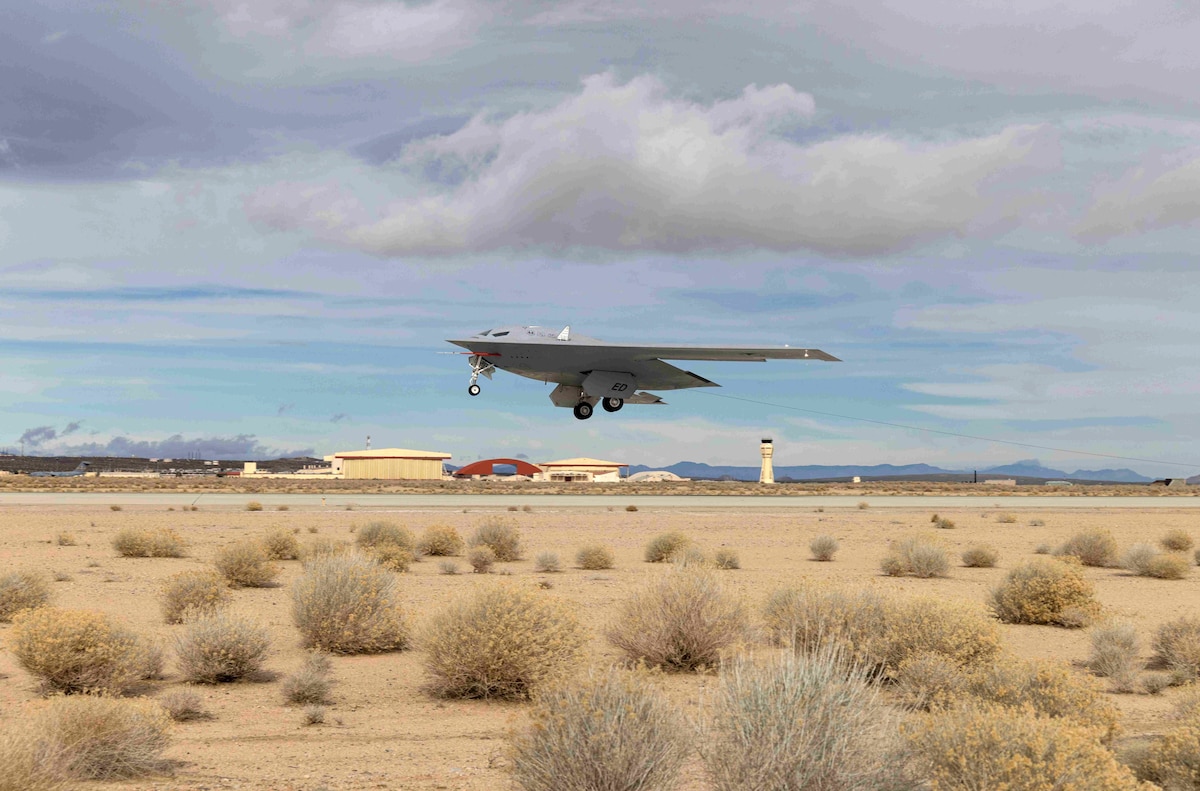
File: A B-21 Raider conducts flight tests, which include ground testing, taxiing, and flying operations, at Edwards Air Force Base, California

Unsurprisingly, the result was an unusually mature aircraft when the first Raider took flight. Northrop earlier said, “Before the B-21 ever took to the sky, the flying test bed completed more than 200 test sorties totaling more than 1,000 flight hours, testing production hardware, software, and sensors in a dynamic environment and enabling teams to tackle discovery well in advance.”

The speed with which B-21 moved from production to testing and into an operational setting at a USAF airbase was best demonstrated by the approach the manufacturer and the Air Force took during flight testing. A major 180-day test cycle was reportedly completed in just 73 days, as revealed in May 2026.

Officials have even stated that the program is exceeding expectations, as test aircraft are achieving high “code one” rates, which is the rate at which the aircraft is ready to fly again with minimal issues

The Combined Test Force achieved half the originally planned missions in less than half the planned time, while supporting significant contract value.

This compression was not the product of rushed flying, and reflected fewer surprises, higher aircraft availability, real-time data analysis, and the ability to clear multiple test points on single sorties.

The advantage of building the aircraft digitally has reportedly extended to the production lines. “Where the digital environment meets the production floor, this digital technology expedites configuration management, facilitating communication between technicians and engineers during the build, in some areas already reducing manufacturing hours by roughly a third,” according to the Northrop Grumman newsroom.

Nonetheless, the B-21 is not without risk, though experts think careful digital engineering, precise digital twins, and a conscious move away from sequential physical prototypes can break the long-standing pattern of delays.


The post B-21 Raider: Northrop, US Air Force Break Ground on New Palmdale Line. Flight Test Runs Ahead of Schedule appeared first on EURASIAN TIMES.

  •  

Morocco’s 1st F-16 Block 72 Fighter Jet Completes Maiden Flight. F-35 Bid Reaches Nowhere

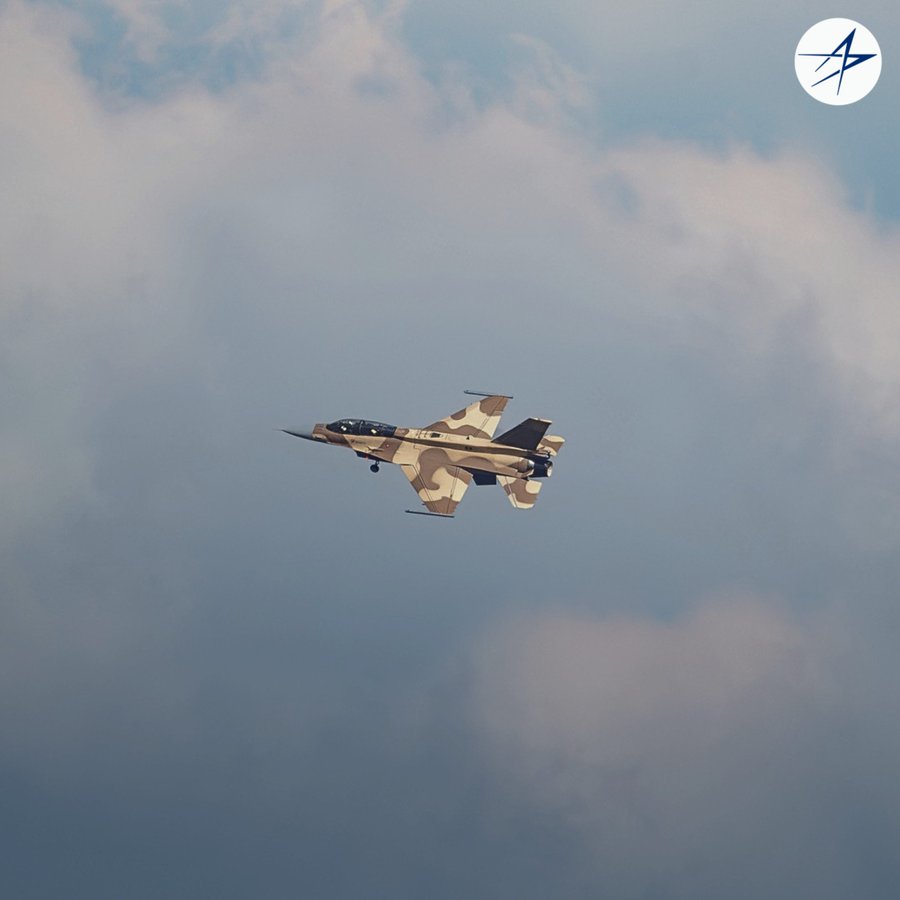
US defense giant Lockheed Martin said the Royal Moroccan Air Force’s (RMAF) first F-16 Block 72 had completed its maiden flight, a test milestone as the fighter jet moves toward delivery.

The company said the Block 72 is the newest variant of the F-16 Fighting Falcon, with updated avionics, sensors and mission systems, and changes intended to improve safety and reliability. Morocco was the launch customer for the configuration when Washington approved the purchase in March 2019.

“This first flight reflects meaningful progress on Morocco’s F-16 Block 72 program and is a critical step in strengthening Morocco’s future airpower,” Mike Shoemaker, vice president and general manager of Lockheed Martin’s Integrated Fighter Group, said. “The F-16 remains a vital component of today’s and future air defense, and we’re proud of the role it will continue to play in supporting Morocco’s sovereignty and contributing to regional stability for decades to come.”

The U.S. Defense Security Cooperation Agency notified Congress of two related sales on March 25, 2019.

One covered 25 new Block 72 aircraft, plus weapons, equipment and services, at an estimated $3.8 billion. The other, valued at more than $985 million, covered upgrades for Morocco’s 23 existing F-16C/D Block 52+ jets to the F-16V standard, which is broadly similar to the new Block 70/72 aircraft, along with related equipment and support.

F-16

If both go ahead, the Royal Moroccan Air Force’s F-16 fleet would roughly double and be built around a common, modernized standard.

“The purchase will improve interoperability with the United States and other regional allies and enhance Morocco’s ability to undertake coalition operations, as it has done in the past in flying sorties against ISIS in Syria and Iraq,” the agency said of the new-aircraft sale. “Morocco already operates an F-16 fleet and will have no difficulty absorbing this aircraft and services into its armed forces.”

The Block 70 and Block 72 differ mainly in the engine. The Block 70 uses General Electric’s F110-GE-129; the Block 72 uses Pratt & Whitney’s F100-PW-229. Morocco’s existing Block 52+ jets already use F100 engines, so the new aircraft fit the support setup already in place.

Morocco’s F-35 Bid

Morocco was looking to acquire U.S. F-35 fighter jets since 2020–22, after normalizing ties with Israel under the Abraham Accords and as Algeria reportedly moved to acquire Russia’s Su-57.

Israeli intelligence firm Jafaj said King Mohammed VI raised tensions with Algeria in a private meeting with Israeli Defense Minister Benny Gantz during his 2021 visit.

Algeria and Morocco have not had diplomatic ties since August 2021.

The firm, citing an unnamed European source, said Rabat wanted Israeli help tracking Algerian troops and militia deployments and was also seeking Israeli surveillance and strike drones.

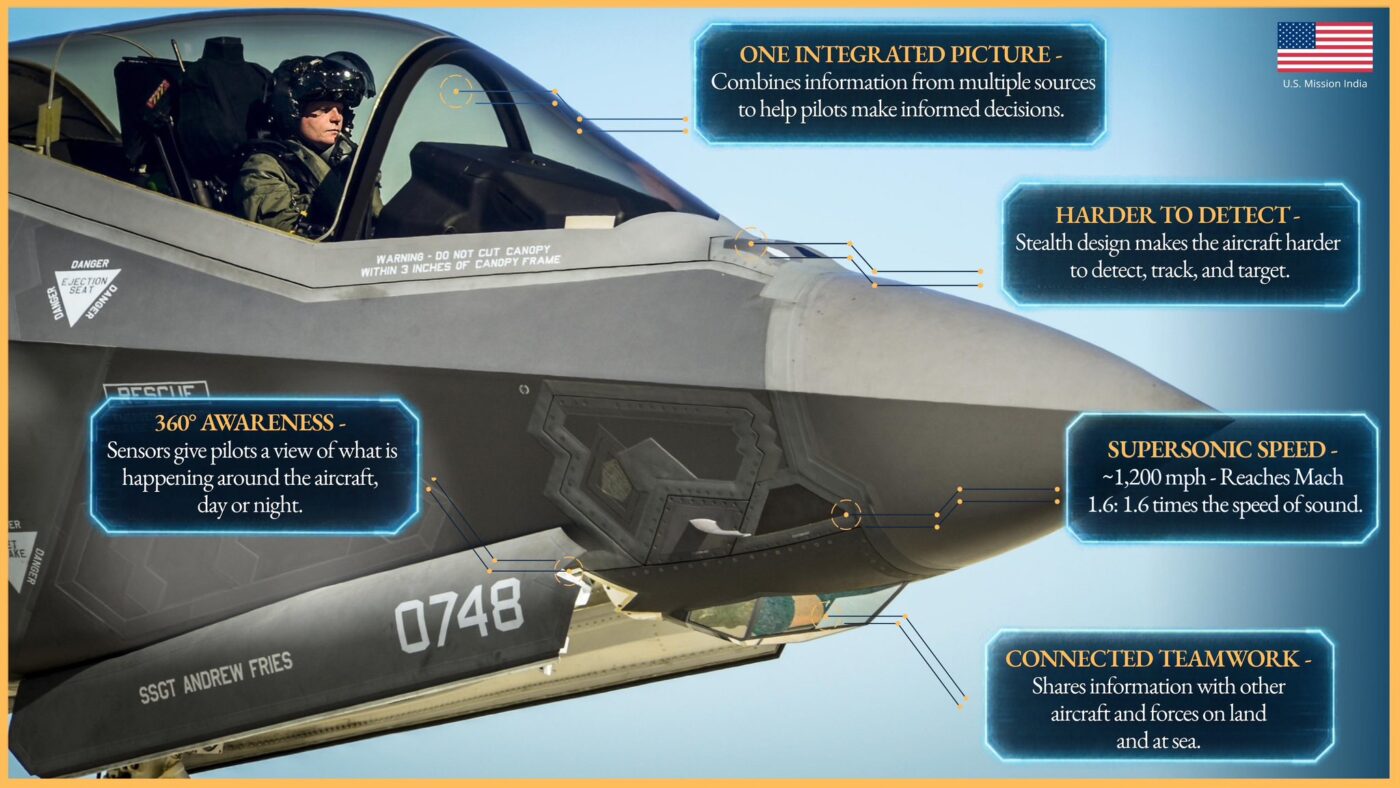
F-35: Image via US Embassy, New Delhi

Jafaj said Defense Minister Abdellatif Loudiyi told Gantz that Morocco needed more combat aircraft for a possible war with its neighbor, that the F-35 was the preferred choice, and that Israel’s help lobbying the Biden administration would be welcome.

An F-35 was displayed at the 2024 Marrakech Air Show.

In August 2026, the International Institute for Strategic Studies, a London-based think tank, said there had been “little concrete progress” and described the F-35 purchase as hypothetical.

Meanwhile, Lockheed is again exhibiting at the Marrakech Airshow, which runs from Oct. 7 to 10.

Its stand includes an F-35 cockpit demonstrator, with demonstrations for invited guests, and scale models of the F-35A, F-16 and C-130J Super Hercules.

The post Morocco’s 1st F-16 Block 72 Fighter Jet Completes Maiden Flight. F-35 Bid Reaches Nowhere appeared first on EURASIAN TIMES.
  •  

Experts: American Church Must Wake Up to Dangers of Islam

Ultimately, the confrontation with Islam is a spiritual battle. “Proclaim the gospel of Jesus Christ. Islam is antithetical to the Jesus of the Bible. There is one Lord, one Savior, one faith, one baptism, and we need to proclaim Him to Muslims.”   America’s growing embrace of politicized Islam is “perplexing” to those with first-hand... Continue Reading
  •  

The Missile That Shot Down U.S. Stealth Aircraft is Coming Back—Mobile. Why India Must Take Note of the Russian Move

Russia appears to be preparing to revive and modernize its inventory of the Soviet-era Pechora S-125 short-to-medium-range surface-to-air missile system, in a move that the IAF leadership could well take note of.

S-125 is the same missile that was used to shoot down the US Air Force’s F-117 Nighthawk stealth fighter-bomber over Serbia on March 27, 1999, during the Kosovo War.

The Pechora S-125 (SA-3 Goa) is a legacy Soviet static, short- to medium-range surface-to-air missile system developed to engage low- to medium-altitude air threats using command guidance.

The IAF also modernized its S-125 inventory to plug an operational gap that widened due to delays in procuring MRSAM and Akash air-defense systems. However, the IAF did not pursue modernization to the extent that the capability gains matched the more comprehensive modernization offered by the Russian Pechora-2M.

According to Militarnyi, a Ukrainian media outlet focused on military affairs, the Minsk Wheel Tractor Plant (MZKT) has signed a contract with Moscow-based JSC Oboronitelnye Sistemi to supply 30 specialized wheeled chassis that appear intended for components of the Pechora-2M system.

The Pechora-2M is a heavily modernized Pechora derivative with a self-propelled truck-mounted launcher, digital electronics, an extended engagement envelope, and day/night electro-optical tracking, giving the system much greater tactical mobility.

Under the terms of the contract, Russia would receive 20 MZKT-8021-021 chassis, as well as five each of the MZKT-8022-021 and MZKT-80211-021.

The MZKT-8021/8022 family of specialized chassis was developed specifically to accommodate components of the Pechora-2M air-defense missile system.

Pechora Revival

The delivery schedule extends to 2029, suggesting a planned multi-year acquisition rather than a one-off procurement to meet an immediate operational requirement.

More likely, Russia is seeking to expand its air-defense capacity in response to the heightened threat from the prolific use of drones and other low-cost aerial threats in modern warfare.

Drone warfare has increased the aerial threat severalfold, so it is logical for any nation to increase the density of its AD systems by a corresponding factor.

Russia appears to be increasing its reliance on legacy systems rather than simply discarding them.

Russian Modernisation

The modernized Pechora-2M system was developed as a deep modernization of the Soviet S-125, incorporating a self-propelled, highly mobile launcher and modernized electronics. The modernization transformed the legacy stationary S-125 into a rapidly deployable air-defense platform capable of shoot-and-scoot tactics, reducing its vulnerability to anti-radiation weapons and precision strikes.

The 2M replaces the legacy four-rail stationary ground launcher (5P73) with a twin-rail launcher mounted on a heavy 6×6 truck chassis. The reduction in launch rails was necessary to maintain launcher stability when mounted on a mobile chassis.

Rafale, Tejas & AMCA: IAF’s “Healthy Mix” of Fighter Jets Leaves Out The Aircraft That May Matter The Most

The legacy S-125 required considerable time to disassemble, pack onto trailers, move, and re-erect at a new site. In contrast, the Pechora-2M can reportedly be brought into action in roughly 20–25 minutes, facilitating shoot-and-scoot operations.

Besides the self-propelled launchers, the tracking/fire-control radar and other system components are also mounted on high-mobility truck chassis rather than being confined to towed equipment.

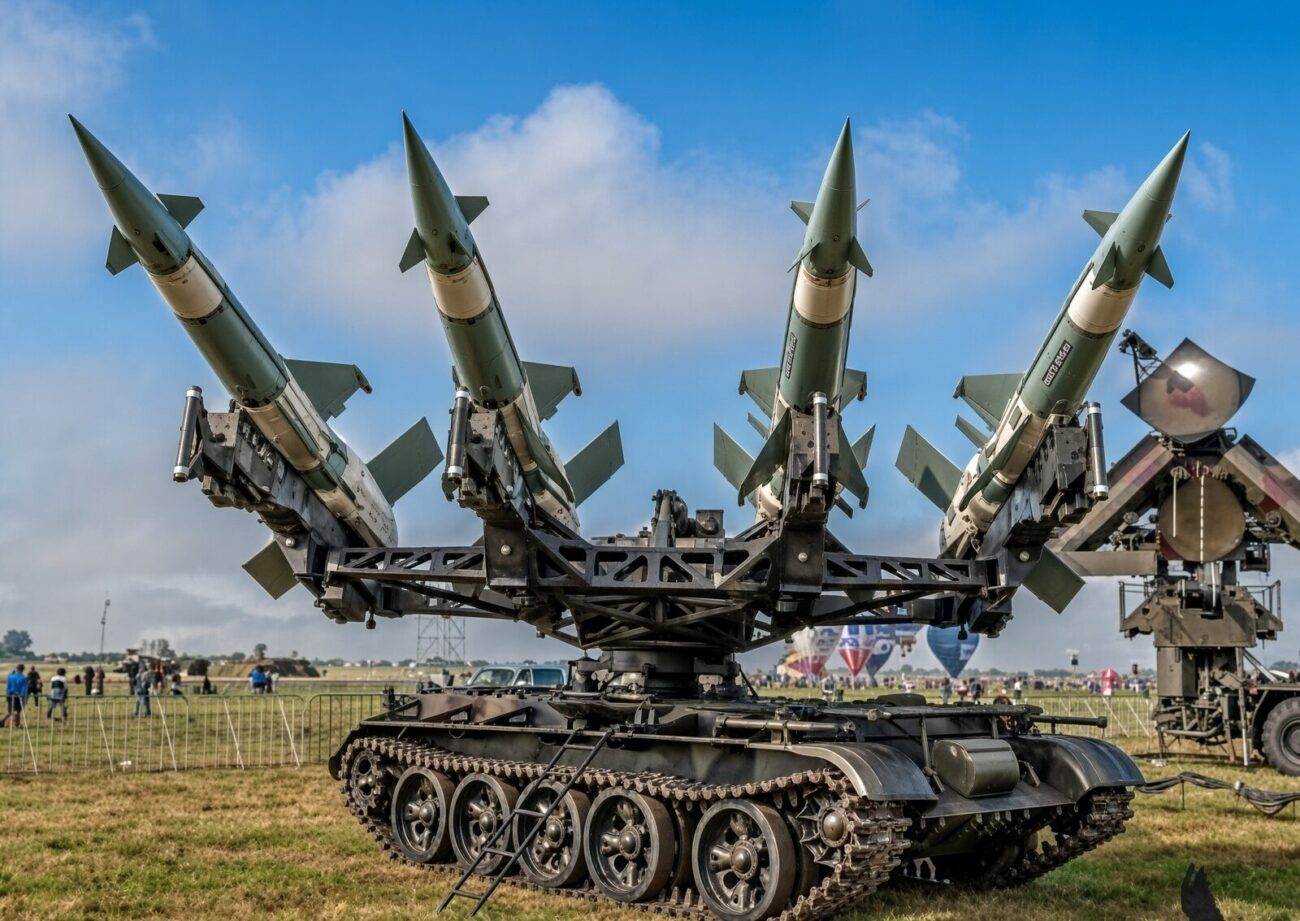
File Image: S-125

IAF Pechora Modernization

In 2016, the Indian MoD issued a $272-million tender to digitize 16 Pechora systems. The tender was restricted to Indian companies to support the government’s Make in India policy. The eventual contract, worth ₹591.3 crore, was awarded to Alpha Design Technologies Ltd (ADTL) in 2020.

Russia’s Almaz-Antey is the original equipment manufacturer of the Pechora system. At the time, Indian officials indicated that Russian defense companies preferred to work through Russian state-owned entities, limiting the scope for direct OEM participation by Indian companies.

The scope of the Indian Pechora upgrade was primarily the electronic and mechanical modernization of the existing system rather than a fundamental redesign of its architecture. It included refurbishment and digitization of the missile-guidance radar and integration of the system with the IAF’s Integrated Air Command and Control System (IACCS).

Alpha Design Technologies Ltd executed the upgrade, focusing on digitization and electronic modernization. It replaced vintage electronic components with modern semiconductor-based electronics and digital processing, while modernizing operator consoles and other system elements.

No Mobility

The system retained its original static, four-rail, ground-mounted configuration (5P73 launcher) and towed transport arrangement because the Indian upgrade scope did not include mobility.

Because it lacks mobility, the IAF has traditionally used the Pechora for point defense of fixed, high-value infrastructure such as air bases, radar stations, and other military installations.

A statically deployed AD system protecting a high-value asset made considerably more sense when precision-guided munitions were either unavailable or relatively uncommon. In contemporary warfare, where precision weapons can routinely achieve single-digit-meter accuracy, a static air-defense system defending a high-value asset can itself become a priority target.

Recall the failed PAF attempt to strike the S-400 system deployed to defend Aadampur air base during Op Sindoor. With foresight, and by leveraging the S-400’s mobility, IAF leadership relocated the system before the attack. The episode illustrates the importance of mobility and survivability for high-value air-defense assets.

A Still-Capable System

Despite its vintage, the Pechora remains a potentially useful AD system. Endowed with mobility and modern sensors and electronics, it would acquire significantly greater survivability and tactical utility.

One of its strengths is electro-optical tracking, which permits passive target tracking without radar emissions, reducing vulnerability to anti-radiation weapons. Both Russian and Indian modernization programs have improved the system’s electro-optical capability.

The Indian upgrade incorporates thermal-imaging-based fire-control equipment, while the Pechora-2M also incorporates TV and thermal/infrared electro-optical channels.

Thermal imaging provides a passive night-and-day detection and tracking capability and, unlike conventional television cameras, does not depend on visible light. However, adverse atmospheric conditions can degrade its effectiveness.

It is interesting to note that the IAF chose to upgrade its Pechora systems without fundamentally modifying the missile. Contemporary reporting on the original upgrade program indicated that the IAF considered the existing missile adequate and concentrated instead on digitization, radar, communications, networking, and other system improvements.

The 5V27 family missile has a substantial fragmentation warhead of around 70 kg and uses command guidance. Its continued availability is one possible reason why extending the life of the Pechora system remains attractive.

Russia may also be reviving and revitalizing Pechora-2M systems because it has a substantial existing inventory of 5V27-series missiles. If so, the approach illustrates an important principle of modern warfare: the value of an old weapon system can change when it is combined with modern sensors, electronics, mobility and networking.

F-35 Bid Stalls — But Morocco’s 1st F-16 Block 72 Fighter Jet Completes Maiden Flight

What the IAF Should Note

In the immediate future, the IAF will need to deploy many more AD systems than it currently does in order to field a robust air-defense capability spanning the entire gamut of aerodynamic threats—aircraft, helicopters, cruise missiles, guided bombs and drones.

Developing additional AD systems may prove more challenging and time-consuming than upgrading existing legacy systems such as the Pechora.

Upgrading the Pechora to add mobility, modern electro-optical sensors and improved networking should be well within Indian technological capability. Even locally manufacturing additional upgraded systems under an appropriate OEM arrangement could be a cost-effective way to augment India’s air-defense capability.

Russia’s apparent decision to extract additional combat value from an old missile system should therefore be viewed less as a revival of obsolete technology and more as an example of how legacy weapons can be adapted to the changing economics and character of air warfare.

  • Vijainder K Thakur is a retired IAF Jaguar pilot, author, software architect, entrepreneur, and military analyst.
  • Views Personal of the Author
  • Follow the author @vkthakur

The post The Missile That Shot Down U.S. Stealth Aircraft is Coming Back—Mobile. Why India Must Take Note of the Russian Move appeared first on EURASIAN TIMES.

  •  
❌